Thursday, May 30, 2019

Another Mueller-Comey One-Two Punch


May 29, 2019
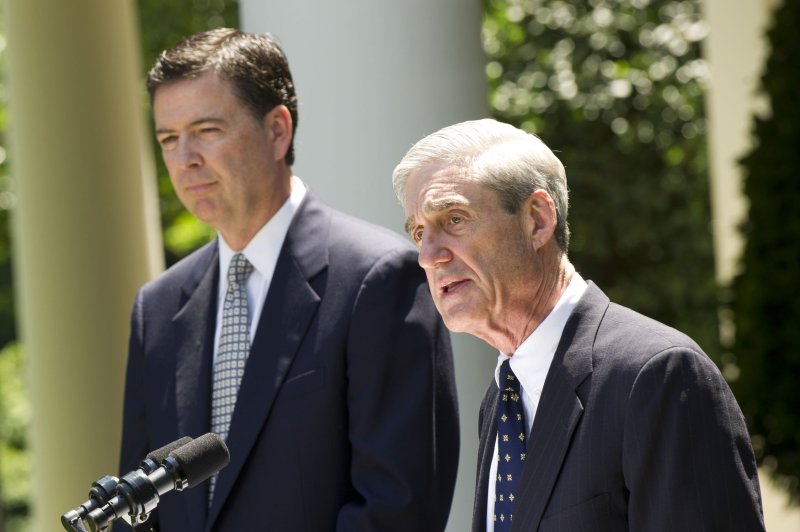
Outgoing FBI director Robert Mueller (R) delivers remarks alongside Presdient Obama's nominee to replace him James Comey, during a ceremony in the Rose Garden at the White House on June 21, 2013. (UPI/Kevin Dietsch)
Most Americans are unaware of the long history of comradeship and chicanery between Special Counsel Robert Mueller and former FBI Director James Comey. For nearly two decades, the pair have held the same jobs, earned the same foes, and swaggered in the same rarified sphere of political prestige and privilege.
This week, the country has been treated to another reminder of how often the twosome operates in tandem.
In fact, their prior relationship should have disqualified Mueller from overseeing an investigation into one of Comey’s fiercest critics and the man who fired him, President Donald Trump. Without Comey helping to fabricate the Trump-Russia collusion narrative in 2016, there wouldn’t have been a Mueller investigation into fabricated Trump-Russia election collusion.
Further, Comey admitted he leaked his internal “memos” to the New York Times after his dismissal in May 2017 in an attempt to prompt the appointment of a special counsel. Comey also would be a witness in Mueller’s investigation; his extemporaneous memos that documented alleged conversations with the president in early 2017 are cited as evidence throughout the obstruction of justice section of Mueller’s report. The conflicts are rife and overshadow the legitimacy of the entire Mueller probe.
Peas in a Pod
Comey and Mueller share similar traits: The lofty rhetoric about the rule of law; the self-aggrandizement disguised as adulation of the government institutions they run; the lust for power; the superiority complex; the petty thirst for vengeance. They are New York natives who once claimed to be Republican. Both served as deputy attorney general for President George W. Bush and director of the FBI for President Barack Obama.
In his 2013 confirmation hearing, Comey was effusive in his praise of the man he would succeed at the FBI. “His legacy of candor and straightforwardness and integrity is one that I pledge to continue,” he told the Senate Judiciary Committee. After Mueller was appointed special counsel in May 2017, Comey referred to Mueller as “one of this country’s great, great pros.”
In 2004, when Mueller was FBI director and Comey was deputy attorney general, the twosome famously ambushed ailing Attorney General John Ashcroft in an intensive care unit to stop him from signing a reauthorization of a surveillance program they viewed as illegal. Mueller lauded Ashcroft for refusing to sign the reauthorization over objections by Bush’s top White House aides, and quietly commended Ashcroft at his bedside.
“The moment had taken a toll on me,” Comey wrote in his 2018 book, A Higher Loyalty. “My heart was racing. I was feeling slightly dizzy. But when I heard Bob Mueller’s tender words, I felt like crying. The law had held.”
Strategic Ambiguity, No Surprises
On March 21, the New York Times posted a lengthy column by Comey headlined, ‘What I Want from the Mueller Report.” Like a soothsayer, Comey wrote, “even though I believe Trump is morally unfit to be president of the United States, I’m not rooting for Mueller to demonstrate that he is a criminal. I’m also not rooting for Mueller to ‘clear’ the president.”
Magically, the very next day, without previous notice to the public, Mueller submitted his report to Attorney General William Barr; coincidentally, it neither charged nor “exonerated” (Mueller’s term) the president.
The Mueller-Comey one-two punch again is evident this week; the pair clearly organized a coordinated hit job against both President Trump and Barr, who currently is investigating possible misconduct by Comey and his FBI.
On Tuesday night, the Washington Post published yet another rant by the increasingly unhinged Comey wherein he basically called everyone a big fat dumb-dumb for not buying into his tales of collusion and his laughable justification for taking the unprecedented step of spying on a rival presidential candidate.
He can’t even keep his own story straight. In the column, Comey misrepresented the details of the George Papadopoulos exchange with a Clinton-tied Australian diplomat in the spring of 2016, among other fibs.
Comey begged for attaboys for not leaking the details of his sham investigation to the press before the election. All the talk in the “fringe media” about a covert attempt to infiltrate Trump’s campaign then carry off a soft coup against the president after he won, according to Comey, is nothing more than the work of conspiracy theorists.
Comey took another shot at Barr by scoffing at the notion that his agency “spied” on the Trump campaign, but then immediately explained how he asked “a federal judge for permission to surveil [Trump campaign aide Carter Page].”
And he referred to cheating spouses and criminal leakers who once worked for him as “good people.”
Parsing Mueller
Comey’s backup would arrive Wednesday morning in the form of a surprise announcement by Mueller. (It is probably safe to assume it did not come as a surprise to Comey.) In a short but wide-ranging statement by the 74-year-old prosecutor, Mueller essentially gave Congress the green light to impeach Donald Trump. Mueller delivered his remarks from the Justice Department while Barr is on business in Alaska; it was the first time in more than two years Mueller has made any kind of public statement.
After announcing his resignation from the department, Mueller reiterated his report’s finding that there was no conspiracy between the Trump campaign and the Russians. He then pivoted to the juicier volume of the report that addresses potential obstruction of justice by the president.
Here, much like Comey, Mueller displayed his politically-expedient grasp of how the legal system is supposed to work: “If we had had confidence that the president clearly did not commit a crime, we would have said so,” Mueller told the silent press corps. “We did not, however, make a determination as to whether the president did commit a crime.”
The reason, Mueller rather incoherently explained, is that Justice Department rules—last codified by the Office of Legal Counsel in 2000 based on both the Constitution and case law—prevented him from indicting the sitting president of the United States.
“Charging the president with a crime therefore was not an option we could consider,” Mueller emphasized. Then he served up the chum that the press and House Democrats were circling the water for: “The [OLC] opinion says that the Constitution requires a process other than the criminal justice system to formally accuse a sitting president of wrongdoing.”
That obviously would be impeachment. “A sitting President is immune from indictment as well as from further criminal process,” the OLC opinion states. “Where the President is concerned, only the House of Representatives has the authority to bring charges of criminal misconduct through the constitutionally sanctioned process of impeachment.”
Now thanks to another grudge-seeking joint stunt by Mueller and Comey, the Democrats and the media are recharged and ready to chase the folly of impeachment in time for the 2020 election.
And this week’s Mueller-Comey one-two punch serves another purpose: to obfuscate the real scandal, which is the pending investigation into how Comey’s FBI weaponized his agency against the Trump campaign and, ultimately, against the president himself.
Even though Mueller has stepped down as special counsel, it’s a fair bet to assume his days of double-teaming with Comey to settle scores are far from over.

Wednesday, May 29, 2019

What We’re Reading: Charles Williams


https://www.newyorker.com/books/page-turner/what-were-reading-charles-williams?fbclid=IwAR05aXslT6Dt3gBVrqiPrQGYNcKcOkY0bnxFllHIV_5ve0yV69F1MUddKTs
March 14, 2013


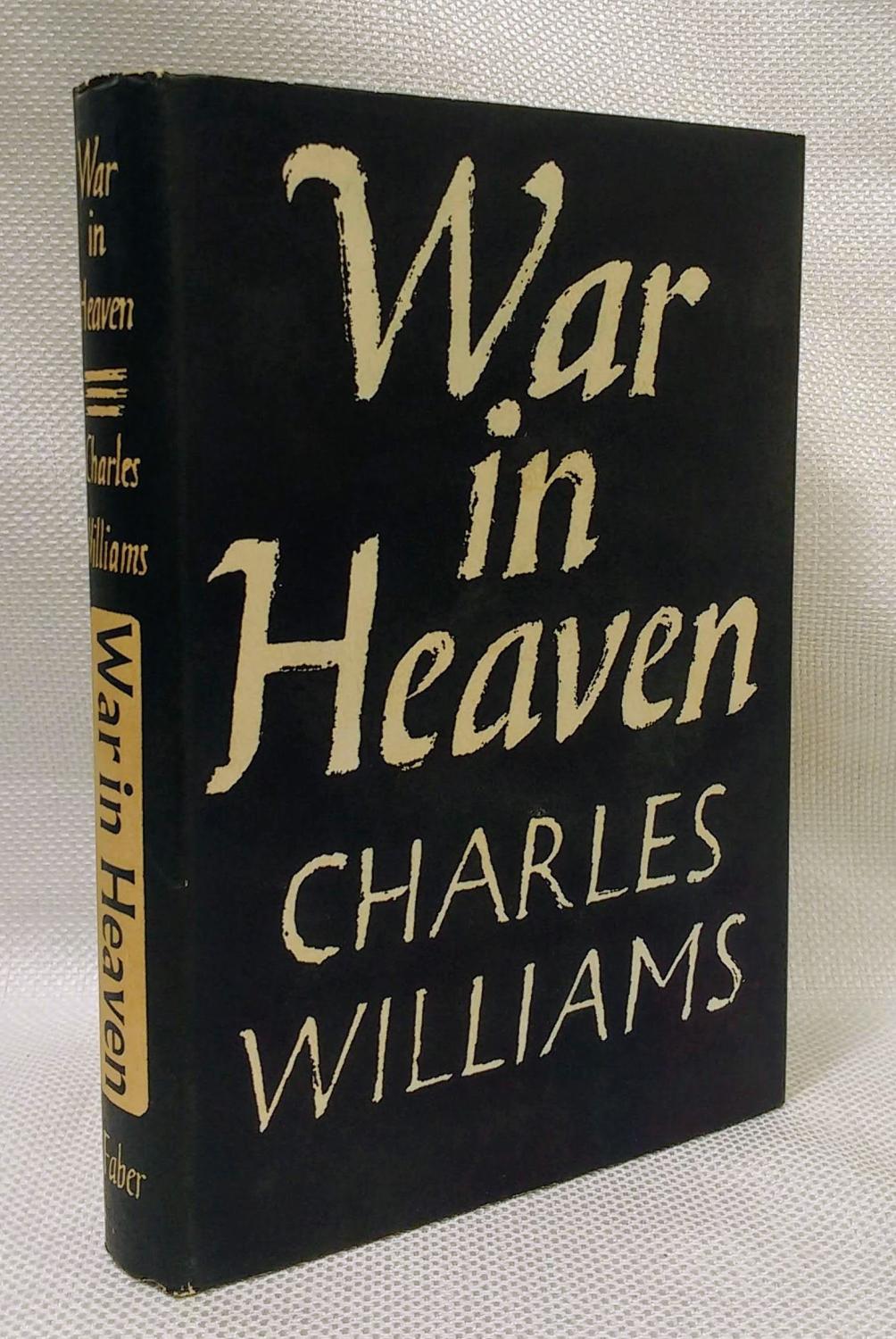
Last weekend, at a used-book store, I picked up a quaint little hardcover Faber & Faber 1954 reprint of Charles Williams’s 1930 novel “War in Heaven.” In its opening pages, a corpse is discovered under an editor’s desk at a publishing house. A chapter later, a postcard from one of the publishing house’s authors demands, with mysterious urgency, the deletion from his page proofs of a paragraph about the Holy Grail. The Grail, according to the to-be-deleted paragraph, may reside today in a church in the parish of Fardles, a short commute from the city. Are the murder and the chalice somehow linked? If Muriel Spark had drunk a little too much Sir Thomas Malory, she might have written something like this. I was incapable of resistance. I bought it.

I knew I had heard of Williams before, but I couldn’t, on the spot, remember where. The jacket copy, anonymous but evidently written by the Faber editor T. S. Eliot, described Williams’s novels as “supernatural thrillers.” The jacket also credited Williams with having written “The Descent of the Dove: A Short History of the Holy Spirit in the Church,” which—I learned when I got home to the Internet—Auden claimed to have re-read once a year. A resort to our bookshelves turned up more data. In the critical study “Later Auden,” Edward Mendelson relays Auden’s report that he felt sanctified in Williams’s presence: “I felt transformed into a person who was incapable of doing or thinking anything base or unloving.” Curiouser and curiouser. A re-perusal of “The Magician’s Book,” Laura Miller’s account of her reading of C. S. Lewis’s Narnia chronicles, reminded me where I’d heard of Williams before. He was one of the Inklings, a group that included Lewis and J. R. R. Tolkien. More precisely, Williams was a friend of Lewis’s and a rival of Tolkien’s. According to Miller, Lewis thought Williams “godlike,” and Eliot thought he approximated a saint, but Tolkien, though he liked Williams well enough as a person, thought his literary influence was baleful. He ruined Lewis’s sci-fi novel “That Hideous Strength,” in Tolkien’s opinion.

Now that I’ve read “War in Heaven”—some thirty years after reading Lewis’s “That Hideous Strength,” for the record—I have to say that Tolkien had a point. “That Hideous Strength” is deeply Williamsian. And I’m not sure that a Williamsian novel is altogether the sort of thing I enjoy. I read “War in Heaven” compulsively, I admit. Good versus evil makes for a lively story, and a person like me always wants to know what happens to the Grail. I was charmed, moreover, by the bumbling archdeacon who has written a treatise on the League of Nations, and by the way a Catholic duke and an agnostic assistant editor fall into sodality when they discover they both know George Chapman’s poetry by heart.

But the book isn’t all small-town British eccentrics. Its plot is driven by a florid sadist who has designs on a defenseless child, up to and including human sacrifice, and I found myself setting down the book out of excessive dread as often as I picked it up out of unsatifised curiosity. The logic that governs the black magic—its theology, for lack of a better word—seems muddled. At times, the archdeacon seems to believe that he needn’t worry too much if the Grail falls into the wrong hands because Satanism has no power in and of itself, and at one point, in the presence of the novel’s chief Satanist, an assistant editor goes so far as to diss Satanism as “the clerk at the brothel” of belief. Surely these are orthodox opinions, as far as Christianity and science go, but in Williams’s supernatural thriller, by generic necessity heterodox, floor chalkings can be lethal, whole buildings can be hidden by conjured-up fog, and evil people are capable of using the Grail for evil purposes. I found it quite upsetting when the bad guys tried to use the Grail to cement an eternal Mezentian gay marriage between the archdeacon and the lost soul of a masochist. The psychodynamics of the relationship are imagined with a telling and disconcerting vividness. Neither your vicar nor queer theory would approve.

The Grail that I remember from Malory was never so merely instrumental; its purity was unassailable. By the end of “War in Heaven,” I found myself sharing with Tolkien a certain aesthetic distaste for Williams’s imagination. Which made it somewhat puzzling that what Williams’s Grail most reminded me of was… Tolkien’s Ring. Like the Ring, Williams’s Grail grants to knowledgeable users the faculty of vision at a distance. Like the Ring, its possession can be sensed by others who have possessed it. And like the Ring, it is capable of imparting tremendous power. The resemblance seemed to me most striking when a nihilist in Williams’s novel urges a Satanist to destroy the Grail.

Destroy it!” the Satanist wails in protest. “But there are a hundred things to do with it.”

“That’s the treachery,” the nihilist replies. “Keep it for this, keep it for that. Destroy it, I tell you; while you keep anything for a reason you are not wholly ours.”

The exchange could have been lifted from Gandalf and Frodo’s in the second chapter of “The Lord of the Rings.” “Do not tempt me!” Gandalf insists when Frodo offers to hand the Ring over to him. “The way of the Ring to my heart is by pity, pity for weakness and the desire of strength to do good. Do not tempt me! I dare not take it, not even to keep it safe, unused. The wish to wield it would be too great for my strength.” In these passages, the Grail and the Ring are almost perfect mirror images: Williams’s Grail is dangerous even to the most dedicated of Satanists because, though it can be used for evil, it has an inherent bent for good. And Tolkien’s Ring is dangerous even to the most virtuous of wizards because, though it can be used for good, it has an inherent bent for evil.

Had Williams sensed Tolkien’s disapproval, and was he having a laugh at Tolkien’s expense? Chronology overthrows the hypothesis. Williams published “War in Heaven” in 1930, and Tolkien wrote “The Lord of the Rings” between 1936 and 1949. Maybe the resemblance is no more than coincidence. Or maybe, once my stomach settles, I should read another Williams novel—the other one I bought last weekend seems to be about a platonically ideal lion, and happens to have been published nineteen years prior to “The Lion, the Witch, and the Wardrobe”—and see what else I find.

Tuesday, May 28, 2019

No Heroes Left: The MLK Revelations


BY ROGER L. SIMON
https://pjmedia.com/rogerlsimon/no-heroes-left-the-mlk-revelations/
May 27, 2019

Image result for martin luther king logan kearse
(Getty Images)

What are we to make of the disturbing news about Martin Luther King? Should we change the name on every school, park, and boulevard across the nation named after him as if he were the inverse of Robert E. Lee or Jefferson Davis? There must be tens of thousands of them.

He was one of the indisputable heroes of American history, the great civil rights leader who inspired our country with his non-violent protests and who so memorably told us: "I have a dream that my four little children will one day live in a nation where they will not be judged by the color of their skin, but by the content of their character."

Amen and amen.

How different is that from today's civil rights movement (lower case deliberate) where reactionary identity politics rules the day. What was once an idealistic crusade for equality and integration is now a movement for segregation with Harvard (among many colleges) holding separate graduation celebrations for African Americans. Go figure. The crypto-fascist concept of intersectionality dominating our campuses deliberately pits racial, religious and age groups against each other in a victimhood competition that does nothing but encourage people to hate each other. We are going backwards fast, with the Democratic Party instigating much of it.

King's dream — the dream of the good people in our country, black, brown, yellow and white — has been turned on its head. Worse, it has been stomped on and spat out.

Oh, how we miss Dr. King! We need him and his righteous idealism more than ever.

But now, to compound this bad turn in our country, we have to process new information about Dr. King himself that is nothing short of nauseating, if true. And, to be honest, it is likely to be. The source is David Garrow, author of the Pulitzer-winning encomium Bearing the Cross: Martin Luther King, Jr., and the Southern Christian Leadership Conference and a senior advisor to Eyes on the Prize, PBS' award-winning series on the Civil Rights Movement — in other words, a liberal's liberal and no enemy of King's. In fact, he is, if anything, a former idolator.

So when Garrow tells us, indeed quoting hidden FBI documents (sound familiar?), that MLK had a #MeToo problem far, far beyond what most of us actually imagined and probably already excused, we are constrained to believe him. It's one thing to have had a few affairs — that was long rumored — but forty plus? And rape, whether as a participant or encouraging eyewitness, as is apparently the case... well, one observer called King "the Harvey Weinstein of the Civil Rights Movement."

Of course, this whole confusing situation plays out against something equally despicable. It was the FBI itself, under the direction of J. Edgar Hoover, that was monitoring King and recording this. They were just as sexist as he was, doing absolutely nothing about the rape in progress in the next room from their listening post in Washington's Willard Hotel. Let the woman or women handle it themselves. Their way of dealing with it was later to try to get King to commit suicide.

Well, the FBI is — from J. Edgar Hoover (why is his name still on the building?) to James Comey — a government unto itself, as we have been constantly reminded of late. Let us hope they, and others, get the mammoth house cleaning they deserve.

No one wants to face this sad story and it's easy to see why. Matt Drudge had the scandal on the top of his page early Sunday but quickly removed it.

Is the moral of it all the danger of having heroes? They will betray us in the end. That other great paragon on non-violence — Gandhi — had his issues.

At the beginning of this piece, I called these revelations disturbing. They were more than that for me. I spent the summer of 1966 as a civil rights worker in Sumter, South Carolina, living in a rooming house owned by MLK's cousin, the local mortician. I never met King personally, although I met several family members and saw him speak twice. He was certainly a hero to me then, probably more than anyone in our history, sad as that is to think now. He still is for what he believed then and did then, but not for what he was. Maybe I should leave it there. It's the old Shakespearean dichotomy between the doer and the deed.

Roger L. Simon — co-founder and CEO emeritus of PJ Media — is an author and screenwriter. His new novel is coming soon. 

Belatedly appreciated Bill Buckner dead at 69


By 
https://www.bostonherald.com/2019/05/27/belatedly-appreciated-bill-buckner-dies-at-69/
May 27, 2019

Image result for bill buckner first pitch


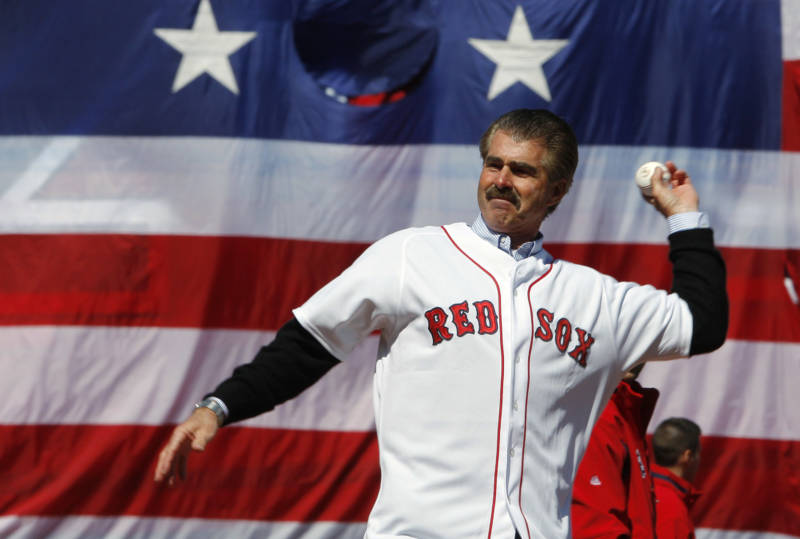
Bill Buckner throws out the first pitch at the MLB baseball game on April 8, 2008 at Fenway Park. 
(Brian Snyder/Getty Images)
If not for one play, one lousy play, former Red Sox first baseman Bill Buckner’s death would not have been as big a story, and that would have been just fine with him.

Buckner lost a long battle with Lewy body dementia on Monday. He was 69. His death first was reported by ESPN’s Jeremy Schaap, who received confirmation from Buckner’s wife, Jody.
“Bill fought with courage and grit as he did all things in life,” Jody Buckner said.
Buckner played 22 seasons for five teams in the big leagues, had 2,715 hits, won a National League batting title in 1980, was an NL All-Star in 1981, twice led the NL in doubles and played in the World Series for two teams (1974 Dodgers and ’86 Red Sox).
Those aren’t Hall of Fame numbers. They’re darn good ones, especially being able to maintain his skills for 22 years, but typically they don’t make for huge news. Unfortunately, he became a big baseball name that would echo louder with each passing year as the Red Sox championship drought grew because of one lousy play.
I once spoke to a man in a dugout at Shea Stadium about the 10th-inning groundball that went through Buckner’s legs in Game 6, preventing the Red Sox from clinching the 1986 World Series, which they lost to the Mets in Game 7.
The man was very bitter about the treatment of the play, was tired of talking about it, thought it ridiculous a ballplayer should be remembered for one play. That man’s name was Mookie Wilson, the speedy outfielder who hit the grounder through Buckner’s legs.
Wilson maintained that even if Buckner had fielded the ball cleanly, he would have beat it out for an infield hit. I hadn’t talked to anybody who shared that opinion before interviewing Wilson in the dugout at Shea Stadium and haven’t found anyone since.
Wilson spent 12 seasons in the big leagues and stole 327 bases, so in one respect you can understand how he resents being remembered for one grounder, but that’s not how the world works. Inside and outside of sports, the unusual makes news. Sorry, but a groundball that goes through a first baseman’s legs and alters baseball history in a big way is newsworthy.
All of Scott Norwood’s made field goals and extra points didn’t amount to a murmur compared to the blaring siren of his wide-right against the New York Giants in Super Bowl XXV. The siren grew exponentially louder in each of the next three years when the Bills made it to and lost in the Super Bowl. You don’t like that Norwood is remembered for one lousy kick, but you understand it’s unavoidable.
Similarly, the play that kept the Red Sox from 86-ing the Curse of the Bambino will be the enduring baseball legacy for Buckner and Wilson.
In 2011, Schaap did an “E:60” episode in which Jody shared the reason the family moved from Massachusetts to Boise, Idaho: A parent at their son’s preschool said to the 4-year-old boy, “Your daddy had to quit baseball because he missed the ball.” The Buckners’ son came home and asked, “Daddy, what did he mean?”
Buckner’s postgame reaction to the play came from a far more mature place.
“It’s unfortunate it happened, but that’s baseball,” Buckner told reporters. “All I can say is I never played in the seventh game of the World Series, and I get to play in one now. I hate to say it’s because I missed the groundball, but that’s the way it goes.”
Perfect statement from a player whose job it was to worry about the next play, especially when preparing for Game 7 of the World Series.
For fans still smarting, the Sox’ 2004 world championship healed wounds from the error. Not all wounds created by the reaction to it had yet healed. Buckner didn’t attend the 20th-anniversary celebration of the ’86 Red Sox, but after thinking about it for a month, he did accept the club’s invitation to throw out the first pitch at the home opener in 2008 as part of a celebration for winning the 2007 World Series.
Buckner received and appreciated a four-minute ovation. But a sign that read, “You’re forgiven,” was ill-conceived. The only ones who needed to apologize were those who took one error personally. He tried to make the play and didn’t. It happens, and it happened at the worst possible time on the grandest of all stages. Still, next play.
Buckner again felt at home in the area when he managed the Brockton Rox of the independent Can-Am League in 2011.
Image result for bill buckner
Bill Buckner and Mookie Wilson in 2001 (Ron Frehm/AP)
Buckner’s signs of healing from the treatment he received were evident from his good humor in participating in an episode of “Curb Your Enthusiasm,” which ended with Buckner making a running catch of a baby thrown out of a burning building and being carried off on the shoulders of those who witnessed his heroics. Earlier in the show (Season 8, Episode 9), he had failed to catch a baseball with Mookie Wilson’s signature on it and the ball sailed out the window.
As the years passed, Wilson and Buckner made money sitting side by side, signing photographs of the play, which was eerily shadowed in an ESPN interview of Buckner on the field at Fenway Park, 19 days before the error.
“The dreams are that you’re going to have a great series and win, and the nightmares are you’re going to let the winning run score on a grounder through your legs,” Buckner said. “You know, those things happen, you know, and I think a lot of it is just fate.”
Buckner knew all along his error was not worthy of being taken personally. One of the best things about the Red Sox’ 21st-century championship run is that it finally led so many others to learn that lesson.

Monday, May 27, 2019

Packers legend Bart Starr exemplary both on, off the field


By Gary D'Amato
https://www.jsonline.com/story/sports/nfl/packers/2019/05/26/packers-legend-bart-starr-exemplary-both-on-off-field/2952944002/
May 26, 2019

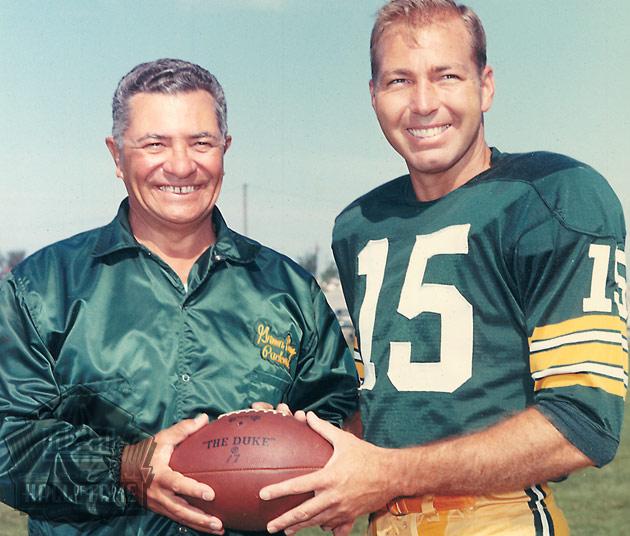
Image result for bart starr

The football part of his biography, impressive as it is, barely scratches the surface in describing Bryan Bartlett “Bart” Starr as a man.

What he achieved as the brilliant quarterback of the Green Bay Packers in the 1960s was beyond extraordinary: five National Football League titles in a span of seven years, the most valuable player in Super Bowls I and II, numerous passing records and the undying respect and admiration of teammates and opponents.

But he had a lot of life to live after he threw his final pass, and he lived it so very well.

Humble, gracious and philanthropic, the impeccably mannered Starr was the rare athlete who consciously and meticulously conducted himself, every day, in a manner befitting the hero mantle he’d earned on the field of play.

“He lived his life to be an example to others,” said Jerry Kramer, the starting right guard on those great Packers teams of the ‘60s. “He knew he carried a burden. He lived his life with purpose and with willpower. And because of that, he was an example to everyone on our team.”

When Starr died Sunday at age 85, he left behind a legacy in Green Bay, in Wisconsin and in the hearts of Packers fans everywhere that will endure until there is no more history left to write.

Starr suffered two strokes, four seizures and a heart attack in early September 2014, and was hospitalized for 2½ months. He also had cognitive issues, struggled with short-term memory loss and stopped making public appearances and granting interviews. Starr later did make two trips back to Lambeau Field.

Starr was born Jan. 9, 1934, in Montgomery, Alabama, where some two decades later Rosa Parks and the Rev. Martin Luther King would help launch the civil rights movement.

His father, Ben Starr, was a master sergeant with the Army Air Corps and a stern and intimidating man with whom Bart had a complicated relationship. If he somehow fell short in his father’s eyes, which was often the case, young Bart redoubled his efforts to win approval.

Years later, Starr would say that growing up in a military environment with a demanding father prepared him to succeed under coach Vince Lombardi, a volatile taskmaster who ultimately rewarded Starr with his complete trust.

Starr’s professional career, however, could not have gotten off to a more inauspicious start. Drafted in the 17th round out of Alabama in 1956, he shared the quarterback job with Tobin Rote and Babe Parilli and started 19 games over three seasons, compiling a 3-15-1 record with 13 touchdown passes and 25 interceptions.

His teammates had little faith in him as a leader.

But Lombardi, hired in 1959, recognized that Starr was intelligent and coachable and realized in time that he was tougher mentally and physically than most thought. After another 1½ seasons of job-sharing with Lamar McHan, Starr became the starter for good late in the 1960 season and led the Packers to their first division title in 16 years.

The Packers lost to the Philadelphia Eagles 17-13 in the 1960 NFL Championship game but would never lose another postseason game under Starr and Lombardi. The franchise won NFL titles in 1961, ’62, ’65, ’66 and ’67, putting tiny Green Bay on the map.   

The offense, directed by Starr and including future Hall of Famers Jim Taylor, Paul Hornung, Jim Ringo, Forrest Gregg and Kramer, was one of the most productive in NFL history. Starr called his own plays and in contrast with his gentlemanly demeanor off the field was a cutthroat competitor on it.

“There was a part of Bart Starr that was the great individual, courteous, never rude to anybody,” said Zeke Bratkowski, Starr’s backup from 1963-68. “Then there was the part of him on the football field deciding to throw it on fourth-and-1.

“Coach Lombardi would ask me, ‘What do you think he’s going to do?’ I would say, ‘He’s going to throw it.’ That’s the way he operated.”

Image result for bart starr

(AP)

In the 1967 NFL Championship game, the famed “Ice Bowl” at Lambeau Field, Starr called his own number and scored on a 1-yard plunge in the final seconds to give the Packers a 21-17 victory over the Dallas Cowboys in one of the most memorable games in league history.

Bratkowski said Starr was unlike any quarterback he’d seen in the way he studied film and prepared for games.

“When I got traded (by the Los Angeles Rams) in the middle of ’63, I went to Green Bay and checked in to the Holiday Inn,” Bratkowski said. “I got a call half an hour later and it’s Bart. He said, ‘I’m watching film. Would you like to come over and watch it with me?’

“He was so regimented. During the season he would trim his fingernails on Thursday. He would lace his shoes a certain way. He just had things that he was very regimented about. Everything had to be just so. There was a tremendous amount of respect for his work ethic and preparation.”

Starr played 16 seasons for the Packers and completed 57.4 percent of his passes for 24,718 yards, with 152 touchdowns and 138 interceptions. He was brilliant in the playoffs, going 9-1 with 15 touchdowns and just three interceptions.

He led the league in passing three times, was the NFL’s most valuable player in 1966 and was inducted into the Pro Football Hall of Fame in 1977.

In 1972, Starr attempted a comeback but a shoulder injury forced him to retire. One day that summer, rookie kicker Chester Marcol was practicing field goals alone, kicking off a tee in Lambeau Field, when Starr approached and offered to hold the ball for Marcol’s kicks.

“I was awestruck,” Marcol wrote in his autobiography. “Starr was a living legend. … His offer to help told me a lot about him as a person and as a teammate. He didn’t have to do that. He was headed to the Hall of Fame and I was a rookie kicker from a tiny college in Michigan. That’s how much he cared about the Green Bay Packers.”

Starr cared so deeply about the franchise that he couldn’t turn down the Packers’ offer to become the head coach and general manager in 1975, even though, as he would admit years later, he was unprepared for the job. He had spent the ’72 season as Dan Devine’s quarterbacks coach, but had no other coaching experience.

Plus, he inherited a mess. Devine had traded five high draft picks for washed-up quarterback John Hadl, basically bankrupting the team’s short-term future.

“He inherited a team that didn’t have a strong nucleus,” said Bratkowski, Starr’s quarterbacks coach from 1975 to ‘81. “There wasn’t enough personnel. You win with people. We did make some mistakes in the draft, but there was so much need you can’t fill it all up in one draft or two drafts or three drafts."

“You could say those are excuses. No, they’re not.”


RELATED: The Ice Bowl, 50 years later: An oral history

RELATED: Packers Hall of Fame fullback Jim Taylor dies at 83

Starr was stripped of his general manager duties after the 1980 season and was fired as coach after the ’83 season. He had compiled a 52-76-3 record, with two winning seasons and one playoff victory.   
        
In the mid-‘80s, Tom Stoen, the retired chairman of an oil and gas exploration company, led an effort to get an NFL expansion team in Phoenix. Stoen planned to make Starr the director of football operations for the proposed Arizona Firebirds.

“We made a handshake deal and he never wavered,” Stoen told the Arizona Republic. “During the time he was with us, he had opportunities to take a piece of the action with other teams and he never said a word.

“I cannot say enough good things about him. He’s probably as honorable and decent a man as you would ever meet.

Image result for bart starr

But there would be no expansion team in Arizona. Bill Bidwill informed the NFL of his plans to move the St. Louis Cardinals to Phoenix in time for the 1988 season. Bart and wife Cherry, who had relocated to Paradise Valley, moved back to Montgomery.

“(Then-NFL Commissioner) Pete Rozelle very much wanted Bart to have the team there,” Cherry Starr said. “He loved Bart and did his very best.”

Though his dismissal in Green Bay had stung the prideful Starr, he didn’t let it affect his feelings for the organization or for Packers fans, who were quick to forgive and forget his coaching record. He remained a beloved figure in Wisconsin and a treasured Packers icon for the rest of his days.

Off the field, he continued to build goodwill with his unwavering devotion to the franchise and his many charitable endeavors.

He served as honorary co-chair, along with Cherry, of the Vince Lombardi Golf Classic from its inception in 1971 until his health no longer permitted him to attend in 2014.

He co-founded the Rawhide Boys Ranch for at-risk youth in New London in 1965, helping complete the down payment on the Rawhide property in 1968 by raffling off the Corvette he won as the MVP of Super Bowl II.

“He did so much for so many people,” said Bob Long, a Packers receiver from 1964 to ’67 and later a business associate of Starr’s.

The Athletes in Action/Bart Starr Award has been given annually since 1989 to the NFL player who best exemplifies outstanding character and leadership. The award honors Starr’s lifelong commitment to serving as a positive role model.

Aaron Rodgers won the Bart Starr Award in 2014.

Asked if Starr was as good a man as he has been portrayed to be, Taylor, the Hall of Fame fullback (who died in 2018), said, “Probably more so than what’s been written about. He’s just a great guy. He lived a good, full life and has been an asset and a tribute to the National Football League and the Green Bay Packers.”

Added Bratkowski, “If you had to describe a gentleman you would take all the adjectives and put them in a long line. That’s Bart.”

Early on, however, Starr had to convince some skeptical teammates that he was who he appeared to be. Kramer, for one, initially thought there was an element of phoniness to Starr’s yes-ma’am-no-sir politeness and the ramrod-straight way he carried himself on and off the field.

“For many years, I didn’t think Bart was as good as he was letting on,” Kramer said. “I thought, ‘There’s got to be a flaw in there somewhere.’ I watched him for 10 years. Nothing. Not the slightest thing. And so I threw in with him.

 "We’d go to a function and he’d go to a prayer breakfast with the ladies. Then he’d go to a luncheon with the business leaders. And then he’d have a beer that evening with the guys. He did it all, you know?”

The Starrs lost a son, Bret, to a drug overdose in 1988. Starr discovered the body. Though it was the most painful event of his life, he handled it with typical poise and grace.

“I was watching Roy Firestone do his (television) show with Bart,” Kramer said. “Roy is doing the interview and he says, ‘Bart, I hate to ask you this, but how did it feel when you found your son?’ I jumped out of my chair, I was so mad.

“And Bart says, ‘Roy, I was so thankful that my wife wasn’t there and that she didn’t have to see that.’ He found a positive in the most negative thing I could imagine. That’s Bart.”

Starr always treated Packers fans with respect and was unfailingly patient and polite in countless encounters with them. He once told Bratkowski, “It’s an honor for people to recognize you for what you accomplished.”

“We’d be eating dinner and somebody would come up to him and say, ‘Mr. Starr, can I have your autograph?’ ” Bratkowski said. “He would stand up, hold out his hand and say, ‘It’s Bart. This is coach Zeke Bratkowski and his wife, and this is my wife, Cherry.’ He was always so polite, so cordial.

“He wouldn’t sign a napkin. He’d say, ‘If you get a piece of paper and write down your name and address, when I get home I will sign a picture and mail it out the next day.’ ”

Starr’s neat and distinctive autograph is highly prized by sports memorabilia collectors and Starr-signed jerseys, footballs, helmets and lithographs can easily surpass $1,000 in value.

“Even the current fans today, the Starr name resonates with them,” said Rick Moncher, a sports memorabilia dealer who in recent years had exclusive signing rights with Starr.

Image result for bart starr
(Shawn Hubbard)

Starr is survived by Cherry and a son, Bart Jr.

“The Packers Family was saddened today to learn of the passing of Bart Starr,” Packers President/CEO Mark Murphy said in a statement. “A champion on and off the field, Bart epitomized class and was beloved by generations of Packers fans. A clutch player who led his team to five NFL titles, Bart could still fill Lambeau Field with electricity decades later during his many visits. Our thoughts and prayers go out to Cherry and the entire Starr family.”

Green Bay Packers' quarterback Bart Starr remembered as class act

Packers legend Bart Starr left a winning blueprint for all QBs to follow


By Bill Bender
https://www.sportingnews.com/us/nfl/news/packers-legend-bart-starr-left-a-winning-blueprint-for-all-qbs-to-follow/1dxmw9f2mr9o91bk25siwpk66m
May 26, 2019

Related image
Bart Starr, the MVP of the first two Super Bowls and the quarterback of the Packers' five-championship dynasty in the 1960s, died on Sunday. He was 85.
Expect memories of Starr to pour in for his role on those Vince Lombardi-led teams that transformed Green Bay into "Titletown, USA" and ushered in the Super Bowl era. He is the quarterback who tip-toed behind Jerry Kramer's block into the end zone on a quarterback sneak in the Ice Bowl against Dallas. He is the clutch winner who finished 9-1 in the postseason. He is the Southern gentleman from Montgomery, Ala.
As far as the 26 modern-day quarterbacks in the Pro Football Hall of Fame go, Starr will always be the ultimate Boy Scout.
That's exactly how I'll always remember him, too. After all, that is where I met Starr for the first and only time.
My father grew up during that Green Bay run in the 1960s - which produced NFL championships in 1961, 1962, 1965, 1966 and 1967 - and whenever he talked about quarterbacks, Starr's name always came up first. Starr was a winner. Starr was class. Starr was, well, a star in every sense. That is how you are supposed to play the position.
Of course, I wore Starr's number in junior high trying to impress my dad not knowing I would unexpectedly be thrown into the starting role. I did not win nearly as much, but I tried to carry myself the same way as Starr.
Brett Favre and Reggie White would become my idols later, and I'll never forget covering Favre's Hall of Fame induction a few years after my father passed away. It's like that with my son and I when it comes to Aaron Rodgers now, and maybe it will be like that with him and his children with the next franchise quarterback.
That family tradition starts with Starr.
Starr will never be considered a better quarterback than Favre and Rodgers, and that's fine. He'll still be the winning standard for how Green Bay quarterbacks should be judged, and he maintained that label well after retirement.
I went to an early-season Bengals-Packers game at Lambeau Field in 2009. Favre was in Minnesota, and Rodgers was still trying to cement his spot as the starting quarterback. Green Bay fans were divided on that issue, but at halftime when they trotted out several Packers legends, Starr got the loudest and proudest ovation. There was a never a doubt about that.
Which brings me to the Boy Scouts.
In 2010, my wife Kimberly was a reporter at the Rock Hill (S.C.) Herald, and she was assigned to cover a Boy Scouts of America benefit on March 9. Starr was the guest speaker, so of course, I tagged along. I was not going to pass up on a chance to meet Starr, but it was even better simply listening to him.
Starr spoke about the values of the Boy Scouts and the importance of the organization. The speech was good. But every time he mentioned Lombardi and the "relentless pursuit of perfection knowing all the while we can never attain it," his voice would amp up a few octaves. I went back and looked at the program from that night, and I scribbled in a note in blue pen.
"It all starts with an attitude."
Starr said that when talking about Lombardi, the ultimate motivator who turned the Packers from a bottom-feeder into a dynasty. Starr often told the story about calling his wife after Lombardi's first speech with the team and saying, "We're going to start winning now."
That's what he did best. Starr had such an appreciation for the coach of that dynasty that he deflected much of the attention off himself. He finished 16-of-23 for 250 yards and two TDs with one interception in Super Bowl I and 13-of-24 for 202 yards and a TD in Super Bowl II. Starr would probably get affixed with a label such as "game manager" today, but he essentially did the 1960s version of what Tom Brady does now for Bill Belichick. Lombardi and Starr, a 17th-round pick in 1956, made that work.
Winning was the only thing the mattered. That's why he had so many fans like me who never saw him play in person.
I got a photo taken with Starr and snuck in on a scrum afterward, and he was fielding questions about the Rodgers-Favre drama that reached a crescendo the previous season. Starr gave political answers throughout about those two - he liked both. I snuck in a question about the legacy of his Lombardi teams and where they stacked up.
"Three straight championships, and we're the last team to do it," he said with a bite before staring me down.
That always stuck with me most from that night.
Starr is responsible for one of the most iconic plays in one of the most iconic games in NFL history, but he took the most pride in the fact that the Packers were the last team to three-peat. That accomplishment is every bit as impressive as the 1972 Dolphins' undefeated season because those three championships were from 1965-67.
It's how I'll always approach any sports argument. You start with the championships, then work your way down. After all, it was Lombardi who said, "If you're lucky enough to find a guy with a lot of head and a lot of heart, he's never going to come off the field second."
Starr had both, and he was as close to perfect as you can get. He left a standard for all quarterbacks to follow, both on and off the field, one that Favre, Rodgers and the next one will always be measured against with those five championships.
Starr was the ultimate Boy Scout and forever will be.
Let's hope he's not the last one.