Showing posts with label Elvis Presley. Show all posts

Monday, August 12, 2019

Elvis Presley Needed a Reboot in July 1969. So Did Las Vegas.


By Richard Zoglin
https://www.nytimes.com/2019/07/30/arts/music/elvis-presley-69-comeback-vegas.html
July 30, 2019
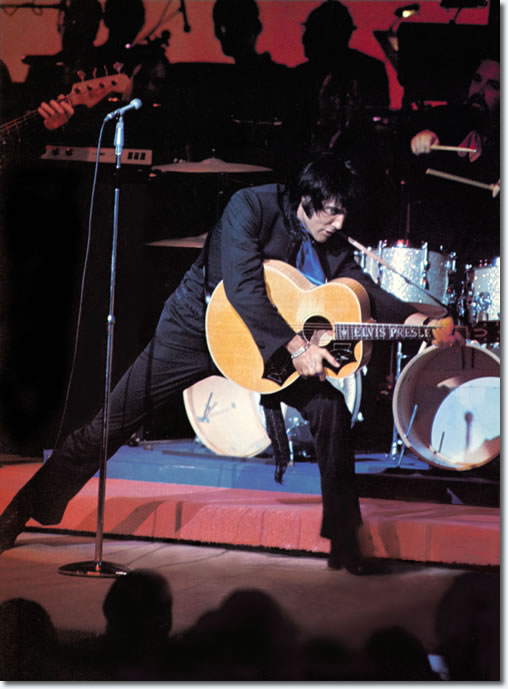
Image result for elvis 1969 vegas

The 1960s may have been a wildly transformative decade in the history of popular music, but for Elvis Presley it was something of a black hole.
When he returned from his two-year hitch in the Army in 1960, the king of rock ’n’ roll essentially retired from live performing, confining himself to making movies (which were growing steadily worse) and recording disposable pop songs (that were no longer reaching the charts). A much-praised television comeback special on NBC in December 1968 had put him back on the radar. But when he finally returned to the stage for the first time in more than eight years, for a four-week engagement at Las Vegas’ new International Hotel, there was no guarantee he could still deliver onstage.
This week marks the 50th anniversary of Elvis’s Vegas comeback show, on July 31, 1969 — a milestone being celebrated by a new Sony 11-CD boxed set of his ’69 Vegas performances, a reunion concert in Memphis next month and probably some snickers from the rock classicists. Elvis’s Vegas years are mostly recalled as a period of commercial excess and artistic decline: the bombastic shows, the gaudy white jumpsuits, the ballooning weight, the erratic stage behavior, the drugs. “For many,” wrote Dylan Jones in “Elvis Has Left the Building,” “Vegas Elvis was already Dead Elvis.”
But for that 1969 comeback, and at least a year or two after, Elvis was at his peak as a stage performer, and he created a show that not only revitalized his career, but changed the face of Las Vegas entertainment.

The singer and the city had a long relationship. Elvis first appeared in Las Vegas in 1956, when he was just breaking out — he hadn’t appeared on “The Ed Sullivan Show” yet — and found himself booked into the New Frontier Hotel, on a bill with Freddy Martin’s orchestra and the comedian Shecky Greene. The show was pretty much a dud; the middle-aged nightclubbers didn’t know what to make of him. “For the teenagers, he’s a whiz,” wrote Variety’s critic; “for the average Vegas spender, a fizz.”
But Elvis loved Las Vegas, and the city became his favorite getaway.
He came back often: retreating there between movie shoots, seeing shows, picking up showgirls, partying all night with his Memphis pals. He shot his movie “Viva Las Vegas” there in 1963. He married Priscilla at the Aladdin Hotel there in 1967. So when his manager, Colonel Tom Parker, finally decided it was time for a return to the concert stage, Vegas was not as odd a choice as it might have seemed.

Las Vegas also needed a boost. At the beginning of the decade, with Sinatra and the Rat Pack riding high, the town was the white-hot center for live entertainment in America. By the end of the ’60s, however, the golden years were fading fast. The arrival of the Beatles, the rise of the counterculture — all of it was making Vegas look decidedly worn. None of the major rock artists of the era — the Stones, Bob Dylan, Janis Joplin — wanted anything to do with the city. The younger generation was going to arena concerts, not hanging out in the Sands Hotel lounge. So it was fitting that Las Vegas, a town blindsided by the rock revolution, would turn to a megawatt rock ‘n’ roll star as the agent of its reinvention two weeks before Woodstock would take place in upstate New York.
Elvis’s return to the stage in Vegas was a make-or-break career gamble. Colonel Parker had envisioned a traditional Vegas show, with chorus girls and choreography. Elvis wanted something different: a concert to reconnect him with his fans and showcase all the music he loved.

“This was the deprived musician, who had not been able to control his music, either in the recording studio or the movies,” said his longtime friend Jerry Schilling. “And now he was going to satisfy all his musical desires on that stage.”
Elvis handpicked a new backup band (headed by the guitar great James Burton), added two backup singing groups (a male gospel quartet, the Imperials, and a female soul group, the Sweet Inspirations, whose lead singer at the time was Cissy Houston), and filled out the sound with a 40-plus-piece orchestra.
The International’s 2,000-seat showroom was twice as large as any other in Vegas, and the sold-out venue was packed on opening night with celebrities and Vegas VIPs, along with dozens of rock journalists and critics, many flown in from New York on the hotel titan Kirk Kerkorian’s private jet. Behind the scenes, Elvis was so nervous he almost had to be pushed out onstage. “I saw in his face the look of terror,” said the comedian Sammy Shore, his opening act. But when Elvis walked out, to a throbbing rhythm intro, grabbed the microphone with a trembling hand, and launched into “Blue Suede Shoes,” the audience went wild.
It was the old Elvis, rocking as hard as ever, on a song he hadn’t done in a decade. He followed with more vintage hits — “All Shook Up,” “Don’t Be Cruel,” “Hound Dog”. He did them faster than in the old days, almost as if he wanted to get through them as quickly as possible, to get to the more mature and varied material he was starting to record. He sang “In the Ghetto,” the social-protest song that had been released in the spring and became a hit. He did covers of songs identified with other artists — Chuck Berry’s “Johnny B. Goode,” Ray Charles’s “I Can’t Stop Loving You,” the Beatles’ “Yesterday.”
The high point of the show was a galvanic, seven-minute version of a song almost no one in the crowd had heard before: “Suspicious Minds,” which would be released during his Vegas run and give him his first No. 1 hit in seven years.

The show lasted an hour and 15 minutes, and Elvis was on fire throughout — prowling the stage like a panther, doing karate kicks, sweating and downing water and Gatorade. He was huffing and puffing after just a few minutes, but the voice never faltered: richer, more expressive, more powerful than ever. “I never saw anything like it in my life,” said Mac Davis, the singer-songwriter who had written “In the Ghetto” for him and was in the audience that night. “You couldn’t take your eyes off the guy. It was just crazy. Women rushing the stage, people clamoring over each other. I couldn’t wipe the grin off my face the entire time.”

Presley talked to the audience too — nervously, with a few corny jokes and a lot of self-deprecating asides (much in evidence on the full-show recordings in the new boxed set). But that was part of the appeal: this was no slick Vegas performer with polished jokes and programmed patter. Elvis seemed just as awed by the occasion as everyone in the audience.
He played for four solid weeks, seven nights a week, two shows a night — not a single evening off — and every gig was sold out. The critics raved; David Dalton in Rolling Stone called Elvis “supernatural, his own resurrection.” Richard Goldstein, writing in The New York Times, said watching him “felt like getting hit in the face with a bucket of melted ice. He looked so timeless up there, so constant.” The hotel instantly signed him up for five more years.
Elvis brought something new to Las Vegas: not an intimate, Rat Pack-style nightclub show, but a big rock-concert extravaganza. He showed that rock ’n’ roll (and country and R&B too) could work on the big Vegas stage. And he brought in a new kind of audience: not the Vegas regulars and high rollers, but a broader, more middle-American crowd: female fans who had screamed for Elvis as teenagers, families who made Elvis the centerpiece of their summer vacation. It was the same audience that Vegas would discover, over the next couple of decades, as it embarked on its own reinvention — a foretaste of the Vegas we know today, the Vegas of Cirque du Soleil, theme-park hotels, and (more recently) a new generation of pop-star residencies, from Elton John to Lady Gaga.
Elvis soon grew bored with Vegas, and the shows began to deteriorate. But it’s easy to forget what an engaged, dynamic, even inspiring performer he was in 1969. Elvis in the ’50s had been the great divider: the musical artist who split the culture in two — between the adults, who listened to the pop standards and Hit Parade tunes, and the kids, who were listening to a newfangled music called rock ’n’ roll. By the end of the 1960s (a decade in which that divide grew even starker) Elvis was the great uniter: gathering all the music he loved, from rockabilly to operatic ballads, in one great democratic embrace. He didn’t need to be the coolest thing in rock. He wanted to sing to everybody.
He did. And in the process he helped transform a city.
Richard Zoglin is the author of “Elvis in Vegas; How the King Reinvented the Las Vegas Show,” just published by Simon & Schuster.

The summer of 1969: When Elvis made his true comeback


By Geoff Edgers
https://www.washingtonpost.com/entertainment/music/the-summer-of-1969-when-elvis-made-his-true-comeback/2019/08/06/178e901e-b772-11e9-bad6-609f75bfd97f_story.html
August 7, 2019

Image result for elvis 1969 vegas
(Sony)

Elvis was terrified. The contracts had been signed, the audience was packed with celebrities — Cary Grant, Ann-Margret, Sammy Davis Jr. — and billionaire Kirk Kerkorian had flown in a slew of critics on his private jet.
Backstage at Kerkorian’s International Hotel in Las Vegas, Elvis Presley told guitarist James Burton, who had put together the backing band for the singer’s return to the stage, that he couldn’t perform.
“He hadn’t been onstage in nine years,” says Burton, 79. “He said, ‘James, I don’t know if I can go out there. I don’t know if I can walk out there and do this, man.’ I said, ‘Sure you can. Just walk out there and don’t even pay attention to the audience. Just sing to us, man. Make it like a jam session in the Jungle Room at Graceland.’ ”
Elvis, who was 34, would take the stage that last day of July 1969, and his 57-show run at the International would punctuate his comeback, launched after a decade of dreadful movies (“Harum Scarum,” “Kissin’ Cousins”) and his electrifying NBC special late in 1968. On Friday, Sony is releasing a stunning 11-CD set from that run, showcasing Presley at a crucial juncture, in strong voice and performing dazzling versions of early staples while introducing such latter-day hits as “Suspicious Minds” and “In the Ghetto.” Now, 50 years later, we spoke with three who were there — Burton, singer Darlene Love (“He’s a Rebel”) and veteran journalist Robert Christgau.
There was talk, early on, of Elvis bringing back Sun sessions guitarist Scotty Moore and drummer D.J. Fontana for the Vegas run. But Moore ran a successful studio of his own and complained that the $500-a-week offer was too low. Elvis then called Burton. The Louisiana-born Burton was a teenager when he played on Dale Hawkins’s 1957 hit “Susie Q.” He then backed Ricky Nelson.
Burton: Elvis said, “Man, I watched you on the Ozzie and Harriet TV show. I said, “You got to be kidding.” The king of rock-and-roll watching me on TV playing guitar? And you know, he laughed. He wanted to come back. He wanted to go do live shows. He got tired of doing movies for nine years and he said he wanted to get back onstage with a live band and just go for it. He missed playing live to the fans.
The band that Burton formed would include drummer Ronnie Tutt and bassist Jerry Scheff, and it became known as the TCB Band.
Burton: Well, Elvis actually came up with that — taking care of business — and that became its logo. Also, he came up with the idea of TLC — tender loving care — for the ladies. But for the guys, TCB, when we walk onstage, when we sing and when we play, it’s taking care of business, man, straight ahead.
One of highlights of the set would be Elvis’s performances of “Mystery Train” and “Tiger Man.”
Burton: Just the tempo was so cool and everything and that little guitar riff thing behind the song. And then the solo and everything. Very similar to the original record, but a little more energy, a little more up. And then he jumped into “Tiger Man” and that was kind of a surprise, so we went with it. And that gave me a chance to do some more chicken picking.
In 1969, Iron Butterfly, Led Zeppelin, the Who, the Rolling Stones and Jimi Hendrix ruled the charts. And in August, in the midst of Elvis’s Vegas run, hippies would gather on a farm in Upstate New York for Woodstock. Kerkorian wanted to make sure Elvis’s comeback was noticed and flew in a group of music critics for the show, including the late Nat Hentoff, the New Yorker’s Ellen Willis and the Village Voice’s Robert Christgau.
Growing up, Christgau was not an Elvis fan. But he had been impressed with Presley’s return to the top 10 in April with “In the Ghetto.”
Christgau: It was a major hit that made a pass at a show of conscience and political consciousness. We understood that Elvis Presley was a credible interpreter of the black popular music of the early ’50s. That much we knew. It was more that he’d fallen away to a greater extent. . . . “In the Ghetto” really changed the tone of who he was, and it made the notion that he was making a comeback far more acceptable within counterculture-oriented people, which was most rock critics, all rock critics.”
Singer Darlene Love had performed on Elvis’s 1968 TV special with the Blossoms. They were asked to back him in Vegas but were already booked. Still, Love made it to see the show on opening night. Presley took the stage in a black jumpsuit.
Love: He was trim, all right. He looked good. That’s why he was able to wear that body suit . . . and he was a, what do you call it, a black belt. So he actually did those kind of moves while he was onstage.
The crowd responded as soon as Elvis took the stage. The screams can be heard during the set. And for Burton, the excitement led to an unexpected challenge: The musicians couldn’t hear one another.
Burton: The audience went nuts. He walked out there, and all you could hear was screaming and hollering and clapping. We only had monitors onstage for his voice, but we couldn’t hear each other. . . . And man, it was amazing. It makes you think, how did these guys play together?
Love: Elvis was the one that started that leaning over the stage, you know, taking their handkerchiefs, and whatever else they had they gave him, and wiping his face off with them. So you probably would hear their screams louder than you would hear anybody else’s because he had the microphone in his hands. But it was like that all over the audience.
Christgau’s review, in the Village Voice, was a rave. “It was Pentecostal,” he wrote. “We were cheering before we had fully comprehended what had happened.” He was struck by Elvis’s between-song banter, which the singer filled with self-deprecating jokes and sarcasm.
Christgau: He had a distance from it. There was a pop irony. . . . I was a pop-art fan. I always liked the ironic distance, and Presley definitely had that. . . . Elvis Presley was a very intelligent person. He wasn’t well educated, but he was smart, so he knew what was going on.
Burton: He would just tell stories about things that we had never heard, which is kind of funny onstage. You had to watch him every minute because he may jump into a song or a different song. And we had him covered, man. We watched him like a hawk.
After the run, Presley began touring and would return to Las Vegas repeatedly. But that first night, Love says, the audience knew things had changed. Elvis Presley was back.
Love: A lot of times, as soon as the show is over, people start leaving, especially in Vegas. They go back out and start gambling. But everybody moved very slowly. I think they were letting it all sink in — what happened that night, what happened at that show. . . . and the whole idea that Elvis was on and he was back. . . . I don’t think there would ever be another moment like that. Everybody has their moment, and that was Elvis’s moment.”

Friday, April 20, 2018

Elvis the Artist: The 'Searcher' Finds 'Rescue' in New HBO Documentary


By John Beifuss
https://www.commercialappeal.com/story/news/2018/04/09/elvis-artist-searcher-finds-rescue-new-hbo-documentary/428610002/
April 9, 2018

Related image

Has any entertainer — or is "entertainer" too limiting? — been as scrutinized, analyzed and idolized as Elvis Presley?

He was the King of Rock and Roll.

The Pelvis.

"A remarkable American original," according to biographer Peter Guralnick.

"The greatest cultural force in the 20th century," said composer Leonard Bernstein.

"A real decent, fine boy" noted Ed Sullivan. 

"Like Lord Byron in the wax museum" sneered a Time magazine critic, in 1956.

Eighty-three years after his birth in a two-room house in Tupelo and 41 years after his death in his 23-room mansion in Memphis, Elvis continues to attract new labels, new identities.

The latest — coined by Priscilla Presley and embraced by HBO — is an appellation that emphasizes the thoughtful artist over the show-biz icon.

Debuting at 7 p.m. (Memphis time) on Saturday, April 14, "Elvis Presley: The Searcher" is an ambitious, two-part, 206-minute documentary produced for HBO with the cooperation of Graceland, which opened its archives to grant the filmmakers access to material that never before had been shared with the public. (One example is an audio recording of Elvis' beloved mother, Gladys Presley, warbling a hymn.)

Intended to be definitive, the film also features "never-before-seen photos and footage from private collections worldwide," according to HBO.

Of course, the movie will be repeated many times in the coming weeks on various HBO networks. In addition, a companion soundtrack album will be released this week on vinyl and compact disc in several configurations, including a 3-disc "deluxe" CD that collects 75 songs, including familiar recordings, from-the-vault rarities and original versions of songs Elvis covered, plus selections from the soundtrack's original score, composed by Pearl Jam's Mike McCready.

"The idea is to rescue Elvis from the cartoon image," said director Thom Zimny, 52, recruited for the project on the strength of his work with Bruce Springsteen on the documentaries that accompanied reissues of "Born to Run," "Darkness on the Edge of Town" and "The River."

"The hope is that people will get a sense of the real Elvis, because the voices in the film come from a place of truly loving the music of Elvis," said the New York-based Zimny, in town for a March 17 preview of the documentary at The Guest House at Graceland, the 450-room hotel that opened in 2016 on Elvis Presley Boulevard, just north of Elvis' former home.

"There's not a moment of pure celebrity," Zimny said of the participants in the documentary. "Everyone in the film, you had to feel that this person was never the same after listening to Elvis. Their life changed because of Elvis."

In much the same way, most of the people at the preview screening in the Guest House auditorium were devoted to Elvis. The audience primarily was made up of invited Elvis fans, seated among such notables as the filmmakers; Priscilla Presley; longtime Presley associate Jerry Schilling; Stax songwriter David Porter; Jerry Phillips, the son of Sun founder Sam Phillips; and other significant Presley-connected figures and scholars.

Schilling, 76, originated the idea of the documentary, along with Priscilla Presley. (Both are credited as executive producers.) 

"I knew there was a human, special story about Elvis that had not been told on film — an untold story of Elvis' creative desires," Schilling said. 

"I was with him when he said he would do 'A Star as Born' with Barbra Streisand," added Schilling, mentioning ambitions that were thwarted by Presley's manager, "Colonel" Tom Parker. "I was with him when he said he wanted to go on tour overseas,"

Such frustrations — epitomized by the substandard material that characterized Elvis' "destabilizing" movie career, to borrow a term used by musician Warren Zanes in the film — make up one of the documentary's storylines.

"I just don't think you can have a creative genius like Elvis and keep giving him the same stuff," Schilling said. "Elvis always was searching for different things in his life."

However, the movie emphasizes Elvis the Productive over Elvis the Stymied. As Zanes also says in the documentary: "He can pull in a wide range of genres, and they all come out Elvis."

Schilling said he and Priscilla Presley spent seven years trying to find sympathetic collaborators and a proper platform for the project. After connecting with Zimny and his team, HBO made sense as a destination.

Not only had the network hosted some of Zimny's previous films, but HBO has become known for its deep-dive musical biographies, including Martin Scorsese's "George Harrison: Living in the Material World" and Alex Gibney's "Sinatra: All or Nothing at All."

Written by Alan Light, "The Searcher" presents Presley's life more or less chronologically, but presumes that the viewer already is familiar with much of the Elvis biography. It emphasizes career choices — the first trip to Sun; the early RCA era; the post-Army releases; the embrace of gospel; the so-called "'68 Comeback Special"; the Chips Moman-produced Memphis recordings; the1970s return to live performance; the final 1976 "Jungle Room" sessions — over domestic activities. 

"I looked at him as an artist, and left behind the gossip and lifestyle details," Zimny explained. "There's no talk of the 'Memphis Mafia' or him giving away Cadillacs."

Narration is provided through archival sound bites and new interviews with Elvis associates, researchers, collaborators and fans, including Springsteen — "You could take the boy out of Memphis, you really couldn't take Memphis out of the boy," the Boss observes — and the late Tom Petty, one of several people recorded in the nick of time, so to speak. (The late Red West is another.)

The speakers are identified by onscreen text, but remain unseen. A stylistic conceit of Zimny's approach is to avoid the "talking head" shots typical of historical documentaries; visually, the film is constructed from vintage material (including home movies, fan footage and rare television kinescopes); a few evocative recreations (shots of a boy on a bike to represent Elvis' youth); and new atmospheric footage from inside Graceland that aspires to present a moving-camera complement to William Eggleston's famous still photos of Elvis' home.

"You end up living in Elvis' space," Zimny said. "There's no cutting to the person in a chair to take you out of that world." He characterized the result as "a dreamscape."

Some of the more "dream"-like moments place special emphasis on a particular song. Elvis' haunting Sun version of "Blue Moon" and the 1961 "Lonely Man" are heard essentially in their entirety; the latter's lyrics are particularly appropriate to "The Searcher": "It's a lonely man/ Who roams from town to town/ Searchin', always searchin'/ For something he can't find..."

The title, "Elvis Presley: The Searcher," was identified by Jon Landau, the Springsteen manager who is among the film's producers, when he took note of Priscilla Presley's comment in an interview that "Elvis was a searcher.;

Priscilla Presley said the documentary achieves its aim by recognizing Elvis' role as a "producer" of his recordings as well as an interpreter of songs. "One of the things people have said about him is that he was 'lucky,' but that is so untrue," said Presley, 72. "Elvis was born to be who he was. He knew from the very beginning what he wanted to do."

Said Schilling of the documentary: "It's a good one, man. There's so much misinformation about him out there, you walk around after you see it with a better feeling about Elvis than you usually do."

‘Elvis Presley: The Searcher’ is a beautiful way to rediscover the man who became King


April 13, 2018
Image result for elvis the searcher
Here is Elvis, rehabbed at last and brought down from his lofty and lunatic afterlife as an icon, reminding us that he was once just a man.
Of course, he was never just any man, he was ELVIS — from birth, it seems. The surviving twin of a doting mother, raised up from the Depression dirt of Tupelo, Miss., and postwar slums of Memphis, opening his mouth in front of Sam Phillips’s microphone and seamlessly merging black and white American song traditions into a form that was new and everlasting. He was imbued with the holy spirit of gospel music and landed instead on something faddishly called rock-and-roll.
With a raft of producers that includes Priscilla Presley, director Thom Zimny’s insightful and stirring 3½ -hour HBO documentary, “Elvis Presley: The Searcher” (premiering Saturday), is a fine demonstration of how the passage of time can help place even the biggest and most overloved superstars into a blessed relief. The film is a calm and deeply empathetic recounting of Presley’s life, split in two. The first half takes us up to 1960 and his career-interrupting military service; the second half is, well, the rest of Elvis: movie star, obsessive workhorse, sweat-drenched showman, tragic figure.

A careful mélange of archival film and sonic clarity, “The Searcher” is a fine reassessment of Presley’s origins and impact. Its many sources, whether alive or dead (from Elvis himself to “Colonel” Tom Parker to writers such as Alan Light and Jon Landau and musicians such as Robbie Robertson and Emmylou Harris) are heard in interviews rather than seen by a camera, which helps maintain a serious focus.
Sound is far more important than celebrity here, and it’s plain that the people who helped produce “The Searcher” are fixed on the subject of artistry — the inspirations, the songs, the voice and the creative decisions that shaped the career. Serious scholarship also comes into play, even though the film is content to let the viewer decide how much of Elvis’s music is about absorption, as opposed to appropriation. His debts to African American music are accounted for, as are his contributions: “[Presley] pointed to black culture and said this is something that’s filled with the force of life,” says Bruce Springsteen. “If you want to be complete and fulfilled as a person, if you want to be an American, this is something that you need to pay attention to.”
“The Searcher” is a marvelous entry point for viewers who have only known Presley to be dead — as a statue or a postage stamp or a skydiving troupe of impersonators. It’s also a must-see for people whose exposure to his musical catalogue is limited to one or two hits, as well as those who still mentally cleave Presley’s story into thin and fat. (Although those periods still work for Zimny as a basic through-line.) It’s a film for anyone who has lost track of what circumstances made Presley a legend, as well as those circumstances that finished him off. Through the film’s epic span and fleetingly impressive moments of time-travel, it is almost possible to fall in love with him the way everybody else once did.
During a clip of Presley’s first TV performance on Tommy and Jimmy Dorsey’s “Stage Show,” Zimny slows the film speed and the song is replaced by a divine interlude. Suddenly we are hearing the words of the late Tom Petty, here from heaven to explain so perfectly what we are watching:
“His body picks up all the intricacies of the rhythm. It’s so lighthearted, but it’s so deep and meaningful at the same time,” Petty says. “It’s such a magical thing to see, because of the kinescopes — just the way it distorts the image. There’s some beautiful thing going down there. And it must have been really incredible to see it with no warning.”
To see it with no warning. It’s on this point that “Elvis Presley: The Searcher” soars, making it possible to view someone as recognizable as Presley fully anew, the way he must have appeared in American living rooms, where he caused such a fuss.
The only place “The Searcher” feels noticeably incomplete is when the end arrives, perhaps out of deference to Priscilla’s involvement (the couple divorced in 1973) or perhaps as a trade-off for access to a trove of archival material. Elvis’s death at age 42 in 1977 is seen more as a release from misery than a preventable excess, and there’s not one peep about his amazing and profitable afterlife as a dead icon.
The documentary also seems determined to settle old scores with Colonel Parker, who died in 1997 and whose management of Presley’s career is portrayed here as cruelly constrictive and creatively tragic, choosing for his client a path strewn with cornball movies and, in the final years, Las Vegas servitude. A suggestive theory sort of hangs there: Even the King was beholden to the man, but still he rises.
Elvis Presley: The Searcher (3 hours 30 minutes) premieres Saturday at 8 p.m. on HBO.

'Elvis Presley: The Searcher' Pulls Back the Veil on the King


The upcoming two-part HBO documentary tells the story of Presley's life through his music


By Andy Greene
https://www.rollingstone.com/tv/features/elvis-presley-the-searcher-hbo-doc-w518496
April 4, 2018

Related image

The Elvis Presley stories repeated most often these days are rarely flattering. Some emphasize his lethal appetite for fatty foods and prescription painkillers; others dwell on bizarre anecdotes like his meeting with Richard Nixon, where he warned the president that the Beatles had an "anti-American spirit." The overall picture in these tales depicts a sweaty, bloated country bumpkin in a sequined jumpsuit who is quick to fire a gun at his own television set. It's a pathetic, cartoon distortion of the man that has little relation to the musical genius from Tupelo, Mississippi, who played a crucial role in the development of rock & roll in the 1950s and continued to innovate within the art form for the reminder of his career.

The new two-part HBO documentary Elvis Presley: The Searcher (which premieres April 14th) aims to finally restore the King to his proper place in the rock pantheon as a creative pioneer on par with Chuck Berry, the Beatles, the Rolling Stones and Bob Dylan. Directed by Thom Zimny and produced by Jon Landau and Priscilla Presley, it tells Elvis' life story through his music, utilizing a treasure trove of unseen video, photographs and new interviews with his friends, collaborators and fans, including Bruce Springsteen and, in one of his final interviews, Tom Petty. "I wanted to attack and shatter the shorthand version of Elvis Presley's life story – that after the Army there was just bad films, bad recordings, bad tours and then his life was over," says Zimny. "This was a man driven by music, even at his darkest times."
The project dates back about four years to discussions Priscilla Presley had with Jerry Schilling, a longtime friend of Elvis who has been involved with the Presley estate for decades. "We wanted to tell the true story," she says. "And then we just happened upon HBO, and [president for HBO Miniseries] Kary Antholis really got it." The network reached out to Landau to get the ball rolling. "I said to them, 'My perception would be to attempt to tell the story of Elvis, the artist, straight through to the end,'" says Landau. "In other words, I wanted to take the second half of his career as seriously as the first."
Zimny was his first thought for a director. They'd worked closely over the past 18 years on a series of documentaries about Springsteen and were of a similar mindset about how to tell musical history on the screen. For this one, the filmmaker decided to record all of his interviews without a camera and just weave the audio across vintage photos and video alongside some new footage he filmed at Graceland. "I love the challenge of not using camera interviews," he says. "It forces you to look at the visual landscape completely differently. You don't have the safety of cutting to the person on camera, and you can stay in the dream world of the film."
Pivotally, Zimny was given access to the Presley estate's complete audio and visual archive. "He had carte blanche to go into it," says Priscilla. "I wanted him to get whatever he needed to make this documentary truthful." The director also sent his research team to scour the planet for previously unseen items and ultimately had more than 6,000 still images to draw from along with Super-8 footage, 16-millimeter outtakes from newsreels and the complete studio sessions from his entire recording career. "One of the key recordings we found was Elvis' mom singing gospel songs, which had never been released," says Zimny. "The landscape of this film is really built upon unseen archival footage that was buried deep in the vault."
Pearl Jam guitarist Mike McCready was given the difficult job of crafting a score for the project. "I knew it had to be someone who could capture the emotional journey of Elvis as an artist, but also his influences – all without it overpowering the tone of the Elvis story and music," the director says. "The composer had to be someone who understood the role the score would play in the two films, and they had to be somebody who could translate the emotional themes that I, who am not a musician, could only describe with words and visuals."
The first half of the documentary goes from Presley's impoverished childhood in Tupelo right up to the moment he was drafted into the Army, at the pinnacle of his fame, in 1958. Rather than recycling the dueling narratives that dominate discussions of his legacy – that he either single-handedly invented rock & roll ormerely copied rock pioneers and took all the credit because he was a photogenic white man – The Searcher explores "the complexities of an artist like Elvis," Zimny says. Much time is devoted to Presley's artistic journey and the rich musical terrain he was exposed to as a teenager. "I was aware of the storyline that Elvis took music from other people," he adds. "And it just didn't make sense after having conversations with Priscilla and, most importantly, [Stax songwriter] Dave Porter, who spoke with me of their time on From Elvis in Memphis and explained to me at length how the music of Beale Street influenced Elvis when he was growing up."
Part Two explores the difficult second chapter of Presley's life, when he returned from the Army and, at the urging of his manager, Colonel Tom Parker, turned away from rock music in favor of B-moves and quicky soundtracks. The1968 comeback special led to a brief period of renewed cultural significance and amazing live shows, but the limitations of Parker's managerial abilities – including his refusal to tour Elvis overseas and team him up with the right studio collaborators – hobbled Presley's career throughout much of the 1970s. "The second part of his career involved triumph over a lot of adversity," says Landau. "He didn't have a George Martin or someone to push him creatively. Most importantly, the material wasn't what it should have been. When you get the soundtrack to Clambake, there's only so much you can do. Still, Elvis brought his personality to everything that he did. The worst songs he ever recorded, the ones he was the most disinterested in, the signature of his singing was right there."
The story of Presley's life is fleshed out by the voices of the people who knew him best and some of his most high-profile fans. Among many other interviews, Zimny spoke to guitarist Scotty Moore – who backed Elvis from his first Sun Records sessions through much of his pre-Army career – just a few weeks before he passed away in 2016.  Lifelong Elvis fan Tom Petty sat down with the director for an hour at his home studio shortly before he launched what became his final tour. "Isolation brings on drug abuse," Petty says, in comments that now seem unsettling in the wake of his death. "It had to be very lonely, we know that. There's a point when you have success and you get really wealthy, and there's the day the letter comes that says none of this will make you happy. He knew he had to find something, but I think he gave up. I think he felt outgunned and gave up."
To showcase Presley's latter years, Zimny zooms in on lesser-known tracks like "Hurt," a gut-wrenching song he recorded in Graceland's Jungle Room about a year before he died. (By that point, the studio had to come to Elvis since he didn't like to leave his house.) "He was at the end of his life when he sang that song," says Zimny. "It depicts his passionate love of music and acknowledges not just his sad loss in the world, but also the power and beauty of his singing voice."
For Priscilla, watching the final cut of the film was a heavy emotional experience. "I broke down because it was like déjá vu," she says. "When I watched the footage of him onstage, I felt like I was back in my booth in Las Vegas watching it and experiencing it. I was living it all over again."

Thursday, June 30, 2016

Appreciation: Scotty Moore, who propelled Elvis Presley's great Sun Sessions, was present at the creation

Randall Roberts
June 29, 2016
http://www.latimes.com/
Scotty Moore and Elvis Presley
If the history of rock ’n’ roll is a series of Big Bangs that pop at random intervals, the explosion that occurred on July 5, 1954, at Sun Studio in Memphis, Tenn., when Elvis Presley, guitarist Scotty Moore and upright bassist Bill Black tore into "That's All Right" was a particularly cosmic occurrence.  
As the electric guitarist steering the music, Moore, who died Tuesday at age 84, lighted Elvis' fuse during the first of what came to be known as the Sun Studio sessions. Moore was the last surviving member of a backing band that upended popular music, helping to propel not only an American musical revolution but also playing a critical role in the birth a whole sub-genre, rockabilly. 
Aside from the towering work of Chuck Berry, no guitarist played a bigger part in establishing the electric guitar as the driving force of rock ’n’ roll.
Sixty-plus years and thousands of distortion pedals later, Moore's playing might sound quaint, but echoes of his fretwork can be heard in the sounds of the Rolling Stones' Keith Richards, George Harrison of the Beatles, Jimmy Page’s work with Led Zeppelin and pretty much every other British band of the 1960s.
The skinny kid with a tight pompadour held a hollow body electric guitar that seemed a few sizes too big for him, but he dotted out strong melodic accents with a minimalist grace and precision. That tone has wended its way through the music of acts as varied as punk bands the Clash, X and Rancid, and is so woven into the DNA of rock as to appear invisible. 
That first musical propulsion took place at the tail end of a session at Sam Phillips’ Sun Studio that hadn’t generated much spark. Presley, who’d relentlessly pursued a session at Sun, was nervous. He and the band had worked on a treacly ballad, “I Love You Because,” and were getting ready to take a break when Moore and Presley started fooling around.
Recalled Moore to Presley biographer Peter Guralnick in "Last Train to Memphis: The Rise of Elvis Presley," “All of the sudden Elvis just started singing this song, jumping around and acting the fool, and then Bill picked up his bass, and he started acting the fool too, and I started playing with them.”
Moore recalled that producer Phillips was preoccupied in the control room but that when he overheard the music, “he stuck his head out and said, ‘What are you doing?’ And we said, ‘We don’t know.’ ”
When Phillips played the tape back, the players were stumped. “It just sounded sort of raw and ragged,” Moore recalled to Guralnick. “We thought it was exciting, but what was it?”
It was the sound of the new, a hard-driving R&B number from would-be country balladeers. Ex-Navy man Moore may have started as a middle-of-the-road country and western player, but the blues tones filling the Beale Street clubs in Memphis affected his approach, and that culture clash resonated. 
Throughout those Sun Records sessions, Moore’s solos became templates. If it wasn’t his magnetic uptempo run on “That’s All Right,” it was his sparse, mournful meditation during “Blue Moon.”
Moore’s downbeat riff during the fast version of “I’m Left, You’re Right, She’s Gone” hits with a rocksteady swagger. During the slow version of the same song, Moore adds a twang-bar menace that suggests the simmering work of Duane Eddy.
Moore’s musical relationship with Presley wasn’t all roses. As the singer’s star ascended, Moore, Black and drummer D.J. Fontana didn’t share in the prosperity. They were still getting sideman wages, touring and watching the ascendant King accrue fame and power.
As reported in “Last Train to Memphis,” Moore delivered his first resignation to Presley in 1956 at the Beverly Wilshire Hotel. Before the end of the year, though, he and Black were back in the fold – with substantial raises.
After that big rush of fame, Moore continued to innovate on the guitar, even if he never stepped out from the King’s shadow. As classic rock ’n’ roll merged with rockabilly, Moore became the patron saint of a movement that continues to draw generations of fans.
Unlike his more famous singer, though, the guitarist could still walk the streets unrecognized. That’s to be expected. Though his impact was just as forceful, Moore understood that his role was to reside outside the maelstrom that was Presley and transform that energy into a sound. 
ALSO