Showing posts with label George Will. Show all posts

Saturday, March 09, 2019

The Clarity Accompanying the Democrats’ Takeover of Congress


March 7, 2019
Image result for george will kristol
George Will and William Kristol
Months before the midterm elections last fall, several self-described “conservatives” implored Americans to vote for Democrats. Still stung that Republicans ignored their advice to reject Donald Trump’s presidential candidacy and unmoved by Trump’s solid record of conservative accomplishments in office, these embittered outcasts claimed that a legislative branch controlled by Democrats would cauterize Trump’s alleged “authoritarian” tendencies.
The most notable of these windmill tilters, attacking an authoritarian impulse that wasn’t there, was George Will. For decades, Will occupied a vaunted perch in the hierarchy of the conservative commentariat. He also was deemed acceptable by media outlets hostile to the Right including the Washington Post, where he now is a contributor. Disgusted at the Trumpification of the Grand Old Party in 2016, Will officially renounced his party affiliation just weeks before the Republican National Convention.
Two years later, in a disorganized rant, Will instructed voters to oust Republicans from power. “In today’s GOP, which is the president’s plaything, he is the mainstream,” Will wrote in June 2018. “A Democratic-controlled Congress would be a basket of deplorables, but there would be enough Republicans to gum up the Senate’s machinery, keeping the institution as peripheral as it has been under their control and asphyxiating mischief from a Democratic House.”
Other lesser-known commentators jumped on Will’s “Vote Democrat” bandwagon, including author Tom Nichols, losing presidential candidate Evan McMullin, and Will’s Post colleagues, Max Boot and Jennifer Rubin. Former George W. Bush aide Michael Gerson argued that a Democratic House was needed because “American politics is in the midst of an emergency.” National Review’s David French announced right before the 2018 election that he no longer was a Republican and would consider voting for third-party candidates.
It’s unclear whether their collective edict had any bearing on the outcome of the November 2018 election and—given that their audience is now so contracted as to include, primarily, Democrats—it is likely that most of their readers needed little persuading. Nevertheless, they got their wish: Democrats took control of the House of Representatives in January.
And what a revealing two months it’s been so far.
Will’s prediction that congressional Democrats would be a basket of left-wing deplorables vastly underestimated the reality. What Will, Nichols and other NeverTrumpers encouraged to be foisted upon our nation is a cabal of cretins devoted to crushing the economic, political, and cultural bones of our body politic in the most ruthless and irreversible way.
And for that alone, perhaps we should thank them. Without the spectacle are now are witnessing, Americans wouldn’t have a realistic grasp on the menace that the modern-day Democratic Party poses to our country. Further, those tempted to imagine that a Democrat in the Oval Office in 2021 might be a much-needed respite from the topsy-turvy news cycle accompanying Trump have been treated to an eye-opener over the past 60 days.
The incivility, immorality, and bullying tactics that NeverTrumpers insist are the reasons why they reject Donald Trump have escalated to a level unseen in American political history. The Democrats are unleashing a Scorched Earth approach that is intentionally raw and shows no attempt to camouflage their destructive pursuits. Fear and intimidation have replaced persuasion and dialogue.
Their compatriots in the media have been similarly emboldened. They don’t care who they hurt, even if it means teenage boys or newborn babies will suffer in the process. Imaginary crimes are adjudicated, imaginary victims are consoled, and imaginary perpetrators are convicted.
It’s anti-American at its unmerciful, tyrannical core. The radicals in control of Congress see this as their moment—folks like George Will helped to see it bequeathed to them.
The insanity isn’t limited to the freshman class of the 116th Congress. Democratic elders and presidential candidates en masse have embraced the dangerous far-left orthodoxy now mainstreamed by telegenic newcomers such as Representatives Alexandria Ocasio-Cortez (D-N.Y.) and Ilhan Omar (D-Minn.).
And it’s not just the typical progressive promises about 70 percent income tax rates or free college tuition that sets this particular Democratic caucus apart from its predecessors. It’s not just their economic ignorance or their unjustified arrogance that makes their unhinged behavior so alarming. It’s how they arethreatening and harassing their way into power. Anyone who dares to challenge their authority is smeared and berated; even a Republican colleague who barely survived an assassination attempt isn’t spared their vile accusations. Shortly after being sworn-in, one new lawmaker referred to the president as a “mother f***er.”
In a moment of candor, Ocasio-Cortez lashed out at critics of her Green New Deal. “I don’t care anymore because I’m at least trying and they’re not,” she complained last month. “The power is in the person who’s trying regardless of the success.” Then she went off the rails. “I’m like, you try! You do it! ‘Cause you’re not! So, until you do it, I’m the boss! Until then, we’re in charge.”
The anti-Semitism that many NeverTrumpers bizarrely tried to pin on President Trump has not just been excused when exhibited by members of the Democratic Party, it now has been normalized. Omar’s repeated and hateful comments at Jewish-Americans remain unpunished as the House on Thursday passed a toothless resolution filled with general commendations about anti-Semitism without mentioning Omar by name.
Many of her colleagues and several Democratic presidential candidates rose to her defense. Sen. Bernie Sanders, himself Jewish, suggested Omar was being “targeted” by Congress and Sen. Kamala Harris (D-Calif.) warned that any congressional condemnation of the Muslim lawmaker would put her at risk.
Meanwhile, as the Democratic Party devolves into madness, legitimate threats to the country are being ignored. Despite protestations that no illegal immigration crisis exists, news reports and testimony by Trump officials this week told a different tale about the disaster at our southern border.
One million illegals, nearly all from Central America, are expected to arrive at our doorstep this year, bringing drugs, disease, and despair. Public and charitable resources are overwhelmed. Children are exploited and women are terrorized while lethal drugs are smuggled in. “Make no mistake, this chain of human misery is getting worse,” Homeland Security Secretary Kirstjen Nielsen told a House committee on Wednesday.
But the real danger, according to most House Democrats, is not criminals seeking refuge in our neighborhoods but law enforcement officials who risk their lives to protect our border. Immigration and Customs Enforcement agents have been subjected to allegations of abuse, rape, and even torture while some powerful Democrats want the agency defunded and abolished.
And as Democrats worry about the safety of Honduran children, American infants are of no concern. Forty-four Democratic senators, including six presidential candidates, voted last month against the Born Alive Act which would have required medical professionals to treat babies who survived an abortion attempt. Virginia Governor Ralph Northam, who was endorsed by Bill Kristol and his wife, calmly explained how an infant post-delivery would be left to die if the mother so desired.
The criminal prosecution of political opponents, which began under the Obama administration three years ago and was justified by many in the NeverTrump crowd, will continue at great expense to taxpayers while breaching the constitutional protections of innocent Americans whose only offense was supporting a candidate and a president that the ruling class deemed unfit. House leaders are setting the stage for impeachment against the will of the American people, and want to take down the president’s family with him.
So, in a little over 60 days, the Democratic Party has revealed how truly dangerous it is and how much hostility it holds for almost all Americans. Their deep contempt for our traditions, our laws, and our beliefs has little or nothing to do with Donald Trump; it has been festering for decades, gaining traction in boardrooms and newsrooms and lecture halls while many of the NeverTrumpers, like Will, were insouciant.
Now we know, and all Americans finally see, what we are up against in 2020. To that extent, we owe George Will and his outliers a debt of gratitude. Their bitterness might have hastened a reckoning with the Left that only a Trumpified Republican Party is equipped to confront. Will and his fellow outcasts still are invited to continue cohabitating with the Left—we certainly don’t want them back.
But in a twisted way, we should be grateful for their betrayal to their party and really, to the country. Now we have a full picture of the enemy—and they are included among them.

Sunday, December 09, 2018

'Gosnell' Depicts the Grisly Truth


Nick Searcy's new movie depicts the life and trial of Kermit Gosnell, who killed hundreds of babies that survived his late-term abortion procedures.


By George Will
https://www.nationalreview.com/2018/12/gosnell-movie-depicts-grisly-truth-late-term-abortion/
December 9, 2018


Gosnell: The Trial of America's Biggest Serial Killer (2018)

A word can be worth a thousand pictures. In the movie Gosnell: The Trial of America’s Biggest Serial Killer, the mild word “snip” describes what the camera, demonstrating the eloquence of reticence, does not show in gory detail: Kermit Gosnell’s use of scissors to cut the spinal cords of hundreds of babies that survived his late-term abortion procedures.

Directed by actor Nick Searcy (Three Billboards Outside Ebbing, MissouriThe Shape of Water), this gripping true-crime courtroom drama, with dialogue taken from court transcripts and police records, made it onto 670 screens, earned nearly $4 million, and soon will be available in DVD format through Netflix. This, in spite of impediments from portions of America’s cultural apparatus that are reflexively hostile to examining Gosnell’s career in infanticide.
The movie’s makers tried to raise money on a crowdfunding website that balked at graphic — meaning accurate — descriptions of the subject, because “we are a broad website used by millions of people.” However, a pluckier site gathered $2.4 million from 30,000 contributors. Almost all regular critics of movies were offered copies of the movie. A major film will receive about 270 media reviews, according to Mark Joseph, CEO of MJM Entertainment Group. Gosnell received 12, even though in the October week it was released it was the top-grossing independent film and cracked the top 10 of all films in theaters. The critics’ boycott of the film continued the journalists’ indifference toward Gosnell’s trial.
As the prosecutors drove to the courthouse in 2013 for the first day of Gosnell’s trial on eight counts of murder (a woman who died following an abortion procedure, and seven snipped babies) and 24 felony counts of abortion beyond Pennsylvania’s 24-week limit, they anticipated a difficult maelstrom of media attention. They encountered something worse: virtually no attention. In spite of — actually, because of — its gruesome substance, the two-month trial, which ended with Gosnell sentenced to life imprisonment without parole, was not covered until, by their example, a few journalists — especially USA Today’s Kirsten Powers — embarrassed others into paying attention. If Gosnell’s victims had been middle class instead of inner-city minorities, there surely would have been more interest in an abortion facility where babies were heard crying, and where a woman victim of Gosnell’s slapdash procedures went home with an arm and a leg of her baby still in her. According to grand jury testimony, early in Gosnell’s career of carnage he used a medical device lacking federal approval, “basically plastic razors that were formed into a ball”:
They were coated into a gel, so that they would remain closed. These would be inserted into the woman’s uterus. And after several hours of body temperature … the gel would melt and these 97 things would spring open, supposedly cutting up the fetus, and the fetus would be expelled.
Recently in Texas, Samuel Little, 78, has been confessing to more than 90 murders spanning 35 years. Now serving three life sentences for the murders of three Los Angeles women in the 1980s, he has been giving police details that seem to validate his claim to have killed in at least 14 states. A Texas district attorney says “we anticipate that Samuel Little will be confirmed as one of the most prolific serial killers in American history,” and the New York Times observes, “How a serial murderer could go on killing for years, apparently without anyone noticing a pattern, seems perplexing.”
That Gosnell could have been a much more prolific killer than Little is not perplexing, for two reasons. People who should have known did not want to know because knowing would have forced them to answer questions about when in an infant’s gestation it is preposterous to deny that a baby is present. And given that most “reproductive rights” militants oppose restrictions on late-term abortions because pre-born babies supposedly have no more moral significance than tumors, Gosnell sincerely thought he was doing nothing wrong in guaranteeing dead babies for those who paid for late-term abortions. This is why, in the movie and as actually happened, a female prosecutor is accurately warned by her supervisor that she would be characterized as “the prosecutor who went after reproductive rights.”
No one knows how many — certainly hundreds, probably thousands — spinal cords Gosnell snipped before the 2010 raid on his “clinic.” Law enforcement came looking for illegal drugs. They also found jars of babies’ feet, fetal remains in toilets and milk cartons, and a pervasive smell of cat feces — in a facility that had not been inspected for 17 years. Pennsylvania nail salons receive biennial inspections.

Sunday, December 02, 2018

George H. W. Bush Was a Man Summoned by Events


By George Will
December 1, 2018
Related image
At the beginning of his long and well-lived life, George Herbert Walker Bush, who in politics was always prosaic, acquired, by way of a grandfather, the name of a British poet and priest (George Herbert, 1593-1633). He acquired much else from family inheritance.
The future 41st president was descended from a governor of the Federal Reserve Bank of Cleveland — from financier George Herbert Walker, whose name is on golf’s Walker Cup — and from a U.S. senator — his father Prescott, of Brown Brothers Harriman, the Wall Street investment house whose partners included Robert Lovett, a future secretary of defense.
This was the world from which Bush came into a life whose trajectory often left him caught between the worlds of the old East Coast Republicanism of banks, railroads, and good works of noblesse oblige, and the New Right Republicanism of the Sun Belt. He had an easy social grace imparted by Greenwich Country Day School, Andover, and Yale, yet seemed forever uneasy about where he was and how he got there.
Rejecting family entreaties that he go to Yale before going to war, he enlisted on his 18th birthday and promptly became the Navy’s youngest commissioned aviator, compiling 126 carrier landings and 58 missions. After Yale, he spurned a Wall Street career and with his wife — the former Barbara Pierce, a descendant of the 14th president, Franklin Pierce — headed in his Studebaker for the West Texas oil patch. But he took Wall Street with him in the form of connections and capital that helped launch the Bush-Overbey Oil Development Co.
Business success brought him to Houston; boredom with business brought him to politics. He was 39 when he announced he would seek the Republican nomination to oppose Senator Ralph Yarborough in 1964, the year Barry Goldwater, harbinger of the Republicans’ future, would be at the top of the ticket.
Bush took on the coloration of Texas’ first generation of Republicanism. He endorsed right-to-work laws and denounced Medicare — it was coming in 1965 — as “socialistic.” He opposed the 1964 civil-rights bill on the grounds that it would “make the Department of Justice the most powerful police force in the nation.” He said the bill’s public-accommodations provisions were unconstitutional, and whereas the law might “protect 14 percent of the people,” he was equally concerned about “the other 86 percent.”
While Bush criticized Walter Reuther of the United Auto Workers because he had “donated $50 to the militant Dr. Martin Luther King Jr.,” Bush’s campaign supporters sang, “The sun’s going to shine in the Senate someday/George Bush is going to chase them liberals away.” He lost.
And he repented and revised himself. Running successfully for Congress in 1965-1966, he endorsed Lyndon Johnson’s Great Society agenda as meaning “a better life for all.”
Richard Nixon considered Bush as a running mate in 1968, but chose Spiro Agnew. In 1970, Bush’s plans for a rematch with Yarborough crashed when Lloyd Bentsen defeated Yarborough in the Democratic primary. So Bush ran to Bentsen’s left — e.g., supporting gun control — and again lost. He was 46, twice defeated, and his political future, if any, depended on the patronage of others, beginning with Nixon, who made him ambassador to the U.N. and then chairman of the Republican National Committee when the job involved defending Nixon against Watergate accusations, which Bush dutifully did. President Gerald Ford considered Bush as his vice president, but chose Nelson Rockefeller. He became chief envoy to China when Secretary of State Henry Kissinger’s close attention to that country made the envoy’s job merely ceremonial. Then, by becoming CIA director, Bush removed himself from consideration as Ford’s 1976 running mate.
Seeking the 1980 Republican presidential nomination, Bush ran as the moderate alternative to Reagan, who nevertheless then positioned Bush, as his vice president, for a 1988 candidacy. Announcing it, Bush said: “I am not a mystic and I do not yearn to lead a crusade.” Having lost to Robert Dole in Iowa, Bush saved his candidacy by winning New Hampshire with yet more role playing — driving an 18-wheeler around a truck stop’s parking lot.
In 1989, as president, he could at last be himself. He was, by then, an Eisenhower Republican, whose prudence was displayed first when the Berlin Wall came down, next when Saddam Hussein invaded Kuwait and Bush, when expelling him, stopped short of invading Iraq. Presiding over the orderly end of the Cold War and the vast coalition for Desert Storm, Bush earned the lasting admiration of a discerning posterity, a judgment more important than the one rendered by the undiscerning electorate that in 1992 limited him to one term.

Friday, June 22, 2018

Charles Krauthammer, a Diagnostician of Our Public Discontents

By George Will
June 21, 2018
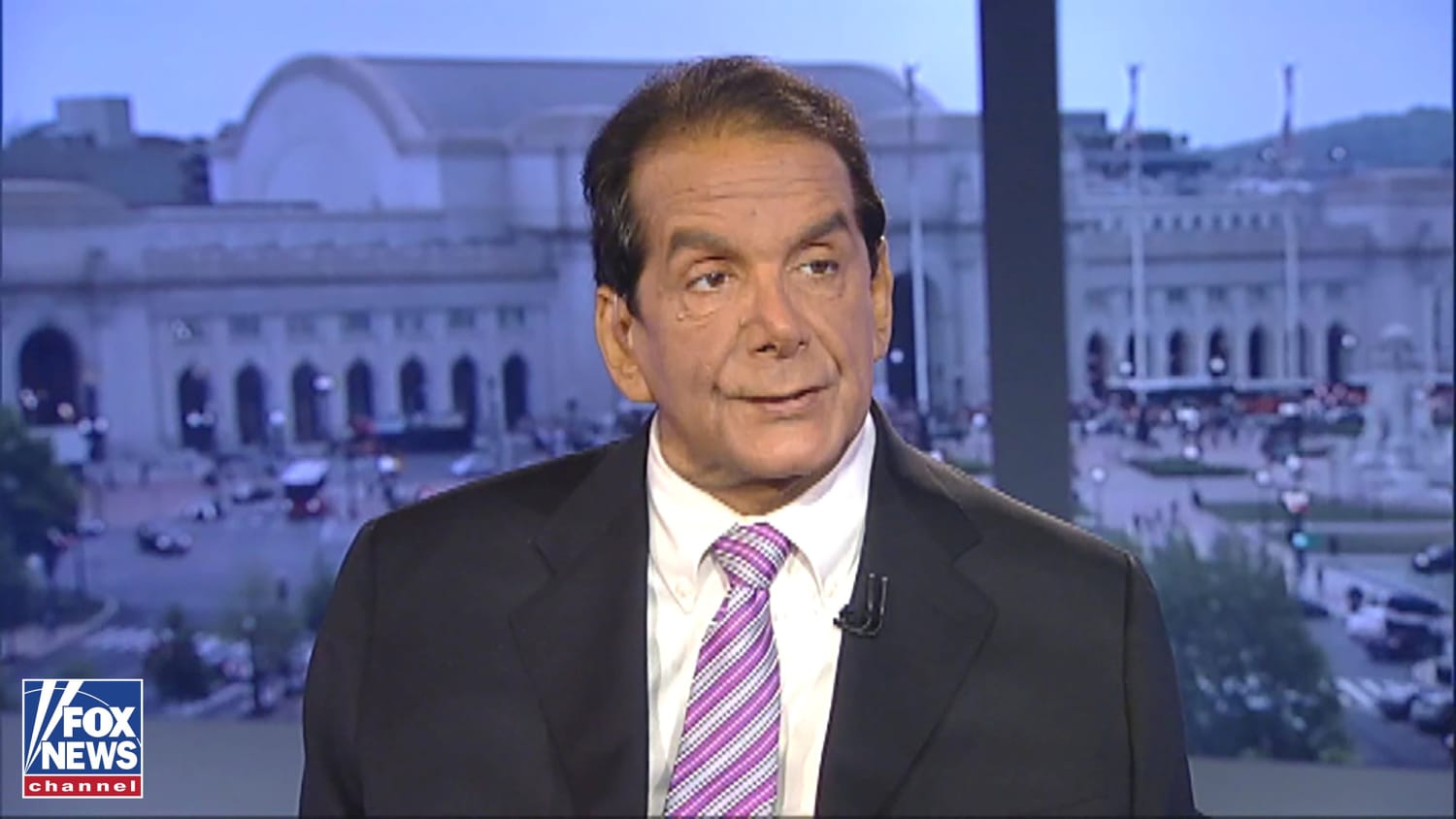
Image result for charles krauthammer
When he was asked how to become a columnist, Charles Krauthammer would say, with characteristic drollery, “First, you go to medical school.” He did, with psychiatry as his specialty because, he said with characteristic felicity, it combined the practicality of medicine and the elegance of philosophy. But he also came to the columnist craft by accident. Because of one.
It has been said that if we had to think about tying our shoes or combing our hair we would never get out of the house in the morning. Life is mostly habitual — do you actually remember any details of driving home last evening? The more of life’s functions that are routinely performed without thinking, the more thinking we can do. That, however, is not how life was for Charles after his accident.
In 1972, when he was a 22-year-old student at Harvard Medical School, he was swimming in a pool. Someone pushed the diving board out, extending over a shallower part of the pool. Charles, not realizing this, dove and broke his neck. At the bottom of the pool, “I knew exactly what happened. I knew why I wasn’t able to move, and I knew what that meant.” It meant that life was going to be different than he and Robyn had anticipated when they met at Oxford.
He left two books at the pool. One was a text on the spinal cord. The other was Andre Malraux’s novel Man’s Fate.
Paralyzed from the neck down, he completed medical school, did an internship and, one thing leading to another, as life has a way of doing, became not a jewel in the crown of the medical profession, which he would have been, but one of America’s foremost public intellectuals. Nothing against doctors, but the nation needed Charles more as a diagnostician of our public discontents.
During the 1980 presidential campaign, Charles wrote speeches for the Democratic vice presidential candidate, Walter Mondale, who did not realize — neither did Charles — that the campaign harbored a thinker who soon would be a leading light of contemporary conservatism. Dictating columns when not driving himself around Washington in a specially designed van that he operated while seated in his motorized wheelchair, crisscrossing the country to deliver speeches to enthralled audiences, Charles drew on reserves of energy and willpower to overcome a multitude of daily challenges, any one of which would cause most people to curl up in a fetal position. Fortunately, with more brain cells to spare than the rest of us have to use, he could think about doing what was no longer habitual, and about national matters, too.
Charles died at 68, as did, 19 years ago, Meg Greenfield, the editor of the Washington Post‘s editorial page. For many years, Meg, Charles, and this columnist met for Saturday lunches with a guest — usually someone then newsworthy; now completely forgotten — at a Washington greasy spoon whose name, the Chevy Chase Lounge, was grander than the place. Like Meg, Charles was one of those vanishingly rare Washingtonians who could be both likable and logical. This is not easy in a town where the local industry, politics — unlike, say, engineering; get things wrong and the bridges buckle — thrives on unrefuted errors.
Medicine made Charles intimate with finitude — the skull beneath the skin of life; the fact that expiration is written into the lease we have on our bodies. And his accident gave him a capacity for sympathy, as Rick Ankiel knows.
Ankiel was a can’t-miss, Cooperstown-bound pitching phenomenon for the St. Louis Cardinals — until, suddenly and inexplicably, he could not find the plate. Starting the opening game of a playoff series at age 21, the prodigy threw five wild pitches and his career rapidly spiraled far down to . . . resurrection as a 28-year-old major league outfielder, for a short but satisfying stint in defiance of F. Scott Fitzgerald’s dictum that there are no second acts in a life. As Charles wrote, Ankiel’s saga illustrated “the catastrophe that awaits everyone from a single false move, wrong turn, fatal encounter. Every life has such a moment. What distinguishes us is whether — and how — we ever come back.”
The health problems that would end Charles’s life removed him from the national conversation nine months ago, so his legion of admirers already know that he validated this axiom: Some people are such a large presence while living that they still occupy space even when they are gone.
GEORGE WILL — George Will is a Pulitzer Prize–winning syndicated columnist. His email address is georgewill@washpost.com.

Friday, March 16, 2018

The real Down syndrome problem: Accepting genocide


By George F. Will
https://www.washingtonpost.com/opinions/whats-the-real-down-syndrome-problem-the-genocide/2018/03/14/3c4f8ab8-26ee-11e8-b79d-f3d931db7f68_story.html?utm_term=.f7b613d1a736
March 14, 2018

Related image
Agusta, now age 8, a citizen of Iceland (CBS News)
Iceland must be pleased that it is close to success in its program of genocide, but before congratulating that nation on its final solution to the Down syndrome problem, perhaps it might answer a question: What is this problem? To help understand why some people might ask this question, meet two children. One is Agusta, age 8, a citizen of Iceland. The other is Lucas, age 1, an American citizen in Dalton, Ga., who recently was selected to be 2018 “Spokesbaby” for the Gerber baby food company. They are two examples of the problem.
Now, before Iceland becomes snippy about the description of what it is doing, let us all try to think calmly about genocide, without getting judgmental about it. It is simply the deliberate, systematic attempt to erase a category of people. So, what one thinks about a genocide depends on what one thinks about the category involved. In Iceland’s case, the category is people with Down syndrome.
This is a congenital condition resulting from a chromosomal abnormality. It involves varying degrees of mental retardation (although probably not larger variances than exist between the mental capabilities of many people who are chromosomally normal — say, Isaac Newton and some people you know). It also involves some physical abnormalities (including low muscle tone, small stature, flatness of the back of the head, an upward slant to the eyes) and some increased health risks (of heart defects, childhood leukemia and Alzheimer’s disease). Average life expectancy is now around 60 years, up from around 25 years four decades ago, when many Down syndrome people were institutionalized or otherwise isolated, denied education and other stimulation, and generally not treated as people.
Highly (almost but not perfectly) accurate prenatal screening tests can reveal Down syndrome in utero. The expectant couple can then decide to extinguish the fetus and try again for a normal child who might be less trouble, at least until he or she is an adolescent with hormonal turbulence and a driver’s license.
Lucas Warren with parents Cortney and Jason (Splash/Reuters)
In Iceland, upward of 85 percent of pregnant women opt for the prenatal testing, which has produced a Down syndrome elimination rate approaching 100 percent. Agusta was one of only three Down syndrome babies born there in 2009. Iceland could have moved one-third of the way to its goal if only Agusta had been detected and eliminated. Agusta’s mother is glad the screening failed in her case.
An Iceland geneticist says “we have basically eradicated” Down syndrome people, but regrets what he considers “heavy-handed genetic counseling” that is influencing “decisions that are not medical, in a way.” One Icelandic counselor “counsels” mothers as follows: “This is your life. You have the right to choose how your life will look like.” She says, “We don’t look at abortion as a murder. We look at it as a thing that we ended.” Which makes Agusta and Lucas “things” that were not “ended.”
Because Iceland’s population is only about 340,000, the problem (again, see the photos of problem Agusta and problem Lucas) is more manageable there than in, say, the United Kingdom. It has approximately 40,000 Down syndrome citizens, many of whom were conceived before the development of effective search-and-destroy technologies. About 750 British Down syndrome babies are born each year, but 90 percent of women who learn that their child will have — actually, that their child does have — Down syndrome have an abortion. In Denmark the elimination rate is 98 percent.
America, where 19 percent of all pregnancies are aborted, is playing catch-up in the Down syndrome elimination sweepstakes (elimination rate of 67 percent, 1995-2011). So is France (77 percent), which seems determined to do better. In 2016, a French court ruled that it would be “inappropriate” for French television to run a 2½-minute video (“Dear Future Mom”) released for World Down Syndrome Day, which seeks to assure women carrying Down syndrome babies that their babies can lead happy lives, a conclusion resoundingly confirmed in a 2011 study “Self-perceptions from people with Down syndrome.” The court said the video is “likely to disturb the conscience of women” who aborted Down syndrome children.
So, photos of Agusta and Lucas are probably “inappropriate.” It speaks volumes about today’s moral confusions that this — the disruption of an unethical complacency — is the real “Down syndrome problem.”
Read more from George F. Will’s archive or follow him on Facebook.

Tuesday, March 06, 2018

How Billy Graham Might Have Responded to George Will

By Michael Brown
https://townhall.com/
March 5, 2018

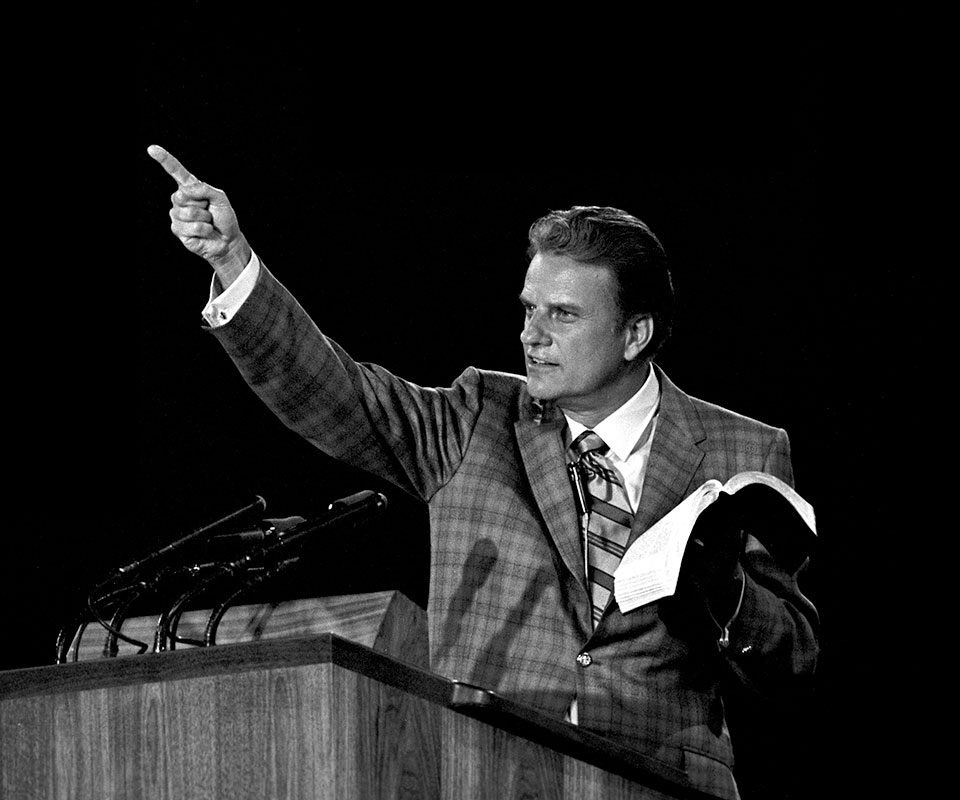
Image result for billy graham

To the surprise of many, conservative columnist George Will penned an unflattering article about Rev. Billy Graham after he passed away last month. To the chagrin of others, the article, titled, “Billy Graham: Neither Prophet nor Theologian,” was carried by the historically conservative National Review. How might Rev. Graham have responded to an article like this?

In 1957, as reported by Collin Hansen for Christianity Today, Graham’s gospel crusades in New York City were met with serious opposition.

“Leading the charge against Graham,” Hansen writes, “was none other than Reinhold Niebuhr, the venerable professor at Union Theological Seminary in New York City. In an article for Life magazine, Niebuhr vigorously denounced Graham for presenting Jesus as the all-sufficient answer for man's ills. ‘Perhaps because these solutions are rather too simple in any age, but particularly so in a nuclear one with its great moral perplexities, such a message is not very convincing to anyone—Christian or not—who is aware of the continuing possibilities of good and evil in every advance of civilization, every discipline of culture, and every religious convention,’ Niebuhr wrote. ‘Graham offers Christian evangelism even less complicated answers than it has ever before provided.’”

Hansen continues, “Despite repeated requests by Graham, Niebuhr refused to meet with him. So Graham simply complimented Niebuhr and explained away their differences. ‘I have read nearly everything Mr. Niebuhr has written and I feel inadequate before his brilliant mind and learning,’ Graham told reporters. ‘Occasionally I get a glimmer of what he is talking about. . . . If I tried to preach as he writes, people would be so bewildered they would walk out.’”

This was classic Graham, responding with humility and wit, but not without making his point: He was called to preach God’s Word in simplicity and clarity, and from that task he would neither deviate nor apologize.

How, then, might Graham have responded to Will?

Will faults Graham for being too popular, for not taking enough controversial social stands, and for not being a serious theologian (offering one, hardly-representative quote to prove his last point). In Will’s words, “Jesus said ‘a prophet hath no honor in his own country.’ Prophets take adversarial stances toward their times, as did the 20th century’s two greatest religious leaders, Martin Luther King and Pope John Paul II. Graham did not. Partly for that reason, his country showered him with honors.”

Needless to say, Will’s normally-sharp logic seems to have failed him here, since few Americans have been showered with more honors than Dr. King, who even has a holiday named after him, while the Catholic Church reveres the memory of John Paul II. Does that, therefore, disqualify them (or make them less prophetic)? Should their popularity be counted against them?

The fact is that Rev. Graham had his large share of detractors (and does this to this moment, including pastors who have zealously damned him to hell and LGBT activists who celebrated his passing). But like the Lord he followed, he had his large share of supporters. And the honor he received did not come his way because he was a savvy politician (as implied by Will) but because he was blessed by God. (The more you learn of his origins and background, the more apparent this becomes.)

Will is also critical of Graham’s message and methods, because of which he is skeptical of the results: “Graham’s effects are impossible to quantify. His audiences were exhorted to make a ‘decision’ for Christ, but a moment of volition might be (in theologian Dietrich Bonhoeffer’s phrase) an exercise in ‘cheap grace.’ Graham’s preaching, to large rallies and broadcast audiences, gave comfort to many people and probably improved some.”

Yet those who heard Graham preach heard him call for them to renounce their sins, having warned them of the judgment of hell, hardly ear-tickling words that were an exercise in “cheap grace.”

Will, however, reserved some of his strongest judgment for Graham’s alleged anti-Semitism, writing, “One can reasonably acquit Graham of anti-Semitism only by convicting him of toadying.”

And it was while reading those words (after looking up “toadying” for myself) that I imagined how Graham might have responded to Will’s column. (As for his alleged anti-Semitism, see here.)

Perhaps he would have said something like this (similar to his comments about Prof. Niebhur): “I have read much of what Mr. Will has written and I feel inadequate before his brilliant mind and learning. Occasionally I get a glimmer of what he is talking about, but I always need to have a dictionary in hand. Frankly, I’m much more comfortable with a Bible, and I think that with that Bible, I could do more good than with a dictionary.”

I for one am glad that Graham kept his Bible in hand, preaching a simple enough message that he could touch hundreds of millions around the world and pack out massive stadiums while his critics pointed out everything he was doing wrong.

Nothing has changed with his passing.

Tuesday, July 04, 2017

The Scars of Our Nation’s Violent Birth


The new Museum of the American Revolution in Philadelphia preserves our bloody road to independence.

By George Will — July 1, 2017
Related image