Showing posts with label Media and Culture. Show all posts

Tuesday, September 24, 2019

How identity politics drove the world mad


By Roger Scruton
https://unherd.com/2019/09/how-identity-politics-drove-the-world-mad/
September 2019
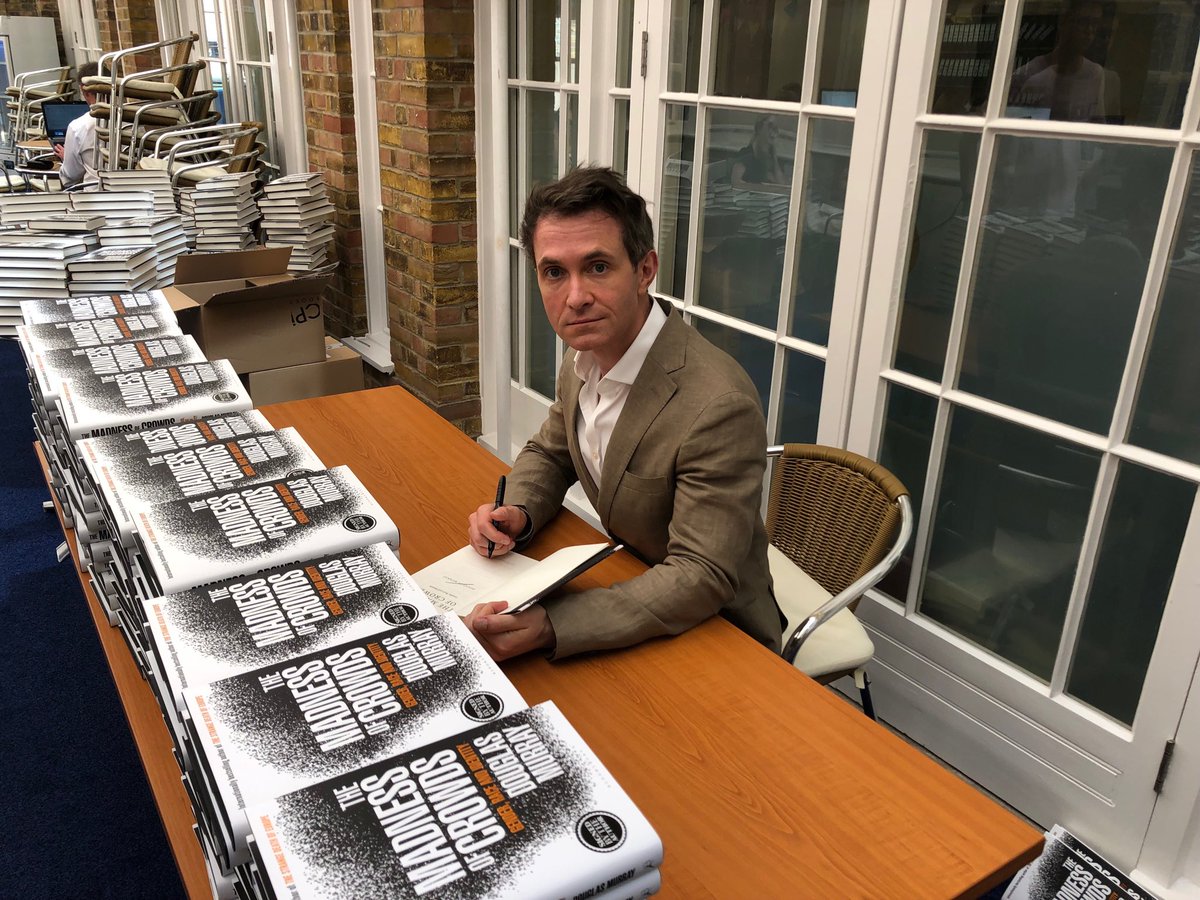
Image result for douglas murray madness of crowds

We thrive on disagreement, but only if we do not also feel threatened by it. In every period of history, therefore, there have been opinions and customs that are dangerous to question, since they provide the firm foundations on which our disagreements rest. Whether religious or political, these established ways of thinking and acting have been protected by law, and embedded in the educational curriculum and the daily customs of the people.


But our situation in Western democracies today is a novel one. There is no shared religion, and the old customs have been torn asunder by a culture of repudiation, which encourages people to shape their lives according to an “identity” of their own. Socialisation no longer means joining or obeying, but “becoming who you are”, regardless of the surrounding norms. This novel situation, which advertises itself as a kind of liberation, has instead produced in my lifetime a totally new kind of censorship and intimidation.
Thirty years ago I naively assumed that, with the collapse of communism, we would no longer see the persecution of dissidents or the imposition of official doctrines, and so I have been as astonished as everyone else by the mass denunciations and targeted character assassinations that enforce prevailing orthodoxies today. They seem as frequent and comprehensive here in Britain as they ever were in the world of totalitarian government.
True, you don’t go to the Gulag for your opinions; nor are there show-trials of “deviationists”, Zionists or the running dogs of capitalism. Nevertheless, you have to be careful what you say, and the punishments for saying, thinking or implying the wrong thing, even if administered by private enterprise and social media rather than by the state, are real, serious and largely impossible to deflect.
The archive of your crimes is stored in cyberspace, and however much you may have confessed to them and sworn to change, they will pursue you for the rest of your life, just as long as someone has an interest in drawing attention to them. And when the mob turns on you, it is with a pitiless intensity that bears no relation to the objective seriousness of your fault. A word out of place, a hasty judgment, a slip of the tongue — whatever the fault might be, it is sufficient, once picked upon, to put you beyond the pale of human sympathy.
As Douglas Murray shows in his impressive and lively survey, The Madness of Crowds: Gender, Race and Identity, the emerging world of censorship is a world without forgiveness, in which people are condemned for what they are rather than what they do, and in which the real virtues and vices that govern our conduct are ignored altogether as irrelevant.
The crimes for which we are judged are existential crimes: through speaking in the wrong way you display one of the phobias or isms that show you to be beyond acceptable humanity. You are a homophobe, an Islamophobe, a white supremacist or a racist, and no argument can refute these accusations once they have been made.
You might, in your private life, have worked for the integration and acceptance of your local Muslim community, or for a wider understanding of the roots of Islamic philosophy. This will be irrelevant when it comes to rebutting a charge of Islamophobia, just as your record in promoting minorities in the workplace will do nothing to clear you of the charge of racism, once the crucial words are out.
For your accusers are not interested in your deeds; they are interested in you, and in the crucial fact about you, which is whether or not you are “one of us”. Your faults cannot be overcome by voluntary action, since they adhere to the kind of thing that you are. And you reveal what you are in the words that define you.
These words may be taken out of context, even doctored to mean the opposite of what you said — as happened recently to me in an interview given to the New Statesman — but this will not affect the verdict, since there is no objective trial, no “case for the defence”, no due process. You are accused by the mob, examined by the mob and condemned by the mob, and if you have brought this on yourself, then you have only yourself to blame. For the mob is by nature innocent: it washes its own conscience in a flow of collective indignation, and by joining it you make yourself safe.
Such is the situation that the brave Murray confronts in his latest book, the title of which (taken from a previous anatomy of human folly by Charles Mackay) implies that it is crowd hysteria, rather than ignorance, that is largely to blame. But, as Murray goes on to show, that suggestion is also too simple. With admirable attention to detail he explores the ways in which the spirit of the mob has entered not only the language of public debate but also the sources of information and the institutions of decision making.
Censorship begins in the media themselves, with the silicon valley elite introducing “machine learning fairness” designed to eliminate “hate speech”, and programmed to recognise as “hate” all those expressions of opinion that violate some norm of political correctness. What Orwell so vividly foresaw — the manipulation of language so as to make heresy inexpressible — is now routine practice.
The result, however, is not a culture of gentle conformity, in which “niceness” is the norm. On the contrary, the clamour for recognition involves a constant assault on those who are assumed to be preventing it. These purveyors of “hate” are given no leeway on social media, and the practice of mass denunciation on grounds of race, tribe, class or social milieu is now an accepted weapon in the identity wars.
Murray gives riveting examples of the way in which whiteness has become a moral fault in the eyes of identity warriors on the American campus. It is, for example, now legitimate to condemn people for the colour of their skin, leading some to try to apologise for being white.
Various devices facilitate the emergence of the censorship culture. Three in particular come to the surface in Murray’s carefully constructed argument. First, there is the art of taking offence. Whole sections of the university curriculum are devoted to explaining to students that words, arguments, comparisons, even questions, are “offensive”, regardless of the intention with which they are used.
Invariably, the offence is given by the old majority culture, and is taken on behalf of some privileged minority. Current concerns about Islamophobia are relevant here: it is offensive, for example, to make jokes about the burqa, but not offensive to appear in public with your face entirely covered, even though the face-to-face encounter is at the root of our shared way of life, as important in showing respect as taking off your shoes when entering a mosque.
More important, from the intellectual point of view, is the attempt to rewrite hardware as software. As Murray shows, identity politics, which insists that everything relevant to our sense of self lies within our power, so that nothing can be imposed on us without our consent, is at odds with the facts of biology. To get round this problem, sex has been re-written as gender, and gender defined as a social construct. In this way, hardware becomes software, and fate becomes choice.
And the result is the “trans” lobby, determined to make all those areas where one sex was hitherto privileged (for example, female sports or female bathrooms) available to whoever wishes to appropriate that sex as his own. The hardware/software confusion has now penetrated the culture, and Murray shows the devastating effect that it has had on our understanding of human difference.
Finally there is the new scourge of “intersectionality”, which encourages people to explore all the ways in which they have lost out in the pursuit of advantage, and to construct their identity accordingly. A kind of reverse hierarchy of privilege emerges, as you come to see that you are disadvantaged as gay man, and then as a black man, and then as a Muslim man, and so on. The result of this scramble for “virtuous disadvantages” occupies Murray over many partly amusing, partly distressing pages.
As he abundantly shows, the attempt to derive a positive philosophy from this assemblage of negatives leads to absurdity and contradiction at every turn. The problem, however, is that contradiction is not regarded by the mob as an obstacle, but merely as further proof of the great conspiracy by which we are surrounded — the conspiracy enshrined in the old majority culture, which told us that we must accept human nature, find our fulfilment within its bounds, and not engage in a futile metaphysical rebellion.
Murray’s comprehensive survey of the prevailing madness will not persuade every reader. But it raises the real questions of our times, which are these: can we reject the idea of a benevolent God and still hold on to our inherited morality, founded on respect for the other and the absolute authority of truth? Can we adopt the posture of forgiveness that Murray is so keen to advocate, without turning to the supreme example that was once given to us?
Can we re-learn the habits of polite disagreement, and address each other as rational beings, capable of forming real communities in which differences are respected and decencies honoured? I want to answer yes to those questions. But as someone who has suffered more than most from the prevailing madness I have my doubts.
My own solution — which is to ignore social media and to address, in my writings, only the interest in the true and the false, rather than in the permitted and the offensive — confines me within a circle that is considerably narrower than the Twittersphere. But here and there in this circle, there are people who do not merely see the point of truthful discourse, but who are also eager to engage with it. And I cling to the view that that is enough, as it was for the Irish monks who kept the lamp of learning alight during the Dark Ages. They may have thought they were losing, but they won in the end.
Douglas Murray’s The Madness of Crowds: Gender, Race and Identity is published by Bloomsbury Continuum

Thursday, September 19, 2019

Hating Kavanaugh, Killing Journalism


The New York Times took its best shot at Justice Kavanaugh -- and destroyed itself.

By Daniel Greenfield
https://www.frontpagemag.com/fpm/2019/09/hating-kavanaugh-killing-journalism-daniel-greenfield/
September 18, 2019

Related image

Robin Pogrebin, a culture reporter for The New York Times, and Kate Kelly, a Wall Street reporter for the same paper, got together to write The Education of Brett Kavanaugh despite being curiously unqualified.
In sharp contrast to Carrie Severino, a former law clerk for Supreme Court Justice Clarence Thomas and chief counsel for the Judicial Crisis Network, who co-authored Justice on Trial: The Kavanaugh Confirmation, neither Pogrebin nor Kelly are especially familiar with the world they’re writing about.
And it shows.
Why send a business journalist and a culture reporter to write a book about a legal battle in Washington D.C.? There are two answers. The Education of Brett Kavanaugh is being published by Penguin Random House. Pogrebin is the daughter of leftist feminist author Letty Cottin Pogrebin. Pogrebin’s books, including her last major book Deborah, Golda and Me (Pogrebin has turned on Israel, allying with anti-Israel groups and endorsing boycotts of parts of Israel) have tended to be published by Penguin.
That’s the less cynical answer. The more cynical answer is that nobody actually cared.
The only kind of Kavanaugh book that there would be a market for in the environs of the New York Times would be a sore loser text providing ammunition for impeaching and removing Kavanaugh. It’s no coincidence that shortly after Pogrebin and Kelly debuted an article promoting their book with another freshman year sexual allegation against Kavanaugh, three 2020 Democrats called for his impeachment.
That’s not good timing. It’s a campaign.
Just to drive the point home, Kelly retweeted a reply from a media figure declaring, “He can be impeached by the house.”
Pogrebin and Kelly’s New York Times piece neglected to inform readers that the allegation had been brushed away by their supposed victim and that their source, Max Stier, had been Bill Clinton’s lawyer. Kavanaugh had worked for Ken Starr on impeachment while Stier had worked to defend Clinton against impeachment. Reporting that the accusation isn’t new, that it was not backed up by the victim and that the accuser had once fought on the opposite side of Kavanaugh in one of the country’s biggest legal battles were pieces of information that The Times thought readers shouldn’t be distracted by.
Click on the link below to read the rest of the article:
https://www.frontpagemag.com/fpm/2019/09/hating-kavanaugh-killing-journalism-daniel-greenfield/

Sunday, September 01, 2019

Fathers, Tell Your Sons To Emulate J.D. Vance


By Chris Buskirk
https://amgreatness.com/2019/08/31/fathers-tell-your-sons-to-emulate-j-d-vance/
August 31, 2019

Image result for j d vance 2019


I don’t know when the “everything and everyone I don’t like in the world is a white nationalist” madness will burn itself out, but I pray it happens soon. It’s a remarkably destructive force that is turning Americans against one another. Every revolution needs its scapegoats, it’s ritual sacrifices. This time they came for J.D. Vance.
The Washington Post on Tuesday published an op-ed by Marissa Brostoff titled, “How white nationalists aligned themselves with the anti-abortion movement” that contained a vile defamation of Vance, one of America’s most decent public men, one whom other young men would do well to emulate. Fathers, tell your sons about J.D. Vance. Have them read his book. Have them follow his example. It will make them better men.  
Vance became famous in 2016 when he published a memoir of his life growing up in southwestern Ohio in difficult, but by no means unusual, circumstances. And that was the point: his experience was like that of a lot of Americans his age. But through gracious providence, determination, and the support of some key family and friends, he put himself through Ohio State and then Yale Law School after first serving in Iraq in the Marine Corps. Vance is also a committed Christian, who recently converted to Roman Catholicism.
Nonetheless, Brostoff, the culture editor at Jewish Currents, chose to use Vance as an example of the white nationalism she sees everywhere. She wrote:
"[A]s replacement discourse enters the conservative mainstream, talk of birthrates comes along with it. “Our people aren’t having enough children to replace themselves. That should bother us,” J.D. Vance, author of the best-selling “Hillbilly Elegy,” told his audience at the National Conservatism Conference last month; earlier this year, he described himself as “appalled” by Democrats’ permissive attitudes toward abortion. Vance did not spell out exactly who was included in the word “our.” He didn’t need to."

For Brostoff, this is prima facie evidence of white nationalism, the Left’s go-to slander of the moment. Now think about the logic: failing to abort—to kill—a white child is now defined as white nationalism. We shouldn’t be surprised. Negative eugenics—which is to say, the use of abortion to eliminate the next generation of those deemed undesirable—has always been the logic of the abortion movement.
Sadly, Brostoff is typical of the contemporary American Left for whom everything has a racial valence. It’s a constricted, paranoid view of the world. I’ve been tempted to think that the recent white nationalism hysteria is a cynical political construction used to obtain and exercise power. No doubt that’s true in some cases; politicians and ideologues often have an “any-weapon-at-hand” ethos. But upon reflection, I have concluded that most of the people exercised about this issue really believe it. 
And that’s worse. It’s become a sociopathological virus that undermines the health of our multiracial, multifaith society that creates resentment, envy, and revenge by forcing people to focus on our differences. Doing so means failing to build a better future either individually or collectively. It leads to malinvestment of time and talent—no one obsessed with microaggressions is going to build a hypersonic airplane that can get people from Los Angeles to Paris in a few hours or cure cancer or discover a mass-energy source cheaper than oil.
In a society in which we’re told we can no longer assume someone’s gender, Brostoff was completely comfortable assuming she knew—knew with metaphysical certainty—everything about J.D. Vance. She assumed the very worst not only without evidence but in direct contradiction of the evidence. No doubt she felt the intoxicating rush of moral superiority as she called out an enemy of the revolution, attacking his good name and trying to destroy his reputation.
The Post added a correction, but that’s beside the point. Brostoff herself noted on Twitter that it was her editor who suggested that she include Vance’s comments as evidence to support her assertion which tells us that this isn’t just the view of a single op-ed contributor but reflects the personal views of at least some of the Post’s editorial staff.
Anyone who watched Vance’s speech or even just read the transcript cannot reasonably conclude that he was talking about white babies. The context is crystal clear: he is talking about America and Americans. That means that Brostoff and her editor at the Post intentionally distorted his words. 


So just what did Vance say that was so wrong? Judge for yourself:
"There are a lot of ways to measure a healthy society, but the most important way to measure a healthy society is by whether a nation is having enough children to replace itself. Do people look to the future and see a place worth having children in? Do they have economic prospects and the expectation that they’re going to be able to put a good roof over that kid’s head, food on the table, and provide that child with a good education? By every statistic that we have, people are answering “no” to all of those questions."
Claiming Vance is a white nationalist is an act of astonishing bad faith. The term is now thrown around so frequently and so carelessly that it has no specific meaning, though it is certainly meant to suggest that those who are so-labeled want to harm or maybe even kill people who are not white. It’s an all-purpose slur meant to degrade, dehumanize, and exclude. That’s wrong. The sick irony is that Vance is the subject of this vicious attack precisely because he wants unborn babies not to be killed. Shame on Marissa Brostoff for defaming a good man and shame on the Washington Post for encouraging her and for publishing such trash.
This is the upside-down world in which we live: an up-by-his-bootstraps, Christian family man is the object of slander in the pages of one of America’s leading newspapers because he opposes the abortion of babies in the womb and because he hopes Americans will have more children. Which way America?

Saturday, July 20, 2019

New York Times Goes Pro-Soviet for Moon Landing Anniversary


BY ROGER L. SIMON
https://pjmedia.com/rogerlsimon/ny-times-goes-pro-soviet-for-moon-landing-anniversary/
July 19, 2019

Related image
Soviet tanks roll through the streets of Budapest in 1956.

The New York Times — that Democratic Party house organ that fancies itself "liberal" or "progressive" or some such — is actually one of the more reactionary institutions in our country. Sometimes you have to wonder if it might actually be an American version of Izvestia.

Speaking of which, in honor of the fifty-year anniversary of the USA putting a man on the moon, the once-upon-a-time newspaper of record produced this ridiculous nonsense under the rubric "How the Soviets Won the Space Race for Equality."
The Cold War was fought as much on an ideological front as a military one, and the Soviet Union often emphasized the sexism and racism of its capitalist opponents — particularly the segregated United States. And the space race was a prime opportunity to signal the U.S.S.R.’s commitment to equality. After putting the first man in space in 1961, the Soviets went on to send the first woman, the first Asian man, and the first black man into orbit — all years before the Americans would follow suit.
How PC.

The author, Sophie Pinkham, a doctoral candidate in Slavic Languages, would have to know what these enlightened "multi-culti" Soviets did, in the interest of "equality," just a scant year before the U.S. landed on the moon — invade Czechoslovakia, crushing "Prague Spring."

Oh, but they were putting a woman in space so it was all good. And after all, "Prague Spring" wasn't all that great. It was led by a (gasp!) white male — Alexander Dubcek. The brutal annihilation of the Czech's (naively idealistic but sweet — in retrospect) "socialism with a human face" occurred after the Soviets had done virtually the same thing to Hungary in 1956, a scant twelve years before. You may have seen the photos of the tanks sweeping through Budapest.

Nostalgia for the Soviet Union in any form is dangerous and massively self-indulgent, yet Ms. Pinkham seems to have some peculiar desire to be even-handed, i. e. to see the good side of evil. Perhaps she sees it as fodder for her thesis. She also wrote, "Cosmonaut diversity was key for the Soviet message to the rest of the globe: Under socialism, a person of even the humblest origins could make it all the way up."

Ah, diversity — the new religion. As long as they can put a "person of color" — also, of course, mentioned in the article — or from the proletariat in space, everything else is excused.

Even the Gulag Archipelago. Even the Purge Trials. Even Beria. Even the Plot Against the Doctors. Even Stalin's mass starvation of millions of Ukrainians known as the Holodomor. Even the incarceration of Sakharov and the Refuseniks that was going on before, after, and during the cosmonaut program, etc., etc. (How was that last one in terms of "equality," Ms. Pinkham? As the author also no doubt knows, citizens of the Soviet Union had to carry internal passports identifying their "nationalities" as "Jews," "Tatars," etc. It was the very opposite of equality. It was ethnic and racial stereotyping for totalitarian purposes.)

This whitewashing of the Soviet Union has been a standby of the New York Times almost since Lenin arrived at the Finland Station. The whitewashing reached a fever pitch during that very Holodomor (early 1930s) when Walter Duranty — the paper's Moscow correspondent and perhaps history's all-time greatest perpetrator of fake news — deliberately lied on the newspaper's front page about the extent of the devastation in Ukraine (millions dying) in order to remain in Stalin's good graces.

Duranty won a Pulitzer for his coverage. His photograph still hangs on the wall in the Times building with all the paper's other honorees, in case anyone wants to go and throw up. Ms. Pinkham is unlikely to win a Pulitzer for her space coverage. But she is carrying on a putrid tradition.

Roger L. Simon — co-founder and CEO emeritus of PJ Media — is an award-winning author and an Academy Award-nominated screenwriter. His new novel — THE GOAT — will be out in September.

Saturday, July 13, 2019

‘Justice on Trial’ Is The Definitive Account Of Brett Kavanaugh’s Confirmation


By Nathaniel Blake
https://thefederalist.com/2019/07/12/justice-trial-definitive-account-brett-kavanaughs-confirmation/
July 12, 2019

Related image
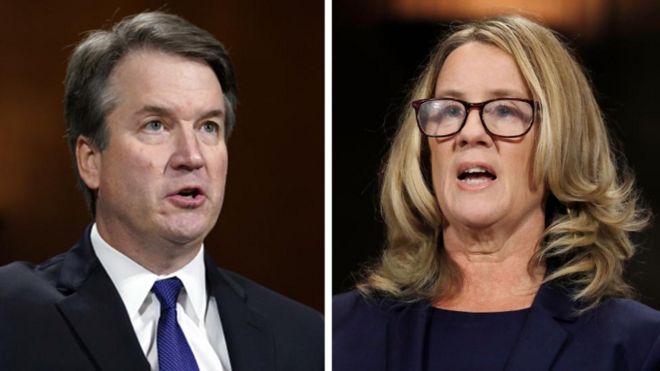
Brett Kavanaugh, Christine Blasey Ford

“Justice on Trial” is a political thriller about sex, power, and lawyers. In this excellent book, Mollie Hemingway of The Federalist and Carrie Severino of the Judicial Crisis Network have provided the definitive account of Brett Kavanaugh’s ascent to the Supreme Court.
Both authors were part of the confirmation battle. In addition to her work at The Federalist, Hemingway is a regular on Fox News. Severino’s group supported Kavanaugh with millions of dollars in advertising. Following his confirmation, the authors interviewed more than 100 crucial actors in this political drama, including the president, Supreme Court justices, high-ranking officials, and dozens of senators.
Thus, although the basics of the Kavanaugh confirmation fight will be familiar to readers, this skillful retelling provides many more details about everything from the selection process to Kavanaugh formally taking his place on the Supreme Court. Hemingway and Severino tell their story in crisp prose while deftly deploying detail and humor to punctuate and enliven the narrative.

The Drama and the History

The madness of the confirmation process is illustrated by a multitude of anecdotes, from the Kavanaugh family having to stash luggage in a neighbor’s treehouse as they avoided the press, to the spectacle of a protestor wandering Capitol Hill “dressed as a giant condom.”
But this book is not just about the drama of one judge’s nomination and accusations against him of youthful sexual misconduct. The authors adroitly place the story in context, situating it amidst both recent events such as the Trump campaign and the Neil Gorsuch nomination, and broader political and legal history, including the excesses of the Warren court and the Clarence Thomas confirmation hearings.
Like the Thomas hearings, this attempt to scuttle a Supreme Court nominee was a defense of a judicial coup that redistributed power in defiance of the Constitution’s design of a government of limited and enumerated powers. For much of the last century, the federal courts were complicit in the unconstitutional expansion of centralized government power in the administrative state.
The courts also seized enormous power for themselves, deciding policy on a host of contentious political issues such as abortion. The Supreme Court became “the forum where philosopher kings impose the final decision in our most divisive political and social disputes.”

Crux: The Invented Right to Abortion

“Justice on Trial” lays out the history of conservative disappointment with Republican judicial appointments, including Anthony Kennedy. Despite past failures, conservatives hoped Kavanaugh would solidify an originalist majority on the Supreme Court that would work to restore the legitimate constitutional order.
But Democrats were terrified at this prospect, especially as regards Roe v. Wade, which invented a constitutional right to abortion. Sen. Diane Feinstein opened the Democrats’ remarks at the initial hearings by “declaring that the confirmation battle was about abortion.”
Thus, the Kavanaugh fight was never just about his purported sexual misdeeds, but about the entire sexual culture that depends on abortion on demand. Ironically, the crude, abusive sexual culture that Kavanaugh was accused of participating in as a young man in the 1980s was enabled by the very decision his opponents most feared he would overturn.
This fear induced some Democrats to declare their opposition to Kavanaugh before he was even nominated, with many more joining in immediately after the announcement. Hemingway and Severino remind readers how Democrats turned the initial hearings into a circus with endless interruptions, costumed protestors, and Sen. Cory Booker trying and failing to have a “Spartacus moment.” Nonetheless, Kavanaugh seemed assured of confirmation.
Then the Democrats and their media allies released their secret weapon: an accusation of high school sexual assault that they had held in reserve for weeks.

If We Can’t Get Him One Way, We’ll Get Him Another

All hell broke loose, and “Justice on Trial” provides readers the inside scoop on how Republicans responded and triumphed. Most importantly, the confirmation team believed the judge’s denial of any wrongdoing. Trump did not waver in his support for the judge, and the president’s team encouraged Kavanaugh to fight back.
They refrained from attacking accuser Christine Blasey Ford personally—they did not publicize her own alcohol-fueled escapades “in high school and college,” which were “dramatically at odds with her presentation in the media”—but they aggressively disputed her claims, and Kavanaugh “wanted a public hearing to clear his name.”
While Ford’s lawyers and the Democrats stalled, Kavanaugh was attacked with additional accusations. The media, drunk on the prospect of the Me Too movement toppling a Trump Supreme Court pick, hyped every new allegation. But unlike other Me Too cases, each new charge was less believable. The Democrats and their allies sought to establish a pattern of sexual misconduct by Kavanaugh, but the pattern they actually demonstrated was their willingness to promote any story, no matter how outlandish, to stop his nomination.
After Ford and Kavanaugh finally testified before the Senate Judiciary Committee, Democrats leaned on Republican Sen. Jeff Flake and dramatically secured a delay for a new round of FBI interviews. This “frustrated Kavanaugh’s supporters, but the investigation turned out to be a godsend.” By the end of that weeklong effort, “each of the three main allegations against him was crumbling.” Reviewing the claims against him emphasizes that they ranged from implausible to insane.

A Herd of Unproven Allegations

Julie Swetnick’s lurid tales of high-school gang rape were “obviously ridiculous,” and her lawyer, Michael Avenatti, is a sleaze who is now facing a multitude of unrelated federal felony charges. Deborah Ramirez’s allegations were also self-discrediting. She refused to testify, no one at Yale University remembered seeing Kavanaugh expose himself to her, and she claimed to have clarified her recollections by spending six days wracking her alcohol-soaked memories “with an attorney provided by Democrats.”
Blasey Ford’s story was the most credible of the accusations, and her emotional testimony impressed many. But former prosecutor Rachel Mitchell’s gentle questioning revealed how insubstantial Ford’s claims were: no location, no date, no recollection of how she got to the party or got home. Furthermore, the witnesses Ford named as having attended the party, including her longtime friend Leland Keyser, recalled nothing of the sort.
Initially, Keyser had declared that although she could not corroborate her friend’s story, she still believed her. But “Justice on Trial” reveals that after her first interview with the FBI, Keyser had time to reflect and review details of the summer of 1982, and
she lost confidence in Ford’s account of the incident and came to the conclusion that she had to supplement her statement to the FBI…During the second interview, Keyser described the summer with much more detail, adding that she didn’t believe there was any way she was at this gathering. She expressed concern at the pressure she had felt to go along with the story…She detailed certain parts of the story that didn’t make sense to her.
Keyser no longer trusted her old friend’s account, and though she did not want Kavanaugh on the Supreme Court, she would not lie to try to keep him off of it. Without corroboration, and with her inconsistencies exposed, Ford’s tale withered, leaving Democrats with nothing but bizarre theories about the juvenile jokes in Kavanaugh’s high school yearbook (had he perjured himself by wrongly defining “boof”?) and petulant complaints that he had become too upset when they falsely accused him of gang rape.
This was not enough for Sen. Susan Collins, who had not been intimidated by the media frenzy or the harassment campaign directed at her. After a careful examination of the record, she concluded that Kavanaugh was likely innocent and cast the deciding vote to confirm him.

It’s Not Over, By a Long Shot

For the new justice, the worst of his trials were over, but the next nominee may face an even greater ordeal. As Kavanaugh joined the court, Justice Ruth Bader Ginsberg was absent with significant health problems.
There will be more nominations that make the left fear for its ill-gotten judicial gains. “Justice on Trial” reminds us of their ruthlessness in such battles. It also vaccinates against the sort of revisionist history that has occurred since the Thomas confirmation. At the time, public opinion overwhelmingly favored Thomas, but the media never stopped presuming him guilty, and that view has become Democratic dogma.
Democrats will undoubtedly complain that “Justice on Trial” is a biased history, and it does not provide the same insight into the Democratic side as it does for Republicans. But absent new evidence supporting the allegations against Kavanaugh, it does not matter beyond an academic interest in the Democrats’ strategy.
Furthermore, the questions it leaves unanswered are uncomfortable for the Democrats. For instance, who leaked Ford’s letter, and why did Ford prepare for a public fight—high-powered lawyers, social media scrubs, a polygraph, and much more—even though she insisted she had not wanted to go public? Why, after all this preparation, did she and her lawyers repeatedly try to delay her testimony, including the easily disproven claim that she was terrified of flying?
There could have been a confidential, professional investigation early in the confirmation process, but instead Ford’s story was held and then leaked at the last minute. The Democrats chose to make the confirmation process into a public parade of grotesques, and the media gleefully went along, amplifying every ludicrous smear. “Justice on Trial” provides a thorough record of media malfeasance that shows why Trump’s “enemy of the people” insults resonate with so many voters.

Voters Figured Out What Happened

Trump’s selection of outstanding judges, and the depths to which the Democrats stooped to try to stop them, also rallied Republican voters (myself included) for the midterms and beyond, likely boosting GOP gains in the Senate and stemming losses in the House. An outraged Sen. Lindsey Graham spoke for us all when he told his Democratic colleagues off: “Boy, y’all want power. God, I hope you never get it.”
We should share this righteous anger. Democrats are so desperate to preserve their illegitimate judicial victories that they are trying to destroy the lives and reputations of good men and women. We must resist such political wickedness.
In addition to opposing the bad, we must cultivate and love the good. We should love our country and our Constitution, a love that will be made manifest, in part, by defending the rule of law, including the rights of the accused, both legally and in our culture.
These virtues are not only for conservatives. In a saga where few on the left come out looking good, Keyser appears as an American hero, unwilling to lie for political gain. Collins, a moderate disliked by many conservatives, reached a decision for Kavanaugh based on the evidence and fundamental American principles of justice.
There is room for genuine and principled disagreement over the meanings of laws and of the Constitution. What is antithetical to our Constitution, and deeply harmful to our nation, is the belief that judicial power is a political weapon to be exploited for maximum advantage. Using the Supreme Court as the “nuclear bomb of political warfare” exchanges the rule of law for despotism in the hope that the latter will be enlightened. It rarely is.
Nathanael Blake is a Senior Contributor at The Federalist. He has a PhD in political theory. He lives in Missouri.

New Bestseller Reveals Liberal Women Carried the Day for Kavanaugh


By Ken Blackwell
https://townhall.com/columnists/kenblackwell/2019/07/13/new-bestseller-reveals-liberal-women-carried-the-day-for-kavanaugh-n2549981
July 13. 2019

Image result for justice on trial

Pundits credit different events for turning the tide on now-Justice Brett Kavanaugh’s contentious Supreme Court confirmation. Some point to Kavanaugh’s impassioned testimony before the Senate Judiciary Committee. Still others say it was Sen. Lindsey Graham’s (R-S.C.) fiery speech, in which he lambasted his Democratic judiciary committee colleagues for withholding the allegations against Kavanaugh and then leaking those allegations at the most politically opportune time for Senate liberals.

As Mollie Hemingway and Carrie Severino detail in their just released bestselling book, Justice on Trial, Democrats might have succeeded in derailing Kavanaugh’s nomination if it weren’t for the courageous women who bucked the progressive groupthink and stood true to their moral compass—namely Sen. Susan Collins (R-Maine), traditionally more moderate and left-of-center than her Republican peers, and registered Democrat Leland Keyser, a childhood friend of Kavanaugh accuser Professor Christine Blasey Ford.

“I think [Sen.] Collins … did more to expose the ugliness of the controversy around the Kavanaugh [nomination] process than any other senator,” then-Senate Judiciary Committee Chairman Chuck Grassley (R-Iowa) tweeted after Sen. Collins delivered a 43-minute statement explaining her rationale for voting to confirm to the Supreme Court now-Justice Kavanaugh. “I commend [Sen.] Collins for her thoughtfulness [and] am proud to have her support for such a well[-]qualified nominee.”

Sen. Collins’ speech covered a lot of ground and systematically addressed the allegations against the judicial nominee, his credentials and first-hand analysis of the longtime litigator and judge, including commentary from Lisa Blatt, an abortion proponent and former clerk to left-leaning Justice Ruth Bader Ginsburg.

“Lisa Blatt, who has argued more cases before the Supreme Court than any other woman in history, testified, ‘By any objective measure, Judge Kavanaugh is clearly qualified to serve on the Supreme Court. His opinions are invariably thoughtful and fair,’” said Collins. “[Blatt] also observed that Judge Kavanaugh is remarkably committed to promoting women in the legal profession.”

Indeed, Kavanaugh is ahead of the times and his peers when it comes to putting women on his payroll. As Erin Hawley, associate professor of law at the University of Missouri and a former clerk to Chief Justice John Roberts, said in a Chicago Sun-Times column ahead of Kavanaugh’s confirmation, he “has hired more women as law clerks than men. Eighty-four percent of those women have gone on to clerk at the Supreme Court. And he is the only D.C. Circuit judge to have ever hired four women in the same year for a clerkship.”

Kavanaugh’s sterling legal credentials and history of supporting women in the legal profession, however, isn’t all that was necessary to quiet the partisan fury stirred up against the nominee. Kavanaugh’s future on the court hinged on whether the allegations against him could be prosecuted in a court of law. In other words, could others back up the allegations? As it turns out, nobody could back up Blasey Ford’s story, and star prosecutor Rachel Mitchell said as much in a memorandum for members of the Senate Judiciary Committee after cross-examining Blasey Ford.

“Dr. Ford identified other witnesses to the event, and those witnesses either refuted her allegations or failed to corroborate them,” Mitchell says. “All three named eyewitnesses have submitted statements to the Committee denying any memory of the party whatsoever. Most relevantly, in her first statement to the Committee, Ms. Keyser stated through counsel that, ‘[s]imply put, Ms. Keyser does not know Mr. Kavanaugh and she has no recollection of ever being at a party or gathering where he was present, with, or without, Dr. Ford.’”

It was Blasey Ford’s word against Kavanaugh’s, and our American tradition of “innocent until proven guilty” reigned victorious in the end thanks to Keyser’s statement—and thanks to Sen. Collins who, in good conscience, couldn’t torpedo the confirmation of a man with an otherwise outstanding reputation based on toothless allegations that a “reasonable prosecutor” wouldn’t even bring before the committee.

Likewise, as Justice on Trial reveals: despite being Ford's friend, despite her desire not to see Kavanaugh on the court, and despite being pressured to lie in order to sink his nomination, Keyser's integrity won out.

As Sen. Collins said, “That such an allegation can find its way into the Supreme Court confirmation process is a stark reminder about why the presumption of innocence is so ingrained in our American consciousness.”


Wednesday, July 10, 2019

Jeffrey Epstein Should Cancel the Culture’s Humbert Humberts


By Kyle Smith
https://www.nationalreview.com/2019/07/jeffrey-epstein-roman-polanski-hollywood-sexual-exploitation/
July 9, 2019

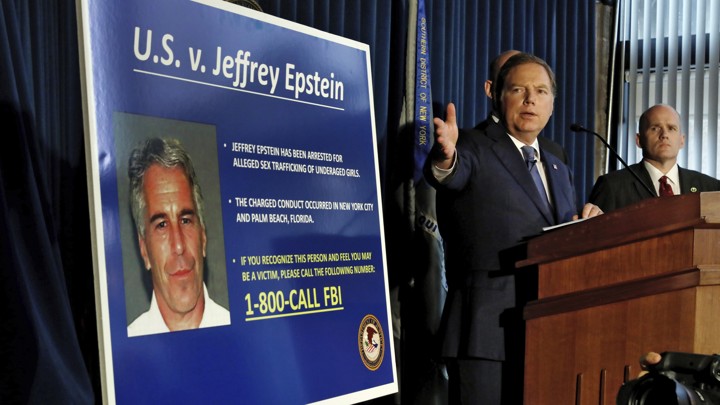
The U.S. attorney for the Southern District of New York speaks during a news conference on Jeffrey Epstein.


Federal prosecutors announce case against Jeffrey Epstein. (AP/Richard Drew)
Perhaps the most historic, in the sense of era-defining, moment in the history of the Academy Awards was that standing ovation Roman Polanski got when he was given Best Director honors in 2003. There they are, leading Hollywood liberals, leaping to their feet to cheer for a man who, at age 43, gave a 13-year-old girl Quaaludes for the purpose of having sex with her and sodomizing her. Polanski suffered in no significant way for his crime, and today it seems obvious he should at the very least be denied the highest honor his profession can bestow.
In 2018, Polanski (along with Bill Cosby) was expelled from the Academy of Motion Picture Arts and Sciences, which suddenly discovered 40 years after his crime that he was no longer in accord with “ethical standards that require members to uphold the Academy’s values of respect for human dignity.” They meant “moral standards,” but acknowledging the existence of morality is still too much to ask of the Academy. Before Harvey Weinstein, the only person ever expelled from the Academy was Carmine Caridi, an actor who appeared in The Godfather. His crime was sharing a DVD screener with a friend, who put it on the Internet.
The Jeffrey Epstein case should end a nearly 50-year era in which the mandarins of our cultures — the intellectuals, writers, and artists — almost unanimously ignored, laughed off, or even outright celebrated sexual exploitation of girls and very young women, even in many cases prepubescent ones. Humbert Humbert somehow became the culture’s idea of a barrier-breaking hero whose predilections provided jokes such as the nickname for Epstein’s infamous ‘Lolita Express’ jet, the one stocked with young flesh. Epstein’s habits were so unremarkable that Bill Clinton and Donald Trump were happy to be associated with him. Clinton and Trump were not outliers. They were simply symptoms of a disease.
Hugh Hefner fired up a flare lighting the way to an almost anything-goes view of female sexuality, and it reached its apex at the 2003 Oscars. Under the regime of Hefnerism, conservative prudes and often the law stood charged with being uptight and repressive about sex involving girls just over or even under the age of consent. That Polanski became an exile from this country after his crime made him Hollywood’s favorite martyr. The Academy was eager to give him the Oscar both to showcase its view that he had been victimized by prudery and to dunk on conservatives. Attendees didn’t just applaud, they let out a mighty whoop of approval when Polanski’s Oscar was announced by a smiling Harrison Ford. Meryl Streep, Martin Scorsese, Weinstein, and others all jumped to their feet to participate in a chilling standing ovation. Jack Nicholson, at whose house Polanski’s assault took place, looked confused and joined in the applause, but remained seated. So did Nicolas Cage. No one captured by the cameras looked particularly peevish. As far as I know, no one in Hollywood had any problem with lionizing Polanski at the time.
Related image
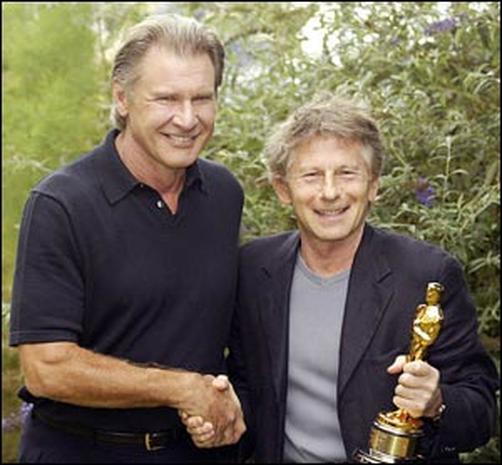
Harrison Ford presented Polanski with the Oscar in Deauville, France in 2003. (AP)
Polanski is a man of his era. At 33, Ringo Starr had a No. 1 hit singing “You’re 16, you’re beautiful, and you’re mine.” Woody Allen made what felt like an autobiographical movie about a 42-year-old television writer having an affair with a 17-year-old high-school student, and nobody blinked. Time magazine put him on the cover under the legend “American Genius.” (It turned out Allen had had affairs with two teenagers around that time). Urged on by her horrible mother, Brooke Shields built a career around being jailbait, posing nude at age 10 for a Hefner publication called “Sugar and Spice,” then starring as a 12-year-old hooker in Pretty Baby (which began filming when she was 11), then at 14 starring in a film about two teens discovering their sexuality, The Blue Lagoon (though a double did her nude scenes). At 15, she starred in Endless Love, which as filmed initially received an X rating, before most of the nudity was cut to achieve an R. Whatever “controversy” attached to any of this was reported by the press solely to pump up the box office, as though conservative naysayers were aliens from a quaint, slightly daft foreign country. The media itself had no problem with it.
Look at the response to Pretty Baby, which features a nude Shields as a prostitute’s daughter who grows up in a brothel and joins her mother’s profession. (Pretty Baby, like Endless Love, enjoyed the cultural camouflage of being directed by an artistically unimpeachable European, Louis Malle. It can’t be smut if it’s arty, was the general view.) The film “takes a robust and humorous approach to life in a brothel,” wrote then–film critic Judith Martin in the Washington Post, before she became advice columnist Miss Manners. That “a daughter of the house should go into the communal family business is natural,” Martin ruled. “And the fussing and excitement surrounding her debut seem not much different from those associated with more respectable ceremonies to launch young girls. Tea dances, packing to go off to college, weddings — those, too combine titillation with finery and giggles.” Child prostitution, you see, was much like a tea dance. Penelope Gilliatt’s New Yorker review of Pretty Baby combines a panting quality with a yearning to sound tasteful that would have enthralled Humbert Humbert:
The most beautifully intelligent picture to have come out in America so far this year . . . A jammy-mouthed little girl of twelve, who is the child of a whore in the brothel, uses her virginity as a lure. . . . For all her look of the nubile, though, she could nonetheless not pass for a grown-up. . . . This may be a film set in a brothel, but it is no more lewd than a Bonnard of a naked woman in a bath. . . . There are many scenes that buzz gently with the giggles of children in the background.
In years to come, anyone learning about the Jeffrey Epstein case will ask: Why didn’t anybody raise the alarm? “What is so amazing to me is how his entire social circle knew about this and just blithely overlooked it,” the journalist Vicky Ward, who profiled him for Vanity Fair, told the New York Times. “All mentioned the girls, as an aside.” Epstein’s acts had deep cultural roots. But things don’t always stay the same, or get worse. Sometimes attitudes take a turn for the conservative. We should be grateful that standards have evolved in the right direction. The next Epstein or Roman Polanski will have considerably more difficulty getting people to shrug off their deeds, much less join in a standing ovation.