Showing posts with label Obituaries. Show all posts

Sunday, September 01, 2019

Franco Columbu died, the Sardinian emigrant who became Mister Olympia in bodybuilding


By Monia Meles
https://www.repubblica.it/cronaca/2019/08/30/news/morto_franco_columbu_ex_mister_universo_culturismo_amico_schwarzenegger-234742241/?refresh_ce
30 August 2019
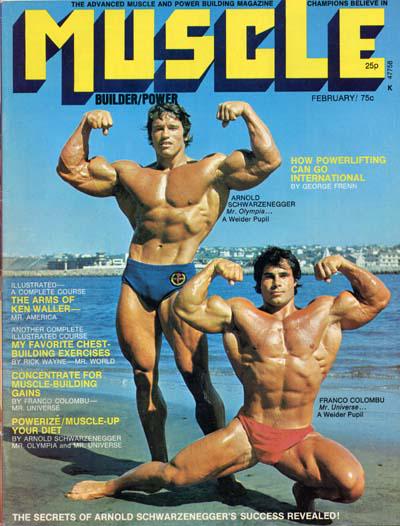
Image result for franco columbu


He died of an illness in his Sardinia, in the sea of ​​San Teodoro, just over 100 kilometers from Ollolai, the village of Barbagia where he was born on 7 August 1941. From there Franco Columbu, the myth of world bodybuilding, had emigrated to 1965 to work as a laborer in Germany, in Munich, like so many Sardinian his peers. Columbu felt sick in the water around 2 pm and was rescued and transferred to the Olbia hospital with a 118 helicopter, but died shortly after arriving at the emergency room.

From Munich, Columbu began a journey that changed his life, transforming him from a boxing enthusiast into a boxer and then a bodybuilder, leading him to win the titles of "Strongest Man in the World", Mister World, Mister Universe and finally, the only Italian in the history of the discipline, Mister Olympia in 1981. It was also decisive at the beginning with Arnold Schwarzenegger, of which he became a coach and later an inseparable friend. His career moved in parallel with that of Schwarzenegger whom he had met in the ring in Germany and with whom he had also shared the experience of emigration to California. Columbu told me that it was he, while they were laboring together, that he taught the future Hollywood divo the technique of 'armoring' the boundary walls of Los Angeles villas by inserting shards of glass into the cement.


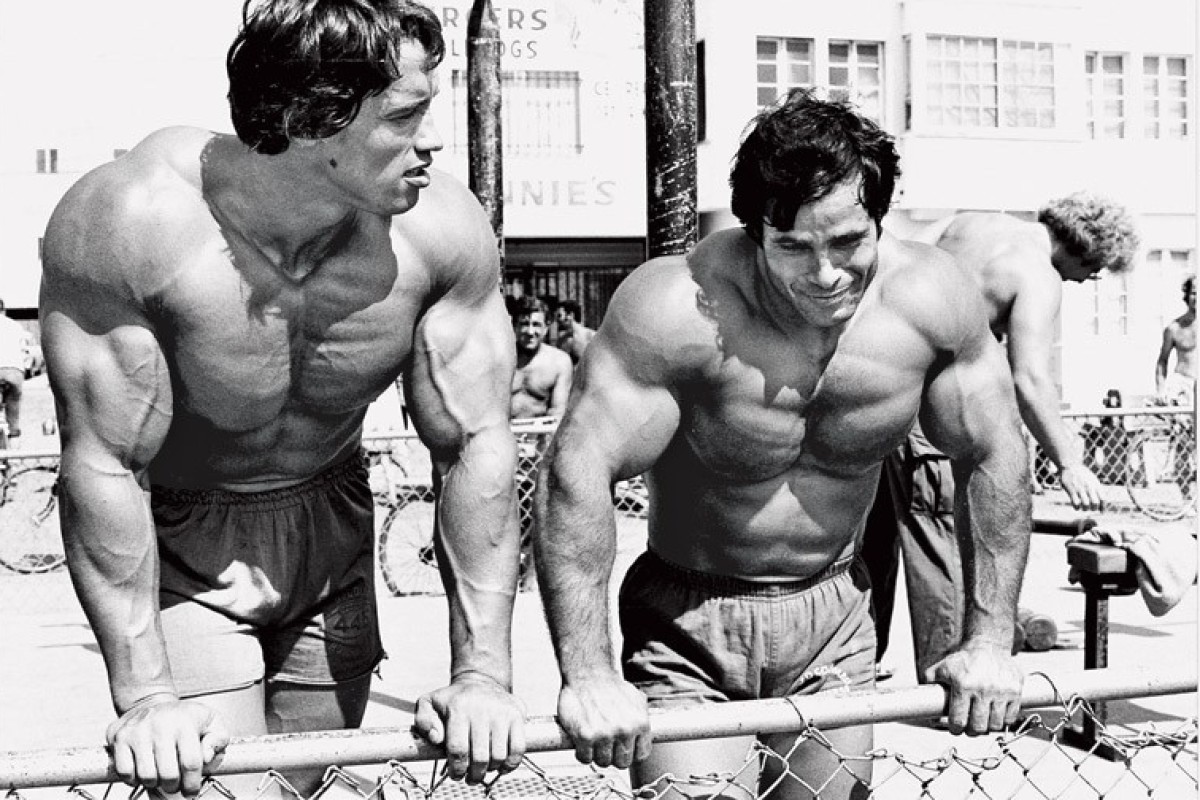
A solid friendship to the point that the same former governor of California had in 2016 celebrated the bond with Franco who had moved to the United States practically with him. video on Facebook portrayed the two of them riding a bike, side by side. As always. Over the years there are hundreds of photos that portray them together: muscles posing in front of the sea and on podiums. 

Related image

The professional roads of the two had separated in the early 1980s: Columbu opened gyms and began to teach bodybuilding and to become an athletic trainer and chiropractor, while Schwarzenegger became Conan the barbarian and moved to Hollywood. But their friendship, as the actor and former governor of California recently recalled, never stopped. Franco Columbu was also Schwarzy's wedding witness in his marriage to Maria Shriver. 

A life spent in gyms and training after the debut started by loading concrete weights. And body building was a great success, despite his short stature, one meter sixty five, and his low weight. "Nobody embodies the American dream better than Franco Columbu" reads the preface by  Franco Columbu's Complete Book of Bodybuilding. Although Columbu never forgot his land while living in Los Angeles, where he continued to work as a trainer. He promoted bread and cheese and was an ambassador of Sardinia. Just the food he mentioned as one of his secrets, along with the "positive rage" of those who started from humble origins. 


An affection reciprocated: the island had dedicated a competition to him, the Columbu Championship and his country had dedicated honorary citizenship in 2016 to the friend of the heart Schwarzenegger. "Franco's death is very painful news for us, he was Ollolai's ambassador in the world," said the town's mayor, Efisio Arbau, adding that Columbu was working with the Municipality to create a documentation center on his career: "He could not resist the call of Sardinia and its sea, every year he returned on August 20 and left for Los Angeles on September 10th - the mayor explained -; he always said that a Sardinian can go anywhere but is tied by a rope with his land that he needs to always return to the origins Also this year, he had arrived in Ollolai from his sisters with his manager "

Arnold Schwarzenegger pays emotional tribute as 'best friend' Franco Columbu dies


By Michael McGowan
https://www.theguardian.com/film/2019/sep/01/arnold-schwarzenegger-pays-tribute-to-best-friend-franco-columbu-who-dies-aged-78
1 September 2019

Image result for franco columbu arnold


The Italian bodybuilder and actor Franco Columbu, whom Arnold Schwarzenegger called his “best friend” in a moving tribute on social media, has died aged 78.
A two-time Mr Olympia, Columbu appeared alongside Schwarzenegger in The Terminator, the Running Man and Conan the Barbarian. He died in hospital in his native Sardinia on Friday afternoon after taking ill while swimming in the ocean, the Associated Press reported.
Columbu was best known for his decades-long friendship with Schwarzenegger. In a heartfelt tribute posted to Instagram, the actor and former governor of California said his life was “more fun, more colourful, and more complete” thanks to Columbu.
“From the minute we met in Munich, you were my partner in crime,” Schwarzenegger wrote about Columbu.
“We pushed each other, we competed with each other, and we laughed at every moment along the way.”
The two met in Germany in the 1960s where they were rivals in bodybuilding competitions. They later worked together as bricklayers after moving to the US to pursue a career in Hollywood at the behest of the Canadian bodybuilder Joe Weider.
“When I finally got to America, I was alone,” Schwarzenegger wrote.
“I’d left my family, my country, my whole life behind. So when I asked Joe Weider to bring you to train with me, it was because I knew I wasn’t the same without my best friend. I could thrive without money, without my parents, but I couldn’t thrive without you.”
Columbu was Schwarzenegger’s best man at his marriage to Maria Shriver in 1986 and was the godfather of their daughter Christina. Shriver also paid tribute to Columbu, calling him family.
Image result for franco columbu arnold
“Franco was also a great friend to me and all our children,” she wrote on social media.
“He was always loving, always supportive, and encouraging to the very end. A friend for more than 40 years, I’m so glad I recently had the chance to dance with him and to tell him how much I loved him.”
She said the friendship between Columbu and Schwarzenegger was “the real thing, and it stood the test of time”.
Columbu also became a bit player in Schwarzenegger’s candidacy for governor of California, when questions were raised about whether the two had briefly worked illegally when he arrived in the US in the late 1960s.
Columbu had told an interviewer that to make ends meet he and Schwarzenegger began a bricklaying business called European Brick Works in 1969. Democratic rivals suggested that was before the candidate had a valid working visa – something Schwarzenegger denied.
He said he was “devastated” by Columbu’s death but “also so, so grateful for the 54 years of friendship and joy we shared”.


“The pumps, the chess games, the construction work, the meals, the pranks, the life lessons – we did it all together,” he wrote.


“We grew and we learned and we loved. My life was more fun, more colourful, and more complete because of you.”
Columbu is survived by his wife Debbie and daughter Maria.

“I will always miss you. But I’ll also know that a part of you lives on in me, in Debbie, in Maria, and in the millions of people you inspired every day you lived,” Schwarzenegger wrote.
“I love you Franco. I will always remember the joy you brought to my life, the advices you gave me, and the twinkle in your eye that never disappeared. You were my best friend.”

Saturday, July 13, 2019

Jim Bouton opened the lid on the closed ol’ boy network of baseball


July 12, 2019
Image result for jim bouton
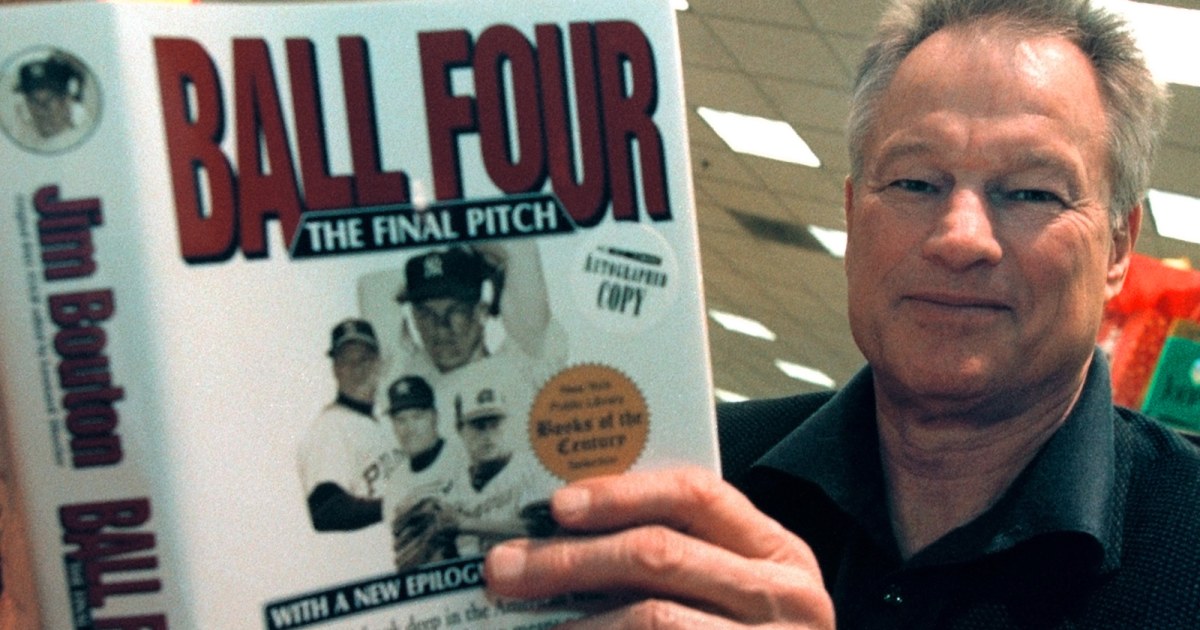
It is difficult to know where to begin when writing about Jim Bouton, who died Wednesday at age 80. If he had never written “Ball Four,” Bouton would no doubt have still merited a New York Times obituary as a former Yankees pitcher who won 21 games in 1963 and 18 in 1964, then tacked on two World Series wins that October.
But a sore arm cost Bouton his fastball and caused him to end up pitching as a 30-year-old knuckleballer for the expansion Seattle Pilots at the start of the 1969 season. It was also probably the reason he was willing to team with longtime sportswriter Leonard Shecter on a book chronicling that season. Before it was over, Bouton had been sent to Class AAA Vancouver, returned to Seattle and then been traded to Houston.
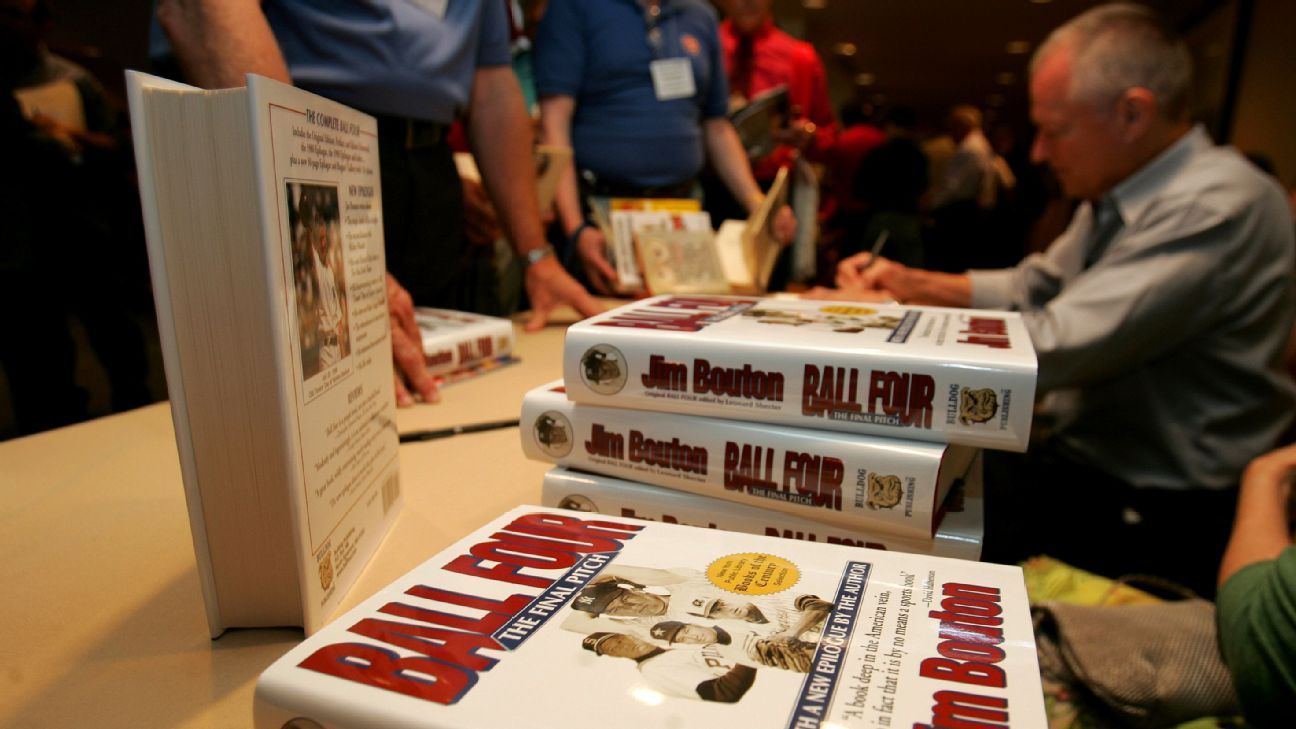
Bouton never stopped taking notes. A year later, “Ball Four,” written in diary form, was published and became arguably the most iconic baseball book ever written. Some will argue for Roger Kahn’s lyrically brilliant “The Boys of Summer,” but nothing changed baseball or sports journalism as much as Bouton’s seminal work.
Never had an athlete written with as much honesty, candor and humor about what life was like inside a locker room. People often compare “Ball Four” to Jim Brosnan’s ‘The Long Season,” written 10 years earlier, and there’s certainly common ground. But “Ball Four” went to places no athlete had previously gone.
Bouton shocked people by writing honestly about good ol’ boy Yankee Mickey Mantle — not so much about his home runs but rather his drinking, womanizing and mean streak. His description of joining Yankees teammates on the roof of Washington’s Shoreham Hotel to “beaver-shoot” — check out women through their hotel windows — would be unacceptable in today’s world, and Bouton’s revelation of it infuriated baseball insiders.
Related image
New York Yankee starting pitchers left to right, Whitey Ford, Jim Bouton, Al Downing, Ralph Terry, and Stan Williams, September 4, 1963.

Bouton took ordinary players and made them into icons: journeyman pitcher Gary Bell yelling, “Smoke ’em inside,” as his scouting report for every hitter in baseball; Alvin Dark’s famous “take a hike, son,” remark to an autograph seeker; Jim Gosger’s “yeah-surre” comment as he burst from a hotel-room closet during a tryst between his roommate and a young woman.
And, of course, there was Seattle Manager Joe Schultz’s “Let’s go pound some Budweiser” war cry and his ability to repeat his two favorite profane words in, as Bouton wrote, “all their possible combinations.”
“Ball Four” has sold more than 5 million copies — Bouton updated it often — so there are plenty of people who will know those anecdotes and many more by heart.
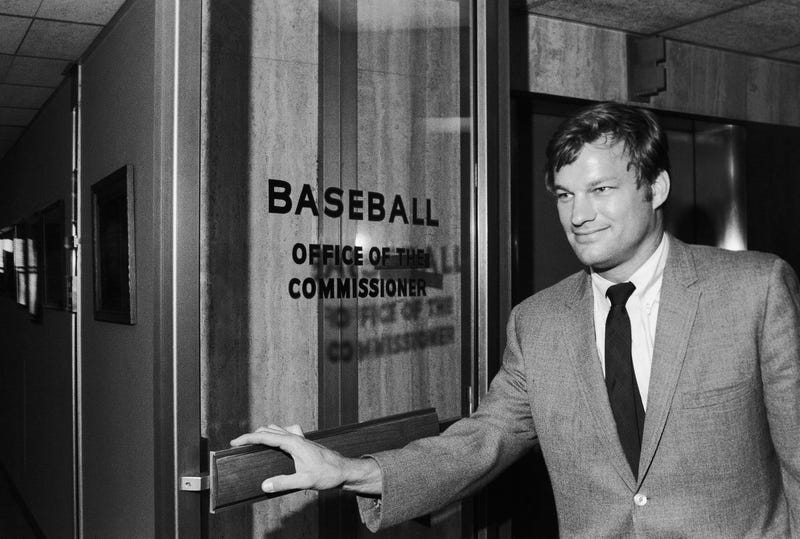
The book also made Bouton into a baseball pariah.When it came out in 1970, he was reprimanded by Commissioner Bowie Kuhn, who called the book “detrimental to baseball.” Kuhn also asked Bouton to sign a statement saying that the book was fiction. Bouton, naturally, refused.
Kuhn was hardly the only one to take issue with it. Players and many longtime baseball writers, some of whom considered themselves part of their teams, agreed with Kuhn.
Illustration for article titled Jim Bouton Woke Up America
(AP/Jim Lent)
No doubt many writers were simply jealous. In those days, with the wide-open access the media had, a good reporter could have told many of the same stories that Bouton told. But no one wanted to be drummed from the fraternity.
The irony is that few loved baseball more than Bouton. He made a comeback with the Atlanta Braves in 1978 — eight years after first leaving the game — and pitched in semipro leagues into his 50s. The final line of “Ball Four” poignantly expresses Bouton’s feeling about the game: “You see,” he wrote, “You spend a good deal of your life gripping a baseball and, in the end, it turns out that it was the other way around all the time.”
He also wrote often about sometimes “forgetting to tingle” as he walked across the outfield grass to the bullpen before a game, reminding himself how lucky he was to make a living playing baseball.
Bouton wrote a number of other books, including “Foul Ball,” about his efforts to save a minor league ballpark in Pittsfield, Mass., where he had settled after retirement. The book was written in the same diary form as “Ball Four” and, although the topic was completely different, had the same funny, anecdotal feel to it.
The book was also poignant. Bouton describes the death, in 1997, of his daughter Laurie in a car accident. He also addressed a New York Times op-ed written by his son Michael pleading with the Yankees to release him from baseball purgatory and invite him to Old-Timers’ Day. The Yankees relented and invited Bouton, who joyfully recounts his return to the Yankees’ clubhouse and the mixed reactions of his former teammates.
Image result for jim bouton
I wrote a favorable review of “Foul Ball” and was thrilled when Bouton reached out to thank me. That began a sporadic friendship, most of it on the phone. I loved hearing Bouton’s views of baseball today and his stories about old friends and teammates who had stayed in touch.
Bouton isn’t a Hall of Famer, but baseball should find a way to pay tribute to him and acknowledge, almost 50 years later, his massive influence on the game.
As for sports journalism, we were all influenced by him — whether my colleagues want to admit it or not. Bouton proved the importance of firsthand reporting, of truly getting inside a subject. No book — other than “All the President’s Men” — influenced me more as a reporter. Woodward, Bernstein, Bouton — pretty good role models.
Bouton did one other thing for me. Whenever I’m having a tough day at a ballgame — because of a rain delay, or because someone refused to talk to me or failed to show up for a scheduled interview, or an editor is being difficult (yes, it happens) — I look around and I think about what Bouton would have said.
“Don’t forget to tingle.”
Thanks, Jim.
For more by John Feinstein, visit washingtonpost.com/feinstein

Thursday, July 11, 2019

Jim Bouton never let ‘Ball Four’ repercussions ruin him


By Mike Vaccaro
https://nypost.com/2019/07/11/jim-bouton-never-let-ball-four-repercussions-ruin-him/
July 11, 2019

Image result for jim bouton

This was during the last and most brutal baseball strike, on an August afternoon in the terrible hot summer of 1994. Baseball was on most people’s hit list, which is the reason I’d gotten in my car and driven to a ballpark in Newburgh, N.Y. Jim Bouton was appearing there that night. It seemed the perfect time to talk to him.
He greeted people before the game, and he was more than happy to sign autographs, mostly of dog-eared copies of “Ball Four.” Time and again, he would draw a laugh by giving a variation of the same line: “I know a lot of people want baseball players to say they’d play for free. But baseball players who play for free all have something in common: They’re not good enough anymore than anyone wants to pay them.”
I got my audience with him late. I told him a story he’d surely heard 100,000 times by then, how reading “Ball Four” had changed the way I’d looked at baseball, how it humanized ballplayers, even God-like ballplayers. How it made me appreciate the game in a whole other way. And how it made me laugh like hell.
He signed my book, “To Mike: If I’m responsible for bringing one more sportswriter into this world, then it’s pretty clear I’m never getting into Heaven. Jim Bouton.”
Bouton died Wednesday at 80 at his home in the Berkshires after a long and difficult decline. The cause of death was vascular dementia, but he’d also suffered a stroke in 2012, and in 2017, he revealed he had a brain disease, cerebral amyloid angiopathy.
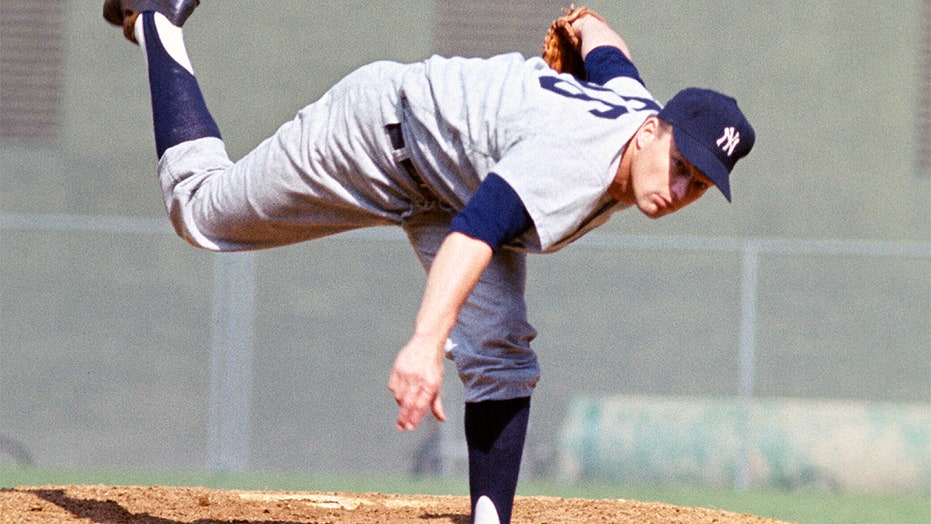
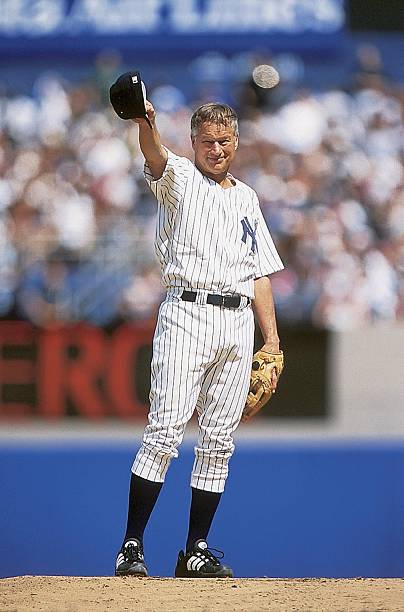
He was a mostly middling pitcher, known mainly for a pair of quirks: As a young player, he threw with such a vicious motion that his hat would often fly off when he delivered his fastball. Later, as he struggled to keep a place in the game — the central storyline of “Ball Four;” the hijinks and the laughs were just a bonus — he developed a knuckleball.
As a 24-year-old kid with the Yankees, he’d been good enough to go 21-7 with a 2.53 ERA in 1963, when he made his only All-Star team and finished 16th in the American League MVP voting. He won 18 more in 1964, then added two of the Yankees’ three victories in the World Series against the Cardinals.
Image result for jim bouton
Jim Bouton loses his cap while pitching for the New York Yankees in the 1964 World Series. (AP)

By 1965, though, he was 4-15, and his ERA ballooned to nearly 5. He’d already earned a reputation for dancing to his own drummer, whether it was in his yearly salary squabbles with Ralph Houk that he detailed gleefully in “Ball Four,” or for his left-leaning opinions, something that stands out in baseball clubhouses that have always tilted the other way.
Of course, it wasn’t until “Ball Four” that he became a household name. Bouton had always found a kindred spirit in a former Post baseball writer named Leonard Schecter, himself something of an oddity in the press box because he tended to write baseball stories that weren’t always limited to a baseball diamond.
Bouton spent the 1969 baseball season talking into a tape recorder as he tried, and succeeded, to make the expansion Seattle Pilots, as he earned a demotion to Vancouver and then a trade to Houston, introducing the world to a colorful Pilots manager named Joe Schultz and an unknown Seattle rookie named Lou Piniella, traded to Kansas City before the season started. He’d send the tapes back East to Schecter. The writer knew right away they had something; it turned out to be literary gold.
Bouton’s tales of ballplayer byplay and bacchanalia were irresistible to readers. “Ball Four” sold millions of copies and remains in print 49 years later, and was the only sports book included in the New York Public Library’s 1996 list of “Books of the Century.” It also sent the baseball establishment into a tizzy; Commissioner Bowie Kuhn called it “detrimental to baseball” and press box vanguard Dick Young called both Bouton and Schecter (who died in 1974) “social lepers.”
“Bleep you, Shakespeare!” Pete Rose howled at him once, from a dugout.
Bouton shrugged it all off, found fame and fortune as a sportscaster, as an actor, as the first investor in “Big League Chew” baseball gum, as a ballplayer again (he made it back to the bigs in 1978, starting five games for the Braves), as an author of four other books. If there was one consequence that hurt him, it was the Yankees never invited him to Old-Timers’ Day, fearful of how some of the stars of “Ball Four” — notably Mickey Mantle — might react.
But after Bouton’s daughter, Laurie, was killed at age 31 in a 1997 car accident, his son, Michael, wrote a letter to the New York Times the following Father’s Day, appealing to the Yankees to forgive and forget. The cheers he heard July 25, 1998, were louder than any he’d ever heard as a ballplayer. There were 55,638 people at the Stadium that day; you can bet most were cheering the author every bit as much as the pitcher.
Image result for jim bouton old timers day
Old-Timer's Day, 1998 (Chuck Solomon/Getty Images)
And you can bet as Bouton let those cheers wash over him, he remembered the last sentence of his book, as good a closing line as you could ever summon.
“You spend a good piece of your life gripping a baseball,” he wrote, “and in the end it turns out that it was the other way around all the time.”

A Whole Lot of America


Ross Perot, R.I.P.


Paul Beston
https://www.city-journal.org/ross-perot
July 10, 2019

Image result for ross perot
(USA Today Network via Reuters/Michael Mulvey)

We’re in an era of frantic, “historic” presidential elections. In their book Game Change, John Heilemann and Mark Halperin called the 2008 election “the race of a lifetime,” and it seemed so, with Barack Obama battling with Hillary Clinton in a dramatic Democratic primary before finally securing the nomination—then going on to become America’s first black president by beating John McCain in November, after a general election cycle that also saw the introduction of Sarah Palin. Yet 2008 seemed tame by comparison eight years later, when Donald Trump and Hillary Clinton, the two most disliked presidential candidates that anyone could remember, warred in a year-long race that crossed modern Rubicons for nastiness and culminated in an Election Night shocker that evoked 1948. Even the 2000 race, while dull in its particulars, delivered an unmatchable final act: an electoral deadlock, a month-long recount, a Supreme Court ruling to decide the matter.
Often overlooked in this catalogue of thrills (if one wants to call them that) is the 1992 contest, which, nearly 30 years on, looks more prophetic than any other recent election cycle, as it foreshadowed the populism and anti-systemic politics that have become so prominent today. In the Democratic primaries, the last man standing in Bill Clinton’s path to the nomination was former and not-yet-future California governor Jerry Brown, who, talking protectionism and wearing a union jacket while soliciting donations with an 800 number, played the Bernie Sanders role, but with a twist—Brown supported a flat tax. Playing the Donald Trump role—in fact, forging the Trump coalition—was Patrick Buchanan, who challenged President George H. W. Bush for the Republican nomination and lost, but not before highlighting the issues that Trump would ride to victory 24 years later: free-trade skepticism, border control, American national identity.
Buchanan and Brown were gone when the primaries were over, but the 1992 election’s most distinctive character (and Trump’s true precursor) would stay around to the end, garnering enough support that he earned a place in October on the debating stage with Clinton and Bush: businessman H. Ross Perot, who died yesterday at 89. Perot was the citizen politician whose seemingly offhand remark to Larry King about running for president set off a frenzy of interest and support. Even in 1992, legions of Americans didn’t love either party, and many fell hard for Perot, a Texas billionaire who, as founder and CEO of Electronic Data Systems and later Perot Systems, was one of the wealthiest men in the United States—especially since Perot promised, in one of his many homespun witticisms, to “clean out the barn” in Washington, a gentler version of Trump’s later “drain the swamp.” At other times, Perot would ask: “How stupid do they think we are?”
For a time, Perot led Bush and Clinton in the polls, and it seemed plausible that he could become America’s first independent president. Then, inevitably, the swamp, or the barn, began to envelop him: a man accustomed to being listened to, not shouted at, Perot struggled to field hostile questions from journalists and town-hall voters. He disliked the relentless scrutiny of his life, career, and ideas, and especially the impact this had on his family. He revealed himself as thin-skinned and prone to conspiratorial thinking. His poll numbers headed south, and he dropped out of the race in early summer.
Then he changed his mind and came back, just in time for the post-Labor Day race to the finish line. Showing the genuine appeal of his compelling if often vague message, Perot shot from 7 percent in the polls before the debates began to 19 percent on Election Day, a remarkable gain in such a short period. Nearly 20 million Americans pulled the levers for him, making him the most successful independent presidential candidate of the modern era.
His performance in the debates was a big reason why: here was a completely untrained amateur politician squaring off against a sitting president and an uber-debater who had spent most of his adult life preparing for these competitions. Yet Perot was at ease on stage, never fumbling for answers (as did his unfortunate running mate, the immensely heroic James B. Stockdale, in the vice-presidential debates), and always ready with a good quip. Yet he wasn’t all quips. Here was his answer, in the first debate, to a question on whether he had the proper experience for the presidency:
Well, they got a point. I don’t have any experience in running up a $4 trillion debt. I don’t have any experience in gridlock government, where nobody takes responsibility for anything and everybody blames everybody else. I don’t have any experience in creating the worst public school system in the industrialized world, the most violent crime-ridden society in the industrialized world. But I do have a lot of experience in getting things done. So if we’re at a point in history where we want to stop talking about it and do it, I’ve got a lot of experience in figuring out how to solve problems, making the solutions work and then moving on to the next. I’ve got a lot of experience in not taking 10 years to solve a 10-minute problem. So if it’s time for action, I think I have experience that counts. If there’s more time for gridlock and talk and finger pointing, I’m the wrong man. 
In the third debate, addressing the issue of whether he could win, Perot said: “Now, you got to stop letting these people tell you who to vote for, you got to stop letting these folks in the press tell you you’re throwing your vote away—you got to start using your own head.” 
Like many third-party candidates, Perot railed against “gridlock” as if it were the product of small-minded stubbornness and not ideological disagreement among the representatives that the people themselves had elected. He sold a pleasing vision of “problem-solving” divorced from thorny political realities. Nonetheless, this kind of rhetoric has always been game, set, and match in presidential debates—and for Perot, it wasn’t rhetoric. It was the way he spoke. It was old-fashioned American can-do talk, leavened with a Texas drawl and a sense of humor, and even those who couldn’t bring themselves to vote for him enjoyed the show.
And it wasn’t all show. Though Perot became, almost effortlessly, a classic political performer, behind the presidential run and the infomercial charts and the caricatures and impersonations lay a life that evokes cherished American notions about hard work and ingenuity, about devotion to country and family. The motif of striving—and succeeding—ran through his life. He started his work career at age seven, selling garden seeds door to door, later graduating to paperboy for The Texarkana Gazette, which he delivered on horseback. He was an Eagle Scout at the tender age of 12. He was president of his Naval Academy class. As an IBM salesman, he once made his annual quota in three weeks. At EDS and later Perot Systems, he ran a tight and hugely successful ship. Like some other business pioneers, he was a moral traditionalist, imposing strict dress codes and rules against marital infidelity. His devotion to his own family was well known.
All this Americans saw in 1992—not just the alluring performer’s persona. In the final presidential debate, Perot closed by saying: “To the American people, I’m doing this because I love you.” A sappy political line? Maybe. But tell that to the servicemen and POWs for whom Perot spent countless hours and dollars advocating. In 1969, he chartered two jet airliners, filled them with food and medicine, and flew them to Vietnam, in an attempt to bring aid to American prisoners there. In 1979, he famously engineered, with the help of a retired army colonel, a rescue of two of his company’s employees from an Iranian prison. And tell it to the people who voted for him in 1992, many of whom saw his deficiencies but responded to his campaign’s unspoken theme: that America was great but wouldn’t remain so forever if we stood on the sidelines and let political elites squander our inheritance.
“He was a real Texas legend,” a colleague said, via email. “He has a huge footprint in Dallas–Fort Worth.” That’s for certain. But if there’s a whole lot of Ross Perot down in Texas, it’s also true that there was a whole lot of America in Ross Perot.
Paul Beston is the managing editor of City Journal and author of The Boxing Kings.

Tuesday, May 28, 2019

Belatedly appreciated Bill Buckner dead at 69


By 
https://www.bostonherald.com/2019/05/27/belatedly-appreciated-bill-buckner-dies-at-69/
May 27, 2019

Image result for bill buckner first pitch


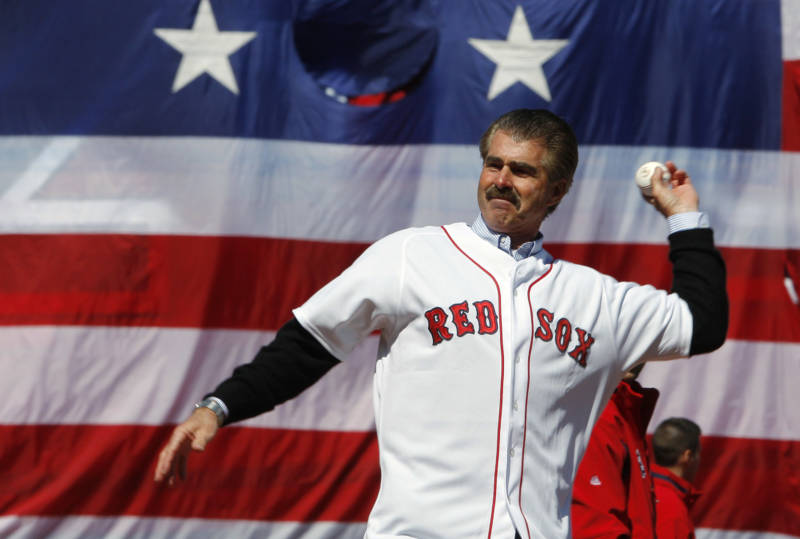
Bill Buckner throws out the first pitch at the MLB baseball game on April 8, 2008 at Fenway Park. 
(Brian Snyder/Getty Images)
If not for one play, one lousy play, former Red Sox first baseman Bill Buckner’s death would not have been as big a story, and that would have been just fine with him.

Buckner lost a long battle with Lewy body dementia on Monday. He was 69. His death first was reported by ESPN’s Jeremy Schaap, who received confirmation from Buckner’s wife, Jody.
“Bill fought with courage and grit as he did all things in life,” Jody Buckner said.
Buckner played 22 seasons for five teams in the big leagues, had 2,715 hits, won a National League batting title in 1980, was an NL All-Star in 1981, twice led the NL in doubles and played in the World Series for two teams (1974 Dodgers and ’86 Red Sox).
Those aren’t Hall of Fame numbers. They’re darn good ones, especially being able to maintain his skills for 22 years, but typically they don’t make for huge news. Unfortunately, he became a big baseball name that would echo louder with each passing year as the Red Sox championship drought grew because of one lousy play.
I once spoke to a man in a dugout at Shea Stadium about the 10th-inning groundball that went through Buckner’s legs in Game 6, preventing the Red Sox from clinching the 1986 World Series, which they lost to the Mets in Game 7.
The man was very bitter about the treatment of the play, was tired of talking about it, thought it ridiculous a ballplayer should be remembered for one play. That man’s name was Mookie Wilson, the speedy outfielder who hit the grounder through Buckner’s legs.
Wilson maintained that even if Buckner had fielded the ball cleanly, he would have beat it out for an infield hit. I hadn’t talked to anybody who shared that opinion before interviewing Wilson in the dugout at Shea Stadium and haven’t found anyone since.
Wilson spent 12 seasons in the big leagues and stole 327 bases, so in one respect you can understand how he resents being remembered for one grounder, but that’s not how the world works. Inside and outside of sports, the unusual makes news. Sorry, but a groundball that goes through a first baseman’s legs and alters baseball history in a big way is newsworthy.
All of Scott Norwood’s made field goals and extra points didn’t amount to a murmur compared to the blaring siren of his wide-right against the New York Giants in Super Bowl XXV. The siren grew exponentially louder in each of the next three years when the Bills made it to and lost in the Super Bowl. You don’t like that Norwood is remembered for one lousy kick, but you understand it’s unavoidable.
Similarly, the play that kept the Red Sox from 86-ing the Curse of the Bambino will be the enduring baseball legacy for Buckner and Wilson.
In 2011, Schaap did an “E:60” episode in which Jody shared the reason the family moved from Massachusetts to Boise, Idaho: A parent at their son’s preschool said to the 4-year-old boy, “Your daddy had to quit baseball because he missed the ball.” The Buckners’ son came home and asked, “Daddy, what did he mean?”
Buckner’s postgame reaction to the play came from a far more mature place.
“It’s unfortunate it happened, but that’s baseball,” Buckner told reporters. “All I can say is I never played in the seventh game of the World Series, and I get to play in one now. I hate to say it’s because I missed the groundball, but that’s the way it goes.”
Perfect statement from a player whose job it was to worry about the next play, especially when preparing for Game 7 of the World Series.
For fans still smarting, the Sox’ 2004 world championship healed wounds from the error. Not all wounds created by the reaction to it had yet healed. Buckner didn’t attend the 20th-anniversary celebration of the ’86 Red Sox, but after thinking about it for a month, he did accept the club’s invitation to throw out the first pitch at the home opener in 2008 as part of a celebration for winning the 2007 World Series.
Buckner received and appreciated a four-minute ovation. But a sign that read, “You’re forgiven,” was ill-conceived. The only ones who needed to apologize were those who took one error personally. He tried to make the play and didn’t. It happens, and it happened at the worst possible time on the grandest of all stages. Still, next play.
Buckner again felt at home in the area when he managed the Brockton Rox of the independent Can-Am League in 2011.
Image result for bill buckner
Bill Buckner and Mookie Wilson in 2001 (Ron Frehm/AP)
Buckner’s signs of healing from the treatment he received were evident from his good humor in participating in an episode of “Curb Your Enthusiasm,” which ended with Buckner making a running catch of a baby thrown out of a burning building and being carried off on the shoulders of those who witnessed his heroics. Earlier in the show (Season 8, Episode 9), he had failed to catch a baseball with Mookie Wilson’s signature on it and the ball sailed out the window.
As the years passed, Wilson and Buckner made money sitting side by side, signing photographs of the play, which was eerily shadowed in an ESPN interview of Buckner on the field at Fenway Park, 19 days before the error.
“The dreams are that you’re going to have a great series and win, and the nightmares are you’re going to let the winning run score on a grounder through your legs,” Buckner said. “You know, those things happen, you know, and I think a lot of it is just fate.”
Buckner knew all along his error was not worthy of being taken personally. One of the best things about the Red Sox’ 21st-century championship run is that it finally led so many others to learn that lesson.

Monday, May 27, 2019

Packers legend Bart Starr exemplary both on, off the field


By Gary D'Amato
https://www.jsonline.com/story/sports/nfl/packers/2019/05/26/packers-legend-bart-starr-exemplary-both-on-off-field/2952944002/
May 26, 2019

Image result for bart starr

The football part of his biography, impressive as it is, barely scratches the surface in describing Bryan Bartlett “Bart” Starr as a man.

What he achieved as the brilliant quarterback of the Green Bay Packers in the 1960s was beyond extraordinary: five National Football League titles in a span of seven years, the most valuable player in Super Bowls I and II, numerous passing records and the undying respect and admiration of teammates and opponents.

But he had a lot of life to live after he threw his final pass, and he lived it so very well.

Humble, gracious and philanthropic, the impeccably mannered Starr was the rare athlete who consciously and meticulously conducted himself, every day, in a manner befitting the hero mantle he’d earned on the field of play.

“He lived his life to be an example to others,” said Jerry Kramer, the starting right guard on those great Packers teams of the ‘60s. “He knew he carried a burden. He lived his life with purpose and with willpower. And because of that, he was an example to everyone on our team.”

When Starr died Sunday at age 85, he left behind a legacy in Green Bay, in Wisconsin and in the hearts of Packers fans everywhere that will endure until there is no more history left to write.

Starr suffered two strokes, four seizures and a heart attack in early September 2014, and was hospitalized for 2½ months. He also had cognitive issues, struggled with short-term memory loss and stopped making public appearances and granting interviews. Starr later did make two trips back to Lambeau Field.

Starr was born Jan. 9, 1934, in Montgomery, Alabama, where some two decades later Rosa Parks and the Rev. Martin Luther King would help launch the civil rights movement.

His father, Ben Starr, was a master sergeant with the Army Air Corps and a stern and intimidating man with whom Bart had a complicated relationship. If he somehow fell short in his father’s eyes, which was often the case, young Bart redoubled his efforts to win approval.

Years later, Starr would say that growing up in a military environment with a demanding father prepared him to succeed under coach Vince Lombardi, a volatile taskmaster who ultimately rewarded Starr with his complete trust.

Starr’s professional career, however, could not have gotten off to a more inauspicious start. Drafted in the 17th round out of Alabama in 1956, he shared the quarterback job with Tobin Rote and Babe Parilli and started 19 games over three seasons, compiling a 3-15-1 record with 13 touchdown passes and 25 interceptions.

His teammates had little faith in him as a leader.

But Lombardi, hired in 1959, recognized that Starr was intelligent and coachable and realized in time that he was tougher mentally and physically than most thought. After another 1½ seasons of job-sharing with Lamar McHan, Starr became the starter for good late in the 1960 season and led the Packers to their first division title in 16 years.

The Packers lost to the Philadelphia Eagles 17-13 in the 1960 NFL Championship game but would never lose another postseason game under Starr and Lombardi. The franchise won NFL titles in 1961, ’62, ’65, ’66 and ’67, putting tiny Green Bay on the map.   

The offense, directed by Starr and including future Hall of Famers Jim Taylor, Paul Hornung, Jim Ringo, Forrest Gregg and Kramer, was one of the most productive in NFL history. Starr called his own plays and in contrast with his gentlemanly demeanor off the field was a cutthroat competitor on it.

“There was a part of Bart Starr that was the great individual, courteous, never rude to anybody,” said Zeke Bratkowski, Starr’s backup from 1963-68. “Then there was the part of him on the football field deciding to throw it on fourth-and-1.

“Coach Lombardi would ask me, ‘What do you think he’s going to do?’ I would say, ‘He’s going to throw it.’ That’s the way he operated.”

Image result for bart starr

(AP)

In the 1967 NFL Championship game, the famed “Ice Bowl” at Lambeau Field, Starr called his own number and scored on a 1-yard plunge in the final seconds to give the Packers a 21-17 victory over the Dallas Cowboys in one of the most memorable games in league history.

Bratkowski said Starr was unlike any quarterback he’d seen in the way he studied film and prepared for games.

“When I got traded (by the Los Angeles Rams) in the middle of ’63, I went to Green Bay and checked in to the Holiday Inn,” Bratkowski said. “I got a call half an hour later and it’s Bart. He said, ‘I’m watching film. Would you like to come over and watch it with me?’

“He was so regimented. During the season he would trim his fingernails on Thursday. He would lace his shoes a certain way. He just had things that he was very regimented about. Everything had to be just so. There was a tremendous amount of respect for his work ethic and preparation.”

Starr played 16 seasons for the Packers and completed 57.4 percent of his passes for 24,718 yards, with 152 touchdowns and 138 interceptions. He was brilliant in the playoffs, going 9-1 with 15 touchdowns and just three interceptions.

He led the league in passing three times, was the NFL’s most valuable player in 1966 and was inducted into the Pro Football Hall of Fame in 1977.

In 1972, Starr attempted a comeback but a shoulder injury forced him to retire. One day that summer, rookie kicker Chester Marcol was practicing field goals alone, kicking off a tee in Lambeau Field, when Starr approached and offered to hold the ball for Marcol’s kicks.

“I was awestruck,” Marcol wrote in his autobiography. “Starr was a living legend. … His offer to help told me a lot about him as a person and as a teammate. He didn’t have to do that. He was headed to the Hall of Fame and I was a rookie kicker from a tiny college in Michigan. That’s how much he cared about the Green Bay Packers.”

Starr cared so deeply about the franchise that he couldn’t turn down the Packers’ offer to become the head coach and general manager in 1975, even though, as he would admit years later, he was unprepared for the job. He had spent the ’72 season as Dan Devine’s quarterbacks coach, but had no other coaching experience.

Plus, he inherited a mess. Devine had traded five high draft picks for washed-up quarterback John Hadl, basically bankrupting the team’s short-term future.

“He inherited a team that didn’t have a strong nucleus,” said Bratkowski, Starr’s quarterbacks coach from 1975 to ‘81. “There wasn’t enough personnel. You win with people. We did make some mistakes in the draft, but there was so much need you can’t fill it all up in one draft or two drafts or three drafts."

“You could say those are excuses. No, they’re not.”


RELATED: The Ice Bowl, 50 years later: An oral history

RELATED: Packers Hall of Fame fullback Jim Taylor dies at 83

Starr was stripped of his general manager duties after the 1980 season and was fired as coach after the ’83 season. He had compiled a 52-76-3 record, with two winning seasons and one playoff victory.   
        
In the mid-‘80s, Tom Stoen, the retired chairman of an oil and gas exploration company, led an effort to get an NFL expansion team in Phoenix. Stoen planned to make Starr the director of football operations for the proposed Arizona Firebirds.

“We made a handshake deal and he never wavered,” Stoen told the Arizona Republic. “During the time he was with us, he had opportunities to take a piece of the action with other teams and he never said a word.

“I cannot say enough good things about him. He’s probably as honorable and decent a man as you would ever meet.

Image result for bart starr

But there would be no expansion team in Arizona. Bill Bidwill informed the NFL of his plans to move the St. Louis Cardinals to Phoenix in time for the 1988 season. Bart and wife Cherry, who had relocated to Paradise Valley, moved back to Montgomery.

“(Then-NFL Commissioner) Pete Rozelle very much wanted Bart to have the team there,” Cherry Starr said. “He loved Bart and did his very best.”

Though his dismissal in Green Bay had stung the prideful Starr, he didn’t let it affect his feelings for the organization or for Packers fans, who were quick to forgive and forget his coaching record. He remained a beloved figure in Wisconsin and a treasured Packers icon for the rest of his days.

Off the field, he continued to build goodwill with his unwavering devotion to the franchise and his many charitable endeavors.

He served as honorary co-chair, along with Cherry, of the Vince Lombardi Golf Classic from its inception in 1971 until his health no longer permitted him to attend in 2014.

He co-founded the Rawhide Boys Ranch for at-risk youth in New London in 1965, helping complete the down payment on the Rawhide property in 1968 by raffling off the Corvette he won as the MVP of Super Bowl II.

“He did so much for so many people,” said Bob Long, a Packers receiver from 1964 to ’67 and later a business associate of Starr’s.

The Athletes in Action/Bart Starr Award has been given annually since 1989 to the NFL player who best exemplifies outstanding character and leadership. The award honors Starr’s lifelong commitment to serving as a positive role model.

Aaron Rodgers won the Bart Starr Award in 2014.

Asked if Starr was as good a man as he has been portrayed to be, Taylor, the Hall of Fame fullback (who died in 2018), said, “Probably more so than what’s been written about. He’s just a great guy. He lived a good, full life and has been an asset and a tribute to the National Football League and the Green Bay Packers.”

Added Bratkowski, “If you had to describe a gentleman you would take all the adjectives and put them in a long line. That’s Bart.”

Early on, however, Starr had to convince some skeptical teammates that he was who he appeared to be. Kramer, for one, initially thought there was an element of phoniness to Starr’s yes-ma’am-no-sir politeness and the ramrod-straight way he carried himself on and off the field.

“For many years, I didn’t think Bart was as good as he was letting on,” Kramer said. “I thought, ‘There’s got to be a flaw in there somewhere.’ I watched him for 10 years. Nothing. Not the slightest thing. And so I threw in with him.

 "We’d go to a function and he’d go to a prayer breakfast with the ladies. Then he’d go to a luncheon with the business leaders. And then he’d have a beer that evening with the guys. He did it all, you know?”

The Starrs lost a son, Bret, to a drug overdose in 1988. Starr discovered the body. Though it was the most painful event of his life, he handled it with typical poise and grace.

“I was watching Roy Firestone do his (television) show with Bart,” Kramer said. “Roy is doing the interview and he says, ‘Bart, I hate to ask you this, but how did it feel when you found your son?’ I jumped out of my chair, I was so mad.

“And Bart says, ‘Roy, I was so thankful that my wife wasn’t there and that she didn’t have to see that.’ He found a positive in the most negative thing I could imagine. That’s Bart.”

Starr always treated Packers fans with respect and was unfailingly patient and polite in countless encounters with them. He once told Bratkowski, “It’s an honor for people to recognize you for what you accomplished.”

“We’d be eating dinner and somebody would come up to him and say, ‘Mr. Starr, can I have your autograph?’ ” Bratkowski said. “He would stand up, hold out his hand and say, ‘It’s Bart. This is coach Zeke Bratkowski and his wife, and this is my wife, Cherry.’ He was always so polite, so cordial.

“He wouldn’t sign a napkin. He’d say, ‘If you get a piece of paper and write down your name and address, when I get home I will sign a picture and mail it out the next day.’ ”

Starr’s neat and distinctive autograph is highly prized by sports memorabilia collectors and Starr-signed jerseys, footballs, helmets and lithographs can easily surpass $1,000 in value.

“Even the current fans today, the Starr name resonates with them,” said Rick Moncher, a sports memorabilia dealer who in recent years had exclusive signing rights with Starr.

Image result for bart starr
(Shawn Hubbard)

Starr is survived by Cherry and a son, Bart Jr.

“The Packers Family was saddened today to learn of the passing of Bart Starr,” Packers President/CEO Mark Murphy said in a statement. “A champion on and off the field, Bart epitomized class and was beloved by generations of Packers fans. A clutch player who led his team to five NFL titles, Bart could still fill Lambeau Field with electricity decades later during his many visits. Our thoughts and prayers go out to Cherry and the entire Starr family.”