Showing posts with label Europe. Show all posts

Saturday, September 14, 2019

Turning Brexit into a crime


By Brendan O'Neill
https://www.spiked-online.com/2019/09/13/turning-brexit-into-a-crime/
13 September 2019

Image result for john bercow

John Bercow
This week, the Remainer elite’s war on democracy reached fever pitch. There is now a distinct whiff of autocracy in their campaign to overthrow Brexit. Their aim seems to be to criminalise Brexit, to make it an actual offence to walk away from the European Union.
Remoaner politicians constantly complain about the rhetoric of Brexiteers. But this week their own rhetoric became genuinely alarming. They now speak openly about imprisoning those who try to bring about a clean-break Brexit (‘No Deal’). They compare politicians who refuse to extend Britain’s membership of the EU to common criminals.
So John Bercow, the puffed-up Speaker who abused his position in parliament to try to subvert the people’s will, says Boris Johnson will be no better than a ‘bank robber’ if he refuses to delay Brexit and take No Deal off the table.
Because the Benn Bill voted through by MPs last week outlaws No Deal and demands an extension to our membership of the EU, anyone who defies it is just a no-good criminal, Bercow says.
Image result for Jolyon Maugham
Jolyon Maughan
Meanwhile, anti-democratic lawyers are taking legal action in Scotland to ‘compel Boris Johnson to seek an extension to Article 50’. One of these lawyers – Jolyon Maugham – has said of Boris: ‘he’ll either see the extension or he’ll go to prison.’ That is, keep us in the EU or you will go to jail.
These people have lost it. It is a striking insight into their tyrannical mindsets that they can so casually speak of criminalising and jailing anyone who wants a clean-break Brexit and wants it now.
They are using the law to make it a crime to pursue the thing that millions of people voted for: leaving the EU. This genuinely feels like a coup, where a tiny but powerful elite uses its power and its connections to make it a crime for politicians to be faithful to the people’s will. They are tearing apart the democratic fabric of this nation.

Wednesday, September 04, 2019

Today was a very dark day for British democracy


The political class has taken back control - from the people


By Brendan O'Neill
https://www.spiked-online.com/2019/09/03/today-was-a-very-dark-day-for-british-democracy/
3 September 2019

Image result for brexit

Today has been a very dark day for democracy in the United Kingdom.
Don’t believe for one minute the self-aggrandising claims of the Remainer establishment and its noisy cheerleaders in the media. Tonight’s vote by MPs to seize control of the parliamentary agenda in order to prevent a No Deal Brexit is not, as they claim, a wonderful assertion of parliamentary sovereignty against a dictatorial executive led by Boris Johnson.
No, it is an assertion of the political elite’s arrogant authority over the people. If MPs have seized power from anyone this evening, it is from us, the public, the millions who voted to leave the EU. This is not parliament vs the executive – this is parliament vs the people, and it opens up one of the greatest, most troublesome constitutional crises of modern times.
In essence, this evening MPs have gone some way, almost all the way, to achieving the terrible thing they have been agitating for since June 2016: stopping Brexit. That is their fundamental aim. It is essential to understand that when they talk about ‘blocking No Deal’, they mean ‘blocking Brexit’.
For more than three years they have hampered, frustrated and foiled Brexit, tying it in legal knots, ‘softening’ it beyond recognition, and constantly sending signals to the EU that we will accept whatever ridiculous, Brexit-thwarting compromises they demand.
Now a further, possibly interminable delay will be secured as the newly in-charge, newly emboldened Remainer Parliament votes on the Benn Bill tomorrow. The government was defeated by 328 votes to 301 this evening. Twenty-one Tory MPs joined the ‘revolt’ against Boris’s government. And now MPs, the majority of whom voted Remain, many of whom despise Brexit and fear and loathe the masses who voted for it, will push through the Benn Bill and prevent the UK from leaving the EU without a deal on 31 October (unless parliament consents, which it won’t) and requesting yet another extension to the Article 50 process.
They are killing Brexit. It has been a slow-motion guillotine, with the blade falling for more than three years now, but that is what they are doing. The majority of the establishment has never made any secret of its elitist disgust for Brexit and its facilitators – all 17.4million of us – and they have longed to reassert their presumed wisdom and reason over the idiocy of the masses. Tonight they took a very significant step in that anti-democratic direction.
Probably their most perverse and insulting claim is that they are standing up for parliamentary sovereignty. This is the opposite of the truth. They are ravaging parliamentary sovereignty. These are the people who over the past 40 years have green-lighted the outsourcing of huge swathes of parliament’s authority to Brussels, and whose very efforts to destroy Brexit run counter to parliament’s own handing of that decision to us, the people, and its insistence that it would respect the decision that we made.
It was the vote for Brexit, the vote to take back control from the EU, that was a genuine expression of faith in the institution of parliamentary democracy. In contrast, the elite’s ceaseless war on Brexit is a war on parliamentary sovereignty too, since the ultimate aim of this war is to retain the law-making authority of foreign institutions at the expense of our own institutions.
The elite’s claim to be defending democracy is a brazen lie. It is crushing democracy. It is revolting against the people and the decision we made in 2016. How grotesque for Jeremy Corbyn to say this evening that parliament has struck a blow for the idea that ‘sovereignty rests’ in the people. It has done no such thing. In fact it has elevated the political authority of an out-of-touch and increasingly hysterical elite over the largest democratic decision ever made by the British people.

Brexit is now seriously, perhaps irreversibly, wounded. Whatever comes next, including the General Election, must be used by democrats across the country to remake the democratic cry of 2016 and to reassert the sovereignty of the people and our parliament over the presumed wisdom of Britain’s own elites and the alleged expertise of foreign technocrats. If they void the millions of votes cast in 2016, they void the right to vote itself. We cannot let them win.
Brendan O’Neill is editor of spiked and host of the spiked podcast,The Brendan O’Neill Show. Subscribe to the podcast here. And find Brendan on Instagram: @burntoakboy

Sunday, July 28, 2019

At last the country is run by Leavers


By Brendan O'Neill
https://www.spiked-online.com/2019/07/25/at-last-the-country-is-run-by-leavers/
25 July 2019


Prime Minister Boris Johnson presides over his first cabinet meeting at 10 Downing Street, on Thursday in London.(Aaron Chown/Getty Images)

Remoaners in the media are alarmed at Boris Johnson’s ‘brutal reshuffle’. He is ‘rewarding Hard Leavers’, they claim. His clearout of no fewer than 17 of Theresa May’s 30-strong Cabinet, and his replacement of them with largely pro-Leave and even pro-No Deal ministers, is disturbing and shocking, moans the pro-EU set. Not for the first time they need to get a grip. What is really shocking is that for the past three years Britain was run by Remainers. We often overlook how perverse it was that a nation which voted Leave was so dominated by a Remainer elite. Johnson’s new Cabinet redresses this undemocratic disparity between political-class sentiment and public sentiment and gives rise to a UK that is now run by Leavers. About bloody time.
It is testament to the anti-Brexit elites’ sense of entitlement, to their belief that they were born to rule, that they are so disgusted that pro-Leave people now have the top jobs. There’s the PM himself, of course, who was famously flighty on leaving the EU to begin with, but who then stabbed his flag in the Leave camp and played a key role in Vote Leave. There’s his home secretary, Priti Patel, an implacable Leaver. And his foreign secretary Dominic Raab, a long-time intellectual critic of the EU and literally the only person May ever sent to Brussels who couldn’t be bossed around by Brussels – hence he had to resign as May’s Brexit secretary because he got in the way of her strategy of caving in to every single one of the EU’s demands. And there’s Jacob Rees-Mogg, head of the European Research Group and now leader of the House of Commons, which is hilarious given how many people in the Commons – including on the Tory side – hate how pro-Brexit he is.
Across the Cabinet, there are ministers who have committed to leaving with No Deal if necessary by 31 October. It remains to be seen whether the BJ government can pull this off, and there will be serious repercussions for it, electorally and reputationally, if it fails to. But that we now have a government led by Leavers is perfectly normal. Good, in fact. It means this Cabinet is far more in tune with public sentiment than the Remainer double act of Theresa May / Phillip Hammond ever was, and than Jeremy Corbyn’s Brexit-thwarting, second referendum-backing Labour could ever be. Never forget the most staggering political statistic of modern times – where 52 per cent of the public voted Leave, just five per cent of Labour MPs did. Boris might be Eton, Rees-Mogg might sound like a man from another era, but it is testament to Labour’s stunning drift from its traditional voter base and from the public in general that their Cabinet is more reflective of public opinion than Labour is.
On top of these ministers we have Boris’s new senior adviser, Dominic Cummings, the strategic whizz behind Vote Leave, and his director of policy, Munira Mirza, friend of spiked and a committed Leaver. Downing Street is now a Leave bastion. This is progress. The proof is in the pudding, of course, so Downing Street must make good on its Leave credentials or else the masses’ eyes will roll yet again, as they have many times over the past three years. In some ways the most admirable thing about the appointment of Cummings is that it suggests Johnson doesn’t care that much what the media class thinks. He must have known that having Cummings at No10 would cause a meltdown among those chattering-class muppets who think Cummings is a mad, criminal mastermind who hoodwinked the electorate in 2016 – and yet he still did it. Let’s hope this is a positive sign of a healthy disregard for media-class moaning and Twittermob hysteria.
Here is what is most striking about so many Vote Leave people now playing a key role in government: for three years the anti-Brexit, anti-democratic wings of the establishment have tried to demonise Vote Leave as a criminal enterprise. They have insulted it, demonised it. They have accused it of destroying modern Britain. And yet here it still is, more influential than ever. And that is not down to any peculiar talents on the part of Vote Leave, by the way. It’s down to the fact that Leave campaigns are still necessary. Unbelievably. More than three years after the people voted to leave, the fight actually to leave continues. It must be hoped that Johnson and his team understand what a colossal blow to people’s aspirations and to the democratic spirit itself it will be if they now do not deliver on Leave. It will be a far greater failure than May’s. We always knew she was a Remainer. But they’re Leavers. And if Leavers don’t deliver Leave, then politics will suffer even more than it did under the Maybot regime. No pressure, guys.

You don’t have to have unfettered faith in this Cabinet to see that it feels refreshing. It was always a depressing sign of the times that British politics – not to mention the British media elite, the cultural elite, the university system, the judiciary and all other powerful institutions – were dominated by Remainers. This was a Leave country ruled by Remainer politicians, proof of the chasm that now separates elite opinion from public opinion. The new Cabinet goes some way to rectifying that. Now let’s leave. Properly, fully, with no turning back. Out, out, out.
Brendan O’Neill is editor of spiked and host of the spiked podcast,The Brendan O’Neill Show. Subscribe to the podcast here. And find Brendan on Instagram: @burntoakboy

Wednesday, July 24, 2019

Boris Johnson is the European Union’s Worst Nightmare


By BILL WIRTZ
https://www.theamericanconservative.com/articles/boris-johnson-is-the-european-unions-worst-nightmare/
July 24, 2019

Image result for boris johnson
(Jeff J. Mitchell/Getty Images)

Yesterday’s vote in the British Conservative Party confirmed that Boris Johnson will become the United Kingdom’s next prime minister.
Johnson beat his opponent, Secretary of State for Foreign and Commonwealth Affairs Jeremy Hunt, by a margin of 92,153 to 46,656 among Conservative voters. Prime Minister Theresa May had stepped down after her efforts to reach a deal with the European Union regarding the UK’s exit from the bloc were repeatedly rejected in the House of Commons. May had negotiated several extensions to the official exit, which is now set for October 31. That leaves Johnson with little time to find an agreement.
The Conservative Party is currently a minority government, relying on the Northern Irish Democratic Unionist Party (DUP) to get measures passed. Since the prime minister post is not directly elected, the ruling political party’s leader automatically becomes head of government. The next general election isn’t scheduled until May 2022.
Boris Johnson is a household name in British politics. He’s the former Brussels correspondent for the Daily Telegraph, former mayor of London, and was one of the most vocal voices behind the campaign to leave the European Union in the Brexit referendum campaign of 2016. The 55-year-old has a massive vocabulary, and is known for his colorful columns and even more colorful insults. In 2013, when he was mayor, he called the London assembly “great, supine, protoplasmic, invertebrate jellies,” getting a laugh even from those who had just voted to remove him from the assembly room.
Beyond his articulate wit, Johnson is likely to be more free market than his Conservative predecessors, though exactly where he stands ideologically is hard to tell. He doesn’t seem to follow in the footsteps of the Tories’ restrictive lifestyle police, as he opposes increased sugar taxes, which have been lauded as a necessary tool for public health. And even though Johnson supports tax cuts for the middle class and increasing the higher-rate income tax threshold by more than 60 percent, he wants to avoid deficits only by increasing borrowing.
Most important however, is what he’ll do differently than his predecessor, Theresa May, to secure Britain’s departure from the European Union. Johnson first opposed the Withdrawal Agreement that May’s government negotiated with the EU, only to “reluctantly” support it on the third vote. This cost him some trust among hardline pro-Brexit supporters. Famous Brexiteer Nigel Farage doubts that Johnson can get the exit done by October 31, though newly elected European Commission president Ursula von der Leyen says she would be open to another extension of the official exit date.
Johnson’s options are limited: either he convinces the EU to make fundamental changes to the Withdrawal Agreement—which seems unlikely—or he cancels triggering Article 50 and doesn’t leave the EU at all—which would be the end of his premiership—or he risks leaving the EU without a deal. In the past, he’s made it clear that he’s open to the third option. Under a no deal scenario, the UK and the EU would fall back onto World Trade Organization rules, which would reintroduce tariffs on goods coming from the EU. Westminster has insisted it would not do this, though Brussels has not been entirely clear on its position.
This is the point of contention: if the UK and the EU re-introduce tariffs, then long lines at the border (including in Northern Ireland) could interrupt the supply chain, and cause shortages and rising prices. On the other hand, Brexiteers have assured their critics that technological improvements can make the process smooth and unseemly, and that tariffs would only come into effect if the EU were to take that step. From a UK standpoint, no border would need to be erected.
The new PM has made it clear that he wants to get a deal, but also that he is ready to steer towards no deal if necessary. This is essentially a negotiating position: if you announce prior to a negotiation that you will never walk away (which is what Theresa May did), then you can be sure that the other side will exploit you.
For the EU, Boris is the least favorable option in this sense, because he seems most secure in walking away from the negotiating table. This explains the nervous reactions across Europe yesterday afternoon. EU Health Commissioner Vytenis Andriukaitis even insinuated on the official website of the European Commission that Johnson deceived the British electorate. 
If Johnson does not reach a deal, if he kowtows to pressure and begs for an extension, then his days as PM will be short-lived. If he leaves without a deal, he will be faced with doomsday scenarios for weeks, with every bit of bad economic news blamed on his leadership. If he manages to strike a good deal for the United Kingdom, he will go down in history as one of the UK’s most effective leaders.
The suspense is palpable. We will find out what happens on October 31.
Bill Wirtz comments on European politics and policy in English, French, and German. His work has appeared in Newsweek, the Washington Examiner, CityAM, Le Monde, Le Figaro, and Die Welt.

Monday, July 08, 2019

WHEN BRITISH JUSTICE DIED


By Bruce Bawer
July 8, 2019
Tommy Robinson arriving at the Old Bailey on Friday.
Tommy Robinson arriving at the Old Bailey building on Friday. (Yui Mok/PA)
Trial by trial, imprisonment by imprisonment, dishonest news report by dishonest news report, the miserable bastards who make up the British establishment are steadily transforming Tommy Robinson, a working-class husband and father from Leeds, into an imperishable symbol of the quiet determination, indomitable courage, and love of liberty for which Britain used to be known but which that selfsame establishment has labored effortfully to stamp out during these opening chapters of the Islamization of that once-great nation.
Even those of us who have been closely following Tommy’s treatment by the British courts during the past couple of years – and who, perusing the charges against him, have recognized just how outrageously he has been treated by a judiciary committed not to justice but to the silencing, and if possible personal destruction, of this latter-day Jeremiah – were stunned by the verdict handed down on Friday after a two-day trial.
This was a rehearing of the same case that last year landed Tommy in prison (more specifically, in what amounted, in violation of the Geneva Convention, to solitary confinement), an ordeal from which he emerged, after two months, looking physically and psychologically all but broken. The charges themselves were absurd to begin with: he was taken into custody near the courthouse in Leeds, where he was doing a live report on Facebook video about an “Asian grooming-gang” (i.e. Muslim child-rape) prosecution that was underway inside. He didn’t do or say anything that any BBC or Guardian journalist in similar circumstances might do; but he was arrested anyway – on the grounds that his reporting from out on the street had somehow threatened to prejudice the trial going on inside the building – and was charged with contempt of court.
The speed with which he was tried, convicted, and incarcerated after his arrest in Leeds – the whole process took just a few hours – shocked observers who still thought of British justice as something serious and worthy of respect. His release from prison two months later came after the Lord Chief Justice of England and Wales, in an unusually blistering ruling, declared that the court proceedings against him had been illegitimate in a number of ways, and ordered his immediate release.
That solitary glimmer of fairness from the Chief Justice led some of us to hope that Tommy might, in the end, receive something resembling real justice. But no. Contrary to the expectations of many, a retrial on the same feeble charges was scheduled. At the Old Bailey in London on Thursday and Friday, the weakness of the case against him was painfully obvious. Reporting from a street near the courthouse during a lunch break on Friday, Ezra Levant of Canada’s Rebel Media, who attended the trial (and who himself happens to be a lawyer), pronounced on a YouTube video that “this is as close as it comes to a sham trial as I’ve ever seen in a Western democracy.”
He added – and I’ve made the same point previously in articles about this seemingly endless process of judicial harassment – that if this were happening in someplace like Russia, international human-rights organizations would be shouting about it from the rooftops and calling it out for exactly what it is: namely, the kind of nakedly political prosecution that we like to think happens only in totalitarian countries. But even Levant, at midday on Friday, confessed to feeling positive: the first day and a half of the trial had laid so totally bare the weakness of the prosecution’s case that a conviction seemed inconceivable.
But by the end of the day Levant had been proven wrong. The judges, Dame Victoria Sharp and Sir Mark Warby (whom we are supposed to refer to as The Hon. Mr. Justice Warby, but the hell with that), pronounced Tommy guilty. He may get up to two years behind bars: we don’t know yet. In reporting on the verdict, British court reporters – who every day do exactly what Tommy had been convicted for – could barely constrain their glee at what they saw as his comeuppance. He had taken them on, all of them – the judges and MPs, the reporters and professors, the police chiefs and high-ranking civil servants who run that blighted island (and in doing so are running it into the ground) – and, although he had justice on his side and a large and ever-growing segment of the British populace at his back, he had lost.
But those judges, and their entire network of cronies and confederates in the British political, cultural, academic, and media establishment, are fools indeed if they think this means they have won. Thanks to their fatuousness, knavery, and cowardice, Tommy is – step by step, injustice by injustice – growing into nothing less than a world-historical figure, a living symbol of the determination of the Western multitudes to preserve their free civilization in the face of an elite, at once arrogant and craven, that has plainly decided to stand by and manage its gradual subjugation to an alien tyranny.
Tommy is, if you will, our Nelson Mandela or John Brown, only without blood on his hands; he is our Churchill in the 1930s wilderness, sounding the alarm about a looming menace – except that Winston had a bully pulpit in Westminster, while Tommy appears, once again, to be headed back to jail. Rosa Parks became immortal for refusing to sit in the back of one bus on a single day; Tommy faces worse things than a Montgomery, Alabama, bus driver every day of his life, and doesn’t have an organization with the power and resources of the NAACP behind him. Also, Rosa Parks was the face of a cause of which the mass media of the time fully approved; today’s legacy media view Tommy as an existential threat to the power structures of which they are a part, and treat him, accordingly, with consistent dishonesty and disdain.
On Friday evening, after Tommy’s verdict came down, my friend Valerie Price, who runs Act for Canada and who attended the trial, wrote a posting about it on her Facebook page that concluded as follows: “I fear that if the Crown sends him back to prison, this will be the spark that ignites a class war.” The next morning, in a private missive, she expanded on this thought: after Tommy was pronounced guilty and they all filed out of the Old Bailey, the crowd outside, she told me, was “in a rage and ready to ‘storm the Bastille.’” Well, I’m not entirely sure whether it’s wise or not on my part, but I find myself hoping that if Tommy is sent to prison, his supporters do drop their British restraint down the loo and, just this once, act like an eighteen-century French mob. That may be the only thing that will make the torpid, turpitudinous rogues in Westminster sit up and take notice, and perhaps even cause Her Majesty to look up from her tea.
But of course not even a heaping dose of Gallic-style canaillerie on the part of the Eastenders set will do the job that needs to be done: if there’s any possibility of saving Britain from the fate about which Tommy Robinson has been warning all these years, the first real step has to be a general election that sweeps both major parties out of power and into the dustbin and installs in their place a new government that actually represents, and is willing to act boldly on, the will of the British people – and that, moreover, treats Tommy not with condescension but with the respect he deserves. Which is all by way of saying that I’ll know the UK is headed in the right direction when it has a prime minister who recommends Tommy Robinson for a knighthood.
Bruce Bawer is the author of “While Europe Slept,” “Surrender,” "The Victims' Revolution," and "The Alhambra." "Islam," a collection of his essays on Islam, has just been published.

Thursday, June 13, 2019

GERMANY VS. THE 'POPULIST WAVE'


Reflections in Munich.


June 13, 2019

Related image
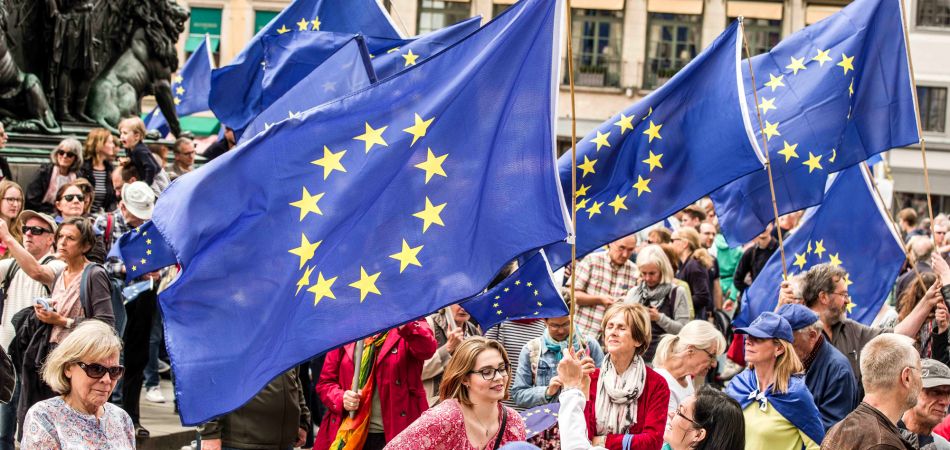
Commitment to Europe: a demonstration in Munich in 2018.(DPA)

When I was walking around Munich this weekend, it occurred to me that one reason why Germans have such a long-lasting international reputation for being brainy and scholarly and stuff is that all those hours they spend standing at street corners waiting for lights to change give them plenty of time to think. Ever since the first time I set foot in this country, several decades ago now, I’ve been stunned by the willingness of these people – in every city, and of whatever age or social station – to crowd together on curbs, with no moving vehicle in sight for half a mile in either direction, unwilling to hurry across even the narrowest of thoroughfares until a green signal gives them permission to move. My first encounter with this cultural practice was especially striking because I was from America, where individual freedom is taken seriously and where it is hard to quash the impulse to violate trivial regulations if they seem to impinge unnecessarily on one’s freedom of movement and are contrary to one’s personal judgment and/or to simple common sense.
Consider, moreover, that I come from New York, where, as they say, traffic lights are only suggestions. 
This whole German standing-at-lights business is, of course, all about obedience – about a fondness, in fact a deep-seated, inborn, and well-nigh ineradicable need, for exceedingly strict order, even in the most meaningless matters, enforced by very strong authority. That, plus an unshakable readiness to obey that authority beyond the point of rationality, in defiance of one’s own reasoning powers, and without ever giving an instant’s thought to the possible illegitimacy, imprudence, or immorality of that authority. It’s this rage for order that explains the insane level of overregulation practiced by the EU – which is, when you come right down to it, a German operation. The other day somebody said that one of the regulations the EU is currently working on is a rule setting the proper lengths for candle wicks. Only a bureaucracy run by Germans could come up with such things. 
Americans love freedom. But to Germans – at least Germans with a traditional German temperament –freedom looks terrifyingly like chaos.
That’s what I was reflecting on as I waited at one Munich street light after another on this first weekend after the seventy-fifth anniversary of D-Day – and the first weekend, too, after the announcement of the winners of the latest European Parliament elections. If not for the German fetish for authority, Americans of my parents’ generation wouldn’t have been put through so many (shall we say) inconveniences during the first half of the 1940s, and D-Day would never have had to happen, and those Normandy beaches would still have French names.
Yes, Germans today like to tell themselves, and us, that they’ve totally changed as a people, but don’t be too quick to believe it: for only Germans – after the tsunami of fake refugees and other Muslim immigrants that has dramatically transfigured their country in recent decades, leading to such atrocities as the wave of mass rapes on New Year’s Eve three years ago in Cologne and elsewhere – could have gone to the polls week before last and put Angela Merkel’s Christian Democratic coalition on top yet again, with 28.9% of the vote. That’s Angela Merkel, the chief architect – the veritable Albert Speer – of her country’s current disaster; Angela Merkel, who, in a commencement address last month, utterly ignoring the reality of what open borders have done to her own country and the fact that America’s insufficiently guarded southern border has played into the schemes of drug cartels and child smugglers, told Harvard graduates that they should “tear down walls of ignorance,” a manifest dig at President Trump, Brexit, and anyone who dares to resist EU hegemony; Angela Merkel, the woman under whom Germany, as James Kirchick wrote in April in the Washington Post, is “NATO’s biggest freeloader.”
To be sure, the relatively new Alternative for Germany Party, which opposes mass Muslim immigration, scored 11% of the vote, or fourth place, in Germany’s elections for MEP, which isn’t bad at all (the Social Democrats came in third); but given what the country is going through, it’s hard not to be struck by the German electorate’s readiness to give the Merkel gang yet another shot – all the while also buying, in huge numbers, the establishment’s assertion that the biggest threat to the German way of life is climate change. For, yes, the party that came in second in Germany was the Greens, who picked up more than one out of every five votes, even as so-called “populist” (i.e. anti-EU, pro-freedom) parties were scoring huge victories elsewhere in Europe. Now, let’s be clear here: Germany has been utterly transformed since I first visited it when Jimmy Carter was the U.S. president and Helmut Schmidt was the German chancellor, but the culprit isn’t greenhouse gases.  
Apropos of that transformation: when I checked into my hotel on Friday, the desk clerk used a minor error in my reservation as an excuse to explode in aggressive anger at me, growling and barking accusations and making ridiculous threats. He was not a native German; my guess, based on his accent and appearance (in particular his scraggly gray beard), is that he was a Turk. Although, in decades of extensive travel, I had never experienced such a greeting at a hostelry, I have had my share of unpleasant encounters in Europe with unnecessarily belligerent Muslims; and as the number of Muslims on this continent has risen steadily, and their tendency to feel empowered has grown, these encounters have increased in frequency and degree of vitriol. I share this trifling anecdote only because, over the years, I have come to view such episodes, however trivial they may appear to be in the scheme of things, as providing a foretaste of what life will be like under the caliphate.
For while individual Muslims can be extremely friendly and hospitable, Islam, as such, when you get right down to it, is an ideology of contempt, contumely, and conquest. From birth, its adherents are taught that it is inappropriate for them to live for very long as passive subjects in infidel lands, and that it is only natural for them to do everything they can – exert pressure, claim victimhood, demand censorship, blow things up – to wrest power, over time, from the infidel. Owing to this imperative, there is a bullying quality that is intrinsic to Islam, an attribute that, when experienced in Germany, of all places, cannot but bring to mind the fierce, brutal truculence at heart of Nazism itself – the very attribute, of course, that drove a certain ambitious Austrian, in this selfsame city, on the night of November 8, 1923, to try to initiate the overthrow the Weimar Republic at a beer hall called Bürgerbräuenkeller; the very attribute, too, that led more and more Germans, over the course of the 1920s and early 30s, to find Herr Hitler (whom most foreigners at the time regarded as comical and cartoonish) nothing less than mesmerizing.
Anyway, strolling around Munich and espying some of the burg’s newest denizens, I’ve been reminded that while the Führer was famously consistent in his passionate Jew-hatred, he actually found Islam appealing – and many Muslims felt the same way about Nazism, which is why hundreds of thousands of them traveled long distances to serve in the Wehrmacht and SS. Part of the mutual attraction between Nazis and Muslims, naturally, had to do with their shared loathing for Jews; but another part was that each side appreciated the bellicose qualities of the other. While Hitler considered Christianity “effeminate,” he glorified Islam “as a strong and aggressive warrior religion.” Both Nazism and Islam, moreover, revere order. Both cherish discipline. Both see individual liberty as anarchy. This is why so many Westerners convert to Islam: freedom, as the planners of the Iraq War never understood, isn’t for everybody. Some people prefer being part of a pack. They enjoy following orders. Marching in lockstep gives them a feeling of security, of belonging, of collective identity and meaning. This is also why the EU has so many fans.
For the past half century or so, Germans have acted as if the lesson of the Holocaust is to pay endless penance to each and every minority group – and the worse those groups are, the more virtuous you prove yourself to be for bowing down to them. No, the real lesson – which, judging by Merkel’s calamitous immigration and integration policies and the overwhelmingly docile public reaction thereto, they have entirely failed to recognize – is to keep your eyes open for totalitarian impulses and to refuse to let them take root in your soil. Unfortunately, the Germans’ own native affection for power, the reflexive enthusiasm with which they respond to tyrants, has blinded them to the fact that Islam is not remotely akin to the Judaism that their not-so-distant forebears tried to extinguish (and toward which they now feel a rather abstract guilt that, curiously, translates into concern not for present-day Jews but for the Muslims who harass those Jews with impunity) but is, rather, in all too many ways, akin to the ideology preached by the author of the Final Solution.   
Bruce Bawer is the author of “While Europe Slept,” “Surrender,” "The Victims' Revolution," and "The Alhambra." "Islam," a collection of his essays on Islam, has just been published.

Wednesday, June 05, 2019

An American President in London


June 5, 2019

From left to right, Philip May, British Prime Minister Theresa May, President Donald Trump and first lady Melania Trump pose outside No.10 Downing St on the second day of the American President's state visit to London on Tuesday. Photo by Hugo Philpott/UPI | License Photo

Because my router was on the fritz during the first couple of days of the President’s state visit to the UK – a prelude to his Normandy visit on Friday marking the seventy-fifth anniversary of D-Day – I was forced to watch more TV coverage of the proceedings than would otherwise have been my wont. This meant relying heavily on CNN, the BBC, and Sky News. All of them were pretty much as snotty about Trump as expected, although the BBC did an especially obnoxious job, giving a ridiculous amount of airtime to some historian named Mark Shanahan, who in the guise of providing historical context and insight oozed anti-Trump – and anti-American – venom.
Since I’d never heard of Shanahan, I looked him up. He turned out to be an associate professor at the University of Reading, where one of his areas of specialization is “the celebritisation of American political culture from Eisenhower to Trump.” Shanahan brags on his university’s website about being “a regular media contributor to the BBC, ITN; CNN, Sky, ABC (Australia), France 24, and CTV (Canada).” During the Trump visit, no matter what the subject, he was ready with snark, both on the tube and on his Twitter feed. While Trump was visiting Westminster Abbey, Shanahan sneered that this would “play very well with American evangelicals at home.” Right, those American evangelicals who are into smoky thuribles, priests in red cassocks, and old Anglican anthems sung by boy choirs. Shanahan assured BBC viewers that Americans have an outdated “Mary Poppins” image of Britain, complete with bowler hats and chimney sweeps. Yeah, you’ve got it, Thucidydes, we’re all a bunch of dolts, who somehow slept through the Beatles, James Bond, Monty Python, the Thatcher era, Elton John, Ab Fab, Tony Blair, and all those horrible Hugh Grant romcoms. Shanahan also opined, with what seemed like at least a touch of antisemitism, that the “special relationship” is now a joke, because Trump cares less about US ties to the UK than to Israel.
Needless to say, Shanahan wasn’t alone. Pretty much every time the cable-news talking heads mentioned Trump, they found it necessary to repeat the word “controversial.” Nigel Sheinwald, a former British ambassador to the US, told Cristiane Amanpour that Trump “doesn’t value alliances as his predecessors did.” Under Trump, asserted one BBC journo, “the US is no longer the ‘shining city on the hill’…that it was under other presidents.” Sky News correspondents said that Trump “doesn’t understand criticism” and that his views on immigration clash with “British values andAmerican values.” Last year’s “baby Trump” balloon was dragged out again and given endless coverage (although reporters chose not to mention the sea of Palestinian flags surrounding it), and airheaded anti-Trump protesters were interviewed at length by reporters who never pushed back against their preposterous smears.
On the contrary, the correspondents themselves repeatedly called Trump a sexist, racist, and xenophobe, noted that “some people” found it inappropriate to hold a state dinner for him because it would “normalize” his presidency, and portrayed him as a bull in a china shop who, by cancelling the Iran deal, backing out of the Paris accords, and moving the US embassy to Jerusalem, had ignorantly undone “decades of consensus” and destroyed the hard work of gifted professional diplomats. No one spoke positively of these moves on Iran, the climate scam, and Israel, or mentioned any of Trump’s many other accomplishments as president. You would think that he’d driven the US into the ground rather than returned it to a position of prosperity, strength, and international authority in the wake of Obama’s disastrous tenure.
Predictably, there were complaints about the cost of security for the state visit – as if US taxpayers didn’t cough up a colossal amount of cash every year to safeguard diplomats in DC and at the UN. Nobody criticized London mayor Sadiq Khan for publishing a bilious Guardian op-ed on Saturday in which he recycled a bucketload of fake news about Trump (e.g., that he’d praised white supremacists at Charlottesville) and called the president, Nigel Farage, and Matteo Salvini fascists; but when Trump responded by tweeting that Khan should pay less attention to him and more to his city’s skyrocketing crime statistics, TV hacks slammed him for “picking a fight with the mayor of London” and “putting his hosts in an uncomfortable position.” Meanwhile Jew-hating, Castro-loving Labour Party leader Jeremy Corbin was portrayed as acting out of high principle when he addressed an anti-Trump rally on Tuesday.
The cable-news crowd repeatedly compared Trump, unfavorably of course, to Obama, who you would have thought was the perfect president, diplomat, and Anglophile; dropped down the memory hole by everyone, it seemed, was Obama’s removal of the Churchill bust from the Oval Office and his condescending lecture warning Britons not to vote for Brexit if they didn’t want to go to the back of the queue. Dismissing talk of a post-Brexit trade deal between the US and UK, a CNN commentator averred that Trump “makes promises that he doesn’t always keep…he’s very erratic and inconsistent.” CNN cited “experts” to the effect that a trade deal wouldn’t do much for Britain’s economy anyway. (Were these the same “experts” who said Trump’s election would usher in “economic Armageddon”?)
Indeed, the cable-news coverage of the Trump visit wasn’t just consistently insulting to Trump and to the American people, especially the “deplorables” who’d voted for him and who consider him a hero. It was insulting to the majority of the UK electorate who, unlike the media elite, voted for Brexit, hate the EU, and presumably appreciate Trump’s support for British sovereignty. It was insulting to UK voters who, in the recent elections to the European Parliament, dealt a blow to the political establishment by giving a historic thumbs-up to Trump’s friend Farage. And it was insulting to Tory voters who have been appalled by May’s disingenuous handling of negotiations with the EU and who’d like to see Johnson as party head. The bottom line is that, on the occasion of his first state visit to the UK, President Trump is being slimed by the very same transatlantic elites who still refuse to accept the results of the 2016 election and the Brexit referendum – folks who malign the rise of liberty in both countries as “populism” while depicting autocratic EU rule as democracy. The hell with them. God bless America, God save the Queen, and God preserve the memories of the brave men from both countries who risked their lives on D-Day in the service of freedom.
Bruce Bawer is the author of “While Europe Slept,” “Surrender,” "The Victims' Revolution," and "The Alhambra." "Islam," a collection of his essays on Islam, has just been published.

Thursday, May 02, 2019

How Exploring His Irish Ancestry Taught Michael Dougherty Nationality Matters


By 
https://thefederalist.com/2019/04/26/exploring-irish-ancestry-taught-michael-dougherty-nationality-matters/
April 26, 2019

Image result for michael brendan dougherty

Nations matter because we mortals matter. Because we are finite, we must reside within particular communities and find fulfillment in them. Thus, if we matter, so do our communities, including our political communities.
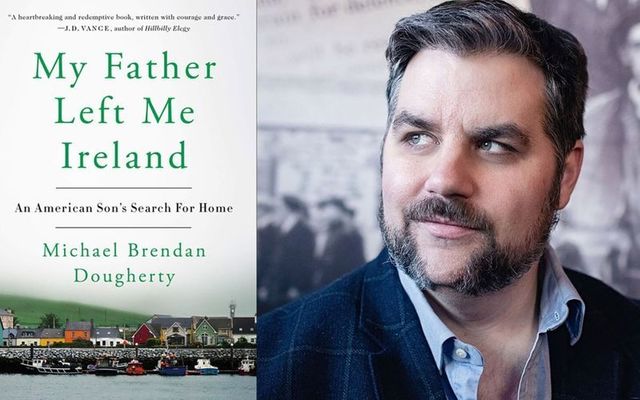
This is among the lessons of the excellent new book, My Father Left Me Ireland: An American Son’s Search for Home, by Michael Brendan Dougherty of National Review. This slight volume is part memoir, part political and cultural reflection, intermingled and woven together. Styled as a series of letters to the Irish father who was absent during his childhood, it offers a compelling case for the importance of nations and nationality.
His reflections begin with the too common experience of an absent father, each of whose visits he recalls as “A brief, suggestive interruption of a life I lived without you.” During his teens, he eliminated even this sporadic contact, cutting his father out of his life and refusing to respond to his letters.
But his father’s absence did not sever all ties to his father’s homeland. Dougherty writes that “My mother wanted me to know myself as Irish.” So as a child he learned a little Irish language and more Irish history. As he grew up, the political landscape changed in Ireland, but there was still plenty of Irish schlock to consume. For the diaspora, Irish identity was something to put on or take off.

A Plastic Paddy

These were shallow identities, so as an adult, he felt himself to be Irish only in “the most technical and bureaucratic sense.” He could claim an Irish passport if he wished, but he would still be a “plastic Paddy. A Yank. A tourist who stumbles on a ruined castle and thinks it’s the old family homestead.”
The impending birth of his first child pushed him to his roots, for “It occurred to me that in a few months I would have this life wriggling across my lap. I would have to tell her who she is…I am suddenly alive to the idea that I could pass on this immense inheritance of imagination and passion if I could only work up the courage to claim it for myself.” His daughter (and subsequent children) could know themselves as Irish-Americans in a real sense, rather than the attenuated, Guinness and “Kiss me I’m Irish” T-shirt for St. Patrick’s Day fashion.
But why? Why sing rebel songs as lullabies and teach his children the Irish language, especially in America? Why struggle to impart an Irish identity that is being abandoned even in Ireland?
Dougherty’s embrace of his Irish heritage arose in part from the hollowness of the American culture he grew up in near New York City. Identity was something he was to create for himself, not a patrimony he was to preserve.
Growing up in the ’90s, he saw that adults were “terrified of having authority over children and tried to exercise as little of it as practicable … The constant message of authority figures was that I should be true to myself. I should do what I loved, and I could love whatever I liked. I was the authority.” The past had no imperatives for the present; its shackles had to be broken and either discarded or used as raw material for the future.
Raised on this “myth of liberation,” Dougherty was told to create himself, enjoy himself, and to protect himself. He was encouraged to keep an ironic distance and to take nothing in earnest except enough sensible self-protection to avoid ruining a future career. Stay aloof, keep options open, and remember that sincerity is vulnerability.

The Myth of Liberation

s a young man he found this “curator’s approach to life” congenial. He applied it to Irish culture, which he saw not an inheritance “to be treasured and passed on, but … ornaments of a life defined by enjoyment, consumption.” Know some history, read some Joyce, make a bit of Ireland part of a personal brand. Even his return to the Catholic Church (brought about, ironically, by a Baptist girlfriend) partook of this spirit of detached irony and self-creation.
In a curated existence, authenticity becomes currency, so the detached culture Dougherty describes was the prelude to our identity-mad present, brought about because the solvents of liberalism have erased inherited identities in all their particularity. It left us selecting identities as if we are choosing consumer goods. Heritage has become a form of branding, something to be bought and sold.
Many of the current excesses of identity political and “wokeness” are reactions against this. Cultural appropriation is hated as a manifestation of identity as commodity. Victimhood is cherished because suffering for an identity confirms authenticity.
But this shift from irony to identity has not repaired the damage done to pre-liberal identities. Those who wish to claim an identity are left constructing them from the fragments of a shipwrecked heritage. The communities and relationships that provide support, comfort, and meaning in life are still being eaten away by the acid of absolute individual autonomy. The early decline and death of his mother brought this into focus. Dougherty found that
This myth of liberation was like a solvent that had slowly and inexorably dissolved any sense of obligation in life. It dissolved the bonds that held together past, present, and future. It dissolved the social bonds that held together a community and that make up a home. And, here at the end of the process, I was alone … A healthy culture provides all the proper ceremony for death, it gives rituals that allow people to grieve as individuals, and families. But in an age of self-creation, of a curated life, lived in row houses where people hardly know their neighbors, the bereaved are confronted with an endless series of menus and options.

 It is against this expanse of empty consumerism that Dougherty is trying to assert his Irish identity. Yet the Irish are embracing this same hollowness. In the end, the English won over the Irish, as Irish identity is being revised into erasure and the Irish want to be just another European nation.

Nationality as Inheritance

In liberal political theory, the nation is viewed as a useful but problematic administrative unit. The particularity of a nation is troublesome, insofar as particulars are necessarily exclusive. Against this attitude of cosmopolitan liberal technocracy, Dougherty sets the immediate failure and eventual vindication of the Easter Rising.
He asserts that “nations have souls … the life of a nation is never reducible to mere technocracy … nationality is something you do, even with your body, even with your death.” Nationality is an identity that matters. It should not be effaced to make way for ever-larger empires of liberalism.
Thus, he writes that the effort to preserve the Irish language “took on the character of a voluntary and local resistance to globalization and the reordering of all culture by commerce. Its preservation required the courage to embrace an identity that could not be bought and sold.” So he has launched himself into an effort to learn the Irish language, and to pass it down as an identity and inheritance to his children.
A critic might dismiss this as so much romantic nostalgia on Dougherty’s part. It could be attributed to the childhood absence of his father, followed by teenage estrangement and adult reconciliation. It could be an overreaction to his mother’s early death and the birth of his own children. Psychologically, the critic might have a point; this is a personal story insofar as these factors led Dougherty to his conclusions.
But what alternative would the critic offer? The liberal, technocratic project offers autonomy, entertainment and comfort, but these do not content us. “Why Ireland?” may be answered by the particularities of Dougherty’s life.
Why nationalism?—a resurgence of which is tormenting Western liberal elites, is not so easily explained away. The attempt exposes the failures of technocratic liberalism, especially its inability to provide for the deepest human needs and its destruction of the relationships and institutions that can.
Man does not live by bread alone, nor even by pizza and Netflix. Rather, we find meaning and contentment in relationships and community, which are particular and binding, rather than universal and liberated. We realize our true identities, in our finitude and particularity. Commitment rests on particularity and permanence: this instead of that.

Pilgrims on This Earth

Recognizing this reveals the culture of liberal autonomy and indulgence as an attempt to avoid our particularity and therefore our mortality. We are, as Christianity teaches, pilgrims on this earth precisely because we are particular and finite beings who will one day die. The church is called to be universal; we are to be particular parts of it, and we should love the communities we live in, including our political communities. An important part of that love is caring for those who will come after we are gone.
But liberalism encourages us to consume instead of leaving an inheritance for those who will live after us. As Dougherty puts it, “We are great consumers. We are useless as conservators.” From our furniture to our houses to our politics, little is built to endure. We build convention centers, not cathedrals.
Nonetheless, we have plenty—for the present. No wonder we are so anxious. Our culture disdains not only the Permanent Things, but also the permanent things that remind us of our mortality and make us look to posterity. The longing for the old country (where the Guinness is better) and the old family homestead can be silly, but it illuminates the real need for solidarity between generations.
Dougherty writes that the “ghosts of a nation reproach the living on behalf of posterity.” But we are increasingly cut off from both past and future. It is no coincidence that those who disdain their progenitors tend to disdain their progeny, and he adds that “When we do have children we so often have them as consumable objects, as part of our lifestyle choices. We do not receive them as gifts, as living things, inviolate and inviolable. We calculate about them, not worried over what we might give them, but what they take from us.”
Liberal individualism sees children as potential burdens, high-maintenance consumer goods. Communities, from families to churches to nations, see them as fulfillment.
People are the point of it all, and people exist in particular times and places. To reduce the nation to an instrument of technocratic administration is to reduce persons to livestock. It is as demeaning and dehumanizing as the error of entirely subsuming the individual to the interests of the state. Care for people requires care for the particularities of the communities they live in, including political communities, with all their heritage, joys, sorrows, and troubles.
Nathanael Blake is a Senior Contributor at The Federalist. He has a PhD in political theory. He lives in Missouri.
Related:

My Father Left Me Ireland Connects Broken Homes to Broken Nations-


An American son searches for home in My Father Left Me Ireland-