Showing posts with label Ralph Peters. Show all posts

Saturday, November 25, 2017

Attack on Egyptian mosque targets civilization itself


November 24, 2017
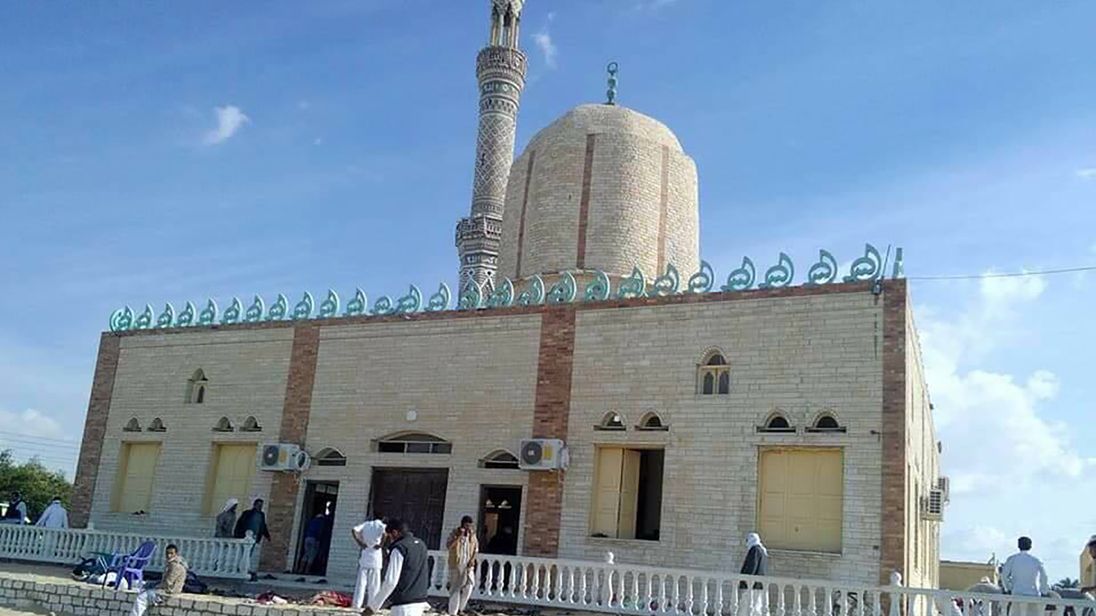
Image result for al-Rawdah Mosque egyptThe al-Rawdah mosque targeted by Islamic extremists on Friday
Friday’s bloodthirsty attack on a mosque in Egypt’s Sinai Peninsula during noontime prayers was a crime against all humanity. It wasn’t “just” an attack on Muslims. It was an attack on all of us who believe in civilization, tolerance and decency. At least 235 peaceful worshippers died, with more than 100 wounded.
One is tempted to call it the work of beasts, but no creature in the animal kingdom behaves with such avid, calculated cruelty.
Yet, the attack can be explained — though the explanation only makes it worse.
Islamist fanatics struck with bombs and automatic weapons, slaughtering first the faithful, then first responders. The reversed ratio of dead to wounded (usually more are wounded than killed) tells us how potent the explosions were and how carefully the attack had been planned and executed.
And it was no coincidence that the al-Rawdah Mosque was frequented by Sufis, the mystical, tolerant strain of Islam that finds joy, rather than a slavemaster, in its deity. Sufism has been the spiritual home of poets, such as Rumi or Hafez Shirazi. Sufi orders embraced music and even dance as expressions of faith. Sufis venerate saints, and some of their beloved figures quite liked wine. Sufi orders differ, as do Christian denominations, but none threatens the world with terror these days.
The greatest sheiks of Sufism had more in common with Catholic mystics, such as St. John of the Cross, or Protestants like Emanuel Swedenborg, than with the punitive, barracks-discipline Wahhabism funded by Saudi Arabia and enforced by terrorists. If you crossed a Quaker with an Episcopalian, with a soundtrack of Catholic plainchant, you’d get something like a Sufi.
In Judaism, the closest equivalent would be the Hasidim and the transcendent warmth they discover in God. Sufism at its purest yields exaltation, not the executions beloved of terrorists.
Naturally, the Islamic State, al Qaeda and their offshoots hate all Sufis, regarding them as heretics and enemies of Islam. Sufis focus on the inner relationship to God. Islamist fanatics focus on outward behaviors. With various Sufi orders practicing from Turkey to India, Sufism remains true to the humane undercurrent of a troubled faith.
Not that Sufism has a perfect history. As with all creeds, it’s had its highs and lows, ages of glory and eras of backwardness. But Sufism provides a path as close as Islam has come to that longed-for Islamic reformation of which we’ve heard so much superficial talk.
Friday’s attack was probably the work of Ansar Bayt al-Maqdis, the terror organization in the Sinai that pledges loyalty to the Islamic State. We’ll see what claims of responsibility arise, but, meanwhile, there’s more bad news.
Also on Friday, 16 Egyptian police officers were reported killed in a shootout with Islamist militants on the other side of the country, toward the Libyan border. All of this — along with countless attacks on Egyptian Christians — should alert us to the imperiled state of the most-populous Middle Eastern nation (96 million), the keystone securing the Arab world.
Nor is relief in sight. With the destruction of the Islamic State caliphate straddling the Syrian-Iraqi border, Islamist terrorists are looking for new homes and new targets. We’ll see still more terror in fragile or disordered states, just as the terrorists will continue to attempt to strike the West. But, as always, most of their victims will be fellow Muslims.
Religious fanaticism — not just from today’s terrorists — has touched every inhabited continent. Every great faith has spun off fanatical movements at one time or another. And religious fanatics cannot tolerate the least divergence from their rules. (Beware the man who tells you that he knows what God wants.) From Europe’s wars of religion to today’s persecution of Rohingya Muslims by Buddhists (yes, Buddhists), we humans have done and do unforgivable things in the name of faith. But it’s been a long time since we’ve seen the imaginative, merciless cruelty of the sort pursued by today’s Islamist butchers.
The Friday-prayers atrocity in the Sinai was an attack on every faith, on each innocent believer. If we possess any moral decency, we’ll condemn the attack as wholeheartedly as we do the attacks on our own soil.
Ralph Peters is Fox News’ strategic analyst.

Tuesday, March 14, 2017

The coming Middle East crisis after ISIS is gone


March 12, 2017
‘US gave ISIS escape route from Mosul to Syria; now civilians are paying the price’
Islamic state fighters © Medyan Dairieh / ZUMAPRESS.com / www.globallookpress.com
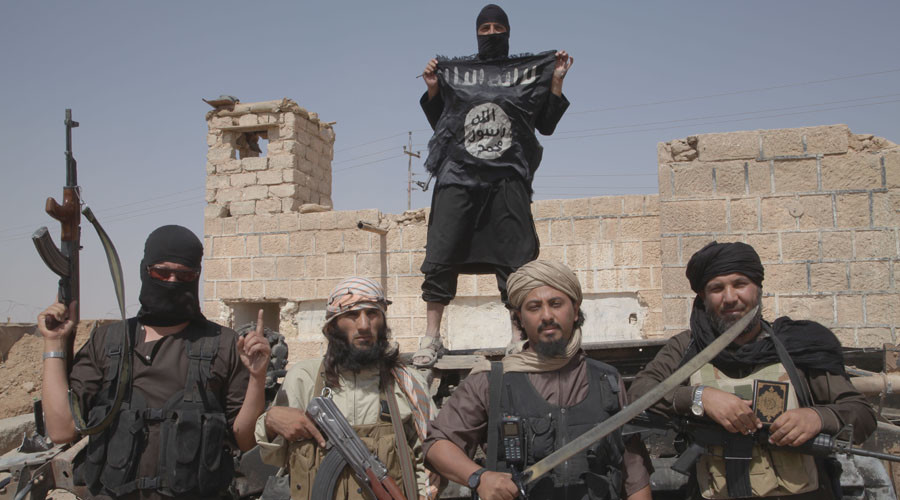
The Islamic State caliphate is dying a well-deserved death. This spring, Mosul in Iraq and Raqqa in what used to be Syria will fall. Across the summer, remaining outposts will be purged of the Islamist movement’s remnants. Isolated terror attacks will continue, but the physical caliphate will be erased.
And after ISIS itself, the biggest loser will be the United States.
Defeating ISIS is a worthy goal, but the rivalries of blood and faith that will poison the post-caliphate landscape are emerging. Turks alternately confront and accommodate Russia. Our most-effective combat partners, the Kurds, infuriate Turkey and worry local Arabs. Arab factions fight among themselves (as do the Kurds on occasion). Alphabet-soup minorities suffer and flee.
Russians kill and watch. Iranians kill and wait. Their client, Syrian leader Bashar al-Assad, has amassed a tally of war crimes that makes his survival “unthinkable.” Yet he’s likely to retain power.
With ISIS defeated, we won’t be needed. We’ll be shown the door — except, of course, for aid money.
Uneasy coalitions will collapse. Iran — a k a Persia — will have a client state on the Mediterranean for the first time since the Classical Age. Turkey’s Islamist strongman, President Recep Tayyip Erdogan, dreams madly of a renewed Ottoman empire (which no Arab desires). And Vladimir Putin is set to reap a huge return on a minimal investment.
Fifty million Kurds, longing for independence and freedom, will be embattled on multiple fronts — and, perhaps, deserted by the United States to serve Foggy Bottom fantasies of preserving obsolete states (Iraq and Syria) that have outlived their old and unjust purposes.
Meanwhile, our military serves our enemies by applying our power against ISIS without a practical vision for the day the caliphate falls.
In the Levant and Mesopotamia, history’s the quarrelsome neighbor forever banging on the door. The Arab-populated expanse was ruled, brutally and incompetently, by the Turkish Ottomans for centuries. When that empire collapsed after World War I, control fell to British and French schemers. The British sought security for the Suez Canal, their lifeline to India. And they wanted that strategic commodity, oil.
The French wanted to keep up with the British. So the two powers split the Middle East, drawing artificial borders that ignored local demographics and old hatreds.
The Brits carved out Iraq and Jordan for their puppets and acquired the Palestine Mandate (where Israel would be reborn, a rare instance of justice). The French got control of Lebanon and Syria. The Kurds were cheated, the Armenian genocide ignored and the Shia overlooked, while lesser minorities didn’t even register.
The result was the emergence of phony states that crammed together peoples and confessions that hated each other while dividing groups (such as the Kurds) who yearned for unity, freedom and independence. And when the European empires faded, only dictators could hold the unnatural states together. By committing ourselves to the maintenance of those deadly, dysfunctional borders, the United States leapt flat-footed into the quicksand.
In 2003, in Iraq, we had the chance to begin dismantling those phony states in favor of justice and common sense, but inertia and short-term fears defined our diplomacy. We didn’t liberate Iraq — we perpetuated it. Now, 14 wretched years later, we continue to pretend that, magically, Iraq can achieve political health and that Syria should be preserved with a new head of state.
We have taken the side of dead empires and injustice.
What should we do? Discard our preconceptions for a start. Why shouldn’t dysfunctional borders change? In fact, they’re changing themselves. How many American lives is it worth to serve the vision of dead Europeans and grisly Arab dictators? We need not act to change those borders, but we shouldn’t stand in the way.
The destruction of the ISIS caliphate won’t end terrorism, but the Islamists will suffer a powerful practical and psychological blow. The terrorists eventually will adapt, but their appeal will be weakened: Angry young men want to join a winning team, not a bunch of losers.
Still, the rise of ISIS was unnecessary. Enchanted by the neocons, the George W. Bush administration made Iraq far harder than it had to be simply by not planning for the worst. Then President Barack Obama threw away our hard-won progress in Iraq and, tragically, cowered and prevaricated while the all-but-doomed Assad regime recovered its balance in Syria.
Now we face a new Iranian empire, an expansionist Russia, a treacherous Turkey, an Iraq lost to Iran and the prospect of years to come of ethnic cleansing, massacre and violent uprisings on which terrorists will again piggyback.
Can the Trump administration design and execute a Middle East strategy that actually works to our benefit and makes sense? If so, it would be the first since the Truman presidency.
Ralph Peters is Fox News’ strategic analyst.
FILED UNDER           

Saturday, December 03, 2016

Trump couldn’t have made a better pick than Gen. Mattis


December 2, 2016
Image result for trump mattis
U.S. President-elect Donald Trump (L) and Vice President-elect Mike Pence (R) greet retired Marine General James Mattis in Bedminster, New Jersey, U.S., November 19, 2016. REUTERS/Mike Segar/File Photo
I'm lucky enough to know Gen. James Mattis slightly. Just well enough to trust him unreservedly with our military and our nation’s security.
The president-elect could not choose a better man to be our next secretary of defense. Not just because Mattis is a battle-hardened Marine with a remarkable combat record. And not just because he has a mind of remarkable clarity and is, without question, the best-read general of his generation.
I trust Mattis because he’s a man of character. His public image is of one rough-and-tough Marine, but the man I’ve encountered is, above all, one of integrity. His code of honor is so out of fashion one has to reach back to a Victorian vocabulary: He has a noble spirit.
And he’s a genuine patriot, not a shouter with his eye on the next chance. He will do what’s right, not what’s expedient. And he will never go along with anything he believes might harm our country.
In addition to plenty of dirty-boots experience in the Middle East and a deep knowledge of history, Mattis has another great qualification: He wasn’t looking for a job. He was happy in retirement, studying, helping his fellow Marines and contributing thoughtfully to our national security behind the scenes.
The last time I heard from him — a bit before the election — he mentioned that he was glad to be west of the Rockies. A Washington, DC, post was not part of the plan.
This matters. In an age of sycophants and clawing ambition, it’s a splendid prospect to have a classic patriot who’s willing to sacrifice to serve (as Mattis already has for four decades in uniform).
Our most underrated president of the last century, Dwight D. Eisenhower, didn’t want anyone in his Cabinet who actively sought the position. He wanted successful men from various walks of life who would have to leave successful careers and contented lives to come to Washington and run a department ethically.
For Gen. Mattis, the position of secretary of defense wouldn’t be just another inside-the-Beltway badge to add to his resume. The greatest danger would be that he would prove too honest for DC.
Yet another quality Mattis would bring to the office — a vital one — is that he’s a superb listener. He’s not quick to speak, but when he finally does have his say, his words show command of the subject under discussion.
And he uses words with the same economy as a rifleman uses bullets: no wasted rounds.
What would the nation get with Gen. James Mattis as secretary of defense? Integrity. Deep knowledge. Courage, both moral and physical. Humility. Decency. Vision. A steely sense of duty. Fiscal responsibility. A natural leader of men.
In short, character.
Inevitably, we’ve heard complaints from the left about the “danger” of generals in high government positions, with the suggestion that they’ll take us into wars. But it hasn’t been the generals who’ve gotten us into our recent conflicts or failed to resolve them.
For the last 16 years, we’ve seen civilians with no military experience launch ill-considered wars and impulsive interventions without considering the second- and third-order effects. Generals, by contrast, are reluctant to send our troops to war — they know the complexity and the cost.
Mattis has a long list of military accomplishments, but I suspect one of the experiences that cut deepest came in 2004, in Fallujah. After a week of brutal, successful combat his Marines stood within 48 hours of a clear-cut victory over a terrorist army. And the Bush administration lost its collective nerve, calling a halt just short of the finish line.
I watched the tragedy unfold from northern Iraq, where I was a guest of the Kurds. And we all said the same thing to each other: “We’ll have to go back and finish this.” And we did, in less than a year.
Having seen his Marines die, only to be denied victory at the 11th hour because the global media was howling, must’ve been terribly painful for Mattis. One of the many reasons he’s so widely respected in military circles is that he understands, contrary to academic pronunciamentos, victory is not only possible, but essential.
Mattis not only fights the good fight — he fights to win. With him as our next secretary of defense, the United States of America would win.
From FoxNews.com
FILED UNDER       

Monday, June 09, 2014

Obama and the Mockery of Honor

Benedict Arnold chose to put on the uniform, too. Did he serve with “honor and distinction”? 

Wednesday, June 04, 2014

Why Team Obama Was Blindsided by the Bergdahl Backlash

The president and Ms. Rice seem to think that the crime of desertion in wartime is kind of like skipping class. 

Monday, May 05, 2014

Putin’s plan to reclaim the old Russian empire


May 3, 2014
When I was a child and Soviet dinosaurs roamed the earth, a potato chip ad dared Americans “Bet you can’t eat just one!” That about captures President Vladimir Putin’s lip-smacking attitude toward his neighbors and any territorial snack that was ever “Russian.” Over time, he’d like to devour the whole bag.
What’s often misunderstood about Putin is that, while he pines for the vanished image of Soviet power, he knows that Communism didn’t work. Nor does he expect to re-establish the Soviet Union’s domination over Europe’s eastern half (as much as he’d welcome it). Putin has become a Great-Russian nationalist, a bigoted throwback to the days before the Bolsheviks arrived. His intent is to regain all the lands that once belonged to the czars.
When President Obama declared in March that Putin “has no ideology,” he betrayed his ignorance of both history and Putin. Who’s briefing this guy?
Putin’s ideology is nationalism, the only belief system that may have killed as many human beings as Marxism. And when a “post-modern” talk-talk America president faces a Russian leader who’s a man of action and whose concept of nationhood refers to the late 19th century, our cherished negotiations merely seal the deal on what Putin’s already taken (anyone really think he’ll give back Crimea and flee from eastern Ukraine?).
Obama talks, Putin kills.
And make no mistake, Putin truly believes he’s entitled to reclaim Ukraine and a great deal more. In his view, independent capitals from Warsaw (yes, Warsaw) to Bishkek are integral and natural parts of the Russian imperium. He regards them as property stolen from its rightful owner: Moscow.
The Putin Doctrine gives Moscow the right, in his view, to intervene wherever ethnic Russians or merely Russian speakers are “threatened.”
Here’s a look at the long-term framework in which Putin means to reconstitute Russia’s empire with “blood and iron”:
Modal Trigger
Photo:

The Baltic states: Estonia, Latvia and Lithuania

Like western Ukraine, these states are incontestably part of Europe, civilized, sophisticated and, incidentally, beautiful. But unlike Ukraine, they’re NATO members, a status that still serves as a deterrent to Russia. Putin would love to digest them, but even he’s reluctant to violate a NATO border — for now. But the coastline and ports remain attractive, as does the highly skilled workforce (Estonia may be the most “wired” state on the planet).
So what will Putin do? For now, he’ll exploit any opportunities to further divide the region’s Russian minorities from the indigenous majorities. And while Lithuania’s population is only 6% ethnic Russian (the Russian boot crashed down late), over a quarter of Estonia’s and Latvia’s citizens are ethnic Russians — and Putin’s invented claims that they’re abused.
Moscow’s playing a long game on this one, but, in the meantime, Putin doesn’t mean to let these states get too comfortable. For their parts, the local populations remember and hate what the Russians did to their countries — especially the Soviets.

Belarus

Hobbled by a dictator who knows he can’t afford to annoy Putin, Belarus, with its ethnic and linguistic affinities to Russia, is Putin’s when he decides he really wants it. Strategically, he owns it already, but without the hassle of paying its many bills. Only 8% of the population’s Great Russian, but the White Russian majority relates closely (“Belorus” means “White Russia”).

Poland? Yup, Poland.

The northeastern third, anyway, including Warsaw. The late czars ruled that stretch under one of the most cynical agreements ever wrought on the European continent. And Warsaw is, beyond question, a truly European city, a bridgehead to the West. Poland may be way down on Putin’s to-do list, but it’s there, NATO member or not. The bad blood spilled over centuries between civilized, European Poles and Russian barbarians (not least, the Soviet variant) has left some of the world’s most-profound hatreds. No country has suffered more injustice than Poland, and Russia has been the worst perp. As with Ukraine, for Putin this one’s personal.

Ukraine

Even in the three easternmost provinces currently under contention, ethnic Russians are not in the majority. But Putin is re-teaching the world the old lesson — which we’ve done our best to forget — that the fate of nations often isn’t decided by majorities, but by a determined handful of men with guns. Having seized Crimea with eye-popping ease, Putin is now beginning to gnaw at the rest of Ukraine.
He’ll take those eastern provinces when he’s ready, then expand along the Black Sea coast, building a strategic bridge to Crimea.
At his leisure, perhaps over years, he’ll snag the rest of Ukraine, too — including the far west that never belonged to Russia’s empire until raped by the Bolsheviks.
A key to understanding Putin is that he’s vengeful, a fiercely emotional man beneath his icy exterior, and he wants to punish Ukraine for derailing his initial plans. And we’ll let him do it.

Moldova

Putin will eventually want to connect Ukraine territory to the nuthouse pro-Russian separatists in Moldova’s breakaway “republic” of Transdniestria. Ukraine’s the main course, Moldova is dessert.

Armenia

Threatened by Muslim neighbors (yes, it was a genocide!), tiny Armenia, a fraction of what it was in its glory days, has long looked to Moscow as its protector and ally. If the dominos start falling in the Caucasus, Armenia will associate with Russia voluntarily — and gain territory from Azerbaijan for its loyalty. Few Russians, but plenty of ties.

Azerbaijan

Gas. Oil. Pipelines. Plus, Muslim (if liberally so). Azerbaijan serves as a pass-through for Islamist terrorists active in Russia’s neighboring and troubled state of Dagestan. Putin does not see yet just how to get it, but he certainly wants it — along with its southern border with Iran. Would the West stop him?

Georgia

Putin still has Georgia on his mind. When wrested from the Ottoman Turks over two centuries ago, Georgia became not only a vital outpost on Russia’s frontier but a loyal ally (and the birthplace of Josef Stalin). Outraged by Georgia’s new taste for independence, Putin has already dismantled part of the country through military action (and learned, in the process, that the West would do nothing but chatter). He’ll get around to the rest. Not many Russians left there, but Putin won’t care.

Uzbekistan

Putin would like to have it, but he just may decide it would be more trouble than it’s worth. As long as Uzbekistan toes the line and serves as a buffer north of Afghanistan, Putin may forego a second conquest. That said, Putin’s appetite could prove insatiable, and there’s a lot of history here. The daring, heroic Russian conquest of the savage emirates of Bukhara and Samarkand still resonates with Russians who know their history. Just when we were taming our Wild West, Russia was subduing its Wild East. And these are lands that conquerors have always found hard to resist.
Russians are under 10% of the population — and disliked, as I can personally attest, having been mistaken for one in a marketplace.

Kazakhstan

Even before he swallows the last of Ukraine, Putin is likely to turn east to Kazakhstan (before sparring with NATO over the Baltics). Almost a quarter of this vast country’s population is ethnic Russian, providing justification under the Putin doctrine — requiring only a few staged provocations — as well as a fifth column of agitators such as Moscow employs in Ukraine. Kazakhstan’s a tremendous prize, given its natural resources, the Baikonur space-testing ground, other defense facilities and a position that all but divides Russia’s west from its East. Kazakhstan will have even less capacity to resist than Ukraine, while the West will take even less interest in its fate.

Turkmenistan, Tajikistan & Kyrgyzstan

Turkmenistan has massive gas reserves, frontage on the Caspian, a border with Iran and 7% of the population is Russian —no doubt “endangered” in Putin’s mind. Look for Vlad to stir up trouble. Kyrgyzstan, also with 7% Russian population, already does Moscow’s bidding in important matters, so it might do as a mere satellite. Tajikistan is backward, raw, but useful if you have to deal with Afghanistan and parts south. Low priority for Putin, but he’ll keep an eye on it.

Ralph Peters is Fox News’ strategic analyst and a retired US Army officer who specialized in Russian affairs.

Tuesday, August 27, 2013

Obama’s third war

The folly of striking Syria
By Ralph Peters
August 27, 2013
You might as well try to teach a snake to juggle as hope the Obama administration will think strategically. The “peace president” is about to embark on his third military adventure, this time in Syria, without having learned the lessons of his botched efforts in Afghanistan and Libya. He hasn’t even learned from the Bush administration’s mistakes — which he mocked with such delight.
Before launching a single cruise missile toward Syria, Team Obama needs to be sure it has a good answer to the question, “What comes next?”
If Obama does a Clinton and churns up some sand with do-nothing cruise-missile strikes, it will only encourage the Assad regime. But if our president hits Assad hard and precipitates regime change, then what?
Sideshow: A UN inspector yesterday, gathering evidence at the site of a chemical attack in Syria — but the real issue is: What effective action can we take?
AP
Sideshow: A UN inspector yesterday, gathering evidence at the site of a chemical attack in Syria — but the real issue is: What effective action can we take?
If al Qaeda and local Islamists seize Damascus, what will we do? The enfeebled “moderate opposition” we back rhetorically couldn’t dislodge hardcore jihadis, no matter how many weapons we sent (the jihadis would simply confiscate the gear).
What if we weaken the regime to the point where the fanatics rev up their jihad to drive out Christians and other minorities? What’s your plan then, Mr. President? After your night of explosive passion, will you still love the opposition in the morning?
Exactly which American vital security interests are at stake in Syria, Mr. President? Your credibility? Put a number on it. How many American lives is your blather about red lines worth?
Chemical weapons use? Horrible and illegal, a war crime. So is the mass slaughter of civilians. Is it really so much worse to be gassed than tortured to death by al Qaeda or burned alive in your church? Which is more important, the number of dead, or the means that killed them?
Islamist terrorists have killed tens, if not hundreds, of thousands, of innocent Muslims. Aren’t they the real enemies of civilization?
Mr. President, do you really think it’s wise to send our missiles and aircraft to provide fire support for al Qaeda? That is exactly what you’ll be doing, if you hit Assad.
Assad’s an odious butcher, filth on two legs. But in the world of serious strategy, you rarely get a choice between black and white. You choose between black and charcoal gray.
Employing our military assets to support either side in Syria would be a mistake. Employing them without a worst-case plan for what might follow would be criminal.
We just can’t seem to learn, though. Invading Iraq, the Bush team, egged on by ideologues who never served in uniform, refused to allow our military to plan for an occupation. That sure worked out. Then, in Libya, the Obama administration deposed Khadafy, but refused to plan seriously for the aftermath. Welcome to Benghazi.
There are wars worth fighting. It was essential to go to Afghanistan in the wake of 9/11 (although staying there was idiocy). There will be future conflicts that demand our blood to defend vital interests. But we’ve now had a decade of do-gooder wars that haven’t done much good.
For the record, I don’t regret getting rid of Saddam or Khadafy. I regret the ineptitude with which we did these things. When you propose a war, don’t ever expect a cheap date.
Now there’s an unholy alliance pushing for attacks on Syria. We have liberal zealots, such as our UN ambassador, Samantha Power, who believe that our military’s primary purpose is to protect people who hate America. We have a few Republican senators like John McCain and Lindsey Graham who support any war, any time. We have a president who thinks that, “Gee, maybe, well, gosh, I said I’d do something, so maybe I should...” And we have elements in the defense industry who long for a return to our free-spending years in Iraq and Afghanistan and view a war in Syria as a great way to beat the sequester.
And the one thing every member of that bomb-Syria-now coalition has in common? Not one will have to fight.
Ralph Peters is a retired US Army officer and Fox News’ strategic analyst.