Monday, May 27, 2019

Packers legend Bart Starr exemplary both on, off the field


By Gary D'Amato
https://www.jsonline.com/story/sports/nfl/packers/2019/05/26/packers-legend-bart-starr-exemplary-both-on-off-field/2952944002/
May 26, 2019

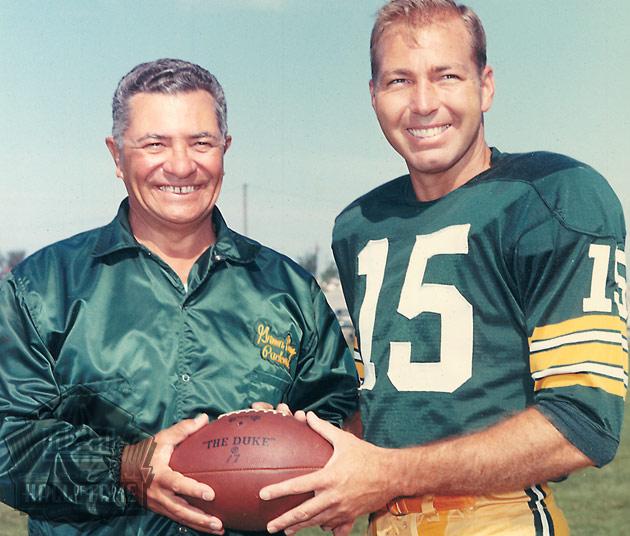
Image result for bart starr

The football part of his biography, impressive as it is, barely scratches the surface in describing Bryan Bartlett “Bart” Starr as a man.

What he achieved as the brilliant quarterback of the Green Bay Packers in the 1960s was beyond extraordinary: five National Football League titles in a span of seven years, the most valuable player in Super Bowls I and II, numerous passing records and the undying respect and admiration of teammates and opponents.

But he had a lot of life to live after he threw his final pass, and he lived it so very well.

Humble, gracious and philanthropic, the impeccably mannered Starr was the rare athlete who consciously and meticulously conducted himself, every day, in a manner befitting the hero mantle he’d earned on the field of play.

“He lived his life to be an example to others,” said Jerry Kramer, the starting right guard on those great Packers teams of the ‘60s. “He knew he carried a burden. He lived his life with purpose and with willpower. And because of that, he was an example to everyone on our team.”

When Starr died Sunday at age 85, he left behind a legacy in Green Bay, in Wisconsin and in the hearts of Packers fans everywhere that will endure until there is no more history left to write.

Starr suffered two strokes, four seizures and a heart attack in early September 2014, and was hospitalized for 2½ months. He also had cognitive issues, struggled with short-term memory loss and stopped making public appearances and granting interviews. Starr later did make two trips back to Lambeau Field.

Starr was born Jan. 9, 1934, in Montgomery, Alabama, where some two decades later Rosa Parks and the Rev. Martin Luther King would help launch the civil rights movement.

His father, Ben Starr, was a master sergeant with the Army Air Corps and a stern and intimidating man with whom Bart had a complicated relationship. If he somehow fell short in his father’s eyes, which was often the case, young Bart redoubled his efforts to win approval.

Years later, Starr would say that growing up in a military environment with a demanding father prepared him to succeed under coach Vince Lombardi, a volatile taskmaster who ultimately rewarded Starr with his complete trust.

Starr’s professional career, however, could not have gotten off to a more inauspicious start. Drafted in the 17th round out of Alabama in 1956, he shared the quarterback job with Tobin Rote and Babe Parilli and started 19 games over three seasons, compiling a 3-15-1 record with 13 touchdown passes and 25 interceptions.

His teammates had little faith in him as a leader.

But Lombardi, hired in 1959, recognized that Starr was intelligent and coachable and realized in time that he was tougher mentally and physically than most thought. After another 1½ seasons of job-sharing with Lamar McHan, Starr became the starter for good late in the 1960 season and led the Packers to their first division title in 16 years.

The Packers lost to the Philadelphia Eagles 17-13 in the 1960 NFL Championship game but would never lose another postseason game under Starr and Lombardi. The franchise won NFL titles in 1961, ’62, ’65, ’66 and ’67, putting tiny Green Bay on the map.   

The offense, directed by Starr and including future Hall of Famers Jim Taylor, Paul Hornung, Jim Ringo, Forrest Gregg and Kramer, was one of the most productive in NFL history. Starr called his own plays and in contrast with his gentlemanly demeanor off the field was a cutthroat competitor on it.

“There was a part of Bart Starr that was the great individual, courteous, never rude to anybody,” said Zeke Bratkowski, Starr’s backup from 1963-68. “Then there was the part of him on the football field deciding to throw it on fourth-and-1.

“Coach Lombardi would ask me, ‘What do you think he’s going to do?’ I would say, ‘He’s going to throw it.’ That’s the way he operated.”

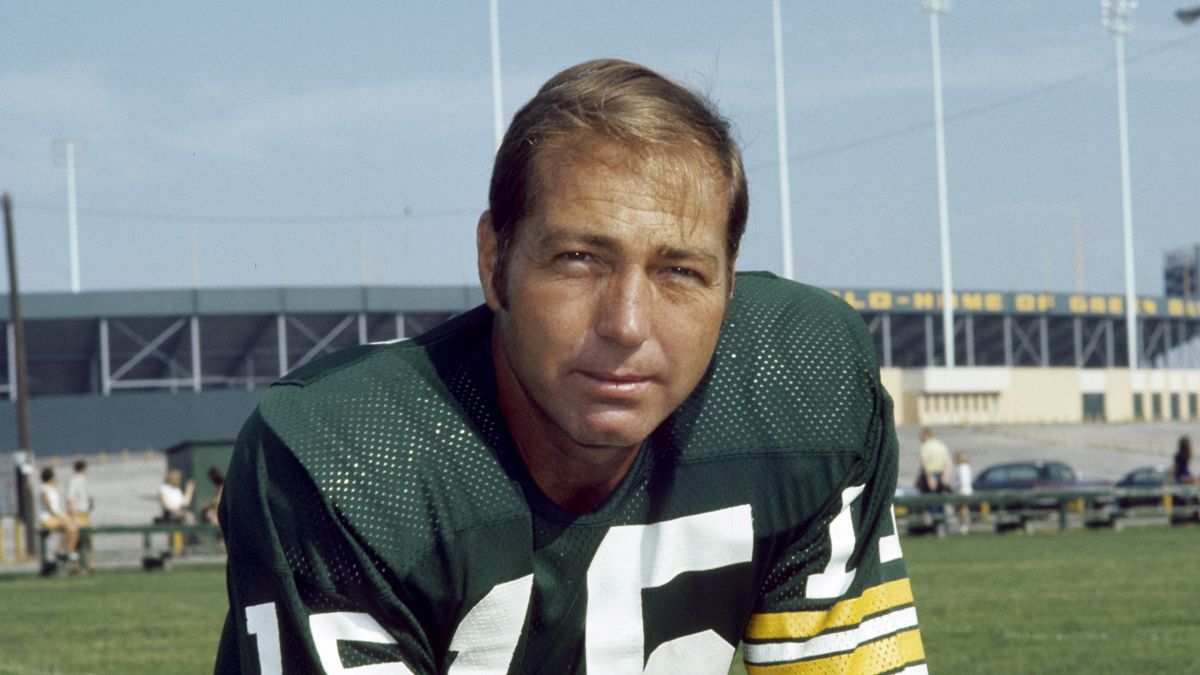
Image result for bart starr

(AP)

In the 1967 NFL Championship game, the famed “Ice Bowl” at Lambeau Field, Starr called his own number and scored on a 1-yard plunge in the final seconds to give the Packers a 21-17 victory over the Dallas Cowboys in one of the most memorable games in league history.

Bratkowski said Starr was unlike any quarterback he’d seen in the way he studied film and prepared for games.

“When I got traded (by the Los Angeles Rams) in the middle of ’63, I went to Green Bay and checked in to the Holiday Inn,” Bratkowski said. “I got a call half an hour later and it’s Bart. He said, ‘I’m watching film. Would you like to come over and watch it with me?’

“He was so regimented. During the season he would trim his fingernails on Thursday. He would lace his shoes a certain way. He just had things that he was very regimented about. Everything had to be just so. There was a tremendous amount of respect for his work ethic and preparation.”

Starr played 16 seasons for the Packers and completed 57.4 percent of his passes for 24,718 yards, with 152 touchdowns and 138 interceptions. He was brilliant in the playoffs, going 9-1 with 15 touchdowns and just three interceptions.

He led the league in passing three times, was the NFL’s most valuable player in 1966 and was inducted into the Pro Football Hall of Fame in 1977.

In 1972, Starr attempted a comeback but a shoulder injury forced him to retire. One day that summer, rookie kicker Chester Marcol was practicing field goals alone, kicking off a tee in Lambeau Field, when Starr approached and offered to hold the ball for Marcol’s kicks.

“I was awestruck,” Marcol wrote in his autobiography. “Starr was a living legend. … His offer to help told me a lot about him as a person and as a teammate. He didn’t have to do that. He was headed to the Hall of Fame and I was a rookie kicker from a tiny college in Michigan. That’s how much he cared about the Green Bay Packers.”

Starr cared so deeply about the franchise that he couldn’t turn down the Packers’ offer to become the head coach and general manager in 1975, even though, as he would admit years later, he was unprepared for the job. He had spent the ’72 season as Dan Devine’s quarterbacks coach, but had no other coaching experience.

Plus, he inherited a mess. Devine had traded five high draft picks for washed-up quarterback John Hadl, basically bankrupting the team’s short-term future.

“He inherited a team that didn’t have a strong nucleus,” said Bratkowski, Starr’s quarterbacks coach from 1975 to ‘81. “There wasn’t enough personnel. You win with people. We did make some mistakes in the draft, but there was so much need you can’t fill it all up in one draft or two drafts or three drafts."

“You could say those are excuses. No, they’re not.”


RELATED: The Ice Bowl, 50 years later: An oral history

RELATED: Packers Hall of Fame fullback Jim Taylor dies at 83

Starr was stripped of his general manager duties after the 1980 season and was fired as coach after the ’83 season. He had compiled a 52-76-3 record, with two winning seasons and one playoff victory.   
        
In the mid-‘80s, Tom Stoen, the retired chairman of an oil and gas exploration company, led an effort to get an NFL expansion team in Phoenix. Stoen planned to make Starr the director of football operations for the proposed Arizona Firebirds.

“We made a handshake deal and he never wavered,” Stoen told the Arizona Republic. “During the time he was with us, he had opportunities to take a piece of the action with other teams and he never said a word.

“I cannot say enough good things about him. He’s probably as honorable and decent a man as you would ever meet.

Image result for bart starr

But there would be no expansion team in Arizona. Bill Bidwill informed the NFL of his plans to move the St. Louis Cardinals to Phoenix in time for the 1988 season. Bart and wife Cherry, who had relocated to Paradise Valley, moved back to Montgomery.

“(Then-NFL Commissioner) Pete Rozelle very much wanted Bart to have the team there,” Cherry Starr said. “He loved Bart and did his very best.”

Though his dismissal in Green Bay had stung the prideful Starr, he didn’t let it affect his feelings for the organization or for Packers fans, who were quick to forgive and forget his coaching record. He remained a beloved figure in Wisconsin and a treasured Packers icon for the rest of his days.

Off the field, he continued to build goodwill with his unwavering devotion to the franchise and his many charitable endeavors.

He served as honorary co-chair, along with Cherry, of the Vince Lombardi Golf Classic from its inception in 1971 until his health no longer permitted him to attend in 2014.

He co-founded the Rawhide Boys Ranch for at-risk youth in New London in 1965, helping complete the down payment on the Rawhide property in 1968 by raffling off the Corvette he won as the MVP of Super Bowl II.

“He did so much for so many people,” said Bob Long, a Packers receiver from 1964 to ’67 and later a business associate of Starr’s.

The Athletes in Action/Bart Starr Award has been given annually since 1989 to the NFL player who best exemplifies outstanding character and leadership. The award honors Starr’s lifelong commitment to serving as a positive role model.

Aaron Rodgers won the Bart Starr Award in 2014.

Asked if Starr was as good a man as he has been portrayed to be, Taylor, the Hall of Fame fullback (who died in 2018), said, “Probably more so than what’s been written about. He’s just a great guy. He lived a good, full life and has been an asset and a tribute to the National Football League and the Green Bay Packers.”

Added Bratkowski, “If you had to describe a gentleman you would take all the adjectives and put them in a long line. That’s Bart.”

Early on, however, Starr had to convince some skeptical teammates that he was who he appeared to be. Kramer, for one, initially thought there was an element of phoniness to Starr’s yes-ma’am-no-sir politeness and the ramrod-straight way he carried himself on and off the field.

“For many years, I didn’t think Bart was as good as he was letting on,” Kramer said. “I thought, ‘There’s got to be a flaw in there somewhere.’ I watched him for 10 years. Nothing. Not the slightest thing. And so I threw in with him.

 "We’d go to a function and he’d go to a prayer breakfast with the ladies. Then he’d go to a luncheon with the business leaders. And then he’d have a beer that evening with the guys. He did it all, you know?”

The Starrs lost a son, Bret, to a drug overdose in 1988. Starr discovered the body. Though it was the most painful event of his life, he handled it with typical poise and grace.

“I was watching Roy Firestone do his (television) show with Bart,” Kramer said. “Roy is doing the interview and he says, ‘Bart, I hate to ask you this, but how did it feel when you found your son?’ I jumped out of my chair, I was so mad.

“And Bart says, ‘Roy, I was so thankful that my wife wasn’t there and that she didn’t have to see that.’ He found a positive in the most negative thing I could imagine. That’s Bart.”

Starr always treated Packers fans with respect and was unfailingly patient and polite in countless encounters with them. He once told Bratkowski, “It’s an honor for people to recognize you for what you accomplished.”

“We’d be eating dinner and somebody would come up to him and say, ‘Mr. Starr, can I have your autograph?’ ” Bratkowski said. “He would stand up, hold out his hand and say, ‘It’s Bart. This is coach Zeke Bratkowski and his wife, and this is my wife, Cherry.’ He was always so polite, so cordial.

“He wouldn’t sign a napkin. He’d say, ‘If you get a piece of paper and write down your name and address, when I get home I will sign a picture and mail it out the next day.’ ”

Starr’s neat and distinctive autograph is highly prized by sports memorabilia collectors and Starr-signed jerseys, footballs, helmets and lithographs can easily surpass $1,000 in value.

“Even the current fans today, the Starr name resonates with them,” said Rick Moncher, a sports memorabilia dealer who in recent years had exclusive signing rights with Starr.
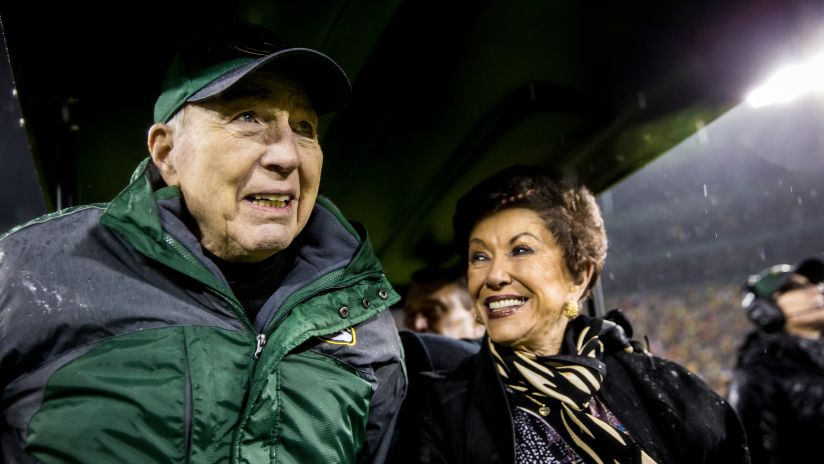
Image result for bart starr
(Shawn Hubbard)

Starr is survived by Cherry and a son, Bart Jr.

“The Packers Family was saddened today to learn of the passing of Bart Starr,” Packers President/CEO Mark Murphy said in a statement. “A champion on and off the field, Bart epitomized class and was beloved by generations of Packers fans. A clutch player who led his team to five NFL titles, Bart could still fill Lambeau Field with electricity decades later during his many visits. Our thoughts and prayers go out to Cherry and the entire Starr family.”

Green Bay Packers' quarterback Bart Starr remembered as class act

Packers legend Bart Starr left a winning blueprint for all QBs to follow


By Bill Bender
https://www.sportingnews.com/us/nfl/news/packers-legend-bart-starr-left-a-winning-blueprint-for-all-qbs-to-follow/1dxmw9f2mr9o91bk25siwpk66m
May 26, 2019

Related image
Bart Starr, the MVP of the first two Super Bowls and the quarterback of the Packers' five-championship dynasty in the 1960s, died on Sunday. He was 85.
Expect memories of Starr to pour in for his role on those Vince Lombardi-led teams that transformed Green Bay into "Titletown, USA" and ushered in the Super Bowl era. He is the quarterback who tip-toed behind Jerry Kramer's block into the end zone on a quarterback sneak in the Ice Bowl against Dallas. He is the clutch winner who finished 9-1 in the postseason. He is the Southern gentleman from Montgomery, Ala.
As far as the 26 modern-day quarterbacks in the Pro Football Hall of Fame go, Starr will always be the ultimate Boy Scout.
That's exactly how I'll always remember him, too. After all, that is where I met Starr for the first and only time.
My father grew up during that Green Bay run in the 1960s - which produced NFL championships in 1961, 1962, 1965, 1966 and 1967 - and whenever he talked about quarterbacks, Starr's name always came up first. Starr was a winner. Starr was class. Starr was, well, a star in every sense. That is how you are supposed to play the position.
Of course, I wore Starr's number in junior high trying to impress my dad not knowing I would unexpectedly be thrown into the starting role. I did not win nearly as much, but I tried to carry myself the same way as Starr.
Brett Favre and Reggie White would become my idols later, and I'll never forget covering Favre's Hall of Fame induction a few years after my father passed away. It's like that with my son and I when it comes to Aaron Rodgers now, and maybe it will be like that with him and his children with the next franchise quarterback.
That family tradition starts with Starr.
Starr will never be considered a better quarterback than Favre and Rodgers, and that's fine. He'll still be the winning standard for how Green Bay quarterbacks should be judged, and he maintained that label well after retirement.
I went to an early-season Bengals-Packers game at Lambeau Field in 2009. Favre was in Minnesota, and Rodgers was still trying to cement his spot as the starting quarterback. Green Bay fans were divided on that issue, but at halftime when they trotted out several Packers legends, Starr got the loudest and proudest ovation. There was a never a doubt about that.
Which brings me to the Boy Scouts.
In 2010, my wife Kimberly was a reporter at the Rock Hill (S.C.) Herald, and she was assigned to cover a Boy Scouts of America benefit on March 9. Starr was the guest speaker, so of course, I tagged along. I was not going to pass up on a chance to meet Starr, but it was even better simply listening to him.
Starr spoke about the values of the Boy Scouts and the importance of the organization. The speech was good. But every time he mentioned Lombardi and the "relentless pursuit of perfection knowing all the while we can never attain it," his voice would amp up a few octaves. I went back and looked at the program from that night, and I scribbled in a note in blue pen.
"It all starts with an attitude."
Starr said that when talking about Lombardi, the ultimate motivator who turned the Packers from a bottom-feeder into a dynasty. Starr often told the story about calling his wife after Lombardi's first speech with the team and saying, "We're going to start winning now."
That's what he did best. Starr had such an appreciation for the coach of that dynasty that he deflected much of the attention off himself. He finished 16-of-23 for 250 yards and two TDs with one interception in Super Bowl I and 13-of-24 for 202 yards and a TD in Super Bowl II. Starr would probably get affixed with a label such as "game manager" today, but he essentially did the 1960s version of what Tom Brady does now for Bill Belichick. Lombardi and Starr, a 17th-round pick in 1956, made that work.
Winning was the only thing the mattered. That's why he had so many fans like me who never saw him play in person.
I got a photo taken with Starr and snuck in on a scrum afterward, and he was fielding questions about the Rodgers-Favre drama that reached a crescendo the previous season. Starr gave political answers throughout about those two - he liked both. I snuck in a question about the legacy of his Lombardi teams and where they stacked up.
"Three straight championships, and we're the last team to do it," he said with a bite before staring me down.
That always stuck with me most from that night.
Starr is responsible for one of the most iconic plays in one of the most iconic games in NFL history, but he took the most pride in the fact that the Packers were the last team to three-peat. That accomplishment is every bit as impressive as the 1972 Dolphins' undefeated season because those three championships were from 1965-67.
It's how I'll always approach any sports argument. You start with the championships, then work your way down. After all, it was Lombardi who said, "If you're lucky enough to find a guy with a lot of head and a lot of heart, he's never going to come off the field second."
Starr had both, and he was as close to perfect as you can get. He left a standard for all quarterbacks to follow, both on and off the field, one that Favre, Rodgers and the next one will always be measured against with those five championships.
Starr was the ultimate Boy Scout and forever will be.
Let's hope he's not the last one.

Bart Starr was the toughest football player who ever lived


By Ian O'Connor
http://www.espn.com/nfl/story/_/id/26826288/bart-starr-was-toughest-football-player-ever-lived
May 26, 2019

Related image

Nearly four years ago, when I visited Bart Starr in his Birmingham, Alabama, home, he did not remember the five NFL championships he had won, or theGreen Bay Packers coach, Vince Lombardi, he had won them for. He could not place Brett Favre or Aaron Rodgers, even though he studied Rodgers closely through the DirecTV package his wife and high school sweetheart, Cherry, had bought him as a Christmas gift.
Starr even asked me if I had played for Lombardi, the former coach at my New Jersey high school. We shared a small laugh over that before I brought up the 1967 Ice Bowl, one of football's most iconic games settled by one of football's most iconic players. Starr did not remember anything about that either.
The then-81-year-old former quarterback had suffered multiple strokes, a heart attack, four seizures, and significant brain damage within the previous year, and some doctors could not believe he was still alive. During one stay in the hospital, a doctor told Cherry her husband likely would not make it through the night. Bart woke up the next morning in much better shape.
He lost his memory long before he lost his life Sunday at 85. But Starr never lost his dignity while he reminded the world, in his last great comeback, that he was the toughest NFL player who ever lived.
When we think of old-school toughness on the football field, we often think of big and vicious hitters, fire-breathing defenders who played through injury and enjoyed cutting skill-position players in half. Chuck Bednarik, Ray Nitschke and Dick Butkus. Mean Joe Greene, Jack Tatum, Jack Lambert and Mike Singletary.
But at 6-foot-1, 196 pounds, the gentlemanly Starr made the most difficult championship play under the most difficult circumstances in a game that never should have been played. With the ball at the 1-yard line at Lambeau Field, down three points to the Dallas Cowboys with 16 seconds to go, Starr ignored his frozen hands and body, the subhuman Green Bay conditions (the wind chill was minus-48 degrees), and the fact that he was an aging, athletically-challenged quarterback who had already been sacked by Dallas eight times. Starr asked to keep the ball in a huddle with Lombardi, who ordered him to push it across the goal line. "And then let's get the hell out of here," the coach cried.
Starr scored, of course, behind Jerry Kramer's famous block on Jethro Pugh, and afterward his wife was stunned by the severe swelling in his face. No NFL player had ever been asked to give more on a single drive or a single play. Starr would be named Super Bowl MVP for a second straight time two weeks later, and he never again managed a winning record as a starter.
He would endure profound tragedy in his life, losing his son Bret to cocaine addiction at age 24 in 1988, when he found his boy's body on the floor of his home. Only Starr didn't quit, because he would never quit on anything. He was a fighter, the son of a tough-love World War II veteran and Air Force master sergeant who lost his favorite child, Hilton, to tetanus when the boy was 11, and who didn't think Bart would amount to much. Starr was the 200th overall pick in the 1956 NFL draft, a non-prospect who was benched during his final, winless season at Alabama and who was only drafted in the 17th round because the school's basketball coach had a connection with the Packers' front office.
Starr played 10 postseason games for Lombardi, and he won nine of them. He willed himself into the Hall of Fame; no quarterback has ever been drafted as late as Starr and still made it to Canton.
After the strokes and seizures, Starr tried to will himself back to health. Cherry and his personal aide and nursing assistant would wrap their arms around him and, on a count of three, lift him out of his chair and get him going through his day. He underwent stem-cell treatments, and rigorous exercise sessions with his trainer, Brian Burns, who kept reminding the old quarterback of his greatness to motivate him to keep a scheduled farewell appearance at Lambeau in 2015 for the halftime unveiling of Favre's retired No. 4.
Starr barely survived a bronchial infection in late summer to make that trip, and his trainer saw considerable gains in his physical and mental capacities. "I ask him what his number was, and he says, 'Fifteen,'" Burns told ESPN.com at the time. "I ask him who he played for, and he says, 'Vince Lombardi.' I ask him what position he played, and he says, 'Quarterback.' One time he said, 'Linebacker,' and we got a good laugh over that. But he's made incredible progress. He is really coming back."
On a desk in Starr's study stood a captioned photo with the Lombardi quote, "Perfection is not attainable, but if we chase perfection we can catch excellence." By all accounts, the quarterback didn't just chase perfection on the field. Strangers from all over would show up at his Green Bay doorstep, and Starr was forever willing to pose for their pictures or even invite them inside. As a young boy at Packers training camp, Bart Jr. asked his old man why he had just spent so much time signing autographs for so many fans.
"Everybody who wants an autograph will get one as long as I'm not holding up the team," Starr explained to his son. "One thing you have to remember: These are the individuals who make this team possible."
Starr was the individual player who made Lombardi's dynasty possible. In the end, Cherry, his wife of 65 years, never stopped pushing him forward. She helped feed him and transport him from one appointment to the next. Even on nights when sundown syndrome dramatically altered his serene disposition, Bart asked Cherry to play him Il Divo's rendition of "Unchained Melody" before he fell asleep. Starr once asked her to promise she would play that song at his wedding. He meant to say his funeral, and his wife wouldn't stop teasing him about that.
Cherry believes that football contributed to her husband's decline; she saw too many concussive hits, and too much postgame pain, to think otherwise. His fingertips remained pale in later years, she thought, because of what he put himself through in the Ice Bowl. But Bart was not a man defined by regret, even if he had trouble finishing a sentence in the hours I spent with him in his home.
On exit that day in 2015, I told Starr that I thought he was the toughest man to play in the NFL.
He looked at the floor, as if the compliment embarrassed him. "Well," he responded, "I've been the luckiest football player ever."
Go look at the film of the Ice Bowl. When it came to Bryan Bartlett Starr, luck had absolutely nothing to do with it.

Sunday, May 26, 2019

The MLK tapes: Secret FBI recordings accuse Martin Luther King Jr of watching and laughing as a pastor raped a woman, having 40 extramarital affairs - and they are under lock in a U.S. archive, claims author


By JACK NEWMAN FOR MAILONLINE
https://www.dailymail.co.uk/news/article-7071713/FBI-tapes-Martin-Luther-King-Jr-40-affairs-laughed-friend-raped-parishioner.html
26 May 2019

Image result for martin luther king logan kearse
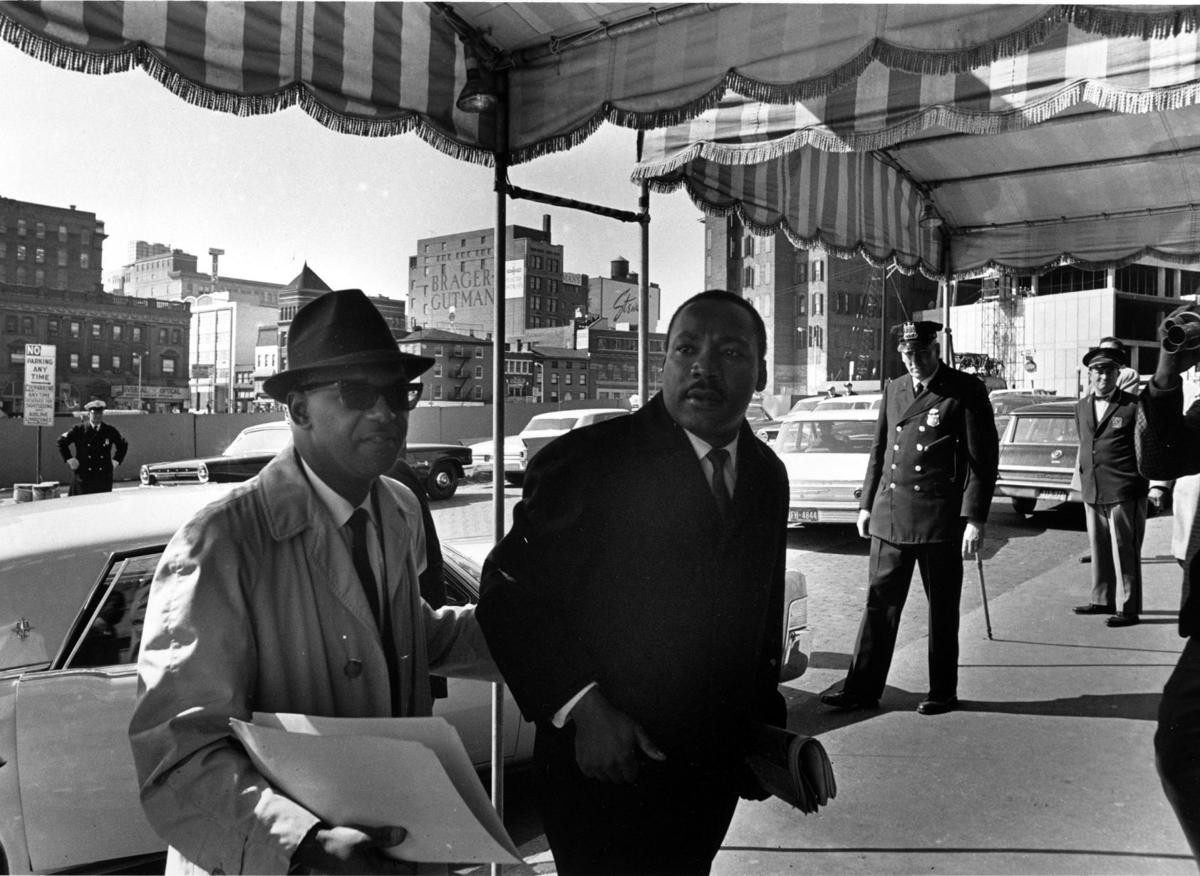
Dr. Logan Kearse and Dr. Martin Luther King at the Lord Baltimore Hotel in 1965. (AP)

Secret FBI tapes that accuse Martin Luther King Jr of having extramarital affairs with '40 to 45 women' and even claim he 'looked on and laughed' as a pastor friend raped a parishioner exist, an author has claimed. 
The civil rights hero was also heard allegedly joking he was the founder of the 'International Association for the Advancement of P***y-Eaters' on an agency recording that was obtained by bugging his room, according to the sensational claims made by biographer David Garrow - a Pulitzer prize-winning author and biographer of MLK. 
Writing in British magazine Standpoint, Garrow says that the shocking files could lead to a 'painful historical reckoning' for the man who is celebrated across the world for his campaign against racial injustice.
Along with many US civil rights figures, King was subject to an FBI campaign of surveillance ordered by Director J Edgar Hoover in an effort to undermine his power amid fears he could have links to the Communist Party. 
The FBI surveillance tapes detailing his indiscretions are being held in a vault at the U.S. National Archives and are not due for release until 2027.
But David Garrow, a biographer of King who won a Pulitzer Prize for his 1987 book Bearing the Cross about the Baptist minister, has unearthed the FBI summaries of the various incidents.
In an article to be published in Standpoint, Garrow tells how the FBI planted transmitters in two lamps in hotel rooms booked by King in January 1964, according to The Sunday Times.
FBI director J Edgar Hoover ordered the surveillance of King in an effort to undermine his power amid fears he could have links to the Communist Party.
The intelligence service carried out surveillance on a number of civil rights figures and suspected communists and they had an interest in smearing their reputation. 
The recording from the Willard Hotel near the White House shows how King was accompanied his friend Logan Kearse, the pastor of Baltimore's Cornerstone Baptist church who died in 1991, along with several female parishioners of his church.
In King's hotel room, the files claim they then 'discussed which women among the parishioners would be suitable for natural and unnatural sex acts'.
The FBI document says: 'When one of the women protested that she did not approve, the Baptist minister immediately and forcefully raped her' as King watched.
He is alleged to have 'looked on, laugh and offered advice' during the encounter. 
FBI agents were in the room next door but did not intervene. 
The following day, King and a dozen others allegedly participated in a 'sex orgy' engaging in 'acts of degeneracy and depravity'.
When one woman showed reluctance, King was allegedly heard saying that performing the act 'would help your soul'.
Senior FBI officials later sent King a copy of the incriminating tape and called him an 'evil abnormal beast' and his sexual exploits would be 'on record for all time'.
The letter also suggested he should commit suicide before his wrongs were revealed to the world.
King's philandering has long been suspected, however Garrow, who spent several months digging through the archive material, said he had no idea of the scale or the ugliness of it and his apparent indifference to rape until he saw the files.
He said: 'It poses so fundamental a challenge to his historical stature as to require the most complete and extensive historical review possible.'
Among the revelations is a claim by a prostitute who said she was involved in a threesome with King, which she described as the worst orgy she had ever experienced.
His wife Coretta often complained he was hardly with her and even said he would spend less than 10 hours a month at home.
According to one FBI report, King even said: 'She should go out and have some sexual affairs of her own.'
There is even a suggestion in the files that King fathered a daughter with a secret girlfriend in Los Angeles.
Both the mother and child are alive but refused to talk to Garrow.
King was assassinated in 1968 by James Earl Ray but many conspiracy theories suggest that the government was involved.

Donald Trump makes good on a promise but Dems cry ‘coverup’


By Michael Goodwin
https://nypost.com/2019/05/26/donald-trump-makes-good-on-a-promise-but-dems-cry-coverup/
May 26, 2019

Image result for donald trump barr
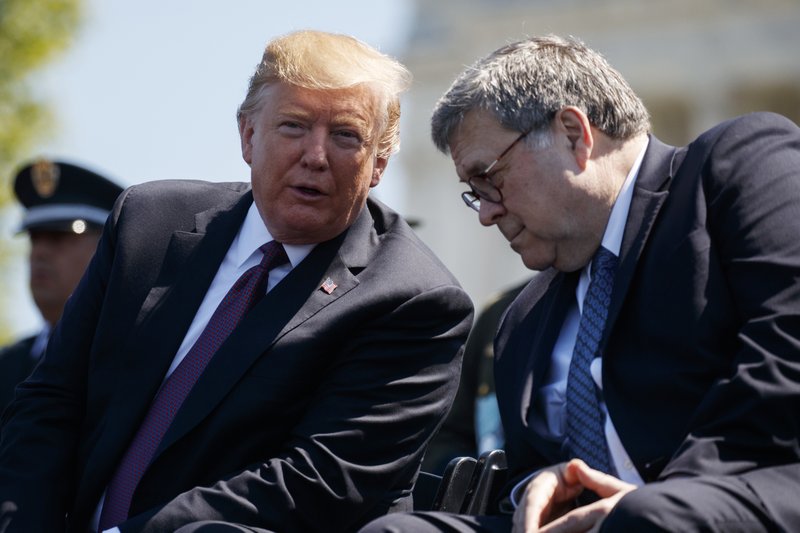
President Donald Trump and Attorney General William Barr (AP)

Timing is everything, and timing explains President Trump’s decision to finally pull the ripcord and open the Obama administration’s bag of dirty tricks.
With his memo giving Attorney General Bill Barr the authority to declassify any documents related to the investigation of the 2016 campaign, Trump made good on a longstanding promise. Most important, his decision signaled that the War of Washington is entering a crucial new phase.
The president is going nuclear.
Democrats who thought control of the House gave them control of the agenda now will face stiff competition. Their expressions of outrage will seem tired next to the sensational revelations about the actions of Jim Comey, John Brennan and ­others.
Based on what we already know, it is highly likely those revelations will prove the White House, FBI and CIA engineered the greatest scandal in American political history by unjustified spying on Trump and by trying to tip the election to Hillary Clinton.
Predictably, Dems are furious at Trump’s decision, with many on the left launching personal attacks on Barr. He’s not getting Brett Kavan-augh-level smears yet, but give them time.
Among the usual suspects, Rep. Adam Schiff called the president’s order “un-American.” That’s mighty rich, given his claims for two years that he had evidence Trump colluded with Russia. Odd that he never gave it to special counsel Robert Mueller.
But while Schiff, Rep. Jerry Nadler and others overplayed their hands and became CNN stars by tormenting Trump, they are not to blame for his decision. The distinction belongs to Speaker Nancy Pelosi.
After months of dancing between her party’s impeachment caucus and those who see it as political disaster, Pelosi sided with the impeachers by accusing Trump of a “coverup.”
That was Wednesday morning, and it was the final straw. Hours later, Trump walked out of their meeting on infrastructure, told the media that “I don’t do coverups” and put in motion the declassification order released Thursday.
The order means Trump is giving up on getting major legislation passed before the 2020 election. In his mind, making the 2016 documents public was always a declaration of war that would end any hope of bipartisanship.
Recall that he had often promised to release them, but never did. He said he was waiting for the right time, calling the documents the ultimate counterpunch.
Last November, in an Oval Office interview, he told me and two Post colleagues that if the Dems, who had just won the House in the midterms, engaged in “presidential harassment,” that would be the right time.
“I will hit them so hard, they’ve never seen a hit like that,” the president warned. “If they want to play tough, I will do it. And they will see how devastating those pages are.”
Still, Trump’s patience has been a mystery. I along with many others ­argued that release of internal records and communications about the Russia probe would shock the nation and be faithful to his promise of historic transparency.
Once he came close but pulled back, reportedly at the urging of Deputy Attorney General Rod Rosenstein, who was overseeing the Mueller probe. That was odd because Rosenstein had a clear conflict of interest, having signed the final application to spy on Carter Page. That is just one of the documents that will be released because the application likely misled judges on the FISA Court.
Trump also hoped that, once the Mueller probe ended, Dems would be a more normal opposition party and he could make deals with them on critical issues.
Besides, he had a fondness for Pelosi, as demonstrated by his offer to help secure GOP votes to make her speaker if Dems were too divided. “You know, she loves this country. And she’s a very smart woman. She’s done a very good job,” he said the day after the midterms.
She, too, took the high road then.
“We have all had enough of division,” she said. “Americans want peace. They want results.”
Yet even after Mueller finished and found no collusion or clear evidence of obstruction, Trump sat on the documents, hoping Dems would accept the outcome and negotiate over ­infrastructure.
That, after all, was something they always said they wanted to do, and Pelosi and Dem Senate leader Chuck Schumer appeared to be almost giddy after an early May meeting at the White House.
But Pelosi’s “coverup” remark changed everything because of the inevitable consequences it carries. If she really believes the president is committing a crime, she has left ­herself no logical course except ­impeachment.
So Trump delivered his counterpunch, along with a volley of insults.
Democrats are not alone in being furious about the coming release of the documents. Their media handmaidens suddenly are all for keeping the secrets secret.
The New York Times reached a new low by declaring in a news story that Trump is using “the intelligence to pursue his political enemies.”
The article, by David Sanger, never entertains the possibility that Barack Obama weaponized the FBI and CIA to block Trump from becoming president, or that Comey, Brennan and others aimed to depose him.
To consider that possibility would be to practice journalism. The Times doesn’t do that anymore.
Instead, the Gray Lady has become the errand boy for the deep state. Reporters grant their law-enforcement and intelligence sources anonymity, despite that some were surely part of the conspiracy and committed crimes.
If the Times had its way, Comey would still be running the FBI and Peter Strzok and Lisa Page would be unknown to the public.
Which raises a possibility: the documents could reveal which members of the media the conspirators trusted for leaks and protection.
Count that as a bonus of transparency.

Let’s Call the Russian Collusion ‘Hoax’ What it Really Is


By 
https://amgreatness.com/2019/05/25/lets-call-the-russian-collusion-hoax-what-it-really-is/
May 25, 2019

Image result for mueller clapper comey
Robert Mueller, James Comey, James Clapper, Christopher Steele and John Brennan (Clockwise from top left)

During the Japanese bombardment of Shanghai in 1932, the Austrian essayist Karl Kraus was anguishing over the placement of commas in a column. It might seem futile at such a moment, he told a friend, but “if those who are obliged to look after commas had always made sure they were in the right place, then Shanghai would not be burning.”

Hyperbolic? Perhaps. But the general point holds: words matter, as do the their appurtenances, punctuation. (After all, “Let’s eat Grandma” means something quite different from “Let’s eat, Grandma.”)
George Orwell made a kindred observation about the importance of having the courage to call things by their real names. Euphemism, the counterfeit of good manners, is the enemy of truth, which is the only ally worth having.
I have been thinking about this constellation of ideas recently as the news has been full of talk about the “Russian collusion hoax.” Use of the term “hoax” got a big boost in the aftermath of the Special Counsel Robert Mueller’s report on the question of whether there was actionable cooperation, coordination, or collusion between the Trump campaign and the Kremlin. Two years, $34 million, and a wide swath of debilitating rumor, innuendo, and unrelated indictments and prosecutions later and we know that the answer to that question is “No, there was no cooperation, coordination, or collusion between the Trump campaign and the Kremlin.”
Anyway, we know that if we haven’t locked ourselves in the bunker bulwark, closed our eyes, put our fingers in our ears, and chanted continually the NeverTrump mantras.
I myself have deployed the term “hoax” to describe what happened to Donald Trump and his colleagues—and to the American people—during and after the 2016 presidential campaign. But a couple of friends have pointed out how inadequate the term “hoax” is for what just happened and—to at least some extent—is still happening in the machinery of our government.
According to The American Heritage Dictionary, a hoax is “1. an act intended to deceive or trick” or “2. Something that has been established or accepted by fraudulent means.”
The spectacle of round-the-clock hostile media coverage of the Trump-Russia fantasy certainly was intended to “deceive or trick.” And certainly we learn almost every day a little more about how the various investigations were started on the basis of “fraudulent means” (here’s looking at you Christopher Steele).
But thinking about it, I conclude that the term “hoax” is wholly inadequate to describe the enormity of the political scandal that was perpetrated against Donald Trump, against the office of the president, and ultimately against the American people.
For one thing, the word “hoax” implies something jocular or prankish. The joke might be malicious, but it is still intended to be humorous. There was nothing at all humorous about what just happened in our political life, though the hysteria of the anti-Trump chorus—the pussy-behatted females complaining about how “crude” Trump was, the “comedian” who paraded about with a bloody doll’s head representing the president, the tears and imprecations and jeremiads disgorged by the press and by Trump’s political enemies: all that did have a sort of ghastly if pathetic humor about it.
But when we step back and consider what actually happened over the past three years—and, more, what almost happened—it is clear that the word “hoax” does not begin to cover the reality of what I have been calling for many months the greatest political scandal in the history of the American republic.
Does that, too, sound hyperbolic, like worrying about commas when Shanghai is burning? Some people think so. I’ve have several times said why I think they are wrong.
Perhaps the best way of summarizing my disagreement is by suggesting an alternative to the word “hoax.” It’s not a novel suggestion.
On the contrary, it’s often been used in concert with or as a synonym for “hoax.” But I think it is a better word in this context because it expresses the malign intention behind the multifarious activities directed against candidate Trump and then President Trump. The word I have in mind is “coup.”
Again, I know that that is a dramatic, maybe a melodramatic, word. But I think it accurately expresses the deliberate effort by actors in the Obama Administration, including by President Obama himself, to assure Hillary Clinton’s victory by destroying the reputation of Donald Trump. “Most Presidents leave office,” the commentator L. J. Keith recently wrote, “and essentially step back from public life. Not Barack Obama. Shellshocked by Hillary Clinton’s loss, Obama, Brennan, Clapper, Comey, and Clinton set in motion a series of events that will forever tar his presidency, and decimate the concept of a peaceful transition of power.”
There have been scores if not hundreds or even thousands of columns written about every aspect of this complex story. We all know by now about the deployment of shadowy characters like Alexander Downer, the former Australian Ambassador to the UK and Hillary Clinton supporter (Downer engineered a $25 million contribution from the Australian government to the Clinton Foundation). Downer had drinks with George Papadopoulos, a minor Trump campaign aide, and thereby helped get the ball rolling on the Russia investigation. For a nanosecond, the New York Times said that was where it all started.
But Downer was just the tip—or maybe just a tip—of the iceberg. One of the remarkable things about this story is how many people it has involved and how long it has taken to get a full headcount of the anti-Trump team. Remember when Joseph Mifsud’s name first surfaced? Or Stefan Halper’s? Remember when we learned about Peter Strzok and his alleged paramour, Lisa Page? Then there was Bruce Ohr, former associate deputy attorney general: he had his part to play in the drama, too. But wait! It turned out that his wife is Nellie Ohr and that she worked for Fusion GPS, the company that hired Christopher Steele. Gosh. And what about Steele himself? When we were first introduced to him, he was a former British spy, a “highly respected” operative, who had got the goods on Donald Trump.
Remember how long it took before we learned that Steele had been paid by the Democratic National Committee and the Hillary campaign, and that his dossier was not just “unverified” and “salacious,” as James Comey put it, but was in fact nothing but a scurrilous piece of opposition research made up out of “random” scraps of gossip that Steele had assembled from highly dubious sources? Nevertheless, it was the dossier, and nothing but the dossier, that provided the unverified “evidence” for the supposedly “verified” FISA warrants to spy on Carter Page, an American citizen, and hence to spy on the campaign and then the administration of Donald Trump.
And on and on this kaleidoscopic onion has gone, as one layer after the next has been peeled back only reveal another layer and additional personalities.
Finally, however, I believe we are nearing the hollow center of the onion. The dogged Attorney General William Barr is proceeding methodically, inexorably to lay bare the origins of the spurious Russia investigation.
There are still many details we do not know. Some we may never know. And dogged though Barr may be, many of the principal actors in this attempted coup will probably never be held to account. Will Hillary Clinton? Will Barack Obama? I doubt it.
In fact, it was not so long ago that I was resigned to the eventuality that no one would be held to account, not John Brennan or James Comey, not Peter Strzok or Lisa Page, not James Clapper or Sally Yates or Samantha Power.
Barr’s arrival on the scene has made me rethink my resignation. But whatever happens to those individuals, it now seems clear that Barr’s investigation will reveal for all to see that what began in 2016 or even 2015 and continued until and beyond the day that Robert Mueller deposited his nearly 500-page report clearing the president of “collusion” was not a hoax at all. It was an attempted coup.
We should face up to that unpleasant fact and call things by their real names. The actions taken by the Obama Administration threatened not just Donald Trump and his presidency but the very processes and protocols by which the peaceful transition of power has been effected in the United States. As L.J. Keith observed, “Even in the most contentious elections and after disputed results, there was never been this sort of dangerous, systematic, deliberate rejection of the will of the people. The abrogation of the constitution to use extrajudicial methods to destroy the incoming president. It is the very definition of a coup.”
Indeed. So let’s call it what it is. A coup.