Monday, December 17, 2018

Michael Flynn’s Ordeal and Ours


December 16, 2018

Image result for michael flynn
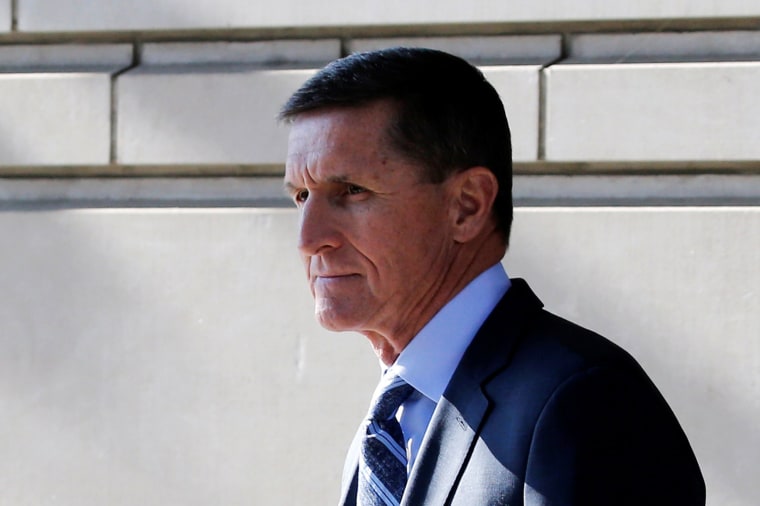
General Michael Flynn

U.S. District Judge Emmet Sullivan is scheduled to sentence General Mike Flynn on Tuesday morning, and there’s a lot at stake. To begin with, there’s the future of a fine man who transformed the way we do battlefield intelligence and the ensuing operations against our enemies in Iraq, where we won in large part because Flynn’s (and General Stan McChrystal’s) new tactics, and then in Afghanistan, again in tandem with McChrystal.

General Flynn’s radical reforms were not embraced by our top brass in the Pentagon, or by officials in the intelligence community. because he effectively relocated our warfighting decisions from Washington to the battlefield, weakening the bureaucrats and strengthening our men and women in the field. He thereby greatly increased the speed and accuracy of our operations. He also enhanced the status of lower-level officers and enlisted soldiers.

Second, is the importance of slapping down a corrupt justice and intelligence leadership, whose behavior in the Flynn affair should enrage and frighten all concerned citizens. It is incredible to say that after two years, we do not know what happened. We do know that Flynn’s principal FBI accusers have mostly been fired for lying, while Flynn still faces a possible jail sentence. But no CIA or NSA or NSC officials, who illegally “unmasked” Flynn to the Washington Post, have been charged with anything. Justice still refuses to release documents that might explain it all. Intolerable! Hell, we don’t even know who called whom as between McCabe and Flynn. And the bureau apparently has caused to disappear the 302 of the Strock/Pientka/Flynn conversation. And Comey’s claims change daily.

I’ve been told, I believe reliably, that General Flynn had either ordered, or intended to order, a full accounting of decades of intelligence community malfeasance. This was likely to reveal vast sums of money that were never spent to carry out the missions for which they were appropriated. This would have intensified the IC’s desire to get rid of him.

We need such trailblazers, and I hope he will be freed from the shackles that special consel Robert Mueller has attached to him. We badly need better intelligence, and General Flynn is a real rarity. Whether in or out of government, his is an invaluable voice and should be heard as widely as possible.

Then there is the Robyn Gritz scandal. Ms Gritz is a decorated retired FBI agent, who worked the counterterrorism beat, with laudable results. Then she found that she’d been singled out for harsh treatment. She filed a sexual discrimination suit, and the bureau—think Comey and McCabe—poured it on. Flynn, who had worked with Gritz, voluntarily wrote a letter to the court that attested to her high moral and ethical standards. No doubt the men atop the bureau feared Flynn might testify against their judgment, providing yet another motive to go after him.

In short, we need to know a lot more, but what we do know paints a very ugly picture of an FBI that makes up stories to fit their current political dreams, whether just to get rid of General Flynn, or to thwart Trump’s election, or to somehow get him out of the White House. The bureau acts as if it has a lot to hide, and I hope that Judge Sullivan knows the details, or will know them when he pronounces sentence.

I am not a lawyer, but I think the explanations for the dreadful behavior of FBI agents, Obama NSC officials, and others are political, not legal. So far as I can tell, General Flynn committed no crime either in talking to the Russian ambassador or in describing it to others, mainly the FBI agents and then Vice President Pence. I think he pleaded guilty because of the misery to which he and his family were subjected. So, paradoxically, I believe he lied when he “confessed” to lying, but not because he had lied in the first place.

Third, it is vital to unravel the Russians’ efforts to manipulate the American political system. I don’t see how you can take seriously the charges against Flynn without a full investigation of the Uranium One story and the relationship between the Clinton Foundation and various Russian individuals and entities. And it worries me that Adam Schiff, who will shortly replace Devin Nunes as chairman of the House Intelligence Committee, is both wildly partisan and invents stories—as when he claimed on NPR, discussing Flynn’s book, that the general was somehow pro-Russian, when the book clearly stated he considered Putin “an enemy.”

But the Russians ARE here, and they work closely with the Democrats, as they have for a long time. But none of the big shots in the swamp seems to care. Let’s hope Judge Sullivan does.

Lou Berney's terrific 'November Road' is a different kind of JFK assassination story


By Chris Vognar
https://www.dallasnews.com/arts/books/2018/11/21/lou-berneys-terrific-november-road-different-kind-jfk-assassination-story
November 21, 2018

Image result for lou berney dallas
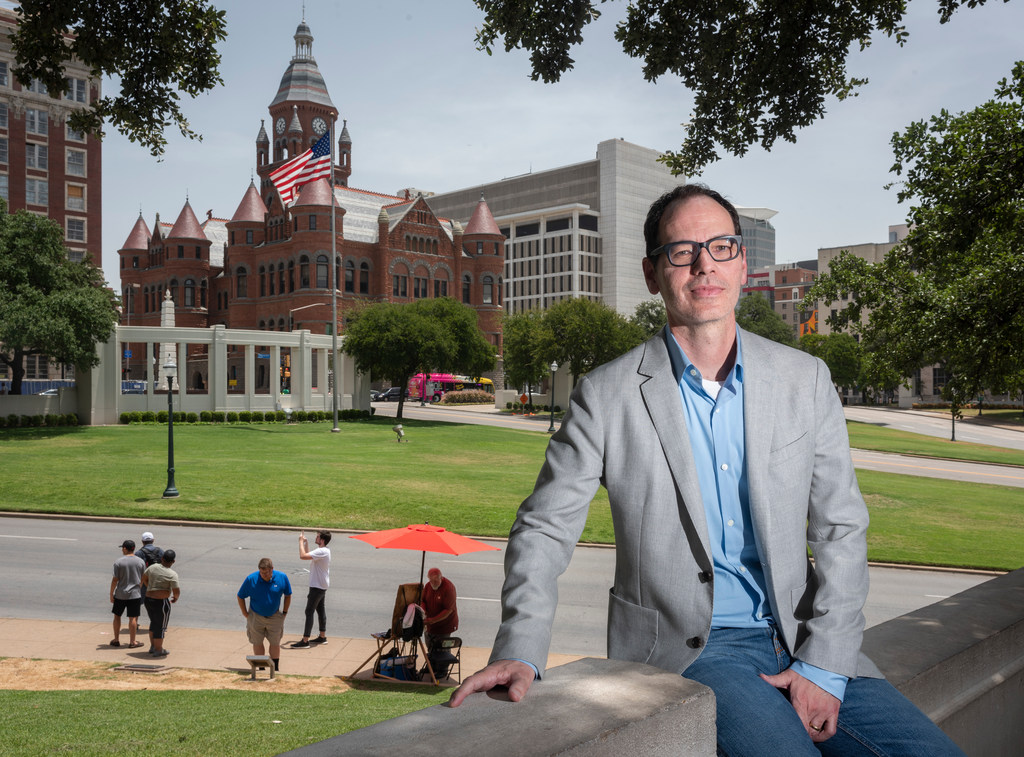
Lou Berney in Dallas
To say that Lou Berney's terrific new novel, November Road, is about the JFK assassination is sort of correct. The story is set in motion by that fateful November day 55 years ago, a day that Berney, born eight months later in Oklahoma, heard about throughout his childhood. But that's just the starting point.
"My mother always told me that I was conceived the night Kennedy was shot, but that is a little sketchy, a little bit off," Berney says over lunch in New York this summer. "But it's plausible. My mom was also a really good storyteller, so I'm never quite sure."
Berney must have picked up the tale-weaving gene. November Road (William Morrow, $26.99, on sale Tuesday, Oct. 9), his fourth novel, tells a propulsive, romantic and danger-laden story centered on two people taking to the open road, running from past mistakes. One, the smooth-talking New Orleans hood Frank Guidry, is a peripheral patsy in the JFK shooting, orchestrated here (and in the minds of many conspiracy theorists) by Bayou mob boss Carlos Marcello. The other, a rebellious Oklahoma housewife named Charlotte Roy, is fleeing a bad marriage from an alcoholic lay-about.
Charlotte packs up her two young daughters and heads West. Frank is going that way, too, and when Charlotte's car breaks down he sees an opportunity to pose as a family man. On their heels is Paul Barone, a killer who takes pride in a job well done.
In Berney's hands, these are the ingredients of a crime novel with a rare combination of emotional weight and gunshot speed. You'll probably foresee Frank falling for Charlotte, but Berney gets inside his characters so gradually and gracefully that November Road easily transcends genre conventions. All that, and he keep things moving at a lively clip.
"I always wanted it to be about the characters, but I also wanted the reader to keep turning the page," he says. "I like books and movies that do both. I don't like just people sitting in a room talking."
That's not a problem with these people. They talk, and kill, and run and make love. They plan and they plot. They make side deals. Charlotte is perhaps the fullest character in the book; Berney's female characters aren't window dressing.
Some of them, in fact, are downright fascinating. Take Seraphine, the Creole criminal mastermind who has Marcello's ear in all matters. (Marcello was a real man; Seraphine is a Berney creation). She's a past love interest for Frank, and the brains behind the sprawling Marcello crime operation. She's the Louisiana spice in Berney's stew.
"I just wanted a character that was a little bit unexpected for the right hand of the king," Berney says. "New Orleans is the one place it might make sense to have a mixed-race woman in that role, and that made her a much more interesting character to write, more fun than a typical guy. I've seen The Godfather a million times and I love Tom Hagen, but I wanted do something different."
November Road is indeed something different. There's no shortage of JFK fiction, but this one belongs up there with the best.

John F. Kennedy’s assassination sets a thriller in motion in ‘November Road’


By Bill Sheehan
https://www.washingtonpost.com/entertainment/books/john-f-kennedys-assassination-sets-a-thriller-in-motion-in-november-road/2018/10/04/f13595c8-bc47-11e8-be70-52bd11fe18af_story.html?noredirect=on&utm_term=.19126a0d32be
October 4, 2018

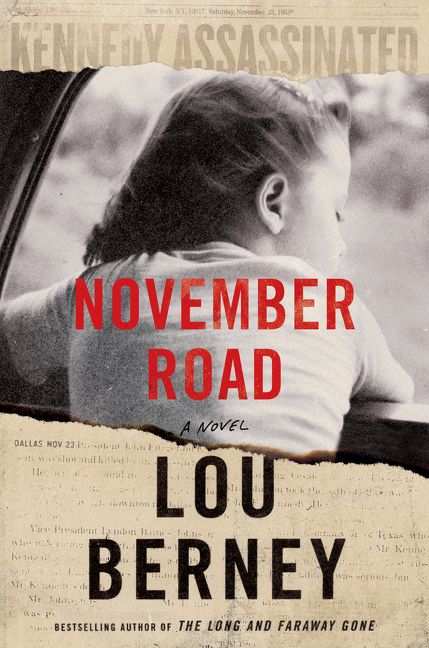
Image result for november road lou berney

It is a moment in history we return to again and again: the assassination of John F. Kennedy. Entire libraries have been filled with volumes generated by this single event, an event that novelist Don DeLillo called “an aberration in the heartland of the real.” These include official reports, personal reminiscences and all manner of conspiracy theories, not to mention a substantial amount of fiction. Novelists, like journalists and historians, have felt compelled to confront and come to terms with an act so consequential that its mysteries continue to trouble the American psyche more than 50 years later.
The most prominent of these novelists is DeLillo, whose magisterial “Libra” traces the tragic arc of Lee Harvey Oswald’s sad and angry life. “American Tabloid,” by James Ellroy, places the assassination at the center of an epic portrait of crime and endemic corruption, while Stephen King’s “11/22/63” is an impassioned fantasy about a time traveler who hopes to prevent the assassination to set the future on a saner, less destructive path. Lou Berney’s “November Road” is the latest novel to explore this explosive material, and the result is one of the most distinctive, unexpected crime novels of recent years.
Berney’s previous work, including the Edgar Award-winning “The Long and Faraway Gone,” bears comparison to the late Elmore Leonard. “November Road” is his first attempt at historical fiction, and it is impressive. The narrative begins in New Orleans on the eve of the assassination. Right away, Berney resolves one of history’s lingering questions: Who, among many possible suspects, ordered Kennedy’s death? In Berney’s version of events, the culprit is New Orleans mob boss Carlo Marcello, longtime enemy of both John and Robert Kennedy. Having established this basic scenario, Berney sets in motion the three narrative threads that will dominate the novel.
The first concerns Frank Guidry, high-ranking operative in the Marcello organization. Guidry is a cheerfully amoral grifter who treats women as disposable conveniences and casually betrays a friend to certain death for a momentary advantage. Shortly before the assassination, Guidry had been given a seemingly innocuous task: delivering a getaway car to a lot near Dealey Plaza in Dallas. When news of the assassination reaches him, he realizes that he is, however unintentionally, complicit in the death of a president, and that he has become a dangerous loose end. When other such loose ends begin dying around him, he leaves his old life behind, adopts a new identity and hits the road.
At the same time, a very different scenario plays out in the small town of Woodrow, Okla. Charlotte Roy is a young mother of two married to an irresponsible alcoholic. As cataclysmic events unfold in the wider world, she comes to a decision that is reckless, impulsive and ultimately correct. Along with her daughters, her minuscule savings and a cheap camera that will become her lifeline to the world, she too leaves her old life behind, heading toward a future she cannot yet envision.
The third leg of the narrative belongs to a professional hit man known only as Barone, whose primary job is cleaning up the Marcello family’s more spectacular messes. He does so with typical efficiency until only one loose end remains: Frank Guidry. Following instructions, he picks up Guidry’s trail and sets off in pursuit.
What follows is both a road novel and a first-rate thriller in which Barone’s relentless pursuit stretches from New Orleans to Las Vegas, leaving a trail of bodies in its wake. Most centrally, it is — or eventually becomes — a surprising but credible love story, as a chance encounter between Guidry and Charlotte and her children assumes unexpected dimensions. They meet on the road, and Guidry cynically attaches himself to them, using them as a form of protective camouflage. Gradually, he falls into the rhythms and routines of Charlotte and her daughters and finds himself wishing for something he has never known and never wanted: a family.
The evolving relationship between Guidry and Charlotte forms the emotional centerpiece of the book, and Berney handles it all with delicacy and restraint. Ultimately, the novel stands or falls on Berney’s ability to convince us that an amoral criminal is capable of changing so completely. “November Road” could easily have descended into sentimental cliches, but — thanks largely to the character of Charlotte — it never does. Charlotte, who is based in part on Berney’s own mother, is an extraordinary woman just beginning to discover her own capabilities. Faced with a series of debilitating crises, she persists, moving steadily forward toward a larger, more meaningful life. The result is a quietly moving evocation of public and private trauma, of individuals searching for new lives in a radically altered world. This is Berney’s best book to date. It deserves the wide, appreciative readership it seems likely to find.
Bill Sheehan is the author of “At the Foot of the Story Tree: An Inquiry into the Fiction of Peter Straub.”

Sunday, December 16, 2018

Stanford beats Nebraska in five sets for NCAA volleyball final


By 
http://www.startribune.com/stanford-beats-nebraska-in-five-sets-for-ncaa-volleyball-final/502867961/
December 16, 2018

Stanford celebrated after defeating Nebraska 3-2 in the NCAA DI volleyball championship match Saturday night.
Aaron Lavinsky/Star-Tribune

Asked for a big-picture view of his team’s eighth NCAA championship, Stanford volleyball coach Kevin Hambly was at a loss for words. “I’m too tired,” he said, “to think about what this means.”
Hambly knew it would take some time to fully appreciate the exhausting, exhilarating match he had just witnessed Saturday night. The top-seeded Cardinal beat Nebraska 3-2 at Target Center, prevailing in a back-and-forth, 2½-hour thriller that broke the Huskers’ hearts and an NCAA record. With the 28-26, 22-25, 25-16, 15-25, 15-12 victory, Stanford now has more NCAA women’s volleyball titles than any other team, breaking a tie with Penn State.
The nation’s top-ranked team at the beginning and end of the season, Stanford won its final 32 matches, the longest win streak in program history. The Cardinal finished 34-1, while seventh-seeded Nebraska ended 29-7.
Stanford libero Morgan Hentz, with 28 digs, and outside hitter Kathryn Plummer, with 19 kills and 10 digs, shared the most outstanding player award. Nebraska outside hitter Mikaela Foecke finished her college career with a bravura performance, with a match-high 27 kills on .296 hitting, plus 11 digs and two blocks.
The Cornhuskers, the defending champions, clawed back from a poor third set to dominate the Cardinal in the fourth. Stanford got the final punch, though, as two Nebraska serving errors and one Huskers blocking error in the fifth set helped the Cardinal win.
“It was an all-out battle,” Nebraska senior Kenzie Maloney said. “I thought both teams played really well. I really felt like we had the win, and we didn’t.”
The match featured the two most successful teams in NCAA tournament history. Stanford has won 124 tournament matches, the most ever, and Nebraska is second with 113. The two schools also are 1-2 in Final Four appearances; Stanford made the field for the 22nd time, and Nebraska was at its 16th Final Four.
Nebraska outhit Stanford .271-.250 and had 73 kills to the Cardinal’s 64. Stanford had 11.5 blocks to the Huskers’ nine.
“I don’t know that I’ve been part of a match that was more interesting, more hard-fought,” a hoarse-voiced Hambly said. “We have a lot of respect for [Nebraska], how hard they play, how they defend and how they scrap. We knew we had to match that from the beginning.
“That was the difference in the sets that we won and the sets that they won. I’m really proud of our young women for the turnaround after the fourth [set] and staying together. It could have been easy for us to fracture.”
Though the hometown Gophers were not there after losing in the regional semifinals, Nebraska fans traveled en masse to give Target Center a home-court feel. The crowd was announced at 18,113, a sellout, and it was a roaring sea of Huskers red.
Plummer was off her game early in the title match, as Nebraska sprinted to a quick lead. The Cardinal stormed back to go ahead 19-18 and won the set after the Huskers fended off three set points to tie it at 24.
The teams swapped the lead in the second set until Nebraska went on a 5-1 spurt, capped by two Foecke blasts. Stanford was able to climb within two points, but a Cardinal net violation gave the set to Nebraska, 25-22. Foecke had eight kills in the set, including three of the Huskers’ final four points.
In the third set, Stanford got five blocks and rolled to a big early lead that held up. Nebraska committed several costly errors to contribute to seven consecutive Stanford points. But they turned things around completely in the fourth set. Behind six kills from Lauren Stivrins, the Huskers raced to a 9-1 lead and led the set the entire way.
Nebraska held a 3-1 lead in the fifth set before Stanford scored four in a row. The Huskers were able to tie the score but never took the lead.
“Going into the fifth set, we said, ‘Hey, we’ve got to lay it all out there, give it everything we have,” Stanford’s Hentz said. “It took us a while to get there. Nebraska kept coming back. They put up an amazing fight, but we were able to fight back.”


For legendary Stanford volleyball program, there's no time like the present


By Mechelle Voepel 
http://www.espn.com/espnw/sports/article/25542639/at-legendary-stanford-volleyball-program-there-no-time-present
December 16, 2018

Image result for stanford volleyball december 15 2018

(Andy Clayton-King/AP)

MINNEAPOLIS -- The "ghosts" of volleyball greats are always there in the locker room back home, reminders of how incredibly high the bar is set at Stanford. It would be easy for those pictures to just blend into the woodwork, which is why Stanford's Morgan Hentz sometimes reminds herself to really see them.

"We have pictures of every team that's been at Stanford, and on the walls the names of the players," Hentz said. "Sometimes when I'm sitting in the lounge area, I'll get up and look at everyone's pictures. It is quite amazing to see how many great women have gone through the program."

Hentz, a junior, is not done yet, but she and her teammates are already embedded forever in the Stanford volleyball legacy. With their thrilling 3-2 victory Saturday night over Nebraska, the Cardinal became the leader in women's Division I volleyball titles with eight, breaking their tie with Penn State.

They had to work extra hard for this one. For the first time since 2009, and the 10th time overall, the NCAA final went five sets. Nebraska got off to a 9-4 lead in the first set, but Stanford rallied. Then the Huskers saved five set points before falling 28-26. Nebraska prevailed 25-22 in the second set, then Stanford controlled the third 25-16. The Huskers got off to a 5-0 start in the fourth set, extended it to 9-1 and never looked back in winning 25-15.

That set up the pressure-cooker fifth set. Nebraska had more experience with those this season, going 3-2 in five-setters, including its victory over Illinois in Thursday's semifinals. Stanford was 1-1 in its five-setters in the regular season.

But Stanford prevailed 15-12 on Meghan McClure's back-row kill, which Nebraska challenged to no avail.

Kathryn Plummer finished with 19 kills, and Holly Campbell had 15. Nebraska's Mikaela Foecke finished her brilliant career with 27 kills and 11 digs. Plummer and Hentz, who had 32 digs, shared the most outstanding player honor.

"Everyone talks a lot about chemistry, and I think this team has the best chemistry in the country," Hentz said. "It makes you just want to work harder for your teammates every day."

In a sport often defined by momentum shifts in matches, the momentum in winning volleyball championships is back with Stanford, which has taken two of the past three.

There was a lengthy stretch before their 2016 title, though, in which Stanford couldn't break through after winning the 2004 title. In 2006, '07 and '08, the Cardinal fell in the NCAA final. In 2010 and '13, they lost five-set matches in the regional final. In 2014, Stanford lost in the national semifinal to Penn State.

And in 2015, the Cardinal were swept on their home court in the second round by Loyola Marymount, one of the lower points in Stanford volleyball history. But help was on the way. A fantastic recruiting class would change everything in the fall of 2016.

In came outside hitter Plummer, a two-time national player of the year who at 6-foot-6 can -- and frequently does -- dominate matches with her power and precision. And setter Jenna Gray, the leader who so effectively uses all of the Cardinal's weapons. And Audriana Fitzmorris, another 6-6 player who started as a middle blocker but transitioned to a right-side hitter this season and remains important in Stanford's block. And Hentz, the defensive genius who covers the floor like a tarp.

They helped Stanford win the national championship as freshmen, make the final four last year and win another title this year.

Image result for stanford volleyball december 15 2018
Kathryn Plummer (2) directs the ball around the block of Jazz Sweet (Andy Clayton-King/AP)

Could they do it again in 2019? Don't bet against them. But like former players such as Bev Oden, Kristin Folkl, Kerri Walsh, Logan Tom, Ogonna Nnamani and the current junior Cardinal's 2016 teammate Inky Ajanaku, the group is firmly etched in Stanford lore.

"This is one of the great classes we've had," said Denise Corlett, in her 30th season as an assistant coach with the Cardinal. "We knew we had all the pieces with them."

Plummer is a California native. Hentz is from Kentucky, and Gray and Fitzmorris from Kansas. Nebraska coach John Cook said he recruited Hentz, Gray and Fitzmorris but "once a student-athlete has a shot to go to Stanford, it's tough to recruit against that."

Plummer, Gray and Fitzmorris are human biology majors, while Hentz is majoring in psychology. Coach Kevin Hambly didn't bring them to Stanford; he took over there when John Dunning retired after the 2016 championship season. But Hambly definitely appreciates how much this group has meant to the Cardinal.

"They obviously are really bright," Hambly said about his squad, which includes senior starter Tami Alade, who is majoring in human biology who hopes to become a doctor. "You better know what you're bringing to the table if you're going to talk about anything that has to do with science.

"I would also say because of how fast these guys learn things, I had to mix up things and change the way I went about practice. I've tried to come up with as many drills as I can to keep them interested, because they get bored easy."

The transition between Dunning and Hambly went smoothly. The Cardinal lost in the national semifinals last year in five sets to Florida and learned from that.

"When the new staff came in, they did a good job of integrating into the program and connecting to each of us individually," Fitzmorris said. "They showed a lot of trust in us, as well."

This 2018 final four could have been a hometown celebration for Minnesota, but the Gophers were upset in the regional semifinals. It could have ended with a repeat title for Nebraska, playing in its fourth consecutive final four. Or maybe a school like BYU or Illinois could have won the NCAA title for the first time.

But what happened was the team with the target on its back all season claimed the championship at Target Center. Stanford was the preseason No. 1 pick, but a five-set loss at BYU on Aug. 31 dropped the Cardinal from the top spot. They spent most of the season ranked No. 2 behind BYU, then moved back to No. 1 when the Cougars lost their regular-season finale.

But all season long, it felt like Stanford would be the team to beat in the NCAA tournament. No one did. Stanford swept BYU in the semifinals, putting aside that August loss once and for all. Then the Cardinal beat the defending champion Huskers, claiming the title with their 32nd consecutive victory.

"They've been different experiences each year," Fitzmorris said. "We're not trying to recreate the past, but take a different approach each year. Freshman year, we had some of the advantages of not really knowing all that's going on, just that you have to play volleyball.

"Now, as juniors, we've learned from positives and negatives. At the end of the day, it's about just coming out and relying on your teammates the way you have all season."

Fitzmorris finished with 14 kills and five blocks. Gray had 57 assists. Sophomore Meghan McClure, who had the match-winning kill, is thankful to have these juniors to play with.

"They're the core of our team," she said. "They set the tone their freshman year, and I came into that team that had won a national championship. We were set on doing it again last year, and we didn't. But they led us through that, and then they led the way for us to win it this year."

Mechelle Voepel covers the WNBA, women's college basketball, and other college sports for espnW. Voepel began covering women's basketball in 1984, and has been with ESPN since 1996.

Déjà Vu and Cohen Hysteria


December 15, 2018
Image result for mueller cohen
Robert Mueller/Michael Cohen
Déjà-vu all over again. I have always admired that mot attributed to the philosopher Yogi Berra. And I think that if you look around at the latest episodes in the long-running, off-off Broadway entertainment “Get Trump” you’ll like it too. After all, this last week or so brought a veritable tsunami of déjà-vuable moments.
I suppose the central event was the sentencing of the President’s former lawyer Michael Cohen to three years in prison for . . . for what? CNN, that reliable fountain of fake news says it was for, inter alia, “arranging payments during the 2016 election to silence women who claimed affairs with Trump.”
Actually, the centerpieces of the charges against Cohen were tax and bank fraud and lying to Congress. Paying off tarts who claim to have had sexual relations with your patron a decade earlier is not a crime, but that didn’t matter to the prosecutors or to CNN. They just rebaptized the arrangement as a violation of campaign finance laws. Why? Because keeping the floozies quiet increased Donald Trump’s chances of winning the 2016 election. By that reasoning, as Conrad Black noted a few days ago, “a candidate who buys mouthwash or gets a haircut or a new suit, is equally trying to enhance his likelihood of election.”
Besides, even if these transactions were campaign finance violations—which they were not—they would be punished by a fine. As Andrew McCarthy noted, “when it was discovered that Barack Obama’s 2008 presidential campaign was guilty of violations involving nearly $2 million—an amount that dwarfs the $280,000 in Cohen’s case—the Obama Justice Department decided not to prosecute. Instead, the matter was quietly disposed of by a $375,000 fine by the Federal Election Commission.” I understand that, as McCarthy noted elsewhere, “the law is murky” on the issue, but it is important to keep one’s eye on center stage and not get distracted by legal complexities.
To my mind, what actually happened last week is the same thing that has been happening since the summer of 2016 when the Obama Administration began taking out “insurance policies” (classical reference there!) by trying to frame the Trump campaign with bogus charges of “Russian collusion.” After November 9, 2016, that effort mutated into an effort to destroy the Trump presidency. The “Russian collusion” meme was the fons et origo of the effort. But that was only the beginning, and after almost two years and $35 million, Robert Mueller and his merry band of anti-Trump rogue prosecutors have failed to deliver a shred of evidence of any collusion between the Trump campaign and Russia.
Instead, they have latched on to various associates of Trump, uncovered real or imagined wrongdoing that has nothing to do with the president, and proceeded to squeeze them in an effort to encourage them to “sing”—or, if there is no relevant song, to “compose,” i.e., fabricate something harmful to the president.
Paul Manafort, who was briefly the president’s campaign chairman, is the most public figure to have come into the crosshairs of Mueller’s open-ended prosecutorial campaign. They dug and dug and dug and discovered some serious financial improprieties from a decade or more ago. None of these had anything to do with the president. But Manafort’s closeness to Trump led them to suspect that he might know, or be able to make up, something damaging. So they threw him into solitary confinement only to drag him out periodically to ask if his “memory,” or at least his powers of invention, hadn’t improved. It is disgusting behavior, worthy of Lavrentiy Beria. One wonders if these specimens of ruthless prosecutorial abuse will suffer a fate at least metaphorically similar to their hero. (“Show me the man,” said Beria, “and I’ll show you the crime.”)
And speaking of crime: what is the crime after which Mueller and his pack are spooring? What set the awesome coercive power of the state into Special Counsel Robert Mueller’s hands? He and his team have indicted something like a score of people and companies. They’ve conducted dawn raids and intimidated and destroyed many careers. But apart from folks like Manafort and Cohen, who have been indicted for crimes unrelated to the 2016 presidential election campaign (Cohen’s payments to the tarts don’t count), the other unfortunate individuals have been nabbed on so called “process crimes.” In plain English, they were set up.
The hapless George Papadopoulos falls into this category. For a brief moment, the Left catapulted Papadopoulos into a starring role in the “Get Trump” drama. “How the Russia Inquiry Began,” panted the New York Timesin a piece riddled with errors and lies.
But of course the man in the news this week is General Mike Flynn, the person who for about 15 minutes was President Trump’s National Security advisor. What the deep state did to General Flynn, a genuine American hero and patriot, is truly unconscionable. The Obama Administration loathed Flynn (Why? See the bit about his being a “genuine American hero and patriot”). And so on January 24, 2016, just a day or two into the Trump Administration, they set him up. Indeed, the ineffable James Comey, former head of the FBI, soon-to-be grand jury interviewee, boasted about setting him up and noted that he would never have gotten away with it in the Bush or Obama administrations. Ponder this:
Andrew McCabe [the disgraced former Deputy Director of the FBI ] called Flynn on a secure phone to the White House on January 24. McCabe asked Flynn if he could send in a few agents to speak with him about “his communications with Russian representatives.” (Flynn’s private calls with the Russian ambassador had already been leaked illegally to the Washington Post; Flynn also was under investigation by the FBI for his alleged ties to the Kremlin.)
McCabe advised Flynn that “the quickest way to get this done was to have a conversation . . . with the agents only.” If he wanted the White House counsel present, McCabe said, then he would “need to involve the Department of Justice.” Flynn deferred. Two hours later, two FBI agents, including the disgraced Peter Strzok, interviewed Flynn but did not warn him about making false statements to the FBI. Trump’s new national security advisor and former head of the Defense Intelligence Agency viewed the agents, according to McCabe’s notes, as “allies.”
The one thing Flynn was culpable of was naiveté in thinking that the FBI agents were “allies.” He should have known better.
In any event, although Strzok and his unnamed partner concluded that Flynn was not lying, the home office decided otherwise. They charged him with lying to the FBI, bankrupted him with legal fees and threatened to involve his son in a smorgasbord of charges. So he agreed to a plea-bargain, which is legalese for testifying the way prosecutors want in exchange for a reduced sentence or immunity.
This story may be set for a happy ending, however, because Flynn’s attorneys, responding to the sentencing memo released by Mueller’s office, have fought back, outlining a wide range of partisan misconduct by the FBI. Enter U.S. District Judge Emmet Sullivan, a gimlet-eyed opponent of prosecutorial abuse, who has demanded that Mueller’s posse send him all relevant documents in the Flynn case.
Only they didn’t send over all relevant documents. Indeed, it is not even clear that the FBI still has the original memos that Strzok and his partner would have prepared after their January 24 interview with Flynn. But if not, why not? Such memos are evidence that belong to the American people. Not everyone is Hillary Clinton, who can get away with lying under oath and destroying evidence.
The NeverTrump Right is gloat-warning that the fall of Michael Cohen has put the president in serious trouble. For example, from his pulpit David French advises Republicans not to “fool themselves: Trump is in serious trouble.” Meanwhile from his pulpit, Pete Wehner thunders that not only is Trump going down, but so too are his supporters: “the blast radius from the Trump presidency,” he tweeted, “will be enormous.”
Well, we’ve been here before. In fact, this chorus has been singing since before Trump was elected, an eventuality that was said to be impossible. How many “bombshells” have been detonated announcing the swift demise of the Trump presidency? But somehow, despite Robert Mueller, despite even CNN and MSNBC and the Washington Post, Donald Trump is still here.
Moreover, with every month that passes, he has strengthened his position. A huge number of campaign promises have been kept or are in the process of being kept. At his televised White House meeting with Nancy Pelosi and Chuck Schumer on Tuesday the president inarguably showed that the Democrats, with their opposition to the border wall, are weak on border security, i.e., are weak on protecting the American people. I sometimes hear it said, even from some of the president’s supporters, that he lacks strategic vision, that while he may be adroit tactically, he lacks an overarching set of goals and a roadmap to achieve them. I disagree. Much to my surprise, I think Trump has emerged as one of the most successful presidents in history. I wouldn’t have predicted it. But here we are.
Yes, a week is a long time in politics, as Harold Wilson memorably said, and a lot could happen between now and 2020. But if the next two years are anywhere near as successful as the two years now coming to an end have been, I predict that Trump will be reelected in a landslide. The economy is booming, Trump’s foreign policy initiatives have been startlingly successful, and his many judicial appointments have been superb.
Let me also say that I predict that the two Jameses, Clapper and Comey, along with people like John Brennan, Andrew McCabe, Sally Yates, and possibly even Hillary Clinton have appointments with the grand jury brewing. I know, I know, we’ve been down this road before. It really does seem like déjà-vu all over again. But I long ago reconciled myself to André Gide’s melancholy observation: “Toutes choses sont dites déjà, mais comme personne n’écoute, il faut toujours recommencer.”