Friday, July 27, 2018

Catholic Bishops Beg for a Clear Policy against Evil


By Michael Brendan Dougherty
https://www.nationalreview.com/2018/07/catholic-bishops-mishandle-sexual-abuse-allegations-against-cardinal-mccarrick/
July 26, 2018
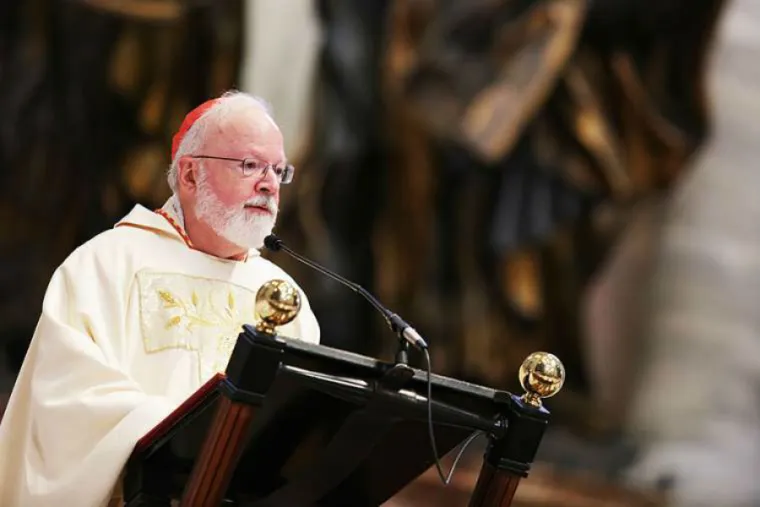
Cardinal Sean O'Malley of Boston says a Mass of Ordination in St. Peter's Basilica, Sept. 29, 2016. Credit: Daniel Ibanez/CNA.
Cardinal Sean O'Malley of Boston says a Mass of Ordination in St. Peter's Basilica, Sept. 29, 2016. (Credit: Daniel Ibanez/CNA.)


A few cardinals have roused themselves to respond to the month-old press disclosures that Cardinal Theodore McCarrick is a pederast, whereas before he was merely well known as a serial sexual harasser. Their response is depressing in the extreme and should make any Catholic or person of good will wish for their immediate, tearful confessions of fault, and their resignations of high ecclesial office.
Before mainstream media outlets finally reported on his lewd and criminal behavior, McCarrick was the face of the American episcopacy’s response to the sex-abuse crisis in 2002. His lewd behavior with seminarians was an open secret among priests and informed laity. Expert witnesses in priest-abuse cases, such as Richard Sipe, had long ago publicized what they knew of the behavior of “Uncle Ted.” A concerned group of laity and clerics pleaded their case against him in Rome before his elevation to the College of Cardinals. Churchmen across the country who didn’t call him “Uncle Ted” with affection or disgust had another nickname related to his proclivities: “Blanche.”
American bishops now facing questions about what they knew and when have had to choose between looking clueless or complicit. So far, they are choosing the former. They are not, however, very persuasive in presenting themselves as ignorant of the rumors.
So let’s review what these churchmen have said and ask some questions about their responses to these “revelations.”
First, there is Cardinal Kevin Farrell, who was a protégé of Cardinal McCarrick’s. Farrell shared an apartment with McCarrick for six years, years in which settlements were being paid out in New Jersey for McCarrick’s misdeeds. In a brief interview, Cardinal Farrell said, “I was shocked, overwhelmed; I never heard any of this before in the six years I was there with him. . . . I worked in the chancery in Washington and never, no indication, none whatsoever.” He didn’t mention his living arrangements. But nothing in Cardinal Farrell’s deportment suggests shock, disgust, or embarrassed bewilderment. His expression is one of a man getting through an unpleasant and official line on his actions.
Farrell was also once a senior figure in the Legionairies of Christ, led by sexual abuser, bigamist, and pederast Marcial Maciel. Farrell left, he’s said, over differences in philosophy. What a life! To have been twice put in the best place to know what, at that level, “everyone knows,” and yet to have known nothing. Why should such a clueless man be elevated to the office of cardinal and given a curial position? Why should a prelate whose sense of the Church is so deficient that he resoundingly declared of the abuse crisis in 2002 that it was “over” be in charge of the World Meeting of Families in Dublin this year? If anyone comes forward with credible evidence that Cardinal Farrell did in fact know about McCarrick’s relationships with seminarians, will he resign his offices?
Next there is Boston's Cardinal Sean O'Malley. Yesterday he issued a long statement about the matter. In part, read:
These cases . . . raise up that fact that when charges are brought regarding a bishop or a cardinal, a major gap still exists in the Church’s policies on sexual conduct and sexual abuse. While the Church in the United States has adopted a zero tolerance policy regarding the sexual abuse of minors by priests we must have clearer procedures for cases involving bishops.
In other words, he blames this on a policy that he and his brother bishops wrote to deliberately exclude themselves from accountability in 2002.
He continues:
It is my conviction that three specific actions are required at this time. First, a fair and rapid adjudication of these accusations; second, an assessment of the adequacy of our standards and policies in the Church at every level, and especially in the case of bishops; and third, communicating more clearly to the Catholic faithful and to all victims the process for reporting allegations against bishops and cardinals.
Specific actions: adjudication, assessment of standards, and communicating to Catholics a process for reporting allegations. The last implies that the problem with Cardinal McCarrick lies partly with the flock’s inability to bleat correctly while the wolves devour them. This is all bloodless bureaucrat-ese. Bishops knew about McCarrick and chose to do nothing. Confronted with the reality, they do not accept responsibility, they do not promise to boldly confront evil. They cry out for more policies that would help them avoid direct confrontation.
What is most shameful is how Cardinal O’Malley addresses his own state of knowledge. Father Ramsey of New Jersey, a priest in good standing, had written about McCarrick to O’Malley’s office for the Protection of Minors, and he received in return what amounted to buck-passing boilerplate about how offenses against adults aren’t handled by O’Malley’s office.
O’Malley writes of this event:
Recent media reports also have referenced a letter sent to me from Rev. Boniface Ramsey, O.P. in June of 2015, which I did not personally receive. In keeping with the practice for matters concerning the Pontifical Commission for the Protection of Minors, at the staff level the letter was reviewed and determined that the matters presented did not fall under the purview of the Commission or the Archdiocese of Boston, which was shared with Fr. Ramsey in reply.
Notice how lawyerly this language is. O’Malley says he did not “personally receive” the letter. An interesting bit of rhetoric. On the surface, it allows one to conclude that O’Malley simply never knew about it. But O’Malley does not say whether staff discussed with him the contents of the letter and the contents of his office’s response to the letter. In fact, it is preposterous to believe that a matter so sensitive as grave accusations against one of the most notable churchmen in his country would be handled entirely by staff without his knowledge.
O’Malley’s official reputation, the one he is anxiously guarding, is that he is punctilious about accusations of sexual abuse. His real reputation is one as a zealous micro-manager of his own reputation. O’Malley surely had heard of the rumors about McCarrick’s behavior with seminarians, and he surely knew that McCarrick chose to live his retirement on the grounds of a seminary, where he would have access to young candidates for the priesthood, when his office received these complaints. Did he do anything with the knowledge of the complaint besides send back a form letter washing his hands of the situation? If his judgement allowed him to wave away such a grave situation, what good will better policies do?


My office doesn’t have a policy against plunging hammers into the necks of my colleagues. But my co-workers would not excuse themselves from the duty to stop me from doing this by citing the absence of such a policy in a rulebook, or by explaining that their job description did not explicitly include language about hammer-wielding colleagues. O’Malley is blaming his lack of action on a lack of policy, when the problem is a fear of confrontation, insufficient zeal, or — most likely of all — his moral compromise and passivity in the face of a well-known culture of sexual abuse, blackmail, and moral impunity within the Catholic episcopacy.
He’s not the only one who has to answer tough questions. Cardinal Wuerl said last month that he had reviewed the records of the Washington, D.C., archdiocese. “Based on that review,” he concluded, “I can report that no claim — credible or otherwise — has been made against Cardinal McCarrick during his time here in Washington.”
Some questions for Cardinal Wuerl might go something like this. The Vatican’s representative in Washington, D.C., knew about the legal settlements for McCarrick in 2004; when were you informed of them? If you were informed of these settlements, did you take that into consideration when Cardinal McCarrick requested to live in different seminaries that train priests for your diocese? If you did not know about them, did Bishop Joseph Tobin or his predecessors in Newark have a duty to inform you of them, given McCarrick’s living arrangements? Why, near the end of the last decade, was McCarrick suddenly asked to leave the seminary at St. Thomas Woodley Park under Father Roderick McKee?


Further, you are the American on the Congregation of Bishops in Rome? It’s widely reported that McCarrick’s lobbying for certain candidates for elevation in the Church was important. How many times did you receive him for an audience on these matters? What was the weight of his word in your own recommendations for Joseph Tobin, Kevin Farrell, and Blase Cupich? If you knew of these settlements, why did his word have any weight with the congregation and with the Vatican?
Image result for cardinal farrell
 Joseph Tobin, Kevin Farrell, and Blase Cupich
I don’t expect answers to these questions. But as a Catholic, I would find it satisfying to at least watch these men squirm or sweat while they lie to us, rather than delivering their lines in great comfort and an atmosphere of deference.

Reporters could also cut to the chase. Do you know of bishops who are sexually active? Are you sexually active? They should dig through the same “everybody knows” rumor mills that had accurate information on Cardinal McCarrick. Ever hear anything funny about Cardinal Edward Egan? About parties that Cardinal Law hosted? About Cardinal Bernadin? What about the reputation of the Mundelein Seminary?
A spokeswoman for the diocese of Metuchen said that she had spoken to Cardinal Tobin and that he “has expressed his intention to discuss this tragedy with the leadership of the United States Conference of Catholic Bishops in order to articulate standards that will assure high standards of respect by bishops, priests, and deacons for all adults. ”
An expressed intention to articulate standards endorsing high standards. Let them eat standards. This is the moral imagination and moral vocabulary of Cardinal McCarrick’s peers in the Church. They need new policies to confront predators; the fear of perdition doesn’t move them to do so. Nor does respect for the seminarians or their congregants. Nor does self-respect. The reaction of the cardinals goes some way toward explaining how a man like McCarrick flourished in their ranks.

Thursday, July 26, 2018

Trump's Deal with the EU Is Democrat Nightmare


By Roger L. Simon
July 25, 2018


Image result for trump eu trade deal
President Donald Trump and European Commission President Jean-Claude Juncker announce a trade deal at the White House on July 25, 2018.(Win McNamee/Getty Images)


They must be burning whatever gallons of midnight oil they have left at MSNBC, CNN, the New York Times, the Washington Post, CBS, NBC, ABC, etc. -- all the propaganda organs of the Democratic Party -- trying to figure out how to downplay the agreement Donald Trump just made with European Union President Jean-Claude Juncker, but it's not going to be easy. This is the beginning of a massive free trade deal between Europe and the U.S. with zero tariffs outside the auto industry.  If even half of it comes true, there will be a (okay, why not?) YUUUGE growth in trade benefitting both sides of the Atlantic.

Forget porn stars. Forget tapes. Forget evil Vlad and Rocket Man. Forget insulting our NATO partners (whatever that means). Forget that pseudo-socialist with the hyphenated name. Forget Mueller, sleazy Strzok , Adam "Leaker" Schiff, Fingers Clapper, Knuckles Brennan, Rocko Rosenstein, or any of the sordid crew.  Forget even Twitter! (well, maybe). By comparison, those are all sideshows. As everyone knows, in politics, "It's the economy, stupid!"

Or, put another way, "It's the art of the deal."  And that's what came through today and then some.  This is the most significant moment of Trump's presidency since the tax law passed -- and he's had plenty, more than any president of any of our lifetimes if you actually think about it.

Boom went the stock market within seconds of the announcement.  And those investors know a lot more than Jim Acosta, Chris Matthews, or even Jake Tapper.  (Don't cry, guys.  We know how big your 401Ks are and a lot of that is due to Trump.  Be grateful for a change. Your grandchildren will thank you.) It already looked as if we were headed for another Trump bull market with growth approaching a jaw-dropping five percent. Good for everyone.

The Dems and their media lackeys are not going to have the tariff issue to kick around anymore.  Turns out it was what anyone with the proverbial IQ in triple digits knew it was -- a bargaining chip.

Needless to say, many of those conventional dullards who loath Trump knew this too, but wouldn't admit it.  Therefore they gave him about ten minutes to make his deal.  He made it in five (metaphorically). Panic in Media Park.

Making matters worse for the Dems, this new deal entails growing sales of liquid natural gas by our country to Europe.  Who does that most affect?  Well, duh, Comrade Putin, of course.  Thought experiment (actually you don't even have to think to answer this one): What do you suppose would trouble Putin more -- the U.S. cornering the LNG market or Trump calling him a bunch of nasty names?

It's so obvious that Trump has done more to actually "trouble" Putin by his actions (really arming the Ukrainians, etc.) than any of his recent predecessors that it would be generally acknowledged in a semi-honest media environment.  The whole hoo-haw about Helsinki was less than a bunch of nothing in the grand scheme of things. But the oppressive leftwing (to use a dated term) media environment affects even the right so they often can't see straight and apologize for things that need no apology.  This new deal should straighten some of that out.

It also should be powerful ammunition for any Republican running this fall. Do you want the Trump economy or do you want a return to the Obama economy?  It's as simple as that.  Trump continues to negotiate great agreements for America, at home and abroad. The "Art of the Deal" may be a cliché by now, but it appears to work.  And when something's working for once, why change it  -- especially to something that already failed?(Or, in the case of socialism, worse than failed -- caused mass impoverishment and mass murder.)

If Republicans can communicate that simple  message, they will win big.  Not always geniuses at marketing their ideas, this one is so obvious maybe even the GOP can do it.

Are we tired of winning yet?

Roger L Simon - co-founder and CEO Emeritus of PJ Media - is a novelist and Oscar-nominated screenwriter.

Auburn's Ace Atkins: From football hero to best-selling crime novelist

July 25, 2018
Image result for ace atkins
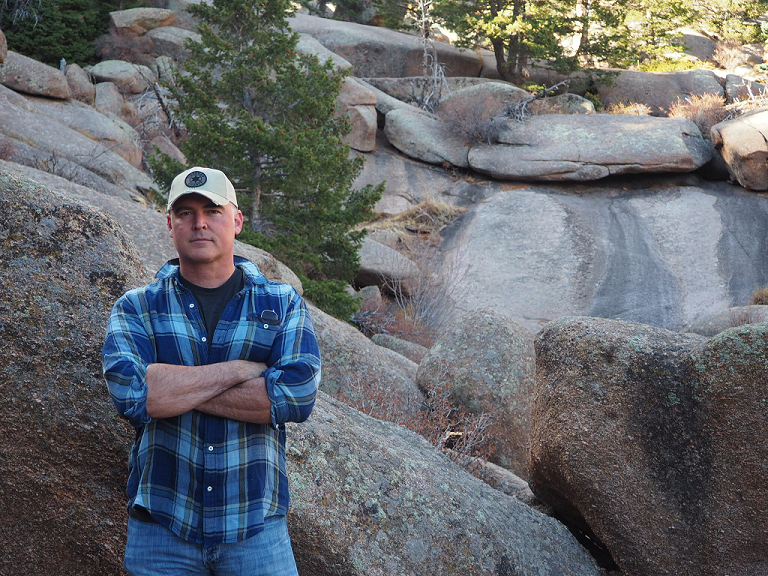
It's about a 15-minute drive from crime novelist Ace Atkins' home in rural Lafayette County, Miss., to the downtown office he shares with a bunch of lawyers on Oxford's historic town square.
The second-floor perch affords Atkins a bird's-eye view of Oxford's celebrated City Grocery restaurant, the upstairs bar of which is an occasional late-afternoon gathering spot for Oxford's ever-expanding but close-knit circle of writers, a group that includes Atkins' friends and fellow authors Jack Pendarvis, Tom Franklin and William Boyle.
"I can see the bar from outside my window," Atkins says. "It's kind of a beacon to get my work done before happy hour."
It has apparently proven to be great motivation for the prolific Atkins, who has just published his 23rd book, "The Sinners." It is the eighth installment in his Quinn Colson series, the continuing saga of a former Army Ranger-turned-Mississippi sheriff who fights to keep law and order in a county with more than its share of dope dealers, lost souls and good people caught in bad circumstances.
"When people ask me what these books are about, I say it's kind of like an R-rated version of 'The Andy Griffith Show,'" Atkins says. "The bad guys curse a little bit more.
"But I always liked that about Andy, that he was kind of the moral center of that town and brought us back to what's good and what's right."
Atkins, who played college football at Auburn in the early 1990s and moved to Oxford 17 years ago, knows the country roads and dark alleys of North Mississippi better than some cops.
A meticulous researcher who once took boxing lessons for one of his books and hung out with the Boston Fire Department for another, Atkins often rides along with deputies from Lafayette and other surrounding counties when they're out on patrol.
"His research is his boot leather on the ground, not hitting the search key on Google," Lafayette County deputy Dave Cullison says. "When Ace writes one of these (books), he can write it because he lived it. He may not have lived it 24/7, but he knows what the dust on the dirt road tastes like."
Cullison, a friend and a fan of Atkins, has read all the Quinn Colson books -- "and some of them twice," he says. The long-time lawman acknowledges there are practical advantages to having Atkins ride along with him.
"If you're in Orwood or Splinter and there is a fight going on in Abbeville, and most of the shift is in Abbeville, your backup may be 20 or 30 minutes away," Cullison says. "It is not a bad thing to have 6-foot-3-inches-of-continuously-working-out Ace Atkins in the car with you."
Although his playing days ended nearly 25 years ago, the brawny Atkins looks like he could still wreak havoc on the football field, just like he did that glorious autumn afternoon in Jordan-Hare Stadium in 1993.
A fifth-year senior defensive end who had played sparingly in his career at Auburn, Atkins had not made a tackle all season until he wrote the perfect Hollywood underdog story that Saturday, sacking Florida quarterback Danny Wuerffel twice in the second half of a huge upset of Steve Spurrier's fourth-ranked and previously unbeaten Gators.
"I've never been a part of a game like this one," Atkins said afterward. "It was like a movie. I don't think that Hollywood or Robert Altman could have scripted it better."
Saddled with NCAA probation and banned from playing on TV or in the post-season, Auburn finished that magical '93 season undefeated, and when Sports Illustrated published a commemorative edition celebrating "That Perfect Season," it was Atkins, towering over a fallen Wuerffel, on the cover.
Frequently, an Auburn fan will bring a copy of the magazine to one of Atkins' book signings and ask him to autograph it. Likely, he will sign a few more this Wednesday, July 25, when his book tour for "The Sinners" takes him to Opelika for a book signing at John Emerald Distilling Company.
"I'm always glad to sign those," the 48-year-old Atkins says. "It used to be kind of a joke. When I first got started (publishing books), I would say, 'Boy that seems like a long time ago.' And it would have been maybe five years afterward.
"Now, it's not a joke anymore," he adds. "It really is a long time ago."
Image result for ace atkins
Ace's Auburn bloodlines
The son of the late Auburn legend Billy "Ace" Atkins and his wife, Doris, Ace was around football from the time he took his first steps as a toddler until he played his final down in college.
His father was the MVP of Auburn's 1957 national championship team, and after his pro career was cut short by a knee injury, Billy Atkins got into coaching, leading Troy State University to a NAIA national championship in 1968, his third season as head coach. Ace, who has an older sister, Paige, was born in Troy two years later.
Billy Atkins had picked up the nickname "Ace" during his playing days at Auburn, and when their son was born, Billy and Doris named their boy William Ellis Atkins Jr. From birth, though, everybody called him "Ace."
"You can imagine how many Ace Hardware jokes I had to hear, or 'Ace from Space,'" he says. "It was a hard name to keep, for sure."
The elder Atkins later worked as an assistant coach in the NFL, and his son recalls the family moving around from Buffalo to San Francisco to Detroit to St. Louis to Atlanta before they came back to Auburn, where Ace attended high school.
"Auburn has always been my hometown, even before going to high school there," he says. "My grandparents lived there, and my aunt and uncle lived there. My dad could have been coaching for the St. Louis Cardinals, but during Christmastime or summertime, we were always going back to Lee County, going back to Auburn."
As a teenager, Ace read all the Ian Fleming James Bond books and John D. MacDonald crime thrillers that he could get his hands on, scouring used-book stores to find out-of-print paperbacks.
"To be quite honest, there is nothing better in the world for a 15-, 16-year-old boy than to read Ian Fleming and John D. MacDonald because they would sometimes spend a couple of pages describing women and the way they looked and how beautiful they were," he recalls. "It was a very enlightening read for me at a young age."
That was also about the time Atkins discovered the blues of Muddy Waters and Howlin' Wolf, whose music would also have a huge influence on his life and career.
"I saw the movie 'Risky Business,' and there is this great part where they are playing 'Mannish Boy,'" he says. "I had never heard anything like it. And it's the Muddy Waters version, the second version produced by Johnny Winter. It had so much raw energy to it.
"That started my appreciation and love of blues music. Muddy Waters led to Elmore James and that led to Howlin' Wolf. Once you get into it, it really captures you."
A sportswriter's dream
When he graduated from Auburn High School in 1989, Atkins had his heart set on going to Los Angeles and attending the University of Southern California.
"I wanted to go to film school there very badly," he says. "I wanted to be a screenwriter."
But USC didn't offer Atkins a scholarship, and Auburn did.
Between football practices and team meetings, Ace immersed himself in writing courses and literature classes at Auburn. He even took an introductory typing course to learn to type.
He was a sportswriter's dream, a football player who could talk books and authors as easily as he could schemes and alignments.
"Occasionally, some of the coaches would think that I was not serious about football if, in between meetings, I was reading a novel and they knew it was not class-assigned," he says.
In his backpack, Ace carried around notebooks and began writing short stories, many of which centered around a fictitious character named Nick Travers, a former New Orleans Saints football player turned Tulane University blues historian.
"I created this character, Nick Travers, and it was kind of this idealized way that I would like to live, which was in New Orleans and listening to blues music and eating good food," Atkins says. "So Nick Travers came from all those notebooks, and he ended up becoming the character in my first four books."
An English professor at Auburn, Marian Carcache, also introduced Atkins to the strange and wonderful Southern Gothic literature of Flannery O'Connor.
"That class meant more to me because it taught me more about how weird and fun the South can be," he says. "That made an imprint on my brain."
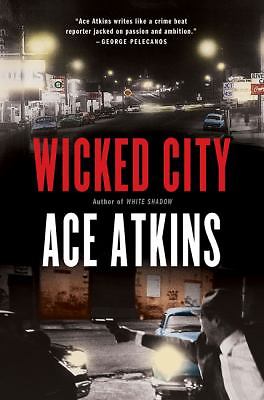
Years later, as a thank-you to his former professor, Atkins sent Carcache a personalized copy of "Wicked City," his true-crime novel about the corruption and clean-up of Phenix City in the 1950s.
"When Ace was in my class, I was teaching a survey American literature course that didn't lend itself to revealing a student's talents as a fiction writer," Carcache recalls.
"That said, any time a student in a required survey course was bright enough to enjoy Flannery O'Connor, I knew I'd been smiled upon by some heavenly power."
Wicked-City-ExLib-by-Ace-Atkins
Ace Atkins, crime reporter
Atkins majored in communications with an emphasis on writing for radio, television and film, and after he graduated from Auburn in 1994, he still entertained dreams of going to Hollywood and becoming a screenwriter.
"I thought I would get out of Auburn and go get a movie deal," he says. "I thought it was like the 1930s, where you go out to Hollywood and they say, 'This kid's got talent,' and they set you up with a typewriter and you're working for (David) Selznick or Jack Warner."
A friend from Auburn, Tammy Trout, a journalism student, told Atkins that if he really wanted to be a novelist or screenwriter, he needed to work for a newspaper and get some ink in his blood first.
So he wound up in Tampa Bay Area, where he started out as a part-time stringer for the St. Petersburg Times. He took the grunt assignments that other reporters avoided, covering everything from the annual Santa parade to community fundraisers just to get a byline.
Thinking that Ace Atkins sounded too unprofessional for an aspiring reporter, he had planned to write under his formal name of William Atkins.
"I didn't think anybody was going to hire a writer named Ace," he recalls.
The editor who interviewed him, Jon Wilson, made the connection to the Ace Atkins from Auburn, though, and Wilson got on to him for not mentioning that he'd played football on his resume.
"I told him I didn't think that mattered," Atkins recalls. "He said, 'Why would you change your name from Ace?' That's a great byline.'
"He told me, 'Look, I'll get you work, but you have to promise me that you'll always keep Ace Atkins as your byline.' And I promised him that."
So Ace it stayed, and a year later, it followed Atkins across the bay to the rival Tampa Tribune, where he landed a full-time job as a crime reporter.
"The first thing that happened was, they wanted to change my name," Atkins says. "I said, 'No, I promised Jon Wilson, and I'm keeping it.'"
Working the cop beat at the Tribune introduced Atkins to a rogue's gallery of misfits, half-wits, tramps and thieves who would later populate his novels.
"Bad guys to me are sometimes the most interesting things in these books," he says. "Coming from a background of covering law enforcement, covering the prison system, federal court and that kind of thing, they're always the most colorful characters.
"You know, many of these people aren't the brightest people in the world," he adds. "When I was a newspaper reporter, one thing I found out was the worst criminals are bank robbers. I once covered a guy who robbed a big bank in Tampa with a salad fork."
A new home in Oxford
A few years after he got to Tampa, Atkins was covering a story about a University of Tampa student who had drowned following a night of heavy drinking.
As divers searched the Hillsborough River for the body, Angela Moore, a reporter for the St. Petersburg Times, arrived on the scene.
She saw a tall guy with short hair and aviator shades and, thinking he was a detective working the case, struck up a conversation.
"I went up and started talking to him, thinking that he was going to give me some information," Angela recalls. "And it turns out, he was the guy from the Trib, not a cop.
"So that's how we met," she adds. "We always say we met over a dead body."
They didn't start dating until a couple of years later, and in 2001, when Atkins decided to get out of the newspaper business and write books for a living, he convinced Angela to go with him to Oxford.
"Being a dumb twentysomething who was in love, I said, 'Yeah, that sounds like a fabulous idea,'" Angela remembers. "My poor mother nearly had a heart attack."
Although he had already published two novels -- "Crossroad Blues," a Southern noir about the search for the lost recordings of Delta bluesman Robert Johnson, and "Leavin' Trunk Blues," a murder mystery set in the gritty blues clubs of the South Side of Chicago -- Atkins found his groove in Oxford, the home of the late William Faulkner and the cradle of Southern literature, "the Vatican City of Southern letters," as Pat Conroy once called it.
He got a job as a visiting professor in the journalism department at Ole Miss, which allowed him more time to write. And he became buddies with a couple of his literary heroes, Larry Brown and Barry Hannah, both of whom are since deceased.
"That was one of the great things about moving to Oxford when we did," he says. "I was fortunate enough to spend time with both Larry and Barry."
Ace and Angela got married in 2005, and they started a family a couple of years later. They have two boys, soon-to-be-11-year-old Billy, who is named for his grandfather, and 7-year-old Jess, who is named after his great-great grandfather.
"I never intended to stay here," Atkins says. "I ended up moving here, and one semester turned into another. I ended up teaching for five years, and then buying a farm.
"Oxford just has a way of sucking you in."
Angela teaches a couple of communications courses at Ole Miss each semester, but Ace gave up his part-time teaching job several years ago to devote full-time to writing.
"It was simply a financial decision," he once joked. "I think there was one semester when I owed more in parking tickets than I made from Ole Miss."
Channeling Burt Reynolds
For the past seven years, Atkins has worn two writing hats.
In addition to writing one Quinn Colson book a year, Atkins is also under contract to publish one novel a year in the Spenser detective series created by the late Robert B. Parker. After Parker died of a heart attack in January 2010, his estate handpicked Atkins to carry on the series.
While the Colson books take place close to home in the fictional Tibbehah County, the Spenser novels are set in Boston. Atkins divides his time between the two characters and their respective settings, but he tries not to let them overlap.
"If I start writing a Spenser book after writing Quinn, the characters have kind of these Southernisms that creep into the dialogue," he says. "Then when I'm writing Spenser and start a Quinn book, I'll have things that feel a little bit more like Boston. That's the toughest thing.
"Angela is always kind of the quality control person when she's reading the manuscripts," he adds. "She'll circle something and say, 'Nobody in Boston is saying this.' Inevitably, I will fly up to Boston and spend a week and tune my ear correctly."
The new Quinn Colson book, "The Sinners," involves dirt-track racers and the hijacking of an 18-wheeler that's carrying a load of contraband, and Atkins dedicated it to one of his drive-in movie heroes, Burt Reynolds. In a playful tip of the cap to Reynolds and "Smokey and the Bandit," Atkins also served Coors beer at his book launch party at Off Square Books in Oxford.
"I mean, there would be no Quinn Colson series without 'White Lightning,' without 'Smokey and the Bandit,'" Atkins says.
"I think Burt represented a lot of stuff that's good about the South. He would also sock it to the people that we don't like, the hypocrites and the racists, the loudest and the most obnoxious among us."
Jack Pendarvis, a writing buddy and fellow movie enthusiast, has read all the Quinn Colson novels, and he and Ace team up for an informal Q- and-A session in Oxford when a new one comes out each year.
"Ace does something really different with the Quinn Colson books in that the books don't get reset from volume to volume," Pendarvis says. "The story gets more complex and people age and the consequences of actions they took two or three books ago are going to come back and have an effect on them in later novels."
Atkins' dream of one day making it in Hollywood is closer to coming true, too.
Boston's own Mark Walhberg has agreed to star as the wisecracking Beantown detective Spenser -- a role made popular by Robert Urich in 1980s TV series "Spenser: For Hire" -- in a new series of Netflix movies adapted from the Robert B. Parker books. The first movie will be based on Atkins' 2013 novel "Wonderland," the second of seven Parker/Spenser books he has written.
Also, Atkins and his friend Pendarvis have co-written a pilot for a potential TV series based on his Quinn Colson books and are going out to Los Angeles to shop it around next month.
"You never know," Atkins says. "It could happen next year. It could happen in 10 years. As my old editor Neil Nyren used to say when I would talk about movies or TV, 'Let me know when the camera starts rolling.'"
Image result for ace atkins
Twenty-five years later
The 25th anniversary of that undefeated 1993 Auburn football team is coming up this fall, but for William Ellis "Ace" Atkins Jr., that seems like another lifetime ago.
"That just blows my mind," he says. "In the last, say, 20 years, I do not get over there very often. I had a couple of nice honors that Auburn University brought me back for, but as far as being in Auburn and spending time there, it has been a long time -- to the point where I don't even recognize the city anymore."
Last year, Atkins appeared in a "You never really leave Auburn . . . because Auburn never leaves you" national TV commercial that also featured Apple CEO Tim Cook,  Comedy Central producer and other distinguished Auburn alumni.
With 23 books and counting, Atkins has published more novels than he ever made tackles on the football field at Auburn, and about the only time he talks about those days is when somebody asks him about it, just like we're doing here.
But it is football and this is Alabama, so he gets it.
"During football season, he's always on deadline," his wife, Angela, who played women's rugby at the University of North Carolina, says. "I've gone to games with him before, and I've watched games with him before, and, honestly, it's not enjoyable for him.
"He would far rather watch a movie from 1932 than watch a football game," she adds. "That doesn't mean he's not proud of it. It doesn't mean he didn't enjoy playing."
There is, however, one more Ace Atkins football story that's too good not to share, a wonderful story that connects William Faulkner, Ole Miss football and the ties that bind us in the South.
About a dozen years ago, Dean Faulkner Wells, Faulkner's niece and an Ole Miss season ticket holder, asked her friend Ace Atkins why he didn't go to football games anymore.
He told her that it was just too much of a hassle, with having to park and walk to the stadium and all that.
"And she said, 'There is no excuse,'" Atkins recalls. "'You are going to the Auburn game. You are going to take my ticket, and you are going to go with Larry (her husband), and I'm driving you.'"
Wells died a few years later, but her husband and Atkins have continued the every-other-year tradition in her honor.
" I feel kind of indebted to Dean to continue that tradition," Ace says. "This year, Auburn will be playing at Ole Miss. I'll go to that game, but that will probably be the only game I go to."
Related:
Mondays with Authors: A Conversation with Ace Atkins -