Saturday, January 07, 2017

Scandals Aplenty


The media just pretended they didn't exist.

From the January 16, 2017 issue
Image result for obama scandal free cartoon
Less than a fortnight after his successor was elected, Barack Obama got to work on shaping his legacy. “I'm extremely proud of the fact that over eight years we have not had the kinds of scandals that have plagued other administrations," he said. On January 1, White House consigliere Valerie Jarrett—does anyone have a firm grasp on what her actual job description has been over two terms?—appeared on CNN and reiterated the sentiment: "The president prides himself on the fact that his administration hasn't had a scandal and that he hasn't done something to embarrass himself."
As achievements go, this would be one in which a modern president could take pride. But in making the claim for himself, Obama proves he cannot even accurately describe the events of his presidency. His tenure saw an astounding number of scandals: Benghazi, Fast and Furious gunrunning, Solyndra and green energy subsidies for campaign donors, cash for Iranian hostages, IRS targeting of conservative groups, spying on journalists, Hillary Clinton's private email server, the Veterans Administration disaster, trading deserter Bowe Bergdahl for five Taliban leaders held in Guantánamo, droning American citizens without due process, and firing inspector general Gerald Walpin for investigating an Obama crony who was abusing federal programs. And that list isn't exhaustive.
The media have certainly tried their best to buttress Obama's claim to have presided over a scandal-free administration—starting long before he even made it. In 2014, New Yorker editor and Obama biographer David Remnick told the (skeptical) host of PBS's Charlie Rose that the president had already racked up "huge" achievements. On his list: "The fact that there's been no scandal, major scandal, in this administration, which is a rare thing in an administration." Remnick was hardly alone. Veteran journalist Jonathan Alter wrote a column for Bloomberg back in 2011 headlined "The Obama Miracle, a White House Free of Scandal." More recently, Glenn Thrush, then a Politico reporter, tweeted, "As Obama talks up legacy on campaign trail important to note he's had best/least scandal-scarred 2nd term since FDR." Even conservative New York Times columnist David Brooks last year declared the Obama administration "remarkably scandal-free."
Remnick's remark is particularly notable for how it presaged White House talking points. Obama's chief campaign strategist David Axelrod was asked at the University of Chicago in 2015 about the administration's broken promise to bar lobbyists from working for it. Axelrod admitted things hadn't been "pristine" but said, "I'm proud of the fact that, basically, you've had an administration that's been in place for six years in which there hasn't been a major scandal."
As Noah Rothman observed in Commentary, "The qualifier 'major' lays the burden on shoulders of the press to define what constitutes a serious scandal, and political media had thus far reliably covered the administration's ethical lapses as merely the peculiar obsessions of addlebrained conservatives."
So what would constitute a "major" scandal? Would it involve, say, dead bodies? The Bureau of Alcohol, Tobacco, Firearms and Explosives gave thousands of guns to Mexican drug cartels; they used some of them to kill dozens of people, including American border patrol agent Brian Terry. When Congress tried to investigate why the ATF gave away so many guns and failed to track them, the Department of Justice engaged in unprecedented stonewalling. The department withheld 92 percent of the documents requested and forbade 48 relevant employees from speaking to congressional investigators. Attorney General Eric Holder was ultimately held in contempt of Congress, with 17 Democrats supporting the measure. An explanation for why the ATF gave thousands of guns to violent criminals has yet to emerge—but we are to understand that this is not a "major" scandal.
Four Americans, including the ambassador to Libya, died in a premeditated terrorist attack in Benghazi two months before Obama's reelection. The White House claimed, though it almost immediately had evidence to the contrary, that the raid was fallout from a spontaneous protest over an American anti-Muslim YouTube video. The maker of the video was promptly arrested on old, unrelated charges. The CBS news program 60 Minutes recorded Obama refusing to rule out the possibility Benghazi was a terrorist attack in an interview the day after it occurred but didn't broadcast it. A transcript of Obama's stunning concession was quietly released a few days before the election, but by then the waters had been sufficiently muddied so that it was difficult for Mitt Romney to press his case that Obama had lied. (The GOP candidate was famously interrupted by moderator Candy Crowley when he tried to make this point in one of the presidential debates.) It probably helped that Obama's deputy national security adviser Ben Rhodes, who would later brag about dishonestly selling the Iran nuclear deal, is the brother of CBS News president David Rhodes. There were four dead bodies at the heart of a political cover-up, but the media attacked the subsequent investigation as an overreach of an obsessive Republican Congress.
Unforeseen events such as Benghazi often prompt a cover-up that leads to scandal. The Obama administration, however, took disrepute to the next level. Its two major achievements, Obamacare and the Iran nuclear deal, were premised on a strategy that embraced overt dishonesty.

It's liberating to know that you can tell whatever lies are politically useful without consequence. The Obama administration could almost always count on the media to back it, regardless of the contortions necessary. The most brazen untruth the administration used to sell Obamacare was "if you like your health care plan, you can keep it." Pulitzer Prize-winning "fact checker" PolitiFact rated Obama's oft-repeated claim "true" six different times, right up until the year after Obama was reelected and millions lost their health insurance after the key provisions of Obamacare went into effect.
In the case of the Iran deal, the administration had more direct help: An outside group, the Ploughshares Fund, provided a grant for an email listserv in which liberal journalists honed talking points and directed swarms of supporters to shut down anyone advancing arguments critical of the deal. Ploughshares also gave more than a hundred thousand dollars to left-leaning media outlets such as NPR to ensure arguments in support of the White House's Iran policy were heard.
"We created an echo chamber," Ben Rhodes later told the New York Times in explaining how the administration sealed the Iran deal. Policy experts and members of the media "were saying things that validated what we had given them to say."
The question is: Why was the press such a willing partner? Several Obama scandals, after all, revolved around the administration's mistreatment of the media. Obama's Justice Department, frustrated by leaks to reporters, used the 1917 Espionage Act—a law so expansive it was used to jail people who distributed flyers protesting the draft in World War I—to justify spying on the Associated Press newsroom and Fox News national security correspondent James Rosen. James Goodale, the lawyer who represented the New York Times in the landmark Pentagon Papers press freedom case, declared that "President Obama will surely pass President Richard Nixon as the worst president ever on issues of national security and press freedom." The steadfastly fawning coverage of Obama is even more difficult to fathom when you realize the masochism it must have entailed.
In the end, the real legacy of the Obama presidency might be that after eight years of constant misconduct with media-assisted denial, abuse of power and betrayal of the public trust are no longer scandalous by default. The media certainly seem puzzled that Americans tuned out their shrieks about Trump's tax returns and sexist remarks. But thanks to Obama, determining what constitutes a scandal is no longer straightforward. It is like a zen koan, in which the question is more evocative than answerable: What is the sound of one hand clapping? If a tree falls in the forest and no one is there to hear it, does it make a sound? And is it a scandal if the media refuse to say it is?
Mark Hemingway is a senior writer at The Weekly Standard.

Thursday, January 05, 2017

THE GREAT HIJAB COVER-UP


By Ann Coulter
January 4, 2017

Image result for Yasmin Seweid hijab

Forget fake news; the real issue is fake "hate.” 

Has there been one (1) documented hate crime committed by white people against any hue in the Rainbow Coalition since Nov. 8? That's out of the 9,456,723 hate crimes alleged by America's leading hate group, the Southern Poverty Law Center (SPLC).

The SPLC is to "hate" what Rolling Stone is to rape. It is the biggest peddler of fantasies since Walt Disney.

I've read through dozens of SPLC "hate crimes" and they are all lies. The Muslim girls in particular seem to be very spirited liars.

Since the election, there have been vivid stories from across the nation of Trump supporters tearing off Muslim girls' hijabs -- at the University of Michigan (since retracted), Louisiana State University (also retracted), San Diego State University (that too was retracted), the New York City subway (again: retracted), and the University of New Mexico (no witnesses, won't reveal attacker's name or report the incident for investigation).

The main take-away from all these stories is: We sure have taken in a lot of Muslims! They seem to have trouble assimilating to American laws about not committing mass murder, but the good news is, when it comes to America's culture of victimhood, they assimilate like fish to water!

This isn't mass psychogenic illness, like when cheerleaders at the same high school all develop tics. It's not even the Salem witch trials. At least the Salem witch-hunters believed in witches. The Muslim hoaxers are lying, and they know they're lying.

Otherwise, they'd leave the country.

If Muslims want to convince me that they're living in abject fear in Trump's Americasomebody's got to leave.

I've heard endless stories about the reign of terror against Muslims, but have yet to hear of one single Muslim -- much less a wave of Muslims -- moving out of the United States.

It's not as if they get depressed at the thought of abandoning the old ancestral home, where their great-grandparents are buried. They just got here!

If any Muslim were at risk of so much as a dyspeptic look from white Americans, there's emigration as well as immigration.

But to the contrary, we can't keep them out! They get huffy and give indignant speeches at the Democratic National Convention at the suggestion of a mere pause in Muslim immigration.

The greatest fear of Muslims these days is that they won't be home when the "Today" show calls and will miss the opportunity to regale credulous hosts with stories about their victimization at the hands of white American men (whose great-grandparents are buried here).

The left has gone so insane that the SPLC, the main propagator of fake hate crimes, is the media's go-to expert on hate. SPLC spokesmen appear on TV and defame all the people they hate: whites, Christians, Trump supporters, cops, frat boys and so on.

The SPLC is like the cult awareness groups taken over by Scientologists. Terrified parents would call for help in rescuing their kids from Scientology and be told, No, Scientology is not a cult.

With the SPLC, the "hate watch" group is the hater. Unlike some toothless nobody claiming to be a member of the ALL-POWERFUL KU KLUX KLAN, the SPLC's slanders are instantly amplified by the media megaphone in somber interviews conducted by the most easily fooled people in the universe, American journalists.

BreitbartDaily Caller and others have done a great job collecting the hoax hate crimes since the election, but we need a central clearinghouse to keep up with the volume.

How about someone found the Northern Poverty Law Center (NPLC), to document actual hate crimes and expose the hoaxes being spit out on an assembly line by the SPLC? Maybe the Koch brothers could get back in Trump's good graces by funding this much-needed service.

The soon-to-exist NPLC ought to be in the Rolodexes of every media organization, so they can stop reporting fake news and start covering the real hate crimes currently ignored by the press.

The only incidents of actual "hate" since the election have been entirely in one direction: against (mostly white) Trump supporters. This isn't surprising given the climate of hate being spread by the media.

As illustrated on the website of the NPLC (coming soon!), we aren't dealing with a Reichstag fire designed to generate hate toward white male Trump supporters. It's been Reichstag fire after Reichstag fire.

At this point, any claim of "hate" directed at Muslims, blacks, gays or Hispanics by Trump supporters should be treated like a UFO sighting: presumed false, unless documented with irrefutable evidence.

But until the NPLC is up and running, here are some tips for journalists:

-- Real hate crimes do not begin with laughably implausible scenarios. Try to use a modicum of common sense.

-- They are almost always captured on videotape or at least are seen by actual witnesses who give statements to the police. Lachrymose accounts posted on Facebook do not constitute evidence.

-- They generally result in medical treatment and arrests.

The Trump Justice Department needs to create an office that will serve as a liaison with this new civil rights organization, the Northern Poverty Law Center. Because eradicating hate is Job No. 1!


COPYRIGHT 2017 ANN COULTER 

Wednesday, January 04, 2017

The game's over Mr President - and your team lost. End your Trump temper tantrum and show some dignity


3 January 2017

Related image

What’s Barry’s game?

That’s the question many of President Obama’s basketball opponents have asked over the years as Barack hurtled himself around the court in the final minutes of a match.

From all accounts he could be a mean, nasty sonofabitch in those final few seconds, especially if his team was losing.

The answer to my question is thus self-evident: to win at all costs.

That ethos made Obama a very competitive basketball player, and a very effective politician.

But it is currently causing many Americans to ask: ‘At what cost?’

Obama’s spent the past few weeks charging around like a guy who’s watching the clock tick down and is desperate to snatch some semblance of victory from the jaws of a crushing, humiliating defeat.

Since the election, as the New York Times reported, he’s banned oil drilling off the Atlantic coast, named over 100 people to a range of senior government jobs, created new environmental monuments, commuted the sentences of 232 inmates and pardoned 78 others, protected funding for Planned Parenthood clinics, ordered the transfer of detainees from Guantanamo Bay and blocked new Israeli settlements.

As some critics sneer, it’s more governing than he’s done in eight years.

In his most dramatic action, Obama claimed Russia swung the election Trump’s way by hacking Hillary Clinton’s emails and leaking them to Wikileaks to destroy her campaign.
He retaliated by throwing out a load of Russian diplomats.

The fact Obama produced no hard evidence to substantiate this very serious claim didn’t seem to matter to the former constitutional law expert.

Nor did it seem to cross his mind that the really damaging part was the content of Hillary and her team’s explosive emails, not the fact we could all read them.

Oh, and of course there was the small matter of Hillary secretly setting up her own private email server to avoid any of that annoying judicial scrutiny that normally comes with being a high-ranking member of the US Government.

The President’s purpose by blaming Russia is crystal clear: as Wikileaks founder Julian Assange told Fox News host Sean Hannity in an interview that airs tonight, it was to ‘delegitimize the Trump administration as it goes into the White House.’

Assange said he was ‘1000%’ confident Vladimir Putin’s Russian government had not hacked the DNC emails.

‘Our source is not the Russian government and it is not a state party,’ he said.

But it suits Obama’s game to say that it was all down to Putin because it distracts from the real reason.

Donald Trump didn’t win the presidency because of Russia, emails, FBI Director James Comey or the weather in Michigan.

He won because, according to reputable polls before the November 8 vote, 70% of Americans felt their country was going in the wrong direction.

There can be few more damning denunciations of an 8-year White House tenure than two-thirds of the country saying they believe the USA is going backwards, not forwards.

Obama’s personal approval ratings have been high recently because he seems like a nice guy. He’s intelligent, eloquent, makes great speeches, sings like Al Green, and has that wonderfully infectious beaming grin.

But Obama wasn’t elected to be just a pretty face who could make us laugh.

He was elected because he promised the ‘audacity of hope’.

That fresh-faced firebrand who made history in 2009 by becoming the first black president vowed to change America forever; make it less divided, more inclusive.

‘Yes. We. Can!’ was his mantra.

Only it turned out to be more ‘No. We. Can’t.’

His senior adviser Valerie Jarrett had people choking on their cornflakes on Sunday when she absurdly claimed that ‘dignified’ Obama’s greatest pride was in avoidance of any scandal during his presidency.

Really, Valerie?

What about the Benghazi fiasco?

Or the IRS shambles?

Or the Obamacare disintegration?

Or the shameful broken promises to the Sandy Hook families about new gun laws?

Or the failure to stop Putin and Assad’s monstrous behaviour in Syria?

I could go on, but there genuinely isn’t enough room in one column to cite all the things that have happened on Obama’s watch that could constitute a ‘scandal’.

Oh, he’s kept his trousers up and hasn’t taken any of the illegal drugs he loved as a teenager.

But as we saw with Bill Clinton and JFK, most Americans don’t really care what their presidents get up to their own time.

They care how much their president helps them to lead better lives.

And on that scale, Obama’s been very disappointing.

Not least in the manner of his departure.

President George W. Bush, for all his many faults, was extraordinarily magnanimous towards Obama himself during their transition period.

In fact, he is widely regarded as having been the most generous and solicitous outgoing presidents in history.

And he’s continued to be so ever since, never popping up above the ex-president parapet to berate, rebuke or attack his successor.

Instead, Dubya sensibly retreated into the sidings, understanding that the job is difficult enough without the previous incumbent making it even harder.

Obama, by contrast, seems intent on making the transition to a Trump administration as poisonous and unhelpful as he possibly can.

Why?

Obama hates Trump and everything he stands for, and knows that Trump will get rid of, or radically change, most of his signature policies - from Obamacare to the Iran nuclear deal.

That will potentially wreck his legacy.

So the stakes for Obama personally are very high right now.

Hence the highly unusual, frantic series of New Year tweets stating precisely why he has been so successful.

It was almost Trump-like in its boastfulness.

Yet it signified the depth of worry lurking in the pit of Obama’s stomach.

Yes he killed Bin Laden, yes he stopped America careering into an even bigger financial abyss after the 2008 crash, yes he got unemployment back to a reasonable level, and yes he’s legalized gay marriage and cannabis.

But the charge sheet against Obama remains that he promised so much and delivered, relatively speaking, so little.

He talked the talk, but couldn’t walk the walk. Something that President-elect Trump once told me is ‘an act that doesn’t play.’

Obama’s messianic halo has crumbled, revealing just another politician who thought he could change the world and ended up changing not very much at all.

His America is not discernibly better than the one George W. Bush handed to him. It remains just as bitterly divided, racially toxic and economically unequal as it was before.

We know it, he knows it, and this election result proved it.

It was a repudiation of Obama as much as Hillary.

Now, as the final buzzer sounds, Mr Nice Guy is showing his true colours and morphing into the mean, nasty basketball player who hates the fact his team’s getting Trumped and is doing anything he can to stop it happening.

It’s too late, Mr President.

The game’s over.


Your team lost.

So get over it and start behaving with some of the damn dignity that your aides keep bragging about. 


Read more: http://www.dailymail.co.uk/news/article-4084310/PIERS-MORGAN-game-s-Mr-President-team-lost-End-Trump-temper-tantrum-dignity.html#ixzz4UnFMs6Vb
Follow us: @MailOnline on Twitter | DailyMail on Facebook

It’s Still a Mad, Mad California


Coastal elites set rules for others, exempt themselves, and tolerate rampant lawlessness from illegal aliens.

By Victor Davis Hanson — January 3, 2017
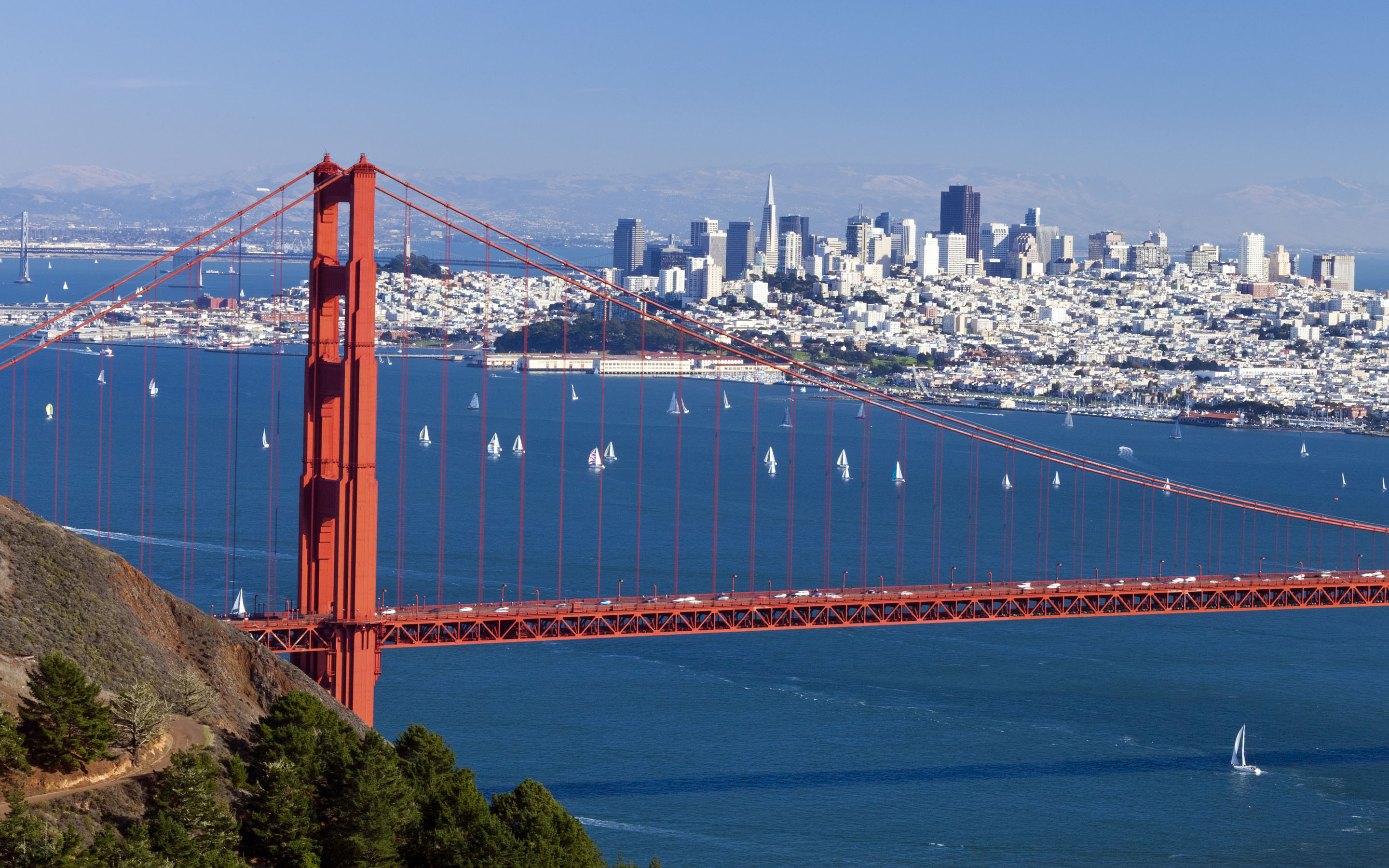
Image result for california golden gate bridge

One reason for the emergence of outsider Donald Trump is the old outrage that elites seldom experience the consequences of their own ideologically driven agendas.

Hypocrisy, when coupled with sanctimoniousness, grates people like few other human transgressions: Barack Obama opposing charter schools for the inner city as he puts his own children in Washington’s toniest prep schools, or Bay Area greens suing to stop contracted irrigation water from Sierra reservoirs, even as they count on the Yosemite’s Hetch Hetchy project to deliver crystal-clear mountain water to their San Francisco taps.

The American progressive elite relies on its influence, education, money, and cultural privilege to exempt itself from the bad schools, unassimilated immigrant communities, dangerous neighborhoods, crime waves, and general impoverishment that are so often the logical consequences of its own policies — consequences for others, that is. Abstract idealism on behalf of the distant is a powerful psychological narcotic that allows caring progressives to dull the guilt they feel about their own privilege and riches.

Nowhere is this paradox truer than in California, a dysfunctional natural paradise in which a group of coastal and governing magnificoes virtue-signal from the world’s most exclusive and beautiful enclaves. The state is currently experiencing another perfect storm of increased crime, decreased incarceration, still ongoing illegal immigration, and record poverty. All that is energized by a strapped middle class that is still fleeing the overregulated and overtaxed state, while the arriving poor take their places in hopes of generous entitlements, jobs servicing the elite, and government employment.  

Pebble Beach or La Jolla is as far from Madera or Mendota as Mars is from Earth. The elite coastal strip appreciates California’s bifurcated two-class reality, at least in the way that the lords of the Middle Ages treasured their era’s fossilized divisions. Manoralism ensured that peasants remained obedient, dependent, and useful serfs; meanwhile, the masters praised their supposedly enlightened feudal system even as they sought exemptions for their sins from the medieval Church. And without a middle class, the masters had no fear that uncouth others would want their own scaled-down versions of castles and moats.

Go to a U-Haul trailer franchise in the state. The rental-trailer-return rates of going into California are a fraction of those going out. Surely never in civilization’s history have so many been so willing to leave a natural paradise.

Yet collate that fact with the skyrocketing cost of high-demand housing along a 400-mile coastal corridor. The apparent paradox is no paradox: Frustrated Californians of the interior of the state without money and who cannot afford to move to the coastal communities of Santa Monica or Santa Barbara (the entire middle class of the non-coast) are leaving for low-tax refuges out of state — in “if I cannot afford the coast, then on to Idaho” fashion. The state’s economy and housing are moribund in places like Stockton and Tulare, the stagnation being the logical result of the policies of the governing class that would never live there. Meanwhile, the coastal creed is that Facebook, Apple, Hollywood, and Stanford will virtually feed us, 3-D print our gas, or discover apps to provide wood and stone for our homes.

Crime rates are going up again in California, sometimes dramatically so. In Los Angeles, various sorts of robberies, assaults, and homicide rose between 5 and 10 percent over 2015; since 2014, violent crime has skyrocketed by 38 percent. This May, California’s association of police chiefs complained that since the passage of Proposition 47 — which reclassified supposedly “nonserious” crimes as misdemeanors and kept hundreds of thousands of convicted criminals out of jail — crime rates in population centers of more than 100,000 have increased more than 15 percent. California governor Jerry Brown has let out more parolees — including over 2,000 serving life sentences — than any recent governor.

How does that translate to the streets far distant from Brentwood or Atherton?

Let me narrate a recent two-week period in navigating the outlands of Fresno County. A few days ago my neighbor down the road asked whether I had put any outgoing mail in our town’s drive-by blue federal mailbox, adjacent to the downtown Post Office. I had. And he had, too —to have it delivered a few hours later to his home in scraps, with the checks missing, by a good Samaritan. She had collected the torn envelopes with his return address scattered along the street. I’m still waiting to see whether my own bills got collected before the thieves struck the box.

Most of us in rural California go into town to mail our letters, because our rural boxes have been vandalized by gangs so frequently that it is suicidal to mail anything from home. (Many of us now have armored, bullet-proof locked boxes for incoming mail).

On the same day last week, when I was driving outside our farm, I saw a commercial van stopped on the side of the road on the family property, with the logo of a furniture- and carpet-cleaner company emblazoned on the side. The driver was methodically pumping out the day’s effluvia into the orchard. When I approached him, he assured me in broken English that there was “no problem — all organic.” When I insisted he stop the pumping, given that the waste water smelled of solvents, he politely replied, “Okay, already, I’m almost done.” When it looked as if things might further deteriorate, the nice-enough polluter agreed to stop.

In the interior of green California, it is considered rude or worse to ask otherwise pleasant people not to pump out their solvent water on the side of the road. Down the road, I saw the morning’s new trash littered on the roadway — open bags of diapers and junk mail. Apparently California’s new postmodern law barring incorrect plastic grocery bags (and indeed barring free paper grocery bags) has not yet cleaned up our premodern roadsides. Remember: California knows it dare not enforce laws against trash-throwing in rural California; that’s too politically incorrect and would be impossible to enforce anyway. Instead, it charges shoppers for their bags. In California, the neglect of the felony requires the rigid prosecution of the misdemeanor.

I was in my truck — and suddenly I felt blessed that I was lucky enough to have it. Last summer it was stolen from a restaurant parking lot in Fresno when my son borrowed it to go to dinner. The truck was found four days later, still operable but with the ignition console torn apart and the interior ruined, amid the stench of trash, marijuana butts, beer bottles, waste, and paper plates still full of stale rice.  

During this same recent 14-day period, my wife stopped at her office condo in Fresno to print out a document. She left the garage door open to the driveway for ten minutes. Ten minutes is a lifetime in the calculus of California thievery. Her relatively new hybrid bicycle was immediately stolen by a fleet-footed thief. I noted to her that recent parolees often walk around the streets until they can afford to buy or manage to steal a car — and therefore for a time like bikes like hers. That same week, her bank notified her that her credit card was canceled — after numerous charges at fast-food franchises showed up in Texas. Cardinal rule in California: Be careful in paying for anything with a credit card, because the number is often stolen and sold off. 

I thought things had been getting better until these awful two weeks. One-third of a mile down my rural street, in the last 24 months, at least the swat team crashed a drug/prostitution/fencing operation hidden in a persimmon orchard. The house across the street from that operation was later surrounded by law enforcement to root out gang members. Forest fires started by undocumented-alien pot growers were down in the nearby Sierra. I hadn’t lost copper wire from a pump in two years.

I once also thought the proof of American civilization was predicated on three assumptions: One could confidently mail a letter in a federal postal box on the street; one in extremis could find safe, excellent care in an emergency room; and one could visit a local DMV office to easily clear up a state error. 

None are any longer true. I’ll never put another letter in a U.S. postal box, unless I’m in places like Carmel or Atherton that are in the Other California.

Two years ago, I was delivered by ambulance to a local emergency room after a severe bike accident; on fully waking up, I saw a uniformed police officer standing next to my bed to protect fellow ER patients from the patient in the next cubicle — a felon who had punched his fist through a car window in a failed burglary attempt and who was now being visited by his gang-member relatives.

Not long ago, the DMV did not send me the necessary license sticker. Online reservations were booked up. So I made the mistake of visiting the local regional office without an appointment, where I first got my license 47 years ago — the office then was a model of efficiency and professionalism. A half-century later, a line hundreds of feet long snaked out the door. The office is designated as a DMV center for licensing illegal aliens. The entire office, in the linguistic and operational sense, is recalibrated to assist those who are here illegally and to make it difficult if not impossible for citizens to use it as we did in the past. After 20 minutes, when the line had hardly moved, I left.

What makes the law-abiding leave California is not just the sanctimoniousness, the high taxes, or the criminality. It is always the insult added to injury. We suffer not only from the highest basket of income, sales, and gas taxes in the nation, but also from nearly the worst schools and infrastructure. We have the costliest entitlements and the most entitled. We have the largest number of billionaires and the largest number of impoverished, both in real numbers and as a percentage of the state population.

California crime likewise reflects the California paradox of two states: a coastal elite and everyone else. California is the most contentious, overregulated, and postmodern state in the Union, and also the most feral and 19th-century.

On my rural street are two residences not far apart. In one, shacks dot the lot. There are dozens of port-a-potties, wrecked cars, and unlicensed and unvaccinated dogs — all untouched by the huge tentacles of the state’s regulatory octopus.

Nearby, another owner is being regulated to death, as he tries to rebuild a small burned house: His well, after 30 years, is suddenly discovered by the state to be in violation, under a new regulation governing the allowed distance between his well and his leach line; so he drills another costly well. Then his neighbor’s agricultural well is suddenly discovered by the state regulators to be too close as well, so he breaks up sections of his expensive new leach line. After a new septic system was built by a licensed contractor and a new well was drilled by a licensed well-driller, he has after a year — $40,000 poorer — still not been permitted to even start to rebuild his 900-square-foot house.

In the former case, the owner of port-a-potties and shacks clearly cannot pay and belongs to an exempt class of the Other. The latter owner is a rare law-abiding Californian, and so he has a regulatory target on his back — because he is someone of the vanishing middle class who can and will do and pay as ordered. He is an endangered species whose revenue-raising torment is necessary to exempt others from the same ordeal.

In feral California, we suffer not just from too many and too few applications of the law, but from the unequal enforcement of it. When the state has one-fourth of its population born in another country, dozens of sanctuary cities exempt from federal law, and millions residing here illegally, it makes politicized cost-benefit choices.

Feral California out here is a live-and-let-live place, a libertarian’s dream (or nightmare). The staggering costs for its illegality are made up by the shrinking few who nod as they always have and follow the law in all its now-scary manifestations.

The rich on the coast tune out. From her nest in Rancho Mirage, a desert oasis created by costly water transfers, outgoing senator Barbara Boxer rails about water transfers. When Jerry Brown leaves his governorship, he will not live in Bakersfield but probably in hip Grass Valley. High crime, the flight of small businesses, and water shortages cannot bound the fences of Nancy Pelosi’s Palladian villa or the security barriers and walls of Mark Zuckerberg and other Silicon Valley billionaires — who press for more regulation, and for more compassion for the oppressed, but always from a distance and always from the medieval assumption that their money and privilege exempt them from the consequences of their idealism. There is no such thing as an open border for a neighbor of Mr. Zuckerberg or of Ms. Pelosi.

A final window into the California pathology: Most of the most strident Californians who decry Trump’s various proposed walls insist on them for their own residences.

 NRO contributor Victor Davis Hanson is a senior fellow at the Hoover Institution and the author, most recently, of The Savior Generals.

Tuesday, January 03, 2017

SILENCE: SCORSESE’S SPIRITUAL MASTERPIECE


January 2, 2017
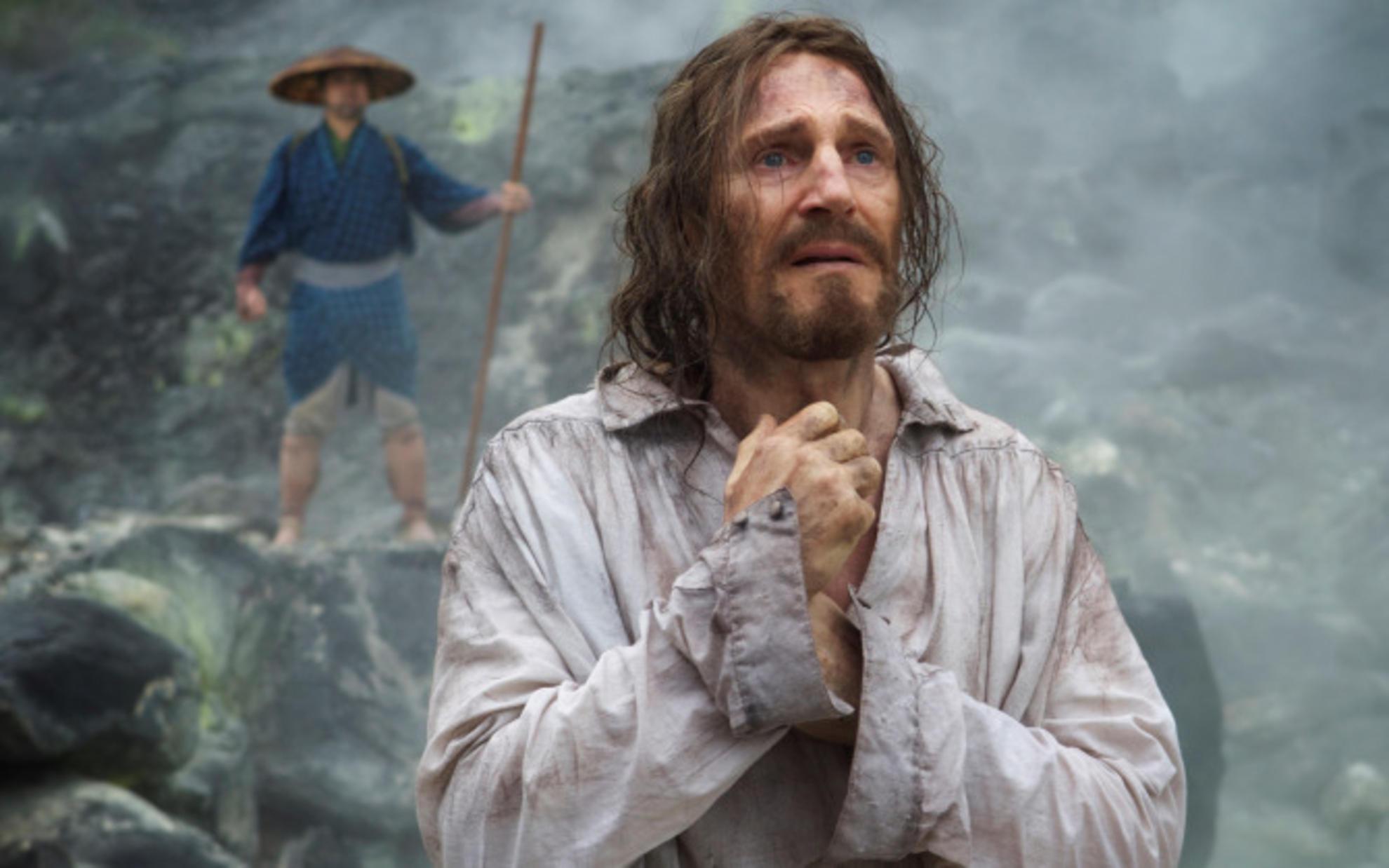
Image result for silence scorsese
It has taken almost thirty years for Martin Scorsese to film Silence, Shūsaku Endō’s novel about Catholic missionaries in feudal Japan. But the director’s patience has paid off, for Silence is as well-crafted a movie as any he has made, and may well be his masterpiece.
Beautifully filmed and acted, Silence is as powerful as it is ambitious. Like the novel, it explores the nature and inscrutability of God; the passion of missionary endeavor; the depths of faith and despair; martyrdom and apostasy; sin and redemption; mercy and intolerance; and the clash of civilizations.
Silence brings to the screen the story of the brutal persecution of Christian missionaries and converts in seventeenth-century Japan. Endo was himself a Japanese Catholic convert, and cared deeply about the history of his people. Scorsese—who was raised Catholic and once aspired to become a missionary—yearned to tell their story. His film does full justice to Endō’s novel, and will likely surpass its cultural impact.
The movie begins with stark images of the anti-Christian persecutions, reminding us of the tragic situation Japanese Christianity had fallen into by the 1630s. The scene then quickly shifts back West, where word has reached Rome that one of the Church’s premier Jesuit missionaries, Father Cristovao Ferreira of Portugal (Liam Neeson), has “apostatized.”
A Jesuit superior, Father Valignano (Ciaran Hinds), informs two young Portuguese Jesuits, Fathers Rodrigues (Andrew Garfield) and Garrpe (Adam Driver), of what has happened to their former instructor. “Ferreira is lost to us,” says Valignano, sadly, with resignation in his voice. “He denounced God in public and surrendered the faith.”
Click on the link below to read the entire article:


‘Cinema is gone’: According to Martin Scorsese, ‘younger people’ just don’t understand


By Jake Coyle, Associated Press
http://news.nationalpost.com/arts/movies
December 22, 2016

Image result for martin scorsese 2016


VICTORIA WILL/INVISION/AP
Martin Scorsese’s Manhattan office, in a midtown building a few blocks northwest of the cordoned-off Trump Tower, may be the most concentrated bastion of reverence for cinema on the face of the Earth.
There’s a small screening room where Scorsese screens early cuts of his films and classic movies for his daughter and his friends. There’s his personal library of thousands of films, some he taped himself decades ago. Film posters line the walls. Bookshelves are stuffed with film histories. And there are editing suites, including the one where Scorsese and his longtime editor Thelma Schoonmaker regularly toil with a monitor dedicated to the continuous, muted playing of Turner Classic Movies.
“It’s a temple of worship, really,” says Schoonmaker.
Scorsese’s latest, Silence, may be the film that most purely fuses the twin passions of his life: God and cinema. Scorsese, who briefly pursued becoming a priest before fervently dedicating himself to moviemaking, has sometimes seemed to conflate the two.
Silence is a solemn, religious epic about Jesuit priests (Andrew Garfield, Adam Driver) in a violently anti-Catholic 17th-century Japan. Scorsese has wanted to make it for nearly 30 years. He was given the book it’s based on, Shusaku Endo’s 1966 novel, by a bishop after a screening of his famously controversial The Last Temptation of Christ in 1988.
Silence is an examination of belief and doubt and mysterious acts of faith. But making the film was such an act in itself.
“Acting it out, maybe that’s what existence is all about,” Scorsese says of his faith. “The documentary on George Harrison I made, Living in the Material World, that says it better. He said if you want an old man in the sky with a beard, fine. I don’t mean to be relativist about it. I happen to feel more comfortable with Christianity. But what is Christianity? That’s the issue and that’s why I made this film.”
It wasn’t easy. Scorsese, 74, may be among the most revered directors in Hollywood, but Silence is almost the antithesis of today’s studio film. To make it Scorsese had to drum up foreign money in Cannes and ultimately made the film for about $46 million. Everyone, including himself, worked for scale.
Few today are making movies with the scope and ambition of Silence — a fact, he grants, that makes him feel like one of the last of a dying breed in today’s film industry.
“Cinema is gone,” Scorsese says. “The cinema I grew up with and that I’m making, it’s gone.”
“The theatre will always be there for that communal experience, there’s no doubt. But what kind of experience is it going to be?” he continues. “Is it always going to be a theme-park movie? I sound like an old man, which I am. The big screen for us in the ’50s, you go from Westerns to Lawrence of Arabia to the special experience of 2001 in 1968. The experience of seeing Vertigo and The Searchers in VistaVision.”
Scorsese points to the proliferation of images and the over-reliance on superficial techniques as trends that have diminished the power of cinema to younger audiences. “It should matter to your life,” he says. “Unfortunately the latest generations don’t know that it mattered so much.”
Scorsese’s comments echo a tender letter he wrote his daughter two years ago. The future of movies, he believes, is in the freedom that technology has yielded for anyone to make a movie.
“TV, I don’t think has taken that place. Not yet,” adds Scorsese, whose Boardwalk Empire was lauded but whose high-priced Vinyl was cancelled after one season. “I tried it. I had success to a certain extent. Vinyl we tried but we found that the atmosphere for the type of picture we wanted to make — the nature of the language, the drugs, the sex, depicting the rock ‘n’ roll world of the ’70s — we got a lot of resistance. So I don’t know about that freedom.”
Since the election of Donald Trump, some have expressed hope for a return to the kind of ’70s filmmaking Scorsese is synonymous with.
“If the younger people have something to say and they find a way to say it through visual means as well as literary, there’s the new cinema,” says Scorsese. But the current climate reminds him more of the ’50s of his youth. “I’m worried about double-think or triple-think, which is make-you-believe you have the freedom, but they can make it very difficult to get the picture shown, to get it made, ruin reputations. It’s happened before.”
Silence, which Scorsese screened for Jesuits at the Vatican before meeting with the Pope, remains a powerful exception in a changing Hollywood.
“He wanted to make this film extremely differently from anything out there,” says Schoonmaker, Scorsese’s editor since Raging Bull. “He’s just tired of slam-bam-crash. Telling the audience what to think is what he really hates. Trying to do a meditative movie at this point, in this insane world we’re in now, was incredibly brave. He wanted to stamp the film with that throughout: the pace, the very subtle use of music.

“How many movies start without music at the very beginning under the logos?” she adds. “He said, ‘Take out all that big Hollywood.”‘
Scorsese, apostle of cinema, continues the fight. His Film Foundation has helped restore more than 750 films. And he regularly pens supportive letters to young directors whose films he admires.
Imagine that in your mailbox. Almost like getting a letter from your god.


Monday, January 02, 2017

NEW YEAR’S TERROR IN TURKEY


Will the latest terrorist attack bring Turkey and Russia even closer together?


January 2, 2017

First aid officers carry an injured woman at the site of an armed attack on January 1, 2017 in Istanbul. (AFP/ IHLAS NEWS AGENCY)

First aid officers carry an injured woman at the site of an armed attack on January 1, 2017 in Istanbul. (AFP/ IHLAS NEWS AGENCY)
Turkey experienced another terrorist attack to start off 2017, following a very bloody 2016 during which multiple deadly terrorist attacks took place. A gunman targeted a popular upscale nightclub in Istanbul about 1 AM on Sunday, killing at least 39 New Year’s celebrants and wounding dozens of other people.  In addition to the Turkish victims, foreign citizens from such countries as Israel, Belgium, France, Jordan, Tunisia, Lebanon and India were among the dead.  The attack occurred despite stepped up security that was put into place after American intelligence officers had issued a warning to expect an attack in Turkey during the holiday season. ISIS, directly through its leader Abu Bakr al-Baghdadi and via supportive media, has threatened attacks specifically in Turkey
The gunman reportedly screamed “Allahu Akbar” as he carried out his massacre. Turkish intelligence officers believe that the prime suspect is a member of the East Turkestan branch of ISIS. Officials have released a picture of the suspect whom, as of the writing of this article, is on the run and has not yet been identified by name or nationality. 
Turkey's president, Tayyip Erdogan, vowed: “As a nation, we will fight to the end against not just the armed attacks of terror groups and the forces behind them, but also against their economic, political and social attacks.” Noting that the terrorists “aim to create chaos, demoralize our people, and destabilize our country with abominable attacks which target civilians,” President Erdogan added, “We will retain our cool-headedness as a nation, standing more closely together, and we will never give ground to such dirty games.”
World leaders were quick to condemn the attack and send their condolences. Russia’s President Vladimir Putin, whom has worked with the Turkish and Iranian governments to negotiate a ceasefire in Syria, sent Turkey's president a telegram message, stating, “It is hard to imagine a more cynical crime than killing innocent people during New Year celebrations. However, terrorists don't share moral values. Our common duty is to combat terrorists' aggression.”
President Putin sent this message against the backdrop of the murder of Russia’s ambassador to Turkey, Andrey Karlov, two weeks ago by a terrorist associated with al Qaeda’s Nusra Front (now known as the Fatah al-Sham Front).  
When President-elect Donald Trump takes office, he will be facing a situation in which Turkey, a member of NATO with its second largest army, is pivoting away from the United States towards Russia. This has occurred during President Obama’s watch, even though Obama has gone out of his way to effusively praise Turkey’s president. In March of 2012, for example, Obama called Erdogan his “friend and colleague,” adding that “We find ourselves in frequent agreement upon a wide range of issues.” In 2013, during a joint news conference in the White House Rose Garden, Obama said that Erdogan was "a strong ally and partner in the region and around the world."
Obama naively believed that Turkey, like the United States, was interested in removing President Bashar Hafez al- Assad from power in Syria as Turkey’s top priority, in order to bring about a free Syria "that is intact and inclusive of all ethnic and religious groups," as Obama put it in his joint news conference with Erdogan. Whatever Erdogan’s original intentions were in supporting rebel groups fighting to overthrow Assad, it did not take long for the Turkish president to realize that Obama was all talk and no action, particularly after failing to enforce his “red line” on the use of chemical weapons. Moreover, Erdogan did not see eye to eye with Obama on the handling of the Syrian Kurdish rebels supported by the United States. Turkey regards the Kurds on both sides of the Syrian-Turkish border as a more dangerous enemy to Turkish interests than even ISIS or al Qaeda. Russia has been willing to allow Turkey to handle the Kurds in its own fashion while cooperating with Turkey in an effort to stabilize Syria and fight the common ISIS/al Qaeda enemy. This appears to suit Erdogan at this time, even if it means leaving Assad in power for now.  The latest terrorist attack in Turkey, which followed a string of massacres costing civilian lives and taking the life of Russia’s ambassador, has brought the two countries even closer together, pursuing common interests that have overridden their prior acrimonious relationship. 
Like nature, power abhors a vacuum. Obama has created a power vacuum in the Middle East through his feckless policies. Putin has rushed to fill it, particularly in Syria. And he has shown ruthlessness in rooting out those he considers to be terrorists. Erdogan perceives Russia as the more reliable and decisive partner, which will not object to his own ruthlessness in dealing with those he considers to be terrorists, whether they be Kurds, ISIS or al Qaeda. In the process, the two countries literally froze the United States out of the negotiations leading to the recent ceasefire agreement in Syria. 
President-elect Trump has implied a more realpolitik worldview of his own, including a willingness to join forces with any country, including Russia, against ISIS. With that strategic objective in mind, he may not be particularly bothered by the process of cooperation being shown between Russia and Turkey in Syria. As DebkaFile has observed, “The Trump administration will have to decide whether it is willing or able to haul Turkey back into line or take advantage of the process for America’s benefit.”