Wednesday, July 03, 2019

America Takes an Antifa Beating


By Michelle Malkin
https://townhall.com/columnists/michellemalkin/2019/07/03/america-takes-an-antifa-beating-n2549435
July 3, 2019
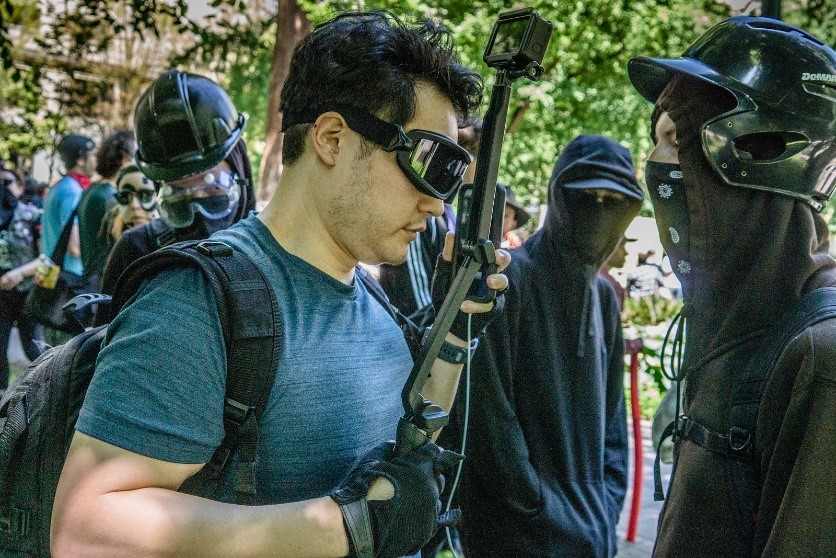

Andy Ngo (C.K. Bouferrache/The Federalist)

I will not be in much of a celebratory mood this coming Independence Day.

Our borders have collapsed. Our educational system is a wreck. And our constitutionally protected freedoms of assembly, speech and the press are under siege in the streets and across the internet. The ability of patriots to warn, expose and combat the threats to our national sovereignty is eroding daily.

Sorry to be a wet blanket, my fellow Americans, but this is no time for a parade.

In Portland, my young journalist friend Andy Ngo was hospitalized over the weekend after a brutal assault at the hands of Antifa thugs who rule the streets and run the city. Ngo has been smeared as a "provocateur" and a "propagandist" for exposing the bloody violence and anarchy of far-left "resisters." He has been doxxed and physically threatened by anti-Trump, open borders radicals menacing him online. On Saturday afternoon, armed only with his smartphone, hand-held GoPro, bodycam and reporter's backpack, Ngo braved a mob of black-masked agitators purportedly marching against "hate."

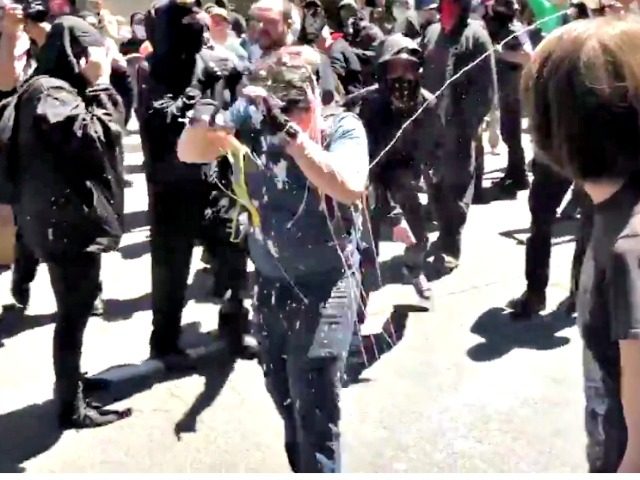
As they passed the county courthouse and sheriff's office, the anarchists taunted Ngo by name and hurled cups with unknown substances at him. One violent attacker dressed like a ninja, donning black gloves with reinforced knuckles, punched Ngo in the eyes. Another black-cloaked punk kicked Ngo in the groin multiple times as others pelted him with liquids, sprays and eggs. During the melee, as police stood by, his electronic equipment was stolen. He sustained brain bleeding and wounds to his head, face and neck.

Ngo was not alone. Two Oregonians who had come to support conservative speakers at a downtown rally nearby were set upon by black-masked vigilantes. Adam Kelly was hit in the head with fists, nunchucks, a metal Hydro Flask and a crowbar. Two massive gashes on his skull required more than 25 staples. John Blum was also overrun by people in black masks, who aimed bear spray or mace at him when he, Kelly and two others tried to come to the aid of others being assaulted by Antifa. The elderly Blum had carried a baton to defend himself, but was blinded and incapacitated while being hit, punched and dragged across the street with blood pouring down his face.

Antifa's apologists in the liberal press scoffed at the savagery, mocking Ngo as a "f---ing snowflake" and downplaying the gang ambushes harmless "milkshaking." In total, medics treated eight people, including three police officers. "Three community members received treatment at area hospitals after they were assaulted with weapons. Two officers were pepper sprayed during the incident and were treated. Another officer was punched in the arm by a demonstrator and sustained (a) non-life-threatening injury. Another officer sustained a non-life-threatening head injury from a projectile," the city blandly reported.

Related image
Antifa members attack Andy Ngo in Portland

Democratic Mayor Ted Wheeler, a notorious social justice grandstander, spent Monday railing not against the barbarians who've hijacked the public square in his town, but against Texas GOP Sen. Ted Cruz, who called out Wheeler's history of stand-down orders. Portland Police Association president Daryl Turner amplified the critique, pleading with the City to "remove the handcuffs from our officers and let them stop the violence through strong and swift enforcement action." Those handcuffs have endangered Portland's citizens in multiple ways. Wheeler has declared Portland a sanctuary city for illegal immigrants, and himself a guardian against all foreign criminals evading deportation. In February, the city withdrew the police force from the Joint Terrorism Task Force's partnership between the feds and local law enforcement -- turning the Pacific Northwest metropolis into a safe space for jihad.

Will there be a federal investigation? Concerned citizens who can't afford to wait have taken matters into their own hands. After just three days, more than 5,700 individuals have contributed a whopping $178,000 to a GoFundMe campaign I spearheaded to help with Andy Ngo's security, medical and work costs. A separate fundraiser for Adam Kelly raised more than $11,000. On another front, internet sleuths are analyzing video to try and identify Antifa assailants -- crowdsourcing the job Portland officials have failed to do.

But the social media battlegrounds, like the streets, are rigged against the law-abiding.

One Twitter user, LucetVeritas, who posted video of Portland violence this weekend, disappeared from the site on Monday. I was able to track her down. She told me that her tweet "had millions of impressions and almost 12,000 retweets. Within 24 hours, Twitter suspended my account offering no explanation. As an avid researcher, I have witnessed bias by employees of Twitter who were tied to Antifa accounts. Jack Dorsey himself has admitted his own conservative employees do not feel safe to express their opinions. Our First Amendment right of freedom of speech is in danger more now than ever before."

Just minutes after finishing up my conversation with her, I learned that another researcher and investigator I've admired for years, Ann Corcoran, had her invaluable 12-year-old website, Refugee Resettlement Watch, terminated by WordPress this week. Poof. Gone.

With patriots being silenced all around me, it's getting harder to feel patriotic. Who needs fireworks when our rights are going up in flames?

Michelle Malkin's email address is writemalkin@gmail.com.

Tuesday, July 02, 2019

Today's Tune: Dave Alvin - King Of California

Review - Dave Alvin: King of California (Reissue)


By 
https://americansongwriter.com/2019/06/dave-alvin-king-of-california-reissue/?fbclid=IwAR1NxoKsmktGfx50ZJR7i326OXpNuS3WlFF1lIHNqqWgkCbdTo67yD87gzQ
June 28, 2019


Related image
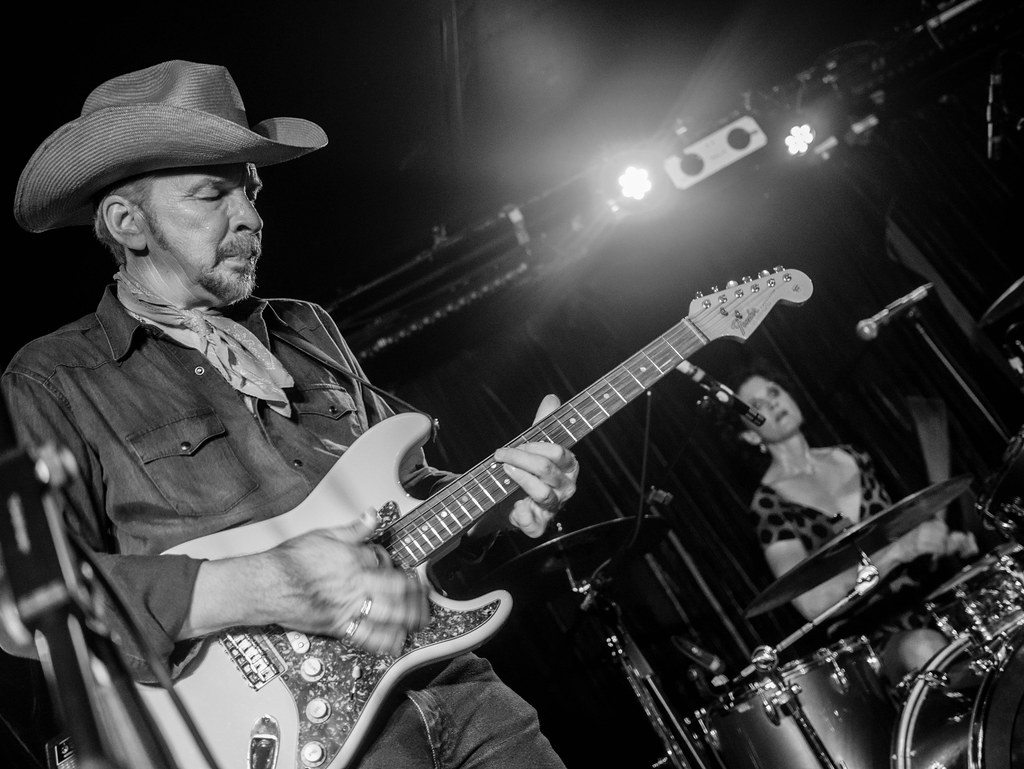
Ruby Lounge, Manchester 2014

King of California wasn’t Dave Alvin’s first solo album, it was his fourth. But the 1994 release found the ex-Blasters/X guitarist/singer/songwriter unplugging and scaling back his once ferocious electric guitar driven attack to that of a folkie, presenting his name to those who may not have previously known his already extensive career.

It also introduced his deep, baritone voice as an integral aspect in the music. At least some of these changes in approach can be traced to producer/guitarist Greg Leisz who insisted on Alvin recording the basic tracks live in the studio. The result was not only his bestselling disc, but his warmest and most expressive. All good enough reasons to reissue the set (now available for the first time on vinyl) as it hits the 25th anniversary mark. It has also been expanded with one previously unreleased track (the sprightly instrumental “Riverbed Rag”) and two songs that featured Alvin only available on other albums (Merle Haggard’s “Kern River” and “The Cuckoo,” the latter sung with Katy Moffat from her 1999 Alvin producedLoose Diamond), all of which fit perfectly with King of California’s predominantly folkie/troubadour vibe.

Perhaps most impressive is how Alvin reinterprets and strips down songs originally performed by both the Blasters (“Little Honey,” “Barn Burning,” “Bus Station,” “Leaving,” “Every Night About this Time”) and X (“Fourth of July”) in far more visceral arrangements, showcasing lyrics that many hadn’t heard clearly or in quite the same way. His heartrending ballad version of “Border Radio” brings depth and sincerity to the poignant story of a single mother requesting a song that she and her ex-lover “used to know” and, as the DJ says, is “dedicated to a man who’s gone.” It’s a wrenching, affecting performance, arguably Alvin’s finest moment, and a perfect example of how the less-is-more concept of this album paid off. 

Alvin’s gruff, flinty voice wouldn’t seem to work well in a duet with a sweet singing female partner. But his track with Moffat and especially the Tex-Mex “Goodbye Again” featuring Rosie Flores show that is not the case as both women expose Alvin’s tender side. 

The blues that underpin much of Alvin’s music appear in covers of the Delta-styled “East Texas Blues” and a driving shuffle arrangement of Memphis Slim’s “Mother Earth,” the latter with the timeless lyrics “I don’t care how big you are and I don’t care what you’re worth/ When it all comes down you got to go back to mother earth.” 

Even considering the quality of everything that Dave Alvin has released, the stunning and intimate performances on King of California make it his finest hour. It’s a near perfect album and in this remastered/expanded edition, even better than when it was first released a quarter century ago. If you haven’t already been exposed to its subtle yet enticing charms, now’s your chance. 

DAVE ALVIN REVEALS UNRELEASED & REMASTERED TRACKS ON EXPANDED 25TH ANNIVERSARY EDITION OF ‘KING OF CALIFORNIA’ (ALBUM REVIEW)


By Jim Hynes
June 28, 2019
Related image
Dave Alvin’s King of California, first issued in 1994, marked a pivotal point in Alvin’s career.  Known primarily as a rocker from his days with X, The Blasters, and even his own solo material up until this point, the singer-guitarist found himself in an acoustic folk-like setting with multi-instrumentalist Greg Leisz at the helm as producer. He discovered that he could use his deep baritone, albeit limited range, voice well in this setting, especially with Leisz literally and figuratively pushing all the right buttons. Alvin reflects, “It was ironic that a guy who was known as a loud guitar player and questionable singer, his best seller was his acoustic album.” So, to mark the 25th anniversary the album is remastered and issued with three previously unreleased tracks. It’s also being issued on vinyl for the first time.
The album was recorded in Los Angeles the day after the historic 1994 Northridge earthquake. The album was a mix of new songs, covers, and new versions of previous Alvin songs.  The familiarity with tunes like “Fourth of July” and others helped. In fact, songs written and performed during the ‘80s included “Barn Burning” from American Music, “Bus Station,” and “(I Won’t Be) Leaving” from The Blasters Non-Fiction (1983), “Little Honey,” written with John Doe, and feature on the Blasters’Hard Line (1985), and “The Fourth of July” which appeared on both X’s See How We Are (1987) and Alvin’s solo Romeo’s Escape (1987). “Every Night About This Time” also appeared on the latter album. “Border Radio” came from The Blasters debut in 1981.
The title track is a readymade folk ballad, written for his mother, in which an aspiring suitor heads west to make his fortune in the wild, early days of the Golden State. It, like everything else was basically recorded old school style, with the five musicians or so in a circle. Other covers on the album include Tom Russell’s terrific “Blue Wing,” one of the best story songs ever written in this genre; Dallas singer-pianist Whistlin’ Alex Moore’s “West Texas Blues,” retitled “East Texas Blues,” Memphis Slim’s “Mother Earth,” and a George Jones song, “What Am I Worth” rendered as a duet with the inimitable Syd Straw. There’s also a co-write with Rosie Flores, the touching “Goodbye Again.” This album holds up remarkably well and would skyrocket to the top of the roots charts if it were released today. It’s just packed with gems.
To mark its anniversary though, it now includes some new material that was previously never released. “Riverbed Rag” has already been issued as a single and is an instrumental featuring Alvin’s acoustic guitar and Leisz’s awesome dobro. Also here is the best version of “Kern River” this writer has ever heard, Yes, it’s the same one from the Tom Russell- Dave Alvin tribute to Merle Haggard, Tulare Dust. Also included is one of the better songs, “The Cuckoo,”from the Alvin-produced Katy Moffatt album Loose Diamond.
From here Alvin went on to record several other highly acclaimed acoustic albums like Blackjack David, Public Domain, West of the West as well as many others with his various “Guilty” bands that blended both acoustic and electric. To say this marked a turning point for Alvin is a vast understatement. In effect, it rebooted his solo career.

Andy Ngo and the violence of political correctness


By Brendan O'Neill
https://www.spiked-online.com/2019/07/01/andy-ngo-and-the-violence-of-political-correctness/
1 July 2019

Image result for andy ngo

The most striking thing about the ‘antifa’ mob gathering in Portland at which the journalist Andy Ngo was violently assaulted at the weekend is that it described itself as ‘milkshake-themed’. There was a milkshake truck handing out fruity beverages to the antifa agitators. They hurled these milkshakes at alt-right protesters and at cops, too. And of course when Ngo was rounded on and punched and kicked for the crime of having criticised antifa’s behaviour, he was ‘milkshaked’. Masked protesters pelted him with milkshake as a kind of final humiliation. After all, that’s how you indicate that someone is an unperson these days, right? You throw milkshake at them.

The reason this is striking is that it is so clearly influenced by events in the UK, where during the Euro elections it became positively fashionable to pelt supposedly ‘far right’ people with milkshakes. Tommy Robinson, Nigel Farage and Carl Benjamin were all assaulted in this way as they campaigned for votes. And the chattering classes lapped it up. They celebrated the milkshakers. Scribes from the bourgeois press and even some mainstream politicians gave their nod of approval to the milkshaking of these allegedly evil people. And now antifa in the US has giddily embraced the same tactic. There could be no clearer proof that antifa is not the rebellious, revolutionary outfit it fantasises about being, but rather is the armed wing of the cultural elite; the militant front of the bruised establishment; the attack dogs of a political class still reeling from Trump and Brexit and consumed by disgust for ordinary voters whom they increasingly view as a dumb, far-right throng.


The attack on Ngo was deeply disturbing. He writes primarily for Quillette and has in recent months focused on the impunity of antifa mobs in Portland, the Jussie Smollett case and the fashion for making up hate crimes, and issues surrounding Islam, especially on the censorious trend for branding anyone who criticises Islam as ‘Islamophobic’. For doing these things, for expressing these opinions, he has of course been denounced as racist, Islamophobic, and a facilitator of white supremacy. (They can’t actually call him a white supremacist, given he is of Vietnamese descent.) At the weekend, in Portland, antifa visited extrajudicial corporal punishment upon Ngo for his various speechcrimes. A mob of middle-class white people beating up an Asian man in the name of challenging white supremacy – you couldn’t make it up.
Yet while the assault on Ngo was clearly vicious, an act of extreme intolerance, a form of violent censure, it would be wrong to view the antifa people who carried it out as eccentric outliers, as crazed, masked members of a dangerous fringe movement. The demand from supporters of Ngo that antifa be designated a terrorist movement or branded as fascists rather than anti-fascists is a mistake. The terrorist label would have authoritarian implications, potentially criminalising the antifa movement more broadly, including those who merely subscribe to its outlook and never take part in its actions. And to insist that we call antifa ‘fascists’ only plays into antifa’s own infantile game of seeing fascism everywhere. We can say antifa is censorious, authoritarian and intolerant without having to call them fascists.
But the main problem with singling out antifa idiots for particular opprobrium is that it overlooks the utterly mainstream role antifa plays these days. These people are best seen as the violent enforcers of political orthodoxy, the masked footsoldiers of an elite wounded and dizzied by the votes for Trump and Brexit. It is not remotely coincidental that antifa in its modern incarnation came into its own in the aftermath of these two electoral earthquakes – it is because it embodies, in bovine, agitated form, the fury of a bourgeoisie that has found itself rejected by voters. Its milkshake-themed gathering and milkshake-themed acts of violence over the weekend confirm the extent to which it is really just a Guardian editorial made flesh, the Twitterati in physical form, the children of the old establishment raging against those idiot voters who dared to defy that old establishment.

Image result for andy ngo

The milkshaking phenomenon speaks to the searing intolerance of today’s cultural elites. That some people think it is entirely acceptable to pelt certain politicians and journalists with milkshakes makes perverse sense. First, they have openly been told that it’s acceptable, by everyone from broadsheet columnists to Burger King. Some even referred to the milkshakings of the Euro elections as a ‘Milkshake Spring’, as if angry anti-democrats hurling milkshakes at politicians they don’t like – and metaphorically at the millions of idiots who vote for those politicians – are in any way comparable to the democratic warriors of the Prague Spring or of the more recent Arab Spring (RIP). A columnist for the Guardian – the bible of the chattering classes – said milkshaking is ‘not political violence at all’; it is an attempt to ‘reduce men of pomp to figures of ridicule’ and to teach a lesson to ‘purveyors of hate’.

Perhaps the milkshakes and fists and feet that rained down on Ngo weren’t political violence, either. Perhaps this was also a good, justified attempt to reduce a ‘purveyor of hate’ to a ‘figure of ridicule’. That is exactly what antifa will say: that Ngo, with his criticisms of the left, his questioning of hate-crime statistics and his defence of people’s right to mock Islam, was a ‘purveyor of hate’. And that is what numerous mainstream commentators and politicians say about voters more broadly. That if you voted for Brexit, you are a purveyor of hate, or at least an unwitting facilitator of hate. That if you voted for Trump you are very likely a ‘deplorable’, in Hillary Clinton’s words, who is ‘racist, sexist, homophobic, xenophobic, Islamophobic – you name it’. That is, a purveyor of hate. And that if you are a big fan of Brexit, you are worse than the Nazis, as Labour MP David Lammy has argued. Lammy recently said he would ‘pour whatever I can get my hands on’ over a white supremacist, speaking to the hysteria, instability and temptation to violence that have gripped the anti-Brexit, anti-Trump elites.
This is the thing: in the eyes of the anti-populist elites, everyone who disagrees with them is a purveyor of hate. Or a white supremacist. Or an Islamophobe, xenophobe, Europhobe, transphobe. Or alt-right. Or a fascist. Or worse than a fascist. One of the most successful acts of the political and cultural establishment in recent decades has been its rebranding of certain political and moral worldviews as ‘hate’, and therefore deserving of censorship or punishment. This relentless demonisation of certain views and certain people has nurtured a climate of extreme intolerance and now even violence. If you do not subscribe to their worldview, they will hound you off campus, try to make you lose your job, get you banned from the airwaves, pelt you with milkshake, and now even violently assault you on a protest. Perhaps this is all, in the Guardian’s words, not violence at all, but just comeuppance for the ‘purveyors of hate’ – which is basically everyone who disagrees with the Guardian.

The violent attack on Andy Ngo wasn’t just a handful of extremist idiots assaulting a journalist. It was worse than that. It was proof that the era of PC intolerance is entering a new phase, one in which you can now be actually assaulted for having the wrong views, with the approval of an elite who will say: ‘That isn’t violence – it’s just what you deserve.’

Brendan O’Neill is editor of spiked and host of the spiked podcast,The Brendan O’Neill Show. Subscribe to the podcast here. And find Brendan on Instagram: @burntoakboy

Monday, July 01, 2019

‘Godfather’ actor claims he knows who killed Marilyn Monroe


By Michael Kaplan
https://nypost.com/2019/03/02/godfather-actor-claims-he-knows-who-killed-marilyn-monroe/
March 2, 2019

Gianni Russo poses with a picture of him and Marilyn Monroe.
Gianni Russo poses with a picture of him and Marilyn Monroe.(Brian Zak)

Long before the murder, the girls and a role in “The Godfather,” Gianni Russo was a 13-year-old with a bum arm. Freshly sprung from Bellevue’s polio ward, he ditched his neglectful parents to sleep on flour sacks in the back of a Little Italy bakery and sell pens in front of the Waldorf-Astoria.
It was 1956 and one of his regular customers was mob boss Frank Costello. The don would throw Russo a fiver and rub the boy’s withered shoulder for luck.
After a few months of that, Russo objected to being touched. Costello respected the kid’s gumption — and was even more impressed when he found out that Gianni’s great-uncle was Angelo Russo, a Sicilian kingpin who had been hanged by the Italian government in 1947 after having played a role in establishing New York’s five crime families.
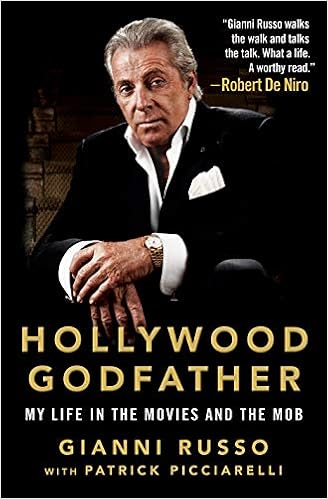
As chronicled in Russo’s new memoir, “Hollywood Godfather” (St. Martin’s Press), out March 12, Costello quickly had Russo delivering packages of cash throughout Manhattan and then across the United States. Costello put up his young charge in one of a dozen apartments he kept around the city. Russo never left and continues to reside gratis in the five-bedroom Upper East Side spread.
“I’ve always had an angel on my shoulder,” Russo, now 76, told The Post over lunch at Patsy’s in Midtown. “I still carry the St. Anthony medal that my grandmother pinned to my diaper.”
Russo has enjoyed a life that is part Scorsese feature, part manifest destiny and part skin flick. He claims he had threesomes with Liza Minnelli after both took a liking to the same Vegas showgirl, and recalls scrapes with Frank Sinatra. (“He tried to slap me; I grabbed his skinny wrist and said, ‘I’ll rip off your arm and shove it up your ­f–king ass.’ ”). Once, while watching a western with Elvis Presley, Russo took cover as the King mimicked the on-screen pistol play with real guns. Less dangerous was his weird date with Zsa Zsa Gabor; the night ended with her setting him up for sex with a blonde who, “on a scale of 1 to 10, was a 12.”
Then there are the two killings he owns up to, but was never arrested for. One alleged victim was an associate of Colombian kingpin Pablo Escobar.
“Escobar wanted to murder my family in retribution; so I got John Gotti to set me up to meet with him in Colombia,” said Russo, acknowledging that he expected to take a beating or face death to save his family.
“Escobar’s guys tied me to a chair and roughed me up. Then Escobar walked in, carrying ‘The Making of the Godfather’ book. He said, ‘Why didn’t you tell me you played Carlo Rizzi?’ … He let me go in exchange for me re-enacting one of my scenes, with him playing Michael Corleone.”
(The Clark County, Nevada, prosecutor ruled the killing a justifiable homicide, and Russo, who was not charged, said it was in self-defense. He claimed that, as a pre-teen, he also murdered a man who was preying on children, but Russo said he was never charged. There is no known documentation of this.)
Russo added, “My life would make a great movie, but it is wilder than what anybody’s seen on screen.”
For instance: “Marilyn [Monroe] was the best lover,” Russo recalled. “She just wanted to please you.”
He was 16, Russo said, when he struck up an affair with the actress, then 33. Costello had asked him to keep an eye on her for the mob, which stashed its favorite moll in New York City while settling an issue she had with producer Darryl Zanuck on the West Coast. Monroe and Russo saw one another, on and off, for four years.
Related image
He claims to know how she really died. Russo showed The Post a photo of himself and the actress in 1962, at the CalNeva Lodge, a resort on the California-Nevada border. “It was taken three days before she was found dead in Los Angeles of what coroners deemed to be a drug overdose,” Russo said. The man behind the camera: Chicago crime boss Sam Giancana.
According to Russo, key members of the mob had convened at CalNeva in hopes of setting a trap for President John F. Kennedy and his brother Robert, then the US attorney general.
“They wanted to film the Kennedys in a threesome with Marilyn,” said Russo, adding that the mob anticipated using the footage to blackmail JFK into invading Cuba and returning the island’s casinos to organized criminals. The plan was scuttled after JFK didn’t show.
As Russo tells it, Monroe had fallen in with the mob while courting favor with JFK years before. When she learned of the aborted CalNeva scheme, she threatened to go to the media and basically wrote her death sentence.
“A guy known as The Doctor — a killer for hire and an actual MD; he had done major hits for the mob — injected air into the vein near Marilyn’s pubic region,” Russo said. “She died of an embolism, but it looked like drugs to the coroner.”
Still, he insisted, it wasn’t the mob that killed Monroe but, rather, the younger Kennedy, who feared the story of his and JFK’s involvement with Monroe going public.
“It had to be Bobby,” said Russo. “No one else would kill her. The mob would not have done it. They liked her. She was that party girl. Give her a couple pills, a couple drinks and she’ll f–k everyone.”
No stranger to presidential partying, Russo also recalls his own high times with JFK. “When they opened the Copa Room at the Sands Hotel [a mob-run casino in Vegas], Jack Entratter [who managed the Copacabana in New York] came out to run it and a house was built for him on the hotel’s grounds,” said Russo, adding that the president would cut loose there. “Normally, [JFK] wore a 20- or 30-pound metal brace [and suffered from severe back pain] but said he felt good when he did coke. I felt like telling him, ‘Everybody feels good, a–hole.’ He loved doing lines off of [dancer] Juliet Prowse’s stomach.”
Russo made a good living as a utility player for the mob — monitoring Vegas cash skims and laundering millions through the Catholic Church’s bank in Vatican City.
When Russo landed his role in “The Godfather,” it did not happen via normal channels. After director Francis Ford Coppola announced his plan to turn Mario Puzo’s novel into a movie, there was pushback from the American-Italian Anti-Defamation League. The group, overseen by Brooklyn mobster Joe Colombo, worried about the 1972 movie making Italians look bad. Threats were made that film unions in New York City, where the movie film was to be shot, would not cooperate with the production.
Looking to leverage the discord, Russo showed up at Paramount’s New York headquarters and strongarmed his way into brokering a deal between Colombo and studio brass. After reading the movie’s script, Colombo agreed to sanction “The Godfather” in exchange for Paramount allowing the Anti-Defamation League to put on a for-profit gala in every city where the film premiered. In return, Russo claims, he was given the role of Carlo Rizzi, abusive husband to Connie Corleone. He did not arrive quietly.
“I wore Brioni suits to the read-throughs while all the other actors dressed like slobs,” said Russo. “I hired a Chinese showgirl to drive me there in a Bentley. Everybody else took station wagons.”
Unimpressed, star Marlon Brando voiced concerns that the neophyte actor would screw up his movie.
“I’d just had a party … celebrating getting [the role],” said Russo. “This guy was going to destroy it for me? It would not happen.”
According to Russo, he got in Brando’s face and menacingly told the older actor, “Who the f–k are you to try to do this to me? I’ll cut your f–king heart out, you rat motherf–ker. I’m part of this picture whether you like it or not, you c–ksucker.”
The two became friends — a relationship cemented by Russo setting up Brando with the showgirl chauffeur, who took up residence in the latter’s hotel room. The icon provided the beginner with acting lessons that contributed to Russo snagging small roles in 46 movies (including “Every Given Sunday” and “Sea Biscuit”).
They were tight enough that Russo was the first person Brando called in 1990 when tragedy unfolded at the screen legend’s Hollywood Hills mansion.
“Christian [Brando’s then-32-year-old son] had just fatally shot his sister Cheyenne’s boyfriend,” recalled Russo. “I said, ‘Don’t call the police.’ Then I phoned [lawyer] Robert Shapiro and they got Cheyenne out of the house.”
Christian served five years for the murder and Brando kept himself from being implicated.
“The shooting was done with Brando’s gun,” Russo said. “Christian had told him that Cheyenne was getting beaten up and Brando said, ‘You’re her brother. Kill the son of a bitch.’ He probably didn’t expect Christian to do it.”
Sixty-three years after his chance encounter with crime king Costello, Russo ranks among the few golden-age mobsters who aren’t dead or in jail. But he knows that whatever he does, he’ll always be known for his portrayal of a gangster onscreen.
Indeed, when the waiter at Patsy’s serves dessert on the house, Russo can’t help but quip, “‘Leave the gun, take the cannoli.’ I can’t get away from that movie.”

Sunday, June 30, 2019

Christians in Africa: "You have three days to go or you will be killed!"


Funeral service in Nigeria (EMMY/IBU/Getty Images)

Persecution of Christians in the Middle East is now close to "genocide", a UK-commissioned report just revealed. The same threat has also become critical for Christian communities in Africa.

Some say it began in Algeria in the 1990s, when 19 monks, bishops, nuns and other Catholics were killed during the civil war. Since then, in Nigeria, Christian faithful have been massacred in their churches; in Kenya, Christians have been killed in universities; in Libya, Christians have been beheaded on beaches; in Yemen, nuns have been assassinated and in Egypt, massive anti-Christian violence is prompting an exodus. It is the new African archipelago of persecution.

Distressingly, these Christians have been finding themselves in the blind spot of the West: they are "too Christian" to get the Left's attention, but too far away for the Right. Africa's Christians are orphans. They have no "allies", John O'Sullivan writes.

Christian families recently fled the city of Diffa, in Niger, after Boko Haram delivered the message: "You have three days to go or you will be killed!". "There is no Christian anymore in this town", someone reported to the non-governmental organization, the Barnabas Fund. The town, Arbinda, is in Burkina Faso. Numbers are telling: 82 pastors, 1,145 Christians and 151 households have fled from violence in the Muslim-majority nation. Just in the last few weeks, several of the Christian faithful and clergy have been murdered. Jihadists killed six Christians in a Catholic church in the town of Dablo. A pastor was murdered in an attack in Silgadji, Catholic parades have been targeted.

Jihadists apparently want to "cleanse" these areas of Christians -- and they are succeeding. "There is an atmosphere of panic in the town," the mayor of Dablo, Ousmane Zongo, said. "People are holed up in their homes, nothing is going on. The shops and stores are closed. It's practically a ghost town".

In Nigeria, attacks on Christians never stop. The country has become a "war zone for Christians".

"The attacks on Christians are growing more flagrant and more aggressive," Father John Bakeni from the Maiduguri Diocese, northern Nigeria, said. "We consider each day we live in safety a blessing because we do not know what will happen the next day".

"We Christians are at risk of extinction and an attempt is being made to Islamize the whole country because controlling Nigeria means expelling Christians from all of West Africa", said Father Joseph Fidelis Bature, a Catholic priest in the Nigerian diocese of Maiduguri, in the Italian monthly Tempi.

Related image
Boko Haram

Unfortunately, we Westerners have a short memory. Al Qaeda's first attacks took place in Africa: the bombings against US embassies in Kenya and Tanzania. Africa matters for the West. That is why we should take this monstrous new anti-Christian persecution more seriously. "Christianity originated in the Middle East", the Egyptian Coptic Pope Tawadros II said in Germany, where he was inaugurating a new Coptic church in May for his exiled community. "Thus, the displacement or evacuation of Christians from the Middle East is very dangerous for the safety of the region, not only in the Middle East but also in the Mediterranean Sea region. Europe is affected by this, and the Arab countries as well". The West should take much more seriously these appeals from the Eastern Christian leaders.

With a secularized Europe and a Middle East close to becoming emptied of Christians, those jihadists who are obsessed with eradicating Christianity understand that their current ideological battlefield is in Africa. "By 2025, 50 percent of the (world's) Christian population will be in Africa and Latin America", wrote the scholar Philip Jenkins. The share of the world's Christians in sub-Saharan Africa is expected grow from 24% in 2010 to 38% by 2050. That is why jihadists there are pursuing a horrific project of religious cleansing.

"Christianity has literally 'gone south', exploding demographically in the developing world and augmenting ongoing sociopolitical turmoil in places such as West Africa", the Pew Forum reports. Radical Islam wants to stop this demographic movement, which Professor Philip Jenkins called "the largest religious change of any kind that has ever occurred".

According to another report, in one century the number of Muslims living in sub-Saharan Africa has increased more than 20-fold, rising from 11 million in 1900 to 234 million in 2010. At the same time, the number of Christians has grown 70-fold, rising from 7 million to 470 million. Sub-Saharan Africa now is home to 21% of all the Christians in the world and 15% of the world's Muslims. "Islamic extremism has two global centers of gravity, one in the Arab Middle East, but the other is in sub-Saharan Africa", researcher Ron Boyd-MacMillan noted in a report for Open Doors.

Every year, Open Doors lists the world's 50 worst persecutors of Christians. The list include 14 African countries, called home to "extreme" or "very high" levels of persecution: Algeria, the Central African Republic, Egypt, Eritrea, Ethiopia, Kenya, Libya, Mali, Mauritania, Morocco, Nigeria, Somalia, Sudan, and Tunisia. Mali, for instance, went from no listing to seventh place in just two years. In Kenya last year, Islamists forced passengers of a bus to present their identification cards. Then they separated Muslims and killed the two Christians.

Regrettably, the tragedy of these massacres of Christians is directly proportional to the neglect with which they are reported in the West. "One of the basic facts of contemporary religious history is that Christians around the world are persecuted on an extraordinary scale", Ross Douthat recently wrote in The New York Times.
"Yet as an era-defining reality rather than an episodic phenomenon this reality is barely visible in the Western media, and rarely called by name and addressed head-on by Western governments and humanitarian institutions. ('Islamophobia' looms large; talk of 'Christophobia' is almost nonexistent.)"
Jihadists know a secret: persecution works. Algeria -- the country of origin of some of the Christian fathers such as Augustine of Hippo -- has become a country that is 99.9% Muslim and where officially there are "no native Christians". How many other countries will meet the same fate? And will the West ever come to the help of their Christian brethren?

Giulio Meotti, Cultural Editor for Il Foglio, is an Italian journalist and author.

Saturday, June 29, 2019

Chesterton the Crusader: Using Words as a Sword


By 
https://theimaginativeconservative.org/2019/06/knight-of-the-holy-ghost-dale-ahlquist-gk-chesterton-joseph-pearce.html
June 28, 2019

Image result for knight of the holy ghost

G.K. Chesterton, like the God he worshipped, has risen from the dead. There was a time, in the decades after his death, that he was woefully neglected and seemed to have been almost forgotten. He was dead and, as far as many people were concerned, he was buried.
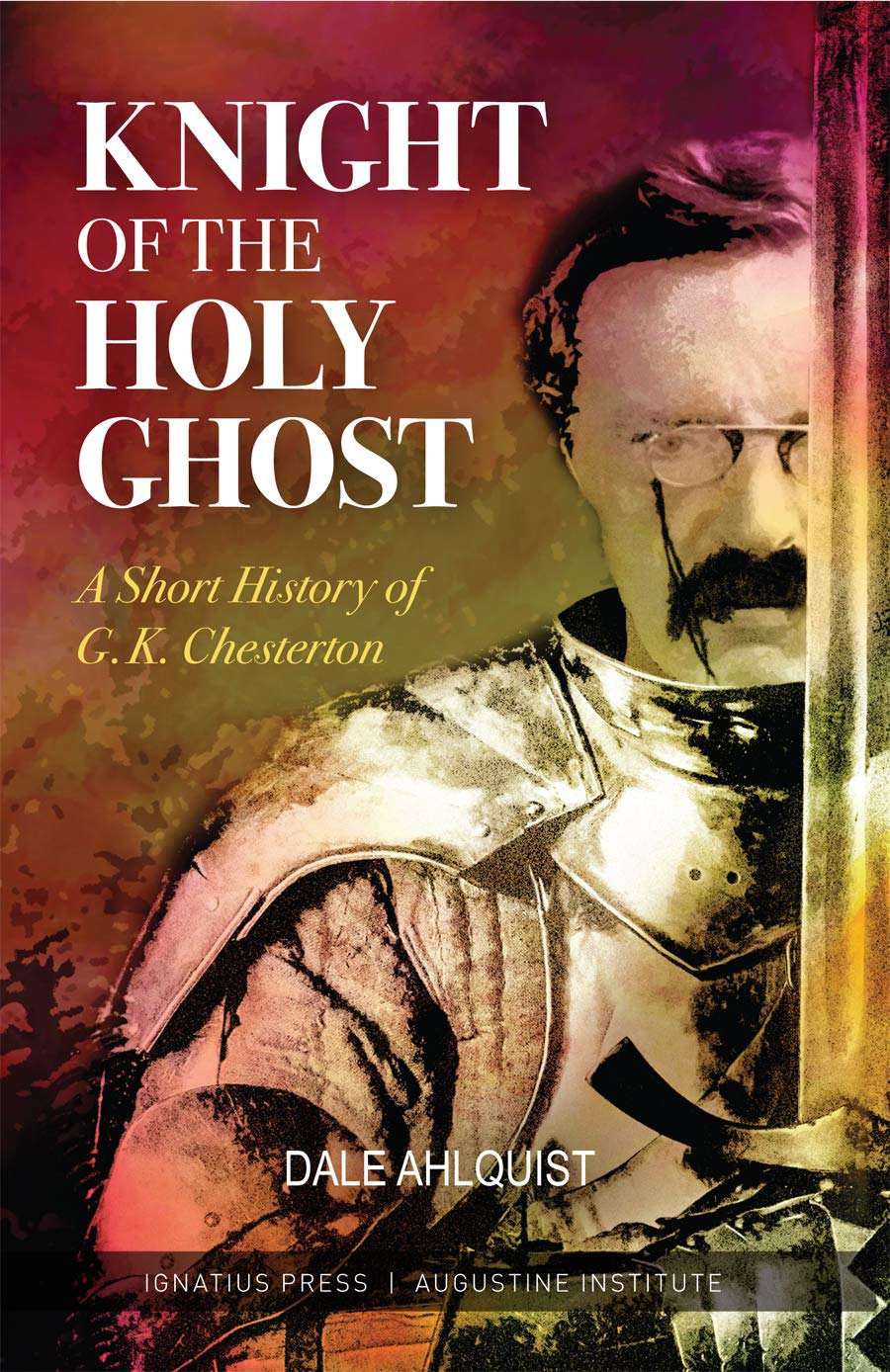
Chesterton had fallen out of fashion during the fifties and sixties as orthodoxy itself had fallen out of fashion. During those darkening days and the darkening daze that they heralded, religion had apparently succumbed to a dumbed-down ecumenism in which no god of any religion could be proclaimed as the One God to be worshipped exclusively. In such a climate there could be no place for a Christian crusader who used his words as a sword with which to vanquish the enemies of the Faith; there could be no place for a modern-day St. George who used his pen to slay the dragons of modernity; there could be no place for a “Knight of the Holy Ghost,” to employ the epithet that Dale Ahlquist employs for Chesterton in the title of his new book, which is subtitled “A Short History of G. K. Chesterton.”
Mr. Ahlquist is uniquely qualified to write this short history of the man to whom he has dedicated his life. As the present author expressed it in the endorsement on the back cover of the book, “Dale Ahlquist is probably the greatest living authority on the life and work of G.K. Chesterton. As such, nobody is better qualified to offer a concise and illuminating overview of Chesterton’s important contribution to contemporary faith and culture.” For years, as President of the American Chesterton Society, Mr. Ahlquist has been an indefatigable champion of G.K. Chesterton. Like a servant of the servants of the poor, he has been a champion of this champion of the Faith. More than anyone he has borne witness to the power of GKC and has witnessed the resurrection of Chesterton’s reputation. His book is therefore the fruit of much labour and tremendous knowledge, as well as being an act of unabashed homage to one whom Mr. Ahlquist considers to be not merely a hero but a saint.
The book is divided into three parts. The first is a portrait of Chesterton “the man,” the second an appraisal of Chesterton “the writer,” and the third asks whether Chesterton should be considered a saint.
The first part constitutes a succinct biographical summary of Chesterton’s life which also serves as a defence of Chesterton’s reputation. Mr. Ahlquist defends Chesterton’s much publicized love for wine and ale, insisting that the fermented fruits of the grape and grain are “God’s good gifts,” and yet he insists that Chesterton could not be accused of drunkenness. As if to prove his point, he quotes Chesterton himself as saying that “there is nothing so good as drink, and nothing so bad as drunkenness.” For Chesterton, as for all those who enjoy such things, the imbibing of fermented or distilled beverages teaches the necessity of temperance and prudence. In ironic contrast, and as Chesterton never tired of telling us, there are few things less temperate than the ill-tempered prudes in the temperance movement who lose their temper at other people’s intemperance.
Intent on painting a positive portrait of Chesterton the man, Mr. Ahlquist concedes that his hero succumbed on occasion to “a few flashes of temper” but likens these to taking “a whip against the moneychangers,” thereby apparently seeking to sanctify and therefore justify such moments of anger. “For the most part,” he continues, “except in one instance where he unleashed some bitterness after the death of his brother, he expressed his anger with restraint.” This is indubitably the case. There are few who argued as much as Chesterton and fewer still who have quarreled less. He crossed swords with many and made enemies of none. Indeed, this crucial distinction between arguing and quarreling is exemplified by Chesterton to such a degree that he should serve as an exemplar to all those who seek to employ the power of rhetoric in the service of truth.
In the second part of the book, on Chesterton the writer, Mr. Ahlquist sub-divides his discussion of Chesterton’s literary legacy into four areas: Chesterton’s books, his poetry, his journalism, and finally the Father Brown stories. It is with this section that many lovers and admirers of Chesterton’s work will have queries and quibbles. The most obvious anomaly is the inordinate amount of space that Mr. Ahlquist devotes to the journalism. No fewer than 52 of the 78 pages on Chesterton’s literary legacy are devoted to a discussion of the essays that he wrote for various journals. Mr. Ahlquist would no doubt defend this peculiar lack of balance by pointing to Chesterton’s own estimation of himself as being, first and foremost, a journalist. It is true that Chesterton made most of his money from his journalism; it is equally true that, in terms of quantity, he employed more words on his essays than on his books; and it is also true that Chesterton is one of the finest essayists in the English language. And yet none of this justifies the devotion of two-thirds of the discussion of Chesterton’s oeuvre on only one of the literary forms in which he excelled.
As if to add insult to injury, or salt to the wound of the reader’s offended literary sensibility, Mr. Ahlquist fails to even mention Chesterton’s novels. This is nothing less than a significant sin of omission. The Man Who was Thursday is indubitably one of the classic novels of the twentieth century and The Ball and the Cross is a superb and sadly neglected work, and yet these and the other novels do not apparently warrant the reader’s attention. How can these gems of literary fiction fail to warrant as much as a passing reference or the smallest of deferential nods in their direction? For these defects and deficiencies, Mr. Ahlquist’s book will serve as a fine introduction to his subject but will not serve as the final word. In this case the first should not be last!
Were the present author to write a book on “Chesterton the Writer” it would be subdivided very differently. Categorizing by genre, it would include sections on the novels, the essays, the short stories, the poetry, the biographies, the histories, the literary criticism, and, last but not least, the works of Christian apologetics.
Enough. And let’s make it plain that such quibbling is not quarreling. On the contrary, it is a healthy discussion between friends. This being so, and laying such arguments aside, Knight of the Holy Ghost is nonetheless a marvelous introduction to the life and work of Chesterton which ends, appropriately enough, with questions concerning Chesterton’s sanctity. Was Chesterton a saint? Mr. Ahlquist believes so, and the present author is not minded to disagree with him. Will he be canonized? That remains to be seen. Some might feel, considering the indifference and the inertia of those who could initiate the canonization process, that it is unlikely. Perhaps it is more than unlikely. Perhaps it will take a miracle. Now that is something worthy of our prayers.
Knight of the Holy Ghost: A Short History of G.K. Chesterton by Dale Ahlquist (208 pages, Ignatius Press and the Augustine Institute, 2019)
Joseph Pearce is Senior Contributor at The Imaginative Conservative. A native of England, Mr. Pearce is Director of Book Publishing at the Augustine Institute, editor of the St. Austin Review, editor of Faith & Culture, and series editor of the Ignatius Critical Editions. He is the author of numerous books, which include The Quest for Shakespeare,Tolkien: Man and Myth, The Unmasking of Oscar Wilde, C. S. Lewis and The Catholic Church,Literary Converts, Wisdom and Innocence: A Life of G.K. Chesterton, Solzhenitsyn: A Soul in Exileand Old Thunder: A Life of Hilaire Belloc.