Thursday, August 06, 2015

In memoriam: Robert Conquest, 1917-2015

August 4, 2015
The historian, poet, journalist, and bon vivant Robert Conquest died on August 3 at the venerable age of 98. Bob was born in Worcestershire of an American father and English mother in June 1917. The year seems significant in retrospect, for, like many of his peers, he started his adult life as an ardent Communist only to become one of its most articulate scourges. His magisterial book about Stalin’s infamous tyranny, The Great Terror, was published in 1968 to snivels of opprobrium from the bien pensant left-wing establishment, who complained that he had wildly exaggerated the death toll of Stalin’s effort to bring about utopia. When the Soviet archives were finally opened after the fall of the Soviet Union, it turned out he had actually underestimated the butcher’s bill.
In his Memoirs, Bob’s close friend Kingsley Amis tells the story of an American publisher who, having digested the new currency of The Great Terror after the revelations of the Soviet archives, suggested a new edition. “What about a new title, Bob,” Amis recounts. “We won't pretend it’s a new book, but a new title would be good. What do you say?” Amis wrote: “Bob answered in terms that get a lot of his character into small compass. ‘Well, perhaps I Told you So, You Fucking Fools. How’s that?’”
Amis was right about it being a Conquestian line but I am afraid it has to be filed under the forgiving rubric “Too Good to Check.” When I mentioned the story to Bob, he denied its veracity but he did so, I hasten to add, with that famous twinkle that animated his eyes.
Bob was one of those characters who attracted a lot of "too good to check" stories. Educated at Winchester, he won a scholarship to Magdalen College, Oxford. According to The Telegraph, he was sent down for the possession of what an inquisitive dean anathematized as “amorous engines,” Oxford-speak for condoms. I recounted this all-too-plausible story in my original post, but I have it on unimpeachable authority that it is a "complete fabrication." I doubt, however, that he minded its being circulated.
I got to know Bob only late in his life, when he was happily married to his last wife—number four—the redoubtable Liddie. But I suspect that Bob’s friend Philip Larkin was only enviously exaggerating an existential truth when he referred to Bob’s “limitless number of 24 yr old girls” earlier on. I hope so, anyway.
Over the years, Bob wrote more than a dozen pieces for The New Criterion, book reviews, poems, and an important feature article called Liberals and Totalitarianism. Here is a taste of his disabused wisdom from that essay from 1999:
Stalinism and Maoism may be dead, but they still pollute the intellectual atmosphere. More generally the “liberal” input into policy through miseducation is bad enough. “Peace Studies,” usually a thoroughly distorting approach, are taught to defenceless teenagers. And that is apart from the fact that this is one of the many substitutes for education that take up so much of the wasted time now seen in the schools.
Bob had a robust career in England on the fringes of politics, in the neighborhood of academia, but finally settled in the United States, alighting in various colleges and universities before settling in at the Hoover Institution, a politically mature oasis at Stanford University in California.

The world thought of Robert Conquest first of all as an historian, and above all as an historian of Soviet murderousness and tyranny. This was accurate, but he was also a wide-ranging journalist (a fixture, for example, at the late, lamented Encounter magazine in London) and a poet of rare delicacy and poise, in one mode, and hilarious (and ribald) comedy in another. Some of Bob’s limericks are not suitable for mixed company, so I will forbear to quote them here (you can find them, I’m sure, by searching for “Robert Conquest and Toynbee,” for example, or “Robert Conquest and Brigid Brophy”). Here’s an excellent, non-ribald specimen called “Progress”:
There was a great Marxist called Lenin
Who did two or three million men in
That's a lot to have done in
But where he did one in,
that grand Marxist Stalin did ten in.
There’s a lot of Bob’s character compressed in those lines, too.
Perhaps one of his most famous bits of comic verse was his take-off and modernization of Jacques’ famous “Seven Ages of Man” speech from As You Like It:
Seven Ages: first puking and mewling
Then very pissed-off with your schooling
Then fucks, and then fights
Next judging chaps' rights
Then sitting in slippers: then drooling.
I would have put asterisks or dots in that familiar four-letter-word of Germanic origin, but I feel sure that the shade of Bob Conquest would disapprove of such pretended politesse.
All of Bob’s friends noticed that, as he got older, his voice became softer and softer, and it became more and more difficult to understand what he was saying. I sometimes suspected that he knew, and rather impishly delighted in, this. In any event, his own long life seems to have omitted the more disagreeable attributes of his seven-ages tabulation while indulging effulgently in other aspects on the roster. He will be much missed at The New Criterion. I am happy to report that John O’Sullivan, Bob’s friend for decades, will be writing about him for our September issue. RIP.

Wednesday, August 05, 2015

What's the cost of avoiding the Planned Parenthood videos?

John Kass

August 4, 2015

A screenshot from the fifth video released by the Center for Medical Progress where the selling of fully intact aborted babies is discussed.


You don't have to watch those videos of Planned Parenthood officials released by an anti-abortion group. 

No one will force you. And you'd be right to look with suspicion at anyone who tells you that you must watch them. 

So I'm not telling you to watch. But I am asking you to ask yourself two questions: 

Is there a cost to avoidance? And what is the cost? 

A new video came out the other day, a fifth video, of Planned Parenthood officials talking in chilling euphemisms and grisly business in the lab, secretly recorded by the Center for Medical Progress. 

Of course, you can ignore it, and the others too. Perhaps it's safer that way . There's something to be said for avoidance, and I suppose many have avoided the videos, thoughtful and decent people on all sides of the issue. 

I hoped to avoid it as well, but when the new video was released, I was drawn to it, though I knew it would be painful. It was. 

Like the other videos, the fifth centers on Planned Parenthood's fetal organ harvests, but the new video also deals with the issue of "intact" fetuses, discussed in neutral, bureaucratic language. 

"And we are able to obtain intact fetal cadavers, then we can make it part of the budget, that any dissections are this, and splitting the specimens into different shipments is this, I mean that's — it's all just a matter of line items," says a Planned Parenthood official in the video. 

And so the unborn are reduced to line items. 

Planned Parenthood quickly responded, saying the videos are nothing more than an anti-choice campaign to smear an organization that provides health care to women. 

The Center for Medical Progress alleges the videos are evidence that Planned Parenthood — which receives more than $500 million each y ear in federal tax money — is illegally selling body parts for profit. 

The politicians are all over it. Democrats argue the videos attack a woman's sexual freedom and the right to choose an abortion. That'll help raise campaign money . 

Republicans argue that the group should lose federal funding for engaging in possibly illegal organ selling. And that will help raise campaign money as well. 

A procedural vote to deny funding, one of many to come, was defeated in the Senate. But congressional hearings are scheduled after the recess, and there will be more politics. 

Not all of the politicians outraged by Planned Parenthood are Republicans. A few Democrats joined in. One is West Virginia Democratic Sen. Joe Manchin, who said he opposes funding Planned Parenthood. 

"I am very troubled by the callous behavior of Planned Parenthood staff in recently released videos, which casually discuss the sale, possibly for profit, of fetal tissue after an abortion. Until these allegations have been answered and resolved, I do not believe that taxpay er money should be used to fund this organization," Manchin said in a statement. 

So what's on videos still to come, and the continued squawking of angry people in those little boxes on TV will make it even more difficult to avoid the issue in the fall. 

But the issue isn't whether abortion is legal. Abortion has been legal for decades. That's not going to change. 

This is something else again: Reducing human life to a commodity, subject to market whims, where the "procedure" (meaning abortion) is altered so that the fetal organs may be kept intact, to be bartered and sold. 

You can say that it's not human life. And many do. But in this case, using euphemisms is a shield. I suppose we can convince ourselves that the research "materiel" is not human, until of course, you see a lab tech with tweezers pick up a tiny limb. 

And though many avoid the implications of this, it just might be that there is a cost, to all of us, even as we shut our eyes. 

Everything has a cost. Avoidance most of all. 

One myth about America is that we're a direct people, that we confront what's out there. We tell ourselves that we're bold, that we see things as they are, and that once we understand what it is, we deal with it. 

But as a culture, with our fixation on entertainment, with America the great marketplace for recreational narcotics, as we bury ourselves in amusing videos on our phones, I wonder if we've become experts at one thing: 

Avoiding pain. 

We're adept at avoiding pain. Actually, we're great at it. Billion-dollar entertainment industries feed that need in us. 

When the first of the videos became public, many of us hurled anger at safer targets, like the lion-killing dentist. There are plenty of safe targets. 

Like mocking stupid remarks made by goofball politicians. I do it. We're good at mocking. Some of us go through life with tongue perpetually in cheek, using irony as an emotional buffer. There are plenty of web hits in that, and much profit in snark. And, like pre-revolutionary France, ridicule has become our true currency . 

We also divert ourselves with sport. We need sport. We love sport. We put sport in our pipes and smoke it, and this fall we'll lay back on our couches and watch the World Series and the Tom Brady redemption drama and talk about athletes as heroes. 

Still, the horrifying videos make something all too clear. What's going on at Planned Parenthood is barbaric. And, since Americans fund Planned Parenthood with our tax dollars, avoiding the issue doesn't really work.

Because the use of our tax dollars makes us complicit.

Twitter @John_Kass

Tuesday, August 04, 2015

Saved by the Divine Comedy


How Dante Can Save Your Life: The Life-Changing Wisdom of History’s Greatest Poem, Rod Dreher, Regan Arts, 320 pages


I was once in Florence’s little Dante museum, the Casa di Dante, on a quiet afternoon when an Italian mom and her son were also having a look around. At one point the boy, who appeared to be about five years old, broke free and proceeded to dart from room to room, sing-songing “Dante! Dante! Dante!”
This year, the 750th anniversary of the poet’s birth, lots of others are singing his praises as well—actor Roberto Benigni, reciting Dante in the Italian Senate; Pope Francis, who recommended the Commedia as preparation for the upcoming Holy Year of Mercy; astronaut Samantha Cristoforetti, who read Dante aloud from the International Space Station; and “your working boy,” as American Conservative senior editor Rod Dreher likes to refer to himself.
Early in his new book, Dreher takes pains to say, “I am not Dante,” as a way of reassuring the reader that his own highly personal story of exile is rather different from that of the medieval Italian poet, expelled at age 35 from his beloved Florence, never to return. After all, Dreher writes, “circumstances did not destroy my reputation, reduce me to a wandering beggar, or threaten my life.”
Dreher’s tale is instead one of self-imposed exile from his St. Francisville, Louisiana-based family and his attempts to return home in several ways. How Dante Can Save Your Life intersperses scenes from the author’s life with short sections that introduce the reader to Dante and, more importantly, to Dreher’s experience of reading Dante, creating a book that alternates between two worlds, medieval and modern.
The road to Inferno is paved by personal experience. Dreher’s return to Louisiana as the brother of a dying sister was movingly described in his earlier The Little Way of Ruthie Leming, wherein his lingering, guilty sense of the importance of family and place is made vivid as he witnesses firsthand the local community’s outpouring of devotion during his sister’s last weeks before succumbing to cancer and in the aftermath of her passing. This return is complicated, however, by his discovery of the first of several “family secrets”: that Ruthie’s habit of making disparaging comments about her absent brother has jaundiced her children against their Uncle Rod and left them unenthusiastic about his re-entry into their lives.
Next, his return as a kind of prodigal son—a reconciling act that he hoped would affirm his father’s lifelong insistence on the importance of family—leads to a conversation in which his father confesses that he only remained in St. Francisville all these years because he felt trapped there and had no other option. Noble motives of localism did not play a part. Near the end of this emotional scene, Dreher’s father reflects that his earlier opposition to his son’s move to take up a literary career across the country was also wrongheaded, a matter of sheer stubbornness on his part. All of which Dreher finds rather unsettling.
Finally, his return as a cultural exile likewise has had its ambiguous moments, with a mix of joyful scenes amidst what he calls the “bayou Confucians” along with the inevitable frustrations of relative isolation for a young and bookish family. When health problems—a case of Epstein-Barr virus—were added to his situation, it was enough to leave Rod Dreher in precisely that dark wood where Dante knew that each of us, as Everyman, would eventually arrive in our lives.
This realization came in the summer of 2013, as Dreher, aged 46, was standing in a Barnes & Noble in Baton Rouge browsing the poetry section. He pulled down a copy of the Inferno and opened at the beginning to read: “Midway in the journey of our life / I came to myself in a dark wood, / For the straight way was lost.”
He read on, through the first two cantos, struck by the poet’s depiction of himself as a man trapped “in a thicket of fear and confusion, powerless to escape,” something close to his own feelings of depression and anxiety at that moment. Wild animals, the symbols of pride, lust, and greed, block the poet’s way until a wise guide—the Roman poet Virgil—appears and promises to show him “the hard road to a good place.”
Taking in these lines, Dreher had an epiphany of own, and his Dantean pilgrimage began.
How Dante Can Save Your Life presents a striking mix of topics, of the kind that has earned his blog its substantial following. Thus, in alternation with his comments on the great poem, he ponders variously his experience as a Catholic convert following the clerical abuse scandals a decade or so ago, the latest neuroscience research on the power of stories—bibliotherapy is the new term—the onset of his illness, the nature of Southern traditions, la vie parisienne, and more. Dreher’s Dante turns out to be a warm companion, “simply a fellow wayfarer who has seen great things, both terrifying and glorious, along life’s way, and wants to tell you all about it.” thisarticleappears
The poem, on this reading, is something of an early entry into the self-help sweepstakes—“a practical guide to living” and, as Dreher’s subtitle promises, “life-changing wisdom.”
After some helpful scene-setting and historical background, Dreher plunges into his reading of theInferno. Like Dante, he realizes he has been sleepwalking through his life and has lost the thread of it—the plot of his own story. “From grand cosmic myths to intimate family tales, it is in stories that we find meaning, purpose, and the truths by which we live—or, if we are unlucky, the lies that lead us astray.”
So we descend through the circles of Hell, a grotesque architecture created by Dante’s extraordinary imagination, reaching in Canto V the famed episode of the lovers Paolo and Francesca, the latter being the literary grandmother of Madame Bovary, Anna Karenina, and other fallen heroines. Here Dreher describes the doomed and eternally adulterous couple’s encounter with the pilgrim Dante. Just as Francesca and her Paolo were drawn into the romantic story of Lancelot and Guinevere, Dreher remembers his own art-inspired love-worship as a younger man and feels dismay at his younger self: “In the music, films, and books closest to my heart, becoming a slave to Lord Love was the summit of all human experience.”
Further on, the inhabitants of the Fourth Circle—the avaricious and the squanderers—inspire another cameo of a family member, Dreher’s great uncle Jimmy, a simple but devoted elderly man whose funeral was the occasion for another revelation about the value of living. The testimonies of Uncle Jimmy’s friends, family and former pastors in his little Southern Baptist church work powerfully to describe the life of a good man and a faithful Christian. “I kept thinking about my late sister Ruthie, and what she and Uncle Jimmy had in common: how they both embodied the principle that there are no sermons more powerful than the loving deeds of a righteous soul.”
Upon reaching the Sixth Circle, the abode of the heretics, Dreher reminds the reader that this journey through Hell eventually brings each of us to confront a sin that has deeply personal relevance. For Dreher, it is here, in the remarkable episode where Dante meets Farinata and Cavalcante, that the “damnable worship of family and place” becomes foremost in his mind:
One way to think of the sin of heresy is mistaking one part of the truth for the whole truth. In this sense, the heresy of Farinata and Cavalcante includes believing that truth consisted in their all-consuming love for family, party, social status, and so forth. The thing is, there is nothing wrong with loving your family, your party, your city, and your creed … . The error comes in believing that these are ultimate ends. To let this disorder reign in one’s heart inevitably results in disorder in the family, in the community, in the city, in the country, everywhere—because everything is connected.
Unlike the doomed Farinata, Dreher comes to realize that he, his father, and his sister loved good things—family and place—too much, allowing them to become idols. Yet further down, amid the false counselors, a voice from a flame—that of the Homeric hero Ulysses, known in the Middle Ages as a legendary voyager—narrates to Dante his tale of sailing beyond the Pillars of Hercules, traditionally understood as the known limits of the world, until a storm sends him and his crew to the ocean floor for his overreaching.
Dante, a man of fierce intellectual ambition, responds with stunned grief at this story, as though sensing, as he has several times before, his own possible fate here. Dreher comments: “Ulysses’s fault was not in pursuing knowledge; his fault was doing so without being guided by morality or divine decree. The misuse of his eloquence, his intelligence, and his courage cast him into hell.” And he reflects further on how his personal literary ambitions have left him with more Ulysses in him than there ought to have been.
Climbing upward through Purgatorio—“Or, How to Be Healed,” as the section has it—we move into a landscape of music, poetry, and human encounters, several of them joyful reunions between Dante and various figures from his earlier life. Just as their various forms of penance provide a discipline for the penitents here, Dreher describes how he comes to learn of and then adopt Orthodox spiritual practices, including the famous Jesus Prayer, in his own quest for a wise asceticism.
For many, the Paradiso—“Or, The Way Things Ought to Be”—is notoriously the most difficult section of the Commedia, which is precisely how Dreher admits he found it. We now journey through a region of pure light and being where Dante’s verse emanates more metaphysics than “practical life-changing wisdom.” Yet the example of St. Francis of Assisi, praised in the Paradiso by no less than St. Thomas Aquinas, offers Dreher the same spiritual antidote to Farinata-like pride in wealth, position and family as it once offered Dante.
One might wish Dreher had made a little more room for topics beyond the bibliotherapeutic, such as the larger themes of history, tradition, and even economics. Florence in Dante’s time was a boomtown, a mix of brilliant patronage of the arts next to the sheerest fraud and self-dealing. Among the bankers and financial concerns were individuals happy to see their family’s coats of arms become mere symbols of profiteering. The intensity of the poet’s anger over the abuse of wealth—through usury, hoarding, or extravagance—in Inferno’s Cantos XVI and XVII is striking, especially to a socially detached and value-free business culture such as ours has become.
Another theme to consider is Farinata’s great civic pride—shared by Dante’s ancestor Cacciaguida elsewhere in the poem—which admittedly has been taken to sinful extremes in his case. Yet it was symptomatic of the distinctive upwelling of civic humanism in the Italian city communes of this time, with the rise of Florence being the most illustrious example of all.
From individuals like Brunetto Latini, Dante’s great teacher, there begins a line that leads to Petrarch and through Coluccio Salutati down to Pico della Mirandola and Erasmus.
Dante felt himself, even at this early date, to be part of this powerful new force aimed at recovering ancient virtú and excellence. The Commedia is, among other things, a great achievement of that recovery. The Florentines sometimes say Dante’s statue should be replaced with one of the obscure Florentine bureaucrat who exiled the poet, for it is he whom we really have to thank for the creation of this great poem. And we have Rod Dreher to thank for reminding us of its greatness today.
Elias Crim is publisher of the group blog Solidarity Hall and will be teaching Dante this fall at Valparaiso University.

The Taste of Strawberries: Tolkien’s Imagination of the Good


August 25, 2014

Near the end of The Return of the King movie, while Frodo and Sam are making the arduous climb up Mount Doom to destroy the ring once and for all, their strength fails and they stop climbing. Sam claws himself over to Frodo, takes him in his arms, and asks him this poignant question:
Do you remember the Shire, Mr. Frodo? It’ll be spring soon, and the orchards will be in blossom; and the birds will be nesting in the hazel thicket; and they’ll be sowing the summer barley in the lower fields; and eating the first of the strawberries with cream. Do you remember the taste of strawberries?
Frodo weakly replies that he can’t, but Sam’s recollection of the Shire’s goodness and beauty gives him new determination, and he puts Frodo on his back and begins once more to climb the steep slope.
“Do you remember the taste of strawberries?”
Sam’s vivid memories of the Shire hearten him and give him hope even during the darkest moment of their journey. This vibrant image of the goodness that the hobbits are fighting for demonstrates, I think, the power of Tolkien’s vision. One of the reasons that Tolkien’s stories continue to inspire us is that he does something few authors are able to do: he makes goodness compelling and desirable.
Certainly, the evil of Sauron throughout the Lord of the Rings is breathtaking, and Tolkien’s portrayal of the ring’s corrupting power proves his insight into the workings of evil. But this isn’t as remarkable an achievement as is his compelling depiction of good. Fallen humans seem to be able to imagine interesting, emotionally gripping evil characters more easily that we can imagine interesting good characters. In many of our movies and stories, the good characters are rather insipid, while the evil ones are much more fascinating. Think about the character of the Joker in The Dark Knight, Walter White in Breaking Bad, or Darth Vader in the Star Wars series. These characters are complex and compelling—they draw us into their struggle. All too often, overtly Christian attempts to portray good characters fall into sappy Hallmark blah-blah-ville. For the most part, Fireproof is yawn-worthy, and God is Not Dead is reductive and predictable. Other Christian art isn’t much better, as readers of the angelic Elsie Dinsmore series can attest. Why is goodness so damnably boring?
Writing about Paradise Lost, a poem whose most interesting character, according to some readers at any rate, is Satan, C. S. Lewis comments on why it might be that we find it easier to make evil interesting:
It remains, of course, true that Satan is the best drawn of Milton’s characters. The reason is not hard to find. Of the major characters whom Milton attempted he is incomparably the easiest to draw. . . . In all but a few writers the ‘good’ characters are the least successful, and everyone who has ever tried to make even the humblest story ought to know why. To make a character worse than oneself it is only necessary to release imaginatively from control some of the bad passions which, in real life, are always straining at the leash; the Satan, the Iago, the Becky Sharp, [the Joker, the Darth Vader] within each of us, is always there and only too ready, the moment the leash is slipped, to come out and have in our books that holiday we try to deny them in our lives. But if you try to draw a character better than yourself, all you can do is to take the best moments you have had and to imagine them prolonged and more consistently embodied in action. But the real high virtues which we do not possess at all, we cannot depict except in a purely external fashion. We do not really know what it feels like to be a man much better than ourselves. . . . To project ourselves into a wicked character, we have only to stop doing something, and something that we are already tired of doing; to project ourselves into a good one we have to do what we cannot and become what we are not. (Preface toParadise Lost, 100-101)
I think Lewis is right, and his observation poses a serious problem for any imaginative work that seeks to offer us visions of the kind of life to which we should aspire. How do you make goodness exciting and attractive and not bland and boring?
What I find fascinating is the means Tolkien uses to address this problem of imagining goodness. Rather than portraying an exceptionally good character, he instead portrays rather ordinary characters who are drawn by exceptionally beautiful visions of goodness or shalom. We long for the rich life experienced by the hobbits in the Shire, the elves in Rivendell, the dwarves in Moria and their kingdom under the Lonely Mountain, and the men in Rohan and Gondor. These places are not perfect, but their vibrant communities offer rich visions of shalom, of beautiful, harmonious ways of life.
The task of imagining the good life in a way that is exciting and satisfying may be easier than imagining a good character, but it is still challenging. Tolkien himself acknowledges its difficulties in The Hobbit when the narrator offers an apology for why, despite the glories of Rivendell, so few pages are given to this portion of the quest: “Now it is a strange thing, but things that are good to have and days that are good to spend are soon told about, and not much to listen to; while things that are uncomfortable, palpitating, and even gruesome, may make a good tale, and take a deal of telling anyway” (The Hobbit 51). Yet despite these challenges, Tolkien succeeds in portraying the goodness of the Shire, of Rivendell, of Gondor, of Rohan in compelling, tangible ways. The most remarkable aspect of Tolkien’s vision is his ability to make the good desirable. The shire is a delightful place, with its hills, its round doors leading into snug holes, its greenness; Rivendell is truly magical with its waterfalls, its sheer cliffs, and the rites of its elven inhabitants; the White City shimmers with life and glory in the morning sun. They are good, but they are not boring.
taste of strawberriesThus near the beginning of The Fellowship of the Ring, the movie shifts abruptly from the dark history of the ring, Sauron, and the failure of men to destroy the ring, to the idyllic beauty of the Shire. Harmonious music begins to play, and we see Frodo, reading under a tree in a green, vibrant forest. He appears to have the leisure to read for pleasure, and when he runs to welcome Gandalf, he displays a sharp, well-developed wit, chastising him before telling Gandalf seriously: “Gandalf, I’m glad you’re back.” “So am I dear boy, so am I,” Gandalf replies. For all his exciting travels, Gandalf finds the pastoral life of the Shire deeply satisfying. He takes great joy in the flourishing life of the Shire, even if most of his time must be spent elsewhere, defending the possibility of its existence. And it’s easy to see why: the jollity of the pub, the good wine and tobacco that Bilbo enjoys, the mischievous escapades of Merry and Pippin. Even though the Shire seems to be a backwater, far from the center of power, it supports a thriving community and seems never to know a dull moment.
The true vigor of the Shire, offering Gandalf and the hobbits a glimpse of shalom, is revealed by the way it acts as a lodestar that guides the hobbits on their long, arduous journey. Although the rigors of the road force them to relinquish their Shire habits—the hobbits no longer get second breakfast, and only after the fall of Isengard can they replenish their supply of good tobacco—they continue to be motivated and strengthened by their love for the good life of the Shire. For instance, when Frodo looks into Galadriel’s mirror, he sees the Shire being burned and looted, and the hobbits led away in chains (in the books, this vision actually comes true when Saruman and Wormtongue slink off to the Shire and corrupt it until the four victorious hobbits return and set things to rights). Frodo’s vision of the Shire being turned into an industrial wasteland demonstrates to him the stakes for which he is fighting. When Galadriel tells him this vision will be realized if his quest fails, Frodo gains a desperate determination to continue his journey no matter the cost; this vision girds his loins and drives him on.
In a parallel way, Boromir and Aragorn are led by their vision of Gondor. Even when Boromir is tempted to wield the illicit power of the ring, he would do so to bring hope to his beloved, beleaguered city. As he explains to Aragorn in a moment of vulnerability:
My father is a noble man, but his rule is failing and our people lose faith. He looks to me to make things right, and I would do it, I would see the glory of Gondor restored. Have you ever seen it, Aragorn? The White Tower of Ecthelion, glimmering like a spike of pearl and silver, its banners caught high in the morning breeze…have you ever been called home by the clear ringing of silver trumpets?
Like Sam’s memory of the taste of strawberries, Boromir’s memory of Minas Tirith focuses on specific images—the white tower, the clear ringing of trumpets. Their guiding visions of shalom are vivid and particular; they are imaginable, and it is their tangible clarity that makes them so powerful.
What all these vision of shalom share—and what sets them in sharp contrast to the ugliness of Mordor and Isengard—is their preservation of organic harmonies. These beautiful communities participate in shared life rather than seizing technologies that enable their leaders to take life and consolidate power. The Fellowship of the Ring movie conveys this contrast powerfully in one of its best sequences. While Gandalf is imprisoned on the pinnacle of Saruman’s tower, a moth comes along and flutters beside him. Gandalf reaches out and holds the moth while speaking to it; as we discover later, he is asking it to bring an eagle to rescue him. When the moth flies away, the camera follows it past the edge of the tower, and then turns and plunges straight down into Saruman’s furnaces deep beneath the surface of the earth. Here we see Saruman welcoming a newborn uruk-hai amid burning trees and the forging of weapons.
strawberriesThis sequence contrasts the two wizards and their methods. Gandalf continues to work through organic, natural means, hopeless though these appear in the face of the immense power being gathered by Saruman. Mordor likewise lives by coercive power, by using technology to warp the world toward Sauron’s selfish desires instead of bending his desires toward shalom. Such power seems invincible, which is why Saruman joins with Sauron; as he tells Gandalf, “Against the power of Mordor there can be no victory. We must join him.” So Saruman takes part in the coercive power of Sauron: he instructs his orcs to rip the trees out of the ground and burn them to fuel his armories. All too often, we succumb to this same temptation. It is easier to extract oil from the ground and burn it to get what we want quickly and easily than it is to do the difficult work of imagining more harmonious ways of living. The fire that turns the Ent’s trees into Sauron’s weapons epitomizes the kind of power that destroys life quickly to achieve its desires. Why do we want this power? Because we are impatient, we lack faith that the slow growth of trees will suffice, so we burn them. We think that the slow flight of the moth will not bring help in time, so we turn to seeing stones.
Such coercive power defines the ring’s attraction, and it is why Gandalf refuses to wield it; power of this kind can’t be used for good, it is the power of centralization, of ever-expanding technology, and we turn to this power when we lose hope in the slow, organic cycles of life. When, during their next confrontation, Gandalf leaps from Saruman’s tower and flies away on the back of the eagle, Saruman looks after him and says, “So you have chosen death.” According to all appearances, the odds are indeed stacked against Gandalf and the fellowship; if you calculate victory by statistical chances, Saruman is right. But Gandalf doesn’t take hope in statistics or calculated odds; he takes hope in the beauty of the shalom lived by the hobbits in the Shire or the men of Gondor in Minas Tirith. So he chooses to continue hoping and working within the slow cycles of this shalom. Saruman is more right than he knows; Gandalf has chosen the organic cycles of death that slowly, painfully bring life, whether the life of a tree from the decaying matter around its roots, or the life of a community from the sacrificial death of its members. This is what it means to take hope in the resurrection rather than in the coercive power of technology.
As Frodo and Sam leave the Shire at the beginning of their long journey, Frodo recalls the words of Bilbo: “It’s a dangerous business Frodo, going out your door. You step onto the road, and if you don’t keep your feet, there’s no knowing where you might be swept off to.” As we have seen, the hobbits do keep their feet planted firmly on the hope embodied in the good life of the Shire. And even when Frodo’s burden causes him to forget the Shire and lose his feet, Sam remains grounded, treasuring the memory of the Shire and the taste of strawberries. Thus Sam retains the strength to carry Frodo to Mount Doom where, after the struggle with Gollum, the ring is finally destroyed. Frodo and Sam stumble outside and collapse on the rocks, watching the mountain convulse in volcanic spasms. Now, finally, both Frodo and Sam can see the goodness of the shire: “I can see the Shire … The Brandywine River, Bag End, Gandalf’s fireworks . . . the lights in the Party Tree.” Frodo trails off and Sam continues the litany of the Shire’s beauty: “Rosie Cotton dancing … she had ribbons in her hair . . . if ever I was to marry someone . . . it would have been her . . . it would have been her.
Of course Frodo and Sam are rescued by the eagles, and they return to the Shire where Sam does indeed marry Rosie Cotton. What I want to emphasize, though, is the vivid desirability of the good life the Shire embodies. This image of the good grounds the hobbits on their long journey and gives them the strength to endure great hardships. Perhaps Tolkien’s rich imagination of shalom can inspire us to cultivate our own imaginations of goodness: What is our vision of goodness? What is our imagination of the good life that we desire? What image of shalom grounds us on our pilgrimage through life? I’m afraid that if it’s just being married, having 2.5 kids, and owning a home with a two-car garage, this vision won’t be sufficient to hold us on the road.
Even the dream of soundly defeating an atheist college professor in a debate about the existence of God isn’t rich enough. Marriage, children, and evangelism are all part of the good to which we are called, but to make this good beautiful and desirable, we need to see it imagined in particular, vibrant communities. We need to be able to taste the first strawberries of spring, we need a fully-incarnate imagination of the shalom that we seek. Our task, then, is to cultivate places and communities and art in which the Kingdom of God becomes imaginable. For if we keep our feet under us, if we hold in our memories the shalom toward which we aim, then in all our journeyings, we may yet, as Sam tells Frodo, see our friends and our home again. We may yet.
Books on the topic of this essay may be found in The Imaginative Conservative Bookstore. Republished with gracious permission of Christ and Pop Culture. 

Monday, August 03, 2015

OBAMA GOES NUCLEAR ON IRAN DEAL OPPONENTS

Republicans who oppose the deal will be tarred as traitors.


July 31, 2015

Political Cartoons by Bob Gorrell

Obama has decided that two wildly unpopular policies, one foreign and one domestic, will be the final legacy of his wildly unpopular administration. The domestic policy is gun control. The foreign policy is Iranian nukes. While Americans will be disarmed, Iran will be getting ready for its ballistic missiles.
Ramming through wildly unpopular policies is what this administration does best. More than anything else, this administration will be remembered for the mix of bullying, smears, pop culture distractions, outright lies, bureaucratic sabotage and blatant lawbreaking with which it achieved its policy goals.
Iran is no different.
The sales pitch is going badly. John Kerry has probably managed to dissuade more senators by testifying than he would have if he had taken the fifth. A viral video featuring the Iran lobby’s Thomas Pickering lecturing failed movie star Jack Black on the importance of the deal earned all the wrong kind of laughs.
 Too many Democrats are still sitting on the fence. Some have come out against the deal. So the White House is looking for weak points in a potential coalition against the deal.
Its opening move is a classical “Divide and Conquer” strategy that tries to split pro-Israel Democrats from Republicans. The Democrats are being told that a rejection of the deal means war with Iran. If they don’t back the deal, they will be warmongers. Those who oppose the deal with Iran will face the same anti-war coalition that targeted those Democrats who supported Bush’s overthrow of Saddam.
The deal is too unappealing to be sold on its merits, so it is instead being presented as the only alternative to a war. Obama and Kerry love nuance when it comes to finding all the positive sides to making deals with Iran or the Taliban, but quickly abandon it at home in favor of a polarized argument in which opponents of their latest terrorist appeasement are warmongers and traitors.
Jewish Democrats, in particular, are being told that Israel and Jews will be blamed for such a war.
John Kerry has already come out and said that Israel will be blamed. That’s nothing new for the Democratic Party. It wasn’t that long ago when Senator Hollings was claiming that Bush had invaded Iraq and passed tax cuts for the “Jewish vote”. To Jon Stewart, Obama referenced the Iraq War and suggested that the people against the deal “are not going to be making sacrifices” if there is a war.
That type of rhetoric sounded better coming from politicians who had served in the military, instead of a career community organizer who refers to a “Corpse-man” and uses Marines as umbrella stands.
Jewish Democrats who oppose the deal will be “Senator Lieberman-ed”, primaried by the left, smeared and added to the list of neo-con warmongers. Non-Jewish Democrats may be allowed a place at the table, like Kerry or Hillary, but only after they serve a penal term of appeasement as Secretary of State. 
The Pollard release meanwhile begins the process of splitting Republicans from a pro-Israel coalition. The leverage is once again accusations of treason. Obama’s supporters showed where their argument was bound to end up when they spread the #47Traitors hashtag targeting Senators opposed to the deal.
Israel certainly hadn’t arranged for Pollard’s release. The administration isn’t being accommodating or trying to win over anyone. It’s calculatedly turning a former spy into a talking point during a debate involving Israel to add weight to the treason talking point.
Democrats who oppose the deal will be smeared as warmongers. Republicans who oppose it will be tarred as traitors.
Pollard’s shelf life as a talking point will be limited, but it won’t be hard to manufacture further scandals. An official here or there will be investigated for inappropriate contacts with Israeli officials or pro-Israel groups. The charges will fall apart on any real scrutiny, but the story will have achieved its results.
The last time the left wanted to kneecap pro-Israel opposition to Iran, it manufactured the Rosen-Weissman case targeting two AIPAC officials heavily involved in lobbying for sanctions on Iran. The case fell apart, but not before AIPAC offices had been raided and the media had written up a spy drama. But the real goal had been to link AIPAC to Feith, Wolfowitz and other Republican enemies of the left.
Now that the left controls the White House, it has even more leeway for its political witch hunts.
Reviving the Pollard case sends Republicans the message that national security and pro-Israel policies are a contradiction in terms. It also intimidates Jewish critics of the deal on both sides of the aisle. This is an administration that has used the IRS against its political opponents, including pro-Israel opponents like Z Street, and will not hesitate to use every arm of government against its domestic political enemies.
While the “Israel Lobby” is an incessant topic, the Iran lobby which, until Hagel’s resignation, controlled the offices of the Vice President, the Secretary of State and the Secretary of Defense is a black topic. Just about every critic is passed off as a pawn of an Israeli or Jewish organization, but mentioning that Secretary of State John Kerry has an Iranian son-in-law with reported connections to Iran’s Foreign Minister is off limits.
Obama welcomed in people like Charles W. Freeman, a Chinese state oil company board member and apologists for PRC atrocities from Tiananmen Square to Tibet, and Hamas fan Robert Malley, who wouldn’t have passed a security check to be dogcatchers in a dogless town. But now suddenly everyone else will be held to standards that Obama’s people don’t recognize or abide by for themselves.
The White House and its allies define any opposition as treason. Unwilling to force Iran to abandon its nuclear program, they are instead going nuclear on opponents of the deal. If they can split up the burgeoning coalition in Congress against the deal with accusations of treason, their own treasonous efforts to let Iran go nuclear and force the United States out of the Middle East will succeed.
And even if the tactic alone doesn’t win the day, it’s still an effective distraction.
ObamaCare was even more unpopular than the Iran deal, but Obama and his media allies kept up a barrage of distractions, attacks, smears and publicity stunts. Pollard is another way to swallow up airtime with a counter-topic while keeping opponents off balance. If Obama can’t sell the deal on its merits, he can always keep shifting the conversation to keep opponents on the defensive.
 Selling the Iran deal on its merits has failed. It’s now being sold as the only alternative to war. Obama and Kerry had insisted, “No deal is better than a bad deal”, but now argue that their bad deal is better than no deal. And they demand that critics of their deal take responsibility for the alternative.
The entire line of argument is an admission that the deal is indefensible. The only possible defense of it is an attack on critics. Some of these attacks are crude. Others are subtle. Some attack directly, while others induce doubt, apathy and division.
Right now the biggest threat to Obama is the possibility that enough Democrats will join Republicans in shutting the deal down. If that happens, one of Obama’s sunset policy agendas will die. Coming off a defeat on Iran will leave him in poor shape for a fight over gun control. It will hand him a major defeat and finish off his unilateral foreign policy of signing treaties and starting wars without Congress.
Obama will do anything to protect his legacy. And the fight has only begun.
 Tags: Iran, nuclear deal, Obama

Sunday, August 02, 2015

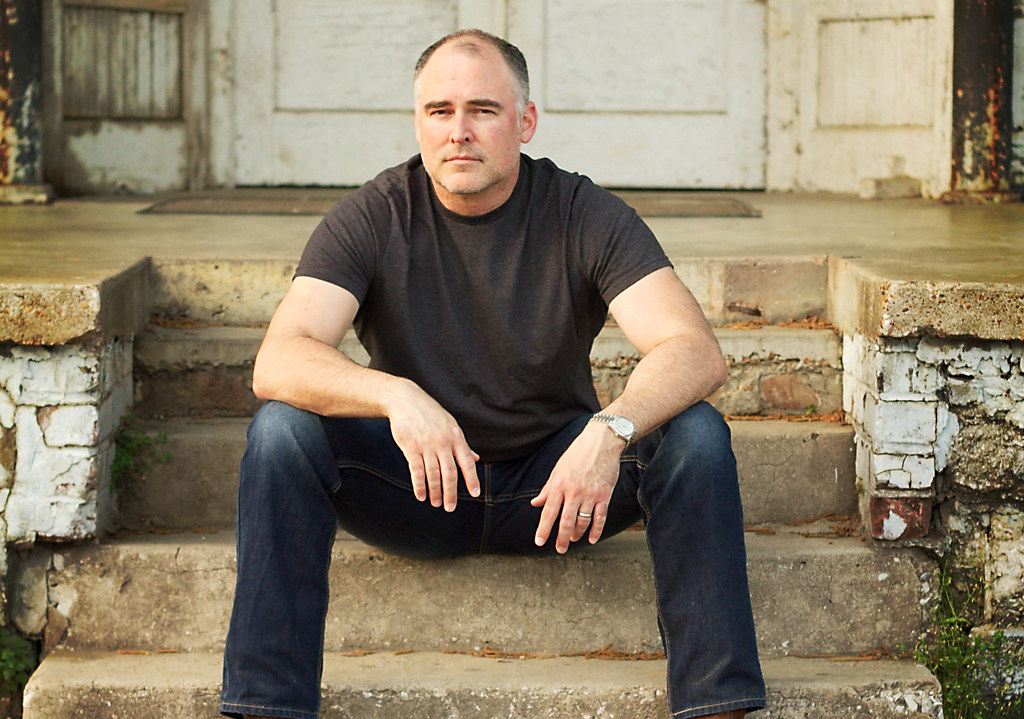
Ace Atkins: The Deep South's True Detective


By Stayton Bonner
July 21, 2015


Like almost everything else about Mississippi mystery writer Ace Atkins, even the name sounds made up. Born in Alabama, Atkins grew up moving constantly as the son of an NFL coach, graced the cover of Sports Illustrated as a defensive end for the undefeated Auburn Tigers in 1993, and was nominated for a Pulitzer Prize in 2000 for his newspaper crime reporting in Tampa. Now he writes best-selling mysteries. "Football was kind of pressed onto me," Atkins says, "so what do you do but rebel and become a writer?"


In The Redeemers, released Tuesday as the fifth installment in Atkins's best-selling Quinn Colson series, the former Army Ranger has lost his job as sheriff in hardscrabble Tibbehah County, Mississippi. But things move slowly in the Magnolia State — Colson still has his hands full fighting hoods who launder money through truck-stop strip joints and drive Econoline vans airbrushed with the likenesses of Alabama football greats. Based in Oxford, Mississippi, Atkins excels at capturing the region's lowlife dialogue while delving into its complex culture. "People who don't live here think the South is either Gone with the Wind or Mississippi Burning," Atkins says. "But it's really somewhere in between. There are some evil motherfuckers, but also a lot of crossover in music, food, and white and black culture — it all makes good fodder."

Atkins has a wayward son's wry outlook on the Deep South — he'd sworn off watching football after college until William Faulkner's niece recently took him to an Ole Miss game — that never rings false. "I ride along with local deputies for research," Atkins says, "but also spend time in the hunting and fishing section of Walmart — where I come away with 12 novels of material." 

You were a national-profile defensive end and then graduated saying that you didn't want anything more to do with football. Was it weird for you because your dad had been a coach? Was it a 'rebel against your dad' kind of thing?

I think it is. Your father is not only into football, but works for the NFL for 30 years, so football was a huge part of our family. It was not a question of whether I was going to play football. Football was kind of pressed onto me. So what do you do but rebel against your dad, and become a writer? I also noticed far more longevity amongst the writers who talked to my dad. They never changed over the years. But when I got away from football, I really got away from football. My last season was great, we went out there and had a good time. But when I was done, I was done. Of course the first thing they wanted me to do when I was working for the St. Pete Times was cover football. They thought that I would be good, but I was terrible.

Why were you so bad?

I'm a terrible statistician. And I didn't have the love of it. You need to love it to cover sports.

So why did you gravitate toward the crime beat?

The crime beat is not what reporters really want to get onto — usually they're vying for features or sports — but I was interested in it. I like crime novels. I was a big Hemingway fan, and he always talked about how the best training in the world was at the Kansas City Star, chasing sirens. I thought it was a romantic place to be, to see what was going on in the city and to follow breaking news. At the time, of course, I was reading Elmore Leonard, Robert Parker, Chandler, Hammet, and all that stuff. So the majority of my career at the Tribune was covering cops.

What kind of stuff did you see?

I mean, this is Tampa. This is weird. I remember covering the carnival community, Gibsonton, where all the carnies went to retire. We had a tip that this carny guy had buried his wife in an Airstream trailer in their backyard. And the wife was actually a transsexual who had been in a girly show. So, long story short, he had killed her, and the sources on this story were like, The Monkey Woman, and I had to talk to this guy named Melvin the Blockhead, who was a professional at hammering railroad spikes up his nose. Tampa, the weirdness that was Tampa, was a terrific place to be on the crime beat because the stories were so bizarre.


What story earned you the Pulitzer Prize nomination?

It was a long piece of feature writing in 2000 about a woman who had been killed in 1956. A reporter had given me an old A section from the Tribune, 1956, and it was just this amazing narrative. You could never see anything like this anymore. Fifteen pages of coverage about a gorgeous woman, city power players, and a mob attorney. It was just something that seemed to me like out of Chandler. So for a year, in my spare time — and this didn't sit well with my editors, because it wasn't a turnaround — I looked for people who were still alive and connected to this case. It resulted in an eight-part serial that was extremely well received. And I think that's just where I was headed with journalism, which is doing a lot of narrative reporting.

So your endgame was to be a crime novelist.

I think so. I don't think that that was a very smart approach. I always go with the Han Solo quote, "Never tell me the odds."

You really have an ear for dialogue. It reminds me of George V Higgins and Elmore Leonard.

Well those guys are my heroes. They're on my Mount Rushmore. If you come to my place in Oxford you'll see a lot of Higgins, you'll see a lot of Leonard. What attracted me to their writing is that it was so authentic. It was not like reading a book; it was like the criminals I came across as a young reporter. They talked that way and acted that way. It had some authenticity. That's what I wanted to do.

Your Quinn Colson series is super-regional, set in northern Mississippi.

Yeah, and the great thing is I get to cherry pick characters here. I have an office in the square. And Faulkner used to famously say that he'd sit on the green benches of the courthouse and eavesdrop on people and come up with stories. I ride along with local deputies for research, but also spend time in the hunting and fishing section of Walmart where I come away with 12 novels of material.

The botched theft of a house safe in The Redeemers reminds me of a Coen brothers caper.

The Coen brothers, exactly, that's how real criminals act. Like in Fargo, where things just fall apart. And this story happened in Fulton, Mississippi, where a bunch of guys got together to try and rob this guy's estate. And in robbing the estate, just about everything that could've gone wrong went wrong. And that was originally what I thought about when I came across the story. Like, this is something out of the Coen brothers. Just crazy. And it's real crime. Like Elmore Leonard or George Higgins, or the people I covered in Tampa. Often the people involved in the crimes are not that bright.

I've read this genre described as redneck noir.

I call it the redneck Game of Thrones. It goes back to those gritty, realistic Southern Burt Reynolds movies of the '70s. I point all the time to that movie White Lightning, which they shot in Arkansas.

I've never seen it.

Oh, it's terrific. So 1970s. They got a camera crew and they shot it in the South. If they had a scene with a penitentiary, they'd have Burt at the state pen. It just had all this realism, with fast cars. It goes back to southern noir, like Thunder Road with the bootleggers and the cops. All that stuff just played into my psyche. I just really love it. I've heard it called hillbilly noir. I guess that's even more specific.


There's a wry sense of humor running through the book.

That's one thing I want people to know about my books. I don't write those super thriller mystery books where there's action and adventure. It's really character-driven. There is some gunplay, of course, but it's more about the characters and the Southern place that makes it worth it for me.

Colson himself is a fairly straightforward hero. 

For Quinn I wanted something as simple to get into as your classic western. Quinn is not a Green Beret, Jason Bourne kind of guy. He was just a sergeant that was a US Army Ranger. He's not going to be MacGyver or anything like that. He's a flawed guy, coming home to clean up corruption in his town. He's the gunfighter coming back to his community. I wanted to write something that was true to what was happening. I was seeing a lot of people coming home from the front, and joining law enforcement or whatever, so he sort of represents that group of young people coming home to their communities and hoping to make it better.

How is the South more complicated than people think?

Well, I think that so many people who don't live here believe we're still stuck in the 1960s. And now, I can take you to parts of the city where there are those places and there are those people…

In terms of what, racism?

As far as racism, there are still forces there. But also, what people don't see in the South is how often people work together. There's such a mixed culture here. You go into a restaurant and it's black/white. You go to a job site and it's black/white. And the other thing, which I write in my own books, is you'll see mixed race children. People who don't live here think the South is eitherGone with the Wind or Mississippi Burning. But it's really somewhere in between. There are some evil motherfuckers, but also a lot of crossover in music, food, and white and black culture. It all makes good fodder.


Read more: http://www.mensjournal.com/adventure/collection/ace-atkins-the-deep-souths-true-detective-20150721#ixzz3hhgwikLA
Follow us: @mensjournal on Twitter | MensJournal on Facebook