Tuesday, March 07, 2017

While You Weren’t Looking, the Democrat–Media Election-Hacking Narrative Just Collapsed


That supposed FBI investigation of collusion with the Russians? Never mind . . .

By Andrew C. McCarthy — March 6, 2017
Image result for trump fisa obama
They’re in retreat now. You may have missed it amid President Trump’s startling Saturday tweet storm, the recriminations over president-on-candidate spying, and the Jeff Sessions recusal — a whirlwind weekend. But while you weren’t looking, an elaborate narrative died.

For months, the media-Democrat complex has peddled a storyline that the Putin regime in Russia hacked the U.S. presidential election. There is, of course, no evidence that the election was hacked in the sense that the actual voting process was compromised. Rather, there is evidence that e-mail accounts of prominent Democrats were hacked months before the election, and thousands of those e-mails were published by WikiLeaks in the months leading up to the election.

Into this misleading “Russia hacked the election” narrative, the press and the Dems injected a second explosive allegation — or at least an explosive suspicion that they’ve wanted us to perceive as a credible allegation meriting a serious investigation. The suspicion/allegation is: Not only did Russia hack the election, but there are also enough ties between people in the Trump orbit and operatives of the Putin regime that there are grounds to believe that the Trump campaign was complicit in Russia’s hacking of the election.

Transparently, the aim is to undermine the legitimacy of Trump’s election victory.

Finally, the third prong, without the support of which the stool would collapse: the impression that the FBI has been feverishly investigating what is said to be the Trump campaign’s collusion in what is said to be the Russian hacking of the election. This reporting is designed to get you saying to yourself: “Why would there be such a zealous investigation by FBI agents — in addition to several other intelligence and law-enforcement agents — unless there really were grave reasons to believe the shocking election-hacking conspiracy narrative?”

Thus, details about investigative activity have been leaked to the media. The press and the Democrats then exploit the leaks to spin the “Trump complicity in Russian election-hacking” story. It seems not to matter how objectively ill-conceived the Russian election-hacking claim is, or how woefully insufficient the purported Trump–Russia ties are to support an inference of campaign collusion in the hacking. The specter of an investigation — breathless media reports of FISA-court applications, wiretaps, surveillance of agents of a foreign power, and mysterious servers; painstaking analysis of shady financial transactions involving Russian banks and funding streams — seems to make the outlandish conspiracy impossible to dismiss out of hand.

A New York Times report perfectly illustrates the three-prong scheme. On January 19, under the alarming headline “Intercepted Russian Communications Part of Inquiry into Trump Associates,” the paper began its report as follows:
WASHINGTON — American law enforcement and intelligence agencies are examining intercepted communications and financial transactions as part of a broad investigation into possible links between Russian officials and associates of President-elect Donald J. Trump, including his former campaign chairman Paul Manafort, current and former senior American officials said. 
The continuing counterintelligence investigation means that Mr. Trump will take the oath of office on Friday with his associates under investigation and after the intelligence agencies concluded that the Russian government had worked to help elect him. As president, Mr. Trump will oversee those agencies and have the authority to redirect or stop at least some of these efforts.
Could what’s going on be more obvious? The Times would have you believe that the Russians “worked to help elect” Trump because the intelligence agencies have said so. With this ballyhooed conclusion as the premise, law-enforcement and intelligence agencies are conducting a “counterintelligence investigation” — meaning that there may be crimes involved, as well as activities of a foreign power in the United States — to determine the nature of links between Russian officials (who, remember, helped elect Trump) and Trump associates connected to the Trump campaign. The probe, we’re further told, is “broad” and includes “intercepted communications” — which, to any informed person, strongly suggests that the FBI went to a federal court and laid out probable cause of improprieties, which prompted one or more judges to authorize wiretaps and potentially other forms of electronic surveillance (e.g., e-mail intercepts).

Is there an innocent interpretation of all this? Of course there is. After all, the underlying allegation of an election-hacking conspiracy between the Putin regime and the Trump campaign is nonsense, so there must necessarily be an innocent interpretation. And, lo and behold, the Times itself provides it — further down in the story, after all the sensational conspiracy mongering:
It is not clear whether the intercepted communications had anything to do with Mr. Trump’s campaign, or Mr. Trump himself. It is also unclear whether the inquiry has anything to do with an investigation into the hacking of the Democratic National Committee’s computers and other attempts to disrupt the elections in November.
See? It is entirely possible that the FBI and other investigative agencies are not pursuing, and have never pursued, a Trump-campaign angle on the hacking. It is entirely possible (though I have doubts about this) that there are no FISA national-security wiretaps directed at Trump associates — maybe the “intercepted communications” touted by the Times came from surveillance targeting Russian operatives whom Trump associates, perhaps unwittingly, happened to run into while doing business that had nothing to do with the campaign. I think, based on all the reporting we’ve seen (some of which, as the Weekly Standard’s Steve Hayes observes, is thinly supported), it is more likely that the feds got FISA surveillance authorization for some associates of Trump (the names of Paul Manafort, Roger Stone, and Carter Page are mentioned). But maybe the probable cause for any such surveillance involved those associates’ own business dealings with Russia — having nothing to do with Trump or the Trump campaign.
But the innocent interpretation, the more likely interpretation, is not what the media and Democrats have wanted us to believe.

For months, they have titillated their audience with the election-hacking conspiracy fantasy. When they cover their behinds by mentioning the possibility of innocence, it is in the fine print.
But still, the media and Democrats have always had a serious vulnerability here — one they’ve never acknowledged because they’ve been too swept away by the political success of the fantasy narrative. It is this: At a certain point, if compelling evidence of collusion between the Trump campaign and Russia to steal the election did not materialize, the much more interesting question becomes “How did the government obtain all this information that has been leaked to the media to prop up the story?”

The most plausible answer to that question: The Obama administration, through the Justice Department and the FBI, was investigating the associates of the opposition party’s presidential nominee, and perhaps even the nominee himself, during the campaign. Otherwise, what explanation can there be for all of the investigative information — much of it classified, and thus illegal to disclose — that has been funneled to the press?

In short, the media and Democrats have been playing with fire for months. The use of law-enforcement and national-security assets to investigate one’s political opponents during a heated election campaign has always been a potentially explosive story. Let’s not kid ourselves: If the roles were reversed, and a Republican administration had investigated officials tied to the campaign of the Democrats’ nominee, we would be drowning in a sea of Watergate 2.0 coverage.

Well, this weekend, the potentially explosive story detonated. It happened in the now familiar way: jaw-dropping tweets by President Trump.

Given the abundance of indications that the Obama Justice Department scrutinized his campaign, or at least his associates, it was odd that the president chose to tweet the one allegation in the whole mess that appears insupportable — viz., that President Obama had had candidate Trump wiretapped. To my knowledge, no such suggestion has ever been publicly reported. At most, it has been reported (but not proved) that there was a FISA application in June that “named Trump” – but, as I’ve pointed out, saying someone was named in an application does not mean that person was targeted for eavesdropping. And, in any event, the reporting tells us that if there was such an application, the FISA court denied it. Thus, I know of no basis to believe that Trump himself was wiretapped; and if the president’s objective was to sensationalize the story, it would surely have been enough to tweet out a colorable fear that surveillance of him — as a Russian agent — had been proposed.

But was the overstatement slyly intentional? Was Trump trying to make a point?

Maybe not. It is certainly possible that the president was angry and the tweets result from a fit of pique. On the other hand, though, how much crazier is it for Trump to contend that Obama ordered spying on Trump than for the media and Democrats to have contended, for month upon month, that Trump’s campaign conspired with the Putin regime to steal the American presidential election and turn the Oval Office into occupied Kremlin territory?

It is probable that both allegations are ludicrous. There is a good case, though, that there’s more support for the former than the latter.

Here’s the most interesting part: Now that they’ve been called on it, the media and Democrats are gradually retreating from the investigation they’ve been touting for months as the glue for their conspiracy theory. It’s actually quite amusing to watch: How dare you suggest President Obama would ever order surveillance! Who said anything about FISA orders? What evidence do you lunatic conservatives have — uh, other than what we media professionals been reporting — that there was any investigation of the Trump campaign?

You will hear more righteous indignation in the coming days, no doubt. The first brushback pitches came this weekend: the claim that if President Trump dares to demand that the FBI and Justice Department show him the supposed FISA applications, he will be engaged in unprecedented political interference in the independence of law enforcement. It’s a silly assertion; as I explained over the weekend, FISA surveillance is not law enforcement, it is national security. A chief executive who demanded to review FISA information (obtained by exercise of the executive’s power) would be doing his main job — to protect the country — not interfering in a judicial proceeding.

But have you noticed? While all this head-spinning legal jibber-jabber goes back and forth, the foundation of the false narrative we’ve been hearing since November 8 has vanished. Now that we’re supposed to believe there was no real investigation of Trump and his campaign, what else can we conclude but that there was no real evidence of collusion between the campaign and Russia . . . which makes sense, since Russia did not actually hack the election, so the purported objective of the collusion never existed.

Trick or tweet?

— Andrew C. McCarthy is a senior policy fellow at the National Review Institute and a contributing editor of National Review.

Monday, March 06, 2017

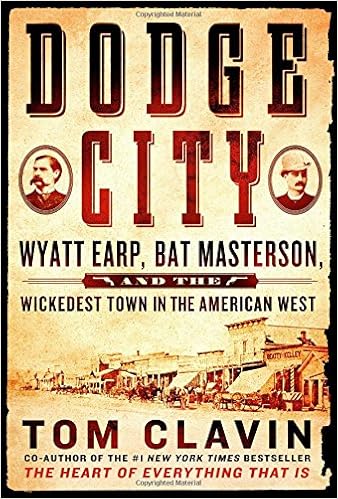
Book Review: 'Dodge City' by Tom Clavin

How two badass sheriffs tamed the most dangerous town in the Wild West


February 26, 2017

Image result for tom clavin dodge city

Any man fool enough to look for trouble in 1870s Dodge City could count on two things: finding it, and finding himself knocked over the head by the butt of a gun. And if he was especially unlucky or stupid, he could find a third thing: himself full of lead.
The infamous Kansas cow town had bloody beginnings, and violence, or the threat of it, was rarely far away. It started with buffalo. The seemingly endless herds on the nearby plains, coupled with demand for skins and tongues (considered a delicacy back East), birthed a buffalo hunting industry. And that industry, in turn, created a leathery class of buffalo hunters — skilled marksmen who could shoot from the saddle, subsist in harsh conditions and not shy from the sight of blood.
Out of these hunters’ ranks came two of the most fabled lawmen of the American West: Wyatt Earp and Bat Masterson, whose fascinating careers are brought to life in Tom Clavin’s “Dodge City: Wyatt Earp, Bat Masterson, and the Wickedest Town in the American West.”
In the decades after the Civil War, Dodge City stood at the edge of the West, a boomtown at the intersection of buffalo hunting and cattle driving that boasted saloons, gambling halls and brothels to entertain men lonely from weeks in the wilderness. A colorful cast of characters swaggered through town, with names like The Stuttering Kid, Shoot ’Em Up Mike, Light Fingered Jack (not to be confused with Shoot His Eye Out Jack) and Stink Finger Jim. Poor Jim.
A town like Dodge City danced a delicate do-si-do between keeping these cowboys in line — i.e., not letting them break and shoot everything in sight — and being a hospitable place to blow off steam. After all, the city filled its coffers by catering to carousing cowpokes, and it couldn’t afford to drive the drovers out of Dodge.
Enter professional law enforcement to referee these paying rowdies.
In 1872, Bill “Bully” Brooks became the first peace officer in Dodge, and he was by all accounts bad at his job. Brooks’ approach to policing was marked by a trigger finger so itchy, he’d shot over a dozen people in his first month. Brooks was also something of a coward — perhaps any person so besotted with needless gunplay is — and few were sad when he got the hell out of Dodge.
When Earp and Masterson were eventually installed a few years later, things changed. Earp was appointed deputy marshal in the spring of 1876, and the then-28-year-old set about putting together a force to help him keep Dodge City in line. Among the half-dozen officers Earp brought onto the Dodge City force, his most important hire was his former buffalo-hunting companion, Masterson.
This unlikely pair couldn’t have been more different. Earp was a taciturn teetotaler who carried himself with a steely sureness of self, the very model of a no-BS cop. Masterson, though also tough, was a beloved raconteur, and no stranger to drink or the gaming table. Along with several other noted lawmen like Bill Tilghman and Bat’s brothers Sam and Jim, they brought a rickety order to a place that had none.
Unusual for a lawman of his time and place, Earp established guidelines for his deputies that discouraged deadly force. Officers were to avoid violence and first try to reason with wrongdoers; after all, when men were talking, they were not shooting. If a lawman did have to use his gun, he was to wound and not kill — all the better to avoid retaliation and an escalation of violence.
But Gandhis they weren’t.
These former buffalo hunters were expert practitioners of a technique known as “buffaloing”: incapacitating miscreants by knocking their heads with their pistol butts. “Buffaloed” men may have woken up with goose eggs on their noggins, and they may have found themselves in the “calabaloose” (Dodge City’s jail), but it was better than not waking up at all.
The most effective tool in their arsenals, however, may have been their reputations. As word of Dodge City’s law officers spread, it gave pause to anyone considering mischief. Having a close encounter with Wyatt Earp would put an end to anyone’s fun, so why start something?
As a result of their policing, over the next three years, gun violence in Dodge City fell, and arrests rose to somewhere in the neighborhood of 300 a month. The lawmen were able to implement a new law banning horses and other animals from saloons. And they enforced the “Dead Line,” an east/west division in town. North of the Dead Line, respectable businesses, merchants and residents could work and live in peace; south of the Dead Line, anything went. And did it ever. That Dodge City did not fall into utter bedlam, or burn to the ground, is a testament to the lawmen’s success.
Over the next few years, Earp and Masterson periodically would leave and return to lawing in Dodge City, seeking their fortunes as gamblers and saloon owners themselves. This was especially true during the quiet winter months, while the summer cattle-drive period was high season for corralling crooks.
After his heyday in Dodge, Earp went on to greater renown as one of the chief combatants in the Gunfight at the O.K. Corral in Tombstone, Arizona Territory, in 1881. Though it burnished his fame as a gunslinger, the aftermath of the O.K. Corral was hard on him; violent reprisals killed his brother Morgan and crippled his brother Virgil, and the whole affair sapped the veteran lawman’s spirit.
Masterson, too, left Dodge City for other adventures. In the years following, he worked as a gambler, a casino dealer, a boxing promoter and, yes, a law officer.
The two would reunite briefly in Dodge City in 1883, to help a friend in a potentially violent political conflict there, the so-called “Dodge City War.” (The “war” was so called by the press, eager for a bleeding headline; in the end, no blood was shed.)
Masterson later moved east at the urging of another old buffalo-hunting friend: Teddy Roosevelt.
He spent his autumn years as a Broadway bon vivant, serving as sports editor and columnist for The Morning Telegraph, a New York City broadsheet. He made such an impression on a young Damon Runyon that Runyon named one of his “Guys and Dolls” characters Sky Masterson in Bat’s honor.
Earp bounced around the West, and his attempts to strike it big in mining, gambling and other businesses failed. He lived to his 80s, and after he died in Los Angeles, his legend as a gunslinger grew. His story has been told time and again in movies and TV, usually more fiction than fact.
Earp, Masterson and their compatriots didn’t “clean up” Dodge City so much as make the town safe enough for the cattle trade and the “sinful” businesses that operated there. Amazingly, at a time when there wasn’t much of it, Earp and Masterson kept the peace — even if that meant cracking a few skulls.

OBAMA’S WIRETAPS?


Details of a Watergate-style conspiracy against Trump emerge.


March 6, 2017

Image result for obama trump wiretap

President Donald Trump caused a media firestorm by claiming over the weekend that then-President Obama wire-tapped telephones at Trump Tower in Manhattan during the final leg of last year's election campaign.
Seeing the writing on the wall, tainted FBI Director James Comey promptly and publicly urged the Department of Justice to reject Trump’s claims. Although it is an attempt at a cover-up, it is an admirably transparent one.
Now the outlines of a Watergate-like conspiracy are emerging in which a sitting Democrat president apparently used the apparatus of the state to spy on a Republican presidential candidate. Watergate differed in that President Nixon didn’t get involved in the plot against the Democratic National Committee until later as an accomplice after the fact. Here Obama likely masterminded, or oversaw someone like the diabolical Benghazi cover-up artist Ben Rhodes, masterminding the whole thing.
Throughout his agonizingly long presidency, Obama serially abused his powers as the nation’s Chief Executive to undermine his political opponents. It might be said that every day of his presidency he committed at least one impeachable offense.
Obama used the IRS to target conservative and Tea Party nonprofits, along with Catholic, Jewish, and pro-Israel organizations. He brazenly lied about it, too. His Justice Department surreptitiously obtained telephone records for more than 100 reporters. He did nothing while Health and Human Services Secretary Kathleen Sebelius repeatedly violated the Hatch Act, an anti-corruption statute.
This is hardly an exhaustive list of Obama’s misdeeds in office. Books have been written about his corruption and many more such volumes will follow.
First thing Saturday morning, Trump tweeted, “Terrible! Just found out that Obama had my ‘wires tapped’ in Trump Tower just before the victory. Nothing found. This is McCarthyism!”
He followed that with “Is it legal for a sitting President to be ‘wire tapping’ a race for president prior to an election? Turned down by court earlier. A NEW LOW!”
That was followed by, “I'd bet a good lawyer could make a great case out of the fact that President Obama was tapping my phones in October, just prior to Election!” and “How low has President Obama gone to tapp [sic] my phones during the very sacred election process. This is Nixon/Watergate. Bad (or sick) guy!”
A spokesman for Obama, who now lives in former Bill Clinton press secretary Joe Lockhart’s walled mansion with Valerie Jarrett on Washington’s Embassy Row so he can pursue his unprecedented, taxpayer-subsidized post-presidential war against Trump, denied Obama ordered that Trump Tower be wiretapped.
“A cardinal rule of the Obama administration was that no White House official ever interfered with any independent investigation led by the Department of Justice,” according to a carefully-worded statement. “As part of that practice, neither President Obama nor any White House official ever ordered surveillance on any U.S. citizen. Any suggestion otherwise is simply false.”
Of course, as others quickly pointed out, the denial is misdirection.
Former federal prosecutor Andrew C. McCarthy wrote yesterday that the denial “seems disingenuous on several levels.” When a warrant is obtained under the Foreign Intelligence Surveillance Act (FISA), “it is technically the FISA court that ‘orders’ surveillance.” Moreover, under the law, “it is the Justice Department, not the White House, that represents the government in proceedings before the FISA court.”
McCarthy wrote presciently on Jan. 11 that “[t]he idea that FISA could be used against political enemies always seemed far-fetched. Now it might not be.”
Besides, Obama and his gang have generally been smart enough to hide their tracks when carrying out political dirty tricks. The Departments of Justice and Homeland Security, FBI, CIA, and NSA, aren’t headquartered in the White House. Obama could wage war against Trump by creating multiple layers of plausible deniability. That’s what a community organizer from Chicago does.
Predictably, former Obama speechwriter Rhodes went on Twitter to lie. Replying to a Trump tweet, the Iranian mullahs’ best friend wrote, cheekily, that, “No President can order a wiretap. Those restrictions were put in place to protect citizens from people like you.”
In fact, as Zero Hedge notes, Chapter 36 of Title 50 of the US Code, War and National Defense, Subchapter 1, Section 1802, states that under certain specific conditions:
Notwithstanding any other law, the President, through the Attorney General, may authorize electronic surveillance without a court order under this subchapter to acquire foreign intelligence information for periods of up to one year …
To no one’s surprise, the mainstream media was quick to slap down the president’s claim without even investigating, claiming Trump was recklessly microblogging without evidence. Perhaps the loudest media figure was the Trump Derangement Syndrome sufferer, Wall Street Journal columnist Bret Stephens, who was effectively a Hillary Clinton surrogate during the campaign. He said he wanted Trump to be “so decisively rebuked that the Republican Party, the Republican voters will forever learn their lesson that they cannot nominate a man so manifestly unqualified to be president in any way, shape or form.”In response to Trump’s claim, the increasingly wacky Stephens tweeted Saturday, “When will Republicans acknowledge that the President of the United States is mentally ill?”
Most mainstream journalists were loath over the past eight years to call the exhaustively documented and at times bald-faced lies and misdeeds of President Obama, Vice President Joe Biden, Secretaries of State Hillary Clinton and John Kerry, National Security Advisor Susan Rice, Attorneys General Eric Holder and Loretta Lynch, and HHS Secretary Sebelius. It would seem uncovering government corruption is only a journalist’s duty when a Democrat resides at 1600 Pennsylvania Avenue.
While it may be true that Trump offered little supporting evidence on Twitter – he provided some evidence by tweeting that an earlier request for surveillance was turned down by a court – it does not follow, nor is it true, that there is no evidence of his claim.
In reality the evidence does exist that Obama spied on Trump and it is "overwhelming," according to talk show host and Landmark Legal Foundation president Mark Levin. He explained on "Fox and Friends" Sunday that evidence of secret court-approved eavesdropping of Trump Tower had already been reported months ago by the New York Times, McClatchy media outlets, Heat Street, and the U.K.-based Guardian newspaper.
Levin said:
Donald Trump is the victim. His campaign is the victim. His transition team is the victim. His surrogates are the victim. These are police state tactics. I am telling you this as a former chief of staff to an attorney general. If this had been done to Barack Obama all hell would break loose, and it should.
Let’s recount what former British Member of Parliament Louise Mensch reported at Heat Street on Nov. 7, the day before the U.S. election.
Two separate sources with links to the counter-intelligence community have confirmed to Heat Street that the FBI sought, and was granted, a FISA court warrant in October, giving counter-intelligence permission to examine the activities of ‘U.S. persons’ in Donald Trump’s campaign with ties to Russia.
Contrary to earlier reporting in the New York Times, which cited FBI sources as saying that the agency did not believe that the private server in Donald Trump’s Trump Tower which was connected to a Russian bank had any nefarious purpose, the FBI’s counter-intelligence arm, sources say, re-drew an earlier FISA court request around possible financial and banking offenses related to the server. The first request, which, sources say, named Trump, was denied back in June, but the second was drawn more narrowly and was granted in October after evidence was presented of a server, possibly related to the Trump campaign, and its alleged links to two banks; SVB Bank and Russia’s Alfa Bank. While the Times story speaks of metadata, sources suggest that a FISA warrant was granted to look at the full content of emails and other related documents that may concern US persons.
The FBI agents who talked to the New York Times, and rubbished the ground-breaking stories of Slate (Franklin Foer) and Mother Jones (David Corn) may not have known about the FISA warrant, sources say, because the counter-intelligence and criminal sides of the FBI often work independently of each other employing the principle of ‘compartmentalization’.
Both of the FISA court applications should be made public and Congress should be given the daily intelligence briefings over the last year or so, Levin said.
We already knew that days before Trump’s inauguration, it was reported that Obama green-lighted a disturbing relaxation of the rules regulating the National Security Agency’s ability to circulate globally intercepted personal communications among the other 16 intelligence agencies, some of which are more politicized than the NSA, before applying important longstanding privacy-protection protocols. Before the policy was altered, the NSA screened out the identities of innocent people and irrelevant personal information before passing intercepted communications along to other agencies like the CIA or the FBI’s intelligence units.
Put another way, 17 days before President Trump was sworn in, NSA was unleashed against his embryonic administration, newly empowered to share raw intelligence gathered from telephone calls and emails that go through network switches outside the country, as well as messages between people outside the U.S. that go through domestic network switches.
WikiLeaks offered a refresher course in Obama’s treachery on Twitter Sunday, noting that “Obama has a history of tapping & hacking his friends and rivals[,]” and providing plenty of examples.
The newly discovered Trump Tower scandal further undermines the Left’s false narrative painting Trump as fascistic. After all, Obama, not Trump, was the great, power-mad centralizer using heavy-handed tactics and the vast resources of the federal Leviathan against his enemies, including Trump.
As hardcore Never Trumper David French has been forced to admit, Trump is “less authoritarian than Obama.”
Trump’s administration, “through policy or personnel, appears to be signaling that the executive branch intends to become less intrusive in American life and more accountable to internal and external critique.”
And despite the growing mass media hysteria, there is still no publicly available evidence the Trump campaign somehow colluded with the Russian government last year. Sources in newspaper articles are never identified. There is not a scintilla of proof of improper conduct. All we have is the alleged say-so of faceless CIA spooks whose motives are questionable, to put it charitably.
As more evidence surfaces of Obama’s under-handed surveillance of Trump, it should become crystal clear who the real authoritarian is.
Matthew Vadum, senior vice president at the investigative think tank Capital Research Center, is an award-winning investigative reporter and author of the book, "Subversion Inc.: How Obama’s ACORN Red Shirts Are Still Terrorizing and Ripping Off American Taxpayers."

Thursday, March 02, 2017

Ryan Adams’ ‘Prisoner’ Is An Ode To The 80’s

No matter what you’re doing, indie-rocker Ryan Adams’ new album “Prisoner” is the perfect soundtrack to play on your phone. Adams is back with an 80’s rock feel to give his listeners a taste of what they’ve been missing.
On Feb. 17, Adams debuted his 16th album, his first since his cover of Taylor Swift’s “1989” in its entirety two years ago. While he said on Twitter that “Prisoner” is about hope and forgiveness, he also confirmed in multiple interviews that the album took shape after his divorce with actress Mandy Moore in 2015. “Prisoner” is a heartbreak album, and Adams proves once again why he’s the master of heartbreak.
Not a newbie to the breakup album, Adams’ debut solo album, “Heartbreaker,” and 2004 album “Love Is Hell,” were masterful relationship angst albums. While nothing on “Prisoner” lives up to its predecessors, it does prove to be a solid rock album.
The opening song, “Do You Still Love Me?” sets the tone for rest of the album. The power ballads strongly resemble a 80’s rock song, and this song is one of many on the album that sound Bruce Springsteen-esque. Guitar- and drum-heavy, this energetic song with powerful vocals kicks off the album with a bang and makes listeners interested to hear the rest.
The next track, “Prisoner,” touches on being locked up in infatuation: “I know our love is wrong / I am a criminal / Mmm, I am a prisoner… / For your love.” The pounding guitar riffs and strong harmonica chords sell the song and make Adams’ lyrics relatable.
The harmonica continues to shine in the third song, “Doomsday,” where Adams shares his complicated feelings with his listeners. He says, “I could wait a thousand years, my love” but at the same time admits “… I don’t know / My love, how to let my feelings go.” He is conflicted, as he believes he is able to wait forever for his lover but knows that he can’t and has to let her go.
His distress continues on the mid-tempo, intriguing “Haunted House.” He talks about feeling alone and feeling like he has no one else in the world now: “Welcome to my haunted house / I live here alone, ain’t no one else.”
As listeners are carried through the album, we are brought through the different stages of Adams’ breakup. At the beginning, he knows love is lost and sings of regret he has in the relationship. He moves on to being disturbed and haunted by track five. He doesn’t hold back his heartache when he sings “I see you with some guy / Laughing like you never even knew I was alive” on the down-tempo “Shiver And Shake.” In this song, Adams’ strong, poignant vocals shine through.
“Anything I Say To You Now,” a highlight on the album, has the catchiest guitar chord sequences of any song on the album. A quintessential rock song, heavy electric guitar and drum usage with intense vocals, he shares his anger with his listeners: “Anything I say to you now is just a lie / Anything I say to you now but goodbye.” By the time Adams gets to this point in the album, he is ready to call the relationship off.
The next few tracks follow the pain and brokenness Adams feels, and the album ends with reflection on the aftermath of the relationship with the gorgeous “We Disappear.” “We Disappear” is a song that resembles another 80’s slow rock jam but includes Adams’ signature compelling vocals. Adams sings to sort out his broken heart: “Don’t know what’s the rubble / And the parts I want to save.” Despite this, he’s left at the end of the album to pick up the pieces of a lost love.
In an age where music is often created and manipulated through the use of electronic sounds and synths, it’s impressive that Adams produces music that is purely made up of crooning vocals, guitar, drums and the occasional harmonica and sax solos. Let’s face it: Ryan Adams makes great rock music.
With “Prisoner,” Adams proves both he and rock music are still alive and relevant. Heartbreak undoubtedly helps artists on their way to creating great albums, and it certainly works for him.

Today's Tune: Ryan Adams - Do You Still Love Me?

I Told You Testosterone Would Make Women’s Sports More Interesting


By Trevor Thomas
http://www.americanthinker.com/
March 2, 2017

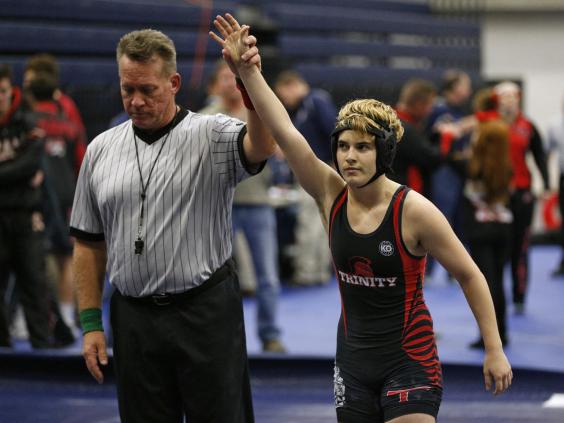
Image result for mack beggs
Mack Beggs (AP)

To be fair—given the perverse transgender agenda of the modern left—my idea was that men (such as Bruce Jenner) would compete as “women.” My idea was not that female athletes who want to pretend that they are men (or boys)—and thus take athletic performance-enhancing drugs such as testosterone to help live such a deluded fantasy—would compete as females. I did not imagine this because (I thought) virtually every female athletic association would not allow such an advantage.

Of course, in most athletic associations this is the case, but at the high school level in the state of Texas, it seems there are exceptions. As has been widely reported recently, a female wrestler in Texas—Mack Beggs—has won the state championship in her division largely due to the fact that she has a significant competitive advantage: she’s taking steroids (testosterone).

Once upon a time, such behavior was widely considered cheating. In fact, some of the biggest scandals in sports history involve behavior virtually identical to that of Mack Beggs. (Alex Rodriguez took testosterone.) In fact, due to the widespread problem of “doping” (taking performance-enhancing drugs) in the world of athletics, in 1999, the World Anti-Doping Agency was created. Clearly (and always) on the list of banned substances: testosterone. In spite of being an endogenous (naturally occurring) anabolic androgenic (promotes male characteristics) steroid, testosterone use among athletes is prohibited if administered from outside the body.

In the modern era of sports, scandals involving performance-enhancing drugs are numerous. One of the largest examples (in terms of sheer volume of athletes and length of time) involves the Olympians of East Germany. In a tragic attempt to hide the real devastating effects of a communist government and a socialist economy, and instead to present itself as a strong, healthy nation, during the Cold War, the East German government began doping its athletes.

The primary drug administered to thousands of East German athletes as young as eight years old was Chlorodehydromethyltestosterone (CDMT)—a synthetic steroid and, as the name indicates, a synthetic “derivative of testosterone.” (This was the same drug that disgraced Canadian sprinter Ben Johnson took.) Unlike Mack Beggs and others who knowingly take performance-enhancing drugs, most of the East German athletes were duped into doping. Their coaches told them they were taking “vitamins.” In terms of medals—with more than 500 summer and winter Olympic medals between 1968 and 1988—the result of the doping, as in the case of Beggs (a record of 52-0), was a huge success.

However, as The Daily Mirror reported in 2015, the East German athletes paid a terrible price. As the Mirror notes,
The stars of yesterday suffered severe depression, heart conditions, degenerative bone disease and infertility. Some even changed sex because of the drugs. Many spiraled into drink and drug addictions, unable to find work.
Shot putter Heidi Krieger suffered the loss of her femininity. She had a “sex-change” operation (of course, it’s not really possible to change one’s sex) and now lives her life pretending she’s a man, “teaching youngsters the dangers of pumping steroids in a bid for sporting glory.” Concerned that the current situation with Olympic athletes in Russia mirrors that of East Germany, Ines Geipel, 55, a 1980s East German champion sprinter, warns:
It is more than 25 years ago now and yet there are so many parallels with the Russian situation and ours. It is about a state-controlled abuse.

It carried on until 1989. We are probably talking about 10,000 to 15,000 athletes in total. We saw kids as young as eight being doped. They were guinea pigs and we have seen the health impact down the generations, passed from grandfather to grandchild.

The bodies are broken, and so are the souls. Naturally there was great gynecological damage because the women were taking men’s hormones. We have seen stillbirths, infertility, and disabled children born to former athletes.

In other words, there are significant health risks—especially for women, in taking testosterone. Of course—like the oppressive East Germans—this is secondary to the perverse sexual agenda of the modern left. What’s more, whether those struggling with their gender identity take dangerous drugs, as Dr. Paul McHugh—University Distinguished Service Professor of Psychiatry at Johns Hopkins Medical School and the former psychiatrist in chief at Johns Hopkins Hospital—puts it:  
The idea that one’s sex is a feeling, not a fact, has permeated our culture and is leaving casualties in its wake. Gender dysphoria should be treated with psychotherapy, not surgery.
And when the perverse LGBT agenda invades the world of sports, the harm extends beyond the physical and mental damage done to the athlete who’s decided to indulge his or her delusions with drugs and surgeries. Whether it’s males competing as females—as in the case of Alaska’s Nattaphon Wangyot—or, as in the case of Beggs, a female taking testosterone, the ones who will suffer are the female athletes who have decided to play by the rules of sound science, morality, and the athletic associations that govern their sports.

Beggs’ case is just the latest example of this lunacy. Multiple organizations corrupted by liberalism have laid the groundwork for rendering women’s athletics a farce. As I noted last year,

Among many other crazy things, on “transgender and gender non-conforming students,” The National Center for Transgender Equality declares:
  • You have the right to equal educational opportunities regardless of your gender, including your gender identity or expression, or your race, nationality, or disability. This includes not being punished or excluded from school activities or events [read: sports] because you are transgender or gender non-conforming.
  • You have the right to use restrooms, locker rooms, and other facilities that are consistent with your gender identity, and can’t be forced to use separate facilities.
As early as five years ago the NCAA “Office of Inclusion” produced a document that, among many other crazy things, recommended allowing humans who were born male to compete as females. They piously and ignorantly declared that assumptions commonly made about humans born male who wish to pretend they are female “are not well founded.”
Ignoring sound science and common sense, the June 2016 edition of the “science” magazine Cosmos concluded that:
“It’s only a matter of time before trans female athletes compete in the Olympics,” and “they will not have an edge over the rest of the field.”
Given the physical advantages of men over women (as I’ve pointed out twice before—but which are obvious to those not corrupted by liberalism), male athletes will not suffer in this latest cause of liberalism, where, ironically, trophies and money will be taken from women and given to men. A real feminist would fight against such an injustice, but modern feminism is beholden to the sexual agenda of modern liberalism.

So beholden that, in spite of all that science and common sense reveal, prior to Beggs beginning her quest for a state championship, The Washington Post began its piece on her story with:
On Friday, Mack Beggs, an undefeated high school wrestler from Texas, will compete at the girls’ state tournament in suburban Houston.
But unlike the rest of the teen’s female competitors, Beggs, 17, is a boy.
Pause for a moment and consider the stupendous stupidity of that last sentence. Nothing in sound science or morality allows for that conclusion, yet one of the supposed premier news organizations in the world—the paper that helped bring down a U.S. President—printed that sentence.

Additionally, after Beggs’ story broke, “trans athlete and activist” Chris Mosier, via Twitter, declared,
High school athletic association policies for trans athletes should allow for participation by gender identity, not by birth certificate.
So again, by this perverse logic, males “identifying” as females would be allowed to take trophies from real girls or women.

The University Interscholastic League (UIL), the governing body for public school athletics in the state of Texas, requires student athletes to compete as the gender listed on their birth certificate. With support of about 95 percent of Texas school superintendents, the wise rule change was made last year, no doubt in response to cases like that of Nattaphon Wangyot’s. Yet UIL rules also allow the use of steroids if “dispensed, prescribed, delivered and administered by a medical practitioner for a valid medical purpose.” Thus, the UIL and the state of Texas should have further ruled that, since “gender identity” is a disorder, and since it is not possible for a female to “transition” to a male, the “roided-up” Beggs should not have been allowed to compete in any division.

Again, these people need serious physical, mental, and spiritual help. They do not need accommodation in living a lie.

Trevor Thomas is the author of the new book The Miracle and Magnificence of America and can be reached at tthomas@trevorgrantthomas.com. His website is www.trevorgrantthomas.com.


Read more: http://www.americanthinker.com/articles/2017/03/i_told_you_testosterone_would_make_womens_sports_more_interesting.html#ixzz4aBMAJ7Ze
Follow us: @AmericanThinker on Twitter | AmericanThinker on Facebook

HOW TO PROVIDE UNIVERSAL HEALTH CARE USING THIS ONE WEIRD TRICK


By Ann Coulter
http://www.anncoulter.com/
March 1, 2017

Related image


The first sentence of Congress' Obamacare repeal should read: "There shall be a free market in health insurance.” 

Right there, I've solved the health insurance crisis for 90 percent of Americans. Unfortunately, no one can imagine what a free market in health care looks like because we haven't had one for nearly a century. 

On NBC's "Meet the Press" this weekend, for example, Chuck Todd told Sen. Tom Cotton that his proposal to create affordable health care that would be widely available, "sounds good," but "do you understand why some people think that's an impossible promise to keep?” 

(The "do you understand ...?" formulation is a condescension reserved only for conservatives, whose disagreement with liberals is taken as a sign of stupidity.) 

Todd continued: "To make it affordable, making it wider, I mean, that just seems like -- you know, it seems like you're selling something that can't be done realistically.” 

Dream Sequence: Chuck Todd on Russia's "Meet the Press" after the fall of the Soviet Union: "Do you understand why some people think that's an impossible promise to keep? To make bread affordable, making it wider, I mean, that just seems like -- you know, it seems like you're selling something that can't be done realistically.” 

It turns out that, outside of a communist dictatorship, all sorts of products are affordable AND widely available! We don't need Congress to "provide" us with health care any more than we need them to "provide" us with bread. What we need is for health insurance to be available on the free market. 

With lots of companies competing for your business, basic health insurance would cost about $50 a month. We know the cost because Christian groups got a waiver from Obamacare, and that's how much their insurance costs right now. (Under the law, it can't be called "insurance," but that's what it is.)

Even young, healthy people would buy insurance at that price, expanding the "risk-sharing pools" and probably bringing the cost down to $20 or $30 a month. 

In a free market, there would be an endless variety of consumer-driven plans, from catastrophic care for the risk-oblivious to extravagant plans for the risk-averse. 

You know -- just like every other product in America. 

You should visit America sometime, Chuck! The orange juice aisle in a Texas grocery store knocked the socks off Russian president Boris Yeltsin. (Imagine how cheap a double screwdriver must be in America!) 

Just as there are rows of different types of orange juice in the grocery store –- and loads of grocery stores -- there will be loads of health insurance plans and insurance companies offering them. 

Americans would finally be able to buy whatever insurance plans they liked, as easily as they currently buy flat-screen TVs, cellphones and -- what's that product with the cute gecko in its commercials? I remember now! CAR INSURANCE! 

Evidently, insurance is not impervious to the iron law of economics that every product sold on the free market gets better and cheaper over time. 

The only complicated part of fixing health care is figuring out how to take care of the other 10 percent of Americans -- the poor, the irresponsible and the unlucky. And the only reason that is complicated is because of fraud. 

Needless to say, the modern nanny state already guarantees that no one will die on the street in America. The taxpayer spends more than a trillion dollars every year on Medicare, Medicaid and Social Security disability insurance so that everyone's health is taken care of, from cradle to grave. 

Unfortunately, probably at least half of that sum is fraud. 

Policing fraud is difficult because: (1) the bureaucrats dispensing government benefits believe there is no fraud and, if there is, it's a good thing because it redistributes income; and (2) we keep bringing in immigrants for whom fraud is a way of life. (See "Adios, America! The Left's Plan to Turn Our Country Into a Third World Hellhole.”) 

Consequently, after the first sentence establishing a free market in health insurance, the entire rest of the bill should be nothing but fraud prevention measures to ensure that only the truly deserving -- and the truly American -- are accessing taxpayer-supported health care programs. 

I'd recommend sending as much as possible back to the states, and also paying bounties to anyone who exposes a fraud against Medicare, Medicaid or Social Security. Anyone caught committing health care fraud should get 10 years. Not in prison, in a Medicaid doctor's waiting room. 

But I'm sure you guys in Congress have come up with lots of great ideas for policing fraud in the SEVEN YEARS you've had to think about it. (Hello? Is he breathing? Dammit, I'm not getting a pulse!!) 

Then, Congress can start removing all the bad stuff from the U.S. Code, such as: 

-- the requirement that hospitals provide "free" care to anyone who shows up (how about separate health clinics for poor people with the sniffles?); 

-- the exemption of insurance companies from the antitrust laws (where all our problems began); and 

-- the tax breaks only for employer-provided health insurance (viciously and arbitrarily punishing the self-employed). 

The goal of "universal health care" is very simple to achieve, just as the goal of "universal wearing of clothing" seems to have been taken care of. 

The government can provide for those who can't provide for themselves, but the rest of us need to be allowed to buy health insurance on the free market -- an innovation that has made America the richest, most consumer-friendly country in the world. 

It's taken 50 years, but, thanks to Hillary's losing the election, we finally have liberals on the record opposing the Soviet Union. Can't all of Washington come together and end our soviet health care system? 

COPYRIGHT 2017 ANN COULTER