Friday, April 12, 2019

Kevin Costner Rehabilitates a True American Hero in 'The Highwaymen'—and the Social Justice Warriors are Furious


By David Forsmark
April 8, 2019

Image result for costner the highwaymen

The Hollywood elites are circling the wagons to keep Netflix out of the Oscar race, and customers chained to their old business model—as though masses of people still plan their night out by wondering who is nominated for what.

But Academy Award-winning Hollywood icon Kevin Costner won’t have to worry about Oscar consideration for his fine Netflix original, The Highwaymen, as it flies in the face of Hollywood liberal convention and restores the reputation of an American hero that Hollywood lore slandered as a vengeful, murdering buffoon way back in 1968.

Screenwriter John Fusco has been shopping his script to set the record straight about famed Texas Ranger Frank Hamer and his hunt for Bonnie and Clyde long enough that Paul Newman and Robert Redford were originally considered for the parts (Newman died in 2008).

But really, how could you possibly do better than Kevin Costner playing a legendary lawman who was a combination of Wyatt Earp and Elliot Ness? Couple that with Texas native Woody Harrelson’s laconic turn as Hamer’s best friend and partner, Maney Gault. It’s hard to think of anyone else in the roles.

Like recently hyped Netflix big-budget originals Bright, Bird Box, and Triple Frontier,The Highwaymen has the feel of a major motion picture, with a big-name director (John Lee Hancock of The Blind Side and The Rookie) and big stars. Unlike those films, The Highwaymen has a terrific adult script—and something to say.

In a nutshell, The Highwaymen tells the story of a retired legendary Texas Ranger Frank Hamer, who is pressed back into duty in 1934 to hunt down Bonnie and Clyde as their crime spree enters its third year. (This is probably where a zillion fiction writers got the idea for what now has become a thriller cliché.)

Before newfangled things like two-way radios for police cars and communication between departments, Clyde Barrow exploited backroads, state lines, and jurisdictional confusion to keep his gang on the road. Frank Hamer, a seasoned manhunter, decided to hit the road just like the Barrow gang and dog them, learning their patterns—and driven by the conviction born of experience that “outlaws always return home.”

He is joined by his ex-partner and best friend, another famed Ranger, Maney Gault. (In one of the film’s few artistic liberties, Gault joins Hamer early in his quest, when in reality Hamer worked with a few other cops and recruited Gault later.)

Sure, the film is deliberately paced in the middle, as it’s basically a road picture of two old men talking in a car—but it’s really good talk, with cogent points about celebrity worship, the changing world, and the meaning of justice.

But the climax, actually filmed on the road where Bonnie and Clyde were ambushed by Hamer’s posse and shot to pieces, and the aftermath as mobs of hero-worshippers mob the shot-up car with the bodies inside scrambling for souvenirs, are chilling moments that will linger in the viewer’s memory.

But reaction to the film is almost as interesting as the film itself.

On both Rotten Tomatoes and Metacritic, the movie clocks in at mid-to-high 50s scores, generally signifying a mediocre effort.

But a closer look reveals something different: Reviewers who actually reviewed the movie are mostly positive. Reviewers who reviewed their perception of the movie's politics account for more than half the negative reviews.

Check out this column in the Washington Post, which purports to add a “Made by History Perspective.”

According to this young activist Brown University professor, Frank Hamer was a guardian of Jim Crow and “racial terror,” and the film is a “whitewash.” Mostly, just because he was a Ranger and had words with one of her heroes of the past.

But this would be news to the at least 15 Texas African-Americans that Frank Hamer rescued from lynching in his war against the KKK in West Texas. (This takes about 30 seconds to find on Google.) Or the KKK lynch mob leaders Hamer shot in a confrontation with a 6000-person mob in the only time he lost someone in custody because the courthouse was burned down around him.  (And despite the governor’s order not to fire on the crowd.)


It would really be news to legendary bluesman Mance Lipscomb, who was plucked out of the cotton fields by the new 24-year-old Navasota, Texas, marshall, Frank Hamer, and hired to drive his buggy around town for him. Hamer took the job of taming the rough town after a veteran Ranger turned it down. Lipscomb adored Hamer and told his biographer that not only did Hamer stop the lynchings in the area, but that he regularly checked that blacks in the field weren’t being mistreated.

Yes, these are the kinds of stories you get when you start researching Hamer, whose life would be good for about ten movies.

Then there is this dolt, who calls The Highwaymen “revisionist history” because it changes “history” as set down by a movie worshiped by the Left (even though he admits that Frank Hamer’s widow successfully sued Warner Brothers over the depiction of him in Bonnie and Clyde).

Even this reviewer for the website Decider, after giving the movie a positive review, decided she better get her SJW cred in order by saying the movie “whitewashed” Hamer’s “sexism.”
This thin premise is based on Hamer’s terse comment over his resignation from the Rangers to protest the election of Ma Ferguson as governor of Texas. “When they elected a woman governor, I quit,” she wrote.

Again, it would take a few minutes to learn that Governor Ferguson campaigned on being the surrogate for her indicted and impeached former governor husband and that between the two of them, Texas law enforcement became a cash-cow and patronage outfit.

But hey, when you make the mistake of being politically incorrect, virtue signaling is the remedy.


But this does lead us to one of the reasons that Frank Hamer’s legacy needs rescuing.  The man hated publicity, unlike other prominent lawmen of his era like Earp, Ness, and Melvin Purvis. He turned down huge fees for interviews after putting down Bonnie and Clyde, and earlier in his career, was run out of Houston by the powers that be for pistol-whipping a reporter.

Everyone in this film seems to have cared deeply about restoring Frank Hamer to his proper place in American history. Like Hamer himself, they have accomplished this mission deliberately, efficiently—and when it calls for it, brutally—and to the great benefit of us all.

And when it’s over, you’ll know how to say “hands up” in Spanish—and the limitations of such a command.


Thursday, April 11, 2019

Upstart Hurricanes don’t feel like the underdogs against reigning champion Capitals


April 10, 2019
Image result for hurricanes capitals
Alex Ovechkin and Justin Williams
Carolina Hurricanes Coach Rod Brind’Amour entered his team’s locker room last Thursday night having clinched the organization’s first postseason appearance in a decade and scanned the room. The Hurricanes’ first-year head coach first called out defenseman Justin Faulk, the 27-year-old NHL veteran who has spent his entire career with Carolina and scored the go-ahead goal to send his team into the playoffs.
“Faulker, how many years, buddy?” Brind’Amour inquired on a video the team shared on Twitter.
“Eight,” Faulk answered, referring to how long he had been waiting for a taste of the postseason.
“Eight, grinding,” Brind’Amour replied. “Way to go.”
Brind’Amour then pointed his finger and moved onto defenseman Brett Pesce, then defenseman Jaccob Slavin and center Jordan Staal, all asking them the same essential question: How long have you been waiting for this moment as a Hurricane?
For Pesce and Slavin it was four years, and for Staal, who had won a Stanley Cup with the Pittsburgh Penguins in 2009 and made his last playoff appearance in 2012 before being traded to Carolina, his answer was seven. No current Hurricane played for the franchise during its last postseason run in 2009. Ten Carolina players in its projected Game 1 lineup will be part of their first NHL postseason this week.
Headed into Game 1 of the first round series against the defending Stanley Cup champion Washington Capitals, the Hurricanes are the playoff darlings of the NHL, full of brimming energy and a grind-it-out attitude as they continue to wear their “bunch of jerks” label with pride, a nickname earned when their postgame celebrations earned analyst Don Cherry’s ire.
“You go into it and you use phrases like, ‘Nothing to lose’ and ‘Only positives can be gained from this’ and ‘We’re just going to play,’” Capitals Coach Todd Reirden said of Carolina’s mindset. “They’re an extremely aggressive, fast young team that has strength all the way up and down their lineup and play a style of hockey that is exciting. Lots of pucks to the net and lots of action that way. So they’ve done a really good job and will be a difficult opponent for us.”
Led by captain Justin Williams, who was a Capital from 2015-17, the Hurricanes (46-29-7) are embracing their role as the underdog coming into the postseason. The Capitals projected Game 1 lineup has 1,282 games of playoff experience, while the Hurricanes projected Game 1 lineup has just 342, with Williams accounting for 140 of those. Williams has also been a part of three Stanley Cup winners.
“Obviously we’re the underdogs,” Williams told reporters in Carolina. “We’re playing the defending Stanley Cup champions. But do we feel like we are [underdogs]? No. We’re going to work our tails off and see, as I said [all] along, see how good we can be.”
The extremely aggressive, fast young squad that brought eccentric, choreographed victory celebrations (aka Storm Surges) to the ice after every home win – a display they do not plan on bringing to the postseason – also ignited a fanbase in a non-traditional hockey market.
It’s this attitude that has Carolina pegged as a potentially dangerous foe for the Capitals to face in the first round, a year after Washington fell into a 0-2 hole in its first round playoff series after two overtime losses to the Columbus Blue Jackets.
“Carolina is a great team,” Capitals center Nicklas Backstrom said. “They're a young team and we gotta be aware of them at all times because they're dangerous. It's gonna be a fun test for us and we're ready.”
The Hurricanes know they lost all four of the regular season meetings with Washington, but in the postseason, that slate is wiped clean.
“You throw some wrinkles in here or there, but really, when you start changing what got to you to here, then that is probably not the best recipe,” Brind’Amour told reporters Tuesday in Carolina. “You got to just do what you do and that is what we are going to try to do.”
Player-wise for the Hurricanes, young forward Sebastian Aho has shined in his third NHL season, leading the team with 83 points (a career-high 30 goals, 53 assists) and will be a threat facing off against the Capitals’ defense.
The 21-year-old Finn averages just over 20 minutes of ice time per game and had six goals and eight assists through the team’s last 20 games of the regular season. Capitals forward T.J. Oshie described the Capitals’ task of matching up against Aho’s line as a “series within a series.” Fellow young Finn, 24-year-old center Teuvo Teravainen, had 76 points for the Hurricanes in the regular season (21 goals and 55 assists). In goal, the Hurricanes have used two goalies all season, but are expecting Petr Mrazek to start Game 1. Brind’Amour hasn’t ruled out the option of using both Mrazek and Curtis McElhinney in the playoffs.
“They’re an extremely aggressive, fast young team that has strength all the way up and down their lineup,” Reirden said. “And play a style of hockey that is exciting. Lots of pucks to the net and lots of action that way. So they’ve done a really good job and will be a difficult opponent for us.”
Read more:

A Man for This Season


April 10, 2019
Image result for victor davis hanson the case for trump
Disclosure requires at the outset that I mention Victor Davis Hanson wrote a very generous foreword to my book on President Trump, though from a somewhat different angle. I would have declined this assignment if it required, in all honesty, to write a less than favorable review. That is not a problem. This is, and as any Hanson reader would expect, an excellent book. The title is in some respects misleading, as the author does not make the case for Trump as an advocate; he neutrally presents the reasons why an adequate number of Americans, conveniently distributed electorally, chose him as president.
Trump pulled off an extraordinarily perceptive analysis of the areas of discontent—identified both intuitively and by polling carefully. Trump recognized that the post-Reagan presidency and Congress had alienated a large and ever-growing section of public opinion stretching, with rare dissident patches, from upstate New York and Pennsylvania to the Rocky Mountains, and apart from Minnesota and Illinois, from Canada to the border and Gulf of Mexico. This has become the great Republican torso of America, and Hanson limns in always interesting insights about the steadily increasing disaffection of traditional, white, working and middle-class Americans at what they consider the desertion of their interests by the Democratic Party and the disparagement of them and of their opinions by the leadership of the Democratic Party.
Tens of millions of Americans, not necessarily immensely politically sophisticated, but well aware of what they liked and disliked, were steadily more offended by President George H.W. Bush’s frivolous renunciation of his infamous Clint Eastwood-imitative promise: “Read my lips—no new taxes,” and by his, as they perceived it, post-Gulf War foreign policy that was overly deferential to America’s enemies and to free-loading allies. Iraqi dictator Saddam Hussein had been removed from Kuwait yet crowed that he had survived, was developing nuclear weapons and was the tip of the spear of militant, secular Islam. Bush’s support for continued Ukrainian and other ethnic republics’ adherence to the Soviet Union, and praise for the “confederation” of Yugoslavia, vaguely annoyed many Americans, especially when his son led us back into Iraq a decade later. The senior President Bush’s answer to a recession at home was just to spend more, even if it was borrowed, and even if doing so did nothing for the dwindling manufacturing sector of America.
In time, the people that Bill Clinton assured “I feel your pain,” evolved, in considerable measure, into the people that Barack Obama would asperse as “clinging to guns and religion.” They too were irritated. This was hard to take from a man who sat contentedly for twenty years in the pews of racist and anti-American pastor Jeremiah Wright, who dispensed his violent religion in fiery terms to the Obama family. The same loyal Democrats going back to the Roosevelt and Truman and Kennedy and Johnson years were singularly unimpressed by 2016 candidate Hillary Clinton’s consignment of them to the “basket of deplorables,” racists male chauvinists, rednecks, reactionaries, and bigots.
All politically informed people generally knew about this, but Hanson meticulously cites the Democratic leaders and describes Donald Trump’s cunning and well-thought-out pitch to what Richard Nixon called in a different context: “The silent majority.” Despite unprecedented media derision, Trump—once he got going as a candidate—exploited the rather muted proposals for tinkering with the decaying status quo of his talented group of Republican opponents, successful governors and former governors (Jeb Bush, Chris Christie, Mike Huckabee John Kasich, Rick Perry, Scott Walker), and prominent senators (Rand Paul, Marco Rubio, and Ted Cruz). They were a capable and previously respected group. 
But as the debates opened, Trump—though gratuitously abused by a vast echelon of the media—apparently was in the lead. In the early days, prominently placed among the contenders, only he dissented from the group-think of the other candidates of both parties. Only he wanted the NATO allies to pay more for their defense that the United States was providing, though it was distant from the possible source of danger, Russia. Only Trump called for the end to unequal trade deals, to a policy of truckling to China which enjoyed a $365 billion trade surplus with the United States and yet extracted exorbitant concessions from American companies to do business in China, and from disadvantageous trade agreements with Mexico, Japan, and Western Europe. Only Trump debunked the Palestinians as a serious interlocutor for peace.
Only Trump, among Republicans and Democrats, despite socialist senator Bernie Sanders’ supposed championing of the American working class, attacked globalism with its implications of supposed allies enticing American companies into their countries from which they would export unemployment back to the United States. All the other candidates in both parties were generally silent on these points, but Americans noticed, and as the primaries rolled by, the conventional wisdom than Trump was just brand-building and creating a great infomercial, gave way to hysterical attempts to “Stop Trump” on the Republican side, and then distance the party and its candidates at other levels from him.
Finally, in effect, they joined Hillary Clinton in protecting the United States from the “great ogre,” the unimaginable prospect of Donald Trump, blow-hard and checkered billionaire, sexist, racist, know-nothing, crook, tax-cheat, and ultimately Manchurian candidate-stooge of the Kremlin, being elected to the presidency. Most noteworthy, only Trump of all the candidates on both sides appeared to be serious about stopping the flow of millions of illiterate peasants across the southern border, contributing to a deadly influx of lethal narcotics. All the other candidates of both parties just repeated the tired platitude of “comprehensive immigration reform,” which everyone understood to mean, naturalizing millions of illegal arrivals and making purposeful (and inconsequential) noises about stopping the future flow of them.
Hanson makes the point very rigorously that Hillary Clinton was the one prominent Democrat who had a more dubious career than Trump’s, despite his less salutary business ventures, such as the unutterable hucksterism of Trump University. It was a fiercely nasty campaign, with both sides regularly charging the other with crimes. If there had been a Democratic nominee apart from the tainted Clinton and socialist Sanders, perhaps even the frequent blunderbuss Vice President Joe Biden, he might have won.
Hanson describes vividly the resonance of Trump’s key campaign arguments: “We don’t win anymore.” No one, he implied, was defending the national interest, and the middle and working classes had been put over the side and were overtly despised by the Democratic leaders over whose backs they had climbed to power, and they were selling America out to foreigners. How was the national interest served by allowing American allies to poach factories from the United States, export back into the country, creating more unemployment, and inducing the profit-making American corporations not to remit profits back to our shores, while Mexico in particular, made the arrangements even more one-sided by exporting illegally into the United States millions of impoverished and unskilled people, who then shipped back $30 billion to Mexico? Trump’s enemies replied that he was a racist, that providing in this way for the welfare of the underdeveloped world built international security and progress, and that it was in America’s interest and was its moral duty also. Only Trump realized that enough of the country was no longer buying into this to win an election with it.
Trump was running against the fading echoes of the Cold War, more than 25 years after the Cold War ended. Hanson, uniquely, makes the case that only Trump of the Republican candidates, could have made these points, (though Rand Paul approached some of them), and that only Hillary Clinton was more vulnerable than Trump was to the imputation of low ethics. When there is added to this the energy and careful targeting and tactics of the Trump campaign, his astonishing victory, the greatest upset in American presidential history, seems more comprehensible. He knew he had no chance in the states where the demographics militate against his positions, especially California and New York, most of New England, and Obama’s home state of Illinois. He focused relentlessly and ingeniously and with all the skills of populist communication he had learned in pulling more than 25 million viewers every week to his reality television production, on susceptible audiences with his very focused message.
Hanson recounts Trump’s generally successful record as president for two years, the astounding economic strength of the country, and his initial successes in facing down trade rivals and the North Korean regime. And he inserts the results of the midterm elections, where, in effect, NeverTrump pretend-Republicans were replaced by Democrats in the House, and the Republicans gained a seat in the Senate and replaced three Republicans hostile to the president with supporters. This enabled his supporters, who now thoroughly control the congressional Republican Party which was skeptical and uncooperative at first, to respond in the Senate to the much-heralded House Democratic investigations into every aspect of Trump’s life. The Mueller report’s benign conclusions for the president came after the book was finished, but only confirm the author’s views.
As only Hanson can, he muses on the possible destiny of this president as a tragic hero like Ajax or Oedipus, whose achievements could be made possible, but also limited, by his excesses. An interesting diversion follows, mentioning a number of literary and film figures.
But Trump could also be a successful president who is not a hero. Not every elevation to high office is a tragedy or a triumph of a hero. I think the betting must now be that Trump will be quite successful and will leave office relatively well regarded by most people. Appalling though it still is, the hatred of him is much less vituperative and self-confident than at the start of his term. And the changes he is seeking to the alliance system and the nature of international power alignments could be substantially realized, and be a stabilizing adjustment to post-Cold War conditions. Mideast peace, NATO, relations with China, all needed reassessment. And freed of the dirigisme and excessive taxation Obama had placed on it, the American economy is flourishing in a way that Trump’s predecessor said could only be achieved with a “magic wand.”
This is an exemplary, fair, and even-sided account of this president, his success as a candidate, and his prospects. It makes no pretense to being a biography and conveys almost nothing about Trump’s life until his emergence as a serious claimant on the presidency. But it is a much-needed and balanced perspective on the Trump phenomenon almost four years after he announced his candidacy to immense hilarity and ridicule.

The real Roger Scruton scandal


By Brendan O'Neill
https://www.spiked-online.com/2019/04/11/the-real-roger-scruton-scandal/
11 April 2019

Image result for roger scruton


The Roger Scruton scandal is indeed disturbing. Not because of what Roger Scruton said, but because of what the New Statesman did. In order to score a hit against a conservative philosopher cum Tory adviser who has always rubbed leftists up the wrong way, the New Statesman’s deputy editor dispensed with the ethics of journalism, wilfully distorted a quotation, and inferred racism where, to the best of our knowledge, none exists. Scruton’s comments were not particularly shocking, but the New Statesman’s behaviour was.
Scruton had been a housing adviser to the Conservative government. Yesterday he was sacked for his ‘unacceptable comments’ in the New Statesman interview, as the minister of housing put it. Reading the general media coverage of the scandal, and the New Statesman’s promotion of the interview online, you could be forgiven for thinking that these ‘unacceptable comments’ from Scruton included anti-Chinese racism and anti-Semitism. But they didn’t; it only looks that way because of the New Statesman’s unethical sleight of hand and virtual misquotation – usually a huge no-no in the world of respectable journalism.
All those who think Scruton expressed racial hatred against Chinese people and Jews really should read the interview. They might find that they have more questions for the New Statesman’s deputy editor, George Eaton, who conducted the interview, than they do for Scruton. Take the claims of anti-Chinese racism. In his Twitter-summary of Scruton’s comments, Mr Eaton has the philosopher saying the following: ‘Each Chinese person is a kind of replica of the next one and that is a very frightening thing.’ That would indeed be a racist thing to say, playing on the stereotype that all Chinese people look and behave the same. But that isn’t what Scruton said. He said: ‘They’re creating robots out of their own people… each Chinese person is a kind of replica of the next one and that is a very frightening thing.’
So Scruton, it seems, was talking about the Chinese Communist Party and its expectation of conformism from the populace, not the Chinese people. By taking his comments out of context, Mr Eaton, quite wilfully it seems, turned criticism of a tyrannical government into a racist slur against a whole people. But it’s even worse than that. Mr Eaton did not only take the comments out of context – he also changed them, in a small but nonetheless important way. In his tweet, his use of a capital ‘E’ on ‘Each’ – in order to make the sentence ‘Each Chinese person is a kind of replica of the next one and that is a very frightening thing’ look like a standalone comment – is, to all intents and purposes, a misquotation. In the actual interview article, the ‘each’ has a small ‘e’, and is preceded by ellipsis, because it was clearly part of a broader comment by Scruton on the authoritarian nature of contemporary China. A journalist has misrepresented the views of a public figure to make him seem racist – isn’t that more scandalous than Scruton’s strong-worded critique of what he views as Chinese conformism?
What about anti-Semitism? Again, Scruton says nothing in the interview that could be construed as anti-Jewish hatred, and yet theNew Statesman infers that he did. Scruton made critical comments about the ‘Soros empire’ in Hungary. He was referring to George Soros, the Hungarian-American philanthropist who funds many so-called ‘progressive’ think-tanks and institutions. Soros is Jewish, and according to some liberal observers, this means any criticism of him is by definition anti-Semitic. This is a perverse idea. Is there a ‘Soros empire’ in Hungary? That’s certainly not a phrase I would use, but it is an indisputable fact that Soros funds various groups inside Hungary and across Europe. The depiction of all anti-Soros criticism as anti-Semitic is dodgy on two levels in particular. First, it demonises and seeks to silence all public discussion of a billionaire and his political interests. And secondly, it seriously harms the crucial struggle against resurgent anti-Semitism by weaponising accusations of anti-Semitism to the cynical end of silencing dissent on Soros and his political role – and this can only deepen the depressing cynicism that already exists towards the seriousness of anti-Semitism.
Let’s put it like this. If someone were to say that Ed Miliband is a wily, puppeteering political figure who uses his North London connections to do down ordinary people, that would clearly be anti-Semitic. But if someone said Mr Miliband was a piss-poor leader of the Labour Party who hasn’t got two ideas to rub together, that is not anti-Semitic. Do you see? Likewise, if a Hungarian hard-right agitator says Soros is a sinister, octopus-style figure puppeteering the Western world, that is anti-Semitic. But if someone – Scruton, say – says Soros funds various campaign groups that have a detrimental impact on conservative values, that is not anti-Semitic.
In order to fortify the smear that Scruton is anti-Semitic – despite the fact that he said nothing about Jews in the interview – Mr Eaton refers to an old speech Scruton made in which he seemed to suggest that Hungarian Jews are part of the ‘Soros empire’. Gross, right? Only, once again, his comments are taken out of context. He said, in the speech titled ‘The Need for Nations’, delivered in Hungary a few years ago, that ‘many of the Budapest intelligentsia are Jewish, and form part of the extensive networks around the Soros Empire’. Why did he make this claim? He said many of these Jewish intellectuals are ‘rightly suspicious of nationalism’, because of the anti-Semitic horrors of the 1930s and 40s, and they are also confronted with the ‘indigenous anti-Semitism [that] still plays a part in Hungarian society and politics’. These past and present experiences are an ‘obstacle to the emergence of a shared national loyalty among ethnic Hungarians and Jews’, he said. So he was sympathising with the plight of Hungary’s Jews. Did Mr Eaton not have space to point this out?
Scruton’s other ‘unacceptable comments’ include saying that Hungarians in recent years have been ‘alarmed’ by ‘the sudden invasion of huge tribes of Muslims from the Middle East’. This is indeed very worrying language. It is the one part of the interview that feels ugly. So why not challenge it? Why simply cite it as evidence for why Scruton is unfit for public life? For a public role that has precisely nothing to do with immigration or Islam?
Scruton also said that Islamophobia is a word ‘invented by the Muslim Brotherhood in order to stop discussion of a major issue’. What’s wrong with that? I would dispute that the Muslim Brotherhood invented the word. There are so many competing claims as to who invented it. And in the UK context, it was the Runnymede Trust that popularised it. But it strikes many of us as utterly uncontroversial to suggest that accusations of Islamophobia are used to close down discussion about Islam, Islamist extremism, social and cultural tensions, and so on. Because Scruton thinks Islamophobia is a phrase used to chill public debate, he deserves to be sacked? That’s crazy.
Here’s the truth of it: most of Scruton’s comments were not particularly alarming or surprising. He criticised China’s enforcement of conformism, repeated his concerns about George Soros’s growing influence, and called for a more open debate about issues relating to Islam. Demanding someone’s scalp because you disagree with their views is one of the most depressing features of our age. In the interview, Scruton was doing what Scruton has always done – provoke and challenge and irritate. It is the New Statesman that has changed. A once prestigious magazine now distorts and virtually misquotes as part of a transparent hit job against a philosopher whose views it doesn’t like. In this scandal, it is the dishonesty and anti-intellectualism of the New Statesman that should concern those who care for the state of public life.
Brendan O’Neill is editor of spiked and host of the spiked podcast, The Brendan O’Neill Show. Subscribe to the podcast here. And find Brendan on Instagram: @burntoakboy

The Former Pope Speaks, Candidly and Acidly, On Abuse


By 
https://www.nationalreview.com/2019/04/pope-emeritus-benedict-letter-child-abuse-catholic-church/
April 11, 2019

Related image


Pope Emeritus Benedict has allowed the publication of a letter he addressed to bishops and cardinals who met in February to discuss the problem of child abuse. The letter is a collection of personal remembrances and acid observations about other churchmen, theologians, and recent Church history wrapped around an argument.
The Emeritus Pope’s argument is explosive. (The full text can be read here.) In summary, Benedict charges that a revolutionary spirit from the world entered the Church in the 1960s. Possessed by that spirit, arrogant theologians determined on creating “another Church” destroyed the traditional moral theology of the Faith, leading to a complete breakdown of moral discipline in the clergy and even a generalized spirit of blasphemy, which Benedict intimately and unforgettably connects with the phenomenon of child abuse. Along the way, he points out how, having abandoned a traditional understanding of the Catholic faith, bishops and cardinals felt no compulsion to protect the Faith itself, and allowed the rights of accused clergy to develop in such a way that they totally obliterated the prerogative of serving God and passing on the faith to the next generation. “The Church is dying in [people’s] souls,” he observes in a spirit that reads equally mordant and mournful.
Although he does explain his own view that abuse can be adjudicated as a crime against the Faith, the former pope tries to transcend a debate that he views as too focused on managerial or technical solutions. Benedict XVI argues that churchmen themselves must be converted into believers who fear and honor a living God. “Why did pedophilia reach such proportions? Ultimately, the reason is the absence of God.”
Benedict begins with a denunciation of “the revolution of 68,” and attributes to that time a lawless spirit that entered into the Church itself, and that would bring havoc for decades. The former pope illustrates this with stories about the lax atmosphere of seminaries, and even the wave of dissent from leading moral theologians and bishops against the intention of John Paul II to reiterate Catholic teaching that some acts were intrinsically immoral and could never “become good” by being placed in different circumstances. This may seem like the most basic understanding of moral law common to revealed monotheistic religion, but it was fiercely contested in the times. Benedict writes with a good bit of acid:
I shall never forget how the then-leading German moral theologian Franz Böckle, who, having returned to his native Switzerland after his retirement, announced in view of the possible decisions of the encyclical “Veritatis splendor” that if the encyclical should determine that there were actions which were always and under all circumstances to be classified as evil, he would challenge it with all resources at his disposal. It was God, the Merciful, that spared him from having to put his resolution into practice; Böckle died on July 8, 1991. The encyclical was published on August 6, 1993 and did indeed include the determination that there were actions that can never become good.
He also reports, “Perhaps it is worth mentioning that in not a few seminaries, students caught reading my books were considered unsuitable for the priesthood.” But he also talks about the failures of the Vatican’s furtive efforts to rectify the culture of the clergy. He says that Vatican visitations to American seminaries (investigations, for the lay reader), were thwarted in their attempt to get to the truth, or in their recommendations for reform.
“What must be done?” The former pontiff asks, before mordantly writing: “Perhaps we should create another Church for things to work out? Well, that experiment has already been undertaken and has already failed.” Benedict says that the demand for “collegial” bishops after the Second Vatican Council exacerbated the problem of rooting out abuse because it deprived bishops of their authority and responsibility to govern effectively.
In this way, Benedict has weighed in decisively and clearly in a roiling debate that is often murky. Progressive-minded Catholics tend to view the abuse crisis as a problem of “clericalism.” That is, they think the problem is the separation of the clergy from lay people, and their conception of authority that has made them high-handed. Conservatives tend to view the crisis as the abandonment of authority in the face of obvious laxity of practice and immoral cronyism, in which networks of sexually compromised priests protect each other or fail to confront one another.
By the end of his letter, Benedict reaches for another level. And it is worth quoting at length. He begins to connect the moral anarchy within the Church to a spirit of blasphemy. He critiques a certain casual or flippant attitude toward God within the Church “We Christians and priests also prefer not to talk about God, because this speech does not seem to be practical.” he writes.
And later expands on this, in a passage worth quoting at length.
The Eucharist is devalued into a mere ceremonial gesture when it is taken for granted that courtesy requires Him to be offered at family celebrations or on occasions such as weddings and funerals to all those invited for family reasons. The way people often simply receive the Holy Sacrament in communion as a matter of course shows that many see communion as a purely ceremonial gesture. Therefore, when thinking about what action is required first and foremost, it is rather obvious that we do not need another Church of our own design. Rather, what is required first and foremost is the renewal of the Faith in the Reality of Jesus Christ given to us in the Blessed Sacrament.
In conversations with victims of pedophilia, I have been made acutely aware of this first and foremost requirement. A young woman who was a [former] altar server told me that the chaplain, her superior as an altar server, always introduced the sexual abuse he was committing with her with the words: “This is my body which will be given up for you”. It is obvious that this woman can no longer hear the very words of consecration without experiencing again all the horrific distress of her abuse. Yes, we must urgently implore the Lord for forgiveness, and first and foremost we must swear by Him and ask Him to teach us all anew to understand the greatness of His suffering, His sacrifice. And we must do all we can to protect the gift of the Holy Eucharist from abuse.
Benedict’s intervention in this debate is powerful and a sad one. The very fact of this letter — its lucidity and depth of thoughts — can’t help but inspire a question from Catholics. Why did this man resign from the office of the papacy? The stated fears were ones of incapacity, but in this letter, he demonstrates an acute view of the Church. For many Catholics who disagree with Benedict’s diagnosis of the problem, it will occasion the question about Benedict’s supposed commitment to retiring into silence. What does it mean to have a former pope who is so loquacious and opinionated?
And yet, reading this occasionally acerbic and aggrieved letter, this writer felt gratitude for Benedict’s papacy and for a God who, in this time of exile, preserves one righteous man as a living promise of many more saints to come.

Wednesday, April 10, 2019

The Open Borders Agenda Rears Its Ugly Head


Ben Shapiro
https://townhall.com/columnists/benshapiro/2019/04/10/the-open-borders-agenda-rears-its-ugly-head-n2544536
April 10, 2019


Image result for open borders mexico

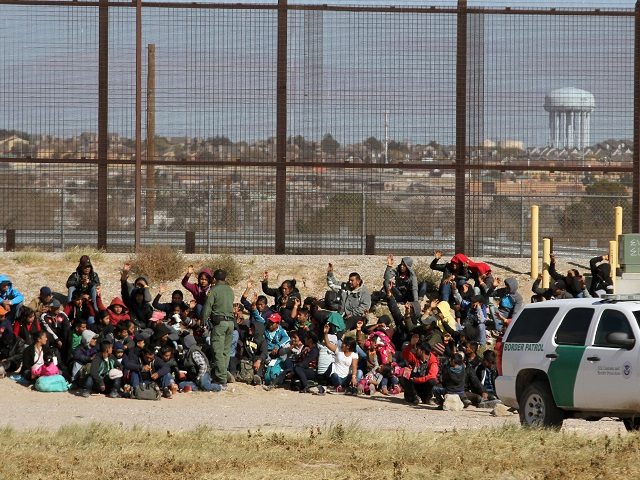
This week, President Trump fired his homeland security secretary, Kirstjen Nielsen. Nielsen was, according to media and the Democrats, a monster of the highest order. She was allegedly the force behind the caging of children (that practice began under President Barack Obama and actually ended under President Trump); she was supposedly a barbarian focused on keeping innocent brown children out of America.

And Trump dumped her because even she was not cruel enough to please Genghis Trump, the left claimed. Stephen Colbert joked, "Sure, she put kids in cages, but Trump was upset. ... So he just needs someone who can be crueler to children than Kirstjen Nielsen." Jimmy Kimmel made nearly the same joke: "Goodbye, Kirstjen, and whoever replaces you permanently is going to have some very big cages to fill." Trevor Noah quipped, "Basically, the only job she can get now is working with R. Kelly."

In reality, Trump fired Nielsen because he believed she hadn't properly taken measures to rein in the humanitarian crisis at the border. That was half true -- she didn't react with alacrity to change the necessary Homeland Security regulations, for example. But it was also a result of Trump's changing whims with regard to border strategy. Trump was in favor of a no-tolerance border policy that necessarily resulted in family separations; then he was against it; then he was for it; then he was against it.

Most of that vacillation resulted not from brutal bigotry, however, but from a simple fact: Democrats have simply not provided Border Patrol and Immigration and Customs Enforcement with the resources necessary to properly control the border. Federal courts have ruled that families cannot be held together in custody for longer than 20 days; children must be released to guardians outside detention. This means that the Trump administration, like the Obama administration before it, was left with a choice: Either release parents along with children, or separate parents from children.

The federal courts have made the situation even less tenable. They have stated that the Trump administration cannot work with the Mexican government to house potential asylum claimants on the Mexican side of the border to keep families together; they have stated that the Trump administration cannot separate families for prolonged periods of time. A series of conflicting lower-court rulings has left the general policy in limbo.

This means that Congress ought to act. Everyone should be on the same page with regard to those crossing the border illegally. We should have an expedient system for determining the validity of asylum claims; we should give families the option of staying together in detention pending such determination.

But Democrats in Congress refuse to act. They won't change the regulations to allow families to remain together in custody, and they won't provide the funding necessary to keep detained families in some level of comfort. Instead, they snipe at the supposed cruelty of the Trump administration, which simply seeks to end the policy of "catch and release" that results in hundreds of thousands of illegal immigrants remaining indefinitely in the country.

This week, Tom Perez, chairman of the Democratic National Committee, revealed the truth about the Democratic agenda: It's not about compassion at all, but about politics. "Tough doesn't equal smart," Perez stated. "Tough equals dumb." The only truly dumb thing is continuing to play politics with the lives of people crossing the border illegally and American citizens being forced to cope with the price of illegal immigration.

Ben Shapiro, 35, is a graduate of UCLA and Harvard Law School, host of "The Ben Shapiro Show" and editor-in-chief of DailyWire.com. He is the author of the No. 1 New York Times bestseller "The Right Side Of History." He lives with his wife and two children in Los Angeles.

Bibi Scores Another Big Win


April 9, 2019

Israel’s Prime Minister Benjamin Netanyahu accompanied by his wife Sara waves to his supporters after polls for Israel’s general elections closed in Tel Aviv, Israel, Wednesday, April 10, 2019. (AP Photo/Ariel Schalit)


Left-wing Israeli TV broadcasters had stars in their eyes last night at 10 when the initial election results came in. They told us breathlessly that former chief of staff Benny Gantz’s Blue and White Party—the challenger to Prime Minister Binyamin Netanyahu’s center-right coalition—had done phenomenally well and the elections and the leadership of the country were up for grabs.

But by Wednesday morning, with 97 percent of the votes counted, the same broadcasters had tired, glum faces. It turned out that Netanyahu—a providential leader who has done more than any other individual to turn 21st-century Israel into a phenomenal success story of economic growth and diplomatic and military weight on the world scene—had scored yet another dramatic win in his long, volatile, but essentially triumphant career.

True, Gantz’s Blue and White—a none-too-coherent assemblage of three smaller parties that included right-wingers, centrists, and left-wingers and tried the tack of vagueness and ambiguity in its election campaign—came through with 35 of the 120 seats in Israel’s Knesset (parliament). But Netanyahu’s Likud had tallied 35, too—up from 30 in the previous Knesset—and with the balance of the smaller parties clearly in the right's favor for a total of 65 seats, Netanyahu had come out decisively on top. And that’s despite corruption charges hanging over him and a predominantly hostile media.

Blue and White, moreover, could only reach its 35 votes by siphoning off mandates from two parties to its left, Labor and Meretz—which, according to the morning count, did miserably with 6 and 4 votes respectively. In the case of Labor—the historic party that led the country in its first decades under legendary figures like David Ben-Gurion, Golda Meir, and Moshe Dayan, and by the 1990s was engaging in a delusional “peace process” with the terrorist PLO—the depth of the defeat is unprecedented and resounding.

Another important point is that, if the right-wing bloc got 65 seats (and the total could still rise) to the left-wing bloc’s 55, even those figures are deceptive. As of the morning, 10 of the left’s 55 mandates came from two Arab parties. Those two parties, though—not because they’re Arab, but because they virulently oppose Israel’s existence as a Jewish state—are not relevant to any realistic calculation of Israeli coalitional strengths, and there was no chance that Gantz’s Blue and White would have included them in a coalition if it could have led one.

In other words, among the politically relevant voting public, the real results come out as another (like in the 2015 elections) landslide for the right. It’s made even more dramatic by the fact that Gantz, who called himself a “security hawk” and a “moderate capitalist,” tried to distance himself from the left and reassure Israelis that he was tough and realistic.

As for Netanyahu’s emergent coalition, two ultra-Orthodox Jewish parties, UTJ and Shas, had done well so far with 8 mandates each; the nationalist-Orthodox, strongly pro-settlement URWP had scored 5; and two secular-right parties, Israel Our Home and Kulanu, had 5 and 4 respectively. Still hanging in the balance was another pro-settlement, mixed religious-secular party, Naftali Bennett’s New Right—which, if it climbs to the required minimum of 4 seats, will make the governing coalition overwhelmingly big and stable.

What does it all mean? It means that the right-wing/religious sector of the Israeli Jewish population remains predominant and invincible. It means that the socialism of Israel’s early decades has been relegated to two none-too-relevant fringe parties. It means that with Gaza—fourteen years after Israel withdrew from it—remaining a serious security challenge of rocket fire, border riots, and incendiary balloons and kites, sane Israelis are not even contemplating withdrawals from the vastly larger West Bank that abuts Israel’s airport, capital city of Jerusalem, and heavily populated coastal plain.

And it means that a solid majority of Israelis appreciate Netanyahu’s strong and dynamic leadership and want to keep him at the helm—and that’s despite the unresolved corruption charges and an often viciously adversary media that is one of the last bastions of the old left. No doubt he faces significant challenges. A growing budget deficit needs to be tackled. Hamas and Hizballah remain security threats on Israel's borders. Most serious of all are their patron Iran's ongoing efforts to entrench itself in Syria and continued development of ballistic-missile and nuclear-weapons capabilities. But given his nonpareil energy, resolve, and skill, most Israelis know that Netanyahu is the right leader to contend with the challenges and overcome them.

Meanwhile, he faces a hearing on the corruption charges in the summer. The charges look dubious, and Israel has a long history of such allegations being quashed as the result of a hearing.