Wednesday, October 31, 2018

Why Wind Power Isn’t the Answer


By Robert Bryce
https://www.city-journal.org/wind-power-is-not-the-answer
October 30, 3018

Related image

On October 8, the Intergovernmental Panel on Climate Change released a report warning that nations around the world must cut their greenhouse-gas emissions drastically to reduce the possibility of catastrophic climate change. The report emphasizes “fast deployment of renewables like solar and wind” and largely ignores the essential role nuclear energy must play in any decarbonization effort.

Four days earlier, to much less fanfare, two Harvard researchers published a paper showing that trying to fuel our energy-intensive society solely with renewables would require cartoonish amounts of land. How cartoonish? Consider: meeting America’s current demand for electricity alone—not including gasoline or jet fuel, or the natural gas required for things like space heating and fertilizer production—would require covering a territory twice the size of California with wind turbines.

The IPCC and climate-change activists love solar and wind energy, and far-left politicians like Alexandria Ocasio-Cortez have called for a wartime-style national mobilization to convert to 100 percent renewable-energy usage. But this credo ignores a fundamental truth: energy policy and land-use policy are inextricable.

The renewables-only proponents have no trouble mobilizing against land use for the extraction of hydrocarbons. Consider the battle in Colorado over Proposition 112, which will prohibit oil- and gas-drilling activities within 2,500 feet of homes, hospitals, schools and “vulnerable areas.” Environmental groups including 350.org, the Sierra Club, and Greenpeace have endorsed the initiative, which will appear on the November 6 ballot. If it passes, Proposition 112 would effectively ban new oil and gas production in Colorado, the nation’s fifth-largest natural gas producer. Or consider the months-long demonstrations that ended last year in South Dakota over the Dakota Access pipeline. More than 700 climate-change activists and others were arrested during protests claiming that Dakota Access, by crossing the traditional lands of the Standing Rock Sioux, was violating the tribe’s cultural and spiritual rights. These energy- and land-use battles are waged by climate activists and environmental groups whose goal is to shutter the hydrocarbon industry. Most of these groups, including 350.org and Sierra Club, routinely claim that the American economy can run solely on renewables. Further, the Sierra Club has tallied 74 U.S. cities that have pledged to get all of their electricity from renewable energy.

But the new study, published in Environmental Research Letters, shows yet again that wind energy’s Achilles heel is its paltry power density. “We found that the average power density—meaning the rate of energy generation divided by the encompassing area of the wind plant—was up to 100 times lower than estimates by some leading energy experts,” said lead author Lee Miller, a postdoctoral fellow who coauthored the report with Harvard physics professor David Keith. The problem is that most estimates of wind energy’s potential ignore “wind shadow,” an effect that occurs when turbines are placed too closely together: the upwind turbines rob wind speed from others placed downwind.

The study looks at 2016 energy-production data from 1,150 solar projects and 411 onshore wind projects. The combined capacity of the wind projects totaled 43,000 megawatts, or roughly half of all U.S. wind capacity that year. Miller and Keith concluded that solar panels produce about 10 times more energy per unit of land as wind turbines—a significant finding—but their work demands attention for two other reasons: first, it uses real-world data, not models, to reach its conclusions, and second, it shows that wind energy’s power density is far lower than the Department of Energy, the IPCC, and numerous academics have claimed.

Further: “While improved wind turbine design and siting have increased capacity factors (and greatly reduced costs), they have not altered power densities.” In other words, though Big Wind has increased the size and efficiency of turbines—the latest models stand more than 700 feet tall—it hasn’t been able to wring more energy out of the wind. Due to the wind-shadow effect, those taller turbines must be placed farther and farther apart, which means that the giant turbines cover more land. As turbines get taller and sprawl across the landscape, more people see them.

Rural residents are objecting to wind projects because they want to protect their property values and viewsheds. They don’t want to see the red-blinking lights atop those massive turbines, all night, every night, for the rest of their lives. Nor do they want to be subjected to the health-damaging noise—both audible and inaudible—that the turbines produce.

The backlash against Big Wind is coast to coast. In New York, which has mandated 50 percent renewable-energy usage by 2030, the towns of Yates and Somerset are fighting against Lighthouse Wind, a 200-megawatt wind project proposed for the shores of Lake Ontario. In Oklahoma, the tiny town of Hinton continues its battle against NextEra Energy, the world’s biggest wind-energy producer, over the siting of wind projects nearby. In California, which just boosted its renewable-electricity mandate to 60 percent by 2030, wind turbines are so unpopular that the industry has effectively given up trying to site new projects there. Meantime, in deep-blue Vermont, both gubernatorial candidates—incumbent Republican Phil Scott and Democratic challenger Christine Hallquist—favor renewable energy in principle but oppose further wind-energy development in the state.

Big Wind has attempted to intimidate some of its rural opponents by filing lawsuits against them. Last year, NextEra sued the town of Hinton in federal and state court after the town passed an ordinance restricting wind-energy development. The wind-energy giant also sued local governments in Michigan, Indiana, and Missouri, all of which had passed measures restricting wind-energy development.

Why the hardball tactics? Simple: rural residents stand between Big Wind and tens of billions of dollars in subsidies available through the Production Tax Credit. In September, Lisa Linowes, cofounder and executive director of the Industrial Wind Action Group, a New Hampshire-based nonprofit that tracks the wind industry, published an article on MasterResource.org. “The US Treasury estimates the PTC will cost taxpayers $40.12 billion in the period from 2018 to 2027,” Linowes wrote, “making it, by far, the most expensive energy subsidy under current tax law.”

The punchline here is obvious: wind energy has been sold as a great source of “clean” energy. The reality is that wind energy’s expansion has been driven by federal subsidies and state-level mandates. Wind energy, cannot, and will not, meet a significant portion of our future energy needs because it requires too much land.

Miller and Keith’s paper shows that the ongoing push for 100-percent renewables, and, in particular, the idea that wind energy is going to be a major contributor to that goal, is not just wrongheaded—it’s an energy dead end.

Robert Bryce is a senior fellow at the Manhattan Institute and the producer of the forthcoming documentary, Juice: How Electricity Explains the World, which will be released in 2019.

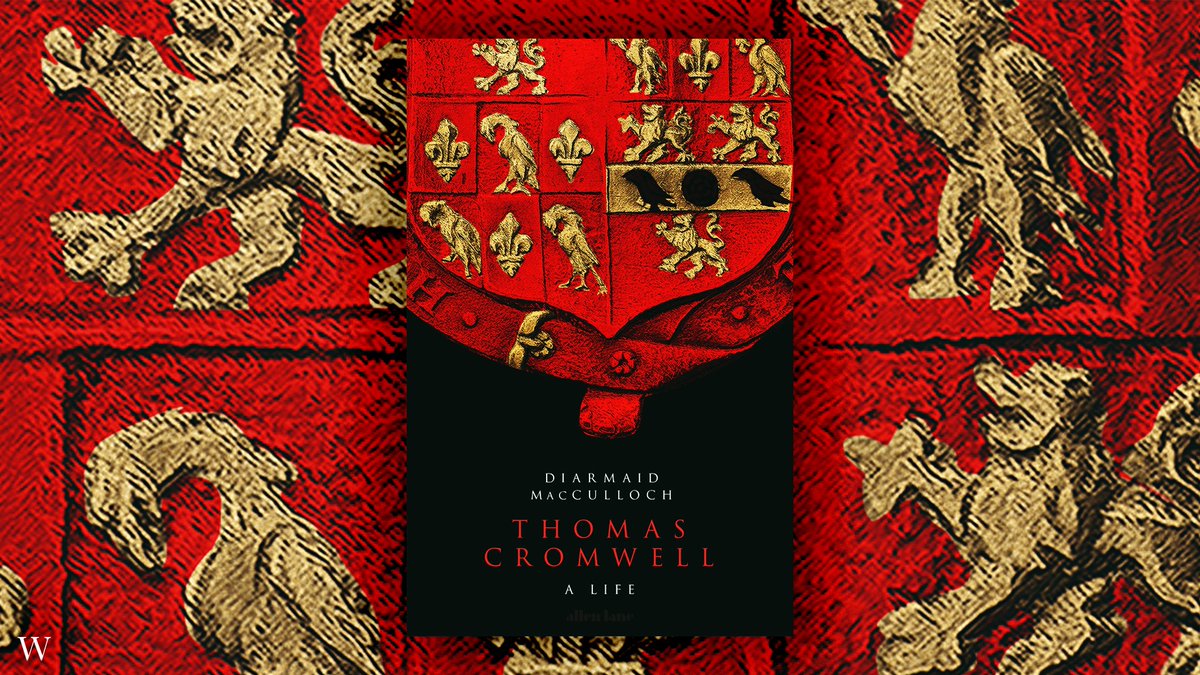
Book Reviews: 'Thomas Cromwell: A Life' by Diarmaid MacCulloch


By Melanie McDonagh
27 September 2018

Image result for diarmaid macculloch cromwell

There is, alas, no way that any review of this book can live up to the blurb on the back from Hilary Mantel: “This is the biography we have been awaiting for 400 years.” And this meticulous work of scholarship will almost certainly be seen as the book of the telly series — that is to say, the history to flesh out Mantel’s Booker-winning Wolf Hall novels and their spin-offs, from which so many of the middle classes derive their Tudor history.
Yet this biography is so at ease with the sources, so effortlessly scholarly, it deserves more than to be seen as Wolf Hall: the history. It is a feat. Diarmaid MacCulloch (whom I know and like) recalls the great Sir Geoffrey Elton saying of Thomas Cromwell, “He is not biographable.” Well it turns out he is, though there remains all manner of aspects of his life that are stubbornly unknowable.
This is not a book for the general reader. It will, or should be, cited as a book of the year, but most readers will find themselves bogged down by the wealth of necessary detail, by the intricacies of the web of Tudor connections on which he is brilliant: back then the personal was political. If MacCulloch has sense, he’ll follow this with a slim popular paperback. 
This isn’t to say it’s not terrifically readable, because it is. It’s witty — there are acerbic asides at every turn — but this is the work of a scholar.
The author himself, writing about the book, says that he didn’t find in Cromwell “a pantomime villain”. Well no, he wouldn’t, but what we still get here is Cromwell the complete bastard. That is, a man who was the greatest fixer of his age, who combined ideological commitment to Protestantism and the interests of his capricious master with an unholy zeal while enriching himself and his family (son Gregory got the plum priory site at Lewes) from the spoils of the monasteries.
The list of his victims is too long to cite (by way of balance, they included Anabaptists, the Islamic State of the age, as well as Catholics) but in the name of king and Reformation he pursued young and old, elderly monks and friars as well as young women: killed horribly, most of them. In the case of the London Carthusians, his line is that the Carthusians were “victims of the King’s savagery”, rather than Cromwell’s. Yet MacCulloch says nothing about Cromwell’s deliberate and sadistic prolonging of their agony on the scaffold, and he glosses over the starvation and chaining of the others (in their own excrement), which he must have authorised.
In the case of the most prominent victims, Thomas More and John Fisher — whose executions shocked Europe — the most he can say is Cromwell kept them in decent food and drink in the Tower. 
He was, mind you, a family man; the reason he never remarried after his wife died was, says the author, almost certainly because he couldn’t bear to. He did have an illegitimate daughter, Jane, but that was no big deal. It was his promotion of his son — whom he married to the sister of Jane Seymour — that expedited his downfall.
It seems his commitment to the Protestant project really was a motive force, and started early. Thus, hatred of Cromwell and his works (iconoclasm, dissolution of the monasteries) was a clear element in the Pilgrimage of Grace popular uprising, and he duly reacted with efficient savagery and treachery. 
But, as Mantel cleverly intuited, loyalty to his early master, Cardinal Wolsey (another self-made man and one of the most sympathetic characters here) was another motivating force. As MacCulloch makes clear, Cromwell’s legacy is still with us, in the Protestant character of the CofE. And if this excellent biography doesn’t, for all its best effots, rehabilitate him, it does him more justice than he deserves.
Review: Thomas Cromwell: A Life by Diarmaid MacCulloch — what Wolf Hall didn’t tell you

By Dan Jones
16 September 2018
Image result for diarmaid macculloch cromwell
Thomas Cromwell, c. 1530, Holbein School

Minutes before his head was struck off with an axe, Thomas Cromwell, Henry VIII’s disgraced former minister, made a speech. “I have been a great traveller in this world,” he said, “and being but of a base degree, was called to high estate and [since] the time I came thereunto, I have offended my prince.” He asked God for mercy, made some disingenuous remarks about the king’s grace, then went calmly to his death. Accounts vary as to the efficiency of the headsman, but as Diarmaid MacCulloch writes with the dry wit that characterises this triumphant and definitive biography, “even botched beheadings are soon over”.
Cromwell’s final inventory of his life is hard to fault. Born around 1485 and raised in Putney, he was a self-described “ruffian” in his youth, but picked up a legal education, roamed Italy and Flanders for several years, then returned to England and rose to political eminence: first in the service of Cardinal Wolsey and later Henry VIII. His value lay in his talent as fixer and problem-solver par excellence: a sort of 16th-century management consultant, albeit one who ended up issuing blithe, cruel instructions such as “pinch him with pains” when ordering the torture of a parson who had drunkenly complained about the government.
Installed from around 1532 as the king’s trusted factotum, Cromwell pulled the strings in the annulment of Henry’s first marriage, to Katharine of Aragon, freeing him to marry Anne Boleyn. He micromanaged the consequent “Break with Rome”, by which parliament declared England free of papal jurisdiction and appointed Henry Supreme Head of the English Church. When Anne, too, was cast aside (beheaded in 1536 on spurious allegations of incest and adultery), Cromwell boasted he had plotted the whole thing. He oversaw the dissolution of England’s monasteries and the atrocious programme of state theft, vandalism and judicial murder that comprised its means.
Preternaturally sure-footed and hardworking, Cromwell navigated Henry’s lethal lurches in mood, desire and interest for a decade. Then, in 1539 he overreached, ushering through the king’s fourth marriage, to Anne of Cleves. Henry, obese, impotent and insecure, didn’t fancy Anne. Suddenly he didn’t fancy Cromwell, either. The boy from Putney was now Earl of Essex. Fat good it did him. When the king’s pleasure wavered, Cromwell’s enemies gleefully nudged Henry towards his extermination. Henry took little nudging.
The events of the 1530s were wildly dramatic and historically important and Cromwell (the name, MacCulloch writes, was probably pronounced “Crummel”) was at the heart of them. Still, he occupies historians and novelists to a remarkable degree.
MacCulloch knows this well. Today he is professor of the history of the church at Oxford University. As a postgraduate he was supervised by Geoffrey Elton, who proposed Cromwell as the architect of a “Tudor revolution in government”: the creator of modern bureaucracy out of the crabby and informal palace mess of the Middle Ages. Unpicking that ingenious thesis has provided a lifetime’s work for Elton’s most brilliant students (including David Starkey).
In a packed text, MacCulloch lays it finally to rest. He shows how, far from inventing a “modern” state, Cromwell built his power-base on the quiet accrual of quaint “medieval” posts that gave him maximum access to the king with minimum visibility, and the cultivation of 15th-century-style “affinities” of supporters. The signature reform of government process during his years in power, a move to rule through a formal Privy Council, actually stymied Cromwell — deliberately so.
These days, Elton’s Cromwell is less familiar than the fictionalised version found in Hilary Mantel’s Wolf Hall. It is testament to Mantel’s deep understanding of the Henrician court and the popularity of her novels that most historians writing about Cromwell now find themselves in conversation with her work and anxious for her approval. MacCulloch is little different. His book comes Mantel-approved as “the biography we have been awaiting for 400 years”. But this is not to say he supports everything she has written. To take one example: Mantel’s depiction of Cromwell’s father, Walter, as a brutalising bully, whom we meet beating his son in the searing opening sequence of Wolf Hall, is based, in MacCulloch’s view, on “Victorian fantasy”. In fact, the one relevant reference in Cromwell’s papers casts Walter in a pleasant light.
Does this matter? Only to readers who insist that historical fiction must unwaveringly follow fact. MacCulloch’s work has far greater value than a yardstick for Wolf Hall’s fidelity. It shows us a Cromwell who was an even more committed promoter of religious reform than is usually acknowledged; who shared nothing but this reforming instinct with Boleyn, who roundly despised him; whose thirst for revenge against those who brought down Wolsey ran to his marrow; who was capable of touching humanity and unbelievable, callous cruelty and fits of rage.

This is also a masterpiece of documentary detective-work, which buzzes with the excitement of a great historian immersed in archives, interrogating not only the thousands of papers Cromwell left behind, but also the gaps left by a (presumed) shredding of evidence as Cromwell’s partisans sought to save him from the king’s wrath at the end.
Most glorious are the sizzling put-downs MacCulloch regularly fires at Henry. The king, he writes, had the “ability to turn deep affection into deep hatred, and then to believe any old nonsense to reinforce his new point of view”. This is acute, elegant and devastating. Not much use to Cromwell, though. Before he was executed in July 1540, Henry carelessly described his most talented minister to the French ambassador as “a good manager, but not fit to meddle in the concerns of kings”. And that, as they say, was that.

Diarmaid MacCulloch delves deep into the soul of Thomas Cromwell – administrator, henchman and evangelical


By Marcus Nevitt
29 September 2018
Image result for diarmaid macculloch cromwell
Mark Rylance as Cromwell in Wolf Hall © BBC

The final moments of Hilary Mantel’s magnificent Wolf Hall see its central protagonist, Thomas Cromwell, trying to banish ghosts. Assailed by memories of his orchestration of the execution of his rival Thomas More, the sight of his head on a block, the ‘sickening sound of the axe on flesh’, Cromwell turns to two sources of solace to improve his mood: the welfare of his household and — oddly, but characteristically —admin. In order to give us a Cromwell who is so much more than an insanely ambitious judicial murderer, Mantel leaves her readers with her protagonist fretting over the future happiness of his recently married secretary Ralph Sadler at the same time as he plots the precise detail of Henry VIII’s imminent progress to Bristol with real care and exactitude.
There is something of this determination to bring the quirks, warmth and light out of the dark material traces of Cromwell’s character in Diarmaid MacCulloch’s captivating and definitive new biography of Henry VIII’s most controversial of royal counsellors. Indeed, so nuanced and even-handed is his portrait that MacCulloch acknowledges that some might argue that he ‘underplays the… rapacity of Cromwell’s public career’.

It is easy to see why rapacity might be thought to be the key to unlocking the enigma of Thomas Cromwell; in a period obsessed with the preservation of vertiginous social hierarchies, but also familiar with the troubling phenomenon of social mobility — Cardinal Wolsey himself was likely a butcher’s son — Cromwell’s rise was so spectacular that it seems to demand some sort of further explanation rooted in the psychology of extraordinary individualism or in Nietzschean ideas of preternatural will. Thus, in his lifetime, Cromwell went from describing himself as a ‘ruffian’ member of the Putney yeomanry, whose family farmed and brewed beer, to becoming the father of the king’s brother-in-law (through the marriage of his son Gregory to Elizabeth Seymour, sister of Jane Seymour, third wife of Henry VIII). In 1535 he became Chancellor of the University of Cambridge without ever having been to university himself. Along the way he also became Earl of Essex, Baron Cromwell of Wimbledon, Chancellor of the Exchequer, Master of the Jewels, Vicegerent in Spirituals (i.e. the layman responsible for exercising Henry VIII’s powers as supreme head of the Church), and Lord Privy Seal; he also accumulated vast quantities of land and property and, by the end of his life, had amassed an immense arsenal of weaponry at his house at Austin Friars sufficient to make an already paranoid and impetuous king extremely twitchy. The arms cache gave Henry VIII yet another reason, following Cromwell’s advocacy of his disastrous marriage to Anne of Cleves, to sanction his execution for treason, heresy and corruption in 1540.
Instead of a one-dimensional caricature of Cromwell as an unscrupulous Machiavel, determined only to advance his familial interests and line his pockets — and such travesties are common in sources as strikingly different as Cardinal Reginald Pole’s contemporary defence of papal supremacy De Unitate (1536) and Robert Hutchinson’s Thomas Cromwell: The Rise and Fall of Henry VIII’s Most Notorious Minister (2007) — MacCulloch gives us depth and perspective on the contradictions and apparent inconsistencies of a man who improvised just as much as he choreographed his way to power. Thus Cromwell was an evangelical who loathed monastic excesses and the superstitions of the old religion, but who began his career selling indulgences (pardons supposed to shorten the duration of Purgatory for purchasers and their families) at the Gild of Our Lady at Boston in Lincolnshire. Where a lesser historian would see here only cynical, secularist opportunism, MacCulloch sagely reminds us how ‘in the first stages of the English Reformation, religious boundaries were yet to be defined clearly, particularly when people balanced lucrative careers with sincerely held but evolving belief’.
It is the continued centrality of this question of religious belief in this assessment of Cromwell’s life and career that makes it so compelling and authoritative. Cromwell was, MacCulloch shows, an enterprising and committed evangelical; intimately acquainted with William Tyndale and Miles Coverdale, he became a staunch advocate of vernacular Bible reading, authorising English translations of the Matthew Bible (1537) and the Great Bible (1539); he patronised a theatre company, the Lord Cromwell’s Players, who specialised in the performance of Reformist drama by the evangelical polemicist John Bale in the late 1530s. Given these credentials, how could so convinced an evangelical as Cromwell allow himself to be protected by and, in turn, do his utmost to defend, that most grandiose of late medieval churchmen, Cardinal Thomas Wolsey? ‘Nicodemism’ is MacCulloch’s brilliant answer, a willingness to subordinate true religious views and dissemble some degree of conformity to the official religion. While the apparent bad faith of Nicodemism concerned Reformers like John Calvin, a Nicodemite version of Reformed Protestantism actually became crucial for a later Elizabethan Church of England which needed to help large swaths of the conforming faithful negotiate the terms of their Roman Catholic past.
In putting religious belief at the heart of this biography, and in characterising Cromwell as a Nicodemite rather than a Machiavel, a secularist, or a devil, MacCulloch redefines his subject’s contribution to Tudor history. MacCulloch nowhere tries to exonerate Cromwell from his involvement in torture and judicial killings — one favoured piece of interrogation advice was to ‘pinch him [the prisoner] with pains’ — but as a man of evangelical belief as well as violence he seems less of an ahistorical monster and more like a recognisable but prodigiously powerful statesman of his period; Thomas More, as Lord Chancellor, too, of course, had his own record of burning heretics.
Making Cromwell a man of faith also enables MacCulloch to renegotiate his relationship with his own mentor, the biography’s dedicatee, Sir Geoffrey Elton (1921–94). Elton supervised MacCulloch’s PhD at Cambridge and for 45 years made Cromwell central to his writings and understanding of the Tudor age, transforming him from mere flunkey of Henry VIII to a harbinger of modernity itself. In Elton’s telling, most famously in The Tudor Revolution in Government (1953), Cromwell was primarily responsible for remodelling the ways in which English central government was administered, developing a governmental machine that turned from managing medieval households to bureaucratising the nation. There is little room for religious belief in this reading of Tudor government and the idea has had its critics from its first appearance — there are playful echoes of it, too, in Cromwell’s consoling turn to admin at the end of Mantel’s Wolf Hall. MacCulloch’s revision shows how the formation of modern administrative structures like the Privy Council was actually an attempt to limit Cromwell’s power, and the effect of his evangelical ideas, over the king, rather than being the ultimate expression of his dominating influence.
Elton famously refused to write a biography of Cromwell, despite multiple invitations to do so, proclaiming that a man who was less an individual personality than a figure representative of an entire age was ‘not biographable’. This meticulously researched, beautifully written and, it must be said, very long book — there are more than 100 pages of bibliographic and discursive endnotes alone — is MacCulloch’s wonderful rejoinder.

Tuesday, October 30, 2018

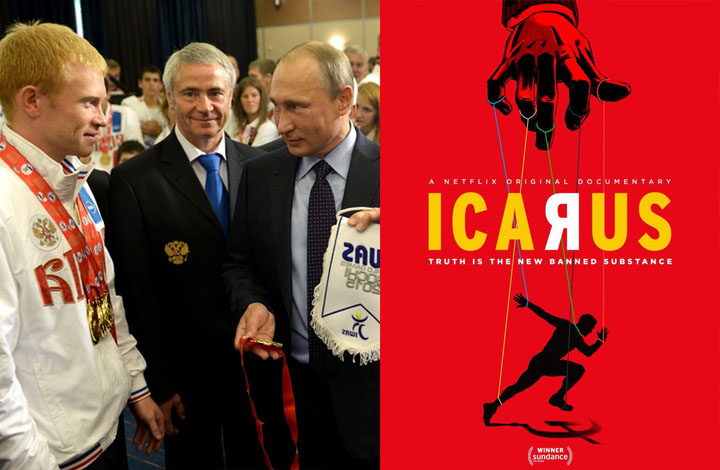
‘Icarus’ Puts Russia, Cycling and Doping Into One Cocktail


By Glenn Kenny
https://www.nytimes.com/2017/08/03/movies/icarus-netflix-russia-olympic-doping.html?action=click&module=RelatedCoverage&pgtype=Article&region=Footer
August 3, 2017

Image result for icarus documentary

In November, the disgraced former cycling champion Lance Armstrong will go to trial in a civil fraud suit related to his use of banned performance-enhancing drugs. A recent report in USA Today suggests that Mr. Armstrong may pursue an “everybody does it” defense, and goes on to describe the Justice Department’s strategy to block that plan. Whatever the fate of Mr. Armstrong, it seems that the sad fact of the matter is that an “everybody does it” argument has legs, so to speak.
The filmmaker Bryan Fogel recently reminded me that the practice of doping goes all the way back to the ancient Greeks, who in their own Olympic Games would drink drug and herb concoctions to kill pain. A few years ago, Mr. Fogel, a filmmaker and a dedicated amateur cyclist who had, like so many, idolized Lance Armstrong in the years when he vehemently denied doping, had an idea for a movie on the theme: He would create a doping regimen for himself that could go undetected and record the results of the experiment.
“I had initially conceived this as a movie like ‘Super Size Me,’ in which I’m the subject of this experiment to expose the failure of antidoping systems,” Mr. Fogel said in a phone interview. “Ultimately the question would be, what is the good of this system that’s supposed to police doping if it can be defeated like this?”
Had things gone according to plan, his film, “Icarus,” available for streaming on Netflix on Friday, Aug. 4, might well have ended up a persuasive albeit dispiriting account of how easy it is to mask the use of performance-enhancing drugs. But a world sporting scandal intervened, making Mr. Fogel’s story more suspenseful and more disturbing.
“Icarus” begins with Mr. Fogel describing his lifelong cycling obsession as a largely masochistic one. Having cycled without using such drugs his whole life, in the wake of the Lance Armstrong scandal he decides to cheat and consults a man who has devoted his life to finding cheaters — Don Catlin, a scientist who invented many of the protocols for contemporary drug testing in sports. Dr. Catlin assists Mr. Fogel for a while and then refers him to his Russian counterpart, Grigory Rodchenkov.
Initially, Dr. Rodchenkov comes off as an eccentric. Bluff and voluble, he conducts Skype calls with Mr. Fogel while shirtless. He dryly refers to his homeland as “the most relaxing place in the world” during Mr. Fogel’s visit to Moscow, after Mr. Fogel has had enough experience to know it’s more likely the opposite.
Strangely enough, Mr. Fogel’s doping doesn’t help him in the next amateur event he competes in. But then the story takes a harrowing turn. Mr. Rodchenkov participated in what the film calls “a systematic, statewide system to cheat the Olympics” — specifically the 2014 Olympic Games in Sochi, Russia. The story explodes in the late fall of 2015, and Dr. Rodchenkov, fearing for his life, is compelled to leave Russia. A late-night call to Mr. Fogel seeking the filmmaker’s help in getting him out of the country is in the movie.
“That wasn’t part of the scheme,” Mr. Fogel said. “When you see me helping Grigory get out of the country, I’m doing it, I’m putting it on my credit card, everything.” At that point, Mr. Fogel said, he had to go back to the movie’s investors and tell them that what started as a meta-exposé with himself as a guinea pig was going in a very different direction.
Suddenly, Mr. Fogel was in constant consultation with lawyers and journalists — including ones from The New York Times, which ran an interview with Dr. Rodchenkov in May 2016, one of many articles on the subject. “Icarus” eventually goes into jaw-dropping detail about the elaborate urine-swapping scheme that enabled large-scale cheating at the Sochi Olympics, where Russian teams won 13 gold medals (the country received 33 medals over all), much to the delight of Russia’s president, Vladimir V. Putin.
“It’s very important to Russia, its national identity, and this is particularly true of its national identity under Putin, that it be a dominating force in sports,” Mr. Fogel said.
“Icarus” has archival footage from the 1970s in which Dr. Catlin shares ideas with a contingent of Russian doctors visiting his labs in California — one of whom is Mr. Rodchenkov.
“In a sense, Grigory was there as a spy!” Mr. Fogel said. “Assume that Russia has been doing this for 40 years and that Sochi was just the icing on the cake. Think about it: They were robbing the bank, and they owned the bank. They spent $50 billion to create Sochi. What they had at stake was showing Russia as a world power in sports.”
All of which brings up a timely question: How far will Russia go to achieve other goals? As for Mr. Rodchenkov, in “Icarus” he evolves from an eccentric character into a courageous man who is forced to make some difficult decisions. For about a year now, he has been in protective custody in the United States. His wife and children remain in Russia, unable to travel because their passports have been confiscated. Mr. Fogel has been able to screen the film for Mr. Rodchenkov and is still concerned about the state of his friend’s case. “I really don’t know what the government has planned for him or how this is going to resolve,” he said.
The global implications of Mr. Fogel’s topic makes Netflix’s reach appealing. “No other company can press a button and get your movie out to 190 countries,” he said. Mr. Fogel does not intend to go back and make his own “Super Size Me,” despite some of the questions about doping in both amateur and professional sports that the movie leaves open. Does everybody really do it? If so, what does the term “fair play” even mean anymore? Would play be more fair if it were allowed? And given the conditions, would permitting a practice we consider corrupt be not just more expedient but somehow morally justifiable?

Angela Merkel: Down, and Soon Out


BY MICHAEL WALSH
https://pjmedia.com/michaelwalsh/angela-merkel-down-and-soon-out/
October 29, 2018

Image result for angela merkel


After another disastrous showing in local elections, German chancellor Angela Merkel will step down as the leader of her political party, the Christian Democratic Union, and not seek re-election as chancellor.
German Chancellor Angela Merkel announced on Monday that she would not seek re-election when her term expires in 2021. Merkel, who has been Chancellor since 2005, made the announcement during a news conference today in Berlin. "It is time today for me to start a new chapter," Merkel told reporters in Berlin. 
"This fourth term is my last term as Chancellor of the Federal Republic of Germany. In the next Bundestag election in 2021, I will not run again as Chancellor. I will not run for the German Bundestag any more, and I do not want any other political office." Merkel told reporters that being Chancellor has been a "very challenging and fulfilling task."
Better late than never -- or perhaps not. Merkel's decision to admit upward of a million Muslim "refugees" in 2015, ostensibly in the name of humanitarianism but in reality to combat Germany's anemic birthrate by importing the next generation of "Germans" and hoping against all evidence that they will assimilate into Teutonic society, was the inciting incident in her fall from grace, but its effects will linger long after she is gone.

And gone she needs to be, long before 2021. The fig leaf is that while she's quitting as CDU party leader, she'll stay in office until the next election. The reality is, with her power base gone, she'll be vacating the chancellery long before that. Merkel has been unable to admit her catastrophic error, and has been busily trying to bridge the yawning gulf between bien-pensant thinking about "immigration" and the reality on the ground by cobbling together an ad hoc coalition government with her nominal opposition, the Social Democrats. That coalition has now effectively cratered. So what comes next?
Over the past three years I’ve received many calls from the British media asking me whether Angela Merkel had finally received a knockout blow. And I’ve always replied: she’s down but not out. Now, however, she’s down and out. Her party’s top brass have forced her to announce that  she won’t be running for the leadership of the Christian Democratic Union (CDU) at their conference in December. At the time of writing, she wants to remain chancellor. But by this time next year at the very latest, she’ll be out of that job, too.
In the general election in September 2017 Merkel’s CDU and its Bavarian sister the CSU (referred to collectively as “the Union”) lost 8.6% compared with 2013. The Union’s losses were equivalent to the gains of the far-right Alternative für Deutschland (AfD). Many inside the CDU called for the party to revert to a more conservative profile. But Merkel did the opposite, attempting to cobble together a “Jamaica” coalition with the Greens and the liberals of the Free Democratic Party (FDP). When the FDP walked out of the talks, Merkel had to continue the “grand coalition” with the Social Democrats (SPD), which neither side really wanted. Since then, the Union and the SPD have been haemorrhaging votes, while the AfD have managed to gain seats in all 16 regional parliaments as well as the Bundestag.
With the country moving to the right, the remedy seems simple: the Union has to follow. But in regional  elections in Bavaria earlier this month, the CSU, which had tried just that, were clobbered, too. People who have abandoned the Union for the far right are not going to be won back easily. On the other hand, young people are voting for the Greens, whereas the AfD is still a party of disgruntled old white men. So if the Union moves so far to the right that a coalition with the ascendant Greens becomes impossible, Merkel’s successor might find him or herself in a situation where the only viable option is an alliance with the AfD.
This is actually even worse than it sounds. As I wrote in this space the other day, the postwar consensus has broken apart under the stress of "immigration," and all the fawning coverage of her by the Leftist media ("the real leader of the Free World") can't paper that over. Germans have been slow to react against Merkelism, largely because they do what they're told by officials and their media mouthpieces (which is pretty much the entire German media), but once aroused they can still be fearsome. In order to rebuild and then reunite the country, Germans accepted a left-centrist government, but Merkel will have left two dead parties in the middle, with the Greens and the AfD tugging from both sides.

Nothing good will come of this, so into the unknown we go. As Yeats wrote in his poem " The Second Coming":
Turning and turning in the widening gyre
The falcon cannot hear the falconer;
Things fall apart; the centre cannot hold;
Mere anarchy is loosed upon the world,
The blood-dimmed tide is loosed, and everywhere
The ceremony of innocence is drowned;
The best lack all conviction, while the worst
Are full of passionate intensity.

Monday, October 29, 2018

Today's Tune: Jason Isbell - Something to Love (Live)

Caravan Contradictions


October 28, 2018
Image result for caravan mexico
(Moises Castillo/AP)
A “caravan”—the euphemism for a current foot-army of more than 10,000 Central Americans—of would-be border crossers has now passed into Mexico. The marchers promise they will continue 1,000 miles and more northward to the U.S. border, despite warnings from President Trump that as unauthorized immigrants they will be turned away. No one has yet explained how, or by whom or what, such a mass of humanity has been supplied, cared for, and organized.
Once at the border, the immigrants further predict that they will successfully, but illegally, enter the United States, then claim refugee status, and finally rely on sympathetic public opinion—and progressive political activism—to avoid deportation.
If past experience is any guide, they are quite right in thinking they can melt into the population, ignore future legal summonses, and count on the de facto amnesty that currently protects 22 million illegal aliens, the vast majority from Mexico and Central America. Border crashers assume rightly that U.S. security agents and the military will not use force, on the principle that Central Americans appearing on CNN battling helmeted Americans with batons and tear gas is bad American “optics.”
But for all the staged midterm theatrics, the caravan illustrates the abject ironies and paradoxes of the entire illegal alien project.
Refugees, True and False
Central Americans claim they are “refugees,” forced out of their homes by violence and endemic lawlessness to save their very lives by migrating to the United States. They insist on that rationale because of quirks in American law that make it more difficult to deport resident “refugees” (especially those with small children) than ordinary illegal aliens seeking improved economic conditions inside the United States.
Yet the migrants are now for the most part well inside Mexico. The Mexican government has generously offered succor. No one is threatening their lives. Mexico has even offered temporary residence for those who seem to have good grounds to be admitted as true political refugees.
In response, the caravan migrants have ignored those offers, because the vast majority are not true refugees. They are mostly no different from the millions of illegal aliens who have entered the United States for higher wages, for the chance to send remittances to their families back home, and for the generous entitlements of American social services that supplement entry-level wages and subsidize remittances. (We keep ignoring that a 15 to 20 percent federal tax on all remittances sent from the U.S. to Central America and Mexico—around $60 billion a year—would, along with a wall, provide a deterrent to caravan immigration.)
To be sure, Honduras, El Salvador and Guatemala are often violent places. They have been so for centuries, both before and after the Spanish conquest. But pause and reflect on the ensuing paradox: fury and fear over endemic lawlessness now prompts thousands to wish to break the law to enter the United States, and continue to ignore statutes by illegally residing here.
Do the migrants ever pause and wonder whether their own past and present attitude to the law in the abstract may in some small part explain why their own country in the concrete is often prone to lawlessness? In other words, why would a host country welcome in aliens who break the law to enter it because their own former home is lawless?
Honduras or El Salvador is not an abstraction. Each nation is a collective of people who likely harbor the same general assumptions as those in the caravan—and neither will improve if its population abandons it or assumes that it can also soon break the law with exemption. It is Orwellian to leave a nation because of its lawlessness and then, first, to enter another nation illegally, and, second, to continue to reside in contravention of the law.
What Is America to Them?
Is the United States a saintly or sinful place? Weirdly, and by the very same people seeking its succor, it is often deemed a cruel and awful place—and especially a cruel and awful place because it does not open its borders to the world to enjoy its cruelty and awfulness.
Interviews with some of the migrants reveal this ongoing irony. Most claim that they have no intention of diverting their odyssey to any other country. Only America will do.
Yet often Central American governments, the Mexican elite, would-be illegal aliens, and their sympathizers in the American progressive and identity politics movements obsess on the supposed xenophobia, the racism, the nativism, and inhospitality of the United States.
So what exactly is America—demonic or deified? Why would anyone wish to enter such an illiberal country, so different from the customs and traditions of Central America? Would not Mexico be a much better place of refuge for the caravan people, given multiple affinities of ethnicity, language, history, and culture?
It is not infrequent to hear from American ethnic activists that the current Spanish-speaking migrants are only “reclaiming” their ancestral frontiers in North America (as in American settlers took it from Mexican nationals who took it from the Spanish who took it from indigenous peoples who took it from other indigenous peoples).
Aside from such historical illiteracy (there were few Mexican nationals in western North America even by the mid-19th-century, and those who were here were often quite hostile to non-Spanish-speaking natives), why exactly would such a strange American culture be so attractive to Central American migrants?
Apparently, it is not the fear of Honduras that drives the caravans, but instead the desire to be among foreign Americans—more specifically, to live in a society blessed with constitutional law, protections of private property, free-market capitalism, open inquiry, individual rights, religious tolerance, gender and racial equity, due process, and an independent judiciary? And where exactly did that tradition arise that now oddly seems to work like a magnet for Latin Americans? If the United States is deemed so desirable, why could not the American paradigm be xeroxed in naturally rich, fertile, and inherently wealthy Central America and Mexico?
Assimilation, Intermarriage, and Integration
Further, the reason the United States is a nation of immigrants is not because of the enduring multiplicity of tribal affinities. America does not work because a fifth of the population still speaks German, or immigrants from Asia create enclaves that perpetually mimic the culture of China, or because Scandinavians have somehow maintained the socialism of Sweden inside the United States.
Immigrants, the ancestors of most of us, enriched our food, music, fashion, art, and literature by importing ideas, customs and practices from their mother countries, but they do not tamper with our core that has guaranteed our success: religious and political tolerance, adherence to the U.S. Constitution, English as the official language, free-market capitalism, and individual liberty.
Thus assimilation, intermarriage, and integration, the now despised “melting pot,” for over two centuries converted immigrants into Americans. At the moment when Americans fail to continue this tradition of assimilation we will end up like the Balkans, Rwanda, Iraq, or for that matter most of the countries in Asia, Africa, and South America.
Have any of the would-be immigrants in the caravan thought much about learning English, of soon recalibrating to envision an American from Vietnam or Russia or Somalia as more one’s kindred soul than those who would soon become to them a foreign national in Central America? Are the caravan migrants hopeful of adapting to the laws of the United States, and of transforming their loyalty and affinity to the United States away from their home country? Or, in the spirit of postmodernism, is the United States envisioned just as a safe, secure, and relatively prosperous enclave in which to remain Central Americans without Central America in their midst?
In other words, immigration has been historically a brutal bargain, one that demands of the immigrant not to live as he did in the past, because to do so would replicate the failures from which he was escaping. Those in Tijuana, for example, live according to customs, protocols and laws quite different from those a few thousand yards away in San Diego, which explains why the two municipalities are themselves so different. The melting pot forced the unwilling to accept that reality and thereby allowed the idea of e pluribus unum to work and to avoid the more common and dangerous romance of ex uno plures. Otherwise why would a Central American leave Central America to recreate it in America?
The Irony of Equal Rights
A final incongruity is reciprocity. Mexico and Central American certainly would not appreciate it if Americans acted toward their country as they do to ours, specifically to enter illegally, to reside illegally, and then to make demands upon the host. Mexico until very recently had wacky stipulations in its constitution and immigration laws that constrained legal immigration if it endangered the demography of Mexico, its apparent cherished idea of raza. In sum, it would be nearly impossible for an Irish-American, a Somali-American, a Vietnamese-American to emigrate to Mexico or Central America and to be considered a full-fledged citizen of the country with all the constitutional protections and cultural affinities of native-born Mexicans.
Yet Mexican and Central Americans, even when entering and residing in America illegally, naturally and understandably assume they can enjoy the same rights and be treated the same as Americans. Is there any formal appreciation that the United States is the only country in the world where that reality is possible, where superficial appearance is no guide to Americanness?
Or more bluntly put, why is America so unlike China, Russia, or Mexico, in the sense that all immigrants from such countries can become full-fledged citizens and be treated as such, and yet few of those nations would consider an American immigrant who did not look Chinese, Russian, or Mexican to ever be considered fully a compatriot?
No doubt some in the caravan are genuine political refugees seeking their salvation in America. A few already may have applied in their home consulates for legal residence and may already be learning English and the peculiarities of the U.S. Constitution.
But that is not the image the caravan conveys. For some reason, the caravan is a paradox, a contradiction and an irony of many thousands who are quite eager to violate U.S. law, to make claims upon their would-be host without serious reflection about why they are leaving one nation and demanding entrance into another—with the full expectation that their new home has no right to demand that all would-be guests fleeing lawlessness should first abide by laws.