Thursday, May 18, 2017

EVERY TIME I TRY TO BE MAD AT TRUMP, THE MEDIA PULL ME BACK


By Ann Coulter
http://www.anncoulter.com/
May 17, 2017

Image result for Neal Katyal trump


Neal Kaytal: “He could say, like President Bush did right after September 11th, ‘The face of Terror is not the true face of Islam, that’s not what Islam is about, Islam is Peace.’

Every time I try to be mad at Trump, the media reel me back in by launching some ridiculous, unprovoked attack. This time, it's the fake news story about Trump "leaking" classified information to the Russkies. 

The president can't "leak" classified information: It's his to declassify. 

The big secret Trump allegedly revealed is that Muslims might try to blow up a plane with laptops. I already knew that. I read it in The New York Times. 

The New York Times, March 22, 2017: 

Devices Banned on Some Planes Over ISIS Fears

"Intelligence showing that the Islamic State is developing a bomb hidden in portable electronics spurred the United States and Britain on Tuesday to bar passengers from airports in a total of 10 Muslim-majority countries from carrying laptop computers ... two senior American counterterrorism officials said. ..."
 

This totally secret, Deep Throat-level information has been widely published in thousands of news outlets throughout the civilized world. There was yet another round of stories last week with the update that the U.S. is considering a laptop ban on flights from Europe as well. 

Hey, you know what might make more sense than banning laptops? How about banning Muslims? 

Bear with me here, I'm still working out the details, but I'm almost certain a federal judge in Hawaii can't block a president's temporary ban on Muslim immigration just because he's testy with Trump over some campaign statements. 

As Northwestern law professor Eugene Kontorovich explained in The Washington Post, courts have never examined a politician's campaign statements for improper motive, because 1) campaigns are not part of the deliberative process; and 2) to start doing so would open the door to "examinations of the entire lives of political officials whose motives may be relevant to legal questions."

Nonetheless, Kontorovich says, that is the legal argument being advanced against Trump's travel ban: "Trump is a bigot, and thus his winning presidential campaign in fact impeaches him from exercising key constitutional and statutory powers, such as administering the immigration laws." 

To preserve their judicial coup, this Monday, the 9th Circuit sent out the geriatric ward to hear an appeal of the Hawaii judge's absurd ruling. At their ages, there's a good chance the judges will be dead by the time the Supreme Court overturns them. 

Arguing against Trump's exercise of his constitutional and statutory powers was first-generation American, Neal Katyal. (There are plenty of 10th-generation America-haters. You couldn't get one of them to argue that we should end our country through mass immigration?) 

At oral argument before the three wheezing gargoyles, Katyal announced that, before enforcing federal immigration laws passed by generations of Democrats and Republicans working together in Congress, the president of the United States is required to profess: "Islam is peace." 

There's a new legal principle! 

Asked by one of the crypt-keepers if Trump is the only president who would be prohibited from issuing this precise travel ban because of his statements about Muslims, the smarmy, preening, pretentious Katyal answered: "I think the most important point is, if you don't say all these things, you never wind up with an executive order like this." 

As lawyers say: Nonresponsive! 

But as long as we're operating under these new rules for determining a U.S. president's rights and responsibilities, how about looking ateverything Trump has said about Muslims? 

For example, may the courts consider this quote from September 2015? 

Trump: "I love the Muslims. I think they are great people. ... Would I consider putting a Muslim-American in my Cabinet? Oh, absolutely. No problem with that." 

Lawyers like Katyal aren't telling the courts what Trump said; they're telling courts their own crazy interpretations of what Trump said. No liberal is capable of accurately reporting Trump's position because the left never understood his position in the first place. As Peter Thiel said, the media take Trump literally, but not seriously, while the people take him seriously, but not literally. 

After the San Bernardino terrorist attacks in December 2015, Trump made the perfectly reasonable suggestion that we curtail our breakneck importation of Muslims, some of whom periodically erupt in murderous violence. The media concluded: TRUMP HATES MUSLIMS! Nothing Trump or anyone else said could persuade them otherwise. 

Here's what Trump actually said: 

"What's happened is, we're out of control. We have no idea who's coming into our country. We have no idea if they love us or if they hate us. ... I have friends that are Muslims. They are great people. But they know we have a problem. They know we have a real problem. 'Cause something is going on. And we can't put up with it, folks. ... 

"Donald J. Trump is calling for a total and complete shutdown of Muslims entering the United States until our country's representatives can figure out what the hell is going on. ... Where the hatred comes from and why -- we'll have to determine, we're going to have to figure it out. We have to figure it out. We can't live like this. It's going to get worse and worse. You're going to have more World Trade Centers. ..." 

Throughout the campaign, Trump supporters tried in vain to explain the so-called "Muslim ban" to a hostile media dead set on interpreting everything out of Trump's mouth in the ugliest possible way. For example, our general policy on Muslim immigration would be "No, thanks!" but there would be exceptions. So Charles Krauthammer can stop worrying about King Abdullah of Jordan. 

In March, Trump supporter Andy Dean told a dense CNN anchor: 

"He's talking about the culture of Islam in the Middle East. ... We love Muslims in America and they love us. Why? We have a great culture that respects women's rights. ... The thing about Muslims in the Middle East is they don't respect women's rights. If a woman wants to get a divorce in the Middle East, that woman could be killed. If you want to leave the religion of Islam in the Middle East, you can be killed. It's very real." 

To the same blockhead anchor, Trump supporter Kayleigh McEnany had to fill in an edited quote the network had just shown of Trump: 

"It's important to know what happened 15 seconds later. Anderson Cooper said to him, 'Are you speaking of radical Islam or are you speaking of Islam?' He said radical; sometimes it's hard to tell the difference, though. So he did say radical Islam. He said it repeatedly during his campaign. He said, 'I have Muslim friends. I love the Muslim people.' ..." 

One of Trump's vast number of African-American supporters told HLN's Drew Pinksy: 

"I love what (Trump) is doing with the Muslims getting out of the country, because if they really knew what that was about -- if they knew that that was about freedom. It was about freedom versus enslavement." 

He's right. It's not about religion. It's not about nationality. It's about hitting the pause button on bringing in radical Islam's dysfunctional, misogynist, violent, exploding-airplane culture. 

The voters understood Trump. (At least some of us did -- barely enough of us to elect him president!) Liberals didn't. But now the courts are blocking Trump's exercise of presidential powers based on the left's own idiotic misinterpretations of what he said. 

COPYRIGHT 2017 ANN COULTER 

Wednesday, May 17, 2017

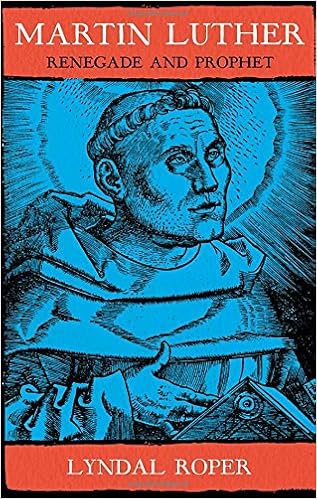
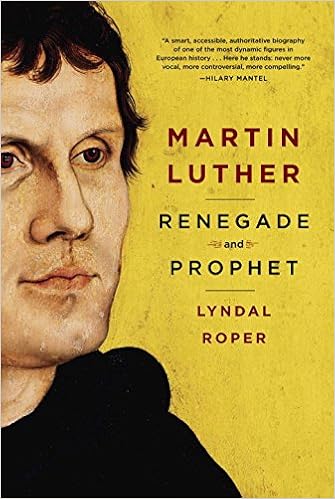
Book Review: 'Martin Luther: Renegade and Prophet' by Lyndal Roper


26 June 2016
Image result for martin luther burning papal bull thumann
Martin Luther burns Pope Leo X’s Papal Bull, Exsurge Domine, which threatened him with excommunication unless he recanted within a sixty day period. Luther refused to recant and responded instead by composing polemical tracts lashing out at the papacy and by publicly burning a copy of the bull on December 10, 1520. (Thumann)

Jesus Christ, a Jewish rabboni, or “teacher”, alarmed the Temple authorities by daring to come back to life. “OK, so we killed him, but only for three days”, runs the Jewish joke. Christianity began with a crucified body that went missing – but was it really a Jewish body? Martin Luther’s austere, reforming personality would not allow for Christ’s Jewish blood because Jews fed off satanic excrement. “The devil stuffs and squirts them so full that it overflows and swims out of every place,” Luther preached.
The German theologian was aware of the Hebraic roots of the Bible. (Matthew’s gospel, the most demonstrably “Jewish” of the four, seeks to show how every recorded act of Jesus is rooted in Jewish scripture.) Yet Luther called for German Jewry’s complete cultural eradication. Small wonder his antisemitism was co-opted by the Third Reich. His virulent Jew-baiting was no mere relic of Catholic antisemitism; it was integral to Protestant identity and a Protestant sense of election as God’s anointed people. As Lyndal Roper writes in her excellent and wholly absorbing biography, Luther argued repeatedly that Jews did not belong to the German race. Instead, they were a contaminant akin to the Nazis’ Fremdkörper – an alien body within the nation.
In many ways, Luther’s campaign to “restore” Biblical Christianity to 16th-century Germany was a battle for land and national supremacy. Catholics, no less than Jews, were seen by Luther as a supranational sect inimical to the sturdy bond of Germanic race and nationhood. His animus against Rome served not only to unite Germans against the papacy, but strengthened their territorial sovereignty. Protestant artist friends of Luther’s, such as Dürer, Holbein and Lucas Cranach, brazenly attacked the “burdens and abuses” of the pope, and thus helped to ensure that an impressive 50 of Germany’s 65 imperial states had adopted the Reformation by the late 16th century.
Unlike other biographers of Luther, Roper concentrates on the churchman’s childhood. Luther was born in Eisleben in northern Germany in 1483 but grew up in the provincial mining town of Mansfeld, a Dantean hellpit of smouldering slagheaps and furnaces. Luther’s father, a well-off smelting master, wanted young Martin to marry into money; instead, in a flagrant act of disobedience, he became a tonsured Augustinian monk. Monastic sexual continence did not suit the mine owner’s son, however, and in 1525 Luther married a former nun, Katharina von Bora. It was no longer a requirement for priests to be celibate.
In Roper’s analysis, Luther’s rebellion against his father anticipated his attacks against the pope. The “father” of the Roman church was a “sodomite” and a “transvestite”, who had subjected the Christian family to levels of “Satanic” abuse. Always a good hater, Luther scorned Marian veneration as a form of idolatary and the papal mass as a black sabbath by another name. Only the Bible –sola scriptura – could decide matters of liturgy and doctrine. The scriptures were superior to the authority of popes, councils, church fathers, the Virgin Mary and all those glittering blessed saints.
On 31 October 1517 Luther nailed (or perhaps glued: history is unclear) his 95 theses to the door of Wittenberg’s Castle church and so sparked off what became known as the Protestant Reformation. Understandably, Luther saw the Catholic sale of indulgences as a money-making scandal. Congregations were gulled into a false sense of salvation through the payment of fees. (“As soon as the coin in the coffer rings, the soul from purgatory springs”, ran a preacher’s advertising jingle.)
Luther was not the first to criticise the un-Christian mechanism of cash-for-salvation. Two centuries before him, in Decameron, Boccaccio had bemoaned the “clever rascality” of priests who hoodwinked their way to wealth and sexual gratification. Yet no church figure before Luther (certainly not in north Europe) had attacked Rome with such a ribald energy and moral indignation. In his pulpit rantings there was something of the huckster or cult leader. Luther was a man who looked “neither left nor right” in his polemics, says Roper: the reformation took the direction it did largely because of his authoritarian personality.
As the reformation spread across Europe, vernacular versions of the Bible became a useful weapon of protest. Luther’s translations of the Old and New Testaments loaded and vivified the German language with coinages that are still in use. Like William Tyndale in England, Luther daringly translated the Greek ekklesia as “community” or “congregation” rather than “church”. Congregational singing – an innovation of the Lutheran revolt – allowed the faithful to become participants in church worship rather than remain mute spectators. By the time he died in 1546, at the age of 62, Luther had set in motion a doctrinal and liturgical revolution that swept all before it; Europe would never be the same again.
Today, on the eve of the Reformation’s 500th anniversary, Germany is a unified democratic republic with a powerful Lutheran church that in some ways still disdains the Vatican and any whiff of ornament. Conceivably, Luther’s assault on Catholic Europe in 1517 helped to usher in modern secularism in the west. His frank attitude to human sexuality, too, was quite forward-looking and certainly a break from late medieval Christian asceticism. Roper’s biography, distinguished by the excellence of its writing and research, is the beginning of wisdom in all things Reformation, anti-Roman and, alas, proto-Hitlerite. Rarely has a church reformer presented such a dubious side.
Martin Luther: Renegade and Prophet is published by Vintage (£30). Click here to buy it for £24

Reforming Spirit - Book Review: 'Martin Luther: Renegade and Prophet' by Lyndal Roper


PETER MARSHALL

June 2016
First Public Monument of Martin Luther, Wittenberg, Germany
Get ready to start hearing a lot about Martin Luther. On 31 October 2017 it will be five hundred years since Luther nailed his Ninety-Five Theses to the door of the Castle Church in Wittenberg, initiating the Protestant Reformation. In fact, as scholars have long known, and Lyndal Roper immediately concedes, whether Luther ever actually posted the Theses in this way is doubtful. But there is no doubting the momentous consequences of the confrontation with the Papacy sparked by Luther’s disquiet over the theology of indulgences. In Britain interest in the anniversary has so far been relatively muted – a contrast with Germany, where an entire decade of official commemorative events is accelerating towards its climax. But Luther undoubtedly belongs to that relatively select company of eminent dead foreigners of whom nearly all British people have heard, and he enjoys the reputation of being a force for historical good: a prophet of individual conscience and liberty against oppressive structures of power and inherited patterns of thinking.
Roper’s beautifully written life is not exactly an exercise in debunking, but she admits that Luther is a ‘difficult hero’. Her publishers’ claim that the book represents the first historical biography ‘for many decades’ is hyperbolic chutzpah, but it is certainly among the most interesting, provocative and original biographies of Luther to appear in recent years – one that tackles head on the challenge of entering into and exploring the interior life of its subject.
Half a century ago, the American psychoanalyst Erik Erikson’s bookYoung Man Luther argued that the trajectory of Luther’s career and the emergent shape of his revolutionary theology were explicable in terms of his troubled relationship with his father, Hans Luder. Among Luther scholars, and historians in general, Erikson’s book has come to exemplify a type of ‘psycho-history’ seen as reductionist and anachronistic.
Yet Roper, who has employed psychoanalytical insights fruitfully in previous work on gender and witchcraft, is unafraid to venture back into this disputed territory. She recognises the risk of ‘reducing major ideas to the outcomes of unconscious wishes or conflicts’, but nonetheless believes that the key to understanding Luther lies in his rebellion against the overbearing Luder, a master miner who wanted his son to become a lawyer, not a priest. Luther’s entry into the monastery was a kind of retreat into a matriarchal world of female saints, which ultimately failed to provide respite from cripplingAnfechtungen (spiritual doubts and temptations).
In the end, having clung to and outgrown a succession of substitute father figures (such as his confessor, Johann von Staupitz), Luther allowed God himself to become his father. The utter dependence expressed in his doctrine of justification by faith alone supplied the resolution to a relentless inner conflict. Luther, Roper thinks, could write compellingly about the ‘freedom’ of the Christian precisely because his own independence of self had been fought for so bitterly and at such great emotional cost.
It all makes perfect sense; maybe too much sense. One of the perils of psychoanalytical explanations of motive, in history as in life, is that once the initial hypothesis is accepted, occurrences can readily be made to conform to it. Yet Roper’s approach is consistently stimulating and exciting, serving to open up debate rather than close it down. She can certainly be absolved of one of the besetting sins of psycho-history, that of under-representing the social and cultural context of the subject. Roper paints remarkably vivid pictures of the mining community of Mansfeld, where Luther grew up, and of the university town of Wittenberg, where he was formed as a thinker and lived almost his entire adult life. Rather than the solitary genius of legend, we see a Luther deeply embedded in relationships and the sometimes petty social concerns of a small provincial town.
Roper’s Luther is a man of intense friendships and equally intense enmities. His openness, personal warmth and ‘breezy indifference to formalities’ are attractive characteristics. But he was also a man energised and motivated by opposition, who could be extraordinarily intransigent, authoritarian and unforgiving. Was this a blessing? Only ‘someone with an utter inability to see anyone else’s point of view’, writes Roper, ‘could have had the courage to take on the papacy’. The tragic course of Luther’s relationship with Andreas Karlstadt, loyal disciple turned bitter critic, is traced in rich and moving detail. Luther had a tendency, extreme even for his age, to personalise theological disagreements and, since he identified his own cause so closely with Christ’s, to see opponents as literally demonic. It led him to misunderstand the causes of the great peasant risings of 1524–5 and to call for the punishment of rebels in terms shocking even to contemporaries, let alone sensitive liberals today.
Nor does Roper tiptoe around the most controversial aspect of Luther’s thought: his visceral anti-Semitism. This is often regarded as either a typical prejudice of the era or as an unfortunate peculiarity of embittered old age. Roper unsparingly documents how hostility to Jews was a leitmotif of Luther’s career, going beyond the conventional anti-Semitism of contemporaries, Catholic and Protestant. It was not incidental but central to his theology: ‘true Christians’ (in other words, Luther’s followers) were the new chosen people of God; Jews had to be displaced, disparaged, even destroyed. Luther’s calls for the burning of synagogues and Talmuds were nothing less than ‘a programme of complete cultural eradication’.
This is to come close to resurrecting another mid-20th-century theme: the argument that Luther was a progenitor of the Holocaust. Roper does not quite say so, though she is not shy of asserting that Luther’s top-down view of political authority – a product of his psychological dependence on God as father, and of his upbringing in a princely territory rather than a self-governing town – ‘provided the theological underpinnings of the accommodation many Lutherans would reach centuries later with the Nazi regime’.
Luther viewed a Christian as simul justus et peccator (‘at the same time justified, and a sinner’). It is appropriate, therefore, that Roper regards this authoritarian figure as also, paradoxically, a prophet of liberation. He never exhibited the instinctive revulsion for female bodies felt by many monks (was that because he grew up with younger sisters?) and he came to renounce asceticism and espouse ‘remarkably uninhibited’ views on sexuality and marriage, as well as to enjoy a full sexual life himself after marrying the ex-nun Katharina von Bora.
This was the unexpected consequence of a ‘gloomy anthropology’: if all human actions were intrinsically sinful, then sexual pleasure was no worse than other forms of human indulgence and could cheerfully be enjoyed and celebrated. For a leading feminist historian, Roper is surprisingly forgiving towards Luther’s notoriously patriarchal and chauvinist attitudes, pointing out that when he said that women should ‘bear children to death’, Luther was in fact insisting that the agonies of childbirth were natural and pleasing to God and simultaneously denouncing the widespread belief that women in labour were under the sway of the devil.
Yet the paths of sexual liberation were dangerously uncharted. In denying marriage to be a sacrament, and thus any right of the Church to regulate it, Luther accidentally set himself up as an authority in marriage disputes: his advice, as Roper documents, ‘at times seemed to have been made up on the spot’. In 1539 Luther caused lasting damage and embarrassment to the cause when he privately agreed that Philip of Hesse, a leading Lutheran prince, could, like a polygamous Old Testament patriarch, covertly contract a bigamous second marriage. Even before the age of the leaked email, there was no chance of a signed memorandum such as this remaining secret.
On occasion, Roper’s generally sure-footed negotiation of Luther’s theological landscape stumbles slightly. She considers it an ‘extraordinary concession’ that Catholic representatives at the Diet of Augsburg were ready to agree that salvation came ‘by faith and grace, not by works alone’. But no reputable medieval theologian believed people could be saved ‘by works alone’ (a version of the ancient Pelagian heresy) – the process necessarily began with an unmerited offer of God’s grace. In noting en passant that Luther speculated very little about the afterlife, Roper overlooks his teaching about a pre-resurrection ‘sleep of the soul’ – intensely controversial in the 16th century and rapidly rejected by the Protestant mainstream. She rightly lays emphasis on Luther’s belief in the Real Presence of Christ in the Eucharist, but goes on to paint this as an aspect of his thinking ‘which is difficult to understand today and where the gulf that separates our world from his seems at its greatest’. Roper’s ‘our’ evidently does not extend to the many millions of Catholics and other modern Christians who do believe Jesus to be really present in forms of bread and wine.
No one, however, can accuse Roper of failing to take Luther’s ideas seriously: the particular virtue of this book is its determination to relate those ideas to the social settings in which Luther was formed and to the personal preoccupations and inner life of a flawed but fascinating individual. Aspects of the presentation will doubtless infuriate uncritical admirers, as well as some Luther scholars of the old school. Yet this unfailingly inventive and compelling account is a welcome gust of fresh air into the thick celebratory atmosphere of anniversary season. There will never, and never should, be a ‘definitive’ biography of Luther. But anyone seriously interested in one of the most influential figures of the last half-millennium will need to make time to read this one.

Hatreds and fears: Review of 'Martin Luther: Renegade and Prophet' by Lyndal Roper

30 July 2016
Image result for martin luther roper
What are we to make of the inner life of Martin Luther (1483-1546), the man who more than any made the Protestant Reformation happen? This inner life is the decided focus of Lyndal Roper’s learned, but humane, biography. Here was a man of such courage that he withstood the Emperor to his face at the Diet of Worms, risking imprisonment and death by insisting on his own heterodox teachings. Yet he was also a man so petrified by a storm in his early twenties that he vowed to become a monk if he was spared.
Fear and hatred seemed to struggle for dominance in Luther’s character, without extinguishing his humour (which has struck modern readers as coarse, a word also used of his facial features by contemporaries). The making of his post-monastic career was his hatred of the papacy, first for its corruption, later for existing at all as an institution. But he hated uppity peasants, too. Despite Luther’s claim that he came from peasant stock, his father was a master smelter from Mansfeld, a mining town in what is now Saxony-Anhalt, grimily brought to life in this biography – as dirty as Coketown in Hard Times, and nastier. In 1524, Luther took the princes’ side in the bloody Peasants’ War.
His “visceral” hatred of Jews is the hardest thing for a modern reader to take. It was no merely theological rejection of Judaism. He advocated the destruction of their schools and the burning of their houses. He brought his scatological fantasies to bear in describing them worshipping and devouring the Devil’s excrement.
Dr Roper, now the Regius Professor of History at Oxford, does not attempt to reconcile Luther’s contradictions. As a monk he suffered Anfechtungen, which can be translated as temptations, and they brought him terror. Later, he recalled one of his superiors remarking that these terrors seemed as necessary to Luther’s make-up as eating and drinking. He feared God and saw Jesus as a terrifying judge, but at the same time remembered having “thought Jesus a womanish name”.
Luther’s lifelong insistence on the real presence of Jesus in the Eucharist, under the guise of bread, is an aspect of his belief emphasised by Roper. But it is striking that he suffered attacks of panic in the presence of the Sacrament. When he said his first Mass, he would have fled in terror at the point of the consecration, when bread and wine became Christ’s body and blood, had the prior not held him back. At a Corpus Christi procession, when the Sacrament in form of bread is honoured in public, he broke out in a sweat of fear, convinced that he would perish.
This means that there must have been something profoundly wrong with Luther’s life as a monk. Since it was the professed aim of this life to spend eternity with Jesus and his father God, it would hardly do to be terrified of them, day by day.
Roper calls Luther’s monastic life one of “extreme bodily and mental mortification”. It is true that he had chosen to join a reformed branch of Augustinians, which observed an unmitigated rule. Luther did fast, and thought it bad for his health, just as he took the view that sexual intercourse would have been good for his bodily health, following the prevailing scientific teaching of his day.
But while the other members of his monastery rose in the middle of the night to sing matins, Luther was excused this, from the age of 25, on the grounds that he had to teach university students the next day. He also skipped the recitation of the Psalms that marked each day’s monastic hours, saving them up all week to be said the following Saturday, which then left him no time even to eat. It was a recipe for a breakdown, or a breakout.
After his 95 theses were nailed on the castle church door at Wittenberg, in 1517, when he was just 34, events carried him on rapidly. Others had attacked papal corruption before, but this time scholars and princes took notice. Luther used the new craft of printing to issue a deluge of polemic. Soon he lost control of the Reformation, and feuded bitterly with other reformers.
Part of the subtitle of Roper’s impressively marshalled book is “Renegade”, and an undertaking on which he reneged was his vow of celibacy. But it was not in order to marry that he left the monastery. “They won’t force a wife on me,” he declared in 1521, when many other reformers were taking wives.
Four years later, he did marry. His bride was Katharina von Bora, an ex-nun. Roper finds it “rather chilling” that she always addressed him as “Mr Doctor”.
592pp, Bodley Head, £30, ebook £14.99

Book Reviews: ‘Martin Luther’, by Lyndal Roper and ‘All Things Made New’, by Diarmaid MacCulloch


By Malcolm Gaskill
https://www.ft.com/
July 15, 2016

Image result for martin luther roper

Like all great ideas, the thinking behind the Protestant Reformation resonated far beyond the imagination of its chief protagonist. Next year sees the 500th anniversary of Martin Luther nailing (or possibly glueing) his 95 theses to the door of Wittenberg’s Castle Church, an act of defiance against the Catholic Church that transformed theology and divided Christians in the west. Its significance was not merely religious, however. Luther’s assault on papal dominance revolutionised European society, politics and culture; it ignited rebellions and wars, made monarchs and broke them, and ultimately transformed the arts and sciences.

We may think we know Luther, but Lyndal Roper shows how much we’ve missed. The service that her magisterial biography does to his memory is twofold: she presents him both as a human being and as a man of his time. She describes a life as it unfolded, full of ambivalence and chance, not retrospectively mythologised. Hers is a book rich in meticulous research and eloquent prose, acute insights and humane judgments. It is surely the definitive account of Luther’s life and work, and will remain so for many years.

Click on the link below to read the rest of the article:

https://www.ft.com/content/d6cdfc92-44f4-11e6-b22f-79eb4891c97d

Show Me the Memos!


BY CHARLIE MARTIN
https://pjmedia.com/
May 16, 2017

Image result for trump comey memo
James Comey/Donald Trump

So, it's 5 p.m. Eastern Time, and yes, there's another anonymously sourced blockbuster breaking news story ...

... in which the New York Times reporters say that they were told about a memo that says:
“I hope you can see your way clear to letting this go, to letting Flynn go,” Mr. Trump told Mr. Comey, according to the memo. “He is a good guy. I hope you can let this go.”
Mr. Trump told Mr. Comey that Mr. Flynn had done nothing wrong, according to the memo.
Mr. Comey did not say anything to Mr. Trump about curtailing the investigation, only replying: “I agree he is a good guy.”
Then we're told that:
The New York Times has not viewed a copy of the memo, which is unclassified, but one of Mr. Comey’s associates read parts of the memo to a Times reporter.
So, yeah, we've got another 5 p.m. release of a Big Big Story based on anonymous sources who didn't show the Times reporter the memo, but just read some selected parts of it. Being "one of Mr. Comey's associates," of course, makes the source completely credible.

Well, no, I don't trust these 5 p.m. "bombshells." I don't trust anonymous sources who are associates of a guy who was just fired for non-performance, and I don't trust reports based on parts of a memo read to a reporter by this anonymous source.

And I say, show me the memos!

Look, as I seem to end up saying over and over again, these 5 p.m. bombshells don't have a very good record of working out. Usually, they turn out to be stories where, with a modicum of critical thinking, you'd see that the story looks pretty questionable. In yesterday's story, for example, we were supposed to believe that Trump blew significant intelligence to the Russians in the presence of the secretary of state, the national security advisor, and a deputy national security advisor—none of whom tried to interrupt or stop him—based on an account of the meeting from an anonymous source who wasn't actually there.

All three people who were actually there immediately denied it. McMaster was on TV today, in the press room, taking questions. He denied it strongly, saying that what Trump had said was "wholly appropriate" and consistent with what they were trying to do.

Of course, the defense today is that McMaster is part of the Russian conspiracy.

So, let's look at this story again. What did Comey's memo allegedly say? That Trump said, the day after he fired Flynn, “I hope you can see your way clear to letting this go, to letting Flynn go. He is a good guy. I hope you can let this go.”

This is being used by several of the usual suspects as a pretense for articles of impeachment on the theory that it's "obstruction of justice."

Except, you know what? It's not. And yes, I Am Not A Lawyer, but I have several friends who are, and they agree with me. (Want to know more details? Read this.)

See, what Trump did was give Flynn a character reference, and ask for Comey to exercise prosecutorial discretion. Something with which Comey is very familiar, having just used prosecutorial discretion to give Hillary Clinton an out.

The DoJ is not unfamiliar with the concept either: remember, the Lynch DoJ used prosecutorial discretion to decide not to charge Lois Lerner.

Now, as I type, Bret Baier is reporting that Comey met with two senators directly after the firing and that Comey didn't say anything to them.

So, we have this apparent memo on file, describing something that turns out not to be an offense, being leaked in a 5 p.m. story, after a day in which the last 5 p.m. story pretty much collapsed.

So yes, I'm suspicious. So I say, show me the memos!

Yes, I think Jason Chaffetz should subpoena them if needed. Yes, I'd like Comey to testify about this under oath. And if he says, "I can't talk about that, it's classified," then go into closed session and compel him to testify.

Trump already gave Comey a brushback, mentioning White House tapes. Since we know that Obama taped things in the White House, it seems likely they exist. So bring them out. Play the tapes. Make Comey testify. And most of all...

SHOW US THE MEMOS.

Because I'm done with anonymous sources.

Tuesday, May 16, 2017

The Latest ‘Just Like Watergate’ Idiocy


The ‘obstruction of justice’ claim is phony.

By Andrew C. McCarthy — May 16, 2017
Image result for trump comey firing
There is so much legal ignorance in the reporting and commentary about the “Russia investigation,” it is hard to keep up. The latest is that we need a special prosecutor because the firing of FBI director James Comey could amount to Watergate-type obstruction of justice.

The claim is half-baked, but I suppose it is an improvement. Up until now, as I pointed out over the weekend, Senate minority leader Chuck Schumer (D., N.Y.) and the media-Democrat echo chamber agitating for a special prosecutor had forgotten the little matter of . . . a crime. Putting aside all the downsides of a special prosecutor that I have outlined on other occasions (e.g., the constitutional flaws of the arrangement, the fact that a special prosecutor is not actually independent of the president and Justice Department, the reality that a special prosecutor undermines an administration’s capacity to govern . . . ), it is foundational that there must be a crime before a prosecutor is assigned to investigate it.

Even under the 1983 Ethics in Government Act (which lapsed in 1999), Congress required a finding (by the attorney general) that there was information indicating a serious criminal-law violation before the appointment of a special prosecutor (or independent counsel) would be triggered. (See Section 591(a) of Title 28, U.S. Code.) By contrast, Trump detractors have failed to identify any penal-law violation as to which there is a basis to believe President Trump or someone in his campaign may be guilty.

The only criminal offense arising out of the Kremlin interference in the 2016 election is hacking. It is not enough to say there is no evidence that the Trump campaign was complicit in this hacking. We must add that U.S. intelligence agencies have told us who carried it out – Russian intelligence – and have further explained that the Russian scheme targeted both Republicans and Democrats.

So now, at last, we have a gambit to fill this gaping hole in the demand for a special prosecutor: Trump’s dismissal of the FBI director is said to interfere with the FBI’s ongoing Russia investigation; therefore, the theory goes, it could amount to obstruction of justice, a felony. This suggestion is legally and factually specious. It is based (not for the first time) on a misrepresentation of the kind of investigation the FBI is doing.

As we have repeatedly pointed out, and as former director Comey stated in congressional testimony, the FBI is conducting a counterintelligence investigation. It is not a criminal investigation. The subject of the investigation is not an American (specifically, Trump) suspected of committing a crime. The subject of the investigation is Russia. The purpose of the investigation is not to develop a prosecutable offense. The purpose is to gather intelligence of the Putin regime’s actions and intentions so that our government can develop countermeasures.

Intelligence gathering is not a judicial proceeding. It is an executive-branch security function. In point of fact, there is no evidence that President Trump has impeded the Russia investigation (a point we’ll expand on momentarily). But even if the president had taken such a measure, that would not be obstruction of a judicial proceeding, or of a law-enforcement investigation aimed at bringing a court prosecution.

The president (assisted by executive-branch intelligence agencies) is in charge of setting intelligence-gathering priorities for the United States. His discretion in determining which collection efforts to begin, which ones to alter, and which ones to curtail, is unreviewable.

Since 1978 (with the enactment of the Foreign Intelligence Surveillance Act), Congress has fashioned a judicial-oversight role over certain collection procedures (e.g., it is necessary to obtain a warrant to conduct electronic surveillance of an American suspected of acting as a foreign agent). That, however, does not change the basic nature of foreign-intelligence operations: They remain executive exercises in information-gathering and analysis regarding foreign powers; they are not law-enforcement probes for the purpose of developing criminal cases to be litigated in the justice system.

To repeat a point I have made a number of times, the FBI is not permitted to use its counterintelligence powers as a pretext to conduct criminal investigations. Therefore, if the Bureau wanted to investigate the commission of a crime, it would have to open a criminal investigation and resort to ordinary criminal procedures – search warrants, criminal wiretap orders, grand juries, arrests, indictments, and criminal trials before federal judges.

Under federal penal law, obstruction of justice arises from interference with judicial proceedings, grand-jury proceedings, the administration of law in proceedings conducted by a federal department or agency, or congressional investigations. Thus, if the Russia investigation were a criminal investigation, and if there were a basis to believe Trump was interfering with, say, a grand-jury or trial proceeding, it might be claimed that an obstruction-of-justice offense was afoot.

What the FBI is actually doing in the Russia investigation, however, is intelligence-gathering in connection with a foreign power. The president has every right to intervene in intelligence activities. Indeed, the purpose of intelligence activities is to provide the president and his advisers with information, so they can make policy or take action against foreign threats to U.S. interests. Congress and the courts have no power to compel the executive branch to commence or continue particular intelligence operations.

Now, put aside that curtailing an intelligence operation would not be obstruction of justice. The stubborn fact is that Trump’s firing of Director Comey has not curtailed the Russia investigation at all. Even NBC News, no Donald Trump fan, has reported that acting FBI director Andrew McCabe testified that there has been “no effort to impede” the investigation. McCabe further explained, in the same congressional hearing, that resources for the investigation were adequate, debunking a claim that requested budgeting had been withheld.

So even though it would not be obstruction of justice if the Russia investigation had been curtailed, it has not been curtailed. Therefore, we need not even address an additional proof hurdle: Under federal law, even an actual interference with a criminal investigation or a judicial case would not amount to obstruction of justice unless it was done “corruptly” – i.e., done with an understanding that the interference was illegal and an intention to subvert the truth-seeking function. Suffice it to say that the closest thing we have seen to a corrupt obstruction of investigative activity has been the leaking of classified information about the investigation to the media during the Obama administration – a felony that surely induced the Kremlin to adopt new tactics that make it harder for our intelligence services to monitor Russian operatives.

Intelligence-collection operations are saliently different from law-enforcement investigations. They do not involve “justice” in the sense of a proceeding in which someone is to be held accountable in a court for a law-violation. To speak of “obstruction of justice” in the context of foreign counterintelligence is inapposite – like speaking of the infield-fly rule in the context of football, or the Oxford-style debate format for a bar fight.
The Russia investigation has not even been curtailed.
Special prosecutors are appointed in order to investigate a known crime, not to search for the possibility of a crime. The Watergate special prosecutor was appointed because there had been a felony break-in at DNC headquarters. The Iran-Contra special prosecutor was appointed after discovery of an illegal scheme in which proceeds for arms sales to Iran (then under an arms embargo) were to be used to fund the Nicaraguan Contras in violation of a congressional funding ban. The Whitewater special prosecutor was appointed due to the discovery of fraudulent financial arrangements in connection with land deals that led to the collapse of a savings-and-loan, costing taxpayers tens of millions of dollars. The Valerie Plame special prosecutor was appointed as a consequence of the disclosure of her status as a CIA officer, in alleged violation of a federal law (the Intelligence Identities Protection Act) that makes it a crime to expose covert agents.

Obviously, there is no need for the Justice Department to consider the appointment of a special prosecutor unless and until there has been a demonstration that there is something to prosecute – a specific, serious criminal-law violation. Senator Schumer and his allies do not fill that void by gibbering about obstruction of justice.

— Andrew C. McCarthy is a senior policy fellow at the National Review Institute and a contributing editor of National Review.

Derek Jeter is gold standard of being a Yankee

By Mike Lupica
http://www.nydailynews.com/sports/
May 14, 2017

Image result for jeter daily news

This is what you must always remember about Derek Jeter, on the occasion of No. 2 being retired at Yankee Stadium: As much winning as he did as the most important Yankee of his time and one of the most important of all time, in those years when he was the leader of the team that made the Yankees the Yankees again, Jeter even managed to win when he and his team lost.

We have talked all week, the way we will talk forever, about that flip play against the A’s in the 2001 playoffs, when he came from shortstop to cut off that throw and made the baseball equivalent of a no-look pass in basketball to Jorge Posada at the plate, before Posada tagged out Jeremy Giambi.

Out of everything that Jeter ever did as a Yankee, perhaps this was the play that best symbolized what he meant:
Because he was there when the Yankees needed him the most that night in Oakland.
Really, though, it had been that way since he first ran out to shortstop for good in April of 1996, about to become the face of everything that was about to happen to the Yankees, whether we knew it at the time or not. Here came this new kid bringing all his old-Yankee grace and old-Yankee values with him. We didn’t know about all that at the time, either, because we didn’t know that much about him. We sure found out over the next 20 years.
But as much as Jeter and those teams mattered, it really is worth remembering today when they mattered as much as they ever had: In three home World Series games in 2001 at the old Stadium, in the shadow of Sept. 11, while the rescue work went on in lower Manhattan; when people in the city looked forward as much as they did to the Yankees against the Diamondbacks in the World Series. Not because those games would change what had happened, would change anything that had happened downtown, really. Just because for a few hours, that far uptown, the world would at least look and sound the way it had on Sept. 10 and Sept. 9 and all the other days in New York before the planes hit the buildings.
It was Joe Torre, a few months later, who would smile and shake his head and talk about the condolences he’d been receiving from Yankee fans since the Yankees had finally lost to the Diamondbacks in the bottom of the ninth of Game 7. Torre talked about the way the Stadium felt and sounded on those three nights when the Yankees kept coming back to beat the Diamondbacks, until Jeter finally became “Mr. November” and won Game 4.
“You tell me how we lost,” Torre said to me at a party in Manhattan one night.
The Diamondbacks were ahead by two runs in the bottom of the ninth of Game 4. But then Tino Martinez hit a two-run homer to tie the game. Jeter finally came up in the bottom of the 10th, right after the clock had struck midnight at the Stadium and it became the first of November. Then Jeter hit one over the right-field wall, not so terribly far from the place in the outfield where Jeffrey Maier had once reached over with his glove in a playoff game against the Orioles in 1996, and Jeter’s ball became a very famous Yankee Stadium home run.
Then Scott Brosius tied Game 5 in the 9th when he hit one off Byung-Hyun Kim, and the Yankees again won in extra innings again. They would never win another game in the ’01 World Series. They got blown out in Game 6 in Phoenix and then Mo Rivera couldn’t get them through the bottom of the ninth after Alfonso Soriano had put the Yankees ahead in Game 7.
Still: For those three nights in October and November of 2001, Jeter and the Yankees meant more than they ever had. So it was inevitable that he would give his team and his fans a moment the way he did with the home-run swing that evened the Series at two games all. Jeter was there that night when it wasn’t just the Yankees who needed him, but his city did as well.
You look back on it all now, on the occasion of the retirement of his number, how he spent 20 years as a star of his team and his city, and how he remained that kind of star even when his skills began to fade. Jeter managed this without scandal or real controversy or becoming the kind of tabloid poster child that Alex Rodriguez would become when he came from Texas to play alongside of Jeter. In so many ways, and we have spoken of this so much over the years, he did become his team’s DiMaggio. It was never about what he said. It was about what he did, and how he did it, and the way he carried himself.
“It wasn’t about how I thought Yankees were supposed to act,” he told me once in front of his locker. “It was about the way I was raised. My parents taught me there was a way everybody was supposed to act.”
Oh, there was the time when there was a “Party On” headline in this paper he didn’t like, after George Steinbrenner suggested that he didn’t much like hearing that Jeter had been out at 3 a.m. after a birthday party one time. He became a story late in the game over his last contract with the Yankees. But then those headlines were gone, and he was still Jeter, not the player he had been when he was young, but carrying himself and conducting his business the way he always did, all the way until he won one last game for the Yankees at the Stadium, with a single to right against the Orioles.
Didn’t hit one over the wall in right. That single to right came at end of a season when the Yankees missed the playoffs again, which always meant a losing season to Derek Jeter. Wasn’t Jeffrey Maier or The Flip or Mr. November or the 3000th hit being a home run. Just helped the Yankees win one more game at Yankee Stadium. The winning didn’t just keep going and going for him. He did. He wasn’t just the Yankee kids wanted to be. He was — and is — what everybody wanted the Yankees to be.

California threatens to shut down book signings and therefore small booksellers


May 11, 2017
Image result for book passage san francisco
Today we filed this First Amendment lawsuit on behalf of beloved Bay Area bookstore Book Passage, and its co-owner, Bill Petrocelli.
Book Passage is a hub of literary activity and free expression.  In addition to selling books, it hosts over 700 author events a year—in which authors give talks, read passages, interact with readers, and autograph their books.  Bill keeps copies of these signed books to sell later—which you can see scattered down the aisles of his store.  Book Passage also curates a monthly book club, wherein readers are sent a first edition book signed by an up-and-coming author.
Book Passage doesn’t charge a premium for the autograph; all of its books are sold for their cover price. But a newly enacted California law makes it extremely risky, if not impossible, for Book Passage to continue selling autographed books or hosting author events.
Acting on purported consumer protection concerns, the legislature recently expanded its autograph law (which formerly only applied to sports memorabilia) to include any signed item worth over $5—including books.  Under that law, sellers must produce a certificate of authenticity and maintain detailed records of every sale for seven years.  Sellers must, among other things:
  1. Note the purchase price and date of sale,
  2. specify whether the item is part of a limited edition,
  3. note the size of the edition, anticipate any future editions,
  4. disclose whether the seller is bonded,
  5. divulge any previous owner’s name and address,
  6. if the book was signed in the presence of the seller, specify the date and location of the signing, and identify a witness to the autograph.
Failure to disclose any of the required details, or to keep the certificate for the full seven years, results in outrageous penalties.  Even an inadvertent omission can subject a seller to actual damages, plus a civil penalty of up to 10 times the damages, plus court costs, plus reasonable attorney’s fees, plus expert witness fees, plus interest. Professional plaintiff’s lawyers must be chomping at the bit.  If Bill sold just 100 signed copies of a $30 book, but six years later, couldn’t locate the records noting the size of the edition, he’d be liable for (at minimum) $30,000.  Bill sells tens of thousands of signed books each year.
For many booksellers like Bill and Book Passage, this massive threat of liability will make holding author events too much of a risk.  And the loss to California’s marketplace of ideas will be gargantuan.  Book signings aren’t just central to Book Passage’s business model, they’re vital to up-and-coming authors with less represented views, who use book signings to lure new readers.  Many famous authors got their start by doing signing events.  While Book Passage hosts such big names as Isabelle Allende and Khaled Hosseini, it also frequently hosts local poets, fiction writers, and even chefs who have authored cookbooks.
Even worse than irrational, the law is pernicious: despite the law’s vast breadth (it also covers paintings, sculptures, and auctioneers), certain sellers have secured exemptions.  Online retailers and pawn shops, those places where uninformed buyers are most vulnerable, do not have to comply.
We are challenging this poorly written, overbroad, yet underinclusive, bill in court.  To find out more, visit our case page here, or watch the video below.