Monday, May 01, 2017

The Enduring Relevance of G.K. Chesterton


by 
http://www.theimaginativeconservative.org/
April 26, 2017

Related image

Editor’s Note: The following essay is an interview with The Imaginative Conservative‘s Senior Contributor Joseph Pearce with Agustín de Beitia, for the Argentinean newspaper La Prensa.

1) In a recent interview, you agreed with the idea that we are in the middle of a Chesterton revival. I apologize for asking you about this subject again, but I find it fascinating. What are the evidences of this revival and why do you think it’s happening?
We are indeed in the midst of a Chesterton revival. The practical evidence for this can be seen in the number of Chesterton books that are currently in print, compared with, say, twenty years ago, as well as the evident growth in the size and number of Chesterton Societies around the world. The reasons for this are manifold but much is due to Chesterton’s enduring relevance. Chesterton analyzed the problems that plague modernity with a wit and wisdom which is charming and disarming, using the power of paradox and combining clarity with charity in a way that is difficult to resist. His greatest strength, me judice, is the way in which he always insists on the inextricable marriage of faith and reason and uses this marriage to counter the errors of modernism. After reading Chesterton we are inoculated from the poison of modernism and will never again confuse the Heilige Geist with the Zeitgeist, the Holy Spirit with the Spirit of the Age. 
2) In the modern world, we can see an individual detachment from faith, while an intolerant laicism grows among society. Do you find any similarities with the time when Chesterton lived and worked? Would you say he was a visionary?
It is said that the more things change, the more they remain the same. The fact is that secularism is always at war with the Faith and that laicism is always at war with the Church. We can see this in the persecution of the early Christians by the Roman Empire, which established a pattern that has been prevalent in human history ever since, from the Machiavellianism of Henry VIII and Elizabeth I in England, to the French Revolution and its Great Terror, and on into the twentieth century with the secular fundamentalism of the Russian Revolution, the Mexican Revolution, the Third Reich, the Spanish Civil War, etcetera, ad nauseam. Chesterton was a visionary insofar as he recognized this all too often forgotten reality, stressing that Christendom is always the cultural and political expression of the Church Militant, the Church at war with the forces of secularism: Pro Ecclesia contra Mundum!
3) One can—at least—be surprised by the natural way in which Chesterton includes faith and reason in his thoughts, up to an extent in which they seem familiar. Was faith such a politically incorrect issue as it is today? Why do you think it appears to be so easy for Chesterton to address this subject?
At the forefront of Chesterton’s engagement with the errors of his day, which were essentially the same errors that are so prevalent today, is his realism, in the philosophical sense of the word. He is always at war with nominalism and relativism, and always a defendant of the rational essence of reality. It is his absolute insistence, at all times, on the inextricable bond that exists between fides et ratio which makes him such a powerful force for good.
4) Why does reading Chesterton’s work lead oneself to the joy of being a Christian? Is it because of the discovery of faith omnipresence? What reflexion can be made at present time, when faith has been erased from public debate?
At the heart of Chesterton’s joy at being a Christian, a joy which is contagious to anyone who spends time with him in his writings, is the connection between humour and humility which we see in his work, a connection that is encapsulated in the wonderful lines in Orthodoxy about angels flying because they take themselves lightly (humility) whereas the Devil falls through the law of gravity because he takes himself too seriously (pride). It is this animus between levitas and gravitas which animates Chesterton’s work.
5) Chesterton dazzles with his eruditeness and his mastery of the paradox and irony to ridicule his opponent’s ideas. How can you explain such a genius, who was at the same time a novelist, an essayist, a poet, an apologist, and a successful polemicist at a wide range of subjects?
Chesterton astonishes us with his wisdom because he sees with Christ-like eyes. Paradoxically, he sees with the wisdom of Christ because he sees with the innocent wonder of a child. This is the paradox of all perception. As Thomas Aquinas teaches, humility opens the eyes to wonder, and wonder opens the eyes and the heart to the splendor of truth and the glories of God’s omnipresence in His Creation. It is this humble and wonder-filled openness (dilatatio) to reality which enables Chesterton to see with such clarity and charity. This is why he always leads us to God whether we are reading one of his novels or poems, or one of his essays or biographies. Chesterton can start with a piece of chalk and lead us to God. He can be running after his hat and find that he is running after God. He can discuss Dickens and find God, or write history as though it’s His Story. He is a writer and an apologist for whom everything is charged with the grandeur of God.    
6) Chesterton occupied an important place during the English catholic resurgence of the early past century after the initiator: Cardinal Newman. There are some people who believe that even those familiarized with Chesterton don’t appreciate the importance of his writing. Is he comparable to Newman in any way?
Chesterton is very much comparable to Newman. Just as Newman could be seen as the initiator or instigator of the Catholic Revival, through his conversion in 1845 and his powerful works of apologetics thereafter, Chesterton can be seen as the main momentum and catalyst for the second phase of the Revival, his own conversion and powerful works proving to be significant contributors to the conversion of thousands of people in his own lifetime and thousands more since. We might call the first phase of the Catholic Revival the Newman Period, from Newman’s conversion in 1845 till his death in 1890, but the second phase should be called the Chesterton Period, from Chesterton’s first being published in 1900 till his death in 1936. If Newman blazed the trail, Chesterton fanned the flames of faith that Newman had set alight. They are partners in evangelism!
7) Would you say he was less acknowledged as a man of letters and a poet than as an apologist?
Part of the genius of Chesterton is that he defies categorization. He was a poet, a novelist, an essayist, a biographer, a popular and populist historian, an apologist, a wit, a controversialist—and some would say a saint! He might not be larger than life, because no man is larger than life, but he is certainly larger than any of the boxes in which we try to squeeze him!
8) We have talked about a time when the two lines of confrontation in the cultural war were balanced, while at the present time we assist to a complete disproportion of forces (in human terms, of course). A time, also, when those lines were still clear –Chesterton had to deal with anarchism, socialism—while now confusion and ambiguity reign, up to the point that even the Church seems to oppose to itself. Is it possible to conclude that such threats were then barely in the beginning? And what do you think that Chesterton would have done today?
I think we are in danger of accepting the “progressive” presumption that there is an inexorable “progress/regress,” i.e. that things are going to continue getting better or worse in a linear sense. The culture of death is seemingly in the ascendant at the moment but it contains within itself the seeds of its own decay and death. What we are witnessing is not the triumph of secular “progress” but its dissolution, disintegration and ultimate suicide. What secular “progressives” see as recent political triumphs are in fact the acceleration of their own demise. We need to remember, as Chesterton never forgot, that evil is its own worst enemy. If Chesterton were alive today he’d be doing exactly what he did in his own time. He’d be exposing the lies of relativism, secularism and the culture of death and showing our generation, as he showed his, that Christian orthodoxy is the only solution to the world’s dissolution.

Books on the topic of this essay may be found in The Imaginative Conservative Bookstore. This essay was originally published in La Prensa (2016) and is republished with gracious permission from the author. The Imaginative Conservative applies the principle of appreciation to the discussion of culture and politics—we approach dialogue with magnanimity rather than with mere civility. Will you help us remain a refreshing oasis in the increasingly contentious arena of modern discourse? Please consider donating now.

Joseph Pearce is a Senior Contributor at The Imaginative Conservative. He is writer in residence and director of the Center for Faith and Culture at Aquinas College in Nashville, Tennessee. His works include: G.K. Chesterton: Wisdom and Innocence, Literary Converts, Tolkien: Man and Myth, Solzhenitsyn: A Soul in Exile, The Quest for Shakespeare and Old Thunder: A Life of Hilaire Belloc. He is the series editor of the Ignatius Critical Editions, and editor of the St. Austin Review. Mr. Pearce has hosted two television series for EWTN on Shakespeare’s Catholicism.

California Squashes Its Young


The Golden State’s suffocating economic policies are driving out a new generation.
April 30, 2017
Image result for california poverty
Skid Row, Downtown Los Angeles
In this era of anti-Trump resistance, many progressives see California as a model of enlightenment. The Golden State’s post-2010 recovery has won plaudits in the progressive press from the New York Times’s Paul Krugman, among others. Yet if one looks at the effects of the state’s policies on key Democratic constituencies— millennials, minorities, and the poor—the picture is dismal. A recent United Way study found that close to one-third of state residents can barely pay their bills, largely due to housing costs. When adjusted for these costs, California leads all states—even historically poor Mississippi—in the percentage of its people living in poverty.
California is home to 77 of the country’s 297 most “economically challenged” cities, based on poverty and unemployment levels. The population of these cities totals more than 12 million. In his new book on the nation’s urban crisis, author Richard Florida ranks three California metropolitan areas—Los Angeles, San Francisco, and San Diego— among the five most unequal in the nation. California, with housing prices 230 percent above the national average, is home to many of the nation’s most unaffordable urban areas, including not only the predictably expensive large metros but also smaller cities such as Santa Cruz, Santa Barbara, and San Luis Obispo. Unsurprisingly, the state’s middle class is disappearing the fastest of any state.
 California’s young population is particularly challenged. As we spell out in our new report from Chapman University and the California Association of Realtors, California has the third-lowest percentage of people aged 25 to 34 who own their own homes—only New York and Hawaii’s are lower. In San Francisco, Los Angeles, and San Diego, the 25-to-34 homeownership rates range from 19.6 percent to 22.6 percent—40 percent or more below the national average.
No big surprise, then, that California’s millennials are more likely to stay at home with Mom and Dad into their thirties. Approximately 47 percent of Americans aged 18 to 34 lived with parents or other relatives in 2015, according to the American Community Survey—but in California, the figure is 54 percent. California’s younger generation, particularly in the cities, seems increasingly destined to live as renters.
The biggest losers from California’s housing crisis are, ironically, the very people whom progressives claim to care about most: the poor and minorities, who also constitute most millennials. Hispanics, now approaching a majority of the state’s population, account for 43 percent of the 25-to-34 cohort. Rates of homeownership for African-American and Hispanic Californians have dropped at four times the rate of Asians and non-Hispanic whites in the last 10 years, while minority homeownership in the Golden State now lags most of the country, notably Texas and the southeast.
Much of this can be traced to California’s long-standing bias against suburban development. Reducing greenhouse-gas emissions remains an obsession. But unless the rest of the country (or the world) adopts California’s strict emissions rules, the state’s regulations are likely to have little or no impact on climate change. Recently passed legislation will make things worse by imposing even more stringent regulations on greenhouse gases, mandating a 40 percent cut from 1990 levels by 2030. This represents the ratcheting up of a regulatory regime that will slow California’s already-torpid rate of issuing building permits, which is well below the national average.
California’s housing policies pose a profound long-term threat to the state’s social stability and economic viability. The state has seen a net loss of about 1.7 million domestic migrants since 2000. After slowing during the Great Recession and its aftermath, out-migration is again growing, even in the booming Bay Area. Some 29,000 more people left the Bay Area than arrived in 2016. The San Francisco metropolitan area saw net migration plunge from plus-15,000 in 2013 to minus-12,000 three years later.
Contrary to some reports, the people leaving California are not predominantly poor and uneducated. IRS data show that California’s outmigration between 2013 and 2014 was concentrated among middle-aged people with higher average incomes than households that stayed in California or moved there. This trend contrasts dramatically with Texas, arguably the state’s strongest economic competitor.
Here again, new policies will only make things worse. The Bay Area’s 2040 regional plan calls for concentrating 75 percent of new housing development on barely 5 percent of the region’s developed land mass. One alternative plan assumes that 78 percent of new housing in the Bay Area would be multi-family and 22 percent single-family (detached and attached). The regional Air Quality Agency has drawn up intrusive plans, seeking to levy tolls on all freeways, ban gas stoves, and urge less meat consumption.
Young people overwhelmingly prefer single-family houses, which represent 80 percent of home purchases nationwide for people under 35. If millennials continue their current rate of savings, notes one study, they would need 28 years to qualify for a median-priced house in San Francisco—but only five years in Charlotte and just three in Atlanta. This may be one reason, notes a recent ULI report, why 74 percent of Bay Area millennials are considering moving out in the next five years.
Regional planners and commercial chambers should indeed look to California as a model—of exactly what not to do. The state’s large metro areas are no longer hot growth spots for millennials, who are flocking to suburbs and exurbs elsewhere. Since 2010, the biggest gains in millennial residents have been in low-density, comparatively affordable cities such as Orlando, Austin, and Nashville. Ultimately, the battle for California’s future—and much of Blue America’s—will turn on how these regions meet the challenge of providing housing and opportunities to a new generation of workers and young families. A California that works only for the wealthy and well-established is not sustainable.
America’s “youth culture” was invented, more or less, in California in the 1960s, from the surfing spots of L.A. and Orange County to the countercultural hotbeds of the Bay Area. But today, California is turning on its young, with policies that ensure that most millennials will never fully “launch,” leaving many destined either to move elsewhere or become wards of an ever-expanding welfare state. The Golden State can still create an environment for growth and family formation—but only if it reclaims its historical role as the nation’s beacon of opportunity and youthful enthusiasm.

Sunday, April 30, 2017

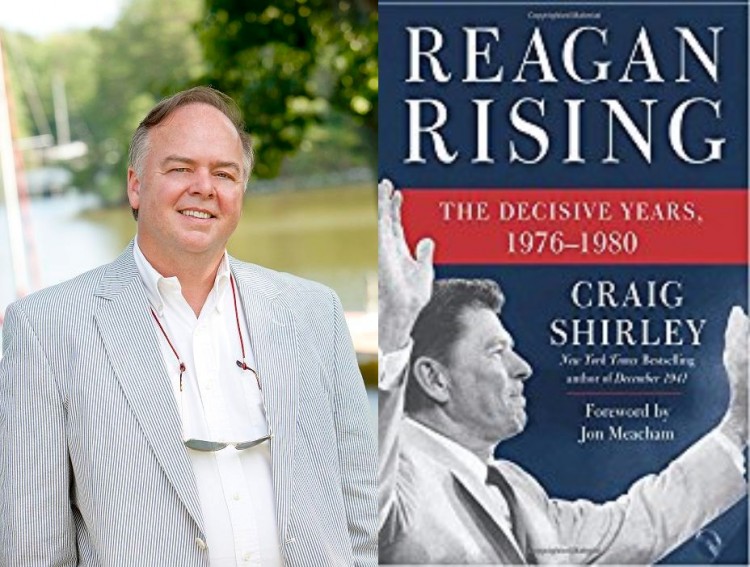
Book Review: 'Reagan Rising' by Craig Shirley

Reagan in the Wilderness
Reagan Rising: The Decisive Years, 1976–1980, by Craig Shirley (Broadside, 432 pp., $29.99)
By Clark S. Judge — April 17, 2017, Issue
Image result for reagan rising
Thucydides had a great advantage over later historians in telling his tale of the Peloponnesian War: As a general in the Greek army, he had been there. Craig Shirley, who is emerging as the most prolific and, in some respects, most insightful chronicler of Ronald Reagan’s political rise, shares that advantage. He was there.

As a young political operative, in roles ranging from press secretary for the surprise winner of a long-shot U.S. Senate bid to a similar position with a prominent governor to heading up a pivotal independent-expenditure committee backing Reagan in 1980, again and again Shirley was perfectly placed to see and understand all that went into one of the most remarkable — and, once in office, successful — political careers in American history.

In earlier volumes, Shirley detailed Reagan’s failed 1976 run for the presidency, his successful bid four years later, and his twilight years after leaving the nation’s highest office following two terms comparable in achievement only to those of Washington, Lincoln, and FDR. Now Shirley has taken on the 40th president’s equivalent of Winston Churchill’s “wilderness years” — the time out of office, when many doubted his ability to return in any serious way to the stage, much less take center stage. This was the period when Reagan’s culminating run for the presidency was born.

While it revolves around Reagan, Shirley’s story also focuses on three other men — Gerald Ford, Jimmy Carter, and George H. W. Bush.

It is widely forgotten now how bitter the division between the Ford and Reagan forces was in the mid 1970s. Shirley takes readers through a compressed account of the 1976 campaign for the GOP nomination — “the tightest two-way race for a major-party nomination in modern political history,” Newsweek (quoted by Shirley) called it — and the fall campaign that followed. Some thought that after Reagan’s strong challenge, Ford should offer him second spot on the ticket. Such was the personal animosity that Ford refused.

With his brilliant, semi-extemporaneous speech on the convention’s last night and impressive appearances before state delegations over the previous week, Reagan emerged as, in the words of prominent columnist Jack Germond, the GOP’s “heir apparent.”

Yet Ford was far from out of the game. He disliked Reagan, who represented a rising but, in the view of moderates, dysfunctional part of the party, and he felt that Reagan had not given his full energies to the general-election campaign, facilitating Carter’s victory. Reagan in turn was disgusted at Ford’s hardball tactics during the nomination fight and opposed Ford’s moderate-Republican approach to the Soviets, the economy, and much else. The rivalry hung over the Republican party even into the 1980 GOP national convention in Detroit. As Shirley tells it, on Carter’s inauguration day, as Ford “jetted off to California” after the ceremonies, he “told a reporter, after dining on shrimp and steak and a couple of dry martinis on the 707 that had been designated Air Force One when he was president, that he was game for another try at the White House in 1980 and that ‘I don’t want anyone to preempt the Republican presidential nomination.’” “Anyone” meant Reagan.

Shirley is surprisingly sympathetic to Carter, who, like Reagan, was cut from populist cloth. As he explains:
Rural populism had sprung up in Carter’s South and Reagan’s Midwest in the 1890s, and was mostly focused on the power of moneyed eastern interests, especially large banks, railroads, and manufacturers. . . . Big government was also a focus of populists’ ire, which Carter acknowledged. . . . Though some racists were involved in the populist movement in its earlier years, both Carter and Reagan abhorred racism.
Shirley highlights another similarity between Carter and his successor. Washington, he says,
did not understand how close Carter was to his wife, Rosalynn. They underestimated this steel magnolia, and for the oft-divorced sophisticates who made up the Washington intelligentsia, such personal closeness between married couples was deemed peculiar. . . . A cultural rift was developing between the uncomplicated Georgians and the unctuous Georgetowners, who would bedevil Carter all through [his presidency].
But though, in cultural respects, they were more like each other than like the establishment of the federal city, Reagan and Carter could not have been more unlike in politics or political ability. Reagan celebrated the American spirit and the American character and looked to restore vibrancy to an economy that was increasingly enmeshed in stagnation and inflation. Carter was soon looking to impose a heavy tax on gasoline, halt dozens of western water projects, and embrace an era of limits. Within months of Carter’s inauguration, columnist George Will would write that he had “opened a multi-front war on numerous American practices, habits, and mores.”

At about the same time, Carter, who had suggested during his campaign that Nixon’s détente policy was too weak-kneed, lectured Notre Dame’s commencement audience to beware of what he called an “inordinate fear of Communism.” Soon he was calling for normalization of relations with China, Cuba, and Vietnam, even as he was cracking down on authoritarian regimes that were, nevertheless, American allies.

Reagan bristled at all of this, but it was Carter’s signing of the treaty (largely negotiated under the Ford administration) turning control of the Panama Canal over to the Panamanian government that gave him an opportunity to act. Almost alone among major American political figures, he opposed the pact and campaigned against it — and though the pro-treaty forces prevailed in the Senate, Reagan won in the country. The nation had seen a man unafraid to take on all comers in defense of what he saw as right.

Despite numerous hints and feints over the next two years, Ford never entered the 1980 race. Instead former congressman, ambassador, Republican National Committee chairman, and CIA chief George H. W. Bush emerged from a crowded field to become Reagan’s chief rival. In 1979, Bush campaigned vigorously and effectively while Reagan stayed off the campaign trail, skipping major events and sticking to his radio commentary, columns, and paid appearances. The reason for this reticence was John Sears, Reagan’s 1976 campaign manager and the man initially in charge of the 1980 run. Shirley is highly critical of Sears’s strategy of aloofness, which came within a breath of killing Reagan’s candidacy.

Across the nation and particularly in Iowa, Bush and his impressive and equally energetic family were everywhere, with the result that Bush won the Iowa caucuses. The next big prize was New Hampshire, five weeks after Iowa. Losing patience with Sears, Reagan took control of his organization and campaigned even more intensively in the Granite State than Bush. Then, the Saturday before the primary, in a showdown debate with Bush, Reagan displayed the same steel and fire that had marked his Panama Canal advocacy. As a local newspaper editor, who was the debate’s moderator, tried to turn off his microphone over a dispute about the role in the debate of other candidates, Reagan, who was sponsoring the forum himself, sternly stopped him with the now famous remark, “I am paying for this microphone, Mr. Green.” By Tuesday night, the nomination was all but in Reagan’s hands.

As he concludes, Shirley offers this assessment of his subject:
Reagan remains one of the most fascinating figures of history and the American presidency, in part because he was a constantly evolving individual. His worldview in 1964 was not his worldview in 1980. His conservatism had changed, from being simply against the intrusion of big government to the more positive advance of individual freedom.
Reading Craig Shirley has become essential for any Ronald Reagan student. Reagan Rising strengthens his already high standing among Reagan biographers.

– Mr. Judge is the managing director of the White House Writers Group and the chairman of the Pacific Research Institute.

Saturday, April 29, 2017

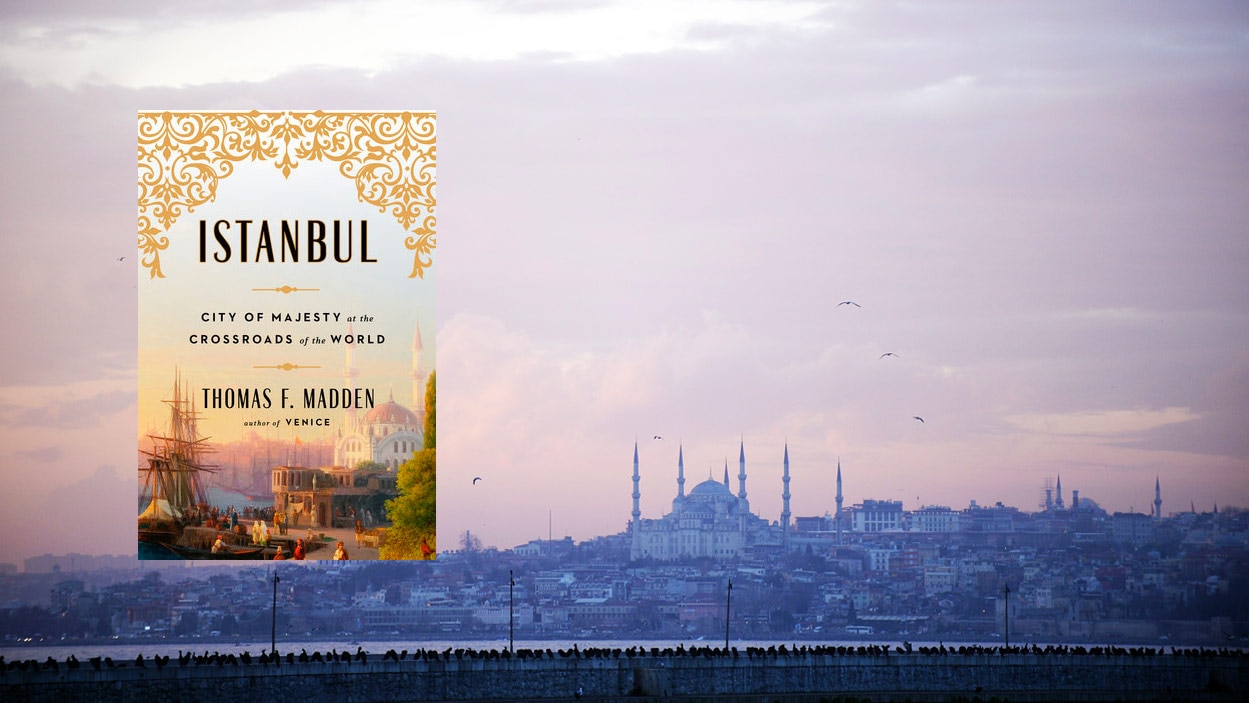
Book Review: 'Istanbul: City of Majesty at the Crossroads of the World' by Thomas F. Madden

A Megacity Old and New
Istanbul: City of Majesty at the Crossroads of the World, by Thomas F. Madden (Viking, 400 pp., $32)
By Claire Berlinski — December 31, 2016, Issue
Image result for istanbul thomas madden
Historian Thomas F. Madden begins his story in 667 b.c. or thereabouts, when, legend has it, Megaran colonists under the command of King Byzas sailed from the Bosporus into the world’s largest natural harbor, an estuary they were to call the Golden Horn. They were ravished by their discovery: There was a verdant peninsula from which Asia and Europe could be seen, with natural defenses of hills and water. The promontory allowed them to survey and dominate the strait that linked two continents and the Black and Mediterranean Seas. The climate was temperate, the water so abundant with fish they could catch them with their hands. Just beyond was the fertile soil of Thrace. It was the ideal site for a trading city.

Byzantium has been known by at least ten other names. (“Istanbul” is a Turkish corruption of the Greek for “to or of the city,” in the local dialect — with the p in “polis” pronounced as a b.) The Megarans could not have imagined their city’s future. In 1203, a dumbfounded Crusader, Robert de Clari, tried to describe the size and splendor of Constantinople and its treasures to Western audiences but at last gave up: “If anyone should recount to you the hundredth part of the richness and the beauty and the nobility that was found . . . in the city, it would seem like a lie and you would not believe it.”

Istanbul remains a city beyond superlatives and beyond Westerners’ imaginations: ancient and modern, magnificent and mad in equal measure. The ghosts of marauding Crusaders, marching janissaries, and conspiratorial Young Turks still haunt its soot-streaked alleyways. Everywhere, writes Madden, there is evidence of the city’s prior incarnations as “a den of debauchery, a city of saints, a smoldering ruin, and a glistening capital of two empires.” But unlike Venice, the subject of one of Madden’s previous books, Istanbul is not an urban museum. It is rather a cacophonous megacity. The Bosporus is still the world’s most critical maritime artery; and construction noise, car horns, and the shouts of street hawkers play a constant counterpoint to the call of the muezzin.

The city’s history long antedates Byzantium, in fact. I was there throughout most of the drama of the construction of its $4 billion subway beneath the Bosporus. In 2005 (to the abject horror of the city’s budget planners), engineers discovered, beneath the proposed main transit station, the lost, a.d. fourth century Byzantine port of Theodosius. The project screeched to a halt while platoons of excited archaeologists descended upon it. They then unearthed 8,000-year-old clothes, urns, ashes, and utensils, forcing historians to completely revise their understanding of the city’s age and origins. The subway was not completed until 2014. Discoveries such as these pose terrible dilemmas to archaeologists: Excavating the top layer can damage the one below it, and vice versa. So which of the many cities below the surface should be conserved? (And how can any of them be made safe from President Recep Tayyip Erdogan and the army of commercial developers who, with basically the same motives as the Megaran colonists, long to replace it all with high-rises, neo-Ottoman kitsch, and multistory parking lots?)

Madden is a medieval and Renaissance historian. The history of Istanbul is his vehicle for telling many other stories: those of antiquity, of the doomed Byzantine Empire, of Christianity and Islam, of trade throughout the ages, of warfare, and of the many empires of the Mediterranean and the Middle East. His use of a single city as the narrative device by which he recounts these overlapping histories works remarkably well, and surely no city could be more fit for the use of this conceit. If Istanbul’s unique blessing is its geography, which makes it a natural crossroads for trade, this is also its curse: It is an irresistible target for conquest, and conquered it was, by most every empire in history — from the Macedonians to the Romans, Persians, Avars, Arabs, Russians, and even Hungarians, and then finally the Ottomans.

Condensing Istanbul’s history in a single volume is a daunting challenge; the book is a great success, and one with no lack of drama. Madden evokes vividly, for example, the horror of the winter of a.d. 196, when, under siege by Roman forces, Byzantines succumbed to disease and starvation, eating corpses and fleeing in desperation by sea on overloaded boats that quickly sank, capsized in the storm or rammed by Roman galleys. As Madden explains, historians are unsure why the Byzantines resisted so fiercely: No one else did. When at last they surrendered, the surviving soldiers and officials were executed and the rest of the people lost their property; many of them were sold into slavery. (How brutal was the ancient world — and how strangely like our own, with Aleppo under siege, desperate refugees drowning in the Mediterranean, and the vanquished executed and sold into slavery.)

The city was renamed Antoniniana, after the emperor’s son. Madden’s brief history of Rome — told in support of the central narrative — is surprisingly clear. I would not have thought it could be so compressed without becoming gibberish.

Madden tells the stories of all of Istanbul’s incarnations skillfully, but he runs out of energy in 1453. After the Muslim conquest, he races toward the end (and who could blame him; Istanbul’s is a long history). He might argue that in the big scheme of things, the Ottoman and Turkish Republican periods are short chapters of Istanbul’s history — and he would be right — but only in these last chapters does the book feel rushed. He describes the Ottomans as vividly as he does the city’s earlier inhabitants (his treatment of the Sultanate of Women is particularly interesting), but given their significance, he might have dwelled longer on them with profit.

The book could also have done with footnotes. There is little by way of scholarly apparatus, presumably because an editor insisted that it would doom the book’s commercial prospects, but this is regrettable. One trusts Madden’s scholarship — he is highly regarded among medievalists — but curious readers naturally want to know how, exactly, we know what he tells us. Even a few judicious notes, or an annotated bibliography of the kind he furnished in his Concise History of the Crusades, would have gone a long way. Better proofreading would also have done him no harm; the inconsistent Turkish transliterations are annoying.

But these are quibbles. Madden is especially good when he tells us what the city looked like in its different incarnations. I had had no sense, for example, of what I might have seen had I walked down one of the main streets of Constantinople, having seen only the ruins, which smell of moss, decay, and damp. It had never occurred to me to imagine the streets “flanked with long rows of monumental columns, stretching two stories in the air and topped by ornate wooden roofs to keep out the sun and rain.” These were lavishly decorated with statues, fountains, and bright tapestries, we learn; they were not avenues, but forums that stretched on for miles, designed to be the centers of civic life.

The book is, inescapably, elegiac. Like all the port cities of the eastern Mediterranean, Istanbul’s is now a story of vanished cosmopolitanism. The end of the Ottoman Empire, and its replacement by the nationalist successor states, has mostly been a tragedy; and Istanbul itself is now heavy with an omnipresent sense of ancient eclipsed glory.

If Istanbul’s vanished cosmopolitanism is a tragedy, so too is ours. From the publicist’s blurb that accompanies the book: “Given the recent terror attacks in highly touristed parts of Turkey’s capital,” it says, it is “critically important to understand the complex history of one of the world’s most important cities.” Could any commendation be more solipsistic? Would it otherwise be unimportant to understand this history? It is dismaying to imagine readers so dull-witted that terrorists must be invoked to compel their curiosity about the city that was Byzantium, Constantinople, New Rome, and the seat of the Ottoman Empire.

Madden is not to be blamed for his publicist, of course. To the contrary, the careful reader will, indeed, learn much in this book about the fate of incurious and self-absorbed empires. Even the careless reader will be much enlightened by the book, as good an introduction to Istanbul and its splendors as one could hope to have.

– Claire Berlinski is the author of Menace in Europe: Why the Continent’s Crisis Is America’s, Too. She is now crowdfunding a new book about Europe titled “Brave Old World.”

Book Review: 'The Holocaust: A New History' by Laurence Rees


By Nikolaus Wachsmann
26 January 2017

Image result for laurence rees holocaust
In 1955, 10 years after his liberation from Auschwitz, Primo Levi published an anguished article about the “gigantic death-dealing machine” the Nazis had built to wipe out Jews such as himself. Levi was mainly concerned with the 1950s, however, not the recent past. He feared that the greatest crime imaginable, still so vivid in the minds of survivors, was in danger of being forgotten by the wider public. Levi railed against the “silence of the civilised world”, which regarded any mention of Nazi extermination camps as in bad taste.
How things have changed. Far from being forgotten, the murder of European Jewry has become a global benchmark for judging inhumanity. Levi’s own memoir of Auschwitz, If This Is a Man, which was initially met with indifference, has been recognised as one of the “truly necessary books” (Philip Roth), and every year sees a stream of works by survivors and historians, philosophers and novelists. The question is no longer: “Is this silence justified?”, as Levi asked rhetorically back in 1955. It is now: “Which of the countless studies should we read?”
Laurence Rees’s The Holocaust: A New History is puffed on its inside cover as “the first accessible and authoritative account of the Holocaust in more than three decades”. Such PR bluster does the book no favours. For there really is no shortage of important recent works, among them Saul Friedländer’s unsurpassed surveyThe Years of Extermination, which won the Pulitzer prize; Timothy Snyder’s bold reinterpretation Black Earth; and the late David Cesarani’s deeply researched and highly readable study Final Solution, which appeared only last year.
Yet look beyond the hype and you will find a fine book. Rees skilfully charts the development of Nazi antisemitic measures, from segregation and discrimination in the years before the second world war to ghettoisation and deportation during the war, culminating in the systematic extermination of around six million Jews. As a former head of BBC TV history programmes, Rees has produced some of the most thoughtful documentaries about Nazi Germany, and he tells this story through a mix of closeups and wide shots of the historical landscape. The latter provides crucial context, connecting anti-Jewish policy to the changing fortunes of the war and the dynamics of Nazi rule. Rees also explains how the perpetrators learned from earlier attacks on other “community aliens”, such as the disabled – the first victims of mass gassings in the Third Reich, who were murdered in “euthanasia” centres equipped with fake showers.
The author tackles some persistent myths along the way. He shows that there was plenty of defiance by the victims, contrary to postwar claims that they followed their killers “like sheep”. Some even got their hands on weapons and turned them against Germans. One example is Marek Edelman, who fought in the doomed Warsaw ghetto uprising. “The first few days were our victory,” he recalled. “We were used to being the ones who ran away from the Germans. They had no expectation of Jews fighting like that.”
Rees also shows that the Nazi machinery of mass murder was far from impersonal or antiseptic, highlighting the sadistic violence of some killers, the carnage in death camps overflowing with corpses, and the unspeakable suffering of the doomed: when children were dragged away from their parents in the Łódź ghetto, one survivor remembered, “their screams reached the sky”.
At the centre stands the question of how the Holocaust happened. For Rees, there was nothing inevitable about it. While Hitler was an exceptionally vicious antisemite from the start of his political career – calling for the “uncompromising removal” of Jews as early as 1919 – he had no master plan for murder. Nazi policy followed a twisted road, with plenty of stops, starts and turns, before heading towards mass extermination. And even then, there was no single order from the top. Hitler set the direction, to be sure, but he left his underlings to devise ever more extreme measures to realise his vision. There were great variations across Europe, depending on local circumstances, leading the Nazis to implement the Holocaust “in radically different ways in different countries”.
These are not novel conclusions; they reflect the current historical consensus. In that sense, there is little new about this “new history”. What distinguishes it is not an original interpretation, but its approach. Rees is a gifted educator, who can tell a complex story with compassion and clarity, without sacrificing all nuances. It is this quality that makes his book one of the best general introductions to the Holocaust.
Above all, it comes alive through the voices of victims, killers and bystanders. Rees draws on interviews collected over the years for his TV programmes, often previously unpublished. Like a documentary, the book frequently cuts from the narrator to eyewitnesses, adding immediacy and poignancy (though one would like to learn more about some of the individuals).
We meet ordinary Germans who fell in line with a regime that promised them peace and prosperity. Interviewed decades after the destruction of the Third Reich, some still looked back wistfully to the days before the war. “You saw the unemployed disappearing from the streets,” recalled Erna Krantz from Bavaria. “There was order and discipline … It was, I thought, a better time”.
We meet callous perpetrators such as Wolfgang Horn, a soldier who did not think twice about burning down a Russian village, because the locals were “too primitive for us”, and foreign collaborators such as Michal Kabáč, a Slovak guard who stole from Jews and forced them on to deportation trains: “We had a good salary, accommodation and canteen. We could not complain.”
And we meet Jews from across Europe, each with their own heartbreaking story to tell. Take Eva Votavová, who was deported to Auschwitz with her family in summer 1942. She last saw her father, looking “sad and hopeless”, after the SS separated men and women on arrival. Sometime later, she found a pair of glasses amid a pile of remains, and began to cry. “I knew they were my mother’s.” Eva herself fell ill with typhoid fever, and lost the glasses she had hidden. “That is how I lost the last memory of my mother.” Rees helps to recover this memory, and the memories of other victims, survivors of “a crime of singular horror in the history of the human race”.
• Nikolaus Wachsmann’s KL: A History of the Nazi Concentration Camps is published in paperback by Abacus. The Holocaust: A New History is published by Viking. To order a copy for £21.25 (RRP £25) go to bookshop.theguardian.com or call 0330 333 6846. Free UK p&p over £10, online orders only. Phone orders min p&p of £1.99.

Why can't House repeal Obamacare? Because a lot of Republicans don't want to


April 27, 2017
Image result for gop obamacare
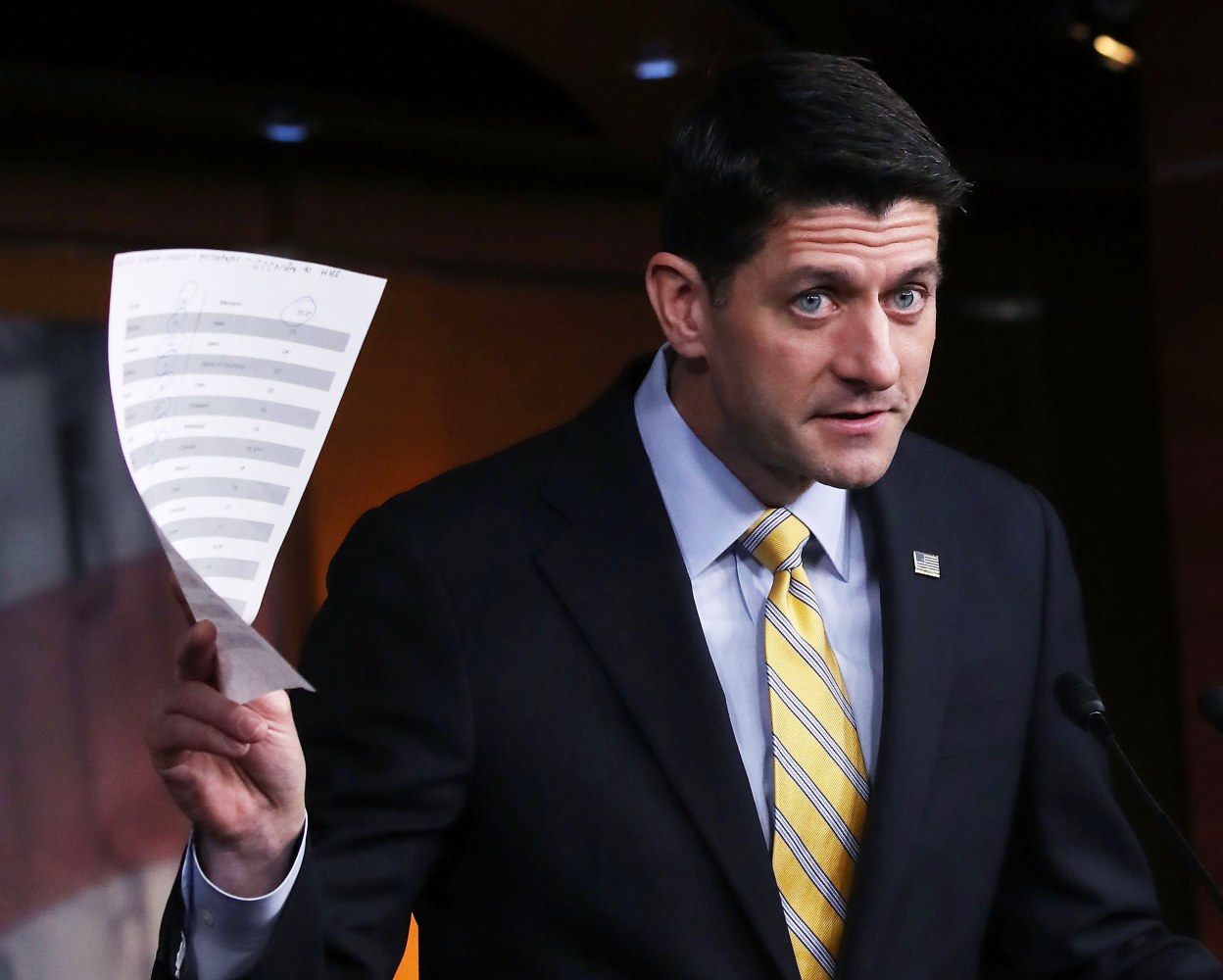
House Speaker Paul Ryan speaks to the media on repealing the Affordable Care Act

"We're going to go when we have the votes," Speaker Paul Ryan said Thursday when asked when the House will pass a bill to repeal and replace Obamacare. Lawmakers will not be constrained by any "artificial deadline," Ryan declared.
On March 24, when the Speaker pulled the GOP Obamacare bill before what would have been a sure defeat, he said, "We're going to be living with Obamacare for the foreseeable future."
But why? Republicans have 238 seats in the House. Repealing Obamacare will require 217 votes. Even with unanimous Democratic opposition, Republicans could lose 21 votes and still prevail on repeal. Why haven't they done it?
By this time, it's becoming increasingly clear that Republicans have not repealed Obamacare because a lot of Republicans do not want to repeal Obamacare.
They don't even want to sorta repeal Obamacare. The bill currently on the table, like the bill pulled in March, falls far short of a full repeal of Obamacare. And yet Republicans still cannot agree on it.
About a week after the first Obamacare repeal failure, a House Republican, speaking privately, said the difficulty in passing the bill was not a parliamentary problem involving the complexities of the Senate and reconciliation. No, the lawmaker said, "It is a problem that we have members in the Republican conference that do not want Obamacare repealed, because of their district. That's the fundamental thing that we're seeing here."
"I thought we campaigned on repealing it," the lawmaker continued. "Now that it's our turn, I'm finding there's about 50 people who really don't want to repeal Obamacare. They want to keep it."
Other conservatives are saying similar things. In an email exchange Thursday afternoon, I asked one member where the latest bill stood. "We absolutely do not have the votes to repeal it," he answered. "The fact that some members are balking at even allowing states to waive out of some of Obamacare regulations is proof positive. We've gone from 'repeal it root-and-branch' to 'Mother-may-I opt out of some of Obamacare' — and we still are having trouble getting the votes."
In a phone conversation Thursday afternoon, another Republican, Rep. Steve King, quibbled a bit with the number of House Republicans who don't want to repeal Obamacare — he would put it in the 40s — but felt certain there are lots of Republicans who don't want to repeal. "If you don't want to get rid of federal mandates to health insurance, then it's pretty clear you don't want to get rid of Obamacare," King said.
"Whatever we come out with, it will say to the American people that a full repeal of Obamacare is no longer in the cards," King added.
Yet another Republican member, in an email exchange, estimated that there are 25 to 30 House Republicans "who don't want to be forced to make the repeal vote." Even that lower number would be enough to sink a repeal measure.
Other GOP lawmakers are openly conceding that whatever the House does — if it does anything — it won't actually repeal Obamacare. Large parts of Barack Obama's legacy legislation will remain standing, a fact that more Republicans are admitting as time goes by.
"It's not full repeal. I will be honest, it's not," Rep. Jim Jordan told Fox News on Wednesday. "But it's as good as we think we can get right now."
"We've given up on trying to get this bill repealed, basically," Rep. Louie Gohmert told Fox Business on Tuesday. "But we've been demanding at least let's repeal some of the provisions that we know will bring down rates."
Some Republicans remain optimistic, but in a much longer-term sense. "The process of removing a 2,300-page law with 20,000 pages of rules can't be done in one vote," says the member who estimated that 25 to 30 Republicans don't want to vote for repeal. "The process will take two years."
The Republican-controlled House and Senate both voted to repeal Obamacare in January 2016. In the House, 239 Republicans voted for repeal, while three voted against it and four did not vote. President Obama, of course, vetoed the bill.
Now, with a president who would sign an Obamacare repeal, there's no way Republicans could get as many votes as last year.
"A pure repeal would get less than 200 votes," said the second member quoted above. "It really is one of the biggest political shams in history — many of these members would not have been elected without promising repeal, and now they are wilting. Some are even complaining that [the Rep. Tom MacArthur amendment] pushes the bill too far right — even though is it far short of a full repeal."
When repeal first failed last month, a number of commentators blamed the conservative House Freedom Caucus. In the days since, caucus members have made the case, convincingly, that they have shown an enormous amount of flexibility in trying to reach agreement with the Tuesday Group, made up of House GOP centrists.
Now, the centrists — a number of Republicans refer to them as "the mods," for moderates — appear to be moving the goalposts, even as the conservatives offer concessions. Conservatives suspect the centrists were perfectly happy for conservatives to take the blame for killing the first bill, but now are showing their true colors by rejecting compromise on the second version. Whatever the circumstances, they don't want to vote to repeal Obamacare.
The reason is fear. When the lawmaker said colleagues don't want repeal "because of their district," that was another way of saying the members are all representatives, and the voters they represent don't want repeal. From The Hill on Thursday afternoon: "Many vulnerable Republicans are running scared. One moderate Republican was overheard in a House cafeteria this week telling an aide: 'If I vote for this healthcare bill, it will be the end of my career.'"
Whichever faction inside the Republican Party is to blame, it could well be that the conservatives' numbers are basically right: There are a lot of Republicans, say 40 to 50, who don't want to repeal Obamacare. Given unanimous Democratic opposition, that means that there are somewhere around 190, or maybe 195, House members who actually want to repeal Obamacare. That will never get the job done. Even a lower estimate, of 25 to 30 members who don't want repeal, would make success impossible. And if that is the case, the question is, why are Republicans trying?

Friday, April 28, 2017

E Street Band's Steven Van Zandt Announces First Solo LP in 18 Years


By 
http://www.rollingstone.com/
April 7, 2017

Image result for little steven 2017

(Photo: Jo Lopez)

E Street Band guitarist Steven Van Zandt will release his first solo LP under the Little Steven moniker in nearly two decades when he unleashes Soulfire in May.

The 12-track album, due out May 19th and available to pre-order now, marks the rocker's first album since 1999's Born Again Savage.
Fans who pre-order will receive an instant download of "Saint Valentine's Day," a reworked version of a track Van Zandt wrote for Nancy Sinatra but ultimately recorded with the Cocktail Slippers.
Soulfire is inspired by the "soul horns-meet-rock & roll guitars" approach featured on Little Steven's work with Southside Johnny and the Asbury Jukes. A handful of Soulfire's tracks are new spins on those Southside Johnny songs, including "Love on the Wrong Side of Town," co-written by Bruce Springsteen.
"I've always been very thematic with my work, very conceptual," Van Zandt said of the album. "I need a big picture. I can't just do a collection of songs; that doesn't work for me. In this case, the concept became me. Who am I? I'm kind of my own genre at this point. So I tried to pick material that when you added it all up, really represented me. So there are a couple of covers, a couple of new songs, and some of what I feel are the best songs I've written and co-written over the years. This record is me doing me."
Soulfire developed out of live performances Van Zandt staged with the Disciples of Soul in 2016. After learning 22 songs for the concerts, Little Steven and his crew entered the studio, laying down a dozen covers and originals for Soulfire, including one track ("I Saw the Light") that Van Zandt co-wrote for Richie Sambora and Orianthi.
"I have very little interest in the modern world and I'm not in any way conflicted about that. I grew up in a renaissance period, a very lucky time when the greatest music ever made was also the most commercial. We'll never see that again so for me, there's only one criteria, which is greatness," Van Zandt said of the LP in a statement. "That's all I care about. Is what I'm doing reaching for greatness? Whether I achieve it or not, that is one hundred percent of my criteria."
Little Steven will announce a North American trek in support of Soulfire in the coming weeks; the guitarist and his band will also perform April 22nd at Asbury Park's Paramount Theatre.
Soulfire Track List
1."Soulfire"
2. "I'm Coming Back"
3. "Blues Is My Business"
4. "I Saw The Light"
5. "Some Things Just Don't Change"
6. "Love On The Wrong Side of Town"
7. "The City Weeps Tonight"
8. "Down and Out in New York City"
9. "Standing in the Line of Fire"
10. "Saint Valentine's Day"
11. "I Don't Want To Go Home"
12. "Ride The Night Away" 

Today's Tune: Little Steven - Soulfire