Tuesday, February 14, 2017

No Thug Left Behind


Obsessed with “racial equity,” St. Paul schools abandoned discipline—and unleashed mayhem.
Winter 2017
St. Paul Public Schools superintendent Valeria Silva speaks during a Feb. 11, 2014, press conference.  (Pioneer Press file photo: John Autey)
St. Paul Public Schools superintendent Valeria Silva speaks during a Feb. 11, 2014, press conference. (Pioneer Press file photo: John Autey)
In the Obama years, America’s public education system embarked on a vast social experiment that threatened to turn schools into educational free-fire zones. The campaign—carried out in the name of “racial equity”—sought to reduce dramatically the suspension rate of black students, who get referred for discipline at much higher rates than other students. From the top down, the U.S. Department of Education drove the effort; from the bottom up, local educational bureaucrats have supported and implemented it.
“Racial equity” has become the all-purpose justification for dubious educational policies. Equity proponents view “disparate impact”—when the same policies yield different outcomes among demographic groups—as conclusive proof of discrimination. On the education front, “equity” does not seek equal treatment for all students. Instead, it demands statistical equivalence in discipline referrals and suspensions for students of every racial group, regardless of those students’ actual conduct.
Equity advocates’ central premise is that teachers, not students, are to blame for the racial-equity discipline gap. They claim that teachers’ biases, cultural ignorance, or insensitivity are the gap’s primary causes. The key to eliminating disparities, they maintain, is to change not students’ but adults’ behavior. Equity supporters justify their agenda on grounds that the racial-equity discipline gap severely hampers black students’ chances of success in life. Kids who get suspended generally fail to graduate on time and are more likely to get caught up in the juvenile-justice system, they say.
President Obama’s Department of Education made racial equity in school discipline one of its top priorities. “The undeniable truth is that everyday educational experience for many students of color violates the principle of equity at the heart of the American promise,” according to Arne Duncan, who served as education secretary until early 2016. “It is adult behavior that must change,” Duncan stated repeatedly. “The school-to-prison pipeline must be challenged every day.”
Donald Trump’s Department of Education won’t have to wait to see how this project has played out in the real world. The public schools of St. Paul, Minnesota, are ahead of the curve in the racial-equity crusade. The violence and chaos that racial-equity policies have produced there should sound alarms across the nation about what can be expected by pursuing this course.
Valeria Silva, who became superintendent of the St. Paul Public Schools in December 2009, was an early and impassioned proponent of racial-equity ideology. In 2011, she made the equity agenda a centerpiece of her Strong Schools, Strong Communities initiative. The district’s website lauded the program as “the most revolutionary change in achievement, alignment, and sustainability within SPPS in the last 40 years.”
Demographically, the St. Paul schools are about 32 percent Asian, 30 percent black, 22 percent white, 14 percent Hispanic, and 2 percent Native American. In 2009–10, 15 percent of the district’s black students were suspended at least once—five times more than white students and about 15 times more than Asian students. In Silva’s view, equity required that the black student population be excluded from school at no more than twice the rate of Asian-Americans, the group with the lowest rate of suspensions.
Silva attacked the racial-equity discipline gap at its alleged root: “white privilege.” Teachers unfairly punish minority students for “largely subjective” behaviors, such as “defiance, disrespect and disruption,” she told theMinneapolis Star Tribune in 2012. To overcome their biases, teachers must learn “a true appreciation” of their students’ cultural “differences” and how these can “impact interactions in the classroom,” she said.
Silva hired a California-based diversity consultant, the Pacific Educational Group (PEG), to compel St. Paul school staff—from principals to janitors to bus drivers—to confront their own bigotry and to achieve “cultural competence” in working with “black and brown” students. In PEG-inspired “courageous conversations” about race, teachers were instructed to begin every statement with a phrase like “as a white woman, I believe,” or “as a black man, I think.” They learned that “shouting out” answers in class and lack of punctuality are black cultural traits and that what may seem to be defiant student behavior is, in fact, just a culturally conditioned expression of “enthusiasm.”
After implementing “white privilege” training, Silva moved to eliminate what she called the “punishment mentality” undergirding the district’s discipline model. In an effort to cut black discipline referrals, she lowered behavior expectations and dropped meaningful penalties for student misconduct. In 2012, the district removed “continual willful disobedience” as a suspendable offense. In addition, to close the “school-to-prison pipeline,” Silva adopted a new protocol on interactions between schools and the police. The protocol ranked student offenses on five levels and required schools to report only the worst—including arson, aggravated assault, and firearm possession—to police. School officials were strongly encouraged to handle other serious offenses—such as assault, sexual violence, and drug possession—on their own. For a time, the district administration actually tied principals’ bonuses to their track record on reducing black discipline referrals.
In 2011–12, disorderly conduct charges for district students dropped 38 percent from the previous school year. School-based offenses referred to the Ramsey County attorney’s office for charges also plunged. In 2006, school officials made 875 referrals for misdemeanor and felony offenses. In 2011, they made 538.
Silva also championed “Positive Behavior Interventions and Supports” (PBIS), an anti-suspension behavior-modification program that focuses on talking and mediation. Under PBIS, unruly students met for about ten minutes with a “behavior specialist” before returning to class or moving to another classroom or school, where they were likely to misbehave again. The “overwhelming majority” of behavior specialists are black, and “it’s not clear to me what their qualifications are,” wrote Aaron Benner—a former fourth-grade teacher who is black himself—in the St. Paul Pioneer Press in 2015. Some specialists “even reward disruptive students by taking them to the gym to play basketball,” he added. “There is no limit to the number of times a disruptive student will be returned to your class.”
PEG-trained “cultural specialists” reinforced the administration’s “blame-the-teacher” approach. They advised that if kids cussed teachers out, those teachers should investigate how their own inability to earn students’ trust had triggered the misconduct. The end result of a discipline infraction “should be more than just kids apologizing,” Kristy Pierce, a cultural specialist at Battle Creek Middle School told City Pages, which ran a series of articles on the mounting chaos in the St. Paul schools. “When you use the word ‘black’ versus ‘African American’ and the student flips out, understand where that might be coming from.”
In 2013, Silva made a final policy change. In the name of equity, she sent thousands of special-education students with “emotional and behavioral disorders”—disproportionately black—into mainstream classrooms. Teachers received no extra support to deal with this unprecedented challenge.
We have a segment of kids who consider themselves untouchable,” said one veteran teacher as the 2015–16 school year began. At the city’s high schools, teachers stood by helplessly as rowdy packs of kids—who came to school for free breakfast, lunch, and WiFi—rampaged through the hallways. “Classroom invasions” by students settling private quarrels or taking revenge for drug deals gone bad became routine. “Students who tire of lectures simply stand up and leave,” reported City Pages. “They hammer into rooms where they don’t belong, inflicting mischief and malice on their peers.” The first few months of the school year witnessed riots or brawls at Como Park, Central, Humboldt, and Harding High Schools—including six fights in three days at Como Park. Police had to use chemical irritants to disperse battling students.
“We are seeing more violence and more serious violence,” warned Steve Linders, a St. Paul police spokesman. “Fights at schools that might have been between two individuals are growing into fights between several individuals or even melees involving up to 50 people.” In September, a massive brawl erupted at Como Park High School. Police had to call for backup, as “the scene became very chaotic with many people fighting,” Linders said. “These are not . . . a couple of individuals squaring off with the intent of solving their private dispute,” teacher Roy Magnuson told the Pioneer Press. “These are kids trying to outnumber and attack.” In October 2015, 30 to 40 students clashed in a stairwell at Humboldt High School. Police tried to break up the brawl, as staff strained to hold a door closed to prevent dozens of students from forcing their way through to join the fight.
As the school year progressed, some high schools increasingly came to resemble war zones. Teachers suffered injuries while resisting classroom invasions or intervening in fights; police were compelled to Taser a disruptive student; and one teen brought a loaded gun to school, saying that he needed it to defend himself against rival gang members. At Harding High School, teacher Becky McQueen found her own solution to the chaos. McQueen—who had been threatened with death and shoved into a shelf by classroom interlopers—told City Pages that, to keep invaders out, she now asks her students to use a “secret knock” to enter her classroom.
Silva’s administration put the blame for the escalating mayhem squarely on adults. Jackie Turner, the district’s chief engagement officer, said that in response to the violence, the district would consider more training for staff and school resource officers on “how to appropriately de-escalate situations.” Fights might not have escalated, she said, “if some of the adults would have reacted differently.” Asked if students should be expelled for fighting, Turner replied: “You’re not going to hear that from me, you’re not going to hear that from the superintendent, you’re not going to hear that from any of the administrators.”
Meanwhile, at many elementary schools, anarchy reigned. Students routinely spewed obscenities, pummeled classmates, and raced screaming through the halls, Benner wrote in his 2015 Pioneer Press article. Elementary school teachers, like their high school counterparts, risked physical danger. Teacher Donna Wu was caught in a fight between two fifth-grade girls and knocked to the ground with a concussion. “I’ve been punched and kicked and spit on” and called “every cuss word you could possibly think of,” fourth-grade aide Sean Kelly told City Pages.
Parent Daeona Griffin told City Pages that a visit to her second-grader’s classroom at Battle Creek Elementary School had left her speechless:
My second-grader’s class is the most dysfunctional classroom I have ever witnessed with my own two eyes. I have never even heard of classrooms like Ms. [Tina] Woods’. She has maybe six extreme behavior students in one class. I’ve seen them punch her. I’ve seen them walk around the halls. I’ve seen her try to read to the class and it took her an hour and a half to read two pages. It’s too much.
David McGill, a science teacher at Capitol Hill Gifted and Talented Magnet School, told the St. Paul school board that a black fourth-grade bully had “significantly compromised an entire year of science instruction” for his fellow students. But teachers and administrators had avoided disciplining him because of the new equity policy, McGill said. Worst of all, some teachers pointed out, the policy removed teachers’ power to require offending students to apologize or to clean up the messes they made. As a result, teachers lamented, these children never had the opportunity to improve self-control and learn from their mistakes. As the first semester came to an end, teachers were in crisis over the challenges they faced. “Many of us . . . often go home in tears,” one told Pioneer Press columnist Ruben Rosario. “Please, don’t give us more staff development on racism or . . . how to de-escalate a student altercation. . . . We teachers feel as if we are drowning.”
December 4, 2015, marked a turning point. That day, at Central High School, a 16-year-old student body-slammed and choked a teacher, John Ekblad, who was attempting to defuse a cafeteria fight. Ekblad was hospitalized with a traumatic brain injury. In the same fracas, an assistant principal was punched repeatedly in the chest and left with a grapefruit-size bruise on his neck. At a press conference the next day, Ramsey County Attorney John Choi branded rising student-on-staff violence “a public health crisis.” Assaults on St. Paul school staff reported to his office tripled in 2015, compared with 2014, and were up 36 percent over the previous four-year average. Attacks on teachers continued unabated in the months that followed. In March, for example, a Como Park High teacher was assaulted during a classroom invasion over a drug deal, suffered a concussion, and required staples to close a head wound.
In 2014, Benner—a leader among teachers critical of the racial-equity policies—spoke forthrightly to the St. Paul school board. “I believe we are crippling our black children by not holding them to the same expectations as other students,” he told its members. St. Paul students, Benner wrote the following year, “are being used in some sort of social experiment where they are not being held accountable for their behavior.” Safety, not teaching, had become his “number one concern,” he said.
“There are those that believe that by suspending kids we are building a pipeline to prison,” said Harding High’s McQueen. “I think that by not [suspending], we are. I think we’re telling these kids, you don’t have to be on time for anything, we’re just going to talk to you. You can assault somebody, and we’re gonna let you come back here.” District leaders, however, adamantly denied the charge that escalating violence and disorder were connected with recent disciplinary changes. The district took steps to mask the extent of the mayhem and to intimidate and silence teachers who criticized Silva’s policies.
Teachers reported, for example, that administrators often failed to follow up when students were referred for discipline. Benner says that this is a common tactic to keep referral and suspension numbers low. Likewise, parents faulted school officials for failing to report dangerous student-on-student violence to police. One mother told the Pioneer Press that her seventh-grade son was viciously kicked in the groin. But “when I asked the principal why she had not contacted police, she told me, ‘That’s your job.’ ” Another mother told the paper that her son had been cut with an X-ACTO knife at school. When she asked why police had not been told, an administrator drew a map to the nearest station on the back of a business card, she said. After the mother contacted the police, the first assailant was charged with misdemeanor assault and the second with a felony.
Teachers who publicly questioned the new discipline policy risked serious repercussions. “There is an intense digging in of heels to say there is no mistake,” said Roy Magnuson, a social studies teacher who leads the political arm of the St. Paul teachers’ union. The common response, he said, is “that people like me have issues with racial equity and that is the reason we are challenging them. That makes for a very convenient way of barring the reality of the situation.”
Sometimes, the penalty for dissent went well beyond race-shaming. Benner says that district leaders pushed him out of his school and fired his aide. He now works at a private school. Candice Egan, a 63-year-old substitute teacher, has also accused the district of retaliation. After a student shoved her and pinned her to a wall in March 2016, she went to urgent care with shoulder and neck pain. Egan reported the assault to police after school authorities failed to do so—though the district’s handbook required them to do so. She also spoke to a reporter. Shortly afterward, she was informed that she could not work in the district again. Egan told the Star Tribune that Teachers on Call, which arranges her subbing engagements, had told her that district officials wanted “distance” from her “because of the way the incident was handled.”
Social-media comments can also endanger teachers’ jobs. On March 9, special-education teacher Theo Olson was placed on paid administrative leave after he, in two Facebook posts, criticized the administration’s lack of support for teachers. Olson made no mention of race. Nevertheless, Silva put him on leave after Black Lives Matter St. Paul threatened to “shut down” Como Park High School unless Olson was fired.
The district’s strong-arm tactics were highly effective. Most teachers kept their frustration and distress to themselves, fearing damaging entries in their personnel file or a retaliatory transfer. In a social-media post, one veteran teacher estimated the number of educators “squashed” at more than 100, those “scared and intimidated into silence” in the thousands, and the number of “parents ignored” as “too many to count.”
As 2015 drew to a close, violence and anarchy had increased so dramatically that suspensions—though a last resort—finally began to rise. In December, Silva announced that first-quarter suspensions were the highest in five years. Seventy-seven percent involved black students, who make up 30 percent of the district’s student population. As public outrage mounted, families of all races began flooding out of the St. Paul district to charters and suburban schools. Many families are saying that “their children . . . don’t feel safe even going to the bathroom,” Joe Nathan of the St. Paul–based Center for School Change told the Star Tribune in 2016. Parents were also troubled by district students’ declining reading and math scores. The district lost thousands of students, adding up to millions of dollars in lost state aid.
Asians, the St. Paul district’s largest minority, especially resented the new discipline regime. These students—primarily of Hmong and other Southeast Asian backgrounds—tend to be well-behaved and respectful of authority, though many struggle academically. Harding High School teacher Koua Yang said that he had lost about 20 Hmong students to the exodus. “All we hear is the academic disparity between the whites and the blacks,” he complained. “This racial equity policy, it’s not equitable to all races . . . . Why do we have to leave?”
In November 2015, St. Paul voters vented their frustration with Silva’s policies in a dramatic way. They overwhelmingly elected a new school board with a strong anti-Silva majority. Caucus for Change, a teachers’-union-organized group, engineered the victory.
A few weeks after the election, however, the new board faced its first crisis. The vicious assault on Ekblad occurred on December 4, and union leadership—calling the attack a “breaking point”—threatened to strike over school safety issues. In March 2016, the board averted a strike by approving a new teachers’ contract. The contract gave teachers what could be called hazard pay—the highest in the state, according to the Star Tribune. But St. Paul citizens’ confidence in Silva had evaporated. Teachers launched a petition demanding her resignation, and black, white, and Asian community leaders echoed that call in an op-ed in the Pioneer Press. At last, on June 21, 2016, the school board announced Silva’s departure after buying out her contract at a cost of almost $800,000.
In its new contract, the union also won funding for 30 new school counselors, nurses, social workers, and psychologists. But unless district leaders resolve to adopt and enforce high standards of student conduct, a significant long-term improvement in school safety appears unlikely.
At the federal level, the Obama administration also made “racial equity” in school discipline a top priority. In January 2014, the Departments of Education and Justice issued a “Dear Colleague” letter, laying out guidelines intended to compel school districts to adopt Silva-style discipline policies. Currently, federal investigations are under way in districts around the country. Some districts have entered into consent decrees; the feds threatened to sue others or withhold funds if their racial numbers didn’t pass muster. Federal officials have seemed unconcerned that violence and disorder have followed implementation of racial-equity-inspired discipline policies—not only in St. Paul but also in districts such as Oklahoma City and New York. With Donald Trump taking office in January 2017, these initiatives could be rolled back—but the incoming president has described his top priorities as immigration, health care, and jobs, and whatever changes might be in the offing will likely take time.
St. Paul’s experience makes clear that discipline policies rooted in racial-equity ideology lead to disaster. This shouldn’t be surprising, considering that the ideology’s two major premises are seriously flawed. The first premise holds that disparities in school-discipline rates are a product of teachers’ racial bias; the second maintains that teachers’ unjustified and discriminatory targeting of black students gives rise to the school-to-prison pipeline.
In 2014, a groundbreaking study in the Journal of Criminal Justice by J. P. Wright and others discredited both these claims. The study utilized the largest sample of school-aged children in the nation. Unlike almost all previous studies, it controlled for individual differences in student behavior over time. Using this rigorous methodology, the authors concluded that teacher bias plays no role in the racial-equity suspension gap, which, they determined, is “completely accounted for by a measure of the prior problem behavior of the student.” Racial differentials in suspension rates, they found, appeared to be “a function of differences in problem behaviors that emerge early in life, that remain relatively stable over time, and that materialize in the classroom.”
Why do black and white students, as groups, behave differently at school? Black students, on average, “are less academically prepared for school entrance” and bring with them deficits in many social and emotional skills, the study found, over which their parents do not exert control. The authors point out that, while a number of earlier studies have suggested pervasive teacher bias as a factor in the racial-equity discipline gap, “some scholars and activists” show “clear motivations” to present the discipline gap as a civil rights issue, “with all the corresponding threats of litigation by the federal government.”
As for the school-to-prison pipeline, the authors appear to view the concept largely as an effort to link “racial differences in suspensions to racial discrimination.” Under these circumstances, they emphasize, “where careers are advanced, where reputations are earned, and where the ‘working ideology’ of scholars is confirmed, the usual critical and cautionary sway of scholarly investigation, critique, and insight becomes marginalized or usurped.” Schools should make efforts to correct the problem behaviors of young students, the authors say. If they fail to do so, early patterns of “disruptive and unregulated behavior” can become entrenched, and lead eventually to school failure, dropping out, and potentially to encounters with the justice system. In the St. Paul schools, however, equity ideology makes such constructive correction impossible.
The deepest source of the racial-equity discipline gap is profound differences in family structure. Young people who grow up without fathers are far more likely than their peers to engage in antisocial behavior, according to voluminous social-science research. Disordered family life often promotes the lack of impulse control and socialization that can lead to school misconduct. The City of St. Paul does not make out-of-wedlock birth data public. However, Intellectual Takeout, a Minnesota-based public-policy institution, has determined through a FOIA request to the Minnesota Department of Health that 87 percent of births to black, U.S.-born mothers in St. Paul occur out of wedlock, compared with 30 percent of white births. Tragically, the problem we confront is not so much a school-to-prison pipeline as a home-to-prison pipeline.
Who pays the greatest price for misguided racial-equity discipline policies? The many poor and minority students who show up at school ready to learn. The breakdown of order that such policies promote is destined to make these children’s already-uphill struggle for a decent education even more daunting.

The CIA Really Is Out to Get General Flynn


February 13, 2017

Related image

How come no-one is accusing NSA Director Michael Flynn of taking bribes from Turkey's dictator Recep Erdogan? Not long ago, they did. Last November 18,Commentary Magazine's Noah Rothman called Flynn a "dubious choice" for the National Security Council because his consulting company had a Turkish client, adding that Flynn’s views on Turkey raised a “conflict of interest.” Flynn had published an article in The Hill on Nov. 8 warning that America's dalliance with the messianic Turkish Islamist and alleged coup plotter Fethullah Gulen might undermine the country's relationship with NATO, at a time when Russia was giving Turkey the full-court press.

On Dec. 2, I wrote in Asia Times that Commentary's Rothman probably was stooging for a CIA disinformation campaign against Flynn. Not only did Flynn propose to deep-six Gulen, a longstanding friend of the CIA, but he had blown the whistle on CIA incompetence in Syria. 
Flynn's Defense Intelligence Agency produced a now-notorious 2012 report warning that chaos in Syria's civil war enabled the rise of a new Caliphate movement, namely ISIS. For full background, see Brad Hoff's July 2016 essay in Foreign Policy Journal: Flynn humiliated the bungling CIA and exposed the incompetence and deception of the Obama administration, and got fired for it. If anyone doubts the depth of CIA incompetence in Syria, I recommend an account that appeared this month in the London Financial Times.

In November, Flynn warned that the U.S. stood to lose its Turkish ally, to the benefit of Russia--and got attacked as a Turkish agent. That doesn't square with the current round of disinformation, which paints Flynn as pro-Russian. Flynn's detractors rely on a fake-news media which forgets the story it spun a couple of months ago when it contradicts the story it is spinning today.

I don't know why Flynn talked to the Russian ambassador about the incoming Trump administration's prospective policy on sanctions, or what transpired in the White House regarding mis-statements that Flynn may or may not have made about such discussions. Senior officials speak to their counterparts in other countries all the time, and for obvious reasons do not want these conversations to become public. The intelligence community, though, was taping Flynn's discussions, and the transcripts (of whose existence we are told but whose contents we have not seen) were used to embarrass him.

A couple of observations are in order.
First, the allegation of various Democrats that Flynn violated the 1799 Logan Act is silly. No-one ever has been prosecuted under the Logan Act. It forbids U.S. citizens from communicating with foreign governments "with intent to influence the measures or conduct of any foreign government or of any officer or agent thereof, in relation to any disputes or controversies with the United States, or to defeat the measures of the United States." Flynn reportedly was talking about prospective policies of an administration that would take office in a matter of days; it is absurd to construe such discussions, whatever they may have contained, as an intent to undermine disputes with the United States.

Second, two narratives are running simultaneously in the media which appear to support each other, but actually consist of entirely independent bubbles of hot air. One is that Flynn misspoke about his contacts with the Russian ambassador, an allegation I cannot evaluate but find neither important nor interesting. The second is that the "Intelligence Community pushes back against a White House it considers leaky, untruthful and penetrated by the Kremlin," as retired intelligence officer John Schindler alleged today in The Observer. Not a single fact is presented in Schindler's account nor in several similar accounts circulating in the media. What leaks? Penetrated by whom? Sen. Joseph McCarthy could do better than that.

Third, the CIA has gone out of its way to sandbag Flynn at the National Security Council. As Politico reports: "On Friday, one of Flynn’s closest deputies on the NSC, senior director for Africa Robin Townley, was informed that the Central Intelligence Agency had rejected his request for an elite security clearance required for service on the NSC, according to two people with direct knowledge of the situation." Townley held precisely the same security clearance at the Department of Defense for seventeen years, yet he was blackballed without explanation. At DoD, Townley had a stellar reputation as a Middle East and Africa expert, and the denial of his clearance is hard to explain except as bureaucratic backstabbing.

Fourth, Gen. Flynn is the hardest of hardliners with respect to Russia within the Trump camp. In his 2016 book Field of Fight (co-authored with PJ Media's Michael Ledeen), Flynn warned of "an international alliance of evil movements and countries that is working to destroy us....The war is on. We face a working coalition that extends from North Korea and China to Russia, Iran, Syria, Syria, Cuba, Bolivia, Venezuela and Nicaragua." The unsubstantiated allegation that he presides over a "leaky" National Security Council tilting towards Russia makes no sense. The only leaks of which we know are politically motivated reports coming from the intelligence community designed to disrupt the normal workings of a democratic government--something that raises grave constitutional issues.

Flynn is the one senior U.S. intelligence officer with the guts to blow the whistle on a series of catastrophic intelligence and operational failures. The available facts point to the conclusion that elements of the humiliated (and perhaps soon-to-be-unemployed) intelligence community is trying to exact vengeance against a principled and patriotic officer. When the Turkish smear against Flynn came out in November, I smelled a rat. The present affair stinks like a dumpster full of dead rats.

Monday, February 13, 2017

Washington Is Out to Get Steve Bannon


NYT smear logic: If you mention the name of a fascist, just once, you must support fascism.

By John Fund — February 12, 2017
Image result for steve bannon
Steve Bannon and Reince Priebus (Chip Somodevilla/Getty Images)
The Washington political establishment has ways of dealing with invading rebel armies like the one led by Donald Trump. For the last month, there has been a collective glee in pointing out the chaotic rollout of the White House’s executive order on travel, its contradictory messaging, and the unpredictability of Trump’s Twitter activity.

All of that is fair game, as is some of the skepticism about Trump aides. Michael Flynn, the retired lieutenant general who is now the national-security adviser, is under a microscope for possibly misleading officials about his pre-inauguration contacts with the Russian ambassador. Kellyanne Conway, the president’s counselor, stepped over a line when she promoted Ivanka Trump’s fashion line during a TV interview (after being asked about the news that some stores have suddenly dropped the brand).

Then there is Steve Bannon, the president’s chief strategist. He is blamed for much of what critics see as dark and diabolical in the Trump White House. He is portrayed on Saturday Night Live as a skeletal Grim Reaper with a sinister voice worthy of Darth Vader.

Bannon is almost universally loathed by the Washington press corps, and not just for his politics. When he was the CEO of the pro-Trump Breitbart website, he competed with traditional media outlets, and he has often mercilessly attacked and ridiculed them.

The animosity towards Bannon reached new heights last month, when he incautiously told the New York Times that “the media should be embarrassed and humiliated and keep its mouth shut and just listen for a while.” He also said the media was “the opposition party” to the Trump administration. To the Washington media, those are truly fighting words.

Joel Simon, of the Committee to Protect Journalists, told CNN that “this kind of speech not [only] undermines the work of the media in this country, it emboldens autocratic leaders around the world.” Jacob Weisberg, the head of the Slate Group, tweeted that Bannon’s comment was terrifying and “tyrannical.”

Bannon’s comments were outrageous, but they are hardly new. In 2009, President Obama’s White House communications director, Anita Dunn, sought to restrict Fox News’ access to the White House. She even said, “We’re going to treat them the way we would treat an opponent.” The media’s outrage over that remark was restrained, to say the least.

Ever since Bannon’s outburst, you can hear the media gears meshing in the effort to undermine him. In TV green rooms and at Washington parties, I’ve heard journalists say outright that it’s time to get him. Time magazine put a sinister-looking Bannon on its cover, describing him as “The Great Manipulator.” Walter Isaacson, a former managing editor of Time, boasted to MSNBC that the image was in keeping with a tradition of controversial covers that put leaders in their place. “Likewise, putting [former White House aide] Mike Deaver on the cover, the brains behind Ronald Reagan, that ended up bringing down Reagan,” he told the hosts of Morning Joe. “So you’ve got to have these checks and balances, whether it’s the judiciary or the press.”

Reporters and pundits are also stepping up the effort to portray Bannon as the puppet master in the White House Last week, MSNBC’s Morning Joe co-host Mika Brzezinski said, “Legitimate media are getting word that Steve Bannon is the last guy in the room, in the evening especially, and he’s pulling the strings.” Her co-host, Joe Scarborough, agreed that Bannon’s role should be “investigated.”

I’m all for figuring out who the powers behind the curtain are in the White House, but we saw precious little interest in that during the Obama administration.

It wasn’t until four years after the passage of Obamacare that a journalist reported on just how powerful White House counselor Valerie Jarrett had been in its flawed implementation. Liberal writer Steven Brill wrote a 2015 book, America’s Bitter Pill, in which he slammed “incompetence in the White House” for the catastrophic launch of Obamacare. “Never [has there] been a group of people who more incompetently launched something,” he told NPR’s Terry Gross, who interviewed him about the book. He laid much of the blame at Jarrett’s doorstep. “The people in the administration who knew it was going wrong went to the president directly with memos, in person, to his chief of staff,” he said. “The president was protected, mostly by Valerie Jarrett, from doing anything. . . . He didn’t know what was going on in the single most important initiative of his administration.” How important was Jarrett inside the Obama White House? Brill interviewed the president about the struggles of Obamacare and reported Obama’s conclusion: “At this point, I am not so interested in Monday-morning quarterbacking the past.”

Brill then bluntly told the president that five of the highest-ranking Obama officials had told him that “as a practical matter . . . Jarrett was the real chief of staff on any issues that she wanted to weigh in on, and she jealously protected that position by making sure the president never gave anyone else too much power.” When Brill asked the president about these aides’ assessment of Jarrett, Obama “declined comment,” Brill wrote in his book. That, in and of itself, was an answer. Would that Jarrett had received as much media scrutiny of her role in eight years under Obama as Bannon has in less than four weeks.

I’ve had my disagreements with Bannon, whose apocalyptic views on some issues I don’t share. Ronald Reagan once said that if someone in Washington agrees with you 80 percent of the time, he is an ally, not an enemy. I’d guess Bannon wouldn’t agree with that sentiment.

But the media’s effort to turn Bannon into an enemy of the people is veering into hysterical character assassination. The Sunday print edition of the New York Times ran an astonishing 1,500-word story headlined: “Fascists Too Lax for a Philosopher Cited by Bannon.” (The online headline now reads, “Steve Bannon Cited Italian Thinker Who Inspired Fascists.”) 
The Times based this headline on what it admits was “a passing reference” in a speech by Bannon at a Vatican conference in 2014. In that speech, Bannon made a single mention of Julius Evola, an obscure Italian philosopher who opposed modernity and cozied up to Mussolini’s Italian Fascists.

Bannon’s sole reference to Evola came when he mentioned that a leading influence on Vladimir Putin was Aleksandr Dugin, an ultranationalist writer “who harkens back to Julius Evola and different writers of the early 20th century who are really the supporters of what’s called the traditionalist movement, which really eventually metastasized into Italian Fascism.” The dictionary definition of “metastasize” is “to transform, especially into a dangerous form.” So Bannon’s mention of Evola is hardly an endorsement of fascism on Bannon’s part.

Nor was Bannon complimentary of Putin in this 2014 talk. After noting that Putin’s talk of traditional values was “playing very strongly to social conservatives” in the United States, Bannon explicitly warned:
I think it’s something that we have to be very much on guard of. Because at the end of the day, I think that Putin and his cronies are really a kleptocracy, that are really an imperialist power that wants to expand.
The Times didn’t note Bannon’s reference to Russia as an “imperialist power,” perhaps because it doesn’t fit the liberal theory that all of Team Trump is in bed with Putin’s thugs.

It’s remarkable to see how a single passing reference to an obscure philosopher can be used to tarnish a White House aide. The Times piece linking Bannon to Fascism is being picked up. The liberal Forward newspaper ran a lengthy summary under the headline “Meet the Philosopher Who’s a Favorite of Steve Bannon and Mussolini.” The article claims that Bannon “seems to have an affinity” for the fascist Evola.

A lot more ammunition was provided by Anita Dunn, when she was the White House’s communications director. After she declared war on Fox News, some reporters discovered that she had actually cited Mao Tse-tung as one of her favorite political philosophers. In a speech given after she had joined the Obama White House, she said the “two people I turn to most” were Mother Teresa and Mao Tse-tung. She barely discussed the late nun but waxed at length about the lessons Mao had taught her.

The Mao comment prompted William Ratliff, an expert on China with the Hoover Institution at Stanford University, to call her statement “outrageous and pathetic” given that Mao’s role in the deaths of some 50 million people “makes it impossible for any serious person to view him as a great philosopher.” Dunn said she was speaking ironically and that critics just didn’t get the joke. The story was a tempest in a D.C. teapot for half a day.

Here’s hoping that the Times’ effort to tie Bannon to a Fascist philosopher on far less substantive grounds is granted even less attention. It’s not surprising to me that the pugnacious Bannon is loathed by so many Washington media types, nor does it shock me that his refusal to provide news tidbits for reporters isn’t appreciated.

But some standards in Beltway career destruction should be observed. Of course, the media shouldn’t “shut up” when it comes to the Trump administration. But, yes, some listening and some introspection in evaluating the double standard by which they covered the Obama administration would be healthy and would help the public that consumes their reports.

— John Fund is NRO’s national-affairs correspondent.

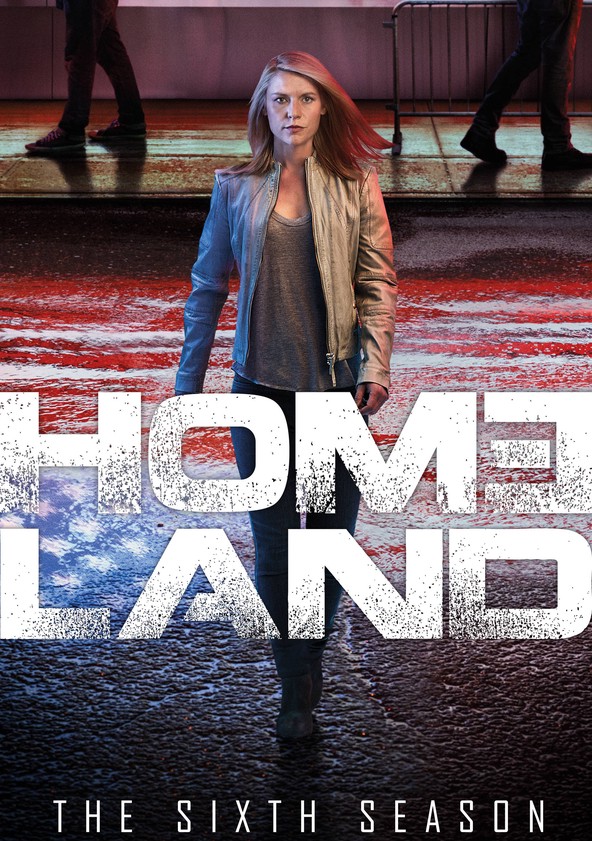
‘Homeland,’ Season 6 Review: A Politically Correct Carrie


Gone is the series’ original vitality, replaced with predictable politeness.


DOROTHY RABINOWITZ
January 12, 2017

Image result for homeland season six

It’s a far from familiar Carrie, bipolar scourge of terrorists, who shows up in season 6 of “Homeland,’’ set in that destination strivers around the world dream of living in—namely, Brooklyn. She’s there having abandoned any further service to the CIA, because—she makes clear in the show’s opening episodes—she’s become increasingly dismayed by America’s policies in the Middle East. Not to mention at home, where she’s appalled to discover that the U.S government has been taking the threat of homegrown terrorism seriously and going so far as to investigate enthusiasts of jihad, creators of websites for the dissemination of messages from Islamic State, devotees of suicide bombers, and even charging some suspected of connection with terror networks abroad.

So it is that we find an even more chronically infuriated Carrie than the one of previous seasons. Instead of chasing around the capitals of the world hunting down terrorists about to set off explosions intended to take the lives of tens of thousands of unbelievers, she’s now spending her days in her Brooklyn offices devoted to legal defense of Muslim males she considers unjustly charged victims of the U.S. government. Unjustly charged in many ways, in Carrie’s view—the most remarkable aspect of which is her complaint that the government investigators aiming to prevent the next mass murder of Americans never stopped to consider the emotional factors driving these subjects, or to take into account the fact that the efforts of some of the would-be perpetrators bent on grand-scale terror assaults turned out to be ineffectual anyway. It’s around about this point in her reasoning that you begin to miss the other Carrie who used to pop pills by the handful, and to wish she’d go and find that bottle she used to keep handy.
In episode 1, awash in introductions to Carrie’s new views, she’s furious about the fate of one man convicted of trying to bring down the Brooklyn Bridge, using a blowtorch. “He’s doing 20 years essentially for being an idiot,” she broods. She goes into action in the case of a young Muslim, of Nigerian background, arrested as an online fan of jihadists and celebrator of suicide bombers, with a busy website—a possible material supporter of terror networks abroad. But in Carrie’s assessment, “just an angry kid.” In the unlikely event anybody has, within the first five minutes, not grasped the re-education mission of the series’ new season, the writers once given to obliqueness in the interest of mystery and style have Carrie hammering the messaging home. “Law enforcement,” Carrie declaims, “has to stop harassing and demonizing an entire community.”
Last month there was a preview of sorts of the “Homeland” to come in a New York Times interview with Howard Gordon, a creator and executive producer of the show, along with Joshua Safran, creator of ABC’s “Quantico,” and others concerned with the entertainment industry’s obligation to avoid creating shows involving threats from Muslim terrorists. Mr. Safran’s solution was simple: “to not ever put a Muslim terrorist on our show.” Mr. Gordon described himself as “pretty upset” about the problem, and recalled the shock of finding graffiti, spray-painted on the set in Berlin, accusing “Homeland” of being racist. He and showrunner Alex Gansa—described as “stunned” at the charge—proceeded to hold conversations that, Mr. Gordon suggests, ultimately led to this new season’s story.
And to the overwhelming sense of a work drained of vitality—of a series once rich in suspense of the most brilliantly imagined kind, especially in the past two seasons, now flattened, on the evidence of the first episodes, to a deadly predictability, all of it the inevitable result of works dedicated to sermonizing. Who can’t guess, given this story line whose turns are signaled in neon, every move Carrie is about to make, every evil that will befall innocents at the hands of police, and that Carrie’s client, the young Muslim who celebrates suicide bombers, will turn out to be the victim of an FBI informer?
There are, to be sure, side plots by way of relief. A broken Quinn (Rupert Friend) undergoes menacing changes, and Saul (Mandy Patinkin) is busy with principled concerns, foremost among them protecting the nuclear deal with Iran from being undermined by nefarious types. There’s a woman president-elect who is Carrie’s ideological soulmate. All of which will have to improve a lot to rescue this season from its mission.

Sunday, February 12, 2017

Signs of Terminal Illness


From forced marriage to alcoholic excess, Britain’s airports display the symptoms of cultural rot.
February 10, 2017
Image result for too drunk to fly airport england
Operation Disrupt has been run by Sussex Police in a bid to curb disruptive behaviour in the county, with Gatwick Airport being a key site for the programme.
My wife recently sent me a photograph of a police notice in bright red on the inside of the women’s lavatory at the provincial English airport from which she was flying to Paris. It read:  “Don’t want to fly? Tell us why. Call the police or speak to a member of the staff.”
Around the edges of the notice were given various reasons why a woman might not want to fly: “Forced marriage, Female genital mutilation.”
So that no one could say that Muslims were being discriminated against, though the notice was obviously directed mainly at them, other reasons were given: “Modern day slavery, Domestic abuse, Human trafficking, Smuggling, Child sexual exploitation.”
I was all too familiar from my medical work with the problems young women of Pakistani origin sometimes experienced at the airport. They were on their way to Pakistan to marry (voluntarily or not) their betrothed first cousin in their ancestral village, often at the age of 15 or 16. Their parents would allow them possession of their passports only to go through immigration and for identification while boarding the aircraft. These girls knew that if they did not agree to marry their intended (though not intended by them), they would face an ascending scale of emotional blackmail, imprisonment, violence, torture, and even death.
Whether the notice was effective in preventing this appalling situation may be doubted. These young ladies were probably deprived of the use of their mobile phones and not allowed on their own into the lavatory.
Another airport notice draws attention to a different behavioral problem. An imitation departure-screen has a list of flights interspersed with red bands:
LADS HOLIDAY— CANCELLED—TOO DRUNK TO FLY
DREAM HOLIDAY—CANCELLED—TOO DRUNK TO FLY
HEN DO—CANCELLED—TOO DRUNK TO FLY
At the bottom of the notice it says:
KNOW YOUR LIMITS
DRINKING TO EXCESS COULD STOP YOU FLYING
I know of no other country in the world in which such a warning notice at an airport is necessary. It is certainly not unusual in British airports, especially provincial ones, to see rowdy men drinking pint after pint of beer at seven in the morning. There are said to be bars in Europe that display “No English” notices. One can’t blame them.
Returning home after their drunken routs abroad, they (and foreigners) are greeted with notices at immigration that abuse of or assaults on immigration officers are taken extremely seriously. Taxis from English provincial airports inform passengers that they will be charged a fee for cleaning up any vomit they leave behind.
Welcome to England.

No Republicans Need Apply


Totalitarianism in the classified ads


By Kevin D. Williamson — February 12, 2017
Image result for anti-Trump classified ads
Protesters hold banners during a rally outside the CNN studio,s in opposition to President-elect Donald Trump, in the Hollywood section of Los Angeles on Sunday. (AP Photo/Damian Dovarganes)


One of the less understood criticisms of progressivism is that it is totalitarian, not in the sense that kale-eating Brooklynites want to build prison camps for political nonconformists (except for the ones who want to lock up global-warming skeptics) but in the sense that it assumes that there is no life outside of politics, that there is no separate sphere of private life, and that church, family, art, and much else properly resides within that sphere.

Earlier this week, I expressed what seemed to me an unobjectionable opinion: that politics has a place, that politics should be kept in its place, and that happy and healthy people and societies have lives that are separate from politics. The response was dispiriting but also illuminating.

Among those who directed tut-tuts in my direction was Patti Bacchus, who writes about education for the Vancouver Observer. “That’s one of the most privileged things I’ve ever heard,” she sniffed. Patti Bacchus is the daughter of Charles Balfour, a Vancouver real-estate entrepreneur, and attended school at Crofton House, a private girls’ school whose alumni include Pat (Mrs. William F.) Buckley. It is one of the most expensive private schools in Canada. I do enjoy disquisitions on “privilege” from such people. But of course her criticism is upside-down: It is exactly we privileged people with education, comfortable lives, and spare time who expend the most energy on politics. But there are other pressing priorities, like paying the rent, for poor people. If Ms. Bacchus would like to pay a visit to West Texas, I’ll introduce her to some.

Another objection came from a correspondent who demanded: “What if politics greatly impacts every facet of your life?” That would be an excellent question if it came from some poor serf living in one of the states our American progressives so admire, such as Cuba or Venezuela, where almost every aspect of life is under political discipline, where government controls whether you eat — and, indeed, whether you breathe. But if you live in the United States and politics greatly impacts every facet of your life, you have mental problems, or you are a politician.

(But I repeat myself.)

Esar’s Comic Dictionary (1943) contains two definitions of the word “fanatic,” often wrongly attributed (by me, among others) to Winston Churchill: First, “A person who redoubles his efforts after having forgotten his aims.” Second (my favorite), “One who can’t change his opinion and won’t change the subject.”

If you want to see fanaticism at work, try looking for a roommate in Washington or New York City.

From the New York Times we learn of the emergence of the “no-Trump clause” in housing ads in our liberal (which is to say, illiberal) metropolitan areas. The idea is nothing new — I saw similar “No Republicans Need Apply” ads years ago when looking for apartments in Washington and New York — but the intensity seems to have been turned up a measure or two: In 2017, the hysteria knob goes up to eleven. Katie Rogers of the Times offers an amusingly deadpan report:
In one recent ad, a couple in the area who identified themselves as “open-minded” and liberal advertised a $500 room in their home: “If you’re racist, sexist, homophobic or a Trump supporter please don’t respond. We won’t get along.”
That’s a funny kind of open-mindedness — it is in fact literal prejudice. It is also illiterate: Whatever Donald Trump’s defects, to associate him with homophobia is a stretch to the point of dishonesty, inasmuch as Trump in 2017 is well to the liberal side of Barack Obama in 2008 on gay marriage. Trump’s personal style is abrasive and confrontational, but he also is on the actual policy issues arguably the most moderate Republican president of the modern era, one who often has boasted of taking a more progressive view of such issues as abortion, gay rights, gun control, raising taxes on Wall Street, and what we used to call “industrial policy.” Given his history in and with the Democratic party, this is unsurprising.

But, as Robin Hanson put it, politics isn’t about policy.

What it is about is tribe, which is what makes all that conflation of racism and bigotry with political difference so amusing. Political prejudice is not the moral equivalent of racial prejudice, but they operate in very similar ways, as anybody who ever has spent much time around a genuine racist or anti-Semite knows. Taxes too high? Blame the blacks. Not making enough money? Blame the Mexicans. Foreign policy seem overwhelmingly complex? Blame the Jews. Whataburger gave you a full-on corn-syrup Coke instead of a Diet Coke? Blame the blacks, Mexicans, Jews, subcontinental immigrants . . . somebody. Racism and anti-Semitism are metaphysical creeds, and those who adhere to these creeds see the work of the agents of evil everywhere. For them, there is no world outside race and racism.

In this, they are very similar to the Hillary Clinton–voting Manhattan balletomanes who seethe that they must endure being seated in the David Koch theater. David Koch’s brand of libertarianism is mild and constructive, and it has about as much to do with ballet as Keith Olbermann has to do with astrophysics. But for the fanatic, even to hear the name spoken is unbearable.

Imagine being so mentally poisoned and so spiritually sick that you feel the need to organize a protest at New York–Presbyterian Hospital because the institution accepted $100 million — the largest gift in its history, being put to purely philanthropic health-care purposes — from someone whose political views are at odds with your own. Imagine what it must be like to feel that doing that is a moral imperative. Imagine sitting down to listen to a Beethoven string quartet and being filled with paralyzing anxiety that the cellist might not share your views on the Arab–Israeli conflict.

(I’ll bet Beethoven had really regressive views about gay marriage. And who knows what Bach or Bernini thought about tax policy?)

Imagine being willing to take a stranger into your home only on the condition that he did not vote for the man who won the 2016 presidential election. One of those Trump-excluding roommates mentioned in the Times insisted that this discrimination was in the interest of the Trump voters, too, who would be unhappy in a household full of “raging liberals.”

Meditate, for a moment, upon the word “raging.”

The people who believe that there can be no art, literature, culture, or life apart from politics are people who do not understand art, literature, culture, or politics, and whose lives are sad and sadly deficient.

A Buddhist writer once described two kinds of material unhappiness: the absence of what one desires and the presence of what one despises. But the Buddha was known to associate with worldly men and their unclean enthusiasms in much the same way that Jesus slummed around with prostitutes and tax collectors, instructing us by example to seek after lives that are as large as our love and not as small as our hatred. The people who close their doors against those who simply see the world in a different way, who scream profanities at Betsy DeVos or chant “You should die!” at Jewish musicians, are people who cannot rise far enough above their own pettiness to understand that the thing they fear is the thing they are.

— Kevin D. Williamson is the roving correspondent for National Review.