Wednesday, November 09, 2016

The Trump Era’s Promise


Americans are setting off into uncharted territory. We needed to do that.


November 9, 2016

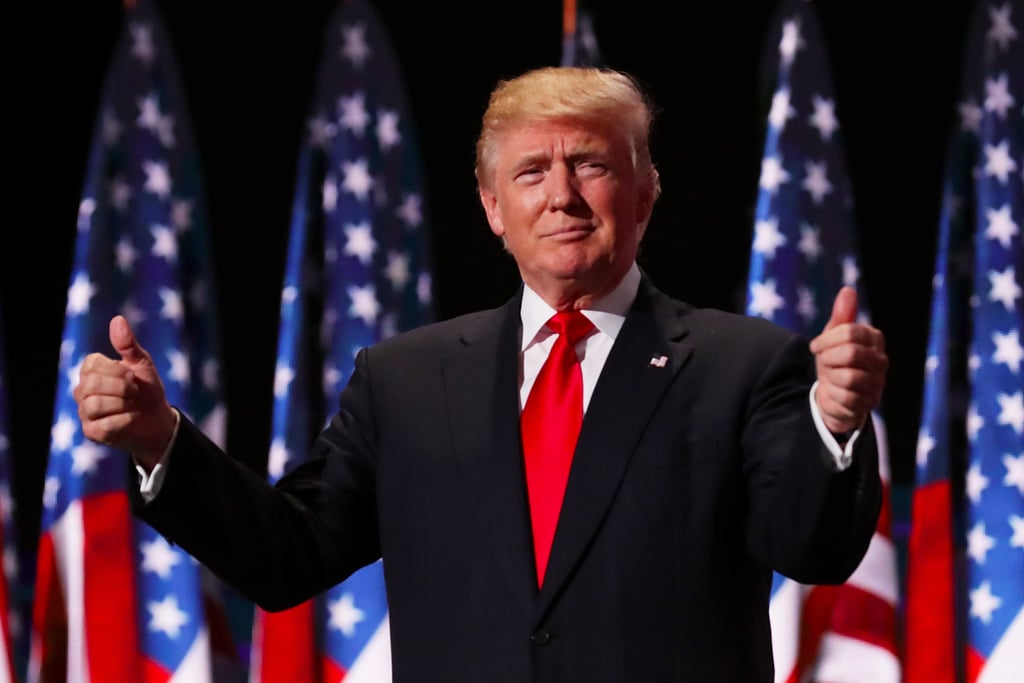
PHOTO: President-elect Donald Trump greets supporters during his election night rally in New York, Nov. 9, 2016.
Mike Segar/Reuters

Wow. Just wow. I’ve never been more shocked by anything in politics. Monday night my friend and former colleague Freddy Gray, now at the Spectator, called and I told him that there wouldn’t be any Brexit-type shock, that most journalists were biased but the pollsters were skilled and professional, and that I doubted I’d take a 25–1 bet for Trump for real money. Of course, I added, I’d vote for him, thought his campaign was on balance pretty wonderful, etc. But the point was to build a base for next time, when a more normal politician—Christie, Cruz, Tom Cotton, Pence, or an as-yet-unknown figure from outside politics—would take up Trump’s issues, especially immigration, and run with them.
Working-class counties all over Pennsylvania and the Midwest that Obama had carried comfortably went for Trump—something that should, but won’t, give pause to the progressive commentariat now inundating us with their lamentations about racist America. I voted for both men myself, and hope dearly the meeting between Obama and Trump on Thursday is substantive, wry, and interesting to both in ways neither would ever have anticipated. For months I had been visualizing the moment, sometime in 2017, when Obama realized that Hillary, with her hawkishness and neocon coterie, threatened to undermine the basic tenets of his foreign policy. That now is never going to happen. So conversely, I hope that Obama now finds it in him to tell Trump, “you know you’re probably right about Russia, and I gave the Hillary and the neocons in the State Department too free a hand in trying to expand NATO right up to Russia’s borders.” After which Trump can reply that the Iran deal is something that shouldn’t be scrapped and ought to be built upon. One can hope, anyway.
Trump’s eloquent speech in the early hours of the morning carried in it all the seeds of an effective beginning to his administration. He made clear we would seek hostility with no country. He has a clear mandate to nominate Scalia-like justices to the Supreme Court and to stem illegal immigration—beyond that, he has a clean slate to move in almost any direction. Now the important thing is to hope and pray Trump governs well, and to do everything we can to make that happen. I hope his administration reaches out to some of the reformocons, Reihan Salam and his group, and that they don’t give him a cold shoulder. Progress toward peace in the Israel-Palestine conflict is obviously off the table: Trump received the support of many right-wing Zionists, who are very much with him on several important issues. But it doesn’t matter in the short run—no American president was going to bring about a two-state settlement anyway. In the near to medium future, Israel will face growing pressures to allow West Bank and Gazan Palestinians to vote, but that’s Israel’s problem.
It gets lost in the campaign hurly-burly, but Trump has shown extremely good judgment in reaching out to Washington insiders on some issues. I was glad Jeff Sessions was mentioned explicitly last night, and brought on stage: he is the most knowledgeable figure about immigration in the Senate, and his former aide, Stephen Miller (who joined the campaign) played a key role in drafting Trump’s formal immigration positions. There is already a Capitol Hill intellectual infrastructure concerned with immigration that bypasses “white nationalism” and bigotry of any sort, centered on the Center for Immigration Studies, run by Mark Krikorian. If Trump had started out speaking about high immigration rates by noting, dryly, their impact on American wages, school budgets, infrastructure, and government-assistance payouts, no one would have noticed. Instead, in his announcement last June, he said something demagogic. It worked. But formulating an immigration policy that serves the interests of the American people—rather than people all over the world—is very much a possibility, and requires no demagogy at all. It’s a very normal thing for a country to do.
More than most presidents, Donald Trump needs our help. He doesn’t bring with him a big network of policy people, professional politicians, and their staffers. He forged a campaign on the triad of issues Pat Buchanan wrote three books about—trade, immigration, and foreign policy—and took the correct (i.e. Buchananite) positions when no one else in the Washington establishment did. That demonstrates either uncanny political judgment or astonishing opportunism—or some combination of both. But putting together a team to implement this agenda, or part of it, rather than a default Paul Ryan-style agenda will take diligence and skill. The transition—the staffing of a Trump administration—will be critical. Trump is a smart man, and sensitive in unexpected ways. He is also a loner, brash, intemperate. He will soon find the limits of the presidency.
Americans are setting off into uncharted territory. We needed to do that. The trajectory we were on—good working class jobs disappearing, accelerating entry of unskilled immigrants, the creation of an ultra-liberal Supreme Court that will shape the law for generations, collapsing infrastructure, rising crime, escalating attacks on police officers, political correctness enforced at increasingly insane levels—was simply awful. Had it continued, the America most of us grew up in would be gone forever. Now we have a chance to Make America Great Again.
Scott McConnell is a founding editor of The American Conservative.

American People Against Political Correctness


The Trump campaign will be remembered for bringing together Americans of all kinds.

By Michelle Malkin — November 9, 2016
Image result for donald trump election
(Getty Images)

Here is what eight years of President Obama’s “post-racial” reign have wrought.

The weekend before Election Day, Hillary Clinton grinned from ear to ear at a Cleveland rally while reciting a verse from Jay-Z’s remix of Young Jeezy’s “My President Is Black.” As the rapper and his Black Lives Matter–promoting wife, BeyoncĂ©, beamed on stage nearby, pandersuit-clad Clinton twanged with a stilted accent:
Remember, Jay memorably said: “Rosa Parks sat so Martin Luther could walk, and Martin Luther walked so Barack Obama could run, and Barack Obama ran so all the children could fly.”
This would be comical if not for the noxious cynicism of it all. Clinton may not remember (if she was ever aware in the first place), but the original version of “My President Is Black” is a brazen middle finger to nonblack America. Just a few lines after the verse Hillary quoted, the song taunts:
Hello Miss America, hey pretty lady
Red, white, and blue flag, wave for me baby
Never thought I’d say this s***, baby I’m good
You can keep your p****, I don’t want no more Bush
No more war, no more Iraq
No more white lies, the President is black
So the poster granny for liberal white privilege, groveling for black votes, kissed the rings of celebrity Obama BFFs Jay-Z and Beyoncé by parroting an inflammatory anthem laced with profanities and radical racialized gloating.

Could there have been a more perfect beclownment to cap Clinton’s phony-baloney “Stronger Together” campaign?

After denigrating millions of Trump supporters as “deplorable” and “irredeemable” earlier this year, Clinton then unctuously confessed on Election Eve: “I regret deeply how angry the tone of the campaign became.”

Note the classic textbook employment of the passive voice to evade personal responsibility.

The good news is that after being blasted as haters by Clinton’s hate-filled minions, after being slapped down as racial “cowards” by Clintonite holdover Eric Holder, after being lambasted as “xenophobes” and “nativists” by immigration expansionists in both parties, after enduring a string of faked hate crimes blamed on conservatives, after ceaseless accusations of “Islamophobia” in the wake of jihad attacks on American soil, after baseless accusations of “homophobia” for protesting the government’s gay-wedding-cake coercion, and after mourning a growing list of police officers ambushed and targeted by violent thugs seeking racial vengeance, an undeniable movement of citizens in the 2016 election cycle decided to push back.

When all is said and done, one of the most important cultural accomplishments of Donald Trump’s bid will be the platform he created for Americans of all colors, ethnicities, political affiliations, and socioeconomic backgrounds to defy soul-draining identity politics.

Beltway chin-pullers expediently focused on Trump’s white and conservative supporters, who are rightly sick and tired of social-justice double standards. But they ignored the increasingly vocal constituency of hyphen-free, label-rejecting American people against political correctness who don’t fit old narratives and boxes.

And the same “Never Trump” pundits and establishment political strategists who gabbed endlessly about the need for “minority outreach” after 2012 were flummoxed by the blacks, gays, Latinos, women, and Democrats who rallied behind the GOP candidate.

The most important speech of the 2016 election cycle wasn’t delivered by one of the presidential candidates. It came from iconoclastic Silicon Valley entrepreneur/investor and Trump supporter Peter Thiel, who best explained the historically significant backlash against the intolerant tolerance mob and phony diversity-mongers.

“Louder voices have sent a message that they do not intend to tolerate the views of one half of the country,” he observed at the National Press Club last week. He recounted how the gay magazine The Advocate, which had once praised him as a “gay innovator,” declared he was “not a gay man” anymore because of his libertarian, limited-government politics.

“The lie behind the buzzword of diversity could not be made more clear,” Thiel noted. “If you don’t conform, then you don’t count as diverse, no matter what your personal background.”
Trump’s eclectic coalition was bound by that common thread: disaffected individuals tired of being told they don’t count and discounted because their views do not properly “match” their gender, chromosomes, skin color, or ethnicity. That is exactly why the more they and their nominee were demonized, the stronger their support grew.

“No matter what happens in this election,” Thiel concluded last week, “what Trump represents isn’t crazy and it’s not going away.”

He’s right. I too often take for granted my own personal awakening about the entrenched tribalism of identity politics at a crazy liberal-arts college in the early 1990s. The liberation from collectivist ideology is profound and lasting. Witnessing so many outspoken newcomers arrive at this enlightenment, however circuitous the route, has been the most encouraging and underappreciated phenomenon of the 2016 campaign.

— Michelle Malkin is a senior editor at Conservative Review. Her e-mail address is malkinblog@gmail.com. Copyright © 2016 Creators.com

Trump victory is a win for the little guy over the elite


November 9, 2016
Image result for donald trump election
And so this is how the Obama era of Hope & Change really ends. With the world turned upside down, and with President Obama having to pass the baton to Donald Trump.
That is going to be one helluva inauguration.
Trump stands today as the greatest disrupter in modern politics, the winner of the biggest upset imaginable, but for most of the campaign, he was not even the best argument for his own candidacy. That distinction belonged to the millions upon millions of everyday Americans who found in him the bare-knuckled brawler they were desperately seeking.
Their choice started as a surprise, as Republican primary voters turned their backs on a parade of supposedly better-qualified candidates to make the TV celebrity with the funny hair their battering ram against an arrogant establishment.
Their movement grew and spread until, early Wednesday, as the key states swung red one after another on TV maps, the last walls of resistance came tumbling down. It was a hallelujah moment, the ultimate underdog leading the forgotten masses to triumph. All the more so because Trump’s voters often took great risks and were routinely insulted and demeaned for their passion.
But they wore those insults as badges of honor, proudly calling themselves the “deplorables” and the “irredeemables.”
They would not be deterred, and today they have taken back their country.
Trump’s remarkable victory is their victory. It is a victory for democracy, for the common men and women of America.
The factory workers, the veterans, the cops, the kitchen help, people who plow the fields, make the trains run, pick up the trash and keep the country together and keep it moving — they are all now winners. As one, these cogs of our daily life rose up in a peaceful revolution, their only weapons the ballot box and their faith in the future.
This, the greatest nation ever conceived on Earth, proved once again that America is exceptional because Americans are exceptional.
Trump voters had the courage of their conviction to go against all their betters, all the poobahs and petty potentates of politics, industry and, above all, the fraudulent hucksters of the national liberal media.
And who, at this extraordinary juncture, dares say that Trump is not worthy of victory and of the salute of his countrymen? He has done what nobody thought he could, overcoming the doubts and scoffs every incredible step of the way.
No candidate in modern times and perhaps ever has suffered such abuse at the hands of the dominant culture. Virtually every day, nearly all the front pages and broadcasters in the entire country vilified him in an attempt to destroy him.
The late-night comics made fun of him like so much trailer trash, Wall Street saw him as a threat, Hollywood looked down on him and even the pope added his two cents of disdain.
It was dirty pool, against any standard of fairness and decency, but that was not the would-be assassins’ biggest mistake. It was that failing to destroy Trump, the elite smart set unleashed its contempt on his supporters.
The effect was the opposite of what was intended. Instead of demoralizing the Trumpsters, the nonstop attacks hardened them and made them more determined to finish what they had started.
Now America, at last, has a countervailing cultural force. Not so much a conservative standing against a liberal establishment, but rather a fearless populist who likes to mix it up and insists on doing things his way.
Sure, he’s thin-skinned and can be a bully, and there were many times when he looked like he was throwing his chances away with foolish fights. But for the last month, he has been a model of restraint and stuck resolutely to the issues, showing that he wanted to win more than he wanted to pop off or chase rabbits down holes.
Of course, new and greater challenges await, and the task of governing such a large, complex nation will present a sharp learning curve. But the first step in governing is winning the people’s consent, and there is no denying that Trump represents the mood for change every bit as much as Obama did eight years ago.
I said some time ago that the pendulum sometimes swings farther than we think it will, and that’s what we’re witnessing. Obama begat Trump.
A month ago, it looked as if Obama would pick his successor and bury Trump in a humiliating landslide. Yet today, Trump is the president-elect and the Obama legacy is in shambles.
As for Hillary Clinton, she didn’t deserve to be president, despite wanting it more than life itself.
She had no rationale for running, was so ethically challenged and so patently dishonest that, to me, it would be a give-up if she became president.
She would have made history and ruined the country. That was too high a price for shattering the glass ceiling.
Beyond Clinton, Obama and George Soros, Hollywood and the media, the losers include political correctness, that disease of the spirit that saps confidence in one’s own values and success.
Most important, Trump pledged to make America strong again, and if he does, he will be a success.

AMERICAN UPRISING


Everything is about to change.


November 9, 2016
Image result for donald trump election
Donald Trump in New York on election night. Joe Raedle/Getty Images
This wasn’t an election. It was a revolution.
It’s midnight in America. The day before fifty million Americans got up and stood in front of the great iron wheel that had been grinding them down. They stood there even though the media told them it was useless. They took their stand even while all the chattering classes laughed and taunted them.
They were fathers who couldn’t feed their families anymore. They were mothers who couldn’t afford health care. They were workers whose jobs had been sold off to foreign countries. They were sons who didn’t see a future for themselves. They were daughters afraid of being murdered by the “unaccompanied minors” flooding into their towns. They took a deep breath and they stood.
They held up their hands and the great iron wheel stopped.
The Great Blue Wall crumbled. The impossible states fell one by one. Ohio. Wisconsin. Pennsylvania. Iowa. The white working class that had been overlooked and trampled on for so long got to its feet. It rose up against its oppressors and the rest of the nation, from coast to coast, rose up with it.
They fought back against their jobs being shipped overseas while their towns filled with migrants that got everything while they got nothing. They fought back against a system in which they could go to jail for a trifle while the elites could violate the law and still stroll through a presidential election. They fought back against being told that they had to watch what they say. They fought back against being held in contempt because they wanted to work for a living and take care of their families.
They fought and they won.
This wasn’t a vote. It was an uprising. Like the ordinary men chipping away at the Berlin Wall, they tore down an unnatural thing that had towered over them. And as they watched it fall, they marveled at how weak and fragile it had always been. And how much stronger they were than they had ever known.
Who were these people? They were leftovers and flyover country. They didn’t have bachelor degrees and had never set foot in a Starbucks. They were the white working class. They didn’t talk right or think right. They had the wrong ideas, the wrong clothes and the ridiculous idea that they still mattered.
They were wrong about everything. Illegal immigration? Everyone knew it was here to stay. Black Lives Matter? The new civil rights movement. Manufacturing? As dead as the dodo. Banning Muslims? What kind of bigot even thinks that way? Love wins. Marriage loses. The future belongs to the urban metrosexual and his dot com, not the guy who used to have a good job before it went to China or Mexico.
They couldn’t change anything. A thousand politicians and pundits had talked of getting them to adapt to the inevitable future. Instead they got in their pickup trucks and drove out to vote.
And they changed everything.
Barack Hussein Obama boasted that he had changed America. A billion regulations, a million immigrants, a hundred thousand lies and it was no longer your America. It was his.
He was JFK and FDR rolled into one. He told us that his version of history was right and inevitable.
And they voted and left him in the dust. They walked past him and they didn’t listen. He had come to campaign to where they still cling to their guns and their bibles. He came to plead for his legacy.
 And America said, “No.”
Fifty millions Americans repudiated him. They repudiated the Obamas and the Clintons. They ignored the celebrities. They paid no attention to the media. They voted because they believed in the impossible. And their dedication made the impossible happen.
Americans were told that walls couldn’t be built and factories couldn’t be opened. That treaties couldn’t be unsigned and wars couldn’t be won. It was impossible to ban Muslim terrorists from coming to America or to deport the illegal aliens turning towns and cities into gangland territories.
It was all impossible. And fifty million Americans did the impossible. They turned the world upside down.
It’s midnight in America. CNN is weeping. MSNBC is wailing. ABC calls it a tantrum. NBC damns it. It wasn’t supposed to happen. The same machine that crushed the American people for two straight terms, the mass of government, corporations and non-profits that ran the country, was set to win.
Instead the people stood in front of the machine. They blocked it with their bodies. They went to vote even though the polls told them it was useless. They mailed in their absentee ballots even while Hillary Clinton was planning her fireworks victory celebration. They looked at the empty factories and barren farms. They drove through the early cold. They waited in line. They came home to their children to tell them that they had done their best for their future. They bet on America. And they won.
They won improbably. And they won amazingly.
They were tired of ObamaCare. They were tired of unemployment. They were tired of being lied to. They were tired of watching their sons come back in coffins to protect some Muslim country. They were tired of being called racists and homophobes. They were tired of seeing their America disappear.
And they stood up and fought back. This was their last hope. Their last chance to be heard.
Watch this video. See ten ways John Oliver destroyed Donald Trump. Here’s three ways Samantha Bee broke the internet by taunting Trump supporters. These three minutes of Stephen Colbert talking about how stupid Trump is owns the internet. Watch Madonna curse out Trump supporters. Watch Katy Perry. Watch Miley Cyrus. Watch Robert Downey Jr. Watch Beyonce campaign with Hillary. Watch. Click.
Watch fifty million Americans take back their country.
The media had the election wrong all along. This wasn’t about personalities. It was about the impersonal. It was about fifty million people whose names no one except a server will ever know fighting back. It was about the homeless woman guarding Trump’s star. It was about the lost Democrats searching for someone to represent them in Ohio and Pennsylvania. It was about the union men who nodded along when the organizers told them how to vote, but who refused to sell out their futures.
No one will ever interview all those men and women. We will never see all their faces. But they are us and we are them. They came to the aid of a nation in peril. They did what real Americans have always done. They did the impossible.
America is a nation of impossibilities. We exist because our forefathers did not take no for an answer. Not from kings or tyrants. Not from the elites who told them that it couldn’t be done.
The day when we stop being able to pull of the impossible is the day that America will cease to exist.
Today is not that day. Today fifty million Americans did the impossible.
Midnight has passed. A new day has come. And everything is about to change.

Tuesday, November 08, 2016

Why We Still Don’t Know the Whole Pearl Harbor Story

Author Craig Nelson talks to TIME about his new book Pearl Harbor: From Infamy to Greatness—and how that famous day remains a mystery

September 20, 2016


Image result for pearl harbor craig nelson
The 75th anniversary of a major historical event is a tricky one, saysCraig Nelson, author of best-selling books like Rocket Men and The Age of Radiance. Those who remember that event first-hand were young when it happened and are elderly now. “You’re sort of on the border between journalism and history,” he says. “You have to make a giant effort to capture this material before it goes away for good.”
That was part of the reason why Nelson turned his attention to the Dec. 7, 1941, attack on Pearl Harbor, the subject of his new book Pearl Harbor: From Infamy to Greatness, available Tuesday.
He talked to TIME about what it’s like to take on a topic that has been so thoroughly dissected, and how it’s possible that there’s still more to learn about that infamous day.
When you’re researching something so huge, where do you start?
The guy who sort of did the big definitive book before me was Gordon Prange, and he wrote At Dawn We Slept. He had been given orders by General MacArthur to interview all of the Japanese captured as part ofOperation Hawaii and Operation Z. He went so far overboard in his research that he died before being able to finish the book. So that’s the kind of research that’s involved. I ended up hiring about a dozen people—some worked on Japanese material, some worked with me in New York, some worked in Washington, and we produced over a million pages of research to start from. It was just overwhelming. At first I thought, I should really just give up. It was the most written-about thing in American history.
That sounds daunting.
Part of what we researched was, What were the major books that people had written already and was there something new? A lot of the people, the survivors, were very young [at the time], and they were so traumatized. No one knew about PTSD then, and they didn’t have any kind of treatment for it. So a lot of these people never really talked about it, and then you have people who were ignored, such as most of the Air Force and the civilians and the whole Japanese-American side of the story. You end up finding out that there’s an enormous amount of material that isn’t commonly known or hasn’t been published before. There’s a lot more research to do and there’s a lot of stuff we can do that’s new.
Was there a most surprising research moment that you had during this process?
I guess the big surprise to me was all the horrible things that people would live with and they wouldn’t tell anybody.
That idea, that people were expected to just deal with it and not process their emotions, is that part of the reason why there remains more to be said about something that’s been so studied?
Yes, all of this stuff is new because people wouldn’t talk about it. Remember after 9/11, they had the pictures of people jumping off the towers, and how they made this effort to sort of scrub all that away? Something sort of similar happened with Pearl Harbor, where they tried not let people know how devastating it was. Roosevelt announced that 300 people had died when it was 2,403. There’s almost a protective quality the government wants to have, to go, ‘Oh, this wasn’t as bad as you think,’ when it’s much worse than any one of them thought.

How has our popular understanding of that day evolved over these last 75 years?

Well, of course, for the war years it was the great inspiration for winning World War II, to remember Pearl Harbor and honor the memory of those who died and get revenge and get payback. It became as popular as ‘Remember the Alamo.’ Even though it was very distant to people, it also seemed as though the Japanese might appear in California at any minute. Then, after World War II, people really forgot about it. They deliberately tried to put it out of their minds. I had one veteran tell me that the first time he talked about it with his children was when he became a grandparent. He didn’t mention a word of Pearl Harbor for 30 years. Other ones would say, well, who wants to remember that? It was traumatizing.

Is there anything you found that, over time as these different narratives evolved, got messed up? Something that everyone thinks they know but it’s wrong?

The view that we had of the Japanese government during this period was that we thought that they were like Germany, where the head [of the government] was a maniac and the government was practically a religious cult group operation. And this was pretty much our image of the 1930s Japanese government for 50 years. And just now, the new stuff is coming out, showing how they constantly wavered back and forth on whether or not to attack the United States. What’s a shame is that, because the military had told Roosevelt that Japan would never attack the United States, that he and his Secretary of State Cordell Hull were pretty belligerent in dealing with the Japanese during this period. If they had lightened up a little bit, we probably might have never had a Pearl Harbor or a Pacific war.

Really?

The Americans were insisting that the Japanese had to pull out of China. If the Americans had said, O.K., how about you do this in 10 years, this in 15 years and this in 25 years, it probably would have worked. China for the Japanese was kind of like Vietnam for Americans. It was a quagmire and it wasn’t doing anything for them, but they couldn’t get out of it.

One of the most interesting points you make in the book is that if the Pearl Harbor strike had hit the nearby petroleum tanks, there wouldn’t have been enough fuel for the American Navy to fight the war in the Pacific.

It would have been very difficult. They had to ship all of their oil for running every engine from the west coast.

Are there other “what if” moments from that day that could have changed the course of the war?

It’s my whole favorite thing about this story. It seems to me that it was very close to never having a Pearl Harbor, and if that were true America wouldn’t have fought a Pacific war, and if that were true and there’s only fighting Italy and Germany, would we even be a global superpower? Pearl Harbor is this amazing trigger. You can say that even though Americans didn’t want to face the gruesome things they had seen in war, they made a lot of effort to make sure it didn’t happen again.


Monday, November 07, 2016

Clinton Foundation Probe Continues


November 6, 2016
Michael Loccisano/Getty Images)
In the days since FBI Director James Comey wrote to congressional leaders revealing new information in the Hillary Clinton email investigation, Clinton defenders have been spinning furiously in an attempt to mitigate the potential political damage. They have attacked Comey, blamed a rogue band of anti-Clinton FBI officials, suggested the FBI itself has a culture that lends itself to political conservatism, downplayed the Clinton email investigation and denied the existence of a Clinton Foundation investigation. While there are legitimate concerns about the lack of detail accompanying Comey's letter, some of efforts to downplay the seriousness of the FBI investigations, plural, and the professionalism of those conducting them are deeply political and misleading. And the reporting on an investigation of the Clinton Foundation is conflicting and somewhat contradictory.
On Friday, two Democratic congressmen wrote to the FBI requesting an investigation of "leaks" about the case, specifically citing the reporting of my Fox News colleague, Bret Baier. Representatives Elijah Cummings and John Conyers wrote:

For example, on Wednesday, Fox News anchor Bret Baier claimed on national television—based on multiple leaks—that the FBI was "actively and aggressively" investigating the Clinton Foundation and that an indictment was "likely." This morning, however, Mr. Baier was forced to correct his report, admitting that it was "a mistake."
They're half right. Baier's comment about a possible indictment came not during his lengthy account of Clinton investigations on "Special Report," the show he anchors, but in a Q&A during a subsequent appearance with Brit Hume. Baier later amended his comment on the "indictment" language he'd used, calling it a mistake, but Fox News is standing by the key claim in Baier's reporting on his show: There is an ongoing investigation into the Clinton Foundation. (Baier's other scoop in the same package, that the FBI has retained the electronic devices it was thought to have destroyed as part of immunity deals with Clinton, remains unchallenged.)

Other reporters at Fox have reporting that backs up Baier's reporting on the Clinton Foundation investigation. (I have one source who says the same thing). And Baier is hardly alone in reporting that the FBI is investigating the Clinton Foundation. Richard Pollock of The Daily Caller has been reporting the same since the summer. And CNN Senior Law Enforcement Analyst Tom Fuentes, a former top FBI official, cited conversations with "several" senior FBI officials when reported three times last weekend that the FBI investigation of the Clinton Foundation was "ongoing."
"The FBI has an intensive investigation ongoing into the Clinton Foundation," Fuentes said. "The FBI made the determination that the investigation would go forward as a comprehensive unified case and be coordinated. So that investigation is ongoing and Huma Abedin and her role in the foundation and possible allegations concerning the activities of the Secretary of State in the nature of the Foundation and possible pay-to-play, that's still being looked at."
Fuentes said the that the discovery of emails on Anthony Weiner's computer led the FBI to reopen the investigation into Clinton's use of email, which had been closed. "That part's being reopened. The Clinton Foundation case didn't need to be reopened. It's never been closed – that's ongoing."
When anchor Poppy Harlow asked Fuentes whether what he was relating were "facts you know from the FBI," Fuentes responded: "Yes, I do. Senior officials at the FBI, several of them."
Wall Street Journal article published Wednesday provided details of the dispute between the FBI and the Department of Justice over the Clinton Foundation. The article notes that the investigation into the Clinton Foundation began in the summer of 2015 and reports that FBI officials on the investigation believed they had collected enough evidence to intensify their probe. Officials at the Justice Department disagreed and the dispute continued as the presidential nominating contests got underway. As FBI agents pushed to do more, Justice Department officials discouraged their efforts. On August 12, according the WSJ, a senior Justice Deparment official called FBI Deputy Director Andrew McCabe to complain that FBI agents were "disregarding or disobeying" instructions from DOJ. "The conversation was a tense one, they said, and at one point Mr. McCabe asked, 'Are you telling me that I need to shut down a validly predicated investigation?' The senior Justice Department official replied: 'Of course not.'"
Despite these details, NBC's Pete Williams questioned whether an investigation into the Clinton Foundation ever happened. "There really isn't one," Williams told Chuck Todd in an exchange on MSNBC. "Few want to call it an investigation. That's a term of art in the FBI. There was an initial inquiry that was opened a couple months ago based largely on media reports and a book called Clinton Cash."
Williams timeline contradicts the one reported by the Wall Street Journal, which put the start of the investigation in the summer of 2015 – not "a couple months ago." From the Journal: "Agents, using informants and recordings from unrelated corruption investigations, thought they had found enough material to merit aggressively pursuing the investigation into the foundation that started in summer 2015 based on claims made in a book by a conservative author called "Clinton Cash: The Untold Story of How and Why Foreign Governments and Businesses Helped Make Bill and Hillary Rich," these people said.
Whether the source of confusion is semantics or politics, a few things are clear: the FBI launched an inquiry of some kind into the Clinton Foundation; some DOJ officials didn't approve of the FBI investigation; and numerous current and former FBI and law enforcement officials continue to insist that the investigation into the Clinton Foundation is active and continuing.
Tom Fuentes is one of them. He tells THE WEEKLY STANDARD that he stands by his comments last week. Fuentes says the FBI's Clinton Foundation probe is "ongoing" and looking at Foundation activities in light of "the recent Wikileaks and Judicial Watch FOIA revelations, which require additional investigation."

THOSE BENGHAZI STINGERS


Yes, they did exist, but….


November 7, 2016
Image result for benghazi attack
More than a dozen people have sent me the same email over the past couple of weeks, purporting to tell the “REAL story on Benghazi.”
Like a lot of information circulating on the Internet, it contains an important kernel of truth, namely a reference to the July 25, 2012 Taliban attack on a U.S. Chinook helicopter in Afghanistan, using a U.S.-supplied Stinger missile.
That attack really did take place, as I reported in my 2014 book Dark Forces: The Truth About What Happened in Benghazi.
I learned about the helicopter downing from early Wikileaks disclosures known as the Afghan war logs, and corroborated the information with a senior U.S. military officer working an intelligence billet in support of U.S. special forces operations overseas.
The officer explained that the Stinger never exploded – not because “the stupid Taliban didn’t arm the missile,” as the email claims (if you can fire it, the missile is armed) – but because of a malfunction, most likely in the impact fuze and the guidance system.
Instead of exploding against the body of the helicopter, as designed, the missile lodged and broke apart in the engine nacelle. The alert pilot managed a hard-landing, and everyone on board the Chinook walked away. Crash investigators subsequently discovered pieces of the Stinger lodged in the engine nacelle, including a portion of the missile casing that included a serial number.
That serial number tracked back to a lot of Stingers that had been “signed out” to the CIA in Camp Arifjan, Kuwait, in early 2011, and transferred to the government of Qatar, my U.S. Special Forces informant told me.
The email, which is now the subject of a Reddit thread, begins with a breathtaking claim:
“Ambassador Stevens was sent to Benghazi, post haste, in order to retrieve US-made Stinger missiles supplied to Ansar al Sharia without Congressional oversight or permission. Hillary brokered the deal through Stevens and a private arms dealer named Marc Turi. Then some of the shoulder-fired missiles ended up in Afghanistan used against our own military.”
The only true statement in that opener is the final sentence. (The Justice Department recently dropped all charges against Marc Turi because they knew full well he never consummated any arms sales to the Libyan rebels and bowed out once his arms export license request for Qatar was denied).
Ambassador Stevens was sent to Benghazi for two reasons. The first, as noted by his number two in Libya, State Department career diplomat Greg Hicks, was to certify that the State Department could officially open Benghazi as a “permanent constituent post.” Hillary Clinton wanted to travel to Benghazi for a photo op, to take a victory lap for her “success” in ousting Colonel Qaddafi.
But Mrs. Clinton did not want to ask Congress for a special appropriation for Benghazi, since that would have led to an investigation into security procedures at the facility. So she instructed Stevens to travel to Benghazi as soon as he returned from his European vacation in early September. The plan was to use leftover funds from Iraq to operate Benghazi as a full-fledged consulate. But those funds “had to be obligated by September thirtieth” to avoid Congressional scrutiny, Hicks testified.
No arms deal. No Stingers. No “do-or-die” mission, as the lurid email claims. Just a Hillary Clinton vanity project that cost the lives of four Americans.
“It was the State Department, not the CIA that supplied [the Stingers] to our sworn enemies, because Petraeus wouldn’t supply these deadly weapons due to their potential use on commercial aircraft,” the email goes on.
I am still unclear as to who authorized the transfer of the Stingers to the CIA, and from the CIA, to the Qataris. That would be an excellent subject for a Freedom of Information Act request.
However, I am pretty certain of what happened next. The Qataris brought a small number of them – my sources said, fifty or sixty – into Libya through Chad in late March or early April 2011. This was before the U.S. and NATO had fully committed to helping the anti-Qaddafi rebels.
While they were en route, they encountered a French military patrol in northern Chad. The French asked the Qatari Special Forces commander in charge of the convoy, who had been trained in France, what he thought he was doing. He replied that he was taking Stinger missiles to the Libyan rebels.
After a lengthy palaver and communications with Paris, and via Paris with Washington, the French officer was instructed that the U.S. government wanted the Stingers to reach Libya.
As I reported in Dark Forces (p92), Qaddafi’s intelligence service picked up the communication between the French officer in northern Chad and his commanders. How do we know this? Because a copy of the intercept, dated April 4, 2011, turned up several months later in the just-vacated headquarters of Libyan intelligence chief Abdallah Senoussi, where it was discovered by a reporter from the Wall Street Journal.
All this said, there were no reports that any Stingers were fired in Libya, or ever reached the hands of Libyan rebel groups, let alone Ansar al-Sharia.
The second reason Ambassador Stevens traveled to Benghazi remains a matter of speculation – and would also make an excellent subject for a Freedom of Information Act request (although my own inquiries in this area have been rejected until now).
Just two weeks before Stevens went to Benghazi, a shipment of weapons intended for Syrian rebels reached Iskanderun, Turkey. The weapons had been purchased by jihadi sympathizers in Benghazi, possibly with U.S. assistance or at least the knowledge of the CIA station in Benghazi.
The arms shipment intended for the Syrian rebels was a  “liaison” operation, since it was carried out by a friendly intelligence service, most likely the Turkish MIT. These type of intelligence operations fall within a grey area of what must be reported to Congress.
Almost as soon as the Libyan fishing boat, Al Entisar (Victory) docked in Iskenderun on August 25, 2012, all hell broke loose. Rival Syrian rebel groups began squabbling over who would take custody of the 400 tons of weapons and “humanitarian supplies” it had brought.
Even worse: Western reporters started nosing around.
On September 2, 2012, CIA Director David Petraeus made an unannounced trip to Ankara to straighten out the mess. Petraeus was worried that reporters would blow the wraps off what was supposed to be a covert operation.
Petraeus was unsuccessful. And so he recommended that Secretary Clinton dispatch “their man in Libya” to speak with the jihadi leaders in Benghazi, whom Stevens knew intimately.
In fact, Chris Stevens had closer ties to the Benghazi jihadis than anyone in the U.S. government, because he had been sent there as Special Envoy during the revolution to cultivate them. He knew them by name; he knew their families; and he probably knew where they kept their bank accounts.
He was the “cleaner,” as I called him in my book. His job was to clean up the arms smuggling operation, perhaps shut it down; or at least, make sure mistakes like Iskanderun didn’t happen again.
We know from his schedule, recovered by journalists after his murder by Iranian agents in Benghazi, that he had been planning to meet with a Libyan shipping agent known for his close ties to jihadi leaders.
Do you think the State Department dispatched the Ambassador from Tripoli to meet with a shipping agent to set up USAID shipments? I think he was looking for a more trusted shipping agent for future arms shipments to the Syrian rebels. (The shipping agent freaked out when I called to ask him about this).
Stevens also met with the Turkish Consul General in Benghazi, accompanying him out to the front gate of the diplomatic compound shortly before the attacks began. Again, why him? I believe it was because the gentleman was the resident agent of the Turkish MIT in Benghazi, in charge of the arms smuggling operation.
So yes, there are still a lot of secrets surround what actually happened in Benghazi. I exposed many of them in Dark Forces, most notably the involvement of Iran’s Revolutionary Guards Corp in recruiting, training, and equipping the jihadis who actually carried out the murderous September 11, 2012 attacks.
Those secrets involve covert U.S. arms shipments, directly or through proxies, to both Libyan and Syrian jihadi groups. They involve Iran’s ongoing covert war against America. And they involve U.S. Stinger missiles that went missing.
All of these help to understand why Mrs. Clinton and her inner circle were so eager to deflect attention from Benghazi to a pathetic YouTube video they knew had nothing to do with the attacks. I call it the Benghazi Deception.
But please, let’s skip the conspiracy theories, and the lurid admixture of fantasy with fact. The facts by themselves are enough to hang a fish. Or a presidential wannabe like Mrs. Clinton, who belongs in jail.
 Tags: BenghaziHillaryLies