Wednesday, November 07, 2018

How Saudi "Donations" to American Universities Whitewash Its Religion


by 
November 7, 2018

Related image
George Washington University Law School

Why would the center of illiberalism, religious fanaticism, and misogyny ever sponsor the center of liberalism, secularism, and gender equality?

This is the question that crops up when one considers the largesse that human-rights-abusing Saudi Arabia bestows on the leading universities — those putative bastions of progressive, free thinking — in the United States.

According to a recent report in the Daily Caller:
"... elite U.S. universities took more than half a billion dollars from the country [Saudi Arabia] and its affiliates between 2011 and 2017. Saudi Arabian interests paid $614 million to U.S. universities over a six-year period, more than every country but Qatar and the United Kingdom."
What would cause Saudi Arabia, which represents much that is regressive and barbarous — from having elite units dedicated to apprehending witches and warlocks, to legitimizing paedophilia — to become a leading financial supporter of America's liberal arts? Certainly, it is not because the Saudis are randomly lavish with their money and award gifts to all and sundry. Reports often criticize citizens of the kingdom for being "stingy" and not spending on causes that others consider worthy.

"These gifts and contracts," the report relates, "in some instances, are intended to influence students' and faculty experts' views on the kingdom."

While this explanation may make sense to those of Western sensibilities, who tend to think in terms of nation-states, Saudi Arabia, on the other hand, is apparently influencing "views" on Islam. Saudi society and politics are virtually synonymous with Islamic society and politics — or, in a word, Sharia, Islamic canonical law that is based on the Quran and the Hadith (the acts and teachings of Muhammad).

Muhammad and Islam, born in what is today Saudi Arabia, have made the Arabs of the peninsula the descendants of Islam's first Muslims. Since the seventh century, Muslims have conquered much of the post-Roman Christian world, all of North Africa and the Middle East, and for a while, the Balkans, Greece and most of Spain — and in so doing, transforming vast swaths of land into the Muslim and Islamic world (see Chapters 1, 2, and 3 of Sword and Scimitar).

The importance of Islam to Saudi Arabia — and vice-versa — is expressed on the website of the Saudi embassy in Washington DC:
For centuries the people of the Arabian Peninsula have possessed a strong identity based upon the tenets of Islam. Saudi Arabia... adheres to Islam, honors its Arab heritage and tradition, and presses vigorously forward in the service of Islam... The Kingdom of Saudi Arabia is the heartland of Islam, the birthplace of its history, the site of the two holy mosques and the focus of Islamic devotion and prayer. Saudi Arabia is committed to preserving the Islamic tradition in all areas of government and society..... The Holy Qur'an is the constitution of the Kingdom and Shari'ah (Islamic law) is the basis of the Saudi legal system.
That Saudi Arabia's identity — that it is "based upon the tenets of Islam; " that it "presses vigorously forward in the service of Islam," and that the "Qur'an is the constitution of the Kingdom, and Shari'ah (Islamic law) is the basis of the Saudi legal system" — should make clear that the Saudi worldview is quite antithetical to the spirit of Western liberal education.

Capital punishment in the desert kingdom still takes place (as seen in this video of a hysterical woman being incrementally beheaded); child-marriage and slave-like conditions are rampant; "apostates" are persecuted and sometimes sentenced to death; churches and other non-Muslim houses of worship are strictly banned, and Christians quietly worshipping in their homes are regularly arrested, imprisoned and tortured.

Saudi Arabia has online a fatwa, an Islamic-sanctioned opinion — in Arabic only — entitled, "Duty to Hate Jews, Polytheists, and Other Infidels." It comes from the fatwa wing of the government, meaning it has the full weight of the government behind it.
Written by Sheikh Abd al-Aziz ibn Baz (d. 1999), former grand mufti and highest religious authority in the government, it still appears on the website.
According to this governmentally-supported fatwa, Muslims — that is, the entire Saudi citizenry — must "oppose and hate whomever Allah commands us to oppose and hate, including the Jews, the Christians, and other mushrikin [non-Muslims], until they believe in Allah alone and abide by his laws, which he sent down to his Prophet Muhammad, peace and blessings upon him." 
To prove this, Baz quotes a number of Koran verses that form the doctrine of Loyalty and Enmity — the same doctrine every Sunni jihadi organization evokes to the point of concluding that Muslim men must hate their Christian or Jewish wives (though they may enjoy them sexually).
These Koran verses include: "Do not take the Jews and the Christians for your friends and allies" (5:51) and "You shall find none who believe in Allah and the Last Day on friendly terms with those who oppose Allah and His Messenger [i.e., non-Muslims] — even if they be their fathers, their sons, their brothers, or their nearest kindred" (58:22; see also 3:28, 60:4, 2:120).
After quoting the verses, Baz reiterates:
Such verses are many and offer clear proofs concerning the obligation to despise infidels from the Jews, Christians, and all other non-Muslims, as well as the obligation to oppose them until they believe in Allah alone.
It is hard, therefore, not to conclude that the Saudis are awarding large gifts to institutions against whom they are openly preaching hate — universities in the liberal West — in order to mold perspectives and produce future leaders. In other words, they seem to be bribing and winning over people who are in positions to criticize and expose things about Islam and its greatest sponsor, Saudi Arabia.

In fact, the Saudis simply seem to be following a page from Muhammad's playbook. During the "Battle of the Trench" (627), when Muhammad and his Medinan followers were surrounded by the Meccans and other hostile tribes, the Muslim prophet bribed the Ghatafan, the largest tribe, to break from the Meccans by offering them one-third of Medina's date harvest. Osama bin Laden cited this anecdote when legitimizing the bribing of hated infidels, as you can see in The Al Qaeda Reader, pp. 26-27.

Just as Muhammad's bribe saved Islam then, the hope may be that Saudi Arabia's gifts will save Islam's image in American universities, from where policy-shapers and worldviews emerge. As the Daily Caller report states:
"Much of the international affairs literature that informs the U.S. posture toward foreign nations is developed at elite institutions like George Mason University and George Washington University in the D.C. area, whose experts are widely cited. Those universities are among the top recipients of Saudi government funds."
In an article from Vox, "How Saudi Arabia captured Washington", a DC "insider," discussing Saudi 

In an article from Vox, "How Saudi Arabia captured Washington", a DC "insider," discussing Saudi largesse and American universities, states that Saudi funding of an academic "doesn't mean that he's bought and paid for." Rather, "there is a kind of silencing effect. It's more about what doesn't get written about... there may be some self-censoring on certain topics you don't raise unnecessarily, topics that are sensitive to the Saudis."

In short, no matter how important scholarly inquiries may be from a Western perspective, everything that might present Islam in a negative light is presumably to be ignored. Rather than honest examinations and exposés on subjects such as the role of Islam in terrorism, gender inequality, or hostility toward religious minorities, universities that receive, or hope to receive, Saudi funding, are, it would seem, expected to set aside or whitewash all such topics.

As documented in Simon Ross Valentine's book, Force and Fanaticism: Wahhabism in Saudi Arabia and Beyond, the desert kingdom, America's "friend and ally," has spent $100 billion to spread radical Islamic teachings and materially support Islamic terrorists around the world (15 of the 19 suicide-hijackers who orchestrated the terror strikes of 9/11 were Saudi citizens).

Thus, Saudi Arabia appears to give with one hand and take away with the other. It gives money to the supposed intellectual elite of America with one hand, and takes away knowledge of Islam from the public with the other.
Raymond Ibrahim, author of the new book, Sword and Scimitar, Fourteen Centuries of War between Islam and the West, is a Distinguished Senior Fellow at the Gatestone Institute and a Judith Rosen Friedman Fellow at the Middle East Forum.

Tuesday, November 06, 2018

Today's Tune: Frank Sinatra - One For My Baby (and One More For The Road)

He Sang One for the Ages


Frank Sinatra recorded the definitive version of the sorrowful saloon song 'One for My Baby (and One More for the Road)' in 1958.


By John Edward Haase
The Wall Street Journal
November 2, 2018

Related image


One of the premier popular music recordings resulted in no small part from the failed romances of two musical figures: lyricist Johnny Mercer and singer Frank Sinatra. Both also loved their liquor, this song's sub-theme.

It's quarter to three,

There's no one in the place except you and me,

So, set 'em up, Joe...

"One for My Baby (and One More for the Road)" was written by Mercer and composer Harold Arlen. From dissimilar backgrounds, they shared a deep devotion to jazz and blues, and became each other's best-matched collaborator.

Mercer boasted a remarkable grasp of American vernacular language. He was something of a musical polymath-lyricist, singer, record company executive (co-founder of Capitol Records) and talent scout. He was also unhappily married while in love with young Judy Garland, who became a muse for some of his most resplendent lyrics - "I Remember You" and "Skylark." When she broke off the relationship, he was devastated and evidently channeled his grief into "One for My Baby", written for a largely forgotten 1943 film, "The Sky's the Limit".

Arlen wrote the music first - with a winding chromatic melody, a change of key, and an uncommon length of 58 bars instead of the usual 32. Mercer fit his lyrics to the tune impeccably, creating a dramatic monologue that's a masterpiece of urban loneliness and loss. The singer tells the bartender about "a little story / I think you should know", but - in Mercer's clever lyric - holds back and never reveals his tale. Yet his emptiness and despair rouse our compassion. Who can't identify with an unhappy end to a relationship?

Jazz singers and instrumentalists have recorded the song more than 250 times, making it a standard of the repertory. Pop singers as diverse as Marlene Dietrich, Chuck Berry, Marvin Gaye, Iggy Pop and Bono have performed it, too.

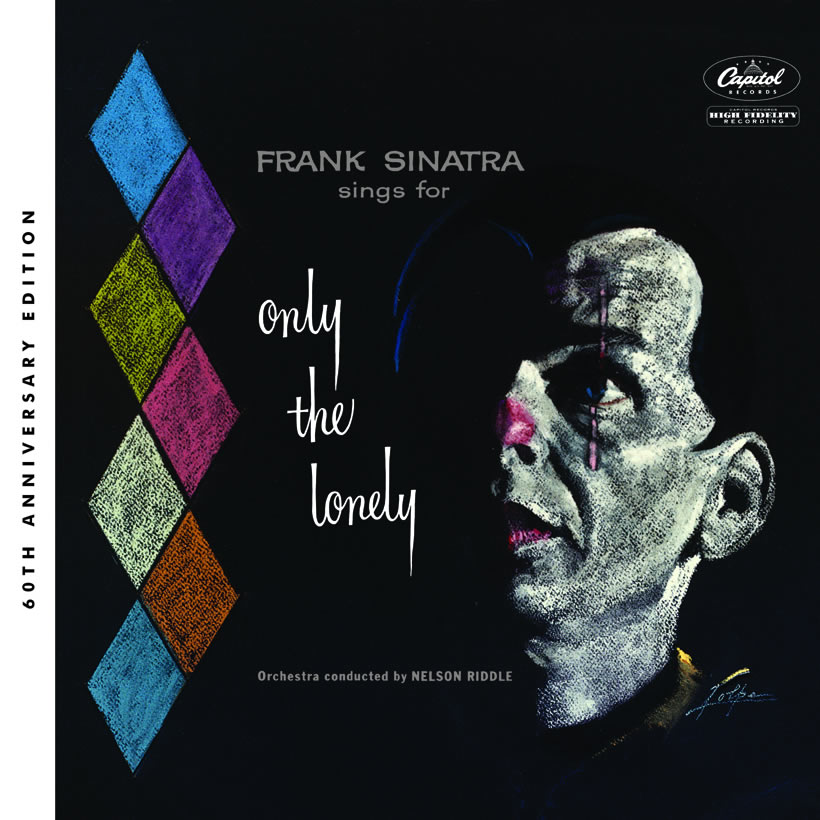
Emotional credibility and tempo are key to interpreting this song. Singers have recorded it at many different tempos, ranging from a languid 63 beats per minute to a frisky 141 bpm. Sinatra first recorded it in 1947, at a moderate 84 bpm. In the 1954 film "Young at Heart", he slowed it to 76 bpm. On his third try, in 1958, he decelerated further to 63 bpm and gave the song its definitive rendition - the final track on his capstone album "Frank Sinatra Sings for Only the Lonely", released in September 1958. It's the darkest record he ever made, with such torch songs as "Blues in the Night"and "Good-Bye", and two songs set in bars - Sinatra called them "saloon songs - "Angel Eyes" and "One for My Baby". Last month, Capitol Records issued a remastered "Only the Lonely" in multiple formats.

At the time he recorded the album, Sinatra was still reeling from his on-and-off, then failed, relationship with the glamorous Ava Gardner, the greatest love of his life. Throughout this album, he conveys a sense of loss and aloneness from intense personal experience.

In Sinatra's 1958 "One for My Baby", five elements come together - lyrics, music, singer, accompanist and orchestra - to produce a classic of American music. His slower tempo makes a huge difference, allowing the singer to milk the story for all its melancholy emotion. He brilliantly uses the element of time in another way, personalizing the written rhythms to insert pauses and hesitations, all in the service of drama and emotion.

Bill Miller's bluesy, transparent piano lines frame the vocal empathetically, allowing Sinatra's voice to shine through. Nelson Riddle's elegant orchestra comes in and out to underscore the lyrics and add color.

Sinatra's rendition presents not just a song and story, but also a vivid scene. Indeed, in TV and stage performances, which can be found online and in DVDs, he smokes a cigarette while looking forlornly at Joe the bartender, or stabs his fingers in the air to drunkenly punctuate his sorrowful lines.

Whether in audio, on screen, or in person, Sinatra was the supreme musical actor of his time. Sinatra vivifies, inhabits, and lives the lyrics. Duke Ellington called his singing "the ultimate in theater". Sinatra's convincing, conversational delivery; his personal, instantly identifiable sound; and the impression that he was singing directly to you - all these enabled him to connect strongly with his listeners.

When he recorded "One for My Baby" for the last time - in his "Duets" album of 1993, his penultimate year of studio recording - the singer sounds years beyond his best voice, but his life experience has deepened his feeling for this song. As he stretches out the final line - "that long, that long, man it's long, it's a long long long road" - you hear a catch and a near-break in his voice. You can't help but share his pain.


- Mr. Haas is curator emeritus of American music at the Smithsonian Institution. His books include "Beyond Category: The Life and Genius of Duke Ellington" (Da Capo) and "Discover Jazz" (Pearson).


Reviews: Frank Sinatra makes sadness sublime on ‘Only the Lonely’

October 24, 2018
Image result for frank sinatra lush life
Frank Sinatra might not be the greatest singer of popular music. For instance, Ella Fitzgerald ranks as the superior vocalist, at least in terms of technical skills. There are others, too, of course, who have mastered the art of tone, diction, phrasing, intonation and all that jazz. No one yet, though, in the history of sound recording, has displayed such a preternatural ability to inhabit a lyric like Sinatra.
When Sinatra sings about jet-setting it’s as if you’re right up there with him, with some exotic booze and a beautiful woman under your arm, too! Come dance with me? Yes, sir! I won’t even wait until my husband turns his head. Even more powerful, though, than the sounds of Sinatra flying high are the ones created from deep, down, low; when he’s where the lovesick go at last call.
Sinatra recorded several masterful albums of sad ballads but none are more intimate than 1958′s “Frank Sinatra Sings for Only the Lonely,” with orchestration by Nelson Riddle. Now, it has been newly mixed in stereo for a recently released expanded 60th anniversary edition that can be purchased as a deluxe 2-CD package, in 180-gram 2-LP vinyl and 1-CD configurations, and in two digital album versions.
Listen to the freshly minted vinyl version, after dark, the only proper time to listen to such an album. All of the songs are terrific and then there’s Sinatra’s all-time greatest performance, the final of a dozen delights, “One for My Baby.” Accompanied only by piano for the majority of the song, Sinatra is that guy so many people have been nearing last call, sad and lonesome with no one to talk to but, yeah, the barkeep. It’s pitiful, unless Sinatra is singing.
“Only the Lonely” contains the definitive version of “One for My Baby” as well as “Angel Eyes” and “Guess I’ll Hang My Tears Out to Dry,” three songs that would stay with Sinatra for the rest of his career, and will stay with his multitude of fans forever. Yes, these songs exemplify Sinatra’s ability to portray emotion better than any vocalist to ever get behind a microphone.
Track list
1. Only The Lonely
2. Angel Eyes
3. What’s New?
4. It’s A Lonesome Old Town
5. Willow Weep For Me
6. Good-Bye
7. Blues In The Night
8. Guess I’ll Hang My Tears Out To Dry
9. Ebb Tide
10. Spring Is Here
11. Gone With The Wind
12. One For My Baby


Sixty Years After 'Frank Sinatra Sings for Only the Lonely'


By Steve Horowitz
November 1, 2018

Related image

Back in 1958, Frank Sinatra made what many fans and critics consider his greatest album, Frank Sinatra Sings for Only the Lonely. The record went to number one and stayed on the charts for two years. The disc contained some of what are now considered Sinatra's signature songs, including Harold Arlen/Johnny Mercer's "Blues in the Night"and "One for My Baby (And One More for the Road)". Sinatra and conductor Nelson Riddle purposely selected and arranged the dozen tracks because of their melancholy themes.

The arrangements allowed for plenty of silence and space between the instrumentation and the vocals. In addition, Riddle layered the different musical elements in such a way that they seemed to comment on each other in a conversation where one could understand each line. He employed a large orchestra but managed to make it sound like an intimate combo in a small room.

So for example, when Sinatra sings Ann Ronell's "Willow Weep for Me", one hears the sorrow in his voice and the commiserating strings as well as the horns mocking his melancholy. This oversimplifies because Sinatra and company offer an ever-changing emotional dynamic as the singer goes through a wide range of feelings. There are more versions of the color blue than just one, and Sinatra wrings out each of the audio equivalents without getting maudlin or sappy. The album showcases Sinatra's marvelous ability to express the complexity of sadness. The lyrics may be gloomy, but the singer always maintains a cool dignified presence.

Sinatra and Riddle also chose great material from what we now call the Great American Songbook. Their versions of Johnny Burke/Bob Haggart's "What's New", Sammy Cahn/Jule Styne's "Guess I'll Hang My Tears Out to Dry", and Earl Brent/Matt Dennis'"Angel Eyes" have become standards by which other vocalists' takes are measured. It's impossible to overstate just how terrifically Sinatra sings them.

And even the lesser-known cuts, such as Charles Kisco/Harry Tobias' "It's a Lonesome Old Town", Sinatra and Riddle elevate the material through their heartfelt interpretations. The title song reminds us that this album is for "Only the Lonely". Sammy Cahn/James Van Heusen's composition allows Sinatra to recall the good times during a low period. He sings forcefully. No one may care about the narrator, but he does not pity himself. He's triumphant in his despair.

All of the aforementioned elements add up to the highest accolades one can award a record—a ten-star review. This is old news as Only the Lonely has been celebrated and available for 60 years. What's new is Capitol Records has managed to improve the masterpiece! It is now available as a two-CD deluxe package (also available in a 180-g two-LP vinyl edition) that features the album's remastered original 1958 mono mix with a new 2018 stereo mix. In the liner notes, recording engineer Larry Walsh explains that the original was recorded in mono and stereo with two microphones suspended high over the studio orchestra. Sinatra's voice was recorded onto a third track. While there have been previous stereo versions available as mono albums went by the wayside, they were produced with only some instruments coming out of each speaker to give a false separation. Walsh's remixing has added a richness to the listening experience.

The double CD also contains four unreleased studio tracks, including Sinatra's attempt to record Billy Strayhorn's "Lush Life". Sinatra begins credibly enough but gets bogged down by the unusual song structure and gives up in frustration before finishing. This reveals while the Sinatra may sound natural on the rest of the disc, his artistic genius was in making it seem that way. The relaxed vibe was both a conscious and intuitive creation. This latest release of Frank Sinatra Sings for Only the Lonely only reaffirms Sinatra's reputation as the most majestic vocalist of his time.

Today's Tune: Frank Sinatra - Lush Life (Lyric Video / Mono / Session Takes / May 29, 1958)

Hear Frank Sinatra’s Unfinished ‘Lush Life,’ Finally Released After 60 Years


October 11, 2018

Image result for frank sinatra lush life

Frank Sinatra spent a lot of time pining for the one that got away on “Frank Sinatra Sings for Only the Lonely,” the 1958 album that many consider the finest of his career. And, legendarily, the recording sessions for the collection included the song that got away — the classic “Lush Life,” which Sinatra took a stab at in Capitol Records’ Studio A but gave up on midway through a take, never to return to the tune again.

That unfinished track has been such an object of fascination that it’s been written about in virtually every Sinatra biography, and bootlegs slipped out. But Sinatra’s record label and estate never saw fit to release it to the public… until now. Variety has the exclusive world premiere of a lyric video of Sinatra’s attempt at “Lush Life,” in advance of its inclusion on Capitol’s 60thanniversary deluxe edition of “…Sings for Only the Lonely,” due Oct. 19.

In the history of incomplete works by the 20thcentury masters, the idea of Frank and an unfinished “Lush Life” ranks up there in tantalizing myth with novels like F. Scott Fitzgerald’s “The Last Tycoon” or Raymond Chandler’s “Poodle Springs” (also started in 1958, coincidentally). Those works were rendered incomplete by the authors’ deaths, of course, whereas Sinatra had another 30 years in which to have taken another go at “Lush Life,” if he’d wanted to. But the effect remains the same: just as with an unfinished novel or symphony in which you dread the point of cutoff coming and are thinking, “Come on, stay alive a little longer,” listening to Sinatra do a few abortive takes of “Lush Life” and eventually get as far as the chorus, you may find yourself murmuring to the 1958 Frank to please keep going.

But he’s not heeding you any more than he was the session’s conductor, Felix Slatkin, who was filling in on May 29, 1958 for the song’s absent arranger, Nelson Riddle. “Hold it,” Sinatra tells the 38-piece live orchestra, mentioning the tune’s “tough enough” qualities. “Put it aside for a minute,” Slatkin suggests. “Put it aside for about a year!” responds Sinatra, impatient toward the end of a recording day that had him laying down seven successful tracks in addition to this one. But why’d he put it away for a lifetime?

“People have said that it might have been too hard for him,” notes Sinatra’s friend, archivist and reissue producer, Charles Pignone. “I don’t believe that. I don’t think Frank Sinatra ever skirted from any challenge, especially any musically. I just think he was uncomfortable with the arrangement. We had the same thing when we put out (a reissue of) ‘Ring-A-Ding-Ding.’ Johnny Mandel had come up with an arrangement of ‘Have You Met Miss Jones’” that Sinatra found difficult to work with. ”On the next album, which he did with Billy May, there’s an up-tempo arrangement” that proved to his taste. “In that case, it’s easy to know how Frank wanted that to go.

“I can’t speculate on why he didn’t do it” again later,” Pignone adds. “I don’t know why in ’58 they didn’t go back and do it. It could have been a time thing. But what I heard from Bill Miller is the story I’ll stick with. Because of my long association with the Sinatra organization, I had the pleasure of speaking over the years with many of the key players involved in this album. And Bill, who was Frank’s pianist for many years and probably at more Sinatra sessions than anybody over the years except Frank, felt with ‘Lush Life’ that if Nelson was there and not on the road with Nat King Cole, Frank might have been a little more comfortable and might have been able to make some changes.”

Pignone says it did come up again, decades later. “I can tell you that in the ‘80s when I was traveling with him, there was a man named Frank Military who was a real close friend of his, and who went on to be the head of Warner/Chappell Music. He had put together a list, because Frank was going to do an album of songs he had never recorded. I remember, at one of the dinners, Frank Military talking to him about ‘Lush Life,’ and Frank was agreeable to do it. That album never came to be.” But on the basis of that openness, says Pignone, “I don’t think there was any aversion to the song.”

In Will Friedwald’s book “Sinatra! The Song is You: A Singer’s Art,” Miller is quoted as saying that Sinatra “didn’t take the trouble to learn it (correctly),” and Riddle weighed in with, “It’s a rather complicated song, and I think Frank would have been momentarily put off by all the changes that had to go on,” said Riddle. “Not that he couldn’t have sung it with ease and beautifully, had he tried a couple of more times.” The Billy Strayhorn composition is a tricky standard, by any standard, but not so esoteric in its demands that it hasn’t been wrestled into submission by dozens of name singers over the years, from Cole to Donna Summer, along with Ella Fitzgerald, Johnny Mathis, Sarah Vaughan, Rickie Lee Jones, Queen Latifah and, as the title track of an album she did with Riddle, Linda Ronstadt. Most recently, Lady Gaga and Tony Bennett cut it as a duet.

But in his book “Sinatra: The Chairman,” author James Kaplan argues that we shouldn’t mourn “Lush Life” being MIA because it wasn’t really a good fit for “Only the Lonely,” despite being in an appropriately melancholy vein, because it wasn’t really a great fit for Sinatra in general, and the way he inhabited very direct lyrics. “The number’s rangy chromatic melody — written as though warning the listener not to understand the composition or composer too easily— has the complexity of an art song by Schubert or Faure. It was wrong for Frank. He certainly had the musical chops for it… (but) in some basic way, ‘Lush Life’ didn’t speak to him,” Kaplan writes. “In the end (it) was an art song rather than a ballad.”

For whatever reason, its absence from the finished album meant there was one less for his baby, one less for the road. But the masterpiece that is “Only the Lonely” hardly feels incomplete, when songs that would go on to be Sinatra staples for decades to come got their first airing here and even the deep tracks offer deep wellsprings of emotional longing. In a week, Sinatra’s miserablist fan contingent will have good company in seeking out a deluxe set includes a remastering of the mono version and a brand new 2018 stereo mix.

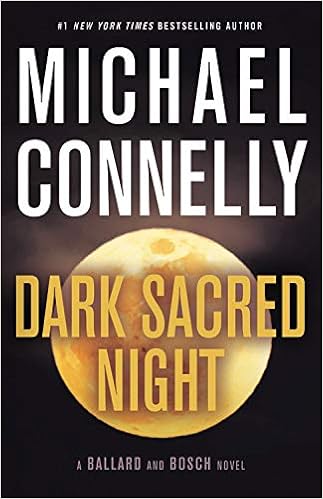
Michael Connelly's latest novel brings Harry Bosch a cold case and a challenging new partner


By Colette Brancroft
October 31, 2018
Image result for michael connelly dark sacred night
Harry Bosch has had plenty of partners, but he might have met his match.
In his long career as a Los Angeles detective in 20 best-selling novels by Michael Connelly, the driven Bosch has shared countless surveillance hours and bad cups of coffee with the likes of Frankie Sheehan, Jerry Edgar and Iggy Ferras. Many of his professional partners —Kiz Rider, Rachel Walling, Lucia Soto, Bella Lourdes —have been women.
Bosch's latest partner, LAPD Detective Renee Ballard, is different. Unlike all those other partners, Ballard is a lot like Bosch himself, which makes for a very interesting work dynamic.
Bosch is Connelly's great creation, one of those complicated but beloved characters that readers always want more of, a presence in most of the author's 11 other novels and the driving force of his namesake Amazon TV series, now moving into its fifth season.
Connelly introduced Ballard in 2017 in a stand-alone novel, "The Late Show." A reserved, athletic woman in her 30s, Ballard is a gifted investigator, the second-youngest woman to make detective in the LAPD. But her promising career was sidetracked into the undesirable overnight shift that gave that book its title.
Bosch got a nod in "The Late Show," but Ballard held center stage. Connelly's new novel, "Dark Sacred Night," is a duet, with the two detectives meeting, warily circling each other and then teaming up to pursue a heartbreaking cold case, with sections of the book alternating between their points of view.
On his website, Connelly writes that he originally though Ballard would be a one-time character, but she stayed with him: "It has been my pattern over many, many novels to bring characters together, have them cross paths. To me, all of my books are related. They are one big mosaic and while it is true that the centerpiece of that mosaic is Harry Bosch, the canvas is wide and there is plenty of room for other characters."
Connelly has written several novels featuring Bosch's half brother, lawyer Mickey Haller, as well as stand-alones about other Bosch-adjacent characters. But none of them has clicked with Bosch in the way that Ballard does —like a master with a student who could become his equal.
The two meet when Ballard comes into the detective bureau to write reports in the wee hours and finds a stranger rifling through cabinets of old case files. She braces him, and Bosch spins her a yarn with just enough truth to leave her intrigued. She knows his reputation in the LAPD, and she learns that he has retired and is now a volunteer at the tiny San Fernando police department, working cold cases.
Although he claimed he had a key to his old file drawers, Bosch used a twisted paper clip to unlock them; the next day, Ballard uses the same clip to let herself into the former drunk-tank cell that Bosch is using as an office at San Fernando. When Bosch arrives, he's intrigued in turn, and they talk.
The cold case that has him hooked, he tells Ballard, the one he was looking for files about at the LAPD, is the murder nine years before of Daisy Clayton. The 15-year-old runaway's body was found in an alley off Cahuenga Boulevard. She had been sexually assaulted, tortured and strangled, her body washed in bleach to remove evidence except for a curious imprint on the skin of one hip.
The investigation stalled long ago, as investigations into the deaths of drug-abusing teenage prostitutes do. Bosch got interested when, in the last book about him, 2017's "Two Kinds of Truth," he met Daisy's mother, a woman wrecked by grief and addiction to opioids.
Elizabeth Clayton is now drug-free and living at Bosch's house in the Hollywood Hills. It's not a romance, Bosch says, it's just that Elizabeth doesn't know where to go. But her presence is straining his relationship with daughter Maddie, now a college student. It's also feeding his interest in the cold case. As his former partner Lucia Soto will tell Ballard, he "knows the victim's mother. He's doing it for her. Like a dog with a bone."
That's one of the most important similarities between Bosch and Ballard, who "had never been the kind of detective who could leave the work in a drawer at the end of shift. She carried it with her and it was her empathy that fueled her." She volunteers to help with Daisy's case, and soon she and Bosch are prowling the Los Angeles streets where the girl met her fate, tracking leads together that range from a street preacher's baptismal room to a porn producer's headquarters.
Although the relationship between Ballard and Bosch crackles on the page, the tension isn't sexual. For one thing, their interest in each other is professional, something like a pair of world-class chess players in a match, one-upping each other and learning from it.
For another, flirtation would run counter to the tone of "Dark Sacred Night," a book whose dark core is sexual violence against women. Ballard is working the late show because she reported a superior's attempt to sexually assault her; the assignment is a slapback from the department's heavily male power structure. (The man who attacked her is now —irony alert —supervising a task force investigating sexual harassment in Hollywood.)
Connelly doesn't just give us that example, though. Throughout "Dark Sacred Night," Ballard deals with sexism and harassment, from a strip club owner who asks her if she wants a job while she's investigating a burglary to male supervisors who fail to send backup when she calls for it. As always, Connelly weaves other cases around the main investigation; one Ballard handles involves a famous comedian accused of rape by a young woman he picks up at a club. It plays out in a way that requires all of Ballard's professional detachment.
Unlike a lot of his male peers, Bosch is sensitive to Ballard's struggles. Part of it is being the father of a daughter; part of it is the impact of so many cases like Daisy's, in which male privilege and misogyny lead to the worst kinds of violence, its victims so often women and girls. And part of it boils down to Bosch's mantra: "Everybody matters, or nobody matters." It's a code with no gender exceptions.
The two do bond, though, with Bosch confiding in her about his daughter and his war experiences. We discover parallels in their pasts as well. Each had an absent parent (Bosch's lawyer father, who had another family, and Ballard's "missing in action" mother) and another parent who died under traumatizing circumstances: Bosch's mother murdered when he was a boy, Ballard's surfer dad paddling out to sea one day and never returning, leaving his young daughter on the beach.
Those moments don't slow the plot, however, which charges ahead through Daisy's case as well as others, like Bosch's dive into a long-ago gang murder, which will have serious repercussions. Ballard and Bosch both face complicated challenges to their personal ethics, challenges born not out of greed or fear but of their burning desire to make things right.
Through it all, they challenge each other. Ballard brings a fresh perspective, and Bosch brings all the things so many readers love about him.

Citizenship and Choice


By Angelo Codevilla
https://amgreatness.com/2018/11/05/citizenship-and-choice/
November 5, 2018

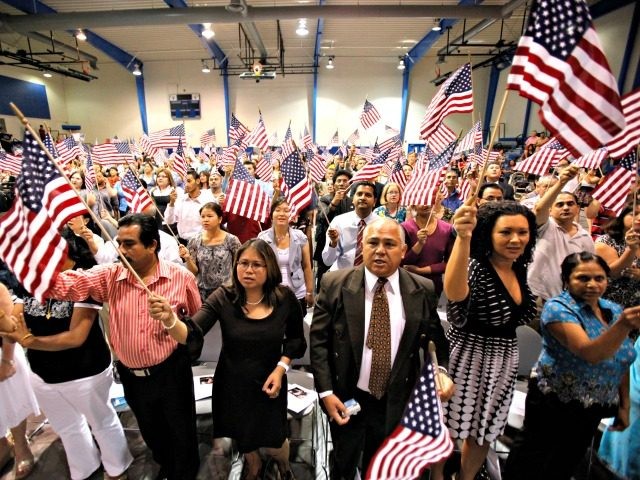
Image result for immigrant citizenship

(Rick Scuteri/AP)
As caravans of would-be illegal migrants heads for our southern border, each bigger and better organized than the last; as Chinese travel agencies schedule trips to America for mothers-soon-to-be; as the number of births to foreigners and illegals added to the results of chain migration (a.k.a “family reunification”) make up an ever-growing part of the voting public; and as the Democratic Party stakes its future power on importing a new set of Americans it can control, more and more of today’s Americans are realizing that our immigration system since the Immigration and Naturalization Act of 1965 is a political scam.
It is past time we address the question of whom we shall call to join this political enterprise called the United States of America as full members—and why we should be calling them—with the seriousness it deserves. The short answer has to be: that we choose to admit them because they understand, love, and are eager to support what this country is about.
With few exceptions (Indians, descendants of slaves and of the fewer than 3 million who set the country’s character in 1776-89) today’s Americans are people or descendants of people who chose to join this country and its character. Uniquely in history, America has been able to assimilate people of all colors and creeds because these people very much wanted to be assimilated. Many were Americans at heart before they got here. That’s why they came.
My friend, Peter Schramm, recalled his father—realizing that the 1956 revolution against the Soviets was going to fail—telling the family that they would flee to America. Now Peter, who was 10 years old at the time, would have gone anywhere his father asked him to go, but he was confused about why his dad had chosen America, so he asked, “Why America?” His father’s answer is instructive: ““Because, son. We were born Americans, but in the wrong place.”
My own experience confirms his. On the foggy morning of August 8, 1955, as the S.S. Constitution slipped past the Statue of Liberty, I stood with a couple of hundred other immigrants on the port rail of the third-class section. There were tears, and not a few sobs. None of us spoke any English. I was 13 and, like the others, had seen America in the movies, had heard stories, and had gone through the extensive screening process. We knew the basics: equality, freedom, opportunity, non-stop work, and utter seriousness. Having chatted with many of the others over the 10-day voyage, it seemed that I was already an American patriot in the company of American patriots.
Had we read what Lincoln had to say about immigrants becoming citizens, “equal in all things with us,” we would have cheered even more than did his 1858 audience: “When they look through that old Declaration of Independence they find that those old men say that ‘We hold these truths to be self-evident, that all men are created equal,’ and then they feel that that moral sentiment taught in that day evidences their relation to those men, that it is the father of all moral principle in them, and that they have a right to claim it as though they were blood of the blood, and flesh of the flesh of the men who wrote that Declaration, [loud and long continued applause] and so they are. That is the electric cord in that Declaration that links the hearts of patriotic and liberty-loving men together.”
Mutual choice is what successful immigration-cum-assimilation is all about. Joining bodies and souls in mutual affection and support is a matter of mutual commitment, much like marriage. If you’ve got mutual commitment, you’ve got everything. If you don’t, you are just buying trouble.
We had chosen America. But, boy, oh boy! America had chosen us as well. The quota system was just the beginning. There had to be sponsors who were confident enough of us (just my widowed mom and myself) to pledge their substance. Our jobs were already secured, and zero blemishes of any kind had to be certified before the personal screening could begin. Two days of interviews covered personal habits, practices, and preferences, very much including religion and politics. Our examiners spent a long time on our views and expectations of America. I recall an hour answering questions about my Communist uncles, Pietro and Luigi. The examiner was skeptical. But my status in the top tier of the (then) highly competitive Italian educational system seemed to have tipped the scales favorably.
How then are we to think about citizenship for illegals, their children, as well as “anchor babies?”
Lyman Stone’s recent article in The Federalist argues that “Birthright citizenship creates birthright loyalty, whereas denying citizenship to foreign children helps alienate the entire family and slows down assimilation.” This sidesteps the crucial matter of mutual choice. To suggest that granting citizenship to all who are born here encourages their illegal parents, or their “birth tourist” parents “to see themselves as Americans,” looks at allegiance from the wrong end. How is granting someone the status and powers of citizenship supposed to make up for his failure to see himself as an American in the first place? How does satisfying a hunger and capacity for which there is no evidence generate that very hunger and capacity?
In the same breath, but without showing any causal relationship, Stone cites the short time of residence that Canada and Australia require to grant citizenship to immigrants as evidence that easy grants of citizenship make for successful assimilation. But that has it backwards as well: Successful assimilation results from both sides’ willingness to assimilate. Unreflectively, but correctly, he points out both these countries choose carefully to whom they extend the privilege of immigration and that, unlike the United States, neither country allows the uninvited to remain.
The United States might well follow their example, especially that of Australia, which summarily expels illegals. Or we might return to our pre-1965 practice, or even grant citizenship even more quickly to those immigrants we choose to take. Shucks! Americans would have risked nothing by immediately granting citizenship to those with whom I stood as we passed by the Statue of Liberty in 1955. They had chosen us, and we had chosen America.
On the table right now, however is merely whether to grant a share of rule to people, some yet unborn, who we don’t know. It is difficult to imagine something quite so inherently stupid.

LOUIS FARRAKHAN, LIVE FROM TEHRAN


Lloyd Billingsley
https://www.frontpagemag.com/fpm/271861/louis-farrakhan-live-tehran-lloyd-billingsley
November 6, 2018

Image result for farrakhan iran death to america
(Mark Wilson/Getty Images)


Monday November 5, one day before the election, marked the resumption of sanctions on the Islamic regime by the Trump administration. Nation of Islam boss Louis Farrakhan flew to Iran to speak out on behalf of the ruling mullahs.
As Fox News reported, Farrakhan told Mohsen Rezaei, Secretary of Iran’s Expediency Council: “Today, I warn the American government that sanctioning Iran is a big mistake.” The eager Farrakhan failed to flag any mistakes by the Iranian Islamic regime, the world’s biggest sponsor of terrorism. And Farrakhan took care to time his visit with an important event.
Thirty-nine years ago, in 1979, the Islamic regime of the Ayatollah Khomeini invaded the U.S. embassy in Tehran, took more than 50 American diplomats and civilians hostage, and held them for 444 days. Farrakhan marked the anniversary by telling law students at the University of Tehran, that “America has never been a democracy” and then led the students in a chants of “Death to America!” and “Death to Israel!”
No one in America had ever seen a performance quite like that. On the other hand, in his live Tehran show the Nation of Islam boss was not advancing any new themes.
On October 14, the 23rd anniversary of the Million Man March, Farrakhan addressed a cheering audience in Detroit: “To the members of the Jewish community that don’t like me — thank you very much for putting my name all over the planet…I’m not mad at you, ‘cuz you’re so stupid.” The Nation of Islam leader also claimed “I’m not an anti-Semite. I’m anti-Termite,” and repeated that message in a tweet.
Harvard law professor Alan Dershowitz denounced the speech and called out presidents Obama and Clinton, along with former DNC boss Keith Ellison, for their ties to Farrakhan. Even so, prominent Democrats running for office were not swift to denounce Farrakhan for his Jews-are-termites speech. In fact, Farrakhan thrives on special treatment from high-profile Democrats.
“Louis Farrakhan has ingratiated himself with the liberal elite in the United States,” Howard Feldman noted after the “termites” speech. “Both Obama and the Clintons have been photographed alongside him. And whereas they publicly denounce his attitude towards Jews, the fact that they continue to be seen with him is that which empowers him.”
True to form, at the funeral of Aretha Franklin, who passed away in August, Farrakhan got a place of honor, right up front with Democrats Bill Clinton, Jesse Jackson, Al Sharpton and Erica Holder. Many speakers exploited the occasion to bash President Trump, but none of the prominent Democrats took Farrakhan to task about anything. Viewers got the impression the Democrats liked being seen with him.
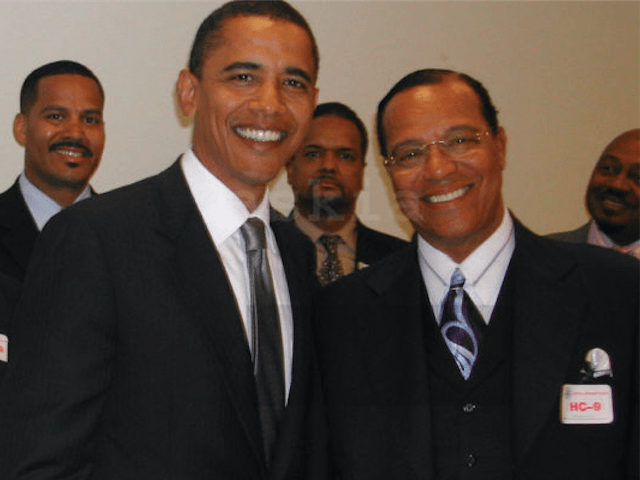
Related image
Back in 2005, a smiling Illinois Senator Barack Obama duly posed with Farrakhan for a photograph (above) that only recently emerged. That was no surprise because the senator’s 1995 Dreams from My Father portrayed the Nation of Islam in a completely favorable light.
The author’s hatemongering Chicago pastor Jeremiah Wright, who prefers “God damn America” to “God bless America,” was a longtime pal of Farrakhan, and the Dreams author participated in the Million Man March. In 2008, when the dreamer ran for president, Farrakhan called him the “messiah.” 
Once elected, POTUS 44 preferred to target conservatives rather than take Farrakhan or Wright to task. In similar style, for the most part, the establishment media have remained uncritical of the Nation of  Islam boss, even though his racist views were no secret.
As Stanley Crouch explained in the Village Voice in 1985, in the view of Louis Farrakhan, “the white man was a devil ‘grafted’ from black people in an evil genetic experiment by a mad, pumpkin-headed scientist named Yacub. That experiment took place 6000 years ago. Now the white man was doomed, sentenced to destruction by Allah.”  It follows that, regardless of self-image, anyone who believes that Dave Brubeck, Albert Einstein, Eleanor Roosevelt and the Wright Brothers are the devilish result of Yacub’s failed experiment is a racist.
In 2016, Hillary Clinton was quick to target Trump supporters as racists, sexists, homophobic, islamophobic, and so forth, a veritable “basket of deplorables.” When it comes to racism, the former First Lady and Secretary of State, who would still like to be president, pretty much gives Farrakhan a free pass.
For his part, the Nation of Islam mouthpiece knows he can call Jews termites, denounce America from Tehran, and most prominent Democrats will treat him gently. In reality, his “Death to America” chant differs from the Democrats only in degree, not in kind.
Now completely dominated by the left, Democrats despise the America that actually exists, with its culture, history, traditions and borders. Their dream is the future social justice America, with no borders. In the Democrats’ vision, only their party prevails, with help from an imported electorate.
"No Trump, no wall, no USA at all,” the refrain of leftist Democrats, is no great distance from “Death to America,” as chanted by Louis Farrakhan in Tehran. Democrats have effectively empowered this loathsome racist and anti-Semite. At election time or any time, non-Democrats, journalists and civil rights leaders would be wise call them on it.