Showing posts with label Border Issues. Show all posts

Tuesday, July 30, 2019

Impeachment Dreams Die; Wall gets Built


By Clarice Feldman
https://www.americanthinker.com/articles/2019/07/impeachment_dreams_die_wall_gets_built.html
July 28, 2019

Political Cartoons by Chip Bok

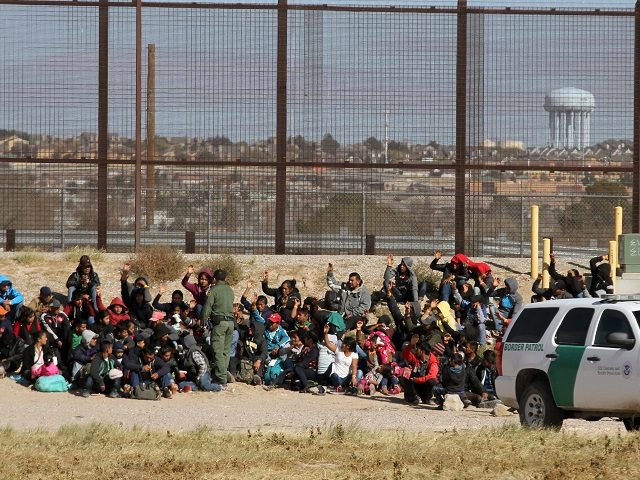
This was a week the President could only have dreamed of. There was the highly promoted appearance of Robert Mueller before two congressional committees in which the impeachment dream of the party with no saleable agenda died in full public view. Egged on by Deep Staters, Guatemala had recently backed off of a deal to keep asylum seekers there, but at the end of the week thought better of reneging (after the President threatened tariffs and other responses if they didn’t follow through on the deal). The week ended with the Supreme Court green lighting the transfer of some funds from the Defense budget to build 100 miles of a wall at the border of Mexico.

Mueller and “His” Report

For two years the mainstream media has been plugging the idea  -- preposterous on its face as it was --that the President colluded with Russia to beat Hillary Clinton. Indeed, the Pulitzer Committee honored the New York Times and Washington Post, leaders of  the collusion band, “for deeply sourced, relentlessly reported coverage in the public interest that dramatically furthered the nation’s understanding of Russian interference in the 2016 presidential election and its connections to the Trump campaign, the President-elect’s transition team and his eventual administration.” 

Television and cable news carried the same tune ad infinitum, as this video clip records in condensed form.

Few people read the Mueller report and the Democrats believed a well-practiced series of soundbites at the hearing would revitalize impeachment impetus. It didn’t. On the contrary, it revealed that the endeavor was corrupt, poorly managed by someone seemingly in the early stages of dementia, and that the special counsel was clearly among those who’d never read the report offered up in his name.  
There was a lot of very good coverage of the Mueller testimony. In my view Kimberley Strassel at the Wall Street Journal and Professor Jonathan Turleyat The Hill did the best job of it.
(a) Strassel 
We’ve been told it was solely about Russian electoral interference and obstruction of justice. It’s now clear it was equally about protecting the actual miscreants behind the Russia-collusion hoax.
The most notable aspect of the Mueller report was always what it omitted: the origins of this mess. Christopher Steele’s dossier was central to the Federal Bureau of Investigation’s probe, the basis of many of the claims of conspiracy between the Trump campaign and Russia. Yet the Mueller authors studiously wrote around the dossier, mentioning it only in perfunctory terms. The report ignored Mr. Steele’s paymaster, Fusion GPS, and its own ties to Russians. It also ignored Fusion’s paymaster, the Clinton campaign, and the ugly politics behind the dossier hit job. [snip]
As Florida Rep. Matt Gaetz asked Mr. Mueller, how could a special-counsel investigation into “Russia’s interference” have any credibility if it failed to look into whether the Steele dossier was itself disinformation from Moscow? Mr. Steele acknowledges that senior Russian officials were the source of his dossier’s claims of an “extensive conspiracy.” Given that no such conspiracy actually existed, Mr. Gaetz asked: “Did Russians really tell that to Christopher Steele, or did he just make it up and was he lying to the FBI?” [snip] The Mueller team, rather than question the FBI’s actions, went out of its way to build on them. That’s how we ended up with tortured plea agreements for process crimes from figures like former Trump aide George Papadopoulos and former national security adviser Michael Flynn. They were peripheral figures in an overhyped drama, who nonetheless had to be scalped to legitimize the early actions of Mr. Comey & Co. Mr. Mueller inherited the taint, and his own efforts were further tarnished. That accounts for Mr. Mueller’s stonewalling.
The appearances reminded me of scenes in Joseph Heller’s novel Good as Gold(less well-read than Catch 22, but a scathing and realistic take on Washington, D.C. culture). Here are two telling quotes from that work. The first about the FBI:
"You’re vulnerable to blackmail in the interests of a foreign power by anyone who knows all the facts.”
“Who knows all the facts?”
“The FBI knows all the facts.”
“Is the FBI likely to blackmail me in the interests of a foreign power?”
The second is paraphrased from memory as I’ve misplaced the book. It clearly was intended as a scathing rebuke of Henry Kissinger, whom the author detested, but the notion of undeserved reputation could apply as well to many others, including Mueller: “He lied under oath before Congressional Committees for three administrations and was widely considered an elder statesman.”
Congressman Louis Gohmert has offered up a detailed view of Robert Mueller’s history and it is far less glorious and ethical than the mainstream press and his admirers has led you to believe.
(b) Jonathan Turley  
The hearing was a disaster for anyone who was hoping for a kickstart to impeachment. Democrats could not produce even a single takeaway moment in six hours of hearings. Instead, Mueller came across more often as befuddled than bemused by the entire exercise. Calling the hearings a “disaster” for Democrats, Harvard law professor Laurence Tribe, a leading advocate for impeachment, declared, “Far from breathing life into his damning report, the tired Robert Mueller sucked the life out of it.”[snip] Democrats did not seem to care that Mueller was in open contempt of Congress by simply refusing to answer questions whenever it suited him. [snip]
He was allowed to discuss the underlying law as well as key decisions on the preparation of the report. All of these areas had been discussed by Attorney General William Barr and were neither privileged nor classified. So why did he not answer these questions? The answer is as simple as it is obvious. He did not want to because he often had no answer. [snip]
…Mueller answered questions about the Office of Legal Counsel when it suited him and then refused when it did not. He started the second hearing before the House Intelligence Committee by withdrawing part of his earlier testimony before the House Judiciary Committee regarding the two memos. [snip] Given his resistance to testifying and his request to have his chief of staff with him, the hearings successfully magnified the lingering questions over his supervision of the investigation. It all was a testament to how a bad movie can ruin a good book. Film critic Joel Siegel once reviewed “The Bonfire of the Vanities” by saying, “This is a failure of epic proportions. You have got to be a genius to make a movie this bad.” If the Democrats wanted to dampen calls for impeachment, they could not have produced a better cinematic suppressant. Call it “The Day Impeachment Died.”
This is not to say that everyone decided it was time to stop beating this dead horse. Hacks Chris Matthews and Rachel Maddow are still at it.
I suppose with them it’s a new kind of psychological therapy for those dumb enough to watch them -- I’d call it “reverse reality therapy” where the therapist enters into the fantasy with the patients and encourages their continued derangement.
The Wall
Friday in a 5-4 decision the Supreme Court determined that the Sierra Club, ACLU, and the Southern Border Communities Coalition had no cause of action to obtain a review of the determination to use $2.5 billion dollars from Defense Department Funds to build sections of the wall on the Mexican Border. (The administration had authorized other funds  -- military construction, Defense department and the Treasury department’s asset forfeiture accounts [seized narcotics funds] -- to supplement the $1.4 billion Congress had allocated for building a wall on the Mexican border, but  only the Defense Department funds were at issue.)
The case arose from -- where else? -- the Ninth Circuit, where a District Court judge  had issued a nationwide injunction against the use of those funds for wall construction.
U.S. Solicitor General Noel Francisco argued that private groups could not challenge this transfer and the majority of the court agreed. He added that even if they had a valid cause of action their “interests in hiking, bird watching, and fishing in designated drug-smuggling corridors do not outweigh the harm to the public from halting the government’s efforts to construct barriers to stanch the flow of illegal narcotics across the southern border.”
Justice Stephen Breyer wanted to lift the injunction but halt construction until the case was heard on the merits but he was outvoted and construction contracts can now be entered into. “While Friday’s ruling isn’t technically on the merits, it is, in practice, a big win for Trump, since there will be no way to 'unspend' the money once construction begins.”
Boris Johnson, who reminds me so much of President Trump, is now the new United Kingdom Prime Minister and the two men are reportedly already discussing a trade agreement, something that should help Johnson immeasurably in his fight for a no deal Brexit. I can’t say the globalists and deep staters are dead yet, but they are mostly dead and as Miracle Max in Princess Bride says of the dead, we’ll soon be able to go through their clothes and look for loose change.

Sunday, July 07, 2019

Angry About Border Conditions? Blame Congress


By Rachel Bovard
https://amgreatness.com/2019/07/06/angry-about-border-conditions-blame-congress/
July 6, 2019

Rep. Alexandria Ocasio-Cortez (D-NY) addresses the media after touring the Clint, Texas, Border Patrol Facility housing children.
Rep. Alexandria Ocasio-Cortez (D-NY) addresses the media after touring the Clint, Texas, Border Patrol Facility housing children.(Getty Images)

The woke social media over the Fourth of July was something to behold. On America’s birthday, posts were full Trump-baby angst, references to illegal militias, treasonous criminality, and concentration camps, and carefully styled photos of summer desserts that spelled out “close the camps” on top of seasonal fruit.
Because you know what you do if you think child migrants are actually being tortured by your government and dying in concentration camps? You channel all your first-world, virtue signaling rage into the creation of artsy and seasonally appropriate desserts that are just perfect for that People photoshoot.
But the misplaced rage was not limited to social media. In the annals of Wokes versus People Living in Reality, this week was one for the books. Representative Alexandria Ocasio-Cortez (D-N.Y.), the avatar of lefty rage-emotes everywhere, visited the border and had a complete meltdown.
Ocasio-Cortez told reporters she “was not safe from the officers,” and that migrants were forced to drink out of toilets while being subject to “psychological warfare.”

“This has been horrifying so far,” she tweeted. “It is hard to understate the enormity of the problem. We’re talking systemic cruelty w/ a dehumanizing culture that treats them like animals.”
If what she’s saying is true—members of Congress being threatened for asking questions, migrants housed in World War II-style detention camps with only toilet water to drink, “mass atrocities” being perpetuated by the government—then we are indeed in a crisis.
But none of this is true. None of the migrants housed on the border are being held against their will. While Ocasio-Cortez provided no photos of the toilets from which she claims migrants are forced to drink, those familiar with border detention facilities suggest she is referring to this type of drinking facility which is connected to a toilet—but does not dispense actual toilet water from the faucet, as she claims. And, as former Department of Homeland Security Secretary Jeh Johnson pointed out this week, the practice of holding migrants in “cages” after detention started under President Obama.
In fact, the entire statutory regime under which the Trump Administration is handling the border crisis is the same as it was under President Obama. Because, despite years of reasons to act, Congress has refused to change the laws governing immigration, the agencies in charge of handling it, or the resources available to them. The conditions at the border remain largely the same as they have been for years, and Border Patrol remains overwhelmed and undermined.
Reality Check: 2014 vs. 2019
This is not to say that conditions at the border aren’t terrible. They are. The Border Patrol is out of space and rapidly running out of money, and Health and Human Services, the department responsible for taking care of unaccompanied minors, is underfunded. It’s why the president declared a humanitarian crisis and asked Congress for more resources to house the current influx of migrants. (For over two months, the Democrats called the crisis fake, and blockedhumanitarian funding—including more beds—17 times.)
The problem with the Democrats’ current outrage is not necessarily the subject matter. It’s fine to call out terrible conditions where they exist. But the problem arises when the outrage appears politically expedient. And it’s compounded when Democrats refuse to act on any viable solutions.
Representative Joaquin Castro (D-Texas) joined Ocasio-Cortez on last week’s visit, and expressed the same levels of outrage as she did. However, Castro also visited an Obama-era facility in 2015, with very similar conditions. He called the visit “very emotional,” and joined more than 100 other Democrats in sending a letter to Jeh Johnson, asking him to end the use of family detention facilities.
But missing were the Trump-derangement levels of rage seen from the same Democrats this week, the comparisons to concentration camps, the claims about treating migrants as “animals.”
Nor was there any appreciation for the sheer drastic increase in numbers with which Border Patrol now must contend because of the agitation among immigrant activists who have pushed people to throng our border.
In fiscal year 2014, when President Obama declared a humanitarian crisis, the Border Patrol in the Southwest border sectors apprehended 136,986 migrant families and children. In just the first eight months of fiscal year 2019, Border Patrol agents have apprehended a total of 389,259 families and children—a 184 percent increase.
Moreover, the 2019 total includes adults falsely claiming to be the parents of children who aren’t theirs, or migrants over the age of 18 posing as children. In April, Border Patrol officials said they had identifiedmore than 3,000 of these “fake families,” and the trend is growing.
In Tijuana, groups of men are attempting to purchase or steal children to accompany them to the United States—where entry with a child will facilitate an earlier release into the country where they are supposed to wait for a court date they will never attend. The going rate for a child is reportedly $350.
What Solution Do Democrats Want?
While Democrats howl about conditions at the border and the detention of migrants, it’s worth asking, what is their preferred solution?
Federal law, sensibly, does not allow an immigration official to turn migrants loose as soon as they are apprehended. This is particularly true with unaccompanied children. The law requires detained migrants to be processed, asylum claims adjudicated, and, when it comes to children, a determination of whether or not the adult they are traveling with is, in fact, the child’s parent.
All of this takes time, and more of it when the Border Patrol is overwhelmed with thousands more migrants arriving each day. Many times, adults and families claiming asylum are released into the interior of the country to await a court date years in the future. Unaccompanied children are handed over to Health and Human Services’ Office of Refugee Resettlement, where agency officials work to reunite children with family they already have in the United States, or place them in foster care.
In a bizarre twist during the debate over funding humanitarian resources at the border, House Democratsdemanded that HHS not be able to share information with Immigration and Customs Enforcement when it came to placing children—thereby reducing the ability of HHS to know if it was placing children with safe families.
Everything CBP, HHS, and ICE are doing complies with existing federal law. The agencies, as they have been for years, are underfunded, understaffed, and undermined by the selective outrage of Democrats who apparently have just awakened to these problems and would rather virtue signal than address them meaningfully.
But the underlying question in all of this is, “What policies would Democrats prefer?” Letting unaccompanied children loose into the streets? Releasing everyone who is apprehended coming across the border, with little regard for who they are and what they’re really doing here?
Based on their responses in the last debate, the answer is yes. Democrats either have no solutions to the border crisis, or offer inexplicable ones like “fixing climate change.”
If this is the best they have to offer, Democrats are not a serious or credible participant in addressing conditions at the border—or the statutory regime they’ve had the ability to alter for years. They can scream about Trump all they want, but the reality is, the fault doesn’t lie with his administration or even with previous ones. It sits squarely on the shoulders of the lawmakers who would rather tweet and name-call than reform the law or secure the border.

Tuesday, June 11, 2019

Trump’s America: No Country for Illegal Aliens


By 
https://amgreatness.com/2019/06/09/trumps-america-no-country-for-illegal-aliens/
June 9, 2019

Related image


President Obrador and President Trump

Mexican President Andrés Manuel López Obrador once said that immigration to the United States is a “human right,” one that his government would observe and defend. And yet it seems now that fear of President Trump’s tariffs has changed AMLO’s tune.

The Mexican government on Wednesday arrested 350 Central Americans, including two prominent “migrant rights” activists, who were part of a large group headed toward the United States. Mexico is also planning to deploy an additional 6,000 national guard troops to its border with Guatemala.
It gets better.
The day after those activists were arrested, the Mexican Finance Ministry froze the bank accounts of 26 individuals for their alleged involvement in facilitating migrant caravans to the United States from Central America.
It took about a week after Trump threatened to impose a 5 percent tariff—for starters—on all Mexican exports to the United States for Obrador to bend the knee. In fact, Obrador has gone so far as to offer “a sweeping overhaul of asylum rules across” Mexico, the Washington Post reports.
So much for immigration to the United States as a “human right.”
The proposed asylum overhaul has three parts. First, it would require that Central Americans seek refuge in the first country they enter, rather than the United States.
Second, migrants who arrive at the U.S. border would be deported to the “third country”—in this case, Mexico. (It’s important to note that Mexico has never recognized the “third country” agreement, until now.)
Third, migrants who express fear of physical harm in their home country—a claim generally made out of expediency by migrants all too familiar with squishy U.S. immigration laws—would be subjected to a tougher screening process and thus more likely to be rejected.
If Mexico is true to its word, this in all would amount to a major victory. Still other, smaller victories abound.
Minors who had attempted to enter the United States illegally could until recently help themselves to English classes, soccer, and even legal aid while living in federal migrant shelters. This, of course, was all financed by the unwitting American taxpayer.
As of June 5, however, the Trump Administration announced it would end all such recreational activities and services. Law-breaking will no longer be rewarded with ping-pong matches and taxpayer-subsidized legal and educational services. Shame.
Then there is the case of Scott Warren, a professor at Arizona State University and a volunteer with No More Deaths. Warren was arrested in 2018 by Border Patrol agents on charges of harboring illegal aliens, for which he is facing up to 20 years in prison. His trial began last week.
Though it may boggle little liberal minds, illegal immigration is illegal, and Warren was aiding and abetting illegal aliens at a time when Border Patrol has been apprehending them by thousands—literally. A group of 1,036 illegal aliens found in the El Paso sector—the largest ever apprehended at a single time—were intercepted by Border Patrol border on May 30. To punish Warren, then, not only sends a message to others like him but shows respect for the rule of law and for the men and women in the line of duty.
Trump’s hardball with Mexico, the austere changes to migrant detention centers, and the punishing of subversive activists indicate favorable winds for American nationalists. “Trump’s America” increasingly appears to be a nation of laws, and no country for illegal aliens.

Wednesday, April 10, 2019

The Open Borders Agenda Rears Its Ugly Head


Ben Shapiro
https://townhall.com/columnists/benshapiro/2019/04/10/the-open-borders-agenda-rears-its-ugly-head-n2544536
April 10, 2019


Image result for open borders mexico

This week, President Trump fired his homeland security secretary, Kirstjen Nielsen. Nielsen was, according to media and the Democrats, a monster of the highest order. She was allegedly the force behind the caging of children (that practice began under President Barack Obama and actually ended under President Trump); she was supposedly a barbarian focused on keeping innocent brown children out of America.

And Trump dumped her because even she was not cruel enough to please Genghis Trump, the left claimed. Stephen Colbert joked, "Sure, she put kids in cages, but Trump was upset. ... So he just needs someone who can be crueler to children than Kirstjen Nielsen." Jimmy Kimmel made nearly the same joke: "Goodbye, Kirstjen, and whoever replaces you permanently is going to have some very big cages to fill." Trevor Noah quipped, "Basically, the only job she can get now is working with R. Kelly."

In reality, Trump fired Nielsen because he believed she hadn't properly taken measures to rein in the humanitarian crisis at the border. That was half true -- she didn't react with alacrity to change the necessary Homeland Security regulations, for example. But it was also a result of Trump's changing whims with regard to border strategy. Trump was in favor of a no-tolerance border policy that necessarily resulted in family separations; then he was against it; then he was for it; then he was against it.

Most of that vacillation resulted not from brutal bigotry, however, but from a simple fact: Democrats have simply not provided Border Patrol and Immigration and Customs Enforcement with the resources necessary to properly control the border. Federal courts have ruled that families cannot be held together in custody for longer than 20 days; children must be released to guardians outside detention. This means that the Trump administration, like the Obama administration before it, was left with a choice: Either release parents along with children, or separate parents from children.

The federal courts have made the situation even less tenable. They have stated that the Trump administration cannot work with the Mexican government to house potential asylum claimants on the Mexican side of the border to keep families together; they have stated that the Trump administration cannot separate families for prolonged periods of time. A series of conflicting lower-court rulings has left the general policy in limbo.

This means that Congress ought to act. Everyone should be on the same page with regard to those crossing the border illegally. We should have an expedient system for determining the validity of asylum claims; we should give families the option of staying together in detention pending such determination.

But Democrats in Congress refuse to act. They won't change the regulations to allow families to remain together in custody, and they won't provide the funding necessary to keep detained families in some level of comfort. Instead, they snipe at the supposed cruelty of the Trump administration, which simply seeks to end the policy of "catch and release" that results in hundreds of thousands of illegal immigrants remaining indefinitely in the country.

This week, Tom Perez, chairman of the Democratic National Committee, revealed the truth about the Democratic agenda: It's not about compassion at all, but about politics. "Tough doesn't equal smart," Perez stated. "Tough equals dumb." The only truly dumb thing is continuing to play politics with the lives of people crossing the border illegally and American citizens being forced to cope with the price of illegal immigration.

Ben Shapiro, 35, is a graduate of UCLA and Harvard Law School, host of "The Ben Shapiro Show" and editor-in-chief of DailyWire.com. He is the author of the No. 1 New York Times bestseller "The Right Side Of History." He lives with his wife and two children in Los Angeles.

Saturday, March 09, 2019

Can Trump Stop the Border Invasion?


By PATRICK J. BUCHANAN
https://www.theamericanconservative.com/buchanan/can-trump-stop-the-border-invasion/
March 8, 2019

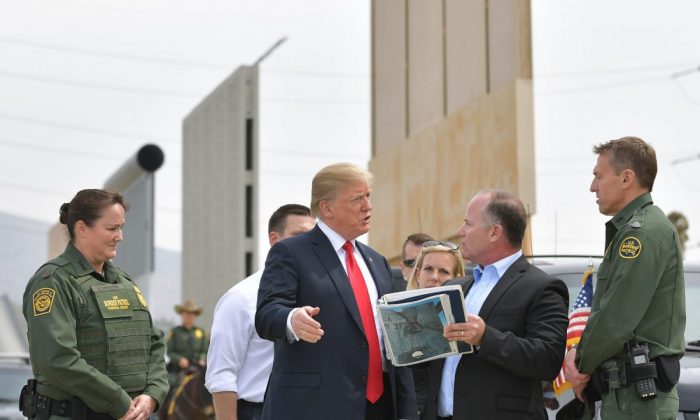
President Donald Trump (C) is shown border wall prototypes in San Diego, California on March 13, 2018. (Mandel Ngan/AFP/Getty Images)

In its lead editorial Wednesday, The New York Times called upon Congress to amend the National Emergency Act to “erect a wall against any President, not just Mr. Trump, who insists on creating emergencies where none exist.”
Trump “took advantage” of a “loophole” in the NEA, said The Times, to declare “a crisis at the border, contrary to all evidence.”
The Times news desk, however, apparently failed to alert the editorial page on what the top story would be that day.
“Record Numbers Crossing to U.S., Deluging Agents” was the page one headline. The Times quoted Kevin K. McAleenan, commissioner of Customs and Border Protection: “The system is well beyond capacity, and remains at the breaking point. …This is…a border security and a humanitarian crisis.”
Reporter Caitlin Dickerson explained what is behind CPB’s alarm: “The number of migrant families crossing the Southwest border has once again broken records, with unauthorized entries nearly double what they were a year ago.”
She continued, “More than 76,000 migrants crossed the border without authorization in February, an 11-year high…newcomers continue to arrive, sometimes by the busload, at the rate of 2,200 a day.”
Only if one believes in open borders is this not an emergency, not a crisis. Consider the budgetary impact alone of this invasion.
The majority of migrants breaching the border are from Mexico and Central and South America. Most do not read, write, or speak our English language, are not college graduates, and arrive with few skills.
Almost all will enter the half of the U.S. population that consumes more in social benefits than they will ever pay in taxes.
With the U.S. national debt over 100 percent of gross domestic product and the deficit running at nearly 5 percent of GDP at full employment, the burden the migrant millions are imposing upon our social welfare state will one day collapse the system. For they are coming to a country where K-12 education is free, and where, if the Democrats take over, pre-K though college will be free.
These folks will be eligible for city, county, state, and federal programs that provide free or subsidized food, rent, housing, and health care.
All were enacted for the benefit of U.S. citizens. Uninvited, many more are coming to partake of them.
With 328 million people here now, approaching twice the number as in 1960, how many can we take in before government sinks under the weight of its beneficiaries?
And there is a larger issue.
If, as appears probable, President Trump is not going to be able to build his wall and all the security measures taken in this century prove inadequate to stanch the invasion of America, how does it all end?
Or is this the endless invasion, where the future is decided on our 1,900-mile border with Mexico, and we, as the last superpower, are a pitiful, helpless giant too morally paralyzed to stop it?
The resolution and determination of Third World peoples to come to America, even if they have to break our laws to get in and stay, is proven.
If there is no matching national will to halt the invasion, and no truly effective means that would be acceptable to our elites, the migrants are never going to stop coming. And why should they?
Politically, this invasion means the inevitable death of the national Republican Party. When Texas votes like California in a presidential election, that is game, set, match.
What is remarkable is how our cultural elites are giddily embracing what most of the advanced world is recoiling from.
The Times that berates Trump for trying to secure the border with his wall constantly bewails the rise of ethnic nationalism, populism, tribalism, and “illiberal democracies” in Europe. But the rising “isms” of the new Europe are driven by popular fear and loathing of the very future the Times cannot wait to embrace.
Japan’s population of 127 million, the second oldest on Earth, has begun to shrink. But there seems to be no desire in Japan to import millions of East or South Asians or Africans to replace the vanishing Japanese.
Does China look upon its diversity as its greatest strength?
Hardly. Beijing is repopulating Tibet with Han Chinese, and has set up “re-education camps” to de-program Uighur Muslims and Kazakhs in the west so they sever their birth attachments to their ethnicities and faiths and convert into good communists.
In the U.S., the ball is now in Trump’s court.
If he cannot get a Democratic House to fund his wall and the forces now on the border are overwhelmed by the migrants, as CPB reports, how does he propose to halt the invasion?
And if he does not stop it, who will? And what will failure mean for America’s future as one nation and one people?
Patrick J. Buchanan is the author of Nixon’s White House Wars: The Battles That Made and Broke a President and Divided America Forever. To find out more about Patrick Buchanan and read features by other Creators writers and cartoonists, visit the Creators website at www.creators.com.

Monday, February 25, 2019

‘The Border’ Is a Stunning and Timely Conclusion to Don Winslow’s Drug-War Trilogy


By Janet Maslin
https://www.nytimes.com/2019/02/17/books/review-border-don-winslow.html
February 17, 2019

Image result for don winslow the border

Of all the blows delivered by Don Winslow’s Cartel trilogy, none may be as devastating as the timing of “The Border,” its stunner of a conclusion. Though Winslow cannot have engineered all of this 14 years ago when he started this series, his sweeping new novel concerns subjects that put it right on the culture’s front burner: the Mexican-American border, the handling of migrant children, the opioid crisis and some barely fictionalized claims about how foreign money has bought influence at the highest level of the U.S. government.
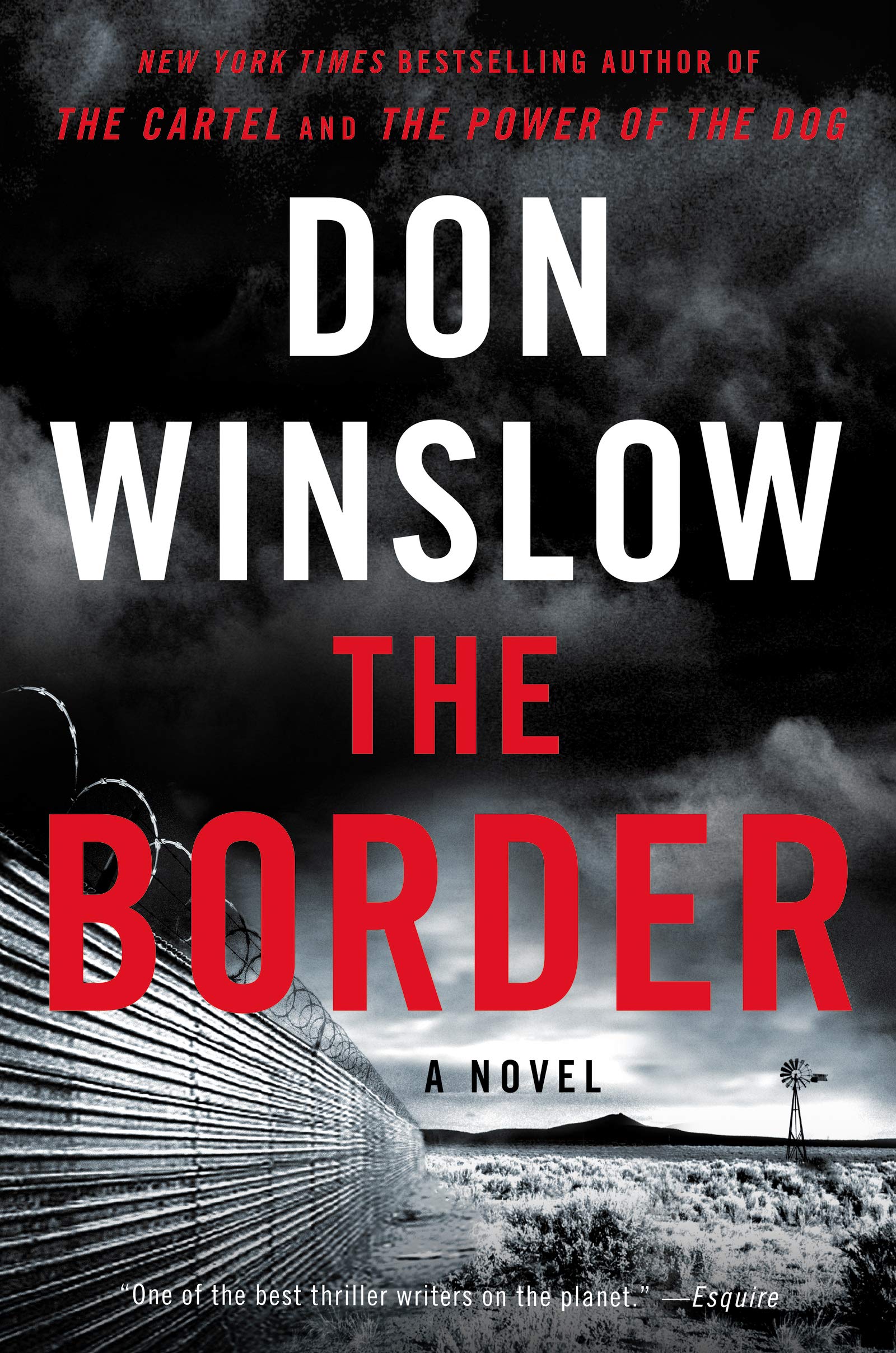
The book’s title, “The Border,” refers to both physical and moral barriers. Winslow is well aware that both that and its cover image, which depicts a razor-wire-topped wall spreading across a desert landscape, are politically loaded. “Loaded phrases, like loaded guns, are more interesting, aren’t they?” Winslow said to Entertainment Weekly in September. As for the book’s depiction of fiercely partisan American politics, including its treatment of characters who are unmistakable versions of the current president and his son-in-law: “I know this book is going to make some people angry. I can live with that.”
Even though the first installment of this trilogy was named “The Power of the Dog,” after a biblical intimation of evil (“Deliver my soul from the sword; my love from the power of the dog,” Psalms 22:20), it only hinted at the magnitude and ferocity of what was to come. That opening novel now looks like the series’ relatively innocent prologue — and it is as blade-sharp, violent, pulse-quickening and reportorially shocking as the pinnacle of some lesser series might be.
“The Power of the Dog” is, in brief, about the first decades that bind the destinies of Art Keller, a Vietnam veteran and later D.E.A. agent, and Adán Barrera, a young Mexican who will go on to achieve the most dizzying heights of power. The book begins in a burning Mexican poppy field in 1975 (“Only in hell, Art Keller thinks, do flowers bloom fire”) and leaves Keller among more poppies in 2004. Many unspeakable acts happen in between, melding the personal with the political (Iran-contra). It is all rendered unputdownable by Winslow’s unrivaled skill at his game.

The second book, “The Cartel” (2015), remains the heart of this series, and not only because of its central chronological position. It cements the ambition and the “Godfather” caliber of this whole multigenerational undertaking, and finds the major figures at their most fully formed. Some of it takes place, as we now learn with hindsight, in what were practically idyllic times for the Sinaloa cartel, a real-life cartel run by the fictional Barrera, regardless of his situation vis-à-vis imprisonment. Inside or out, he called the shots — and shots were the most merciful form of punishment meted out to this group’s vicious enemies. As the Sinaloa operation devolved into monstrous war with rivals, counting journalists among its many casualties, mere brutality became a distant memory.
A surprising array of characters from the earlier books reappears in “The Border.” One of them is a young boy who, in “The Cartel,” was seen kicking around a very bizarre soccer ball (an image readers of that book will never forget, no matter how hard they try). Keller and his new wife, Marisol Cisneros, the onetime mayor of Juarez, decide to try to help him.
It is 2012 when “The Border” starts, smoke still rising from the colossal battle that dethroned Barrera for good. A major plot point is the internecine horror that descends after the kingpin’s demise. The fight for succession lasts through the entire length of the novel.
Winslow means to journey deep into a new kind of hell this time, and to suggest that his readers recognize the sensation. This is a book for dark, rudderless times, an immersion into fear and chaos. It conjures more lawlessness, dishonesty, conniving, brutality and power mania than both of the earlier books put together.
Because of that chaos, it might have benefited from an indexed cast of characters. But Winslow can’t provide one. For one thing, it would be a spoiler. You just have to watch these miscreants as they drop. The Barrera heirs, would-be successors and arriviste rivals — a whole indulgent younger generation named Los Hijos, characterized by wretched excess and suicidal stupidity — make for countless shifting allegiances, fake names, dispensable henchmen and other complications.

Along with the battle to succeed Barrera, the plot involves Keller’s becoming head of the D.E.A. despite his strong distrust of the federal government and its approach to solving America’s drug problems. In order to do that, Keller sets himself up as a kind of independent investigator, which has a current resonance, too. The book makes Winslow’s clear case for why everything we’re told about Mexican drug imports is wrong: why New York is so vital to the country’s illegal-drug distribution, and even production; how Wall Street money and drug money are intertwined; and how money laundering intersects with businesses like real estate.
Enter Jason Lerner, a very Jared Kushner-like character, and his father-in-law, John Dennison. Dennison has Donald Trump’s history, speaks Trump’s own words and has a name that combines two sobriquets (John Barron and David Dennison) that Trump once used while pretending to be his own spokesman.
Winslow describes sting operations with immersive, heart-grabbing intensity. You don’t read these books; you live in them. You come to learn all about what it means for a good cop to go undercover as a bad one; for a black ex-con to be coaxed into the world of high-stakes New York drug dealing because he can reach a market Mexicans can’t; for a Staten Island addict to fall helpless prey to the drug trade’s latest bright idea (a near-lethal burst of fentanyl added to the usual heroin). Each story is personal. But each has huge ramifications in Winslow’s larger scheme.
The single most wrenching subplot involves a 10-year-old Guatemalan boy whose life is all but over, thanks to a system of graft that makes prostitutes out of women and thugs out of men. The boy is not described cheerlessly; Winslow doesn’t write in that register. The child is amazingly hardy. But the book shows the single day, the single stroke of fate, that may determine his entire future if the systemic corruption that pervades “The Border” has its way.
About making prostitutes out of women: Let’s just say that Winslow didn’t invent the horrors of the drug world, and assume he’s presenting a version of what he’s seen and heard about them. The words used around gender and race in this book are frequently ugly, and in these times that calls for a warning.
Last and never least with Winslow: the matter of languages. He is fluent in many of them, and “The Border” once again shows off those talents. There’s slang, of course. Why have a snitch sing when he can be “doing his best Freddie Mercury imitation for D.E.A. right now”? There is cop. There is politician, hit man, high roller. There is psycho — always a favorite, and always handy in the circles in which these books have traveled. “We’re soul mates,” one character says to another. “In the sense that neither of us has one.”
The border ends with another idea about the soul. “There is no wall that divides the human soul between its best impulses and its worst.” Two classic trilogies, “The Godfather” and now this one, are built upon it.

'The Border' is Don Winslow's final chapter in a chilling, timely and seminal drug war trilogy


By Jeffrey Fleishman
https://www.latimes.com/books/la-ca-jc-don-winslow-the-border-trilogy-20190221-story.html
February 21, 2019

Novelist Don Winslow stands on a hilltop in San Diego County overlooking a portion of the Borrego Valley where people and drugs coming from Mexico sometimes intersect on the desert floor below him.
Novelist Don Winslow stands on a hilltop in San Diego County overlooking a portion of the Borrego Valley where people and drugs coming from Mexico sometimes intersect on the desert floor below him. (Mark Boster / For The Times)

A car stops on a hilltop. A man gets out. He walks a few paces and stands at the ridge. The desert valley stretches to Scissors Crossing, where tiny armies of migrants and drug mules once slipped through box canyons in summer swelter and winter frost. They don’t come so much anymore, but when the man sees them he thinks of night whispers and lost things.

He scans south toward Mexico and then to the Santa Ana Mountains. Clouds clamp the horizon; snow glints in the distant north. The meth labs are pretty much gone, the tweakers too. But drugs, like seasons, run in cycles. The land is what grabs you, though, the way it scrunches and wrinkles and spreads out ancient and flat. Full of stories and violent souls that slither through the books of Don Winslow, a parish kid from Rhode Island who never took to the stink of the fish factory and became one of the country’s best crime novelists.

Winslow steps away from the ridge and slides into his Mustang. He starts the engine; jazz plays soft in the speakers. He checks the rear view, taps the gas. It’s a time of saying goodbye to made-up men and women.

The last book in his trilogy on America’s drug wars — a seminal work that spirals from cartel towns to the White House — will be published Feb. 26. “The Border” is intricate, mean and swift, a sprawling canvass of characters including narco kingpins, a Guatemalan stowaway, a Staten Island heroin addict, a kinky hit woman, a barely veiled Donald Trump and DEA agent Art Keller, who over the arc of the trilogy has been noble and merciless, a conflicted wanderer who makes America face the transgressions committed in its name.

“With the exception of my wife and son I’ve spent more time with Keller than any other person in my life,” says Winslow, a onetime private investigator who specialized in arson cases. “Keller and me. Five-thirty a.m. every morning. He’s kind of a sad guy I think. I don’t know if I like him or not. He’s gone. I’m not mourning him but it’s a little weird. Keller and I have a lot in common. We both come from that Catholic thing. That guilt-driven moral absolutism.”

Winslow is 5 foot 6 and weighs “a buck thirty.” He has the smooth, inviting voice of a confessor, a man who listens for revealing cracks in things. He runs on exactitude and resilience; 12-hour writing days, a punching bag in his office and a view of a roadside sign that reads: “1 cord oak $300.” He roams a 30-acre ranch and is attuned to the odd fact: the lady who makes pies in the Gold Rush town of Julian, he says, will not hire left-handed helpers because they can’t get the crust indentations right. Seriously.

Granular detail and sharp dialogue have made his drug war trilogy propulsive and compelling. Comprising “The Power of the Dog” (2005), “The Cartel” (2015) and “The Border,” the books, spanning nearly 2,000 pages, are fiction bolted to real life. They pierce and illuminate our times and draw on Winslow’s research into government policies, criminal investigations, autopsies, murder videos, newspaper stories, pharmaceutical companies, diaries of addicts, the potency of fentanyl and how 1930s gangster Bugsy Siegel opened the drug conduit from Mexico.

The stories unravel broken lives caught in a mesmerizing mosaic fueled by addiction and haunted by bloodshed. The trilogy traces how the drug trade streaked from provincial to global, defying and outflanking Mexican authorities and a string of U.S. presidents who, despite tougher laws, bigger jails and militarized police forces, could not curb the seething cunning of cartels and America’s perpetual need for a fix from the poppy fields. That led to a brutality that killed at least 100,000 Mexicans and built empires for drug lords like El Chapo, who was convicted this month in New York.

In a review of “The Cartel,” Janet Maslin wrote in the New York Times of the book’s “gasp-inducing knowledge of true crime’s brutal extremes, and for its unflinching awareness of what Mr. Winslow calls ‘evil beyond the possibility of redemption.’ Even tougher than the outright violence is the slow destruction of idealists ... who think they can escape the long shadow of this ugliness, and who one after another are proved horribly wrong.”

The border — he lives about 40 miles north of Mexico in San Diego County — is personal to Winslow. Trump’s calls for a border wall, he says, won’t stop major traffickers. “It’s so foolish. It makes me crazy,” says the author who over Twitter last week challenged Trump to a debate: “Any show. Any anchor. Any time,” he tweeted. “I’d pay $10,000 to see that!” author Stephen King added over Twitter.

“Ninety-five percent of illicit drugs come through 52 legal points of entry. Build a wall, but it will always have gates and the trucks will go through them, one every 15 seconds,” Winslow says. “What the wall could potentially do is force the little guys to go to the cartels and enrich the cartels.”

A traveler and military historian, Winslow, who has written 19 books, spent five years leading photographic safaris in Africa (He speaks Swahili). His days as a private investigator taught him about human nature and how “memory is constructed more on present needs than past reality.” He found a voice in the twisted tales of men and women facing corruption from within and without. They spin as if morality parables, dodging bullets, wisecracks, unmarked graves and killers like Belinda in “The Border” who craves sex as much as she enjoys pouring acid on a betrayer’s feet and hanging him from a yacht’s mast.

“The central question of crime fiction is how do you live decently in an indecent world,” he says. “I’ve had the great joy of reading people who are really great at it. From the poetry of Raymond Chandler to the realism of James Ellroy to what Michael Connelly and Dennis Lehane do. They show us humanity in extremis.”

Before novels, when he was a boy in Rhode Island, where he won only one of 73 hockey fights, he read stories about the New England mob wars. Newspapers ruled then, stacked on corners, intriguing, snapping open in morning light. He discovered New York columnist Jimmy Breslin, whose grit and sparse vernacular brought grifters and working stiffs to life. The son of a librarian and a sailor, Winslow had an inkling he might become a writer, notably after his father hauled him to a fish factory and told him that was his fate if he didn’t study. He started paying attention to what to words could do.“

Bruce Springsteen I think is the poet of the American era,” he says, a sliver of reverence seeping in. “There’s a lyric that ends ‘Darkness on the Edge of Town’ that I think is the crime fiction writer’s creed. ‘Tonight I’ll be on that hill ’cause I can’t stop. I’ll be on that hill with everything I got. With our lives on the line where dreams are found and lost. I’ll be there on time and I’ll pay the cost. For wanting things that can only be found in the darkness on the edge of town.’ That’s the crime novel. Bam.”

Winslow’s stories are sweeping and cinematic. Oliver Stone turned his “Savages,” the misadventures of two Laguna Beach marijuana growerswho collide with drug lords, into a movie. Ridley Scott is developing “The Cartel.” Winslow’s visual sense was instilled when he was a boy buying $26 train tickets from Providence to New York to watch movies on Broadway. “The French Connection” — Gene Hackman as Detective Jimmy ‘Popeye’ Doyle caught in the grip of the international heroin trade — left a mark.

“I don’t think there’s any other genre that is so intertwined as the crime genre with film and novel. You can’t separate them,” Winslow says. “They have been informed by each other from the time they started rolling the camera. Noir particularly. Look, I never sat in my office as a PI where a trumpet started and a long-legged blond walked into the room. It was my wife and I was home with a jazz record on, but that soundtrack of noir informs me when I sit down to write.”

You can hear it in this passage from “The Border”: “Drunken, undisciplined, underperforming, wonderful Pablo, dizzy with love for his child, for (hopelessly) his ex-wife, for his beloved, shattered city. Pablo wasn’t so much a Mexican as he was a Juarense; his world began and ended within the limits of the border town, on the edge of both Mexico and the United States, its location simultaneously its reason for being and the reason for its destruction.”

So many crime fiction novels, TV series and films portray Latinos as scrambling across borders or trafficking drugs. They are caricatures easily demonized in our politically divisive era. Winslow’s depictions of such nether worlds are woven with deeper portraits, including journalists in “The Cartel” who lead the reader into the art, music and nightlife of Mexico, and Keller’s wife, Marisol Cisneros, in “The Border,” a doctor with a steely moral compass.

It’s lunchtime. Winslow stops at his favorite place for tacos. A woman calls him “the nicest man in the world.” A guy in a cowboy hat talks to him about baseball, and another hurries by disheveled and out of sorts. Winslow asks how he is. The man shakes his head and turns away. Winslow finishes lunch and walks to Orchard Lane, mentioning that sometimes a migrant, skimming the edge of town like a breeze, will freeze to death in the twilight.

He gets into his car. The road ascends and curves, looping skyward. There are cougars up here, he says. Memories too. Like the 2003 wildfires that left people shoeless and wandering fields, and then, as if a healing vision, Buddhist nuns appearing out of the gray mist with coats and blankets. He has dreams about those days. Black soil, trees slanted like battered totems from a war. That’s what happens when you live in a place for 22 years; the land takes part of you and you take part of it. A writer becomes his geography.

“You know,” he says, “after the fires children were afraid of clouds because they thought it was smoke.”

The car crests the hill. Stops. A gust kicks and dies. The sky is metal and splintered with winter light. He gets out stands on the ridge, pointing here and there, close and far away, to the things he’s seen, hidden people scurrying over unknown terrain, carrying things, stripped of things; drug mules winding to points north and east to feed a nation’s vast addiction. You can see where “The Border” trilogy came from, rising and twisting like a vicious hymn from the earth.

“I’m done writing about it, but I’ll never make peace with it,” he says.

It’s quiet, the air cold.

“You ready?” someone asks.

“Yeah,” he says.

He gets in the car. The rain has held off, but a storm is coming.