Showing posts with label John McCain. Show all posts

Friday, March 22, 2019

McCain’s Key Role in Fueling Post-Election Trump-Russia Hysteria


By 
https://amgreatness.com/2019/03/20/mccains-key-role-in-fueling-post-election-trump-russia-hysteria/
March 20, 2019

Image result for john mccain steele dossier


In his 2018 book, The Restless Wave, the late Senator John McCain (R-Ariz.) wondered aloud why he was sought out and given the infamous Steele dossier shortly after the 2016 presidential election.

After suggesting that anyone who questioned his role in handling the political document was indulging in “conspiracy theories,” McCain offered his explanation: “The answer is too obvious for the paranoid to credit. I am known internationally to be a persistent critic of Vladimir Putin’s regime and I have been a long while.”
It is true that McCain was an outspoken critic of Putin. But the big problem with McCain’s defense is that by the time he wrote those words—presumably the end of 2017, since the book was published in late May 2018—it already was public knowledge that the dossier had been authored and distributed by political pimps funded by the Hillary Clinton campaign and the Democratic National Committee. When McCain was writing his book, many of the culprits were in serious legal jeopardy.
Christopher Steele, the dossier’s author, was being sued for defamation and was under congressional scrutiny in 2017. (McCain had sent his close associate, David Kramer, to meet Steele in London shortly after the 2016 election to track down gossip about the president-elect.) Steele also remains the subject of acriminal referral at the Justice Department for lying to federal officials.
McCain’s Senate colleagues were investigating Fusion GPS and its owner, Glenn Simpson, who produced and peddled the fabricated document, in the summer of 2017. (It was Simpson, not Steele as McCain suggested in his book, who gave Kramer the dossier in late November 2016; McCain would later provide that copy of the dossier to former FBI Director James Comey, who already had used the sleazily obtained and Democrat-funded opposition research to get a secret court’s approval to spy on Trump campaign aide Carter Page.)
Kramer also testified before the House Intelligence Committee in December 2017 related to its probe of the dossier, and he later invoked his Fifth Amendment right to avoid further questioning.
And if his book was still in production in February 2018, McCain would have known that the FBI withheld crucial details about the dossier’s political provenance in a shameful scheme to violate the privacy rights of a U.S. citizen whose only offense was volunteering to help Trump in 2016. McCain knew it because he vehemently opposed the release of the bombshell memo authored by Representative Devin Nunes (R-Calif.), former chairman of the House Intelligence Committee, which detailed how the dossier was presented as evidence to the FISA court. The senator accused Trump and Nunes of attacking the FBI and for “looking at the investigation through the warped lens of politics and manufacturing partisan sideshows,” McCain wrote in a statement the day the memo was released. “If we continue to undermine our own rule of law, we are doing Putin’s job for him.”
None of these facts are addressed in McCain’s book. Simpson and Fusion GPS are not mentioned, even though Simpson was McCain’s source for the dossier. There was no acknowledgement that McCain and his associates were complicit—either unwittingly or intentionally—in a wide ranging plot to sabotage the incoming president of the United States by sowing doubt about the legitimacy of the election and Trump’s alleged fealty to Putin. Instead, McCain wrote that anyone who doubts his actions can “go to hell.”
Perhaps the reason why McCain overlooked those inconvenient details is because he was a central figure in fueling hysteria about Russian influence in the election after Trump won the presidency. At the same time, Kramer wasworking behind the scenes along with Simpson to legitimize the dossier, including confirming the explosive news that McCain personally delivered it to Comey in early December 2016. Collectively, it produced the fertile soil from which the Trump-Russia election collusion hoax would grow after Trump’s inauguration.
Sadly, rather than use his stature and leadership skills to soothe a nation rocked by the surprise election of Donald Trump, John McCain instead poured rhetorical gasoline on a smoldering body politic. Working intandem with shell-shocked Obama officials desperate to find an excuse for Hillary Clinton’s humiliating loss, McCain publicly pounded the idea that Russian “hacking” was the reason for her defeat. His accusations escalated from initially decrying Russia’s sketchy interference in the election to calling it an “act of war” by December 2016.
McCain threatened Trump not to “reset” relations with Putin and outlined a number of sanctions the new president should impose. “There are a lot of more stringent measures we should take, after all it was an attack on the United States of America and and an attack on the fundamentals of our democracy,” McCain warned in December 2016. “If you destroy the free elections, then you destroy democracy.” In a fact-free interview on “Face the Nation” on December 11, 2016, McCain said he wanted a select committee to investigate Russia for “hacking into the United States 2016 election campaign.”
Keep in mind, the only evidence of an “attack on the fundamentals of our democracy” at the time was a vague October 7, 2016 notice from Obama’s highly-politicized intelligence community that insinuated Russian actors were behind various email hacking activities. Obama had ordered a full scale review, which resulted in a questionable January 2017 report alleging that Putin “aspired to help” Trump win the presidency. The evidence to support the claim remains highly classified.
On January 5, 2017, the day before that report was released, McCain scheduled a hearing of his committee featuring testimony by then-Director of National Intelligence James Clapper to push the Russian election “hacking” plotline. McCain had an interesting exchange at one point with Clapper, whom the Arizona Republican lauded for his “integrity and professionalism.”
McCain: If they succeeded in changing the results of the election, which none of us believe they were, that would have to constitute an attack on the United States of America because of the effects had they succeeded. Would you agree with that?
Clapper: We have no way of gauging the impact . . . it had on choices that the electorate made. There’s no way for us to gauge that.
See how that worked? No one directly is saying that the Russians changed the outcome but we kind of are because there’s no way to know that they didn’t.
The day after McCain’s hearing, Clapper and Comey briefed President Obama about the intelligence community’s report as well as the salacious allegation about Trump and Russian prostitutes. Comey met afterward with Trump, notifying him of the ridiculous accusation with a warning that CNN was “looking for a news hook” on it. Clapper then apparently leaked details of that meeting to CNN reporters; the network aired an explosive story on January 10, 2017 that confirmed top intelligence chiefs briefed the president-elect that the Russians had “compromising personal and financial information about Mr. Trump.”
An hour later, BuzzFeed would post the entire Steele dossier. BuzzFeed’s source? David Kramer.
McCain eventually would become a staunch defender of Special Counsel Robert Mueller; he told CNN’s Dana Bash in May 2017 that the collusion investigation was “going to be part of this centipede that the shoes continue to drop.”
Many people now insist that it is somehow unfair or disrespectful to examine McCain’s role in the biggest political scandal in American history because he is gone. Although the president has a valid reason to be angry about McCain’s role in this scandal, Trump’s impetuous remarks only obscure the more serious charges about the late senator’s complicity in fomenting the destructive post-election Russia hysteria.
The American people deserve a full accounting of all the players involved, even if the facts are unsettling for some to reconcile. The unwarranted and yet unproven Russia collusion hoax will forever taint the Trump presidency and has resulted in real life consequences for innocent people, not to mention the upheaval of our political system. No one should be shielded from responsibility.

Wednesday, September 05, 2018

Burying the Dead With Bile-Filled Histrionics

September 3, 2018
Image result for mccain funeral
The big news last week revolved around the funerals of a 1960s pop singer and an unreliable Republican senator with a cult following among masochistic conservatives and cynical leftists eager to capitalize on his capacity to spread dissension among his nominal allies.
I suppose the exploitation of funerals for grubby political ends is nothing new. Mark Antony did it with notable success when he eulogized Julius Caesar in 44 B.C. But there was something especially stomach-churning about the injection of partisan animus into the obsequies of Aretha Franklin and John McCain.
Both were reminders—as if we needed any—of how these jangled, hyperpartisan times have the capacity to infect even the most solemn ceremonies of life with bile-filled histrionics, our latter-day version of the theater of the absurd.
The race hustling reverends Al Sharpton and Michael Eric Dyson led the bandwagon at Franklin’s funeral, loading their praise of the soul singer with vicious anti-Trump rhetoric. Dyson described the president of the United States as an “orange apparition,” a “lugubrious leech,” a “dictator” and “fascist.” Nicely done, Reverend!
The tone at John McCain’s spectacle was more restrained but the message of hatred and contempt for the president was just as patent.
The professional NeverTrumper and Twitter activist Bill Kristol sniffed that “I don’t believe the name of the current occupant of 1600 Pennsylvania Avenue was mentioned during the service for John McCain, and I’ll continue that practice, in McCain’s honor, for the rest of the day. Today was a moment to celebrate, appreciate and reflect on what is admirable.”
I’ll come back the question of “what is admirable” in a moment. But first, I think it worth pointing out how disingenuous Kristol’s tweet was. The name “Trump” may not have been publicly uttered at that orgy of self-congratulatory vituperation, but the reality of the man was palpable everywhere. Curiously, he was the star of the show in which John McCain had the title role.
The president had been asked pointedly not to attend the event. He respected the wishes of the family and stayed away. Then the media went wild reporting that he had taken himself off to the links to play golf. Instead of what, exactly? Sitting at home and watching himself be not-so-subtly abused first by Meghan McCain, then Barack Obama and George W. Bush?
“The America of John McCain,” said the senator’s daughter, “has no need to be made great again because America was always great.” Get it? Get it?
Barack Obama, in a tribute that instantiated to the letter what it pretended to abhor, lamented how “So much of our politics can seem small and mean and petty. Trafficking in bombast and insult, phony controversies and manufactured outrage. [You get a gold star for brazenness for that one, Mr. President!] It’s a politics that pretends to be brave and tough, but is instead born of fear [Oh, dear]. John called on us to be bigger than that, to be better than that.” Right.
For his part, President Bush instructed the assembled mourners that McCain “detested the abuse of power and could not abide bigots and swaggering despots.” Anyone particular in mind, sir?
One and all, they came not to praise McCain but to bury Trump.
But let us return to Bill Kristol’s invocation of “what is admirable,” that call-of-the-wild to be “bigger” and “better” that Barack Obama claims to have discerned in John McCain’s example.
Joseph Duggan, a former State Department and White House staffer in the Reagan and first Bush Administrations, offers an instructive comparison between McCain and Jeremiah Denton, the first Republican to win a direct popular election to the Senate in Alabama.
Like McCain, Denton was a war hero. He, too, had been shot down over Vietnam and endured years of torture. (It was Denton who, when paraded in front of television cameras by his captors, famously spelled out T-O-R-T-U-R-E in Morse code by blinking his eyes.)
But the contrasts between the two men were even more notable. Denton was a consistent conservative. McCain prided himself on being “bipartisan” and “a maverick.” In reality, he was an erratic and self-aggrandizing party of one. As Duggan observes, “What McCain actually did, again and again, was to sabotage consensus within his own party out of an impulse for gaining attention and increasing his negotiating position in regard to other interests.”
Is that admirable?
President Trump has made good on an astonishing number of his campaign promises, from moving our Israeli embassy to Jerusalem to enacting across-the-board tax cuts, resuscitating the American military, enforcing our immigration laws, and rolling back the smothering, counterproductive regulatory environment excreted like a sticky jelly by the administrative state.
One promise he nearly fulfilled early on was scrapping the Affordable Care Act, a.k.a. Obamacare. I say “nearly” because the president came up one vote short in his effort to rescue the American people from that ruinously expensive, state-run bureaucratic nightmare. Who was it who withheld the vote? Why, Senator Maverick McCain, of course. As Duggan put it, “With no discernible principle or regard for the public interest on his side, McCain single-handedly sabotaged the repeal of Obamacare. No one can say honestly that his motivation was anything other than spite for President Trump.”
Was that action “bigger” and “better” than those of the Voldemort that President Obama invoked without quite naming? Was it “admirable”?
There were other things that distinguished Jeremiah Denton from John McCain. When Denton died in 2014 at 89, he, like McCain, received full military honors. But as Duggan notes, “His funeral did not preempt television coverage of soap-operas, sitcoms, or sporting events. His pallbearers did not include Warren Beatty, [and] no one, obscure or famous, was told not to attend the ceremony.”
There are a few morals to be absorbed by the sorry spectacles that the funerals of Aretha Franklin and John McCain afforded.
One is the old familiar that Leftists will praise Republicans as “bipartisan” and public spirited just so long as they act and vote like leftists. At the same time, they will instantly punish any dissension in their own ranks with ostracism. Many commentators (including your humble correspondent) have indulged in the sport of contrasting the hosannahs of praise slathered on John McCain by leftists in recent months with the blistering attacks made upon him during those intermittent episodes when he supported conservative causes. At the end of his life, McCain was the enemy of their enemy, Donald Trump. Therefore, on this battlefield, he was their friend.
Another moral concerns the cacophonous tintinnabulations of the echo-chamber that has installed itself in the center of our public life. In the Nicomachean Ethics, Aristotle says that politics is the “master art,” the ultimate good at which virtuous human action aims because politics is that which orders all the subordinate activities that nurture the “good for man.” It is interesting to speculate about what Aristotle would have to say about the practice—not to say “the perversion”—of politics today. Wither phronesis(practical judgment)? What price sophrosune (moderation)?
“But, but, surely you are not suggesting that Donald Trump somehow epitomizes the political virtues Aristotle extols?”
No, I am not. At least, not exactly.
Trump is a loud and brazen personality. He has faults and flaws (unlike the rest of us, of course). Above all, he is a disruptive force. He has, in the most thoroughgoing way in my lifetime, challenged the status quo in American politics.
If you believed that the status quo was a good thing, that, fundamentally, the ship of state was sailing on in the right direction, sails trimmed correctly for the prevailing weather, with the right amount of ballast appropriately distributed—if you thought that then not only are you right to be alarmed by Donald Trump but also I have a large bridge that I would like to sell you.
Of course, many if not most political actors regularly said that the ship of state was in danger of foundering, but that was only when on the hustings. Once safely ensconced in office, they acted in ways that kept the ship lumbering along its perilous course, gunwales nearly submerged. Donald Trump, “standing athwart history, yelling Stop, when no one else is inclined to do so,” has produced a powerful counter current that may yet, might just, alter the course of the vessel in which America finds itself proceeding. It is a gigantic, lumbering barge of a ship, slow to turn, difficult to maneuver, and inertia is a such powerful thing.
Notwithstanding the president’s many successes, it is too early to say how fundamental or lasting his reforms will be.
But almost everyone by now would agree that Trump has precipitated a sharp change in the climate, the emotional and rhetorical weather, of our culture. Many commentators focus on the president’s tweets and his sometimes Tabasco obiter dicta. Doubtless those interventions can be eyebrow-raising.
What strikes me as more noteworthy, however, is the incontinent fury with which the president’s rhetoric has been met. This is where that cacophonous echo-chamber I mentioned makes its debut. One of the many ironies attending the operation of the Trump Administration is the extent to which his opponents, in their loud and adamantine opposition to the president, are guilty of the very things of which they accuse him. I know it seems odd to say, but their behavior has had the effect of making Donald Trump appear as a calming, a moderating force. Who would have thought it possible?
The anti-Trump hysteria has had a much longer run than I would have thought possible. Partly, that’s because it has been assiduously fed by a corrupt and partisan media. Partly, it is because of the self-engorging denizens of the Washington swamp—the cadres of bureaucrats, scribblers, and talking heads who have a vested interest in perpetuating and extending the swamp.
If they have been more persistent than I would have predicted, I nevertheless see them as the grasshoppers in this little fable from Edmund Burke: “Because half-a-dozen grasshoppers under a fern make the field ring with their importunate chink, whilst thousands of great cattle, reposed beneath the shadow of the British oak, chew the cud and are silent, pray do not imagine that those who make the noise are the only inhabitants of the field, that of course they are many in number, or that after all they are other than the little, shriveled, meager, hopping, though loud and troublesome, insects of the hour.”

Tuesday, September 04, 2018

From funerals to talk shows, the Washington gutter oozes everywhere


September 2, 2018
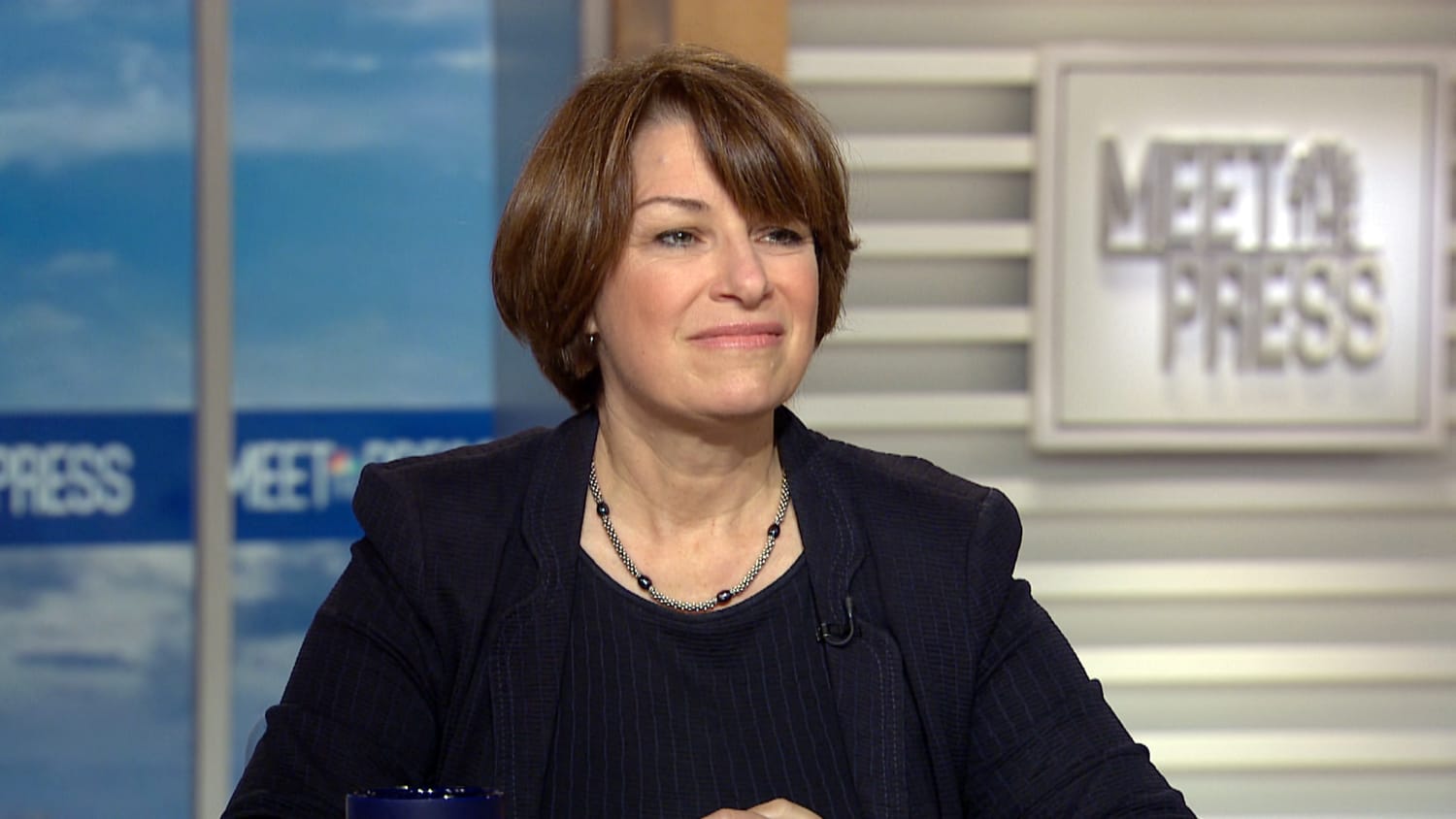
Image result for Sen. Amy Klobuchar Kavanaugh
Senator Amy Klobuchar (D-Minnesota) on Sunday's Meet the Press (NBC)
It sure was nice to turn on the “Sunday shows” and finally get away from all the politics of this weekend’s funerals.
Listening to failed politicians hijack the funerals of two such respected American heroes as John McCain and Aretha Franklin so they could smear the sitting president really tells you all you need to know about those washed-up has-beens.
It was particularly strange to listen to all these rabid enemies of McCain in life heaping praise on him in death.
McCain was a rare genuine battle hero in American politics; but American politics treated him badly. During his presidential campaign against then-Sen. Barack Obama, McCain was slimed as a racist. During his campaign against then-Gov. George W. Bush, he endured sneaky robocalls accusing him of having an illegitimate black child.
Hard to see how both could be possible. But when it comes to low-down, dirty, dishonest gutter politics in America, nothing is out of bounds.
Somehow these people are shocked — SHOCKED! — by the harsh rhetoric of President Trump.
Give me a break.
And now these people are lining up to smear yet another good person dragged into the sewer of American politics.
Sen. Amy Klobuchar, Minnesota Democrat, went on one of the Sunday shows to shred the good name of Mr. Trump’s latest nominee to the Supreme Court, Judge Brett M. Kavanaugh. (I will not say the name of the program because, honestly, I am embarrassed to have wasted precious moments of the Sabbath on such sleepy-eyed nonsense.)
Anyway, she claims to have read 148,000 documents that reveal Judge Kavanaugh to be so heinous as to be unfit for the high court.
OK, let’s say Ms. Klobuchar spent two minutes reading each document. That would be 296,000 minutes — or 205 days — reading these documents. Which is pretty remarkable considering Judge Kavanaugh was nominated 55 days ago.
There is another word for this. It is called a “lie.” And the person who utters it is known as a “liar,” even if the person she tells this “lie” to is so sleepy-eyed as to appear to be fully asleep.
But this isn’t even the most astonishing part of Ms. Klobuchar’s sewer dive on national television.
She goes on to say that as horrific as all these documents reveal Judge Kavanaugh to be, she is not allowed to share the documents with the American people. She is not even allowed to tell us what they say.
“I can’t even tell you about them right now on the show,” she told her sleepy-eyed interlocutor, who gazed back, sleepily.
So, at this point, I am starting to think Mr. Kavanaugh is a racist, child-molesting serial killer. I mean, even Pope Francis would boot this guy out of the church clergy. If only we could see these devastating top secret memos!
Well, it turns out, Ms. Klobuchar cannot tell the truth even about the secrecy of these devastating memos that reveal Judge Kavanaugh to be so unworthy that we innocent taxpayers are not allowed to see.
Last month, Sen. Chuck Grassley, Iowa Republican and Judiciary Committee chairman, asked Democrats on the committee to identify any of the classified records they thought might shed light on Judge Kavanaugh’s record.
Only one Democrat — Ms. Klobuchar — took Mr. Grassley up on his offer. She asked for 12 records to be made public.
All were.
There was no indication in them, however, that Judge Kavanaugh is a racist, child-molesting serial killer.
Still, Ms. Klobuchar is voting against his nomination to the Supreme Court. And continues to peddle dishonest political smut from supposedly secret documents that nobody can see.
But when Judge Kavanaugh dies, Ms. Klobuchar will be sure to seize the national limelight and deliver a glowing eulogy.

Monday, August 27, 2018

JOHN MCCAIN’S FAILED SECOND ACT


Nothing can tarnish the glory of McCain’s first act, but democratic politics is about what comes next.


August 27, 2018

Image result for john mccain

F. Scott Fitzgerald’s dictum about no second acts in American life is only partially true. There are second acts, but those that fail to live up to the promise of the first are far more interesting. An assessment of John McCain’s political career suggests that the Senator from Arizona squandered the immense capital of his five and a half years of bravery and integrity while a captive in Viet Nam.
McCain’s earlier career reminds one of George Armstrong Custer, another “maverick” whose reckless audacity won him plaudits during the Civil War, but ended in failure at the Little Big Horn. McCain was an indifferent student at the Naval Academy, and at times a careless pilot. During flight training he dumped a jet in Corpus Christi Bay, and while flying too low in Spain took out some power lines. At this point he seems to have been, like several Kennedys, a typical feckless scion of a storied American family whose elite connections mitigated his questionable behavior.
But McCain redeemed himself with his heroism during his captivity in Viet Nam. Regularly tortured and abused, enduring disease and solitary confinement, he turned down an offer to be released ahead of other captives who had been there longer. He ended his first act as an iconic American hero, tough in the face of brutal treatment, and committed to the very American sense of fair play that eschewed exploiting for his own gain his father’s status as head of the U.S. Pacific Command. Finally released in 1973, McCain was poised, like many other celebrated military veterans in American history, for a political career likely to end in the White House.
But McCain never quite fully realized that potential. He became a Republican Senator, but his career marked him as an elite insider who, like many of his fellow Republicans, did not understand that the old bipartisan center had been fatally wounded by the Sixties. Particularly after the two terms of George W. Bush, the Democrat Party had moved even farther left, and wasn’t interested in “bipartisanship” or “reaching across the aisle.” As Barack Obama proved, the goal now was the “fundamental transformation” of America into a form of democratic socialism, one lite on the democratic part. “Any means necessary” and the Alinsky playbook, not the Constitution, would be the guides for this project.
McCain’s Senate career before 2008 illustrated his misguided bipartisanship based on a failure to see what the Democrats had become, and how his dubious perception of “principle” carried water for the Democrat opposition. The 2002 McCain-Feingold bill banning unlimited contributions to political parties was a patent violation of the First Amendment, as the Supreme Court later ruled in its Citizens United decision, which overruled a lower court’s use of McCain-Feingold to justify censoring a documentary critical of Hillary Clinton. Perhaps worse, McCain’s outspoken opposition to waterboarding, despite its proven value in gathering intelligence, was given persuasive authority by his personal experience in Vietnam. McCain’s misguided false analogy between the sadistic, pointless torture he suffered, and the carefully controlled and calibrated practice of waterboarding to obtain life-saving information, ultimately led to the banning of this interrogation technique. Obama simply droned to death terrorists rather than interrogating them.
McCain’s failure to understand how the political sands had shifted was evident in his 2008 campaign against Obama. He campaigned as though Obama and the Democrats still embraced the postwar bipartisan consensus on how American politicians ran for office and governed. He thought that despite differences, a critical mass of Democrats still acknowledged America’s exceptionalism and essential goodness. Worse, McCain created the perception that his self-image and “principled” independence were more important than supporting the goals and beliefs of the Party that still believed in America. He never seemed to get that he was the Democrats’ favorite Republican because he often served their interests more than those of conservatives. He reveled in his “maverick” moniker, unaware that the Dems used it because to them it meant “useful idiot.”
The 2008 presidential campaign illustrated McCain’s weakness. Many of us at the time knew that Barack Obama was a one-eyed Jack, a left-wing activist who believed America was deeply flawed and guilty, and needed to do penance so it could function in the world as a “partner mindful of its own imperfections.” The public face was the specious rhetoric like “There is not a liberal America and a conservative America—there is the United States of America. There is not a Black America and a White America and Latino America and Asian America—there’s the United States of America,” a sentiment that his serial racial demagoguery belied.
But McCain took Obama at face value, perhaps unable to look past the usual ruling-class credentials and glib rhetoric. Worse, again like too many Republicans who should have known better, McCain preemptively cringed from exploiting Obama’s sketchy and dubious past, especially his connection with his pastor of 20 years, the race-baiting Jeremiah Wright. Wright’s sermon after 9/11 about “chickens coming home to roost” and his chant of “God damn America” would have ended the career of any other politician. That it didn’t end Obama’s should have alerted McCain that he was in a different political universe than he thought he inhabited.
Instead, McCain explicitly took that damning incident off the table during his campaign. And he did so for the same reason numerous other Republicans did: they were terrified of being labeled “racist.” Thus they ceded to the progressives their dishonest racial tactics simply because as members of the elite, they feared slander from the other side. So too with his dismissal of the “birther” movement.  He was praised as a “maverick” by the Dems for criticizing the “birthers,” but the Dems never reciprocated such magnanimity and attacked their own extremists when they viciously attacked George Bush and now attack Donald Trump. The consequences of this concern for personal image and high-minded rectitude in the end contributed to this country being ruled by one of the worst presidents ever.
McCain’s second political mistake was not taking advantage of the backlash among conservative American against the Democrats’ politicization of the wars in Iraq and Afghanistan, and their demonizing of the surveillance and interrogation techniques implemented to meet the demands of the citizens––and the Democrat leadership­­–– that a terrorist attack like 9/11 never happen again. The increasing radicalism of the Democrats was apparent when George W. Bush was president and treated with a level of calumny and vicious insult prefiguring the current treatment of Donald Trump.
For a moment McCain seemed to get it, making him a genuine maverick when he selected Alaska governor Sarah Palin as his vice-presidential candidate in 2008. But he never really bonded with Palin. And when the forces Palin embodied took shape as the Tea Party movement in 2010, McCain still didn’t seem to understand the anti-Republican establishment animus that had been brewing for years. When he called Tea Party favorite Ted Cruz a “wacko-bird” in 2013, and this year in a book wrote he “regretted” choosing Palin, he cheered the hearts of Democrats. Even though the Tea Party helped Republicans take back the House, slowing Obama’s “transformation,” for McCain it seemed more important to receive praise from his fellow members of the political country club that looked with distaste on these uppity “deplorables.”
A few years later that backlash produced Donald Trump, who won the prize denied to two previous establishment Republicans. When Trump during the primaries channeled George S. Patton and dismissed McCain’s heroism because he “like[s] people who weren’t captured,” that gaffe should have ended his run. But what the political wise men didn’t understand was that for the voters, the question is always, “What have you done for us lately?” It’s the spirit of the illiterate Athenian who wanted to ostracize Aristides the Just because he was sick of hearing him called “the Just.”
It wasn’t so much that people scorned McCain’s heroism, but that they were sick of that experience being used to deflect his bad political decisions and over-fondness for accolades from his bipartisan peers, rather than pursuing policy achievements that could stop the Obama juggernaut. Like other Republican NeverTrumpers, McCain seemingly cared more about Trump’s brash, unconventional style than he did about restoring the nation. Perhaps that’s why in July 2017 he cast the decisive no vote on the Senate bill to repeal the disastrous Affordable Care Act. No doubt McCain thought he was acting on principle, but many Americans perceived it as a gesture of petty vengeance.
We should remember McCain’s exemplary heroism, which all of us should honor and hope we could emulate in similar circumstances. Nothing can tarnish the glory of McCain’s first act. But democratic politics is about what comes next, what a politician does that can match that earlier achievement. On that score many regret McCain’s second act, when his celebrity and heroism were seemingly used to enhance his persona rather than to resist the progressive dismantling of the Constitutional order.
Bruce Thornton is a Shillman Journalism Fellow at the Freedom Center, a Research Fellow at Stanford's Hoover Institution, and a Professor of Classics and Humanities at the California State University. He is the author of nine books and numerous essays on classical culture and its influence on Western Civilization. His most recent book, Democracy's Dangers and Discontents (Hoover Institution Press), is now available for purchase.

Tuesday, August 01, 2017

McCain Gonna McCain


By C. Edmund Wright
http://www.americanthinker.com/
July 30, 2017

Sen. John McCain (R-Ariz.) went against the GOP by voting against the "skinny" Obamacare repeal bill.

Sen. John McCain (R-Ariz.) went against the GOP by voting against the "skinny" Obamacare repeal bill.

(AARON BERNSTEIN/REUTERS)


There was a report from Bloomberg of "audible gasps on the Senate floor" as John McCain voted NO on the Obama Care skinny repeal bill. Gasps, really? I would've gasped had he done anything different. McCain was simply, predictably, being McCain.  This is the same McCain who continually tries to sabotage Donald Trump. This is the same McCain he's been for at least 25 years.

The Arizona Senator and I first crossed paths during the 1992 Campaign between incumbent George H.W. Bush and Bill Clinton. McCain was emerging as a media darling during this time, putting his days in the Keating Five Savings and Loan Scandal behind him. The Keating Five? Oh, McCain and four Democrats, of course. Some things never change. Certainly not McCain.

Meanwhile, Clinton's team of James Carville and George Stephanopoulos had put North Carolina squarely in the cross hairs as a must-win state in 92, and a series of odd events had landed me as Communications Director of NC Bush Quayle.  Thus, as a small government pro-liberty Reagan conservative, I was in the service of a mushy moderate President who was determined to distance himself from Reagan, along with his rhetorically challenged VP.  It was a root canal experience, let me tell you.  

Team Bush was struggling because they couldn't, or wouldn't, run clearly to the right of Clinton and expose the differences. When Ross Perot entered the race, he further muddied the waters because his agenda agreed with the conservative agenda about 75% of the time, yet he clearly despised Bush more than he wanted to defeat Clinton. Whatever Perot's motivations were, the result was that the 92 election was an ideological mess, and Bush was not a man who even understood that, let alone overcame it. 

To make things worse, enter John McCain, who was riding his war hero story, and a questionable passion for the pro-life position, into stardom on the right during this time. A big part of McCain's self-serving strategy was to ingratiate himself to the liberal media by trashing other Republicans, which he did often. So, paradoxically, he gained credibility on the right, by trashing the right, because he became the only man (ostensibly) on the right that the media liked, and we were desperate on the right to be liked by anyone in the media. Consider: talk radio was new and small, CNN was the only cable channel, and Andrew Breitbart was just starting to emerge from his "hippy dippy" liberal youth (his words).  

The Mainstream Media still ruled the roost, and McCain's message to them was that Bush "must stop being so extreme," as in so extremely conservative. The exact opposite was true. Bush wasn't nearly conservative enough, nor capable of articulating those views on which he was conservative. Clearly McCain knew this, wanted Bush to lose, and to climb the ladder in the vacuum a Bush loss would create.  And the media was all too happy to help. I was forced to try and use whatever media influence in North Carolina I could muster to overcome McCain's message, which is why I remember it like yesterday.

And yes, I fully understand that now, everybody on the planet is onto McCain's schtick. Most of that didn't really happen until at least 2000, and into 2008 and beyond. In ‘92 however, I was on a lonely planet. I even got into a heated dispute with the host on the G. Gordon Liddy Radio Show in early 1993 about this. Gordon was still drinking the McCain Kool Aid, as were all of his listeners.

Now back to the future: everyone knows what's in the Kool Aid now. 

So here we are, with McCain shaking off the effects of cancer to cast a vote that ensures we probably won’t get the same treatment he did. The John McCain who sabotaged the so called 'skinny repeal' vote over Obama Care, and who fought openly with Donald Trump months ago, is exactly the same John McCain he has always been. He not only trashes conservatives at every opportunity, he then takes credit for being this courageous "maverick," even as everybody knows that trashing conservatives to the media is the easiest, most gutless thing a person can do. 

Almost everything about McCain's carefully crafted image is a lie. It always has been. And now, in a somewhat cruel irony, McCain has access to massive amounts of Obama Care-exempted health care, while voting to make sure you and I remain trapped under this failed disaster. In other words, McCain is just being McCain. This is who he's always been.

He "reached across the aisle" in the 1980's to enrich himself while the Savings and Loan scandal was bankrupting average Americans. He reached across the aisle in the 90's to help Bill Clinton. He reached across the aisle in 2005 and 06 in the name of comprehensive immigration reform. He reached across the aisle to help foist the corrupt Dodd-Frank bill on us.  And on and on it goes. 

Now he's reaching across the aisle in service of a corrupt, lobbyist contrived and bureaucrat enforced abomination called ObamaCare. Of course he is. This is who John McCain is, and always has been. 


Read more: http://www.americanthinker.com/articles/2017/07/mccain_gonna_mccain_.html#ixzz4oVZMPFTR
Follow us: @AmericanThinker on Twitter | AmericanThinker on Facebook


Edmund Wright is a contributor to Breitbart, American Thinker, Newsmax TV, and author of 2013 Amazon Best Selling Elections book, WTF? How Karl Rove and the Establishment Lost…Again. 

Sunday, September 15, 2013

What Conservative Foreign Policy Looks Like


Neither John McCain nor Rand Paul get it right. 


In the Syrian rubble of Barack Obama’s foreign policy lies a moment of opportunity for conservatives. It is a moment for building a muscular foreign policy based on a recognition of good and evil; on an unapologetic conviction that the United States stands firmly on the right side of that ledger because it stands for the liberty and equal dignity of every human being; and, therefore, on an unwavering commitment to have our interventions guided solely by American national interests.

It is a Ronald Reagan moment. Now, all we need is a Ronald Reagan. For now, we have only pretenders, split into two camps.

There is the progressive McCain wing, heirs to the Bush “Islamic democracy” quest. It lurches incoherently from crisis to crisis, such that the local al-Qaeda jihadist in Baghdad, who went there to wage a terror war against American troops, need only cross the Syrian border — and, voila, he is America’s ally. How’s that? Well, we’re told, we must hold our nose and support — indeed, arm— this “rebel” because he now fights the Assad regime, which is the cat’s-paw of Iran . . . the same Iran that — details, details — has been colluding with al-Qaeda for 20 years.

Got that?

Even McCainiacs sense that this nonsense world is straight out of the Looking-Glass. So, while empowering al-Qaeda, they maintain that they actually seek only to strengthen al-Qaeda’s rivals, the “moderates” . . . hoping you won’t notice that these moderates prominently include the Muslim Brotherhood. You won’t hear a Republican mention the Brotherhood, of course. But the anti-Assad “rebels” themselves have no such compunction about the Brotherhood’s key role.

In fact, the Syrian National Council — the rebel leadership bureau the McCain wing initially demanded that we back — was a Brotherhood creation. When that proved embarrassing, the Syrian National Council changed the sign on the door to “Syrian National Coalition” and expanded its membership, ostensibly to dilute the Brotherhood’s influence. But even the non-Brotherhood rebels concede that the Brothers are still a highly influential force, and the faction they share power with represents . . . wait for it . . . the Saudis — the Wahhabist sharia kingdom. Feel better now? Probably not, but understand that when McCain and the Obama administration talk about supporting the “moderates,” this is who they mean. Understand, too, that the Brothers have always done business with Iran — a longtime backer of Hamas, the Brothers’ Palestinian terrorist branch — and that the Saudis’ governing ideology (to say nothing of their money) spawned al-Qaeda.

What could be more “moderate” than that?

The other pretender is Rand Paul and his nihilistic brand of libertarianism. On the twelfth anniversary of the 9/11 atrocities, in which Islamic-supremacist jihadists murdered nearly 3,000 Americans, the senator refused to distance himself from the repulsive assessment of his father, Ron Paul, that the United States had brought the attack on herself. “America’s chickens, comin’ home to roost,” as Jeremiah Wright memorably  put it.

The senator is trying to be the silk glove over dad’s ham-handed fist — to make Ron Paul’s noxious substitution of “Blame America First” for “Know Thine Enemy” respectable. Asked about his father’s assertion, Paul the Younger tried to change the subject, opining that why someone attacks the U.S. is irrelevant — that sometimes the cause could be “our presence overseas,” and sometimes not. What really matters, he said, is “that we defend ourselves from attack.”

It is thin camouflage. While McCain would insert the United States into every controversy, no matter how contrary to our interests, Paul sees our government as incapable of acting beneficially in the world. One can easily understand why Paul has a surface appeal for young Americans. In their lifetimes, an era of progressive dominance in foreign affairs, to act in America’s interests has become disreputable. The McCain approach — champion Qaddafi, oust Qaddafi; condemn the Muslim Brotherhood, support the Muslim Brotherhood; surge against al-Qaeda, arm al-Qaeda — has brought dizzying discredit to American action on the world stage. The Pauls exploit this to a fare-thee-well.

Nevertheless, the Pauls’ indictment is against government when the real culprit is wayward government policy in the execution of an essential government function. The Paul fantasy, like the Left’s, is that we can refrain from being judgmental about other countries: Just trade with everyone while pretending to be Switzerland, and then those nations disposed against us will like us better, and if they don’t we can always respond forcefully — after they’ve killed a few thousand of us.

Conservatives do not want Teddy Roosevelt’s pro-American progressivism. If, as is usually the case, you don’t have an extraordinary TR-type at the helm, what you’re left with is progressivism run amok and anything but pro-American.

Neither, however, are conservatives anti-government. In a 1997 essay diagnosing “What Ails the Right,” Bill Kristol and David Brooks famously called for government that is “limited but energetic.” I respectfully disagree: “Energetic” proves too promiscuous a license, eviscerating the Constitution’s limits. As TR is said to have remarked — perhaps apocryphally, historian Paul Johnson cautions — “What’s the Constitution between friends?” What conservatives want is a central government that does very few things — only the ones it is expressly assigned, the ones only a national government can do — but does them exceedingly well.

Limited does not mean small, for these are not small tasks. The most significant function of government, national security, is what our foreign policy must serve. This is where Reagan got it right and today’s Republican leaders get it tragically wrong.

At a time when fellow travelers on the left and “realists” on the right wanted to come to some understanding with the Soviet Union, Reagan rightly saw Communism as an evil that could not be moderated or accommodated. It was an implacable enemy that had to be resisted and defeated. That did not mean military invasions on every front. It meant organizing American foreign policy around the conviction that Communism was the enemy of liberty, that it was aggressively revolutionary, and that it had to be opposed by whatever instruments of government made the most sense. There might be ambiguity about how the United States would respond in a given set of circumstances, but there was no ambiguity about who the enemy was or that our overarching goal was to defeat him.

Today, the enemy is Islamic supremacism, which inevitably reigns whenever Islam is imposed as a governing system. We must abandon the notion that this Islam is a religion.

In last weekend’s column, I noted that the Obama administration and the GOP’s McCain wing call al-Qaeda operatives “extremists” in order to “avoid the inconvenience that what they are ‘extreme’ about is Islam.” Well, it works the other way around, too. There are millions of “moderate” Muslims, but what makes them “moderate” is that they ignore (or reimagine) the political and supremacist tenets of Islam.

That’s fine. We want to ally with Muslims who, in the spirit of the Western Enlightenment, allow for a separation of religion from politics in their doctrine. But that separation is necessary precisely because whenever a political system proclaims itself as “Islamic” — whenever it establishes Islam as the state religion and makes sharia the foundation of its law — it is inevitably hostile to liberty and equality.
In Spring Fever, I recount the rueful observation of an authentic Muslim democrat who bristled at the West’s delusional celebration of Erdogan’s “Turkish Model” of “Islamic democracy”: “We are a democracy,” he asserted. “Islam has nothing to do with it.” When Islam defines the democracy, it’s not one.

The Islamic societal system is today’s totalitarianism — so much so that it finds a reliable ally in the hard Left. Much like Soviet-era Communists, moreover, Islamic supremacists unabashedly regard us as an “enemy” to be “conquered” while we romp about their camp desperately seeking “moderates.” The Islamic system is not nearly as fearsome as the Soviet superpower, but our blindness to its evil, and thus our abetting of it, compensate for this deficit.

Like Communism, Islamic supremacism threatens America and the West comprehensively — it attacks both forcibly and culturally; it pressures without and infiltrates within. A conservative national-security policy would respond in kind. Instead of promoting the charade of Islamic democracy, it would let nature take its course overseas: Allow the Islamic system’s hopeless backwardness to collapse of its own weight while promoting champions of real Western democracy — not just popular elections but individual liberty and minority rights. You can’t empower democrats, including truly moderate Muslims, without making it attractive to be one, and unattractive to be the other guys.

Domestic policy should align with this approach. We must be done once and for all with the folly of “outreach” to “moderate Islamists” — to say nothing of the insanity of consulting with “moderate Islamists” in the formulation of national-security policy. What makes a Muslim an Islamist is his Islamic supremacism — his preference for the Islamic system. That is the antithesis of moderation, particularly in a country built on individual liberty. That an Islamist eschews violence, or at least says he does, is welcome; it does not, however, make him moderate — ACORN is not moderate even if it resists the methods of the like-minded Weather Underground. Besides, “moderate Islamist” is the euphemism du jour for the Muslim Brotherhood. The Muslims who love America will never rise until our political class ends its infatuation with the Muslims who envision conquering America.

A conservative foreign policy would set itself firmly against Iran and Assad, as well as against al-Qaeda, the Brotherhood, and their state sponsors. It would not choose sides between them in their Syrian free-for-all. It would make the defeat of all of them — of Islamic supremacism — its strategic objective. It would tactically use the opportunities afforded by our diplomatic, economic, intelligence, military, and leadership capabilities to make it happen.

And it would work.

— Andrew C. McCarthy is a senior fellow at the National Review Institute. He is the author, most recently, of Spring Fever: The Illusion of Islamic Democracy.