Showing posts with label 9/11/01. Show all posts

Wednesday, September 11, 2019

Target: New York


Eighteen years after the 9/11 attacks, Islamist extremism doesn’t make much news—but it’s not for lack of trying.


By Judith Miller
https://www.city-journal.org/islamist-terror-threat
September 10, 2019

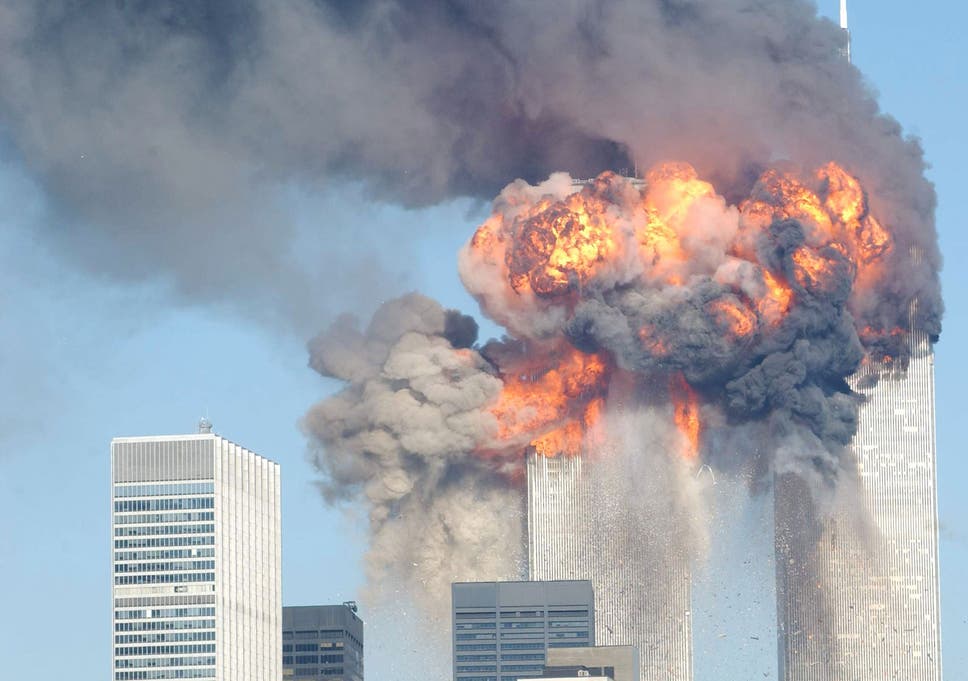
Image result for 9/11 attack

(Spencer Platt/Getty Images)

Eighteen years after the attacks on the World Trade Center, many Americans believe that the threat of Islamist terror is played out—but that’s only because our counterterrorism efforts have been so successful. Attempted terror attacks no longer make front-page headlines, but the list of foiled plots to kill American citizens is long and chilling. This past summer saw arrests of potential terrorists who would have killed dozens or hundreds of people if successful. On September 3, for example, federal prosecutors in Brooklyn charged Ruslan Maratovich Asainov, also known as Suleiman Al-Amriki, with providing material support to ISIS. Asainov is accused of having been an ISIS sniper and weapons instructor. A naturalized U.S. citizen (he was born in Kazakhstan) who lived in Brooklyn for nearly 15 years, Asainov traveled in late 2013 to Istanbul, a common entry point to Syria. There, he joined ISIS and rose through the ranks to become an “emir” in charge of weapons training. He tried to recruit other Americans to fight for ISIS in Syria. Asainov messaged a government informant, exclaiming in reference to ISIS, “We are the worst terrorist organization in the world that has ever existed!” He still yearned to die on the battlefield for jihad, Asainov told the informant.

Last month, Awais Chudhary was charged with plotting to stab New Yorkers in Queens. A 19-year-old American citizen born in Pakistan and raised in a middle-class neighborhood, Chudhary planned to attack pedestrians on a bridge over the Grand Central Parkway to the Flushing Bay Promenade or at the World’s Fair Marina, both of which he had visited repeatedly to scout where he could kill the most people. He planned to record his attack to inspire others. He intended to use a knife, he told an agent, unless the agent could show him how to bomb a “mini-bridge over a busy road with many cars.” He was arrested en route to retrieve items he had ordered online for the assault—a tactical knife, a mask, gloves, and a cellphone with a chest and head strap to enable him to record his slaughter hands-free. 

Also last month, prosecutors charged two women from Queens with planning to build bombs similar to those used in earlier terrorist attacks. Asia Siddiqui and Noelle Velentzas, both U.S. citizens and Queens residents, pleaded guilty to distributing information about how to make and use explosive devices and weapons of mass destruction. Between 2013 and 2015, the complaint states, they planned to build a bomb themselves, teaching each other chemistry and the electrical skills needed to create and detonate a deadly device. They also explored how to make plastic explosives and assemble a car bomb, bought and stored in their homes materials required for an explosive device—including  propane gas tanks, soldering tools, car-bomb instructions, machetes, and several knives—and discussed similar devices used in past terrorist incidents, including the 2013 Boston Marathon bombing, the 1995 Oklahoma City bombing, and the 1993 World Trade Center attack. They researched potential targets, focusing on law enforcement and military installations. Velentzas favored attacks on government targets. In terrorist attacks, she said, “You go for the head.”

August also saw Azizjon Rakhmatov, a citizen of Uzbekistan and a New Haven resident, plead guilty to conspiring to provide material support to ISIS codefendants Abdurasul Juraboev and Akhror Saidakhmetov, who planned to travel to Syria to fight for the caliphate. Rakhmatov and another codefendant discussed providing their own money and raising more to cover Saidakhmetov’s travel expenses and to buy a weapon for him once he arrived in Syria. The day before Saidakhmetov’s scheduled departure, Rakhmatov transferred $400 into codefendant Akmal Zakirov’s bank account. Saidakhmetov and three accomplices have previously pled guilty to charges of material support for terrorism; all have been sentenced to 15 years’ imprisonment.

In July, officials arrested Delowar Mohammed Hossain at JFK Airport in Queens as he tried to travel to Afghanistan to join the Taliban. The complaint states that Hossain wanted to kill Americans, particularly members of the military stationed overseas. 

In June, Mohamed Rafik Naji, having pled guilty in federal court in Brooklyn in February, was sentenced to 20 years in jail for trying to provide material support to ISIS by distributing its propaganda and messages on social media. By late 2014, Naji was a committed ISIS supporter, and in 2015 he traveled from New York to Yemen to join ISIS. After returning to the U.S., he continued praising ISIS and violent jihad. In July 2016, after the ISIS-inspired truck attack in Nice, France that killed scores of civilians, Naji told an informant that it would be easy to carry out a similar attack in Times Square: “[ISIS] want an operation in Times Square,” he said, “If there is a truck, I mean a garbage truck and one drives it there to Times Square and crushes them . . . Times Square day.” 

Also in June, Ashiqul Alam, an assistant teacher in Queens and part-time IT expert at the Queens public library, was charged with “knowingly receiving two firearms with obliterated serial numbers in Brooklyn” as part of a plan to kill cops and civilians in Times Square. According to NYPD Commissioner James O’Neill, Alam discussed guns, suicide vests, and hand grenades, and surveilled potential targets in New York. Between August 2018 and June of this year, he talked about buying firearms and explosives for an attack and conducted “recon” trips to Times Square, recording the area on his phone. He considered killing cops by using a suicide vest and obtaining AR-15 assault rifles. In April 2019, he had Lasik eye surgery so that he no longer needed glasses. “Let’s say we are in an attack, right, say that my glasses fall off,” he told an undercover cop. “What if I accidentally shoot you? You know what I mean. Imagine what the news channel would call me the ‘Looney Tunes Terrorist’ or the ‘Blind Terrorist.’” He later discussed buying grenades, because a grenade could “take out at least eight people.” 

Most of these Islamist plots have received scant public attention, mainly because they were detected and prevented. John Miller, the NYPD’s deputy commissioner of intelligence and counterterrorism, says that public concern about terrorism is now focused on the surge in domestic right-wing extremists. “Domestic terror blunts the impact of the [jihadi] plots that didn’t happen,” he told me. Miller is complacent about neither threat. Though New York has not suffered a right-wing-inspired mass shooting, hate crimes are up in the city. So is anti-Semitism. And Miller warns that the pace of jihadi plots is accelerating.

According to an NYPD intelligence estimate published last October, nine terrorist plots or attacks targeted New York City between 2001 and 2009. Since 2009, a total of 19 attacks were formulated—11 since ISIS declared a caliphate in 2014. The report notes that 13 of the 14 lone-actor terrorist attacks or plots in New York City have involved “Salafi-jihadist violent extremists.” The study predicts “with high confidence” that both trends—an acceleration in the rate of plots and attacks and the increasing dominance of lone actors inspired, but not directed by, foreign and domestic extremist organizations—“will continue over the next four years.”

“The reason there hasn’t been another 9/11 is not because of luck,” Miller says. Intensive national and international counterterrorism campaigns across three presidential administrations have degraded these groups’ ability to plan and carry out major attacks. At home, Miller added, the absence of successful attacks owed to what he called the “seamless partnership between the NYPD and the FBI.”  

While President Trump has taken credit for having “destroyed” ISIS and its caliphate, once the size of Great Britain, and has often expressed a desire to bring most American troops home, terrorism experts warn that a complete military exit from places like Afghanistan, Iraq, and Syria would be unwise. Just as President Obama’s premature withdrawal of U.S. forces from Iraq in 2011 permitted ISIS to take hold and expand into the vacuum left there, the withdrawal of most U.S. forces from the region would permit the Taliban, al-Qaida, and ISIS to reconstitute and regain their deadly reach. “The Taliban are far from defeated,” David Petraeus, the former commander of U.S. Central Command and a former CIA director, asserted in a recent Wall Street Journal op-ed. A premature withdrawal would risk the “re-establishment of a terrorist sanctuary” in which the Taliban and some 20 other foreign terrorist organizations could reconstitute, train recruits, and carry out terrorism abroad.

“Al Qaeda has seeded a global network that is competing with and complementing ISIS,” said Rohan Gunaratna, a terrorism expert based in Singapore. “Though its core has suffered, many of its leaders are alive,” he argues. “It has not disappeared but entered a new phase of expansion” through affiliates in Africa, the Arabian Peninsula, the Middle East, and South Asia. ISIS, too, the “son of Al Qaeda,” he argues, may have lost territory and endured “command and control infrastructure losses,” but its murderous intent “remains known to its wilayats, networks, groups, and cells.” If either of their current leaders is killed, he warns, the two groups would likely unite and pose what he called “an unprecedented threat.” While the Trump administration has embraced containing China as its highest priority, “the real, ongoing threat to American and its allies remains ideological extremist terrorism,” Gunaratna maintains, calling the war against militant Islamic extremism a “generational” struggle.

Mitch Silber, a former NYPD director of intelligence and analysis, fears that Washington’s war fatigue, Trump’s desire to claim victory, and the lack of a long-term strategy for dealing with America’s Middle East wars endangers the U.S. “Al Qaeda and ISIS leaders and supporters have been killed, captured, and tens of thousands put in camps in Iraq,” he said. “But there is no post-hostilities plan to deal with this Islamist netherworld, those people in the camps. AQ and ISIS could easily regenerate in some form there.”

Failure to appreciate the nature of the militant Islamist threat puts New York, especially, at growing risk. “There is a temporary drop in their capability,” Silber said of the jihadi movement. “But there is no drop in intention among those who want to strike the U.S. And for them, New York will always remain a key target.”

Judith Miller is a City Journal contributing editor and author of The Story: A Reporter’s Journey.


Sunday, September 08, 2019

Robert Mueller helped Saudi Arabia cover up its role in 9/11 attacks: suit


By Paul Sperry
https://nypost.com/2019/09/07/robert-mueller-helped-saudi-arabia-cover-up-its-role-in-9-11-attacks-suit/
September 7, 2019

Image result for 9/11
(Getty Images)

After a lengthy investigation, special counsel Robert Mueller charged Russia made “multiple, systematic efforts to interfere in our election” and said the incursion “deserves the attention of every American.”
But former FBI investigators say their old boss didn’t feel the same concern when they uncovered multiple, systemic efforts by the Saudi government to assist the hijackers in the lead-up to the 9/11 attacks — a far more consequential, to say nothing of deadly, foreign influence operation on America.
As the head of the FBI at the time, they say Mueller was not nearly as interested in investigating that espionage conspiracy, which also involved foreign intelligence officers. Far from it, the record shows he covered up evidence pointing back to the Saudi Embassy and Riyadh — and may have even misled Congress about what he knew.
9/11 victims agree. “He was the master when it came to covering up the kingdom’s role in 9/11,” said survivor Sharon Premoli, who was pulled from the rubble of the World Trade Center 18 years ago.
“In October of 2001, Mueller shut down the government’s investigation after only three weeks, and then took part in the Bush [administration’s] campaign to block, obfuscate and generally stop anything about Saudi Arabia from being released,” added Premoli, now a plaintiff in the 9/11 lawsuit against Saudi Arabia.
In fact, Mueller threw up roadblocks in the path of his own investigators working the 9/11 case, while making it easier for Saudi suspects to escape questioning, multiple case agents told me. Then he deep-sixed what evidence his agents did manage to uncover, according to the 9/11 lawsuit against the Saudis.
* Time and again, agents were called off from pursuing leads back to the kingdom’s embassy in Washington, as well as its consulate in Los Angeles, where former FBI Agent Stephen Moore headed a 9/11 task force looking into local contacts made by two of the 15 Saudi hijackers, Moore testified in an affidavit for the 9/11 lawsuit. He concluded that “diplomatic and intelligence personnel of Saudi Arabia knowingly provided material support to the two hijackers and facilitated the 9/11 plot.” Yet he and his team were not allowed to interview them, according to the suit.
* In Washington, former FBI Agent John Guandolo, who worked terror cases out of the bureau’s DC office, said then-Saudi Ambassador Prince Bandar “should have been treated as a terrorist suspect” for giving money to a woman who funded two of the 9/11 hijackers. But he was never questioned either, Guandolo said.
* Instead, Mueller obliged what Guandolo called an “outrageous request” from Bandar within days of the attacks to help evacuate from the country dozens of Saudi officials, including at least one Osama bin Laden relative on the terror watch list. Mueller assured their safe passage to planes, using agents as personal escorts, according to FBI documents obtained by Judicial Watch. Agents who should have been interrogating the Saudis instead acted as their bodyguards.
* In 2002, Mueller prevented agents from arresting the Saudi-sponsored al Qaeda cleric who privately counseled the Saudi hijackers, said Raymond Fournier, an agent with the Joint Terrorism Task Force in San Diego at the time. “He was responsible for vacating the arrest warrant for Anwar al-Awlaki for passport fraud,” Fournier said. He even ordered agents who detained the fiend at JFK to release him into the custody of a “Saudi representative,” Fournier said. The FBI closed their investigation of Awlaki, who was allowed to leave the US on a Saudi plane. “Shortly thereafter, the Fort Hood shooting occurred and Awlaki’s fingerprints were all over that incident,” said former FBI Agent Michael Biasello, who helped work the Texas terror case.
* At the same time, Mueller removed a veteran agent from investigating a tip that an adviser to the Saudi royal family had met with some of the Saudi hijackers at his home in Sarasota, Fla., effectively killing the case, according to the lawsuit. The home was suddenly abandoned two weeks before 9/11.
* Mueller even tried to shut down a congressional investigation into the Saudi hijackers and their contacts in LA and San Diego, said Bob Graham, who led the joint inquiry as Senate Intelligence Committee chair. “The strongest objections” to his staff investigators visiting FBI offices there came from the FBI director himself, said Graham, in a 2017 interview with Harper’s magazine. Among other things, Mueller refused their demands to question a paid FBI informant who roomed with the hijackers and even moved him to a safe house where they couldn’t find him, Graham said. Mueller, with the White House, redacted 28 pages detailing Saudi-9/11 ties from the congressional report.
* He also gave testimony to Congress that was, at the very least, misleading. In an October 2002 closed-door hearing, Mueller claimed he found out about Saudi-9/11 connections only as a result of the joint inquiry’s investigative work: “[S]ome facts came to light here and to me, frankly, that had not come to light before.” Only, Moore said he gave Mueller “daily” briefings on such connections in 2001. Mueller also testified the hijackers “contacted no known terrorist sympathizers in the United States,” even though the FBI’s own case files showed they had contact with at least 14 terrorist suspects and sympathizers in the US prior to 9/11, including some working for the Saudi government. (In later testimony, he tried to walk this back, insisting he “had no intent to mislead.”)
Image result for 9/11 mueller fbi
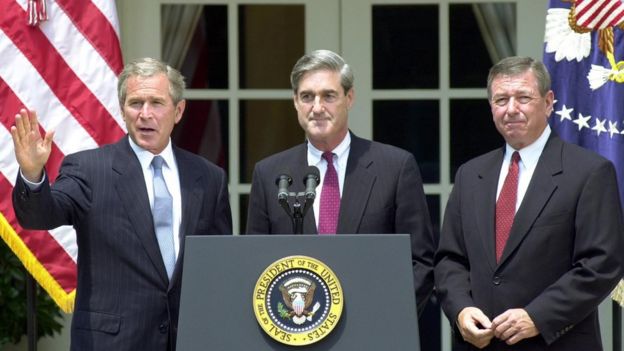
Mueller was appointed FBI Chief by George Bush just a week prior to 9/11 (AFP)
While the Beltway media have portrayed Mueller as a by-the-book former Marine whose integrity is as square as his lantern-shaped jaw — a cop who can’t be compromised — others know better.
“He’s a villain, and an arrogant one to boot,” former FBI Agent Mark Wauck said, adding that his former boss has a long history of acting as a “servant of the deep state,” or the permanent DC ruling class.
A Mueller spokesman declined to comment. But some agents say he was merely following White House orders.
“Any letting the Saudis off the hook came from the White House,” former Agent Mark Rossini said. “I can still see that photo of Bandar and Bush enjoying cigars on the balcony of the White House two days after 9/11.”
Still, others note the hypocrisy of Mueller going after President Trump for conspiring with a foreign enemy.
“Bottom line is, Mueller did not do an investigation on people involved in the 9/11 attacks who were connected to the Saudi government,” a former US counterintelligence official asserted. “Maybe if they were Russians, he would be interested. But he was not interested in investigating [Saudi] terrorists who murdered Americans.”
Paul Sperry is an investigative journalist and author of the bestseller “Infiltration.”

Monday, June 10, 2019

The Gripping History of 'The Looming Tower'


The new Hulu series is a suspenseful, star-studded excavation of the failure to prevent 9/11.

By Sophie Gilbert
March 1, 2018
Related image
In 2017, the third most-read page on Wikipedia.org was an article on Queen Elizabeth. Out of the top 50, Queen Victoria came in at No. 13, Princess Margaret at No. 37, and Prince Philip at No. 44. This sudden surge of interest in the British royal family wasn’t just Anglophilia: It was also related to the popularity of Peter Morgan’s Netflix show The Crown and the PBS/ITV dramaVictoria. Both shows’ adaptation of historic events into modern entertainment had prompted millions of viewers to find out whether what they’d seen on TV had actually happened.
Wikimedia dubbed itself the “second screen,” pointing to a glut of recent series and TV films that re-create real-life moments with just enough latitude to spur the frantic impulse to Google the details—Paramount’s Waco, FX’s American Crime Story, and HBO’s Confirmation among them. The latest is The Looming Tower, the gripping new 10-part Hulu series adapted from Lawrence Wright’s Pulitzer Prize–winning 2006 book about the origins of 9/11. Like The Crown, The Looming Tower takes some dramatic liberties with its source material, turning some characters into composites and creating others anew. But most of what it portrays is true, and all of it seems intended to spur a new engagement with its material, seen through the clearer lens of historical distance.
Produced for television by Wright with the Oscar-winning documentarian Alex Gibney and the veteran showrunner Dan Futterman, The Looming Toweris a taut, tense restaging of the internecine squabbles between the FBI and the CIA in the lead-up to 9/11. Like Wright’s book, it makes the case that the failure of U.S. intelligence agencies to share information thwarted any chance they might have had of stopping the attacks. But where the book focused primarily on the people who conspired to orchestrate the worst terrorist attack on American soil, the series reorients itself around the people who failed to stop them.
On one side is John O’Neill (Jeff Daniels), a larger-than-life FBI counterterrorism chief grappling with the increasing threat of al-Qaeda. On the other is Martin Schmidt (Peter Sarsgaard), O’Neill’s CIA counterpart. O’Neill was a real person; Schmidt is reportedly an amalgam, although there are reasons beyond his initials to deduce whom he’s based on. From the very first episode, O’Neill and Schmidt are at each other’s throats for reasons that are hard to ascertain. Schmidt guards CIA intelligence with fanaticism, while O’Neill resorts to spewing profanities and epithets when he can’t get what he wants.
The show makes clear whose side it’s on. O’Neill might be a womanizing boor but his devotion to his job—and to thwarting attacks on the U.S.—is unmistakable.  Schmidt, by contrast, is a pompous, sneering creep whose primary motivation seems to be power. (If both characters seem somewhat implausible, it appears that they’ve been tamped down for television, if anything.) In the three episodes made available for review, al-Qaeda emerges as an increasingly critical threat to America, perpetrating the 1998 bombings of U.S. embassies in Dar es Salaam and Nairobi, and gaining increasing financial and ideological support. But while Schmidt wants the president to respond by carpet-bombing Afghanistan, O’Neill argues that this will only draw more followers to the cause. And the hostilities between the two agencies mean information is hoarded rather than shared, hampering the pursuit of Osama bin Laden and al-Qaeda.
The show’s strongest scenes tend to involve good old-fashioned spycraft rather than intra-agency feuding. Bill Camp is exceptional as Robert Chesney, an FBI agent sent to Nairobi to seek out information, and a scene in the second episode where he interrogates a subject is a masterpiece in pacing, amping up the suspense for more than eight minutes. Tahar Rahim, playing the real-life FBI agent Ali Soufan, is similarly engaging, traveling to locales from Albania to London to hunt down al-Qaeda sympathizers. One of only eight agents out of 10,000 in the FBI who speak Arabic, Soufan is devoted to O’Neill and outraged by the radicals he sees as perverting the principles of Islam.

In O’Neill, Daniels has a character who’s innately charming, even if it’s hard to square the dark-haired, Mafiosi-esque character in Wright’s book, who has “a strong whiff of the Jersey streets about him,” with the actor’s patrician grace. (If Daniels falters, it’s in persuasively selling some of O’Neill’s cruder remarks.) Sarsgaard is smoothly villainous as Schmidt, running a team of mostly young, inexperienced women (the real-life CIA unit investigating bin Laden was nicknamed the Manson Family) and responding with remarkable hostility to anyone who questions him.
The action in early episodes plays out against the backdrop of the Monica Lewinsky scandal, itself apparently destined for a true-crime excavation by Ryan Murphy before too long. All of which urges the question—what do we gain from so many shows urging a new reckoning with not-so-old history? If dramas like American Crime Story seem intent on enabling a new interpretation of past events, The Looming Tower is a less grandstanding affair. Its mission seems to be simply dramatizing what happened, based on Wright’s 600 interviews and the (limited) information that’s emerged since his book was published. In the end, it’s up to viewers how they make sense of it all: assisted, as always, by Google.

Friday, February 15, 2019

Why Are These Professional War Peddlers Still Around?


Pundits like Max Boot and Bill Kristol got everything after 9/11 wrong but are still considered "experts."


February 15, 2019

Image result for max boot bill kristol

One thing that every late-stage ruling class has in common is a high tolerance for mediocrity. Standards decline, the edges fray, but nobody in charge seems to notice. They’re happy in their sinecures and getting richer. In a culture like this, there’s no penalty for being wrong. The talentless prosper, rising inexorably toward positions of greater power, and breaking things along the way. It happened to the Ottomans. Max Boot is living proof that it’s happening in America.
Boot is a professional foreign policy expert, a job category that doesn’t exist outside of a select number of cities. Boot has degrees from Berkeley and Yale, and is a fellow at the Council on Foreign Relations. He has written a number of books and countless newspaper columns on foreign affairs and military history. The International Institute for Strategic Studies, an influential British think tank, describes Boot as one of the “world’s leading authorities on armed conflict.”
None of this, it turns out, means anything. The professional requirements for being one of the world’s Leading Authorities on Armed Conflict do not include relevant experience with armed conflict. Leading authorities on the subject don’t need a track record of wise assessments or accurate predictions. All that’s required are the circular recommendations of fellow credential holders. If other Leading Authorities on Armed Conflict induct you into their ranks, you’re in. That’s good news for Max Boot.
Boot first became famous in the weeks after 9/11 for outlining a response that the Bush administration seemed to read like a script, virtually word for word. While others were debating whether Kandahar or Kabul ought to get the first round of American bombs, Boot was thinking big. In October 2001, he published a piece in The Weekly Standard titled “The Case for American Empire.”
Image result for weekly standard american empire
“The September 11 attack was a result of insufficient American involvement and ambition,” Boot wrote. “The solution is to be more expansive in our goals and more assertive in their implementation.” In order to prevent more terror attacks in American cities, Boot called for a series of U.S.-led revolutions around the world, beginning in Afghanistan and moving swiftly to Iraq.
“Once we have deposed Saddam, we can impose an American-led, international regency in Baghdad, to go along with the one in Kabul,” Boot wrote. “To turn Iraq into a beacon of hope for the oppressed peoples of the Middle East: Now that would be a historic war aim. Is this an ambitious agenda? Without a doubt. Does America have the resources to carry it out? Also without a doubt.”
In retrospect, Boot’s words are painful to read, like love letters from a marriage that ended in divorce. Iraq remains a smoldering mess. The Afghan war is still in progress close to 20 years in. For perspective, Napoleon Bonaparte seized control of France, crowned himself emperor, defeated four European coalitions against him, invaded Russia, lost, was defeated and exiled, returned, and was defeated and exiled a second time, all in less time than the United States has spent trying to turn Afghanistan into a stable country.
Things haven’t gone as planned. What’s remarkable is that despite all the failure and waste and deflated expectations, defeats that have stirred self-doubt in the heartiest of men, Boot has remained utterly convinced of the virtue of his original predictions. Certainty is a prerequisite for Leading Authorities on Armed Conflict.
In the spring of 2003, with the war in Iraq under way, Boot began to consider new countries to invade. He quickly identified Syria and Iran as plausible targets, the latter because it was “less than two years” from building a nuclear bomb. North Korea made Boot’s list as well. Then Boot became more ambitious. Saudi Arabia could use a democracy, he decided.
“If the U.S. armed forces made such short work of a hardened goon like Saddam Hussein, imagine what they could do to the soft and sybaritic Saudi royal family,” Boot wrote.
Five years later, in a piece for The Wall Street Journal, Boot advocated for the military occupation of Pakistan and Somalia. The only potential problem, he predicted, was unreasonable public opposition to new wars.
“Ragtag guerrillas have proven dismayingly successful in driving out or neutering international peacekeeping forces,” he wrote. “Think of American and French troops blown up in Beirut in 1983, or the ‘Black Hawk Down’ incident in Somalia in 1993. Too often, when outside states do agree to send troops, they are so fearful of casualties that they impose rules of engagement that preclude meaningful action.”
In other words, the tragedy of foreign wars isn’t that Americans die, but that too few Americans are willing to die. To solve this problem, Boot recommended recruiting foreign mercenaries. “The military would do well today to open its ranks not only to legal immigrants but also to illegal ones,” he wrote in the Los Angeles Times. When foreigners get killed fighting for America, he noted, there’s less political backlash at home.
♦♦♦
American forces, documented or not, never occupied Pakistan, but by 2011 Boot had another war in mind. “Qaddafi Must Go,” Boot declared in The Weekly Standard. In Boot’s telling, the Libyan dictator had become a threat to the American homeland. “The only way this crisis will end—the only way we and our allies can achieve our objectives in Libya—is to remove Qaddafi from power. Containment won’t suffice.”
In the end, Gaddafi was removed from power, with ugly and long-lasting consequences. Boot was on to the next invasion. By late 2012, he was once again promoting attacks on Syria and Iran, as he had nine years before. In a piece for The New York Times, Boot laid out “Five Reasons to Intervene in Syria Now.”
Overthrowing the Assad regime, Boot predicted, would “diminish Iran’s influence” in the region, influence that had grown dramatically since the Bush administration took Boot’s advice and overthrew Saddam Hussein, Iran’s most powerful counterbalance. To doubters concerned about a complex new war, Boot promised the Syria intervention could be conducted “with little risk.”
Days later, Boot wrote a separate piece for Commentary magazine calling for American bombing of Iran. It was a busy week, even by the standards of a Leading Authority on Armed Conflict. Boot conceded that “it remains a matter of speculation what Iran would do in the wake of such strikes.” He didn’t seem worried.
Listed in one place, Boot’s many calls for U.S.-led war around the world come off as a parody of mindless warlike noises, something you might write if you got mad at a country while drunk. (“I’ll invade you!!!”) Republicans in Washington didn’t find any of it amusing. They were impressed. Boot became a top foreign policy adviser to John McCain’s presidential campaign in 2008, to Mitt Romney in 2012, and to Marco Rubio in 2016.
Everything changed when Trump won the Republican nomination. Trump had never heard of the International Institute for Strategic Studies. He had no idea Max Boot was a Leading Authority on Armed Conflict. Trump was running against more armed conflicts. He had no interest in invading Pakistan. Boot hated him.
As Trump found himself accused of improper ties to Vladimir Putin, Boot agitated for more aggressive confrontation with Russia. Boot demanded larger weapons shipments to Ukraine. He called for effectively expelling Russia from the global financial system, a move that might be construed as an act of war against a nuclear-armed power. The stakes were high, but with signature aplomb Boot assured readers it was “hard to imagine” the Russian government would react badly to the provocation. Those who disagreed Boot dismissed as “cheerleaders” for Putin and the mullahs in Iran.
Boot’s stock in the Washington foreign policy establishment rose. In 2018, he was hired by The Washington Post as a columnist. The paper’s announcement cited Boot’s “expertise on armed conflict.”
It is possible to isolate the precise moment that Trump permanently alienated the Republican establishment in Washington: February 13, 2016. There was a GOP primary debate that night in Greenville, South Carolina, so every Republican in Washington was watching. Seemingly out of nowhere, Trump articulated something that no party leader had ever said out loud. “We should never have been in Iraq,” Trump announced, his voice rising. “We have destabilized the Middle East.”
Many in the crowd booed, but Trump kept going: “They lied. They said there were weapons of mass destruction. There were none. And they knew there were none.”
Pandemonium seemed to erupt in the hall, and on television. Shocked political analysts declared that the Trump presidential effort had just euthanized itself. Republican voters, they said with certainty, would never accept attacks on policies their party had espoused and carried out.
Republican voters had a different reaction. They understood that adults sometimes change their minds based on evidence. They themselves had come to understand that the Iraq war was a mistake. They appreciated hearing something verboten but true.
Rival Republicans denounced Trump as an apostate. Voters considered him brave.
Trump won the South Carolina primary, and shortly after that, the Republican nomination.
Republicans in Washington never recovered. When Trump attacked the Iraq War and questioned the integrity of the people who planned and promoted it, he was attacking them. They hated him for that.
Some of them became so angry, it distorted their judgment and character.
♦♦♦
Image result for max boot bill kristol
Bill Kristol is probably the most influential Republican strategist of the post-Reagan era. Born in 1954, Kristol was the second child of the writer Irving Kristol, one of the founders of neoconservatism.
The neoconservatism of Irving Kristol and his friends was jarring to the ossified liberal establishment of the time, but in retrospect it was basically a centrist philosophy: pragmatic, tolerant of a limited welfare state, not rigidly ideological. By the time Bill Kristol got done with it 40 years later, neoconservatism was something else entirely.
Almost from the moment Operation Desert Storm concluded in 1991, Kristol began pushing for the overthrow of Saddam Hussein. In 1997, The Weekly Standard ran a cover story titled “Saddam Must Go.” If the United States didn’t launch a ground invasion of Iraq, the lead editorial warned, the world should “get ready for the day when Saddam has biological and chemical weapons at the tips of missiles aimed at Israel and at American forces in the Gulf.”
After the September 11 attacks, Kristol found a new opening to start a war with Iraq. In November 2001, he and Robert Kagan wrote a piece in The Weekly Standard alleging that Saddam Hussein hosted a training camp for Al Qaeda fighters where terrorists had trained to hijack planes. They suggested that Mohammad Atta, mastermind of the 9/11 attacks, was actively collaborating with Saddam’s intelligence services. On the basis of no evidence, they accused Iraq of fomenting the anthrax attacks on American politicians and news outlets.
Under ordinary circumstances, Bill Kristol would be famous for being wrong. Kristol still goes on television regularly, but it’s not to apologize for the many demonstrably untrue things he’s said about the Middle East, or even to talk about foreign policy. Instead, Kristol goes on TV to attack Donald Trump.
Trump’s election seemed to undo Bill Kristol entirely. He lost his job at The Weekly Standard after more than 20 years, forced out by owners who were panicked about declining readership. He seemed to spend most of his time on Twitter ranting about Trump.
Before long he was ranting about the people who elected Trump. At an American Enterprise Institute panel event in February 2017, Kristol made the case for why immigrants are more impressive than native-born Americans. “Basically if you are in free society, a capitalist society, after two, three, four generations of hard work, everyone becomes kind of decadent, lazy, spoiled, whatever.” Most Americans, Kristol said, “grew up as spoiled kids and so forth.”
In February 2018, Kristol tweeted that he would “take in a heartbeat a group of newly naturalized American citizens over the spoiled native-born know-nothings” who supported Trump.
By the spring of 2018, Kristol was considering a run for president himself. He was still making the case for the invasion of Iraq, as well as pushing for a new war, this time in Syria, and maybe in Lebanon and Iran, too. Like most people in Washington, he’d learned nothing at all.  
Tucker Carlson is the host of Fox News’s Tucker Carlson Tonight and author of Ship of Fools: How A Selfish Ruling Class Is Bringing America to the Brink of Revolution (Simon & Schuster). This excerpt is taken from that book.

Sunday, January 13, 2019

Another Day, Another Apology for Telling the Truth


BY BRUCE BAWER
https://pjmedia.com/trending/another-day-another-apology-for-telling-the-truth/
January 11, 2019

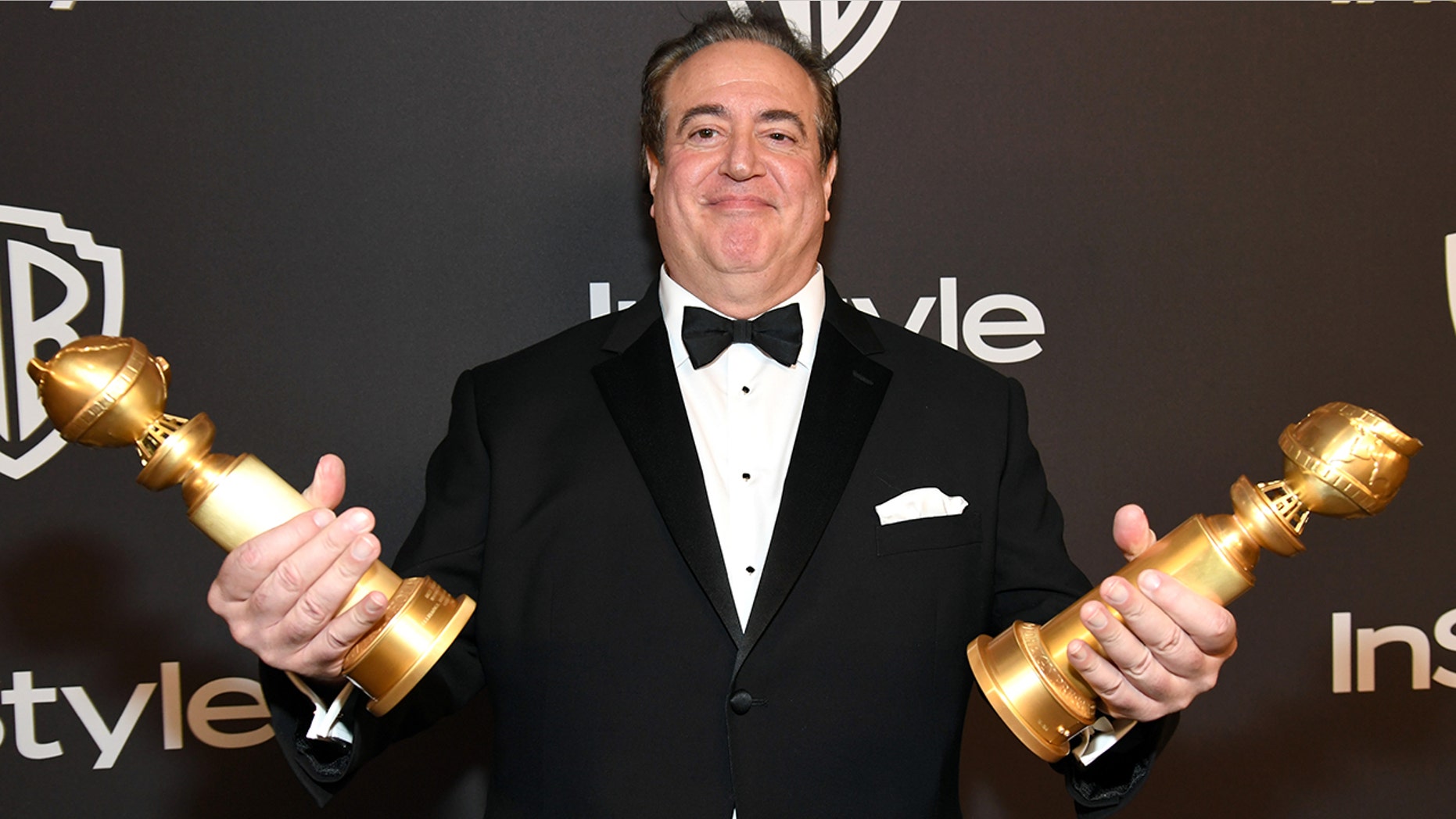
Image result for nick vallelonga
Nick Vallelonga

I have yet to see the new movie Green Book, directed by Peter Farrelly, but judging by everything I’ve read and seen about it, it would appear to fit cozily into a very familiar subgenre. Set in 1962, it recounts the purportedly true story of a car trip through the South by African-American pianist Don Shirley (played by Mahershala Ali), who is on a performance tour, and his Italian-American driver/bodyguard from the Bronx, Tony Vallelonga (Viggo Mortensen). A hermit living in a cave in Timor-Leste could instantly nail the story arc of this thing: By experiencing the humanity of the black pianist and the segregation of the 1960s South, the driver learns to rise above his casual racism and to respect the black guy in the back seat.

Hollywood loves making movies like this. They give directors and producers and studio chiefs the opportunity to deplore racism. To be sure, it’s best to set these things in the 1960s or earlier so that the racism can be at full toxic pitch, making it easy to tell who are the good guys are who are the bad. If you make a movie about American race relations set in more recent times, you're kind of forced to deal with nuance -- the downsides of affirmative action, welfare dependency, one-parent families, gang culture, drugs, crime, and so on.

A perfect example of the subgenre is the 2011 movie The Help. It's about black maids in Jackson, Mississippi, in 1963, who work hard for well-off white families but are condescended to and taken for granted. As is routine in these pictures, however, they’re also condescended to by the filmmakers. For the film's protagonist isn't one of the maids but a young white woman, played by Emma Stone, who writes a book exposing their plight. The Emma Stone character is of course, in a sense, a stand-in for the filmmakers themselves, who plainly consider themselves heroes for noticing the prejudice these maids endure. In these films, in short, the blacks are always the victims but never the heroes.

This subgenre should not, note well, be confused with other, related subgenres -- such as those cheesy dramas in which an inspiring white teacher in an inner-city school turns around the lives of students who would otherwise have ended up in gangs, in prison, and/or in early graves. In Dangerous Minds (1995), the teacher is Michelle Pfeiffer; in The Ron Clark Story (2006), it's Matthew Perry; in Music of the Heart (1999), it's Meryl Streep; in Freedom Writers (2007), it's Hilary Swank. You might as well shoehorn Finding Forrester (2000) into this category too, even though the white writer (Sean Connery) who mentors a black teenager (Rob Brown) never sets foot in a classroom.

Hollywood never tires of green-lighting these hackneyed tales -- and showering them with awards. Hence the existence and spectacular Golden Globes success ofGreen Book, co-written by Nick Vallelonga, the real-life son of the black piano man’s real-life chauffeur. Vallelonga says that his father’s experience with Don Shirley had a lifelong impact on his racial attitudes and that Vallelonga grew up being taught the lessons his late father learned on that long drive through the South. Touching stuff. The other day, Vallelonga, along with Farrelly and Brian Hayes Currie, won a Golden Globe for their script, which under ordinary circumstances would be a good sign that they might end up being nominated for an Oscar. (The picture itself was also given the trophy for Best Film, Musical or Comedy, and Ali won for supporting actor.) But that hope appeared to be dashed when, only a couple of days after the Globes telecast, somebody unearthed a 2015 tweet by Vallelonga that instantly went viral. In it, he supported a Twitter statement by Donald Trump that thousands of American Muslims had celebrated 9/11. Wrote Vallelonga: “100% correct. Muslims in Jersey City cheering when towers went down. I saw it, as you did, possibly on local CBS news.”

Trump’s statement was indeed true, and not just about 9/11. Muslims have applauded every major terrorist act since. But you’re not supposed to say so. Predictably, Vallelonga’s tweet immediately got him into hot water. One of the companies that produced Green Book, Participant Media, issued a statement calling the tweet “offensive, dangerous, and antithetical to Participant Media’s values.” Dangerous? In reporting on this dustup, the mainstream media were quick to describe Trump’s statement as a “false claim” (The Guardian), as “widely discredited” (BBC), or as “debunked” (Daily Mail).

Click on the link below to read the rest of the article:


Related:

Wednesday, November 28, 2018

What Is Saudi Arabia to Us?


By 
https://amgreatness.com/2018/11/27/what-is-saudi-arabia-to-us/
November 27, 2018

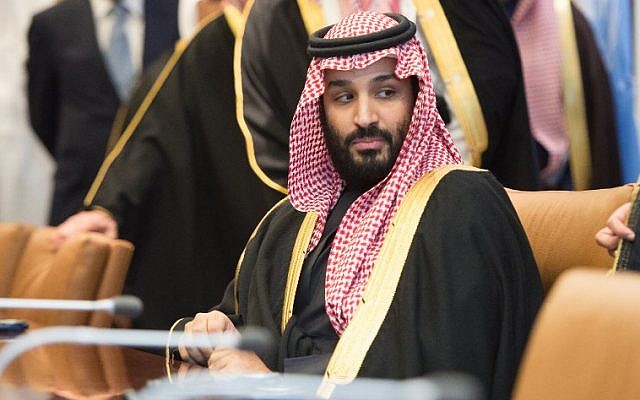
Image result for Mohammed bin Salman
Prince Mohammed bin Salman Al Saud, crown prince of Saudi Arabia, attends a meeting at the United Nations in New York City, March 27, 2018. (Bryan R. Smith/AFP)


It seems that Saudi Arabia’s rulers murdered an opponent. The U.S. media and political class is shocked, shocked, to find that murder is going on in such precincts. Who did they imagine the Muslim world’s leaders are?

Moreover, our chattering class demands that President Trump do whatever it takes to make sure that they do nothing like that again. Do what? Does anyone really think that swapping sheik A for sheik B would improve their kind’s moral standards? Do they have any idea of what keeps A on top of B, what it would take to switch them, or what the repercussions would be in foreign policy? Are they naifs, idiots, or are they just playing with foreign policy to make life a little harder for Trump?
What follows is politically incorrect information on what Saudi Arabia is, what role it plays in American politics, and what it means for our foreign policy. Then, I will suggest how American foreign policy from the Founding to around 1910 would deal with today’s Middle East.
Saudi Arabia’s rulers are a subspecies of the desert rats endemic in the region. The ones on the cheese now are of the clan of seven sons out of old king Saud’s favorite wife, Suda, and hence are known as Sudaris. The previous ruler, Abdullah was the only son of another wife. When Abdullah’s birth-order turn came, in 2005, he took the throne thanks only to having mobilized the national guard of bedouins for war against the national army (and everything else) controlled by the Sudaris. Today, when you read about Mohammed bin Salman’s “anti-corruption reforms,” you should know that they target primarily Abdullah’s son and other relatives. In other words, what is going on, including murder, is a purely dynastic power play. But that is Saudi Arabia’s nice side.
The fundamental reality is that this is a slave society, (the Arabic word for black man is the word for slave) which considers work something that inferiors do for superiors, prizes idleness, and practices cruelty as a means of asserting superiority. Everyone knows that women, treated as property, end up disproportionately in the harems of the wealthy. But few stop to think that this custom dooms the majority of Saudi men to lives without legitimate sex, never mind families.
As for who gets what, that comes strictly either from birth or from connections with the powerful. Nor are the young clamoring for the kind of useful work that would lift them up. They compete, all right, but for favor. Saudi students in U.S colleges—and even in military training programs—just don’t do their work. A degree is a passport to a job which somebody else performs.
Religion? The ultra-puritanical Wahhabi sect, which authorized the House of Saud to take power by murdering non-Wahhabis, is inexorably interwoven with the Saudi power structure. No doubt, many believe its teachings. And yes, Wahhabis pay for radical mosques throughout the world, America very much included. But hypocritical corruption is at its core. Fly first class from Riyadh to Paris or London. Watch the women with Burqas step onto the plane. Off comes the headgear. On take-off, they doff the Burqas, revealing Dior fashions with plunging necklines. And the booze flows.
Saudi Arabia is marvelously well-connected in America—and especially in Washington D.C.—thanks to countless millions of dollars spread in all manner of ways to any and all who might be useful to the Kingdom over decades. Between 1983 and 2005, as Saudi ambassador to the United States, and then as secretary general of the Saudi National Security Council (where he managed the kingdom’s American affairs), Prince Bandar bin Sultan Al Saud did not let pass any occasion to get to know and to invite and to gift. But vacations in Aspen or on the Riviera, and fellowships and connections, are small stuff compared to the billion-dollar bonds built with scores of American contractors and close friends of the very powerful. The Saudis have been able to get away with whatever they wanted.
In the aftermath of 9/11, not only did the U.S government fly Osama bin Laden’s family out of the country forthwith. It also flew out the Saudi consular officials who had helped the hijackers. Sections of the 9/11 commission report dealing with Saudi Arabia remain classified. Since the security camera photos of the 19 Saudi hijackers do not match the names on their passports, to this day, we still do not know their real identities. Nor has anyone investigated whence came the money for the operation.
Saudi foreign policy has been far from U.S.-friendly. Until around 1990, it might well have been described in one word: “pay.” Who? Anybody, to keep them from making trouble for the Kingdom. Thus the Saudis were the Syrian Assad regime’s main financiers. The money went to buy Soviet weapons. The same was true for Egypt prior to 1979, after which the money went to buy U.S. weapons. The Saudis paid most of the bill for Saddam Hussein’s war on Iran. And yes, they financed the PLO until, in 1990, both the PLO and Saddam turned against them—which led to firming up connections with the United States.
But those connections did not prevent the Saudis from playing a double game during the Iraq war—entirely understandable from the Saudi standpoint, but the acceptance of which by the U.S. establishment proved its abysmal incompetence. In short, the Saudis wanted above all to protect Iraq’s formerly ruling Sunni minority. That is why they lobbied hard and successfully to turn the successful U.S. invasion of March-April 2003 into the disastrous 2003-2010 U.S. occupation. Worse, during that occupation, the Saudis were the principal financiers of the Sunni war against U.S. forces, and the suppliers of most suicide bombers.
Today, the war between Saudi Arabia and Iran—effectively between the Muslim world’s Sunni and Shia blocs, is the great issue in the Middle East.
The Saudis rightly fear Iran. Make no mistake: Much as Iran rails against the Great Satan, (America) and the Little Satan (Israel), Saudi Arabia is its chief enemy. Whatever faults Iranian forces may have, whatever equipment they lack, they are still superior to the Saudis. Most important, the Saudis and their Sunni allies in the Gulf lord it over Shia minorities (in Bahrain they are the majority) who look to Iran for relief. The Shia in Saudi inhabit the oil producing regions. The Saudis know how vulnerable they are. The United States does not have to convince them to be anti-Iran. Since Iran is far more a danger to them than to us, they will always be more anti-Iran than we.
Nor do we have to treat them gingerly because they are the principal part of OPEC. In fact, the world oil price is now set largely by American production. Much as the Saudis would love to raise the price by cutting production, they know that maximizing their income requires pumping as much as they can at whatever the world price happens to be.
In short, we owe them nothing.
Our relationship with Saudi Arabia should flow from our own needs—not theirs—based on the realities of the region.
Were John Quincy Adams to whisper in Trump’s ear, he might well say the following: Just as in 1823, when we premised our dealings with Europe by making clear the contrast between the republican principles by which we live and those of monarchical Europe, we should now draw a bright line between our way of life and that of the likes of Saudi Arabia and Iran. Now as then, this is primarily for the American people’s benefit. Now as then, we cannot change others, but must deal with them. We don’t have to like them, and they don’t have to like us. Good diplomacy does not pretend. We will not lower ourselves to asking the Saudis to pretend they have become liberals, nor fool ourselves into thinking that they are on the way to doing so.
We have some concurrent interests. Only some. And for our own different reasons. And the concurrence is conditional.
There are certain things we can and should do for the Saudis, mainly by limiting Iran’s economy. But for us to do that, the price of oil has to be kept in an acceptable range for a range of allies. Hence we must demand that the Saudis cooperate. We can and should protect the Saudis against major Iranian military moves, especially by providing better missile defense. But we are not going to involve ourselves in trying to put down Shia revolts against Sunni hegemony. In Syria, we have only two interests: limiting Iran’s reach to Israel, and safeguarding the Kurds. Any Saudi action that we judge non-supportive of these interests will lead to reduction of our support in other areas.
Above all, we realize that Saudi Arabia is even less a permanent fixture of the international scene than the Soviet Union was. It is even more unstable. Stabilizing it, saving it from the consequences of its congenital dynastic wars, is beyond our capacities, as John Quincy Adams might have said. That is why now, as in 1823, the essence of good American foreign policy is to be very clear about our very few interests, to commit to those, and to let the rest of the world fight their own battles.

Tuesday, September 11, 2018

How 9/11 Made a European Upper-Middle-Class Radical a Conservative


By 
https://www.nationalreview.com/2018/09/9-11-changed-european-radical-to-conservative-president-bush-speech/
September 11, 2018

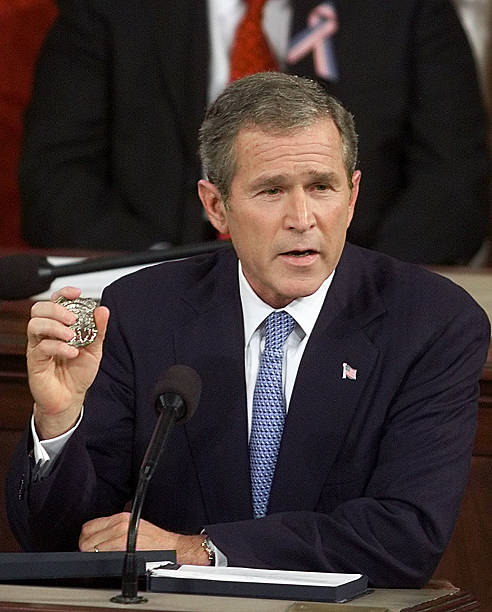
Image result for bush september 20 2001 congress badge


President George W. Bush holds the badge of New York City police officer George Howard during his address to a joint session of Congress in Washington, DC, 20 September 2001 (Getty Images)

On September 11, 2001, I was sitting on the floor of my sister's living room, babysitting her one-year-old daughter. We were lazily playing, with the afternoon news on the TV in the background. The first thing I noticed was how the anchor’s voice changed. The woman was saying “Wait, wait,” while staring to the side of the camera. There had been a horrible accident, she said, as I watched the smoke pour out of the first tower. When the second plane hit, I hoped beyond hope she was right.

I had just gotten back from a year in France. A few months earlier, I’d been standing in a crowded bar on Place de Clichy, celebrating my 20th birthday. I remember that night, although several bottles of bad white wine say I shouldn’t. I was surrounded by my peers, other upper-middle-class liberals who had fled to Paris to fulfill their fantasy. We had come to this historical city to live the life of songs and books and Technicolor movies. We were radicals. We were heroes. We were going to change the world.
The people with me in that bar were a random sample of the political atmosphere of Europe at the time. Militant feminists, pro-Palestinians, members of the autonomic environmentalist movement, and your run-of the-mill anti-government thugs. Having a friend who had been jailed for rioting was as necessary as a Malcolm X T-shirt and a back-pocket paperback of Catcher in the Rye. I gladly picked up that uniform, just as I picked up rocks and banners knowing that this was the ticket to ride.
Raised in a family of academics, this was a natural evolution on my part and a result of a serious political interest. I identified as an intellectual and as a political thinker with a critical mind. What I failed to acknowledge at the time was that my country was a controlled environment and that the spectrum on which political analysis took place was limited. Not unlike The Truman Show, where the choices you think you are making were already made for you long ago, and any dreams of a different fate are swiftly corrected.
I left my one-bedroom apartment in the chic slum of the 19th Arrondissement in June 2001. I was headed back to Gothenburg, Sweden, and the mass protest against the EU summit and George W. Bush. I planned to be back in time to see the first leaves fall on the Champs Elysées. Turns out, that didn’t happen.
Night fell and morning broke before I managed to get off that floor to answer my phone. On the other end I heard my boyfriend’s voice, chanting frantically:
Two more towers! Two more towers! Two more towers!
He and his friends were having a party, celebrating the attack on America. He called to invite me, and to this day I have never felt such intense shame.
During his speech on September 14, 2001, President Bush said that adversity introduces us to ourselves. Well, on that day I was introduced to who I had been and who I truly was. I saw my own place in the context of history, and how the ideas that I helped promote, the accusations I had met with silence, all had a part in shaping the world I now saw burning before me.
It wasn’t a game. I had played it, but it was never a game.
In the weeks that followed, I watched the American news with one eye, and its European counterpart with the other. It was like seeing the slow shifting of the tectonic plates, dividing the world through op-eds and analysis. On September 12, 2001, the headline of the largest Swedish newspaper read, “We Are All Americans.” A few weeks later, that beautiful creed had already been forgotten. The one time my country could side with the U.S. was when America was on its knees, but when it refused to stay down it quickly went back to the smug relativism of World War II, the icy efficiency of a country never having to fight for either ethics or its existence.
Soon enough, the narrative was clear. The end of the story had already been written: The U.S. was unjustly acting as the world police, once again. Bush was a moron and a puppet. America was killing innocent people for oil. It went on and on, and all I could think was that if I know that these things are not true, then what other lies have I accepted as truth throughout my life?
So I pulled at the thread of my ideology, and it all unraveled before me.
On September 20, I watched Bush’s address to Congress. I had heard him speak before, but on this night, I listened — and one sentence jumped out and grabbed me:
“Freedom and fear, justice and cruelty, have always been at war, and we know that God is not neutral between them.”
So I asked myself if I was free. Not free in movement or by law, but free in thought and intellect. I was not, nor had I ever been. The politics I had held and protected so violently were a version of the norm, and for all my intellect and breeding I had done nothing more than tout the company line.
I left everything that year; it was like walking away from the scene of a crime. I remember thinking that it would have been easier leaving a cult — at least then there would be a welcoming, sane majority on the other side. Or if there had been a physical wall to climb and a dictator to topple, instead of the silent oppression of the consensus.
My country did not change that day, but I had to; the tectonic plates where shifting, and I decided to jump.
When I stood in that bar toasting myself, I thought I was a radical. Today, as a neocon in Sweden, I know I was wrong.
I was raised in a country where that neutrality — that indifference before right and wrong — is a badge of honor. I was taught that morality is weakness, faith is ignorance, and the concept of good and evil is cause for ridicule.
On September 11, 2001, I saw, for the first time, the difference between fear and freedom, and I vowed not to be neutral between them, ever again.