Showing posts with label Rolling Stones. Show all posts

Friday, December 02, 2016

Today's Tune: The Rolling Stones - Ride 'Em On Down

Review: The Rolling Stones Reinvigorate the Blues on 'Blue and Lonesome'

December 2, 2016
Image result for rolling stones blue and lonesome
On April 7th, 1962, three young Englishmen obsessed with American blues met for the first time, at the Ealing Jazz Club in London. Two of them – singer Mick Jagger and guitarist Keith Richards from an aspiring combo, Little Boy Blue and the Blue Boys – were attending a performance by the local blues scene's leading troupe, Blues Incorporated, led by guitarist Alexis Korner. The third man, guitarist Brian Jones, was playing with Korner's group, under the pseudonym Elmo Lewis. Three months later, on July 12th, Jagger, Richards and Jones made their live debut as the Rollin' Stones at the Marquee Club, with bassist Dick Taylor, later of the Pretty Things, and pianist Ian Stewart, who would become the Stones' devoted road manager and true-blues conscience.
Between those spring and summer landmarks, Jagger also did time with Blues Incorporated in a lineup that included the Stones' eventual drummer Charlie Watts, singing imported electric-Chicago standards such as "Got My Mojo Working," a 1957 single by Muddy Waters, and a late-1955 recording by Jimmy Reed's guitarist Eddie Taylor, "Ride 'Em on Down." Fifty-four years later, on Blue and Lonesome, Jagger turns back to that Taylor stomp, chewing on the words – descended from a starker Delta blues, "Shake 'Em on Down," codified on a 1937 release by Bukka White – like a favorite meal as the air gets thick with Richards and Ron Wood's sniping guitars and Watts' rifle-volley snare fills.
Recorded last December in just three days with co-producer Don Was at British Grove Studios in the London suburb of Richmond – almost spitting distance from the site of the Crawdaddy Club, where the Stones played a life-changing 1963 residency – Blue and Lonesome is the band's first all-covers studio release since the 1964 U.K. EP The Rolling Stones, and the Stones' first pure, straight blues record ever. It is also the working lineup of the world's biggest blues band – with Wood in his 41st year as the new boy and bassist Darryl Jones as Watts' co-anchor since 1993 – doing what comes naturally in a dozen songs mostly associated with sweet home Chicago: Reed, Howlin' Wolf, singer-guitarist Magic Sam and especially harp master Little Walter, with four of his Fifties and Sixties singles here.
There is deep South too. The brash London whelps that covered bayou bluesman Slim Harpo's 1957 B side "I'm a King Bee" on their debut album and named a live LP in honor of the flip ("Got Love If You Want It") have a romping good time with "Hoodoo Blues" by Harpo's contemporary, Lightnin' Slim. And there is a thrilling, unexpected stop, with slide guitar from fellow pilgrim Eric Clapton, at the Louisiana intersection of blues and soul in Little Johnny Taylor's "Everybody Knows About My Good Thing." The Stones were actually working closer to the older Delta, covering Mississippi Fred McDowell's "You Gotta Move" on Sticky Fingers, when Taylor's single was a Top Ten R&B hit in 1971 on the Ronn label out of Shreveport. But Jagger's freewheeling phrasing is the good-time relish of a man who has been writing cheatin' songs all of his life but knows when he's got the gold standard in front of him.
The Stones first heard these songs as foreign language – the lust and trials of older, hardened men. That rough weather now fits the Stones – including Wood, who did his apprentice time in London R&B mods the Birds and on bass for the Jeff Beck Group – like a suit off the rack at Chicago's Maxwell Street Market. In "Just Your Fool," a Checker Records 45 for Little Walter in 1962, Watts presses the beat like a forced, precision march under the chug and spike of Richards and Wood's guitars. "Blue and Lonesome," from a 1965 Little Walter single and caught here in a single take, opens with a rush of power-chord sustain, then drops into tense strut marked with jittery bursts of slalom guitar, Jagger cutting in with seething confrontation, especially on harp. Jones originally played that instrument in the Stones, but Jagger grew into their secret weapon. His hearty, supple attack and exclamatory accents are as exciting and decisive as Richards' bedrock ways on guitar.
Made on impulse, as a much-needed break during other studio work, Blue and Lonesomeis a monument to muscle memory. Solos are brief and tight, evoking the honed-punch effect of the original recordings. The running highlight throughout the album is the churning ensemble bond: the hot-plate jump of the guitars over the chasing rhythm in the Little Walter sprint "I Gotta Go"; the feral, stalking tension in Magic Sam's "All of Your Love" as Jagger tears at the title lyric like an upper-octave Howlin' Wolf.
Blue and Lonesome is not a record of mere returning, a look back at how it all started. The Stones were already big time when some of these songs were released by the originators including Howlin' Wolf's 1966 threat "Commit a Crime" and Magic Sam's defining version of "All of Your Love" on his 1967 landmark, West Side Soul. In fact, the younger Stones couldn't have tackled Jimmy Reed's 1957 lament "Little Rain" like the slow, advancing storm here. Watts comes in like stoic resignation, on brushed snare, under rolling clouds of guitar; Jagger fires lightning streaks of harp. It's barely a song – six lines of determined yearning and time running out. But it is dense with lesson, a reflection of the grip and wisdom that, for every bluesman, only comes with miles and age.

The Rolling Stones' New Blues: Inside Their Roots Revival, Bright Future


November 16, 2016


September 1965. Charlie Watts steps to a microphone in a smart sport jacket, introducing "one of our favorite numbers" to a packed Dublin theater. The 24-year-old drummer heads back to his modest kit, and the Rolling Stones tumble into Howlin' Wolf's "Little Red Rooster," Keith Richards' duh-dunt-dah-duh riff battling Brian Jones' spiky slide-guitar runs. And a thousand Irish teenage girls greet each Chess Records guitar stab with crescendoing, this-song-is-so-fab shrieks. (Later, the audience will embark on an actual riot, storming the stage, which just makes it a typical Stones tour stop.)
Ten months earlier, the band had somehow managed to push that raw take on 12-bar Chicago blues atop the U.K. singles chart (though U.S. radio refused to play it, suspecting that the lyrics' prowling rooster was not, in fact, a bird). "Little Red Rooster" is apparently still the only traditional blues ever to hit Number One in the U.K. "It's crackers," Mick Jagger says five decades later, on a late-October day in Manhattan, pondering that achievement, recalling those screams. He laughs. "You know, it's crazy. I mean, that was a weirdo thing, 'cause we could've done anything at that time and it would've been Number One. That was the point." He's wearing a white button-front shirt with a subtle blue pattern and teensy black trousers that are probably the same waist size as his checkered pants on that Irish stage 51 years back. He looks his age, sort of, except not at all.
As with all the Stones' early blues recordings, Jagger says that "Red Rooster" was done "out of love." "We were kids," he says, "and we were proselytizing. The Beatles, to some extent, did the same – they talked about the music they loved, which was always, like, soul music." The Stones' music was rooted more firmly in their influences, however, and they went further in honoring them. In May of '65, they strong-armed the U.S. teen TV showShindig! into hosting Howlin' Wolf himself, with the Stones sitting at the besuited, six-foot-three, 275-pound 55-year-old's feet as he bellowed "How Many More Years," jumping in place and eliciting some improbable adolescent shrieks in his own right. "When those blues records came out," says Jagger, "they were, in a sense, for their audience, pop music. They would play it like we would play Kendrick Lamar. To me, take away the genres for a minute and it's all pop music."
Now, the Stones have circled back to the blues, with Blue & Lonesome, a (mostly) live-in-the-studio collection of 12 songs originally performed by the likes of Little Walter, Jimmy Reed and, again, Howlin' Wolf. It's the first Stones album to have zero Jagger-Richards originals; even their debut had a couple of attempts at songwriting. Recording Blue & Lonesome was easy – it took all of three days. "It made itself," says Richards. As Ronnie Wood points out, however, it's also the product of "a lifetime's research, really."
Figuring out when and how to release it was trickier. "I'm saying to the record company," says Jagger, "'Can you make this pop music if you want? Is it marketable?'" The album came out of sessions that were supposed to be for an LP of Stones originals, still in its early stages. Jagger wondered whether they should wait to get that one finished, maybe release them together.
But then again, the last time the Stones managed to finish a studio album was back in 2005, with A Bigger Bang. "The record company probably said, 'Well, the other one's never gonna come,'" Jagger says, twisting those lips of his into an outsize grin. " 'We might as well put this one out.' I don't blame 'em. I probably would have done the same thing. 'Cause, 'Now I got something, might as well put it out.'"
Click on the link below to read the rest of the article:

Saturday, November 26, 2016

Rolling Stones pay tribute to their Chicago blues school on 'Blue & Lonesome'


November 25, 2016

Image result for rolling stones blue and lonesome
As the final song on the new Rolling Stones album ends, an escalating slow-burn on Willie Dixon's "I Can't Quit You Baby," Charlie Watts' drums rumble amid the buzz and hum of the amplifiers. A raspy voice exults during the fade — "Yeah, boys!" — followed by laughter.
In the late stages of a career that spans more than 50 years, the Stones have just about run out of surprises. But the Chicago blues they studied as kids growing up in London will always be with them, and it's only fitting that the forthcoming "Blue & Lonesome" (Interscope), due out Dec. 2, is dedicated to that lifelong devotion. It marks the first Stones studio album in 11 years, and features all cover versions of songs to which the band owes its very existence.
In October 1961, Keith Richards and Mick Jagger bumped into one another at a train station outside London. Jagger had a collection of Chess Records albums imported from Chicago under his arm, and Richards was intrigued that this casual acquaintance turned out to be a blues acolyte just like he was. Less than a year later they played their first gig together at the Marquee Club in London as the Rollin' Stones, named after a Muddy Waters' song. They were students as much as musicians.
Jagger was learning how to play blues harp by religiously listening to the Chess albums of Little Walter, and Richards and his roommate, Stones guitarist Brian Jones, would huddle next to a speaker of their cheap little record player and listen to the recordings of Waters or Jimmy Reed. They were fascinated at how the bands of these Chicago blues giants often sounded like a single instrument. As Richards wrote in his 2010 autobiography, "Life": "You're looking to distort things, basically. … the sounds just melt into one another and you've got that beat behind it, and the rest of it just has to squirm and roll its way through."
In the beginning, the Stones wanted nothing more than to be a blues band. And for a long time, they were — albeit one that realized it could never, ever be as good as the musicians who schooled them from overseas. Dixon once told the Tribune that he remembered playing Piccadilly Square in London during the early '60s. The callow Jagger, Richards and Jones were in the audience. "(These kids would) tell us, 'Look, man, we got a little group and we want to do some of your songs,'" Dixon said. "We put a lot of songs on tape for them ... and then some years later, somebody played me a record of (Dixon's classic) 'Little Red Rooster' and told me some fellows called the Rolling Stones had done that song out of England. ... (But) back then they were just little kids, no hair on their faces or anything, so how would I remember them?"
The Stones early albums were stuffed with cover versions of American blues and soul music, and as soon as the quintet became popular enough to tour America in the late spring of 1964, they beelined to Chess studios in Chicago for a two-day recording session. There they were greeted by the mighty Waters himself, who, according to the oft-repeated story, was slapping a coat of paint on the studio walls. Waters had no idea who these long-haired kids were, but helped them unload their gear anyway. While there, the Stones recorded the master's "I Can't Be Satisfied," which appeared on their second album, "Rolling Stones No. 2," while Dixon's "Little Red Rooster" wound up on its U.K. companion, "Rolling Stones Now!"
The Stones early recordings — newly reissued on the boxed set "The Rolling Stones in Mono" (ABKCO) — affirm how much the Stones borrowed from the Chicago blues: the songs, the mix of jazzy swing and backstreet menace, even the recording engineer, Ron Malo. All told the Stones recorded more than two dozen songs in three visits to Chess studios in 1964-65, which they sprinkled across several albums. Long afterward, the Stones continued to record blues covers and perform them in concert. But they'd never devoted an entire album to their obsession — until now.
"Blue and Lonesome" came out of a three-day session in London last December after the recording of a new studio album of Stones originals stalled. The Stones decided to warm up with the music they know best and ended up recording an entire album of songs that are part of their musical DNA. The music was largely cut live on the floor of Mark Knopfler's British Grove Studios in London with producer Don Was, and its unvarnished tone approaches the feel of the tracks the band cut at Chess 52 years ago.
In the intervening decades, the Stones have learned a few things about an art form created by Southern blacks who migrated North in the middle of the last century. Jagger was often self-deprecating about his blues-inspired vocals, fully aware that there was no way he could possibly match the intensity or experience of the singers whose personal hardships informed the way they performed. As a result, he would often put his own outlandish spin on his blues-inspired songs, exaggerating and mugging, especially in concert. The Stones were never as academic or self-serious as some of the other white British blues bands, led by Alexis Korner and Cyril Davies.
But the Jagger on "Blue & Lonesome" is 73, three years older than Waters was when he died in 1983, and Richards is 72, Watts 75 and guitarist Ronnie Wood 69. In a sense, the Stones have become their elders, and their seasoning as a first-rate blues band is evident.
What's more, the new album upends the Jagger narrative that has taken hold in recent decades. The singer has been cast as the pin cushion for a lot of the Stones' musical indifference since the 1970s watershed "Some Girls" — he was ridiculed by Richards in "Life," and is generally seen as the Stones' preening celebrity and resident businessman, in opposition to the more "authentic" Richards, the quintessential rock 'n' roll outlaw. If so, "Blue & Lonesome" is Jagger's vindication.
When Jagger sings "Baby, please come on home to me" on Little Walter's title song, his voice breaks on "please" — a yowl from the gut that a more precious singer might've wanted to retake. He shades the lines on Magic Sam's "All of Your Love" with eroticism or wistfulness in the way he stretches or compresses the syllables. For Lightnin' Slim's "Hoo Doo Blues" he brings a more subdued, sinister tone to the thick, swampy groove. His harp playing turns downright nasty — that's the only way to describe the drone he blasts out over a relentless Watts drum groove on another Little Walter track, "Hate to See You Go."
As for the band itself, it lives by Richards' law of the blues: "you're looking to distort things … the sounds just melt into one another and you've got that beat behind it." Watts' crash cymbal ratchets up the chaos on Howlin' Wolf's unforgiving "Commit a Crime" — it's the kind of song played in a bar where everyone is carrying a switchblade for their own protection. "Just Your Fool" turns the mix of Jagger's harp and the rhythm guitars of Wood and Richards into a freight train, ornamented by Chuck Leavell's piano fills, straight out of the Otis Spann playbook.
This is not a pretty or comforting album. Even Eric Clapton gets in the spirit. Clapton's polished takes on his beloved blues have made most of his recent albums forgettable, but his solo on Little Johnny Taylor's "Everybody Knows About My Good Thing" turns the song's air of paranoia into a five-alarm fire. The arrangement drops off a cliff, and Jagger re-enters. Like the savvy blues disciple he is, he knows not to try to top Clapton's moment. So instead he underplays it, growling and purring over the subtle organ and piano backdrop.
"Call me a plumber, darlin', there must be a leak in my drain," he sings. You can almost see his eyes rolling at the delicious double entendre in the Miles Grayson-Lermon Horton composition. It's the kind of performance that testifies eloquently to the mystery and permanence of an art form that will outlast its makers and the bands like the Stones who not only embraced and learned from it, but endured long enough to eventually embody it themselves.

The Rolling Stones: Blue and Lonesome review – more alive than they've sounded for years


24 November 2016
Image result for rolling stones blue and lonesome
Last week, a US journalist interviewing the Rolling Stones offered up a 21st-century spin on the old ‘Can white men sing the blues?’ argument. Wasn’t the Stones’ early repertoire, heavy on the songs of Willie Dixon, Jimmy Reed, Slim Harpo, Muddy Waters et al, just an example of cultural appropriation, he asked? You might charitably describe Keith Richards’ response as a little confused. At one juncture, he appeared to suggest that the blues was actually “quite Jewish”, but the bulk of the answer consisted of Richards insisting that he was, in fact, black: “Ask any of the brothers.” 
Tireless on your behalf, I’ve researched this thoroughly and can exclusively reveal that he isn’t. But equally, the charge of cultural appropriation feels deeply unfair. The biggest band of the British blues boom were always among the loudest cheerleaders for the real deal. They never pulled the grim Led Zeppelin trick of claiming they’d written songs they’d clearly swiped from old blues artists, never missed an opportunity to take BB King on tour or to try to educate their audience about the artists they were paying homage to. “I think it’s about time you shut up and we had Howlin’ Wolf on stage,” suggested Brian Jones to the presenter of US TV show Shindig! in 1965, after the Stones had agreed to appear only if the show also booked Wolf and Son House, a ballsy move in a country where the Voting Rights Act hadn’t yet been passed.
The issue is being raised again because, for the first time in their career, the Rolling Stones have elected to release an album consisting entirely of blues covers. A sceptical voice might suggest it finally confirms what their last album, 2005’s lacklustre A Bigger Bang strongly hinted at: that, as songwriters at least, the Jagger/Richards partnership is out of juice. A less cynical observer’s first thought might be to wonder why they didn’t do something like this sooner: the opening cover of Buddy Johnson’s I’m Just Your Fool comes barreling out of the speakers, sounding more raw and vibrant than the Stones have done in years.
Their second thought might be that Blue and Lonesome sounds surprisingly like Mick Jagger’s show, which rather goes against the commonly held belief that Keith Richards is the band’s R&B heart and Jagger is a fashion-conscious dilettante who’d have the Stones recording tropical house with Kungs and Seeb if he thought it would make them seem relevant. You can see how that notion came about, but while there are fantastic contributions from Richards and Ronnie Wood – the grumbling twin guitars of Little Rain; the taut interplay that powers Hate to See You Go; and, especially, the woozy, chaotic backdrop they conjure on a version of Lightning Slim’s Hoo Doo Blues – it’s Jagger’s voice and harmonica that really drive Blue and Lonesome. At his least inspired, Jagger can sound like a man who isn’t singing so much as rearranging a well-worn series of mannerisms and tics, but here his vocals are extremely powerful and genuinely affecting, as if he’s digging deep within himself to find the emotions to fit the material. You expect him to be able to summon up the kind of swaggering lubriciousness requisite for Everybody Knows About My Good Thing, originally recorded by Little Johnny Taylor, which he does; more surprising is how authentically wracked he sounds on All Your Love, Hate to See You Go and the Memphis Slim-penned title track. There’s a really striking moment on the last one where he sings the line “Baby please come on home to me”, drawing out the word “please” into a chilling, agonised, vulnerable howl.
Moreover, you wonder if Jagger’s fashion-conscious dilettantism might account for the album’s sound: Blue and Lonesome feels very much a record piloted by someone who’s heard the White Stripes or the Black Keys, or the raw blues releases on which Mississippi label Fat Possum’s reputation was founded. The sound is appealingly visceral and live: the guitars are spiky and slashing, the drums punch hard, everything – including Jagger’s voice – is coated with a thin, crisp layer of distortion, as if the band are playing at such volume and with such force that the microphones can’t quite take it.
The obvious point of comparison would be the recordings the Stones made in the brief period between their rise to fame and the full flowering of Jagger and Richards’ songwriting. But if at least one track, a version of Willie Dixon’s Just Like I Treat You, might have slotted neatly onto 5 x 5 or The Rolling Stones No 2, for the most part Blue and Lonesome doesn’t really feel or sound much like the stuff the Stones made half a century ago. They wouldn’t have thanked you for saying it, but back then, their skill lay in a perhaps unwitting ability to transform gnarled rhythm and blues into thrilling teen-friendly pop: listen to Muddy Waters’ original version of I Just Wanna Make Love to You next to their 1964 version and you hear a very grownup, slow-burning record, made by a man already in middle age, converted into something urgent and wired, the soundtrack to an overexcited fumble in the back of a Ford Anglia.
Now in their 70s, men who by anyone’s standards have lived a bit, they frequently seem to tap into something deeper about the music: they really inhabit its sense of hard-won experience. The last thing you hear on the album, after a version of Willie Dixon’s I Can’t Quit You Baby crashes to a halt, is Mick Jagger asking uncertainly “was that OK?” He sounds like a man who’s still slightly awed by this music in its original form; who knows he’s still paying homage to artists he can never entirely grasp, whatever Keith Richards thinks. But the answer to his question is an unqualified yes: it’s more than OK, which is not something you can say about many Stones albums over the last 30 years.

Today's Tune: The Rolling Stones - Hate To See You Go

Blue & Lonesome is the album any Rolling Stones fan would have wished for
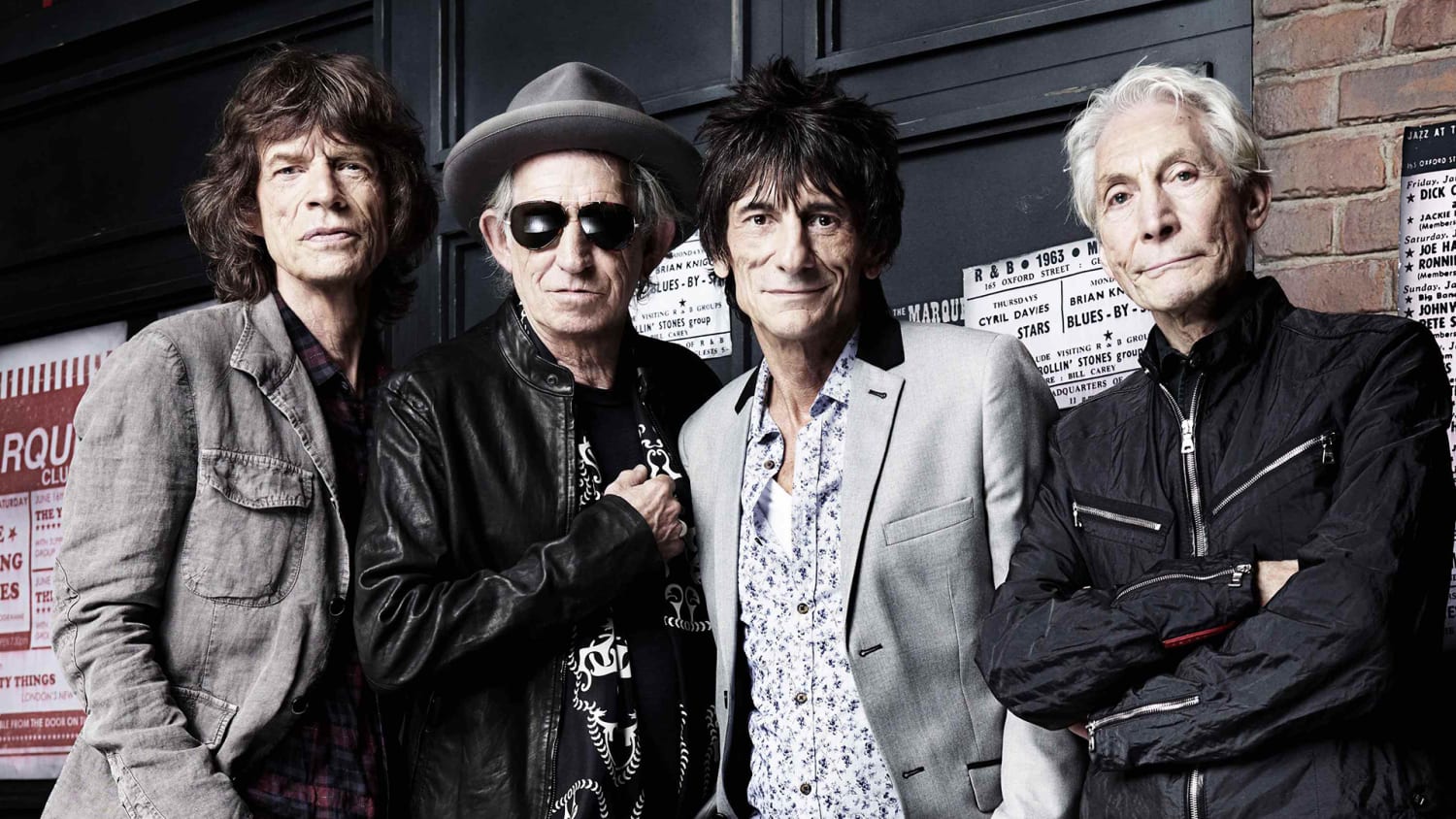
22 November 2016
Image result for rolling stones blue and lonesome
The Rolling Stones have got the blues. I wonder what took them so long? This is the album any Stones fan could have wished for, on which the Glimmer Twins gleam again.
It is a swaggering, heartfelt blast of dense, deft blues rock, with Charlie Watts swinging on the back beat, Keith Richards spilling slippery chords and magic licks, and Mick Jagger wailing on the blues harp like the last lonely survivor of an apocalyptic flood on the Mississippi delta. Even Ronnie Wood keeps his end up, breaking out crusty riffs and sputtering leads that mesh and weave with Richards’s ever-shifting rhythm guitar, combining in a thick, pliable electric groove that is uniquely the Stones' own.
It is amazing they haven’t made this album before. Holed up in Mark Knopfler’s British Grove studios last December to start work on original material, they warmed up with an old blues cover and just kept going. Knocking out one old favourite after another, they recorded enough for a whole album in just three days. 
It is the Stones's first album to completely comprise cover versions. Even their 1964 debut had a trio of originals (some credited to the pseudonymous Nanker Phelge because Jagger and Richards weren’t ready to call themselves songwriters). But this has to be viewed as an overdue act of love, not a retreat to safe harbours.
Being aficionados of the genre, choices are eclectic and immaculate, off the beaten path but straight down the blues line. They rip up Howling Wolf’s Commit A Crime, breathe steamy vigour into Memphis Slim’s Blue and Lonesome and play Magic Sam’s All Of Your Love as if they are down on their knees begging for one last chance at happiness.
There is no attempt to slavishly recreate original arrangements, the modus operandi seems to be to get the chord changes down and then play the damn thing for the sheer thrill of it. And it is a thrill because there are not many bands left who could actually do what they do in a modern studio: just set up, face each other and play with such connection and commitment that the record is essentially a performance so alive to the music it needs no adornment or improvement.
It would be wrong to say that Jagger is a revelation, because we all know what he can do, but it is a pleasure to hear him do it so well. Richards has always loved Jagger’s harmonica playing and here it is almost the featured item, with the singer taking everything he has learned from Little Walter, Howlin’ Wolf and Jimmy Reed and applying it with instinct and emotion. It is as if, unburdened by the self-consciousness that can inhabit his attempts to keep up with the kids, the frontman is free to just enjoy himself.
Jagger has never had a lovely voice, but his phrasing and delivery, his sheer commitment and bravery in going for notes he has absolutely no right to reach is perfectly glorious. He conjures up a dirty, growling old shaman on Otis Hicks's sleazy Hoo Doo Blues whilst on Buddy Johnson’s Just Your Fool, the 73-year-old singer sounds like exactly like the rocking young rooster of yore, only now he’s kicking it with a band of veteran’s utterly at ease and in charge of the material (ably supported in the studio by longstanding live touring members Darryl Jones on bass and Chuck Leavell on keyboards).
If you have seen the Stones on recent tours, you will know they are playing better than at any time since their Seventies glory. The truth is they have never really been outstanding virtuosos but they have the secret to locking tight as a unit and keeping things shifting.
This selection of covers allows them to just do what they do so well and not overthink it. That said, when Eric Clapton guests on two tracks (because he just happened to be mixing in the same studio complex), his nimble, sensitive playing really does switch things up a gear.
Their raw take on Little Johnny Taylor’s Everybody Knows About My Good Thing is sensational, while Clapton’s soloing on Willie Dixon’s I Can’t Quit You Baby ends with the band breaking out in spontaneous applause. Perennial new boy Ronnie Wood might be getting a bit nervous about job security. The Stones have shown they are not averse to changing the line-up, and he has only been with them 41 years.
Hopefully this will serve as a palette cleanser for the album of originals the Stones are still threatening to eventually deliver. But that would have to go some way to beat Blue And Lonesome for sheer pleasure. It may not be the kind of definitive album statement that will rock the music world to its foundations but it more than demonstrate that the world’s greatest and longest serving rock band have still got what it takes.

Tuesday, September 15, 2015

Today's Tune: Keith Richards - Trouble (Audio)

Rolling Stones guitarist Keith Richards talks about solo album 'Crosseyed Heart'

September 15, 2015

FILE - In this May 24, 2015 file photo, Keith Richards performs at The Rolling Stones Zip Code Tour opening night at Petco Park in San Diego.  (Photo by Rich Fury/Invision/AP, File)

Keith Richards had just picked up a pack of cigarettes from the coffee table in front of him, skilfully removed the cellophane and fired up the first of a string of smokes while talking about Crosseyed Heart, his first solo album in nearly 25 years and a rare venture away from his musical identity as guitarist, songwriter and periodic lead singer with the Rolling Stones.

Despite having been finished for some 18 months, the album will finally be released this month.

"I've been on this (Rolling Stones' Zip Code) tour, and that's Numero Uno — the Gig!" Richards, 71, said good-naturedly while sitting recently on a sofa in his manager's office in SoHo.

But now that the Stones are between tours, Richards' wait is coming to an end. The album is due September 18, and he's eyeing the possibility of solo shows this fall, maybe even a short tour now that the Stones' next round of shows, in South America, has been pushed from October and November into January.

Richards started working on what would become Crosseyed Heart in 2011, about the time his autobiography, Life, was becoming an international bestseller.
"The book was the hardest thing I ever did in my life," says Richards, shaking his head. "And you think the record world is bad? The book world is incredible –they've been at it longer."
The process of retracing his life dovetailed neatly with writing new songs with his co-producer and main collaborator, drummer Steve Jordan. Richards began flexing the compositional muscles he hadn't used much with the Stones since the band's most recent album of new material, 2005's A Bigger Bang.
"We actually didn't start off to make an album, per se," he says. "We said, 'Let's go in and cut a few tracks and see what happens'.
"After about three or four months — we could only do this once a week, sometimes once a month, really, there was no 'project' — we suddenly realized we had half an album. At that point," Richards says through what often sounds like a bucket of gravel in his throat, "we said, 'We might as well go in for the whole hog'."
Richards' raspy voice and signature hook-heavy guitar work are front and centre on Crosseyed Heart," and he plays bass and keyboards on some of the tracks. He's also tapped some of the same musicians who played on his previous solo outings backed by the band he dubbed the X-Pensive Winos: guitarist Waddy Wachtel, keyboardist Ivan Neville and singer Sarah Dash. Guests include Aaron Neville of New Orleans' celebrated Neville Brothers, longtime Stones saxophonist Bobby Keys (who died in December) and singer Norah Jones, who duets with Richards onIllusion.
The latter is one of half-a-dozen ballads on the album, a shift in pacing that marks one of the major differences between a Richards solo effort and his work with the Stones.
"Mick is not a big one for ballads," he says with a chuckle. "But I do love ballads. Always have. I didn't write Angiefor nothing, or Ruby Tuesday."
Richards' honesty about his longtime bandmate and songwriting partner carries through to his assessment of his own strengths and weaknesses. About his vocal limitations, Richards says: "I'm always dodgy about my voice. It's usually because I don't sing a lot.
"I realize my range is fairly limited, but at the same time, so is Bob Dylan's."
READ MORE:
He also includes a hauntingly spare version of blues singer and songwriter Leadbelly's songGoodnight Irene. Richards, not surprisingly, has turned to the original lyrics, which paint a more harrowing picture than the song gets in the usual campfire sing-along renditions.
Richards, of course, has notoriously imbibed more than his share of substances – legal and illegal – over the course of his storied life with the Stones. Yet he's still here, in great spirits, laughing easily, and often, during an interview to discuss how a couple of decades had slipped by without realizing he hadn't made a record apart from the Stones since 1992's Main Offender.
That was just his second solo effort, after Talk Is Cheap in 1988, which belatedly established his solo identity a quarter century after the Stones emerged during the British Invasion as the dark and dangerous counterpart to the Beatles.
Topics on Crosseyed Heart run the gamut from lustful romance (the title track) to forgiveness and renewal (Heartstopper) to near-comic real-life mishaps (Amnesia) and the importance of honesty in a relationship (Illusion).
Amnesia references a tumble Richards took in 2006 while he was in Fiji, where it was widely reported that he'd fallen out of a tree. "Knocked on my head/ Everything went blank/ I didn't even know the Titanic sank/ How can I regret/ It's so easy to forget ... . I can't recall the past, I'm nowhere."
Asked if there are things about his life he regrets, at first he jokes, "I don't know – I forgot them!"
Then he pauses, his voice dropping into a more somber tone. "I lost a son," he says, referring to his two-month-old son, Tara Jo Jo Gunne, who died of sudden infant death syndrome in 1976. "But I don't know if that comes in the realm of regret. It's a sorrow."
Richards' unguardedness about virtually any subject also struck documentary filmmaker Morgan Neville, who has directed a companion Netflix film, Keith Richards: Under the Influence, that premieres the same day Crosseyed Heart is scheduled for release.
"What made the film so much fun," Neville says from his office in L.A.'s Echo Park, "is that he's in such a good place now. He doesn't worry about anything. He's such an honest person; it's rare for a famous person to be that open and honest. That's liberating".
Neville took an Academy Award for his 2013 documentary 20 Feet From Stardom, a homage to backup singers who often remain in the shadows of various rock stars – including the Stones.
With Under the Influence, Neville says his aim was "to make sure the documentary was timeless in its own way, that it wasn't rooted in the album".
"In fact, I realized later, we don't even mention the name of the album in the film – it's not tied to it in that way," he adds. "It's more about where he's at and the process of making the album and the process of making music."
Like the album, the film came together serendipitously. Neville says Richards' manager, Jane Rose, had commissioned him to film an interview in lieu of asking the musician to undertake an extensive round of media sessions to promote the album.
But it's not a major undertaking for Richards to swing by Rose's office for selected interviews, since it's just a few hours from Connecticut, where he lives with his wife of 31 years, former model Patti Hansen.
"As a music geek," Neville says, "it was kind of the documentary I've been training for my whole life. If you started out trying to make a documentary like this, to do all the research you'd need to do to prepare for it, you couldn't. You have to have spent 20 or 30 years as a music obsessive to play in the same game as Keith."
Neville showed up for the first film session with a stack of vinyl records and started mining Richards' passion for old blues, rock, R&B, country, folk and gospel music.
"We weren't trying to tell Keith's life story," Neville says, because Richards had done that himself in his book. "Basically, we were just trying to emulate the experience of hanging out with Keith."
Does that mean Neville can now check "hanging out with Keith" off his own bucket list?
"There's the bucket list," Neville says, "and there are other things too unimaginable to even make your bucket list. This is one of those."
Crosseyed Heart (Virgin EMI) is out on Friday. Keith Richards: Under the Influence debuts on Netflix NZ on Friday.

Sunday, November 25, 2012

Rolling Stones, 50th anniversary tour, O2 Arena, London, review

By Neil McCormick
The Telegraph
25 November 2012


Keith Richards has said that the beauty of rock n roll is that every night a different band might be the world's greatest. Well, last night at the O2 Arena, it was the turn of the Rolling stones themselves to lay claim to the title they invented. And they did it with some style and panache.
"Its been an amazing journey" Mick Jagger said of the Stones career. "Fifty years to get from Dartford to Greenwich". The joke being, of course, that this is but a 15 minute bus ride to the rest of us. But its fair to say the Stones have taken a bit of a roundabout route on their journey from raw blues obsessives to veteran superstars.
An expansive two and a half hour set opened with a trio of early Beat boom hits, featuring Mick in a trilby, mincing and posturing in almost pastiche style as he pleaded "Ah wanna be your luuuuuveah babee" over Richards' juicy resonant chords, Charlie Watts driving it simply and effectively with a bouncing beat. In this age of tribute bands, it was a bit like the Stones paying tribute to themselves.
But it darkened with a riffing Paint It Black and then started really storming with Gimme Shelter. Two backing vocalists added richness and R'n'B superstar Mary J Blige came on to layer gospelly flair over Jagger's still ripping, harsh yet sweet vocals. Behind Jagger's energetic, camp performance, Richards and Ronnie Wood look like a pair of cadaverous buzzards, perhaps waiting for their hyperactive frontman to keel over. Standing side by side, Richards kept peaking over to see what Wood was playing, those guitars weaving together in mesmerising fashion, Woods flashier and faster, Richards sensitive and deft, while Watts pounded out the groove.
It is at this intersection of showbiz flashiness and wild rock that The Stones enter a realm of their own. Sympathy For The Devil was phenomenal, Tumbling Dice a rip roaring treat, Jumping Jack Flash a rocking blast.
Alongside a flashy turn from Jeff Beck, there were guest appearances by two old Stones, bassist Bill Wyman welcomed with nostalgic warmth but guitarist Mick Taylor greeted like a returning God, albeit a rather rotund one.
There must be something about being in the Stones that keeps weight off. Jagger, Richards, Watts and Wood remain whippet thin and surprisingly healthy while Wyman and Taylor look like they have spent their decades out of the band eating all the pies. But Taylor can still play like a silver streak and the time-shifting blues jam of Midnight Rambler was incredible to behold, with Jagger as harp blowing blues conductor and three guitars tripping in and out of each other's space to hypnotic effect.
When looking for the secret of the stones, it is perhaps that they actually listen to each other while they play, and almost lose themselves in it, while their brilliant frontman keeps it all together. Encores included a gospelly You Can't Always Get What You Want. Well, maybe sometimes, for the right ticket price, you actually can.

Tuesday, October 26, 2010

Today's Tune: The Rolling Stones - Jumpin Jack Flash


(Click on title to play video)

A Writing Stone: Chapter and Verse

By MICHIKO KAKUTANI
The New York Times
http://www.nytimes.com
October 25, 2010

LIFE
By Keith Richards with James Fox
Illustrated. 564 pages. Little, Brown & Company. $29.99.


For legions of Rolling Stones fans, Keith Richards is not only the heart and soul of the world’s greatest rock ’n’ roll band, he’s also the very avatar of rebellion: the desperado, the buccaneer, the poète maudit, the soul survivor and main offender, the torn and frayed outlaw, and the coolest dude on the planet, named both No. 1 on the rock stars most-likely-to-die list and the one life form (besides the cockroach) capable of surviving nuclear war.

Halfway through his electrifying new memoir, “Life,” Keith Richards writes about the consequences of fame: the nearly complete loss of privacy and the weirdness of being mythologized by fans as a sort of folk-hero renegade.

“I can’t untie the threads of how much I played up to the part that was written for me,” he says. “I mean the skull ring and the broken tooth and the kohl. Is it half and half? I think in a way your persona, your image, as it used to be known, is like a ball and chain. People think I’m still a goddamn junkie. It’s 30 years since I gave up the dope! Image is like a long shadow. Even when the sun goes down, you can see it.”

By turns earnest and wicked, sweet and sarcastic and unsparing, Mr. Richards, now 66, writes with uncommon candor and immediacy. He’s decided that he’s going to tell it as he remembers it, and helped along with notebooks, letters and a diary he once kept, he remembers almost everything. He gives us an indelible, time-capsule feel for the madness that was life on the road with the Stones in the years before and after Altamont; harrowing accounts of his many close shaves and narrow escapes (from the police, prison time, drug hell); and a heap of sharp-edged snapshots of friends and colleagues — most notably, his longtime musical partner and sometime bête noire, Mick Jagger.

But “Life” — which was written with the veteran journalist James Fox — is way more than a revealing showbiz memoir. It is also a high-def, high-velocity portrait of the era when rock ’n’ roll came of age, a raw report from deep inside the counterculture maelstrom of how that music swept like a tsunami over Britain and the United States. It’s an eye-opening all-nighter in the studio with a master craftsman disclosing the alchemical secrets of his art. And it’s the intimate and moving story of one man’s long strange trip over the decades, told in dead-on, visceral prose without any of the pretense, caution or self-consciousness that usually attend great artists sitting for their self-portraits.

Die-hard Stones fans, of course, will pore over the detailed discussions of how songs like “Ruby Tuesday” and “Gimme Shelter” came to be written, the birthing process of some of Mr. Richards’s classic guitar riffs and the collaborative dynamic between him and Mr. Jagger. But the book will also dazzle the uninitiated, who thought they had only a casual interest in the Stones or who thought of Mr. Richards, vaguely, as a rock god who was mad, bad and dangerous to know. The book is that compelling and eloquently told.

Mr. Richards’s prose is like his guitar playing: intense, elemental, utterly distinctive and achingly, emotionally direct. Just as the Stones perfected a signature sound that could accommodate everything from ferocious Dionysian anthems to melancholy ballads about love and time and loss, so Mr. Richards has found a voice in these pages — a kind of rich, primal Keith-Speak — that enables him to dispense funny, streetwise observations, tender family reminiscences, casually profane yarns and wry literary allusions with both heart-felt sincerity and bad-boy charm.

Songwriting, Mr. Richards says, long ago turned him into an observer always on the lookout for “ammo,” and he does a highly tactile job here of conjuring the past, whether he’s describing his post-World War II childhood in the little town of Dartford (memorialized here with affectionate, Dickensian detail); the smoky blues clubs that he and his friends haunted in their early days in London; or the wretched excess of the Stones’ later tours, when they had “become a pirate nation,” booking entire floors in hotels and “moving on a huge scale under our own flag, with lawyers, clowns, attendants.”

Douglas C. Pizac/Associated Press

Keith Richards (with Mick Jagger behind) at a 1994 concert


In these pages we see Keith through the scrolling chapters of his life. There’s the choir boy and Boy Scout, who was bullied by schoolmates and kept a pet mouse named Gladys. The former art student, dedicating himself like a monk to mastering the blues:

“You were supposed to spend all your waking hours studying Jimmy Reed, Muddy Waters, Little Walter, Howlin’ Wolf, Robert Johnson. That was your gig. Every other moment taken away from it was a sin.”

And later, the rock star, known for his pirate swagger, who actually remains something of a shy romantic with women, worrying about finding “the right line, or one that hadn’t been used before.”

“I just never had that thing with women,” he writes. “I would do it silently. Very Charlie Chaplin. The scratch, the look, the body language. Get my drift? Now it’s up to you. ‘Hey, baby’ is just not my come-on.”

Mr. Richards communicates the boyish astonishment he felt when the Stones found their dream of being missionaries for the American music they loved suddenly giving way to pop fame of their own, and their hand-to-mouth existence in a London tenement (financed in part by redeeming empty beer bottles stolen from parties) metamorphosed into full-on stardom, complete with rioting teenagers and screaming girls. He conveys the exhausting rigors of life on the road, even as he captures the absurdities of what was rock star life back in the day: the pharmaceutical cocaine, the impulsive jaunts abroad (“let’s jump in the Bentley and go to Morocco”), the spectacle of the police perched in the trees outside his home.

Of the years of living dangerously, when he was zonked out on heroin, Mr. Richards recalls that he slept with a gun under his pillow; turned his 7-year-old son, Marlon, into his minder on the road; and forced all his band mates to live on “Keith Time,” in which 2 p.m. recording sessions had a way of becoming 1 a.m. dates the following day. He writes candidly about how everything began to revolve around “organizing the next fix” — elaborate stratagems, which at one point included buying doctor and nurse play sets at FAO Schwarz — and the difficulties of getting and staying clean.

Why did he become an addict in the first place? “I never particularly liked being that famous,” Mr. Richards says. “I could face people easier on the stuff, but I could do that with booze too. It isn’t really the whole answer. I also felt I was doing it not to be a ‘pop star.’ There was something I didn’t really like about that end of what I was doing, the blah blah blah. That was very difficult to handle, and I could handle it better on smack. Mick chose flattery, which is very like junk — a departure from reality. I chose junk.”

During the worst of his years on heroin, Mr. Richards writes, Mr. Jagger stepped up and dealt with the day-to-day business of running the band but was reluctant to relinquish his increased control once Mr. Richards returned to action. He writes that Mr. Jagger had begun to treat the rest of the band as “basically hirelings,” and he describes the sense of hurt and betrayal he felt when he read in an English newspaper that Mr. Jagger, then intent on a solo career, had described the Stones as a “millstone” around his neck.

Mr. Richards also mocks Mr. Jagger (whom he jokingly began referring to as “Brenda” or “Her Majesty”) as a social climber and swollen head, and says that Mr. Jagger “started second-guessing his own talent” and chasing after musical trends. But while this book’s passages about Mr. Jagger have made lots of headlines, especially in England, they are not all that different from the volleys of accusations the two have exchanged over the years, and Mr. Richards adds that deep down he and Mr. Jagger remain brothers.

It’s really less a case of “North and South Korea,” he says, than “East and West Berlin.”

Mr. Richards’s verbal photos of other colleagues and acquaintances are razor-sharp as well. He describes Hugh Hefner as “a nut” and “a pimp,” and Truman Capote as a “snooty” whiner. He writes that Chuck Berry was his “numero uno hero” (from whom Richards says he stole “every lick he ever played”) but “a big disappointment” when he met him in person. In another chapter he writes that success turned his former band mate Brian Jones “into this sort of freak, devouring celebs and fame and attention.”

In the course of “Life,” Mr. Richards discusses his clashes with the police and his much-chronicled court appearances, as well as all the other headlines generated by the tabloids over the years. But the most insistent melodic line in this volume has nothing to do with drugs or celebrity or scandal. It has to do with the spongelike love of music Mr. Richards inherited from his grandfather and his own sense of musical history, his reverence for the blues and R&B masters he has studied his entire life (“the tablets of stone”), and his determination to pass his own knowledge on down the line.

One of this galvanic book’s many achievements is that Mr. Richards has found a way to channel to the reader his own avidity, his own deep soul hunger for music and to make us feel the connections that bind one generation of musicians to another. Along the way he even manages to communicate something of that magic, electromagnetic experience of playing on stage with his mates, be it in a little club or a huge stadium.

“There’s a certain moment when you realize that you’ve actually just left the planet for a bit and that nobody can touch you,” Mr. Richards writes. “You’re elevated because you’re with a bunch of guys that want to do the same thing as you. And when it works, baby, you’ve got wings.” You are, he says, “flying without a license.”


Keith Richards Has Memories to Burn

By JANET MASLIN
The New York Times
http://www.nytimes.com
October 20, 2010

Michelle V. Agins/The New York Times

Keith Richards on stage in New York.

It is 3 p.m. Eastern Daylight Time in the New York office of Keith Richards’s manager, a place that might look ordinary if every wall and shelf were not crammed with some of the world’s most glorious rock ’n’ roll memorabilia. Mr. Richards has a 3 o’clock appointment. “Come on in, he’ll be here in a minute,” an assistant says — and here he comes in a minute, at 3:01. This from a man who once prided himself for operating on Keith Time, as in: the security staff ate the shepherd’s pie that Keith wanted in his dressing room? Then everyone in this packed stadium can bloody well wait. The Rolling Stones don’t play until another shepherd’s pie shows up.

Chalk up the promptness to the man’s new incarnation: he is now Keith Richards, distinguished author. True, he is far from the only rock star to turn memoirist, and far from the only Rolling Stone to write a book about himself — very much about himself. The raven-haired Ron Wood wrote “Ronnie,” in which he described Brian Jones as “me in a blond wig.” Bill Wyman, the band’s retired bass player and bean counter, wrote “Stone Alone,” in which not a 15-shilling demo disc went unmentioned. Now Mr. Richards has written the keeper: “Life,” a big, fierce, game-changing account of the Stones’ nearly half-century-long adventure.

“It’s the most difficult thing I’ve ever done,” he says about the book. “I’d rather make 10 records.”

But he sounds anything but weary. And he seems refreshed, bearing surprisingly little resemblance to the battered, kohl-eyed pirate Keith Richards who looks like 50 miles of bad road. Today, in neutral street clothes and hot-green shoes, he is positively debonair. On his hands: the ubiquitous silver skull ring, swollen knuckles, the thin white scar from a hunk of steaming phosphorus that burned his finger to the bone while he played through a concert without stopping. On his head: both a headband and a raffish, straw-colored hat, gray tufts poking out in all directions. Not a single gewgaw hangs off it. “I’ve been through that phase,” he says. “Don’t know that the hair will take the pressure anymore.”

He’s been through quite a lot of phases. And they’re all on the page in “Life”: the Boy Scout (really); the tyro rocker; the lovestruck kid (mad for Ronnie Spector, unbeknownst to Phil Spector); the astonished new star; the heroin-addicted older one; the jaded veteran of countless world tours; and the longtime sparring partner of Mick Jagger. (Despite tabloid shock over the bickering in the book, these two have seriously been calling each other names at least since the early 1980s.) All of this is recounted with straight-up candor, and some of it is easily sensationalized. But the book’s single biggest stunner is a hand-written note on its jacket flap: “Believe it or not, I haven’t forgotten any of it.”

How, he is asked, is this humanly possible from a man as well known for stupefaction as “Satisfaction?” “I think my main concern at the beginning was whether my memory was really reliable,” he says. “Fox had to do a little sleuthing.” Fox is James Fox, the journalist and author of “White Mischief,” who has been Mr. Richards’s friend over many years and was his collaborator in putting “Life” together. (It was sold to Little, Brown & Company for a reported advance of more than $7 million.)

Mr. Fox wound up researching Mr. Richards’s past, conducting interviews with those who knew him long ago and drawing upon wonderfully candid old letters and journal entries. “Spent day practising,” the 19-year-old Mr. Richards wrote in January 1963, when the Stones were just beginning to play in public. “Worthwhile, I hope!” Also exhumed: a 1962 letter from Mr. Richards to his Aunt Patty describing a boy he had known in primary school, Mick Jagger. He signs off “Luff/Keith xxxxx”

These artifacts turned out to be the Richards equivalent of Proust’s madeleines, though Mr. Richards, whose reading taste runs to naval history and the novels of Patrick O’Brian and George MacDonald Fraser, would hardly put it that way. In any case they prompted recollections that he never expected to rediscover, and “Life” began to click. Once his stories were told and a draft was written, he and Mr. Fox wound up sitting together with separate copies of the manuscript as Mr. Fox read the whole book aloud. “What I couldn’t guess was that he’d be such a very good natural editor,” Mr. Fox, reached by e-mail, says of Mr. Richards. “He cut, accordingly, for pace and rhythm — a real musical cut.”

Steve Pyke/Getty Images

As for calling the book “Life,” Mr. Richards did some editing there too. “My Life” was what the book was to be called. “I said ‘I tell you what, just cut off the ‘My,’ and you’ve got a title,” he says. He might just as appropriately have used another title he likes, “Keep It Dark.” But, he says, “I’m saving it for a song.”

The contents of “Life” are dark enough already. The book begins with a 1975 drug bust in Arkansas and a judge who was persuaded to free Mr. Richards after confiscating his hunting knife (which still hangs in the courtroom) and having a picture taken with him. How did Mr. Richards get so lucky? “I really can’t explain it,” he says, deadpan, about that now. “Maybe I’ve got an honest face.”

It covers many other arrests too, as well as Mr. Richards’s grueling efforts to kick his heroin addiction, which he claims to have done successfully 30 years ago. “Stories like this aren’t told very much,” he insists. “There aren’t many people willing to tell them.”

Then there are the other health hazards that the book describes. Like electrocution. “My most spectacular one was in Sacramento. ...” he now says with a smile, drifting off into a fond-sounding reverie that involves a guitar string touching an ungrounded microphone and clouds of smoke billowing out of his mouth. He has a good laugh at the memory of finding himself in a hospital and hearing a doctor say, “Well, they either wake up or they don’t.”

“Life” has already attracted undue attention for a schoolyard-sounding anatomical swipe at Mr. Jagger. But this is a book that pulls no punches, and most of its disses are more serious than that. “Cold-blooded” and “vicious” are only two of the more printable words he uses to describe Brian Jones. Allen Ginsberg was an “old gasbag.” Mick Taylor, the former Rolling Stone, “didn’t do anything” after he left the band, and Donald Cammell, the film director (“Performance,” starring Mr. Jagger and Anita Pallenberg, Mr. Richards’s longtime lover and partner in crime), couldn’t commit suicide quickly enough to suit Mr. Richards. (He shot himself in 1996.) When Marlon Brando propositioned him and Ms. Pallenberg, Mr. Richards remembers replying with this: “Later, pal.”

As for Mr. Jagger, the complaints are deep-seated. They involve credit hogging, social climbing, egomania, insecurity, unethical business behavior and — here comes a Freudian’s holiday for anyone who’s ever watched the bare-chested young Jagger and Richards vamp it up together — uncertain sexual identity. There’s also a cool condescension about Mr. Jagger’s contributions to the duo’s songwriting. And a nasty nickname or two, like “Disco Boy.”

In conversation about all this, Mr. Richards is emphatically blasé: “It’s bound to be somewhat rough, but the point is I’m trying to tell the story from Day 1 to now,” he says. And sure: “There’s the odd conflict here and there. But if you weigh it all out, those things count for nothing.” Mr. Richards did see to it that Mr. Jagger knew what was in the book ahead of time. “The important thing to me,” he says, “was that Mick had been through it and seen it and knew what was what.” And is there anything that one Stone can say about another Stone and really give offense at this point? “No.”

But is there anything new that can be said about the Stones anyway? As “Life” emphatically demonstrates, the answer is yes. And some of its most surprisingly revelatory material appears in what Mr. Richards jokingly calls “Keef’s Guitar Workshop.” Here are the secrets of some of the world’s most famous rock riffs and the almost toy-level equipment on which they were recorded, like the cassette recorder onto which Mr. Richards dubbed guitar layer after guitar layer for “Street Fighting Man,” “Jumpin’ Jack Flash” and part of “Gimme Shelter.” Here’s how the silent beats in Elvis Presley’s “Heartbreak Hotel” worked their way into some of Mr. Richards’s most inspired solos. Mr. Fox found that “Heartbreak Hotel” itself was the key to some of Mr. Richards’s best musical memories.

Some of this is by now well known to music critics. But Mr. Richards makes it fascinating at the layman’s level. And he is surprised to find that early readers haven’t been skipping the musicology, even though the book cordially invites them to do so. What he finds most gratifying about having written “Life” is the chance for both him and his readers to grasp the breadth and range of this book’s material. He is the rare memoirist who can say, without hyperbole, “that what I hoped was worth sharing with people turned out to be far more important than I could possibly imagine.”

It’s getting late. Time to leave this bright orange room where Mr. Richards’s name is emblazoned on a director’s chair; where assorted music awards and platinum records are everywhere; where there’s a discreet little skull in the middle of the wall mirror; where his Louis Vuitton guitar case — he did an ad for Vuitton — is parked in a corner. But the items likeliest to catch his eye are the ones on the coffee table: loose cigarettes neatly arrayed in a holder, a lighter, more cigarettes in a pack.

“Do you mind if I smoke?” he had asked when he first appeared. Easy one: Who, aside from Keith Richards and certain legal authorities, has ever kept Keith Richards from doing anything? But an hour has gone by, and he hasn’t touched the cigarettes. He hasn’t even looked at them. He has done not one thing to make him resemble the sullen, haunted, diabolically beautiful creature on the cover of his book, the one with hellfire blazing up from his hand to meet the blurry white thing he’s smoking.

“That?” he says innocently when asked about the picture. “Oh, that’s just me lighting a cigarette. That’s all I was doing.”