Showing posts with label Russia/Soviet Union. Show all posts

Saturday, July 20, 2019

New York Times Goes Pro-Soviet for Moon Landing Anniversary


BY ROGER L. SIMON
https://pjmedia.com/rogerlsimon/ny-times-goes-pro-soviet-for-moon-landing-anniversary/
July 19, 2019

Related image
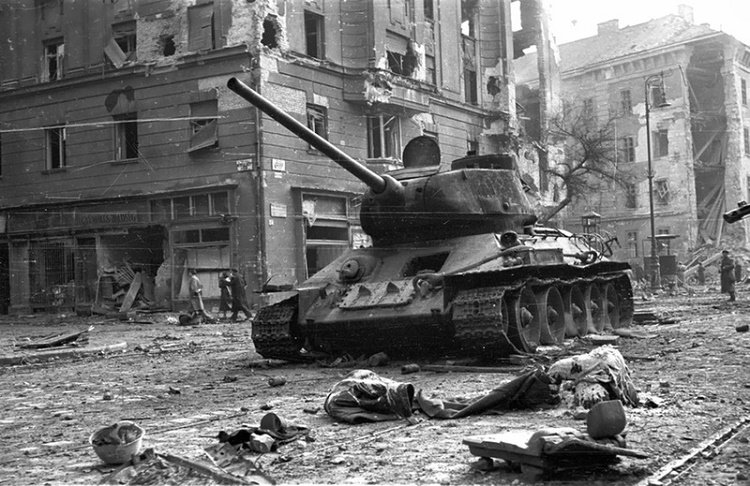
Soviet tanks roll through the streets of Budapest in 1956.

The New York Times — that Democratic Party house organ that fancies itself "liberal" or "progressive" or some such — is actually one of the more reactionary institutions in our country. Sometimes you have to wonder if it might actually be an American version of Izvestia.

Speaking of which, in honor of the fifty-year anniversary of the USA putting a man on the moon, the once-upon-a-time newspaper of record produced this ridiculous nonsense under the rubric "How the Soviets Won the Space Race for Equality."
The Cold War was fought as much on an ideological front as a military one, and the Soviet Union often emphasized the sexism and racism of its capitalist opponents — particularly the segregated United States. And the space race was a prime opportunity to signal the U.S.S.R.’s commitment to equality. After putting the first man in space in 1961, the Soviets went on to send the first woman, the first Asian man, and the first black man into orbit — all years before the Americans would follow suit.
How PC.

The author, Sophie Pinkham, a doctoral candidate in Slavic Languages, would have to know what these enlightened "multi-culti" Soviets did, in the interest of "equality," just a scant year before the U.S. landed on the moon — invade Czechoslovakia, crushing "Prague Spring."

Oh, but they were putting a woman in space so it was all good. And after all, "Prague Spring" wasn't all that great. It was led by a (gasp!) white male — Alexander Dubcek. The brutal annihilation of the Czech's (naively idealistic but sweet — in retrospect) "socialism with a human face" occurred after the Soviets had done virtually the same thing to Hungary in 1956, a scant twelve years before. You may have seen the photos of the tanks sweeping through Budapest.

Nostalgia for the Soviet Union in any form is dangerous and massively self-indulgent, yet Ms. Pinkham seems to have some peculiar desire to be even-handed, i. e. to see the good side of evil. Perhaps she sees it as fodder for her thesis. She also wrote, "Cosmonaut diversity was key for the Soviet message to the rest of the globe: Under socialism, a person of even the humblest origins could make it all the way up."

Ah, diversity — the new religion. As long as they can put a "person of color" — also, of course, mentioned in the article — or from the proletariat in space, everything else is excused.

Even the Gulag Archipelago. Even the Purge Trials. Even Beria. Even the Plot Against the Doctors. Even Stalin's mass starvation of millions of Ukrainians known as the Holodomor. Even the incarceration of Sakharov and the Refuseniks that was going on before, after, and during the cosmonaut program, etc., etc. (How was that last one in terms of "equality," Ms. Pinkham? As the author also no doubt knows, citizens of the Soviet Union had to carry internal passports identifying their "nationalities" as "Jews," "Tatars," etc. It was the very opposite of equality. It was ethnic and racial stereotyping for totalitarian purposes.)

This whitewashing of the Soviet Union has been a standby of the New York Times almost since Lenin arrived at the Finland Station. The whitewashing reached a fever pitch during that very Holodomor (early 1930s) when Walter Duranty — the paper's Moscow correspondent and perhaps history's all-time greatest perpetrator of fake news — deliberately lied on the newspaper's front page about the extent of the devastation in Ukraine (millions dying) in order to remain in Stalin's good graces.

Duranty won a Pulitzer for his coverage. His photograph still hangs on the wall in the Times building with all the paper's other honorees, in case anyone wants to go and throw up. Ms. Pinkham is unlikely to win a Pulitzer for her space coverage. But she is carrying on a putrid tradition.

Roger L. Simon — co-founder and CEO emeritus of PJ Media — is an award-winning author and an Academy Award-nominated screenwriter. His new novel — THE GOAT — will be out in September.

Monday, July 15, 2019

Don’t Celebrate Bastille Day


By Roger Kimball
https://amgreatness.com/2019/07/14/dont-celebrate-bastille-day/
July 14, 2019

Prise de la Bastille.jpg
'The Storming of the Bastille' by Jean-Pierre Houel

Since I am writing on Bastille Day, I am prompted to wonder why the French—or anyone else, for that matter—celebrate this infamous date. After all, the “storming” of that royal keep in 1789 was the spark that started the conflagration of the French Revolution. Unlike the American Revolution, in which the rule of law and the institutions of civil society survived the change of governments, the French Revolution was one of the signal bad events in world history. It consumed civil society and the centuries-old institutions of civilization. It was an unalloyed triumph of the totalitarian spirit, and in this respect it presaged and inspired that even greater assault on decency and freedom, the Bolshevik Revolution, the opening act of one of the darkest chapters in human history. The butcher’s bill for the French Revolution is many hundreds of thousands. Soviet Communism was responsible for the deaths of tens upon tens of millions and the universal immiseration of the people whose lives it controlled.
Yet today’s news is full of cheery stories about Bastille Day celebrations. Why?
It is generally a bootless errand, I know, to oppose myth with history. Myth, feeding a deep need, subsumes history. Still, truth demands that the effort be made.
One canard that we were all brought up on is that the Bastille was a loathsome dungeon full of innocent political prisoners. In fact, it harbored not hordes but precisely seven inmates when the mob stormed it. Contrary to what you have been told, the prisoners were detained in good conditions. At least one was attended by his own chef.  Bernard-René de Launay, the governor, was by all accounts a fair and patient man. But that did not save him from the mob’s “revolutionary justice.” They dragged him out of the fortress and stabbed him to death.
By rights, Bastille Day should be a day of national mourning or contrition. That it is not tells us a great deal—about the persistence of human credulousness, for example, and the folly of subordinating the imperfect, long-serving structures of civilization to the demands of impatient people infatuated by their own unquenchable sense of virtue. Tocqueville, in his book on the ancien régime at the eve of the revolution said that the “the contrast between benign theories and violent acts” was one of the Revolution’s “strangest characteristics.”
Strange it may have been, but it has turned out to be a regular feature of the totalitarian sensibility. What could be more benign sounding than slogans about “liberty, equality, fraternity,” O Citoyen, but how oppressive, how murderous, were their implementation “on the ground”? Robespierre cut to the chase when he spoke of “virtue and its emanation, terror.” He knew that the index of the sort of virtue he proselytized—a heady confection inherited from Rousseau—was the rapidity with which le rasoir national, the guillotine, pursued its grisly business. The pursuit of virtue by communists is a hundred, a thousand times bloodier and more soul blighting.
But I do not want to spend Bastille Day rehearsing horror stories from the past. Rather, I’d like to say just a word or two about one feature of the totalitarian impulse that has survived and thrived in modern democratic societies.
I am promoted by a story I saw this morning about Bernie Sanders, the aging socialist Senator from Vermont who is once again running for the presidency of the United States. A tweet from Christina Hoff Sommers alerted me to the report that although Bernie had chosen to spend his honeymoon in the Soviet Union, he never availed himself of the opportunity of visiting Aleksandr Solzhenitsyn when the great writer and moral witness was living as a refugee in Cavendish, Vermont. Some of the comments evinced surprise. Some put it down to ideology, as if Sanders, being a fan of the Soviet Union, made a silent protest by ignoring the famous anti-Soviet figure in his midst.
But I think the deeper reason for Sanders’s neglect was a quality of the socialist or communist or revolutionary sensibility that is too little remarked. I mean its ingrained, indeed its programatic lack of curiosity about other people.
Roger Scruton, in a thoughtful anatomy of the French Revolution, is one of the few people to underscore this feature of the totalitarian habit of mind. “This absence of curiosity,” Scruton notes, “is a permanent characteristic of the revolutionary consciousness. It can be seen in Marx, in his impoverished and impatient descriptions of the ‘full communism’ towards which history is tending.  And it is even more evident in the writings of Lenin, in which blocks of wooden language are constantly shifted so as to conceal the goal of communism from view.”
An important reason for this lack of curiosity (and this was something grasped by Burke and Tocqueville) is the prominent role that abstractions play in the mental and moral metabolism of the totalitarian sensibility. It was articulated with some poignancy by Rousseau who, at the end of his life, sadly observed, “I think I know man, but as for men, I know them not.” Thus it should come as no surprise that Rousseau, in an influential prelude to totalitarian dramas to come, should insist that true liberty consisted in sacrificing all merely individual wills to the imperatives of a “general will” whose dictates were as preemptory as they were abstract. As sage of Geneva put it in The Social Contract, anyone who would dare to undertake the creation of a people must feel himself capable of “changing human nature.”  Human reality is drained of dignity and becomes material to be shaped and formed according to the schemes of utopian power.  Hence the terrifying logic of Stalin’s observation that a single death is a tragedy, but a million deaths is a statistic. Revolutionaries do not trade in individuals, only masses.
I was struck by the story of Bernie Sanders’s curiosity deficit because it seems to be such a widespread liability of our political class. Absorbed by their ideological battles, the political actors of the establishment—and I include here the army of consultants, lobbyists, staffers, and pundits as well as elected officials—seem to have constructed an all-but impenetrable carapace that protects them from the unwanted intrusion of empirical reality. Their lives are given up entirely to politics. They thereby neglect the non- or pre-political reality which is the end for which politics labors, or should labor. This disaster was promulgated by the architects of the French Revolution, for whom there was no private sphere apart from the imperatives of the state, and perfected by Soviet Communism and its progeny, for whom the individual is faceless datum, a “cog” as Lenin put it, in the party machine.
The cruel and suffocating intrusiveness of those dystopian “experiments against reality” are not so seamlessly or so thoroughly and viciously implemented in American society. But I submit that anyone who looks around at the vast, unaccountable, self-engorging bureaucracy of the so-called administrative state, anyone who watches the ignorant and vituperative grandstanding of so many of our elected officials, cannot help but mark the parallels with the remorseless incuriosity that stood behind the totalitarian juggernaut as it systematically discounted truth for the sake of the accumulation of power. All of which is to explain why I regard Bastille Day as a sobering reminder of man’s pernicious folly rather than an occasion for celebration.

Saturday, May 25, 2019

HBO’s ‘Chernobyl’ Drives Home The Deadly Perils Of Statism


By 
https://thefederalist.com/2019/05/24/hbos-chernobyl-drives-home-deadly-perils-statism/
May 24, 2019

Image result for chernobyl hbo poster

The opening lines of HBO’s “Chernobyl” miniseries set the tone for what’s at stake during its terrifying, unflinching look at the worst nuclear plant disaster in history:
‘What is the cost of lies? It’s not that we’ll mistake them for the truth. The real danger is that if we hear enough lies then we no longer recognize the truth at all.’
On April 26, 1986, two explosions rocked the Chernobyl nuclear power plant in Pripyat, Soviet Ukraine. The devastating event released 400 times the amount of radioactive fallout than the bombing of Hiroshima and at one point threatened the lives of millions of Europeans as far away as Germany.
Creator Craig Mazin’s dramatization of the crisis features exceptional acting, writing, and direction. The show’s haunting atmosphere lingers far after the credits roll. It is an altogether wrenching account of the disaster and the countless lives affected. But beneath the show’s retelling of the explosion and its aftermath lies an investigation of the perils of unchecked government power.
The Soviet Union may have been already on its way to the dustbin of history by 1986, but the regime’s poisonous effects are on full display during the miniseries. “Chernobyl” offers a glimpse into the crippling effects of statism. When the truth is needed to save lives, it is stifled. When recklessly misguided authority figures need to be questioned, they are shielded by the fear they instill and the political positions they hold.

The Fight of the Truth Seekers

At its core, HBO’s “Chernobyl” is a tragic tale of heroic individuals fighting against a government designed by its nature to thwart any who oppose it. In their search for the cause of the catastrophe, scientists are tailed by the Soviet Union’s KGB secret police. Members of the very commission tasked with investigating the Chernobyl incident have their phones tapped. They’re brazenly threatened in public. They’re temporarily detained. The scientists and nuclear experts Mikhail Gorbachev’s Soviet regime needs to be free to uncover the truth are repeatedly stymied and silenced by their own government.
Young men who should be apprenticing are thrust into engineering positions they are unqualified to administer. Concerns over the stability and safety of vital nuclear equipment—most critically, Soviet-made RBMK reactors—are shrugged aside or buried in layer upon layer of bureaucratic red tape.
The dosimeters available to plant workers for measuring harmful radiation are woefully cheap and inadequate. They can detect up to 3.6 roentgens per hour. The worst-affected parts of the plant contained radiation levels of more than 20,000 r/h. Chernobyl’s higher-quality dosimeter, capable of detecting up to 1,000 r/h, is locked away in a safe and the first personnel to think of using it don’t have the key. When it’s finally found, it burns out the second it is turned on.
One of the most chilling early scenes of HBO’s series comes four hours after the initial explosion. A lone dissenting voice of the local Pripyat executive committee says the city should be evacuated. He is treated like Chicken Little and told by party men that radiation levels are “mild” and “limited to the plant itself.”
An elder of the committee, brilliantly played by Donald Sumpter, rises and tells the gathering, “When the people ask questions that are not in their own best interests, they should keep their minds on their labor and leave matters of the state to the state.” At the conclusion of his speech, he implores the men to seal the exits of the city and to have faith in Soviet socialism. For this, the committee rewards him with a standing ovation.
Chemistry professor Valery Legasov heads the Chernobyl investigative commission and is one of the brave few to speak the truth in a society crippled by fear and complacency: “To them, a just world is a sane world. There was nothing sane about Chernobyl. What happened there, what happened after, even the good we did, all of it…all of it…madness.”
The evacuation of Pripyat and the surrounding area should have begun in the early morning of April 26. Instead, it would not start until more than 37 hours after the explosion. The number of cancer deaths and long-term health effects caused by this costly delay is incalculable. Given that more than 49,000 residents lived in Pripyat, contemplating the unnecessary death toll is heartbreaking.
In a meeting with Soviet leadership, career party officials shrug off the amount of radiation at the plant as “the equivalent of a chest X-ray.” In reality, single pieces of graphite debris from the exploded reactor core contain radiation worth more than 4 million chest X-rays. When Jared Harris’s Legasov relays this startling fact to the government, he is labeled an “alarmist” and a “hysteric.” Legasov is one of the chief nuclear experts in the nation, yet his words fall on deaf ears. He is initially ignored simply because his reporting went against the approved lies of the communist leadership.

Fallout of the Modern Leviathan

Mazin’s “Chernobyl” depicts the nuclear and political fallout of what happens when an embarrassing disaster strikes in a one-party, authoritarian society. The Soviet Union is the communist, 1986 version of the all-powerful state Thomas Hobbes called for 300 years earlier in his work “Leviathan” (named after the biblical sea monster). For Hobbes, an absolute government was required to maintain law, order, and stability—unchecked by any separation of powers or mechanisms that would dilute the power of the state.
Taken out of the realm of theory and into the real world, Hobbes’s leviathan becomes so singularly focused on maintaining order that its highly regimented society is governed entirely through fear. Throughout “Chernobyl” we see fear of the state repeatedly drive good, smart men to doubt their instincts and follow nonsensical orders. Whether the Soviet Union, Mao Zedong’s China, or Kim Jong-Un’s North Korea, the results have been the same.
The nationality of the government leviathan is irrelevant—the size and control wielded by the statist monster is the ultimate issue. A theoretical North Korean response to a similar disaster as the one featured in “Chernobyl” is eminently predictable. Lies, obfuscation, and misinformation would abound. Outside help and assistance would be rejected, worsening the crisis. Those who would truthfully speak of the dire nature of the catastrophe would be suppressed, or worse. Like with Chernobyl, the blame would constantly shift, further clouding the truth.
The few North Korean scientists with the requisite knowledge to assess the situation would be ignored or silenced if the results weren’t what government officials wanted to hear. Many would understandably remain quiet to prevent reprisals against their family and loved ones. The more authority the government possesses, the harder it is to effectively fight back.
In a statist society, fear has a lot in common with radiation—it seeps into every crack of life. And like radiation, fear is a slow, painful killer. Bold heroes like Legasov are the exception in statist regimes, not the rule. When faced with the terrifying, omnipotent power of a leviathan like the U.S.S.R., resisting the state is difficult at best and a death sentence at worst.

Finding Hope Amidst the Despair

“Chernobyl” is at times hard to watch. This is partly due to its graphic depiction of the horrific effects of radiation sickness. But it is also difficult to witness the larger tragedy unfolding. Virtuous men and women lie trapped in a life-sucking, hopeless society—an evil empire dominated by dread and suspicion, governmental privilege, and crippling regulation. Few shows have been so bleak.
Still, “Chernobyl” offers its audience glimmers of hope. There is Emily Watson’s Ulana Khomyuk, who helps stop the spread of the disaster. There are the hundreds of miners who worked round-the-clock to prevent the poisoning of Ukraine’s water supply. Then, there are the three volunteers who really did venture into the heart of the facility at great risk to prevent a complete meltdown that would have killed millions.
Yet the heart of “Chernobyl” lies with Valery Legasov. It is through Harris’s moving portrayal of Professor Legasov that we are reminded of the personal human cost of the lies weaved by an authoritarian state—and that it is possible to stand up to tyranny and corruption, even though we know it may cost us everything.
Joshua Lawson is a graduate student at the Van Andel School of Statesmanship at Hillsdale College. He is pursuing a masters degree in American politics and political philosophy.

Wednesday, May 22, 2019

Socialism as Epic Tragedy


By Joshua Muravchik
https://www.nationalreview.com/magazine/2019/06/03/socialism-as-epic-tragedy/
May 16, 2019
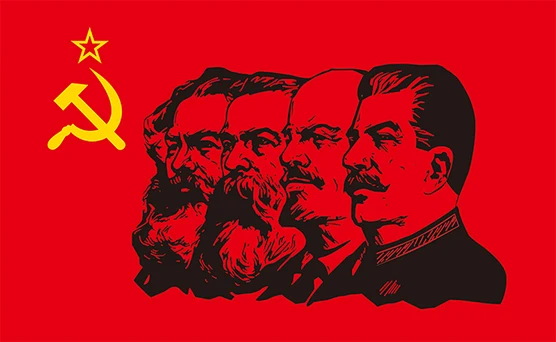

Image result for lenin marx

Karl Marx, Friedrich Engels,Vladimir Ilyich Lenin, and Joseph Stalin

The saga of socialism constitutes an epic tragedy. It was the most popular political idea ever invented, arguably the most popular idea of any kind about how life should be lived or society organized. Only the great religions can compare. Within 150 years from the time the term “socialism” was coined, some 60 percent of the world’s people were living under governments calling themselves socialist. Of course, not everyone who lived under such a regime shared its philosophy, but many millions did embrace socialism, join socialist parties, vote for socialist candidates, and even kill and die for socialism.

The powerful allure of socialism lay in its appeal to idealism. Every major religion affirmed the superior importance of the spiritual realm as compared with material things. Socialism spoke to this value system, promising a secular path to its fulfillment — and, even better, one that entailed little sacrifice. Socialists reasoned that if only property were owned in common, everything shared, and the fruits divided equally, people would no longer have cause to vie with one another. A new day of brotherhood would dawn. Freed from competition and invidious distinctions, individuals could enjoy a closeness they had never known before.
And there was more. No longer obsessed with the scramble for wealth, individuals could instead pursue self-fulfillment. I might hunt in the morning, fish in the afternoon, and write criticism in the evening, said Marx. Individuals could thus focus on developing their talents. Every person, said Trotsky, could become a Beethoven or a Goethe.
There would no longer be want. Not only would the sharing of goods ensure sufficiency for all, but also, instead of wasteful production for profit, economies could be focused on producing for need. Schools and libraries might be built instead of casinos or brothels, mass transit or family sedans instead of thrill or prestige cars, and so on.
The early socialists, starting in the 1820s, created model communities, hoping to demonstrate the superiority of the system they espoused. These all fell apart, usually quickly. But the fact that the system proved difficult to put in place did not negate the beauty of the idea, and few socialists plumbed the question of why, exactly, it was so difficult to create and sustain this system.
In any event, Marx and Engels soon appeared and rescued hopes, dismissing the early experiments as “utopian” and thus devoid of meaning. Instead, the duo claimed to have discovered laws of history revealing socialism to be mankind’s more or less inevitable destiny. The deus ex machina that would dig the grave of capitalism was the “proletariat,” a fancy word for the working class. Ruthless competition would compel capitalists to squeeze the compensation of employees until the workers, finding themselves constantly more miserable and exploited, rose up and overthrew the system, replacing it with socialism.
Oddly, this prophecy did not induce complacency. On the contrary, Marx and Engels became intensely involved in socialist organizations and parties. In their footsteps, socialists thereafter balanced the confidence of being on the right side of history with political activism intended to help history along. But new disappointments were in store.

In the 1890s, half a century after Marx and Engels set forth this vision, their intellectual heir, Eduard Bernstein, the one who had been chosen by Engels to produce volume four of the socialist bible, Capital, just as he himself had produced volumes two and three from the notes Marx had left, confessed to the observation that events were not bearing out the Marxian prophecy. The workers exhibited no interest in revolution for the apparent reason that they had been experiencing steady improvement in their material conditions rather than the forecasted deterioration. Economic historians now estimate that the standard of living in the advanced countries roughly doubled over those 50 years. Bernstein had access to no such data, but in contrast to Marx and Engels, he hailed from the working class and was intimately familiar with its vicissitudes, and thus was well equipped to assess changes in diet, wardrobe, and the like.
Bernstein drew the logical conclusion. He abandoned socialism. He determined to continue struggling to wrest better conditions for the workers, but he said, “The ‘final goal of socialism’ is nothing to me.” Others, however, were not ready to abandon the “final goal.” Although workers’ lives may have improved, their lot was still harsh. More important, the point of socialism was not only to ameliorate the plight of workers; the larger goal was to build a new society more harmonious and humane than any before.
In sum, socialism had reached a crossroads. If the workers were not going to create the revolution as predicted by the Marxian model, then a socialist had to choose. One could choose, as Bernstein did, to stick with the workers but give up on the revolution. Or one could choose to stick with the revolution but look to people other than the workers to bring it about. That was the choice of Lenin.
He shared Bernstein’s premise. In his terminology, history had shown that, left to their own devices, the workers would achieve only “trade-union consciousness,” not “revolutionary consciousness.” In other words, they sought higher wages, not bloody upheaval. But Bernstein’s conclusions enraged him. The majesty of socialism could not be forgone just because workers’ standards of living had risen. If the workers would not make the revolution, someone else had to.
Lenin hit upon the idea of creating a party of professional revolutionaries who would fill this role. They would not merely act in the name of the workers or for the benefit of the workers. They would collectively constitute the “vanguard of the proletariat” even though Lenin acknowledged that individually they would not be, or would not mostly be, proletarians.
This metaphysical leap may have been hard to follow, but it worked — at least insofar as Lenin’s band succeeded in seizing power and proclaiming the world’s first socialist state. Knowing that he commanded the allegiance only of his “vanguard,” an armed minority, Lenin then felt, with reason, that he had little means of ruling other than to prohibit opposition and cow the populace into obedience. He exhorted his followers to exert “merciless mass terror against kulaks, priests, and White Guards; persons of doubtful standing should be locked up in concentration camps.”
Lenin, to be sure, harbored an extraordinary thirst for power, but he was not merely out for power. He had a mission: socialism. In Russia, where the economy was predominantly agricultural, that meant collective farming. But the farmers, wanting nothing of the sort, resisted passively. Faced with economic disaster and civil war, he backed down on collectivization. But his successor, Stalin, renewed the struggle, engineering a famine, in which some 5 to 10 million starved to death, in order to secure the peasantry’s capitulation.
If Stalin was a tyrant of stupefying brutality — what previous despot had deliberately starved his own population? — he was matched or even outdone by such other Communist rulers as Mao and Pol Pot. Of this dynamic, Milovan Djilas, once a top leader of Yugoslav Communism, said: “How could they . . . act otherwise when they ha[d] been named by . . . history to establish the Kingdom of Heaven in this sinful world?” Had these men wished only to rule and enjoy the perquisites of unbridled power, they would have killed fewer. It was their devotion to an ideal that prompted them to slaughter millions of unresisting innocents.

Nor was this all. The idea propounded by Marxism of a redemptive future toward which history is trending but that can be helped along by mass violence proved open to permutation. Just as Lenin substituted the vanguard for the proletariat, Mao and Pol Pot added the wrinkle of substituting the peasants for the workers and then the vanguard for both. Mussolini, who was weaned on Marxism, spun another twist, replacing class with nation. He argued that downtrodden Italy belonged to the “proletariat” among nations while the wealthier states of northern Europe were the “bourgeoisie,” the enemy. Then Hitler replaced the nation with the so-called Aryan race and identified the Jews as the enemy class of his National Socialism. Thus, the ideal of a new brotherhood yielded one episode of mass murder upon another, altogether sketching as sanguinary a chapter as history has ever known.
Friday, May 10, 2019

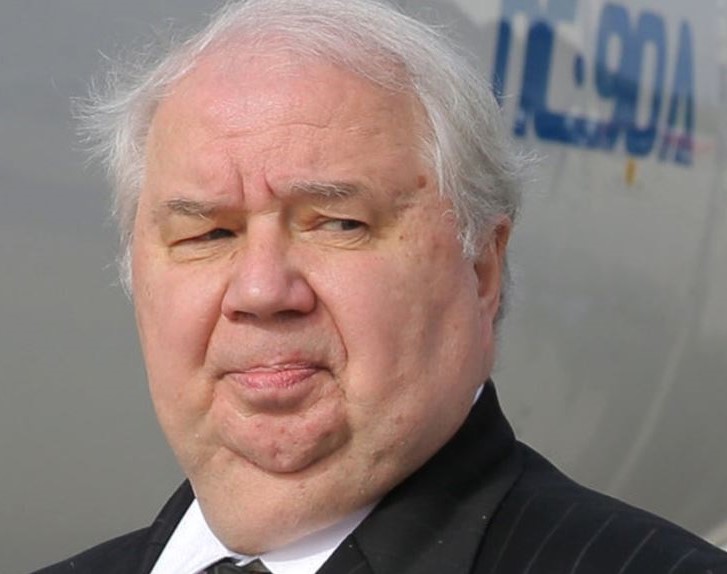
Was Sergey Kislyak Part of the Russian Collusion Hoax?


By 
https://amgreatness.com/2019/05/09/was-sergey-kislyak-part-of-the-russian-collusion-hoax/
May 9, 2019

Image result for sergey kislyak
Sergey Kislyak

If the Trump-Russia election collusion hoax was a movie, Russian Ambassador Sergey Kislyak would have a starring role.

From Attorney General Jeff Sessions’ fateful recusal to National Security Advisor Michael Flynn’s resignation to the aftermath of FBI Director James Comey’s firing, the former Russian diplomat made more than just a few consequential appearances. The question is, were these incidental cameos or was Kislyak following a script written for him by the collusion fraudsters?
As Senate Republicans threaten to excavate the origins of the corrupt investigation into Donald Trump’s presidential campaign, they might want to take a closer look at how Kislyak helped shape the bogus Russian collusion plotline.
Kislyak appears 55 times in Special Counsel Robert Mueller’s recent report. Alleged spy Maria Butina, sentenced last month to 18 months in federal prison for one count of conspiracy, met with Kislyak numerous times in 2015 and 2016 andpromised to “collect the contact information of prominent conservatives” for him. He has openly bragged about his numerous contacts with Trump associates.

But it’s Kislyak’s relationship with the Obama Administration that should raise suspicions that his interactions with Trump campaign aides before and after the election were intentional, designed to help fuel the phony collusion narrative.
According to visitor logs, Kislyak visited the Obama White House nearly two dozen times, including at least twice in October 2016. He met with National Security Advisor Susan Rice in the White House on October 7, 2016, the same day intelligence officials issued the warning about Russian election interference. Kislyak was there allegedly to receive a harshly worded message to Vladimir Putin about the meddling efforts.
McFaul Guy
In another meeting on October 14, 2016, Kislyak ran into his former counterpart, Michael McFaul, who had served as U.S. Ambassador to Russia for two years under President Obama. McFaul is an Obama confidante and was sworn-in as ambassador by then-Secretary of State Hillary Clinton in January 2012: He also is a vocal Trump foe and collusion conspiracy theorist. (More questions: Why was McFaul at the White House on October 14, 2016, when he no longer worked there? Further, why was Kislyak, the representative of our alleged biggest geopolitical foe trying to crash our election, at the White House again?)
McFaul and Kislyak are close. A few weeks after the 2016 presidential election, McFaul lavished effusive praise on the diplomat whose country supposedly had just attacked America’s election, threatening the very foundation of our democracy and whatnot.
During an event at Stanford University on November 30, 2016, McFaul gushed that Kislyak’s job “is to represent his country here and I think he does it fantastically well.” McFaul repeatedly bragged about his relationship with the Kremlin’s diplomat. “He was a tremendous friend and colleague to me when I served in the government. I really value what you helped me do as a government official and what you did for me as a friend,” he said to Kislyak.
It was an odd and oddly timed tribute to the representative of a nation that villainously unleashed social media bots to throw the presidential election to Donald Trump—especially since Kislyak’s boss purportedly stole the election from the woman McFaul worked for at the State Department in an embarrassing rebuke of his friend, Barack Obama.
But perhaps McFaul spared any outrage for his Russian pal because Sergey Kislyak had helped Obama and Clinton loyalists manufacture one of the greatest political hoaxes of all time.
Kislyak solicited meetings with Team Trump beginning in April 2016, when he attended Trump’s foreign policy speech in Washington, D.C. It was the first time, according to the Mueller report, that Kislyak met Trump; he also had brief exchanges with Jeff Sessions and Jared Kushner. Later that day, McFaul oddly tweeted, “Did Russian ambassador Kislyak attend opposition campaign event today? #doublestandards.”
In July 2016, Kislyak attended the Republican National Convention in Cleveland, where he interacted with Sessions and campaign aides Carter Page and J.D. Gordon. “Ambassador Kislyak continued his efforts to interact with Campaign officials with responsibility for the foreign-policy portfolio—among them Sessions and Gordon—in the weeks after the convention,” the Mueller report stated.
Gordon, perhaps smelling a rat, rejected one overture by Kislyak in August 2016, declining his invitation for lunch at the official Russian residence in D.C. The next month, Kislyak’s office contacted then-Senator Jeff Sessions, a member of Trump’s campaign committee, requesting a meeting. Sessions and Kislyak met in Sessions’ Senate office on September 8, 2016.
Suspicious Contacts
After the election, Kislyak contacted Jared Kushner, who agreed to meet with the diplomat on November 30, 2016. (Michael Flynn also attended the meeting.) According to the Mueller report, Kislyak offered to have Russian generals brief the transition team. (LOL.)
In December 2016, Kislyak continued to pursue more meetings with Trump’s son-in-law. “Kushner declined several proposed meeting dates, but Kushner’s assistant indicated that Kislyak was very insistent about securing a second meeting,” the special counsel wrote. The Russian ambassador also was insistent about wanting “Kushner to meet someone who had a direct line to Putin.” Totally not sketchy. At all.
Despite the fact the brief interactions and communications had nothing to do with a coordinated effort between the campaign and the Kremlin to influence the election, Kislyak’s outreach resulted in explosive news coverage in early 2017 to seed the collusion plotline. McFaul (unconvincingly) tweeted on March 31, 2016, “Never dreamed my former colleague Sergey Kislyak would become so famous,” with a link to a Washington Post article detailing Team Trump’s contact with his Russian pal.
Congressional Democrats pounced. “Ambassador Kislyak . . . also attends the Republican Party convention and meets with Carter Page and additional Trump advisors,” Representative Adam Schiff (D-Calif.) said during a March 2017 hearing of the House Intelligence Committee. “Ambassador Kislyak also met with National Campaign committee chair and now-Attorney General Jeff Sessions.”
(Earlier that month, based on a recommendation by Justice Department staff, Sessions had recused himself from any matters related to the investigation into the Trump campaign due to his pre-election interactions with Kislyak and alleged attempts to cover-up the meetings.)
A May 2017 Washington Post article claimed Kislyak told Moscow that it was Kushner, not him, who was seeking a “secret communications channel” between the Trump campaign and the Kremlin.
Unsolved Mysteries
But it was Kislyak’s role in the Michael Flynn debacle that is the most suspicious and caused the greatest personal and professional damage to Trump’s short-lived national security advisor. The envoy reached out numerous times to Flynn during the transition, including the night before the Obama administration would announce weak sanctions against Moscow for election meddling on December 28, 2016. The subject of those calls, including how the Kremlin would respond to the sanctions, eventually landed Flynn in legal trouble.
Sally Yates, the acting attorney general for 10 days and a Trump-hating partisan, told the White House shortly after the inauguration that Flynn was in violation of the never-enforced Logan Act for attempting to undermine U.S. foreign policy. When that tactic didn’t work, several officials illegally leaked details about Flynn’s calls with Kislyak to the media and suggested Flynn lied to the public about what had been discussed.
Flynn resigned in February 2017 amid pressure by the Trump White House and later pleaded guilty to one count of lying to federal investigators about the Kislyak calls.
And there is another odd angle to the Kislyak mystery that still is unresolved. The ambassador apparently received a $120,000 payment 10 days after the 2016 election. “Employees at Citibank raised an alarm about the transaction because it didn’t fit with prior payroll patterns and because he immediately split the money in half, sending it by two wire transfers to a separate account he maintained in Russia,” BuzzFeed reported in January 2018. It’s unclear whether this payment remains is under investigation by Congress or the FBI.
It will take months, maybe years, to fully vet all of the information contained in the Mueller report and give renewed scrutiny to the key players in the saga. But Kislyak’s central role, coupled with his close ties to the Obama White House, requires more immediate attention.
If the Russian ambassador to the United States was indeed acting at the direction of American political operatives to infiltrate a rival presidential campaign, influence a presidential election and taint an incoming administration, we can add yet another example of norm-breaking behavior to the long list of malfeasance and misconduct related to the Trump-Russia collusion hoax.