Showing posts with label Joe Ely. Show all posts
Showing posts with label Joe Ely. Show all posts
Wednesday, August 22, 2018


'The Lubbock Tapes: Full Circle' review: Where it all began for Joe Ely
August 17, 2018

When the Clash started kicking around with Joe Ely in the late ’70s, they were drawn to this West Texas wild card who didn’t like rules. Ely was a singer-songwriter from West Texas, which meant he fit in quite naturally with the outlaw country movement that had emerged with his Austin neighbor Willie Nelson at the forefront. But Ely was also drawn to rock, Tex-Mex, Cajun and Beat literature, and didn’t much think of or care about music as a business.
“Full Circle: The Lubbock Tapes” (Rack ’Em Records) documents the artist’s formative years as a solo act. After his one-of-a-kind band, the Flatlanders, imploded, Ely ran off and joined the circus. He took care of llamas, stallions and “the world’s smallest horse” for Ringling Brothers and Barnum & Bailey. After one of his charges kicked him and broke three ribs, he returned to Texas to recover and began working on songs, some of them written by his old Flatlanders pal Butch Hancock.
“The Lubbock Tapes” come from two demo sessions. The first, in 1974, shows Ely in thrall to honky tonk, putting his own twist on the type of two-steps that would keep a crowd dancing on the sawdust floor of a big Texas roadhouse. Curley Lawler from country-swing giants Bob Wills and the Texas Playboys adds violin to “Winds and Waterfalls,” and it’s just fine for what it is, but not truly distinctive. Where Ely really made his mark is with songs such as Hancock’s “Standin’ at a Big Hotel,” in which a drifter much like Ely meets his match “in the wilds of Hollywood.” With its surreal twist on Western outlaw mythology, the song caught the ear of established hitmakers such as Jerry Jeff Walker, among others, and earned Ely a long look with the major record labels seeking to make their mark in the expanding country market.
Ely found himself signed to MCA, and most of the songs on “Full Circle” are scattered throughout his first handful of excellent studio albums for the label. When the second batch of demos on this collection were recorded in 1978, Ely had established his sound, a merger of rock and country that took the experiments of the Flatlanders a step further into a realm of its own — somewhere between the mainstream rock of Bruce Springsteen and Tom Petty and the rebel country of Nelson and Waylon Jennings, but not really beholden to either genre.
By this time, Ely’s band had added Jesse Taylor on guitar and Ponty Bone on accordion, and the innocence of the earlier recordings gives way to the darker hues injected into Hancock’s “Fools Fall in Love” and the darn near flamboyant rage that burns through “Down on the Drag.” For Ely a wider recognition of his talents was on the horizon, but the foundation for his “discovery” had already been built. These demos give us a glimpse of the young Ely as he was figuring it all out.
Greg Kot is a Tribune critic.
greg@gregkot.com
Twitter @gregkot
‘Full Circle: The Lubbock Tapes’
Joe Ely
3 stars (out of 4)
JOE ELY REVEALS INITIAL RECORDINGS ON ‘FULL CIRCLE: LUBBOCK TAPES’ (ALBUM REVIEW)
By Jim Hynes
August 16, 2018
8/10 Stars

Joe Ely sounds like a Texas version of honky-tonkin’ Hank Williams in these first set of countrified outings captured on Full Circle: The Lubbock Tapes, but as it unfolds his rock n’ roll persona comes to the fore as well. It’s a look back to the genesis of Ely’s solo career. Keep in mind that the iconic trio Flatlanders, with his buddies Butch Hancock and Jimmie Dale Gilmore, had failed to catch on in the early seventies. Ely tried his hand in folk clubs and coffee houses before joining the circus; only to have a horse kick him in the ribs. So, dispensing with Nashville and New York, Ely returned to his hometown of Lubbock, TX and looked to its greatest musical hero, Buddy Holly, as a role model.
Ely wrote some new songs, polished off some old ones, borrowed a few from his pals Gilmore and Hancock, and tiring of solo gigs, set out to form a band. In the early ‘70s bands were only welcome in dance halls and large honky-tonks in West Texas. Ely’s first ban member was Rick Hulett on guitar and fiddle but Lloyd Mainer, who even then was the consummate producer for country sessions, joined on lap and pedal steel and Don Caldwell, who owned his own Caldwell Studios in Lubbock (where these were recorded), added his sax. Greg Wright (bass) and Steve Keeton (drums) formed the rhythm section. After playing relentlessly, the band began to draw crowds and pack some good-sized venues.
This is an album in two parts. The first half are sessions from 1974 that paved the way for Ely’s debut on MCA Records, three years later. Liberation from standard acceptable dancehall fare came a bit slowly but kicked in once Maines made his pedal steel a lead instrument, capable of melody and not just weeping support. Curly Lawler from Bob Wills and the Texas Playboys sat in for the opener “Windmills and Water Tanks.” Ely nods to the dancehall fans with “Joe’s Cryin’ Schottische,” a schottische being a dancehall requisite. The lovely ballad “Because the Wind” appears in later recordings of Jimmie Dale Gilmore and the Flatlanders. But, the big break came with Butch Hancock’s “Standin’ at the Big Hotel,” which drew interest from Jerry Jeff Walker’s Lost Gonzo Band” and became the impetus for Ely signing with MCA.
The second part of the album are sessions from 1978 in preparation for the Joe Ely Band’s third album for MCA, Down on the Drag. This is the Joe Ely Band of Clash fame, comprised of sizzling guitarist Jesse Taylor and accordionist Ponty Bone. Ely says, “You can hear it going from a real honky-tonk sound to a harder edge. The song was still telling a story, but Jesse was cutting loose, and he Lloyd were playing these screaming solos together. I don’t think that was captured on the studio version of Down on the Drag. You can hear it on The Lubbock Tapes.” This blue-infected rock n’ roll melded with twang became Ely’s signature style leading to his popularity as a live act not only in Texas, but across the pond. Ely fans will certainly recognize many of these tunes like “BBQ and Foam,” “I Had My Hopes Up High,” and “If You Were a Bluebird.” Despite the radio dilemma of “too rock for country versus too country for rock,” Ely forged his signature style, and has become an iconic figure among singer-songwriters.
Ely recounts, “I was surprised the tapes existed. Lloyd had a box in his barn that he had moved about five times. Lloyd’s always calling me about tapes that he’s found. One day he called and said he’s found these.” Ely, an artist with a five decade career, found it “well-worth the the forty-year wait hear these tracks, even though hardly anyone realized that until right about now.” Perspective is good; not ony for Ely but for the rest of us too.
Sunday, August 05, 2018
Joe Ely: Still playing after all these years
By John Wirt
August 2, 2018

Joe Ely can’t see an end to the road he’s on.
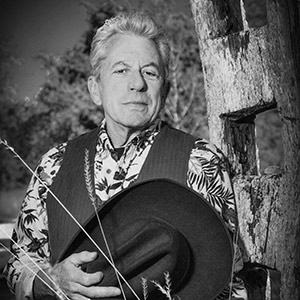
“When I was growing up, I never expected that I would be in my 70s, still playing and enjoying it,” the singer and storyteller from West Texas said from his home in Austin. “But now that I look back on it, it’s the only natural thing to do.”
Keeping busy writing songs and books, traveling and recording, Ely will appear Saturday at the Red Dragon Listening Room.
“It’s part of me,” he said of the life he’s led since his teen years in Lubbock.
An ace songwriter and interpreter, Ely pivots handily from rocking dance hall numbers to intimate ballads. In 2016, the Texas Commission on the Arts named him Texas State Musician. That same year, the Texas Heritage Songwriters Association inducted him into its hall of fame. In 2017, Ely became the first musician inducted into the Texas Institute of Letters.
Ely’s early career included the Twilights, a band that played speak-easies and honky-tonks in Lubbock. Circa 1968, a chance encounter with Townes Van Zandt inspired him to write songs. Ely’s early 1970s membership in the Flatlanders alongside master songwriters Butch Hancock and Jimmie Dale Gilmore further spurred his songwriting ambition.
Because the Flatlanders were ahead of their time, Ely moved on to a solo career. He’s since written hundreds of songs and released dozens of albums. His latest release, “The Lubbock Tapes: Full Circle,” arrives Aug. 17.
"The Lubbock Tapes” features demo sessions recorded by the Joe Ely Band in 1974 and 1978.
How did you react to these tapes after not hearing them for decades?
Disbelief. I didn’t recollect recording them. But I think we did 15 songs in a day. Because that’s all the money we had. Fortunately, by then, we were well rehearsed. We’d been playing about four nights a week for about a year. All we had to do was turn it on and cut it loose. You can hear that the band is hot, but still innocent. It had that feeling of — we were a real dance hall band back then.
In the 1960s, before the Flatlanders and the Joe Ely Band, you were a teenager performing with the Twilights. Were there a lot of young bands in west Texas back then?
It was not like it is today. There were very few bands in west Texas. But the ones that were there were really good. Because they had to be. Or else.
How did Townes Van Zandt inspire you to begin writing songs?
He was hitchhiking to Houston, and I gave him a ride from one side of Lubbock to the other side. He told me he had just hitchhiked across the desert and he’d made a record in San Francisco. He gave a copy of it to me. I really loved the songs. So, something rubbed off. After I met Butch (Hancock) and Jimmie (Dale Gilmore) and Townes, I told myself, ‘I can do that.’ ”
Did you consciously mix rock ’n’ roll, country, rhythm-and-blues and singer-songwriter music? Or did it all flow naturally into something new?
Really, it was just the situation that I was in. Where I grew up, Buddy Holly was a great example of the combination of music that happened out in west Texas. The music reflected the change in society during the ’50s. And then the ’60s came along and there were no rules whatsoever. I was fortunate to live through that era, because that was a big change in how songs were written and what the rules were. I was lucky to be born at the crossroads.
Related:
After Years on the Road, Joe Ely Takes a Literary Turn-
JOE ELY: THE CRAZY LEMON AT 70-
Thursday, July 03, 2014
Thursday, March 13, 2014
Tuesday, January 14, 2014
Wednesday, July 03, 2013
Wednesday, June 20, 2012
Thursday, June 09, 2011
The Music Beat: Joe Ely comes full circle
By Jim Beal Jr.
San Antonio Express-News Music Writer
http://www.mysanantonio.com/entertainment/music/
Tuesday, June 7, 2011
 Joe Ely's new CD is "Satisfied at Last."
/ SA
Joe Ely has done a pretty good job of keeping track of his movements.
"I got my first band together right at 50 years ago when I was 14 in Lubbock, Texas," Ely said in a phone interview on the eve of his latest tour. "Two or three years after Buddy Holly died, there was a huge increase in the number of bands in Lubbock. The only requirement was you had to have at least one Stratocaster in the band."
Ely left Lubbock to work at the Cellar Club in Fort Worth, then the Cellar Club in Houston.
"In Houston, I had a disagreement with the proprietor, and he pulled a big old gun on me. I hit the back door, never went back for my last pay check and wound up in Venice, Calif."
When Ely returned to Lubbock a few years later, he fell in with fellow West Texas musicians Butch Hancock and Jimmie Dale Gilmore. A short-lived collaboration, the Flatlanders, led to one album that was barely released at the time but worked its way into Texas music history. Subsequent Flatlanders projects and tours have gone more smoothly and further. Ely put together a hot West Texas band, signed with the MCA label and released a string of inspired albums that mixed roadhouse rock 'n' roll with twang and more for a quintessential Texas sound.
"Butch and Jimmie were a few years older, and they were writing their own songs. That inspired me to keep a journal and put down my thoughts," Ely said. "That inspired me to do what I'm doing today."
What Ely is doing today is celebrating the release of a new CD, Satisfied at Last, on his own Rack 'Em Records label. Satisfied at Last includes seven original songs, two Hancock numbers, Leo and Leona and Circumstance, and Billy Joe Shaver's Live Forever
"I kind of look at it as a record of where I'm at right now," Ely said. "The first song, 'The Highway Is My Home', is about what I've been doing for years, running up and down the road bumping into things and then coming full circle, coming home and writing down what I learned. People would tell me parts of a story, and then I'd make up the rest. It's my observations and philosophies."
Songs such as the title track, "I'm a Man Now and Roll Again" sound as if they're built as much on reflection and personal experience as on observation and the overheard.
"The songs that wanted to be on this record are on this record," Ely said. "Used to be I wrote all the time whether I had anything to say or not. It takes discipline to write. Sometimes you just have to sit down and write. The difference now is I don't force it. It's still hard work. I'm a lot more of an editor now. I'm harder on myself now."
And the songs on Satisfied at Last that were penned by Hancock and Shaver?
"I don't even think of them as covers," Ely said. "I just think of them as finding their ways onto the album. A few years ago, Billy Joe called me and said he was being inducted, well, he said he was being indicted, into the Songwriters' Hall of Fame in Nashville and asked me to sing a song at the ceremony. I was honored. I chose to sing "Live Forever", and it's been in my set since. Butch's songs just came up, knocked on the door and said, 'I want in.' Of course, they're on there because they just fit that circular thing."
Satisfied at Last features a large crew of guitarists - Lloyd Maines, Teye, David Grissom, Mitch Watkins, Jeff Plankenhorn Rob Gjersoe, David Holt, Fred Stitz, Keith Davis and Ely - along with a cadre of long-time collaborators: Davis McLarty and Pat Manske (drums and percussion), Joel Guzman (accordion, keys), Glenn Fukunaga (bass) and Little Johnny Fader (bass, keys).
"Different songs demanded different players, so I called all my old buddies," Ely said. "Some of the stuff we did in the studio. All of a sudden I'd be in the middle of something and say, 'Wouldn't it be great to have Lloyd here on steel?' So I called Lloyd. All the guitar players add different textures."
At this point in his career, Ely spends four months writing, four months recording and four months on the road.
"It used to be 80 percent on the road, 10 percent in the studio and 10 percent lost somewhere," Ely added, laughing.
See, he's pretty good, not perfect, at keeping track.
jbeal@express-news.net
Joe Ely's latest reflects on long, winding road of his life
By John T. Davis
SPECIAL TO THE AUSTIN AMERICAN-STATESMAN
http://www.austin360.com/
June 8, 2011
 You had to appreciate the irony: Joe Ely was out of gas.
Or the next thing to it. He was calling a reporter from a gas station, muttering imprecations at the self-serve pump that refused to recognize his ZIP code. "My little gauge said 'Range — Five miles'," he said.
Ely, of course, has made a decades-long career out of extolling the joys and temptations of the open road. The first line of the first song on his first album, from 1977, was all about lighting out for the territory: "Well, I left my home out on the great High Plains/Headed for some new terrain"
As a bookend of sorts, the first song on his newest and 18th-or-so album, "Satisfied at Last," is a two-edged love song to the two-lane blacktop, "The Highway is My Home."
But if Ely's vehicle was running on fumes, the man himself is still firing on all cylinders. After a long interlude that saw him releasing a book culled from his road journals, a handful of archival recordings and two live albums, Ely is back at last with an album of new original material, leavened by one Billy Joe Shaver classic ("Live Forever") and a pair of tunes from his fellow Flatlander, Butch Hancock.
As the title suggests, "Satisfied at Last" finds the peripatetic Ely in a rare contemplative move, looking back at the landscape and land mines he has traversed while pondering what's left of the journey.
"It's a bit about mortality," said Ely who, unthinkably, will qualify for Social Security next year. "We ain't getting any younger, and you've got to look that in the eye. I'm having probably as good or better a time making music as I've ever had in my life. I've got a bunch of new mountains to climb, but I've made it through the first part. So the record is kind of a celebration."
Musically, the album continues Ely's trademark fusion of rock, country, flamenco, blues and Tex-Mex influences, propelled by a cast of longtime cohorts that includes, among others, guitarists David Grissom, Rob Gjersoe and Mitch Watkins; bassist Glenn Fukunaga; steel player Lloyd Maines; drummers Pat Manske and Davis McLarty; and accordionist Joel Guzman.
The tone of the album, to hear Ely tell it, springs from a tale of journey and return chronicled by the first two songs, "The Highway is My Home" ("I wanted to show where the struggle came from my early life, living on the highway and hitchhiking around the country, through the rain and bad roads") and "Not That Much Has Changed," a knowing, fond look back at the immutable small West Texas towns that shaped Ely's early world view. "Everything sort of looks the same," he said. "But there's that weird, different vibe about it. And then you realize that the difference is that you've changed."
Consequently, songs like the title track and "I'm a Man Now," "You Can Bet I'm Gone" (in which the protagonist arranges to have his ashes fired from shotguns as a final farewell) and Shaver's "Live Forever" all reflect on the years and miles, choices made, and roads not taken.
Ely recalled a time when all his choices were in front of him, but he was at his lowest ebb. "I was sitting in the Lubbock County Jail in about 1968," he said (he and some friends were arrested for possession of psychedelic mushrooms, he said, adding that the case ended with probation).
"Things were looking really bleak. I never thought I would actually go out and do something with music.
"But then I moved down to Austin and hooked up with (artist) Jim Franklin who took us up to New York City to help him paint a mural. And there, I joined up with an off-Broadway theater troupe because they needed a guitar player. And that ended up taking me to Europe for six months. I was in heaven — I had a job, I was playing guitar and getting paid for it. All of a sudden, I went from the depths of despair to having one of the greatest times of my life!"
So what would Joe Ely, circa 2011, have told the skinny youth moping in the county lockup?
"I'd tell him to change the radio station," he said, laughing. "'Cause I was listening to Merle Haggard singing 'Branded Man.'"
Then he added, "I think I would have told that kid in jail to hang on. Everything's going be all right. And that might be what this record is about."
Joe Ely: Satisfied at Last
By Lynne Margolis
http://www.americansongwriter.com/
June 7th, 2011
 Six-and-a-half decades into a life full of restless adventure played out on stages around the world, it’s good to hear Joe Ely proclaim he’s “Satisfied at Last.” But his title-song declaration that he’s happy with his lot hasn’t dulled his edge at all. He’s still a terrific songwriter, a dynamic performer and spot-on producer.
For this album, Ely collected a hot list of Austin-area musicians to lend their chops, sometimes in surprising ways. Who knew accordionist Joel Guzman also could play some funky bass, as he does on the opener, “The Highway is My Home”? The song, which visits one of Ely’s favorite themes (he is, after all, the guy who published the journal Bonfire of the Roadmaps), is full of ‘70s-tinged instrumentation, including Pat Manske’s congas and Ely’s own electric riffs. It’s an interesting directional shift, one that might bear more exploration.
By now, Ely’s established a pattern of themes, many of them road-related. On “Not That Much Has Changed,” he sings about going home again, using somewhat well-worn imagery. Yet, as familiar as some of his phrases sound, lines like “the watertower has more names” are still striking in their simple evocation of what revisiting the past can be like. (If there is one gripe with this album, it’s that story-songs like “Mockingbird Hill” and Butch Hancock’s “Leo and Leona” do sound similar to others he’s already done.)
On “Satisfied at Last,” Ely had four different guitarists lend electric licks to his acoustic twang. They provide a dramatic finale to his declaration, “I didn’t come here with nothin’/just a slap on the ass/You can bet when I’m leavin’/I’ll be satisfied at last.” (Betraying his Texas pride, he also injects a sly dose of humor with the line, “I traveled the country/Oklahoma, too.”)
It’s natural for a guy looking in the rear-view mirror of life to write songs like “You Can Bet I’m Gone,” another reflection on mortality. In his charming style, Ely sings about his preferred funeral: “When I die, don’t toll no bells/Just put my ashes in some shotgun shells/Get all my friends some windy day/to say goodbye, watch me blow away.” This one is a Texas twanger, with David Holt’s tasty guitar and a cool changeup at the end.
But it’s the beautiful bittersweetness of Billy Joe and Eddy Shaver’s “Live Forever” that truly speaks to the issue. Eddy Shaver’s overdose death gives the song a poignancy its father-son authors could never have imagined, and Ely imbues it with every ounce of the heartache Shaver and those who loved his son have known since. Accented by Guzman’s accordion, the song is almost the antithesis of the bravado-laced “You Can Bet I’m Gone.” It’s a nice balance, from a guy who’s been able to keep his throughout years of the craziness that comes with a musical life. The Stones can keep singing “(I Can’t Get No) Satisfaction” in their 60s, but hearing Ely say life is good is actually more satisfying.
San Antonio Express-News Music Writer
http://www.mysanantonio.com/entertainment/music/
Tuesday, June 7, 2011

/ SA
Joe Ely has done a pretty good job of keeping track of his movements.
"I got my first band together right at 50 years ago when I was 14 in Lubbock, Texas," Ely said in a phone interview on the eve of his latest tour. "Two or three years after Buddy Holly died, there was a huge increase in the number of bands in Lubbock. The only requirement was you had to have at least one Stratocaster in the band."
Ely left Lubbock to work at the Cellar Club in Fort Worth, then the Cellar Club in Houston.
"In Houston, I had a disagreement with the proprietor, and he pulled a big old gun on me. I hit the back door, never went back for my last pay check and wound up in Venice, Calif."
When Ely returned to Lubbock a few years later, he fell in with fellow West Texas musicians Butch Hancock and Jimmie Dale Gilmore. A short-lived collaboration, the Flatlanders, led to one album that was barely released at the time but worked its way into Texas music history. Subsequent Flatlanders projects and tours have gone more smoothly and further. Ely put together a hot West Texas band, signed with the MCA label and released a string of inspired albums that mixed roadhouse rock 'n' roll with twang and more for a quintessential Texas sound.
"Butch and Jimmie were a few years older, and they were writing their own songs. That inspired me to keep a journal and put down my thoughts," Ely said. "That inspired me to do what I'm doing today."
What Ely is doing today is celebrating the release of a new CD, Satisfied at Last, on his own Rack 'Em Records label. Satisfied at Last includes seven original songs, two Hancock numbers, Leo and Leona and Circumstance, and Billy Joe Shaver's Live Forever
"I kind of look at it as a record of where I'm at right now," Ely said. "The first song, 'The Highway Is My Home', is about what I've been doing for years, running up and down the road bumping into things and then coming full circle, coming home and writing down what I learned. People would tell me parts of a story, and then I'd make up the rest. It's my observations and philosophies."
Songs such as the title track, "I'm a Man Now and Roll Again" sound as if they're built as much on reflection and personal experience as on observation and the overheard.
"The songs that wanted to be on this record are on this record," Ely said. "Used to be I wrote all the time whether I had anything to say or not. It takes discipline to write. Sometimes you just have to sit down and write. The difference now is I don't force it. It's still hard work. I'm a lot more of an editor now. I'm harder on myself now."
And the songs on Satisfied at Last that were penned by Hancock and Shaver?
"I don't even think of them as covers," Ely said. "I just think of them as finding their ways onto the album. A few years ago, Billy Joe called me and said he was being inducted, well, he said he was being indicted, into the Songwriters' Hall of Fame in Nashville and asked me to sing a song at the ceremony. I was honored. I chose to sing "Live Forever", and it's been in my set since. Butch's songs just came up, knocked on the door and said, 'I want in.' Of course, they're on there because they just fit that circular thing."
Satisfied at Last features a large crew of guitarists - Lloyd Maines, Teye, David Grissom, Mitch Watkins, Jeff Plankenhorn Rob Gjersoe, David Holt, Fred Stitz, Keith Davis and Ely - along with a cadre of long-time collaborators: Davis McLarty and Pat Manske (drums and percussion), Joel Guzman (accordion, keys), Glenn Fukunaga (bass) and Little Johnny Fader (bass, keys).
"Different songs demanded different players, so I called all my old buddies," Ely said. "Some of the stuff we did in the studio. All of a sudden I'd be in the middle of something and say, 'Wouldn't it be great to have Lloyd here on steel?' So I called Lloyd. All the guitar players add different textures."
At this point in his career, Ely spends four months writing, four months recording and four months on the road.
"It used to be 80 percent on the road, 10 percent in the studio and 10 percent lost somewhere," Ely added, laughing.
See, he's pretty good, not perfect, at keeping track.
jbeal@express-news.net
Joe Ely's latest reflects on long, winding road of his life
By John T. Davis
SPECIAL TO THE AUSTIN AMERICAN-STATESMAN
http://www.austin360.com/
June 8, 2011

Or the next thing to it. He was calling a reporter from a gas station, muttering imprecations at the self-serve pump that refused to recognize his ZIP code. "My little gauge said 'Range — Five miles'," he said.
Ely, of course, has made a decades-long career out of extolling the joys and temptations of the open road. The first line of the first song on his first album, from 1977, was all about lighting out for the territory: "Well, I left my home out on the great High Plains/Headed for some new terrain"
As a bookend of sorts, the first song on his newest and 18th-or-so album, "Satisfied at Last," is a two-edged love song to the two-lane blacktop, "The Highway is My Home."
But if Ely's vehicle was running on fumes, the man himself is still firing on all cylinders. After a long interlude that saw him releasing a book culled from his road journals, a handful of archival recordings and two live albums, Ely is back at last with an album of new original material, leavened by one Billy Joe Shaver classic ("Live Forever") and a pair of tunes from his fellow Flatlander, Butch Hancock.
As the title suggests, "Satisfied at Last" finds the peripatetic Ely in a rare contemplative move, looking back at the landscape and land mines he has traversed while pondering what's left of the journey.
"It's a bit about mortality," said Ely who, unthinkably, will qualify for Social Security next year. "We ain't getting any younger, and you've got to look that in the eye. I'm having probably as good or better a time making music as I've ever had in my life. I've got a bunch of new mountains to climb, but I've made it through the first part. So the record is kind of a celebration."
Musically, the album continues Ely's trademark fusion of rock, country, flamenco, blues and Tex-Mex influences, propelled by a cast of longtime cohorts that includes, among others, guitarists David Grissom, Rob Gjersoe and Mitch Watkins; bassist Glenn Fukunaga; steel player Lloyd Maines; drummers Pat Manske and Davis McLarty; and accordionist Joel Guzman.
The tone of the album, to hear Ely tell it, springs from a tale of journey and return chronicled by the first two songs, "The Highway is My Home" ("I wanted to show where the struggle came from my early life, living on the highway and hitchhiking around the country, through the rain and bad roads") and "Not That Much Has Changed," a knowing, fond look back at the immutable small West Texas towns that shaped Ely's early world view. "Everything sort of looks the same," he said. "But there's that weird, different vibe about it. And then you realize that the difference is that you've changed."
Consequently, songs like the title track and "I'm a Man Now," "You Can Bet I'm Gone" (in which the protagonist arranges to have his ashes fired from shotguns as a final farewell) and Shaver's "Live Forever" all reflect on the years and miles, choices made, and roads not taken.
Ely recalled a time when all his choices were in front of him, but he was at his lowest ebb. "I was sitting in the Lubbock County Jail in about 1968," he said (he and some friends were arrested for possession of psychedelic mushrooms, he said, adding that the case ended with probation).
"Things were looking really bleak. I never thought I would actually go out and do something with music.
"But then I moved down to Austin and hooked up with (artist) Jim Franklin who took us up to New York City to help him paint a mural. And there, I joined up with an off-Broadway theater troupe because they needed a guitar player. And that ended up taking me to Europe for six months. I was in heaven — I had a job, I was playing guitar and getting paid for it. All of a sudden, I went from the depths of despair to having one of the greatest times of my life!"
So what would Joe Ely, circa 2011, have told the skinny youth moping in the county lockup?
"I'd tell him to change the radio station," he said, laughing. "'Cause I was listening to Merle Haggard singing 'Branded Man.'"
Then he added, "I think I would have told that kid in jail to hang on. Everything's going be all right. And that might be what this record is about."
Joe Ely: Satisfied at Last
By Lynne Margolis
http://www.americansongwriter.com/
June 7th, 2011

For this album, Ely collected a hot list of Austin-area musicians to lend their chops, sometimes in surprising ways. Who knew accordionist Joel Guzman also could play some funky bass, as he does on the opener, “The Highway is My Home”? The song, which visits one of Ely’s favorite themes (he is, after all, the guy who published the journal Bonfire of the Roadmaps), is full of ‘70s-tinged instrumentation, including Pat Manske’s congas and Ely’s own electric riffs. It’s an interesting directional shift, one that might bear more exploration.
By now, Ely’s established a pattern of themes, many of them road-related. On “Not That Much Has Changed,” he sings about going home again, using somewhat well-worn imagery. Yet, as familiar as some of his phrases sound, lines like “the watertower has more names” are still striking in their simple evocation of what revisiting the past can be like. (If there is one gripe with this album, it’s that story-songs like “Mockingbird Hill” and Butch Hancock’s “Leo and Leona” do sound similar to others he’s already done.)
On “Satisfied at Last,” Ely had four different guitarists lend electric licks to his acoustic twang. They provide a dramatic finale to his declaration, “I didn’t come here with nothin’/just a slap on the ass/You can bet when I’m leavin’/I’ll be satisfied at last.” (Betraying his Texas pride, he also injects a sly dose of humor with the line, “I traveled the country/Oklahoma, too.”)
It’s natural for a guy looking in the rear-view mirror of life to write songs like “You Can Bet I’m Gone,” another reflection on mortality. In his charming style, Ely sings about his preferred funeral: “When I die, don’t toll no bells/Just put my ashes in some shotgun shells/Get all my friends some windy day/to say goodbye, watch me blow away.” This one is a Texas twanger, with David Holt’s tasty guitar and a cool changeup at the end.
But it’s the beautiful bittersweetness of Billy Joe and Eddy Shaver’s “Live Forever” that truly speaks to the issue. Eddy Shaver’s overdose death gives the song a poignancy its father-son authors could never have imagined, and Ely imbues it with every ounce of the heartache Shaver and those who loved his son have known since. Accented by Guzman’s accordion, the song is almost the antithesis of the bravado-laced “You Can Bet I’m Gone.” It’s a nice balance, from a guy who’s been able to keep his throughout years of the craziness that comes with a musical life. The Stones can keep singing “(I Can’t Get No) Satisfaction” in their 60s, but hearing Ely say life is good is actually more satisfying.
Related Articles
Friday, March 11, 2011
Wednesday, April 15, 2009


Subscribe to:
Posts (Atom)