Showing posts with label Music. Show all posts

Tuesday, August 27, 2019

The 60th Anniversary of 'Kind of Blue': Miles Davis' Masterpiece


August 26, 2019

Image result for kind of blue miles davis

In an article published on Sunday, the British edition of GQ listed Miles Davis' Kind of Blue as the number one title on its list of "The 100 best jazz albums you need in your collection," and noted:
Miles’ soft, muted trumpet sound (dry as a martini) has become synonymous with “cool” jazz, and there is no better example of the genre, or of his art, than this album. Kind Of Blue is the best-selling recording in his catalogue and the best-selling classic jazz album ever. It regularly tops All Time Favourite lists, and had become a template for what a jazz record is meant to be. It is also perhaps the most influential jazz record ever released. Musically, it’s where modal jazz really hit paydirt, and where linear improvisation came to the fore (Davis playing Samuel Beckett to John Coltrane’s James Joyce), and its tunes have been covered by everyone from Larry Carlton to Ronny Jordan. Influence is far-reaching; “Breathe” from Pink Floyd’s Dark Side of The Moon was based on a chord sequence from this album. From its vapoury piano-and-bass introduction to the full-flight sophistication of “Flamenco Sketches”, Kind Of Blue is the very personification of modern cool. And, according to Steely Dan’s Donald Fagen, it is also something else far more important: “Sexual wallpaper”.
Heh, indeed, as Glenn Reynolds would say over at PJ Media's sister website,Instapundit. Earlier this month, the online music retailer Sweetwater looked back atKind of Blue on its 60th anniversary, and explored how that "modal jazz hit paydirt" in detail:


In 2002, during the very early days of the now moribund Blogcritics website, I reviewed music historian Ashley Kahn's then-recent book,  Kind of Blue: The Making of the Miles Davis Masterpiece. Since that article is no longer online, here's a lightly-edited reprise:
Very, very few artists can be said to have changed the course of their medium even once. Miles Davis (1926-1991) changed the direction of jazz three times.

First with 1949's The Birth of the Cool, Davis, early in his career as a bandleader, slowed the frantic tempo of bebop down, and introduced the world to cool jazz. This would be the dominant form of jazz, especially as played by west coast musicians, for the next decade.

In 1969, Davis released Bitches Brew, a double album of what would eventually be described as jazz-rock fusion. Fusion, of course, would be the dominant form of jazz (for better or worse) for the next decade, and the players on Bitches Brew(which include John McLaughlin, Joe Zawinul, Wayne Shorter, and Chick Corea) would be its chief proponents.

In between those two extremes, in 1959, Davis introduced modal jazz to the world. Modes are scales of musical notes, some of which date back thousands of years. The appeal of modes for jazz musicians was to get away from playing constant chord changes, which were felt to hamstring the soloist, and provide a sparse, less cluttered background for solos, providing maximum flexibility and expressiveness. In the hands of an amateur, who needs the chord changes to influence his selection of notes when soloing, the result is cliched scale after scale (this would become the curse of the jazz/rock fusion genre). But in the hands of master musicians such as Davis and his bands, the results were obvious: a new composition style instead of relying of old standards, a greater freedom of expression, and a unique new sound that would be jazz's dominant form for the next 30 years, and remains one of its most important elements. The album that introduced this sea change was, of course, 1960's Kind of Blue.

Along with John Coltrane's A Love Supreme and Giant Steps, Kind of Blue is one of those albums that even non-jazz fans own — they are definitive recordings from the 1960s. And yet, no album emerges in a vacuum. There's rarely a moment of divine inspiration behind an artwork — it's almost always a combination of talent and hard work, combined with an enormous amount of thought.

Kind of Blue is no exception. It was a logical progression in Davis' career, and in his ability to choose excellent sidemen. Davis had the core of a crack band at the time of Kind of Blue's two 1959 recording sessions, with Jimmy Cobb on drums, Paul Chambers on bass, and the dueling saxes of the avant-garde John Coltrane (soon to leave for a solo career that would rival Davis' in its stature and influence) and the more conventional, but playful technique of Cannonball Adderly.

Davis toured with pianist Wynton Kelly, who plays on Kind of Blue's bluesy "Freddie Freeloader," but a few months prior to the recording session Davis recruited Bill Evans, who was quietly earning a reputation as the pianist in jazz, with the chops to handle any material, and an innovator in his own right.

This was the group that walked in Columbia Record' 30th Street studios in Manhattan to record Kind of Blue. Ashley Kahn, in Kind of Blue: The Making of the Miles Davis Masterpiece covers this session, the events leading up to it, such as Davis' then rapidly rising stature, his 1955 signing to Columbia, which provided the budgets and studios to allow Davis to produce "concept albums," often with a small orchestra behind him, a decade before the Beatles made both concepts popular in rock music.

Kind of Blue would not exist in its current form but for Davis' astute hiring of Bill Evans. Kahn sketches Evans' career up to Kind of Blue, and briefly, but effectively covers the "Crow Jim" reverse racism that Evans occasionally received from black audiences when performing as the only white member of an otherwise black group.

(He also mentions the hilarious request of Davis before he allowed Evans into the band: "You got to make it with everybody, you know what I mean? You got to f**k the band." The straitlaced Evans stuttered in reply, "I'd like to please everyone...but I just can't do that". Davis's sardonic humor, and attempts to mess with the minds of his musicians would eventually become the stuff of legend among his band members.)

All of these anecdotes demonstrate Kahn's most important writing skill: the ability to describe, (in fairly short, and splendidly illustrated chapters) the history of the recording sessions, Davis's career, his  meteoric rise prior to Kind of Blue, and that album's impact on the jazz world as a whole, both in the 1960s, and today, as it sold an astonishing 5000 copies a week 40 years after its release.

Kahn's effortless style belays the intense research and reporting that makes it possible. To describe the actual recording session, Kahn uses a remarkable collection of skills that combine his simultaneous role as historian, detective, and musicologist. He assembles material gleaned from existing interviews with Davis and his band members and the album's producer, Irving Townsend, new interviews with Jimmy Cobb, the last surviving member of that session, photographs of the session (ironically, Cobb was never clearly photographed, since he spent most of the session behind his kit), and numerous quotes transcribed from the band's own comments recorded onto the studio session tapes. His best detective work is determining, with a fairly high degree of certitude, that Gil Evans (no relation to Bill Evans) wrote the introduction to the first track of the album, "So What," perhaps the most beautiful 30 seconds or so in all of jazz.


Kahn also describes the careers of Davis and his band members immediately after Kind of Blue, including Davis' epochal 1961 concert at Carnegie Hall, with his five-piece band, and the Gil Evans Orchestra backing him on one of the greatest live recordings in all of jazz.

Kind of Blue is an album that simultaneously evokes an era, while remaining timeless. Ashley Kahn does a masterful job of both explaining that era, and why Davis' music from it remains astonishingly popular today.


2019 Update: Enjoy Miles' best music (before he became entranced with jazz/rock fusion and '80s pop) while you can. It's only a matter of time before he's memory-holed by #metoo, as this 2013 article in the Onion's A/V Club section portends: “Miles Davis beat his wives and made beautiful music.”

Monday, July 08, 2019

Rodrigo y Gabriela: Acoustic guitar duo playing Bluesfest has roots in Mexican hard rock


By Lynn Saxberg
https://ottawacitizen.com/entertainment/local-arts/rodrigo-y-gabriela-acoustic-guitar-duo-playing-bluesfest-has-roots-in-mexican-hard-rock
July 4, 2019

Image result for rodrigo y gabriela

Gabriela Quintero describes the acoustic guitar as the universal instrument. It’s portable, doesn’t need to be plugged in and you can play any style of music on it. 
“You can be a singer-songwriter, or you can play jazz, classical, Spanish classical, country music, blues, Mexican. There are so many possibilities,” says the guitarist who, along with her musical partner Rodrigo Sanchez, forms the fast-rising guitar duo of Rodrigo Y Gabriela. Their uncompromising acoustic stylings have accomplished the unlikely feat of selling out some of the world’s most legendary venues, including Colorado’s Red Rocks Amphitheatre, The Hollywood Bowl and London’s Royal Albert Hall. They make their Ottawa debut Friday at Bluesfest. 
Compared to the metal onslaught of their first band together, a pair of acoustic guitars is also “easy on the ears for everybody,” she adds. “If we want to play on the streets or in restaurants, we know that a lot of people, including our own families, are not super fans of the metal sound, with the distortion and all that. Luckily we love all music so it wasn’t hard to switch.” 
The former romantic couple, now friends, shifted from electric to acoustic more than 20 years ago, after meeting as teenagers at an art house in Mexico City and spending their early years going to metal shows and playing in a hard-rocking band. Disillusioned by the band’s ambition to be rich and famous, and stymied by the lack of record-company interest, they left the group.
“We decided to quit the band but not the guitar,” Quintero says. “So we changed the electric for two acoustic guitars. We had our own vision of success at that time, and we decided that success was going to be travelling the world to keep playing and keep learning music. So we did that.”
They headed for Europe and ended up spending a year in Ireland, which turned into a fruitful period of artistic development. They shared a small apartment with an Irish couple, practised guitar together every day and busked on the streets to make a bit of money. Covers of hard-rock nuggets like Enter Sandman and Stairway to Heaven kept the spare change coming.
Along the way, Quintero began to develop her unusual percussive style, adapting the bodhrán technique to guitar to create a distinct rhythm. “We saw a lot of this Irish traditional music playing and we saw people playing the bodhrán, an Irish drum. I started to practise the movement and play it on guitar, and it sounded like we had beats.”
In Dublin, one person who stopped to watch them play on the street was singer-songwriter Damien Rice, who had yet to release his breakthrough solo debut. They became friends and when they crossed paths again, Rice was about to release his album, O, and invited the pair to open for him at an industry gig. That night, they met Niall Muckian, who is still their manager. 
Over the years, they’ve released five albums, selling more than 1.5 million units in all, and performed at some of the world’s biggest festivals. Their music has been part of the soundtracks to Puss in Boots and Pirates of the Caribbean: On Stranger Tides, and they’ve appeared on several American talk shows. They also performed at a reception for the President of Mexico hosted by former U.S. president Barack Obama. 
The latest news in a still-growing career is the release of their fifth album, Mattavolution. The main goal, says Quintera, was to avoid repeating themselves. “It was a bit of a struggle for three years,” she reveals. “Then one day, something unlocked and we started to get momentum, and new melodies started coming in. If you listen carefully, they’re like songs.”
The new music reflects their view of the world, which is informed by their interest in Buddhism and regular meditation. “We both meditate. It’s been a very helpful tool for us on the road. It’s easier and cheaper than drinking or pills,” Quintero says. 
“The whole album is conscious of the world, and our vision that it can hold a compassionate human society. The compassion starts with one person, but it’s also an inclusive concept that includes compassion for animals and the natural world, and all other living beings. Just be the best version of yourself and that way we can change the world.”
lsaxberg@postmedia.com
Related:

Rodrigo y Gabriela: They’ve come a long way since busking on Grafton Street-


Rodrigo y Gabriela return to their roots with a new album


By Mark Kennedy
https://www.apnews.com/9c828c73522a423c831abc4982ee9c1a
June 12, 2019

Image result for rodrigo y gabriela

NEW YORK (AP) — Years ago, when Rodrigo Sanchez and Gabriela Quintero would show up at some small European town with their acoustic guitars, they loved to tease the audience.

People would spot the two Mexican artists and assume they should brace themselves for some sort of classical or traditional performance. Then Sanchez would play a little “Stairway to Heaven.” Giggles would fill the pub or community center.

“If we’re playing two nylon-string guitars, you’re not supposed to play Led Zeppelin or Metallica,” Sanchez said. Quintero, of course, was in on the joke: “You break the cliche.”

Rodrigo y Gabriela have been busting musical barriers ever since, melding the power of thrash metal with fiery Spanish melodies. The acoustic, instrumental rock duo has gone back to those memories to create “Mettavolution,” their first album in five years.

“The challenge for me and Rodrigo was to reconnect with that original idea — just doing music that is authentic to us and that is genuine,” said Quintero.

“Mettavolution,” a word they created to mean evolution through compassion, offers six original tracks and one ambitious cover — a 19-minute version of Pink Floyd’s 1971 epic song “Echoes.”

For the album, producer Dave Sardy added some bass, synths and percussion for texture to Sanchez’s mesmerizing finger-picking, and Quintero acts once again as the rhythm section — complete with her drumming on the guitar body.

Intriguingly, the duo added lyrics to many tunes but didn’t record them. “I think it was a very important change in the way we approach music in this album because it made it much more melodic,” Sanchez said. They hinted that perhaps they may one day release the tracks with a real singer aboard.

The pair has long done covers of other artists’ songs and Pink Floyd is a favorite band. They wanted to do their version of “Echoes” for at least 10 years but only attempted it last year for a concert at the Hollywood Bowl. A representative from their record label came and loved it, insisting it appear on their next album — something Rodrigo y Gabriela had quietly wanted.

“Echoes,” with its lyrics about reconnecting to humanity, also works into the theme of the album. “I think we are at that age where you start to think differently now. And to understand that life is about all of us — we are this one entity here,” says Sanchez, 45.

Listening to Sanchez and Quintero play, it’s hard to believe two people playing guitars can make music this powerful and absorbing. It’s even harder to believe that they’re self-taught musicians.

“This is my theory: Because we didn’t go to school, we’ve got no boundaries in our heads,” says Quintero, 46. “For us, it was not sacrilege to try to jam with any piece we both liked. It could be a punk piece to any classic sort of thing.”

Both began their careers playing in a little-known Mexico City speed-metal band. They then teamed up, moved to Ireland, and played unplugged Slayer tunes on the streets of Dublin until the 2006 release of their self-titled U.S. debut.

Along the way they got plenty of advice, particularly from people suggesting they add a vocalist because radio wasn’t receptive to instrumental music. They refused.

“Our meaning of success was playing guitar and traveling the world. So we already made it from that point of view,” Quintero said, laughing.

Looking back, they say they’ve become less perfectionistic. It’s not about playing every note perfectly but being present and letting the music speak.

“I mean the notes have to be the right notes, obviously. But it’s more important to understand that you play with heart, with soul, and if you miss one or two notes, OK. It doesn’t matter if you know the interpretation was good,” says Sanchez.

Asked if they’ve yet reached the limit on what they can do on two acoustic guitars, the pair laughs.

“Twelve notes for everybody, from Mozart to punk. That’s it,” says Quintero. “The acoustic guitar has no limits. It’s just endless.”
___
___
Mark Kennedy is at http://twitter.com/KennedyTwits

Tuesday, July 02, 2019

Review - Dave Alvin: King of California (Reissue)


By 
https://americansongwriter.com/2019/06/dave-alvin-king-of-california-reissue/?fbclid=IwAR1NxoKsmktGfx50ZJR7i326OXpNuS3WlFF1lIHNqqWgkCbdTo67yD87gzQ
June 28, 2019


Related image
Ruby Lounge, Manchester 2014

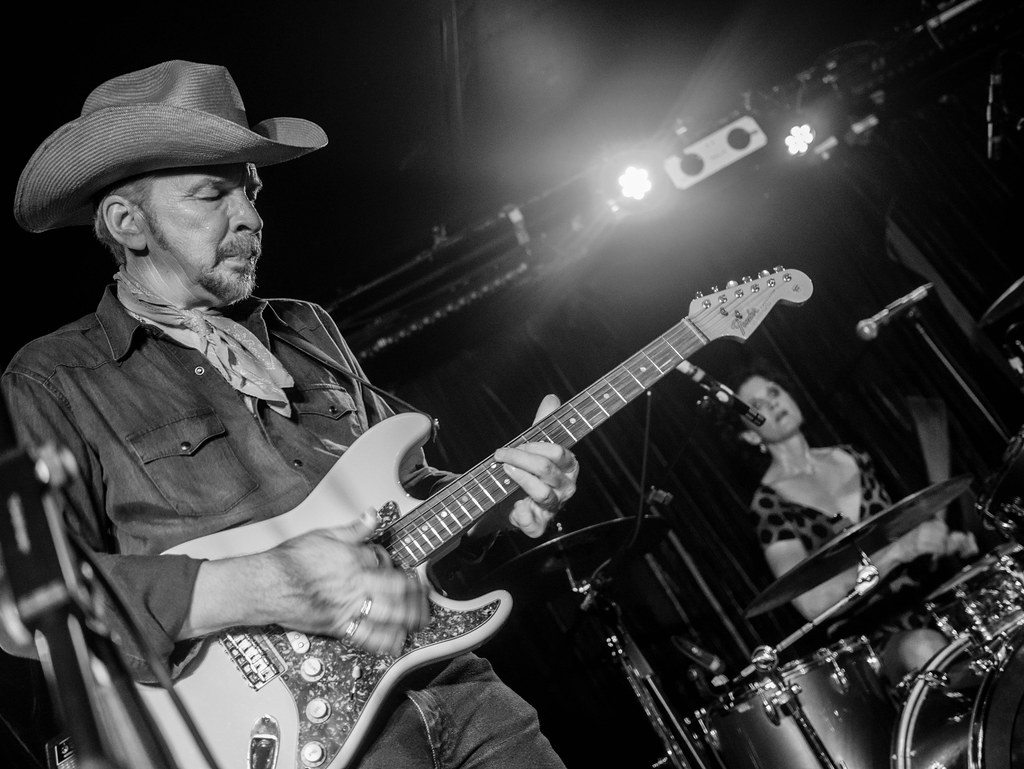
King of California wasn’t Dave Alvin’s first solo album, it was his fourth. But the 1994 release found the ex-Blasters/X guitarist/singer/songwriter unplugging and scaling back his once ferocious electric guitar driven attack to that of a folkie, presenting his name to those who may not have previously known his already extensive career.

It also introduced his deep, baritone voice as an integral aspect in the music. At least some of these changes in approach can be traced to producer/guitarist Greg Leisz who insisted on Alvin recording the basic tracks live in the studio. The result was not only his bestselling disc, but his warmest and most expressive. All good enough reasons to reissue the set (now available for the first time on vinyl) as it hits the 25th anniversary mark. It has also been expanded with one previously unreleased track (the sprightly instrumental “Riverbed Rag”) and two songs that featured Alvin only available on other albums (Merle Haggard’s “Kern River” and “The Cuckoo,” the latter sung with Katy Moffat from her 1999 Alvin producedLoose Diamond), all of which fit perfectly with King of California’s predominantly folkie/troubadour vibe.

Perhaps most impressive is how Alvin reinterprets and strips down songs originally performed by both the Blasters (“Little Honey,” “Barn Burning,” “Bus Station,” “Leaving,” “Every Night About this Time”) and X (“Fourth of July”) in far more visceral arrangements, showcasing lyrics that many hadn’t heard clearly or in quite the same way. His heartrending ballad version of “Border Radio” brings depth and sincerity to the poignant story of a single mother requesting a song that she and her ex-lover “used to know” and, as the DJ says, is “dedicated to a man who’s gone.” It’s a wrenching, affecting performance, arguably Alvin’s finest moment, and a perfect example of how the less-is-more concept of this album paid off. 

Alvin’s gruff, flinty voice wouldn’t seem to work well in a duet with a sweet singing female partner. But his track with Moffat and especially the Tex-Mex “Goodbye Again” featuring Rosie Flores show that is not the case as both women expose Alvin’s tender side. 

The blues that underpin much of Alvin’s music appear in covers of the Delta-styled “East Texas Blues” and a driving shuffle arrangement of Memphis Slim’s “Mother Earth,” the latter with the timeless lyrics “I don’t care how big you are and I don’t care what you’re worth/ When it all comes down you got to go back to mother earth.” 

Even considering the quality of everything that Dave Alvin has released, the stunning and intimate performances on King of California make it his finest hour. It’s a near perfect album and in this remastered/expanded edition, even better than when it was first released a quarter century ago. If you haven’t already been exposed to its subtle yet enticing charms, now’s your chance. 

DAVE ALVIN REVEALS UNRELEASED & REMASTERED TRACKS ON EXPANDED 25TH ANNIVERSARY EDITION OF ‘KING OF CALIFORNIA’ (ALBUM REVIEW)


By Jim Hynes
June 28, 2019
Related image
Dave Alvin’s King of California, first issued in 1994, marked a pivotal point in Alvin’s career.  Known primarily as a rocker from his days with X, The Blasters, and even his own solo material up until this point, the singer-guitarist found himself in an acoustic folk-like setting with multi-instrumentalist Greg Leisz at the helm as producer. He discovered that he could use his deep baritone, albeit limited range, voice well in this setting, especially with Leisz literally and figuratively pushing all the right buttons. Alvin reflects, “It was ironic that a guy who was known as a loud guitar player and questionable singer, his best seller was his acoustic album.” So, to mark the 25th anniversary the album is remastered and issued with three previously unreleased tracks. It’s also being issued on vinyl for the first time.
The album was recorded in Los Angeles the day after the historic 1994 Northridge earthquake. The album was a mix of new songs, covers, and new versions of previous Alvin songs.  The familiarity with tunes like “Fourth of July” and others helped. In fact, songs written and performed during the ‘80s included “Barn Burning” from American Music, “Bus Station,” and “(I Won’t Be) Leaving” from The Blasters Non-Fiction (1983), “Little Honey,” written with John Doe, and feature on the Blasters’Hard Line (1985), and “The Fourth of July” which appeared on both X’s See How We Are (1987) and Alvin’s solo Romeo’s Escape (1987). “Every Night About This Time” also appeared on the latter album. “Border Radio” came from The Blasters debut in 1981.
The title track is a readymade folk ballad, written for his mother, in which an aspiring suitor heads west to make his fortune in the wild, early days of the Golden State. It, like everything else was basically recorded old school style, with the five musicians or so in a circle. Other covers on the album include Tom Russell’s terrific “Blue Wing,” one of the best story songs ever written in this genre; Dallas singer-pianist Whistlin’ Alex Moore’s “West Texas Blues,” retitled “East Texas Blues,” Memphis Slim’s “Mother Earth,” and a George Jones song, “What Am I Worth” rendered as a duet with the inimitable Syd Straw. There’s also a co-write with Rosie Flores, the touching “Goodbye Again.” This album holds up remarkably well and would skyrocket to the top of the roots charts if it were released today. It’s just packed with gems.
To mark its anniversary though, it now includes some new material that was previously never released. “Riverbed Rag” has already been issued as a single and is an instrumental featuring Alvin’s acoustic guitar and Leisz’s awesome dobro. Also here is the best version of “Kern River” this writer has ever heard, Yes, it’s the same one from the Tom Russell- Dave Alvin tribute to Merle Haggard, Tulare Dust. Also included is one of the better songs, “The Cuckoo,”from the Alvin-produced Katy Moffatt album Loose Diamond.
From here Alvin went on to record several other highly acclaimed acoustic albums like Blackjack David, Public Domain, West of the West as well as many others with his various “Guilty” bands that blended both acoustic and electric. To say this marked a turning point for Alvin is a vast understatement. In effect, it rebooted his solo career.

Saturday, May 18, 2019

‘It was just perfect’: Southside Johnny on his glory days with Springsteen and Miami Steve in Asbury Park


By Dan DeLuca
https://www.philly.com/entertainment/music/southside-johnny-asbury-jukes-parx-tour-philadelphia-20190509.html
May 9, 2019

Related image

When New Jersey’s Asbury Park music scene rose up in the 1970s, there were three bright lights on its rock-and-soul triangle.

Bruce Springsteen was the breakout star. Steve Van Zandt was the songwriter-producer and Springsteen sidekick and consigliere who would go on to The Sopranos and Underground Garage satellite radio notoriety. And Southside Johnny Lyon was the blues and R&B vocalist and bandleader who could outsing both of them.

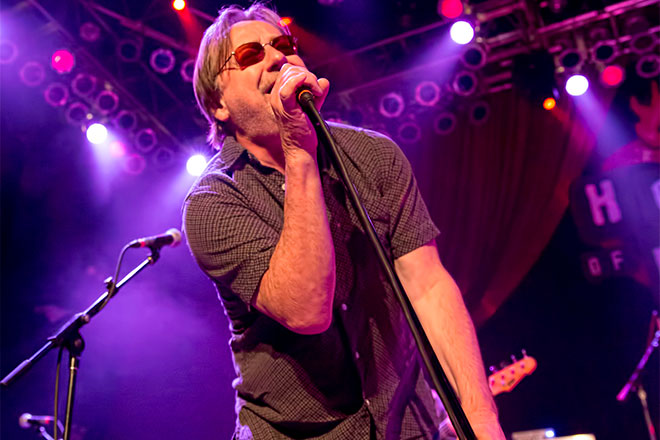
Starting with I Don’t Want to Go Home in 1976, Southside Johnny & the Asbury Jukes released three classic Van Zandt-produced albums that epitomized the Jersey Shore sound. He’s carried on as a hardworking road warrior for decades since, recording with an ever-evolving Jukes lineup, most recently on the 2015 return to form, Soultime!

Lyon is a key figure in Asbury Park: Riot, Redemption, Rock ‘N Roll, director Tom Jones‘ documentary about the rise, fall, and revival of the central Jersey boardwalk town showing in theaters May 22 and 29.

This week, the 70-year-old singer spoke on the phone from his hometown of Ocean Grove, N.J. He’ll be in Philadelphia with the Jukes at SugarHouse Casino on Saturday

The Jukes were house band at the Stone Pony in the 1970s. But there’s a lot in the Asbury Park movie about the Upstage Club, the after-hours venue that opened in 1968. Why was that place important?

That was our college. It was open from 8 till 5 o’clock in the morning. There was no alcohol, so teenagers could get in. It was two floors above a Thom McAn shoe store.

That’s where I met Bruce and Steve. I already knew Garry Tallent and Vini Lopez. … If they needed a singer — and this was in the guitar-hero era, two verses and then 20 minutes of a guitar solo — I became the singer. So I had to learn all these songs. It was a great education for all of us.

How’d you become a singer?

My parents loved music. Real music … Louis Armstrong and the Hot Fives, the Hot Sevens. T-Bone Walker, Big Joe Turner. This was not the kind of music that other people listened to, but I didn’t know that. I thought this is what people do.

They come home from work, have a couple of beers, and put on [Wynonie Harris’] “Don’t Roll Those Bloodshot Eyes at Me.”

Ocean Grove was a very quiet place. Mostly retired people. Sundays there were no cars allowed on the street. I would hear songs like Louis Armstrong “Struttin’ With Some Barbecue” and it felt like there was life somewhere. We were young and we wanted adventure and there was this music that promised that.

I detested school. My mother worked, and would say it was OK to stay home as long as I cleaned the house. So I would vacuum and make the beds and play their records and sing along with them.

Image result for southside johnny 2019
Southside Johnny with Little Steven in Amsterdam (SouthsideJohnny.com)


Shore towns can be cultural wastelands. Why was Asbury different?

The Beatles and the Stones and the Animals — those kind of successful garage bands — it gave us the impetus to try it. To dream a dream of making music. And then there were girls that would look at us, for once.

We never made any money. We were all scuffling. You somehow scrounged your way through and if you weren’t starving to death you got to play on Friday and Saturday night.

Was it a legitimately special place and time?

I think we knew it at the time. I’m not a nostalgist. I don’t look back that much, but when I do I think: How lucky can anybody be?

Bruce, we all thought was really going to be something, though we didn’t expect him to get as huge as he got. But he started to have success after his third album, and we all got the chance to put our foot in the door too. And we were tenacious about it. I wasn’t going back to working at the post office.

So it was a confluence of things. The Upstage Club. The fact that young people were starting to make their own music and there was audience for that. And we were lucky to find each other.

With the African American community on the west side of town, there was a strong black music influence on the scene.

That’s right. I remember going over to the Orchid Lounge and listening to B.B. King play his guitar through the cracked window. And Garry wound up playing with Little Melvin & the Invaders. That was an all-black band that had Clarence Clemons, and there’s this little skinny white kid Garry Tallent playing bass.

There was a place called Piner’s Lounge and Steven and I would go there and Bruce would come and we’d watch Garry play. We weren’t old enough to drink, but because we knew Garry we could get in. We’d eat fried chicken and listen to the band.

You had the great good fortune of Bruce and Steve writing songs like “Hearts of Stone” and “The Fever” and “This Time It’s for Real” for you.

They were’t really written for me. “I Don’t Want to Go Home” might have been. That was really a Drifters thing. I lived with Steven and two other guys, and we would listen to each other’s records. It was such a great time. ... We reinforced our belief in ourselves. We swapped musical educations. We honed our crafts. It was just perfect.

How many people have been in the Jukes?

Right now, it’s over 130.

That’s crazy.

That’s the nature of this kind of long-lived horn band. I had to replace the horn section when they went out with Diana Ross. One of my sax players went with David Bowie. ... I was always of the mind-set of if you get a better offer for more money, take it.

How do you take care of your voice?

I’ve been very lucky. I have a real iron throat. When people ask me for advice, I say, “Get some rest, drink lots of water, don’t party all night, and certainly don’t do cocaine.”

You learned that through experience? Including the cocaine?

Very much so. I wasn’t a big cocaine person, though. I did it once and went on stage and my voice dried out. It’s the stupidest drug. ... I remember a hair band opening for us, and I looked in the dressing room and there was a big mirror with all this cocaine. That’s got to be $1,000 worth of cocaine and you’re only making $500 a night? Economics is not your strong suit.

Who named you Southside?

That’s in dispute. Bruce Springsteen had visited his parents in California. When he came back to N.J., he was broke and needed to put together a band. That was Dr. Zoom & the Sonic Boom. We had a Monopoly game on stage. We had cheerleaders. Baton twirlers. It was crazy. And every musician had to have a nickname. Steve was Miami Steve, and I became Southside Johnny because of my love of Chicago blues.

Not because you were from Ocean Grove, south of Asbury Park?

The great blues mecca of Ocean Grove, New Jersey? No.

Friday, March 29, 2019

Creedence Clearwater Revival, Bards of the Working Class


By CASEY CHALK
https://www.theamericanconservative.com/articles/creedence-clearwater-revival-bards-of-the-working-class/
March 29, 2019

Image result for creedence clearwater revival

Fifty years ago, one of the greatest rock bands in history overwhelmed the American music scene. They released three hit albums in a single year. They toured incessantly. They left an indelible mark on rock music. Their songs are still featured on the radio, in commercials, and in movies. And they weren’t British. I write of Creedence Clearwater Revival, who, though they didn’t write “We’re an American Band” (that honor goes to Grand Funk Railroad), exhibited the most important qualities of the quintessential American rock group. Indeed, in many respects, the band, also known as Creedence or CCR, represents the kind of hard-working, blue-collar music that should serve as a soundtrack for main street conservatism.
CCR’s meteoric rise was anything but expected—indeed, it took 10 years for them to enjoy commercial success. Younger Fogerty brother John, Doug Clifford, and Stu Cook met in 1959 while attending high school in El Cerrito, California. They formed a band called The Blue Velvets and began playing with elder Fogerty brother Tom. In 1964, they signed with Fantasy Records, though the group was derailed when John and Doug received draft notices in 1966. The two enlisted in the Reserves to avoid conscription. When they were discharged in 1968, they renamed the band Creedence Clearwater Revival, the “revival” being the members’ commitment to each other and to an older-school type of rock and roll. Their first eponymous album had a couple of minor hits, both covers: “Suzie Q” and “I Put a Spell on You.”
1969 would be the band’s breakout year. CCR’s three albums that year that all went platinum: Bayou Country, Green River, and Willie and the Poor Boys. The albums included such well-known radio staples as “Proud Mary,” “Bad Moon Rising,” “Down on the Corner,” and “Fortunate Son,” the last still a favorite of any film sequence regarding the Vietnam War. There isn’t a weak song on any of these records, all of which offer a distinctly Southern, working-class feel, despite the band’s California origins. CCR toured constantly, hitting the Atlanta Pop Festival in July and Woodstock in August, though they didn’t appear in the popular Woodstock film or soundtrack. In November, they performed on The Ed Sullivan Show.
Their success continued into 1970 with the release of Cosmo’s Factory, a number one record. It featured “Who’ll Stop the Rain,” “Up Around the Bend,” and “Lookin’ Out My Back Door,” among other greats. Pendulum, also released in that year, offered another top 10 hit in “Have You Ever Seen The Rain?” Unfortunately, tensions between the Fogerty brothers reached a tipping point, and Tom departed at the end of 1970. CCR’s final album, Mardi Gras, released in 1972, peaked at number 12, but was a critical failure. A Rolling Stone reviewer called it “the worst album I have ever heard from a major rock band.” In October, the band broke up and never formally reunited. They never will—Tom died in 1990. John Fogerty had success as a solo artist, particularly with the chart-topper Centerfield in 1985.
Much of CCR’s popularity can be attributed to their mastery of short rock-and-rollers with catchy lyrics: “Rollin, rollin’, rollin on a river,” or “It ain’t me, it ain’t me, I ain’t no fortunate son.” More deeply, however, their “roots rock” leaned heavily on the inspiration of Little Richard, Hank Williams, Elvis Presley, and Chuck Berry, updating these influences for a late 1960s and early 1970s audience. This served as an important contrast to the dominant streams of popular rock music of the time. CCR was neither psychedelic nor heavy. There are no paeans to “free love” in their musical corpus. Some of their songs have political overtones (“Fortunate Son,” “Who’ll Stop the Rain”) or the weight of Vietnam (“Run Though the Jungle”), but the lyrics contain no calls for revolution. Rather, one hears about the plights of working joes trying to make it. In “Ramble Tamble,” Fogerty croons:
There’s garbage on the sidewalk,
Highways in the backyard,
     Police on the corner,

Mortgage on the car,
Mortgage on the car.
Move, Down the road, I go.
Other songs mourn going on welfare and getting drafted for Vietnam (“Wrote a Song for Everyone”), working in a chain gang (“Midnight Special”), and government incompetence and corruption (“Who’ll Stop the Rain”). Indeed, one wonders if the hippies who bought so many of CCR’s records were paying close attention to John Fogerty’s lyrics, which sometimes seemed an indictment of a thankless, godless ’60s youth culture. In “Don’t Look now,” he sings:
Who will make the shoes for your feet?
Who will make the clothes that you wear?
Who’ll take the promise that you don’t have to keep?
Don’t look now, it ain’t you or me
Don’t look now, someone’s done your starvin’
Don’t look now, someone’s done your prayin’ too.
Asked about the song, Fogerty lamented, “We’re all so ethnic now, with our long hair and shit. But, when it comes to doing the real crap that civilization needs to keep it going…who’s going to be the garbage collector? None of us will. Most of us will say, ‘That’s beneath me, I ain’t gonna do that job.’”
Perhaps CCR’s spiritual potency can also be attributed to how their music honors particular American places. Songs like “Born on the Bayou” and “Cotton Fields” memorialize Southern life and culture. Even “Lodi,” a song about a man who gets stuck in the small agricultural city in California’s Central Valley, is an acknowledgment of the difficulties and loneliness of small-town life. Americans who appreciate CCR sense that the band’s songs were written for them.
CCR sought to conserve what was best about the original rock-and-roll sound, while directing it at the social and cultural upheaval of their time. The Rock and Roll Hall of Fame describes Creedence as both “progressive and anachronistic…. An unapologetic throwback to the golden era of rock and roll…. Their approach was basic and uncompromising, holding true to the band members’ working-class origins…. Creedence Clearwater Revival became the standard bearers and foremost celebrants of homegrown American music.” In a political climate where technocratic, global elites are contrasted with flyover country deplorables who cling to guns and religion, CCR’s music offers traditionalist Americans a soundtrack for our commitment to preserving a distinctly American way of life. As CCR sings, “keep on chooglin.”
Casey Chalk is a student at the Notre Dame Graduate School of Theology at Christendom College. He covers religion and other issues for TAC.