Showing posts with label Islam and Terrorism. Show all posts

Wednesday, September 11, 2019

Target: New York


Eighteen years after the 9/11 attacks, Islamist extremism doesn’t make much news—but it’s not for lack of trying.


By Judith Miller
https://www.city-journal.org/islamist-terror-threat
September 10, 2019

Image result for 9/11 attack

(Spencer Platt/Getty Images)

Eighteen years after the attacks on the World Trade Center, many Americans believe that the threat of Islamist terror is played out—but that’s only because our counterterrorism efforts have been so successful. Attempted terror attacks no longer make front-page headlines, but the list of foiled plots to kill American citizens is long and chilling. This past summer saw arrests of potential terrorists who would have killed dozens or hundreds of people if successful. On September 3, for example, federal prosecutors in Brooklyn charged Ruslan Maratovich Asainov, also known as Suleiman Al-Amriki, with providing material support to ISIS. Asainov is accused of having been an ISIS sniper and weapons instructor. A naturalized U.S. citizen (he was born in Kazakhstan) who lived in Brooklyn for nearly 15 years, Asainov traveled in late 2013 to Istanbul, a common entry point to Syria. There, he joined ISIS and rose through the ranks to become an “emir” in charge of weapons training. He tried to recruit other Americans to fight for ISIS in Syria. Asainov messaged a government informant, exclaiming in reference to ISIS, “We are the worst terrorist organization in the world that has ever existed!” He still yearned to die on the battlefield for jihad, Asainov told the informant.

Last month, Awais Chudhary was charged with plotting to stab New Yorkers in Queens. A 19-year-old American citizen born in Pakistan and raised in a middle-class neighborhood, Chudhary planned to attack pedestrians on a bridge over the Grand Central Parkway to the Flushing Bay Promenade or at the World’s Fair Marina, both of which he had visited repeatedly to scout where he could kill the most people. He planned to record his attack to inspire others. He intended to use a knife, he told an agent, unless the agent could show him how to bomb a “mini-bridge over a busy road with many cars.” He was arrested en route to retrieve items he had ordered online for the assault—a tactical knife, a mask, gloves, and a cellphone with a chest and head strap to enable him to record his slaughter hands-free. 

Also last month, prosecutors charged two women from Queens with planning to build bombs similar to those used in earlier terrorist attacks. Asia Siddiqui and Noelle Velentzas, both U.S. citizens and Queens residents, pleaded guilty to distributing information about how to make and use explosive devices and weapons of mass destruction. Between 2013 and 2015, the complaint states, they planned to build a bomb themselves, teaching each other chemistry and the electrical skills needed to create and detonate a deadly device. They also explored how to make plastic explosives and assemble a car bomb, bought and stored in their homes materials required for an explosive device—including  propane gas tanks, soldering tools, car-bomb instructions, machetes, and several knives—and discussed similar devices used in past terrorist incidents, including the 2013 Boston Marathon bombing, the 1995 Oklahoma City bombing, and the 1993 World Trade Center attack. They researched potential targets, focusing on law enforcement and military installations. Velentzas favored attacks on government targets. In terrorist attacks, she said, “You go for the head.”

August also saw Azizjon Rakhmatov, a citizen of Uzbekistan and a New Haven resident, plead guilty to conspiring to provide material support to ISIS codefendants Abdurasul Juraboev and Akhror Saidakhmetov, who planned to travel to Syria to fight for the caliphate. Rakhmatov and another codefendant discussed providing their own money and raising more to cover Saidakhmetov’s travel expenses and to buy a weapon for him once he arrived in Syria. The day before Saidakhmetov’s scheduled departure, Rakhmatov transferred $400 into codefendant Akmal Zakirov’s bank account. Saidakhmetov and three accomplices have previously pled guilty to charges of material support for terrorism; all have been sentenced to 15 years’ imprisonment.

In July, officials arrested Delowar Mohammed Hossain at JFK Airport in Queens as he tried to travel to Afghanistan to join the Taliban. The complaint states that Hossain wanted to kill Americans, particularly members of the military stationed overseas. 

In June, Mohamed Rafik Naji, having pled guilty in federal court in Brooklyn in February, was sentenced to 20 years in jail for trying to provide material support to ISIS by distributing its propaganda and messages on social media. By late 2014, Naji was a committed ISIS supporter, and in 2015 he traveled from New York to Yemen to join ISIS. After returning to the U.S., he continued praising ISIS and violent jihad. In July 2016, after the ISIS-inspired truck attack in Nice, France that killed scores of civilians, Naji told an informant that it would be easy to carry out a similar attack in Times Square: “[ISIS] want an operation in Times Square,” he said, “If there is a truck, I mean a garbage truck and one drives it there to Times Square and crushes them . . . Times Square day.” 

Also in June, Ashiqul Alam, an assistant teacher in Queens and part-time IT expert at the Queens public library, was charged with “knowingly receiving two firearms with obliterated serial numbers in Brooklyn” as part of a plan to kill cops and civilians in Times Square. According to NYPD Commissioner James O’Neill, Alam discussed guns, suicide vests, and hand grenades, and surveilled potential targets in New York. Between August 2018 and June of this year, he talked about buying firearms and explosives for an attack and conducted “recon” trips to Times Square, recording the area on his phone. He considered killing cops by using a suicide vest and obtaining AR-15 assault rifles. In April 2019, he had Lasik eye surgery so that he no longer needed glasses. “Let’s say we are in an attack, right, say that my glasses fall off,” he told an undercover cop. “What if I accidentally shoot you? You know what I mean. Imagine what the news channel would call me the ‘Looney Tunes Terrorist’ or the ‘Blind Terrorist.’” He later discussed buying grenades, because a grenade could “take out at least eight people.” 

Most of these Islamist plots have received scant public attention, mainly because they were detected and prevented. John Miller, the NYPD’s deputy commissioner of intelligence and counterterrorism, says that public concern about terrorism is now focused on the surge in domestic right-wing extremists. “Domestic terror blunts the impact of the [jihadi] plots that didn’t happen,” he told me. Miller is complacent about neither threat. Though New York has not suffered a right-wing-inspired mass shooting, hate crimes are up in the city. So is anti-Semitism. And Miller warns that the pace of jihadi plots is accelerating.

According to an NYPD intelligence estimate published last October, nine terrorist plots or attacks targeted New York City between 2001 and 2009. Since 2009, a total of 19 attacks were formulated—11 since ISIS declared a caliphate in 2014. The report notes that 13 of the 14 lone-actor terrorist attacks or plots in New York City have involved “Salafi-jihadist violent extremists.” The study predicts “with high confidence” that both trends—an acceleration in the rate of plots and attacks and the increasing dominance of lone actors inspired, but not directed by, foreign and domestic extremist organizations—“will continue over the next four years.”

“The reason there hasn’t been another 9/11 is not because of luck,” Miller says. Intensive national and international counterterrorism campaigns across three presidential administrations have degraded these groups’ ability to plan and carry out major attacks. At home, Miller added, the absence of successful attacks owed to what he called the “seamless partnership between the NYPD and the FBI.”  

While President Trump has taken credit for having “destroyed” ISIS and its caliphate, once the size of Great Britain, and has often expressed a desire to bring most American troops home, terrorism experts warn that a complete military exit from places like Afghanistan, Iraq, and Syria would be unwise. Just as President Obama’s premature withdrawal of U.S. forces from Iraq in 2011 permitted ISIS to take hold and expand into the vacuum left there, the withdrawal of most U.S. forces from the region would permit the Taliban, al-Qaida, and ISIS to reconstitute and regain their deadly reach. “The Taliban are far from defeated,” David Petraeus, the former commander of U.S. Central Command and a former CIA director, asserted in a recent Wall Street Journal op-ed. A premature withdrawal would risk the “re-establishment of a terrorist sanctuary” in which the Taliban and some 20 other foreign terrorist organizations could reconstitute, train recruits, and carry out terrorism abroad.

“Al Qaeda has seeded a global network that is competing with and complementing ISIS,” said Rohan Gunaratna, a terrorism expert based in Singapore. “Though its core has suffered, many of its leaders are alive,” he argues. “It has not disappeared but entered a new phase of expansion” through affiliates in Africa, the Arabian Peninsula, the Middle East, and South Asia. ISIS, too, the “son of Al Qaeda,” he argues, may have lost territory and endured “command and control infrastructure losses,” but its murderous intent “remains known to its wilayats, networks, groups, and cells.” If either of their current leaders is killed, he warns, the two groups would likely unite and pose what he called “an unprecedented threat.” While the Trump administration has embraced containing China as its highest priority, “the real, ongoing threat to American and its allies remains ideological extremist terrorism,” Gunaratna maintains, calling the war against militant Islamic extremism a “generational” struggle.

Mitch Silber, a former NYPD director of intelligence and analysis, fears that Washington’s war fatigue, Trump’s desire to claim victory, and the lack of a long-term strategy for dealing with America’s Middle East wars endangers the U.S. “Al Qaeda and ISIS leaders and supporters have been killed, captured, and tens of thousands put in camps in Iraq,” he said. “But there is no post-hostilities plan to deal with this Islamist netherworld, those people in the camps. AQ and ISIS could easily regenerate in some form there.”

Failure to appreciate the nature of the militant Islamist threat puts New York, especially, at growing risk. “There is a temporary drop in their capability,” Silber said of the jihadi movement. “But there is no drop in intention among those who want to strike the U.S. And for them, New York will always remain a key target.”

Judith Miller is a City Journal contributing editor and author of The Story: A Reporter’s Journey.


Sunday, June 30, 2019

Christians in Africa: "You have three days to go or you will be killed!"


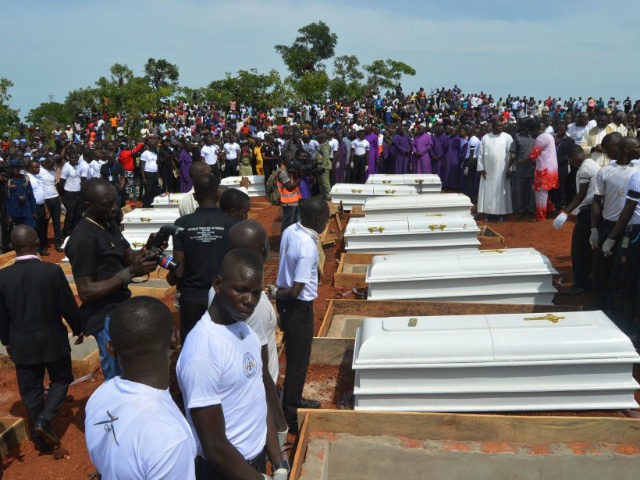
Funeral service in Nigeria (EMMY/IBU/Getty Images)

Persecution of Christians in the Middle East is now close to "genocide", a UK-commissioned report just revealed. The same threat has also become critical for Christian communities in Africa.

Some say it began in Algeria in the 1990s, when 19 monks, bishops, nuns and other Catholics were killed during the civil war. Since then, in Nigeria, Christian faithful have been massacred in their churches; in Kenya, Christians have been killed in universities; in Libya, Christians have been beheaded on beaches; in Yemen, nuns have been assassinated and in Egypt, massive anti-Christian violence is prompting an exodus. It is the new African archipelago of persecution.

Distressingly, these Christians have been finding themselves in the blind spot of the West: they are "too Christian" to get the Left's attention, but too far away for the Right. Africa's Christians are orphans. They have no "allies", John O'Sullivan writes.

Christian families recently fled the city of Diffa, in Niger, after Boko Haram delivered the message: "You have three days to go or you will be killed!". "There is no Christian anymore in this town", someone reported to the non-governmental organization, the Barnabas Fund. The town, Arbinda, is in Burkina Faso. Numbers are telling: 82 pastors, 1,145 Christians and 151 households have fled from violence in the Muslim-majority nation. Just in the last few weeks, several of the Christian faithful and clergy have been murdered. Jihadists killed six Christians in a Catholic church in the town of Dablo. A pastor was murdered in an attack in Silgadji, Catholic parades have been targeted.

Jihadists apparently want to "cleanse" these areas of Christians -- and they are succeeding. "There is an atmosphere of panic in the town," the mayor of Dablo, Ousmane Zongo, said. "People are holed up in their homes, nothing is going on. The shops and stores are closed. It's practically a ghost town".

In Nigeria, attacks on Christians never stop. The country has become a "war zone for Christians".

"The attacks on Christians are growing more flagrant and more aggressive," Father John Bakeni from the Maiduguri Diocese, northern Nigeria, said. "We consider each day we live in safety a blessing because we do not know what will happen the next day".

"We Christians are at risk of extinction and an attempt is being made to Islamize the whole country because controlling Nigeria means expelling Christians from all of West Africa", said Father Joseph Fidelis Bature, a Catholic priest in the Nigerian diocese of Maiduguri, in the Italian monthly Tempi.

Related image
Boko Haram

Unfortunately, we Westerners have a short memory. Al Qaeda's first attacks took place in Africa: the bombings against US embassies in Kenya and Tanzania. Africa matters for the West. That is why we should take this monstrous new anti-Christian persecution more seriously. "Christianity originated in the Middle East", the Egyptian Coptic Pope Tawadros II said in Germany, where he was inaugurating a new Coptic church in May for his exiled community. "Thus, the displacement or evacuation of Christians from the Middle East is very dangerous for the safety of the region, not only in the Middle East but also in the Mediterranean Sea region. Europe is affected by this, and the Arab countries as well". The West should take much more seriously these appeals from the Eastern Christian leaders.

With a secularized Europe and a Middle East close to becoming emptied of Christians, those jihadists who are obsessed with eradicating Christianity understand that their current ideological battlefield is in Africa. "By 2025, 50 percent of the (world's) Christian population will be in Africa and Latin America", wrote the scholar Philip Jenkins. The share of the world's Christians in sub-Saharan Africa is expected grow from 24% in 2010 to 38% by 2050. That is why jihadists there are pursuing a horrific project of religious cleansing.

"Christianity has literally 'gone south', exploding demographically in the developing world and augmenting ongoing sociopolitical turmoil in places such as West Africa", the Pew Forum reports. Radical Islam wants to stop this demographic movement, which Professor Philip Jenkins called "the largest religious change of any kind that has ever occurred".

According to another report, in one century the number of Muslims living in sub-Saharan Africa has increased more than 20-fold, rising from 11 million in 1900 to 234 million in 2010. At the same time, the number of Christians has grown 70-fold, rising from 7 million to 470 million. Sub-Saharan Africa now is home to 21% of all the Christians in the world and 15% of the world's Muslims. "Islamic extremism has two global centers of gravity, one in the Arab Middle East, but the other is in sub-Saharan Africa", researcher Ron Boyd-MacMillan noted in a report for Open Doors.

Every year, Open Doors lists the world's 50 worst persecutors of Christians. The list include 14 African countries, called home to "extreme" or "very high" levels of persecution: Algeria, the Central African Republic, Egypt, Eritrea, Ethiopia, Kenya, Libya, Mali, Mauritania, Morocco, Nigeria, Somalia, Sudan, and Tunisia. Mali, for instance, went from no listing to seventh place in just two years. In Kenya last year, Islamists forced passengers of a bus to present their identification cards. Then they separated Muslims and killed the two Christians.

Regrettably, the tragedy of these massacres of Christians is directly proportional to the neglect with which they are reported in the West. "One of the basic facts of contemporary religious history is that Christians around the world are persecuted on an extraordinary scale", Ross Douthat recently wrote in The New York Times.
"Yet as an era-defining reality rather than an episodic phenomenon this reality is barely visible in the Western media, and rarely called by name and addressed head-on by Western governments and humanitarian institutions. ('Islamophobia' looms large; talk of 'Christophobia' is almost nonexistent.)"
Jihadists know a secret: persecution works. Algeria -- the country of origin of some of the Christian fathers such as Augustine of Hippo -- has become a country that is 99.9% Muslim and where officially there are "no native Christians". How many other countries will meet the same fate? And will the West ever come to the help of their Christian brethren?

Giulio Meotti, Cultural Editor for Il Foglio, is an Italian journalist and author.

Sunday, June 09, 2019

'Break the Cross!' The Jihad on Christianity


BY RAYMOND IBRAHIM
https://pjmedia.com/faith/break-the-cross-the-jihad-on-christianity/
June 6, 2019

Related image

A 37-year-old Muslim migrant in Rome was recently arrested for homicide after he stabbed a Christian man in the throat for wearing a crucifix around his neck. “Religious hate” is cited as an “aggravating factor” in the crime.

To be sure, this is hardly the first “religious hate” crime to occur in the context of the cross in Italy. Among others,
  • A Muslim boy of African origin picked on, insulted, and eventually beat a 12-year-old girl during school because she too was wearing a crucifix.
  • A Muslim migrant invaded an old church in Venice and attacked its large, 300-year-old cross, breaking off one of its arms, while shouting, “All that is in a church is false!”
  • After a crucifix was destroyed in close proximity to a populated mosque, the area’s mayor said concerning the identity of the culprit(s): “Before we put a show of unity with Muslims, let’s have them begin by respecting our civilization and our culture.”
The fact is, Islamic hostility to the cross is an unwavering phenomenon—one that crosses continents and centuries; one that is very much indicative of Islam’s innate hostility to Christianity.

For starters, not only is the cross the quintessential symbol of Christianity—for all denominations, including most forms of otherwise iconoclastic Protestantism—but it symbolizes the fundamental disagreement between Christians and Muslims. As Professor Sidney Griffith explains, “The cross and the icons publicly declared those very points of Christian faith which the Koran, in the Muslim view, explicitly denied: that Christ was the Son of God and that he died on the cross.” Accordingly, “the Christian practice of venerating the cross … often aroused the disdain of Muslims,” so that from the start of the Muslim conquests of Christian lands there was an ongoing “campaign to erase the public symbols of Christianity, especially the previously ubiquitous sign of the cross.”

This “campaign” traces back to the Muslim prophet Muhammad. He reportedly “had such a repugnance to the form of the cross that he broke everything brought into his house with its figure upon it,” wrote one historian (Sword and Scimitar, p. 10). Muhammad also claimed that at the end times Jesus (the Muslim ‘Isa) himself would make it a point to “break the cross.”

Modern day Muslim clerics confirm this. When asked about Islam’s ruling on whether any person—in this case, Christians—is permitted to wear or pray before the cross, Sheikh Abdul Aziz al-Tarifi, a Saudi expert on Islamic law, said, “Under no circumstances is a human permitted to wear the cross” nor “is anyone permitted to pray to the cross.” Why? “Because the prophet—peace and blessings on him—commanded the breaking of it [the cross].”

Islamic history is a reflection of these sentiments. For instance, the aforementioned Sheikh al-Tarifi also explained that if it is too difficult to break the cross—for instance, a large concrete statue—Muslims should at least try to disfigure one of its four arms “so that it no longer resembles a cross.” Historic and numismatic evidence confirms that, after the Umayyad caliphate seized the Byzantine treasury in the late seventh century, it ordered that one or two arms of the cross on the coins be effaced so that the image no longer resembled a crucifix (Sword and Scimitar, p. 54).

Testimonies from the very earliest invasions into Christian Syria and Egypt of Muslims systematically breaking every crucifix they encountered abound. According to Anastasius of Sinai, who lived during the seventh-century Arab conquests, “the demons name the Saracens [Arabs/Muslims] as their companions. And it is with reason. The latter are perhaps even worse than the demons,” for whereas “the demons are frequently much afraid of the mysteries of Christ,” among which he mentions the cross, “these demons of flesh trample all that under their feet, mock it, set fire to it, destroy it” (Sword and Scimitar, p. 27).

Reminiscent of the recent drawing of a cross in fecal matter on a French church in 1147 in Portugal, Muslims displayed “with much derision the symbol of the cross. They spat upon it and wiped the feces from their posteriors with it.” Decades earlier in Jerusalem, Muslims “spat on them [crucifixes] and did not even refrain from urinating on them in the sight of all.” Even that supposedly “magnanimous” sultan, Saladin, commanded “whoever saw that the outside of a church was white, to cover it with black dirt,” and ordered “the removal of every cross from atop the dome of every church in the provinces of Egypt” (Sword and Scimitar, pp. 171, 145, 162).

Lest Muslim hostility to the cross still seem aberrant—limited to some obscure saying of Muhammad or “ancient history”—below is a very partial list of examples of how the crucifix continues to throw even “everyday” Muslims into paroxysms:

Egypt: A young Coptic Christian woman named Mary was mauled to death when her cross identified her as a Christian to Muslim Brotherhood rioters. Similarly, 17-year-old Ayman, a Coptic student, was strangled and beaten to death by his Muslim teacher and fellow students for refusing to obey the teacher’s orders to cover his cross.

Pakistan: When a Muslim man saw Julie Aftab, a Christian woman, wearing a cross around her neck, he attacked her, forced battery acid down her throat, and splashed it on her face—permanently damaging her esophagus, blinding her in one eye, and causing her to lose both eyelids and most of her teeth.

Turkey: A 12-year-old boy in Turkey wearing a silver cross necklace in class was spit on and beaten regularly by Muslim classmates and teachers.

Malaysia: A Christian cemetery was attacked and desecrated in the middle of the night by unknown persons in the Muslim-majority nation. Several crosses were destroyed, including by the use of “a heavy tool to do the damage.” Separately, a Muslim mob rioted against a small Protestant church due to the visible cross atop the building of worship. It was quickly removed.

Maldives: Authorities had to rescue a female Christian teacher after Muslim “parents threatened to tie and drag her off of the island” for “preaching Christianity.” Her crime was to draw a compass—which was mistakenly taken for a cross—as part of a geography lesson in class.

As Islam’s presence continues to grow in Europe, it should come as no surprise that attacks on crosses are also on the rise. Aside from the aforementioned attacks in Italy, the following occurred either in France and Germany, where attacks on churches and crosses have become endemic:
  • A Muslim man committed major acts of vandalism at two churches, including by twisting a massive bronze cross. (Click for images.)
  • Christian crosses and gravestones in a cemetery were damaged and desecrated by a Muslim (see his handiwork).
  • A Muslim man who checked himself into a hospital for treatment went into a sudden frenzy because there were “too many crosses on the wall.” He called the nurse a “bitch” and “fascist” and became physically aggressive.
  • After Muslims were granted their own section at a cemetery, and after being allowed to conduct distinctly Islamic ceremonies, these same Muslims began demanding that Christian symbols and crosses in the cemetery beremoved or covered up during Islamic funerals.
  • A German-language report from notes that in the Alps and in Bavaria alone, some 200 churches have been attacked and many crosses broken: “The perpetrators are often youthful rioters with a migration background.”
In light of the above, it should come as no surprise that groups such as the Islamic State also make hostile references to the cross in their communiqués to the West: “We will conquer your Rome, break your crosses, and enslave your women, by the permission of Allah[.] ... [We will cast] fear into the hearts of the cross-worshipers[.]” The Islamic State even once disseminated a video showing its members smashing crosses in and atop several churches in territories under its sway (since taken down by YouTube); it beheaded and stabbed a man with his own crucifix; and it published pictures of its members destroying Christian crosses and tombstones in cemeteries under its jurisdiction.

Similarly, in post-“Arab Spring” Libya, a video of a Muslim mob attacking a commonwealth cemetery near Benghazi appeared on the internet. As the Muslims kicked down and destroyed headstones with crosses on them, the man videotaping them urged them to “break the cross of the dogs!” while he and others cried “Allahu akbar!” Toward the end of the video, the mob congregated around the huge Cross of Sacrifice, the cemetery’s cenotaph monument, and started to hammer at it, to more cries of “Allahu akbar.” Other Christian cemeteries in Libya have suffered similarly.

In Iraq, pictures emerged from a Christian cemetery that was vandalized by the Islamic State. Broken and scattered crosses appear. In one picture, the jihadis broke into a coffin, snapped off the head of the withered corpse, and threw the crucifixes surrounding it on the ground.

Such is the history and continuity of Islamic hate for the cross—that symbol which represents the heart of the Christian faith, namely the death and resurrection of Christ, two events Islam vehemently denies.

The jihad on the cross began with Muhammad, was carried out by early caliphs, and continues to this day by the jihadis of the world, not to mention the occasional “everyday” Muslim.

Note: For more on the long history of jihad on the Christian cross, see author’s recent book, Sword and Scimitar: Fourteen Centuries of War between Islam and the West.

Sunday, May 12, 2019

Turkey Venerates Its Violent Conquest of Christian Territory with Conversion of Hagia Sophia to a Mosque


May 8, 2019

Related image

It’s official: Turkey plans on converting the Hagia Sophia museum—for centuries, one of Christendom’s grandest basilicas—into a mosque.

Although President ErdoÄŸan often tells Western/secular media that his decision is a sort of tit for tat—now a response to Israel’s treatment of Jerusalem’s Al Aqsa mosque, now a response to European resistance to more Muslim migrants—the true significance behind his desire to transform Hagia Sophia came out in March 31, 2019.

After reporting that “Turkey's president has recited an Islamic prayer in the Hagia Sophia, a historic Istanbul landmark that has become a symbol of interfaith and diplomatic tensions,” AP added that ErdoÄŸan also dedicated his prayer to the “souls of all who left us this work as inheritance, especially Istanbul's conqueror.”


He is not alone in his desire to turn Hagia Sophia into a mosque as a way of venerating its jihadi conquerors; more than 97 percent of Turks surveyed said they want to see Hagia Sophia turned into a mosque, not because there is a dearth of places to pray—as of 2010, there were 3,000 active mosques in Istanbul alone—but to revel in the glory (that is, gory) days of jihad, and honor its practitioners.

To quote Salih Turhan, head of the Anatolian Youth Association, a group that annually organizes mass demonstrations around Hagia Sophia: “As the grandchildren of Mehmet the Conqueror, seeking the re-opening Hagia Sophia as a mosque is our legitimate right.”
In what follows, we revisit exactly what Mehmet (the Turkish pronunciation of “Muhammad”) did to prompt so many modern Turks, including their president, to honor him, including by transforming Hagia Sophia into a mosque. (All quotes in the following narrative are from primary sources, mostly eyewitnesses, and are documented in my recent book, Sword and Scimitar: Fourteen Centuries of War between Islam and the West).

Hagia Sophia—Greek for “Holy Wisdom”—was built around 537 AD in Constantinople, the capital of the Eastern Roman Empire, which for nearly a millennium was a stalwart symbol of defiance against an ever encroaching Islam from the east.

After parrying centuries of jihadi thrusts, Mehmet sacked Constantinople on May 29, 1453, and turned Hagia Sophia into a mosque (until a then secularizing Turkey turned it into a museum in 1935).

Once inside the city, “The enraged Turkish soldiers . . . gave no quarter,” wrote an eyewitness:
When they had massacred and there was no longer any resistance, they were intent on pillage and roamed through the town stealing, disrobing, pillaging, killing, raping, taking captive men, women, children, old men, young men, monks, priests, people of all sorts and conditions…  There were virgins who awoke from troubled sleep to find those brigands standing over them with bloody hands and faces full of abject fury…  [The Turkish jihadis] dragged them, tore them, forced them, dishonored them, raped them at the cross-roads and made them submit to the most terrible outrages… Tender children were brutally snatched from their mothers’ breasts and girls were pitilessly given up to strange and horrible unions, and a thousand other terrible things happened. . .
Because thousands of citizens had fled to and were holed up in Hagia Sophia, it offered an excellent harvest of slaves once its doors were axed down.

“One Turk would look for the captive who seemed the wealthiest, a second would prefer a pretty face among the nuns. . . . Each rapacious Turk was eager to lead his captive to a safe place, and then return to secure a second and a third prize. . . . Then long chains of captives could be seen leaving the church and its shrines, being herded along like cattle or flocks of sheep.”

The slavers sometimes fought each other to the death over “any well-formed girl,” even as many of the latter “preferred to cast themselves into the wells and drown rather than fall into the hands of the Turks.”

Having taken possession of one of Christendom’s greatest and oldest basilicas—nearly a thousand years old at the time of its capture—the invaders “engaged in every kind of vileness within it, making of it a public brothel.” On “its holy altars” they enacted “perversions with our women, virgins, and children,” including “the Grand Duke’s daughter who was quite beautiful.” She was forced to “lie on the great altar of Hagia Sophia with a crucifix under her head and then raped.”

Next “they paraded the [Hagia Sophia’s main] Crucifix in mocking procession through their camp, beating drums before it, crucifying the Christ again with spitting and blasphemies and curses. They placed a Turkish cap . . . upon His head, and jeeringly cried, ‘Behold the god of the Christians!’” They “gouged the eyes from the [embalmed] saints” and dumped their corpses “in the middle of the streets for swine and dogs to trample on . . . and the images of our Lord Jesus Christ and His Saints were burned or hacked to pieces.”

Many other churches in the ancient city suffered the same fate. “The crosses which had been placed on the roofs or the walls of churches were torn down and trampled.” The Eucharist was hurled to the ground; holy icons were stripped of gold, “thrown to the ground and kicked.” Bibles were stripped of their gold or silver illuminations before being burned. “Icons were without exception given to the flames.” Patriarchal vestments were placed on the haunches of dogs; priestly garments were placed on horses.

“Everywhere there was misfortune, everyone was touched by pain” when Sultan Mehmet finally made his grand entry into the city. “There were lamentations and weeping in every house, screaming in the crossroads, and sorrow in all churches; the groaning of grown men and the shrieking of women accompanied looting, enslavement, separation, and rape.”

The sultan rode to Hagia Sophia, dismounted, and went in, “marveling at the sight” of the grand basilica. Like other churches that came under Muslim control—such as John the Baptist’s basilica, now the Great Mosque of Damascus—Hagia Sophia’s lot was not destruction but transformation into a mosque. After having it cleansed of its crosses, statues, and icons—the sultan himself knocked over and trampled on its altar—Mehmet ordered a muezzin to ascend the pulpit and sound “their detestable prayers. Then this son of iniquity [the sultan], this forerunner of Antichrist, mounted upon the Holy Table to utter forth his own prayers,” thereby “turning the Great Church into a heathen shrine for his god and his Mahomet.”

This, then, is what Turkey’s Muslims and president are proud of: the violent conquest of ancient Christian territory, and the atrocity-laden transformation of its greatest cathedral into a mosque; this is what they are eager to honor by turning Hagia Sophia into a mosque again. For make no mistake: if the average Westerner is clueless concerning the history of Hagia Sophia, every Turk is taught it in youth.

Openly idolizing Mehmet and doing what he did in his honor—retransforming Hagia Sophia into a mosque—as ErdoÄŸan has decreed to the joy of many Turks, is tantamount to their saying, “We are proud of our ancestors who slaughtered, beheaded, enslaved and raped people and stole their lands simply because they were Christian infidels.”

Note: For more details on the siege and subsequent rape of Constantinople, see Chapter 7 of Sword and Scimitar.

Tuesday, April 30, 2019

Annihilation of Christian Life and People: Where is the Outrage in the West?


Meeting Catastrophe with Indifference