Showing posts with label Baseball. Show all posts

Tuesday, May 28, 2019

Belatedly appreciated Bill Buckner dead at 69


By 
https://www.bostonherald.com/2019/05/27/belatedly-appreciated-bill-buckner-dies-at-69/
May 27, 2019
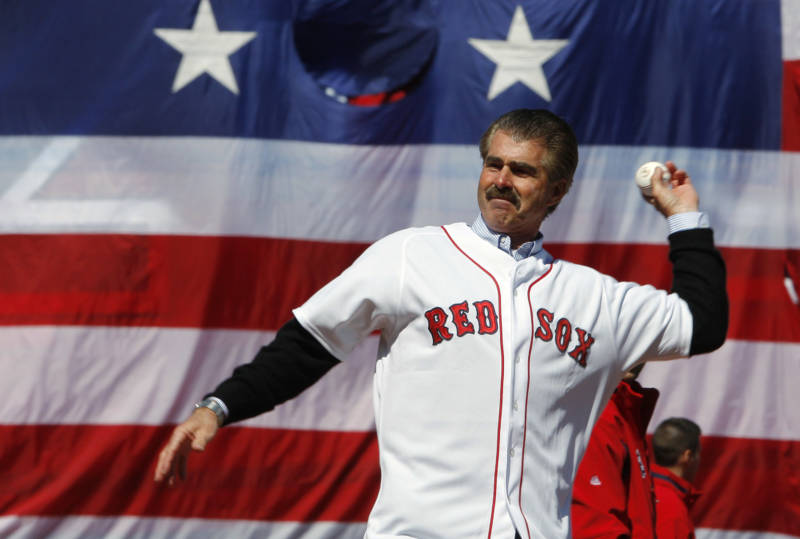
Image result for bill buckner first pitch


Bill Buckner throws out the first pitch at the MLB baseball game on April 8, 2008 at Fenway Park. 
(Brian Snyder/Getty Images)
If not for one play, one lousy play, former Red Sox first baseman Bill Buckner’s death would not have been as big a story, and that would have been just fine with him.

Buckner lost a long battle with Lewy body dementia on Monday. He was 69. His death first was reported by ESPN’s Jeremy Schaap, who received confirmation from Buckner’s wife, Jody.
“Bill fought with courage and grit as he did all things in life,” Jody Buckner said.
Buckner played 22 seasons for five teams in the big leagues, had 2,715 hits, won a National League batting title in 1980, was an NL All-Star in 1981, twice led the NL in doubles and played in the World Series for two teams (1974 Dodgers and ’86 Red Sox).
Those aren’t Hall of Fame numbers. They’re darn good ones, especially being able to maintain his skills for 22 years, but typically they don’t make for huge news. Unfortunately, he became a big baseball name that would echo louder with each passing year as the Red Sox championship drought grew because of one lousy play.
I once spoke to a man in a dugout at Shea Stadium about the 10th-inning groundball that went through Buckner’s legs in Game 6, preventing the Red Sox from clinching the 1986 World Series, which they lost to the Mets in Game 7.
The man was very bitter about the treatment of the play, was tired of talking about it, thought it ridiculous a ballplayer should be remembered for one play. That man’s name was Mookie Wilson, the speedy outfielder who hit the grounder through Buckner’s legs.
Wilson maintained that even if Buckner had fielded the ball cleanly, he would have beat it out for an infield hit. I hadn’t talked to anybody who shared that opinion before interviewing Wilson in the dugout at Shea Stadium and haven’t found anyone since.
Wilson spent 12 seasons in the big leagues and stole 327 bases, so in one respect you can understand how he resents being remembered for one grounder, but that’s not how the world works. Inside and outside of sports, the unusual makes news. Sorry, but a groundball that goes through a first baseman’s legs and alters baseball history in a big way is newsworthy.
All of Scott Norwood’s made field goals and extra points didn’t amount to a murmur compared to the blaring siren of his wide-right against the New York Giants in Super Bowl XXV. The siren grew exponentially louder in each of the next three years when the Bills made it to and lost in the Super Bowl. You don’t like that Norwood is remembered for one lousy kick, but you understand it’s unavoidable.
Similarly, the play that kept the Red Sox from 86-ing the Curse of the Bambino will be the enduring baseball legacy for Buckner and Wilson.
In 2011, Schaap did an “E:60” episode in which Jody shared the reason the family moved from Massachusetts to Boise, Idaho: A parent at their son’s preschool said to the 4-year-old boy, “Your daddy had to quit baseball because he missed the ball.” The Buckners’ son came home and asked, “Daddy, what did he mean?”
Buckner’s postgame reaction to the play came from a far more mature place.
“It’s unfortunate it happened, but that’s baseball,” Buckner told reporters. “All I can say is I never played in the seventh game of the World Series, and I get to play in one now. I hate to say it’s because I missed the groundball, but that’s the way it goes.”
Perfect statement from a player whose job it was to worry about the next play, especially when preparing for Game 7 of the World Series.
For fans still smarting, the Sox’ 2004 world championship healed wounds from the error. Not all wounds created by the reaction to it had yet healed. Buckner didn’t attend the 20th-anniversary celebration of the ’86 Red Sox, but after thinking about it for a month, he did accept the club’s invitation to throw out the first pitch at the home opener in 2008 as part of a celebration for winning the 2007 World Series.
Buckner received and appreciated a four-minute ovation. But a sign that read, “You’re forgiven,” was ill-conceived. The only ones who needed to apologize were those who took one error personally. He tried to make the play and didn’t. It happens, and it happened at the worst possible time on the grandest of all stages. Still, next play.
Buckner again felt at home in the area when he managed the Brockton Rox of the independent Can-Am League in 2011.
Image result for bill buckner
Bill Buckner and Mookie Wilson in 2001 (Ron Frehm/AP)
Buckner’s signs of healing from the treatment he received were evident from his good humor in participating in an episode of “Curb Your Enthusiasm,” which ended with Buckner making a running catch of a baby thrown out of a burning building and being carried off on the shoulders of those who witnessed his heroics. Earlier in the show (Season 8, Episode 9), he had failed to catch a baseball with Mookie Wilson’s signature on it and the ball sailed out the window.
As the years passed, Wilson and Buckner made money sitting side by side, signing photographs of the play, which was eerily shadowed in an ESPN interview of Buckner on the field at Fenway Park, 19 days before the error.
“The dreams are that you’re going to have a great series and win, and the nightmares are you’re going to let the winning run score on a grounder through your legs,” Buckner said. “You know, those things happen, you know, and I think a lot of it is just fate.”
Buckner knew all along his error was not worthy of being taken personally. One of the best things about the Red Sox’ 21st-century championship run is that it finally led so many others to learn that lesson.

Friday, March 08, 2019

Tom Seaver Will Always Be the Essential Met


By Michael Powell
https://www.nytimes.com/2019/03/07/sports/tom-seaver-memories.html
March 7, 2019

Image result for tom seaver


A few weeks back I drove across central Florida, that flatland of farms and cattle and sweet-smelling orange groves, in the company of a childhood friend, Peter Kurz, and we talked, as we have been prone to do over many years, about our lifelong obsession with the New York Mets.
We recalled our preadolescent battery at the Soldiers and Sailors Monument on Manhattan’s Upper West Side, my imaginary Tom Seaver tossing fastballs to his imaginary Jerry Grote. We got everyone out of course, Willie Stargell and Roberto Clemente, Frank and Brooks Robinson, too, because that was just the way Tom Terrific rolled.
The 1969 Mets inhabited our consciousness, as happens when the hypnotic beauty of baseball sinks its hook in kids. Those Mets, those world champion guys, have been stepping into mortality’s shadow for years now, Tommie Agee and Donn Clendenon, Ed Charles and Tug McGraw, all gone, so we can not lay claim to shock that another star will now be moving off the stage.
Except that Seaver was the immortal, the forever young, so composed and so fiercely competitive and so analytical about his efforts. Now his family says that at age 74 he suffers from dementia and we will see no more of him in public life. He will tend to his vineyards in Napa as long as he can.

Image result for tom seaver

That is not how I will remember him and maybe that’s the point of his withdrawal. He was a powerful, stocky pitcher from California and he dominated his mound like a tenor astride his stage. He would pull off his cap and run his hand through that thick shock of hair and then ready himself and rear and toss and rear and toss. No need to put a 20-second clock on him; out there on his mound he was pure business and if a batter fiddled around too much he just might sneak a hard fastball under the batter’s chin by way of a reminder to buckle down.

He perfected the drop-and-thrust delivery, dropping so far down as he threw that his measure of a good night was whether his right knee had dirt on it from dragging on the mound. No weight work and iron sleds for him; he ran and he worked out with light weights. And still that fastball crackled.
Magic could happen any night he pitched and so you tried to wheedle your parents into letting you stay up and watch with them on the black-and-white WOR Channel 9 broadcast, or you’d curl up in bed with a transistor radio and listen to Bob Murphy paint the picture for you, of Seaver tossing and tossing.

Data can be a sportswriting crutch although it’s also true that baseball without statistics is like the Bible without words. So in 1969 Seaver went 25-7 with a 2.21 earned run average. He also threw five complete-game shutouts.

I recently took a look at the prevailing, and too little questioned, orthodoxy that starting pitchers should not go more than six or seven innings into a game. By way of making a point, Seaver became my insane outlier. If hitters wanted to get to him, they were well-advised to swing early before Seaver tuned up his curve and that live snake of a fastball. His career E.R.A. in the first inning of a game was 3.75. In the last three innings, his lifetime E.R.A. was 2.75.
And forgive me my statistical drunkenness but peak-performance Tom tilted into absurdity. In 1969, he pitched in the ninth inning 17 times and surrendered not a single run.
Oh yes, in September and October of that year, he went 6-0 with an 0.83 E.R.A. All this courtesy of Baseball-Reference.com.
Seaver like his peers Bob Gibson and Juan Marichal and Jim Palmer grooved on competition. That was never more true than in 1973, when the Mets became the most unlikely team in baseball history to reach the World Series, stumbling into the postseason with a motley record of 82-79. Many Mets had been injured that season, they fell into one ditch after another and yet somehow they dusted themselves off and made it to the Series against the vastly more powerful Oakland As.
That series went a taut seven games and Seaver facing off against Reggie Jackson was alone worth the price of admission. Reggie had led the American League in home runs and runs batted in that year, and Seaver was Seaver, 19-10 with a 2.08 E.R.A. and 250 strikeouts. Reggie strutted to the plate, wiggle-wagging his bat, ready for the struggle. Seaver looked in to Grote for the signs but there really was not much doubt what the call would be.
My mind’s eye recalls Seaver throwing more or less nothing but fastballs, mano a mano. He got Jackson and Jackson got him. Seaver was perhaps not at his best in that Series as he actually lost a game and had a 2.40 E.R.A. He also struck out 18 men in 15 innings.
Image result for tom seaver
This fairy tale ended badly. Seaver wanted more money and the Mets’ board chairman, M. Donald Grant, who was imperious to the point of self-satire, bridled at the help acting up. Goaded by Dick Young, a reactionary columnist for The Daily News, Grant sent Seaver into exile in Cincinnati. If that city by the Ohio River was to be his Elba, he made do well enough, going 14-3 in his first year there.

None of it felt right though. He was the essential Met. He returned in the midst of the Mets’ Dark Ages, 1983, and the team lost 94 games. He was an old man in baseball terms, the vigor had left his fastball, but he still fashioned a reasonable season, with a 3.55 E.R.A. He gave up up just 201 hits in 231 innings.
He moved on, an itinerant starter, and won 16 games at age 40 for the White Sox. A year later he called it quits. He had a Hall of Fame career, one of the best in the history of the game, and his cumulative career earnings in 20 years totaled a hair under $6 million, or roughly what an average relief pitcher makes in today’s game.
Me, I remember trying to mimic that drop-and-thrust motion of his. And I recall riding the No. 7 train to Shea Stadium with my friend Peter. We bought $1.30 tickets and took our seats for a doubleheader: Jerry Koosman in the open, Tom Terrific in the nightcap.
If I could, I’d give him a standing O still.

The Tom Seaver memories to hold on to and break your heart


March 7, 2019

Image result for tom seaver

CLEARWATER, Fla. — The rain was falling in sheets outside Citi Field, there was some lightning in the forecast, but the weather wasn’t about to dampen the mood of the man standing in the middle of the Mets’ Hall of Fame. This was an April night back in 2010, and Tom Seaver was staring at a video compilation of his career as a Met.
“Look at that young man throw a baseball,” he said, cackling, then commenting about the patch of dirt that, as always, appeared on his right knee whenever he was performing at his finest. “Get after it, kid. Get after it.”
Around the room were scores of mementos of the greatest of all Mets careers: his Hickok Belt as the outstanding athlete of 1969; replicas of the three Cy Young Awards he won in 1969, ’73 and ’75; a few team photos of the ’69 Mets and the ’73 Mets. Every time he saw something he stopped, and he shook his head.
When he saw a picture of Gil Hodges, tears formed and his voice choked. “There is the man who put this franchise on the face of this earth,” said the man who himself used to be called “The Franchise,” and who helped Hodges perform that wondrous work.
And then George Thomas Seaver of Fresno, Calif., and Flushing, N.Y., said something that, right now, only breaks your heart.
“Think about me,” he said. “I was blessed with some ability, and with a great right arm. And now, for the rest of my life, I’ll have some of the greatest collection of memories anyone who ever played this game has ever had.”
Yes, that’s a hard one to hear right now, because his family issued a press release on Thursday that said Seaver “has recently been diagnosed with dementia. Tom will continue to work in his beloved vineyard at his California home but has chosen to completely retire from public life.”
No other Met in history is responsible for more memories than Seaver, from his Imperfect Game against the Cubs in the fabled summer of ’69 through all the one-hitters and shutouts (to say nothing of the acre of games he lost 1-0 and 2-1). The day he was traded away in 1977, the franchise stopped breathing for six years.
The day he came back — Opening Day 1983, throwing six dominant innings against the Phillies at Shea — he was welcomed as exiled royalty might have been, the eternal King of Queens, and on that day he said, “This will always be home.” And every time he returned, it was home. Even when they built the new house across the parking lot.
“This is just another kick to the gut,” Art Shamsky said over the telephone Thursday afternoon. “Just another reminder that we’re all a little bit older than we used to be.”
It was in May 2017 that Shamsky and a few of his teammates from the ’69 Mets — Buddy Harrelson, Jerry Koosman, Ron Swoboda — took a trip to Seaver’s home in Calistoga, Calif., and it is that mini-reunion that serves as the spine of Shamsky’s forthcoming book, “After the Miracle.”
Seaver’s friends and old teammates already knew that in recent years Seaver’s short-term memory had been affected. When they landed in California, they reached out to Seaver’s wife, Nancy, to see if Seaver was having a good enough day to greet his old friends.
“He’s been looking forward to it,” she said.
When Seaver was young, he was the brash face and voice of a team that had never known success. On May 21, 1969, he threw a three-hit shutout in Atlanta, and before the press was let in, Seaver — all of 24 years old — warned his teammates the writers would want to celebrate the fact that, at 18-18, the Mets had just visited .500 for the first time ever that late in a season.
“That isn’t what they should be writing,” Seaver told them. “We’re a better team than that.”
For decades his teammates have told that story, and that day at Citi Field in April 2010 Seaver told it himself.
“Nobody could ever accuse me of never having brass — um, of not having courage,” he said. “Thankfully I had teammates that could back up my words.”
And those teammates had a superstar pitcher who won his last 10 decisions of that miracle season, who became the first Hall of Famer in team history, who had their backs every time he smudged his right knee on the pitcher’s mound at Shea. He remains an icon for Mets fans, who for years have rightly bugged and begged ownership to build a statue outside Citi Field to pay Seaver back for all the things he brought them over the years.
Mostly, for the memories.

Monday, February 11, 2019

Frank Robinson wasn't easy to get to know, but he was certainly worth the effort


By Peter Schmuck
https://www.baltimoresun.com/sports/orioles/bs-sp-frank-robinson-was-a-tough-guy-on-the-outside-20190207-story.html
February 8, 2019

Related image


Frank Robinson was one of the toughest players in the history of baseball, but the hard shell you had to break through to get to know him was just a very effective disguise.
I found that out the hard way soon after I was hired by The Sun to take over the Orioles beat in January of 1990. The team was coming off its heart-warming “Why Not?” season and I was excited to get started. I was living in Southern California at the time, so I called Frank at his home in Los Angeles, introduced myself and asked him if I could take him to lunch and get acquainted.
“I don’t want to have lunch with you,” he said brusquely. “Talk to me in Florida.”
And he hung up.

So, imagine how I felt when I finally tiptoed up to him at the Orioles’ minor league facility at Twin Lakes Park in Sarasota a few weeks later. He was sitting in a golf cart watching some of the team’s young prospects and I started to introduce myself.
“I know who you are,” he said in the same tone as before, then motioned for me to get into the cart. Within a few minutes, I knew I was in for a great ride.
“The whole thing was cracking that shell,” said former Orioles public relations director Rick Vaughn, who worked closely with Robinson throughout the 3 ½ seasons that Frank was Orioles manager. “He had that tough exterior and you had to be persistent to get through it, but what was inside was a really great person.
“There was a real big heart in there, but he didn’t always let you see it.”
When Robinson died at 83 on Thursday after battling a long illness, he was already one of baseball’s immortals. He remains among the truly elite players in the history of the sport and was the first African-American manager in both the American and National Leagues.
Though he spent less than a third of his playing career here and his managerial tenure with the Orioles also was relatively short, he will always hold a special place in the sports history of Baltimore and Baltimore always held a special place in his heart.
He spent much more time playing for the Cincinnati Reds, where he broke in as the National League Rookie of the Year in 1956, and made history when he broke the managerial color barrier in Cleveland, but he insisted on entering the National Baseball Hall of Fame as an Oriole when he gained induction in 1982.
“Today is a very sad day because I lost not only my teammate, but also a very dear friend,’’ fellow Orioles legend Brooks Robinson said in a statement released by the Orioles. “I loved Frank and got to know him so much better after we both retired. … As a player, I put Frank in a class with Willie Mays, Hank Aaron, and Mickey Mantle. He was the best player I ever played with.”
Of course, he’s revered around here because he immediately turned a pretty good Orioles team into a great one after he arrived in Baltimore for the 1966 season. He won his second MVP award that year and led the O’s to their first World Series championship. During his six seasons hammering baseballs all over Memorial Stadium, the Orioles reached the World Series four times. They’ve been back only two times since.
“He brought a new attitude to the Orioles,” Boog Powell said. “Guys would be standing around before a game, talking to players on the other team. Frank said, ‘Cut that crap out — they’re not your friends until we’re done.’ ”
Robinson made many long-standing friendships during those years, so he felt right at home when he returned to Baltimore during the 1980s to coach, manage and serve as front office executive. He is the only former player ever to serve in all those post-playing roles for the Orioles.
“He was like a brother to me,” said teammate Don Buford, who had stayed in close contact during Robinson’s long illness. “I saw him a week ago. He didn’t complain, just took it one day at a time. Frank was a strong-charactered individual and was prepared for [death]. In life, he gave back to his fellow man in every way that he could — a trailblazer in his own right.”
Image result for frank robinson statue baltimore
Frank Robinson statue at Camden Yards
He was a fierce competitor who tolerated nothing less from the players he coached and managed, which might explain how an Orioles team that lost 107 games in 1988 reached the final weekend of the 1989 season still in contention for a playoff berth.
Why not, indeed. Robinson had to stare down the racism that confronted all of the African-American players of his day. He even faced resistance in Baltimore when he tried to buy a home here during the turbulent civil rights era.
Still, he enjoyed a long love affair with Baltimore and you didn’t have to crack through that hard shell to figure that out.
He also had a sharp sense of humor that became obvious during his time way back when he was the chief judge of the famous Orioles “Kangaroo Court.” Decades later, he clearly enjoyed calling me only by my last name and I could tell by his intonation whether he approved of one of my questions or had an issue with one of my game stories.
Still, I never had much luck with Frank on the telephone. During his time managing the Montreal Expos, I called the team’s public relations director and asked him to set up a phone interview for me, but didn’t hear back.
I called again and the Expos PR guy said that Frank did not want to talk to me, which made no sense to me since I thought I had a very good professional relationship with him. So, I showed up the next time the Expos passed through Philadelphia and asked him why he wouldn’t take my call.
“Because I wanted to see if you’d fly all the way to Canada to talk to me,” he said.
Frank had a very good memory, but I seriously doubt that was a sarcastic reference to our first phone call 14 years earlier.
Wish I could call him and ask.
Read more from columnist Peter Schmuck on his blog, "The Schmuck Stops Here," at baltimoresun.com/schmuckblog.

Frank Robinson knew how to seize the moment and never gave up the fight


By Paul Hoynes
https://www.cleveland.com/tribe/2019/02/frank-robinson-knew-how-to-seize-the-moment-and-never-gave-up-the-fight.html
February 7, 2019

Image result for frank robinson statue cleveland
Former Cleveland Indians manager and player Frank Robinson stands with his new statue commemorating his career. (Jason Miller/Getty Images)

CLEVELAND, Ohio – When Frank Robinson was 81, the Indians unveiled a statue of him at Heritage Park behind the center field wall at Progressive Field. It was located in the middle of the team’s Hall of Fame with Robinson holding a lineup card as the first African American to manage a major league team.
The date was May 27, 2017. Robinson, an MVP in both leagues who played like a clenched fist, had mellowed with age. He was thin and his hair was white, but the embers inside were still smoldering.
Manager Terry Francona, his coaching staff and players, were seated behind him for the unveiling. Robinson, a Hall of Famer, thanked Francona and his players. “I’m sure you guys would rather be sitting in the air conditioning in the locker room getting ready for your game,” he said.
He spoke about what the statue meant to him and his days in Cleveland. Mostly he talked about how baseball still needed to do a better job of bringing people of color into management, coaching and front office positions.
Robinson, who had spent his life in the game as a player, manager, and an MLB executive, was still trying to clear the way for others.
“There are people out there in the minor leagues and at the big-league level as coaches, and they have earned their way up,” said Robinson. “But they just don’t seem to be able to break that barrier as often. All I can tell them – don’t give up. Do not give up. If you want to manage one day in the big leagues, continue to do it. Continue to do it.”
Of all the things that were said by and about Robinson that day, that is the what I remember the most. Robinson, who died on Thursday at 83, was still fighting the fight for equality long after Jackie Robinson and Larry Doby broke baseball’s color barrier.
“That was a passion of his and he fought for it until the day he died,” said Indians announcer Rick Manning, who played center field for Robinson’s Indians. “It was a passion because he experienced (racism and prejudice) as a player when he came up.”
The Indians formally announced the hiring of Robinson as player-manager on Oct. 3, 1974. Ken Aspromonte, who managed the team the three previous seasons, was fired the day before.
The late Plain Dealer baseball writer Russell Schneider, in his history of the team, quoted then Commissioner Bowie Kuhn as saying, “Now that it has happened, I’m not going to get up and shout that this is something for baseball to be exceptionally proud of, because it is so long overdue.”
Schneider credited Ted Bonda, Indians CEO, and GM Phil Seghi for hiring Robinson.
“He managed like he played,” said Manning. “He was a hardnosed player and a great player. I watched him growing up on TV playing with Baltimore and Cincinnati. I idolized the guy. When they called me up in May, he told me I was there to play. I was just thrilled to be in the big leagues.”
In those days the Indians would play an exhibition game against their Class AAA team during the regular season. The top minor league club was in Toledo. Bullet Bob Reynolds, who had failed to make the Tribe out of spring training, was pitching for Toledo in 1975. He apparently was upset with Robinson and threw a pitch over his head.
Robinson popped out and after that went to the mound and knocked out Reynolds. The next day the Indians players hung a pair of boxing gloves on the manager’s door at the Municipal Stadium.
“I’m up in there for the first time and watching this stuff go on and thinking, ‘Holy smokes, is this what the big leagues is like? There’s something new every day,’” said Manning.
Manning wasn’t kidding.
In Robinson’s first at-bat as player-manager, against the Yankees on opening day, he homered. It was one of nine homers he hit that year and one of 586 during his career.
Robinson was a 14-time All-Star, a Triple Crown winner, Rookie of the Year, World Series MVP, batting champion, the judge in Baltimore’s famous Kangaroo Kourt, manager of the year, a Gold Glove winner and a man who knew how to seize the moment and never give up the fight.

Remembering Frank Robinson, as a player and man


By Bruce Jenkins
https://www.sfchronicle.com/giants/jenkins/article/Remembering-Frank-Robinson-as-a-player-and-man-13598576.php
February 7, 2019

Related image

Everything about Frank Robinson was distinctive. His batting stance, his home run trot, even the way he stepped into a batter’s box as if he owned it, grabbing a handful of dirt and rubbing it vigorously between his hands.
So many things came to mind when we learned of Robinson’s passing Thursday morning, at the age of 83. It was an immeasurable loss for baseball, Robinson having ably served as a player, manager and executive. As always, with the great ones, mourning comes joined by celebration — and in Robinson’s case, more than a little nostalgia.
Robinson grew up in the thriving 1950s atmosphere of East Bay sports, joining Willie Stargell, Joe Morgan, Curt Flood and Vada Pinson among the African American players who either grew up in Oakland or frequented its ball fields. Robinson had some basketball talent, as well — he was briefly a teammate of Bill Russell’s at McClymonds High School — but in those days, baseball marked a clear path to prominence among the major sports.
The expression “born ready” fit Robinson like a glove. At a time when tactics of intimidation were common, pitchers were appalled to see the Reds’ 20-year-old rookie standing so close to the plate, daring them to challenge him inside. He was hit by a pitch 20 times that ’56 season, leading the league. But he understood the breadth of his talent and where it would take him. He was smart, fearless and aggressive on the bases, someone to fear as he bore down on infielders to break up a double play. (And he would lead his league in hit-by-pitch six more times.)
The steroid era took a dreadful toll on home run records. The all-time career list includes some names and numbers that, in the eyes of many, cannot be fully trusted. It’s a bit more heartwarming to recall those vintage years when Robinson’s 586 lifetime homers ranked him fourth — behind Aaron, Babe Ruth and Mays.
Over the years, Robinson won two MVP awards — one in each league — and in 1966, the season after the Reds’ lamentable trade with Baltimore (for Milt Pappas, Jack Baldschun and Dick Simpson), Robinson won the Triple Crown. To me, though, his best year was 1962: .342 average, 39 homers, 136 RBIs and just two errors in the outfield, while leading the league with 51 doubles, 134 runs scored, .421 on-base percentage, .624 slugging percentage and 1.045 OPS — without missing a single game. That’s true mastery of the art.
The 1966 World Series is generally remembered for Baltimore’s pitching — consecutive shutouts by Jim Palmer, Dave McNally and Wally Bunker to close out the Orioles’ four-game sweep of the Dodgers — but Robinson was the heart and soul of that Series. He set an immediate tone with a first-inning homer off Don Drysdale in the opener, tripled to right-center off Sandy Koufax and scored a run in Game 2, then homered off Drysdale’s wicked, sidewinding fastball again — a 410-foot shot to left — for the Orioles’ only run in Game 4.
As much as the 1971 Series belonged to the Pirates’ Roberto Clemente, Robinson will be remembered for getting the Orioles to the brink. In the bottom of the 10th inning of Game 6 in Baltimore, he drew a one-out walk from Bob Miller, then boldly took third on Merv Rettenmund’s single to center, barely ahead of a strong throw from Vic Davalillo.
Brooks Robinson followed with a flyball to shallow center, and again Robinson bucked the odds, racing home to score the winning run as another bullet throw took a high hop, enabling Robinson to slide under the tag of catcher Manny Sanguillen. Such brilliance: Robinson was 36 years old, deciding a World Series game in the manner of a young Rickey Henderson.
There couldn’t have been a better choice to become the major leagues’ first African American manager than Robinson, with the 1975 Cleveland Indians. Was he ready? He’d soon find out, with a wildly eclectic cast of characters. There was star power — Gaylord Perry, Buddy Bell, Dennis Eckersley, Boog Powell and the young Duane Kuiper — but also a heavy dose of craziness with Oscar Gamble, Rico Carty, John Lowenstein, Fritz Peterson (as a member of the Yankees, he and fellow pitcher Mike Kekich legally swapped wives) and Rick Manning, who had an affair with Eckersley’s wife, Denise, in 1978 and later married her.
Robinson still considered himself an athlete and took that job as a player-manager. On the morning of Opening Day, he was pulled aside by Indians general manager Phil Seghi, who told him, “Why don’t you hit a homer the first time you go to the plate?”
“You’ve got to be kidding!” Robinson recalled saying. But that’s exactly what he did, ripping a 2-2 fastball from the Yankees’ Doc Medich over the left-field wall for a first-inning homer, thrilling a crowd of 56,715 at Cleveland Municipal Stadium.
Robinson was managing the Giants, in 1983, when I had my first consistent contact with him. The Chronicle had switched me from the A’s beat to the Giants in midseason, and talk about a contrast in the manager’s office: I went from mild-mannered Steve Boros, who didn’t seem to ever get upset about anything, to the gruff, no-nonsense Robinson, who had a habit of sizing you up, humbling you with a few incisive comments and then writing you off unless you stood up for yourself.
I can’t remember exactly when I crossed that line, or how, but it became a distinct privilege to talk baseball with Robinson, sometimes off the record, throwing the occasional barb his way and enjoying his honest response. I’d run into him occasionally after he left the Giants, and our relationship remained pure, invaluable, usually with a bit of laughter involved. That’s how I’ll remember one of the most distinguished men ever to grace the game.
Bruce Jenkins is a San Francisco Chronicle columnist. Email: bjenkins@sfchronicle.com Twitter: @Bruce_Jenkins1

The Frank Robinson I knew: The proudest, orneriest, most competitive man in baseball


By Thomas Boswell
https://www.washingtonpost.com/sports/nationals/the-frank-robinson-i-knew-the-proudest-orneriest-most-competitive-man-in-baseball/2019/02/07/83d6c464-2305-11e9-81fd-b7b05d5bed90_story.html?utm_term=.b7e700d4b5ea
February 7, 2019

Related image
(Tony Triolo)
For several days, the death of Frank Robinson had been expected. Editors called reporters to prepare appreciations. But Frank, no respecter of deadlines or demise, didn’t depart on schedule. Some of us who covered him for years enjoyed the thought of Death trying to cope with Frank.
Robinson was the proudest, orneriest, most competitive man in baseball from his arrival in 1956 — as a rookie who hit 38 homers at age 20 — until 2006, when, in his 16th year as a manager, his old fierce eyes still made his Nats players seem tame.
“You know you can’t beat me,” the Grim Reaper says. Frank, silent, just glares and digs in. Robinson didn’t just crowd the plate; he crowded life.
On Thursday, Robinson died at 83. Many will recall his Triple Crown season leading the Baltimore Orioles to a World Series title in 1966. Others will find the most lasting value in his dignified barrier-breaking work as the first African American manager in 1975 with Cleveland and then as manager of the year back with the Orioles in 1989.
Washington fans will remember Robinson’s fiery leadership of the 2005 Nationals, D.C.’s first team after a 33-year wait. They were supposed to be awful. Robinson refused to allow it. They were in first place at the all-star break and in contention in September and weren’t losers — they finished 81-81. Once, Robinson, almost 70, pushed through a melee trying to punch tough-guy Angels manager Mike Scioscia. With big fists and an upper body that recalled a ­541-foot homer he hit out of Memorial Stadium, Robinson truly wanted a piece of Scioscia.
But Robinson had other sides beyond the need to intimidate opponents or drive teammates to their competitive limits or respond to any challenge with flashing eyes; a smart, quick tongue; and, if necessary, his fists.
In 1988, after the Orioles started the season 0-6, Robinson replaced Cal Ripken Sr. as manager. When their record reached 0-20, the whole sports nation watched, aghast and empathetic. Long before the 21st game, Frank sat alone in his office. I handed him a lapel button that read, “It’s Been Lovely, but I Have to Scream Now.”
He burst out laughing. And put the button in his top drawer.
A few years earlier, Frank and I had broken the ice when he was a coach on Earl Weaver’s staff. One day, I wrote that the Nos. 1-3 hitters in the Orioles’ order should all be benched.
“Firemen go into burning buildings for $10,000 a year,” I said. “For $1 million, Fred Lynn won’t pinch-hit with the bases loaded in Yankee Stadium if he has a cold.”
The next day, Lynn stopped talking to the media but also immediately got red-hot and won the American League player of the week award. A few days later, Robinson said, “Could you rip Freddie again next week?”
These days, the notion that a manager can lead a team, and add to its win total, through the force of a scary-intense personality, through anger as well as inspiration, through stop-being-a-dog criticism, is treated as a silly, irrational anachronism. Do they do that in middle-management at Apple?
That’s wrong. I covered two Robinson teams that finished 20 to 30 games better than MLB experts thought they should. There were many reasons, but none bigger than Frank’s back-of-the-plane to top-step-of-the-dugout leadership.
The 1988 Orioles started 0-21 and ended 54-107. But they improved the next season by 32 ½ games and missed the postseason only on the last weekend of the season. They were a six-month national story. At that time, just two teams had ever improved by more games: the 1903 Giants and the 1946 Red Sox (who warrant an asterisk because they got Ted Williams and other stars back from World War II).
Baltimore kept Robinson in charge while subtracting unhappy talent, such as Eddie Murray, and adding kids or nobodies who were happy to be in the show. The Orioles added no top players. I predicted they might lose 121 games. They won 87.
Robinson’s leadership — nobody can define it or measure it, which is why few currently value it — was essential. He believed in players who, objectively, did not merit it. So they believed in themselves. Some, such as Steve Finley, panned out as stars. Others, such as Curt Schilling — who tried out purple hair, looked like Billy Idol and when called in from the bullpen once said, “So, who’s up?” — weren’t Frank’s guys.
They crashed into walls, stole bases and threw strikes. But most of all, they loved the endless details of the game, studied them, revered them as Robinson did and believed that demanding unfailing fundamentals from one another would win.
Another link between those 1989 Orioles and the 2005 Nats was that most were either young-and-eager or old-and-holdin’-on — so they listened. Which Frank loved.
“I’ve always enjoyed working with young people, reaching them and talking baseball. It’s a pleasure to watch someone get better and better until he’s a bona fide big leaguer,” he said. “All a teacher wants is for them to listen and try.”
The flip side is that Robinson had teams that underperformed because, when it came to modern thinking, he was a defiant, “gut instinct” dinosaur. When his teams were out of the hunt, he lost some interest and held court in his office.
Perhaps the lesson should be: Analytics are great, but leadership is real, too. Ask the military academies whether they believe it’s all just numbers.
Sometimes, when he managed the Nats, we had rambling talks. He despised the PED cheaters who broke the records of him and his friends, especially Hank Aaron, who had faced death threats while chasing Babe Ruth’s homer mark.
Because he could be so cantankerous and didn’t care what you thought, Robinson was exciting to cover. He grasped the concept of an “adversarial relationship” with the press. That didn’t mean he liked it. Once, after I criticized his managing, he made a sweeping gesture of stabbing himself in the back as he passed me. And he wasn’t smiling.
Put all those qualities together, and it may be easier to understand why teammates loved him, foes feared him, umpires and writers respected him but his colleagues in the sometimes-devious world of front-office politics did not.
Robinson and the Nats, for example, ended with a bitter split. The Nats weren’t generous; Frank — shock — didn’t leave quietly. “He’s not a guy who endears himself,” a Nats exec said, missing his own half-compliment.
Frank always evoked strong feelings. As a teen, I detested him. When I watched my Senators play the Orioles in D.C., he hit a three-run homer in the first inning to end the game before it began — every time, it seemed. He was the ferocious five-tool superstar my team never had.
Then, as I grew up, all that flipped. Bill Russell of the Boston Celtics became the first African American coach in any major U.S. pro sport. Eight years later, Robinson, who was Russell’s basketball teammate at McClymonds High in Oakland, broke the managerial color barrier in Major League Baseball. That two close friends could face challenges so similar with such dignity and honesty was impressive. But that they did it so uncompromisingly, never turning away from the firsthand hard truths they had learned about race in America, made them two of my heroes.
For me, Russell and Frank Robinson were the next step after Jackie Robinson. Because he had laid the groundwork, they didn’t have to turn the other cheek. They could be their entire selves — or close to it. Remembering what social progress looked like then is a reminder of why it’s worth battling to keep and extend now.
Frank Robinson always had the severe comportment, the hard eye for enemies, the basic sense of right and wrong of a pioneer. He walked into a room, and others stood up straighter, heads higher. Now, we bow our heads in respect.