Showing posts with label Health. Show all posts

Tuesday, September 17, 2019

A Bad Case of the Vapors


By John Tierney
https://www.city-journal.org/war-on-nicotine-vaping
September 16, 2019

Image result for vaping

The war on nicotine vaping has reached a new level of absurdity. It was bad enough when public health officials, politicians, and the press reacted to the recent outbreak of respiratory illness among vapers of marijuana by failing to warn the public in a clear manner. Instead of explaining the specific danger from vaping a certain kind of THC-infused oil, officials at the Centers for Disease Control and politicians like New York Governor Andrew Cuomo told the public to stop using any kind of electronic cigarette—which is like responding to an outbreak of food poisoning by telling people to stop eating.

But now officials are using the panic they sowed to justify policies that could shorten the lives of millions of Americans. The governors of New York and Michigan have moved immediately to ban the most popular flavors of nicotine e-cigarettes used by adult smokers to quit, and the Trump administration plans to ban them nationwide. “People are dying from vaping,” Trump said, justifying the Food and Drug Administration’s plan, but there is scant evidence that nicotine vaping has contributed to any of the recent deaths or illnesses. The evidence so far clearly points to a problem with marijuana vaping, in particular to an oil derived from Vitamin E that has been added to THC in vaping cartridges sold mainly on the black market.

So why go after nicotine e-cigarettes? It’s true that a small minority of the stricken vapers said they had used nicotine, not THC, but researchers say they may have been loath to admit to illegal activity. Their symptoms don’t seem plausibly related to ordinary nicotine vaping. Nicotine, unlike THC, is water-soluble and can be vaped without the additives used to vaporize THC—like the oil blamed for the recent epidemic. It’s conceivable that some people were harmed by dangerous ingredients that were added to nicotine in liquids that were home-made or purchased on the black market, but that’s no reason to ban commercial e-cigarettes like Juul, which have been used by millions of people without causing respiratory problems. In an article published last month in Expert Review of Respiratory Medicine, a team of Italian, Canadian, and American scientists surveyed the clinical research into e-cigarettes and reported that “no studies reported serious adverse events” or “significant changes in pulmonary functions.”

Their findings jibed with the conclusions by British medical authorities that nicotine itself is no more harmful than caffeine, and that e-cigarettes are at least 95 percent safer than tobacco cigarettes. While the U.S. public-health establishment has been misleading the public—so that a majority of Americans now mistakenly believe that e-cigarettes are as harmful or even more harmful than cigarettes—the Royal Society for Public Health has been urging smokers to switch to vaping, and British hospitals have been promoting e-cigarettes by allowing vape shops to operate on their premises.

The FDA is doing just the opposite with its new policies, which it tried to justify last week by releasing the latest results of the National Youth Tobacco Survey. The survey showed that 27.5 percent of high school students in 2019 had vaped at least once in the previous month, an increase from the previous year’s figure of 20.8 percent. No one wants teenagers to develop a nicotine habit, but vaping it is far safer than smoking, and in any case much of the increase in vaping has nothing to do with nicotine. Many of the students are vaping non-nicotine liquids, notably THC, which has surged in popularity among teenage vapers, especially in states that have legalized marijuana.

Meanwhile, the FDA (and most of the press) ignored the most important result from the new survey: the sharpest one-year decline in teenage smoking ever recorded. The fraction of high school students who’d smoked in the previous month declined by 28 percent, from 8.1 percent of students in 2018 to 5.8 percent in 2019—a historic low reached thanks to the availability of cigarette alternatives. Since e-cigarettes first appeared in 2010, smoking rates among teenagers, young adults, and older adults have fallen much faster than during the pre-vaping years. 

But this remarkable progress against the leading preventable cause of death is now jeopardized by the FDA’s proposal to ban Juul and other companies from selling anything except tobacco-flavored e-cigarettes. Anti-smoking activists claim that flavors like mango and mint are being used to entice teenagers, but it’s already illegal for teenagers to buy any kind of e-cigarette, and these non-tobacco flavors are favored by more than three-quarters of the adult smokers who switch to vaping. In fact, one of the benefits of e-cigarettes is that once smokers become accustomed to getting nicotine from something that tastes better than tobacco, they can become repulsed by the taste of regular cigarettes.

What happens if those other flavors get banned? One consequence would be a black market in flavored liquids—and more risk of unsafe ingredients being added. Another consequence would be an increase in smoking, as Laura Pacek of the Duke School of Medicine and colleagues reported this summer in the journal Substance Use & Misuse, based on a study of 240 young adults who use e-cigarettes as well as tobacco cigarettes. When asked how they would respond to a ban on flavored nicotine e-cigarettes, the young adults said that they would smoke more tobacco cigarettes.

That’s the same conclusion reached by Wall Street, which reacted to the FDA’s new plan by sending tobacco stocks higher. Michael Siegel, a professor at the Boston University School of Public Health who studies tobacco-control policies,says that Wall Street’s reaction “may be the best evidence yet that the FDA’s flavored e-cigarette ban will result in a substantial increase in smoking-related morbidity and mortality.” He calls it a “public-health disaster,” and the numbers back him up. By exploiting the panic they created over a few hundred cases of respiratory illness almost certainly unrelated to nicotine e-cigarettes, the federal government is in effect encouraging smokers to maintain a habit that is responsible for the deaths of 1,300 Americans per day. The U.S. public health establishment remains, more than ever, a hazard to public health.

John Tierney is a contributing editor of City Journal and a contributing science columnist for the New York Times.

Friday, July 05, 2019

How Jared Lorenzen inspired so many, including me


By Tommy Tomlinson
https://www.espn.com/nfl/story/_/id/27121708/tommy-tomlinson-how-jared-lorenzen-inspired-many-including-me
July 4, 2019

Related image
Jared Lorenzen looks to pass against the Dallas Cowboys on September 9, 2007 in Irving, Texas (Matt Slocum/AP)

We never got to be friends, exactly. We were more like soldiers who had fought in the same war. We talked in shorthand. I didn't have to explain eating a box of Girl Scout cookies in one sitting. He didn't have to explain trying to find a pair of pants that fit his waist and his thighs at the same time.
In a lot of the important ways, we had lived each other's lives.
In other ways, we hadn't. Jared Lorenzen had been a star quarterback at Kentucky and won a Super Bowl ring with the New York Giants. I'd had desk jobs my whole life, stringing together words for a living. That's why I was writing about him, instead of the other way around. But when we talked -- and we talked a lot, that spring and summer of 2014 -- I felt like I was talking to a mirror.
I'm just now realizing that we never ate a meal together. That would have been fraught for both of us.
I wanted to write about Jared because I was afraid to write my own story. Jared was known as the biggest quarterback anyone had ever seen; he often played at more than 300 pounds, and by the time I met him, he was somewhere about 400. But he wasn't as big as me. That year, I was closing in on a high of 460, and I had this weird two-sided life: I loved my work and loved my wife and loved my friends, but I often hated myself because I couldn't control my weight and I knew one day it would kill me.
For years, I had been hauling around the idea that I should write about all that -- that I should share the most important story of my life. But I was afraid to reveal the darkest parts of myself. And I was terrified of the damage it might do to the people I loved. So I stuffed all that back inside and kept writing about other people.
Telling Jared's story was a substitute for telling mine.
I went to his office. I went to the radio station where he worked part time. I watched him play Wiffle ball with comedian Jay Mohr. I hung out at the apartment he had just moved into, strewn with boxes and clothes and toys belonging to his two kids. The one thing he had managed to do was hook up the TV. On one of my interview tapes, you can hear golf announcers in the background, calling the British Open.
I talked to his mom and his ex-wife and his old agent and a bunch of his coaches. They all loved him and cared about him. None of them knew how to help him.
I try to keep myself out of stories I write about other people. But as I wrote Jared's story, it became clear I had to put myself in. My struggle was the whole reason I was writing about his. I started the story this way:
Jared Lorenzen and I are in love with the same woman. Her name is Little Debbie, and she makes delicious snack cakes.
The story on Jared ran that August and became one of ESPN's most-read stories that year. I got hundreds of emails and messages from readers who had their own weight issues and saw something in Jared's story that made them want to change. I forwarded a bunch of those emails to Jared. He was hearing from a lot of people too. His story moved so many.
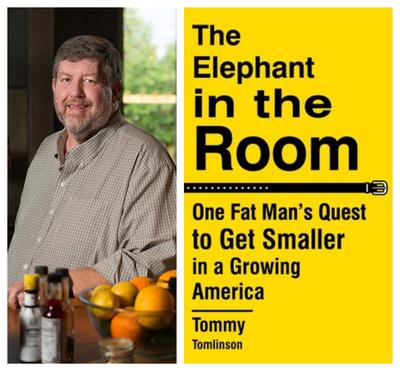
One of the people Jared inspired was me. As I listened to him being so open and honest about his weight, I started to think that my story might be worth telling too. I wrote a book proposal for a memoir, and we found a publisher. That book, "The Elephant in the Room," came out this past January. Since then, I've heard from hundreds of more readers who were motivated to change because of the book or who used it as a way to connect with someone they know with a weight problem.
The book would not exist if not for Jared showing me the way.
I sent him a copy when it came out. We had kept in touch off and on over the years. He didn't say much except that he was doing OK. But every once in a while, I saw photos of him online. As I was getting smaller, he was getting bigger.
Jared died on Wednesday. He had gone into the hospital last week with an infection and heart and kidney issues. I don't know for a fact that they were related to his weight, but it seems likely. He was only 38.
After the story came out, he started a company called Throwboy Tees; one of his nicknames as a player was the Pillsbury Throwboy. He worked on the radio team at Kentucky football games. He always had a business idea or two in his head. But I don't know that he ever found anything with the clarity and purpose that football gave him.
A couple of years after the story, he finally went to the doctor and stepped on a scale for the first time in years. He weighed 560 pounds.
For a while, he did a video series called "The Jared Lorenzen Project" about his fight to get back in shape. When ESPN's show, E:60, did a piece on him last year, he had dropped down to 477. This past February, he was the subject of an online documentary series, also called "The Jared Lorenzen Project." The last clip on the series' Facebook page is from two months ago. He looks tired and stressed.
Jared had told the E:60 crew that he was willing to be the face of obesity, to be the one to stand up and say, "I'm fat," and then to show people what it took to get better. He had a desire to change people with the force of his personality, the way I always hope to change people with my words.
Wednesday night, on Twitter, a reader named Noble Brown told a story about reading my story on Jared. At the time, Noble was about to turn 40 and weighed more than 300 pounds. He read the story and stared at the unopened can of Dr Pepper on his desk. He resolved to never drink it. He started eating better and exercising. Now he lifts weights five times a week, and 5K races are a breeze.
His whole thread reads like poetry, and it ends this way:
As strange as it sounds
In some small way
Jared Lorenzen saved my life
I am deeply saddened to hear of his passing
He was younger than I was when I turned my life around
Perhaps in a few years, he might have done the same
I'm honored and humbled that the story on Jared has made a difference for so many. I wish my words had been strong enough to make the difference for Jared. His courage made so much of a difference for me.

Wednesday, January 30, 2019

America’s Opioid Crime Family


The Sacklers of Purdue Pharma helped create our drug crisis. Now they're finally facing some accountability.


January 30, 2019

Image result for sackler purdue pharma

he devised campaigns that appealed directly to clinicians, placing splashy ads in medical journals and distributing literature to doctors’ offices. Seeing that physicians were most heavily influenced by their own peers, he enlisted prominent ones to endorse his products, and cited scientific studies (which were often underwritten by the pharmaceutical companies themselves).
Arthur Sackler, whose brothers Raymond and Mortimer owned Purdue Pharma, built a vast fortune selling Valium and Librium to treat anxiety. Valium especially became ubiquitous. Between 1969 and 1982, its sales outstripped those of any other prescription drug. In the film Starting Over from 1979, Burt Reynolds collapses while shopping, and, as the critic David Denby wrote, “sympathetic onlookers shower him with Valium, a blessing of bourgeois holy water.”
Many found real benefits to taking Valium. Like most drugs, however, it had the potential to be both healthful and harmful. Valium was liable to encourage dependency, which, combined with its sedative effects, impaired people’s daily lives. David Herzberg, in Happy Pills in America, makes an effective case that the subsequent “Valium Scare” was overheated. Valium was not comparable to heroin or other opioids. There were not thousands dying from “Mother’s Little Helper.” Yet it still had unpleasant effects for many of its users, and, more damagingly, the means by which Arthur Sackler marketed the drug to patients and clinicians set the standards by which future drugs would be promoted. Patrick Radden Keefe writes:
Sackler promoted Valium for such a wide range of uses that, in 1965, a physician writing in the journal Psychosomatics asked, “When do we not use this drug?” One campaign encouraged doctors to prescribe Valium to people with no psychiatric symptoms whatsoever: “For this kind of patient—with no demonstrable pathology—consider the usefulness of Valium.”
Arthur Sackler died in 1987, and eight years later his brothers and his nephew Richard released OxyContin, which they claimed was a miracle painkiller. Its release, Richard Sackler is alleged to have claimed, would be followed by “a blizzard of prescriptions that will bury the competition.” Burying the competition, it seems, was a more powerful motivation than helping their fellow man.
OxyContin was hurried through the process of Food and Drug Administration approval. FDA examiner Curtis Wright, Sam Quinones reports in Dreamland: The True Tale of America’s Opiate Epidemic, was concerned about potential addictive qualities, but approved it nonetheless. Two years later, he was working for the Sacklers.
Richard Sackler had learned from his uncle. He promoted the drug through doctors. “Purdue pursued an ‘aggressive’ campaign to promote the use of opioids in general and OxyContin in particular,” wrote Art Van Dee, MD, in a paper titled “The Promotion and Marketing of OxyContin.” “In 2001 alone, the company spent $200 million in an array of approaches to market and promote OxyContin.” Physicians, pharmacists, and nurses were invited to all-expenses-paid conferences and showered with gifts. Doctors who were less discriminate in their prescriptions were identified and targeted. The drug was marketed not just to people with acute and cancer-related pain but those suffering from conditions where, as Van Dee wrote, “benefits are much less clear.”
Meanwhile, Purdue Pharma minimized the risks of addiction. “Delayed absorption as provided by OxyContin tablets, is believed to reduce the abuse liability of a drug,” claimed the label of OxyContin. There were two problems with that. First, this claim wasn’t based on good science, and second, the “delayed absorption” could be circumvented by crushing the pills, as the Sacklers would have known from their experience with previous drugs.
Doctors began to report that patients were becoming addicted to OxyContin, and Purdue had an answer. Doctor J. David Haddox, who worked with Purdue, had promoted the theory of “pseudoaddiction,” which suggested that what looked like addiction was really untreated pain. This was an excellent excuse to sell more drugs, though a paper from Marion Greene and Andrew Chambers found that it “has not been empirically verified.”
The truth soon began to emerge. In 2007, Purdue pled guilty to misleading the public about the addictive potential of OxyContin. The company, its president, its top lawyer, and its chief medical officer paid $634.5 million in fines. This was an impressive sum, to be sure, though observant readers will note that Purdue spent only three times less than that on marketing OxyContin in a single year, and has made tens of billions of dollars from selling the drug.
This month, a case was brought by the Massachusetts attorney general against Purdue. It alleges that the company wanted to sell OxyContin as an uncontrolled drug and had to be dissuaded by its own creator. Richard Sackler, it is claimed, constantly pushed his employees to increase profits and opposed attempts to regulate the drug more severely. “It’s [like] the Genovese family,” commented Patrick Radden Keefe. This seems unfair. The Genovese family, for all its faults, rarely killed anyone.
It is important to avoid two unhelpful responses. The first and most obvious is to demonize pain medication, without which a lot of people suffering from cancer and traumatic injuries would be in even greater distress. The second is to make Purdue Pharma and the Sacklers the sole villains behind the opioid crisis. Other drugs, like fentanyl and Xanax, have also led to thousands of deaths, and they are not created by Purdue.
In addition, making the Sacklers solely responsible would acquit a system in which doctors are easily exploited, in which regulations are painlessly bypassed, and in which millions of people seek a chemical crutch. It would be foolish to reduce a massive, systematic crisis to the evils of a few bad actors. We must seek the truth and hold Purdue Pharma to account, but we must also ask ourselves how they ended up so successful.
Ben Sixsmith is a British writer living in Poland who has written for Quillette, the Spectator USA, the Catholic Herald, Public Discourse, and Unherd.

Saturday, January 19, 2019

Meet the Tommy Tomlinson you don’t know – the one his loved ones didn’t know, either


By Dannye Romine Powell
https://www.charlotteobserver.com/entertainment/arts-culture/article223587620.html
January 9, 2019

TOMMY_BOOK_01.jpg
Tommy Tomlinson (John D. Simmons/Charlotte Observer)

You think you know somebody.
Then that somebody writes a memoir about the most intimate details of his life.
You realize you didn’t know him. Not really.
Legions of Observer readers believe they know Tommy Tomlinson.
After all, he wrote a prize-winning column for 15 years (1997-2012). He wrote about falling in love with his wife. He wrote about his mom and his sister and growing up in Brunswick, Ga. All sorts of things that revealed the big heart of the man behind the photo.
But you won’t fully know him until you read his debut book, “The Elephant in the Room: One Fat Man’s Quest to Get Smaller in a Growing America.” (Simon & Schuster, $27.)
Here, in prose honest enough to raise blisters on your own skin, Tommy, who now hosts WFAE’s podcast “Southbound,” tells what it was like to grow up fat, and how frustrating it is trying to lose weight.
As he puts it, telling a fat person to lose weight by exercising and eating less is like telling a boxer: Don’t get hit.
“On top of that,” he writes, “some of us fight holes in our souls that a boxcar of donuts couldn’t fill.”
You’ll love Tomlinson’s prose. After all, he’s been a Pulitzer finalist in commentary (in 2005), and his work has made two appearances in “Best American Sports Writing.” He spent a year at Harvard as a Nieman Fellow.
No matter his accomplishments, Tommy, who’s 55, says he’s always “craving an emotional high, the kind that comes from making love, or being in the crowd for great live music, or watching the sun come up over the ocean.”
So this isn’t a diet book. Not exactly. It’s a book about growing up, about struggle, about frustration, and, yes, about coming to terms with yourself, your responsibilities, your life.
“The Elephant in the Room” is a knockout.
Q. New Year’s Eve, 2014: 460 pounds. The hardest words, you say, you ever had to write. Nobody knew that number. Not your wife, Alix Felsing, not your doctor. What did it take to put that number out there?
A. I told myself that if I was going to tell this story, I had to tell it right — I couldn’t hedge. In some ways, that number was the hardest part. It was something nobody knew about me, but I’m sure a lot of people wondered. So I treated it like a big old Band-Aid. I grabbed the edge and took a breath and yanked it off right there at the beginning.
Q. You give many reasons why you fell again and again into the sweet clutches of Little Debbie and Wendy. Loneliness. Shame. That USUCK-FM station that played in your head. Yet you grew up with loving parents in a peaceful home. What first caused the bad feelings that you learned to soothe with food?
A. I don’t know. I was always fat but I’m not sure when I first realized what that meant for me out in the world. The first really strong memory I have of when that made a difference was those relay races I write about in the book. We lined up and raced one another in elementary school, and in that moment it was obvious how fat and slow I was, and how much the other kids mocked me for it.
Click on the link below to read the rest of the article:

‘Elephant In The Room’: Inside Tommy Tomlinson’s Obesity Memoir


Longtime ‘Charlotte Observer’ columnist writes about his struggle with weight — but this isn’t your typical sunny-side-up read


https://www.rollingstone.com/culture/culture-features/elephant-room-tommy-tomlinson-memoir-779176/
January 16, 2019

Image result for tommy tomlinson

A few years ago, I was in Charlotte, North Carolina and a mutual friend suggested I look up Tommy Tomlinson, a longtime Charlotte Observer columnist who was transitioning from the paper to becoming one of America’s best longform sportswriters. Tomlinson proposed lunch at a Greek restaurant not far from my hotel.
Not knowing the city, I arrived about 15 minutes early. The fiftyish Tomlinson was already there, sitting squarely in the middle of a booth. We had a nice lunch, but I felt that Tomlinson, a Falstaffian-sized man with twinkling eyes was going to leave many great stories untold. Even getting out of the booth was an effort, with Tommy breathing heavily after a difficult extraction. It was the middle of the day, but he already looked exhausted.
I left wondering why he had arrived so early. I learned the answer just a few pages into The Elephant In The Room, Tomlinson’s heartbreaking and self-lacerating look at his life as a man who hates himself for tipping the scales at 460 pounds. Turns out that one of the trials of being a man of his size is he has to scout restaurants for seats that will support him. The Elephant In The Room begins with Tomlinson on a rare trip to Manhattan. Between fearing he will crush an old woman on the subway to his dread of a chair collapsing when he meets someone at a diner, he is in a near panic. He must advance the restaurant like a campaign aide working a political campaign.
“I scan the space like a gangster, looking for danger spots,” he writes. “The booths are too small — I can’t squeeze in. The bar stools are bolted to the floor — they’re too close to the bar and my ass would hang off the back. I check the tables, gauging the chairs. Flimsy chairs creak and quake beneath me. These look solid. I spot a table in the corner with just enough room. I sit down slowly — the chair seems OK, yep, it’ll hold me up. For the first time in an hour, I take an untroubled breath.”
This is just another day in the life of an obese man in America, a country where instead of lampooning ex-New Jersey Governor Chris Christie for his microscopic approval ratings we go straight to the fat jokes — even though, as Tomlinson cites, 79 million Americans can now be considered clinically obese.
Tomlinson came to his weight through a combination of genetics and circumstance. His parents came from sharecropping roots where food was consumed greedily when possible, as if storing away for another depression. As times improved, plentiful food became the tangible sign of progress and, as Tomlinson writes, “Everybody in my family was an artist when it came to Southern food.” His family medicated and celebrated in good times and bad with fried chicken and his sister’s patented Christmas peanut-butter log. The only vegetables on the menu were swaddled in butter or cream.
On his own, Tomlinson confesses to spectacularly bad eating with decades of Wendy’s double cheeseburgers replacing Proust’s madelines as memory signposts. As a frequent guilt-ridden partaker in Taco Bell, I was overjoyed when Tomlinson tartly pointed out the reason people eat fast food is not only for cheapness, but because it’s a diabolical combination of processed sugar, salt and fat that launches pleasure chemicals in our brain. Once you’re hooked, it’s as hard to kick as Ray Liotta’s pre-Chantix cigarette addiction
Tomlinson began to reassess his life in 2014 after the death of his 63-year-old sister Brenda, who died because of MSRA infection after years of declining health tied to her body weight. He hates himself for all the things he has not done, from swimming to hiking to skateboarding. (Well, he didn’t miss much with skateboarding). He knows he’s let his wife down in the bedroom by simply not having agility or energy. He writes of never having great dreams, reasoning if he can’t manage this one bit of self-care there is no way he is going to accomplish anything on the big stage.
Still, he tries to understand why a man who wrote columns on deadline for a living and built a stellar career in a dying industry can’t say no to bad food. (One of the ways you know this isn’t your sunny-side-up inspirational memoir is each chapter includes Tomlinson’s weight through 2015 and, for most of the time, he loses next to nothing). He would do ok for a few days, but then he’d be back at the drive-through where the cashier could finish his order just from recognizing his voice.
What could have been a wallow in memoir self-pity is raised to art by Tomlinson’s wit and prose. Yes, he examines the external causes for his weight — family, America’s tyranny of choices and temptations, not to mention the solace it gives him when fat-induced loneliness strikes. But he is hardest on himself, admitting he never met a couch he didn’t like and an exercise he couldn’t despise.
“Every body perseveres in its state of rest . . . unless it is compelled to change,” he writes. “Newton’s first law is also known as the law of inertia. It is the one law I have followed with devotion….The law is meant to describe the physical world. But inertia works just as hard on my mind. My willpower has been an object at rest longer than anything else. It is my weakest muscle.”
After yet another backslide, Tomlinson has a sleepless night and a dialogue with himself. Does he have a death wish? Does he want to check out before his beloved wife so he doesn’t have to relive the agonized grieving he felt after losing his sister? Maybe. But in the end, he settles on a less sympathetic take that plagues men of a certain age whether it is eating, dating women half their age, or being the oldest dude at the kegger: He doesn’t want to become an adult writing “Grown-ups watch what they eat. Grown-ups exercise… Grown-ups are honest with other people and with themselves. The boy inside me says: Fuck that.
Armed with that simple but oft-ignored revelation, Tomlinson moves forward, but it is trench warfare measured in inches, a highlight is being able to fit into a 4XL shirt at Walmart. There’s none of the rhetoric of ridiculous diet ads where a famous man holds out his empty pants implying if you drink this powdered drink you will lose a foot off your waistline.
The greatest asset of The Elephant In The Room is that Tomlinson frames his struggle in a way that makes it universal, whether your downfall is food, an exciting but disastrous life partner, or some other unconquerable temptation. By the end, Tomlinson doesn’t so much defeat his obesity, as battle it to a well-understood draw. Days are won days are lost. For most of us, that’s the best-case scenario.

Friday, January 18, 2019

The Opiate Epidemic Is Coming To A Suburb Near You


By 
http://thefederalist.com/2019/01/18/the-opiate-epidemic-is-coming-to-a-suburb-near-you/
January 18, 2019

Image result for dopesick book


One recent summer morning, I awoke to discover that the house across from ours had been surrounded by a SWAT team in the middle of the night. That’s unusual stuff here in my sleepy southern neighborhood of two-car garages and young couples pushing baby strollers.
The guy who lived there had escaped our notice—by design, I’m sure. Right under our noses, hidden in plain sight, he managed to operate a thriving mail order business selling fentanyl and Xanax. The police hauled him, and the $700,000 in cash he kept on hand, away at 4 a.m.
The opioid epidemic is carefully reaching its tentacles into the very places we search out to protect our children—middle- and upper-class suburbs with good schools. America is losing almost as many young adults each year to opioid overdoses as the total number of deaths from the entire Vietnam War. One doctor wryly noted that if this were a communicable disease with red blotches we’d be flying in helicopters.
One reason this scourge has flown under the radar so long is that for the past 20 years its victims were mostly rural white guys hit hard by the loss of coal-mining and manufacturing jobs. They hail from places that never make the news—places like St. Charles, Virginia and Bristol, Tennessee. In years to come, as the epidemic makes its way into suburbs like my own, these backwoods hamlets may be regarded as the first signs of a crisis in the making, much like San Francisco and New York were the sentinels of an emerging HIV outbreak.

Crying for Help

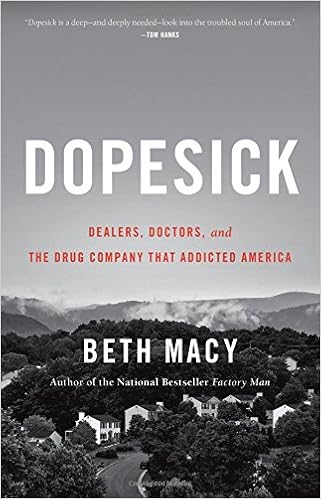
In her new groundbreaking book, Dopesick: Dealers, Doctors, and the Drug Company that Addicted America, Beth Macy chronicles the in-depth story of lives lost and communities impacted in a pills-to-needles progression that begins with a pain-killer called OxyContin. The evidence is damning. What used to be a rural problem few people recognized has become a crisis that is unfolding in well-heeled suburban locations previously considered more immune. Perhaps now the cry for help will be heard.
It’s not like opioid addiction is an entirely new phenomenon in the annals of human history, though, as the author explains. After the Civil War, more than 100,000 impoverished, defeated veterans took “to eating and drinking opium to drown their sorrows.” From eating opium we progressed to taking morphine, far more potent, and then to heroin, which was twice as powerful as morphine.
The train really took off in 1996 when the Food and Drug Administration approved the brainchild of the three brothers from Stamford, Connecticut who created Purdue Pharma. The Sackler brothers, a trio of research psychiatrists, saw the opportunity to market the latest and most powerful form of pain-killing heroin beyond hospice and end-of-life care. Their new pill was called OxyContin. All of a sudden, a prescription for a 14- to 30-day supply of these green or yellow pain-killers could be had, easily, for maladies as common as bronchitis or back pain.
Through data-mining research, Purdue Pharma sent out an army of salesmen into rural communities hardest hit by the downturn in the economy, rewarding those salesmen with huge bonuses and luxury vacations. In rural Virginia, they managed to transform average family doctors into the area’s largest group of OxyContin prescribers.
Even the American Academy of Pain Medicine and the American Pain Society climbed on board, pushing for the expanded use of opioids for chronic pain while they pocketed millions from the companies who made the pills. Small wonder that Americans, though 4 percent of the world’s population, now consume 30 percent of its opioids.

Slippery Slopes

The myth fueling the increase in pain-killer prescriptions was best summarized by Purdue Pharma’s David Haddox as he touted OxyContin for all kinds of chronic pain, claiming “it was safe and reliable, with addiction rates of less than 1 percent.” (Subsequent, unbiased studies put the addiction rate as high as 57 percent). Pain became the “fifth vital sign,” and treating it the compassionate, moral thing to do.
The dominating idea was if you took pain-killers like OxyContin for actual pain, you were immune to addiction worries. Too late,we discovered how naïve we were. As Dr. John Burton, the head of the largest medical provider in western Virginia, said, “I can remember telling my residents, ‘A patient can’t get hooked on a 14-day supply of opioid pills.’ And I was absolutely wrong.” Fully three-quarters of those who end up dead from opioids began this way: with that first pill of OxyContin.
The trek from rural America’s opioid use to teenagers in tony suburbs like John’s Creek, Atlanta or McLean, Virginia is a short one. Those in the know claim that suburbs are where you find the best heroin now. These are the kids with money to spend. If a person is willing to drive to Baltimore or Newark he can get a stash of 50 grams of heroin for $4,000 and earn $60,000 selling to desperate users back home. Heroin is so wildly lucrative that the sheer profitability makes the epidemic much harder to contain.
Most young suburban opioid users are introduced to pills that are traded and passed around like hors d’oeuvres at “pharma parties.” Halfway into Macy’s book, she pleads with the reader to get up, this moment, go to the medicine cabinet, and throw away any old prescription pills left over from surgery. Old stashes of left-over opioids are a common introductory source for teenagers.
The pathway from OxyContin pill use to injecting powdered heroin or crushed up pills is slicker than you can imagine. It’s not so much the search for a new high that keeps users returning for more. Rather, it’s the fear of “dopesickness.” Think of your worst flu days of fever, chills, and diarrhea and add a bucket of anxiety, multiply by two, and you have a picture of being “dopesick.” Most addicts claim fear of this misery is what set their addiction on fire. Sooner than anyone would think, the kid who was just popping a few pills a few months ago finds himself injecting heroin directly into a vein.
Recovery for users, suburban and otherwise, is a long battle, fraught with multiple relapses. Many addiction specialists claim it takes roughly five years of ongoing treatment, and many former users remain on medication-replacement-therapy (MAT) much longer.
The Verdict
The Sackler brothers who began this debacle did meet their day in court. They figured that backwoods lawyers in southwest Virginia would be no match for the big-city firm they chose, headed by good-guy Rudy Giuliani. They figured wrong.
Those hillbilly lawyers brought in 2,000 cardboard boxes of documents and depositions to a Roanoke, Virginia courthouse. In 2007, Purdue Pharma coughed up the eleventh-largest fine paid by a pharmaceutical firm in the Justice Department’s history. Company executives were required to come to Abingdon, Virginia and sit through story after story told by parents who lost their child to a drug overdose.
Yet not until 2016 did the Centers for Disease Control announce voluntary prescribing guidelines, strongly suggesting doctors severely limit the use of opioids for chronic pain. That took ten years of pleading. The demand for Oxycontin continues. Today the Sackler brothers remain in the top 20 of America’s richest families—having slid a bit, though, from 16th to 19th place.
Perhaps the best advice comes from one public health professor on the edge of the coalfields of Virginia, a place where folks say things straight. He says, quite simply, “Don’t mess with this sh-t, not even a little bit.”
Paula Rinehart, LCSW, is a therapist, an elder in a Presbyterian church, and the author of “Sex and the Soul of Woman” (Zondervan Publishing).

Thursday, January 17, 2019

Vaping Is Good, Vaping Works, So Government Is Trying To Kill It


By Derek Hunter
https://townhall.com/columnists/derekhunter/2019/01/17/vaping-is-good-vaping-works-so-government-is-trying-to-kill-it-n2539149
January 17, 2019

Image result for vaping

I used to be a smoker. It was stupid, I know, but I did it for a very long time. I'm not alone, not unique, plenty of people made that same choice I did to take up the nasty habit when we were young and convinced we were invincible. Like tens of millions of Americans, I managed to quit and haven’t looked back. I would still be smoking today if not for the miracle (and it is indeed a miracle) of the e-cigarette. I vaped like a madman...and it was my bridge to a much healthier and happier lifestyle.

To paraphrase one of the greatest modern cinematic scenes: Vaping is good. Vaping works.

You’d think the scolds who lecture everyone about the dangers of smoking would be ecstatic about the dramatic drop in smoking rates in the United States thanks to this technology, but you’d be wrong.  The government always wants more control over people, and more of our money, so anything new, popular and effective always ends up in its regulatory crosshairs. A few decades ago, government geniuses nearly shut down a nascent and thriving company called Microsoft, for crying out loud.

There aren’t many people who, when they get exactly what they wanted for Christmas, complain about what they got for Christmas. That's what our busybody government regulators (often quietly or not-so-quietly fueled by competitors or sectors at risk from the societal benefits brought by the innovators) are like. The sad record shows that these people are more easily manipulated than babies, basically.

For decades, the nanny state has been lecturing smokers about quitting. They went after private property rights of restaurant and bar owners, mandating that they eliminate the rights of adults to engage in a perfectly legal (even subsidized, which huge amounts of our tax dollars going to tobacco farmers) activity in their establishments. As if people went to bars for the health benefits.

After having chased smokers out onto the streets, they’ve started chasing them out of anywhere in public, and even in their own homes in some cases. What they’ve never done is eliminate subsidies to tobacco farmers or simply declared cigarettes to be illegal. They won’t do that, there’s too much money in it for them.

Cigarettes are more and more heavily taxed, which makes them a large and important revenue stream for all levels of government. Banning them means that money dries up. So, while talking about the evils of smoking, they’re benefiting from it, at this point likely more than the behemoth companies that make them.

That’s why, even though these big government advocates are getting their way as smoking rates drop to their lowest levels in history, they have been complaining about what may be the most effective stop-smoking aid to come along ever. And, unlike the war on combustible tobacco products which has been nearly the exclusive purview of liberals, supposed free marketeers in and out of the Trump administration have joined the war on innovation by going after e-cigs.

I quit smoking on my wedding day in 2015. That was it, I was done. But I didn’t go cold turkey. Anyone who’s ever smoked knows how hard that is. So, as I mentioned earlier, I started vaping.

Vaping, for anyone living under a rock for the last couple of years, is a battery-powered device that allows people to inhale vapor mist with nicotine in it (though you can get it without nicotine, or even step down the levels of it incrementally) and doesn’t contain all the tar and other harmful chemicals traditional cigarettes have in them. It’s “healthy smoking,” if you will. It doesn’t smell, which is something you (not to mention those around you) become acutely aware of once you quit, and the exhale is water vapor.

It’s a great tool for anyone looking to quit because, as former smokers know, what to do with your hands while you engage in the activities you did when you were a smoker is why a lot of people go back to the cancer sticks.

Rather than embrace this incredibly helpful stop-smoking option, the same crowd who were hounding people to quit are, armed with some puzzling new allies, starting to treat vaping the exact same way they treated smoking. They’re banning it in places, trying to restrict sales (thereby restricting access), taxing it like crazy, condemning it as just as evil, etc. People who love government don’t actually like it when people quit smoking because it means less money from cigarette taxes. That’s why they’ve never considered making it illegal, they want their taste; they want to wet their beaks.

They won’t take success lying down. And since it’s 2019, and everything is about race to the political left, they’re even whining about who is quitting smoking now.

The LA Times lamented, “Cigarette smoking is at an all-time low in the United States, but the benefits of this public health achievement are not being shared equally by all Americans.” They’re upset at the racial and socioeconomic make-up of those quitting. They write, “people who live in neighborhoods with the highest smoking rates are more likely to be poor, less likely to be white, and more likely to have chronic heart or lung diseases.”

People are quitting, but the wrong people are quitting, laments the left and their media pets. This is the same left that wants to further restrict access to the e-cigarettes that are helping many Americans kick the habit. This is nuts.

Smoking is down across the board, which is something that should be celebrated. They just can’t bring themselves to. They should be embracing anything that helps people break the habit, but they’re demonizing one of the newest and most effective tools to come along in generations, and are actively looking to prevent its use. Like Microsoft a few decades ago, the e-cigarette industry is closer than it probably realizes to being annihilated by the government and the left. Like Microsoft smartly did a few decades ago, they'd better fight like there's no tomorrow.