Showing posts with label Football. Show all posts

Friday, July 05, 2019

How Jared Lorenzen inspired so many, including me


By Tommy Tomlinson
https://www.espn.com/nfl/story/_/id/27121708/tommy-tomlinson-how-jared-lorenzen-inspired-many-including-me
July 4, 2019

Related image
Jared Lorenzen looks to pass against the Dallas Cowboys on September 9, 2007 in Irving, Texas (Matt Slocum/AP)

We never got to be friends, exactly. We were more like soldiers who had fought in the same war. We talked in shorthand. I didn't have to explain eating a box of Girl Scout cookies in one sitting. He didn't have to explain trying to find a pair of pants that fit his waist and his thighs at the same time.
In a lot of the important ways, we had lived each other's lives.
In other ways, we hadn't. Jared Lorenzen had been a star quarterback at Kentucky and won a Super Bowl ring with the New York Giants. I'd had desk jobs my whole life, stringing together words for a living. That's why I was writing about him, instead of the other way around. But when we talked -- and we talked a lot, that spring and summer of 2014 -- I felt like I was talking to a mirror.
I'm just now realizing that we never ate a meal together. That would have been fraught for both of us.
I wanted to write about Jared because I was afraid to write my own story. Jared was known as the biggest quarterback anyone had ever seen; he often played at more than 300 pounds, and by the time I met him, he was somewhere about 400. But he wasn't as big as me. That year, I was closing in on a high of 460, and I had this weird two-sided life: I loved my work and loved my wife and loved my friends, but I often hated myself because I couldn't control my weight and I knew one day it would kill me.
For years, I had been hauling around the idea that I should write about all that -- that I should share the most important story of my life. But I was afraid to reveal the darkest parts of myself. And I was terrified of the damage it might do to the people I loved. So I stuffed all that back inside and kept writing about other people.
Telling Jared's story was a substitute for telling mine.
I went to his office. I went to the radio station where he worked part time. I watched him play Wiffle ball with comedian Jay Mohr. I hung out at the apartment he had just moved into, strewn with boxes and clothes and toys belonging to his two kids. The one thing he had managed to do was hook up the TV. On one of my interview tapes, you can hear golf announcers in the background, calling the British Open.
I talked to his mom and his ex-wife and his old agent and a bunch of his coaches. They all loved him and cared about him. None of them knew how to help him.
I try to keep myself out of stories I write about other people. But as I wrote Jared's story, it became clear I had to put myself in. My struggle was the whole reason I was writing about his. I started the story this way:
Jared Lorenzen and I are in love with the same woman. Her name is Little Debbie, and she makes delicious snack cakes.
The story on Jared ran that August and became one of ESPN's most-read stories that year. I got hundreds of emails and messages from readers who had their own weight issues and saw something in Jared's story that made them want to change. I forwarded a bunch of those emails to Jared. He was hearing from a lot of people too. His story moved so many.
One of the people Jared inspired was me. As I listened to him being so open and honest about his weight, I started to think that my story might be worth telling too. I wrote a book proposal for a memoir, and we found a publisher. That book, "The Elephant in the Room," came out this past January. Since then, I've heard from hundreds of more readers who were motivated to change because of the book or who used it as a way to connect with someone they know with a weight problem.
The book would not exist if not for Jared showing me the way.
I sent him a copy when it came out. We had kept in touch off and on over the years. He didn't say much except that he was doing OK. But every once in a while, I saw photos of him online. As I was getting smaller, he was getting bigger.
Jared died on Wednesday. He had gone into the hospital last week with an infection and heart and kidney issues. I don't know for a fact that they were related to his weight, but it seems likely. He was only 38.
After the story came out, he started a company called Throwboy Tees; one of his nicknames as a player was the Pillsbury Throwboy. He worked on the radio team at Kentucky football games. He always had a business idea or two in his head. But I don't know that he ever found anything with the clarity and purpose that football gave him.
A couple of years after the story, he finally went to the doctor and stepped on a scale for the first time in years. He weighed 560 pounds.
For a while, he did a video series called "The Jared Lorenzen Project" about his fight to get back in shape. When ESPN's show, E:60, did a piece on him last year, he had dropped down to 477. This past February, he was the subject of an online documentary series, also called "The Jared Lorenzen Project." The last clip on the series' Facebook page is from two months ago. He looks tired and stressed.
Jared had told the E:60 crew that he was willing to be the face of obesity, to be the one to stand up and say, "I'm fat," and then to show people what it took to get better. He had a desire to change people with the force of his personality, the way I always hope to change people with my words.
Wednesday night, on Twitter, a reader named Noble Brown told a story about reading my story on Jared. At the time, Noble was about to turn 40 and weighed more than 300 pounds. He read the story and stared at the unopened can of Dr Pepper on his desk. He resolved to never drink it. He started eating better and exercising. Now he lifts weights five times a week, and 5K races are a breeze.
His whole thread reads like poetry, and it ends this way:
As strange as it sounds
In some small way
Jared Lorenzen saved my life
I am deeply saddened to hear of his passing
He was younger than I was when I turned my life around
Perhaps in a few years, he might have done the same
I'm honored and humbled that the story on Jared has made a difference for so many. I wish my words had been strong enough to make the difference for Jared. His courage made so much of a difference for me.

Monday, May 27, 2019

Packers legend Bart Starr exemplary both on, off the field


By Gary D'Amato
https://www.jsonline.com/story/sports/nfl/packers/2019/05/26/packers-legend-bart-starr-exemplary-both-on-off-field/2952944002/
May 26, 2019

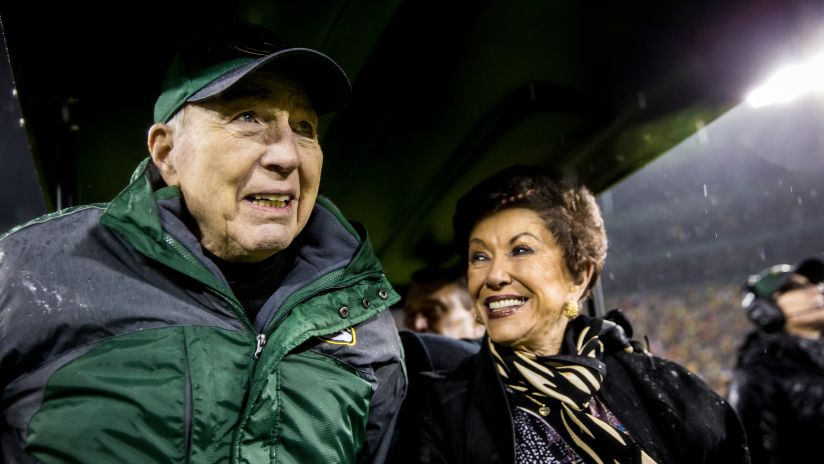
Image result for bart starr

The football part of his biography, impressive as it is, barely scratches the surface in describing Bryan Bartlett “Bart” Starr as a man.

What he achieved as the brilliant quarterback of the Green Bay Packers in the 1960s was beyond extraordinary: five National Football League titles in a span of seven years, the most valuable player in Super Bowls I and II, numerous passing records and the undying respect and admiration of teammates and opponents.

But he had a lot of life to live after he threw his final pass, and he lived it so very well.

Humble, gracious and philanthropic, the impeccably mannered Starr was the rare athlete who consciously and meticulously conducted himself, every day, in a manner befitting the hero mantle he’d earned on the field of play.

“He lived his life to be an example to others,” said Jerry Kramer, the starting right guard on those great Packers teams of the ‘60s. “He knew he carried a burden. He lived his life with purpose and with willpower. And because of that, he was an example to everyone on our team.”

When Starr died Sunday at age 85, he left behind a legacy in Green Bay, in Wisconsin and in the hearts of Packers fans everywhere that will endure until there is no more history left to write.

Starr suffered two strokes, four seizures and a heart attack in early September 2014, and was hospitalized for 2½ months. He also had cognitive issues, struggled with short-term memory loss and stopped making public appearances and granting interviews. Starr later did make two trips back to Lambeau Field.

Starr was born Jan. 9, 1934, in Montgomery, Alabama, where some two decades later Rosa Parks and the Rev. Martin Luther King would help launch the civil rights movement.

His father, Ben Starr, was a master sergeant with the Army Air Corps and a stern and intimidating man with whom Bart had a complicated relationship. If he somehow fell short in his father’s eyes, which was often the case, young Bart redoubled his efforts to win approval.

Years later, Starr would say that growing up in a military environment with a demanding father prepared him to succeed under coach Vince Lombardi, a volatile taskmaster who ultimately rewarded Starr with his complete trust.

Starr’s professional career, however, could not have gotten off to a more inauspicious start. Drafted in the 17th round out of Alabama in 1956, he shared the quarterback job with Tobin Rote and Babe Parilli and started 19 games over three seasons, compiling a 3-15-1 record with 13 touchdown passes and 25 interceptions.

His teammates had little faith in him as a leader.

But Lombardi, hired in 1959, recognized that Starr was intelligent and coachable and realized in time that he was tougher mentally and physically than most thought. After another 1½ seasons of job-sharing with Lamar McHan, Starr became the starter for good late in the 1960 season and led the Packers to their first division title in 16 years.

The Packers lost to the Philadelphia Eagles 17-13 in the 1960 NFL Championship game but would never lose another postseason game under Starr and Lombardi. The franchise won NFL titles in 1961, ’62, ’65, ’66 and ’67, putting tiny Green Bay on the map.   

The offense, directed by Starr and including future Hall of Famers Jim Taylor, Paul Hornung, Jim Ringo, Forrest Gregg and Kramer, was one of the most productive in NFL history. Starr called his own plays and in contrast with his gentlemanly demeanor off the field was a cutthroat competitor on it.

“There was a part of Bart Starr that was the great individual, courteous, never rude to anybody,” said Zeke Bratkowski, Starr’s backup from 1963-68. “Then there was the part of him on the football field deciding to throw it on fourth-and-1.

“Coach Lombardi would ask me, ‘What do you think he’s going to do?’ I would say, ‘He’s going to throw it.’ That’s the way he operated.”

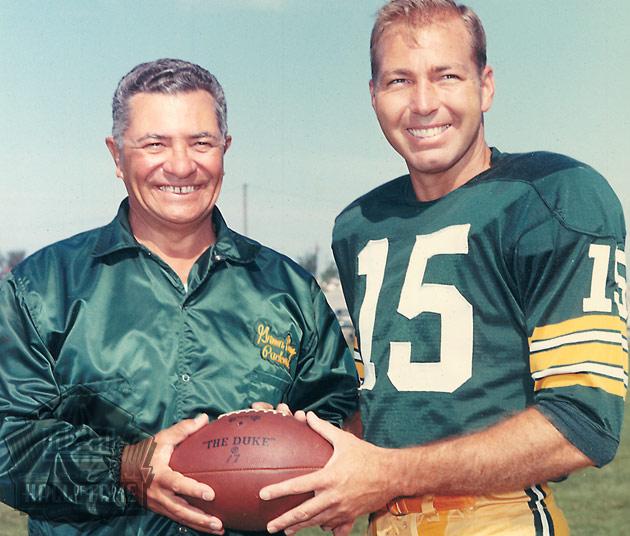
Image result for bart starr

(AP)

In the 1967 NFL Championship game, the famed “Ice Bowl” at Lambeau Field, Starr called his own number and scored on a 1-yard plunge in the final seconds to give the Packers a 21-17 victory over the Dallas Cowboys in one of the most memorable games in league history.

Bratkowski said Starr was unlike any quarterback he’d seen in the way he studied film and prepared for games.

“When I got traded (by the Los Angeles Rams) in the middle of ’63, I went to Green Bay and checked in to the Holiday Inn,” Bratkowski said. “I got a call half an hour later and it’s Bart. He said, ‘I’m watching film. Would you like to come over and watch it with me?’

“He was so regimented. During the season he would trim his fingernails on Thursday. He would lace his shoes a certain way. He just had things that he was very regimented about. Everything had to be just so. There was a tremendous amount of respect for his work ethic and preparation.”

Starr played 16 seasons for the Packers and completed 57.4 percent of his passes for 24,718 yards, with 152 touchdowns and 138 interceptions. He was brilliant in the playoffs, going 9-1 with 15 touchdowns and just three interceptions.

He led the league in passing three times, was the NFL’s most valuable player in 1966 and was inducted into the Pro Football Hall of Fame in 1977.

In 1972, Starr attempted a comeback but a shoulder injury forced him to retire. One day that summer, rookie kicker Chester Marcol was practicing field goals alone, kicking off a tee in Lambeau Field, when Starr approached and offered to hold the ball for Marcol’s kicks.

“I was awestruck,” Marcol wrote in his autobiography. “Starr was a living legend. … His offer to help told me a lot about him as a person and as a teammate. He didn’t have to do that. He was headed to the Hall of Fame and I was a rookie kicker from a tiny college in Michigan. That’s how much he cared about the Green Bay Packers.”

Starr cared so deeply about the franchise that he couldn’t turn down the Packers’ offer to become the head coach and general manager in 1975, even though, as he would admit years later, he was unprepared for the job. He had spent the ’72 season as Dan Devine’s quarterbacks coach, but had no other coaching experience.

Plus, he inherited a mess. Devine had traded five high draft picks for washed-up quarterback John Hadl, basically bankrupting the team’s short-term future.

“He inherited a team that didn’t have a strong nucleus,” said Bratkowski, Starr’s quarterbacks coach from 1975 to ‘81. “There wasn’t enough personnel. You win with people. We did make some mistakes in the draft, but there was so much need you can’t fill it all up in one draft or two drafts or three drafts."

“You could say those are excuses. No, they’re not.”


RELATED: The Ice Bowl, 50 years later: An oral history

RELATED: Packers Hall of Fame fullback Jim Taylor dies at 83

Starr was stripped of his general manager duties after the 1980 season and was fired as coach after the ’83 season. He had compiled a 52-76-3 record, with two winning seasons and one playoff victory.   
        
In the mid-‘80s, Tom Stoen, the retired chairman of an oil and gas exploration company, led an effort to get an NFL expansion team in Phoenix. Stoen planned to make Starr the director of football operations for the proposed Arizona Firebirds.

“We made a handshake deal and he never wavered,” Stoen told the Arizona Republic. “During the time he was with us, he had opportunities to take a piece of the action with other teams and he never said a word.

“I cannot say enough good things about him. He’s probably as honorable and decent a man as you would ever meet.

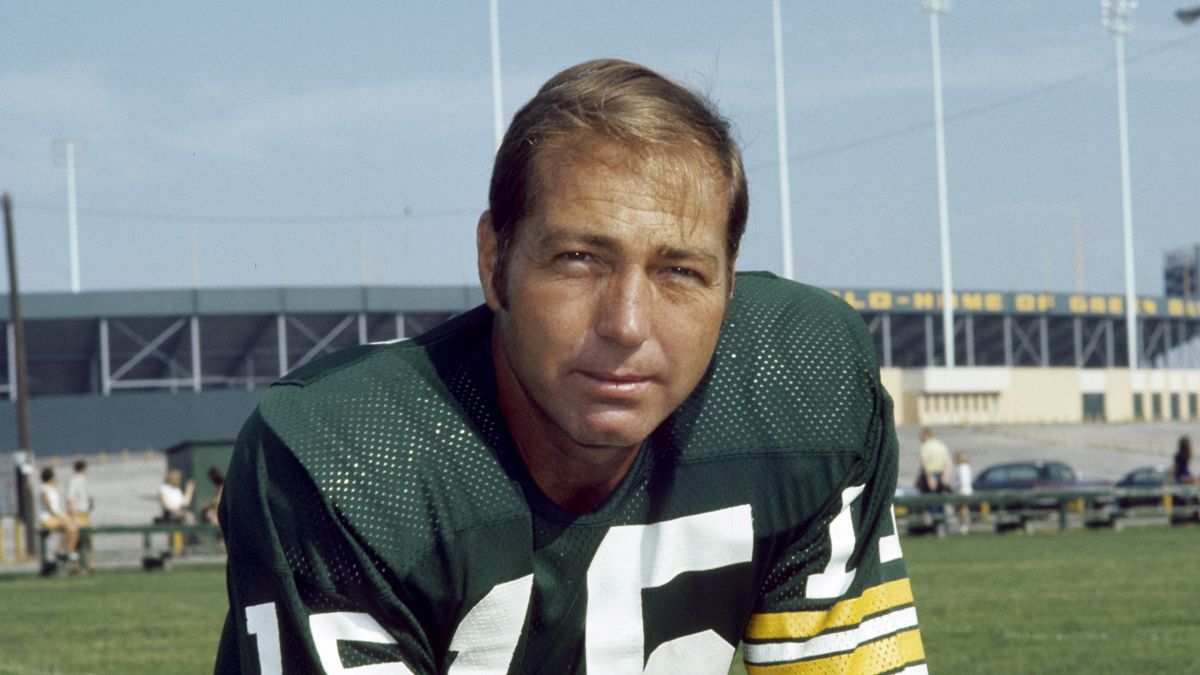
Image result for bart starr

But there would be no expansion team in Arizona. Bill Bidwill informed the NFL of his plans to move the St. Louis Cardinals to Phoenix in time for the 1988 season. Bart and wife Cherry, who had relocated to Paradise Valley, moved back to Montgomery.

“(Then-NFL Commissioner) Pete Rozelle very much wanted Bart to have the team there,” Cherry Starr said. “He loved Bart and did his very best.”

Though his dismissal in Green Bay had stung the prideful Starr, he didn’t let it affect his feelings for the organization or for Packers fans, who were quick to forgive and forget his coaching record. He remained a beloved figure in Wisconsin and a treasured Packers icon for the rest of his days.

Off the field, he continued to build goodwill with his unwavering devotion to the franchise and his many charitable endeavors.

He served as honorary co-chair, along with Cherry, of the Vince Lombardi Golf Classic from its inception in 1971 until his health no longer permitted him to attend in 2014.

He co-founded the Rawhide Boys Ranch for at-risk youth in New London in 1965, helping complete the down payment on the Rawhide property in 1968 by raffling off the Corvette he won as the MVP of Super Bowl II.

“He did so much for so many people,” said Bob Long, a Packers receiver from 1964 to ’67 and later a business associate of Starr’s.

The Athletes in Action/Bart Starr Award has been given annually since 1989 to the NFL player who best exemplifies outstanding character and leadership. The award honors Starr’s lifelong commitment to serving as a positive role model.

Aaron Rodgers won the Bart Starr Award in 2014.

Asked if Starr was as good a man as he has been portrayed to be, Taylor, the Hall of Fame fullback (who died in 2018), said, “Probably more so than what’s been written about. He’s just a great guy. He lived a good, full life and has been an asset and a tribute to the National Football League and the Green Bay Packers.”

Added Bratkowski, “If you had to describe a gentleman you would take all the adjectives and put them in a long line. That’s Bart.”

Early on, however, Starr had to convince some skeptical teammates that he was who he appeared to be. Kramer, for one, initially thought there was an element of phoniness to Starr’s yes-ma’am-no-sir politeness and the ramrod-straight way he carried himself on and off the field.

“For many years, I didn’t think Bart was as good as he was letting on,” Kramer said. “I thought, ‘There’s got to be a flaw in there somewhere.’ I watched him for 10 years. Nothing. Not the slightest thing. And so I threw in with him.

 "We’d go to a function and he’d go to a prayer breakfast with the ladies. Then he’d go to a luncheon with the business leaders. And then he’d have a beer that evening with the guys. He did it all, you know?”

The Starrs lost a son, Bret, to a drug overdose in 1988. Starr discovered the body. Though it was the most painful event of his life, he handled it with typical poise and grace.

“I was watching Roy Firestone do his (television) show with Bart,” Kramer said. “Roy is doing the interview and he says, ‘Bart, I hate to ask you this, but how did it feel when you found your son?’ I jumped out of my chair, I was so mad.

“And Bart says, ‘Roy, I was so thankful that my wife wasn’t there and that she didn’t have to see that.’ He found a positive in the most negative thing I could imagine. That’s Bart.”

Starr always treated Packers fans with respect and was unfailingly patient and polite in countless encounters with them. He once told Bratkowski, “It’s an honor for people to recognize you for what you accomplished.”

“We’d be eating dinner and somebody would come up to him and say, ‘Mr. Starr, can I have your autograph?’ ” Bratkowski said. “He would stand up, hold out his hand and say, ‘It’s Bart. This is coach Zeke Bratkowski and his wife, and this is my wife, Cherry.’ He was always so polite, so cordial.

“He wouldn’t sign a napkin. He’d say, ‘If you get a piece of paper and write down your name and address, when I get home I will sign a picture and mail it out the next day.’ ”

Starr’s neat and distinctive autograph is highly prized by sports memorabilia collectors and Starr-signed jerseys, footballs, helmets and lithographs can easily surpass $1,000 in value.

“Even the current fans today, the Starr name resonates with them,” said Rick Moncher, a sports memorabilia dealer who in recent years had exclusive signing rights with Starr.

Image result for bart starr
(Shawn Hubbard)

Starr is survived by Cherry and a son, Bart Jr.

“The Packers Family was saddened today to learn of the passing of Bart Starr,” Packers President/CEO Mark Murphy said in a statement. “A champion on and off the field, Bart epitomized class and was beloved by generations of Packers fans. A clutch player who led his team to five NFL titles, Bart could still fill Lambeau Field with electricity decades later during his many visits. Our thoughts and prayers go out to Cherry and the entire Starr family.”

Green Bay Packers' quarterback Bart Starr remembered as class act

Packers legend Bart Starr left a winning blueprint for all QBs to follow


By Bill Bender
https://www.sportingnews.com/us/nfl/news/packers-legend-bart-starr-left-a-winning-blueprint-for-all-qbs-to-follow/1dxmw9f2mr9o91bk25siwpk66m
May 26, 2019

Related image
Bart Starr, the MVP of the first two Super Bowls and the quarterback of the Packers' five-championship dynasty in the 1960s, died on Sunday. He was 85.
Expect memories of Starr to pour in for his role on those Vince Lombardi-led teams that transformed Green Bay into "Titletown, USA" and ushered in the Super Bowl era. He is the quarterback who tip-toed behind Jerry Kramer's block into the end zone on a quarterback sneak in the Ice Bowl against Dallas. He is the clutch winner who finished 9-1 in the postseason. He is the Southern gentleman from Montgomery, Ala.
As far as the 26 modern-day quarterbacks in the Pro Football Hall of Fame go, Starr will always be the ultimate Boy Scout.
That's exactly how I'll always remember him, too. After all, that is where I met Starr for the first and only time.
My father grew up during that Green Bay run in the 1960s - which produced NFL championships in 1961, 1962, 1965, 1966 and 1967 - and whenever he talked about quarterbacks, Starr's name always came up first. Starr was a winner. Starr was class. Starr was, well, a star in every sense. That is how you are supposed to play the position.
Of course, I wore Starr's number in junior high trying to impress my dad not knowing I would unexpectedly be thrown into the starting role. I did not win nearly as much, but I tried to carry myself the same way as Starr.
Brett Favre and Reggie White would become my idols later, and I'll never forget covering Favre's Hall of Fame induction a few years after my father passed away. It's like that with my son and I when it comes to Aaron Rodgers now, and maybe it will be like that with him and his children with the next franchise quarterback.
That family tradition starts with Starr.
Starr will never be considered a better quarterback than Favre and Rodgers, and that's fine. He'll still be the winning standard for how Green Bay quarterbacks should be judged, and he maintained that label well after retirement.
I went to an early-season Bengals-Packers game at Lambeau Field in 2009. Favre was in Minnesota, and Rodgers was still trying to cement his spot as the starting quarterback. Green Bay fans were divided on that issue, but at halftime when they trotted out several Packers legends, Starr got the loudest and proudest ovation. There was a never a doubt about that.
Which brings me to the Boy Scouts.
In 2010, my wife Kimberly was a reporter at the Rock Hill (S.C.) Herald, and she was assigned to cover a Boy Scouts of America benefit on March 9. Starr was the guest speaker, so of course, I tagged along. I was not going to pass up on a chance to meet Starr, but it was even better simply listening to him.
Starr spoke about the values of the Boy Scouts and the importance of the organization. The speech was good. But every time he mentioned Lombardi and the "relentless pursuit of perfection knowing all the while we can never attain it," his voice would amp up a few octaves. I went back and looked at the program from that night, and I scribbled in a note in blue pen.
"It all starts with an attitude."
Starr said that when talking about Lombardi, the ultimate motivator who turned the Packers from a bottom-feeder into a dynasty. Starr often told the story about calling his wife after Lombardi's first speech with the team and saying, "We're going to start winning now."
That's what he did best. Starr had such an appreciation for the coach of that dynasty that he deflected much of the attention off himself. He finished 16-of-23 for 250 yards and two TDs with one interception in Super Bowl I and 13-of-24 for 202 yards and a TD in Super Bowl II. Starr would probably get affixed with a label such as "game manager" today, but he essentially did the 1960s version of what Tom Brady does now for Bill Belichick. Lombardi and Starr, a 17th-round pick in 1956, made that work.
Winning was the only thing the mattered. That's why he had so many fans like me who never saw him play in person.
I got a photo taken with Starr and snuck in on a scrum afterward, and he was fielding questions about the Rodgers-Favre drama that reached a crescendo the previous season. Starr gave political answers throughout about those two - he liked both. I snuck in a question about the legacy of his Lombardi teams and where they stacked up.
"Three straight championships, and we're the last team to do it," he said with a bite before staring me down.
That always stuck with me most from that night.
Starr is responsible for one of the most iconic plays in one of the most iconic games in NFL history, but he took the most pride in the fact that the Packers were the last team to three-peat. That accomplishment is every bit as impressive as the 1972 Dolphins' undefeated season because those three championships were from 1965-67.
It's how I'll always approach any sports argument. You start with the championships, then work your way down. After all, it was Lombardi who said, "If you're lucky enough to find a guy with a lot of head and a lot of heart, he's never going to come off the field second."
Starr had both, and he was as close to perfect as you can get. He left a standard for all quarterbacks to follow, both on and off the field, one that Favre, Rodgers and the next one will always be measured against with those five championships.
Starr was the ultimate Boy Scout and forever will be.
Let's hope he's not the last one.

Bart Starr was the toughest football player who ever lived


By Ian O'Connor
http://www.espn.com/nfl/story/_/id/26826288/bart-starr-was-toughest-football-player-ever-lived
May 26, 2019

Related image

Nearly four years ago, when I visited Bart Starr in his Birmingham, Alabama, home, he did not remember the five NFL championships he had won, or theGreen Bay Packers coach, Vince Lombardi, he had won them for. He could not place Brett Favre or Aaron Rodgers, even though he studied Rodgers closely through the DirecTV package his wife and high school sweetheart, Cherry, had bought him as a Christmas gift.
Starr even asked me if I had played for Lombardi, the former coach at my New Jersey high school. We shared a small laugh over that before I brought up the 1967 Ice Bowl, one of football's most iconic games settled by one of football's most iconic players. Starr did not remember anything about that either.
The then-81-year-old former quarterback had suffered multiple strokes, a heart attack, four seizures, and significant brain damage within the previous year, and some doctors could not believe he was still alive. During one stay in the hospital, a doctor told Cherry her husband likely would not make it through the night. Bart woke up the next morning in much better shape.
He lost his memory long before he lost his life Sunday at 85. But Starr never lost his dignity while he reminded the world, in his last great comeback, that he was the toughest NFL player who ever lived.
When we think of old-school toughness on the football field, we often think of big and vicious hitters, fire-breathing defenders who played through injury and enjoyed cutting skill-position players in half. Chuck Bednarik, Ray Nitschke and Dick Butkus. Mean Joe Greene, Jack Tatum, Jack Lambert and Mike Singletary.
But at 6-foot-1, 196 pounds, the gentlemanly Starr made the most difficult championship play under the most difficult circumstances in a game that never should have been played. With the ball at the 1-yard line at Lambeau Field, down three points to the Dallas Cowboys with 16 seconds to go, Starr ignored his frozen hands and body, the subhuman Green Bay conditions (the wind chill was minus-48 degrees), and the fact that he was an aging, athletically-challenged quarterback who had already been sacked by Dallas eight times. Starr asked to keep the ball in a huddle with Lombardi, who ordered him to push it across the goal line. "And then let's get the hell out of here," the coach cried.
Starr scored, of course, behind Jerry Kramer's famous block on Jethro Pugh, and afterward his wife was stunned by the severe swelling in his face. No NFL player had ever been asked to give more on a single drive or a single play. Starr would be named Super Bowl MVP for a second straight time two weeks later, and he never again managed a winning record as a starter.
He would endure profound tragedy in his life, losing his son Bret to cocaine addiction at age 24 in 1988, when he found his boy's body on the floor of his home. Only Starr didn't quit, because he would never quit on anything. He was a fighter, the son of a tough-love World War II veteran and Air Force master sergeant who lost his favorite child, Hilton, to tetanus when the boy was 11, and who didn't think Bart would amount to much. Starr was the 200th overall pick in the 1956 NFL draft, a non-prospect who was benched during his final, winless season at Alabama and who was only drafted in the 17th round because the school's basketball coach had a connection with the Packers' front office.
Starr played 10 postseason games for Lombardi, and he won nine of them. He willed himself into the Hall of Fame; no quarterback has ever been drafted as late as Starr and still made it to Canton.
After the strokes and seizures, Starr tried to will himself back to health. Cherry and his personal aide and nursing assistant would wrap their arms around him and, on a count of three, lift him out of his chair and get him going through his day. He underwent stem-cell treatments, and rigorous exercise sessions with his trainer, Brian Burns, who kept reminding the old quarterback of his greatness to motivate him to keep a scheduled farewell appearance at Lambeau in 2015 for the halftime unveiling of Favre's retired No. 4.
Starr barely survived a bronchial infection in late summer to make that trip, and his trainer saw considerable gains in his physical and mental capacities. "I ask him what his number was, and he says, 'Fifteen,'" Burns told ESPN.com at the time. "I ask him who he played for, and he says, 'Vince Lombardi.' I ask him what position he played, and he says, 'Quarterback.' One time he said, 'Linebacker,' and we got a good laugh over that. But he's made incredible progress. He is really coming back."
On a desk in Starr's study stood a captioned photo with the Lombardi quote, "Perfection is not attainable, but if we chase perfection we can catch excellence." By all accounts, the quarterback didn't just chase perfection on the field. Strangers from all over would show up at his Green Bay doorstep, and Starr was forever willing to pose for their pictures or even invite them inside. As a young boy at Packers training camp, Bart Jr. asked his old man why he had just spent so much time signing autographs for so many fans.
"Everybody who wants an autograph will get one as long as I'm not holding up the team," Starr explained to his son. "One thing you have to remember: These are the individuals who make this team possible."
Starr was the individual player who made Lombardi's dynasty possible. In the end, Cherry, his wife of 65 years, never stopped pushing him forward. She helped feed him and transport him from one appointment to the next. Even on nights when sundown syndrome dramatically altered his serene disposition, Bart asked Cherry to play him Il Divo's rendition of "Unchained Melody" before he fell asleep. Starr once asked her to promise she would play that song at his wedding. He meant to say his funeral, and his wife wouldn't stop teasing him about that.
Cherry believes that football contributed to her husband's decline; she saw too many concussive hits, and too much postgame pain, to think otherwise. His fingertips remained pale in later years, she thought, because of what he put himself through in the Ice Bowl. But Bart was not a man defined by regret, even if he had trouble finishing a sentence in the hours I spent with him in his home.
On exit that day in 2015, I told Starr that I thought he was the toughest man to play in the NFL.
He looked at the floor, as if the compliment embarrassed him. "Well," he responded, "I've been the luckiest football player ever."
Go look at the film of the Ice Bowl. When it came to Bryan Bartlett Starr, luck had absolutely nothing to do with it.

Wednesday, May 01, 2019

Gino Marchetti Beloved by Baltimore for his Colts and Fast Food Careers


By Alexander Wolff
https://www.si.com/nfl/2016/07/01/gino-marchetti-baltimore-colts-ginos-restaurant
July 1, 2016

Gino Marchetti
Photo: Hy Peskin
It’s still hard to argue with that closed-loop burger-joint jingle, the one that could be heard up and down the East Coast throughout the ’60s and ’70s:Everybody goes to Gino’s, ’cause Gino’s is the place to go. Even if not much of anybody goes to Gino Marchetti’s anymore, unless you count the foxes that appear from time to time in the rough beyond the plate glass of the living room of the Marchetti home outside of Philadelphia.
Oh, his children come by; and his grandchildren and great-grandchildren. It’s easy to get time with Nonno and his wife of 38 years, Joan, with five kids living no farther than the Poconos, two hours away. Three generations help certify the distance this patriarch must reach back to find a time when a football player didn’t feel the need to perform a ­mazurka to celebrate simply doing his job, when his Colts could still be found in Baltimore, the city to which they first belonged. “It’s just a shame what the NFL did,” says old number 89, who since Jan. 2 has been living past his uniform number. “They could have at least let Baltimore keep the [Colts] name.”
Marchetti is still tethered to the Charm City; he has no affection for—even finds himself rooting against—that team in Indianapolis, which relocated in 1984 and then promptly unretired his number to give it to some random tight end before an uproar finally overturned the decision. Of the original Colts and their original home, he nails it six ways from Sunday: “We were like the great high school team in a small town.”
Next to the hunched heroics of fellow Balti­more co-captain Johnny Unitas, Marchetti’s performance at defensive end had a more vertebrate, workaday quality. He played in 121 straight games (all for Baltimore) between his arrival in 1953 and his final appearance, in ’66, and he was named a Pro Bowler 11 times in a row. He famously looked forward to training camp, where once, at age 35, he ran the 40 in five seconds flat. At his spot on the left flank of the Colts’ line he hammered out the template for the modern end, that blend of size, quickness and agility that would be embodied in Deacon Jones and then Reggie White and then J.J. Watt, the player who can dart laterally to catch a ball­carrier and sprint forward to collect the sacks that today lend the position its glamour. At weigh-ins he would slip lead into his jockstrap because coaches back then believed a lineman should be heavy; Marchetti, who rarely played above 240, knew better. In his day the NFL hadn’t yet enshrined the sack as a statistic, but Baltimore’s staff, going through game film at the end of one season, credited him with 43.
For a man so identified with his sport, Marchetti bracketed that career with two consummate male experiences apart from football. Before the NFL, before playing on a legendary team at the University of San Francisco, he served in World War II, an 18-year-old infantryman in the Fighting 69th, lugging a machine gun along the Siegfried Line into the Battle of the Bulge. “The first time I saw snow, I slept in it,” he says. Then, after retirement, he built up and sold the hamburger chain that made him a wealthy man.
Today, still able to summon most of the 6' 4" inches at which he played, the old Colt stands as a witness, his speech a little slowed but his memory as stark and durable as the white marble of a row house stoop. He’s the guy who, when he learned in 1962 of Carroll Rosenbloom’s plans to make a coaching change, urged the Colts’ owner to hire a Lions assistant and former teammate named Don Shula. Marchetti was in Hershey, Pa., the night Wilt scored 100, there to take part in an undercard exhibition that was a Colts-Eagles basketball game—though by the time Chamberlain set the record, Marchetti and his teammates had long since drifted off to hoist beers in some veterans’ hall. In the locker room one day he heard someone wonder aloud when injured first-stringer George Shaw might be back and articulated what others had only just begun to sense: “It doesn’t matter. Unitas is the quarterback now.”
Image result for gino marchetti
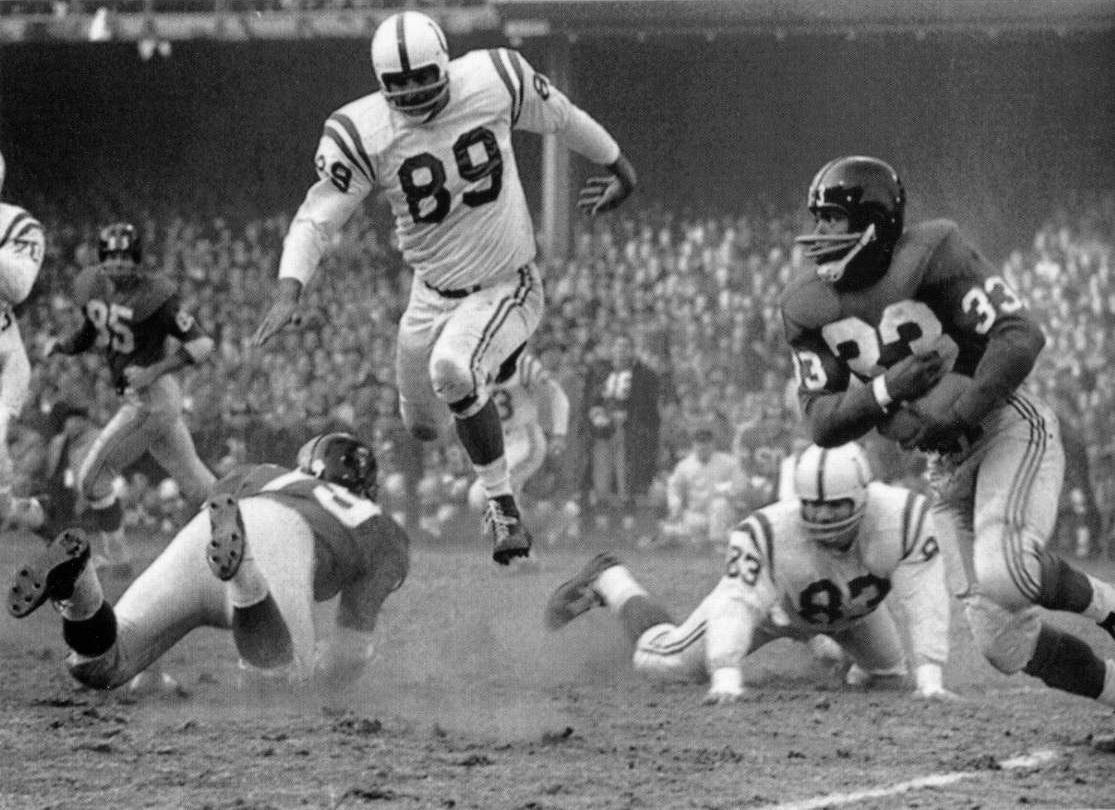
In fact, Marchetti was as much notary as witness—the man whom NFL commissioner Pete Rozelle (USF’s publicist during Marchetti’s time with the Dons) would recommend to anyone who wanted to know what players were thinking. Oddly, something that the public remembers well stands as a rare feat that Marchetti failed to see out: overtime of the 1958 NFL Championship Game between the Colts and the Giants. With three minutes to play in the fourth quarter, facing third-and-four from its own 40, New York had a chance to run out the clock on a 17–14 lead. The Giants called a sweep around right end for Frank Gifford, who chose to cut back over tackle, if only to avoid Marchetti. Shedding a block, Marchetti lunged back at Gifford and struck him waist-high. Marchetti wound up beneath Gifford, at which point his bookend on the Colts’ line, Eugene (Big Daddy) Lipscomb, threw another 284 pounds on top of the pile. The impact broke two bones above Marchetti’s right ankle.
In the annals of taking one for the team, few people would absorb so much in the service of so worthwhile a result. The linesman spotted the ball one foot short of a first down, forcing the Giants to punt. And while Gifford has insisted over the years that he picked up that conversion—that Marchetti’s screams of pain distracted the official into an errant placement—a 2008 ESPN documentary, using forensic mapping techniques on old film, determined the Colts did indeed stop Gifford short, by nine inches.
It took six men to stretcher Marchetti off the turf. His litter-bearers wanted to take him to the locker room, but he ordered them to set him down behind the end zone. Picked up and put down every few plays, his leg wrapped in ice, Marchetti watched as Unitas led a drive for the field goal that forced the first sudden-death period in NFL history.
By the second series of what would be eight-plus extra minutes, Marchetti finally agreed to be taken from the field, capitulating to fears that he could get trampled by the crowd and that the plunging temperatures would send his body into shock. Not until the first teammate burst through the doors of the locker room did Marchetti, stomach-up on a training table, learn that fullback Alan Ameche had scored in the gloaming to win for the Colts the game that launched the NFL into the modern, Madison Avenue–driven age.
Marchetti has followed the NFL’s evolution since then and understands the changes, even if he doesn’t endorse every one. “They want to keep the QB healthy, no matter the cost to the defensive player,” he says. He pities today’s D-linemen, who he thinks aren’t likely to get the benefit of a referee’s doubt. “You’re going full-speed, and a 300-pound tackle is knocking you around,” says Marchetti, who claims to have never been assessed a 15-yard penalty during his career, “but people come to see the quarterback, and if the quarterback goes, the draw isn’t there.”
In the aftermath of the 1958 title game, surgeons operated twice to repair Marchetti’s leg, and the injury had no bearing on the rest of his career. But it turns out that doctors missed a bone fragment. It migrated down as far as it could and, over the years, ground away to form a callus on the ball of his foot. “Every step I took, the thicker it’d get,” he says. “And being in charge of all those restaurants—I really worked it.”
Related image
Ace Parker, Oillie Matson, Gino Marchetti and Lamar Hunt
Only within the last year did he submit to one more operation, which has brought some relief. A moment for the Colts, a moment for the NFL, delivered a chronic reminder for most of the rest of Gino Marchetti’s life.
Poverty chased Ernest and Maria Mar­chetti from the hills of Tuscany to those outside of Charleston, W.Va., where Gino’s father worked in the coal mines through the Depression. When Gino was young, the family left for Antioch, Calif., an industrial town east of San Francisco, where Ernest opened the Nevada Club, a place to find food and drink and legal backroom poker.
Ernest had become a U.S. citizen, but with the outbreak of World War II it suddenly mattered that Maria hadn’t. Never mind that her eldest son, Lino, served in the U.S. Army and that Gino would soon enlist as part of a deal with an antagonistic teacher that allowed him to collect a high school diploma. With Maria exiled from Antioch for fear that she might commit sabotage or espionage on behalf of Mussolini, the family relocated to an apartment just outside of town. “Did they think she’d blow up the fiberboard plant or something?” her son posits now. “Every day we’d come home and she’d be crying, saying things like, ‘Look how I’ve made you live.’ ”
After the war Gino spent one season at Modesto Junior College, then returned to Antioch, where he worked the counter at Lino’s bar. Gino wore a leather jacket, his hair long and tucked behind the ears, with a motorcycle to boot. But football had wormed its way into his blood, so he and a buddy organized a semipro team, the Antioch Hornets. When a recruiter from USF walked into Lino’s bar and asked where he could find Gino Marchetti, Gino said, “That’s me,” and quickly snubbed out his cigarette.
The Dons who went 9–0 in 1951 included eight players who would go on to the NFL, two of them African-Americans—Ollie Matson and Burl Toler. In a team meeting at the end of that season, Marchetti and another white player, Bob St. Clair, presided over the unanimous decision to reject a bid from the Orange Bowl that was contingent on USF’s leaving its black players home. In the team photo of those Dons—the Undefeated, ­Untied and Uninvited, as they were proverbially known—Marchetti sits beaming at the center, a human bonding agent, with Matson (who was enshrined in the Pro Football Hall of Fame on the same day as Marchetti, in ’72) to one side and Toler (later the NFL’s first black referee) to the other. After one game, while out with Toler and a couple of white teammates, Marchetti fumed at a bar owner who turned them away. “Right there, I told Burl how my mother had been kicked out of town,” Marchetti explained to Unitas biographer Tom Callahan. “For a minute, I considered roughing up that bar.”
Like all NFL players of his era, Marchetti had to work during the off-season. At first he’d drift back to Antioch, herding cattle or tending bar for Lino; later he’d stick around Baltimore, setting duckpins at a bowling alley (“two cents a line”) or working in the iron mill out on Sparrows Point (“butt­holing”—shinnying along beams in a straddle position). Like any “Bawlmer ­Merlin” workingman, at quitting time he’d repair to a tavern for a Natty Boh. All of which enriched his understanding of how, with a second NFL title in 1959, the Colts obliterated the inferiority complex of “Smalltimore,” the city that hadn’t won anything of relevance since the Orioles of Wee Willie Keeler, back in another century. “They loved us to death,” Marchetti says. “And we loved them back.”
Related image
Rosenbloom knew this, and several weeks before the 1958 title game he summoned Marchetti. You have a name and a following, the owner told him. It made sense to live in Baltimore year-round and go into business. And Rosenbloom wanted to help.
The following April, Ameche-Gino Foods Inc., opened its first Gino’s restaurant, staked in part by a portion of Marchetti’s $4,674 championship share. Marchetti’s teammate already operated Ameche’s Drive-Ins, with a menu featuring a 55-cent Ameche’s Power­house hamburger. Aware of a booming chain out west called McDonald’s, Ameche wanted to introduce 15-cent burgers, but he needed another name to avoid undercutting the pricier Powerhouse. Gino’s provided a fresh brand for a trending concept.
True to his word, Rosenbloom vouched for a 10-year, $100,000 lease at an early Gino’s location that wound up generating $15,000 a week and ignited the business. Marchetti felt so indebted that he twice came out of retirement at Rosenbloom’s request. By the time he left the Colts for good, in 1966, Gino’s counted 65 outlets, making it the largest chain of company-owned-and-operated restaurants in the East. The ride lasted into the late ’70s, when the company suffered from overambitious expansion in a soft economy.
At the time of its sale to Marriott International, in 1982, Gino’s owned 313 restaurants. Marriott converted 180 of them to Roy Rogers stores; the rest were closed or sold off, most to Kentucky Fried Chicken. But enough of the $48 million price tag wound up in Marchetti’s pocket for him to live the good life. In the summer he deep-sea fished off Cape May from his 38-footer, the Miss Gina, named for his oldest daughter, then sailed it down to Florida for the winter. He bought a Harley-Davidson, then sold it after Pennsylvania passed a mandatory helmet law. (For years he’d worn a helmet as part of making a living; the old hard guy whose hair once trailed in the California breeze wasn’t going to do so on his own time.) He dabbled in raising and racing horses, a throwback to his days riding in the Contra Costa County sheriff’s posse. And he kept a hand in the hospitality business with a fine-dining restaurant on Philadelphia’s Main Line.
At one point Marchetti ballooned to 330 pounds—“I ate and drank my way through the state of Pennsylvania,” he says—and in 1981 he needed three stents to be inserted following a heart attack. But a regimen of walking helped him drop 85 pounds, and he has kept most of the weight off. “The dog,” he says, nodding at Cinder, a poodle-schnauzer mix, “I’ve got to walk him.”
He has slaked his competitiveness in fishing tournaments and bowling leagues, where in 2005 he finished one final-frame 5-pin short of a perfect game. And in 1978 he helped the Colts beat the Giants once more, in a made-for-TV touch football reunion in Central Park. 
He still has his stories and the lucidity to do them justice. Details are pegs on which to hang each tale: the red Chevy, parked outside the Marchetti family home, that enticed Gino and his younger brother, Angelo, to fatefully meet a visiting coach from Modesto, who really wanted Angelo but hey-what-the-hell told Gino to come along to campus too. The 1958 championship-game ball, wrested from a cop by center Buzz Nutter and awarded to Gino, who protested, “But I didn’t even finish the game.” The bottle of bourbon, hidden beneath the coat of Clark Gable, whom the Colts once ran into at the Los Angeles airport while out to play the Rams; a photo, now hanging in the Marchettis’ den, was taken moments before the Hollywood star dropped that bottle, shattering it on the floor.
Of the five Colts posing with Gable—Marchetti, Unitas, Ameche, Bill Pellington and Carl Taseff—everyone but Marchetti is now dead. “My wife tells me, ‘Gino, you were blessed,’ ” he says. “Even going into the Army, the G.I. Bill sent me to Modesto. Modesto didn’t really want me, yet I was the one who wound up staying, not my brother. After that, USF. And then Carroll, begging me to move to Baltimore. . . .
“Those things all just happened. I could say I planned it, but I didn’t. I was just a dumb guy standing there saying yes.”
Image result for gino marchetti gino's
(Amy Davis/Baltimore Sun)
It’s hard to imagine a patch of Maryland that makes more sense as the staging ground for a Gino’s-brand comeback than the town of Glen Burnie. Much of the housing stock, built for veterans returning from World War II, has remained in families for generations. No fewer than four bowling alleys still operate within a 15-mile radius. And the Gino’s Burgers and Chicken now on Ritchie Highway occupies the sceptered spot where an original Gino’s once stood—the very outlet where Marchetti used to swing by and pick up chicken before heading out for a day on Chesapeake Bay. “When we were building here, people driving by would honk their horns and yell, ‘You better have the Gino’s Giant!’ ” says Karen Foreman, the franchisee who opened the restaurant in September 2012, referring to Marchetti’s version of the Big Mac. “It’s so emotional for people. Not a day goes by without somebody telling me their Gino’s story.”
When Rosenbloom’s successor, Robert Irsay, took his team away in the middle of a snowy night in 1984, it hurt in the way that it hurts when a scab is ripped off—but the next morning the team was gone, and at least the healing could begin. But Gino’s left torturously over a decade, from the company’s sale in ’82 to the shuttering of the last outlet, in Pasadena, Md., in ’91. Many Marylanders conflate the team of their youth with the food they grew up on, and the departure of Gino’s compounded the pain. Says Tom Romano, an executive with the original Gino’s who has brought the brand back to life (here and in Towson, Md., so far): “When Gino shows up at a Gino’s, it feels like mom’s making you soup.”
On this hazy Saturday in May at the Glen Burnie Gino’s, the Great Eponym himself is on site. People start lining up at noon for a 2 p.m. meet-and-greet. Marchetti devours a Gino’s Giant, then takes a seat under a tent, where fans offer thanks—“for when it was a game, not a business” . . . “for your [military] service” . . . “for the memories.” One fan has even lugged in a cinder block from an original Gino’s building, with the distinct red-blue-and-white tiles intact on one face. Marchetti signs it.
For nearly three hours they come uninterrupted, never fewer than 50 in line at a time. Marchetti signs a seat back salvaged from the Colts’ old home, ­Memorial Stadium. He signs an envelope adorned with a stamp commemorating the Battle of the Bulge. He signs Gino’s ashtrays and Gino’s stock certificates and an old 45 rpm record pressed with Chuck Thompson’s radio call of what would come to be known as the Game That Made the Game. He signs booster badges commemorating the day he ­retired—they were sold, at 50 cents a pop, to surprise Marchetti by flying his dad to Baltimore, where Ernest had never before seen Gino play the sport that Ernest never wanted his son to play because he rightly feared that Gino would get hurt. Gino signs creased black-and-whites of himself posing with fans, pictures brought by the very people in the frame, 10 or 20 years his junior, now into their 80s and 70s. Adorers and hero alike congratulate one another on how well they’ve held up.
Greater Baltimore has emptied its attic and laid the contents at the feet of a man who treasures every artifact as much as its owner does. “They never talk to me about the Ravens, I’ll tell you that,” he says.
When only a few lingerers remain, Marchetti pulls his head up and beams, and he begins to croak out that old tautological tune: “Everybody goes to ­Gino’s”—and here people join in—“ ’cause­ Gino’s is the place to go.”
Then, to no one in particular; smile even broader; now witness, notary and bailiff; big guy to the end: “You better go, or you’ll get the hell kicked out of you!”