Showing posts with label Daniel Pipes. Show all posts

Monday, July 18, 2016

Why I Rooted for the Turkish Coup Attempt


Erdogan rules autocratically and the military is the only check on his power.

By Daniel Pipes — July 17, 2016
Palestinian supporters of the Hamas movement hold portraits of Turkish President Recep Tayyip Erdogan as they shout slogans against the military coup attempt in Turkey, during a demonstration in Gaza City, on July 16, 2016. Erdogan battled to regain control over Turkey on July 16, 2016 after a coup bid by discontented soldiers, as signs grew that the most serious challenge to his 13 years of dominant rule was faltering. After a night of drama and bloodshed, at least 90 people had died and more than 1,150 people were wounded, according to state-run news agency Andalou. / AFP PHOTO / MAHMUD HAMS
Palestinian supporters of the Hamas movement hold portraits of Turkish President Recep Tayyip Erdogan as they shout slogans against the military coup attempt in Turkey, during a demonstration in Gaza City, on July 16, 2016.

Every major government condemned the coup attempt in Turkey, as did all four of the parties with representatives in the Turkish parliament. So did even Fethullah Gulen, the religious figure accused of being behind the would-be takeover.

All of which leaves me feeling a little lonely, having tweeted out on Friday, just after the revolt began, “#Erdogan stole the most recent election in #Turkey and rules despotically. He deserves to be ousted by a military coup. I hope it succeeds.”

Having this nearly minority-of-one stance suggests that an explanation longer than 140 characters is in order. Three reasons account for my supporting the ouster of the apparently democratically elected and democratically ruling president, Recep Tayyip Erdogan, by what are apparently the forces of reaction:

Erdogan stole the election. Erdogan is an Islamist who initially made his mark, both as mayor of Istanbul and as prime minister of Turkey, by playing within the rules. As time wore on, however, he grew disdainful of those rules, specifically the electoral ones. He monopolized state media, tacitly encouraged physical attacks on opposition-party members, and stole votes. In particular, the most recent national election, on November 1, showed many signs of manipulation.

Erdogan rules despotically. Erdogan has taken control of one institution after another, even in the two years since he became president, a constitutionally and historically non-political position. The result? An ever-growing portion of Turks are working directly under his control or that of his minions: the prime minister, the cabinet, the judges, the police, the educators, the bankers, the media owners, and other business leaders. The military leadership has acquiesced to Erdogan but, as the coup attempt confirmed, the officer corps has remained the one institution still outside his direct control.

Erdogan uses his despotic powers for malign purposes, waging what amounts to a civil war against the Kurds of southeastern Turkey, helping ISIS, aggressing against neighbors, and promoting Sunni Islamism.

Military intervention has previously worked in Turkey. Turkey is the country where military coups d’état have had the most positive effect. In all four of the modern coups (1960, 1971, 1980, 1997), the general staff has shown a disciplined understanding of its role — to right the ship of state and then get out of its way. Their ruling interludes lasted, respectively, five years, two and a half years, three years, and zero years.

Turkey would benefit now from a spell of military readjustment, ending Erdogan’s increasingly rogue rule, even if that meant replacing him with more reasonable Islamist figures from his own party, such as Abdallah Gül or Ali Babacan.

In the memorable words of Çevik Bir, a leading figure in the 1997 coup: “In Turkey we have a marriage of Islam and democracy. . . . The child of this marriage is secularism. Now this child gets sick from time to time. The Turkish Armed Forces is the doctor which saves the child.” That child is now very sick and needs its doctor. Sadly, the doctor was stopped this time. One can only imagine how badly the sickness will now spread.

We have an initial idea how it will look: 6,000 Turks have already been detained, almost 3,000 judges and prosecutors have been fired, and relations with Washington have escalated to near-crisis mode over Erdogan’s demand for Gulen’s extradition. However rocky the past road, the future one looks yet more harrowing.

I renew my prediction that Erdogan’s undoing will likely be in foreign affairs. Applying the same bellicosity that works so well in domestic politics to international relations, he will probably meet his doom one time when he’s just too aggressive for his own good. After paying a heavy price, Turkey will be finally be rid of its megalomaniac.

— Daniel Pipes (DanielPipes.org, @DanielPipes) is the president of the Middle East Forum. © 2016 by Daniel Pipes. All rights reserved.

Thursday, December 24, 2015

America’s hidden jihad


By Daniel Pipes
December 23, 2015

COURTESY NEW JERSEY STATE POLICE

Yusuf Ibrahim had been driving a Mercedes Benz owned by one of the dead men.


The police and press did an impressive job of sleuthing into the lives and motives of Syed Rizwan Farook and Tashfeen Malik, the married couple who massacred 14 people on Dec. 2, in San Bernardino, California.

We know about their families, their studies and employment histories, their travels, their marriage, their statements, and their preparations for the assault. Most importantly, the cascade of background work means we know that the pair had jihadi intentions, meaning, they attacked in their role as pious Muslims spreading the message, law, and sovereignty of Islam.

We are all better off for knowing these facts, which have had a powerful impact on the body politic, making Americans far more concerned with jihadi violence than at any time since just after 9/11, as they should be. For example, in 2011, 53 percent told a pollster that terrorism was a critical issue; that number has now reached 75 percent.

But what about the case of Yusuf Ibrahim? In early 2013, when he was 27, this Egyptian-born Muslim lived in Jersey City, when he allegedly shot, then cut off the heads and hands and knocked the teeth out of two Coptic Christians, Hanny F. Tawadros and Amgad A. Konds, then buried them in Buena Vista Township, New Jersey.

He is charged with two counts each of murder, felony murder, kidnapping, robbery, desecration of human remains, and other crimes. In addition, he has pleaded guilty to a Dec. 22, 2011, carjacking and a Sep. 20, 2012, armed robbery, both in Jersey City (in the latter, he shot his victim in the foot), and early in 2015 he was sentenced to 18 years in prison for these later crimes.

The twin beheadings are spectacular, gruesome, and replete with jihadi (or in police parlance, "terrorist") elements. Historian Timothy Furnish explains that "ritual beheading has a long precedent in Islamic theology and history," making it a distinctly Muslim form of execution. A Muslim killing a non-Muslim fits the ageless pattern of Islamic supremacism. It also fits a tragic pattern of behavior in the United States in recent years.

Yet the police, politicians, the press, and professors (i.e., the Establishment) have shown not the slightest interest in the Islamic angle, treating the double beheadings and amputations as a routine local murder. Symptomatic of this, the police report about Ibrahim's arrest makes no mention of motivation; on the basis of this lack of mention, left-leaning Snopes.com (which describes itself as the "definitive Internet reference source for urban legends, folklore, myths, rumors, and misinformation") goes so far as to dismiss as "false" the allegation that the mainstream media "deliberately ignored" this incident. The wagons have been circled.

Almost three years after the event, we know next-to-nothing about Ibrahim, his motives, his possible connections to others, or his institutional affiliations. We also do not know the relationship of the accused attacker to his victims: Was he a criminal who fell out with his accomplices, a friend who had drunk too much, a would-be lover knocking off his rivals for the affections of a woman, a family member eliminating aspirants for an inheritance, a crazy man randomly shooting passers-by? Or was he perhaps a jihadi seeking to spread the message, law, and sovereignty of Islam?

I cannot answer those questions because the case lingers in total obscurity, popping up from time to time only in connection with some technical procedural matter (such as the amount of Ibrahim's bail or the admissibility of his confession) that sheds no light on the motives for his alleged crime.

Nor is the Ibrahim case unusual. I have compiled long lists of other potential instances of jihadi violence (here, here, and here) in which the Establishment has colluded to sweep the Islamic dimension under the rug, treating the perpetrators as common criminals whose biographies, motives, and connections are of no interest and therefore remain unknown.

This silence about possible jihad has the major consequence of lulling the American public (and its counterparts elsewhere in the West) into believing jihadi violence is far rarer than is the case. If the body politic understood the full extent of jihad in America, the alarm would be much greater; the percentage of those calling terrorism a critical issue would rise much higher than the current 75 percent. That, in turn, might push the Establishment finally to get serious about confronting jihad.
Mr. Pipes (DanielPipes.org, @DanielPipes) is president of the Middle East Forum. © 2015 by Daniel Pipes. All rights reserved.
Related Articles:
receive the latest by email: subscribe to daniel pipes' free mailing list
This text may be reposted or forwarded so long as it is presented as an integral whole with complete and accurate information provided about its author, date, place of publication, and original URL.

Sunday, November 15, 2015

Why the Paris Massacre Will Have Limited Impact


By Daniel Pipes
November 14, 2015
A civilian holds flowers next to a policeman near the Rue de Charonne in Paris on November 14, 2015, following a series of coordinated attacks in and around Paris late Friday which left more than 120 people dead. PHOTO: AFP
A civilian holds flowers next to a policeman near the Rue de Charonne in Paris on November 14, 2015, following a series of coordinated attacks in and around Paris late Friday which left more than 120 people dead. PHOTO: AF

The murder of some 127 innocents in Paris by a jihadi gang on Friday has again shocked the French and led to another round of solidarity, soul searching, and anger. In the end, however, Islamist violence against Westerners boils down to two questions: How much will this latest atrocity turn public opinion? And how much will it further spur the Establishment to deny reality?

As these questions suggest, the people and the professionals are moving in opposite directions, the former to the right, the latter to the left. In the end, this clash much reduces the impact of such events on policy.

Public opinion moves against Islamists specifically and Islam more generally when the number of deaths are large enough. America’s 3,000 dead on 9/11 stands out as by far the largest body count, but many other countries have had their equivalent attack — the Bali bombings for Australia, the railroad bombing for Spain, the Beslan school massacre for Russia, the transportation bombings for Britain.

Sheer numbers are not the only consideration. Other factors can multiply the impact of an assault, making it almost the political equivalent of mass carnage: (1) the renown of those attacked, such as Theo van Gogh in the Netherlands and the Charlie Hebdo office in France; (2) the professional status of the victim, such as soldiers or police; (3) high-profile circumstances, such as the Boston Marathon bombing.

In addition to the thousands of attacks globally connected to Islamists since 9/11, a huge increase in illegal immigration from the Middle East to Europe recently exacerbated feelings of vulnerability and fear. It’s a one-way street, with not a single soul ever heard to announce, “I used to worry about Islamism but I don’t anymore.”

These cases make more Westerners worried about Islam and related topics from the building of minarets to female infibulation. Overall, a relentless march rightwards is underway. Surveys of European attitudes show 60 to 70 percent of voters expressing these concerns. Populist individuals like Geert Wilders of the Netherlands and parties like the Sweden Democrats are surging in the polls.

But when it comes to the Establishment — politicians, the police, the press, and the professors — the unrelenting violence has a contrary effect. Those charged with interpreting the attacks live in a bubble of public denial (what they say privately is another matter) in which they feel compelled to pretend that Islam has no role in the violence, out of concern that to recognize it would cause even more problems.

These professionals bald-facedly feign belief in a mysterious “violent extremist” virus that seems to afflict only Muslims, prompting them to engage in random acts of barbaric violence. Of the many preposterous statements by politicians, my all-time favorite is what Howard Dean, the former governor of Vermont, said about the Charlie Hebdo jihadis: “They’re about as Muslim as I am.”


This defiance of common sense has survived each atrocity, and I predict that it will also outlast the Paris massacre. Only a truly massive loss of life, perhaps in the hundreds of thousands, would force the professionals to back off their deeply ingrained pattern of denying an Islamic component in the spate of attacks.
That pattern has the very consequential effect of shutting out the fears of ordinary voters, whose views thereby have negligible impact on policy. Worries about sharia, rape gangs, exotic diseases, and bloodbaths are dismissed with charges of “racism” and “Islamophobia,” as though name-calling addresses these real issues.
More surprising yet, the professionals respond to the public’s move to the right by themselves moving to the left, encouraging more immigration from the Middle East, instituting more “hate speech” codes to suppress criticism of Islam, and providing more patronage to Islamists. This pattern affects not just Establishment figures of the Left but more strikingly also of the Right (such as Angela Merkel of Germany); only Eastern European leaders such as Hungary’s Viktor Orban permit themselves to speak honestly about the real problems.  
Eventually, to be sure, voters’ views will make themselves heard, but decades later and more weakly than democratically should have been the case.
Placing the murderous rampage in Paris into this context, it will likely move public sentiments substantially in one direction and Establishment policies in quite the opposite way, therefore ultimately having only a limited impact.

— Daniel Pipes is president of the Middle East Forum. Follow him on Twitter @DanielPipes © 2015 by Daniel Pipes. All rights reserved.

Friday, November 28, 2014

Is CAIR a Terror Group?


A prominent Arab government thinks so. 

CAIR co-founder Nihad Awad (Alex Wong/Getty)

We who follow the Islamist movement fell off our collective chair on November 15, when the news came that the United Arab Emirates’ ministerial cabinet had listed the Council on American-Islamic Relations (CAIR) as one of 83 proscribed terrorist organizations, up there with the Taliban, al-Qaeda, and ISIS.

This came as a surprise because the UAE authorities themselves have a record of promoting Islamism; because CAIR has a history of raising funds in the UAE; and because the UAE embassy in Washington had previously praised CAIR.

On reflection, however, the listing makes sense for, in recent years, the Islamist movement has gravely fractured. Sunnis fight Shiites; advocates of violence struggle against those working within the system; modernizers do battle against those trying to return to the seventh century; and monarchists confront republicans.

This last divide concerns us here. After decades of working closely with the Muslim Brotherhood (MB) and its related institutions, the Persian Gulf monarchies (with the single, striking exception of Qatar) have come to see the MB complex of institutions as a threat to their existence. The Saudi, Emirati, Kuwaiti, and Bahraini rulers now view politicians like Mohamed Morsi of Egypt as their enemies, as they do Hamas and its progeny — including CAIR.

While the Gulf monarchs have not become any less Islamist, they have acquired a clear-eyed appreciation of the harm that MB-related groups can do.

Having explained why the UAE listed CAIR on its terror manifest, we must ask a second question: Is the listing warranted? Can a Washington-based organization with ties to the Obama White House, the U.S. Congress, leading media outlets, and prestigious universities truly be an instigator of terrorism?

CAIR can rightly be so characterized. True, it does not set off bombs, but, as the UAE’s foreign minister explains, “Our threshold is quite low. . . . We cannot accept incitement or funding.” Indeed, CAIR incites, funds, and does much more vis-à-vis terrorism:

It apologizes for terrorist groups: Challenged repeatedly to denounce Hamas and Hezbollah as terrorist groups, CAIR denounces the acts of violence but not their sponsors.

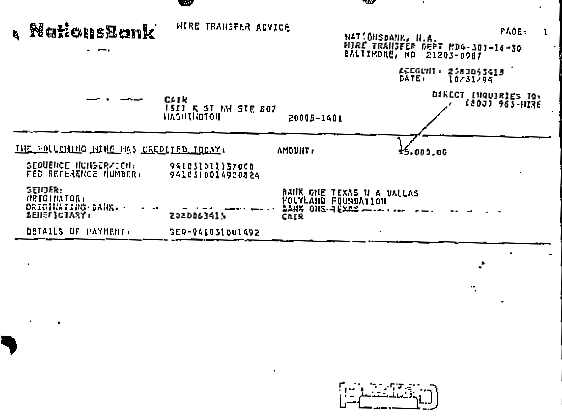
It is connected to Hamas: Hamas, designated a terrorist organization by the U.S. and many other governments, indirectly created CAIR and the two groups remain tight. Examples: In 1994, CAIR head Nihad Awad publicly declared his support for Hamas; the Holy Land Foundation (HLF), a Hamas front group, contributed $5,000 to CAIR; in turn,CAIR exploited the 9/11 attacks to raise money for HLF; and, this past August, demonstrators at a CAIR-sponsored rally in Florida proclaimed “We are Hamas!”

It settled a lawsuit: CAIR initiated a libel lawsuit in 2004 over five statements by a group called Anti-CAIR. But two years later, CAIR settled the suit with prejudice (meaning that it cannot be reopened), implicitly acknowledging the accuracy of Anti-CAIR’s assertions, which included:
  • “CAIR is a terrorist supporting front organization that is partially funded by terrorists”;
  • “CAIR . . . is supported by terrorist supporting individuals, groups and countries”;
  • “CAIR has proven links to, and was founded by, Islamic terrorists”; and
  • “CAIR actively supports terrorists and terrorist supporting groups and nations.”
It includes individuals accused of terrorism: At least seven board members or staff at CAIR have been arrested, denied entry to the U.S., or were indicted on or pled guilty to (or were convicted of) terrorist charges: Siraj Wahhaj, Bassem Khafagi, Randall (“Ismail”) Royer, Ghassan Elashi, Rabih Haddad, Muthanna Al-Hanooti, and Nabil Sadoun.

It is in trouble with the law: Federal prosecutors in 2007 named CAIR (along with two other Islamic organizations) as “unindicted co-conspirators and/or joint venturers” in a criminal conspiracy to support Hamas financially. In 2008, the FBI ended contacts with CAIR because of concern about its continuing terrorist ties.

On learning of the UAE listing, CAIR called it “shocking and bizarre,” then got to work to have the Department of State protest and undo the ruling. Nothing loath, department spokesperson Jeff Rathke noted that the U.S. government, which “does not consider these organizations to be terrorist organizations,” has asked for more information about the UAE decision. 
The UAE minister of state for foreign affairs replied that if organizations can show that their “approach has changed,” they are eligible to appeal “to have their names eliminated from the list.”
Pressure from the Obama administration might reverse the UAE listing. Even so, this will not undo its lasting damage. For the first time, an Islamist government has exposed the malign, terroristic quality of CAIR — a stigma CAIR can never escape.

— Daniel Pipes is president of the Middle East Forum. © 2014 by Daniel Pipes. All rights reserved.

Saturday, May 24, 2014

Can Islamism Evolve?

It’s possible, but that’s not a rationale for collaboration or concessions. 

Monday, February 10, 2014

The Sick Middle East

Problems and dangers of every sort afflict the always-troubled region. 


Wednesday, December 04, 2013

Geneva and the Saudi Response


The Obama administration’s outreach to Iran has the Saudis worried and angry. 

Iranian Foreign Minister Mohammad Javad Zarif (L) reacts next to EU foreign policy chief Catherine Ashton (C) as US Secretary of State John Kerry (2nd R) embraces French Foreign Minister Laurent Fabius after a statement on early November 24, 2013 in Geneva.

The “Joint Plan of Action” signed with Iran by the so-called P5+1 (China, France, Germany, Russia, the U.K., and the U.S.) on November 24 in Geneva caused Shiite Arabs to celebrate, Sunni Arabs to worry, and Saudis to panic. The Saudi response will have far-reaching and unpredictable consequences. 

As Iran’s chief negotiator, Mohammad Javad Zarif, brought home a deal worth about $23 billion to Iran, Arab Shiites fell into step with Tehran. Prime Minister Nouri Maliki of Iraq expressed his “full support for this step.” President Bashar Assad of Syria welcomed the agreement as “the best path for securing peace and stability.” Parliamentary Speaker Nabih Berri of Lebanoncalled it the “deal of the century.” And Hezbollah considered the agreement a “great victory for Iran.”

Among Arabic-speaking Sunnis, in contrast, responses ranged from politely supportive to displeased to alarmed. Perhaps most enthusiastic was the Egyptian government newspaper Al-Ahram, which called the deal “historic.” Most states stayed mum. Saudis expressed the most worry. Yes, the government cabinetofficially stated that “if there is goodwill, then this agreement could be an initial step toward reaching a comprehensive solution to Iran’s nuclear program,” but note the skepticism conveyed in the first four words.
If that was the mildest response, perhaps the most unbuttoned comment came from Alwaleed bin Talal, a Saudi prince who occasionally sends up trial balloons for the royal family. He called Iran “a huge threat” and noted that, historically speaking, “the Persian empire was always against the Muslim Arab empire, especially against the Sunnis. The threat is from Persia, not from Israel,” a groundbreaking and memorable public statement.

Alwaleed then detailed how the Iranians are “in Bahrain, they are in Iraq, they are in Syria, they are with Hezbollah in Lebanon and Hamas, which is Sunni, in Gaza.” As this list suggests, Saudis are fixated on the danger of being surrounded by Iran’s agents and are more scared by the non-nuclear implications of the joint plan than by the nuclear ones. F. Gregory Gause of the University of Vermont thinks that the Saudis are worried that the accord opens the way for Iran to achieve regional dominance “without any obstacles.” (This contrasts with the Israeli and Western position, which focuses on the nuclear danger.)

Abdullah al-Askar, foreign-affairs-committee chairman of the kingdom’s appointed Shura Council, worries “about giving Iran more space or a freer hand in the region. The government of Iran, month after month, has proven that it has an ugly agenda in the region, and in this regard no one in the region will sleep and assume things are going smoothly. . . . The people of the region . . . know that Iran will interfere in the politics of many countries.”

Saudi media reiterated this line of analysis. Al-Watan, a government newspaper,warned that the Iran regime, “which sends its tentacles into other regional countries, or tries to do so by all means necessary,” will not be fettered by the accord. Another daily, Al-Sharq, editorialized about the fear that “Iran made concessions in the nuclear dossier in return for more freedom of action in the region.”

Some analysts, especially in the smaller Persian Gulf states, went further. Jaber Mohammad, a Bahraini analyst, predicted that “Iran and the West will now reach an accord on how to divide their influence in the Gulf.” The Qatari government-owned Al-Quds Al-Arabi worried about “a U.S.-Iran alliance with Russian backing.” Rumors of Obama wanting to visit Tehran only fuel these suspicions.

The Saudi ambassador in London, Prince Mohammed bin Nawaf bin Abdulaziz, drew the most overt public conclusion, threatening, “We are not going to sit idly by and receive a threat there and not think seriously how we can best defend our country and our region.” To put it mildly, this is not how Saudi diplomats normally speak about fellow Muslims.

What does this unwonted rhetoric amount to? Iranian bellicosity and the Obama administration’s pro-Iran policies have combined to end many decades of Saudi strategic reliance on Washington and cause them to begin thinking about how to protect themselves. This matters, because as Alwaleed rightly boasts, his country is leader of the Arabs, enjoying the most international, regional, cultural, and religious clout. The results of the Saudis’ newfound assertiveness — fighting against fellow Islamists, allying tacitly with Israel, perhaps acquiring Pakistani-made nuclear weapons, and even reaching out to Tehran — marks yet another consequence of Barack Obama’s imploding foreign policy.

— Daniel Pipes is president of the Middle East Forum. © 2013 by Daniel Pipes. All rights reserved.