Showing posts with label European History. Show all posts

Tuesday, July 16, 2019

Thatcherism Without Thatcher


July 12, 2019

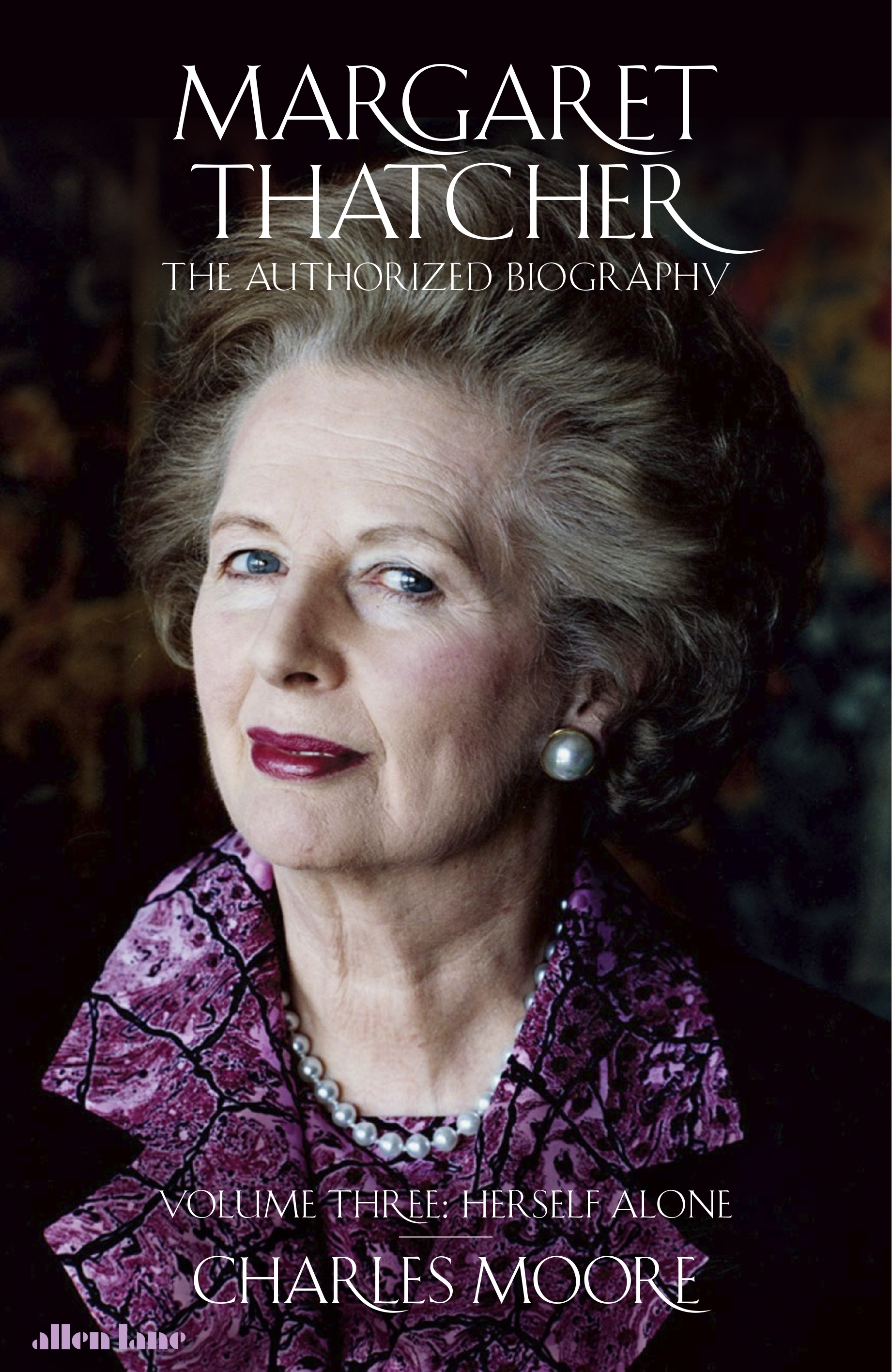
Image result for thatcher volume 3 moore

Margaret Thatcher: The Authorized Biography, Volume Three: Herself Alone, by Charles Moore (Allen Lane, 880 pp., $24.06)

Forty years on, Margaret Thatcher’s election as Great Britain’s first female prime minister still looks miraculous. The rise of a woman to dominance, in the hostile, closed environment of the British Conservative Party, was astounding. In The Iron Lady (2011), Meryl Streep makes the point eloquently. But the miracle that followed Thatcher’s election is no less remarkable.

Right after World War II, Labour prime minister Clement Attlee, overly optimistic about the capacity of government to do great things, laid the foundations of the British welfare state. The sentiment was understandable: centralized authority had just proved itself capable of organizing the country’s resources in the war effort. Well-meaning do-gooders now assumed that the state could do the same postwar, defeating the peacetime adversaries of poverty and need. Filmmaker Ken Loach calls this attitude “the spirit of ’45.” The postwar economic consensus was so robust that it became known as Butskellism, since the policies of Rab Butler, the Conservative chancellor of the Exchequer from 1951 to 1955, and his Labour predecessor Hugh Gaitskell were indistinguishable.

The glory days of interventionism didn’t last, however. By 1979, a third of the British workforce was employed by government, directly or indirectly, yet unemployment continued to rise throughout the 1970s. Inflation rose to double digits, exceeding 25 percent, making even middle-class Britons insecure about their savings and purchasing power. Keeping it under control seemed impossible: government-owned businesses, unable to say “no” to the demands of the trade unions, administered a vast portion of the economy.

Thatcher recognized the economic crisis as a failure of politics. She offered a gospel of government retrenchment and individual initiative that sounded outdated. She wanted to make people responsible again for their economic destinies, instead of entrusting their fates to state guidance. This meant denationalizing the British economy. Before Thatcher took office, “privatization” was a word out of science fiction; ten years after she left office, it was a global norm. She changed England and, by changing England, changed the world.

Thatcher was guided by ideology without being an ideologue, as the third and final volume of Charles Moore’s biography demonstrates. She compromised when needed and used her political compass to pick her fights. The British don’t like designating “isms” for their prime ministers. There was no “Gladstonism,” and “Churchillism” is a rare usage, but “Thatcherism” is the exception. In 1999’s The Anatomy of Thatcherism, Shirley Letwin emphasized that Thatcherism was less ideology than attitude—an understanding of society as the spontaneous development of individuals and families, who ought to be the subjects of their own fate and not the passive objects of national politics. Thatcher aimed to stimulate self-reliance and independence, and she saw these virtues threatened by the culture of passivity that statism engenders. Victorian values like thrift, prudence, and diligence, she once told historian Gertrude Himmelfarb, “were the values when our country became great.”

While Thatcherism is mostly associated with a set of policies (privatization, tax cuts, monetarism), it should be seen as part of a broader cultural picture. Thatcher’s agenda benefited from years of discrete and tireless cultural work, mostly by the Institute of Economic Affairs, the forerunner of modern, market-oriented think tanks. But her instincts were at least as important as her ideas. Alfred Sherman—indispensable as an early advisor and speechwriter but eventually excluded from her inner circle—once told me that Thatcher never read Friedrich Hayek or Milton Friedman, as she had claimed, but only Frederic Bastiat. Bastiat’s classic essay, “What Is Seen and What Is Not Seen,” with its emphasis on the long-term, unintended consequences that flow from apparently beneficial efforts, so that intended societal gains end up as losses, is perhaps the only economic lesson any prime minister needs to learn. That we shouldn’t clip the wings of those who will follow us down the road is perhaps the gist of Thatcherism, with its call to responsibility in the public sphere to allow for liberty in the private one.

Thatcher embodied the highest qualities of leadership. Though no scholar, she was scrupulous, attentive, and curious. She slept little and worked hard. Was she a populist? Among those who define themselves as such, she stands as a symbolic figure because she was brought down in 1990 by the Tories’ europhile wing. Certainly, the British political establishment always looked down on this shopkeeper’s daughter. And yet Thatcher’s defining quality, and the reason why we still speak of Thatcherism, is that she told people things that they didn’t want to hear. She may have not liked the eurocrats in Brussels, or the Sir Humphrey Appleby-style bureaucrats at home, but she never told people that they could blame those bureaucrats, or anyone else, for their own faults or failures. In a world where political success goes hand in hand with providing suitable scapegoats for voters, this is unusual, to say the least. Thatcher’s like won’t come around again.

Alberto Mingardi is director general of the Italian free-market think tank, Istituto Bruno Leoni. He is also assistant professor of the history of political thought at IULM University in Milan, a presidential scholar in political theory at Chapman University, and an adjunct fellow at the Cato Institute.

Monday, July 15, 2019

Don’t Celebrate Bastille Day


By Roger Kimball
https://amgreatness.com/2019/07/14/dont-celebrate-bastille-day/
July 14, 2019

Prise de la Bastille.jpg
'The Storming of the Bastille' by Jean-Pierre Houel

Since I am writing on Bastille Day, I am prompted to wonder why the French—or anyone else, for that matter—celebrate this infamous date. After all, the “storming” of that royal keep in 1789 was the spark that started the conflagration of the French Revolution. Unlike the American Revolution, in which the rule of law and the institutions of civil society survived the change of governments, the French Revolution was one of the signal bad events in world history. It consumed civil society and the centuries-old institutions of civilization. It was an unalloyed triumph of the totalitarian spirit, and in this respect it presaged and inspired that even greater assault on decency and freedom, the Bolshevik Revolution, the opening act of one of the darkest chapters in human history. The butcher’s bill for the French Revolution is many hundreds of thousands. Soviet Communism was responsible for the deaths of tens upon tens of millions and the universal immiseration of the people whose lives it controlled.
Yet today’s news is full of cheery stories about Bastille Day celebrations. Why?
It is generally a bootless errand, I know, to oppose myth with history. Myth, feeding a deep need, subsumes history. Still, truth demands that the effort be made.
One canard that we were all brought up on is that the Bastille was a loathsome dungeon full of innocent political prisoners. In fact, it harbored not hordes but precisely seven inmates when the mob stormed it. Contrary to what you have been told, the prisoners were detained in good conditions. At least one was attended by his own chef.  Bernard-René de Launay, the governor, was by all accounts a fair and patient man. But that did not save him from the mob’s “revolutionary justice.” They dragged him out of the fortress and stabbed him to death.
By rights, Bastille Day should be a day of national mourning or contrition. That it is not tells us a great deal—about the persistence of human credulousness, for example, and the folly of subordinating the imperfect, long-serving structures of civilization to the demands of impatient people infatuated by their own unquenchable sense of virtue. Tocqueville, in his book on the ancien régime at the eve of the revolution said that the “the contrast between benign theories and violent acts” was one of the Revolution’s “strangest characteristics.”
Strange it may have been, but it has turned out to be a regular feature of the totalitarian sensibility. What could be more benign sounding than slogans about “liberty, equality, fraternity,” O Citoyen, but how oppressive, how murderous, were their implementation “on the ground”? Robespierre cut to the chase when he spoke of “virtue and its emanation, terror.” He knew that the index of the sort of virtue he proselytized—a heady confection inherited from Rousseau—was the rapidity with which le rasoir national, the guillotine, pursued its grisly business. The pursuit of virtue by communists is a hundred, a thousand times bloodier and more soul blighting.
But I do not want to spend Bastille Day rehearsing horror stories from the past. Rather, I’d like to say just a word or two about one feature of the totalitarian impulse that has survived and thrived in modern democratic societies.
I am promoted by a story I saw this morning about Bernie Sanders, the aging socialist Senator from Vermont who is once again running for the presidency of the United States. A tweet from Christina Hoff Sommers alerted me to the report that although Bernie had chosen to spend his honeymoon in the Soviet Union, he never availed himself of the opportunity of visiting Aleksandr Solzhenitsyn when the great writer and moral witness was living as a refugee in Cavendish, Vermont. Some of the comments evinced surprise. Some put it down to ideology, as if Sanders, being a fan of the Soviet Union, made a silent protest by ignoring the famous anti-Soviet figure in his midst.
But I think the deeper reason for Sanders’s neglect was a quality of the socialist or communist or revolutionary sensibility that is too little remarked. I mean its ingrained, indeed its programatic lack of curiosity about other people.
Roger Scruton, in a thoughtful anatomy of the French Revolution, is one of the few people to underscore this feature of the totalitarian habit of mind. “This absence of curiosity,” Scruton notes, “is a permanent characteristic of the revolutionary consciousness. It can be seen in Marx, in his impoverished and impatient descriptions of the ‘full communism’ towards which history is tending.  And it is even more evident in the writings of Lenin, in which blocks of wooden language are constantly shifted so as to conceal the goal of communism from view.”
An important reason for this lack of curiosity (and this was something grasped by Burke and Tocqueville) is the prominent role that abstractions play in the mental and moral metabolism of the totalitarian sensibility. It was articulated with some poignancy by Rousseau who, at the end of his life, sadly observed, “I think I know man, but as for men, I know them not.” Thus it should come as no surprise that Rousseau, in an influential prelude to totalitarian dramas to come, should insist that true liberty consisted in sacrificing all merely individual wills to the imperatives of a “general will” whose dictates were as preemptory as they were abstract. As sage of Geneva put it in The Social Contract, anyone who would dare to undertake the creation of a people must feel himself capable of “changing human nature.”  Human reality is drained of dignity and becomes material to be shaped and formed according to the schemes of utopian power.  Hence the terrifying logic of Stalin’s observation that a single death is a tragedy, but a million deaths is a statistic. Revolutionaries do not trade in individuals, only masses.
I was struck by the story of Bernie Sanders’s curiosity deficit because it seems to be such a widespread liability of our political class. Absorbed by their ideological battles, the political actors of the establishment—and I include here the army of consultants, lobbyists, staffers, and pundits as well as elected officials—seem to have constructed an all-but impenetrable carapace that protects them from the unwanted intrusion of empirical reality. Their lives are given up entirely to politics. They thereby neglect the non- or pre-political reality which is the end for which politics labors, or should labor. This disaster was promulgated by the architects of the French Revolution, for whom there was no private sphere apart from the imperatives of the state, and perfected by Soviet Communism and its progeny, for whom the individual is faceless datum, a “cog” as Lenin put it, in the party machine.
The cruel and suffocating intrusiveness of those dystopian “experiments against reality” are not so seamlessly or so thoroughly and viciously implemented in American society. But I submit that anyone who looks around at the vast, unaccountable, self-engorging bureaucracy of the so-called administrative state, anyone who watches the ignorant and vituperative grandstanding of so many of our elected officials, cannot help but mark the parallels with the remorseless incuriosity that stood behind the totalitarian juggernaut as it systematically discounted truth for the sake of the accumulation of power. All of which is to explain why I regard Bastille Day as a sobering reminder of man’s pernicious folly rather than an occasion for celebration.

Wednesday, July 03, 2019

The perils of empire


By Rick Atkinson
https://www.washingtonpost.com/opinions/2019/07/02/what-revolution-reveals-about-americas-modern-day-empire/?utm_term=.7696685645ea
July 2, 2019

Fighting at the Battle of Monmouth
George Washington at the Battle of Monmouth, 1778.


Empires are hard to build and even harder to keep intact. No sooner does an empire congeal than centrifugal forces — overreach, complacency, strategic miscalculation and enemies, foreign and domestic — threaten to tug it apart.

As we celebrate our 243rd Independence Day, and the resultant American empire that would come to dominate the modern world, it’s worth considering the 18th-century British Empire against which we rebelled in a bleak and bloody eight-year war. We have become more like that Anglo imperium than perhaps we suspect, and we face some of the same head winds that caused so much grief for King George III and his nation.

Several dynastic coalition wars against European adversaries had ended indecisively before Britain’s wildly successful triumph in 1763 over France and Spain in the Seven Years’ War, called the French and Indian War in America. Britain massed firepower in her blue-water fleet and organized enough maritime mobility to transport assault troops vast distances, capturing strongholds from Quebec and Havana to Manila in what London also called the Great War for the Empire. “Our bells are worn threadbare with ringing for victory,” one happy Briton reported.

Spoils under the Treaty of Paris were among the greatest ever won by force of arms, including Canada, a half-billion fertile acres west of the Appalachians, various sugar islands in the West Indies, Florida and parts of India. Britain emerged from the war with the most powerful navy in history and the world’s largest mercantile fleet, some 8,000 vessels. She cowed her rivals and so dominated Europe’s trade with Asia, Africa and North America that by 1773, the writer George Macartney could celebrate “this vast empire on which the sun never sets.”

Britain was ascendant, with its own mighty revolutions — agrarian and industrial — underway. A majority of all European growth in the first half of the 18th century had occurred in England, a proportion that would increase with the arrival of the steam engine, patented in 1769, and the spinning jenny a year later. Canals were cut, roads built, highwaymen hanged, coal mined, iron forged. Sheep would double in weight during the century; calf weights tripled. “I felt a completion of happiness,” the Scottish diarist James Boswell wrote. “I just sat and hugged myself in my own mind.”

Hubris, the disease of victory, also set in. Britain viewed the new empire as an affirmation of her virtues — tenacity and martial prowess among them — as well as the fountainhead of national wealth and power. Colonies existed to provide raw materials for the mother country and to buy her finished products, not to find their own way in the world or to extend prosperity to the masses.

But Britain had emerged from the Great War for the Empire deeply in debt. Interest payments devoured half of the government’s yearly tax revenue. Britons were among Europe’s most heavily taxed citizens, paying excise fees on items from soap and salt to male servants and racehorses that might exceed 25 percent of an item’s value.

It seemed only fair that colonists should help shoulder the burden: a typical American, by Treasury Board calculations, paid no more than sixpence a year in Crown taxes, one-fiftieth of the average Englishman’s payment, even as Americans benefited from eradication of the French and Spanish threats and the Royal Navy’s protection of North American trade.

Yet the Americans, famously, bridled at every attempt to tax them without their consent, whether through the Stamp Act of 1765, the Townshend Acts a couple of years later or the small, residual tax on tea that caused costumed insurrectionists in Boston, said to be “dressed in the Indian manner,” to dump 45 tons of Bohea, Congou, Singlo, Souchong and Hyson tea into Boston Harbor in December 1773. At that point, the spiraling descent toward war accelerated until the rebellion burst into flame at Lexington and Concord in April 1775.

Although King George decreed that “blows must decide,” some British intellectuals doubted the wisdom of waging war across 3,000 miles of ocean in the age of sail. Adam Smith, the Scottish philosopher whose sweeping study of political economy, titled “The Wealth of Nations,” would be published in 1776, argued that Britain would be better off jettisoning her colonies. The New World was “not an empire, but the project of an empire,” Smith wrote, “not a gold mine, but the project of a gold mine . . . mere loss instead of profit.”

Likewise, William Pitt, who had engineered Britain’s victory in the Seven Years’ War, denounced the government’s folly in America. “All attempts to impose servitude upon such men, to establish despotism over such a mighty continental nation must be in vain,” he warned. Edmund Burke, the Irish-born political philosopher, told the House of Commons that “the horrors of a civil war . . . may terminate in the dismemberment of our empire, or in a barren and ruinous conquest.”

Related image
The Battle of Bunker Hill, 1775 by John Trumball

Many British merchants — potters and shoemakers in Staffordshire, the makers of fishing nets and lines in Bridport — also worried that the loss of American markets would cripple their businesses because colonists bought up to 20 percent of British manufactured goods, and a much higher proportion of certain commodities such as glassware, English cordage, worsted socks and beaver hats.

But hefty majorities in both houses of Parliament insisted that the Colonies obey imperial commands. The essayist and lexicographer Samuel Johnson denounced the Americans as “a race of convicts [who] ought to be thankful for anything we allow them short of hanging.” His companion James Boswell recorded how Johnson “breathed out threatenings and slaughter, calling them rascals, robbers, pirates, and exclaiming that he’d ‘burn and destroy them.’ ”

The king and his ministers embraced several strategic misconceptions in, for example, overestimating the depth of loyalist support across the Colonies and in underestimating rebel resolve in confronting British firepower. Moreover, London believed that allowing the American Colonies to detach themselves from the empire would encourage insurrections in Canada, Ireland, India and those West Indies sugar islands. Dominoes would topple, causing Britain to “revert to her primitive insignificancy in the map of the world,” as a member of the House of Commons warned. A cabinet secretary, Lord Dartmouth, added ominously that “destruction must follow disunion.” With the empire dismembered, an impoverished Great Britain, no longer great, would invite “the scorn of Europe” and exploitation by Continental enemies — France and Spain foremost — aching for revenge since the humiliation of 1763.

Among those particularly well-suited to assess the hazards of expeditionary war against a dogged insurgency was an elfin man with a double chin and a squat nose who, in his study on Bentinck Street in London, was writing a great saga, the first volume of which would be published in 1776 as “The History of the Decline and Fall of the Roman Empire.” As a member of Parliament, Edward Gibbon remained steadfast for the Crown, warning a friend, “We have both the right and the power on our side. We are now arrived at the decisive moment of preserving, or of losing forever, both our trade and empire.” But he was too good a student of history to be entirely cocksure, writing, “With firmness, all may go well. Yet I sometimes doubt.”

A British politician and army officer who had seen military service in America during the Seven Years’ War assured Parliament that 5,000 redcoats could march through the Colonies unhindered because Americans, “of a pusillanimous disposition, and utterly incapable of any sort of order or discipline,” would “never dare to face an English army.”

Yet Britain soon overextended that army and navy in a struggle that would last for eight years, waged in more than 1,300 battlefield actions, mostly small and gory, with a few large and gory, plus 241 naval engagements. As the essayist and firebrand Thomas Paine advised Admiral Lord Richard Howe, commander of Royal Navy forces in North America, “In all the wars which you have formerly been concerned in, you have had only armies to contend with. In this case, you have both an army and a country to combat.”

Indeed, some British commanders realized that the “human terrain” in America — to borrow a phrase often invoked in modern counterinsurgency doctrine — was extraordinarily complex. Recent scholarship has estimated that roughly 20 percent of the 2 million white Americans in the Colonies during the Revolution remained loyal to the Crown (although loyalty was a slippery concept, contingent on shifting moods and conditions). Trying to broaden that minority left Maj. Gen. Henry Clinton, who would serve longer during the Revolution than any senior British commander, pondering how “to gain the hearts and subdue the minds of America,” a phrase little altered when invoked in Vietnam almost two centuries later.

Further complicating that human terrain were a half-million black slaves, pointedly excluded from the Declaration of Independence maxim that “all men are created equal.” Britain, which had long dominated the global slave trade but was gradually moving toward abolition, offered more than once to free rebel-owned slaves who escaped their American masters and shouldered arms on the king’s behalf or otherwise helped the Crown. Such initiatives enraged American slaveholders, strengthening their rebellious resolve, while failing to boost British battlefield fortunes or to liberate more than a tiny fraction of those held in bondage.

As the war plodded on, persisting for more than 3,000 days, Britain’s shortcomings became more evident and more enervating. With few exceptions, British generals proved mediocre, often misjudging the American temperament, both in the seething resentments that fueled the insurrection and in the broad, visionary commitment to a republican future. If George III was not the reactionary nitwit who still dominates the American stereotype, he was nonetheless stubborn and inflexible. The king’s men — his ministers and parliamentary allies — were poorly endowed with agility, vision and statesmanship. Reluctant to lose face or credibility, London preferred self-delusion to hard reckoning. Lord George Germain, who supervised much of the war as the American secretary, told his field commanders in 1777, “I trust that the unexpected success of the rebels will not so far elate them as to prevent them from seeing the real horrors of their situation.”

The combat theater soon expanded from North America to the wider Western Hemisphere and beyond, as Britain’s adversaries, including France, Spain and the Netherlands, joined the war against her. A deadly squabble on the far rim of civilization became a global war; the Crown sought to be strong everywhere, with predictable results. Having alienated her neighbors with overbearing commercial and military policies, Britain was alone, bereft of allies. “Our stake is deep,” the British writer and historian Horace Walpole wrote. “It is that kind of war in which even victory may ruin us.”

There would be no victory, of course. Britain ultimately lacked not only sufficient combat troops and shipping but also a coherent strategy and political will. For all their shortcomings, the Americans demonstrated endurance and just enough battlefield moxie — stiffened with vital French support — to prevail. Even a resounding British military triumph would have been unlikely to yield an enduring political solution, given the animosity aroused by years of killing and the stupendous expansion of the American Colonies, which were doubling in population nearly every 25 years, an explosive growth unseen in recorded European history and fourfold England’s rate.

Under the treaty that ended the war in 1783, Britain’s empire would shrink by about a third. The conflict had also cost £128 million and thousands of British lives, plus many lives among the 30,000 German mercenaries hired to reinforce the king’s legions. The loss of dominions in America proved to be as divisive within the British body politic as any misfortune to befall the nation in the 18th century.

Yet the moving hand of history swiftly moved on. What was lost by force of arms could be regained. Rebound sometimes follows decline. A second British Empire would flourish in the next century after defeating Napoleon and dismantling his empire, before once again dominating the world with a mastery that caused Charles Darwin, in 1836, “to congratulate myself that I was born an Englishman.”

Britain has long punched above its weight — the country is smaller than Oregon — and for nearly as long has feared the loss of status as a player on the world stage. “I have not become the king’s first minister in order to preside over the liquidation of the British Empire,” Winston Churchill declared in 1942. But, in fact, he had: Another empire would dissolve in the anti-colonial tumult that followed World War II. Anxiety over the consequences of Brexit is the latest iteration of British alarm at reverting to “primitive insignificancy.”

Comparisons of the British and American empires are easily overdrawn, particularly when assessing an 18th-century imperium with one that flourished in the 20th century. But echoes can be heard. Both were built and sustained with a large, permanent military force, including navies without peer in their respective epochs. Both reflected a devotion to market capitalism that relentlessly sought foreign markets and resources. Both derived from reasonably robust democracies, committed to political liberalism and personal freedoms within cultures that often bent toward conservatism.

Both also displayed a penchant for foreign adventures, including expansionist and punitive expeditions sometimes infused with evangelical zeal that could be taken for arrogance. Both could be bullies, demonstrating a knack for alternately alienating and wooing allies. Diplomacy as practiced by America in 2019, which often consists of giving a thumb in the eye to our closest partners, threatens to leave us as friendless as Britain was 243 years ago.

We have come far since 1776 in power, diversity, tolerance and sheer scale. We are not them, but the apple hasn’t fallen all that far from the tree.

Rick Atkinson, a former reporter and editor at The Post, has won Pulitzer Prizes for history and journalism. This essay is adapted from his latest book, “The British Are Coming: The War for America, Lexington to Princeton, 1775-1777,” the first volume in a trilogy on the American Revolution.


Thursday, June 06, 2019

D-Day 75th anniversary: historian Antony Beevor on its legacy


By Antony Beevor
https://www.thetimes.co.uk/article/d-day-75th-anniversary-historian-antony-beevor-on-its-legacy-hx72gnmtj
1 June 2019

Related image
U.S. soldiers landing on Utah Beach

On Wednesday, heads of state will assemble in Portsmouth to commemorate the 75th anniversary of the launch of the most ambitious military operation the world has ever seen. Before the invasion, Joseph Stalin had been bitterly scornful of the time it had taken the allies to prepare their cross-Channel attack. But now, as recent objections to President Trump’s state visit reveal, rather different interallied tensions have created a fault line down the Atlantic.

The heroic myths of D-Day have been powerful, fostered first by the popular press and entrenched later in films. The best-known movie, Saving Private Ryan, is a uniquely American version of D-Day, depicting the terrifying reality of Omaha beach. It does illustrate the clash between collective need and the instinct of theindividual to survive, but the Hollywood clichés mount to a predictably hackneyed climax, with a mixed band of American rangers using improvised weapons against an SS panzer counterattack.

A British account would be completely different. After the humiliating defeats earlier in the war, culminating in the Dunkirk evacuation, the British suffered from “D-Day jitters” and “a much greater fear of failure” than the Americans, as one of their staff officers observed. I think it is revealing that more renowned British-made films, most recently Dunkirk and Darkest Hour, have focused on the epic 1940 evacuation of allied forces from the beaches of France rather than D-Day. In stark contrast to the American love of success, the British have revealed a far greater fascination for their own military disasters, whether in poetry, novels or on screen.

Today, with the benefit of hindsight, the victory of D-Day appears inevitable because of allied air and naval superiority. Yet nothing in history is preordained. At the time, the dividing line between triumph and utter disaster was too close to call. Late in the evening of Sunday June 4, General Eisenhower and the most senior allied commanders gathered in his temporary headquarters at Southwick House above Portsmouth. The crucial decision facing them was whether to accept the meteorologists’ prediction that June 6 would offer the break they needed in the stormy weather or to delay. Eisenhower gave the decision to go. If he had chosen the only other option, of a two-week postponement, the vast invasion fleet would have encountered the worst storm in the Channel in 40 years. I strongly dislike speculative “what ifs”, but one must at least acknowledge the possibility that the postwar map of Europe might have looked rather different if the allied invasion fleet had been scattered by that storm. All preparations would have had to start again from scratch.

Winston Churchill was in a nervous frenzy for other reasons too. He had never favoured the plan to invade Germany across northwest Europe. This had been forced upon him by Stalin and President Roosevelt at the Tehran Conference the previous November. Now he had to conceal his reluctance and support the cross-channel invasion. Ever since the 18th century, Britain, as a small island nation, had always preferred a “peripheral strategy”. This meant using the Royal Navy to wear down a numerically superior opponent, especially in the Mediterranean, before tackling its armies on the European mainland with coalition warfare. The Americans, on the other hand, believed in a “continental strategy” — a massive clash of land forces to destroy the enemy head-on.

Churchill’s dream was to advance into central Europe from northeast Italy to pre-empt a Soviet occupation, yet the mountainous terrain around the Ljubljana Gap would have made that impossible. The allies’ exceptionally slow and bitter advance up the spine of Italy should have warned him how effectively the Germans could fight in retreat. Roosevelt had compromised over the Mediterranean in 1943, allowing Churchill the invasions of Sicily and the Italian mainland, but the Americans were now in charge. The time had come to engage the Wehrmacht in northwest Europe.

All those who took part in D-Day, whether soldier, sailor or airman, would never forget the sight. It was by far the largest invasion fleet ever known, with 7,700 ships and 12,000 aircraft. The view from the air was breathtaking. Many pilots said later that the sea was packed so full of ships that it almost looked as if you could walk to France.

The landings in Normandy represented a moment of great emotion. For the British, after the long years of defeat and struggle, they were finally returning in strength to the Continent. The whole idea of liberating Europe from Nazi oppression naturally produced strong feelings everywhere — among those who took part, among those at home, and of course among the people of the occupied countries longing for freedom.

Consciously or subconsciously, this aspect underlines the coincidence that the 75th anniversary is taking place just as Britain is poised to leave the European Union. Both Brexiteers and remainers search for evidence in the Second World War to justify their own instincts — whether Britain standing alone after Dunkirk for Europhobes, or a need for alliances to defend freedom and democracy in the case of Europhiles. A similar split is of course sharply apparent in America between Trump supporters, who deride the institutions of international co-operation, and his opponents, who are appalled by such an attitude.

We still tend to see D-Day and the fighting in Normandy as a desperate struggle between the Americans and British on one side and the Germans on the other. It was, however, the most multinational clash of the war. A whole Canadian division landed on Juno beach, soon to grow to a corps. French commandos attacked Ouistreham and French paratroopers dropped into Brittany. There were warships and transports from nine nations, while squadrons of aircraft overhead were manned by Canadians, New Zealanders, Australians, Rhodesians, Poles, French, Belgians, Dutch and Norwegians. The crews of one Coastal Command squadron, guarding against U-Boat attempts to attack the invasion fleet from the Bay of Biscay, contained no fewer than nine nationalities, including a Swiss and two South Americans. A little later in the battle the ground forces in Normandy were joined by two armoured divisions, one French and one Polish. Both would take part in the fighting to close the Falaise pocket in August. Dutch, Belgian and Czech formations would also join what Eisenhower called “the Great Crusade”.

Image result for d-day eisenhower
Allied Chiefs Air Marshal Arthur Tedder, General Dwight D Eisenhower, and Field Marshall Bernard L. Montgomery, watch tank maneuvers on February 25, 1944 in preparation for the D-Day landings.(Getty Images)

The presence of Donald Trump at the commemorations of what Churchill termed “the Grand Alliance” thus represents a striking paradox. Trump appears oblivious to any such contradiction, which perplexes many, especially the French, for whose main television channel I am doing the commentary of events in Normandy this week. Nobody has done more than Trump to undermine international co-operation and transnational institutions, whether the United Nations, Nato or the European Union. He sees them as a conspiracy of “globalism” — and this at a time when the weakness of western democracies has encouraged the aggressiveness of China and Putin’s Russia.

For Putin, the collapse of the Soviet Union was the greatest geopolitical tragedy of the 20th century, while for China the humiliations of the Opium Wars and the “unequal treaties” played to their own sense of national resurrection: both have exploited the politics of resentment.

The French themselves had a sense of resentment at the time of the liberation in 1944, partly because few countries love their liberators. But we have failed to acknowledge the real suffering of French civilians during the invasion of Normandy. Eisenhower and the planners of the invasion knew that the greatest vulnerability for the allied armies would come just after they had come ashore, because the Germans would reinforce their troops with panzer divisions as rapidly as possible. They had therefore produced Operation Transportation, a plan to seal off the invasion area by bombing the bridges along the Loire to the south and the Seine to the east, but also by smashing French towns and villages leading to the beaches. The Americans had a sardonic name for this tactic to block key routes with the rubble of houses: they called it “putting the city in the street”.

Churchill was appalled at the likely casualties. He tried to set a limit of 10,000 dead, but this was overruled by Roosevelt at Eisenhower’s insistence. In the end some 15,000 died and up to 100,000 were badly injured and maimed in the preparatory bombing alone. Another 20,000 died during the fighting in Normandy from June 6 to mid-August.

The city of Caen was smashed by heavy bombers first on June 6 and again on July 7. British soldiers watching the spectacle in July, felt the ground beneath their feet “tremble like jelly”. They assumed that the great Norman town had been evacuated, but they were wrong. The squadrons of Lancaster bombers were supposed to have hit the German positions on the northern edge of the city, but by delaying an extra few seconds to be sure of avoiding their own forces, they crushed the historic centre. When asked afterwards what the bombing had felt like, a civilian survivor thought for a moment and said: “Imagine a rat sewn up inside a football during an international match.”

In some places, especially Caen, the bombing of the city was not just avoidable, it was even counterproductive, because it slowed the allied advance without harming the Germans. In others the destruction caused when “sealing off the invasion area” certainly slowed German reinforcements and supplies. But the whole question brings out an important paradox. The armies of democracies often end up killing more civilians simply because their commanders are under such pressure from the press and parliament at home to reduce their own soldiers’ casualties that they resort to an excessive use of bombing and shelling. The French Communist Party made great capital out of this in the difficult postwar years, but now most French historians recognise that the suffering of Normandy constituted an involuntary sacrifice that saved the rest of the country.

Rommel first used the phrase “the longest day” to emphasise the fact that the Germans’ only chance of defeating the invasion existed in the first 24 hours. He realised that once the allies were properly established ashore, then the Germans were bound to lose in the end. The enormous air support and naval artillery from the ships anchored offshore would smash any large counterattack. But Rommel’s plan to deploy panzer divisions close to the coast was opposed by Field Marshal von Rundstedt, General Guderian and General Geyr von Schweppenburg. They wanted to hold them back in the forests north of Paris ready to charge north to the Pas de Calais or northwest to Normandy’s beaches. In the event, it was Hitler who insisted on controlling them from the Berghof above Berchtesgaden, Germany, and his staff feared to wake him on the crucial morning of the invasion.

The German infantry divisions in the 7th Army defending Normandy were all understrength, underarmed, undertrained and lacking in transport. They were simply not strong enough to withstand the allied bombardments and attacks. As a result, the panzer divisions, to the horror of their commanders, could not be used in a great counterattack. They had to be split up to act as “corset-stiffeners” among weak infantry divisions. This rapidly turned the invasion into a battle of attrition.

Montgomery’s plan to seize Caen and the land beyond to provide airfields for the RAF never stood a chance. He had refused to listen to the warning of Lieutenant-General Frederick Morgan, the original planner of Operation Overlord, that the Germans were bound to concentrate their panzer forces against the British on the eastern flank near Caen. This was because if the allies managed to break through towards Falaise and Paris, then the bulk of Rommel’s forces to the west and on the Atlantic coast would be cut off. By June 10, just four days after D-Day, the allies and the Germans both found themselves stymied.

Instead of the real carnage occurring on D-Day, as had been expected, it came later, and further inland, with British infantry casualties running at 80% higher than estimated. This was a huge concern for the War Office and Montgomery. Churchill began to wonder whether there would be a British Army left by the time they reached Berlin, and how that would weaken their position at the peace conference. During the Battle for Normandy, the fighting could be just as bloody as in Russia. German casualties per division per month were running at more than twice the rate of the overall average on the eastern front.

Soviet propagandists, particularly Ilya Ehrenburg, claimed that the allies in Normandy faced only the dross of the German army. In fact, the British and the Canadians were up against the greatest concentration of SS panzer divisions since the Battle of Kursk.

Winston Churchill with General Eisenhower while strolling along the platform during a halt of the special train in which the party travelled before D-Day on May 15, 1944 
Winston Churchill with General Eisenhower while strolling along the platform during a halt of the special train in which the party travelled before D-Day on May 15, 1944.(Birmingham Post and Mail Archive/Mirrorpix/Getty Images)

Fighting in Normandy proved far harder than the allies had imagined. They expected the German troops to be demoralised and shaken by the bombing, shelling and air attacks, but bad visibility during that abnormally rainy June greatly reduced the advantage of allied air supremacy. They had also underestimated how the terrain would favour the defender. In the rolling cornfields around Caen, the Germans were able to fortify the solid stone Norman farmhouses and outbuildings. Although soldiers in armoured units talked in hushed tones of the enemy’s Tiger and Panther tanks, the Germans’ most effective defence lay in their 88mm guns used as anti-tank weapons. And in the bocage, the claustrophobic Norman landscape of small fields and thick hedgerows, the Germans were able to inflict heavy casualties on vastly superior forces by digging themselves in well and by their clever use of camouflage.

Another form of casualty came with the very high number of those who suffered from battle shock, aka combat fatigue. The number of psychological casualties on the allied side was very high indeed — some 30,000 cases in the US 1st Army alone. Significantly, both American and British army psychiatrists were struck by the fact that comparatively few German prisoners appeared to be suffering from combat fatigue, in spite of the intense shelling and bombing. This, they concluded, was probably due to Nazi indoctrination over the previous 11 years. A captured German army doctor called Dammann also considered that “German propaganda urging the men to save their Fatherland has helped to keep down the number of cases of neuropsychiatric casualties”.

The German army simply did not recognise combat fatigue as a condition. Their officers would have shaken their heads in amazement at the softness of allied discipline. Their new soldiers arrived at the point of a boot. And if they shot themselves through the hand or foot, they were executed. An obergefreiter with the 91st Luftlande Division wrote home on July 15 to say that “Krammer, a capable and brave lad, stupidly shot himself through the hand. Now he is to be shot.”

German units had a rather different problem. A visceral hatred provoked by the deaths of friends in battle, or relatives or girlfriends killed by the allied bombing campaign, produced the phenomenon of so-called verruckte Helmuts or “crazy Helmuts”. Almost every company seemed to have had at least one of these characters who felt they had lost any reason for living, but just wanted to kill in order to gain revenge.

Not all German soldiers were fanatics or members of the Waffen SS. Within ordinary infantry divisions, attitudes could be very different. Eberhard Beck in the 277th Infantry Division wrote that “for us the war had been lost for some time. What counted was to survive.” This was certainly the opinion of many of the older soldiers. “They were more mature,” he explained, “concerned, fatherly and humane. They did not want any heroics.” Beck and his comrades often discussed the right sort of Heimatschuss (literally “home shot”) that would be just serious enough to have them sent back to a hospital in Germany. “My thoughts,” Beck wrote, “were wound, casualty clearing station, hospital, home, the end of the war. I wanted only to get out of this misery.”

The whole question of bravery in battle is a subject of immense importance. There are very few men who are fearless, and some of them may well have had a sort of death wish. The bravest people, of course, are those who overcome their fear. Research carried out in the British Army in Italy shortly before the Normandy invasion indicated that in a platoon of some 30 men, a small handful did most of the fighting, another small group did everything they could to avoid fighting, or even disappear, while the majority in the middle would either follow the fighters if things went well, or in moments of panic would follow the shirkers and run for it.

Montgomery was so appalled by this report that he had it suppressed and the career of Major Lionel Wigram, who conducted it, suffered badly as a result. The basic truth of his conclusions was reconfirmed in other studies in other armies, especially the work of Brigadier General SLA Marshall in the US army. Most soldiers even avoided firing their weapons in battle. Intriguingly, I found in the Russian archives that Red Army officers believed the same was true of their forces. In fact, one highly decorated Soviet officer told the writer Vasily Grossman that weapons should be inspected immediately after a clash with the enemy and any soldier found not to have fired his gun should be executed on the spot as a deserter.

The Germans recognised quickly that the British were very brave in defence but overcautious in attack, which often led to even greater casualties in the long run. There were numerous reasons for this. British military myths had always focused on heroic defence — the squares at Waterloo, the sieges of Lucknow and Delhi, or Rorke’s Drift. Great attacks were seldom celebrated, unless they were disastrous, like the Charge of the Light Brigade at Balaclava. But we must also remember that in 1944 the country had been at war for nearly five years, so there was a considerable weariness. And as the end came in sight, men increasingly wanted to survive. They became reluctant to take risks.

Soldiers and NCOs had also become far more politicised than their father’s generation in the First World War. As a result, a trade union mentality influenced attitudes as to what could be expected of them. It produced a demarcation mentality — of not doing anything beyond your own job. British sappers, a Canadian observed, did not believe it was their task to fire at the enemy and infantry refused to help “fill a crater or get a vehicle out of difficulties”. There was little of that attitude in either the German or US armies.

American and Canadian observers were also amazed by the British soldier’s expectation of regular tea and smoke breaks. On D-Day itself, an astonishing number, who felt tired after wading ashore, believed that they had earned a rest simply for having survived the landing. An American liaison officer reported: “There was a feeling among many of the men that having landed, they had achieved their object, and there was time for a cigarette — and even a brew up — instead of getting on with the task of knocking out the enemy defences and pushing inland.”

British tea breaks were not just an American bugbear. “The British Army couldn’t fight for three and half minutes without tea,” a Canadian Glengarry Highlander remarked with cheerful exaggeration. A week later, when part of the 7th Armoured Division attacked Villers-Bocage, troops stopped for a break in the town before throwing out reconnaissance patrols or taking up fire positions. The consequences were disastrous when the SS panzer ace Michael Wittmann charged into the town with his Tiger tank, blasting unoccupied tanks right and left.

On June 6, Trump will be at the impressive American cemetery at Colleville-sur-Mer overlooking Omaha beach to celebrate American exceptionalism and the triumph of its might over evil in Normandy. Even though he will be accompanied by President Emmanuel Macron, it is hard to imagine him emphasising international co-operation.

The British commemorations in Normandy during this coming week, on the other hand, will be mercifully free of Saving Private Ryan’s manufactured sentimentality, whether during the service in Bayeux Cathedral or the ceremonies in the Commonwealth War Graves cemetery. The beautiful simplicity of British cemeteries, especially the one at Bayeux, with 4,648 graves, is the best form of tribute to those who gave their lives in this vital step to the liberation of western Europe.

The very first ceremony on this June 6, however, is to inaugurate the site at Ver-sur-Mer for the British Normandy Memorial. This will commemorate the 22,254 men and women who died under British command during D-Day and the Battle for Normandy. The ground chosen, overlooking both Gold beach and the remains of the Mulberry harbour at Arromanches, is the perfect position. All the names of the fallen will be engraved on the elegant stone columns to remind future generations of visitors of their combined sacrifice in the liberation of Europe.

The 75th anniversary edition of Antony Beevor’s D-Day: The Battle for Normandy is out now (Penguin £9.99)

To contribute to the Normandy Memorial Trust, visit normandymemorialtrust.org

75 years after D-Day we're still astounded by the sheer scale of Operation Overlord


By 
https://www.telegraph.co.uk/news/2019/06/01/historian-andrew-roberts75-years-d-day-still-astounded-sheer/?icid
1 June 2019

Image result for d-day
Universal History Archive via Getty Images

To us is given the honour of striking a blow for freedom which will live in history,’ General Bernard Montgomery, commander of Allied land forces, told his troops on the eve of D-Day, ‘and in the better days that lie ahead men will speak with pride of our doings. We have a great and righteous cause.’

He was right, and three quarters of a century later we are astounded by the sheer scale of Operation Overlord – the invasion of Normandy on 6 June 1944 – which was the greatest amphibious assault in the history of mankind.

The statistics speak for themselves, especially in our modern era when Britain’s military capacity has been bared to the bone. No fewer than 6,800 vessels, 11,500 aircraft, 4,000 ten-ton landing craft and 156,000 men took part on D-Day alone, with over a million men landing in France by 1 July.

In southern England the storage space for the supplies covered 57 million square feet, housing over 450,000 tons of ammunition.

The stakes could hardly have been higher: if D-Day had failed it would have postponed the liberation of Western Europe by at least a year, perhaps longer.

With the Germans developing new weaponry such as one-tonne warhead rockets, refuellable U-boats, advanced underwater mines and jet aircraft, the war could have dragged on far longer, especially if large numbers of Wehrmacht troops had been redeployed to the East to fight the oncoming Red Army.

Equally, if the Russians had destroyed the German armies there, nothing could have prevented the whole of Western Europe – perhaps even as far as Paris – falling to Joseph Stalin’s Soviet Union.

Nor was the outcome of D-Day by any means a foregone conclusion, despite the Allied preponderance in men and material. ‘If the Germans decided to bring their maximum forces to the beachheads,’ estimated the historian Sir Martin Gilbert, ‘the Allied armies could have been defeated on the shore.’

There had already been a long history of failed amphibious operations in both world wars – Gallipoli, Dakar, Dieppe and Anzio among them – and landing troops on hostile shores against determined enemy resistance was always hugely risky.

And Nazi Germany was indeed prepared, deploying no fewer than two million slave labourers over four years to construct the Atlantic Wall, a coastal defence system on continental Europe and Scandinavia, against expected attack from Allied troops.

I hope to God I know what I’m doing,’ General Dwight D Eisenhower, the Supreme Allied Commander, told his staff as the operation began. Thankfully, he did.

Winston Churchill, the British wartime premier, had been planning for a return to the Continent almost as soon as the British Expeditionary Force had been driven off it in June 1940.

In May 1942, for example, he resuscitated an idea he had originally proposed in the First World War, to build and transport artificial harbours to the invasion beaches.

‘The anchor problem must be mastered,’ he wrote to Admiral Mountbatten, the head of Combined Operations, of the invention that was to be code-named Mulberry. ‘Let me have the best solution worked out. Don’t argue the matter. The difficulties will argue for themselves.’

A Landing Craft, Vehicle, Personnel (LCVP) approaching Omaha Beach, Normandy, France, on June 6th 1944. These U.S. Army infantry men are amongst the first to attack the German defenses.
Galerie Bilderwelt—Getty Images

In order to dupe the Germans into thinking that the attack was going to take place at the Pas de Calais – the shortest route across the English Channel – rather than 120 miles away in Normandy, the Allies conducted the most impressive deception operation in the history of warfare.

Juan Pujol García, a Spanish double agent whose code name was ‘Garbo’, led the Abwehr (German intelligence) to believe that he was running a network of 27 agents in Britain, who had discovered that the targeted invasion point was the Pas de Calais. All 27 were fictitious.

Operation Fortitude South kept half a million German troops near Calais until 26 June, while Operation Fortitude North tied up 372,000 German troops in Norway.

A non-existent First US Army Group under the command of General George S Patton was visited by King George VI; an actor posing as Montgomery was sent to Gibraltar; dummy tanks and aircraft were built: every effort was made to deceive the enemy about where the attack would really come.

In the run-up to the invasion, all diplomats were prevented from leaving Britain, military leave was cancelled, movement around southern England was banned, and even the postal service stopped. Not a word leaked. Ordinary people stayed patriotically silent in the national interest.

During the 16 weeks prior to D-Day, 22,000 sorties dropped 66,000 tons of bombs on French rail servicing and repair facilities around Normandy, leading to several thousand French civilian deaths, but also the dislocation of the Germans’ capacity to reinforce the front line.

Operation Overlord itself was an overwhelming success, although not without its setbacks and nerve-racking moments. Some of the 18,000 paratroopers dropped behind Sword and Utah beaches landed miles off target; three quarters of the three battalions of British sappers who went ashore to clear mines were killed by German machine-gun fire; no fewer than 27 out of the 29 tanks destined for Omaha Beach sank on the way, as did 20 artillery pieces; the strategic town of Caen did not fall for several weeks.

Overall, however, extraordinary courage combined with years of intensive training brought victory. Among many acts of valour, Company Sergeant-Major Stanley Hollis of the Green Howards won the Victoria Cross when he rushed a German pillbox and took 26 prisoners.

What must it have been like to parachute into occupied Normandy in the early hours before dawn on 6 June 1944? ‘The first Skytrains appeared,’ recalled one observer, ‘silhouetted like groups of scudding bats.’

With flak hitting the planes ‘like large hailstones on a tin roof’, the paratroopers waded across floors made slippery by vomit and lined up to fling themselves down thousands of feet, sometimes through cloud and fog, weighed down with up to 100 pounds of weaponry, ammunition and supplies.

Below was the certainty of murderous opposition – those whose chutes got caught in trees were sometimes burnt alive by flame-throwers – on a battlefield lit only by the moon and tracer-fire. What men they were, and how few of them are still alive today for us to honour.

Operation Overlord represents the greatest single service that the English-speaking peoples ever rendered civilisation. Although it took nearly another year to extirpate Nazism, Hitler’s downfall became a matter of when, not if.

In the better days that did lie ahead after the horror of war, as Montgomery had predicted, we have indeed spoken ‘with pride of their doings’.

Churchill: Walking with Destiny, by Andrew Roberts, is published by Penguin (£14.95)