Showing posts with label Lord Huron. Show all posts
Showing posts with label Lord Huron. Show all posts
Wednesday, April 18, 2018


A Look Inside The Insular World Of Lord Huron
By Ian Cohen
April 16, 2018

Lord Huron at Teragram Ballroom March 8, 2018
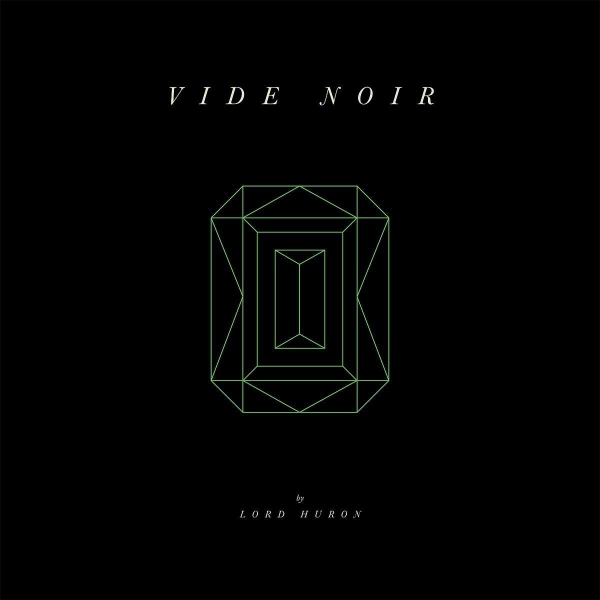
Ben Schneider, as is his tendency, is trying to remember the night we met. The Lord Huron mastermind believes it took place after a show where his fledgling band opened for Avi Buffalo. I always assumed it was Abe Vigoda. Either way, this is definitely an “LA indie rock in 2010″ story. That’s the world Lord Huron occupied in their early days, long before they evolved into an expansive festival-folk juggernaut that will take their fizzy and fuzzy upcoming third LP, the Dave Fridmann-mixed Vide Noir, to a large outdoor amphitheater near you.
Schneider recorded his first two EPs, Into The Sun and Mighty, entirely by himself and pulled almost exclusively from the prevailing trends of 2007-2009: throwing bits of Vampire Weekend, Grizzly Bear, Local Natives, Animal Collective, and Fleet Foxes into My Morning Jacket’s abandoned grain silo. They had a bearded percussionist who wore a washboard like a catcher’s chest protector. A friend of mine considers herself the biggest Lord Huron fan on Earth — the type that will just let Strange Trails and Lonesome Dreams repeat for an eight-hour workday on Spotify — but says she missed out on the original EPs. Her excuse: “They were so hipster back then.”
This is funny to Schneider because he can’t believe he was ever anyone’s idea of the quintessential Silver Lake indie rocker. The generally press-averse 33-year-old has kept the same Michigan phone number since he was a teen (“I couldn’t shake it, I gotta stay true to who I am”). He found his first big break not at the Satellite or the Echo, but as a result of following his sister’s advice and handing out CD-Rs of his self-recorded EPs (with Kinkos-made artwork) at a festival in Big Sur. “We didn’t have time to think about [our goals], it just started happening,” Schneider shrugs. “When the other guys came out here just to play a few shows, we thought it was really just to play a few shows. And they just never went home.”
And my friend’s explanation is funny to me because…here’s Schneider and I throwing around antiquated industry terms like “hipster,” “buzzband,” and “CMJ,” and it makes me feel like a grizzled prospector. A time when Lord Huron could conceivably be an indicator of our present moment feels like ancient history or science fiction at this point. Early favorite “The Stranger” was included on 2012’s Lonesome Dreams and Lord Huron’s beginnings already felt at odds with the sound they’d continue to develop on Strange Trails three years later — a toothy, wholesome Americana whose doomed drifters and outlaws drew from Southern and Wild West legend and were given a geographically indistinct twang. Meanwhile, their sleek multimedia presentation was an extension of Schneider’s art school-to-LA trajectory and background in graphic design.
Both Lonesome Dreams and Strange Trails were products of Schneider’s capacity for proggy world-building, their fictional narratives supplemented by movie trailers, Instagram-supplied Easter Eggs, and comic books. The songs of Lonesome Dreams were modeled after the works of George Ranger Johnson, a 71-year-old adventure novelist who resides in Tucson and also is not a real person. The videos for Strange Trails are glimpses into its own interior narrative, which involves a roving gang called the World Enders. Even beyond hiring Fridmann to provide his typically blown-out, bottom-heavy mix to the surprisingly propulsive and virile Vide Noir, it features Schneider’s most opulent and ambitious rollout. The band made seven songs from Vide Noir available to stream at geo-locations across the United States, Canada, and the United Kingdom, some of which include national parks, beaches, and a volcano. Lord Huron will also be releasing public access visuals that will air on local TV stations throughout America, and Schneider dubbed them on a handful of limited edition VHS tapes. There also comic books, the “choose your own adventure hotline” and the followtheemeraldstar.com website, which contains more information about all of the above.
Clearly, Schneider recognizes that user interface has been the driver of Lord Huron’s steady rise in lieu of an explosive, aisle-crossing hit or effusive critical acclaim. After landing a couple of TV syncs, “The Night We Met” was included in Netflix’s 13 Reasons Why and subsequently confirmed platinum nearly two years after it was released. (I still don’t know what it takes for a single to go “platinum” in the Spotify age and maybe you don’t either.) Reviews of Lonesome Dreams and Strange Trails have been cautiously positive and increasingly rare while Lord Huron have been entirely uninterested in producing content beyond their own albums. Yeah, when you type it all out, Lord Huron are diametrically opposed to every single thing that’s passed for the indie rock zeitgeist in the past six years, a strident course correction from the aughts’ more earnest, folky, and collegiate aesthetics. This seems to suit Schneider just fine. “We never try to be part of scene,” he says, less a statement of independence than his casual admittance of how hard it’s been for him to actually keep up with any scene; he’s just now getting into King Krule, for what it’s worth. Despite all of this — or maybe because of it — Lord Huron are way more popular than you think.
Last year saw plenty of bands once viewed as Lord Huron’s elder superiors return after long hiatuses, finding themselves in a skeptical, if not outwardly hostile, critical environment. Many tasked themselves with justifying their own existence, not to their fans, but to the “narrative” that no longer seemed interested in indie rock, especially apolitical indie rock made by white men in their 30s. In particular, Ed Droste from Grizzly Bear groused about how the current state of the music industry is destined to destroy bands “mid tier or lower,” presumably including himself in that mid tier. “Nobody cares about the craft of songwriting, and it’s impossible to put on a good tour,” he complained, later clarifying his remarks which otherwise paralleled with the prevalent idea that bands like his are being discarded in the interest of click-chasing.
And yet, Lord Huron have succeeded by caring about little else besides craft and touring. “We’ve always put a lot of time and effort into our live show. From the beginning, that’s been something I didn’t want to skimp on,” Schneider explains. “When we were coming up in 2010, we saw a lot of bands who, for better or worse, just did karaoke,” and yeah, I’ll concede to his version of our first encounter because he clearly remembers that year in its most accurate terms. “Because we’ve put so much time and effort into it, people are willing to watch us play live, and we’ve toured a lot. I still get goosebumps when I see that anyone in the audience knows any of the lyrics, it’s still a surreal experience for me.”
STEREOGUM: On what part of the live experience do you focus most of that extra “time and effort”?
SCHNEIDER: The first thing that we keep in mind is that it’s not gonna be the same thing as the record. It’s just not, no matter how hard you try — and I think that’s a healthy thing. It should be a different experience than sitting at home and listening to the record. So right off the bat, you have to let go of some of the instrumentation because we just can’t tour with a 20-piece band. It’s just making sure it sounds good — as simple as that sounds, it’s the thing we won’t compromise. There are some songs that people request a lot that we don’t play even though we want to, just because we’ve never been quite able to get it there. “Frozen Pines” is one we’ve struggled with for a long time, it’s just hard to describe why we can’t get it right, but we’ll keep trying. There are a couple from Lonesome Dreams and even “Mighty,” we’re always struggling to get that one to sound right because it’s so dense. It changes when you have your own front-of-house, but back then, we’d be playing 10 shows at SXSW just trying to explain to the sound man, “no…I’m serious, I want more reverb.” That was a constant struggle for us.
STEREOGUM: Likewise, it can sound gauche for a band to say that they were able to achieve their goals on an album on account of having more time and money, but how did you take advantage of a major label’s resources?
SCHNEIDER: It was nice to be able to work with Dave Fridmann. It’s something I’ve wanted to do for a long time and especially with the sound we wanted to get with this record, it just felt like a really great fit. He’s an incredible guy. It’s also just having the ability to pay people to help us make these videos and these films and all that, because I want everyone to benefit from it. But it’s also the time, that always seems to be the thing — on the road, you can’t really do much else besides be “on the road.” You can try to fit in working on other things and I’ll write a little bit, but it just takes up so much time. We know how important it is, so we’ll keep doing it.
STEREOGUM: Fridmann’s always been a big name for people like us in our 30s who came up on late-’90s indie rock. What were the albums he’s produced that made you think, “we gotta get this guy”?
SCHNEIDER: He’s been so consistent — he’s just always been a name that’s popped up on records, basically my whole life. From the very early Flaming Lips stuff through The Soft Bulletin and Yoshimi up to Tame Impala, even Baroness and stuff like that — he’s just done so many cool things, he always brings something fresh to whatever he works on. This is a very bass- and drums-heavy record, that’s his thing, so he’s the guy to call.
STEREOGUM: Was there a sense that Lord Huron had settled into a groove after Strange Trails?
SCHNEIDER: For us, [Vide Noir] was more about setting loose ground rules for this world, and then, it’s whatever feels like a good fit or colors it in an interesting way or adds something. I was just really into writing songs on bass and baritone guitar and it felt like it fit within this vibe very well. I never had that sense where “we’re reinventing ourselves!” or anything, it’s really just following what we’re interested in and making this thing that seems interesting to us. There’s plenty of acoustic guitar still on there, but usually, it’s distorted and blown to shit.
STEREOGUM: This is more of a nocturnal, insular album than past Lord Huron records. Have you thought about how this might translate in festival settings?
SCHNEIDER: That’s definitely something we’re thinking about and we’ve always struggled with that a little bit. We’d really like to be able to have “our show” and control the environment a little bit just to enhance the experience as much as possible. The reality is you gotta do these festivals and…they’re pretty fun in their own way. We just realize it’s not the same thing and you gotta have a different set list or type of vibe you’re trying to communicate. It’s nice that we have a deeper catalog where we can pick songs that fit that setting more than some of the stuff that might fit our own show a little better.
STEREOGUM: The lyrics of “Ancient Names (Part I)” and Vide Noir in general show an interest in the occult and superstition. Has there been anything recently that’s inspired you to look more into these realms?
SCHNEIDER: I think it’s just an interesting way to think about the future or your fate or whatever’s coming your way — to consider if there was some way to foresee that at all. And a big thing I was thinking about with this record: I’m all for science and I believe in it and I’m happy to see a lot of the destructive superstitions and strange beliefs we’ve developed over the years being destroyed with our scientific discoveries. Another part of me laments their loss. Superstition and religion, for all of its negative effects, has this interesting beauty to me that humans have created, especially mythology, legend and fortune tellers, things like “the 13th floor of a building.” All this weird stuff that’s been irrefutably overturned that we still hang on to, I’m interested in how we preserve some of that stuff just because there’s a certain truth and beauty in it.
STEREOGUM: Such as, “The Balancer’s Eye.”
SCHNEIDER: “Balancer’s Eye” is one we created ourselves, making up our own myths as we go. We’re trying to keep it so all that stuff is still around in this world too. You’ll see things that appeared on other records, ideas or names cross over to [Vide Noir]. In movies and literature and comic books, I’ve always liked where there’s connectedness or crossover. We need someone to control the lore and keep tabs on it [laughs].
STEREOGUM: Are there hardcore Lord Huron fans that point out discrepancies or contradictions in the worlds you’ve created?
SCHNEIDER: We definitely have some fans who are deep into it, which is helpful, they can kinda help us sort things out. Because a lot of times, I don’t even know what it means.
STEREOGUM: What new influences were you looking toward to help build this world?
SCHNEIDER: One thing that’s maybe a strange inspiration is Raymond Chandler, and I was trying to get that kind of vibe, even down to the title. I wanted to pay homage to the old noir and sci-fi. The picture he paints of LA is so iconic and so appealing to me. I can still see it when I drive around, the world he was describing in those books. I love the idea of someone going on an odyssey through the city trying to figure something out.
STEREOGUM: Even going back to the first EPs, I’d describe most of the narrators in Lord Huron songs as just that — this kind of lone, masculine figure trying to make sense of a world that’s seemingly passing him by. In the past couple of years, there’s been a more critical view taken of Old Hollywood and especially the more stereotypically masculine writers like Raymond Chandler, Norman Mailer, and such. Have you had to reassess what this means for your writing?
SCHNEIDER: The character that often appears [in Lord Huron songs], for better or for worse — I’m not gonna deny it’s some component of me. Whatever I write, I start from a nugget of something that happened to me or someone really close to me and let it spin off into fiction. But the way I always look at that character was a kind of false masculinity. If you think about what ends up happening to this character or group of characters, it’s often foolishness and in some cases hubris, and they generally end up ruining themselves. The way I’ve always thought of it was that I was casting a critical eye towards that sort of male trope in a lot of ways — it’s false. And I think it’s often a trap for people. It’s something that maybe I’ve struggled with a bit and the idea of being a loner, maybe it has appeal in a fictional way but if you really think about what that person’s life is like, it’s like…not such a rosy picture.
STEREOGUM: That’s a similar perspective I got from talking to artists like Greg Dulli and George from Twin Shadow about Confess — their imagery and lyrical content presents as machismo, but they’ve both viewed their past work as cautionary tales. But given the dialogue of 2018, are you concerned that people will just take lyrics like, “she went west to chase her dreams/ she took my money but she didn’t take me” at face value?
SCHNEIDER: I love seeing how different people interpret what we do. It’s interesting, a lot of people contact us about using our songs in their wedding or something and I think they’ll only fixate on one part of that story because almost always, they end in a way that I don’t think you want to associate with your marriage. I think that’s cool, though. I’m sure you’re never gonna please everybody, but I try to approach songwriting in a somewhat responsible way, or I’m honestly assessing it. But it’ll be interesting to see that, I do wonder.
Vide Noir is out 4/20 via Whispering Pines/Republic Records. Pre-order it here.
TAGS: Lord Huron
Thursday, March 30, 2017
Tuesday, February 28, 2017
Friday, February 24, 2017
Getting Lost in Lord Huron’s Immersive Worlds
April 14, 2015

Every track on Lord Huron’s 2012 debut Lonesome Dreams took its title and lyrical inspiration from an anthology of old western adventure tales. George Ranger Johnson, a prolific, but relatively underappreciated writer, wrote 10 installments of his series between the ‘60s and ‘80s, with an eleventh incomplete work that never saw the light of day. Though Johnson does maintain a relatively sparse website, those interested in his writing will inevitably hit a brick wall in finding any of his out-of-print books, because Johnson does not actually exist.
Inspired by Kilgore Trout, the shapeshifting sci-fi writer referenced throughout Kurt Vonnegut’s novels, Johnson is but a piece of band founder Ben Schneider’s longstanding fascination with narrative world-building. When conceptualizing music videos for the various singles featured on Lonesome Dreams, Schneider and his bandmates Mark Berry (drums), Tom Renaud (guitar) and Miguel Briseno (bass) went so far as to re-enact the adventures described in Johnson’s stories. Naturally, Schneider played the role of the recurring protagonist “Lord Huron.”
“I really like when I work on something to have as much background and context as I can possibly have,” says Schneider in the backyard of his Mount Washington home located just outside downtown Los Angeles. “It helps me write the songs and and feel like it’s more fleshed out. The concepts are more real.” Providing listeners with several layers of meaning is key for Lord Huron. “I’ve always been drawn to stuff I can really inhabit and immerse myself in. We wanted to create projects that you engage on multiple levels. If you’re just interested in the music that’s totally cool. Just listen to the music. But if you’re interested in getting into some of the ephemera that we create around it, there’s this whole sort of world you can dive into. I’ve always sort of appreciated storytelling and these days it’s really easy to craft a very rich world across multiple media.”
Lord Huron is once again exploring this interconnectivity of art forms on their sophomore LP,Strange Trails. The 14-track album was recorded at Whispering Pines, a formerly abandoned studio Schneider and his bandmates renovated themselves last year. Located down an alleyway behind an auto shop in L.A.’s West Adams neighborhood, the space was discovered by the group after answering a Craigslist ad. Left unused for over 20 years, the place was in significant disrepair. But after stripping out a lot of old gear, cabling, and other equipment, the fixer-upper now functions as a legitimate clubhouse for recording, rehearsals and upcoming in-house performances.
No longer faced with the time-constrained restrictions that come with renting someone else’s space on a per diem basis, Schneider says recording lent itself to more experimentation. “It felt a little more natural,” he says. “We were able to live with the material a little bit more and I think that tightened up the songwriting and the arrangements.” The extra time also allowed Schneider to expand on the setting and tenor that was established with the group’s first record. Whereas Lonesome Dreams glided exclusively on a frontier, man-with-no-name romanticism, Strange Trails takes that same pulp aesthetic and broadens its scope. Here Lord Huron veers narratives into weirder, darker places such as vintage sci-fi or horror. From being confronted by a “visitor…from the great beyond” on “Until the Night Turns,” to a living corpse that refuses to buried in “Dead Man’s Hand,” to a cursed spirit on a path of vengeance and death in “The World Ender,” the band’s campfire cast of characters all endure more otherworldly journeys.
Schneider says horror genre comics such as Alan Moore’s run of Swamp Thing and the work of Charles Burns—best known for the graphic novel Black Hole—were a large influence on this tonal shift. “On the road touring I was reading a lot of comics. When we were in a new town I would go to the record store and the comic store and I’d come back with a couple things.” As the rollout for Strange Trails kicks into gear, Schneider has already begun building the album’s multi-media world around this comic book inspiration. The artwork for their most recent single, “The World Ender,” consists of an aged comic book cover starring a protagonist decked out with a Ghost Rider skull and leather jacket. Taking things even further, Schneider says he plans to publish his own limited comic series, co-written with his sister, featuring characters and connective threads born out of certain songs. With his own chapter-based music videos and short films also in the works, Schneider says, “We’ll see what else we come up with. We started this whole other world with Strange Trails that revolves around the stories in these songs.”
As Schneider and his band continue to push the boundaries of an album’s visual element beyond a well-crafted cover sleeve, the focus of Lord Huron always returns to the music and its ability to transport audiences somewhere else—like any good tale should. “For me it’s more about communicating a story,” Schneider says. “If it’s not a literal story, some sort of mood and vibe which communicates a narrative in its own way. That’s the main thing I’m trying to do: communicate a narrative that comes in varying degrees of storytelling.”
Meet Lord Huron, a Musical Project That Is Also an Alternate Reality Game
NICOLE PERLROTH
https://bits.blogs.nytimes.com/
February 19, 2014

OAKLAND, Calif. — Ask Ben Schneider to name the inspiration for his band, Lord Huron, and he will name George Ranger Johnson, one of the more prolific Western adventure novelists you’ve never heard of.
That’s because Mr. Schneider, Lord Huron’s frontman, made him up. He made up George Ranger Johnson’s website, too. Admirers looking to buy one of Mr. Johnson’s novels will be disappointed to find they are all, conveniently, out of print, and that all the book titles are identical to Lord Huron songs.
George Ranger Johnson is, in fact, just one character in the digital fantasy world Mr. Schneider has created for his band, Lord Huron.Lord Huron songs have accompanying video “trailers” on YouTube, each featuring the band’s protagonist, Lord Huron, played by Mr. Schneider, his trusty companion, Admiral Blaquefut (drummer Mark Berry), and band members Miguel Briseno (bass, percussion), Tom Renaud (guitar, vocals) and Karl Kerfoot (guitar, vocals) as they venture across deserts, mountaintops and tundras re-enacting the adventures of a fake novel series written by an author who does not exist offline.
“People are always lamenting the loss of the record sleeve, which I understand,” Mr. Schneider said recently over coffee. “I loved looking at the artwork and imagining the people who made the music and the lives they inhabited. But now I think we can create an even richer experience with new technology available to us.”
The effect is a digital scavenger hunt of sorts with multiple entry points to the band’s music beyond Pandora, Spotify and old-fashioned tours and radio. Some of the band’s YouTube trailers have received half a million views. Fans also find their music on Vimeo and via Lord Huron’s digital “postcards,” short snippets of song and art the band posts to its Facebook page and Twitter account.
“The more places you are, the more people you can reach,” Mr. Schneider said. It also explains Lord Huron’s diverse audience, which ranges from enthusiastic 16-year-old girls to 60-year-old men.
Mr. Schneider, the soft-spoken digital artist who started Lord Huron as a solo visual and musical project four years ago, is a long way from his hometown, Okemos, Mich. Lord Huron is now headlining its first tour, after touring with Alt-J, the futuristic indie band, last September. The band made the rounds at the Coachella, South by Southwest, Outside Lands, Bonnaroo and Firefly music festivals last year and popped up on The Tonight Show, Jimmy Kimmel Live and, conspicuously, in a recent Zales ad.Four years ago, Mr. Schneider was working in a job he loathed as art director at a small advertising agency in Los Angeles, developing projects for pizza chains and an online poker outfit.
He found a creative outlet in alternate reality games, or A.R.G.s, interactive games that use multiple media and game elements to tell a story. A.R.G. designers will often leave digital crumbs and puzzles on various websites — some for fake organizations or fake people (like Mr. Johnson) — for players to follow. Players often try to solve the games communally by pooling clues together in online discussion forums, where commenters are often suspected of being the game designers themselves.
A.R.G. historians often pinpoint Pink Floyd’s “Publius Enigma” as the first Alternate Reality game, which began when someone named “Publius” began posting enigmatic messages in a Pink Floyd Usenet forum in 1994. Later that year, the words “ENIGMA PUBLIUS” appeared in the band’s concert lights at a New Jersey concert. (Spoiler alert: the Pink Floyd drummer Nick Mason said in his biography that Publius Enigma was the work of the band’s record label.)
Mr. Schneider designed visually elaborate A.R.G.s of his own. The most intricate involved a fake history exhibit for a fake scholarly society that believed Antarctica was once inhabited by a fake ancient civilization. He built a website for the society, which included biographies for some of its most respected scholars. At one point, the site promoted a real world exhibit, where Mr. Schneider hired actors to play members of the society and an opposing society who boycotted the exhibit outside. The exhibit included music, but mostly as an afterthought.
Not many showed up. Those that did were a little perplexed. “People really didn’t know what to make of it,” Mr. Schneider said. “The actors I could afford weren’t exactly the best. So people got there and they were just kind of confused.”
He never claimed authorship and, to this day, he will not name the project because he likes the idea of the puppet master remaining forever anonymous. (Perhaps this article will offer resourceful players the final clue.)
But his projects floundered and the day job was creatively draining. “I just couldn’t find a place for myself in the art world,” he said. “It wasn’t for me.”
In 2010, Mr. Schneider left Los Angeles for a week to regroup on the shores of Lake Huron, in his home state, Michigan. He recorded a few songs and created the artwork for what would later become Lord Huron. With some nudging from his sister, he left some of his CDs and art on a merchandise table at the Woodsist festival in Big Sur, Calif., where they were picked up by the San Francisco music blogger Yourstru.ly.
Soon people were asking when Lord Huron would be going on tour. That presented a few logistical problems. “I didn’t really know any other musicians.”
He called up the only musicians he knew: His childhood friends from Okemos. They played their first show in May 2010 and are still touring together four years later.
Mr. Schneider says he was determined to give Lord Huron some of the immersive flavor of his multimedia installations. “You can enjoy the music on your own if you want to, but I also wanted there to be more to dig into.”The band worked with Jacob Mendel, a friend from Michigan, to create their first official music video, “The Stranger.” Videos for “Lonesome Dreams”, “Time To Run” and “Mighty” and followed. Lord Huron offered The New York Times an exclusive look at the new video for “She Lit a Fire”.
Each video claims to be based on chapters in George Ranger Johnson’s “Lonesome Dream” novel series. They feature the band wandering across icy plateaus, rocky coasts, and deserts, often in locations that are difficult to pin down. In one, Lord Huron is chased by a group of what appear to be Villista bandits yelling “We will kill you” in Indonesian. Lord Huron replies, “Kau tidak akan pernah membawaku hidup-hidup!” The band’s EP covers and Facebook page are filled with imagery that doesn’t quite make sense: elephants in oceans, rivers running backward, a palm tree-filled Machu Picchu.
Mr. Schneider said the band’s videos and art were intended to be disorienting and foster a sense of dislocation, like his music. His lyrics dwell on lonesome themes and strange places, and though Lord Huron’s sound has been compared to indie bands like My Morning Jacket and Fleet Foxes, it has an undeniable world influence, too.
“It’s a hodgepodge of different music and cultures that you can’t quite put your finger on,” he says.
The band is working on its next album and experimenting with new digital entry points. Before heading out on tour last January, Mr. Schneider made a brief pit stop in Michigan to see his family and put together a treasure hunt for his 18-month-old nephew to discover when he turns 5.
He is trying to do something similar for Lord Huron. The band is contemplating using a smartphone app that would force listeners to visit a specific physical location — perhaps a strange mountain top, desert or icy tundra — to unlock a Lord Huron song.
“Maybe that’s what I’m trying to create,” Mr. Schneider said. “A musical place that is a little bit of a getaway.”
https://bits.blogs.nytimes.com/2014/02/19/meet-lord-huron-a-musical-project-that-is-also-an-alternate-reality-game/?_r=0
February 19, 2014
OAKLAND, Calif. — Ask Ben Schneider to name the inspiration for his band, Lord Huron, and he will name George Ranger Johnson, one of the more prolific Western adventure novelists you’ve never heard of.
That’s because Mr. Schneider, Lord Huron’s frontman, made him up. He made up George Ranger Johnson’s website, too. Admirers looking to buy one of Mr. Johnson’s novels will be disappointed to find they are all, conveniently, out of print, and that all the book titles are identical to Lord Huron songs.
George Ranger Johnson is, in fact, just one character in the digital fantasy world Mr. Schneider has created for his band, Lord Huron.Lord Huron songs have accompanying video “trailers” on YouTube, each featuring the band’s protagonist, Lord Huron, played by Mr. Schneider, his trusty companion, Admiral Blaquefut (drummer Mark Berry), and band members Miguel Briseno (bass, percussion), Tom Renaud (guitar, vocals) and Karl Kerfoot (guitar, vocals) as they venture across deserts, mountaintops and tundras re-enacting the adventures of a fake novel series written by an author who does not exist offline.
“People are always lamenting the loss of the record sleeve, which I understand,” Mr. Schneider said recently over coffee. “I loved looking at the artwork and imagining the people who made the music and the lives they inhabited. But now I think we can create an even richer experience with new technology available to us.”
The effect is a digital scavenger hunt of sorts with multiple entry points to the band’s music beyond Pandora, Spotify and old-fashioned tours and radio. Some of the band’s YouTube trailers have received half a million views. Fans also find their music on Vimeo and via Lord Huron’s digital “postcards,” short snippets of song and art the band posts to its Facebook page and Twitter account.
“The more places you are, the more people you can reach,” Mr. Schneider said. It also explains Lord Huron’s diverse audience, which ranges from enthusiastic 16-year-old girls to 60-year-old men.
Mr. Schneider, the soft-spoken digital artist who started Lord Huron as a solo visual and musical project four years ago, is a long way from his hometown, Okemos, Mich. Lord Huron is now headlining its first tour, after touring with Alt-J, the futuristic indie band, last September. The band made the rounds at the Coachella, South by Southwest, Outside Lands, Bonnaroo and Firefly music festivals last year and popped up on The Tonight Show, Jimmy Kimmel Live and, conspicuously, in a recent Zales ad.Four years ago, Mr. Schneider was working in a job he loathed as art director at a small advertising agency in Los Angeles, developing projects for pizza chains and an online poker outfit.
He found a creative outlet in alternate reality games, or A.R.G.s, interactive games that use multiple media and game elements to tell a story. A.R.G. designers will often leave digital crumbs and puzzles on various websites — some for fake organizations or fake people (like Mr. Johnson) — for players to follow. Players often try to solve the games communally by pooling clues together in online discussion forums, where commenters are often suspected of being the game designers themselves.
A.R.G. historians often pinpoint Pink Floyd’s “Publius Enigma” as the first Alternate Reality game, which began when someone named “Publius” began posting enigmatic messages in a Pink Floyd Usenet forum in 1994. Later that year, the words “ENIGMA PUBLIUS” appeared in the band’s concert lights at a New Jersey concert. (Spoiler alert: the Pink Floyd drummer Nick Mason said in his biography that Publius Enigma was the work of the band’s record label.)
Mr. Schneider designed visually elaborate A.R.G.s of his own. The most intricate involved a fake history exhibit for a fake scholarly society that believed Antarctica was once inhabited by a fake ancient civilization. He built a website for the society, which included biographies for some of its most respected scholars. At one point, the site promoted a real world exhibit, where Mr. Schneider hired actors to play members of the society and an opposing society who boycotted the exhibit outside. The exhibit included music, but mostly as an afterthought.
Not many showed up. Those that did were a little perplexed. “People really didn’t know what to make of it,” Mr. Schneider said. “The actors I could afford weren’t exactly the best. So people got there and they were just kind of confused.”
He never claimed authorship and, to this day, he will not name the project because he likes the idea of the puppet master remaining forever anonymous. (Perhaps this article will offer resourceful players the final clue.)
But his projects floundered and the day job was creatively draining. “I just couldn’t find a place for myself in the art world,” he said. “It wasn’t for me.”
In 2010, Mr. Schneider left Los Angeles for a week to regroup on the shores of Lake Huron, in his home state, Michigan. He recorded a few songs and created the artwork for what would later become Lord Huron. With some nudging from his sister, he left some of his CDs and art on a merchandise table at the Woodsist festival in Big Sur, Calif., where they were picked up by the San Francisco music blogger Yourstru.ly.
Soon people were asking when Lord Huron would be going on tour. That presented a few logistical problems. “I didn’t really know any other musicians.”
He called up the only musicians he knew: His childhood friends from Okemos. They played their first show in May 2010 and are still touring together four years later.
Mr. Schneider says he was determined to give Lord Huron some of the immersive flavor of his multimedia installations. “You can enjoy the music on your own if you want to, but I also wanted there to be more to dig into.”The band worked with Jacob Mendel, a friend from Michigan, to create their first official music video, “The Stranger.” Videos for “Lonesome Dreams”, “Time To Run” and “Mighty” and followed. Lord Huron offered The New York Times an exclusive look at the new video for “She Lit a Fire”.
Each video claims to be based on chapters in George Ranger Johnson’s “Lonesome Dream” novel series. They feature the band wandering across icy plateaus, rocky coasts, and deserts, often in locations that are difficult to pin down. In one, Lord Huron is chased by a group of what appear to be Villista bandits yelling “We will kill you” in Indonesian. Lord Huron replies, “Kau tidak akan pernah membawaku hidup-hidup!” The band’s EP covers and Facebook page are filled with imagery that doesn’t quite make sense: elephants in oceans, rivers running backward, a palm tree-filled Machu Picchu.
Mr. Schneider said the band’s videos and art were intended to be disorienting and foster a sense of dislocation, like his music. His lyrics dwell on lonesome themes and strange places, and though Lord Huron’s sound has been compared to indie bands like My Morning Jacket and Fleet Foxes, it has an undeniable world influence, too.
“It’s a hodgepodge of different music and cultures that you can’t quite put your finger on,” he says.
The band is working on its next album and experimenting with new digital entry points. Before heading out on tour last January, Mr. Schneider made a brief pit stop in Michigan to see his family and put together a treasure hunt for his 18-month-old nephew to discover when he turns 5.
He is trying to do something similar for Lord Huron. The band is contemplating using a smartphone app that would force listeners to visit a specific physical location — perhaps a strange mountain top, desert or icy tundra — to unlock a Lord Huron song.
“Maybe that’s what I’m trying to create,” Mr. Schneider said. “A musical place that is a little bit of a getaway.”
https://bits.blogs.nytimes.com/2014/02/19/meet-lord-huron-a-musical-project-that-is-also-an-alternate-reality-game/?_r=0
Thursday, February 23, 2017
Subscribe to:
Posts (Atom)