Thursday, November 01, 2018

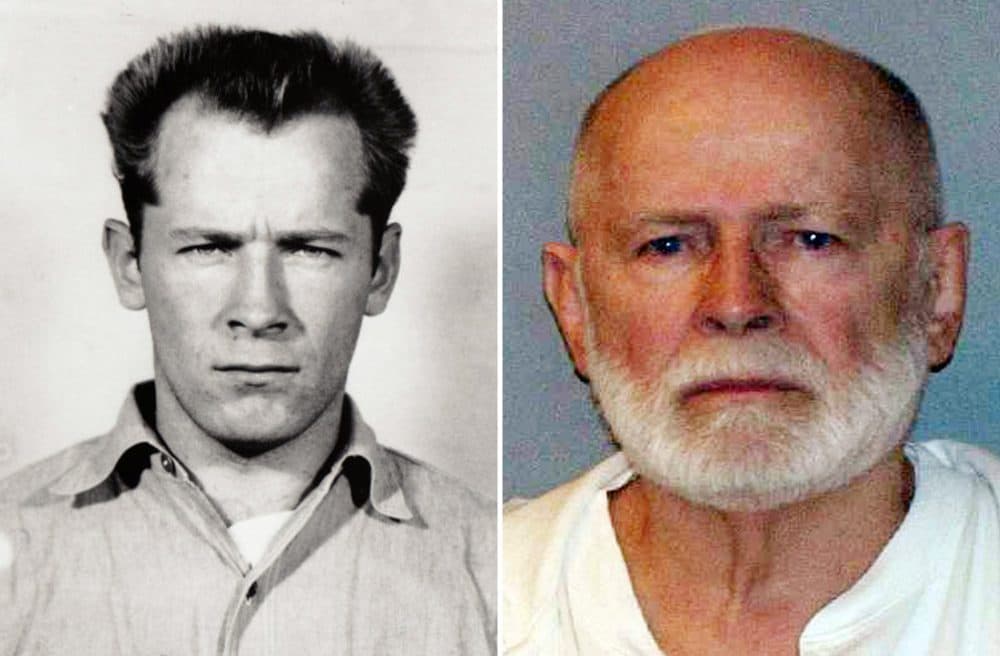
Whitey Bulger's death leaves legacy of destruction, questions about missing millions


By Howie Carr
October 31, 2018

Image result for whitey bulger

Two final questions remain: Where are Whitey’s millions, his ill-gotten gains in cocaine cash?

And who’s got it, or is planning to get it?

The monster was murdered at a federal pen in West Virginia yesterday at age 89 —  better late than never, I guess.

Was he murdered by a hit squad —  from the Mafia, maybe, or perhaps even the Deep State? Whitey knew where a lot of bodies were buried —  figuratively as well as literally. Those were the rumors anyway yesterday.

“It’s perfect karma,” said Johnny Martorano, the co-founder of the Winter Hill Gang. “He ratted all these guys into prison, and that’s where he gets it in the end. Karma. Everybody I know is celebrating tonight.”

That would include me, by the way. I understand that you’re not supposed to speak ill of the dead. But there’s another old saying I remember, from Winston Churchill: There is nothing so exhilarating as being shot at without effect.

But you know what comes close to that kind of exhilaration? Having a guy put out a murder contract on you and then he’s the one who gets murdered.

Like Martorano said, it’s perfect karma.

I just thought of another unanswered question: Just how many people did Whitey Bulger murder over the course of his bloodthirsty career? I guess we’ll never know for sure now. His partner Stevie Flemmi last summer copped to being involved in more than 50 rub-outs one way or another.

Whitey was indicted by the feds for 19 murders, for which they had him cold, but a nutty juror stopped him from being convicted of eight. But there were so many more. Over the years, I would periodically get a Xeroxed old newspaper clipping from the ’60s or ’70s, with a handwritten note:

“This is a story from the Record about uncle’s murder. He was a bookie in (fill in the blank). Do you think Whitey killed him?”

Don’t know for sure, I would tell them, but yeah, he probably did.

But the murder toll is only the tip of the human devastation he wrought. 

Whitey not only ruined the neighborhood, he ruined all the neighbors. The Davises, the Husseys, the Barretts, so many. One burglar who he killed for no particular reason other than to steal a few thousand bucks —  that guy had two sons who both ended up as suicides, throwing themselves in front of Red Line trains. Whitey’s girlfriend —  Catherine Greig, who’s still in prison in Minnesota for two more years. Whitey murdered not one, but two of her brothers-in-law, the McGonagles. After he whacked Paulie McGonagle, at Christmas, he called up the McGonagles’ house and told his 12-year-old his father wouldn’t be coming home for Christmas.

“Who is this?” the young orphan asked.

“Santa Claus,” Whitey sneered at him.

How about state trooper Billy Johnson, a decorated Vietnam veteran, his career destroyed by hacks at the State House because he had the audacity to stop Whitey from taking a satchelful of cash onto a Montreal flight at Logan airport. Johnson ended up killing himself.

How about Stippo Rakes? Whitey stole his liquor store from him and then made him come back to Southie from Florida to stand in the rotary to prove that he hadn’t been murdered. Although he was, later, just not by Whitey.

How about former state police Lt. Col. Jack O’Donovan? He ordered a bug in Whitey’s garage on Lancaster Street. In the next state budget, an anonymous rider ended up as an outside section, which would have forced the immediate retirement (i.e., firing) of O’D. 

Thank goodness Ed King was the governor back then, and not Mike Dukakis, because King stood up to the mob, vetoed the section and saved O’D’s job.

If ever a guy deserved to get it that way, it was Whitey Bulger. What goes around, comes around. Whitey sleeps with the fishes. They made a movie about him, sort of. It was called “The Departed.”

Now they can make the sequel —  “Dearly Departed.”

Order Howie’s book at the trial of Whitey Bulger, “Ratman,” at howiecarrshow.com.

Willie McCovey’s legend is secure in Bay Area


By Mark Purdy
October 31, 2018
Related image
How incredibly sad to hear that Willie McCovey is no longer with us. His death Wednesday at age 80 was not unexpected. It was still crushing news, for all who loved and admired him. And that was a big club.
Yet I do feel good about one thing. McCovey died knowing he will never be forgotten in the baseball world — and especially in Northern California. McCovey once told me that he was truly worried about that, strange as that might sound.
The unique relationship I had with the man began at a construction site. He was not even there at the time. I was. And I believed McCovey’s name should be there, too.
This was back in 1999. The Giants’ new home, AT&T Park, was being built in San Francisco. I happened to be driving past the project. I knew there was going to be a statue of Willie Mays in the main plaza. However, nothing was planned to recognize McCovey.
That needed to change. Mays was the greatest San Francisco Giant. McCovey, though, was the most beloved. As I motored up Third Street that afternoon, I noticed how the waves of China Basin were lapping up against a walkway beyond the right-field wall. I thought it would be much better to have McCovey’s name on that piece of water.
A few strident newspaper columns later, the Giants and San Francisco bought my idea. McCovey Cove became a reality. Then it became a scene, a phenomenon. Then an institution. Just the way I had hoped.
And yes, we would talk about that.
“It’s gotten to the point now that I just don’t feel like it’s me,” McCovey said during one of those conversations. “It’s just a thing, you know, called McCovey Cove. People ask me, ‘How do you feel, seeing your name mentioned so much like that?’ I’ve kind of gotten numb to it, like it’s not really me. You know, it’s an honor. But it’s like when I see something on television about me … it’s hard to get into your head that it’s you up there. That’s hard to explain to people.”
Well, it is if you are a humble human being. McCovey qualified on an expert level.
As a teenager in the Midwest, I never quite believed the stories about McCovey actually being more popular than Mays in the Bay Area. How could that be? Mays was the greatest Giant ever, perhaps the greatest baseball player ever.
Then I grew up to become a sports journalist and met both men. I immediately understood.
Mays and McCovey grew up in the segregated south. They had legitimate reasons to carry chips on their shoulders. But only one of them seemed to do so. Mays was a baseball genius but often a contrarian. He was accessible to fans or writers strictly on his terms. You would ask Mays a question about apples and he might answer with a cranky dissertation on oranges. McCovey erected no such barriers. If you approached him with a question or request and he believed that you were sincere, he was open for business with a genuine earnestness.
Also, as any longtime local fan will tell you, McCovey was the first non-inherited Giants star. Mays had moved west with the team from New York in 1958. McCovey came up from the minors a year later and went 4 for 4 in his first game at Seals Stadium. A few days later, he hit two homers in a game. The love affair commenced and never ended.
You can read his remarkable career statistics elsewhere. But more than any numbers, this quote from former Los Angeles Dodgers manager Walter Alston captures McCovey’s reputation: “When he belts a home run, he does it with such authority it seems like an act of God.”
Given all this, McCovey Cove was a natural idea. Just before it was dedicated, we met for lunch. I promised that I would never write about our exact conversation. So I won’t. But I’ll always treasure that day. We were not close friends. And because of my very small role in his life, I did get to spend some pretty cool moments with him.
The coolest of those moments occurred the day before the 2007 All-Star Game in San Francisco. McCovey allowed me to tag along with him for the home run derby ceremonies. About an hour before it began, we were in the office of Giants equipment manager Mike Murphy. Mays was there, too. So was Frank Robinson. I did the math. There were 1,767 career home runs in that room. None were mine or Murphy’s.
At such times, a good reporter knows to just shut up and observe. And you could tell how much Mays and Robinson respected McCovey just by how they became quiet when he spoke. They laughed as McCovey described one of his home runs that landed on an electric transformer beyond the fence at old Busch Stadium in St. Louis and short-circuited the power for a while. And there were headshakes of admiration when McCovey told the story of depositing another homer into a municipal swimming pool across the right-field wall at Montreal’s old Jarry Park.
Later that afternoon, McCovey received a standing ovation when he was introduced to the AT&T crowd. He proudly strode to the third-base line using the arm braces he needed to walk because of his troubled knees. Then he unhooked one brace so that he could raise his left arm and wave, before settling into a special easy chair near the home dugout to watch the derby.
Those damn knee problems were McCovey’s ongoing misery, a vestige of his playing days. The knees developed arthritis. He underwent experimental surgery to shave off a portion of his bones. It failed. McCovey received artificial knee replacements but developed a staph infection in one and was bedridden for months while it was treated. He never did recover totally.
There were other heartbreaks. After his retirement as a player, McCovey had been employed by the Giants as an instructor and community representative. But he was swept into a federal income tax controversy regarding card-show income that took a long while to sort out and settle. Then came the medical issues. The result was, when Peter Magowan’s ownership group took over the team in 1993, McCovey somehow slipped through the cracks. Mays, Orlando Cepeda and Juan Marichal were utilized as famous faces of the franchise in public roles. McCovey wasn’t.
At the time, this was what sparked McCovey’s concerns about being forgotten — as he confided to me shortly before the Giants also erected a statue of him on the shores of his Cove.
‘’It looked like I was being left out on a lot of the things going on with the Giants,” McCovey said. “There might have been a misunderstanding. I don’t like to open up a can of worms. I don’t know if it was intentional and don’t want to accuse anyone of anything. But if I was left out, it isn’t that way anymore. The ice has finally been broken.’’
More like smashed. The rest of his life, McCovey was a venerated guest at AT&T Park, as he should have been. He would ride in a golf cart through the corridor beneath the lower deck to the clubhouse for visits. He would ride the elevator up to a suite and watch the games. He would appear on the field to present the annual Willie Mac Award for “best exemplifying the spirit and leadership” shown by McCovey during his career.
So depressing to know he won’t be at those presentations again. But the Cove will always be there. And he understood that completely, thank goodness.
‘’Let’s face it,” McCovey told me once in an emotional moment. “To know there’s going to be something left behind after you leave with your name on it, it’s all you can ask. I thought it was an honor when the Little League field in Woodside was named after me, but this is even better. The only people who know about that are the people in Woodside. Everybody will know about this.’’
When I re-read that quote, I get emotional myself. Rest in peace, humble legend.

Willie McCovey’s presence was one of a kind


By Bruce Jenkins
https://www.sfchronicle.com/giants/jenkins/article/Willie-McCovey-s-presence-was-one-of-a-kind-13353073.php#photo-16428390?utm_campaign=facebook-premium&utm_source=CMS%20Sharing%20Button&utm_medium=social
October 31, 2018

Image result for willie mccovey
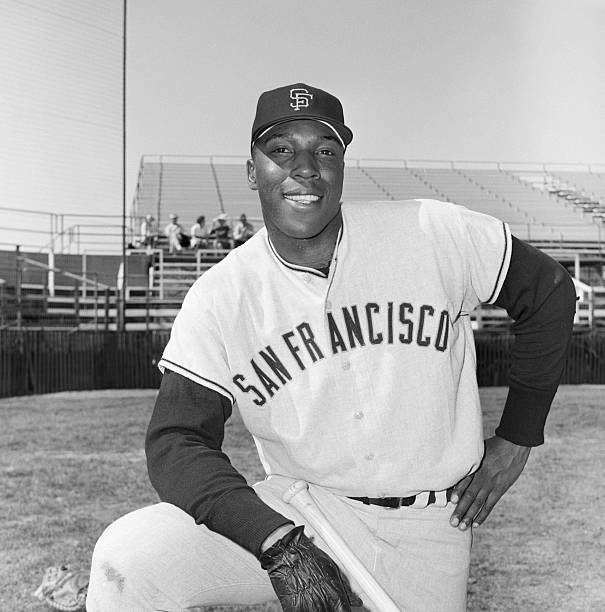
McCovey in 1964 (Getty Images)

A certain arrogance accompanied many of baseball’s most feared hitters over the years, the likes of Babe Ruth, Reggie Jackson and Barry Bonds inviting controversy with a roguish persona. Willie McCovey was the gentleman superstar, often described as a man without enemies.
McCovey, who died at the age of 80 on Wednesday afternoon, was among the classiest athletes ever to grace the Bay Area. Humble and soft-spoken, always clearly grateful for the life he was able to live, he stepped to the plate and cast a giant shadow over the proceedings — particularly the opposing dugout. In the wake of his titanic, tape-measure shots, a number of pitchers figured the most clever strategy was to just deliver four balls and let him walk.
Sparky Anderson, who managed the great Cincinnati teams of the 1970s, once said: “There’s no comparison between McCovey and anybody else in the league.” Such was the man’s presence, and nobody realized that more than the Giants. McCovey was once considered so valuable to the organization that the team was willing to trade future Hall of Famer Orlando Cepeda to solve a roster conundrum.
Seasoned fans won’t forget McCovey’s debut in the big leagues. Summoned from the minors on July 30, 1959, he was placed third in the batting order — between Willie Mays and Cepeda — for a game against the Phillies at Seals Stadium. Robin Roberts, one of the great pitchers of that time, was on the mound but McCovey was undaunted, going 4-for-4 with two triples as the Giants prevailed 7-2.
As formidable as he looked, it didn’t figure that McCovey would stick with the big club. The Giants had Cepeda, coming off a Rookie of the Year ’58 season, firmly stationed at first base. But returning to the minors would not be an option. McCovey hit .467 over his first seven games, had a 22-game hitting streak, and finished his two-month trial batting .354 with 13 home runs and 38 RBIs.
Just as certain batting stances stay in the memory through time — think Willie Stargell or Joe Morgan among the great left-handed hitters — McCovey’s was unmistakable. At 6-foot-4 and 200 pounds, he had a slow, languid practice swing that turned to lightning when the pitch arrived. Opposite-field hitting wasn’t his thing; he crafted a lifetime of memories with howling, dead-pull rockets, so many of them destined to cut through the San Francisco chill and over the fence by miles.
Imagine the conundrum for manager Bill Rigney and his successor, Alvin Dark. They experimented with Cepeda at third, while giving both McCovey and Cepeda a shot in the outfield, and as much as it hurt the club defensively, few teams in history could approach the potency of those two men in the same lineup with Mays. The three of them tormented National League pitching until 1966, when Cepeda was traded to the St. Louis Cardinals.
Not only did the Giants lose their most beloved player among the fan base, the Cepeda deal (for pitcher Ray Sadecki) goes down with the worst deals in franchise history. But it cleared the way for McCovey, who had battled knee problems from the beginning and was now set to play first base for the remainder of his career.
Gracious, what havoc he wreaked. In 1968, the so-called “year of the pitcher,” offensive numbers were so paltry throughout the majors, the pitcher’s mound was lowered for the following season. McCovey didn’t seem to get the message, leading the National League with 36 homers and 105 RBIs and finishing third in the MVP voting. The following year he won the award, posting his best-ever season with a .320 average, 45 homers and 126 RBIs.
That was right about the time pitchers figured out that there was no feasible way to get McCovey out. From 1969 through ’73, he led the league in intentional walks four times.
Among those who loved to challenge McCovey, the Dodgers’ Don Drysdale stood out. A tall, ill-tempered side-armer who loved to send hitters (including Mays) sprawling into the dirt with brushback pitches, Drysdale had no answer for McCovey. He said McCovey was the toughest hitter he ever faced, as if L.A. fans needed any reminders. From 1959 through ’62, he hit .543 with seven homers against Drysdale.
Giants lore is never complete without a most regrettable episode in the 1962 World Series. The Giants had finally made it, after many close-call seasons, and it came down to the climactic Game 7 against the Yankees at Candlestick Park. With two out, runners at second and third and the Yankees leading 1-0, many felt that manager Ralph Houk would walk McCovey and take his chances with Cepeda in a righty-righty matchup against pitcher Ralph Terry. Houk chose to pitch to McCovey, who hit a searing line drive directly into the glove of second baseman Bobby Richardson to end the Series.
McCovey could not have hit the ball any harder. Nor could the San Francisco fans have been any more heartbroken.
In recent years, McCovey served as a warm-hearted ambassador for the club, even as health issues confined him to a wheelchair. He always was on hand to present the award given annually in his name, signifying the Giant who best exemplified McCovey’s indomitable spirit. As difficult as it was for him to get around, he was a regular presence around the ballpark, joyfully reminiscing with old friends Mays, Cepeda and Mike Murphy, the venerable clubhouse manager.
Lucky were those who got to spend a little time around the aging McCovey. Even luckier were those who saw him play, that large, looming presence in the batter’s box, ready to unleash that mighty swing. Long live his memory.
Bruce Jenkins is a San Francisco Chronicle columnist. Email: bjenkins@sfchronicle.com Twitter: @Bruce_Jenkins1

Willie McCovey: Giants legend dead at 80


By Steve Kroner and John Shea
https://www.sfchronicle.com/giants/article/Willie-McCovey-Giants-legend-dead-at-80-13352886.php
October 31, 2018

Related image

Willie McCovey, the Hall of Fame first baseman who spent 19 of his 22 major-league seasons with the Giants and became one of the most beloved players in franchise history, has died at the age of 80.
McCovey died at Stanford Hospital on Wednesday afternoon after what the team called “a battle with ongoing health issues.” He had used a wheelchair for many years and had a serious infection four years ago that nearly took his life. McCovey recently developed another infection and was hospitalized late last week.
During the Giants’ final home game of the season, McCovey was rushed to the hospital but returned home shortly thereafter, before he was hospitalized for the final time.
Fellow Hall of Famer Joe Morgan, who grew up in Oakland and was one of McCovey’s baseball contemporaries and a close friend, was at McCovey’s bedside for his final hours Wednesday. Morgan marked the time of death at 4 minutes past 4 in the afternoon.
McCovey wore uniform No. 44.
“You just don’t like to see people you love suffer,” said Morgan, whose mother recently died. “I felt both suffering. Pain is a terrible thing. I’ll be sad for a while, but his suffering is over.”
In a statement, Giants President and CEO Larry Baer said, “San Francisco and the entire baseball community lost a true gentleman and legend, and our collective hearts are broken.”
The statement also quoted McCovey’s daughter, Allison. “I am grateful that my father passed peacefully surrounded by his family and friends while listening to his favorite sports channel,” she said.
Hall of Famer Orlando Cepeda, McCovey’s teammate for eight years, said when reached at his home Wednesday night, “I’m very broken up. He was not only a teammate but a brother.”
McCovey teamed with Willie Mays to give the Giants one of the most feared duos in baseball history, but he played in only one World Series.
It was McCovey’s line drive to Yankees second baseman Bobby Richardson in the bottom of the ninth inning of Game 7 that ended the 1962 Series and — until the Giants broke through in 2010 — represented the closest the franchise would come to winning a title on the West Coast.
McCovey was a fearsome hitter during his heyday in the 1960s and ’70s, not merely because of his prowess — he hit 521 home runs (still tied for 20th on the all-time list, 38 years after he played his last game) — but because of how hard he hit the ball.
He played 22 seasons in the majors, all but three with the Giants, when he played in San Diego and had an 11-game stint in Oakland.
The list of McCovey’s accomplishments seems almost as long as some of his prodigious home runs. A few of the most notable:
•1959 National League Rookie of Year;
•1969 National League Most Valuable Player;
•1977 National League Comeback Player of the Year;
•18 grand slams, most in National League history;
•Six-time All-Star.
The Giants honored McCovey in many ways. They retired his No. 44 in 1980, his final season. That year the team also established the Willie Mac Award, a de facto most inspirational player award, coveted by San Francisco players because of McCovey’s history and the fact that the honoree is selected by teammates.
When the team moved into the ballpark at China Basin in 2000, the name McCovey Cove — an idea of sportswriters Mark Purdy and Leonard Koppett — quickly took hold. As the thinking went, if the left-handed McCovey had played in that ballpark, he would have deposited dozens of balls into the water beyond the right-field fence.
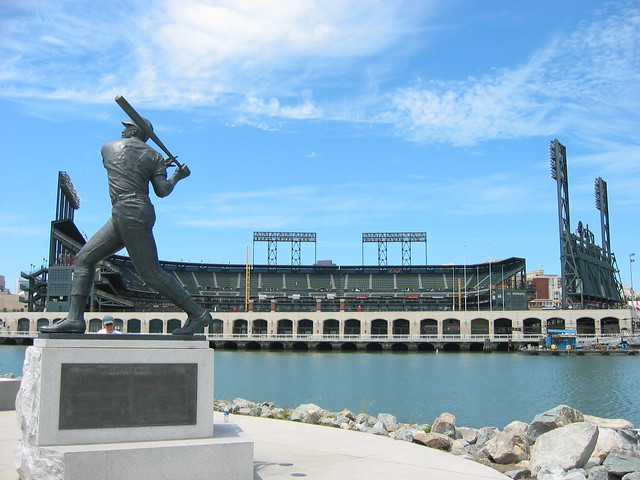
Then in 2003, the Giants unveiled a monument to McCovey at China Basin Park, on the other side of the cove. The statue depicts him at the finish of one of his mighty swings, his gaze skyward, watching another baseball soar majestically over a right-field wall.
Despite two arthritic knees that required countless surgeries, and an infection from one operation that nearly killed him in 2014, McCovey continued to attend Giants games. Fans, most of whom never saw him play, cheered McCovey as he rode through the tunnel at AT&T Park in a golf cart.
In early August McCovey married his longtime girlfriend, Estela Bejar, at AT&T Park. In late September he was on the field to present this year’s Willie Mac Award to reliever Will Smith.
As part of the award tradition, McCovey would take the field before the opening game of the final home series each year and announce the winner.
McCovey, the son of a railroad worker who was born and raised in segregated Mobile, Ala., about 250 miles from teammate Willie Mays’ hometown, made his major-league debut July 30, 1959.
The 10,114 fans at Seals Stadium got a pretty good inkling McCovey would have a brilliant career.
The New York Giants had signed McCovey in 1955. Playing for the San Francisco Giants’ Triple-A team in Phoenix four years later, McCovey was batting .372 with 29 homers and 92 RBIs when he received that late July call-up.
All McCovey did in his debut game at the age of 21 was go 4-for-4 with two triples against future Hall of Famer Robin Roberts as the Giants beat Philadelphia 7-2.
The Chronicle’s Bob Stevens wrote that McCovey, “whom they call ‘Stretch,’ arrived at Seals Stadium just before game time and wound up owning it.”
After the game, McCovey was asked whether there was any difference between Roberts and Pacific Coast League pitchers.
“It didn’t seem so today,” McCovey deadpanned.
Though he played in only 52 games, McCovey was the unanimous choice of the Baseball Writers’ Association of America as the NL Rookie of the Year. He hit .354 with 13 homers and had a 22-game hitting streak.
Image result for willie mccovey
In 1960, McCovey slumped to a .238 average, and he spent a 17-game stint back in the minors.
Two years later, he became a central figure in a moment where the Giants were oh-so-close to winning a World Series title in San Francisco.
The scene: The Yankees owned a 1-0 lead in the ninth inning in Game 7 at Candlestick Park. With two outs, the Giants had Matty Alou at third and Mays at second. Right-hander Ralph Terry was on the mound. McCovey was at the plate.
Stevens’ account in The Chronicle noted, “Yankee manager Ralph Houk had the audacity to permit Terry to pitch” to the left-handed power hitter.
McCovey hit a foul ball on the first pitch. The next pitch, Stevens wrote, “was over the heart of the plate, belt high, and did Willie ever belt it. It rushed out to Richardson as fast as a ball can go from plate to an inner-defense man, and Bobby grasped it, peeking through the webbing of his glove.”
Thus did the New York second baseman snatch a World Series title from the Giants. Two months later, Charles Schulz’s “Peanuts” cartoon captured Giants fans’ sentiments. Schulz had Charlie Brown ask, “Why couldn’t McCovey have hit the ball just three feet higher?”
A month after that, Schulz drew Charlie Brown wondering, “Or why couldn’t McCovey have hit the ball even two feet higher?”
In January 1986, after McCovey had been voted into Cooperstown, he was asked how he’d like to be remembered.
“I’d like to be remembered as the guy who hit the ball over Bobby Richardson’s head in the seventh game,” McCovey responded.
McCovey, born on Jan. 10, 1938, could hit the ball hard even as a child. He recalled his earliest memories of baseball in a 2017 interview with the Wall Street Journal.
“At night, we’d gather around the radio to listen to a guy who recreated the play-by-play of major-league baseball games by reading the ticker,” McCovey said. “With sound effects, he made it seem real.
“My friends and I played sports in the streets or empty fields. We played softball in a large local playground. Jesse Thomas was the director. I pitched and was a better pitcher than a first baseman. But I could hit the ball hard.”
From 1962 through ’64, McCovey and Cepeda alternated between first base and the outfield. Each was more suited to play first. When the Giants traded Cepeda to St. Louis in 1966, the first-base job became McCovey’s for nine seasons.
For the bulk of that time, Mays and McCovey were one of the most formidable 3-4 spots in a batting order in big-league history. Each man knew how much the other meant to him.
In a first-person article in the Examiner in 1980, McCovey said, “I don’t think it is humanly possible for anyone to be a better and more complete player than Willie Mays was. ...
“I saw him do some ... things on a baseball field that no other human being could do.”
One of the subtle things Mays occasionally would do was avoid stretching a single into a double simply so that the opponent wouldn’t intentionally walk McCovey.
McCovey “could hit a ball farther than anyone I ever played with,” Mays said in 1986. “You could talk all day about balls he hit.”
Having teammates talk about you is one thing. Having opponents do so is quite another. At 6-foot-4, McCovey was a towering presence at the plate. He would take a few of his distinctive uppercut practice swings, then be ready to unload on a pitch.
His home runs seemed to go farther, his line drives more vicious than almost anyone’s.
Longtime Cincinnati Reds manager Sparky Anderson would say he feared McCovey more than any other hitter.
“When he belts a home run,” longtime Dodgers manager Walter Alston said, “he does it with such authority, it seems like an act of God. You can’t cry about it.”
“I think it’s fair to say McCovey has never been as highly acclaimed as he deserved,” longtime Dodgers pitcher Don Sutton said in 1986. “He easily was the most feared hitter in the league.”
Claude Osteen, another former L.A. pitcher, said, “He never was going to get cheated on his swings.”
“He used to scare me the most when I was playing first base,” said Joe Torre, who spent the bulk of his playing career as a catcher. “I was just praying he wouldn’t hit one down the line. He was one of the most awesome players I’ve ever seen.”
One of Torre’s St. Louis teammates, pitcher Bob Gibson, said, “McCovey swung harder than anyone I ever saw. Most guys who swung that hard would miss the ball, but he didn’t.”
Pitcher Roger Craig, who would manage the Giants for seven-plus seasons (1985-92), recalled a time his manager with the Mets, Casey Stengel, went to the mound with McCovey at the plate.
“Where do you want to pitch him?” Stengel asked Craig. “Upper deck or lower deck?”
McCovey’s top individual season was 1969. He batted .320 and led the National League in home runs (45) and RBIs (126). McCovey had the distinction of winning the Most Valuable Player Award in the All-Star Game (he homered twice in the NL’s 9-3 win in Washington) and for the National League.
“Certainly I’m happy and proud to win the MVP,” McCovey said after receiving the league honor, “but I’d gladly give it away to play in another World Series.”
He would not do so. The Giants won the NL West in 1971 but lost to Pittsburgh in the National League Championship Series. He went 6-for-14 with two homers and six RBIs in the four games.
The great unanswerable question about McCovey’s career: How much better would it have been had he not endured so many injuries and so much pain, particularly in his arthritic knees?
After yet another knee surgery, McCovey said in 2005, “Lord, I’ve even lost count how many. It’s at least a dozen on each knee.”
Perhaps believing that the injuries and operations had taken too big of a toll on McCovey, the Giants traded him, along with outfielder Bernie Williams, to San Diego for pitcher Mike Caldwell after the 1973 season.
“McCovey has given the Giants a great many years of great service,” then-manager Charlie Fox said, “but there comes a time you have to give way to the young people.”
The trade wasn’t a complete shock — the Giants had dealt Mays to the Mets a year earlier — but McCovey, who hit 29 homers in 1973, wasn’t ready to concede his career was near its end.
“I’m just 35,” he said, “and I can still play three or four more years on the field. I feel in pretty good shape and stay in good shape.”
After two solid seasons with the Padres, McCovey hit .203 for them in 1976. In late August, San Diego sold him to the A’s, with whom he went 5-for-24 without an extra-base hit.
In January 1977, the Giants brought McCovey back into their organization. They invited him to spring training, but he didn’t sign a contract until late March, after he’d performed well in Arizona.
McCovey thanked then-Giants manager Joe Altobelli for the opportunity.
“I’m fortunate,” McCovey said. “Joe didn’t judge me on my last two years in San Diego or on my age (39). … It would have been easy for Joe to look at my age and assume it was all over.”
Said Altobelli: “We didn’t want Willie to embarrass himself. He has done just the opposite. He’s had a super spring and he’s a super person. If I had his body — and I’m 45 — I think I’d still be playing, too.”
McCovey rewarded Altobelli’s faith in him by winning the National League’s Comeback Player of the Year award. McCovey’s 1977 numbers: .280, 28 homers and 86 RBIs.
The next two seasons, McCovey shared the Giants’ first-base job with Mike Ivie. With Ivie and supposed future star Rich Murray (brother of Hall of Famer Eddie Murray) pushing for playing time in 1980, and with McCovey struggling at the plate (he batted .204 that season), McCovey decided in late June to retire, effective at the All-Star break.
Said McCovey: “I’ve been in this position before, only from the other side. I’ve said that when a young phenom came up who could take my place, I’d go away. That phenom, Rich Murray, has arrived. When I came up as a ‘young phenom,’ Hank Sauer retired.”
Rich Murray’s career would not be described as McCovey-esque: Murray played in a total of 57 games, batting .216 with four homers.
Bob Lurie, then the Giants’ owner, said McCovey “wrote the necessary letter of voluntary retirement. It was as tough a decision for him to make as it was for me to accept.”
McCovey had, in effect, three farewell games. The first came in the opener of a doubleheader against the Dodgers on June 29. In front of 50,229 fans at Candlestick Park, McCovey came to the plate as a pinch-hitter with two outs in the ninth inning. He doubled off Bobby Castillo, driving home Rennie Stennett from first base with the winning run. The Giants prevailed 4-3.
His teammates mobbed McCovey, and the fans had him return from the clubhouse for a curtain call.
“That was one of the great moments I’ve ever seen in sports,” said then-Giants coach Jim Lefebvre, a longtime Dodgers infielder.
Four days later, in his last appearance at Candlestick, McCovey made his final start. He went 1-for-4 with an RBI single as the Giants beat Cincinnati 4-3.
A large crowd and media contingent for a weekday afternoon game surprised McCovey.
“I don’t think I’ve ever gotten the recognition that my type of career deserves,” he said. “I was shocked that my retirement caused this much commotion.
“Too bad I had to retire to find that out.”
McCovey produced one more moment to savor. On July 6 at Dodger Stadium, in his last big-league plate appearance, his pinch-hit sacrifice fly in the eighth inning helped the Giants to a 7-4, 10-inning victory.
The Los Angeles fans gave McCovey a proper send-off after the sacrifice fly. As The Chronicle’s Bruce Jenkins wrote, “McCovey was called back by a deafening ovation, and he was clearly moved. With a huge smile on his face, he raised his hands high, then made a sweeping bow.”
“I have delayed reactions to things like this,” McCovey said after the game. “I don’t think all of this will sink in until spring training, when the reporting dates come out and I don’t get one. And Opening Day … that’s when I’ll realize it, when I might shed a tear or two.”
Related image
McCovey homers in the 1962 World Series (OpenSFHistory / wnp14.2370.jpg)

In retirement, McCovey was popular on the autograph circuit. In 1995, he and retired Brooklyn Dodgers outfielder Duke Snider were convicted of tax fraud for failing to report income earned at autograph and memorabilia shows. In 1996, McCovey was sentenced to two years probation and fined $5,000.
Just before leaving office in 2017, President Barack Obama pardoned McCovey.
McCovey might have gotten misty-eyed a few times in 1986. In January he was elected to the Hall of Fame, becoming the 16th player to receive that honor in his first year of eligibility.
“To tell you the truth,” he said, “I wasn’t surprised. I was more relieved than anything else.”
On an early August day in Cooperstown, McCovey took his place among the greatest in the history of the game.
“I’m a pretty calm person,” he said after the ceremony, “and I thought I could get through the afternoon without getting too emotional — but it hit me when I got up on the stage.”
Steve Kroner and John Shea are San Francisco Chronicle staff writers. Email: skroner@sfchronicle.com, jshea@sfchronicle.com Twitter: @stevekroner, @JohnSheaHey

Jordan Peterson: British GQ Interview

Wednesday, October 31, 2018

Why Wind Power Isn’t the Answer


By Robert Bryce
https://www.city-journal.org/wind-power-is-not-the-answer
October 30, 3018

Related image

On October 8, the Intergovernmental Panel on Climate Change released a report warning that nations around the world must cut their greenhouse-gas emissions drastically to reduce the possibility of catastrophic climate change. The report emphasizes “fast deployment of renewables like solar and wind” and largely ignores the essential role nuclear energy must play in any decarbonization effort.

Four days earlier, to much less fanfare, two Harvard researchers published a paper showing that trying to fuel our energy-intensive society solely with renewables would require cartoonish amounts of land. How cartoonish? Consider: meeting America’s current demand for electricity alone—not including gasoline or jet fuel, or the natural gas required for things like space heating and fertilizer production—would require covering a territory twice the size of California with wind turbines.

The IPCC and climate-change activists love solar and wind energy, and far-left politicians like Alexandria Ocasio-Cortez have called for a wartime-style national mobilization to convert to 100 percent renewable-energy usage. But this credo ignores a fundamental truth: energy policy and land-use policy are inextricable.

The renewables-only proponents have no trouble mobilizing against land use for the extraction of hydrocarbons. Consider the battle in Colorado over Proposition 112, which will prohibit oil- and gas-drilling activities within 2,500 feet of homes, hospitals, schools and “vulnerable areas.” Environmental groups including 350.org, the Sierra Club, and Greenpeace have endorsed the initiative, which will appear on the November 6 ballot. If it passes, Proposition 112 would effectively ban new oil and gas production in Colorado, the nation’s fifth-largest natural gas producer. Or consider the months-long demonstrations that ended last year in South Dakota over the Dakota Access pipeline. More than 700 climate-change activists and others were arrested during protests claiming that Dakota Access, by crossing the traditional lands of the Standing Rock Sioux, was violating the tribe’s cultural and spiritual rights. These energy- and land-use battles are waged by climate activists and environmental groups whose goal is to shutter the hydrocarbon industry. Most of these groups, including 350.org and Sierra Club, routinely claim that the American economy can run solely on renewables. Further, the Sierra Club has tallied 74 U.S. cities that have pledged to get all of their electricity from renewable energy.

But the new study, published in Environmental Research Letters, shows yet again that wind energy’s Achilles heel is its paltry power density. “We found that the average power density—meaning the rate of energy generation divided by the encompassing area of the wind plant—was up to 100 times lower than estimates by some leading energy experts,” said lead author Lee Miller, a postdoctoral fellow who coauthored the report with Harvard physics professor David Keith. The problem is that most estimates of wind energy’s potential ignore “wind shadow,” an effect that occurs when turbines are placed too closely together: the upwind turbines rob wind speed from others placed downwind.

The study looks at 2016 energy-production data from 1,150 solar projects and 411 onshore wind projects. The combined capacity of the wind projects totaled 43,000 megawatts, or roughly half of all U.S. wind capacity that year. Miller and Keith concluded that solar panels produce about 10 times more energy per unit of land as wind turbines—a significant finding—but their work demands attention for two other reasons: first, it uses real-world data, not models, to reach its conclusions, and second, it shows that wind energy’s power density is far lower than the Department of Energy, the IPCC, and numerous academics have claimed.

Further: “While improved wind turbine design and siting have increased capacity factors (and greatly reduced costs), they have not altered power densities.” In other words, though Big Wind has increased the size and efficiency of turbines—the latest models stand more than 700 feet tall—it hasn’t been able to wring more energy out of the wind. Due to the wind-shadow effect, those taller turbines must be placed farther and farther apart, which means that the giant turbines cover more land. As turbines get taller and sprawl across the landscape, more people see them.

Rural residents are objecting to wind projects because they want to protect their property values and viewsheds. They don’t want to see the red-blinking lights atop those massive turbines, all night, every night, for the rest of their lives. Nor do they want to be subjected to the health-damaging noise—both audible and inaudible—that the turbines produce.

The backlash against Big Wind is coast to coast. In New York, which has mandated 50 percent renewable-energy usage by 2030, the towns of Yates and Somerset are fighting against Lighthouse Wind, a 200-megawatt wind project proposed for the shores of Lake Ontario. In Oklahoma, the tiny town of Hinton continues its battle against NextEra Energy, the world’s biggest wind-energy producer, over the siting of wind projects nearby. In California, which just boosted its renewable-electricity mandate to 60 percent by 2030, wind turbines are so unpopular that the industry has effectively given up trying to site new projects there. Meantime, in deep-blue Vermont, both gubernatorial candidates—incumbent Republican Phil Scott and Democratic challenger Christine Hallquist—favor renewable energy in principle but oppose further wind-energy development in the state.

Big Wind has attempted to intimidate some of its rural opponents by filing lawsuits against them. Last year, NextEra sued the town of Hinton in federal and state court after the town passed an ordinance restricting wind-energy development. The wind-energy giant also sued local governments in Michigan, Indiana, and Missouri, all of which had passed measures restricting wind-energy development.

Why the hardball tactics? Simple: rural residents stand between Big Wind and tens of billions of dollars in subsidies available through the Production Tax Credit. In September, Lisa Linowes, cofounder and executive director of the Industrial Wind Action Group, a New Hampshire-based nonprofit that tracks the wind industry, published an article on MasterResource.org. “The US Treasury estimates the PTC will cost taxpayers $40.12 billion in the period from 2018 to 2027,” Linowes wrote, “making it, by far, the most expensive energy subsidy under current tax law.”

The punchline here is obvious: wind energy has been sold as a great source of “clean” energy. The reality is that wind energy’s expansion has been driven by federal subsidies and state-level mandates. Wind energy, cannot, and will not, meet a significant portion of our future energy needs because it requires too much land.

Miller and Keith’s paper shows that the ongoing push for 100-percent renewables, and, in particular, the idea that wind energy is going to be a major contributor to that goal, is not just wrongheaded—it’s an energy dead end.

Robert Bryce is a senior fellow at the Manhattan Institute and the producer of the forthcoming documentary, Juice: How Electricity Explains the World, which will be released in 2019.

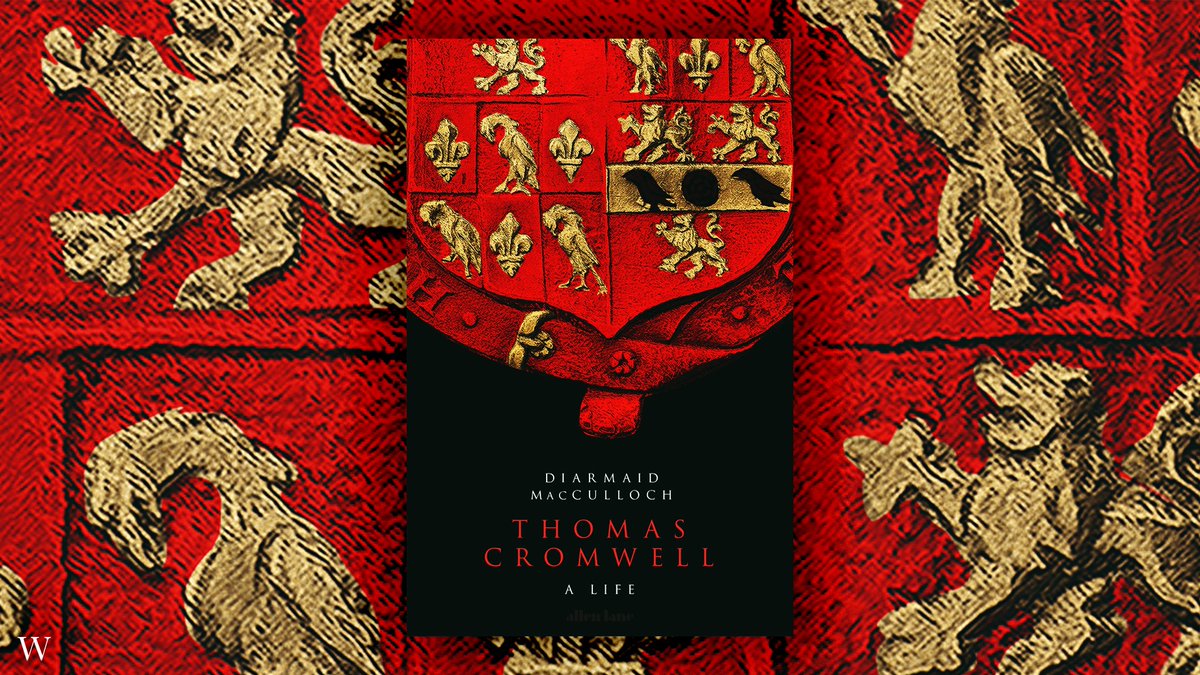
Book Reviews: 'Thomas Cromwell: A Life' by Diarmaid MacCulloch


By Melanie McDonagh
27 September 2018

Image result for diarmaid macculloch cromwell

There is, alas, no way that any review of this book can live up to the blurb on the back from Hilary Mantel: “This is the biography we have been awaiting for 400 years.” And this meticulous work of scholarship will almost certainly be seen as the book of the telly series — that is to say, the history to flesh out Mantel’s Booker-winning Wolf Hall novels and their spin-offs, from which so many of the middle classes derive their Tudor history.
Yet this biography is so at ease with the sources, so effortlessly scholarly, it deserves more than to be seen as Wolf Hall: the history. It is a feat. Diarmaid MacCulloch (whom I know and like) recalls the great Sir Geoffrey Elton saying of Thomas Cromwell, “He is not biographable.” Well it turns out he is, though there remains all manner of aspects of his life that are stubbornly unknowable.
This is not a book for the general reader. It will, or should be, cited as a book of the year, but most readers will find themselves bogged down by the wealth of necessary detail, by the intricacies of the web of Tudor connections on which he is brilliant: back then the personal was political. If MacCulloch has sense, he’ll follow this with a slim popular paperback. 
This isn’t to say it’s not terrifically readable, because it is. It’s witty — there are acerbic asides at every turn — but this is the work of a scholar.
The author himself, writing about the book, says that he didn’t find in Cromwell “a pantomime villain”. Well no, he wouldn’t, but what we still get here is Cromwell the complete bastard. That is, a man who was the greatest fixer of his age, who combined ideological commitment to Protestantism and the interests of his capricious master with an unholy zeal while enriching himself and his family (son Gregory got the plum priory site at Lewes) from the spoils of the monasteries.
The list of his victims is too long to cite (by way of balance, they included Anabaptists, the Islamic State of the age, as well as Catholics) but in the name of king and Reformation he pursued young and old, elderly monks and friars as well as young women: killed horribly, most of them. In the case of the London Carthusians, his line is that the Carthusians were “victims of the King’s savagery”, rather than Cromwell’s. Yet MacCulloch says nothing about Cromwell’s deliberate and sadistic prolonging of their agony on the scaffold, and he glosses over the starvation and chaining of the others (in their own excrement), which he must have authorised.
In the case of the most prominent victims, Thomas More and John Fisher — whose executions shocked Europe — the most he can say is Cromwell kept them in decent food and drink in the Tower. 
He was, mind you, a family man; the reason he never remarried after his wife died was, says the author, almost certainly because he couldn’t bear to. He did have an illegitimate daughter, Jane, but that was no big deal. It was his promotion of his son — whom he married to the sister of Jane Seymour — that expedited his downfall.
It seems his commitment to the Protestant project really was a motive force, and started early. Thus, hatred of Cromwell and his works (iconoclasm, dissolution of the monasteries) was a clear element in the Pilgrimage of Grace popular uprising, and he duly reacted with efficient savagery and treachery. 
But, as Mantel cleverly intuited, loyalty to his early master, Cardinal Wolsey (another self-made man and one of the most sympathetic characters here) was another motivating force. As MacCulloch makes clear, Cromwell’s legacy is still with us, in the Protestant character of the CofE. And if this excellent biography doesn’t, for all its best effots, rehabilitate him, it does him more justice than he deserves.
Review: Thomas Cromwell: A Life by Diarmaid MacCulloch — what Wolf Hall didn’t tell you

By Dan Jones
16 September 2018
Image result for diarmaid macculloch cromwell
Thomas Cromwell, c. 1530, Holbein School

Minutes before his head was struck off with an axe, Thomas Cromwell, Henry VIII’s disgraced former minister, made a speech. “I have been a great traveller in this world,” he said, “and being but of a base degree, was called to high estate and [since] the time I came thereunto, I have offended my prince.” He asked God for mercy, made some disingenuous remarks about the king’s grace, then went calmly to his death. Accounts vary as to the efficiency of the headsman, but as Diarmaid MacCulloch writes with the dry wit that characterises this triumphant and definitive biography, “even botched beheadings are soon over”.
Cromwell’s final inventory of his life is hard to fault. Born around 1485 and raised in Putney, he was a self-described “ruffian” in his youth, but picked up a legal education, roamed Italy and Flanders for several years, then returned to England and rose to political eminence: first in the service of Cardinal Wolsey and later Henry VIII. His value lay in his talent as fixer and problem-solver par excellence: a sort of 16th-century management consultant, albeit one who ended up issuing blithe, cruel instructions such as “pinch him with pains” when ordering the torture of a parson who had drunkenly complained about the government.
Installed from around 1532 as the king’s trusted factotum, Cromwell pulled the strings in the annulment of Henry’s first marriage, to Katharine of Aragon, freeing him to marry Anne Boleyn. He micromanaged the consequent “Break with Rome”, by which parliament declared England free of papal jurisdiction and appointed Henry Supreme Head of the English Church. When Anne, too, was cast aside (beheaded in 1536 on spurious allegations of incest and adultery), Cromwell boasted he had plotted the whole thing. He oversaw the dissolution of England’s monasteries and the atrocious programme of state theft, vandalism and judicial murder that comprised its means.
Preternaturally sure-footed and hardworking, Cromwell navigated Henry’s lethal lurches in mood, desire and interest for a decade. Then, in 1539 he overreached, ushering through the king’s fourth marriage, to Anne of Cleves. Henry, obese, impotent and insecure, didn’t fancy Anne. Suddenly he didn’t fancy Cromwell, either. The boy from Putney was now Earl of Essex. Fat good it did him. When the king’s pleasure wavered, Cromwell’s enemies gleefully nudged Henry towards his extermination. Henry took little nudging.
The events of the 1530s were wildly dramatic and historically important and Cromwell (the name, MacCulloch writes, was probably pronounced “Crummel”) was at the heart of them. Still, he occupies historians and novelists to a remarkable degree.
MacCulloch knows this well. Today he is professor of the history of the church at Oxford University. As a postgraduate he was supervised by Geoffrey Elton, who proposed Cromwell as the architect of a “Tudor revolution in government”: the creator of modern bureaucracy out of the crabby and informal palace mess of the Middle Ages. Unpicking that ingenious thesis has provided a lifetime’s work for Elton’s most brilliant students (including David Starkey).
In a packed text, MacCulloch lays it finally to rest. He shows how, far from inventing a “modern” state, Cromwell built his power-base on the quiet accrual of quaint “medieval” posts that gave him maximum access to the king with minimum visibility, and the cultivation of 15th-century-style “affinities” of supporters. The signature reform of government process during his years in power, a move to rule through a formal Privy Council, actually stymied Cromwell — deliberately so.
These days, Elton’s Cromwell is less familiar than the fictionalised version found in Hilary Mantel’s Wolf Hall. It is testament to Mantel’s deep understanding of the Henrician court and the popularity of her novels that most historians writing about Cromwell now find themselves in conversation with her work and anxious for her approval. MacCulloch is little different. His book comes Mantel-approved as “the biography we have been awaiting for 400 years”. But this is not to say he supports everything she has written. To take one example: Mantel’s depiction of Cromwell’s father, Walter, as a brutalising bully, whom we meet beating his son in the searing opening sequence of Wolf Hall, is based, in MacCulloch’s view, on “Victorian fantasy”. In fact, the one relevant reference in Cromwell’s papers casts Walter in a pleasant light.
Does this matter? Only to readers who insist that historical fiction must unwaveringly follow fact. MacCulloch’s work has far greater value than a yardstick for Wolf Hall’s fidelity. It shows us a Cromwell who was an even more committed promoter of religious reform than is usually acknowledged; who shared nothing but this reforming instinct with Boleyn, who roundly despised him; whose thirst for revenge against those who brought down Wolsey ran to his marrow; who was capable of touching humanity and unbelievable, callous cruelty and fits of rage.

This is also a masterpiece of documentary detective-work, which buzzes with the excitement of a great historian immersed in archives, interrogating not only the thousands of papers Cromwell left behind, but also the gaps left by a (presumed) shredding of evidence as Cromwell’s partisans sought to save him from the king’s wrath at the end.
Most glorious are the sizzling put-downs MacCulloch regularly fires at Henry. The king, he writes, had the “ability to turn deep affection into deep hatred, and then to believe any old nonsense to reinforce his new point of view”. This is acute, elegant and devastating. Not much use to Cromwell, though. Before he was executed in July 1540, Henry carelessly described his most talented minister to the French ambassador as “a good manager, but not fit to meddle in the concerns of kings”. And that, as they say, was that.

Diarmaid MacCulloch delves deep into the soul of Thomas Cromwell – administrator, henchman and evangelical


By Marcus Nevitt
29 September 2018
Image result for diarmaid macculloch cromwell
Mark Rylance as Cromwell in Wolf Hall © BBC

The final moments of Hilary Mantel’s magnificent Wolf Hall see its central protagonist, Thomas Cromwell, trying to banish ghosts. Assailed by memories of his orchestration of the execution of his rival Thomas More, the sight of his head on a block, the ‘sickening sound of the axe on flesh’, Cromwell turns to two sources of solace to improve his mood: the welfare of his household and — oddly, but characteristically —admin. In order to give us a Cromwell who is so much more than an insanely ambitious judicial murderer, Mantel leaves her readers with her protagonist fretting over the future happiness of his recently married secretary Ralph Sadler at the same time as he plots the precise detail of Henry VIII’s imminent progress to Bristol with real care and exactitude.
There is something of this determination to bring the quirks, warmth and light out of the dark material traces of Cromwell’s character in Diarmaid MacCulloch’s captivating and definitive new biography of Henry VIII’s most controversial of royal counsellors. Indeed, so nuanced and even-handed is his portrait that MacCulloch acknowledges that some might argue that he ‘underplays the… rapacity of Cromwell’s public career’.

It is easy to see why rapacity might be thought to be the key to unlocking the enigma of Thomas Cromwell; in a period obsessed with the preservation of vertiginous social hierarchies, but also familiar with the troubling phenomenon of social mobility — Cardinal Wolsey himself was likely a butcher’s son — Cromwell’s rise was so spectacular that it seems to demand some sort of further explanation rooted in the psychology of extraordinary individualism or in Nietzschean ideas of preternatural will. Thus, in his lifetime, Cromwell went from describing himself as a ‘ruffian’ member of the Putney yeomanry, whose family farmed and brewed beer, to becoming the father of the king’s brother-in-law (through the marriage of his son Gregory to Elizabeth Seymour, sister of Jane Seymour, third wife of Henry VIII). In 1535 he became Chancellor of the University of Cambridge without ever having been to university himself. Along the way he also became Earl of Essex, Baron Cromwell of Wimbledon, Chancellor of the Exchequer, Master of the Jewels, Vicegerent in Spirituals (i.e. the layman responsible for exercising Henry VIII’s powers as supreme head of the Church), and Lord Privy Seal; he also accumulated vast quantities of land and property and, by the end of his life, had amassed an immense arsenal of weaponry at his house at Austin Friars sufficient to make an already paranoid and impetuous king extremely twitchy. The arms cache gave Henry VIII yet another reason, following Cromwell’s advocacy of his disastrous marriage to Anne of Cleves, to sanction his execution for treason, heresy and corruption in 1540.
Instead of a one-dimensional caricature of Cromwell as an unscrupulous Machiavel, determined only to advance his familial interests and line his pockets — and such travesties are common in sources as strikingly different as Cardinal Reginald Pole’s contemporary defence of papal supremacy De Unitate (1536) and Robert Hutchinson’s Thomas Cromwell: The Rise and Fall of Henry VIII’s Most Notorious Minister (2007) — MacCulloch gives us depth and perspective on the contradictions and apparent inconsistencies of a man who improvised just as much as he choreographed his way to power. Thus Cromwell was an evangelical who loathed monastic excesses and the superstitions of the old religion, but who began his career selling indulgences (pardons supposed to shorten the duration of Purgatory for purchasers and their families) at the Gild of Our Lady at Boston in Lincolnshire. Where a lesser historian would see here only cynical, secularist opportunism, MacCulloch sagely reminds us how ‘in the first stages of the English Reformation, religious boundaries were yet to be defined clearly, particularly when people balanced lucrative careers with sincerely held but evolving belief’.
It is the continued centrality of this question of religious belief in this assessment of Cromwell’s life and career that makes it so compelling and authoritative. Cromwell was, MacCulloch shows, an enterprising and committed evangelical; intimately acquainted with William Tyndale and Miles Coverdale, he became a staunch advocate of vernacular Bible reading, authorising English translations of the Matthew Bible (1537) and the Great Bible (1539); he patronised a theatre company, the Lord Cromwell’s Players, who specialised in the performance of Reformist drama by the evangelical polemicist John Bale in the late 1530s. Given these credentials, how could so convinced an evangelical as Cromwell allow himself to be protected by and, in turn, do his utmost to defend, that most grandiose of late medieval churchmen, Cardinal Thomas Wolsey? ‘Nicodemism’ is MacCulloch’s brilliant answer, a willingness to subordinate true religious views and dissemble some degree of conformity to the official religion. While the apparent bad faith of Nicodemism concerned Reformers like John Calvin, a Nicodemite version of Reformed Protestantism actually became crucial for a later Elizabethan Church of England which needed to help large swaths of the conforming faithful negotiate the terms of their Roman Catholic past.
In putting religious belief at the heart of this biography, and in characterising Cromwell as a Nicodemite rather than a Machiavel, a secularist, or a devil, MacCulloch redefines his subject’s contribution to Tudor history. MacCulloch nowhere tries to exonerate Cromwell from his involvement in torture and judicial killings — one favoured piece of interrogation advice was to ‘pinch him [the prisoner] with pains’ — but as a man of evangelical belief as well as violence he seems less of an ahistorical monster and more like a recognisable but prodigiously powerful statesman of his period; Thomas More, as Lord Chancellor, too, of course, had his own record of burning heretics.
Making Cromwell a man of faith also enables MacCulloch to renegotiate his relationship with his own mentor, the biography’s dedicatee, Sir Geoffrey Elton (1921–94). Elton supervised MacCulloch’s PhD at Cambridge and for 45 years made Cromwell central to his writings and understanding of the Tudor age, transforming him from mere flunkey of Henry VIII to a harbinger of modernity itself. In Elton’s telling, most famously in The Tudor Revolution in Government (1953), Cromwell was primarily responsible for remodelling the ways in which English central government was administered, developing a governmental machine that turned from managing medieval households to bureaucratising the nation. There is little room for religious belief in this reading of Tudor government and the idea has had its critics from its first appearance — there are playful echoes of it, too, in Cromwell’s consoling turn to admin at the end of Mantel’s Wolf Hall. MacCulloch’s revision shows how the formation of modern administrative structures like the Privy Council was actually an attempt to limit Cromwell’s power, and the effect of his evangelical ideas, over the king, rather than being the ultimate expression of his dominating influence.
Elton famously refused to write a biography of Cromwell, despite multiple invitations to do so, proclaiming that a man who was less an individual personality than a figure representative of an entire age was ‘not biographable’. This meticulously researched, beautifully written and, it must be said, very long book — there are more than 100 pages of bibliographic and discursive endnotes alone — is MacCulloch’s wonderful rejoinder.