Monday, August 14, 2017

The Audible Artistry of “The Hobbit”


May 26, 2015

Related image
When the editor of Conservative Home phones me, he often begins by wryly declaiming some line or other from Tolkien. If I can, I reply with the next line, and so on. He tends to get the better of our exchanges: his knowledge of the text is encyclopaedic.
Nor is he unusual among Tories. I watched the opening nights of all three Lord of the Rings films with Chris Heaton-Harris, the wittiest M.P. on Twitter, and Theresa Villiers, the patriotic Cabinet Minister, both at that time M.E.P.’s. The Northern Ireland Secretary, in particular, can recite the most abstruse details from the corpus, down to the family trees of the minor characters.
Perhaps this is unsurprising. Tolkien’s novels are, in the most literal sense, conservative, bathed in an almost overpowering sense of loss. A lot of Leftist intellectuals find them uncomfortable, and so mock them. Philip Pullman dismisses them as “infantile.” Richard Eyre calls Middle Earth “the kingdom of kitsch.” There are also Leftist Tolkienians, of course, but even some of these are uneasy about the fact that Númenóreans are fair-skinned and assailed by dark foes from the East and South. (In fact, anyone who doubts Tolkien’s anti-racist credentials should read his magisterial reply when the Nazis asked if he was Jewish.)
Conservatives, by contrast, have few such complexes. We are not in the least bit troubled that Tolkien, an unfussy Catholic, filled his works with moral purpose. Because the professor dealt in archetypes, he wrote with an unembarrassed grandeur that can grate on the modern ear—though, in general, not the ear of the young reader, who has not yet been taught to be cynical. If you’re a fan of The Lord of the Rings, you’ll know what I mean.
Now let me run a slightly more controversial suggestion past you. Much the same can be said of The Hobbit.
If, like most people, you haven’t read the shorter book since childhood, you might vaguely think that, next to its majestic sequel, it is limited, even twee. That’s more or less what I used to think—until I read it to my children.
Here is a book that, as much as any I can think of, needs to be read aloud. Tolkien, like many Catholics of his generation, understood the power of incantation. He knew that—as, funnily enough, Pullman once put it—a fine poem fills your mouth with magic, as if you were chanting a spell.
Most of us are aware that The Lord of the Rings draws on the alliterative Anglo-Saxon verse which Tolkien loved. We tend to forget that The Hobbit does the same thing, right from the start:
The dwarves of yore made mighty spells
While hammers fell like ringing bells
In places deep where dark things sleep
In hollow halls beneath the fells.
Its prose, like its poetry, pulses with Old English words, and there is rhythm in even the most fast-moving passages. Try reading this paragraph aloud:
The great bow twanged. The black arrow sped straight from the string, straight for the hollow by the left breast where the foreleg was flung wide. In it smote and vanished, barb, shaft and feather, so fierce was its flight. With a shriek that deafened men, felled trees and split stone, Smaug shot spouting into the air, turned over and crashed down from on high in ruin. Full on the town he fell. His last throes splintered it to sparks and gledes. The lake roared in. A vast steam leapt up, white in the sudden dark under the moon. There was a hiss, a gushing whirl, and then silence.
That’s not the way you remembered the prose from childhood, is it? In fact, the language in The Hobbit traces much the same arc as in the subsequent trilogy. Both begin in a manner that seems conventional for a children’s tale, before swerving into the not-quite-archaic saga style which Tolkien made his own. The switch is less marked in The Hobbit than in The Lord of the Rings, and comes at a later point in the story. The hinge is when the party reaches Laketown. The dwarves emerge grumbling and bedraggled from the barrels in which Bilbo has floated them down the river, still recognizably children’s characters. When a Lakeman asks who they are, their leader replies: “I am Thorin son of Thrain son of Thror, King Under the Mountain! I return!” From then on, the story becomes grimmer, and the prose darkens commensurately.
I’ll be watching the final sequence of events at the cinema this weekend with my enthusiastic daughters, who weren’t yet born when I began my December pilgrimages to Leicester Square with Chris and Theresa. Watching with kids makes me aware of how complicated some of the themes are in what we still think of a children’s story (Who, for example, has the right to Smaug’s treasure?) Yet children love the films, as they love the book.
Me? Well, like most adults, I regret that Peter Jackson allowed a fast-paced book to spin into three excessive movies. As Bilbo says to Gandalf in a different context, “I feel thin, sort of stretched, like butter scraped over too much bread.”
But here’s the paradox: though they went on for too long, I’m wistful as the films finish. Typing these words, I feel something close to the yearning, the melancholy, that infuses the books.
O Lórien! The Winter comes, the bare and leafless Day;
The leaves are falling in the stream, the River flows away.
Books on the topic of this essay may be found in The Imaginative Conservative Bookstore. Republished with gracious permission of ConservativeHome (December 2014). 

Sunday, August 13, 2017

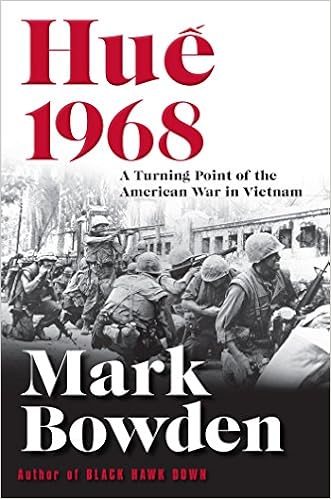
Book Review: 'Hue 1968: A Turning Point of the American War in Vietnam' by Mark Bowden

Urban Warfare, Then and Now

Mark Bowden’s Hue 1968 contains much that is timeless.

By Bing West — June 24, 2017
Image result for mark bowden hue

In 1968, more than 500,000 Americans and 800,000 South Vietnamese troops were fighting 400,000 Viet Cong guerrillas and North Vietnamese (NVA) soldiers. In early February, the enemy launched a surprise attack against dozens of cities and bases throughout the 400-mile length of South Vietnam. While most of the offensive was beaten back within days, it received enormous press coverage and badly shook the confidence of the military and political leadership in both Saigon and Washington.

Hue 1968: A Turning Point of the American War in Vietnam, the new book from Mark Bowden of The Atlantic, tells the tactical narrative of these events splendidly — albeit with a dubious epilogue focused on broader questions of strategy and foreign policy.

The most savage battle occurred inside the historic city of Hue in the northern part of the country. Ten thousand NVA seized the heart of the city, including the ancient citadel enclosed by stone walls 20 feet thick. For 25 days a confused, chaotic battle raged up and down the city’s streets. When it ended, most of the city was destroyed, and the death toll included approximately 250 Americans, 500 South Vietnamese and 5,000 North Vietnamese soldiers, plus 6,000 civilians killed in the fighting and another 2,000 executed by the NVA.

Bowden has stitched together dozens of riveting squad-level firefights, writing from individual points of view collected via dozens of extended interviews over four years of research. Via this accumulation of short stories depicting love, sacrifice, gore, madness, valor, blood, and horror, the reader follows the battle down the deadly streets day by day.

Journalists who shuttled in and out of the raging battle are quoted at length. In Bowden’s eyes, they are particularly admirable because they combine physical courage — intrepidly (if episodically) following after the squads — with intellectual honesty, exposing setbacks inexcusably denied by the military hierarchy. In recounting the battle, the observations of these journalists add color, depth, and pathos.

Bowden also adds to excellent past accounts — e.g., Nick Warr’s Phase Line Green and Eric Hammel’s Fire in the Streets — the perspective of the enemy. He traveled to North Vietnam and interviewed more than two dozen soldiers, both men and women. At several points in the book, he interweaves both sides’ perspectives on the same fight. The North Vietnamese were a superb light-infantry force — disciplined and determined to withstand hardship.

Unfortunately, South Vietnamese soldiers have scant voice in the story, although their losses were twice those of the Americans. The South Vietnamese fought hard. They deserved recognition. The vast majority of U.S. advisers — both at the local level where I served and in the major battles where the legendary Ray “E-Tool” Smith, a prominent figure in Bowden’s book, served — admired their doughtiness and developed a deep affection for our counterparts.
Bowden does not address why both sides fought so relentlessly. Regardless of their losses, the Marines smashed their way forward, one block a day, pushing the NVA back. Certainly the corporals and lieutenants wanted to say, Let’s take a break and get some fresh troops in here. Sometimes they said their orders were plain stupid and got them changed. But when that didn’t happen, they obeyed and went anyway.

For understanding the factors that underlay unit cohesion under extreme stress, the finest book is the novel Matterhorn by Karl Marlantes. It vividly portrays how tradition, heritage, discipline, and faith in leaders and devotion to each other combine to shape the 13-man squad, the 44-man platoon, and the 160-man rifle company.

In a city, the squad is the basic unit moving from house to house. A platoon covers a row of houses on both sides of a street, and a company advances down two streets. Four companies, about 700 men, constitute a battalion led by a lieutenant colonel. In Hue, most battalion commanders were a few streets behind the front lines. They were supposed to grasp the larger dimensions of the battle and accurately report their assessments to the colonels and generals in headquarters dozens of miles away. All too frequently, that did not happen.

Bowden does a first-rate job of showing how the realities of the front lines and the size of the NVA forces were willfully ignored by the higher-ups. He sets the scene and names those who failed their troops. Again and again, he cites “the valor of Americans . . . who were used badly.” Bowden does not conceal his anger at generals who dribbled their men into battles where they were outgunned and outmanned, and then relieved the hapless battalion commanders. Initially, Marine Brigadier General Foster LaHue dispatched two under-strength battalions, about 1,500 men, to push out 10,000 North Vietnamese soldiers. The overall commander, General William Westmoreland, receives particular opprobrium for deciding — against all rational evidence — to divert more and more forces to Khe Sanh, an obscure plateau in the distant jungle near the Laotian border.

Bowden describes Hue as “the point at which everything changed” and American political will began to disintegrate. A discouraged and bewildered President Lyndon Johnson was in the process of replacing Secretary of Defense Robert McNamara, who no longer believed the war could be won. General Westmoreland had become an “untrustworthy source of information.” He had lost his credibility in Washington political circles and throughout the ranks of the press covering the war. Walter Cronkite, the oracle of America, visited with the Marines during the battle for Hue. A few days later, he appeared on CBS Evening News. “There is scarcely an inhabitable building in the whole of Hue,” he said. “If our intention is to restore normalcy . . . [Hue] is obviously a setback. . . . The only rational way out then will be negotiate, not as victors.”

And what “victory” had Westmoreland been pursuing? For 32 months, the American military had divided its forces in an effort to achieve two objectives. Westmoreland pursued a strategy of searching in the jungles for North Vietnamese main-force units in order to destroy them. In Bowden’s judgment, the general “continually and falsely assured political leaders” that he could attrite the enemy forces to the point where North Vietnam would quit.

The other objective was called nation-building or counterinsurgency. It required deploying Americans units across 12,000 hamlets to drive out the local guerrillas and to persuade the famers to support the central government.

The American military did not agree which task should take priority. The Marines sustained about as many casualties in counterinsurgency/nation-building as in fighting the North Vietnamese divisions.

In his definitive book American Strategy in Vietnam, Colonel Harry Summers argued that our generals were wrong to pursue a two-headed strategy: “Instead of concentrating our efforts on repelling external aggression as we had in Korea, we also took upon ourselves the task of nation building.” The American military could have rendered North Vietnam incapable of sustaining its offensive. Mining the harbors up north would have prevented Russian military aid. Bombing the dikes would have diverted manpower to subsistence farming. Large-scale ground attacks into Laos and north of the risible Demilitarized Zone would place the NVA army on the defense.

However, no such operations were undertaken. Instead, U.S. troops fought on the defense inside South Vietnam, from which the U.S. had essentially withdrawn by 1972. In 1973, the U.S. Congress declared a termination of all bombing, regardless of the continuing attacks by the North Vietnamese. Each year after that, aid to South Vietnam was slashed, while the Soviet Union and China steadfastly armed and subsidized North Vietnam. In April of 1975, North Vietnamese soldiers manning Soviet tanks rolled into Saigon as the last Americans escaped by helicopter.

In the book’s epilogue, Bowden writes, “the battle of Hue and the entire Vietnam War seem a tragic and meaningless waste. . . . As some of the nation’s more recent wars have helped to illustrate, ‘victory’ in Vietnam would have been neither possible nor desirable.” This exculpation by blanket denial is both mystical and bewildering. It does not fit with the focus (one significant 25-day urban battle) or the deep research of the book.

Yes, the ongoing wars in Iraq and Afghanistan are comparable to Vietnam in two particulars. First, in all three cases America insisted upon democratic nation-building that was resisted by the indigenous cultures and eventually exceeded politically sustainable resources. Second, in Vietnam, we conceded a vast sanctuary to our enemy; in Afghanistan, we similarly allowed Pakistan to provide aid and refuge to the Taliban and other terrorist groups.

However, unlike North Vietnam, the Islamist terrorists pose a continuing danger to America. Defeating them cannot be dismissed as “neither possible nor desirable.” There must be “victory,” narrowly defined as an end state that is tolerable to our security interests. Tell me where we are in three years if I follow your strategy should be the directive the commander-in-chief issues to his generals. And most certainly Bowden’s aversion to nation-building should be heeded in regards to our future role in Syria. Beyond that, though, it is not clear how geopolitical lessons from Vietnam apply to our ongoing wars.

Fortunately, Bowden’s musings on strategy and foreign policy are merely an out-of-place epilogue hastily appended. Essentially, Bowden has written a classic narrative about the role of grit and the individual soldier in urban battle.

Hue was not a tactical microcosm of the war; indeed, it was the singular exception in a war fought in the rice paddies and jungles. Of the 58,000 American fatalities during the war, less than 0.5 percent occurred during the battle to retake Hue. But Hue’s import is not restricted to history.

We have not seen the end of city brawls of hurricane force, and the nature of the savage fighting has not changed. Urban warfare is increasing as more of the world’s population leaves rural areas. In 2004, American forces twice assaulted the city of Fallujah. Eighteen thousand of the city’s 39,000 buildings were damaged or destroyed. More than 120 Americans and thousands of Iraqi civilians and insurgents died. Were it not for modern medical techniques, about as many Americans would have been killed in Fallujah as in Hue. Today, the battles raging across Syria and Iraq are mainly urban. In Mosul alone, tens of thousands have died, with many thousands yet to come.

The tactics Bowden describes in graphic detail — avoiding the booby-trapped doors and instead smashing through the sides of buildings, clearing room to room, staying off any street or open area, moving always by bounds — are as vital today as they were in Hue.


— Bing West served in Marine infantry in Vietnam and has written nine books about our wars in Vietnam, Iraq, and Afghanistan.

Saturday, August 12, 2017

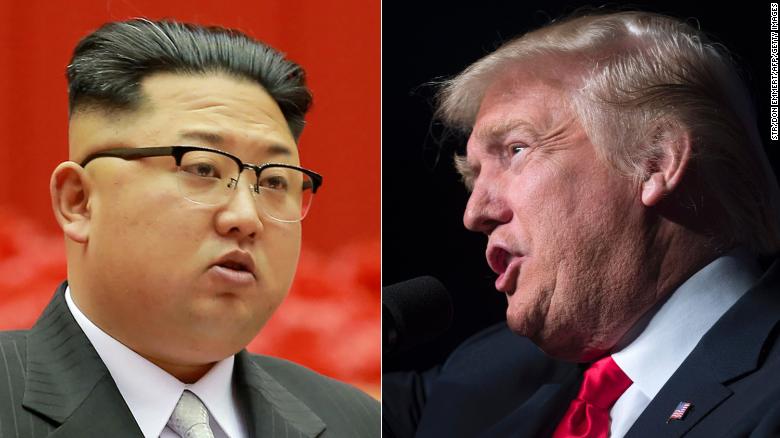
Korea and the Democrats' Deep Psychological Fear that Trump Is Right


August 11, 2017

Related image

One of the unspoken 'indications' in the medical sense of the ever-metastasizing Trump Derangement Syndrome is that the sufferers have a deep conscious/unconscious fear that Trump is right. What if the man they have excoriated unremittingly as a barbarian-racist-xenophobe-homophobe -misogynist-nitwit turns out to have been on the correct side of a fair number of issues on which they have failed, sometimes miserably, for decades?  Talk about personality disintegration — it would be hari-kari meets the Wicked Witch of the West. Well, emotionally anyway.

The current North Korea crisis is a perfect case in point. Susan Rice — has this woman no shame — took to the pages of The New York Times to inveigh against Trump for "bluster" regarding the NORKS.  The integrity-challenged former national security adviser was far from alone, however. Virtually all Democrats and their local media minions plus a good swatch of Republicans (including repellently vengeful John McCain) criticized the president for the same thing — using blunt language to counter the crazed dictator in Pyongyang when Trump should have been "diplomatic."

This although almost any grown-up not comatose knows that "diplomatic" language has been employed by the U.S. ad nauseam for that purpose for the last twenty-five years through three administrations with no discernible impact whatsoever. Indeed, "abject failure" would be an accurate characterization of our diplomatic policy vis-a-vis the NORKS.  If you view this video of Bill Clinton extolling his administration's "successful," diplomatically-achieved nuclear deal with Pyongyang back in 2006, the word "nitwit" does come to mind, but it's not about Trump. Here's Madeleine Albright in another glorious moment of diplomatic achievement with Kim Jong-un's dad Kim Jong-il laying on the splendor in Pyongyang Stadium before signing some meaningless agreement whose import is known only to Dennis Rodman.

How do you spell hornswoggled?

Of course, George W. Bush didn't do much better and Barack Obama — who evidently hid the North Koreans' development of mini-nuclear warheads for several years from the sensitive ears of the American public, only to leave us in the disastrous situation we are in today —  was considerably worse. This is the same Obama who pushed through the still mysterious Iran Deal handing the NORKs' best friends the mullahs enough cash to run rampant in Syria. Soon thereafter Barack reneged on his pledge to prevent the use of chemical weapons by that very country's leader. Sense a pattern?

And yet it's the "blusterous" Trump who is supposed to be the problem.  Actually, he's the one left to pick up the pieces of an American reputation in tatters.

Perhaps what we need is a little bluster. It's an old technique and a sound one — good cop/bad cop. It was played out well by Nixon and Kissinger when Henry went to Beijing to negotiate with Mao and Chou. Kissinger threatened to let his "madman back home" (Nixon) loose unless the Chairman cooperated and made a deal. It worked.

Now we have Trump, Tillerson, Mattis and McMaster playing various levels of good cop/bad cop. They are even reportedly working the backchannels in the old diplomatic game. Let's hope they learn from the past and do it better this time. Color me skeptical because without a serious military threat, I doubt the Chinese will listen.

Did I say Chinese? Of course, I did, because they are the true audience for what is going on. Mr. Kim is a whack job sideshow. The Chinese are the ones with the power to do something and stop a conflagration. And, like the Democrats and the Never Trumpers, they may be more afraid of Trump than they let on. Unlike Obama, he has shown he is not afraid to use force — and he did that while having dinner with Xi Jinping. Friday night he is supposed to be having a chat with Xi.

By now we may all know what happened — at least the part the leakers deign to tell us — but we do not know what will happen. The facts on the ground have yet to be revealed.
What has been revealed, however, is the psychology of those attacking Trump on this matter. They fear that they will be revealed as having been fools for the last twenty-five years — and indeed they were.

Roger L. Simon is an award-winning novelist, Academy Award-nominated screenwriter and co-founder of PJ Media.  His latest book is I Know Best:  How Moral Narcissism Is Destroying Our Republic, If  It Hasn't Already.  Follow him on Twitter @rogerlsimon.

Thursday, August 10, 2017

No, We Don’t Need An Iran-Style Nuclear Deal With North Korea


The fact is, we had an Iran-style nuclear deal with North Korea, and now Kim Jong Un has nuclear weapons. North Korea should be a cautionary tale.


By 
http://thefederalist.com/
August 10, 2017

Related image

North Korean leader Kim Jong-un has reportedly ordered his missiles be ready within 12 months from December 2016 (Reuters)

News that North Korea has successfully miniaturized a nuclear weapon that can fit onto an intercontinental ballistic missile, as the Washington Post reported Tuesday, has prompted much speculation about what we should do about it and who’s to blame.

One idea floating around is that we need an Iran-style nuclear deal with North Korea—and that if we’d had one, we wouldn’t be debating the merits of nuclear versus conventional war on the Korean peninsula, President Trump wouldn’t be blustering about “fire and fury,” and Pyongyang wouldn’t be publically mulling a ballistic missile strike on Guam.

Middle East scholar Andrew Exum tweeted Tuesday, “It sure ain’t perfect, but you know who North Korea is making look really good right now? The Iran deal.” Last month over at Foreign Policy, Jeffrey Lewis sarcastically noted that, “If you like North Korea’s nuclear-armed ICBM, you are going to love America walking away from the nuclear deal with Iran.”

His point of course is that scuttling the 2015 Iran deal, as Trump has repeatedly promised to do, will lead to another North Korea. By that same logic, striking an Iran-style deal with Pyongyang is the best we can hope for at this point. Robert Litwak, director of international security studies at the Woodrow Wilson International Center for Scholars (and the author of a book with the now-seemingly obsolete title, “Preventing North Korea’s Nuclear Breakout”) made precisely this argument back in May: “The template for preventing a North Korean nuclear breakout that could directly threaten the United States is the Iran nuclear agreement.”
The problem is, we had an Iran-style nuclear deal with North Korea, and now North Korea has nuclear weapons.

A Brief History Of North Korea’s Nukes

North Korea signed the nuclear Non-Proliferation Treaty (NPT) in 1985, but it had been working on nuclear weapons for years. After ’85, it evaded inspections from the International Atomic Energy Agency (IAEA) until, under mounting pressure, it declared in 1993 that it was withdrawing from the treaty. North Korea then began removing fuel rods from its nuclear reactor at Yongbyon, which would yield enough plutonium to make a bomb.
That prompted President Bill Clinton to negotiate what was known as the Agreed Framework, which North Korea and the United States signed in 1994. Basically, it froze Pyongyang’s nuclear program and replaced its plutonium reactor with two light-water reactors. The United States agreed to supply the North with a half-million tons of heavy fuel oil every year for heating and electricity generation.
The Agreed Framework had some striking similarities to the Iran deal: it wasn’t a treaty and therefore didn’t require ratification by the Senate, it was focused almost exclusively on curbing North Korea’s pursuit of a nuclear bomb, and it was to be overseen by an international body.
In theory, the Agreed Framework rendered the Yongbyon reactor harmless for eight years—until the deal collapsed because Pyongyang was caught cheating. In practice, North Korea began developing a secret, underground uranium enrichment program at Kumchangri as early as 1996.
In 2002, when the George W. Bush administration called out North Korea for violating the Agreed Framework, North Korea angrily acknowledged it, then announced it was withdrawing (again) from the NPT. That prompted the six-party talks, in which the United States, China, Russia, Japan, and North and South Korea tried to work out a new agreement. In October 2006, while the six-party talks were still painstakingly underway, North Korea detonated a nuclear bomb. The talks dragged on until April 2009, when North Korea announced it was withdrawing from negotiations, resuming its nuclear program, and kicking nuclear inspectors out of the country.

Making The Same Mistake In Iran We Made In North Korea

So what went wrong? How did North Korea wind up with a nuclear arsenal despite the myriad incentives and decades-long international efforts to prevent them from getting one?

I asked David Albright, the president of the Institute for Science and International Security, and a renowned expert on nuclear proliferation, and he told me the fundamental mistake in the Agreed Framework and the six-party talks was that the United States didn’t insist on robust IAEA inspections of military sites to get to the bottom of North Korea’s nuclear weapons program and ensure they weren’t cheating.
“Once North Korea knew they could get away with it, they began to cheat,” says Albright. “They had no intention of letting the IAEA inspect military sites.”
According to Albright, the big mistake we made in North Korea is the exact same one we’re making in Iran: not letting the IAEA do its job. North Korea expelled the agency and promised it would get to come back, but that never happened. To get North Korea to agree to a deal, the United States never insisted on a robust inspections regime that included allowing the IAEA access to military sites.
That’s exactly what we did in negotiating the Iran deal; IAEA inspections of military sites were excluded to preserve the agreement. Much like the Clinton administration did with Pyongyang in 1995, the Obama administration created a dynamic whereby U.S. negotiators were scared to push for the inspection of military sites out of fear that Tehran would say “no” and the deal would collapse.
“We’re making the same mistake because we’re scared of failure and war,” says Albright, recalling that at the time of the Agreed Framework, U.S. negotiators were casting the IAEA as the villains, saying the agency was going to cause a war. “The United States should have insisted that the IAEA be allowed to do its job.”
It’s hard to overstate the importance of inspections. The six-party talks ultimately fell apart because the Bush administration insisted on robust inspections, and that’s when North Korea walked away.
There’s one other important way the Iran deal mirrors our failed negotiations with North Korea: it’s predicated on a strict timeline that assumes too much. The Iran deal guaranteed a sunset on the arms embargo after five years, inter-continental ballistic missiles after eight years, and certain nuclear conditions after ten years. In a similar way, the Agreed Framework contained a built-in timeline. North Korea would come clean, allow for robust inspections, then get the nuclear reactors that had been promised.
In both cases, the timelines were based on certain assumptions. The belief in 1994 was that North Korea would never actually agree to all the provisions in the deal, but the assumption was that the regime of Kim Jong-il wouldn’t even exist by 1998—North Korea would by then be finished as a hostile communist power. The Obama administration’s assumption was that by the time Iran is capable of going nuclear, it will be reformed by “moderates” like President Hassan Rouhani and be a responsible member of the international community.
None of this is to say we shouldn’t try to negotiate with hostile regimes like Iran and North Korea before resorting to military options, or that Trump should completely walk away from the Iran deal in its entirety. But anyone arguing that North Korea’s nuclear capabilities bolster the case for the Iran deal doesn’t realize the similarities between U.S. efforts in both countries, or the reason our deal with North Korea ultimately fell apart.
“It’s not a model to follow,” says Albright. “The North Korea example of kicking can down the road is recipe for failure.”
John is a senior correspondent for The Federalist. Follow him on Twitter.

The Shameful Blackout of Thomas, Sowell and Williams

By Larry Elder
https://townhall.com/
August 10, 2017

Related image
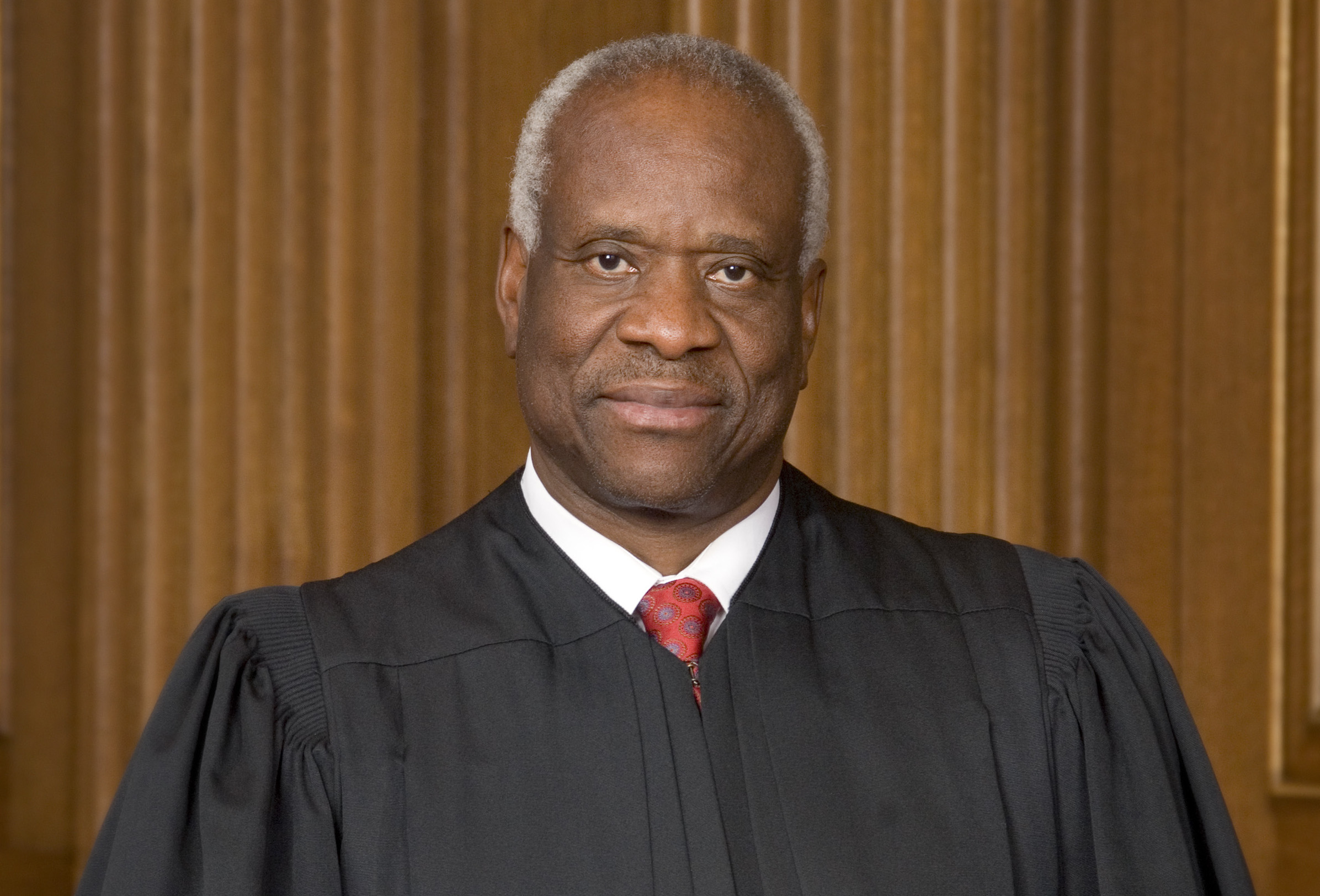
Clarence Thomas, who grew up in Savannah, Georgia, was confirmed to the U.S. Supreme Court in 1991. He is the second African American to sit on the high court.
STEVE PETTEWAY / COLLECTION OF THE SUPREME COURT OF THE UNITED STATES

Clarence Thomas, one of nine members of the Supreme Court and the second black to ever join the Court, is not in the National Museum of African American History and Culture in Washington, D.C. Asked to explain Thomas' absence, the chief spokeswoman for the Smithsonian said, "The museum's exhibitions are based on themes, not individuals."

Yet the museum plans to add a popular local D.C. television news broadcaster. The museum's founding director, Lonnie Bunch, said the broadcaster "symbolized that it was really important that America was changing and his presence was a symbol of that change." And Thomas, raised in poverty to become only the second black to sit on the Supreme Court, is not "a symbol of that change"?

Left-wing blacks -- and that's the overwhelming majority -- feel that black conservatives like Thomas do not just have different or wrongheaded or illogical views. Thomas' views, to them, damage the black community. Never mind that most Clarence Thomas-haters could not identify a single case Thomas decided with which they disagree.

One line of attack against Thomas goes as follows. Thomas "took advantage" of race-based preferences to get into college and law school, but then "turned his back on those behind" by arguing that such preferences violate the 14th Amendment.

What these critics assert is that but for race-based preferences, Clarence Thomas would likely be working the deep-fryer at McDonald's. Assume, for the moment, that but for race-based preferences, Thomas would not have gotten into the particular schools he attended, College of the Holy Cross in Worcester, Massachusetts, and Yale Law School. But in America thousands of colleges and universities, from community colleges to Harvard, accept students of varying abilities with financial assistance readily available. Surely the driven, hardworking, academically oriented Clarence Thomas could have and would have found admission into schools matching his skills and ability.

Related image
Economist and author Thomas Sowell was a senior fellow at the Hoover Institution at Stanford University

Here's another problem with race-based preferences. Studies document a disproportionately high college-dropout rate for minority students admitted with lower test scores and grades than their peers selected without preferences. How is this mismatching of value to the "beneficiary" if it leads to a higher dropout rate, with the frustrated student giving up and leaving school in debt? The student often blames his failure to succeed at this high level on unfair, if not racist, professors.

The African-American Museum's discrimination against Thomas provides just one example of the black anti-conservative bigotry. Here's another. Every year, the black monthly magazine Ebony lists its "Power 100," defined as those "who lead, inspire and demonstrate through their individual talents, the very best in Black America." Each year Thomas is conspicuously absent. Apparently, as a sitting black justice on the Supreme Court of the United States, Thomas does not "lead, inspire and demonstrate ... the very best in Black America."

Ebony not only excludes Clarence Thomas but also shuts out prominent conservatives Thomas Sowell and Walter Williams.

As for Sowell, he's only an economist and writer whom playwright David Mamet once called "our greatest contemporary philosopher." Sowell, who never knew his father, was raised by a great-aunt and her two grown daughters. They lived in Harlem, where he was the first in his family to make it past the sixth grade. He left home at 17, served as a Marine in the Korean War, graduated magna cum laude from Harvard, earned a master's degree at Columbia University the next year, followed by a Ph.D. in economics at the University of Chicago.

Sowell, at 87, authored some four dozen books (not counting revised editions) and wrote hundreds of scholarly articles and essays in periodicals and thousands of newspaper columns. In 2015, Forbes magazine said: "It's a scandal that economist Thomas Sowell has not been awarded the Nobel Prize. No one alive has turned out so many insightful, richly researched books." Yet, thanks in part to the Ebony shutout, many blacks have never heard of him.

Image result for walter e williams
Walter E. Williams is an economics professor at George Mason University

How does Ebony justify excluding economist and writer Walter Williams, former chairman of the economics department of George Mason University, where he still teaches? Raised by a single mother, he lived in Philadelphia's Richard Allen housing projects. He served as a private in the Army before earning a bachelor's degree at a state university, followed by a master's and a Ph.D. in economics at UCLA. Williams has written a dozen books on economics and race, including the inspirational "Up From the Projects: An Autobiography," and was recently the subject of a documentary about his life.

The exclusion of people like Clarence Thomas, Thomas Sowell and Walter Williams explains why there's no serious discussion in the black community about government dependency; school choice; the damage done by high taxes, excessive regulation and laws like minimum wage; and why blacks should rethink their allegiance to the Democratic Party.

The failure to acknowledge conservative blacks is a failure to engage their ideas, to the detriment of the community. This is not merely an injustice to them: It is an injustice to all Americans.

TRUMP GOT YOUR TONGUE, MEDIA?


By Ann Coulter
http://www.anncoulter.com/
August 9, 2017

Related image
President Trump with Senators Tom Cotton (left) and David Perdue discuss immigration reform, August 2, 2017. (Photo: Andrea Hanks/White House)


The current issue of Newsweek (yes, it's still in business!) has a picture of President Trump sitting in a recliner, with snacks and an iPad in his lap, pointing his TV remote at the viewer, blazoned with the headline, "Lazy Boy." 

Liberals only wish. 

Last week, the president joined Sens. Tom Cotton (R-Ark.) and David Perdue (R-Ga.) to announce legislation that would make seminal changes to our immigration laws for the first time in more than half a century, profoundly affecting the entire country. 

The media have chosen not to cover the RAISE Act (Reforming American Immigration for Strong Employment). This bill is their worst nightmare. 

Instead of admitting immigrants on the basis of often specious "family" ties, the bill would finally allow us to choose the immigrants we want, based on merit, with points granted for skills, English proficiency, advanced degrees, actual job offers and so on. 

Most Americans have no idea that we have zero say about the vast majority of immigrants pouring into our country. Two-thirds of all legal immigrants get in not because we want them -- or even because Mark Zuckerberg wants them -- but under idiotic "family reunification" laws. 

The most important provision of the RAISE Act would define "family" the way most Americans think of it: your spouse and minor children.

Unfortunately, that's not how the Third World thinks of "family." In tribal societies, "family" means the whole extended clan -- adult siblings, elderly parents and brothers-in-law, plus all their adult siblings and elderly parents, and so on, ad infinitum. 

Entire tribes of immigrants are able to bully their way in and, as legal immigrants, are immediately eligible for a whole panoply of government benefits. Suddenly, there's no money left in the Social Security Trust Fund, and Speaker Paul Ryan is telling Americans they're going to have to cut back.


At some point, American businesses are going to have to be told they can't keep bringing in cheap foreign labor, changing the country and offloading the costs onto the taxpayer. But that's not this discussion. Business owners want cheap workers -- not the disabled parents of cheap workers. 

In a sane world, merely introducing such an important bill -- with the imprimatur of a president elected on his immigration stance -- would force the media to finally discuss the subject they have been deliberately hiding from the public. 

Has Trump personally endorsed any other legislation like this? He harangued congressional Republicans on Twitter to pass some Obamacare replacement, but he never endorsed a specific bill. 

But, you see, there's a reason the media don't want to talk about immigration. 

With a full public airing, Americans would finally understand why recent immigrants seem so different from earlier waves, why income inequality is approaching czarist Russia levels, why the suicide rate has skyrocketed among the working class, and why all our government benefits programs are headed toward bankruptcy. 

As Stephen Miller, the president's inestimable speechwriter, said, some legislative proposals "can only succeed in the dark of night" and some "can only succeed in the light of day." This is a light-of-day bill. 

So, naturally, the media refuse to mention it, except to accuse Miller of being a white nationalist for knowing hate-facts about the Emma Lazarus poem not being part of the original Statue of Liberty. (It's the Statue of Liberty, not Statute of Liberty, media.) 

They ignore this bill so they can get on to the important business of Trump's tweets, who's up and who's down in the White House, and Russia, Russia, Russia. 

According to my review of Nexis archives, there was only a single question about the RAISE Act on any of the Sunday morning shows: Chris Wallace's last question to his very important Republican guest. Unfortunately, his very important Republican guest was amnesty-supporting nitwit Sen. Thom Tillis of North Carolina, who sniped about Trump employing foreign guest workers at Mar-a-Lago. 

However that may be, guest workers have absolutely nothing to do with the RAISE Act, which, as Miller heroically tried to explain to clueless reporters, concerns only green-card holders, i.e., lawful permanent residents -- not guest workers, not illegal aliens and not a poem Scotch-taped onto Lady Liberty in 1903. 

At least the media aren't deluded about the popularity of their position. Discussing immigration is a total loser for them. They know what they want is not supported by anyone. 

Low-wage workers don't want hundreds of thousands of low-skilled immigrants being dumped on the country every year. Employers don't want the deadbeat cousins of their cheap workers. Americans on public assistance don't want foreigners competing with them for benefits. Boneheaded Scandinavian communities that welcomed refugees don't want to turn their entire town budgets over to various foreign tribes. 

In a recent Numbers USA poll of voters in 10 swing states with vulnerable Democratic senators up for re-election next year, only 22 percent of respondents thought immigrants should be allowed by right to bring in "family" other than spouses and minor children. 

Make the senators vote, Mr. President! 

Donald Trump was elected president, beating the smartest, most qualified woman in the world, by proposing to put Americans first on immigration. This bill makes good on that promise. 

There's a reason the media won't discuss it. If Trump were smart, he'd talk about nothing else. 

COPYRIGHT 2017 ANN COULTER 


Related:

http://www.nationalreview.com/article/450228/raise-act-immigration-bill-explainer-trump

Wednesday, August 09, 2017

Today's Tune: Glen Campbell - These Days

Today's Tune: Glen Campbell - I'm Not Gonna Miss You

Glen Campbell's Alzheimer's battle added a heroic coda to a pop-country star's life

By Randy Lewis
August 8, 2017
Related image
(Getty Images)
I witnessed up close the ravaging effect that Alzheimer’s disease was having on Glen Campbell in the later years of his life. This was in 2011, when I interviewed him at his Malibu home shortly after he’d gone public with his diagnosis.
At that point, although his short-term memory was failing rapidly, he was in fairly good spirits, and his sense of humor was fully intact.
But even little points he wanted to make turned into a struggle. His brain was no longer responding with the kind of dexterity that his fingers and voice had done in making him a bona fide pop-country star in the 1960s, ’70s and ’80s.
Campbell, whose death at 81 was announced Tuesday, rode a long string of pop hits that began in 1967 with John Hartford’s “Gentle on My Mind” and continued with Jimmy Webb’s “By the Time I Get to Phoenix” and more Webb songs (“Wichita Lineman,” “Galveston”), all of which led to his breakout success as the host of “The Glen Campbell Goodtime Hour.”
Yet that day, when I asked how he perceived the effect of this pernicious disease, his response shifted from astutely analytical to frustratingly forgetful.
“I’m fine,” he said at first, as we sat at the counter in his kitchen, his wife, Kim, seated near him. “It’s just sometimes days are better than other ones.”
A moment later, he added, “It hasn’t affected me in any way. In fact, I don’t even know what it is. Who came up with that?”
When Kim reminded him —“Your doctor,” she said — he shot back, “Well, he’s probably wrong.”
In other situations he liked to quip, “I don’t have Alzheimer’s. I have part-timer’s.”
In fact, Campbell had been experiencing the onset of dementia or Alzheimer’s for years before he and Kim chose to let the world in on the news.
At that time, they said they wanted fans to know what he was up against, because he wished to continue performing as long as he could, but didn’t want people thinking he’d relapsed on his sobriety if he forgot lyrics or repeated a joke he’d told a few minutes earlier.
That revelation made me rethink another interview I’d done with him a few years earlier. This one I cited for years as one of the most disappointing of my career.
Then, Campbell had released 2008’s “Meet Glen Campbell,” an excellent album in which he applied his endearing boy-next-door tenor and phenomenal guitar technique to a batch of recent-vintage songs by artists such as Tom Petty, Green Day, Velvet Underground, U2, the Replacements and other left-field (for him) sources.
I’d gotten little other than “yes,” “no” and “I don’t remember/I’m not sure” responses from him. I left the interview wondering why he’d even bothered, since he seemed more focused on getting to the round of golf he said was awaiting him.
In retrospect, I could understand that he was already impaired to an extent. But no one knew that yet — not even him.
In the 2014 documentary “Glen Campbell: I’ll Be Me,” directed by actor-filmmaker James Keach, there’s a scene where Campbell and his wife travel to Washington, D.C., to lobby on behalf of greater federal support for increased Alzheimer’s research funding. The disease figures to affect millions more as the baby boomers move into what are supposed to be “the golden years.”
In an interview with former President Clinton — one of Campbell’s fellow Arkansans — he suggested that despite the millions of records Campbell had sold and all the fans he’d entertained over half a century, his greatest legacy might turn out to be his advocacy for those with Alzheimer’s. Clinton praised the singer and guitarist for using his own difficult experience to put a public face on the cruelly degenerative disease.
A big part of what made Campbell’s journey so unusually compelling is the way that music allowed him to stave off some of the worst effects of Alzheimer’s much longer than many.
That’s because it’s said that music resides in a part of the brain that the disease doesn’t fully invade until its final stages. Thus, even when he was forgetting the names of his children, or little details like what he ate for breakfast, he could still summon lyrics to songs he’d sung hundreds of times over the decades.
Even more impressively, with apparent effortlessness he could still spin out magnificently complex guitar solos requiring highly intricate brain-muscle-nerve communication.
That element of his 2012-13 Goodbye Tour was reassuring to fans who remember the signature guitar style that he honed to perfection as a studio professional working in Los Angeles in the ’60s with other session pros who came to be known as the Wrecking Crew.
His chiseled good looks and down-home Arkansas humor allowed him to emerge from the relative anonymity of studio work to become a TV and recording star through his CBS musical variety show “The Glen Campbell Goodtime Hour,” and a long string of pop-country hits such as “Gentle on My Mind,” “By the Time I Get to Phoenix,” “Wichita Lineman,” “Rhinestone Cowboy” and “Southern Nights.”
Throughout his career, like so many celebrities, he also battled substance abuse and found himself more frequently on the cover of supermarket tabloids than Billboard or Rolling Stone in the 1980s and ’90s.
But following a humiliating arrest for “extreme drunken driving” in Arizona in 2004, he got sober and returned to recording, delivering some of his best work since the ’60s and ’70s, beginning with “Meet Glen Campbell” with producer Julian Raymond, who also shepherded “Ghost on the Canvas” and collaborated on writing songs that addressed what Campbell was going through physically, mentally and emotionally.
The poignancy of his slide into Alzheimer’s certainly figured into several industry nominations and awards he received for his 2011 album “Ghost on the Canvas” and for Keach’s documentary, which generated an Academy Award nomination for the song “”I’m Not Gonna Miss You.”
In that number, he sang, “I'm never gonna hold you like I did/Or say ‘I love you’ to the kids/You're never gonna see it in my eyes/It's not gonna hurt me when you cry.” Elton John called it “not only the best song nominated; it’s one of the most beautiful songs of all time.”
When I spoke to Keach about working with Campbell on the project, a work that didn’t flinch from sharing what he was like on some of his bad days, he spoke in admiration of the singer’s bravery in letting others in on what he and his family were going through.
"Here's a guy, an iconic musician, who was faced with having to hang up his guitar, his career is over,” Keach told me. “But instead, he says, ‘I ain’t done yet. I'm going out to show what this disease is’ because he wants to change the conversation. He writes the song with Julian, records it, sometimes a line at a time, sometimes a word at a time, and he wins a Grammy and gets nominated for an Oscar.
“If that ain't a hero,” Keach said. “I don't know what is.”
Glen Campbell, we’re all gonna miss you.