Wednesday, May 17, 2017

Book Reviews: ‘Martin Luther’, by Lyndal Roper and ‘All Things Made New’, by Diarmaid MacCulloch


By Malcolm Gaskill
https://www.ft.com/
July 15, 2016

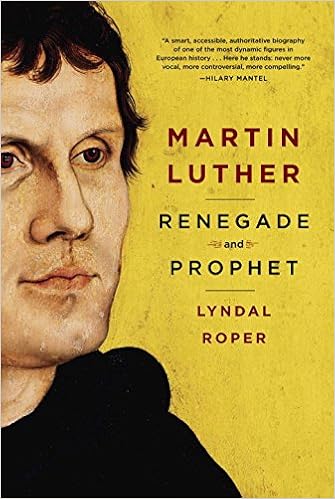
Image result for martin luther roper

Like all great ideas, the thinking behind the Protestant Reformation resonated far beyond the imagination of its chief protagonist. Next year sees the 500th anniversary of Martin Luther nailing (or possibly glueing) his 95 theses to the door of Wittenberg’s Castle Church, an act of defiance against the Catholic Church that transformed theology and divided Christians in the west. Its significance was not merely religious, however. Luther’s assault on papal dominance revolutionised European society, politics and culture; it ignited rebellions and wars, made monarchs and broke them, and ultimately transformed the arts and sciences.

We may think we know Luther, but Lyndal Roper shows how much we’ve missed. The service that her magisterial biography does to his memory is twofold: she presents him both as a human being and as a man of his time. She describes a life as it unfolded, full of ambivalence and chance, not retrospectively mythologised. Hers is a book rich in meticulous research and eloquent prose, acute insights and humane judgments. It is surely the definitive account of Luther’s life and work, and will remain so for many years.

Click on the link below to read the rest of the article:

https://www.ft.com/content/d6cdfc92-44f4-11e6-b22f-79eb4891c97d

Show Me the Memos!


BY CHARLIE MARTIN
https://pjmedia.com/
May 16, 2017

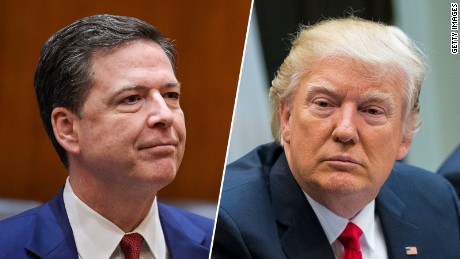
Image result for trump comey memo
James Comey/Donald Trump

So, it's 5 p.m. Eastern Time, and yes, there's another anonymously sourced blockbuster breaking news story ...

... in which the New York Times reporters say that they were told about a memo that says:
“I hope you can see your way clear to letting this go, to letting Flynn go,” Mr. Trump told Mr. Comey, according to the memo. “He is a good guy. I hope you can let this go.”
Mr. Trump told Mr. Comey that Mr. Flynn had done nothing wrong, according to the memo.
Mr. Comey did not say anything to Mr. Trump about curtailing the investigation, only replying: “I agree he is a good guy.”
Then we're told that:
The New York Times has not viewed a copy of the memo, which is unclassified, but one of Mr. Comey’s associates read parts of the memo to a Times reporter.
So, yeah, we've got another 5 p.m. release of a Big Big Story based on anonymous sources who didn't show the Times reporter the memo, but just read some selected parts of it. Being "one of Mr. Comey's associates," of course, makes the source completely credible.

Well, no, I don't trust these 5 p.m. "bombshells." I don't trust anonymous sources who are associates of a guy who was just fired for non-performance, and I don't trust reports based on parts of a memo read to a reporter by this anonymous source.

And I say, show me the memos!

Look, as I seem to end up saying over and over again, these 5 p.m. bombshells don't have a very good record of working out. Usually, they turn out to be stories where, with a modicum of critical thinking, you'd see that the story looks pretty questionable. In yesterday's story, for example, we were supposed to believe that Trump blew significant intelligence to the Russians in the presence of the secretary of state, the national security advisor, and a deputy national security advisor—none of whom tried to interrupt or stop him—based on an account of the meeting from an anonymous source who wasn't actually there.

All three people who were actually there immediately denied it. McMaster was on TV today, in the press room, taking questions. He denied it strongly, saying that what Trump had said was "wholly appropriate" and consistent with what they were trying to do.

Of course, the defense today is that McMaster is part of the Russian conspiracy.

So, let's look at this story again. What did Comey's memo allegedly say? That Trump said, the day after he fired Flynn, “I hope you can see your way clear to letting this go, to letting Flynn go. He is a good guy. I hope you can let this go.”

This is being used by several of the usual suspects as a pretense for articles of impeachment on the theory that it's "obstruction of justice."

Except, you know what? It's not. And yes, I Am Not A Lawyer, but I have several friends who are, and they agree with me. (Want to know more details? Read this.)

See, what Trump did was give Flynn a character reference, and ask for Comey to exercise prosecutorial discretion. Something with which Comey is very familiar, having just used prosecutorial discretion to give Hillary Clinton an out.

The DoJ is not unfamiliar with the concept either: remember, the Lynch DoJ used prosecutorial discretion to decide not to charge Lois Lerner.

Now, as I type, Bret Baier is reporting that Comey met with two senators directly after the firing and that Comey didn't say anything to them.

So, we have this apparent memo on file, describing something that turns out not to be an offense, being leaked in a 5 p.m. story, after a day in which the last 5 p.m. story pretty much collapsed.

So yes, I'm suspicious. So I say, show me the memos!

Yes, I think Jason Chaffetz should subpoena them if needed. Yes, I'd like Comey to testify about this under oath. And if he says, "I can't talk about that, it's classified," then go into closed session and compel him to testify.

Trump already gave Comey a brushback, mentioning White House tapes. Since we know that Obama taped things in the White House, it seems likely they exist. So bring them out. Play the tapes. Make Comey testify. And most of all...

SHOW US THE MEMOS.

Because I'm done with anonymous sources.

Tuesday, May 16, 2017

The Latest ‘Just Like Watergate’ Idiocy


The ‘obstruction of justice’ claim is phony.

By Andrew C. McCarthy — May 16, 2017
Image result for trump comey firing
There is so much legal ignorance in the reporting and commentary about the “Russia investigation,” it is hard to keep up. The latest is that we need a special prosecutor because the firing of FBI director James Comey could amount to Watergate-type obstruction of justice.

The claim is half-baked, but I suppose it is an improvement. Up until now, as I pointed out over the weekend, Senate minority leader Chuck Schumer (D., N.Y.) and the media-Democrat echo chamber agitating for a special prosecutor had forgotten the little matter of . . . a crime. Putting aside all the downsides of a special prosecutor that I have outlined on other occasions (e.g., the constitutional flaws of the arrangement, the fact that a special prosecutor is not actually independent of the president and Justice Department, the reality that a special prosecutor undermines an administration’s capacity to govern . . . ), it is foundational that there must be a crime before a prosecutor is assigned to investigate it.

Even under the 1983 Ethics in Government Act (which lapsed in 1999), Congress required a finding (by the attorney general) that there was information indicating a serious criminal-law violation before the appointment of a special prosecutor (or independent counsel) would be triggered. (See Section 591(a) of Title 28, U.S. Code.) By contrast, Trump detractors have failed to identify any penal-law violation as to which there is a basis to believe President Trump or someone in his campaign may be guilty.

The only criminal offense arising out of the Kremlin interference in the 2016 election is hacking. It is not enough to say there is no evidence that the Trump campaign was complicit in this hacking. We must add that U.S. intelligence agencies have told us who carried it out – Russian intelligence – and have further explained that the Russian scheme targeted both Republicans and Democrats.

So now, at last, we have a gambit to fill this gaping hole in the demand for a special prosecutor: Trump’s dismissal of the FBI director is said to interfere with the FBI’s ongoing Russia investigation; therefore, the theory goes, it could amount to obstruction of justice, a felony. This suggestion is legally and factually specious. It is based (not for the first time) on a misrepresentation of the kind of investigation the FBI is doing.

As we have repeatedly pointed out, and as former director Comey stated in congressional testimony, the FBI is conducting a counterintelligence investigation. It is not a criminal investigation. The subject of the investigation is not an American (specifically, Trump) suspected of committing a crime. The subject of the investigation is Russia. The purpose of the investigation is not to develop a prosecutable offense. The purpose is to gather intelligence of the Putin regime’s actions and intentions so that our government can develop countermeasures.

Intelligence gathering is not a judicial proceeding. It is an executive-branch security function. In point of fact, there is no evidence that President Trump has impeded the Russia investigation (a point we’ll expand on momentarily). But even if the president had taken such a measure, that would not be obstruction of a judicial proceeding, or of a law-enforcement investigation aimed at bringing a court prosecution.

The president (assisted by executive-branch intelligence agencies) is in charge of setting intelligence-gathering priorities for the United States. His discretion in determining which collection efforts to begin, which ones to alter, and which ones to curtail, is unreviewable.

Since 1978 (with the enactment of the Foreign Intelligence Surveillance Act), Congress has fashioned a judicial-oversight role over certain collection procedures (e.g., it is necessary to obtain a warrant to conduct electronic surveillance of an American suspected of acting as a foreign agent). That, however, does not change the basic nature of foreign-intelligence operations: They remain executive exercises in information-gathering and analysis regarding foreign powers; they are not law-enforcement probes for the purpose of developing criminal cases to be litigated in the justice system.

To repeat a point I have made a number of times, the FBI is not permitted to use its counterintelligence powers as a pretext to conduct criminal investigations. Therefore, if the Bureau wanted to investigate the commission of a crime, it would have to open a criminal investigation and resort to ordinary criminal procedures – search warrants, criminal wiretap orders, grand juries, arrests, indictments, and criminal trials before federal judges.

Under federal penal law, obstruction of justice arises from interference with judicial proceedings, grand-jury proceedings, the administration of law in proceedings conducted by a federal department or agency, or congressional investigations. Thus, if the Russia investigation were a criminal investigation, and if there were a basis to believe Trump was interfering with, say, a grand-jury or trial proceeding, it might be claimed that an obstruction-of-justice offense was afoot.

What the FBI is actually doing in the Russia investigation, however, is intelligence-gathering in connection with a foreign power. The president has every right to intervene in intelligence activities. Indeed, the purpose of intelligence activities is to provide the president and his advisers with information, so they can make policy or take action against foreign threats to U.S. interests. Congress and the courts have no power to compel the executive branch to commence or continue particular intelligence operations.

Now, put aside that curtailing an intelligence operation would not be obstruction of justice. The stubborn fact is that Trump’s firing of Director Comey has not curtailed the Russia investigation at all. Even NBC News, no Donald Trump fan, has reported that acting FBI director Andrew McCabe testified that there has been “no effort to impede” the investigation. McCabe further explained, in the same congressional hearing, that resources for the investigation were adequate, debunking a claim that requested budgeting had been withheld.

So even though it would not be obstruction of justice if the Russia investigation had been curtailed, it has not been curtailed. Therefore, we need not even address an additional proof hurdle: Under federal law, even an actual interference with a criminal investigation or a judicial case would not amount to obstruction of justice unless it was done “corruptly” – i.e., done with an understanding that the interference was illegal and an intention to subvert the truth-seeking function. Suffice it to say that the closest thing we have seen to a corrupt obstruction of investigative activity has been the leaking of classified information about the investigation to the media during the Obama administration – a felony that surely induced the Kremlin to adopt new tactics that make it harder for our intelligence services to monitor Russian operatives.

Intelligence-collection operations are saliently different from law-enforcement investigations. They do not involve “justice” in the sense of a proceeding in which someone is to be held accountable in a court for a law-violation. To speak of “obstruction of justice” in the context of foreign counterintelligence is inapposite – like speaking of the infield-fly rule in the context of football, or the Oxford-style debate format for a bar fight.
The Russia investigation has not even been curtailed.
Special prosecutors are appointed in order to investigate a known crime, not to search for the possibility of a crime. The Watergate special prosecutor was appointed because there had been a felony break-in at DNC headquarters. The Iran-Contra special prosecutor was appointed after discovery of an illegal scheme in which proceeds for arms sales to Iran (then under an arms embargo) were to be used to fund the Nicaraguan Contras in violation of a congressional funding ban. The Whitewater special prosecutor was appointed due to the discovery of fraudulent financial arrangements in connection with land deals that led to the collapse of a savings-and-loan, costing taxpayers tens of millions of dollars. The Valerie Plame special prosecutor was appointed as a consequence of the disclosure of her status as a CIA officer, in alleged violation of a federal law (the Intelligence Identities Protection Act) that makes it a crime to expose covert agents.

Obviously, there is no need for the Justice Department to consider the appointment of a special prosecutor unless and until there has been a demonstration that there is something to prosecute – a specific, serious criminal-law violation. Senator Schumer and his allies do not fill that void by gibbering about obstruction of justice.

— Andrew C. McCarthy is a senior policy fellow at the National Review Institute and a contributing editor of National Review.
Derek Jeter is gold standard of being a Yankee

By Mike Lupica
http://www.nydailynews.com/sports/
May 14, 2017

Image result for jeter daily news

This is what you must always remember about Derek Jeter, on the occasion of No. 2 being retired at Yankee Stadium: As much winning as he did as the most important Yankee of his time and one of the most important of all time, in those years when he was the leader of the team that made the Yankees the Yankees again, Jeter even managed to win when he and his team lost.

We have talked all week, the way we will talk forever, about that flip play against the A’s in the 2001 playoffs, when he came from shortstop to cut off that throw and made the baseball equivalent of a no-look pass in basketball to Jorge Posada at the plate, before Posada tagged out Jeremy Giambi.

Out of everything that Jeter ever did as a Yankee, perhaps this was the play that best symbolized what he meant:
Because he was there when the Yankees needed him the most that night in Oakland.
Really, though, it had been that way since he first ran out to shortstop for good in April of 1996, about to become the face of everything that was about to happen to the Yankees, whether we knew it at the time or not. Here came this new kid bringing all his old-Yankee grace and old-Yankee values with him. We didn’t know about all that at the time, either, because we didn’t know that much about him. We sure found out over the next 20 years.
But as much as Jeter and those teams mattered, it really is worth remembering today when they mattered as much as they ever had: In three home World Series games in 2001 at the old Stadium, in the shadow of Sept. 11, while the rescue work went on in lower Manhattan; when people in the city looked forward as much as they did to the Yankees against the Diamondbacks in the World Series. Not because those games would change what had happened, would change anything that had happened downtown, really. Just because for a few hours, that far uptown, the world would at least look and sound the way it had on Sept. 10 and Sept. 9 and all the other days in New York before the planes hit the buildings.
It was Joe Torre, a few months later, who would smile and shake his head and talk about the condolences he’d been receiving from Yankee fans since the Yankees had finally lost to the Diamondbacks in the bottom of the ninth of Game 7. Torre talked about the way the Stadium felt and sounded on those three nights when the Yankees kept coming back to beat the Diamondbacks, until Jeter finally became “Mr. November” and won Game 4.
“You tell me how we lost,” Torre said to me at a party in Manhattan one night.
The Diamondbacks were ahead by two runs in the bottom of the ninth of Game 4. But then Tino Martinez hit a two-run homer to tie the game. Jeter finally came up in the bottom of the 10th, right after the clock had struck midnight at the Stadium and it became the first of November. Then Jeter hit one over the right-field wall, not so terribly far from the place in the outfield where Jeffrey Maier had once reached over with his glove in a playoff game against the Orioles in 1996, and Jeter’s ball became a very famous Yankee Stadium home run.
Then Scott Brosius tied Game 5 in the 9th when he hit one off Byung-Hyun Kim, and the Yankees again won in extra innings again. They would never win another game in the ’01 World Series. They got blown out in Game 6 in Phoenix and then Mo Rivera couldn’t get them through the bottom of the ninth after Alfonso Soriano had put the Yankees ahead in Game 7.
Still: For those three nights in October and November of 2001, Jeter and the Yankees meant more than they ever had. So it was inevitable that he would give his team and his fans a moment the way he did with the home-run swing that evened the Series at two games all. Jeter was there that night when it wasn’t just the Yankees who needed him, but his city did as well.
You look back on it all now, on the occasion of the retirement of his number, how he spent 20 years as a star of his team and his city, and how he remained that kind of star even when his skills began to fade. Jeter managed this without scandal or real controversy or becoming the kind of tabloid poster child that Alex Rodriguez would become when he came from Texas to play alongside of Jeter. In so many ways, and we have spoken of this so much over the years, he did become his team’s DiMaggio. It was never about what he said. It was about what he did, and how he did it, and the way he carried himself.
“It wasn’t about how I thought Yankees were supposed to act,” he told me once in front of his locker. “It was about the way I was raised. My parents taught me there was a way everybody was supposed to act.”
Oh, there was the time when there was a “Party On” headline in this paper he didn’t like, after George Steinbrenner suggested that he didn’t much like hearing that Jeter had been out at 3 a.m. after a birthday party one time. He became a story late in the game over his last contract with the Yankees. But then those headlines were gone, and he was still Jeter, not the player he had been when he was young, but carrying himself and conducting his business the way he always did, all the way until he won one last game for the Yankees at the Stadium, with a single to right against the Orioles.
Didn’t hit one over the wall in right. That single to right came at end of a season when the Yankees missed the playoffs again, which always meant a losing season to Derek Jeter. Wasn’t Jeffrey Maier or The Flip or Mr. November or the 3000th hit being a home run. Just helped the Yankees win one more game at Yankee Stadium. The winning didn’t just keep going and going for him. He did. He wasn’t just the Yankee kids wanted to be. He was — and is — what everybody wanted the Yankees to be.

California threatens to shut down book signings and therefore small booksellers


May 11, 2017
Image result for book passage san francisco
Today we filed this First Amendment lawsuit on behalf of beloved Bay Area bookstore Book Passage, and its co-owner, Bill Petrocelli.
Book Passage is a hub of literary activity and free expression.  In addition to selling books, it hosts over 700 author events a year—in which authors give talks, read passages, interact with readers, and autograph their books.  Bill keeps copies of these signed books to sell later—which you can see scattered down the aisles of his store.  Book Passage also curates a monthly book club, wherein readers are sent a first edition book signed by an up-and-coming author.
Book Passage doesn’t charge a premium for the autograph; all of its books are sold for their cover price. But a newly enacted California law makes it extremely risky, if not impossible, for Book Passage to continue selling autographed books or hosting author events.
Acting on purported consumer protection concerns, the legislature recently expanded its autograph law (which formerly only applied to sports memorabilia) to include any signed item worth over $5—including books.  Under that law, sellers must produce a certificate of authenticity and maintain detailed records of every sale for seven years.  Sellers must, among other things:
  1. Note the purchase price and date of sale,
  2. specify whether the item is part of a limited edition,
  3. note the size of the edition, anticipate any future editions,
  4. disclose whether the seller is bonded,
  5. divulge any previous owner’s name and address,
  6. if the book was signed in the presence of the seller, specify the date and location of the signing, and identify a witness to the autograph.
Failure to disclose any of the required details, or to keep the certificate for the full seven years, results in outrageous penalties.  Even an inadvertent omission can subject a seller to actual damages, plus a civil penalty of up to 10 times the damages, plus court costs, plus reasonable attorney’s fees, plus expert witness fees, plus interest. Professional plaintiff’s lawyers must be chomping at the bit.  If Bill sold just 100 signed copies of a $30 book, but six years later, couldn’t locate the records noting the size of the edition, he’d be liable for (at minimum) $30,000.  Bill sells tens of thousands of signed books each year.
For many booksellers like Bill and Book Passage, this massive threat of liability will make holding author events too much of a risk.  And the loss to California’s marketplace of ideas will be gargantuan.  Book signings aren’t just central to Book Passage’s business model, they’re vital to up-and-coming authors with less represented views, who use book signings to lure new readers.  Many famous authors got their start by doing signing events.  While Book Passage hosts such big names as Isabelle Allende and Khaled Hosseini, it also frequently hosts local poets, fiction writers, and even chefs who have authored cookbooks.
Even worse than irrational, the law is pernicious: despite the law’s vast breadth (it also covers paintings, sculptures, and auctioneers), certain sellers have secured exemptions.  Online retailers and pawn shops, those places where uninformed buyers are most vulnerable, do not have to comply.
We are challenging this poorly written, overbroad, yet underinclusive, bill in court.  To find out more, visit our case page here, or watch the video below.

Saturday, May 13, 2017

University of Buffalo Students Shout Down Robert Spencer Lecture on Jihad


May 12, 2017

Students and faculty piled into Knox 109 to both hear Robert Spencer's speech and protest his appearance.
By Kainan Guo

Last Monday, I appeared at the University of Buffalo at the invitation of the courageous students of Young Americans for Freedom. They have to put up with campus Left-fascist thuggery on a daily basis, while I was able to leave Buffalo the morning after the event.

I say I “appeared,” because to say “I spoke” would be exaggerating a bit. Rather, I spoke a few sentences and made a couple of points in between being screamed at by Leftist and Islamic supremacist fascists who think they’re opposing fascism.

The Spectrum, the student newspaper of the University at Buffalo, reported:
Robert Spencer couldn’t speak for more than 30 seconds without students shouting and cursing at him.
…
Spencer planned to speak to students about “the dangers of jihad in today’s world” but constant heckling from the crowd made it near impossible for him to complete a full sentence.
Indeed. The raucous student mob, of course, believes it represents the side of all that is good and righteous. These students have been hoodwinked into thinking that “Islamophobes,” rather than jihad terrorists, are killing people around the world.

For example, one man held a sign that read “Queers Against Islamophobia.” The crowd booed lustily when I attempted to read from Islamic authorities about Islam’s death penalty for homosexuality. Even to read from Islamic sources is hate, apparently, at the University at Buffalo -- unless, of course, one endorses such penalties rather than oppose them.

By shutting down any discussion of the motivating ideology of the jihad threat and consigning it all to the realm of “hatred” and “bigotry,” the student mob at the University of Buffalo enables that threat to grow. One day, the Leftists who screamed, heckled, and booed as I tried to speak may very well experience the consequences of their actions, carried out by those with whom they thought they stood in solidarity.

The Spectrum article did capture one thing I managed to say:
The attempt to silence someone who has a differing viewpoint was a “quintessentially fascist act, and you are manifesting it in a wonderful way tonight,” said Spencer.
There was also this:
Spencer frequently discusses terrorism by Muslims as being religiously motivated, an argument that has put him in the cross-hairs of American Muslims who say his interpretation of Islam is dangerously inaccurate and perverts their faith.
Those American Muslims have a big problem on their hands, because in reality, I offer no interpretation of Islam at all. I only report on how Muslims interpret Islam, which all too often involves justifications of and exhortations to violence. They are anxious to silence me because they don’t want Americans to know how jihadis use the texts and teachings of Islam to justify hatred, violence, and supremacism.

MSA President Samiha Islam speaks to students during the sit-in before Robert Spencer's speech.
By Kainan Guo

An extraordinary aspect of this ugly incident’s aftermath: even though I hardly got a word in, University of Buffalo officials and the campus Muslim Students’ Association chapter were apparently so shaken by my appearance that they have featured not one, but two events in response. The events feature highly disingenuous Islamic spokesmen, apparently an effort to make sure that campus Left-lemmings stay on message: Islam is a religion of peace that has nothing to do with terrorism, despite the ever-growing evidence to the contrary.

Hassan Shibly of the Hamas-linked Council on American-Islamic Relations (CAIR) slandered me repeatedly. He said:
When I hear Spencer say that Islam should be illegal, I hear him saying my religion should be outlawed … and what I hear him saying is that he will chip away at the First Amendment to the United States Constitution.
What a noble act by Shibly, guarding the republic against the forces of hatred and division.
But there’s just one problem with his statement: Shibly is outright lying. I simply have never said that Islam should be illegal.

The other speaker the University of Buffalo featured, Ahmadi spokesman Qasim Rashid, was no more honest than Shibly. (I have many times in the past exposed the dishonesty of Rashid’s presentations on Islam.) At Buffalo, he made a number of risible claims, including that in Islam, women are equal to men. And he slandered me as cheerfully as Shibly did:

The speaker last night was promoting ISIS ideology on campus. He was essentially their spokesperson. That’s how dangerous this rhetoric is.
The thinking is extremely tortured here. Because I point out that the Islamic State (ISIS) uses the texts and teachings of Islam to justify violence and make recruits among peaceful Muslims, Rashid says I am promoting and supporting ISIS. This is tantamount to saying that Winston Churchill was pro-Nazi for pointing out that Hitler was motivated by Nazism.

No one at the University at Buffalo called out Rashid for his vicious slander or twisted logic, because what Rashid said conformed to Leftist beliefs. American universities today do not reward speaking the truth and defending it rationally. They only reward parroting the agenda of the hard-Left.

The University of Buffalo Left-fascists signaled their virtue by screaming at me for an hour and a half. What did they accomplish by doing so, besides revealing their institution to be yet another Leftist indoctrination factory opposed to the freedom of speech?

Now that they have neutralized the threat they thought I posed to them, will the jihad threat about which I tried to speak thereby go away? Alas, no.

Related:

Friday, May 12, 2017

New Obama Bio Is Not Just Exhausting; It’s Insulting


By Jack Cashill
http://www.americanthinker.com/
May 10, 2017

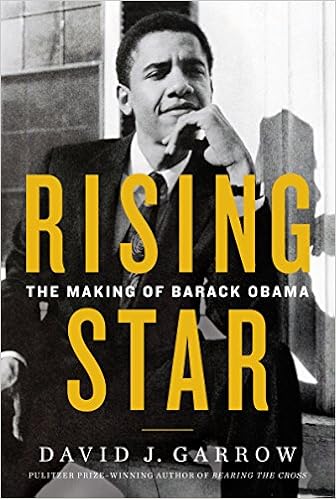
Image result for rising star obama

“Dreams from My Father was not a memoir or an autobiography;” writes Pulitzer Prize-winner David Garrow, “it was instead, in multitudinous ways, without any question a work of historical fiction.”

Garrow makes this claim, italics included, in his massive new biography about Obama’s pre-presidential years, Rising Star: The Making of Barack Obama. For myself and other citizen journalists who have followed Obama, this is hardly a revelation.

We concluded many years ago that Dreams was in large part fiction. We came to this conclusion during the same period when our betters were writing paeans such as, “Whatever else people expect from a politician, it’s not usually a beautifully written personal memoir steeped in honesty” (Oona King, London Times).

The book, we realized, was steeped in something, but it certainly wasn’t honesty. Before the election in 2008, no one in the major media would admit this, and afterwards mainstream critics did so only partially and reluctantly. Garrow continues the tradition.

The New York Times has dismissed Rising Star as “a dreary slog of a read.” I have seen nothing in what I have read of the book to dispute the Times on the tedium part. (My ebook version runs 2,000 pages, and it has just crashed.) I have read enough, however, to feel insulted, not only on my own behalf but also on behalf of those other citizen journalists who dared to report the truth before the major media grudgingly did the same.

Garrow adds a little more to the accepted record -- oh yeah, there was no Obama family -- but the book serves in certain ways to cauterize Obama’s wounded reputation. It is hard to imagine another author going deeper. Garrow spent ten years on the project. He interviewed more than a thousand people. There is much not to like about Garrow’s Obama, but the faithful need never fear learning anything worse than that their man was shallow and self-centered. What politician isn’t?

Like other mainstream biographers, Garrow has the unfortunate habit of insulting those who challenge the orthodoxy, myself included. In July 2008, I first raised the issue of the authorship of Dreams. Beginning in September 2008, I traced the muse behind Dreams, speculatively at first, to the notoriously unrepentant terrorist, Bill Ayers.

Obama biographer David Remnick admitted just how problematic this revelation could have been. “This was a charge,” he wrote in his 2010 biography, “that if ever proved true, or believed to be true among enough voters, could have been the end of the candidacy.”  

The way for Remnick, the New Yorker editor, to deal with the charge was to attack its provenance -- “the Web’s farthest lunatic orbit.” To assure the charge was not repeated, he accused anyone who repeated it, Rush Limbaugh most notably, with racism.

Garrow has his own way of slighting the assertion that Ayers had a hand in Dreams. He ignores it. He makes no mention of my name in the text of the book. Nor does he mention Christopher Andersen. Andersen presented more of a problem than I did. A bestselling biographer with solid mainstream credentials, Andersen gave biographical detail to what I had inferred from textual analysis.

In his 2009 book, Barack and Michele: Portrait of an American Marriage, Andersen spent six pages on Ayers’ role in helping craft Dreams. As Andersen related, Obama found himself deeply in debt and “hopelessly blocked.” At “Michelle’s urging,” Obama “sought advice from his friend and Hyde Park neighbor Bill Ayers.” What attracted the Obamas were “Ayers’s proven abilities as a writer” as evident in his 1993 book, To Teach.

Noting that Obama had already taped interviews with many of his relatives, both African and American, Andersen elaborated, “These oral histories, along with his partial manuscript and a trunkload of notes were given to Ayers.” Although I had not talked to Andersen, his observations, based on two unnamed sources, made perfect sense given Obama’s repeated failures to complete the book on schedule.

One of Obama’s radical friends in Hyde Park did not shy from giving Ayers his due. “First, chronologically and in other ways,” wrote Rashid Khalidi in his 2004 book, Resurrecting Empire, “comes Bill Ayers.” Khalidi elaborated, “Bill was particularly generous in letting me use his family’s dining room table to do some writing for the project.” Khalidi did not need the table.  He had one of his own. He needed help from the one neighbor who obviously could and would provide it.

Garrow has not a word to say about Andersen’s claim, not even to rebut it. In fact, the reader of Garrow’s book would have no reason to believe anyone ever questioned Obama’s authorship. As for me, Garrow adds a comically gratuitous slap.

The reference is a telling one. It involves a poem Obama submitted to his college literary magazine as a sophomore called “Pop.” Garrow writes that most critics presumed the poem was about Obama’s grandfather, but “hostile critics,” namely me, claimed the poem was about Obama’s Communist mentor, Frank Marshall Davis.

In his footnotes, Garrow cites an article published in American Thinker in 2011. In it, I quoted Remnick’s claim that “’Pop' clearly reflects Obama's relationship with his grandfather Stanley Dunham." I disagreed. “The poem does no such thing, “ I wrote. “For starters, if the poem really were about ‘Gramps,’ Stanley Dunham, why didn't Obama simply call it ‘Gramps.’"

There is a variety of evidence arguing for Davis as “Pop.” This includes a 1987 interview with Davis recorded by the University of Hawaii for a documentary on his life.  Watching it, one can visualize “Pop”: the drinking, the smoking, the glasses, the twitches, the roaming eyes, the thick neck and broad back. “I could see Frank sitting in his overstuffed chair,” Obama remembers in Dreams, “a book of poetry in his lap, his reading glasses slipping down his nose.”

Among the details in the poem that disqualified Dunham as the poem's subject was this one: “he switches channels, recites an old poem/ He wrote before his mother died.” As I explained, Dunham's mother died when he was eight years old. Frank Marshall Davis's mother died when he was twenty and had already established himself as a poet of promise. “When an insider like Remnick gets something this obviously wrong,” I concluded, “I begin to suspect disinformation, not mere misinformation.”

Remnick and those critics who preceded him insisted the poem was about Dunham because they did not want to give Davis his due. To his credit, Garrow admits Davis was a card-carrying member of the Communist Party USA and a pornographer with at least a fictional taste for the underaged and the male.

Garrow knows I am correct about the authorship of “Pop.” But Remnick is the editor of the New Yorker. Even when he is wrong, Garrow writes about him respectfully. Here, Garrow concludes the brief discussion on ‘Pop” by writing, “Yet Barack would forcefully reject the Davis hypothesis.” Of course he would.

Here is the kicker. When Garrow cites me by name in his endnotes on this subject, he adds in parentheses, “someone who is cited with the greatest reluctance.” Ouch! I suppose I would be reluctant to cite me too. I can disprove Garrow’s thesis that the muse for Dreams was his law school buddy Robert Fischer as convincingly as I can disprove “Pop” was Stanley Dunham. More to come.

In July 2008, on the cyber pages of WND, I first raised the issue of the authorship of Barack Obama’s acclaimed 1995 memoir, Dreams from My Father.

In September 2008, again at WND, I traced the muse behind Dreams to the notoriously unrepentant terrorist, Bill Ayers.

If other conservative media had the courage that WND has shown over its twenty-year history, they would have followed up on my story, and Barack Obama would not have been elected president. But they did not, and he, alas, was.

A book by Pulitzer Prize-winner David Garrow about Obama’s pre-presidential years, Rising Star: The Making of Barack Obama, has the potential to tell the stories the major media and much of the conservative media refused to tell. No Obama fan, Garrow critiques Obama from his left.

Garrow allegedly interviewed a thousand or so people for the book. When I suggested to friend Susan Daniels last week that Rising Star, out May 9, has potential, she asked, “Did Garrow interview you?”

No, come to think of it, he did not. I asked Susan if Garrow interviewed her. He should have. A licensed private investigator, it was Susan who discovered that Obama was passing through life with a Connecticut social security number. 

No, Garrow had not talked to Susan either, despite the fact that she had taken her case against Obama’s use of that number to court in her native Ohio.

That got me to wondering just who(m) did Garrow talk to. I contacted Joel Gilbert, producer of the widely seen documentary, Dreams from My Real Father.

“Not me or anyone I know or interviewed in Obamaworld. Not Malik or Keith etc.,” Gilbert replied.

Malik would be Obama’s half-brother and the best man at his wedding, Malik Obama. Keith Kakugawa, was Obama's best friend in high school. He appears frequently in Dreams as “Ray.”

Gilbert added, “We know he interviewed Barry, which is a red flag! Claim sounds like BS.”
I reached out to Charles Johnson, founder of Gotnews.com and a deep Obama researcher. Johnson is also the possessor of an early draft of Dreams. Said Johnson of Garrow’s claimed thousand interviews, “I think he is lying.”

“He never contacted me,” said Jerry Corsi who led the quest to secure Obama’s birth certificate at WND and in a best-selling book.

Given that Garrow has reportedly discussed Obama’s alleged bisexuality, I thought for sure he would have interviewed Larry Sinclair.

In June 2008, Sinclair held a press conference at the august National Press Club in Washington to discuss what he claimed were his drug-fueled sexual assignations with Obama in Chicago.

The media called the conference a “circus act” and refused to follow up. To be sure, they did not review his book, Barack Obama & Larry Sinclair: Cocaine, Sex, Lies & Murder. For all his eccentricities, Sinclair tells a convincing tale.

I reached out to Sinclair through Facebook. “I just don't know any David Garrow,” he told me, “nor have I given any interviews in last couple of years as I have been restoring a neglected community.”

When I told Sinclair that Garrow has not interviewed anyone I know who knows anything about Obama, he replied, “That doesn't surprise me considering he is connected to the SPLC [Southern Poverty Law Center] which listed me as a racist and hate group promoter.”

Finally, though, I did hear from one fellow whom Garrow had contacted, John Drew. Drew met Obama in December 1980 in California. He had flown to visit his girlfriend and fellow traveler, Caroline Boss. A few years earlier, Drew had founded the Marxist-Socialist group at Occidental College.

Drew was at Boss's parents' home when an expensive luxury car with two well-dressed young men pulled up. One was Obama, the other Hassan Chandoo, "They're on our side," Boss told him.

Throughout the long evening, the group talked Marxist politics. Drew recalled Obama repeatedly using the phrase "When the revolution comes." 

Drew met Obama on several occasions in the future. “At that time,” say Drew, “the future president was a doctrinaire Marxist revolutionary, although perhaps -- for the first time -- considering conventional politics as a more practical road to socialism.”

Garrow interviewed Drew in December 2011. He told Drew that his next stop was to visit Caroline Boss. It appeared that he had already interviewed others at Occidental.

“From a recent radio interview,” Drew said, “I'm not sure that you or I had much impact on [Garrow’s] thinking. He believes one of Obama's friends at Harvard Law School helped with the rewrite of Dreams and not Bill Ayers. (This just seems absolutely stupid to me.)”

Drew continued, “Darrow also dismissed the ‘conspiracy theories’ that Obama was a Marxist, Muslim, or gay. Although I use the broadest definitions, I see Obama as all three. I'm not even sure I made the final cut of the book at this point.”

When I asked Drew if he minded if I quoted him, he replied, “Not at all. I think Garrow made a huge mistake by not speaking with you.”

The New York Times has already panned the book. It will probably flop. My suspicion at this point is that it will be too honest for the left and not honest enough for the right.


Read more: http://www.americanthinker.com/articles/2017/05/new_obama_bio_is_not_just_exhausting_its_insulting.html#ixzz4gsD4i94d
Follow us: @AmericanThinker on Twitter | AmericanThinker on Facebook