Tuesday, May 27, 2014


WHITE HOUSE SPRANG INTO ACTION AND CONTACTED ‘U-TUBE’ WHILE THE BENGHAZI BULLETS WERE STILL FLYING
May 23, 2014

President Barack Obama, with Secretary of State Hillary Rodham Clinton, delivers a statement in the Rose Garden of the White House, Sept. 12, 2012, regarding the attack on the U.S. consulate in Benghazi, Libya. (Official White House Photo by Lawrence Jackson)
Say what you will about the Obama White House’s passive indifference to everything from the Department of Veterans Affairs to Americans taking fire on foreign soil, but their political spin team moves like lightning. According to House Oversight Chairman Darrell Issa – discussing a White House memo that for some reason still remains “classified,” so he can only quote brief snippets – Team Obama was on the horn to YouTube firming up their “spontaneous video protest” fantasy while the Benghazi attack was still in progress. From ABC News:
The memo suggests that even as the attack was still underway — and before the CIA began the process of compiling talking points on its analysis of what happened — the White House believed it was in retaliation for a controversial video.The subject line of the e-mail, which was sent at 9:11 p.m. Eastern Time on the night of the attack, is “Update on Response to actions – Libya.” The e-mail was written hours before the attack was over.Issa has asked the White House to declassify and release the document. In the meantime he has inserted a sentence from the e-mail in the Congressional Record.“White House is reaching out to U-Tube [sic] to advice ramification of the posting of the Pastor Jon video,” the e-mail reads, according to Issa.
Ladies and gentlemen, I give you the smartest, hippest, most tech-savvy Administration in history: they not only got the name of YouTube wrong, but they got the name of the guy promoting the “Innocence of Muslims” film wrong. (His name was Terry Jones, not “Pastor Jon.”)
White House spinmeisters tried to pass off this memo as evidence of their sincerity in believing the Benghazi attack was an act of extreme movie criticism, carried out by people who rushed home to grab their precision-guided mortars out of the closet before delivering a resounding “thumbs down” to the YouTube video. That’s probably the only way for Team Obama to play this, but they haven’t thought the implications of that argument all the way through, as Rep. Issa has:
Asked about the document, a senior White House official told ABC News it demonstrates that the White House genuinely believed the video sparked the attack all along, a belief that turned out to be incorrect.“We actually think this proves what we’ve said. We were concerned about the video, given all the protests in region,” the official said. And the intelligence community “was also concerned about the video.”Issa has an entirely different view. He contends the document contradicts the White House assertion that it was the CIA who first pinned blame for the attack on protests in response to the anti-Islamic video.“The e-mail shows the White House had hurried to settle on a false narrative — one at odds with the conclusions reached by those on the ground — before Americans were even out of harm’s way or the intelligence community had made an impartial examination of available evidence,” Issa said.Issa is calling on the White House to release an unclassified version of the document.
I know this is all supposed to be “old news” and “dude, that was like two years ago” and whatnot, but if you’ve got the attention span to resist Obama’s efforts to drag this story out until it fades away, you’ll recall how much emphasis the White House placed on their phony excuses about the CIA misleading them on the matter of the Video of Doom. President Obama, Secretary of State Hillary Clinton, and Vice President Joe Biden were happy to throw the intelligence community under the bus – they made a really big deal about it during the last month of the 2012 election. And here’s a smoking-gun memo that proves none of their excuses were ever true; they were hustling that Spontaneous Video Protest story while the attack was still in progress, at a moment when nobody on the ground in Libya thought the video was more than an extremely tangential part of the situation, at best.
What the White House sincerely but mistakenly believed on the night of the attacks would be less of an issue if the President, Hillary Clinton, UN Ambassador Susan Rice, and the rest of their crew had conducted themselves with honor afterwards. It’s still extremely difficult to get from what was known about the Benghazi attack while it was under way, to the White House’s claim that they really thought it was just a man-on-the-street protest that got rowdy… but even if you grant them credit for being honestly wrong in the dark hours of September 11, 2012, it doesn’t excuse what they did over the next few weeks. They clung to the Spontaneous Video Protest narrative beyond all reason, to the point of repeating that crap into the faces of the slain Americans’ families at a memorial ceremony, with Clinton vowing to get the guy who made the video.
Everything we’ve learned over the past few years, including these latest revelations, is consistent with a President and Secretary of State who put politics and the 2012 election campaign over everything else, including the lives of the Americans under attack… because they were calling YouTube to rail about the video before the terrorists’ guns fell silent. Nobody did anything to even try helping the people who were taking fire, but they had time to hassle YouTube?
How does this swift urgency to crack down on “offensive” videos make the Obama White House look anything but hideous? So much for the American commitment to free speech – we gotta tell Internet services to think twice about posting anything violent Muslim extremists don’t like, pronto! It’s politics over principle again… and it also emphasizes how easily terrorists could manipulate the Obama foreign policy team. Not even the earlier Cairo protests, which included the vandalism of the U.S. Embassy, were actually “about” that YouTube video; they were mainly about getting the Blind Sheikh, architect of the first World Trade Center attacks, repatriated to Egypt. And that spontaneous man-on-the-street action in Cairo ended with the black flag of al-Qaedaflying over the embassy - a detail that would have drawn more lasting attention, if not for the horrible events to unfold in Libya.
Obama and his team could have handled Benghazi by admitting they were wrong about the initial Spontaneous Video Protest story, openly discussing what actually happened on 9/11/12, discussing the situation in Libya prior to the attacks, and offering a frank discussion of the decision-making process that led to an undefended U.S. ambassador going into a terrorist hot zone on the biggest day of the al-Qaeda fan’s calendar. But that’s not what they did, and it’s painfully obvious why. The last thing they wanted, two months out from the election, was for the American people (and the opposing candidate) to ask hard questions about how Benghazi happened, and why contingency plans were not in place. That’s why the whole thing had to be pawned off as the most shocking and unexpected event in the history of foreign policy – caused not by Obama and Clinton’s bungling, but by some joker with a video camera.
The American people needed to know that Barack Obama and his people think about politics and spin first when a crisis hits, before they voted in November 2012. It is a dereliction of the media’s duty that the true story was obscured until after the election was over.
John Edwards, chasing ambulances again
May 26, 2014
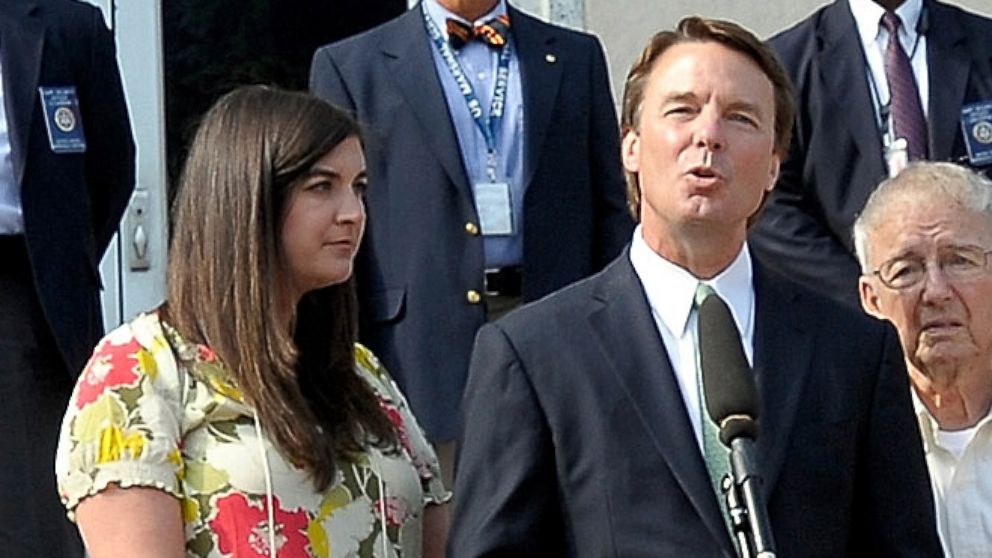
Former U.S. Sen. John Edwards addresses the media alongside his daughter Cate Edwards at the federal courthouse on May 31, 2012 in Greensboro, N.C.
Sara D. Davis/Getty Images
Former Sen. John Edwards came within a few electoral votes of being vice president of the United States. But now, after a loss in the 2004 election, a brief run in 2008 ended by spectacular adultery and love-child scandal, a hung jury in a multiple-felony campaign-finance case, and the death of wife Elizabeth, Edwards has returned to the occupation in which he first made his name: the practice of personal injury law.
Edwards' new firm, Edwards Kirby, based in Raleigh with an office in Washington, is pursuing customers with all the zeal of a late-night, local-cable informercial. Its website -- call 1 (866) 409-2250 -- is dominated by the words: "…AND JUSTICE FOR ALL" and outlines the firm's expertise in personal injury litigation.
"Whether your loss occurred on an operating table, a factory floor, at the workplace or on the highway, our wrongful death lawyers will explore every avenue of recovery," the Edwards Kirby site says. "We have a history of securing record-setting verdicts and settlements in cases involving personal injury, including: Trucking and Auto Accidents; Wrongful Death and Catastrophic Injury; Drowning Accidents; Burn Injuries; Construction and Premise Liability; [and] Defective or Unsafe Products."
Edwards has scored some of his biggest wins in medical malpractice suits; indeed, he was once so successful that he was accused of driving entire fields of medical specialists out of North Carolina and sending insurance rates through the roof. The new Edwards Kirby firm is looking for the same type of business. "Whether your case involves birth injuries caused in the delivery room, botched surgery or a missed diagnosis, the medical malpractice lawyers at Edwards Kirby can advise and represent you," the website says.
The homepage features a sidebar with the headline PROVEN RESULTS. The message is simple and clear: We win big money:
DROWNING/POOL ACCIDENTS$30.9 MILLION decision for 5-year old girl injured by a pool drain pump.CATASTROPHIC INJURIES$23.3 MILLION verdict for child who suffered brain injuries at birth.TRUCK/AUTO ACCIDENTS$10.75 MILLION settlement for family of children injured/killed in truck accident.BURN/ELECTROCUTION INJURIES$4.1 MILLION verdict for burn injuries received while on the job.CONSTRUCTION/PREMISE LIABILITY$8 MILLION settlement for passerby killed during construction accident.
Some readers might think Edwards has been disbarred. He hasn't. He was indicted in June 2011 on six felony counts, accused of using campaign funds to cover up his affair with Rielle Hunter, a woman he hired to make a video for his 2008 presidential run. One reason Edwards did not plead guilty to a reduced charge -- he had the chance -- was that it might have involved disbarment. "Friends said he was loath to lose his law license," the New York Times reported in 2011. "He has expressed interest in practicing public-service law."
Edwards was back in the courtroom recently, suing an emergency-room doctor for "brain damage and physical injuries that a 4-year-old Virginia boy received in December 2009 when he was an infant in the care of Pitt County Memorial Hospital," according to the Raleigh News-Observer. The plaintiffs had already won a $13 million settlement from the hospital involved; the jury deadlocked in the case against the doctor.
"I really loved being back in the courtroom," Edwards told the News-Observer. "It really felt like a gift for me."
It's not known how much Edwards will take home from the $13 million settlement in the brain damage case. But the fortunes of lawyers like him come from taking a big part — sometimes half — of multi-million dollar awards in jury trials. The bigger the award, the bigger Edwards' payday. But Edwards told the News-Observer that his work is consistent with the populist focus on poverty he emphasized in the "two Americas" message of his political campaigns.
"Two Americas — heartbreaking for me and a lot of people — is still alive and well," Edwards told the paper. "It’s not gotten better. There’s a lot that can be done….The courtroom allows [plaintiffs] to level the playing field."
Related:
John Edwards is starting a new Raleigh law firm
Monday, May 26, 2014
Writing for the Godless: Flannery O’Connor on Dogma, Belief, and the Difference Between Religion and Faith
by Maria Popovahttp://www.brainpickings.org/May 15, 2014
 As humans, we are wired to cling tightly to our beliefs, even the most delusional, and toautomatically dismiss conflicting evidence. This is especially true in areas where our beliefs are particularly charged, such as politics and religion. For those of us skeptical of organized religion, who find transcendence in nature andspirituality in science, who fall closer to the atheism end of the belief spectrum, it’s especially challenging to consider perspectives on faith that come from the other end. But something magical happens when we allow the walls of the psyche to soften and become permeable, if only for a moment, to another’s experience of the world — little compares to the self-transcendence that such receptivity invites.
“For me a dogma is only a gateway to contemplation and is an instrument of freedom and not of restriction.”
As humans, we are wired to cling tightly to our beliefs, even the most delusional, and toautomatically dismiss conflicting evidence. This is especially true in areas where our beliefs are particularly charged, such as politics and religion. For those of us skeptical of organized religion, who find transcendence in nature andspirituality in science, who fall closer to the atheism end of the belief spectrum, it’s especially challenging to consider perspectives on faith that come from the other end. But something magical happens when we allow the walls of the psyche to soften and become permeable, if only for a moment, to another’s experience of the world — little compares to the self-transcendence that such receptivity invites.
One of the most extraordinary meditations on religion and the role of spirituality in society comes from beloved author Flannery O’Connor, whose writing blended her Catholic faith with strong secular themes of ethics and moral philosophy, and nowhere does her singular spirit shine more luminously than in The Habit of Being: Letters of Flannery O’Connor (public library).
In July of 1955, when she was thirty, O’Connor received a letter from a young woman, initially unknown to her, who later chose to remain anonymous upon the publication of the letters. Both hungry for conversation and intrigued by the woman’s intensity of conviction, the author felt compelled to reply, and so began a nine-year epistolary friendship that continued until O’Connor’s death in 1964 from complications due to lupus. The letters to “A.” are among the most extraordinary in the collection, exploring with remarkable dignity and dimensionality matters of faith and religion, the difference between the two, and the role of spirituality in O’Connor’s writing and her personhood.
Read the rest of the article:
Glory
Posted By Andrew Klavan On May 25, 2014 @ 8:24 am In Uncategorized | 38 Comments
http://pjmedia.com/
Wilfred Owen [1] is considered one of the greatest poets of the First World War. He was killed in action one week before the Armistice, and his poems were mostly published posthumously. His graphic depictions of war’s horrors mark a change in attitude toward World War I and perhaps toward war in general — a turning away from the idea of warrior glory.
In his most famous poem, Dulce et Decorum Est [2], Owen tells of watching a man die of poisoned gas in the back of a wagon. The scene recurs vividly in his dreams and he concludes:
If in some smothering dreams you too could pace
Behind the wagon that we flung him in,
And watch the white eyes writhing in his face,
His hanging face, like a devil’s sick of sin…
Behind the wagon that we flung him in,
And watch the white eyes writhing in his face,
His hanging face, like a devil’s sick of sin…
…my friend, you would not tell with such high zest
To children ardent for some desperate glory,
The old Lie; Dulce et Decorum est
Pro patria mori.
To children ardent for some desperate glory,
The old Lie; Dulce et Decorum est
Pro patria mori.
The Latin is from the Roman poet Horace and means, “Sweet and fitting is it to die for your country.”
Is that really a lie, I wonder. The idea that the horrors of war negate its glory has become fairly standard on the left. Indeed, to celebrate soldiers as heroes is sometimes seen by leftists as a criminal seduction. Oliver Stone’s movie Born on the Fourth of July [3] tells the true story of Ron Kovic. The film shows Kovic drawn to warrior heroism by patriotic hometown parades and speeches. When he is paralyzed in action in Viet Nam, he feels lied to and cheated and becomes an anti-war activist.
So, rather than treat warriors as heroes and risk glorifying combat, the left generally treats them as either murderers or victims. Phil Kray [4] writes about this in this weekend’s Review section of the Wall Street Journal. He says when he talks about his Marine service in Iraq, people often respond with pity. After Viet Nam, soldiers were treated with disdain. Kray argues that what these warriors deserve is neither pity nor disdain, but simply respect.
I have never witnessed the horrors of war and so only have reason to support what I say, but it seems to me there is a fault in the leftist logic here. The horrors of war don’t negate a warrior’s glory, they are the source of it. The courage to face those horrors is precisely what makes warrior service glorious. If war were lovely, soldiers would need no more courage than some piddly campus activist pretending to face dangers that aren’t really there while protesting some micro-oppression that doesn’t actually exist.
No, warriors face the real possibility of horrible death and crippling injury. That’s precisely why we admire them, why we glorify their courage. One of Hemingway’s soldier characters complains he “had seen nothing sacred, and the things that were glorious had no glory and the sacrifices were like the stockyards at Chicago if nothing was done with the meat except to bury it.” But it seems to me that to say that sacrifices are horrible is merely to say that sacrifices are sacrifices. In a way, soldiers are the worst people to testify to this. The glory of the sacrifice is not apparent to the soldier; only the horror. But the glory is apparent to us who are stirred by the courage with which the soldier faces the horror in order to keep us safe and free.
I don’t mean to romanticize war; not at all. It’s awful. A stinking waste of humanity, and often useless to boot. But in those moments when war must be fought, when there is no other choice, when freedom or virtue hangs in the balance, the soldier who faces the horrors of war should indeed be glorified for his courage in doing so. The courage to charge into what may become an inglorious slaughterhouse is precisely what makes him a glorious hero to the nation he defends.
Have a good Memorial Day. God bless our troops and our veterans.
Article printed from Klavan On The Culture: http://pjmedia.com/andrewklavan
URL to article: http://pjmedia.com/andrewklavan/2014/05/25/glory/
URLs in this post:
[1] Wilfred Owen: http://en.wikipedia.org/wiki/Wilfred_Owen#Death
[2] Dulce et Decorum Est: http://www.warpoetry.co.uk/owen1.html
[3] Born on the Fourth of July: http://www.imdb.com/title/tt0096969/
Is Europe Still Defensible From Invasion?
By Roger Scruton
May 4, 2014

Baroness Ashton, European Commissioner for Foreign Affairs
Events in Ukraine and the expansionist policies of President Putin naturally raise questions about the defense of Europe. Whatever Russian aims might be, there is no doubt that a heavily armed country with dwindling economic assets poses a threat, however theoretical, to an affluent neighbor with only tenuous means of defense. In the days of the cold war, when President Reagan took the North Atlantic Alliance (NATO) seriously, an effort was made to counter the military might of the Soviet Union, and to impress on the Soviet leaders that any attempt to annexe the countries to the West of them would lead to the destruction of their empire. The strategy worked, and eventually it became clear to the KGB that it would be easier to give up the struggle, transfer assets to Switzerland, buy a house in London and create a fake democracy back home.
NATO’s strategy worked because it was believable. It was clear to the Soviet elite that President Reagan really did intend to introduce defenses that would make the Soviet missiles ineffective. It was clear that America was not only the backbone of the Western alliance, but also entirely committed to its ruling doctrine, that an attack on one member is an attack on all. The Falklands war delivered a shock to the KGB, which had planned on the assumption that the Western powers would relinquish territory rather than embark on so costly a defense of it. Nor was this assumption absurd. Officer Putin and his fellow spies were well connected with the Western European left, and knew how hostile the European socialist parties were to the strategy of deterrence. The British Labour Party was committed at the time to nuclear disarmament(CND), the German Social Democrats were half-hearted members of NATO at best, the Scandinavian socialists were more or less neutral and the French, whether right or left, pursued an independent strategy whose only clear meaning was that they didn’t take orders from America.
Since that time the Atlantic Alliance has become radically less credible. Three factors are principally responsible for this. The first is the growth of the European Union, and its policy of dissolving national borders. The EU has set out to delegitimize the nation state, to make it irrelevant to the ‘citizens’ of the Union whether they be French, British, Polish or Italian, and to abolish the national customs and beliefs that make long-term patriotic loyalty seriously believable. The EU’s attempt to replace national with European identity has, however failed, and is widely regarded with ridicule. Moreover the EU’s inability to think coherently about defense, and its policy of ‘soft power’ which makes defense in any case more or less inconceivable, means that the motive which leads ordinary people to defend their country in its time of need has been substantially weakened. Patriotism is seen as a heresy, second only to fascism on the list of political sins, and the idea that the people of Europe might be called upon to defend their borders looks increasingly absurd in the light of the official doctrine that there are no borders anyway.
The second reason for European weakness is connected. I refer to the guarantee, under the European Treaties, of the right to work and settle in any part of the Union. This has led to a massive migration from the former communist countries to the West. The people who migrate are the skilled, the entrepreneurial, the educated – in short, the elite on whom the resolution and identity of a country most directly depends. Very soon countries like Latvia, Lithuania, Poland and Romania, all of which are directly threatened by a militant Russia, will be without a committed and resident class of leaders. No doubt, should the tanks start to roll, the émigré populations of those countries will protest. But will they return home to fight a pointless war, leaving their newly-won security and prosperity behind? I doubt it.
The third factor tending to the indefensibility of Europe is the dwindling American commitment to the Western alliance. President G.W. Bush was prescient enough to revive the idea of anti-missile defenses in Eastern Europe, and the military in both Poland and the Czech Republic were prepared to go along with it. Putin displayed his KGB training immediately, by declaring that these purely defensive installations would be an ‘act of aggression’. All the old Newspeakwas trotted out in the effort to influence the incoming administration of President Obama against his predecessor’s policy. And the effort was successful. Obama weakly conceded the point, and the anti-missile defenses were not installed. Since then the Obama administration has continued to divert resources and attention elsewhere, creating the distinct impression in Europe that America is no longer wholeheartedly committed to its defense.
Nor can the Americans be blamed for this. Is it not somewhat absurd that the USA should still be maintaining troops in Germany, at great expense to the American taxpayer, 70 years after the end of the Second World War? Is it really acceptable, at a time when America has 60,000 troops stationed in Europe, that the Netherlands has committed only 17,000 people to its own defense? Writing on this page back in November 2012 Doug Bandow pointed out that ‘today the U.S. is effectively bankrupt, but continues to write security checks which it cannot cover. America accounts for almost half of the world’s military expenditures and provides defense guarantees to prosperous, populous allies throughout Asia and Europe. Moreover, U.S. forces wander the globe attempting to create democracy and stability ex nihilo. At the same time Washington props up unpopular dictatorships throughout the Persian Gulf and Central Asia. This strategy is unsustainable.’
He was surely right, and President Putin is aware of the point. The American people cannot go on defending a country like Germany – a country that enjoys a standard of living calculated to arouse envy in its impoverished Eastern neighbor, while self-righteously preaching ‘soft power’ and ‘non belligerence’ to its pampered people. At some point Americans are going to wake up to the fact that they are being unscrupulously exploited. Their armed forces are trained to fight and die in Europe, on behalf of people who would not dream of doing the same for America, and who are not prepared to die even for their homeland.
For those reasons, it seems to me, Europe is rapidly becoming indefensible. Even if Putin would prefer a ‘soft’ to a ‘hard’ way of acquiring the continent’s assets, the availability of the ‘hard’ way will surely strengthen his hand. And what is Europe doing about it? It is perhaps worth pointing out that the European Commissioner for Foreign affairs – in effect the EU’s foreign minister – is Baroness Ashton, a Labour Party appointee to the House of Lords. Ashton began her political career in the Campaign for Nuclear Disarmament, a KGB-funded ‘special operation’ which almost achieved its goal of making Britain indefensible. Advancing through leftist NGOs and Labour Party affiliates, and never standing for an election in her life, this woman is now my representative in the world of international affairs. Do I think she is going to risk her career to defend me, when all her privileged networks are at risk from doing so? Ask that of President Putin.
More information: My Dictionary of Political Thought has relevant entries.
Sunday, May 25, 2014
10 life lessons from the SEAL who led mission for Bin Laden
May 24, 2014

Naval Adm. William H. McRaven delivers the commencement address at the University of Texas at Austin.Photo: AP
William H. McRaven is a Navy admiral, former commander of SEAL Team 3 and current commander of the US Special Operations Command — the man who led the mission to get Osama bin Laden. On May 17, he gave the commencement address for his alma mater, the University of Texas at Austin, which touched graduates with its earnest, simple advice about living a better life. This Memorial Day, an excerpt:
If you will humor this old sailor for just a moment, I have a few suggestions that may help you on your way to a better world.
And while these lessons were learned during my time in the military, I can assure you that it matters not whether you ever served a day in uniform.
It matters not your gender, your ethnic or religious background, your orientation, or your social status.
Our struggles in this world are similar and the lessons to overcome those struggles and to move forward — changing ourselves and the world around us — will apply equally to all.
I have been a Navy SEAL for 36 years. But it all began when I left UT for Basic SEAL training in Coronado, California.
Basic SEAL training is six months of long torturous runs in the soft sand, midnight swims in the cold water off San Diego, obstacles courses, unending calisthenics, days without sleep and always being cold, wet and miserable.
It is six months of being constantly harassed by professionally trained warriors who seek to find the weak of mind and body and eliminate them from ever becoming a Navy SEAL.
But, the training also seeks to find those students who can lead in an environment of constant stress, chaos, failure and hardships.
To me basic SEAL training was a lifetime of challenges crammed into six months.
So, here are the 10 lessons I learned from basic SEAL training that hopefully will be of value to you as you move forward in life:
Every morning in basic SEAL training, my instructors, who at the time were all Vietnam veterans, would show up in my barracks room, and the first thing they would inspect was your bed.
If you did it right, the corners would be square, the covers pulled tight, the pillow centered just under the headboard and the extra blanket folded neatly at the foot of the rack — rack, that’s Navy talk for bed.
It was a simple task — mundane at best. But every morning we were required to make our bed to perfection. It seemed a little ridiculous at the time, particularly in light of the fact that were aspiring to be real warriors, tough battle-hardened SEALs — but the wisdom of this simple act has been proven to me many times over.
If you make your bed every morning you will have accomplished the first task of the day. It will give you a small sense of pride, and it will encourage you to do another task and another and another.
By the end of the day, that one task completed will have turned into many tasks completed. Making your bed will also reinforce the fact that little things in life matter.
If you can’t do the little things right, you will never do the big things right.
And, if by chance you have a miserable day, you will come home to a bed that is made — that you made — and a made bed gives you encouragement that tomorrow will be better.
If you want to change the world, start off by making your bed.

During SEAL training the students are broken down into boat crews. Each crew is seven students — three on each side of a small rubber boat and one coxswain to help guide the dingy.
Every day your boat crew forms up on the beach and is instructed to get through the surf zone and paddle several miles down the coast.
In the winter, the surf off San Diego can get to be 8 to 10 feet high and it is exceedingly difficult to paddle through the plunging surf unless everyone digs in.
Every paddle must be synchronized to the stroke count of the coxswain. Everyone must exert equal effort or the boat will turn against the wave and be unceremoniously tossed back on the beach.
For the boat to make it to its destination, everyone must paddle.
You can’t change the world alone — you will need some help — and to truly get from your starting point to your destination takes friends, colleagues, the good will of strangers and a strong coxswain to guide them.
If you want to change the world, find someone to help you paddle.

Over a few weeks of difficult training my SEAL class, which started with 150 men, was down to just 42. There were now six boat crews of seven men each.
I was in the boat with the tall guys, but the best boat crew we had was made up of the the little guys — the munchkin crew we called them — no one was over about 5-foot-5.
The munchkin boat crew had one American Indian, one African-American, one Polish-American, one Greek-American, one Italian-American, and two tough kids from the Midwest. They outpaddled, outran and outswam all the other boat crews.
The big men in the other boat crews would always make good-natured fun of the tiny little flippers the munchkins put on their tiny little feet prior to every swim.
But somehow these little guys, from every corner of the nation and the world, always had the last laugh — swimming faster than everyone and reaching the shore long before the rest of us.
SEAL training was a great equalizer. Nothing mattered but your will to succeed. Not your color, not your ethnic background, not your education and not your social status.
If you want to change the world, measure a person by the size of their heart, not the size of their flippers.

Your hat had to be perfectly starched, your uniform immaculately pressed and your belt buckle shiny and void of any smudges.
But it seemed that no matter how much effort you put into starching your hat, or pressing your uniform or polishing your belt buckle — it just wasn’t good enough.
The instructors would find “something” wrong.
For failing the uniform inspection, the student had to run, fully clothed into the surf zone and then, wet from head to toe, roll around on the beach until every part of your body was covered with sand.
The effect was known as a “sugar cookie.” You stayed in that uniform the rest of the day — cold, wet and sandy.
There were many a student who just couldn’t accept the fact that all their effort was in vain. That no matter how hard they tried to get the uniform right — it was unappreciated.
Those students didn’t make it through training.
Those students didn’t understand the purpose of the drill. You were never going to succeed. You were never going to have a perfect uniform.
Sometimes no matter how well you prepare or how well you perform, you still end up as a sugar cookie.
It’s just the way life is sometimes.
If you want to change the world, get over being a sugar cookie and keep moving forward.

Every event had standards — times you had to meet. If you failed to meet those standards your name was posted on a list and at the end of the day those on the list were invited to — a “circus.”
A circus was two hours of additional calisthenics — designed to wear you down, to break your spirit, to force you to quit.
No one wanted a circus.
A circus meant that for that day you didn’t measure up. A circus meant more fatigue—and more fatigue meant that the following day would be more difficult—and more circuses were likely.
But at some time during SEAL training, everyone — everyone — made the circus list.
But an interesting thing happened to those who were constantly on the list. Overtime those students — who did two hours of extra calisthenics — got stronger and stronger.
The pain of the circuses built inner strength-built physical resiliency.
Life is filled with circuses.
You will fail. You will likely fail often. It will be painful. It will be discouraging. At times it will test you to your very core.
But if you want to change the world, don’t be afraid of the circuses.

At least twice a week, the trainees were required to run the obstacle course. The obstacle course contained 25 obstacles including a 10-foot-high wall, a 30-foot cargo net and a barbed-wire crawl to name a few.
But the most challenging obstacle was the slide for life. It had a three-level, 30-foot tower at one end and a one-level tower at the other. In between was a 200-foot-long rope.
You had to climb the three-tiered tower and once at the top, you grabbed the rope, swung underneath the rope and pulled yourself hand over hand until you got to the other end.
The record for the obstacle course had stood for years when my class began training in 1977.
The record seemed unbeatable until one day a student decided to go down the slide for life — head-first.
Instead of swinging his body underneath the rope and inching his way down, he bravely mounted the TOP of the rope and thrust himself forward.
It was a dangerous move — seemingly foolish and fraught with risk. Failure could mean injury and being dropped from the training.
Without hesitation — the student slid down the rope — perilously fast, instead of several minutes, it only took him half that time and by the end of the course he had broken the record.
If you want to change the world, sometimes you have to slide down the obstacle head-first.

During the land-warfare phase of training, the students are flown out to San Clemente Island, which lies off the coast of San Diego.
The waters off San Clemente are a breeding ground for the great white sharks.
To pass SEAL training there are a series of long swims that must be completed. One is the night swim.
Before the swim, the instructors joyfully brief the trainees on all the species of sharks that inhabit the waters off San Clemente.
They assure you, however, that no student has ever been eaten by a shark — at least not recently.
But, you are also taught that if a shark begins to circle your position — stand your ground. Do not swim away. Do not act afraid.
And if the shark, hungry for a midnight snack, darts towards you — then summons up all your strength and punch him in the snout and he will turn and swim away.
There are a lot of sharks in the world. If you hope to complete the swim, you will have to deal with them.
So, if you want to change the world, don’t back down from the sharks.

As Navy SEALs, one of our jobs is to conduct underwater attacks against enemy shipping. We practiced this technique extensively during basic training.
The ship-attack mission is where a pair of SEAL divers is dropped off outside an enemy harbor and then swims well over two miles — underwater — using nothing but a depth gauge and a compass to get to their target.
During the entire swim, even well below the surface there is some light that comes through. It is comforting to know that there is open water above you.
But as you approach the ship, which is tied to a pier, the light begins to fade. The steel structure of the ship blocks the moonlight — it blocks the surrounding street lamps — it blocks all ambient light.
To be successful in your mission, you have to swim under the ship and find the keel — the centerline and the deepest part of the ship.
This is your objective. But the keel is also the darkest part of the ship — where you cannot see your hand in front of your face, where the noise from the ship’s machinery is deafening and where it is easy to get disoriented and fail.
Every SEAL knows that under the keel, at the darkest moment of the mission — is the time when you must be calm, composed — when all your tactical skills, your physical power and all your inner strength must be brought to bear.
If you want to change the world, you must be your very best in the darkest moment.


It is on Wednesday of Hell Week that you paddle down to the mud flats and spend the next 15 hours trying to survive the freezing-cold mud, the howling wind and the incessant pressure to quit from the instructors.
As the sun began to set that Wednesday evening, my training class, having committed some “egregious infraction of the rules” was ordered into the mud.
The mud consumed each man till there was nothing visible but our heads. The instructors told us we could leave the mud if only five men would quit — just five men and we could get out of the oppressive cold.
Looking around the mud flat, it was apparent that some students were about to give up. It was still over eight hours till the sun came up — eight more hours of bone-chilling cold.
The chattering teeth and shivering moans of the trainees were so loud it was hard to hear anything and then, one voice began to echo through the night — one voice raised in song.
The song was terribly out of tune, but sung with great enthusiasm.
One voice became two, and two became three, and before long everyone in the class was singing.
We knew that if one man could rise above the misery then others could as well.
The instructors threatened us with more time in the mud if we kept up the singing — but the singing persisted.
And somehow — the mud seemed a little warmer, the wind a little tamer and the dawn not so far away.
If I have learned anything in my time traveling the world, it is the power of hope. The power of one person — Washington, Lincoln, King, Mandela and even a young girl from Pakistan, Malala — one person can change the world by giving people hope.
So, if you want to change the world, start singing when you’re up to your neck in mud.

Photo: Getty Images
All you have to do to quit — is ring the bell. Ring the bell and you no longer have to wake up at 5 o’clock. Ring the bell and you no longer have to do the freezing-cold swims.
Ring the bell and you no longer have to do the runs, the obstacle course, the PT — and you no longer have to endure the hardships of training.
Just ring the bell.
If you want to change the world don’t ever, ever ring the bell.

Photo: Getty Images
Subscribe to:
Posts (Atom)