Wednesday, September 11, 2019

Target: New York


Eighteen years after the 9/11 attacks, Islamist extremism doesn’t make much news—but it’s not for lack of trying.


By Judith Miller
https://www.city-journal.org/islamist-terror-threat
September 10, 2019

Image result for 9/11 attack

(Spencer Platt/Getty Images)

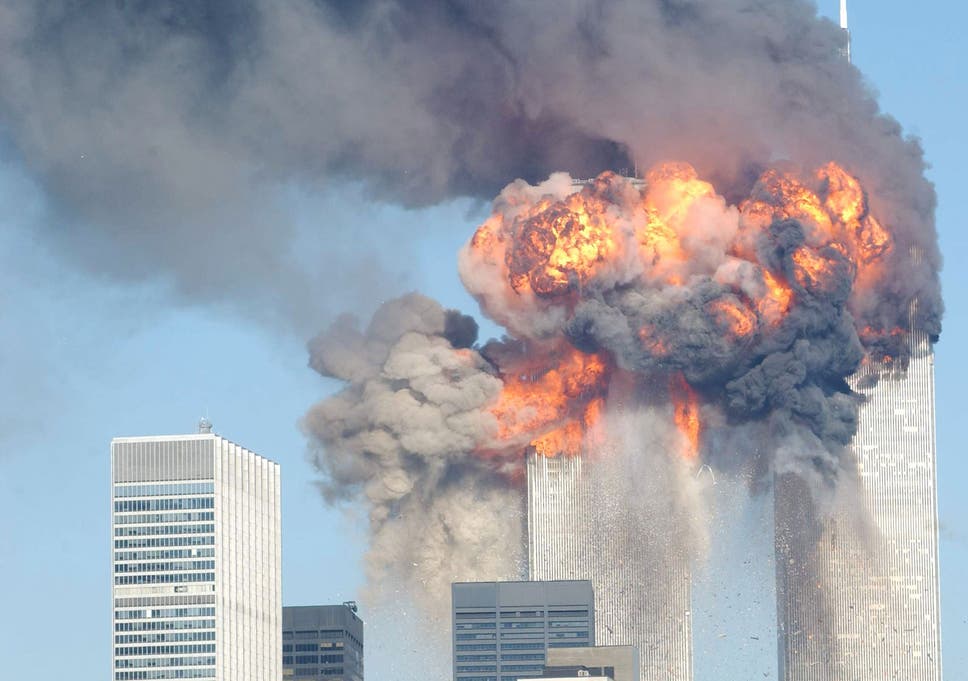
Eighteen years after the attacks on the World Trade Center, many Americans believe that the threat of Islamist terror is played out—but that’s only because our counterterrorism efforts have been so successful. Attempted terror attacks no longer make front-page headlines, but the list of foiled plots to kill American citizens is long and chilling. This past summer saw arrests of potential terrorists who would have killed dozens or hundreds of people if successful. On September 3, for example, federal prosecutors in Brooklyn charged Ruslan Maratovich Asainov, also known as Suleiman Al-Amriki, with providing material support to ISIS. Asainov is accused of having been an ISIS sniper and weapons instructor. A naturalized U.S. citizen (he was born in Kazakhstan) who lived in Brooklyn for nearly 15 years, Asainov traveled in late 2013 to Istanbul, a common entry point to Syria. There, he joined ISIS and rose through the ranks to become an “emir” in charge of weapons training. He tried to recruit other Americans to fight for ISIS in Syria. Asainov messaged a government informant, exclaiming in reference to ISIS, “We are the worst terrorist organization in the world that has ever existed!” He still yearned to die on the battlefield for jihad, Asainov told the informant.

Last month, Awais Chudhary was charged with plotting to stab New Yorkers in Queens. A 19-year-old American citizen born in Pakistan and raised in a middle-class neighborhood, Chudhary planned to attack pedestrians on a bridge over the Grand Central Parkway to the Flushing Bay Promenade or at the World’s Fair Marina, both of which he had visited repeatedly to scout where he could kill the most people. He planned to record his attack to inspire others. He intended to use a knife, he told an agent, unless the agent could show him how to bomb a “mini-bridge over a busy road with many cars.” He was arrested en route to retrieve items he had ordered online for the assault—a tactical knife, a mask, gloves, and a cellphone with a chest and head strap to enable him to record his slaughter hands-free. 

Also last month, prosecutors charged two women from Queens with planning to build bombs similar to those used in earlier terrorist attacks. Asia Siddiqui and Noelle Velentzas, both U.S. citizens and Queens residents, pleaded guilty to distributing information about how to make and use explosive devices and weapons of mass destruction. Between 2013 and 2015, the complaint states, they planned to build a bomb themselves, teaching each other chemistry and the electrical skills needed to create and detonate a deadly device. They also explored how to make plastic explosives and assemble a car bomb, bought and stored in their homes materials required for an explosive device—including  propane gas tanks, soldering tools, car-bomb instructions, machetes, and several knives—and discussed similar devices used in past terrorist incidents, including the 2013 Boston Marathon bombing, the 1995 Oklahoma City bombing, and the 1993 World Trade Center attack. They researched potential targets, focusing on law enforcement and military installations. Velentzas favored attacks on government targets. In terrorist attacks, she said, “You go for the head.”

August also saw Azizjon Rakhmatov, a citizen of Uzbekistan and a New Haven resident, plead guilty to conspiring to provide material support to ISIS codefendants Abdurasul Juraboev and Akhror Saidakhmetov, who planned to travel to Syria to fight for the caliphate. Rakhmatov and another codefendant discussed providing their own money and raising more to cover Saidakhmetov’s travel expenses and to buy a weapon for him once he arrived in Syria. The day before Saidakhmetov’s scheduled departure, Rakhmatov transferred $400 into codefendant Akmal Zakirov’s bank account. Saidakhmetov and three accomplices have previously pled guilty to charges of material support for terrorism; all have been sentenced to 15 years’ imprisonment.

In July, officials arrested Delowar Mohammed Hossain at JFK Airport in Queens as he tried to travel to Afghanistan to join the Taliban. The complaint states that Hossain wanted to kill Americans, particularly members of the military stationed overseas. 

In June, Mohamed Rafik Naji, having pled guilty in federal court in Brooklyn in February, was sentenced to 20 years in jail for trying to provide material support to ISIS by distributing its propaganda and messages on social media. By late 2014, Naji was a committed ISIS supporter, and in 2015 he traveled from New York to Yemen to join ISIS. After returning to the U.S., he continued praising ISIS and violent jihad. In July 2016, after the ISIS-inspired truck attack in Nice, France that killed scores of civilians, Naji told an informant that it would be easy to carry out a similar attack in Times Square: “[ISIS] want an operation in Times Square,” he said, “If there is a truck, I mean a garbage truck and one drives it there to Times Square and crushes them . . . Times Square day.” 

Also in June, Ashiqul Alam, an assistant teacher in Queens and part-time IT expert at the Queens public library, was charged with “knowingly receiving two firearms with obliterated serial numbers in Brooklyn” as part of a plan to kill cops and civilians in Times Square. According to NYPD Commissioner James O’Neill, Alam discussed guns, suicide vests, and hand grenades, and surveilled potential targets in New York. Between August 2018 and June of this year, he talked about buying firearms and explosives for an attack and conducted “recon” trips to Times Square, recording the area on his phone. He considered killing cops by using a suicide vest and obtaining AR-15 assault rifles. In April 2019, he had Lasik eye surgery so that he no longer needed glasses. “Let’s say we are in an attack, right, say that my glasses fall off,” he told an undercover cop. “What if I accidentally shoot you? You know what I mean. Imagine what the news channel would call me the ‘Looney Tunes Terrorist’ or the ‘Blind Terrorist.’” He later discussed buying grenades, because a grenade could “take out at least eight people.” 

Most of these Islamist plots have received scant public attention, mainly because they were detected and prevented. John Miller, the NYPD’s deputy commissioner of intelligence and counterterrorism, says that public concern about terrorism is now focused on the surge in domestic right-wing extremists. “Domestic terror blunts the impact of the [jihadi] plots that didn’t happen,” he told me. Miller is complacent about neither threat. Though New York has not suffered a right-wing-inspired mass shooting, hate crimes are up in the city. So is anti-Semitism. And Miller warns that the pace of jihadi plots is accelerating.

According to an NYPD intelligence estimate published last October, nine terrorist plots or attacks targeted New York City between 2001 and 2009. Since 2009, a total of 19 attacks were formulated—11 since ISIS declared a caliphate in 2014. The report notes that 13 of the 14 lone-actor terrorist attacks or plots in New York City have involved “Salafi-jihadist violent extremists.” The study predicts “with high confidence” that both trends—an acceleration in the rate of plots and attacks and the increasing dominance of lone actors inspired, but not directed by, foreign and domestic extremist organizations—“will continue over the next four years.”

“The reason there hasn’t been another 9/11 is not because of luck,” Miller says. Intensive national and international counterterrorism campaigns across three presidential administrations have degraded these groups’ ability to plan and carry out major attacks. At home, Miller added, the absence of successful attacks owed to what he called the “seamless partnership between the NYPD and the FBI.”  

While President Trump has taken credit for having “destroyed” ISIS and its caliphate, once the size of Great Britain, and has often expressed a desire to bring most American troops home, terrorism experts warn that a complete military exit from places like Afghanistan, Iraq, and Syria would be unwise. Just as President Obama’s premature withdrawal of U.S. forces from Iraq in 2011 permitted ISIS to take hold and expand into the vacuum left there, the withdrawal of most U.S. forces from the region would permit the Taliban, al-Qaida, and ISIS to reconstitute and regain their deadly reach. “The Taliban are far from defeated,” David Petraeus, the former commander of U.S. Central Command and a former CIA director, asserted in a recent Wall Street Journal op-ed. A premature withdrawal would risk the “re-establishment of a terrorist sanctuary” in which the Taliban and some 20 other foreign terrorist organizations could reconstitute, train recruits, and carry out terrorism abroad.

“Al Qaeda has seeded a global network that is competing with and complementing ISIS,” said Rohan Gunaratna, a terrorism expert based in Singapore. “Though its core has suffered, many of its leaders are alive,” he argues. “It has not disappeared but entered a new phase of expansion” through affiliates in Africa, the Arabian Peninsula, the Middle East, and South Asia. ISIS, too, the “son of Al Qaeda,” he argues, may have lost territory and endured “command and control infrastructure losses,” but its murderous intent “remains known to its wilayats, networks, groups, and cells.” If either of their current leaders is killed, he warns, the two groups would likely unite and pose what he called “an unprecedented threat.” While the Trump administration has embraced containing China as its highest priority, “the real, ongoing threat to American and its allies remains ideological extremist terrorism,” Gunaratna maintains, calling the war against militant Islamic extremism a “generational” struggle.

Mitch Silber, a former NYPD director of intelligence and analysis, fears that Washington’s war fatigue, Trump’s desire to claim victory, and the lack of a long-term strategy for dealing with America’s Middle East wars endangers the U.S. “Al Qaeda and ISIS leaders and supporters have been killed, captured, and tens of thousands put in camps in Iraq,” he said. “But there is no post-hostilities plan to deal with this Islamist netherworld, those people in the camps. AQ and ISIS could easily regenerate in some form there.”

Failure to appreciate the nature of the militant Islamist threat puts New York, especially, at growing risk. “There is a temporary drop in their capability,” Silber said of the jihadi movement. “But there is no drop in intention among those who want to strike the U.S. And for them, New York will always remain a key target.”

Judith Miller is a City Journal contributing editor and author of The Story: A Reporter’s Journey.


Tuesday, September 10, 2019

Environmental Playacting


By Heather Mac Donald
https://www.city-journal.org/todays-youth-climate-change
September 10, 2019

Image result for youth climate change


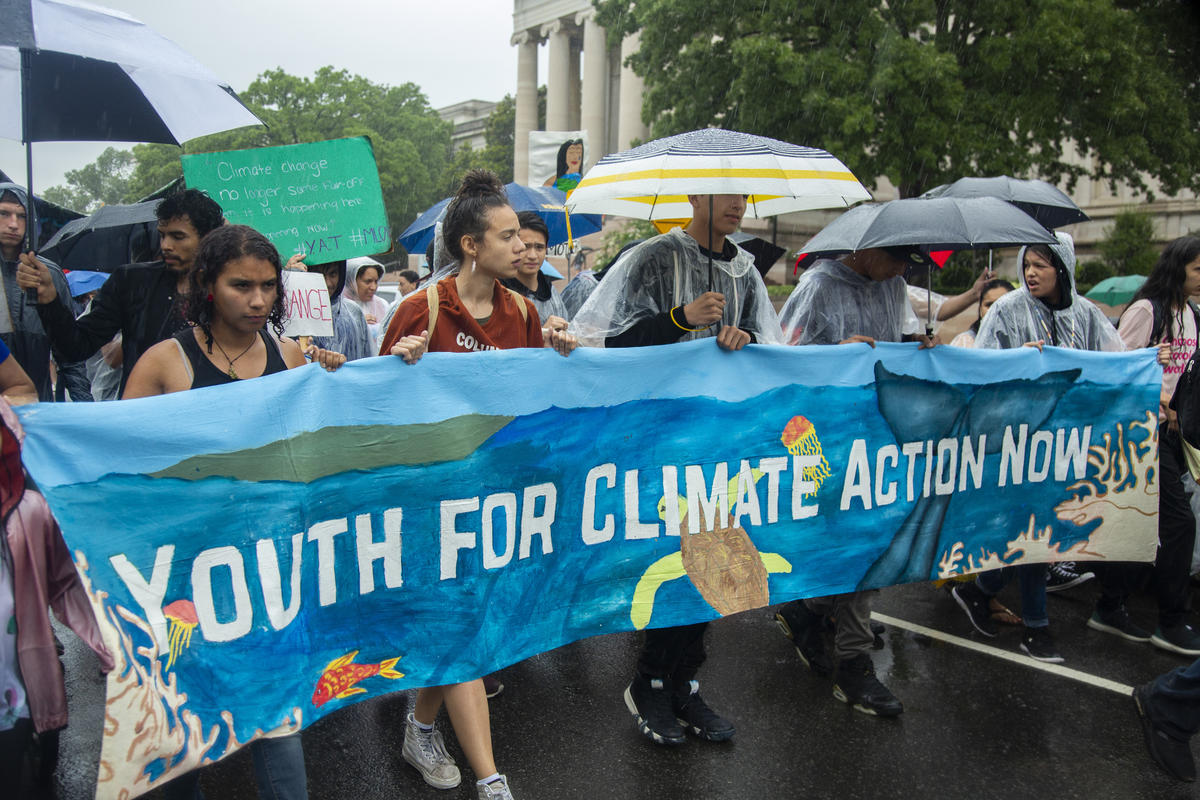
Youth will save the planet, according to the elite narrative about global warming. It was young voters who were “asking the tough questions” and holding “Democrats’ feet to the fire” at last week’s Democratic climate-change pontificon, reported the New York Times. A high school student challenged Julian Castro about his previous support for fracking and demanded to know why “should we trust you . . . to transition our economy to renewables?” Minnesota senator Amy Klobuchar was grilled by a Columbia University student about her possible fealty to the beef and dairy industries. A Ph.D. candidate at Northwestern University berated Joe Biden for allowing a natural gas company executive to host a fundraiser for him; fossil-fuel companies are committing “crimes against humanity,” announced this shoo-in for a prestigious professorship.

The claim about youth’s transformative commitment to radical environmental change is—based on informal observation—bunk. The cardinal rule when it comes to environmental virtue-signaling is that people give up what they’re willing to give up. Young people are no different. If being environmentally sound required sacrificing anything that a self-described environmental warrior actually valued, the conversation would quickly change to a different topic. One’s own habits are necessary; it’s everyone else’s that need to change.

This always-unreached threshold for environmental sacrifice is particularly notable on the part of celebrity Greens, with their fortress-like SUVs, multiple residences, and massive carbon footprints—whether it’s the cavalcade of yachts and private jets that brought such luminaries as Leonardo DiCaprio, Mark Zuckerberg, and Katy Perry to Google’s three-day climate-change summit in Sicily this July; environmental crusaders Prince Harry and Meghan Markle jetting off to Elton John’s French estate; or Reliable Sources host Brian Stelter’s “quick day trip” to Los Angeles from New York just ahead of the CNN climate-change debate. A police caravan drives New York City mayor Bill de Blasio 11 miles from his mayoral mansion in Manhattan to his favorite gym in Brooklyn. “Everyone in their own life has to change their own habits to start protecting the earth,” he has intoned, but taking the subway is not one of those changes appropriate for him.

Most young people have not yet reached such a flamboyant level of energy use, but if they could, they undoubtedly would, with as little sense of anachronism as that of Al Gore in his energy-guzzling mansion. These are the consumers who keep football fields of computer servers buzzing round the clock to support their social media habits. If being green meant turning off one’s phone for 22 hours a day or foregoing the latest smartphone upgrade, the reasons why such sacrifices are not required would spout from every Gen Z-er and millennial’s lips. Students from the University of California, Irvine, constantly run their air-conditioners in the apartment complex where I spend summers, regardless of how cool the temperature outside is. They drive with their windows sealed and the car AC on, no matter how fresh the day (this is the new driving norm for almost everyone now). The meteoric rise of food-delivery apps, producing torrents of plastic and paper waste and a constant circulation of cars and electric bikes, has been fueled by young people’s demand for convenience and instant gratification. Cooking is apparently unthinkable. At best, one buys precut and washed food in the inevitable plastic containers. A daily Starbucks habit is deemed consistent with railing against environmentally destructive corporate greed.

New York’s tap water is among the purest in the world. Yet a young neighbor of mine in New York, like progressives throughout the city, receives towering deliveries of bottled water, entailing huge energy outlays to package and transport, not to mention generating flotillas of discarded plastic. The swim team members in my gym turn on their showers in the locker room, then walk away or do nothing other than chat as water gushes down the drain. Uber drivers in college towns report that students regularly call a car to get to class, rather than walk or ride a bike.

If the younger generations have any nonpolitical interest in nature, they keep it well hidden. Instagram holds more fascination than forest mosses and lichens; like most air travelers today, the young fly with their seat windows down to reduce the glare on their screens, indifferent to the startling revelations below about geology and topology that John Ruskin and Leonardo da Vinci would have killed to observe.

In short, the young rely on galaxies of goodies beyond count, whose production requires resources, nature-altering infrastructure, and dependable energy systems. The latest environmental crusades—whether banning fracking or plastic straws—are as gossamer bubbles atop this rushing torrent of manufactured consumables.

The children’s crusade for gun control is another alleged example of the purity of spirit of the young. But anti-gun youth crusaders are prepared to give up guns because, in almost all cases, they have none. Similarly, student protesters—whom we are supposed to admire for heroically skipping classes to agitate around their latest grievance—place little value on those classes and suffer no consequences for missing them.

An awareness of one’s own consumption and an attempt to conserve and to eliminate waste are worthy practices. But so is a zeal-tempering humility that should deflate any moral righteousness around such marginal efforts and that recognizes the fantastically un-natural prosperity—the product of Western capitalist enterprise and the rule of law—that underwrites environmental playacting.

Heather Mac Donald is the Thomas W. Smith Fellow at the Manhattan Institute, a contributing editor of City Journal, and the author of the bestselling books The Diversity Delusion: How Race and Gender Pandering Corrupt the University and Undermine Our Culture and The War on Cops.

Sunday, September 08, 2019

Robert Mueller helped Saudi Arabia cover up its role in 9/11 attacks: suit


By Paul Sperry
https://nypost.com/2019/09/07/robert-mueller-helped-saudi-arabia-cover-up-its-role-in-9-11-attacks-suit/
September 7, 2019

Image result for 9/11
(Getty Images)

After a lengthy investigation, special counsel Robert Mueller charged Russia made “multiple, systematic efforts to interfere in our election” and said the incursion “deserves the attention of every American.”
But former FBI investigators say their old boss didn’t feel the same concern when they uncovered multiple, systemic efforts by the Saudi government to assist the hijackers in the lead-up to the 9/11 attacks — a far more consequential, to say nothing of deadly, foreign influence operation on America.
As the head of the FBI at the time, they say Mueller was not nearly as interested in investigating that espionage conspiracy, which also involved foreign intelligence officers. Far from it, the record shows he covered up evidence pointing back to the Saudi Embassy and Riyadh — and may have even misled Congress about what he knew.
9/11 victims agree. “He was the master when it came to covering up the kingdom’s role in 9/11,” said survivor Sharon Premoli, who was pulled from the rubble of the World Trade Center 18 years ago.
“In October of 2001, Mueller shut down the government’s investigation after only three weeks, and then took part in the Bush [administration’s] campaign to block, obfuscate and generally stop anything about Saudi Arabia from being released,” added Premoli, now a plaintiff in the 9/11 lawsuit against Saudi Arabia.
In fact, Mueller threw up roadblocks in the path of his own investigators working the 9/11 case, while making it easier for Saudi suspects to escape questioning, multiple case agents told me. Then he deep-sixed what evidence his agents did manage to uncover, according to the 9/11 lawsuit against the Saudis.
* Time and again, agents were called off from pursuing leads back to the kingdom’s embassy in Washington, as well as its consulate in Los Angeles, where former FBI Agent Stephen Moore headed a 9/11 task force looking into local contacts made by two of the 15 Saudi hijackers, Moore testified in an affidavit for the 9/11 lawsuit. He concluded that “diplomatic and intelligence personnel of Saudi Arabia knowingly provided material support to the two hijackers and facilitated the 9/11 plot.” Yet he and his team were not allowed to interview them, according to the suit.
* In Washington, former FBI Agent John Guandolo, who worked terror cases out of the bureau’s DC office, said then-Saudi Ambassador Prince Bandar “should have been treated as a terrorist suspect” for giving money to a woman who funded two of the 9/11 hijackers. But he was never questioned either, Guandolo said.
* Instead, Mueller obliged what Guandolo called an “outrageous request” from Bandar within days of the attacks to help evacuate from the country dozens of Saudi officials, including at least one Osama bin Laden relative on the terror watch list. Mueller assured their safe passage to planes, using agents as personal escorts, according to FBI documents obtained by Judicial Watch. Agents who should have been interrogating the Saudis instead acted as their bodyguards.
* In 2002, Mueller prevented agents from arresting the Saudi-sponsored al Qaeda cleric who privately counseled the Saudi hijackers, said Raymond Fournier, an agent with the Joint Terrorism Task Force in San Diego at the time. “He was responsible for vacating the arrest warrant for Anwar al-Awlaki for passport fraud,” Fournier said. He even ordered agents who detained the fiend at JFK to release him into the custody of a “Saudi representative,” Fournier said. The FBI closed their investigation of Awlaki, who was allowed to leave the US on a Saudi plane. “Shortly thereafter, the Fort Hood shooting occurred and Awlaki’s fingerprints were all over that incident,” said former FBI Agent Michael Biasello, who helped work the Texas terror case.
* At the same time, Mueller removed a veteran agent from investigating a tip that an adviser to the Saudi royal family had met with some of the Saudi hijackers at his home in Sarasota, Fla., effectively killing the case, according to the lawsuit. The home was suddenly abandoned two weeks before 9/11.
* Mueller even tried to shut down a congressional investigation into the Saudi hijackers and their contacts in LA and San Diego, said Bob Graham, who led the joint inquiry as Senate Intelligence Committee chair. “The strongest objections” to his staff investigators visiting FBI offices there came from the FBI director himself, said Graham, in a 2017 interview with Harper’s magazine. Among other things, Mueller refused their demands to question a paid FBI informant who roomed with the hijackers and even moved him to a safe house where they couldn’t find him, Graham said. Mueller, with the White House, redacted 28 pages detailing Saudi-9/11 ties from the congressional report.
* He also gave testimony to Congress that was, at the very least, misleading. In an October 2002 closed-door hearing, Mueller claimed he found out about Saudi-9/11 connections only as a result of the joint inquiry’s investigative work: “[S]ome facts came to light here and to me, frankly, that had not come to light before.” Only, Moore said he gave Mueller “daily” briefings on such connections in 2001. Mueller also testified the hijackers “contacted no known terrorist sympathizers in the United States,” even though the FBI’s own case files showed they had contact with at least 14 terrorist suspects and sympathizers in the US prior to 9/11, including some working for the Saudi government. (In later testimony, he tried to walk this back, insisting he “had no intent to mislead.”)
Image result for 9/11 mueller fbi
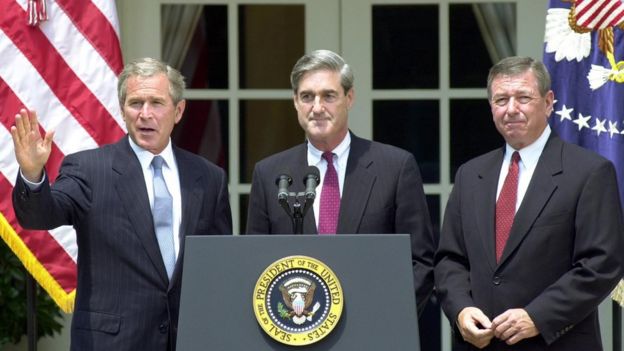
Mueller was appointed FBI Chief by George Bush just a week prior to 9/11 (AFP)
While the Beltway media have portrayed Mueller as a by-the-book former Marine whose integrity is as square as his lantern-shaped jaw — a cop who can’t be compromised — others know better.
“He’s a villain, and an arrogant one to boot,” former FBI Agent Mark Wauck said, adding that his former boss has a long history of acting as a “servant of the deep state,” or the permanent DC ruling class.
A Mueller spokesman declined to comment. But some agents say he was merely following White House orders.
“Any letting the Saudis off the hook came from the White House,” former Agent Mark Rossini said. “I can still see that photo of Bandar and Bush enjoying cigars on the balcony of the White House two days after 9/11.”
Still, others note the hypocrisy of Mueller going after President Trump for conspiring with a foreign enemy.
“Bottom line is, Mueller did not do an investigation on people involved in the 9/11 attacks who were connected to the Saudi government,” a former US counterintelligence official asserted. “Maybe if they were Russians, he would be interested. But he was not interested in investigating [Saudi] terrorists who murdered Americans.”
Paul Sperry is an investigative journalist and author of the bestseller “Infiltration.”

J.R.R. Tolkien’s “Beren and Lúthien”


By 
https://theimaginativeconservative.org/2019/08/jrr-tolkien-beren-and-luthien-bradley-birzer.html
August 2, 2019

Image result for beren and luthien


"The chief of the stories of The Silmarillion, and the one most fully treated is the Story of Beren and Lúthien the Elfmaiden,” Tolkien wrote Milton Waldman of Collins Publishers in 1951.[1] Along with The Children of Húrin and The Fall of GondolinBeren and Lúthien formed the three greatest tales of the First Age, each, in some way, deeply tied to the saga of the three silmarils. Tolkien wrote them in 1916 and 1917, beginning with The Children of Húrin, following it with the Fall of Gondolin, and completing the main three with Beren and Lúthien.[2] Of the three, Tolkien explained, Beren and Lúthien most foreshadowed The Lord of the Rings. “Here we meet, among other things, the first example of the motive (to become dominant in Hobbits) that the great policies of world history, ‘the wheels of the world,’ are often turned not by the Lords and Governors, even gods, but by the seemingly unknown and weak—owing to the secret life in creation, and the part unknowable to all wisdom but One, that resides in the intrusions of the Children of God into the Drama.”[3] Equally important for Tolkien’s entire mythology, Beren and Lúthien tells the tale of the first marriage of Elf (immortal) and man (mortal), so critical to the entire story.[4]
As with all of Tolkien’s great tales of the First Age, the story of Beren and Lúthien transformed dramatically over sixty years from its first imagining and version in 1916 and 1917 to its relatively finalized version in 1977’s The Silmarillion. During those six decades, it appeared as a long tale of the Lost Tales, as a summary in the 1926 Sketch of the Mythology (written for Tolkien’s beloved professor from King Edward’s, R.W. Reynolds), as a radically ambitious poetic lay, The Lay of Leithian (1925-1931), and as an essential story within the various versions, including the final version, of The Silmarillion.
Yet, the essence of the story has remained the same in all of its many versions. Or, as Christopher so wisely put it, “The fluidity should not be exaggerated: there were nonetheless great, essential, permanences.”[5]
A daughter of an Elf king, Thingol, and a fay (a Maia—the offspring of the angelic powers; roughly of the same power as Gandalf), Lúthien-Tinúviel expressed her joy and love through dance. One day, Beren, a heroic but displaced outlaw, spies her dancing. “Yet now did he see Tinúviel dancing in the twilight, and Tinúviel was in a silver-pearly dress, and her bare white feet were twinkling among the hemlock-stems.”[6] In Tolkien’s Lay of Leithian, he describes in terms comparable only to the Blessed Virgin Mary:
Her starry jewels twinkled bright
In the risen sun like morning dew;
The lilies gold on mantle blue
Gleamed and glistened.[7]

Enraptured, Beren followed Lúthien to her hidden kingdom, only to be mocked by her father. When Beren expressed his love for Lúthien, her father challenged him to steal one of the three silmarils, lodged and protected in Morgoth’s (the devil; also named Melko and Melkor) iron crown. Accepting the challenge, Beren heads north to Morgoth’s realm and fortress, Angband. Evil dwells throughout the North, Beren quickly finds. “Many poisonous snakes were in those places and wolves roamed about, and more fearsome still were the wandering bands of the goblins and Orcs—foul broodlings of Melko who fared abroad doing his evil work, snaring and capturing beasts, and Men, and Elves, and dragging them to their lord,” Tolkien wrote.[8] Beren becomes a captive in Morgoth’s house, a thrall and house slave. Distraught by her father’s cruel taunts, Lúthien follows Beren north to Morgoth’s realm. En route, she befriends the greatest of dogs, a dog of the angelic powers, Huan. Huan has been given permission to speak to Beren and Lúthien only three times, and, in each, he offers sagacious thought and advice. He also serves as a guardian, even challenging Morgoth’s greatest lieutenant, Sauron, to a fight.
From shape to shape, from wolf to worm,
From monster to his own demon form,
Thû [Sauron] changes, but that desperate grip
He cannot shake, nor form it slip.
No wizardry, nor spell, nor dart,
No fang, nor venom, nor devil’s art
Could harm that hound that hart and boar
Had hunted once in Valinor.[9]

Together, though, Huan and Lúthien formulate a plan, and Lúthien comes before Morgoth. In lust, he watches her dance, but her dance entrances him, putting him and his household to sleep. “Even the Orcs laugh in secret when they remember it,” the tale reveals, “telling how Morgoth fell from his chair and his iron crown rolled upon the floor.”[10] Beren and Lúthien remove one of the silmarils from Morgoth’s crown and escape, only to encounter the fell wolf, Carcharoth, who bites off Beren’s hand, consuming it and the silmaril it held. Unable to bear the goodness of the silmaril, Carcharoth goes mad, running wild into the wilderness. Having seen the folly of his words, Thingol joins Beren in the hunt for Carcharoth. They succeed in killing the wolf and removing the silmaril, but only at the cost of Beren’s life. Lúthien pleads with the god of death, Mandos, for Beren’s life.
The song of Lúthien before Mandos was the song most fair that ever in words was woven, and the song most sorrowful that ever the world shall hear. Unchanged, imperishable, it is sung still in Valinor beyond the hearing of the world, and listening the Valar are grieved. For Lúthien wove two themes of words, of the sorrow of the Eldar and the grief of Men, of the Two Kindreds that were made by Ilúvatar to dwell in Arda, the Kingdom of Earth amid the innumerable stars.[11]
Mandos, moved by the beauty of the story, agrees, but he demands, in return, that Lúthien give up her immortality as a fay-Elf. She gladly accepts Mandos’s offer, and she and Beren spend his second life in great joy and adventure.
The story of Beren and Lúthien matters profoundly in The Lord of the Rings. Not only are Aragorn and Arwen (who chooses mortality to be with Aragorn) the intellectual and spiritual descendants of Beren and Lúthien, but Arwen is, actually, a genetic and familial descendent of Beren and Lúthien. And, just as Beren lost his hand in rescuing the silmaril from Morgoth, so Frodo loses a finger in securing the fate of the ring from Sauron. Equally important, though, Aragorn chants the story of Beren and Lúthien, only moments before the Ringwraiths attack at Weathertop. The story serves as a form of prayer, preparing the Hobbits for their first real and tangible battle with evil. It remains one of the most beautiful parts of Tolkien’s entire mythology.
The story also mattered profoundly in Tolkien’s own life. His own wife, Edith, inspired the scene of Lúthien dancing, she having danced for him in “a small wood with a great undergrowth of ‘hemlock’ (no doubt many other related plants were also there) near Roos in Holderness, where I was for a while on the Humber Garrison,” during the First World War.[12] Then, Tolkien told his son, Christopher, Edith’s “hair was raven, her skin clear, her eyes brighter than you have seen them, and she could sing—and dance.”[13]
Edith Tolkien’s grave reads “Lúthien,” and J.R.R. Tolkien’s reads “Beren.”


[1] JRRT to Milton Waldman, 1951, in The Letters of J.R.R. Tolkien, Letter No. 131.
[2] JRRT to Christopher Bretherton, July 16, 1964, in JRRT Letters, Letter No. 257.
[3] JRRT to Milton Waldman, 1951, in JRRT Letters, Letter No. 131.
[4] See also, JRRT to Peter Hastings, September 1954, in JRRT Letters, Letter No. 153.
[5] Christopher Tolkien, “Preface,” to J.R.R. Tolkien, Beren and Lúthien (Boston, MA: Houghton Mifflin, 2017), 14.
[6] Tolkien, Beren and Lúthien, 42.
[7] Tolkien, Beren and Lúthien, 148.
[8] Tolkien, Beren and Lúthien, 47.
[9] Tolkien, Beren and Lúthien, 162.
[10] Tolkien, Beren and Lúthien, 137.
[11] JRRT, The Silmarillion, 186.
[12] JRRT to Christopher Bretherton, July 16, 1964, in JRRT Letters, Letter No. 257; and JRRT to Christopher Tolkien, July 11, 1972, in JRRT Letters, Letter No. 340.
[13] JRRT to Christopher Tolkien, July 11, 1972, in JRRT Letters, Letter No. 340.

Friday, September 06, 2019

Swedish Prof Urges 'Eating Human Flesh — to Save the Climate'


By Tyler O'Neill
https://pjmedia.com/trending/swedish-prof-urges-eating-human-flesh-to-save-the-climate/
September 5, 2019

Image result for magnus soderlund

Magnus Soderlund

Oftentimes, the climate alarmists are their own worst enemy. It sounds reasonable enough that carbon emissions might have an impact on the climate, but it's a rather nasty thing to prove, especially when alarmist predictions fail, over and over again. It's far from the "scientific consensus." But the alarmists don't tone down their rhetoric — they ratchet it up to 11. They want to take away your plastic strawsyour cars, your burgers. Then there's this behavioral scientist in Sweden who wants us to eat human flesh to deal with the effects of climate change.

No, this isn't The Onion or The Babylon Bee. This is a Swedish professor appearing on Swedish television advocating for cannibalism, because climate change is just that dire. It can't be lunacy if it's done in the name of climate change, can it?

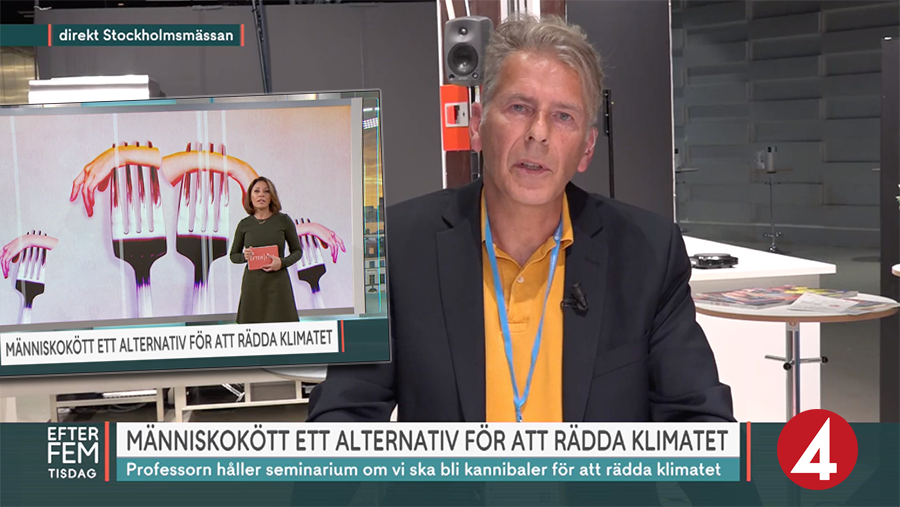
Earlier this week, Magnus Söderlund, professor of marketing and strategy at the Stockholm School of Economics, spoke at the Gastro Summit, a discussion on the future of food in the case of a climatepocalypse, The Epoch Times reported.

Söderlund spoke on the topic, "Can you Imagine Eating Human Flesh?" He argued for breaking down the ancient taboos against desecrating the human corpse and, well, cannibalism. The clip is available on State Swedish Television channel TV4 at this link. The end of the video's description roughly translates to "the possibility of eating human flesh - to save the climate." How cannibalism would have any impact on the climate is anyone's guess, and it seems the professor is more focused on dealing with the aftereffects of climate change, anyway.

According to The Epoch Times, Söderlund dismissed taboos against cannibalism as "conservative." He suggested that people's resistance to eating human flesh "could be overcome, little by little, beginning with persuading people to just taste it." In the video, he warned "that since food sources will be scarce in the future, people must be introduced to eating things they have thus far considered disgusting—among them, human flesh."

While the professor also discussed breaking other taboos on eating pets and insects, his talk focused on cannibalism. Swedish articles on the debate use the term "mannisko-kötts branschen," which translates to "the human flesh industry."

According to his bio, Söderlund's research focuses on "consumer behavior," "reactions to marketing stimuli," "psychological reactions," and "our understanding of what it means to be a consumer (and a marketer) in a society increasingly obsessed with consumption."
Taking this psychological approach, the professor said that people can be "tricked" into "making the right decisions."

Söderlund appeared to equate resistance to cannibalism with capitalist selfishness. "Are we humans too selfish to live sustainably?" he asked.

Even the audience for a Climatepocalypse food summit seemed unwilling to break the "taboo" against eating human flesh. Then the professor asked the audience how many would be open to the idea, not many hands went up and some people groaned. The professor later told the media that 8 percent of conference participants said they would be open to trying cannibalism.

When asked if he would try eating human flesh, Söderlund said, "I feel somewhat hesitant but to not appeal overly conservative... I'd have to say... I'd be open to at least tasting it."

Even if cannibalism were not grotesque, it would still be unhealthy. The Fore people in Papua New Guinea practiced ritualistic cannibalism. The women in the tribe would eat the human flesh of their dead relatives — so that worms and maggots did not eat it. The women — and some children — started dying of kuru, a disease meaning "shivering" or "trembling."

Victims first had trouble walking, a sign they were about to lose control over their limbs. Then they would lose control over their emotions, and people dubbed the disease the "laughing death." Within a year, the victims couldn't get up off the floor, feed themselves, or control bodily functions.

Scientists won a Nobel Prize for linking the disease to the tribe's cannibalism. As it turns out, eating human flesh makes people susceptible to "prions," or "proteinaceous infectious particles," twisted proteins that would twist normal proteins in nerve cells. It seems someone in the tribe had contracted Creutzfeldt-Jakob disease, a degenerative neurological disorder. Cannibalism passed on that disease to generations. Roughly one in a million Americans contract this disease,according to the CDC. It is rare at least in part because of that "conservative" taboo against eating human flesh.

In other words, not only is this Swedish professor pushing something downright macabre, he's also advocating for a behavior that makes humans susceptible to a terrifying disease.

But hey, anything for climate change, right?


Follow Tyler O'Neil, the author of this article, on Twitter at @Tyler2ONeil.

SAN FRANCISCO LABELS NRA A “DOMESTIC TERRORIST ORGANIZATION”


Joseph Klein
https://www.frontpagemag.com/fpm/274859/san-francisco-labels-nra-domestic-terrorist-joseph-klein
September 6, 2019

Image result for nra san francisco

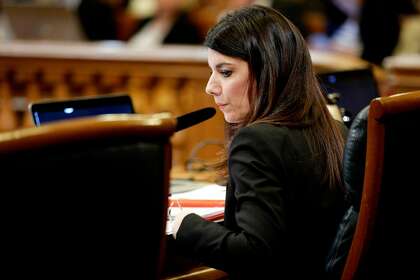
Catherine Stefani during a board meeting in June.(Santiago Mejia/San Francisco Chronicle)

San Francisco, the once-great city by the bay, has become an insane asylum run by its inmates. In July, San Francisco's Board of Supervisors decided that the words “convicted felons,” “criminal,” “offender,” “addict,” “prisoner,” and “juvenile delinquent” are unacceptably offensive terms that need to be replaced. The Board believed that such words “obstruct and separate people from society and make the institutionalization of racism and supremacy appear normal.” In San Francisco doublespeak, a “convicted felon” is now a “justice-involved person.” A “criminal” is now “a returning resident.” A “juvenile delinquent” is now transformed into an innocent-sounding “young person with justice system involvement.”
Obscuring the identity of real criminals with sugarcoated euphemisms is San Francisco’s new “normal.”  Now San Francisco's Board of Supervisors has added to its record of insanity by deciding unanimously this week to pass a resolution accusing the National Rifle Association (NRA) of being a "domestic terrorist organization." In the topsy-turvy world inhabited by San Francisco’s Board of Supervisors, the NRA is committing a terrorist act by virtue of exercising its First Amendment rights to freedom of speech and to petition the government in defense of the Second Amendment “right of the people to keep and bear Arms.” The resolution denounces what it calls the NRA’s use of its “considerable wealth and organizational strength to promote gun ownership and incite gun owners to acts of violence." It recklessly charges, without citing a shred of evidence, that the “National Rifle Association through its advocacy has armed those individuals who would and have committed acts of terrorism.”
The resolution may technically be a non-binding declaration spouting nonsense, but it represents the proverbial foot in the door to further mischief. Most notably, after maliciously slandering the NRA as a “domestic terrorist organization,” the Board of Supervisors’ resolution urges an economic boycott by San Francisco against firms who dare to do business with the NRA. The resolution states that “the City and County of San Francisco should take every reasonable step to limit those entities who do business with the City and County of San Francisco from doing business with this domestic terrorist organization.” In effect, the Board of Supervisors is using economic threats to terrorize commercial firms into having to choose between doing business with the city and county of San Francisco or with an organization of approximately 5.5 million members advocating to protect its members’ right to defend themselves against criminals – or, as the Board of Supervisors calls them, “returning residents.”
Catherine Stefani, the supervisor of the city's District 2 who wrote the NRA resolution, declared, "The NRA has it coming to them, and I will do everything that I possibly can to call them out on what they are, which is a domestic terrorist organization." 
Ms. Stefani should instead call herself and the rest of the San Francisco Board of Supervisors out for the lax law enforcement, generous give-away programs, and sanctuary city policies protecting illegal alien criminals that have contributed to San Francisco’s crime rate and rampant homeless crisis. “People don’t feel safe walking down the street,” said Joel Engardio, vice president of Stop Crime SF, last month, who noted the inexcusable pre-trial release of violent criminals and the failure to prosecute “too many repeat offenders.”  San Francisco also has the highest rate of property crime in the nation among large US cities, according to the FBI. None of these problems are the fault of the NRA or of law-abiding gun owners. They are the fault of progressives who believe that criminals are simply “returning residents,” illegal alien criminals should be protected from deportation, and homelessness is the fault of the rich rather than of incompetent government policies that tolerate encampments, feces, garbage and drug paraphernalia on the streets.
Ironically, the one positive trend in crime that the San Francisco Bay area has experienced in recent years is the sharp drop in the gun homicide rate. Nevertheless, in its infinite stupidity, the San Francisco Board of Supervisors has decided to target the NRA as its primary bogeyman.
This is not the NRA’s first encounter with San Francisco’s anti-Second Amendment “values.” Back in 2005, San Francisco voters approved Proposition H, a local ordinance which was intended to restrict the possession of handguns and ban the manufacture, distribution, sale and transfer of firearms and ammunition within the city limits. Proposition H was challenged in court by the NRA and other gun rights advocates who prevailed. The city ended up paying a settlement in the amount of $380,000 to the NRA and other plaintiffs to cover their litigation costs. Since this case, the U.S. Supreme Court decided that the Second Amendment protected weapons “in common use by law-abiding citizens.” The Court explicitly referred to the individual’s right to armed self-defense. Advocating to protect that right, as the NRA does, is to help law-abiding Americans defend themselves against the violent acts of real terrorists.

Thursday, September 05, 2019

Dems Propose First Gun Grab Since Lexington And Concord


"Mandatory Gun Buyback" is a Silly Euphemism


By 
https://thefederalist.com/2019/09/04/dems-propose-first-gun-grab-since-lexington-concord/
September 4, 2019

Related image
Joe Biden and Bernie Sanders

The media should stop using absurdly lazy phrases like “mandatory gun buybacks.” Unless the politician they’re talking about is in the business of selling firearms, it’s impossible for him to “buy back” anything. No government official—not Joe Biden, not Beto O’Rourke, not any of the candidates who now support “buyback” programs—has ever sold firearms.
What Democrats propose can be more accurately described as “the first American gun confiscation effort since Lexington and Concord,” or some variation on that theme. Although tax dollars will be meted out in an effort to incentivize volunteers, the policy is to confiscate AR-15s, the vast majority of which have been legally purchased by Americans who have undergone background checks and never used a gun for a criminal purpose.
The “mandatory gun buyback” exemplifies the impracticality and absurdity of do-somethingism (although Biden’s proposal to ban “magazines that hold bullets”—so most guns—is also a contender!). Democrats want to turn millions of otherwise law-abiding citizens into criminals overnight for refusing to adhere to a law that retroactively transforms the exercise of a constitutional right into a crime.
And they do it without any evidence that it would curtail rare mass shootings or save lives.
While national confiscation would be unprecedented in American history, we already possess hard evidence that bans of assault rifles don’t alter gun violence trends. Gun homicides continued to drop steeply after an “assault weapons” ban expired in 2004. It’s also worth noting that in 2017, the last year of available FBI data, there was a near-historic low of 7,032 murders with handguns, and 403 by “rifles” of any kind, not only “assault weapons.”
To put that in perspective, there were 1,591 knife homicides during that same span, 467 people killed with blunt objects, and another 696 with fists and kicking. (Not every police department reports the type of gun used in homicides (3,096 of them), but it’s reasonable to believe that similar trends apply, since those murders took place in big cities where handguns are most prevalent.)
Although a number of Democrats now unequivocally support a “buyback,” no one has explained how the procedure will unfurl. What will the penalty be for ignoring the “buybacks”? Fines? Prison terms?
Will local police be tasked with opening case files on the 100 million homes of suspected gun owners who are armed with hundreds of millions of firearms, or will it be the FBI? Maybe Democrats will propose “paying back” family members and neighbors who snitch on gun owners? How else will they figure out who owns these AR-15s? There is no national tracking of sales.
Then again, many Democrats support “universal background checks,” which would necessitate a national database. So subsequent confiscations would be far easier, I suppose. (I can remember a time not very long ago when liberals accused a person of being a tin-foil-hatted nutter for merely suggesting that anyone had designs on their guns.)
It’s unclear to me if every candidate supports mandatory buybacks. Imprecision, after all, is the hallmark of gun-control rhetoric. Of course a non-coercive “buyback” program wouldn’t work either because no patriotic American is going to sell his firearms under market value. If you pay gun owners more than market value, they will surely turn a profit and purchase new weapons.
The criminal class and deranged would-be mass shooters have absolutely no incentive to participate, anyway. But you knew that.
Then there is the little matter of constitutionality. I’ve noticed an uptick in gun grabbers—a phrase that’s no longer hyperbole—arguing that Americans don’t need AR-15s to hunt, as if it mattered.
Although ARs are used by hunters, I’m certain nothing in the Second Amendment mentions hunting, because the right of self-defense—an individual concern, as well as a collective one—has nothing to do with shooting deer, and everything to do with protecting Americans from those who endeavor to strip them of their inalienable rights.
The District of Columbia v. Heller decision found that the Second Amendment protected weapons “in common use by law-abiding citizens.” The AR-15 clearly meets both criteria. It’s one of the most popular guns in America. Its semi-automatic mechanism is the same mechanism found in a majority of other legal firearms in the nation.
The arguments for a ban on “assault weapons”— a purposefully elastic phrase that allows the liberal legislator’s imagination to run wild — is centered on aesthetics, on the false claim that the AR is a “weapon of war,” and on the firearm tastes of a handful of deranged, sociopathic murderers.
Democrats and their allies like to mock these sorts of arguments as nothing more than semantics; mostly because they need to conflate and euphemize terms to make their arguments work. It’s how they generate favorable polling. I’m sure you’ve heard about the popularity of gun-control measures. But like “Medicare for all,” and other vaguely positive sounding policies, once voters learn what specifics entail, those numbers tend to settle along the usual partisan lines.
If you think you’re going to have overwhelming support for “mandatory gun buybacks” when people learn that you’re really talking about “the confiscation of 20 million guns,” you’re fooling yourself.
David Harsanyi is a Senior Editor at The Federalist. He is the author of First Freedom: A Ride Through America's Enduring History with the Gun, From the Revolution to Today. Follow him on Twitter.