Showing posts with label Tea Party. Show all posts

Thursday, August 29, 2019

The Left Can’t Stop Lying About The Tea Party


By 
https://thefederalist.com/2019/08/28/left-cant-stop-lying-tea-party/
August 28, 2019

Related image


“In the late summer of 2009, as the recession-ravaged economy bled half a million jobs a month, the country seemed to lose its mind,” The New York Times says, kicking off its tenth anniversary retrospective of the Tea Party movement. As you can imagine, the rest of the article continues in this vein, portraying conservatives who organized against Obamacare as a bunch of vulgar radicals.
Yet even this revisionism wasn’t enough for most contemporary leftists, who see everything through the prism of race.
“A fundamental flaw in this analysis is there is no mention of race and how much racism drove the Tea Party movement,” ABC’s Matthew Dowd claimed. “You can’t talk about the rage politics and leave out race.”
“This @jwpetersNYT retrospective on the Tea Party’s ‘summer of rage’ ten years ago makes not a single, solitary reference to race or racism,” Rolling Stone’s Jamil Smith said. “Nor does it acknowledge the reality that a good deal of it involved opposing President Obama because he was black.”
“How do you write a 10 years later piece on the Tea Party and not mention – not once, not even in passing – the fact that it was essentially a hysterical grassroots tantrum about the fact that a black guy was president?” asked non-biased Washington Post reporter Wesley Lowery, calling it journalistic “malpractice.”
In the first draft of this piece, I joked that The New York Times might add a line about Tea Party “racism” before the day was over to placate the Twitter mob. They did it before I could even publish. But it doesn’t change the fact that there’s no evidence that a “good deal”—or any substantial deal, for that matter—of the Tea Party’s popularity was propelled by racism.
The wealthy white leader of Congress at the time was just as unpopular among Tea Partiers as the black president. And, as we’ve seen, if Hillary Clinton had won the 2008 election, she would have generated no less anger among conservatives.
It was Barack Obama’s leftist rhetoric and unprecedented unilateralism—he had, after all, promised “fundamental change”—that ignited what amounts to a renewed Reaganism; a fusing of idealistic constitutionalism and economic libertarianism. (These days, there’s an excellent chance that progs see both those -isms as inherently racist, as well.)
Tea Party protesters not only felt like they were under assault from Democrats but that they had been abandoned by the GOP establishment. That is why so many primaried white Republicans. If you really wanted to hear them “rage,” you could always bring up the former Caucasian and Republican president, George W. Bush, who had “abandoned free market principles to save the free market system.”
As with any spontaneous political movement, some bad actors glommed onto protests. The New York Times article, for instance, informs us that “one demonstrator at a rally in Maryland hanged a member of Congress in effigy” and that a “popular bumper sticker was ‘Honk if I’m Paying Your Mortgage’” – as if we’re supposed to be offended by the latter.
Most accusations of Tea Party racism are based on John Lewis’s accusation—dutifully repeated by most of the media without any skepticism—that someone had called him ugly names and spit on him when he and Nancy Pelosi strolled through protesters in front of the Capitol. Although there were cameras everywhere that historic day, no one was ever able to find any evidence to back up his claim.
None of this stopped Frank Rich, then a New York Times columnist, from boring into the collective soul of the movement, accusing it of engaging in “small-scale mimicry of Kristallnacht.” Joe Biden reportedly accused them of acting “like terrorists.” Tom Friedman referred to them as the “Hezbollah faction” of the GOP. It was, as one Democratic Party memo explained, “not really all about average citizens,” but an astroturf movement paid for by corporate lobbyists and populated by “neo-Nazis, militias, secessionists and racists.”
All of this rhetoric sounds very familiar.
Left-wing protesters, no matter how puerile, hateful, or bigoted, are typically depicted as righteous agents of change. Conservatives and libertarians, on the other hand, “rage.” The “summer of rage” typically refers to the riots that swept a number of American cities in 1967. The Tea Party protests never turned violent. There were no riots. No broken Starbucks windows. It was the most peaceful “rage” you’re ever going to see.
I reported on the first of numerous Tea Party protests on April 16, 2010. What I saw were some silly people, and many others who were idealistic neophytes peacefully organizing around founding principles. Most had very specific policy goals in mind. None of them were about race. Most of them supported free markets. Many of them were still quite mainstream.
A CBS/New York Times poll at time found that the average Tea Party activist was more educated than the average American, and their concerns mirrored the mainstream. Although a majority were more socially conservative than the average voter—particularly on abortion—8 in 10 of them wanted their burgeoning movement to focus on economic issues rather than social ones.
Hardly the anarchists depicted in the media, the poll found that a majority of Tea Partiers wanted to reduce the size of government rather than focus on cutting budget deficits or even lowering taxes. A majority, in fact, believed that Social Security and Medicare were worthy taxpayer burdens. Not even clamping down on illegal immigration, often the impetus for charges of racism these days, was a big topic among these activists.
The Tea Party had three main grievances: Obamacare, government spending, and “a feeling that their opinions are not represented in Washington.” The protests were fueled by Democrats’ unprecedented action on a health care policy. A decade later, the Tea Party’s suspicion that the health-care law was merely an incremental way to move towards more socialistic policies turned out to be correct, as most of the Democratic Party presidential field can attest.
The Tea Party, whether some of their champions later turned out to be hypocrites or not, didn’t want to change the Republican Party as much as they wanted to force conservative politicians to keep their promises. The movement initially backed a number of terrible candidates, but it learned.
In the end, the Tea Party successfully re-energized Republicans, who went on to win two wave elections and stifle Obama’s presidency for six years.  Whether the movement was a long-term failure, as the Times argues, is a debatable contention.
One things is true, though: the majority of Tea Partiers were white. You know what that means, right? And, as those of us who covered the Obama administration remember, no matter how historically detailed or ideologically anchored your position might be, the very act of opposing a black president was going to be depicted as act of bigotry.
This cheap and destructive rhetoric now dominates virtually every contemporary debate, most of which have absolutely nothing, even tangentially, to do with race. It’s a kind of rhetoric, in fact, that now retroactively dominates our debates, as well.
David Harsanyi is a Senior Editor at The Federalist. He is the author of First Freedom: A Ride Through America's Enduring History with the Gun, From the Revolution to Today. Follow him on Twitter.

Thursday, March 13, 2014

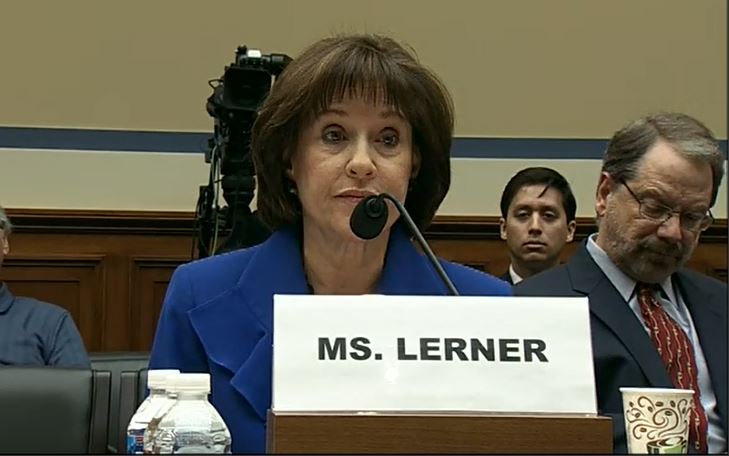
Lois Lerner’s Lies and Cover-Up Revealed


Posted By Matthew Vadum On March 12, 2014 @ 12:58 am In Daily Mailer,FrontPage | 57 Comments

Former IRS mandarin Lois Lerner orchestrated an unprecedented crackdown on Tea Party and conservative groups and then attempted to scapegoat those nonprofits, blaming them for the harsh treatment they received at her instigation, according to a damning report released yesterday by congressional investigators.

The report came out six days after Lerner appeared before the House Oversight and Government Reform Committee under subpoena and for a second time refused to testify about IRS targeting of right-of-center 501c4 nonprofit advocacy groups during the 2010 and 2012 election cycles. (The full report is available in PDF form at the committee’s website.) At the March 5 hearing, which was a continuation of a hearing started last year, Lerner again opted to invoke her Fifth Amendment privilege against self-incrimination.

President Obama has claimed that there was not even “a smidgen of corruption” in the IRS affair but anyone with eyes knows the Obama administration has been stonewalling and intimidating witnesses who know the ugly truth about these Third World banana republic-style tax abuses.

Democrats correctly view Tea Party groups, that is, right-wing populist groups, as an existential threat to the Left. These nonprofits tend to be Republican-leaning organizations and they have been successful so far in derailing, or at least slowing, parts of President Obama’s ongoing transformation of America. Many left-wingers don’t believe such groups are legitimate and don’t want them granted official recognition and tax-exempt status by the IRS.

The report also comes as lawmakers consider whether to cite Lerner for contempt of Congress.
“Many questions remain, including the identities of others at the IRS and elsewhere who may have known about key events and decisions she undertook. Americans, and particularly those Americans who faced mistreatment at the hands of the IRS, deserve the full documented truth that both Lois Lerner and the IRS have withheld from them,” the new report states. 

But “[e]ven without her full testimony, and despite the fact that the IRS has still not turned over many of her e-mails, a political agenda to crack down on tax-exempt organizations comes into focus,” the report continues. ”Lerner believed the political participation of tax-exempt organizations harmed Democratic candidates, she believed something needed to be done, and she directed action from her unit at the IRS.”

“Compounding the egregiousness of the inappropriate actions, Lerner’s own e-mails showed recognition that she would need to be ‘cautious’ so it would not be a ‘per se political project,’” the report states. It continues:
She was involved in an “off-plan” effort to write new regulations in a manner that intentionally sought to undermine an existing framework for transparency. Most damning of all, even when she found that the actions of subordinates had not adhered to a standard that could be defended as not “per se political,” instead of immediately reporting this conduct to victims and appropriate authorities, Lerner engaged in efforts to cover it up. She falsely denied to Congress that criteria for scrutiny had changed and that disparate treatment had occurred.
Professor Paul L. Caron of Pepperdine University School of Law prepared a summary of the new 141-page report that contradicts Democrats in the House who have argued that Lerner was driven out of the tax collection agency by a May 2013 report by the Treasury Inspector General for Tax Administration (TIGTA). The TIGTA report held that the Exempt Organizations division of the IRS that she headed “inappropriately targeted ‘Tea Party’ and other conservative applicants for tax-exempt status and subjected them to heightened scrutiny.”

Citing the congressional report, Caron notes that this extra scrutiny resulted “in extended delays that, in most cases, sidelined applicants during the 2012 election cycle, in spite of their Constitutional right to participate,” the new report states. At the same time, “the majority of liberal and left-leaning 501(c)(4) applicants won approval.”

New emails referenced in the report showed that, contrary to Democrats’ claims, Lerner had planned to retire from the IRS long before the TIGTA report was made public. Lerner’s paid leave was, in effect, a paid vacation before her retirement. Apparently the IRS did not penalize her for her misbehavior.

The report discusses a March 2012 document that Lerner approved while at the IRS. It authorized an IRS response to Congress that blackened the names of the affected advocacy groups, blaming them for the heightened level of scrutiny to which their tax-exempt applications were subjected. Committee investigators believe that Lerner knew what she was doing was wrong.

Lerner ran afoul of IRS rules by mishandling taxpayer information. Although she told a congressional committee last year under oath that she had “not violated any IRS rules or regulations,” emails demonstrate that she did. The report states that Lerner handled protected taxpayer information in her nonofficial email account.

In correspondence dated November 2013, then-IRS chief Daniel Werfel wrote, “We do not permit IRS officials to send taxpayer information to their personal email addresses. An IRS employee should not send taxpayer information to his or her personal email address in any form, including redacted.”

Lerner apparently believed the Obama administration needed to do something to undermine the Supreme Court decision in the Citizens United case, that wonderful pro-First Amendment ruling that drives left-wingers into fits of apoplexy by opening the door to corporate campaign contributions. After one of her advisors sent her an article about how conservative donors’ contributions were impacting U.S. Senate races and how outside money was making it hard for Democrats to retain their majority in that chamber, Lerner emailed back, “Perhaps the FEC will save the day.”

Last week’s sitting of the panel ended in chaos when President Obama’s lead obfuscating lapdog on the committee, ranking member Elijah Cummings (D-Md.), pulled a well-publicized stunt calculated to make committee chairman Darrell Issa (R-Calif.) look mean-spirited. After Lerner took the Fifth in response to a series of questions Issa put to her, Issa gaveled the proceedings to a close, saying it was obvious that Lerner would not testify at the hearing that was convoked specifically for her testimony.

To direct public attention away from the IRS scandal and tamp down growing calls for the president’s impeachment, Cummings then exploded at Issa, demanding to speak and ranting about the supposed unfairness of it all in front of the television news cameras.

Predictably, media figures such as CNN’s Wolf Blitzer hammered Issa, accusing him of being rude to Cummings, a left-wing sacred cow because he is considered to have been a civil rights leader in the Sixties. House Democrats savaged Issa and even moved a resolution that condemned him, but the resolution was easily voted down. Issa soon caved to media-manufactured pressure and apologized to Cummings, thereby vindicating the Democrat’s gimmicky bit of political theater.

There is little doubt that Obama defenders will dream up still more distractions to keep the public’s eye off the IRS scandal in the lead-up to the November congressional elections. 

Freedom Center pamphlets now available on Kindle: Click here.

Make sure to Subscribe to Frontpage’s TV show, The Glazov Gang, and LIKE it on Facebook.

Article printed from FrontPage Magazine: http://www.frontpagemag.com

URL to article: http://www.frontpagemag.com/2014/matthew-vadum/lois-lerners-lies-and-cover-up-revealed/

Monday, January 27, 2014

How Scott Walker and the conservatives saved Wisconsin. America, take note

http://blogs.telegraph.co.uk/news/timstanley
27 January 2014
There was a time when Wisconsin was headline news. You must remember the story? Wisconsinites elected some caveman called Scott Walker as their governor on a platform of drowning government in the bath. He wanted to reform the unions and bring spending under control – and the public sector came out onto the streets to stop him. It was a kind of velvet revolution led by teachers and social workers and the folks who shoot bears when they start eating out of trash cans. They tried to remove Walker from office, but that didn't work because he somehow won the recall vote, making him the only governor in US history to do so. And then it all went oddly quiet from the Badger state…
Which is a pity because it turns out that Scott Walker's conservative agenda has actually worked. Really, really worked. The American Spectator reports:
In 2011, Wisconsin had a whopping deficit of $3.6 billion dollars. But a corporate tax cut and collective bargaining reforms invigorated the state economy. Now, the state is boasting a $911 million surplus, credited to “good stewardship of the taxpayers’ money.”
How did he do it? With a mix of conservatism and pragmatism. Walker's first moves were resolutely Republican. The controversial 2011 "budget repair bill" proposed major cuts with the goal of saving $300 million in two years, including welfare reform and changes to public sector employees' contracts. More recently, however, his fiscal policy has been cautious – a mix of targeted tax cuts and small rises in spending in the areas of workforce training and education. The fact is that Wisconsin's recovery is real but fragile, and Walker has balanced the books without trying to impose on his state the kind of pure libertarian economics that his opponents feared. It's an example of sensible conservative governance – not, as so much of the liberal media seemed to imagine, a Tea Party coup d'etat. No wonder he beat the recall effort.
Not only has he delivered the goods but (this is the best bit) Walker now wants to give those goods back to the voters in the form of a tax break. So the message to America, and the rest of the world, is this: get spending under control, cut business taxes, create a welfare system that encourages people to seek work and you will balance the budget, reduce unemployment and be able to let people keep more of their money. It turns out that conservative economics, applied with determination and care, can work.
Can Walker translate all of this into a run for the presidency? We know he probably wants to because he insists that the next commander-in-chief should be a governor and because he's written a book about how great he is – the necessary first step for someone to run. But he doesn't feature highly (if at all) in early primary polling and his national profile has dimmed since 2011-12. Nevertheless, it would be nice to think that practical people who do their job well can still be viable candidates for the presidency. So, many Republicans will be keeping their fingers crossed…

Dr Tim Stanley is a historian of the United States. His biography of Pat Buchanan is out now. His personal website is www.timothystanley.co.ukand you can follow him on Twitter @timothy_stanley.

Tuesday, November 05, 2013

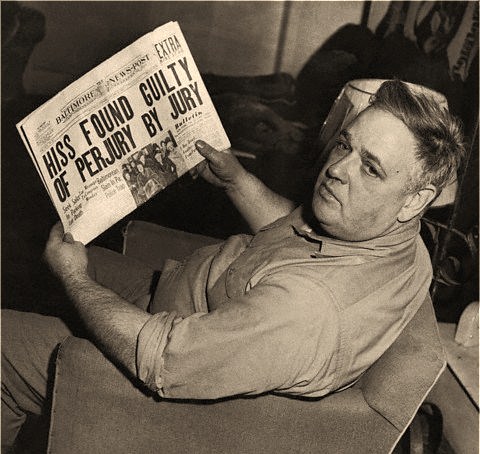
Whittaker Chambers Is to Blame for the Tea Party?


November 3, 2013

 Whittaker Chambers

A friend sent me a link to Cass Sunstein’s absolutely ridiculous column last week, but I didn’t have a chance to get to it. And now The Weekly Standard and Walter Russell Mead have beaten me to the punch. But while they both do a good job, I don’t think either go nearly far enough.

In his column, Sunstein runs through the basic facts of the Hiss-Chambers case, which I don’t need — I hope — to rehash here. But at the end of a column titled, “How the Alger Hiss Case Explains the Tea Party” he writes:
Most of those who have carefully studied the case, and who have explored evidence emerging long after the trial itself, have concluded that Chambers was telling the truth and that Hiss did indeed perjure himself. But the legacy of the case extends well beyond the issue of Hiss’s guilt. 
Chambers’ broader charge — that liberalism was a species of socialism, “inching its ice cap over the nation” — polarized the nation. His attack on the patriotism of the Ivy League elite reflected an important strand in American culture, and it helped to initiate suspicions that persist to this day. 
Liberals are no longer much interested in Hiss’s conviction, yet they are puzzled, and rightly object, when they are accused of holding positions that they abhor. We can’t easily understand those accusations, contemporary conservative thought or the influence of the Tea Party without appreciating the enduring impact of the Hiss case.
The Standard’s “Scrapbook” responds:
To sum up, even though Chambers was correct to point out that influential American liberals were hiding their true intentions to seize the levers of power and undermine constitutional government, Chambers is responsible for poisoning the well. And this is somehow the genesis of the bitter partisan divide we’re saddled with today. 
The Scrapbook then goes on to point out, rightly, that Obama himself has done little to dispel the idea that liberals harbor secret motives they are unwilling to state plainly to the American people.  Meanwhile Mead does yeoman’s work defending the true nature of the tea parties. 

But neither of these worthy rebuttals mention an important element. The notion that liberals were sympathetic to extreme left-wing views (of Marxist, Soviet, or national-socialist origin) hardly hangs on charges made by Whittaker Chambers. The Road to Serfdom made essentially this charge five years earlier, as did countless writers on what is sometimes called “the Old Right.” The charge wasn’t always that liberal fellow-travelers had a secret agenda. Hayek’s argument was more sophisticated than that, even in The Road to Serfdom (his least sophisticated book, if you ask me). Rather, part of the charge was that liberals were blind to the dangers of their own thinking. The very mainstream liberal urge to plan peoples’ lives for them (which Sunstein fully represents in his writing) is ill-equipped to stop at the edge of tyranny.  
Still, you hardly needed to be paranoid to think liberals had a soft spot for totalitarianism. Throughout the 1920s and 1930s — when Chambers was still a paid Communist spy and journalist in good standing — countless liberals gushed over the exciting “experiments” going on in the Soviet Union (not to mention fascist Italy and Nazi Germany). In his 1932 book A New Deal, Stuart Chase — the Cass Sunstein of his day — asked “Why should Russians have all the fun remaking a world?” From my book:
To be sure, not all left-leaning observers were fooled by the Bolsheviks. Bertrand Russell famously saw through the charade, as did the American socialist Charles E. Russell. But most progressives believed that the Bolsheviks had stumbled on the passage out of the old world and that we should follow their lead. When the war ended and Progressivism had been discredited with the American people, the intellectuals looked increasingly to the Soviet Union and Fascist Italy as exemplars of the new path that America had foolishly abandoned after its brilliant experiment with war socialism. 
Nearly the entire liberal elite, including much of FDR’s Brain Trust, had made the pilgrimage to Moscow to take admiring notes on the Soviet experiment. Their language was both religiously prophetic and arrogantly scientific. Stuart Chase reported after visiting Russia in 1927 that unlike in America, where “hungry stockholders” were making the economic decisions, in the Soviet Union the all-caring state was in the saddle, “informed by battalions of statistics” and heroically aided by Communist Party officials who need “no further incentive than the burning zeal to create a new heaven and a new earth which flames in the breast of every good Communist.”40 
That same year two of America’s leading New Deal economists, Rexford Guy Tugwell and Paul Douglas, pronounced themselves awed by the Soviet “experiment.” “There is a new life beginning there,” Tugwell wrote in his report. Lillian Wald visited Russia’s “experimental schools” and reported that John Dewey’s ideas were being implemented “not less than 150 per cent.” Indeed, the whole country was, for liberals, a giant “Laboratory School.” Dewey him- self visited the Soviet Union and was much impressed. Jane Addams declared the Bolshevik endeavor “the greatest social experiment in history.” Sidney Hillman, John L. Lewis, and most of the other lead- ers of the American labor movement were effusive in their praise of “Soviet pragmatism,” Stalin’s “experiment,” and the “heroism” of the Bolsheviks.41 
W. E. B. DuBois was thunderstruck. “I am writing this in Russia,” he wrote back to his readers in the Crisis. “I am sitting in Revolution Square . . . I stand in astonishment and wonder at the revelation of Russia that has come to me. I may be partially deceived and half- informed. But if what I have seen with my eyes and heard with my ears in Russia is Bolshevism, I am a Bolshevik.”
The suspicion that liberals were secretly — or not so secretly! — sympathetic to policies that would, at minimum, do terrible violence to democracy and the constitutional order was alive and well long before the Hiss trial because it was a reasonable suspicion! The significance of the Hiss trial lay, at least in part, in the fact that the liberal elite couldn’t deny it anymore. But even a year before the trial many prominent and patriotic liberals recognized that American liberals had to confront the fact that many liberals were more sympathetic to Communism and the Soviet Union than was healthy. That was why, a year before Chambers testified before Congress, Americans for Democratic Action was formed: to give form to liberal anti-Communism, a cause rejected by The New Republic and The Nation at the time.

I could go on. But I want to switch to another problem with Sunstein’s odd lament. Again, he writes: “Liberals are no longer much interested in Hiss’s conviction, yet they are puzzled, and rightly object, when they are accused of holding positions that they abhor.” Yeah, okay. That’s fair. But it’s an odd lament coming from a former aide to a president who, as a matter of daily practice, accuses his opponents of holding views they abhor. It’s also odd that Sunstein has to go back more than a half century to gripe about this sort of thing, when every day leading Democrats, liberal writers — and the agitproppy network MSNBC — insist that the conservative agenda boils down to restoring Jim Crow, “white supremacy” (as Chris Matthews says on an almost-weekly basis), and even slavery. (Some liberals even see a black conservative from Georgia and tea-party hero as proof the tradition of Ku Klux Klan is alive and well). When liberalism finds ideas this stupid and fact-free reasonable, it’s got better things to do than whine about the legacy of the Hiss case.

As I’ve been saying a lot lately, behind every double standard is a single standard. It’s not that liberals hate name-calling, it’s that they hate the idea that they can’t have a monopoly on the practice. 

Monday, October 21, 2013

The Maligned Tea Party

The Left’s characterizations just aren’t true. 

Thursday, October 10, 2013

Let's Get Cynical


    Why should we trust the government--especially now?

October 9, 2013
"An old friend who has been active in politics for more than 30 years tells me he's giving up," claims Robert Reich in a Puffington Host post: " 'I can't stomach what's going on in Washington anymore,' he says. 'The hell with all of them. I have better things to do with my life.' "
Associated Press
Robert Reich, his megaphone and his disgusted friend.
Reich is a proven fabulist, so one has to assume any story he tells is a tall tale. But we're interested in the supposed moral of the parable of Reich's Disgusted Imaginary Friend: "My friend is falling exactly into the trap that the extreme right wants all of us to fall into--such disgust and cynicism that we all give up on politics." The "Tea Bag Republicans," as the homophobic Reich calls them, "want to sow even greater cynicism about the capacity of government to do much of anything."
In reality, nobody is more disgusted or cynical about government than Tea Party activists themselves--and they have much to be cynical about. The Washington Examiner reports that TeaParty.net "has finally received its tax-exempt status after a three-year delay" caused by the repurposing of the Internal Revenue Service into a political operation aimed at suppressing opposition to Barack Obama's re-election campaign:
"After four years battling Lois Lerner's shock troops, we are relieved that the IRS has relented and finally recognized our right to operate as a non-profit," said Todd Cefaratti, founder of TheTeaParty.net. "First they tried to ignore us. Then they tried to discredit us. And then they tried to deny our legal rights. Hopefully this is the beginning of the end to a sad chapter in our government's targeting of its own citizens," he added.
Cefaratti seems to be following the advice Reich gives his fictitious friend at the end of his piece: "If you believe the fix is in and the game is rigged . . . do something about it. Rather than give up, get more involved. Become more active. Make a ruckus." Of course it is too late to put Obama to an honest electoral test, but one must always look forward.
Cynicism is often, as we've noted, a product of disappointed idealism--of naiveté being crushed by reality. If Obama's supporters have been turning cynical, it is because the falseness of his promises is finally becoming undeniable. Take ObamaCare. He promised to accomplish the impossible: to guarantee health care to everyone, offering both higher quality and lower cost than under the (admittedly far from optimal) status quo ante.
The San Jose Mercury News reports on the reality:
Cindy Vinson and Tom Waschura are big believers in the Affordable Care Act. They vote independent and are proud to say they helped elect and re-elect President Barack Obama.
Yet, like many other Bay Area residents who pay for their own medical insurance, they were floored last week when they opened their bills: Their policies were being replaced with pricier plans that conform to all the requirements of the new health care law.
Vinson, of San Jose, will pay $1,800 more a year for an individual policy, while Waschura, of Portola Valley, will cough up almost $10,000 more for insurance for his family of four. . . .
"I was laughing at Boehner--until the mail came today," Waschura said, referring to House Speaker John Boehner, who is leading the Republican charge to defund Obamacare.
"I really don't like the Republican tactics, but at least now I can understand why they are so pissed about this. When you take $10,000 out of my family's pocket each year, that's otherwise disposable income or retirement savings that will not be going into our local economy." . . .
"Of course, I want people to have health care," Vinson said. "I just didn't realize I would be the one who was going to pay for it personally."
Reich acknowledges that ObamaCare "is hardly perfect," but he insists "the president cannot re-negotiate the Affordable Care Act" because that would mean giving in to the Republicans: "If you give in to bullies, their bullying only escalates." America is stuck with this monstrous law because the alternative would be too costly to Obama's pride. Disgust and cynicism seem an entirely appropriate reaction.
Best of The Web Today columnist James Taranto says it’s healthy to question big government. Photos: Getty Images
Then we have the government shutdown, which the Obama administration has been working to make as painful as possible. FoxNews.com has a list of "7 Things the Government Shut Down That Saved Practically Nothing," including websites (whose content not only isn't being updated but has been taken off-line altogether); public parks (such as the normally unattended World War II memorial, which has been fenced off and patrolled by rangers to keep citizens away); and even privately run parks that happen to be situated on public land.
Obama explained his shutdown tactics at a White House press conferenceyesterday:
Q: Mr. President, while you're waiting for the shutdown to end, why is it that you can't go along with any of the bills the House is passing funding the FDA and FEMA, where you were yesterday, and veterans benefits and Head Start? You've got to be tempted to sign those bills and get funding to those programs that you support.
Obama: Of course I'm tempted, because you'd like to think that you could solve at least some of the problem if you couldn't solve all of it.
But here's the problem. What you've seen are bills that come up where wherever Republicans are feeling political pressure, they put a bill forward. And if there's no political heat, if there's no television story on it, then nothing happens. And if we do some sort of shotgun approach like that, then you'll have some programs that are highly visible get funded and reopened, like national monuments, but things that don't get a lot of attention, like those SBA loans, not being funded.
By the president's own admission, it's all about jockeying for political advantage. Arguably it's working: The Associated Press reports its new poll suggests the Republicans are "taking the biggest hit in public opinion from the shutdown": "Overall, 62 percent mainly blamed Republicans for the shutdown. About half said Obama or the Democrats in Congress bear much responsibility." Congress's approval rating is at a laughable 5%, though Obama's is 37%, almost as bad by presidential standards.
But again, cynicism and disgust seem entirely appropriate responses. Ronald Reagan was the last president who had a basic skepticism of Big Government, but Barack Obama may end up having done more than any of his predecessors to promote that feeling among the public.

Tuesday, May 21, 2013

Oversight from Washington, All Along

IRS specialists in Washington were closely involved in the Cincinnati office’s scandalous behavior. 

Officials in the Technical Unit of the IRS’s Rulings and Agreements office played an integral role in determining how the targeted applications were treated, provided general guidelines to Cincinnati case workers, briefed other agency employees on the status of the special cases, and reviewed all those intrusive requests demanding “more information” from tea-party groups. At times, the Technical Unit lawyers seemed to exercise tight control over these applications, creating both a backlog in application processing and frustration among Cincinnati agents waiting for direction.
An IRS employee who asked not to be identified tells National Review Online that all members of the agency’s Technical Unit are based in Washington, D.C. A current list of Technical Unit managers provided by another IRS employee shows that all such managers are based at the agency’s headquarters on Constitution Avenue in the District of Columbia, and the IRS confirmed, in a testy exchange with National Review Online, that the Technical Unit is “based in Washington.”

According to the IRS source, who is based in Cincinnati, complex cases are routinely elevated to the Technical Unit for guidance. Many of the questions that agents sent to groups most likely came “from Tax Law Specialists — lawyers — in D.C.,” the Cincinnati employee explains. “With tea-party cases, questions from the Tax Law Specialists were way too aggressive,” he says. The Washington Post described these lawyers as parsing “the murkier, more complex applications” — including those of tea-party groups.

This account comports with the one laid out in the inspector general’s report, although this aspect of the report has been neglected in much of the press coverage. On May 17, 2010, according to the IG report, Determinations Unit specialists in Cincinnati handling tea-party applications were instructed to “send additional information request letters to the Technical Unit for review prior to issuance.” Ten days later, the Technical Unit “began reviewing additional information request letters prepared by the Determinations Unit.”

The IG report indicates this became a source of frustration, and specialists in Cincinnati pressed for a streamlined approach. “Why does the Technical Unit need to review every additional information request letter when a template letter could be approved and used on all the cases?” they asked via e-mail. The Washington unit rejected this approach and, in February 2011, was developing individualized letters itself. According to the IG report, an update from the Technical Unit acting manager to the Determinations Unit manager indicated, “Letters were being developed and would be reviewed shortly.”

We now know that such letters asked for lists of groups’ reading materials and volunteers, copies of fliers, and printouts of Facebook pages.

This close and consistent involvement of Washington bureaucrats contradicts testimony offered May 17 by Treasury Department inspector general J. Russell George and acting IRS commissioner Steven Miller, who said that the scandal resulted from poor management and a lack of oversight. George told the House Ways and Means Committee that Determinations Unit specialists in Cincinnati sent letters to tea-party groups “with little or no supervisory review.” Yet the IG report itself indicates in its timeline that the letters were often written and reviewed by the Technical Unit.

Washington’s involvement with the tea-party cases began in March 2010, just two weeks after a manager in Cincinnati flagged tea-party groups as a potential source of problems. At the time, no formal guidelines for filtering their applications had yet been drawn up. According to the IG report, after just ten tea-party cases were identified by an agent in the Cincinnati office at the request of the Determinations Unit group manager, “the Acting Manager, Technical Unit, requested two more cases be transferred to Washington, D.C.” An organizational flow chart included in the IG report indicates that the manager of the Technical Unit, who lodged the request, is based in Washington.

The following month, according to the IG investigation, the Technical Unit in Washington drew up a “Sensitive Case Report” on the Tea Party. One IRS source described it as “a list that tracks different cases, the issue(s), what is being done or will be done, the responsible official, and an estimate of when the issue(s) will be resolved.” That report was shared with other high-level officials in Washington: the director of Rulings and Agreements and the director of Exempt Organizations.

Delays caused by the Technical Unit in Washington contributed to the long waits described by tea-party groups, whose applications often languished in IRS offices for over a year. The IG report explains that, in October of 2010, a tax-exempt-organizations specialist in Cincinnati charged with working the tea-party cases was hamstrung as he sat waiting for direction from Washington: He “did not work on the cases while waiting for guidance from the Technical Unit.” The New York Times noted one Cincinnati manager’s complaint that “the ‘technical unit’ — lawyers, chiefly in Washington, who advise the specialists on the tax law — had been slow in providing guidance on the applications,” and the Washington Post saidthey “did not provide guidance on some cases for many months, if at all.”

The Technical Unit also worked to develop a list of general criteria that Cincinnati case workers could use to flag so-called political cases for further review. This occurred both before and after the Cincinnati office’s inappropriate criteria were brought to the attention of Lois Lerner, the director of Exempt Organizations, in June 2011.

After Lerner demanded that the notorious “Be On The Lookout” listing of conservative keywords be changed, the Technical Unit was charged with developing another set of criteria for flagging political cases. The IG report notes that Cincinnati specialists deemed the Technical Unit’s proposals “too lawyerly,” and reverted to the old, objectionable “Be On The Lookout” listing. But even after that, the Technical Unit remained involved, in March 2012 establishing procedures for reviewing letters from the Cincinnati office.

This level of involvement from Washington confirms what many have suspected all along. “Those questions could not have been originated by a few rogue agents,” says Jay Sekulow, chief counsel of the American Center for Law and Justice, which is suing the IRS on behalf of 17 tea-party groups whose applications were allegedly singled out by the IRS. Sekulow tells me he received a letter from a D.C.-based Tax Law Specialist in connection with his tea-party cases.

Cleta Mitchell, the attorney representing a Texas-based group, True the Vote, dedicated to combating voter fraud, says its application — which has been delayed for three years now — is being handled in Washington, too. “The IRS agent in Cincinnati told me in October of 2011 that the True the Vote application was being directed from Washington,” Mitchell recounts. “When I called him back in December of 2011 to inquire as to the status, he informed me that the case had been transferred to a special task force at the IRS offices in Washington. I have understood for more than 18 months that the D.C. offices of the IRS were responsible for calling the shots on these applications related to my conservative issue-group clients.” On Tuesday, True the Vote filed suit against the IRS and is seeking damages for the delay in the processing of its application.

Tea-party groups on Tuesday will protest in front of IRS offices in Cincinnati, Washington, and around the country. Perhaps they are right to cast their net wide, given that their persecution was carried out carefully and programmatically from the nation’s capital — not, as the IRS and the Obama administration would have us believe, sloppily and haphazardly by a handful of reprobate employees in the Midwest.

— Eliana Johnson is media editor of National Review Online.