Tuesday, December 11, 2018

Aretha Franklin, Politicized and Alienated


By Armond White
https://www.nationalreview.com/2018/12/movie-review-amazing-grace-aretha-franklin-documentary/
December 11, 2018

Image result for aretha franklin amazing grace documentary

Aretha Franklin’s musical expressiveness and vocal power have ranked among the certainties of human achievement for more than 50 years, ever since her R&B single “Respect” was released in 1967. Her role was suddenly besmirched this summer, on the occasion of her funeral, which served as the pretext for an eight-hour-plus, live-streamed political rally: Competing Democratic-party operatives and politicians (from Jesse Jackson to Al Sharpton, Bill Clinton to Jennifer Granholm) repeatedly praised Franklin in progressive terms as representing “women,” “blacks,” and “empowerment.”

Now, New York's Film Forum is showing Amazing Grace, a documentary of Franklin recording her 1972 gospel album of the same title, a presentation that should retrieve Franklin’s reputation from the cramped, racially restricted, misinformed party line.
The Amazing Grace album was Franklin’s collaboration with California musician the Reverend James Cleveland and his New Temple Missionary Baptist Church choir. The film misses the opportunity to show their artistic rehearsal to emphasize the real-time recording. Cleveland tells the audience, “I want to remind you that this is a church, and we’re here for a religious experience.” But the documentary, directed by Sydney Pollack, whose only other doc was his last film Sketches of Frank Gehry (2006), lapses into the unexplored conundrum of live performance and cultural authenticity that confounds secular reviewers and scholars.
Here’s Franklin at age 30, in awesomely strong, ingeniously imaginative voice, looking trim and pretty in a white tunic and sequined bodice (later in a gray chinchilla coat), demonstrating her emotional roots in black Baptist faith and black popular communication. She starts the two-night recording with Marvin Gaye’s “Wholly Holy” and moves through such church classics as “How I Got Over” and a pop-gospel medley of James Taylor’s “You’ve Got a Friend” and “What a Friend We Have in Jesus.” In the latter, the vigorous chorus (under the direction of choirmaster Alexander Hamilton) repeats “everythingeverythingeverything-oh-everything!” — giving modern, youthful, rhythmic intensity to the Protestant standard.
This artistic and personal transformation, which is part of what defines Franklin’s greatness, must always fight against the insulting insistence that black artists are naturally gifted, non-intellectual, and therefore best understood the way their exploiters see them — through a racial-justice lens, not as individuals working out their soul salvation.

The doc’s high points bear out this restorative contradiction: Franklin sings “Amazing Grace” in a tour de force of simultaneous beseeching, thinking, and rejoicing. At the end of “I Have Heard of a Land Where We’ll Never Grow Old,” she ad libs “I’m so glad I got religion!” It’s an archaic expression from the era when former slaves and descendants of slaves formed their moral and spiritual awareness through Christian precepts, similar to Afrocentric dogma about ancestors. Franklin wears Afrocentric garb on the Amazing Grace album cover; her pop-gospel emphasis fuses the traditional and revolutionary connection.
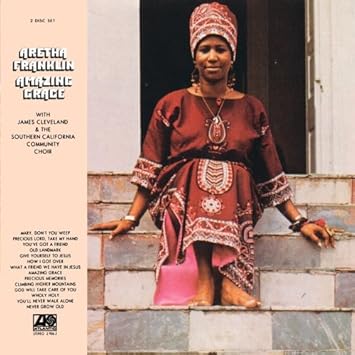
Image result for aretha franklin amazing grace album
But it is the personal exhortation of Franklin’s artistry that must be reclaimed from the propagandists. A cut to Cleveland during “Amazing Grace” features the profound emotional display that is an irreducible truth of religious communication, accessed through singing God’s word in songs of personal experience (testifying). That prayerful moaning and celebration (“This is the sanctified church,” Cleveland states) combines reflection with devotion and is distinctively eloquent. In this millennium, secular black activists have become unrooted from that articulation — and have lost the emotional force and moral foundation that Franklin, even in this doc, still represents.
Pollack’s doc has two major flaws: The spectacle isn’t specific enough (as when the Reverend C. L. Franklin makes his mack-daddy entrance), and the camera frequently searches to catch Mick Jagger in the crowd (as if white rock royalty is needed to confer significance). No wonder Film Forum’s marquee boasts an embarrassing New York Times blurb: “Like a trip to the Moon.” It suggests that black experience is still alien.
The Democratic-party delegates ruling the dais at Franklin’s “homegoing” this summer were transparently attempting to galvanize Aretha’s fans and black and rhythm-and-blues fans. They were trying to assert a particular race- and culture-based partisanship, one that has been familiar since the time Aretha first made her impact on the American scene, during LBJ’s Sixties.
Democrats’ attempt to usurp (appropriate) black culture and black religion is unacceptable. Surely Aretha’s emotional expression transcends politics. (“I got to change your point of view,” she sings on “Until You Come Back to Me.”)
Admittedly, when Bill Clinton recalled Aretha’s “Think” (“It’s the key to freedom”) on the funeral dais, it was a cagey populist moment.
The plainly stated emotional needs of Aretha’s “Call Me (The Moment You Get There)” have been replaced by the greedy pornification of contemporary pop and hip-hop. Politics and “empowerment” are not why people responded to Franklin. That’s Murphy Brown nonsense.
Specious political praise of Franklin’s art turns it into something unreachable. It denies the youthful honesty of tracks such as “Baby I Love You” and “Think.” Goddess Aretha is unrecognizable. How can “Natural Woman” be praised in the era of Caitlyn Jenner? Her great tracks evoke a less cynical time.
The feeling of the “Respect” recording is more important than the idea behind its lyrics: You can live without another person’s respect (who hasn’t), because you hold self-respect inside you.
Is playing into the approval of white people the only way that bourgeois black people can think to confirm their significance? To reduce Franklin’s art to the propaganda of “empowerment” and activism disrespects the daily significance of the civil-rights movement and its basis in the sanctified church.
ARMOND WHITE — Armond White, a film critic, writes about movies for National Review and is the author of NEW POSITION: THE PRINCE CHRONICLES, at Amazon.

Solzhenitsyn: A Centennial Tribute


By Daniel J. Mahoney
https://www.city-journal.org/aleksandr-solzhenitsyn
December 9, 2018


Related image
Mr. Solzhenitsyn at work in the Hoover Library at Stanford in 1976. (AP)
December 11, 2018 marks the 100th anniversary of the birth of Aleksandr Isaievech Solzhenitsyn. A writer of immense talent and spiritual depth, the century’s greatest critic of the totalitarian immolation of liberty and human dignity, a thinker and moral witness who illumined the fate of the human soul hemmed in by barbed wire in the East, and a materialist cornucopia in the West, the mature Solzhenitsyn remained remarkably faithful to the twin imperatives of courage and truth. A modern Saint George, he slew the dragon of ideological despotism with rare eloquence, determination, and grit. For that alone, he deserves to be forever remembered. 
He had two great “missions,” as he called them: to witness to those who suffered and perished in the Soviet prison-camp system (and accompanying manifestations of Communist repression); and to trace the roots of the Soviet tragedy in the great unfolding “red wheel,” especially in the February Revolution of 1917 that preceded the October Revolution later that year and made it all but inevitable. He is the author of two great “literary cathedrals,” as the Solzhenitsyn scholar Georges Nivat put it: The Gulag Archipelago and The Red Wheel, two “experiments in literary investigation” that will require decades to come to terms with in any adequate way. Many silly and even pernicious things have been written about Solzhenitsyn by those who confuse love of truth with dogmatism, and the “active struggle with evil,” as Solzhenitsyn once described it, with moral fanaticism. And among these tendentious critics are those who mock patriotism, repentance, self-limitation, and liberty under God—that is, all of Solzhenitsyn’s enduring themes and commitments. 
Solzhenitsyn’s was a long but ultimately rewarding journey. Since early boyhood, he wished to become a writer. One of the key chapters of August 1914 (the first volume of The Red Wheel), depicting the Battle of Tannenberg and the suicide of General Samsonov, was already written in the fall of 1936, before Solzhenitsyn was 18. He dreaded what kind of writer he might have become without the experience of the Gulag. It was in the prison camp in 1945 and 1946, as he describes it in various interviews and in “The Ascent”—his account in the central section of The Gulag Archipelago of how the scales of ideology fell from his eyes—that he was “completely cleansed of any Marxist belief.” His cellmates helped him see the light of truth and the unparalleled mendacity of the ideological lie, the destructive illusion that evil is not inherent in the human soul, that human beings and societies can be transformed at a revolutionary stroke, and that free will is subordinate to historical necessity. Solzhenitsyn’s life is marked by this great paradox: in the camps, cold and hungry, and subject to limitless repression by camp guards and camp authorities, he recovered an appreciation of the purpose of things.
By the age of 27, Solzhenitsyn had an outlook that he retained until his death on August 3, 2008, a worldview deepened only by his subsequent reaffirmation of faith in the living God near the end of his imprisonment at Ekibastuz in the Kazakh Steppes in the early 1950s. In the introduction (“Inception”) to his autobiographical poem  The Road (7,000 lines memorized in the camps and composed without benefit of pen and paper), Solzhenitsyn had already spoken of his burning desire to convey the experience of the camps to an uncomprehending world. I quote from a translation being prepared by the author’s son, Ignat:
Oh who, oh when will learn about all this
And staunchly write it down
With lucid understanding, not with ire—
The time to write is now, precisely now!
Solzhenitsyn wrote with “lucid understanding,” and with no small dose of scorn, about the “Progressive Doctrine,” the inhuman ideology that justified terror and tyranny as no regime or ideological movement had ever justified the killing and repression of real or imagined “enemies of the People.” He showed that the heart of Bolshevism lay in a monstrous coming together of violence and lies that gave rise not to mere dictatorship but to a totalitarianism that transformed betrayal and lying into “forms of existence.”  This totalitarianism demanded fierce resistance, both for the sake of liberty and for the right of the human soul to breathe freely, with the dignity afforded it by God.
Solzhenitsyn would become the most eloquent critic of ideological revolution, the “vain hope that revolution can improve human nature,” as he said in the Vendée in the fall of 1993. He saw many affinities between the French and Russian revolutions, not least the shared hope that revolution could transform human nature and regenerate the human race. Instead, Solzhenitsyn stood for repentance and self-limitation, and for a conception of self-government (beginning with the arts of local liberty) that emphasized the importance of civic virtue. Here he was indebted to Tocqueville, to the zemstvos or nineteenth century Russian provincial and local councils, and to the experience of local liberty that he witnessed (and admired) during his western exile in Switzerland and New England between 1974 and 1994. He spoke with admiration for such local liberty in his farewell to the people of Cavendish, Vermont, on February 28, 1994. It was a tradition of liberty from the bottom up much needed in contemporary Russia, he observed. 
Solzhenitsyn, denounced by some as a supporter of messianic nationalism (something he always repudiated, even when it manifested itself in a great writer like Dostoevsky), also provided an enduring model of constructive patriotism. He loved Russia profoundly but refused to identify his wounded nation with a Soviet despotism that stood for religious repression, collective farm slavery, and the elimination of political liberty and a tradition of literary reflection that spoke to the health of Russia and the permanent needs of the soul. He wanted Russia to abandon destructive dreams of empire and turn inward, but without forgetting the sorry fate of the 25 million Russians left in the “near abroad” after the break-up of the Soviet Union. In 1998’s Russia in Collapse, he forcefully attacked “radical nationalism…the elevation of one’s nationality above our higher spiritual plank, above our humble stance before heaven.” And he never ceased castigating so-called Russian nationalists, who preferred “a small-minded alliance with [Russia’s] destroyers” (the Communists or Bolsheviks). He loved his country but loved truth and justice more. But as Solzhenitsyn stated with great eloquence in the Nobel Lecture, “nations are the wealth of mankind, its generalized personalities.” He did not support the leveling of nations in the name of cosmopolitanism or of a pagan nationalism that forgot that all nations remain under the judgment of God and the moral law. In this regard, Solzhenitsyn combines patriotism with moderation or self-limitation. One does not learn from Solzhenitsyn to hate other peoples, or to deny each nation’s right to its special path, one that respects common morality and elementary human decency. 
How one evaluates Solzhenitsyn tells us much about how one ultimately understands human liberty: Is it rooted in the gift of free will bestowed by a just, loving, and Providential God? Or is it rooted in an irreligious humanism, which all too often leads to human self-enslavement, as we saw with the totalitarian regimes of the twentieth century? Solzhenitsyn’s reasonable choice for “Liberty under God” has nothing to do with mysticism, authoritarianism, or some illiberal theocratic impulse. Those who attribute these positions to Solzhenitsyn cannot provide a single sentence to support such misrepresentations.
Solzhenitsyn spoke in the name of an older Western and Christian civilization, still connected to the “deep reserves of mercy and sacrifice” at the heart of ordered liberty. It is a mark of the erosion of that rich tradition that its voice is so hard to hear in our late modern world, more—and more single-mindedly—devoted to what Solzhenitsyn called “anthropocentricity,” an incoherent and self-destructive atheistic humanism. Solzhenitsyn asks no special privileges for biblical religion (and classical philosophy), just a place at the table and a serious consideration within our souls. 
In a revealing conversation with the Italian Russianist Vittorio Strada on October 20, 2000, Solzhenitsyn was asked what his message was to the young generation of today. He told them to resist “the temptation of consumerism” and to develop a much-needed “interior shut-off mechanism, internal limits.” Once again we hear the voice of the great advocate of voluntary self-restriction. Solzhenitsyn also warned the young against historicist complacency, the view that we are necessarily “entering into a happy century,” after the wars and tyrannies of the twentieth century. Solzhenitsyn always remained sensitive to the great harm caused by utopian illusions. Yet once again, the great Russian writer and moral witness ends on a note of hope. “Life will be hard,” he tells them, “but circumstances will never defeat the human will,” as long as that will “is concentrated and focused on what is true.”
We owe gratitude to this great man and writer for his courage, his fidelity to truth and to freedom (rightly understood), and his timeless reminder that, among the clamor of modern life, we should not lose focus on the underlying purpose of the human adventure, or the freedom granted to us. Beyond totalitarianism, there is the task of building regimes of self-government worthy of all the possibilities—and limits—of the human soul. In that great task, Solzhenitsyn remains as relevant as ever. And his art—and the profound philosophical reflections and insights embedded in his works—remain a gift to us all.
Daniel J. Mahoney holds the Augustine Chair in Distinguished Scholarship at Assumption College in Worcester, MA. His latest book, The Idol of Our Age: How The Religion of Humanity Subverts Christianity, is just out from Encounter Books. He has published two books on Solzhenitsyn and is the co-editor, with Edward E. Ericson, Jr., of The Solzhenitsyn Reader: New and Essential Writings, 1947-2005 (ISIBooks, 2006).

Monday, December 10, 2018

Mueller’s Investigation is Missing One Thing: A Crime


December 10, 2018
Image result for robert mueller
Special Counsel Robert Mueller
A baby born when Robert Mueller started his investigation would be talking by now. But would she have anything to say?
We last looked at what Mueller had publicly—and what he didn’t have—some 10 months ago, and I remained skeptical that the Trump campaign had in any way colluded with Russia. It’s worth another look now, but first let’s give away the ending (spoiler alert!): there is still no real evidence of, well, much of anything significant about Russiagate. One thing that is clear is that the investigation seems to be ending. Mueller’s office has reportedly even told various defense lawyers that it is “tying up loose ends.” The moment to wrap things up is politically right as well: the Democrats will soon take control of the House; time to hand this all off to them.
Ten months ago the big news was Paul Manafort flipped; that seems to have turned out to be mostly a bust, as we know now he lied like a rug to the Feds and cooperated with the Trump defense team as some sort of mole inside Mueller’s investigation (a heavily-redacted memo about Manafort’s lies, released by Mueller on Friday, adds no significant new details to the Russiagate narrative.)
George Papadopoulos has already been in and out of jail—all of two weeks— for his sideshow role. Michael Avenatti is now a woman beater who is just figuring out he’s washed up. Stormy Daniels owes Trump over $300,000 in fees after losing to him in court. There still is no pee tape. And if you don’t recall how unimportant Carter Page and Richard Gates turned out to be (or even who they are), well, there is your assessment of all the hysterical commentary that accompanied them a few headlines ago.
The big reveal of the Michael Flynn sentencing memo on Tuesday was that he will likely do no prison time. Everything of substance in the memo was redacted, so there is little insight available. If you insist on speculation, try this: it’s hard to believe that something really big and bad happened such that Flynn knew about it but still wasn’t worth punishing for it, and now, a year after he started cooperating with the government, still nobody has heard anything about whatever the big deal is. So chances are the redactions focus on foreign lobbying in the U.S.
This week’s Key to Everything is Michael Cohen, the guy who lied out of self-interest for Trump until last week when we learned he is also willing to lie, er, testify against Trump out of self-interest. If you take his most recent statements at face value, the sum is the failed negotiations to build a Trump hotel in Moscow, which went on a few months longer than was originally stated, and that we all knew about already.
Meanwhile, the U.S. Attorney’s Office for the Southern District of New York submitted a sentencing memo Friday for Cohen, recommending 42 months in jail. In a separate filing, Mueller made no term recommendation but praised Cohen for his “significant efforts to assist the special counsel’s office.” The memos reveal no new information.
Call it sleazy if you want, but looking into a real estate deal is neither a high crime nor a misdemeanor, even if it’s in Russia. Conspiracy law requires an agreement to commit a crime, not just the media declaiming that “Cohen was communicating directly with the Kremlin!” Talking about meeting Russian persons is not a crime, nor is meeting with them.
The takeaway that this was all about influence shopping by the Russkies falls flat. If Putin sought to ensnare Trump, why didn’t he find a way for the deal to actually go through? Mueller has to be able to prove actual crimes by the president, not just twist our underclothes into weekly conspiratorial knots. For fun, look here at the creative writing needed to even suggest anything illegal. That doesn’t sound like Trump’s on thin ice with hot shoes.
Sigh. It is useful at this point of binge-watching the Mueller mini-series to go back to the beginning.
The primordial ooze for all things Russiagate is less-than-complete intelligence alleging that hackers, linked to the Russian government, stole emails from the Democratic National Committee (DNC) in 2016. The details have never been released, no U.S. law enforcement agency has ever seen the server or scene of the crime, and Mueller’s dramatic indictments of said hackers, released as Trump met with Putin in Helsinki, will never be heard of again, or challenged in court, as none of his defendants will ever leave Russia. Meanwhile, despite contemporaneous denials of the same, is it somehow now accepted knowledge that the emails (and Facebook ads!) had some unproven major effect on the election.
The origin story for everything else, that Trump is beholden to Putin for favors granted or via blackmail, is opposition research purchased by the Democrats and carried out by an MI6 operative with complex connections into American intelligence, the salacious Steele Dossier. The FBI, under a Democratic-controlled Justice Department, then sought warrants to spy on the nominated GOP candidate for president based on evidence paid for by his opponent.
Yet the real spark was the media, inflamed by Democrats, searching for why Trump won (because it can’t be anything to do with Hillary, and “all white people and the Electoral College are racists” just doesn’t hold up). Their position was and is that Trump must have done something wrong, and Robert Mueller, despite helping squash a Bush-era money-laundering probe, lying about the Iraq War, and flubbing the post-9/11 anthrax investigation, has been resurrected with Jedi superpowers to find it. It might be collusion with Russia or Wikileaks, or a pee tape, or taxes, packaged as hard news but reading like Game of Thrones plot speculation. None of this is journalism to be proud of, and it underlies everything Mueller is supposedly trying to achieve.
As the New York Times said in a rare moment of candor, “From the day the Mueller investigation began, opponents of the president have hungered for that report, or an indictment waiting just around the corner, as the source text for an incantation to whisk Mr. Trump out of office and set everything back to normal again.”
The core problem—at least that we know of—is that Mueller hasn’t found a crime connected with Russiagate that someone working for Trump might have committed. His investigation to date hasn’t been a search for the guilty party—Colonel Mustard in the library—so much as a search for an actual crime, some crime, any crime. Yet all he’s uncovered so far are some old financial misdealings by Manafort and chums, payoffs to Trump’s mistresses that are not in themselves illegal (despite what prosecutors simply assert in the Cohen sentencing report, someone will have to prove to a jury the money was from campaign funds and the transactions were “for the purpose of influencing” federal elections, not  simply “protecting his family from shame”), and a bunch of people lying about unrelated matters.
And that’s the giveaway to Muller’s final report. There was no base crime as the starting point of the investigation. With Watergate, there was the break-in at Democratic National Headquarters. With Russiagate you had…Trump winning the election. (Remember too that the FBI concluded forever ago that the DNC hack crime was done by the Russians, no Mueller needed.)
Almost everything Mueller has, the perjury and lying cases, are crimes he created through the process of investigating. He’s Schroeder’s Box: the infractions only exist when he tries to look at them. Mueller created most of his booked charges by asking questions he already knew the answers to, hoping his witness would lie and commit new crimes literally in front of him. Nobody should be proud of lying, but it seems a helluva way to contest a completed election as Trump enters the third year of his term.
Mueller’s end product, his report, will most likely claim that a lot of unsavory things went on. But it seems increasingly unlikely that he’ll have any evidence Trump worked with Russia to win the election, let alone that Trump is now under Putin’s control. If Mueller had a smoking gun, we’d be watching impeachment hearings by now.
Instead, Mueller will end up concluding that some people may have sort of maybe tried to interfere with an investigation into what turned out to be nothing, another “crime” that exists only because there was an investigation to trigger it. He’ll dump that steaming pile of legal ambiguity into the lap of the Democratic House to hold hearings on from now until global warming claims the city of Benghazi and returns it to the sea. That or the 2020 election, whichever comes first.
Peter Van Buren, a 24-year State Department veteran, is the author of We Meant Well: How I Helped Lose the Battle for the Hearts and Minds of the Iraqi People and Hooper’s War: A Novel of WWII Japan.

Sunday, December 09, 2018

'Gosnell' Depicts the Grisly Truth


Nick Searcy's new movie depicts the life and trial of Kermit Gosnell, who killed hundreds of babies that survived his late-term abortion procedures.


By George Will
https://www.nationalreview.com/2018/12/gosnell-movie-depicts-grisly-truth-late-term-abortion/
December 9, 2018


Gosnell: The Trial of America's Biggest Serial Killer (2018)

A word can be worth a thousand pictures. In the movie Gosnell: The Trial of America’s Biggest Serial Killer, the mild word “snip” describes what the camera, demonstrating the eloquence of reticence, does not show in gory detail: Kermit Gosnell’s use of scissors to cut the spinal cords of hundreds of babies that survived his late-term abortion procedures.

Directed by actor Nick Searcy (Three Billboards Outside Ebbing, MissouriThe Shape of Water), this gripping true-crime courtroom drama, with dialogue taken from court transcripts and police records, made it onto 670 screens, earned nearly $4 million, and soon will be available in DVD format through Netflix. This, in spite of impediments from portions of America’s cultural apparatus that are reflexively hostile to examining Gosnell’s career in infanticide.
The movie’s makers tried to raise money on a crowdfunding website that balked at graphic — meaning accurate — descriptions of the subject, because “we are a broad website used by millions of people.” However, a pluckier site gathered $2.4 million from 30,000 contributors. Almost all regular critics of movies were offered copies of the movie. A major film will receive about 270 media reviews, according to Mark Joseph, CEO of MJM Entertainment Group. Gosnell received 12, even though in the October week it was released it was the top-grossing independent film and cracked the top 10 of all films in theaters. The critics’ boycott of the film continued the journalists’ indifference toward Gosnell’s trial.
As the prosecutors drove to the courthouse in 2013 for the first day of Gosnell’s trial on eight counts of murder (a woman who died following an abortion procedure, and seven snipped babies) and 24 felony counts of abortion beyond Pennsylvania’s 24-week limit, they anticipated a difficult maelstrom of media attention. They encountered something worse: virtually no attention. In spite of — actually, because of — its gruesome substance, the two-month trial, which ended with Gosnell sentenced to life imprisonment without parole, was not covered until, by their example, a few journalists — especially USA Today’s Kirsten Powers — embarrassed others into paying attention. If Gosnell’s victims had been middle class instead of inner-city minorities, there surely would have been more interest in an abortion facility where babies were heard crying, and where a woman victim of Gosnell’s slapdash procedures went home with an arm and a leg of her baby still in her. According to grand jury testimony, early in Gosnell’s career of carnage he used a medical device lacking federal approval, “basically plastic razors that were formed into a ball”:
They were coated into a gel, so that they would remain closed. These would be inserted into the woman’s uterus. And after several hours of body temperature … the gel would melt and these 97 things would spring open, supposedly cutting up the fetus, and the fetus would be expelled.
Recently in Texas, Samuel Little, 78, has been confessing to more than 90 murders spanning 35 years. Now serving three life sentences for the murders of three Los Angeles women in the 1980s, he has been giving police details that seem to validate his claim to have killed in at least 14 states. A Texas district attorney says “we anticipate that Samuel Little will be confirmed as one of the most prolific serial killers in American history,” and the New York Times observes, “How a serial murderer could go on killing for years, apparently without anyone noticing a pattern, seems perplexing.”
That Gosnell could have been a much more prolific killer than Little is not perplexing, for two reasons. People who should have known did not want to know because knowing would have forced them to answer questions about when in an infant’s gestation it is preposterous to deny that a baby is present. And given that most “reproductive rights” militants oppose restrictions on late-term abortions because pre-born babies supposedly have no more moral significance than tumors, Gosnell sincerely thought he was doing nothing wrong in guaranteeing dead babies for those who paid for late-term abortions. This is why, in the movie and as actually happened, a female prosecutor is accurately warned by her supervisor that she would be characterized as “the prosecutor who went after reproductive rights.”
No one knows how many — certainly hundreds, probably thousands — spinal cords Gosnell snipped before the 2010 raid on his “clinic.” Law enforcement came looking for illegal drugs. They also found jars of babies’ feet, fetal remains in toilets and milk cartons, and a pervasive smell of cat feces — in a facility that had not been inspected for 17 years. Pennsylvania nail salons receive biennial inspections.

Saturday, December 08, 2018

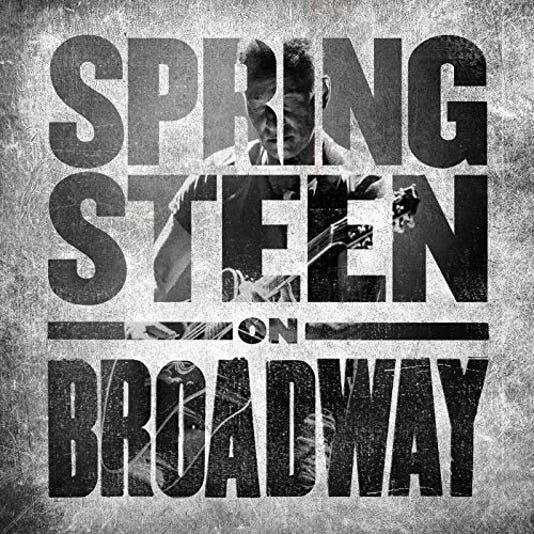
Review - Bruce Springsteen on Broadway: What the Netflix version has that the stage doesn't


, Asbury Park Press
https://www.app.com/story/entertainment/music/2018/12/07/springsteen-broadway-what-netflix-version-has-staged-version-doesnt/2198725002/
December 7, 2018

Image result for springsteen on broadway

The Netflix version of "Springsteen on Broadway" might be even better than the Broadway version.

Why?

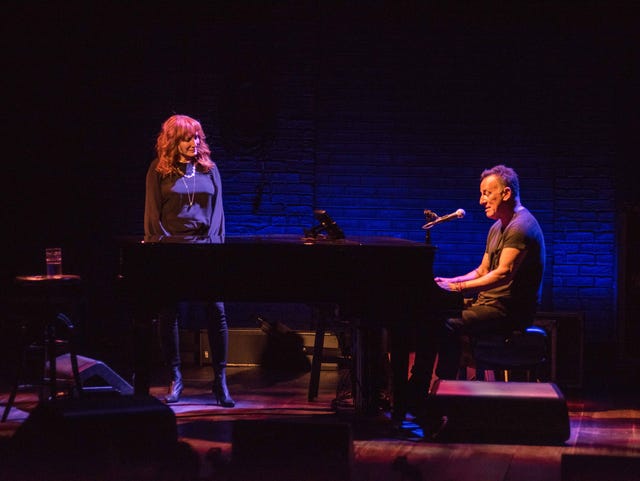
The song “Long Time Coming” is performed and only rarely did attendees of the hit “Springsteen on Broadway” get to see it live. It was not played in the show except for the few times when play co-star Patti Scialfa wasn’t there.

It’s included in the filmed Netflix version of “Springsteen on Broadway,” which premieres 3:01 a.m. EST on Sunday, Dec. 16. If nothing else, its inclusion is worth seeing even if you’ve seen the play live. 

More: Bruce Springsteen on Broadway: A magical run comes to a close

“This is the final days of Patti’s first pregnancy. I receive a surprise visit from my father at my home in L.A.,” says Springsteen in the introduction of the song. “My dad, never a talkative man, blurted out, ‘You’ve been quite good to us’ and I nodded that I had, you know. He says ‘I wasn’t very good to you’ and the room just ... stood still.”

The Boss starts to tear up. He wipes his eyes. The exchange is taken directly from his memoir, “Born to Run,” and it’s one of the most moving in the book.

Frankly, it’s a surprise that it wasn’t included in every performance of “Springsteen on Broadway,” but here it is in the Thom Zimny-filmed Netflix version, and the story is better for it. It serves as the perfect denouement of the relationship between Bruce and his father, Douglas Springsteen, who passed away in 1998.

It closes the narrative started in “My Father’s House” earlier in the play.

“To my shock the unacknowledgeable was being acknowledged,” Springsteen says. “If I didn’t know better I would have sworn an apology of some sort was being made.

“And it was.”

“Here in the last days before I was to become a father, my own father was visiting me to warn me of the mistakes he had made and to warn me not to make them with my own children.”

Douglas, at that moment, sought to free Bruce from the “chains of his own flawed behavior.” 

“It was the greatest moment of my life with my dad and it was all that I needed,” Springsteen says.

“Springsteen on Broadway” didn’t need the “Long Time Coming,” or its introduction, but its inclusion makes a sublime work of art even better.

More: Bruce Springsteen: Hope to tour 'soon' with E Street Band but not in 2019

Zimny films the music play, which features Springsteen reciting passages out of his book and performing his songs on acoustic guitar and piano, largely unobtrusively. There are no attention-grabbing fast cuts, jarring angles or extreme close-ups. He pulls back, and lets the spray of Natasha Katz’s lighting set the mood. Desert yellows for “The Promised Land,” deep reds for “The Rising.”

“Springsteen on Broadway” is the story of working class kid from Freehold who grew up next to a church, loves his parents but has a difficult relationship with his father, loves rock ’n’ roll but has trouble making it because his Jersey Shore is the “(blanking) boondocks!”

Image result for springsteen on broadway

He surmounts the challenges, and finds love and fulfillment with wife and bandmate Patti Scialfa. Zimny does wonderfully frame the Bruce and Patti songs, “Tougher Than the Rest” and “Brilliant Disguise,” finding at mid-range the artistic and heart-struck interplay between the two artists and lovers.

If you attended the play, you might notice that the audience for the Netflix shoot, which was an invited crowd, to be a bit quieter, a bit more subdued than the normal crowds at the Walter Kerr Theatre. Applause for the E Street Band members names that Springsteen mentions seems a bit less spontaneous.

The Netflix version was shot over two performances in July. As such, “The Ghost of Tom Joad,” which replaced “Long Walk Home” on June 19, is included. The filmed version clocks in at about two and half hours, longer than the two-hour length of the play when it debuted on Oct. 3, 2017. Lines were massaged and jokes coaxed a bit over the months, which extended the running time.


More: Bruce Springsteen at Stand Up for Heroes: 4 songs, 2 duets and 2 naughty jokes

Oh, it’s very funny. The Boss can tell a joke.

Take the audition for a music bigwig at the Student Prince in Asbury Park in the early ’70s.

“I got off the bandstand, the guy walking up to me and looked me in the eye, shook my hand and said, 'You guys are the best unsigned band I’ve ever seen,'” deadpanned the Boss. “Then he slept with my girlfriend and left town.”

“Springsteen on Broadway” is leaving town. The last performance is Saturday, Dec. 15. A soundtrack will be available from Columbia Records on Friday, Dec. 14. In 2019, Springsteen will be working on “various recording projects” but there will not be a tour with the E Street Band in the new year, according to a statement he released on Dec. 4.  

“Springsteen on Broadway” was an extraordinary experience. It now lives forever.

Chris Jordan: cjordan@app.com. Twitter: @chrisfhjordan

Review: The Boss gets even more intimate in Netflix’s ‘Springsteen on Broadway’

December 7, 2018
Related image
Since October 2017, Bruce Springsteen has been singing his songs and telling his stories, five nights a week, in one of the most intimates venues he has performed in since becoming a star in the ’70s: Broadway’s 948-seat Walter Kerr Theatre. But the film of the show, which will debut on Netflix Dec. 16, feels even more intimate.
Obviously, it lacks the jolt of excitement you get from seeing a performer such as Springsteen in the flesh, and hearing the music as it’s being played, in front of you, in the same room. But director Thom Zimny compensates by filming much of the show in extreme close-up.
You can see every line and crease in Springsteen’s face, and notice every slight change in his expression. You’re right with him, every step of the way, in a way that you aren’t, even in a theater as small as the Walter Kerr. You hang on every note, every beat, every deliberately delivered story. And so, it’s ultimately a slightly different but similarly fulfilling kind of experience.
If you’re reading this, I assume you know the basics of the show already: 16 songs, including both greatest hits (“Born to Run,” “Dancing in the Dark,” “Thunder Road”) and less widely known gems (“The Wish,” “My Father’s House”), with simple piano, guitar and harmonica backing. Patti Scialfa sings and plays guitar on a two-song segment, “Tougher Than the Rest” and “Brilliant Disguise,” but other than that, Springsteen is alone on the set, which has a brick wall in the back and is pretty much empty except for the instruments and some equipment cases.
Following the lead of Springsteen’s 2016 autobiography “Born to Run,” “Springsteen on Broadway” basically tells the story of Springsteen’s life, from boyhood to maturity, with long monologues between many of the songs. I’ve seen only one of the shows live — a preview, in October 2017 — but can say that the show changed substantially from when I saw it, to when the Netflix special was filmed (in front of invitation-only crowds on two nights in July).
Some lines were cut out; other were added. The stories grew and evolved, as you would expect them to. There are two songs in the special that were not in the show I saw in 2017 (“Long Time Comin’,” and “The Ghost of Tom Joad”), and one song that I heard then (“Long Walk Home”) is absent.
My main criticism of the show, from 2017, remains: The first half of the show is extremely powerful, with lots of vivid stories about Springsteen’s childhood and young adulthood. In the second half, though, the stories get more perfunctory, the mood more philosophical, the autobiographical elements more sketchy. The subject matter, as on “Land of Hope and Dreams,” is more abstract. “The Rising” is performed without any introduction at all.
The second half is still great, but not as stunning as the first half is, with its richly detailed portraits of Springsteen’s mother and father, and the Freehold that he grew up in, and his early days as a struggling musician.
The tone is often somber, but occasionally very funny as well, as in this description of the difficulties Springsteen faced as an aspiring rock star who happened to live in the New Jersey “boondocks”:
I’ve already played in front of every conceivable audience. I’ve played firemen’s fairs, midnight madness supermarket openings. Drive-in movies, in front of the concession stands, in between films. I’ve played … coffeeshops, bowling alleys, trailer parks, roller rinks, VFW halls, CYO canteens, the Elks lodge, YMCA gymnasiums, hockey rinks, county fairs, carnivals, high school dances, weddings, fraternity parties. Bar mitzvahs! Soul revues! Battle of the bands! Sing Sing Prison! And Marlboro Psychiatric Hospital! Send me your murderers and your maniacs, and let me entertain them, all right? That’s what I do.
That’s all true. It’s all before I was 23 years old, and I’m frustrated. I listen to the radio, and I think I’m as good as that guy, I’m better than that guy. So why not me? Answer: Because I live in the fucking boondocks. … There is nobody here, and no one comes down here. It’s a grave. There was no Jersey, Jersey, Jersey Shore, Jersey Almighty shit. I invented that!
Before me, Jersey was Jerserkistan. Jerserkistan! One of those little -stan things that nobody knows a fucking thing about. And New York was a million miles away. …
So who was gonna come to the Jersey Shore, to discover the next big thing, in 1971? You’re correct. No-fucking-body. …
I had one shot. My girlfriend at the time did me a great favor, brought a guy who had a successful recording band down to the Student Prince … in Asbury Park to discover us. We got up on a little stage, in a club that fit 150 people. It was about half full. And we played for this guy like we were at Madison Square Garden, with everything we had, all night long. We played five sets, from 9 p.m. till 3 a.m.
At the end of the night, soaked to my bones, I got off the bandstand. The guy walked up to me, he looked me in the eye and shook my hand and said, “You guys are the best unsigned band I’ve ever seen.” Then he slept with my girlfriend and left town.
That’s the end of that story.
The last “Springsteen on Broadway” live show will be on Dec. 15. The two-CD Springsteen on Broadway soundtrack album will be released on Dec. 14, and “Springsteen on “Broadway” debuts on Netflix at 3:01 a.m. ET Dec. 16, and will remain streamable there, indefinitely.

'Jihadist Psychopath' Unveils the True Threat


December 6, 2018
Image result for glazov jihadist
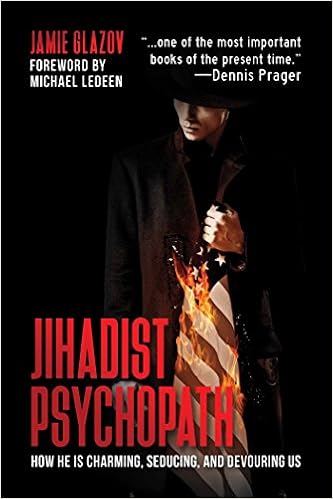
In his important new book Jihadist PsychopathJamie Glazov gets to the bottom of the predominant mass delusion of our time: namely, the delusion that Islam is a religion of peace.
Following the lead of the mainstream media and most politicians, millions of us still buy the argument that jihadists have misunderstood and hijacked their faith. Millions of us have learned reflexively to view critics of Islam as racists who hate all Muslims. Millions of us are programmed to point out, when necessary, that Muslims, too, are victims of Muslim violence and that other people besides Muslims have done naughty things. Millions of us compliantly parrot the claim that terrorists are acting out of economic despair. And, of course, millions of us dutifully insist that, far from acting on the tenets of their religion, Islamic terrorists are, in fact, reacting to bad things we’ve done to them.
In sum, despite the mountains of evidence to the contrary, millions of us buy the lie that Islam is thoroughly benign and that the overwhelming majority of its adherents are powerless victims. We embrace this lie, furthermore, even though Islam is an existential threat to us and our infidel loved ones.
This self-delusion about Islam can take extreme forms. Glazov mentions the Norwegian activist Karsten Nordal Hauken, whose main response, after being anally raped by a Somali migrant, was to feel profound guilt over his rapist’s subsequent deportation. Then there’s the Israeli soldier who, while touring U.S. colleges, was asked by a professor how many Palestinian women had been raped by IDF members. He said none, to which the professor triumphantly replied: “You IDF soldiers don’t rape Palestinians because Israelis are so racist and disgusted by them that you won’t touch them.” So it is that Westerners manage to exculpate Muslim rapists while demonizing Israelis for not being rapists.
The pattern, as Glazov notes, goes to the very top. Under President Obama, training sessions for counterterrorist officials were scrubbed clean of anything negative about Islam—which is like refusing to teach oncologists about cancer. Both Theresa May and Angela Merkel responded to last year’s Ariana Grande massacre in Manchester by professing astonishment that anyone could do such a thing—this after years of bloody jihadist attacks all over Western Europe.
All of which leads to the $60,000 question: how did we end up like this? How is it that so many of us continue to buy into this suicidal mentality? Why do we robotically recite these dangerously counterfactual mantras? What ever happened to common sense and the instinct for self-preservation?
And what about the Muslims who plan and commit—or, at least, cheer on—jihad? What’s going on in their heads? Yes, most of them were raised to believe that God wants them to kill and conquer the infidel. But surely most of them have been exposed along the way to other religions, other ways of thinking, and have even met infidels they weren’t necessarily inclined to slaughter. They’re still human beings, after all. Why haven’t they ever challenged the brutal imperatives of their childhood faith?
Those of us who have been reading and thinking and writing about Islam for years have been living all along with these questions. We’ve spent a lot of time scratching our scalps, shaking our heads, and throwing up our hands. We know, of course, that the answers to these questions have to lie in the realm of psychology. But not until Glazov came along with this book did any of us have anything approaching coherent and convincing answers to these vital questions.
At the heart of Glazov’s contribution is his perception that, first, the behavior of jihadists and their avid Muslim supporters is remarkably consistent with the way in which the psychiatric literature describes the mentality of psychopaths; and, second, the behavior of Western infidels who’ve been trained to swallow and regurgitate all the pretty lies about Islam is remarkably consistent with behavior of individuals who unknowingly get manipulated and exploited by psychopaths. (By the way, Glazov doesn’t distinguish between psychopaths and sociopaths, a distinction that is not of major importance to the purposes of his book.)
It’s a fascinating insight, and in the course of developing it Glazov quotes widely and usefully from Islamic holy books, from Muslims and ex-Muslims, and from a range of experts on psychiatry and on Islam. As he moves from one aspect of relentless Islamic deception and of Western self-delusion about Islam to another, he cites relevant observations about the ways in which psychopaths operate and about the nature of psychological susceptibility to the wiles of psychopaths.
For example, Glazov quotes clinical psychologist Mary Stout’s observation that “when we are confronted with sociopathy,” we “are afraid, and our sense of reality suffers. We think we are imagining things, or exaggerating, or that we ourselves are somehow responsible for the sociopath’s behavior.” Note how perfectly applicable this is to the way in which many Westerners respond to an act of Islamic terror. Yes, the terrorism itself scares us, but the idea that the perpetrators were seemingly ordinary people who had no personal grudges against their victims and who were simply following the tenets of their religion—a religion that may count our neighbors among its adherents—is also frightening to contemplate.
You might think that in the wake of Hitler, Stalin, and Mao, among others, we would be able, in the year 2018, to accept the reality of ideology-driven mass murder. But no; for many of us, the idea still seems to beggar belief. Surely, we think, there must be some other explanation. Surely no religion teaches the butchery of innocents! Surely those nice-seeming Muslims next door can’t be cheering on this savagery! Surely we can’t be so much more virtuous than they are: even to allow such a thought to cross our minds would be un-Christian! Hence it’s harder for many in the West to accept the plain and ugly truth about Islam than it is to echo the lie that Islam is peace and that Muslim terrorism is, in some sense, our fault.
Muslims make it easier for Westerners to come to this conclusion by adamantly refusing to apologize for terrorism, by denying categorically that its roots lie in the Koran, by making a spectacle of worrying less about the real victims of real terrorism than about the possibility of anti-Muslim backlash, and by insisting that Islamic terrorism is a desperate, last-ditch response to some infidel action or other.
As with psychopaths, jihadists and their supporters always paint themselves as the victims. Glazov quotes ex-Muslim Ali Sina: “Islam is the religion of permanent victimhood. Victimhood justifies revenge. If you are a Muslim, jihad is prescribed on you against those who oppress you. This oppression need not be real. It can be as imaginary as perceiving insult on your belief. Criticizing Islam is consequently perceived as oppression and therefore, Muslims feel compelled and justified to take their revenge.”
And Westerners by the millions buy this victimhood claptrap. After the 2016 Orlando terror attack, notes Glazov, Time magazine cast the perpetrator as the victim, “because he allegedly had been bullied by his coworkers. Time failed to explain why no other human being in America who had been bullied didn’t go on to perpetrate the worst terrorist attack in America since 9/11.” After the 2016 New Year’s Eve rape spree in Cologne, Germany, that city’s mayor blamed the attacks on the victims, “suggesting that they had asked for it” and vowing “to make sure that women would, in the future, change their behavior, so as not to provoke Muslims to sexually assault them anymore.”
Psychopathy is not just about fake victimhood, it’s also about deception generally—chronic, manipulative lying. So is jihadist Islam: “In his quest to subjugate non-Muslims,” writes Glazov, “the Jihadist Psychopath has his obvious weapon of violent jihad, but he also has an equally—if not more—powerful weapon in his arsenal: the ploy of deception . . . . Islam is, at its very core, a religion/ideology rooted in deception.” Allah “proudly refers to himself as the greatest deceiver several times in the Qur’an. If Allah is the father of lies, it becomes understandable why Islam teaches that lying is an obligation for Muslims if it serves the benefit of Islam.”
Glazov has much more to offer, and it all makes extraordinary sense. The result is the most valuable kind of work—one that takes on a life-or-death enigma and, with force and elegance and rock-solid credibility, explains the previously unexplained. This is an exceedingly important book because the enemy we face today is not just Islam but the crippling mentality in regard to Islam that Glazov so deftly dissects in these pages. If we fail to learn from what he has to teach us here, we stand little chance of overcoming this mentality and, thus, of overcoming our enemy. And rest assured: if we fail to overcome it, it will surely overcome us.