Monday, November 12, 2018

Socialists and Fascists Have Always Been Kissing Cousins


November 9, 2018
Image result for hitler stalin
In 1939, the same year the Germans and the Russians mutually consented to rape Poland, T.S. Eliot rather famously (or, I suppose for some, infamously) declared: “If you will not have God (and He is a jealous God), you should pay your respects to Hitler or Stalin.” Eliot, of course, could not have been more correct. In 1936, you had three choices: National Socialism, international socialism, or dignity.
In 2018, we find ourselves in similar circumstances, even if they aren’t quite as clear cut as they were in 1936.
Of all the disturbing developments in culture and ideas over the last several years—including violence against legitimate authority, violence against the average citizen, and violence against the very ideas that undergird the West—few have been more disturbing than the reemergence of communism and socialism.  
Why is this happening now, as much of Western civilization lingers in its twilight state? Most likely, it has to do with three critical things. First, we scholars have failed to convince the public of just how wicked all forms of communism were and remain. Most historians have focused their research and teaching on how “liberated” every form of eccentricity has become and how—in terms of race and gender—victims remain victims. Almost all historians ignore the most salient fact of the 20th century: that governments murdered more than 200 million innocents, the largest massacre in the history of the world. Terror reigned in the killing fields, the Holocaust camps, and the gulags.
Second, an entire generation has grown up never knowing such things as the Soviet gulags or even the Berlin Wall. Indeed, it’s been more than a full generation since communism existentially threatened sustained violence on a global scale. With America currently at the height of her power (militarily and economically, not spiritually or ethically), we are the bad guys of the world, if for no other reason than we stand—for the most part—above and alone.
Third, the five nations that remain officially communist—Cuba, Laos, Vietnam, North Korea and mainland China—seem to be relentlessly backward, mad, or capitalist. No one thinks about the first three countries anymore. North Korea looks like a loony bin. China seems more bent on profit and power more than anything it might profess officially.
Equally disturbing is that most younger defenders of communism buy into the oldest propaganda line of the Left—that real communism has never been tried and fascism is the polar opposite of communism. That the Nazis were actually “National Socialists,” these apologists argue, was merely a cynical ploy on the part of Hitler to gain the support of the working and middle classes of Germany. The term “socialism” meant nothing to Hitler. He was really a supporter of controlled corporate capitalism, not of the beautiful and compelling idea of socialism. Many of these young communism supporters go so far as to argue that those who label the Nazis “National Socialists” are either ignorant or willfully smearing a good word. While these new supporters have yet to proclaim those who call Nazis socialists as racists, they are coming close. A quick look at the social media response to a British conservative’s recent claim that National Socialism was—surprise!—socialist should be proof enough that communism is hardly dead and gone.
The young communists are more than convinced of their intellectual as well as their moral superiority. With dread certainty, they bully anyone who believes differently than they do. In other words, the Left is back and in full force, up to the same deceptions and tricks as it was in the 1920s and after.
That the National Socialists embraced socialism is factually accurate. Though they did not nationalize to the extent the Leninists wanted, they did nationalize very vital industry in Germany, even if by outright intimidation rather than through the law. In his personal diaries, Joseph Goebbels wrote in late 1925: “It would be better for us to end our existence under Bolshevism than to endure slavery under capitalism.” Only a few months later, he continued, “I think it is terrible that we and the Communists are bashing in each other’s heads.” Whatever the state of the rivalry between the two camps, Goebbels claimed, the two forces should ally and conquer. He even reached out to a communist in a personal letter: “We are not really enemies,” he offered.
Hitler admired Stalin, and the two willingly carved up Poland in 1939. One SS division named itself after Florian Geyer, a Marxist hero promoted by Frederick Engels in The Peasant War in Germany. Hitler actively recruited communists into the National Socialist movement, believing they were far more malleable than Christians.
The Italian fascists had even closer ties to the Marxists, with Mussolini having begun his career as a Marxist publicist and writer. A few Italian fascists even held positions in the Comintern. The only serious divide between the Italian fascists (or those who would become fascists) and Italian communists in the 1910s was their support, or not, of Italy’s participation in World War I.
In the West, one of the first to recognize these vital connections was none other than Friedrich Hayek, the Austrian turned Englishman. Nationalism is nothing “but a twin brother of socialism,” he proclaimed in a 1945 speech in Dublin.
In his profound work Reflections on a Ravaged Century, Robert Conquest labeled all forms of totalitarian socialism a type of “mindslaughter.” Fascism and communism share much in common, he argued. First, the two ideologies came from identical origins in 19th-century thought. Second, both celebrated the peasant revolts of the 1500s as foreshadowing 20th-century uprisings. Third, both claimed to speak in the name of “the people” and “the masses.” Fourth, both embraced a variety of social sciences and pseudosciences from the 19th century, though the Marxists did it with more finesse. Fifth, both claimed to be progressing humanity toward some end goal. And, finally, both accepted moral nihilism.
In his fascinating work The Faces of Janus, A. James Gregor convincingly argues that the rival claim for power in 1922 in Italy inaugurated a propaganda war between these two factions that lasted—at least rhetorically—to this day. “The enmities bred by the dispute,” Gregory writes, “ultimately reached such intensity that Marxists of whatever variety and nationality refused to acknowledge the heretical Marxist origins of the first Fascism.” From this point forward, Marxists began to write of fascists as “reactionary,” as “right-wing,” and as part of the last stages of capitalism. The debates among Marxists over fascism raged between 1922 and 1935 until the Communist International finally declared fascism to be the result of the economic downturn of the previous decade, “the sharp accentuation of the general crisis of capitalism.” As such, the communists officially defined fascism as “the open terrorist dictatorship of the most reactionary, most chauvinistic, and most imperialist elements of finance capitalism.”
Since 1935, of course, fascism has become such a catch-all term for anything evil that it’s now a hollow thing, full of fury but devoid of substance. In addition to Gregor and Conquest, scholars and writers such as Sheldon Richman and Robert Higgs have done their very best (and their best is extraordinary) to define fascism properly. In general, though, their appeals to intellect and understanding have failed, falling only as pearls among the passionate swine.
Just as T.S. Eliot saw in Hitler and Stalin two sides of the same coin, so too did his close friend and ally, Christopher Dawson. In one of Dawson’s finest pieces, written in the immediate aftermath of the World War II, “The Left-Right Fallacy” (published in The Catholic Mind), Dawson rightly noted that there is no left and no right; there is only man and anti-man. That is, the divide is not horizontal but vertical. “The tactics of totalitarianism,” he wrote, “are to weld every difference of opinion and tradition and every conflict of economic interests into an absolute ideological opposition which disintegrates society into hostile factions bent on destroying one another.” The so-called and false divisions between a left and right, then, are “a perfect god-send to the forces of destruction.” Such a sophomoric notion of left and right becomes a blunt weapon, used to beat any and all opposition, while in actuality separating the human person from the human person, clothing each not in glory but in wretched rags of chaos and deceit. The results, Dawson realized, could only be confusion, disintegration, degradation, violence, inhumanity, hatred, and suspicion, disgracing even “a tribe of cannibals.”
This brings us back to Eliot in the 1930s. Not only did he see Stalin and Hitler as intellectual allies, not enemies, he recognized how reliant communism and fascism were on traditional religion—at least in their very heretical perversions. From T.S. Eliot’s “The Rock”:
But it seems that something has happened that has never happened before:
though we know not just when, or why, or how, or where.
Men have left GOD not for other gods, they say, but for no god; and this has never happened before
That men both deny gods and worship gods, professing first Reason,
And then Money, and Power, and what they call Life, or Race, or Dialectic.
The Church disowned, the tower overthrown, the bells upturned, what have we to do
But stand with empty hands and palms turned upwards
In an age which advances progressively backwards?
Sadly, the age that advances progressively backwards has not halted. Indeed, over the last several years, it has advanced backwards rather quickly, suddenly, and, fearfully, without end.
Bradley J. Birzer is The American Conservative’s scholar-at-large. He also holds the Russell Amos Kirk Chair in History at Hillsdale College and is the author, most recently, of Russell Kirk: American Conservative.
 Tagged .

The Guns of November


November 11, 2018

Image result for armistice 1918
Armistice Day parade , New York City.(Hirz/Getty Images)


In the end, the guns fell silent at the appointed hour: 11 a.m. on the 11th of November, the 11th month of the year 1918. For four brutal years Europe -- and much of the rest of the world -- had been first drawn into and then fully involved in the most ferocious conflict in history up to that time. A war that began almost accidentally, with the assassination of the Austro-Hungarian Archduke Franz Ferdinand in the Balkan backwater of Sarajevo, soon morphed into a domino-toppling series of alliances and ententes, from which no nation or empire emerged unscathed. Nineteenth-century battlefield tactics collided head on with the mechanized warfare of the 20th; millions of young men were blown to pieces, had limbs severed, were blinded, crippled, driven mad as they crouched in the trenches, waiting for the orders to go over the top, and charge into certain death for King, Kaiser, and Country.

When the war ended -- with an armistice, not a peace -- German troops were still occupying swaths of France. Romanov Russia, which had fought on the side of the British and the French, had cratered and, in a sequence of revolutions, would soon enough be in Bolshevik hands. The Hapsburgs, too, would vanish, with Austria reduced to a rump province of what would become the Third Reich, and the Kingdom of Hungary losing two-thirds of its territory. The "Sick Man of Europe," the Turkish Ottoman Empire, which had fought Russia on the side of the Germans and Austrians, was sundered and split up into some of the artificial states, like Iraq, which bedevil us yet today. Poland gained its independence from Russia, only to lose it again 21 years later, and thus occasion World War II.

Of the putative victors, Britain and France had both been bled dry, losing the cream of their young manhood to Big Bertha and her legions of bayonets and machine guns. Only the Americans, whose troops eventually turned the tide during the summer and fall of 1918, and who suffered significant casualties as well, emerged from the carnage as a bolder, stronger nation.

In other words, almost no good came out of the First World War. It was the greatest calamity in the history of Western civilization, a fratricidal conflict that made the American Civil War look like a mere warm-up for the Armageddon to come. From the time of the Greeks and Romans, warfare had been generally conducted on open fields, where the clash of two great armies would be settled in a day or two, one side triumphant, the other defeated, captured, or slaughtered to the last man. When sieges were necessary -- the Romans and, later, the Turks, conducted many -- cities were gradually surrounded and cut off from their supply lines as the besieging forces settled in to await the inevitable.

True, there were pitched battles aplenty during World War One, but what we most remember today was the four-year long mutual siege in the trenches on the Western Front, where the same piece of ground -- No-Man's Land -- was fought over repeatedly by general staffs who had not the slightest idea of how to decisively end the conflict. "Home by Christmas" they had said when war broke out in August 1914. Now, here in bleak November, that brave slogan would finally come true. But at what price?

Wars that don't end conclusively exact a terrible price at their next, inevitable, iteration. The Germans withdrew to find that their Emperor had fled and the old Prussian order was tottering toward the grave (it would vanish entirely by the end of World War Two). The notion of the Dolchstoss -- the "stab in the back" -- arose in post-Wilhelmine Germany, festered, and took hold in the minds and imaginations of the National Socialists, who were itching for another go at it, just as soon as they'd cut their teeth with their street battles with the Communists during the Weimar Republic. Meanwhile, communist "republics" briefly took hold in Bavaria, and in what was left of Hungary. Nothing, it seems, had been solved by the "war to end war" and, absent a definitive conclusion, its sequel would come along in the span of one generation.


And even then, the forces unleashed by World War One would not be settled. Stalin's Russia, having first been an ideological, military, and diplomatic ally of Hitler's Germany, was caught off guard when the two thieves fell out a scant two years after they had collegially carved up Poland and the Soviet bear had gobbled up the Baltics. The resulting Cold War, which ended geopolitically with the collapse of the Soviet Union between 1989 (when the Berlin Wall fell) and 1991, when the U.S.S.R. was formally dissolved on Christmas Day, was simply the final working out of what had begun 75 years before.

Even more long-ranging have been the cultural effects of the war. Europe not only lost its manhood in the Great War, it lost its pride. The glories of European civilization, from the Greeks on, were rendered nugatory in the eyes of many, including the nascent school of cultural Marxists we have come to know as the Frankfurt School. From the ashes of empires arose the notion of Critical Theory, which posited that -- old Europe having just failed so signally -- there was nothing about European (and, by extension, American) civilization that could not be questioned, attacked, and destroyed. Out with the old verities, in with the new relativism, and on to a brave new world in which the only reality was inside your heads. A century after it tried to commit suicide, Europe and the West still find themselves under attack.

To look back on World War One, therefore, is not to ask whether the result could have better had the outcome been different. What if the Germans had won? What if the Germans had been defeated, Berlin occupied, and a formal surrender demanded and taken? There was no pressing need for Queen Victoria's brood of royal cousins -- Czar Nicholas, Kaiser Bill, and King George V of England ("czar" and "kaiser" are both variants of "Caesar") -- to get into a family quarrel gone hideously awry and destroy Europe. Rather, the question is: could the war have been prevented? Or was it the unintended but ineluctable consequence of centuries of power-balancing and royal intermarriage that led Europe down its suicidal path?

But here we are. Germany, reunified although still smaller than it was in 1914, is once again the powerhouse of central Europe. Russia, under its latest czar, remains a resentful, suspicious outsider, drinking its past glories and nursing its overwhelming inferiority complex. In Turkey, Erdogan smokes the pipe dream of a recrudescent "caliphate," with the former Roman Empire eastern capital of Constantinople ("Istanbul" is merely the Turkish form of the old name) as its centerpiece, with Rome again in its Islamic sights. The Race for Africa, which formerly pitted the British, French, Belgians, and Germans against each other, has been abandoned to the Chinese. And Marxism -- whether cultural or economic -- has once more risen from its grave to sink its vampiric fangs into the precious necks of young Americans hypnotized by its illusory attractions by three generations of Frankfurt-drilled college professors.

In sum, the war to end all war itself has not yet ended, and perhaps never will. That it was the wrong war to fight, and fought at the wrong time, is in retrospect clear. A strong Europe consisting of loosely allied but independent nation-states -- the original, professed ideal of the European Union, but since drastically perverted -- would have been vastly preferable to the destruction and chaos that followed. Instead, it fell to America to tilt the balance of power in 1918, then refight the war in 1941, and finally administer the nearest thing to a global peace the Western world had seen since the outbreak of the Franco-Prussian War in 1870.

How long that peace will last is anybody's guess. For the sad truth of human history is that peace is the aberration and war the natural state of mankind. Earlier cultures found glory in it, but as the boys from the English Midlands and the American Midwest discovered in the trenches, modern war brings only horror. And yet we drift, refusing to learn from the past while imagining a feminized future in which conflict can be talked out and territorial matters can be postponed, if not actually settled, by endless negotiation. Striped pants and diplomatic briefs can keep the world in balance, or so we -- like our forbears in 1914 -- believe.

And then Gavrilo Princip steps toward the Archduke's open car and, in the name of something or other, opens fire.

Sunday, November 11, 2018

Election Time in the Banana Republic of Florida


By Roger L. Simon
November 10, 2018

Image result for brenda snipes november 2018
Broward County Supervisor of Elections Brenda Snipes, Judge Betsy Benson, and Judge Brenda Carpenter-Toye of the Broward county canvassing board continue to count votes, Friday, Nov. 9, 2018, in Lauderhill, Fla. (Mike Stocker/South Florida Sun-Sentinel via AP)

Considering what's going on for the umpteenth time in the República Bananera de Florida, the caravans of how many thousands making their way from Central America to our Southern border should be going in reverse.

We're Honduras now.

No Banana Republic -- past or present -- could really outdo Florida when it comes to electoral corruption.  After all, the population of the Sunshine State is roughly the same as theBy populations of Honduras, El Salvador, and Nicaragua combined.  It's also larger than the population of Guatemala by itself.

Too bad Garcia Márquez is dead and can't write another novel like One Hundred Years of Solitude to describe life in Florida as he did of Colombia when it was hugely corrupt. He could win a second Nobel Prize.  (Yes, I know the author was a Castro crony, but nobody's perfect.)

So who's responsible for this nauseating state of affairs?  The Democrats, no surprise, behave as if Boss Tweed were reincarnated in Miami Beach, bringing down their best Fusion GPS lawyer from the Perkins Cole mafia of Trump dossier fame to oversee the recount. As long as you're on the "correct" side of things, by any means necessary, right?

But the GOP hasn't got clean hands either. Rick Scott and his fellow Republicans cry foul when the election supervisors of Broward and Palm Beach counties act in a manner that would make Mayor Daley blush, but aren't they a little late?

Where have these GOP pols been for the last several decades?  This is nothing new.  Voter irregularities are as common in Florida as hurricanes -- and probably more toxic in the long run. Why, for godsakes, does the woman in Broward still have that job?

Scott's been the governor for quite a while.  Shouldn't he have done something about this long ago?  Don't they remember the famous quote attributed to Stalin -- even though it may be apocryphal, it's true -- "It's not the people who vote that count. It's the people who count the votes"?

Which brings us to a larger question. It's not just Florida.  Voting in this supposedly great democratic republic of ours is a national disgrace.  A country that put a man on the moon nearly fifty years ago can't invent a foolproof voting machine? Something's wrong here -- and it's most likely deliberately wrong.

Too many people don't want to get it right. It may be the old story of the Evil Party and the Stupid Party.

And besides the failure to employ foolproof machinery, voter registration is riddled with fraud in many areas.  The Election Law Center has labored mightily against this, but they often seem to be fighting uphill or, more disturbingly, alone.

One of the more insidious ideas on the part of some is that you shouldn't need a verifiable state-issued ID to register.  These same "progressives" would have a fit if they learned their next airplane flight took such a laissez-faire approach, but that's the way things are nowadays.  Hypocrisy is pro forma.  Speaking of which, it's also despicably racist to assume blacks and Latinos are too inept or clueless to obtain IDs. This is just the tip of a particularly depressing ice berg.

A lot of digital ink has been spilled in the last two years on the putative influence the Russians, Chinese and even the Iranians have had on our elections.  Whatever the impact of all this, it's almost meaningless unless we have real election integrity of our own. Might as well give them free rein.  Maybe Putin could run the machines for us.  It's cheaper.

Roger L. Simon - co-founder and CEO Emeritus of PJ Media - is an author and a screenwriter.

Saturday, November 10, 2018

Today's Tune: Hard Working Americans (w/ Jason Isbell) - Straight to Hell (Live)

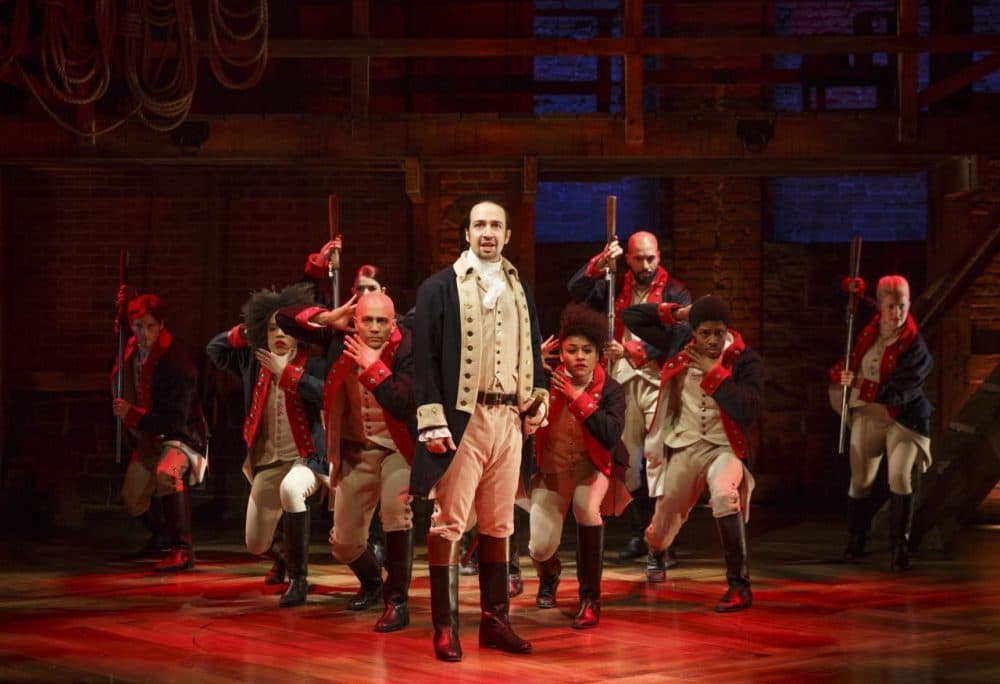
Finally: The Case Against 'Hamilton'


The hit Broadway musical was all that was wrong with 2016, and likely will be wrong with 2017, too.


By Nicholas Pell
https://reason.com/archives/2017/01/14/finally-the-case-against-hamilton/amp?fbclid=IwAR2mvE8j39UV1b1pLDwbpJOfpOfBh6lxTx3JQFa2MJkzznSMmH3Q8PT_bJw
January 14, 2017

Image result for hamilton broadway


I don't think there's a slight bit of hyperbole or exaggeration involved when I say that Hamilton, the awful musical that millionaire New Yorkers are required by law to throw away thousands watching, represents everything that was wrong with America in 2016. Allow me to make the case.
First, there's the music. I'm admittedly not much of a hip-hop aficionado, but I know shit from Shinola. From my perspective the art form has more or less been going downhill since Strictly Business (the EPMD record, not the Tommy Davidson vehicle), but there have been some highlights worth mentioning, mostly thanks to Ice Cube and an army of Wu bangers.
The point I'm trying to make is that, even to untrained ears such as mine, Hamilton is particularly bad. On first take, I thought it sounded a bit like a University of Iowa freshman—the kind who only listens to "real hip-hop"—attempting his first mixtape. One of my Twitter followers corrected me, however. It's closer to a Braintree elementary school making a rap song for parents' night. The latter description hints not merely at the simple, formulaic quality of the material, but also the cloying, bourgeois quality of it all. From the reference to "ten-dollar Founding Father without a father" to "when the British taxed our tea we got frisky," the whole affair sounds more like something made by precocious children than a professional composer.
We have Lin-Manuel Miranda to blame for this cultural atrocity, a scion of a psychologist and an advisor to New York mayor Ed Koch, who attended the same elementary and high school as Supreme Court Justice Elena Kagan. Sure, he got bullied by Immortal Technique in school, but how much street cred is that really worth? After this he attended Wesleyan University, a top-10-ranked school that costs $65,000 a year, according to Forbes, before making his mark writing jingles for noted prostitute-enthusiast Eliot Spitzer's 2006 campaign. The original version of Hamilton debuted at a Vassar College workshop. All this is, of course, an attempt to firmly establish Miranda's street cred, which is unassailable.
Some are irritated about the people who aren't white playing white people, but I'm not. The whole production plays so fast and loose with the truth that it's hard to pick any particular piece to criticize, there's a reality correlation approximating that of the Weekly World News. At the top of the list, though, has to be casting Alexander Hamilton as some sort of proto-multicultural progressive. That's either stupidity or mendacity, take your pick. Hamilton was, if anything, the most aristocratic of the Founding Fathers, the closest thing to a Colonial Tory. You know that electoral college you've been gnashing your teeth over for the last couple months? Guess whose idea that was?
Of course, shit music and feels-over-reals weren't the whole problem with America in 2016—and they aren't the biggest deal facing us in 2017, either. No, the worst thing about this present moment in time is the smugness with which zillionaires and their sycophants on the coasts piss all over anyone who does actual work for a living.
That's not just one of the main reasons that Trump won the election. That attitude makes for garbage art.
Historically speaking, you've got high art and folk art, each with their own set of aesthetic guidelines and measuring sticks. What's historically anomalous is commercial art—art that exists not due to the patronage of cultured elites or through the unrewarded efforts of the hoi polloi. It's art that exists to make money.
Art that exists to make money isn't a bad thing. A lot of the best music of the 20th century was commercial art. The Beatles are probably one of a handful of things anyone will remember about the 20th century in 500 years, a stunning example of commercial art as inspired genius. What's irritating, though, is when well-connected millionaires make art for the sake of signaling their moral superiority over the masses on the basis of their correct beliefs. Hamilton has become a sort of avatar of the Lena Dunham Democratic Party against the rest of the world, perhaps best displayed by the cast lecturing Vice President Elect Mike Pence (the closest thing to a Wal-Mart greeter they'll ever be in the same room as) about tolerance.
Tickets for Hamilton start between $179 and $199, with high-end tickets going for $849. Once they hit the secondary market (A.K.A. scalpers) you're looking at between $650 and $1500 on Stubhub. Is this because it's the best musical on Broadway? Or is it becauseHamilton is this season's most fashionable way to signal liberal respectability and status among the One Percenters?
This isn't speaking truth to power. This is power telling the rest of us what truth is. There's nary a hint of self-awareness as those only vaguely aware of poverty and toil through a sociology textbook deign to lecture us little people about America's 'real values.' That's what's wrong with America in the current year.
The election of Donald Trump and the leave vote in the United Kingdom aren't just political decisions. They're a cultural revolt against the pomposity of upper-crust liberals who don't have to live with the consequences of their own values. Hamilton is where the modern day Marie Antoinettes tell unemployed forklift drivers to eat cake.
Off in the distance, the sans cullotes are sharpening the guillotine. The aloof nobles catching the latest performance of Hamilton have no idea they're about to be cast—much against their will—in a bit part in Les Miserables.

Who’s Afraid of Sir Roger Scruton?


By Madeleine Kearns
November 9, 2018
Image result for roger scruton
Interesting thinkers, of whom there are few, tend to express themselves in more than 280 characters. Take Sir Roger Scruton, for example, the British philosopher and writer who has written over 50 books on philosophy, aesthetics, and politics and who was knighted two years ago for “services to philosophy, teaching, and public education.”
Scruton is also a conservative and an old, straight, white male. In modern-day Britain, Scruton’s politics are considered to be a pathology — or, rather, multiple pathologies. This week, the appointment of Sir Roger as unpaid chairman of a government housing commission, Building Better, Building Beautiful, was met with a campaign to get him sacked.
Why? Apparently because the “news and gossip” website The Red Roar revealed that he had made allegedly anti-Semitic comments and voiced other opinions that “some view as outright prejudice.” The Labour party, which is only just recovering from an actual anti-Semitism scandal, has been spearheading the attack. One obscure MP told BuzzFeed:
Nobody holding those views has a place in modern democracy. The prime minister needs to finally show some leadership and sack Scruton with an investigation into how he was appointed in the first place.
But what are “those views,” exactly? Scruton has written hundreds of thousands of words over the course of his career. So where to start? A good place would be Critical Thinking 101 — identify the thesis.
First, Red Roar objected to this sentence uttered by Scruton in a 2014 lecture: “Many of the Budapest intelligentsia are Jewish and form part of the extensive networks around the Soros Empire.”
Awkward declarative clauses . . . followed by an argument opposing anti-Semitism:
Many of the Budapest intelligentsia are Jewish and form part of the extensive networks around the Soros Empire. People in these networks include many who are rightly suspicious of nationalism, regard nationalism as the major cause of the tragedy of Central Europe in the 20th century, and do not distinguish nationalism from the kind of national loyalty that I have defended in this talk. Moreover, as the world knows, indigenous anti-Semitism still plays a part in Hungarian society and politics and presents an obstacle to the emergence of a shared national loyalty among ethnic Hungarians and Jews.
Scruton argued that Jews in Eastern Europe have legitimate grievances against nationalism and that anti-Semitism continues to pose a serious problem to Hungarian society. Red Roar also claimed that Scruton is cozy with Hungarian prime minister Viktor Orban, which the Guido Fawkes blog rebuts:
In fact Scruton only knows Orban because he helped him and a few other Hungarian students set up an independent law school in the late 1980s in Communist Czechoslovakia. Scruton lectured in that law school, as part of his drive to get young people to work for their country’s freedom. Attacking Scruton for this is pathetic …
Scruton actually took on Orban and lobbied hard against his move to close down the Central European University in Budapest last year. The university founded by George Soros. … Attempting to force Scruton out of a non-political government appointment on the basis of quotations taken out of context and a highly selective use of historical facts is dishonest. The only people guilty of illiberalism are the ones pursuing student union-style attempts to purge the ranks of civil society of any vestiges of conservative thought. …
Quite.
Next, some have taken issue with the following extract from Scruton’s 2005 lecture “Sexual Morality for Heathens”:
Whole new crimes have come into existence, like this supposed crime of “date rape.” What that means is — of course there is no such crime — but nevertheless, when a woman cries “date rape,” what she means is “the whole thing went too quickly,” you know, “I was not prepared,” and so consent is withdrawn, as it were, in retrospect.
Before introducing this argument, however, Scruton spent nearly 30 minutes framing the incoherency of “consent” as a moral stand-alone: Part of which is the severity of the crime of rape. In other words, the premise that “sex is merely a pleasurable sensation” contradicts the intuitive belief that rape is among the worst violations possible. Throughout his lecture, Scruton argued that interpersonal relationships are an essential facet of sexual morality, which is why “date rape” as a separate category misses the point. He was not negating consent but adding to it. As he said in the same talk: “The victim of rape has not just been abused and taken advantage of, but her being has somehow been destroyed. She’s been desecrated.”
Scruton also faces the charge of “homophobia,” apparently because of a 2007 article for the Telegraph in which he wrote of homosexuality: “it is not normal.” (For his views on this topic in more than four words, see his book Sexual Desire.) And accusations of “Islamophobia” for describing “Islamophobia” as a “propaganda-word.” (For more on this, see his book The West and the Rest. Or read my interview with him from earlier this year.)


As Scruton himself has pointed out, reputational destruction is now a bully tactic to drive conservatives from public life. But unlike those punished for historic dumb-joke tweets (such as Toby Young, who was fired from the Office for Students), Scruton is being attacked for a serious contribution to modern philosophy. It’s the very same contribution that earned him the title of knight, fellow of the British Academy and the Royal Society of Literature and which — when explored even slightly — exposes the idiocy of his detractors.
That such a witch hunt has taken off in the first place is really only explainable by sheer ignorance or prejudice, neither of which bodes well for public discourse. Nor for interesting thought.
Related:

Friday, November 09, 2018

Film Reviews: 'A Star is Born'

The Real Subject of Bradley Cooper’s “A Star Is Born” Is the Star Power of Bradley Cooper


By Richard Brody
October 5, 2018

Image result for a star is born 2018

The main love story in the new version of “A Star Is Born” is the one between Bradley Cooper the director and Bradley Cooper the actor. Few recent movies come to mind in which filmmakers give themselves as many lingering, emotion-milking closeups. At times, the film plays nearly like a feature-length sample reel sent to the Academy for a Best Actor award. Fortunately, there’s much more to this remake, which is more engaging and affecting over all than it is at its most self-regarding moments. But it’s hard to shake the sense of a shift in Cooper’s version of this classic Hollywood story of a man’s star falling while a woman’s ascends, one that emphasizes the self-punishing, self-sacrificing aspects of the male side of the equation. In its depiction of the musician’s self-scourging for the public’s good, it edges into turf occupied lately by “Whiplash.”

Cooper (who co-wrote the script with Eric Roth and Will Fetters) plays Jackson Maine, a singer-songwriter-guitar hero who plays hard-edged, country-inflected rock in stage shows of an unadorned, down-home openness. He’s also an alcoholic and drug addict (he abuses prescription medication) who, after a show, empties his last bottle in the back of his limo and has his driver, Phil (Greg Grunberg), deliver him to the first bar they find. It turns out to be a drag bar, where a young woman named Ally (Lady Gaga) takes her turn onstage. Where the drag performers do lip-synch numbers, Ally sings; Jackson (who goes by Jack) is captivated.

He takes her to another bar—his kind of bar, a “cop bar”—and, after a fight breaks out and Ally punches a man, gets her to an all-night supermarket for a bag of frozen vegetables to ice her bruised knuckles. After a rapturously romantic chat session in the supermarket’s parking lot, Ally sings, first softly, then beltingly. When, at his next show, Jack pulls her onstage with him, they sing a duet of a song that she wrote. The audience goes mad, the video goes viral, and the movie’s title is realized with a suddenness that’s exemplary of the digital age.

Though the movie is filled with detail and runs more than two hours, it’s a drama in a hurry; it packs its dose of emotion and rushes on, leaving a viewer to feel less stoked than milked. The instant connection shared by Jack and Ally (if she has a last name, it doesn’t register) quickly turns romantic. Jack is seen to be newly happy; he drinks less, hardly at all, and his road manager, Bobby (Sam Elliott), who’s also his older brother, says that he hasn’t played so well in a long time.

But there’s trouble in musical paradise: as Ally goes backstage after a triumphant concert appearance with Jack, a prominent producer named Rez (Rafi Gavron) pulls her aside and tells her that he can help her make her wildest career dreams come true. She says that she has to talk to Jack—but if she does, that conversation isn’t seen. Ally signs (also offscreen) with Rez—there are no lawyers, no negotiations, no contracts, and, above all, nothing about that great taboo, money—and Rez starts making decisions about her career. He puts her face on a minimalist billboard with the sole legend “Ally,” gets her to change her hair color, saddles her with backup dancers and a choreographed stage routine, for which she spends much time rehearsing, and puts her voice in front of slickly produced tracks that, at first, seem to cramp her style.

There’s an artistic manifesto embedded in Cooper’s version of “A Star Is Born,” and Jack both delivers it and embodies it: the cult of the singer-songwriter-instrumentalist. What Ally sings in the drag club is Édith Piaf’s “La Vie en Rose,” and, though Jack is captivated by her voice and presence, he soon asks her whether she writes her own songs. She responds that she lacks confidence to do so. In their parking-lot conversation, Jack art-splains that all that matters is having “something to say” and “saying it so people will want to hear” what one has to say. Then she sings her song for him, the one with which he makes her a star.

This is a resolutely retro vision, even if Cooper fills his remake with contemporary touches. The first version of “A Star Is Born,” starring Janet Gaynor and Fredric March, about an aspiring actress (not a singer), dates from 1937. The next two were synchronized with the musical worlds of their times, and spaced roughly twenty years apart. The one starring Judy Garland, as a jazz-and-standards singer who finds movie stardom in musicals, and James Mason, is from 1954; the next, with Barbra Streisand and Kris Kristofferson, set in the world of rock and pop, is from 1976. At that pace, the next remake should have come in the nineteen-nineties, when the big change in the music business was the rise of hip-hop. But Hollywood wasn’t ready to make that movie—and apparently still isn’t.

Instead, Cooper’s “A Star Is Born” has the throwback air of a feature-length “disco sucks” rally, which ends with the grudging and grim resignation to the fact that it’s here to stay. There’s a recurring riff involving Ally’s father (Andrew Dice Clay), a livery driver and formerly aspiring singer whose idol and role model is Frank Sinatra—and who locates the source of Sinatra’s power not in his pipes but in his personality, in taking the stage and becoming Frank Sinatra. That’s exactly the opposite of what Cooper, in the voice of Jackson, is driving at—and, to make sure that nobody misses it, he delivers the riff frequently, in a variety of forms, as when Jack warns Ally, before an appearance on “Saturday Night Live,” “They won’t be listening forever, so just tell them what you want to say.”

In this and other ways, “A Star Is Born” drives home a fantasy version of unfiltered artistic authenticity. Jack has no producer; though he has made some recordings, he doesn’t record in the course of the film, doesn’t discuss it. There are no reporters, no publicity, no interview. Jackson Maine is, in effect, a high-level independent whose relationship to his music and his public is immediate, unmediated—an exposed position that leaves him open to his inspirations, unprotected before his weaknesses and impulses. Jack’s substance-abuse issues are aptly described and presented as a disease, but his willingness and ability to cope with them is viewed as inseparable from his artistic identity and fortunes; so, for that matter, is the impaired hearing and tinnitus from which he suffers. (His unwillingness to take steps to protect his hearing is depicted as a creative decision.)

What Cooper persuasively depicts is the fear factor of stardom—the sense of vulnerability, of a position that’s both powerful and fragile. In a recent profile of him, in the Times, by Taffy Brodesser-Akner, Cooper expresses his reticence about being profiled, and his guardedness is a mark of wisdom about the process—an awareness that an unguarded phrase can suddenly become the big story in lieu of the movie itself. His direction of “A Star Is Born” is similarly both expressive and retentive; he displays much emotion, but it’s constricted and context-deprived, cut off from ambiguity, resonance, and presence—he’s giving, but only so much and no more, and only exactly what he wants to give. (For instance, concert scenes are done in looming closeups, and one moment, when the stage is seen from behind and overhead, with the whole band and the crowd, is a liberation of the eye and the mind, but it lasts a mere second or so.)

The film’s emotional shorthand works to Cooper’s onscreen advantage and Lady Gaga’s disadvantage. Her singing is dominant, her performance fascinatingly elusive and full of life—she doesn’t so much deliver a single feeling on cue as command the screen and gradually unfold a complex range of emotions. But Cooper’s impatient direction never gives her the screen time to flourish, and the camera seems to cut away from her just as her moments of performance are beginning.

This, too, is in keeping with what Cooper appears to be saying. His subject is the pursuit of self-expression, the sharing of a space of performance in an inherently collaborative art form with a new and reinvigorating artistic collaborator. There’s a moment in which, in her first flush of success, Ally provokes Jack, calling him “jealous.” But the film is made in such a way as to spare Cooper any fear of jealousy: its vision of self-expression is, above all, the expression of one self.

Bradley Cooper Is Too Handsome to Play a Coke-Snorting Has-Been


By Rex Reed
October 5, 2018

Related image

First things first. Lady Gaga can act. For his first time out of the chute as a director, Bradley Cooper knows where to position the camera. And in spite of the fact that the fifth slog around the track for A Star is Born is not in the same class with—and nowhere near the same monumental motion achievement as—George Cukor’s 1954 masterpiece, written by Moss Hart with a spectacular score by Harold Arlen and Ira Gershwin and starring Judy Garland and James Mason at the zenith of their careers, this re-hash proves that a threadbare story can still thrill a new generation if treated with style and passion. So it is far from perfect, but the entertainment value is undeniable.

That being said, I must also add that the fawning critical slobber being dumped on this film, while not exactly misguided, is still very much out of synch with reality. One moron in Chicago {Richard Roeper} even calls it “the greatest Star is Born of all time,” which is not only ridiculous but a bald-faced lie.

Switching the love story between a girl on the rise and a star on the decline to the world of rock and roll has been done already, with disastrous results, in the unconvincing 1976 version with Barbra Streisand and Kris Kristofferson. As a writer trying a new approach, Bradley Cooper is no Moss Hart, but his screenplay, written with Eric Roth and Will Fetters, has its moments.
As an actor, Cooper is still too handsome and too young to play a hairy, coke-snorting has-been on the road to alcoholic ruin. Even when he’s passed out cold on the side of the road, he looks ready for a closeup. But, as anyone lucky enough to have seen him on Broadway in The Elephant Man already knows, this boy can act. Playing a worn-out rock star named Jackson Maine, he also proves he can play the guitar and scream out a tsunami of acid rock with unexpected volume and hysterical abandon.
As the ingenue with potential he grooms and marries, Lady Gaga makes stars as a singing waitress and ambitious amateur named Ally whom he accidentally discovers singing “La Vie en Rose” in a gay bar that features drag queens. Noisy and somewhat creepy, she works diligently on her way up the ladder of success with Cooper as her mentor, the fading rock legend on his way down.
Cooper the director gives her all the best angles and favors her in almost every scene, while Cooper the actor stays out of the center spot. The music is indescribably horrible; anyone who knows anything about real music—or cares—is advised to return immediately to the lush soundtrack of the Judy Garland version and listen to historic vocal on “The Man That Got Away.” Then you get the true understanding of how an unknown can become a star through sheer supersonic talent.
The high-voltage ghost of Judy Garland haunts every frame and illuminates every shadow in the film, and Lady Gaga seems to know it. In an early scene, she is walking down a dark alley to the street. Out of nowhere, she starts singing a set of lyrics her fan base ignores, considering the scene superfluous and baffling. What they don’t realize is that she’s singing the verse to Judy Garland’s most durable theme song, a little ditty called “Over the Rainbow.”
Updated with orange hair and an appearance on Saturday Night Live, Lady Gaga (is it OK to call her “Miss Gaga”?) achieves the epitome of fame in 2018, which includes three Grammy nominations and a guest appearance with “the ubiquitous Alec Baldwin,” while Cooper plots his own suicide. Despite obvious parallels, the script never achieves the insight, scope, of richness of detail in the Moss Hart script from 1954. Oddly, the best scene in the film is the truthful, long-awaited explosion between the rock star at rock bottom and his long-suffering older brother and manager, played with electrifying appeal by Sam Elliott, and Lady Gaga isn’t even it.
The biggest shock to me is not her voice, but the backbreaking toil that has gone into concealing every trace of her voluminous tattoos by slathering her with tons of body makeup. There’s nary a tattoo, even in her nude scenes. But even if, in my opinion, she’s not a real movie star, it’s nice to watch her performance develop from beginning to end and grow, highlighting a timeless movie with renewed elements of tragedy and love.
This review originally stated that ‘A Star Is Born’ was Lady Gaga’s acting debut, which is not the case. Whether or not Rex liked her in ‘Muppets Most Wanted’ remains unclear.
Lady Gaga Tips the Scales in Bradley Cooper's 'A Star is Born'

By Anthony Lane
October 8th Issue

Image result for a star is born 2018

In the beginning was George Cukor. In 1932, he made “What Price Hollywood?,” in which Constance Bennett plays a waitress who hungers to be a movie queen. She gets her break, thanks to Max Carey (Lowell Sherman), a decent director and a lousy drunk. Fortune functions like a pair of scales: as she rises, he must fall. The same process affected Janet Gaynor and Fredric March in William Wellman’s “A Star Is Born” (1937), the title that has stuck ever since. Next up was Judy Garland, in 1954, with Cukor back in charge, and James Mason on the alcoholic skids. By now, the fable had become a musical, and so it was again in 1976, when Kris Kristofferson was defeated by Barbra Streisand’s vast voice and the untamable majesty of her perm. Here, in short, is a story that never dies.

Now it’s back. “A Star Is Born” has undergone yet another rebirth, and the midwife is Bradley Cooper. He wrote the film, with Eric Roth and Will Fetters; he directed it; he takes the leading role of Jackson Maine; he sings the tunes and plays guitar; and it’s more than likely that he did the makeup, the animal wrangling, and the on-set catering. If he wasn’t up at 4 a.m. to make scrambled eggs for the crew, I want to know why.

At the start, we see Jackson onstage, in the open air, facing a mighty throng that sways like the sea. In consort with an expert bunch of musicians (played by Neil Young’s backing band, Lukas Nelson & Promise of the Real), Jackson gives his devotees the gnarly, hairy, hard-driving sound for which they yearn. His songs are beefed up with old-school earnestness, except when they’re tender with old-school regret. Leaving the premises after the gig, he lowers his head, beneath the brim of his hat, as if in shame. Celebrities tend to seek refuge from their fans, but this guy looks like he’s fleeing himself.

Ducking into his limo, Jackson reaches for a bottle of gin. It’s not enough, though, and he asks his driver to hunt for a late-night bar. Anywhere will do. They find a drag bar, where Jackson settles down and drinks in the entertainment. The high spot is a young woman named Ally (Lady Gaga), who, refusing to be cowed by a mere cliché, belts out “La Vie en Rose.” So far, so camp. Then, at the climax, she lies back, close to Jackson, and slowly turns her face to his. She fills the frame; their eyes meet and greet; boom. Whatever it is, she’s got it. In that vertiginous instant, Jackson falls for her, and we foresee, with a shiver of premonition, that the world will follow suit.

Ideally, Cooper’s film would end after the first hour—after this first night, in fact, that Jackson and Ally spend together. They don’t have sex; they just hang out. She gets into a fight, and he buys frozen peas to soothe her swollen hand. He listens to her sing in a parking lot, then drops her off at home, where she lives with her father (Andrew Dice Clay). All that’s good about the film is in these scenes, with their clash of the coarse and the delicate, and you can sense the scales beginning to tip. Everything hereafter feels hokey by comparison, not least the swiftness of the heroine’s ascent. Like her counterpart in “What Price Hollywood?,” Ally used to wait tables, but within a day or two she has flown on a private jet and made her début in concert, hauled into the spotlight by her adoring superstar beau and fêted on social media. Before long, she has a recording deal and three Grammy nominations, while Jackson’s contribution to the Grammys is a bit part in a Roy Orbison tribute. Worse, and more ignominious, is to come.

“A Star Is Born” is very much a product of our times. Jackson Maine’s problems date back to a wretched childhood, guaranteeing our pity and love, whereas Fredric March and James Mason gave the hero a nasty and dangerous edge. Cooper’s camera crowds the characters, getting in their faces, and the dialogue is determinedly foul with oaths: “If you don’t dig deep into your fucking soul, you won’t have legs.” What? In striving to make the whole thing rough and rooted, Cooper slakes our need for the apparently authentic, and yet the story he tells, with its sudden shock of fame, is little more than a fairy tale. The result is pure Saturday-night moviegoing: it gives you one hell of a wallop, then you wake up on Sunday morning without a scratch. (By contrast, the emotional nakedness of the Judy Garland version, poised within formal compositions, can still reduce me to rubble.) To be fair, what does linger, from this latest effort, is Lady Gaga. Alone among pop royalty, she could walk down the street without being recognized, such is her reliance on costumes and confected personas. Here, early on, in T-shirt and jeans, she could be anyone; hence, of course, the thrill of her blooming into a somebody. A star is born.