Wednesday, September 13, 2017

NH MOSQUE PREACHES JIHAD, POLICE CHIEF CRIES “ISLAMOPHOBIA”

Will ignoring and denying a problem make it go away?


September 13, 2017

Image result for manchester islamic center new hampshire

Muslims gather to worship during the Friday midday prayer at the Manchester Islamic Center. At right is Imam Sherif Shabaka. (DAVID LANE/UNION LEADER)


A controversy has erupted over a mosque in New Hampshire that an investigator contends is preaching jihad. Instead of investigating, however, the local police chief has doubled down, claiming that the charges are just “Islamophobia.” Is he really willing to bet the safety of the local citizens on that?
The New Hampshire Union Leader broke the story several weeks ago, not by reporting on the investigation of the mosque, or even what was being claimed about it, but on the reaction from the mosque leaders and local law enforcement officials, both of whom agreed that the mosque had been unfairly accused. Since the Union Leader, however, did not detail the charges, there was no way to tell whether or not this was true. Then last Wednesday, investigative journalist James Simpson published the evidence at Bombthrowers, and made it clear: this mosque warrants investigation, and the police chief, Nick Willard, is derelict in his duty.
Simpson reports that investigator Dave Gaubatz found a great deal of material promoting jihad in the mosque, including a brochure entitled Jihad in Islam. Simpson writes: “This 33-page document makes clear that the goals of Islam are to subjugate the world. Under the heading What Jihad Really Is? (sic) it states:
In reality Islam is a revolutionary ideology and programme which seeks to alter the social order of the whole world and rebuild it in conformity with its own tenets and ideals. ‘Muslim’ is the title of that International Revolutionary Party organized by Islam to carry into effect its revolutionary programme. And ‘Jihād’ refers to that revolutionary struggle and utmost exertion which the Islamic Party brings into play to achieve this objective…
…Islam requires the earth—not just a portion, but the whole planet—not because the sovereignty over the earth should be wrested from one nation or several nations and vested in one particular nation, but because the entire mankind should benefit from the ideology and welfare programme or what would be truer to say from ‘Islam’ which is the programme of well-being for all humanity. Towards this end, Islam wishes to press into service all forces which can bring about a revolution and a composite term for the use of all these forces is ‘Jihad’. (p. 5)”
The Union Leader piece does quote Gaubatz saying: “On a scale of 1 -10, with 10 being the most extreme, I rate this mosque a 10.” Then it goes to the chairman of the Islamic Society of New Hampshire, Mohammed Ewiess, who “said these unsubstantiated charges are ‘full of lies’ and have spread distrust of his community.”
Unsubstantiated? Not really. Nor does the Union Leader bother to mention, and probably didn’t bother to find out, that the literature Gaubatz found in the mosque is not surprising: four separate studies since 1999 all found that 80% of U.S. mosques were teaching jihad, Islamic supremacism, and hatred and contempt for Jews and Christians. There are no countervailing studies that challenge these results. In 1998, Sheikh Muhammad Hisham Kabbani, a Sufi Muslim leader, visited 114 mosques in the United States. Then he gave testimony before a State Department Open Forum in January 1999, and asserted that 80% of American mosques taught the “extremist ideology.”
Then there was the Center for Religious Freedom’s 2005 study, and the Mapping Sharia Project’s 2008 study. Each independently showed that upwards of 80% of mosques in America were preaching hatred of Jews and Christians and the necessity ultimately to impose Islamic rule.
In the summer of 2011 came another study showing that only 19% of mosques in U.S. don’t teach jihad violence and/or Islamic supremacism. Specifically: “A random survey of 100 representative mosques in the U.S. was conducted to measure the correlation between Sharia adherence and dogma calling for violence against non-believers. Of the 100 mosques surveyed, 51% had texts on site rated as severely advocating violence; 30% had texts rated as moderately advocating violence; and 19% had no violent texts at all. Mosques that presented as Sharia adherent were more likely to feature violence-positive texts on site than were their non-Sharia-adherent counterparts. In 84.5% of the mosques, the imam recommended studying violence-positive texts. The leadership at Sharia-adherent mosques was more likely to recommend that a worshiper study violence-positive texts than leadership at non-Sharia-adherent mosques. Fifty-eight percent of the mosques invited guest imams known to promote violent jihad. The leadership of mosques that featured violence-positive literature was more likely to invite guest imams who were known to promote violent jihad than was the leadership of mosques that did not feature violence-positive literature on mosque premises.” That means that around 1,700 mosques in the U.S. are preaching hatred of infidels and justifying violence against them.
None of that is in the Union Leader article. All we get is this from Manchester, New Hamsphire Police Chief Nick Willard: “What [Gaubatz] wrote in this piece of paper is slanderous. I do not believe the mosque is a hotbed for terrorism. I don’t trust this gentleman’s research. I think he is trying to sell a book. I think the guy is a crackpot and I don’t believe we have those issues in this city.” The Union Leader stated: “Manchester Police Chief Nick Willard said his detective embedded in the FBI Joint Terrorism Task Force has no information that corroborates Gaubatz’s claims.”
Willard doesn’t mention, and probably doesn’t know, that the FBI is forbidden to study anything involving Islam in connection with terrorism, and so it wouldn’t know the danger signs to look for in a mosque even if those danger signs stabbed them with a four-foot sword while screaming “Allahu akbar.” Willard offers an argument from authority, the weakest of all arguments, in invoking the JTTF, without establishing that the JTTF is competent in this area. He then offers an ad hominem attack on Gaubatz, asserting (with what evidence?) that Gaubatz is just trying to sell a book and is a “crackpot.” This is a classic example of “‘Shut up!,’ he explained,” and lends credence to Gaubatz’s claims: clearly the Manchester Police Department doesn’t even want to consider the possibility that there may be problems with this mosque. So if there really are, what then?
Willard wasn’t alone. Alderman Chairman Patrick Long declared: “Personally this hate talk has no place in this city, that’s just my opinion. Alderman-at-Large Dan O’Neil said: “There is no need in the city of Manchester for hatred. I know this board won’t stand for it; our citizens won’t stand for it.”
Long and O’Neil ought to be ashamed of themselves, if they still have the capacity for shame, and ought to be voted out of office at the earliest possible opportunity. It is not “hatred” to raise legitimate concerns about what is taught in mosques, given the survey information above, as well as the fact that 80% of mosques in the U.S. are Saudi-funded, and the reality of Islam’s teachings on jihad, the rights of women, Jews, etc. To smear Gaubatz as spreading hate without any investigation of his specific assertions about the mosque is to do what they claim he is doing.
Willard added that Gaubatz “stokes the flames of fear, but he does so through hatred, bigotry and intolerance. His islamophobia has no place in our country and certainly no place in the fine city of Manchester that embraces diversity of all levels to include freedom of religion.”
“Islamophobia” is a propaganda term designed to intimidate people into fearing to oppose jihad terror. Willard’s statement here is a classic example of how it works. What if Gaubatz’s claims about the mosque are true, and this is the response he is getting? In the future, people will be afraid to speak up about what they may see going on in mosques, for fear of incurring charges of “hatred” and “Islamophobia.”
But Chief Willard needs to be put on notice: if Gaubatz’s charges are true, and you waved them away just by defaming him, then when it becomes clear that he was right, the responsibility for the devastation in Manchester will be on your head.
In a sane city, Willard would be forced to resign in disgrace. But like so many others in America today, Manchester, New Hampshire is not a sane city.

Tuesday, September 12, 2017

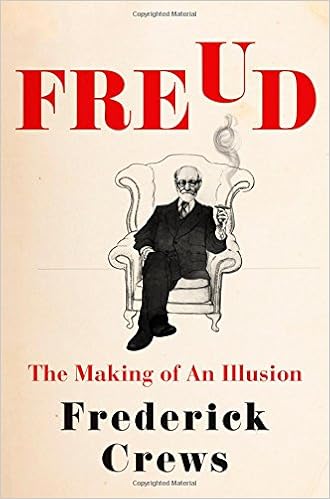
Book Reviews: 'Freud: The Making of an Illusion' by Frederick Crews

Young Freud, cruel, incurious, deceptive, and in search of fame
By Matthew Hutson
September 1, 2017
Image result for frederick crews freud
Mention Freud and you’ll get some strong reactions. He’s known as a spelunker of the human soul, responsible for uncovering such veins of frisson as denial and projection, but also for questionable or damaging contributions such as penis envy and the Oedipus complex.
An informal poll of my peers I recently conducted on Facebook revealed his mixed reputation. One respondent said: “Brilliant and interesting philosopher of mind.” Another: “Gut response, mostly wrong about everything.” There was this accolade: “I don’t think you can look at the field of psychology without seeing him as a giant.” And this attack: “A horrible misogynist.” . . . Oh, and this: “Plus he was a real drug user, which is fun.”
In a new biography, “Freud: The Making of an Illusion,” Frederick Crews depicts his subject as cruel, incurious, deceptive, and both fragile and vainglorious. Crews focuses on Freud’s early career, from 1884 to 1900, and the picture that emerges is of a trumped-up blowhard.
Freud’s life has been digested and redigested for decades, but Crews, an English professor and former psychoanalysis advocate, takes on this period because he says it’s been overlooked except by proselytizing partisans who distort the record. Plus, the complete set of Freud’s letters from this period to his fiance, Martha Bernays, has recently been released.
The driving force of the narrative is Freud’s yearning to become famous — for anything. In school, he was keenest on philosophy and entered medicine not out of interest or aptitude but for a living. His first stab at notoriety came with a useless cell-staining method he overhyped in scientific papers Crews describes as “crass propaganda.”
Next he turned to cocaine, which he expounded as a cure-all (and habitually injected). Freud tried to treat his friend’s morphine addiction with cocaine, rendering him doubly addicted, then fraudulently championed the fiasco as a string of successes with multiple patients. He even sold fake data to a cocaine manufacturer and pseudonymously published an academic article praising his own work.
Freud’s engagement with psychotherapy began in 1885 on an extended visit to a Parisian hospital. There he witnessed the treatment of “hysteria,” a grab bag of physical and psychological symptoms thought to be psychogenic — and distinctly feminine — and he took note of hypnosis as a method of inquiry. Essentially, the staff would knowingly or unknowingly induce women to act out, and punish them if they didn’t, using sedatives or clitoral cauterization. Apparently, Freud liked what he saw. He returned to Vienna and opened up shop.
Far from a passive listener, he insisted that patients had been sexually abused as children, and if they failed to recall anything, he would describe the episodes in detail. Many patients went away fuming — or laughing.
Freud’s claims skirted falsifiability, the quality of being testable, a bedrock of the scientific method. Resistance to his lurid suggestions, he argued, meant only that he was onto something; heads I win, tails you really do want to fellate your father. He also conspired to excommunicate any analyst from the movement who dared to subject his ideas to critical scrutiny. As Freud wrote to a close colleague, he was only “fantasizing, interpreting, and guessing” toward “bold but beautiful revelations.” He claimed: “I am actually not at all a man of science, not an observer, not an experimenter, not a thinker. I am by temperament nothing but a conquistador.”
As a result, he made claims about humanity based not on the evidence his patients presented but on hunches about his own hang-ups. He was apparently ashamed of his bisexuality, his masturbation and his molestation of his sister.
His ideas about sex and gender curdled his marriage to Martha. In letters, he called her unskilled, unpretty and deficient in personality. She asked for “a little respect.” He wrote, “If I have become unbearable recently, just ask yourself what made me so.” He tried to turn her against her mother, brother and friends — his rivals. After she bore him six children, he invited her sister to move in. Crews says Freud and his sister-in-law became secret lovers (she nearly died aborting his child), and he treated his wife as a maid and nanny.
Freud was not only a misogynist but also a misanthrope. He wrote a colleague: “I have found little that is ‘good’ about human beings on the whole. In my experience, most of them are trash.” He especially looked down on his patients. He told one colleague: “Patients only serve to provide us with a livelihood and material to learn from. We certainly cannot help them.” He surprised another colleague with this about his patients: “I could throttle every one of them.” The families of his (usually rich) clients called him a con man.
So Freud failed to help people, but his ideas have lasted, right? Turns out, for the most part they weren’t even his. He took the words “the unconscious” and “psychoanalysis” from his rival Pierre Janet’s “subconscious” and “psychological analysis,” describing ideas that go back much further. Throughout his career, Freud reliably rode his mentors’ coattails, then stabbed them in the back when they could carry him no further, publicly deriding them or erasing them from history.
One might wonder, then, about the origin of his appeal. His reputation comes not despite his profligate scholarship but because of it. He trumpeted his failures as successes, turned wild speculation into sweeping proclamation and, starting with 1899’s “The Interpretation of Dreams,” produced what Crews calls “detective fiction” rather than clinical reports. Crews writes: “Freud would truly be breaking new ground in the ‘Interpretation,’ not as a scientist but as a literary artist.” Freud was a fan of Sherlock Holmes mysteries, and Crews notes that a later case study provided an “invitation to the reader to share in forensic work that was both intellectually and sexually thrilling.”
In spreading word about the unconscious, despite offering some harmful ideas about it — calling gays perverts, masturbators evil and women conniving — did Freud incidentally help humanity? Crews doesn’t spend much time on legacy, except to suggest that Freud’s distraction from real scientific and therapeutic work set psychology and neuroscience back by decades.
The book can be rough going in some places, through no fault of the dedicated author. Rather the source material eschews penetrability and plausibility; Freud’s accounts became so tangled over the years as he avoided admitting error that I fear there’s no untangling them. Even so, “Freud” is a surprisingly fun read, as Crews gets in plenty of sharp jabs. He seems to find the most damning way to spin any admission or incident, leaving one to wonder about his own interpretive filters. Still, given the facts presented, it’s hard to imagine additional disclosures that would completely reverse the overall impression.
The notion of Freud as a great explorer, albeit with a wonky compass, persists. He’s shorthand for buried memories and impulses. Perhaps we’d be better off if his own buried treasure had stayed buried. Sometimes a fallacy is just a fallacy.

The Curious Conundrum of Freud’s Persistent Influence

By George Prochnik
August 14, 2017

Image result for frederick crews freud

Frederick Crews, the eminent literary critic and perennial Freud censor, opens his new study with an important question: “If Freud’s career and its impact are so well understood, what justification could there be for another lengthy biographical tract?” This question is especially pertinent since, as Crews goes on to note, Freud’s scientific reputation has plummeted over the past generation. Medical authorities have broadly recognized the faulty empirical scaffolding of psychoanalysis and its reliance on outmoded biological models. Mainstream American psychologists moved on decades ago.

Yet, confoundingly, Freud “is destined to remain among us as the most influential of 20th-century sages,” Crews writes, claiming that the attention bestowed on him by contemporary scholars and commentators ranks with that accorded Shakespeare and Jesus. Here is a fascinating conundrum: The creator of a scientifically delegitimized blueprint of the human mind and of a largely discontinued psychotherapeutic discipline retains the cultural capital of history’s greatest playwright and the erstwhile Son of God.

Crews is right that the matter demands further investigation, but this is not the book he has written. Instead “Freud: The Making of an Illusion” focuses on the man — specifically how a reflective young scientist with high ambitions and gifted mentors lost perspective on his “wild hunches,” covered up his errors and created “an international cult of personality.” In practice, this translates into 700-plus pages of Freud mangling experiments, shafting loved ones, friends, teachers, colleagues, patients and ultimately, God help us, swindling humanity at large. Here we have Freud the liar, cheat, incestuous child molester, woman hater, money-worshiper, chronic plagiarizer and all-around nasty nut job. This Freud doesn’t really develop, he just builds a rap sheet.

There is value in Crews’s having synthesized the full roster of Freud’s blunders between 1884 and 1900, the period his book concentrates on. Almost all of this material has been covered before, but not compiled in one volume — and Crews has brought a new level of detail to some of these accounts. He offers a lengthy review of Freud’s harmful embrace of cocaine’s efficacy as a local anesthetic, a mistake compounded by his paid endorsement of its merits for a pharmaceutical company. Crews tells the story of Freud’s apprenticeship with the renowned French neurologist Jean-Martin Charcot, who became known as “the Napoleon of the névroses,” and whose theories of psychologically traumatic hysteria, though arrived at largely through scientifically dubious hypnosis-based research, heavily influenced Freud’s understanding of the syndrome that loomed large in the history of psychoanalysis. We have extensive recapitulations of the distortions Freud introduced into his early case histories — most famously in the case of Dora. Crews’s exceptional fluency in the source material allows him to integrate complex incidents into an impressively cohesive narrative.

The usefulness of the aggregation would have been greater had Crews presented his story with more of that objectivity he finds so damningly absent in Freud. Here, “Freud outdid himself in thickheadedness.” There we encounter the “apogee of Freud’s willful blindness.” Elsewhere we read of Freud indulging his “yen for borrowed power,” and exhibiting “madcap self-deception.” Some of the slanting is more subtle. Crews seeks to demonstrate that Freud, for the sake of self-mythologizing, exaggerated his sense of being treated as an inferior and an outsider at the University of Vienna because of his Jewishness. This is not a minor point since, as Adam Phillips argues persuasively in “Becoming Freud: The Making of a Psychoanalyst,” psychoanalysis can be understood as a psychology “of, and for, immigrants,” people “traumatized by sociability … whose desires don’t easily fit into the world as she finds it.” Crews tells us that of Freud’s Jewish peers at the university, most others “appear to have felt at home there,” though he provides no indication of where he has discovered this significant data point. In fact, one of the most credible works to explore the subject, which Crews himself draws on, reports that in the year Freud enrolled, tensions between Jews and the gentile majority were palpable, with anti-Semitism against Jews from Galicia, where Freud’s family originated, particularly acute. Crews also cites a letter in which Freud describes the “academic happiness” he experienced on campus, “which mostly derives from the realization that one is close to the source from which science springs at its purest.” Crews comments, “If Freud had been met with ostracism on entering the university, he surely would have wanted to end the ordeal as speedily as possible.” But Freud would hardly be the first young person to encounter an atmosphere of alienating racial prejudice on an academic campus that was yet counterweighed by the opportunity to slake an intense thirst for knowledge.

Later, in taking Freud to task for an overly mechanical view of mental events in general and sexual excitation in particular, Crews avers that Freud’s preoccupations prevented him from understanding that “positive sexual experience is a function not just of secretions, agitated tissues and discharges but of whole persons whose need to feel respected is fulfilled in the encounter” — an understanding, Crews says, which “the rest of humanity intuitively knows.” We might speak of the conjunction of respect and sex as a communicable ethical ideal within certain cultures. But the available evidence from those densely populated societies that overtly oppress women — or within the campus frat world here at home — would suggest that much of humanity tends, if anything, to intuitively separaterespect from sexual gratification.

This selective idealization of humanity gets at a deeper problem. Crews is so invested in denying Freud primacy for any of the ideas associated with psychoanalysis that have retained a jot of credibility, and offers such a paucity of larger sociohistorical context for a study of this scale, that in reading his account it is easy to imagine humanity’s understanding of sexuality and psychology as such was advancing quite admirably until Freud came along and thrust us all into the lurid dungeon of his own ugly obsessions. Stefan Zweig’s account of sexual life in pre-Freud Vienna provides a different perspective: “The fear of everything physical and natural dominated the whole people, from the highest to the lowest with the violence of an actual neurosis,” Zweig wrote in his autobiography. Young women “were hermetically locked up under the control of the family, hindered in their free bodily as well as intellectual development. The young men were forced to secrecy and reticence by a morality which fundamentally no one believed or obeyed.” The cruelty of this social paradigm was equally pernicious across the Atlantic, contemporary observers noted, where New England’s code of civilized mores was often crippling for women and morbidly confusing for men.

By identifying sexual desire as a universal drive with endlessly idiosyncratic objects determined by individual experiences and memories, Freud, more than anyone, not only made it possible to see female desire as a force no less powerful or valid than male desire; he made all the variants of sexual proclivity dance along a shared erotic continuum. In doing so, Freud articulated basic conceptual premises that reduced the sway of experts who attributed diverse sexual urges to hereditary degeneration or criminal pathology. His work has allowed many people to feel less isolated and freakish in their deepest cravings and fears.

Crews is correct that many of Freud’s ideas were prefigured in the findings of others. But has this ever not been the case with a paradigm-transforming figure? Freud created a language in which key insights could be broadly transmitted to the culture: “a whole climate of opinion/under whom we conduct our different lives,” in Auden’s formulation. Even at the time Freud’s writings were appearing and psychoanalysis was in the ascendancy, most people understood that one did not have to embrace the whole gospel to reap worthwhile insights. Indeed, as Crews repeatedly demonstrates, Freud contradicts himself enough that no monolithic psychoanalytic theory ever existed.

How much less today are we bound to the kind of binary choice this book implies we must make, between counting ourselves among the believers in the “illusion” of Freud or as enlightened adversaries to every manifestation of Freudian thought? Where to even begin enumerating the wealth of fruitful work — some of it highly critical — that continues to emerge from real engagement with Freud’s ideas? Consider Marina Warner’s musings on Freud’s mediation of Eastern and Western cultural tropes told through the story of his Oriental carpet-draped couch; Rubén Gallo’s panoramic exploration of the reception of Freud’s work in Mexico and the reciprocal influence of Mexican culture on Freud; and the rich medley of sociopolitical critiques grounded in Lacan’s reinterpretation of Freud’s thought.

The idea that large parts of our mental life remain obscure or even entirely mysterious to us; that we benefit from attending to the influence of these depths upon our surface selves, our behaviors, language, dreams and fantasies; that we can sometimes be consumed by our childhood familial roles and even find ourselves re-enacting them as adults; that our sexuality might be as ambiguous and multifaceted as our compendious emotional beings and individual histories — these core conceits, in the forms they circulate among us, are indebted to Freud’s writings. Now that we’ve effectively expelled Freud from the therapeutic clinic, have we become less neurotic? With that baneful “illusion” gone, and with all our psychopharmaceuticals and empirically grounded cognitive therapy techniques firmly in place, can we assert that we’ve advanced toward some more rational state of mental health than that enjoyed by our forebears in the heyday of analysis? Indeed, with a commander in chief who often seems to act entirely out of the depths of a dark unconscious, we might all do better to read more, not less, of Freud.

Crews has been debunking Freud’s scientific pretensions for decades now; and it seems fair to ask what keeps driving him back to stab the corpse again. He may give a hint at the opening of this book, when he confesses that he too participated in the “episode of mass infatuation” with psychoanalysis that swept the country 50 years ago. The wholesale denigration of its founder is what we might expect in response to a personal betrayal of the highest order, such as only an idol can deliver. Paraphrasing Voltaire, if Freud didn’t exist, Frederick Crews would have had to invent him. In showing us a relentlessly self-interested and interminably mistaken Freud, it might be said he’s done just that.

Monday, September 11, 2017

Who are our Real Enemies?


By Elise Cooper
http://www.americanthinker.com/
September 11, 2017

Image result for mills enemy of the state


A good novel allows readers to learn and question, a gateway to world events. Such is the case with Vince Flynn’s Enemy Of The State by Kyle Mills. Flynn warned Americans on the dangers of Islamic terrorism in his first CIA operative Mitch Rapp book, Transfer of Power, published in 1999. This was two years before 9/11. Fast-forward eighteen years and Rapp books still discuss the dangers of jihadists. Mills took the torch from the late Vince Flynn, and has written a gripping novel about the Saudi involvement with terrorism. This is where fiction blends with reality.

Mills noted, “I thought about the redacted section from the 9/11 report that possibly showed the Saudi involvement. After reading the book people will understand I am not a big fan of the Saudis. Historically we have overlooked a lot of what they do in order to keep alive our strategic relationship. They not only support terrorism, but the schools that teach it. There is not much civil liberties and human rights there. I always wanted to see them slapped down and I enjoyed watching Mitch do it.”

It is rumored that this portion of the report details contacts between Saudi officials and some of the September 11 hijackers, checks from Saudi royals to operatives in contact with the hijackers, and the discovery of a telephone number in an Al Qaeda militant’s phone book that was traced to a corporation managing an Aspen Colorado, home of Prince Bandar bin Sultan, then the Saudi ambassador to Washington. The document is harsh in its criticism of Saudi efforts to undermine American attempts to dismantle Al Qaeda in the years before the September 11 attacks. Moreover, it portrays the F.B.I as generally in the dark about the maneuverings of Saudi officials inside the United States during that period.

In Enemy of The State, the CIA operative Mitch Rapp is quoted, “How many times are we going to have to go through this with them? We let them off the hook for the most deadly terrorist attack in US history and now here we go again.” It sure seemed that way when President Obama bowed before the Saudi King Abdullah at the opening of the G20 meeting in London in 2009.

Even President Trump seemed to be softening on his view of the Saudis. His speech in Saudi Arabia this May called them friends and allowed them to buy a $110-million-dollar defense purchase. This is a far cry when during the 2016 campaign he called on them to provide troops and funds to fight ISIS.

A powerful quote in the book shows the two sides of the Saudi regime, “It was a country with sufficient resources to provide prosperous lives for its citizens and to be a force of good throughout the region. Instead, these resources had been used to enrich a handful of monarchs and to promote the cycle of violence and misery that the Middle East was currently mired in.”

On the one hand it appears that they are now committed to fighting terrorism. Isobel Coleman, a Saudi expert for the Council on Foreign Relations, felt they had a change of heart. She noted, “For a long time the Saudi state encouraged Saudi men to fight Jihad. It was a heroic thing to do.  The Saudis had a profound change after they had to deal with internal terrorism.”

During the May speech, President Trump announced Saudi cooperation to fight terrorism, “Muslim nations must be willing to take on the burden if we are going to defeat terrorism and send its wicked ideology into oblivion. The first task in this joint effort is for your nations to deny all territory to the foot soldiers of evil. Every country in the region has an absolute duty to ensure that terrorists find no sanctuary on their soil… I am proud to announce that the nations here today will be signing an agreement to prevent the financing of terrorism called the Terrorist Financing Targeting Center, co-chaired by the United States and Saudi Arabia, and joined by every member of the Gulf Cooperation Council.”

Yet, on the other hand, Saudi Arabia is still denying any involvement in the September 11th attacks even though fifteen of the nineteen hijackers were Saudis. They even threatened to sell off $750 billion in U.S. assets if Congress passes legislation allowing them to be sued for the Sept. 11, 2001 terrorist attacks, a move that could destabilize the U.S. dollar.

Bob Graham, a former Democratic senator from Florida, says ISIS "is a product of Saudi ideals, Saudi money, and Saudi organizational support." Graham went on to say that ISIS represents a form of Wahhabi ideology, in which the monarchy has lost control. He believes it is a cancer that now threatens the kingdom, and that in order to stop ISIS the ideology must be dried up at the source.

Nina Shea, director of the Hudson Institute's Center for Religious Freedom, wrote, ”The Saudi government has given over its textbooks to the clerical Wahhabi extremists that it partners with to maintain control of the country.” She explained, each year, these textbooks speak of direct religious hatred, violence and indoctrinate a war mentality. Yet, their role in advancing Islamist extremist ideology has not been taken seriously as a U.S. national security concern. Since 9/11, regardless of which party is in power, the State Department has barely raised the issue and at times has even worked to cover up their toxic content.

As President Trump stated, "Muslim nations must be willing to take on terrorism and send its wicked ideology into oblivion… Terrorists do not worship God, they worship death.” Enemy Of The State shows how important it is for the U.S. to make sure the Saudis continue to hold up their end of the relationship by not promoting hatred against the West and stamping out the supporters of terrorism. In a sense the book is a reminder to Americans that September 11th should never be forgotten.

The author writes for American Thinker. She has done book reviews, author interviews, and has written a number of national security, political, and foreign policy articles.


Read more: http://www.americanthinker.com/articles/2017/09/the_saudis_and_911.html#ixzz4sO2kKFCR
Follow us: @AmericanThinker on Twitter | AmericanThinker on Facebook

Saudi government allegedly funded a ‘dry run’ for 9/11


By Paul Sperry
September 9, 2017
Image result for 9/11
Fresh evidence submitted in a major 9/11 lawsuit moving forward against the Saudi Arabian government reveals its embassy in Washington may have funded a “dry run” for the hijackings carried out by two Saudi employees, further reinforcing the claim that employees and agents of the kingdom directed and aided the 9/11 hijackers and plotters.
Two years before the airliner attacks, the Saudi Embassy paid for two Saudi nationals, living undercover in the US as students, to fly from Phoenix to Washington “in a dry run for the 9/11 attacks,” alleges the amended complaint filed on behalf of the families of some 1,400 victims who died in the terrorist attacks 16 years ago.
The court filing provides new details that paint “a pattern of both financial and operational support” for the 9/11 conspiracy from official Saudi sources, lawyers for the plaintiffs say. In fact, the Saudi government may have been involved in underwriting the attacks from the earliest stages — including testing cockpit security.
“We’ve long asserted that there were longstanding and close relationships between al Qaeda and the religious components of the Saudi government,” said Sean Carter, the lead attorney for the 9/11 plaintiffs. “This is further evidence of that.”
Lawyers representing Saudi Arabia last month filed a motion to dismiss the lawsuit, which may finally be headed toward trial now that Congress has cleared diplomatic-immunity hurdles. A Manhattan federal judge has asked the 9/11 plaintiffs, represented by lead law firm Cozen O’Connor, to respond to the motion by November.
Citing FBI documents, the complaint alleges that the Saudi students — Mohammed al-Qudhaeein and Hamdan al-Shalawi — were in fact members of “the Kingdom’s network of agents in the US,” and participated in the terrorist conspiracy.
They had trained at al Qaeda camps in Afghanistan at the same time some of the hijackers were there. And while living in Arizona, they had regular contacts with a Saudi hijacker pilot and a senior al Qaeda leader from Saudi now incarcerated at Gitmo. At least one tried to re-enter the US a month before the attacks as a possible muscle hijacker but was denied admission because he appeared on a terrorist watch list.
Qudhaeein and Shalawi both worked for and received money from the Saudi government, with Qudhaeein employed at the Ministry of Islamic Affairs. Shalawi was also “a longtime employee of the Saudi government.” The pair were in “frequent contact” with Saudi officials while in the US, according to the filings.
During a November 1999 America West flight to Washington, Qudhaeein and Shalawi are reported to have tried multiple times to gain access to the cockpit of the plane in an attempt to test flight-deck security in advance of the hijackings.
“After they boarded the plane in Phoenix, they began asking the flight attendants technical questions about the flight that the flight attendants found suspicious,” according to a summary of the FBI case files.
“When the plane was in flight, al-Qudhaeein asked where the bathroom was; one of the flight attendants pointed him to the back of the plane,” it added. “Nevertheless, al-Qudhaeein went to the front of the plane and attempted on two occasions to enter the cockpit.”
The pilots were so spooked by the Saudi passengers and their aggressive behavior that they made an emergency landing in Ohio. On the ground there, police handcuffed them and took them into custody. Though the FBI later questioned them, it decided not to pursue prosecution.
But after the FBI discovered that a suspect in a counterterrorism investigation in Phoenix was driving Shalawi’s car, the bureau opened a counterterrorism case on Shalawi. Then, in November 2000, the FBI received reporting that Shalawi trained at terrorist camps in Afghanistan and had received explosives training to perform attacks on American targets. The bureau also suspected Qudhaeein was a Saudi intelligence agent, based on his frequent contact with Saudi officials.
More, investigators learned that the two Saudis traveled to Washington to attend a symposium hosted by the Saudi Embassy in collaboration with the Institute for Islamic and Arabic Sciences in America, which was chaired by the Saudi ambassador. Before being shut down for terrorist ties, IIASA employed the late al Qaeda cleric Anwar al-Awlaki as a lecturer. Awlaki ministered to some of the hijackers and helped them obtain housing and IDs.
The FBI also confirmed that Qudhaeein’s and Shalawi’s airline tickets for the pre-9/11 dry run were paid for by the Saudi Embassy.
“The dry run reveals more of the fingerprints of the Saudi government,” said Kristen Breitweiser, one of the New York plaintiffs, whose husband perished at the World Trade Center.
“These guys were Saudi government employees for years and were paid by the Saudi government,” she added. “In fact, the Saudi Embassy paid for their plane tickets for the dry run.”
After the Nov. 19, 1999, incident — which took place less than two months before the first hijackers entered the US — both Saudi men held posts as Saudi government employees at the Imam Muhammad Ibn Saudi Islamic University, the parent of IIASA — “a further indication of their longstanding ties to the Saudi government,” the 9/11 complaint states.
Carter said in an interview that the allegations that the Saudi Embassy sponsored a pre-9/11 dry run — along with charges of other Saudi involvement in the 9/11 plot, from California to Florida — are based on “nearly 5,000 pages of evidence submitted of record and incorporated by reference into the complaint.”
They include “every FBI report that we have been able to obtain,” though hundreds of thousands of pages of government documents related to Saudi terror funding remain secret.
Attempts to reach lawyers representing the Saudi government by phone and email were unsuccessful. However, in last month’s motion to dismiss the lawsuit, they argued that the plaintiffs cannot prove the kingdom or its employees directly supported the hijackers.
Paul Sperry is a former Hoover Institution media fellow and author of “Infiltration: How Muslim Spies and Subversives Have Penetrated Washington.”

EVERYTHING I NEEDED TO KNOW ABOUT ISLAM I LEARNED ON 9/11


How September 11 made me what I am.


September 11, 2017


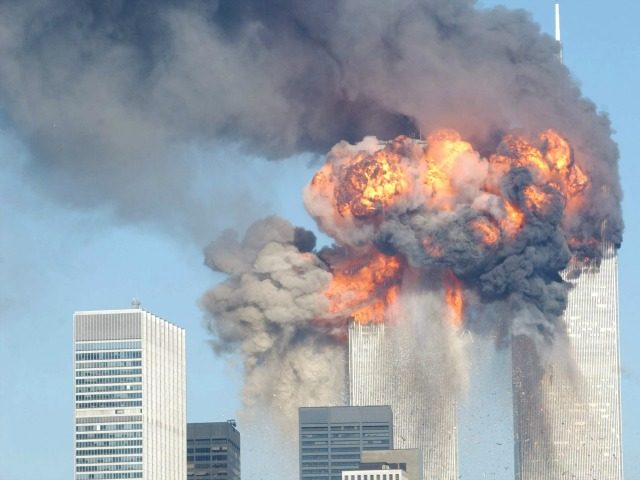
Related image
Spencer Platt/Getty Images

“In the name of Allah, the Most Merciful, the Most Compassionate,” a terrorist declares on the Flight 93 cockpit recording. That’s followed by the sounds of the terrorists assaulting a passenger.
“Please don’t hurt me,” he pleads. “Oh God.”
As the passengers rush the cabin, a Muslim terrorist proclaims, “In the name of Allah.”
As New York firefighters struggle up the South Tower with 100 pounds of equipment on their backs trying to save lives until the very last moment, the Flight 93 passengers push toward the cockpit. The Islamic hijackers call out, “Allahu Akbar.” The Islamic supremacist term originated with Mohammed’s massacre of the Jews of Khaybar and means that Allah is greater than the gods of non-Muslims.
Mohammed Atta had advised his fellow terrorists that when the fighting begins, “Shout, 'Allahu Akbar,' because this strikes fear in the hearts of the non-believers.” He quoted the Koran’s command that Muslim holy warriors terrorize non-believers by beheading them and urged them to follow Mohammed’s approach, “Take prisoners and kill them.”
The 9/11 ringleader quoted the Koran again. “No prophet should have prisoners until he has soaked the land with blood.”
On Flight 93, the fighting goes on. “Oh Allah. Oh the most Gracious,” the Islamic terrorists cry out. “Trust in Allah,” they reassure. And then there are only the chants of, “Allahu Akbar” as the plane goes down in a Pennsylvania field leaving behind another blood-soaked territory in the Islamic invasion of America.
Today that field is marked by the “Crescent of Embrace” memorial. 
Thousands of Muslims cheered the attack in those parts of Israel under the control of the Islamic terrorists of the Palestinian Authority. They shouted, “Allahu Akbar” and handed out candy. 
But similar ugly outbreaks of Islamic Supremacism were also taking place much closer to home.
On John F. Kennedy Boulevard, in Jersey City, across the river from Manhattan, crowds of Muslim settlerscelebrated the slaughter of Americans. "Some men were dancing, some held kids on their shoulders," a retired Jersey City cop described the scene. "The women were shouting in Arabic."
Similar Islamic festivities broke out on Atlantic Avenue in Brooklyn, a major Islamic settlement area, even as in downtown Manhattan, ash had turned nearby streets into the semblance of a nuclear war. Men and women trudged over Brooklyn Bridge or uptown to get away from this strange new world.
Many just walked. They didn’t know where they were going. I was one of them.
That Tuesday was a long and terrible education. In those hours, millions of Americans were being educated about many things: what happens when jet planes collide with skyscrapers, how brave men can reach the 78th floor with 100 pounds of equipment strapped to their backs and what are the odds are of finding anyone alive underneath the rubble of a falling tower. They were learning about a formerly obscure group named Al Qaeda and its boss. But they were also being educated about Islam.
Islamic terrorism was once something that happened “over there.” You saw it on the covers of Time or Newsweekback when those were staples of checkout counters and medical offices. But even after the World Trade Center bombing, it wasn’t truly “over here.” But now it was. The war was here.
Each generation is born into history out of a moment of crisis. We are defined by our struggles. By the wars we fight and do not fight. On a Tuesday morning in September, my generation was born into history.
Some of us were born into it better than others.
At Union Square, I passed NYU students painting anti-war placards even as the downtown sky behind them was painted the color of bone. They ignored the crowd streaming up past them and focused intently on making all the red letters in NO WAR line up neatly on the white cardboard.
In the years since, I have seen that look on the faces of countless leftists who ignore the stabbers shouting, “Allahu Akbar” in London or the terrorist declaring, "In the name of Allah, the merciful," among the bloody ruin of a gay nightclub in Orlando. Instead they focus on their mindless slogans.
“NO WAR,” “Stop Islamophobia” and “Refugees Welcome.” The world of the cardboard sign and the simple slogan is an easier and neater one than a sky filled with the ashes of the dead. 
On September 11, some of us opened our eyes. Others closed them as hard as they could.
That Tuesday irrevocably divided my generation. Some joined the military, the police or became analysts. Others turned left-wing activists, volunteered as lawyers for terrorists or converted to Islam.
The passengers on Flight 93 who took the lead were in their thirties. But the two firefighters who made it to the 78thfloor of the South Tower, Ronald Bucca, who did duty in Vietnam as a Green Beret, and Orio Palmer, a marathon runner, were in their forties. Those men and women had the most meaningful answers to the old question, “Where were you when it happened?”
I was just one of countless people moving upstream away from Ground Zero.
The great lesson of that Tuesday morning was that it wasn’t over. It wasn’t over when we understood that we wouldn’t find anyone alive in that twisted mass of metal and death. It wasn’t over when the air began to clear. It wasn’t over when the President of the United States spoke. It wasn’t over when the planes began to fly again and the TV switched from non-stop coverage of the attacks and back to its regularly scheduled programming. It wasn’t over when we were told to mourn and move on.
It still isn’t over.
After every attack, Boston, Orlando, San Bernardino, New York, Paris, Manchester, London, Barcelona, we are encouraged to mourn and move on. Bury the bodies, shed a tear and forget about it.
Terrible things happen. And we have to learn to accept them.
But Tuesday morning was not a random catastrophe. It did not go away because we went back to shopping. It did not go away with Hope and Change. Appeasing and forgetting only made it stronger.
Everything I needed to know about Islam, I learned on September 11. The details of the theology came later. I couldn’t quote the Koran while the sirens were wailing. But I learned the essential truth. 
And so did you.
“Where were you?” is not just a question to be asked about September 11, 2001. It is an everyday question. What are you doing today to fight the Islamic terrorists who did this? And tomorrow? 
I found my answer through my writing. Others have made a more direct contribution.
But it’s important that we keep asking ourselves that question.
The 9/11 hijackers, the members of Al Qaeda, of ISIS, of the Muslim Brotherhood and the entire vast global terror network, its supporters and fellow travelers asked themselves that question every day. 
They are still asking it.
From the Iranian nuclear program to the swarm of Muslim Brotherhood organizations in America, from the Muslim migrant surge into Germany to the sex grooming gangs of the UK, they have their answers. 
Our enemies wake up every day wondering how to destroy us. Their methods, from demographic invasion to WMDs, from political subversion to random stabbings, are many. 
A new and terrible era in history began on 9/11. We are no more past it than we were past Pearl Harbor at the Battle of Midway. Its origins are no mystery. They lie in the last sound that came from Flight 93.
“Allahu Akbar.”
We are in the middle of the longest war in American history. And we still haven’t learned how to fight it. 
September 11 has come around again. You don’t have to run into a burning building or wrestle terrorists with your bare hands. But use the day to warn others, so you can answer, “Where were you?” 


Saturday, September 09, 2017

Cluelessness, thy name is Hillary Clinton


September 6, 2017
Image result for hillary what happened
She still doesn’t get it.
In her forthcoming memoir ‘What Happened” (out Tuesday), Hillary Clinton takes perfunctory responsibility for losing the election before spending nearly 500 pages blaming: Bernie Sanders, Joe Biden, “rash FBI director” James Comey, Barack Obama, the Russians, sexism and, finally, the American people for not liking her enough.
Sanders, she writes, had the gall to run against her even though he’s not a Democrat.
–– ADVERTISEMENT ––

“That’s not a smear, that’s what he says,” she writes. “He didn’t get into the race to make sure a Democrat won the White House, he got in to disrupt the Democratic Party.”
Clinton bemoans the sexism among “Bernie bros” and claims a causal link between Sanders’ campaign and Trump’s win. “Some of his supporters . . . took to harassing my supporters online,” she writes. “It got ugly and more than a little sexist.” Such attacks, she claims, “caused lasting damage, making it harder to unify progressives in the general election and paving the way for Trump’s ‘Crooked Hillary’ campaign.”
Obama, she says, was no help, telling her “to grit my teeth and lay off Bernie as much as I could. I felt like I was in a straitjacket.”
Sanders, like so many leading Dems, has no sympathy.
“My response is that right now it’s appropriate to look forward and not backward,” he told The Hill. Left unmentioned was collusion between Clinton’s team and the DNC to oust Sanders from the primary and depict his campaign as “a mess” to reporters. These revelations, contained in a 2016 WikiLeaks dump, led to the immediate resignation of DNC chair and Clinton supporter Debbie Wasserman Schulz.
Yet to read leaked excerpts from Clinton’s book, you’d never know her campaign was secretly manipulating party apparatus, or that she had a $150 million war chest (twice Trump’s), or that she had the backing of mega-stars from Bruce Springsteen to Beyoncé to Oprah, or that the media largely depicted her rival as a complete buffoon with zero chance of winning, or that the Justice Department laid off even though her husband privately met with then-US Attorney General Loretta Lynch in the midst of the FBI email investigation.
No, Hillary Clinton had no such advantages. The subtext here — and the reason she was such an epically bad two-time candidate — is that we should feel sorry for her, not the other way around. It’s the problem with her campaign writ large: At a time when millions of Americans were economically hurting and afraid of being left behind, she thought “I’m With Her” was a galvanizing slogan. If anything, it should have been “She’s With Us.”
But such is her narcissism, blinding Clinton to what most Americans saw: not a campaign but the would-be coronation of someone thoroughly convinced it was her turn.
The Democratic Party has made it clear they want Hillary to stop whining and go away. “When you lose to somebody who has 40% popularity, you don’t blame other things,” Chuck Schumer told the Washington Post in July. “What did we do wrong? People didn’t know what we stood for, just that we were against Trump.” Elizabeth Warren told USA Today that Clinton lost because “our side hadn’t closed the deal” when it came to reaching struggling Americans. Joe Biden, at a SALT conference in Vegas last May: “I never thought she was a great candidate.”
As is her way, Hillary will not brook criticism or search within to course-correct. Long a multimillionaire, Clinton — who writes that it was “bad optics” to accept huge speaking fees from Wall Street — is charging $3,000 for a “platinum VIP ticket” on her book tour. As for other blunders: She says she couldn’t confront Trump as he lurked behind her at a debate because she’d look weak, not because when most people think “Hillary Clinton” and “sexual predator,” Bill comes to mind. Nor is she as stiff and fake as people think, even though she writes that shetook a nap on Election Night as the electoral map and her place in world history cratered around her. Even the famously cool Obama would never make such a claim.
Toward the end of her memoir, Hillary concludes that the problem is ultimately not her but us. Mull that as you shell out $30 for a book and $89 — minimum — for a tour ticket.
“What makes me such a lightning rod for fury?” she writes. “I’m really asking. I’m at a loss.”
As are the Dems and an exhausted electorate — yet here, too, Hillary won’t listen, writing that she’ll stay in public life and refusing to rule out a 2020 run.
“There were plenty of people hoping that I, too, would just disappear,” she writes. “But here I am.”
FILED UNDER