Thursday, September 17, 2015

Donald Trump: The Only People Who Like Him Are the Voters


By Ann Coulter
September 15, 2015

Donald Trump (AP)

Unfortunately, they seem to remember nothing about Reagan apart from the media-created caricature of a slightly addled old man who somehow mesmerized an imbecilic public with his sunny optimism.


Jeb! goes around saying, "I believe we're on the verge of the greatest time to be alive."


Marco Rubio answered a question in the first debate about God and veterans, saying: "Well, first, let me say I think God has blessed us. He has blessed the Republican Party with some very good candidates. ... And I believe God has blessed our country. This country has been extraordinarily blessed. And we have honored that blessing. And that's why God has continued to bless us."


John Kasich responded to a question at the New Hampshire presidential forum about why he was running, saying: "Well, Jack, look, we're all -- we -- I've received blessings. Most of us here have been very, very blessed, and when you get that way, you have to figure out what your purpose is in life to make the world a little better place."


They all sound like Barney, the purple dinosaur, singing, "I love you, you love me!"


The other problem with the Be Reagan strategy is: It's not 1980 anymore. Reagan's election is as far away today as the defeat of Hitler was then.


Gov. Scott Walker's answer to whether he'd invade Iraq, knowing "what you know today," was: "I'd point out that in the overall issue of foreign policy, I'd say in my lifetime, the most impressive president when it came to foreign policy was a governor from California."


What does that even mean? Is he going to invade Grenada, fund the Contras and put missiles in Western Europe? Back in 1996, when Bob Dole said, "I'm willing to be another Ronald Reagan, if that's what you want," at least people laughed.


When Moammar Gadhafi was under siege in 2011, Rick Santorum said: "Ronald Reagan bombed Libya. If you want to be Reaganesque, the path is clear."


On the other hand, in the quarter century since Reagan bombed Libya, Bush invaded Iraq, prompting Gadhafi to end his WMD program, invite in U.N. weapons inspectors, and pay the families of the Lockerbie bombing victims $8 million apiece.


Nonetheless, "bomb Libya" is exactly what our feckless commander in chief did. Obama sent American troops to participate in the NATO bombing of Libya -- which helped oust Gadhafi, which led to Islamic lunatics running the country, which led to the murder of four Americans, including our ambassador, in 2012, and the refugees flooding Europe today.


Formulaic applications of Reagan's policies from the 1980s don't always work the same way they did in the 1980s. (Similarly, Duran Duran's new single was kind of a dud.) I used "What Would Reagan Do?" as a joke back in 2005; these guys think it's an actual governing philosophy.


When Reagan was running (three and a half decades ago), there was a real fight in the Republican Party over abortion, the Equal Rights Amendment, guns and foreign policy. Reagan had to face down elements in his own party to be pro-life, anti-ERA, pro-gun and to pursue an aggressive anti-Soviet foreign policy.


Reagan won. It's over. The ERA is gone. The Soviet Union is gone. The GOP is unquestionably the party of life and the Second Amendment. (If only fetuses could get their hands on a gun!)


Ever since the hero of 9/11, Rudy Giuliani, couldn't get out of the starting gate in his presidential bid because he was pro-abortion and anti-gun, no serious Republican candidate is ever going to waver on those two issues again.


So why did Marco Rubio find it necessary to stress that he opposed abortion even in cases of rape and incest at the first GOP presidential debate? Did he not live through that whole Todd Akin thing, like the rest of us?


Today, the fight in the Republican Party isn't over abortion, guns or the Sandinistas; the dividing line is immigration. Will we continue to be the United States, or will we become another failed Latin American state?


On this, it's Donald Trump (and the people) vs. everyone else.


Trump announced his presidential campaign by talking about Mexican rapists. Immigration is the only policy paper he's put out so far -- and he's been crushing the polls. He got his one sustained standing ovation from 20,000 cheering fans in Dallas Monday night when he talked about stopping illegal immigration.


But James B. Stewart gasses on in The New York Times about Trump's "name­calling, personal attacks and one-liners that have vaulted him to the top of the polls." In the entire article, Stewart never mentions immigration.


Perhaps some minority of people will vote for Trump because of his personality. But I notice that it's his position on immigration that gets thousands of people leaping to their feet.


The media will talk about anything but Trump's specific, detailed policies on immigration -- all while claiming he doesn't have any "policy details." The very fact that the entire media -- including most of the conservative commentariat -- obdurately refuse to acknowledge the popularity of Trump's immigration plans is exactly why Trump is exploding in the polls.


Trump isn't trying to imitate anyone. He's leading on the seminal issue of our time while the rest of the field practices looking optimistic in front of the mirror.


COPYRIGHT 2015 ANN COULTER 

Consumed By the Game

For the obsessive and driven Nick Saban, every day is Fourth and Inches.


By Stephen Schmalhofer
September 4, 2015


Saban: The Making of a Coach, by Monte Burke (Simon & Schuster, 352 pp., $27)

Tom Buchanan, F. Scott Fitzgerald wrote in The Great Gatsby, “had been one of the most powerful ends that ever played football at [Yale]—a national figure in a way, one of those men who reach such an acute limited excellence at twenty-one that everything afterward savors of anti-climax.” I’m no Tom Buchanan: I was an average college football player who ate just enough peanut butter to crack Yale’s regular defensive line rotation. I had only two encounters with college football greatness. The first came during my junior season, when we lost to the University of San Diego, then coached by a human swarm of swagger named Jim Harbaugh. Harbaugh soon left to rebuild Stanford’s program before taking the San Francisco 49ers to the Super Bowl and finally landing back at his alma mater, Michigan. The second was the campus presence of Yale’s legendary coach emeritus, Carm Cozza. Still able to flex old muscles, he addressed our team before “The Game” against Harvard in the tradition of Yale’s T.A.D. Jones in 1916: “Gentlemen, you are now going to play football against Harvard. Never again in your whole life will you do anything so important.”

No, my football career was not the peak. The rush of a hard tackle and the thrill of victory foreshadowed more satisfying joys: my wedding day, the birth of our daughter. But for men like Harbaugh and Cozza and most other leading coaches, the game remains consuming, defining much of their adult lives. And if there is a coach in the game today who exemplifies the complete giving over of self to the game, it is Nick Saban, the first coach to win national championships at two schools and the subject of Monte Burke’s entertaining new biography.

During his childhood in Fairmont, West Virginia, Saban’s father, Big Nick, sought financial independence and became the proprietor of the local gas station. From Big Nick, Saban inherited a powerful temper, an allergy to unfinished work, a desire for control—and a passion for football. Whenever Saban fell short of his father’s expectations, Big Nick would take his son down into the coal mines to remind him of alternative paths available to him. From these childhood lessons emerged the essence of his coaching career: to nurture perfection out of what nature provided.

Like his subject, the biographer never lingers long in one place. Burke avoids tedious game-by-game season recaps that grind many sports biographies to a halt. Instead, Burke lets The Process—Saban’s basic coaching philosophy and method—take over. Some coaches develop reputations for play-calling wizardry, others as player-friendly motivators. Saban is known for his obsessive yet incremental approach, which breaks success down into the smallest possible units and forces players to focus entirely on the next step. He learned the technique from Lionel “Lonny” Rosen, a psychiatry professor he met while coaching at Michigan State. A player following The Process won’t daydream about holding a trophy at the end of the season, waste energy dwelling on mistakes, or relax following a successful play. Instead, the player moves forward to the next practice drill, weight-room rep, frame of film study, or dining hall meal. Not all players embraced The Process, especially those whom Saban inherited from his predecessors, but many thrived, recognizing that it brought stability and clarity, maximized their talent, and even turned them into men. “If I’m a failure in life or in anything I do, it’s my fault. There’s no excuse for me to fail,” remarked former player Brandon Gibson.

Saban developed The Process during early coaching stops at Toledo and Michigan State, but he always sought more resources, program control, and recruiting appeal. He found them all at LSU, where he built a Keystone Pipeline of talent from Louisiana high schools and methodically identified, evaluated, and courted bigger, faster, and stronger players. He obsessively researched his recruits—and their families, with a special focus on charming the mothers. Saban mastered the NCAA rulebook and applied jesuitical interpretations of recruiting regulations to gain maximum access to potential players. When his peers were unable (or unwilling) to match his relentless efforts, they lobbied for new rules to limit his recruiting activity.

Echoes of old coaching clichés rang in my ears as Burke recreates Saban practices and pep talks. Herein lies the hidden danger of this book: that a thousand lesser coaches will copy Saban’s flaring temper, sound bites, and obsessiveness without first earning the authority of a trusted leader. Pity the young high school players whose coach parrots repetitive Sabanisms like “Do your job!” and flails angrily over trivialities like kids wearing their hats backward. They should remember Saban’s own failure to earn this authority during a short head-coaching stint with the Miami Dolphins, where veterans like Zach Thomas and Keith Traylor refused to buy in to his leadership.

Saban then returned to college football as head coach at the University of Alabama. His successes there and at LSU contributed to the growth of the SEC Network, which saw $600 million in revenues in 2014. He offers his players the hope (and for the best, the expectation) of a lucrative rookie contract in the NFL. A small army of therapists, tutors, film analysts, chefs, equipment managers, interns, and other staffers keep his players fueled, fit, and eligible to play their best. But an underworld lurks beneath the well-manicured grass of this football field. Sleazy agents skulk for clients, with little regard for the risk to the amateur eligibility of the players they hustle. Scammers sell the promise of performance-enhancing snake oil like “deer antler spray” and “hologram bracelets” to players looking for shortcuts.

Few current coaches are as talented as Saban, but his legacy will be that of a turnaround artist, not an institutional legend. Some joke that Alabama should have built his bronze stadium statue on wheels rather than a pedestal. Burke avoids the hagiography typical of his genre, in which pages often appear to have been copied from the media kits of university sports information directors, but he ultimately fails to make sense of Saban’s wanderlust, his frustrating tendency to pick up and leave just as his teams improve. Saban has vowed to write his own story when he is done coaching. I guarantee it won’t be as much fun to read.

Burdened with the expectations of fans spoiled by success, driven by The Process to see only weaknesses in the midst of an undefeated streak, and compelled to prepare for the next season only hours after winning a national championship, for Nick Saban, every day is Fourth and Inches.

Tuesday, September 15, 2015

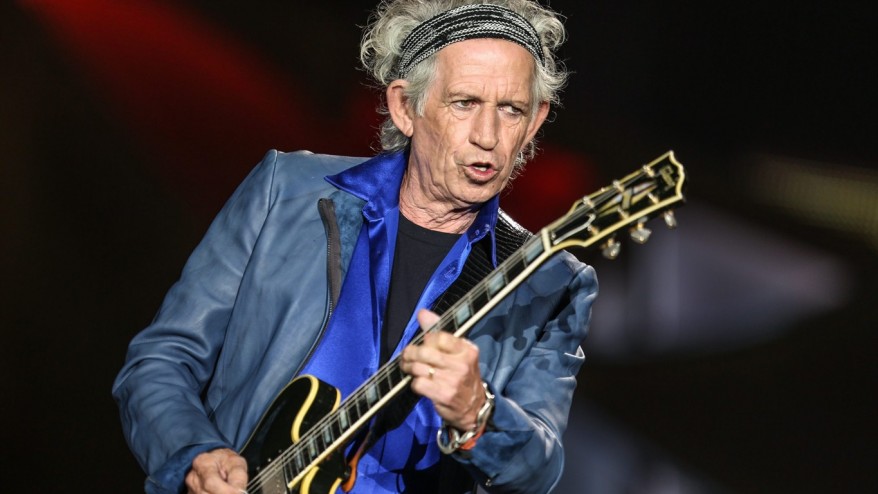
Today's Tune: Keith Richards - Trouble (Audio)

Rolling Stones guitarist Keith Richards talks about solo album 'Crosseyed Heart'

September 15, 2015

FILE - In this May 24, 2015 file photo, Keith Richards performs at The Rolling Stones Zip Code Tour opening night at Petco Park in San Diego.  (Photo by Rich Fury/Invision/AP, File)

Keith Richards had just picked up a pack of cigarettes from the coffee table in front of him, skilfully removed the cellophane and fired up the first of a string of smokes while talking about Crosseyed Heart, his first solo album in nearly 25 years and a rare venture away from his musical identity as guitarist, songwriter and periodic lead singer with the Rolling Stones.

Despite having been finished for some 18 months, the album will finally be released this month.

"I've been on this (Rolling Stones' Zip Code) tour, and that's Numero Uno — the Gig!" Richards, 71, said good-naturedly while sitting recently on a sofa in his manager's office in SoHo.

But now that the Stones are between tours, Richards' wait is coming to an end. The album is due September 18, and he's eyeing the possibility of solo shows this fall, maybe even a short tour now that the Stones' next round of shows, in South America, has been pushed from October and November into January.

Richards started working on what would become Crosseyed Heart in 2011, about the time his autobiography, Life, was becoming an international bestseller.
"The book was the hardest thing I ever did in my life," says Richards, shaking his head. "And you think the record world is bad? The book world is incredible –they've been at it longer."
The process of retracing his life dovetailed neatly with writing new songs with his co-producer and main collaborator, drummer Steve Jordan. Richards began flexing the compositional muscles he hadn't used much with the Stones since the band's most recent album of new material, 2005's A Bigger Bang.
"We actually didn't start off to make an album, per se," he says. "We said, 'Let's go in and cut a few tracks and see what happens'.
"After about three or four months — we could only do this once a week, sometimes once a month, really, there was no 'project' — we suddenly realized we had half an album. At that point," Richards says through what often sounds like a bucket of gravel in his throat, "we said, 'We might as well go in for the whole hog'."
Richards' raspy voice and signature hook-heavy guitar work are front and centre on Crosseyed Heart," and he plays bass and keyboards on some of the tracks. He's also tapped some of the same musicians who played on his previous solo outings backed by the band he dubbed the X-Pensive Winos: guitarist Waddy Wachtel, keyboardist Ivan Neville and singer Sarah Dash. Guests include Aaron Neville of New Orleans' celebrated Neville Brothers, longtime Stones saxophonist Bobby Keys (who died in December) and singer Norah Jones, who duets with Richards onIllusion.
The latter is one of half-a-dozen ballads on the album, a shift in pacing that marks one of the major differences between a Richards solo effort and his work with the Stones.
"Mick is not a big one for ballads," he says with a chuckle. "But I do love ballads. Always have. I didn't write Angiefor nothing, or Ruby Tuesday."
Richards' honesty about his longtime bandmate and songwriting partner carries through to his assessment of his own strengths and weaknesses. About his vocal limitations, Richards says: "I'm always dodgy about my voice. It's usually because I don't sing a lot.
"I realize my range is fairly limited, but at the same time, so is Bob Dylan's."
READ MORE:
He also includes a hauntingly spare version of blues singer and songwriter Leadbelly's songGoodnight Irene. Richards, not surprisingly, has turned to the original lyrics, which paint a more harrowing picture than the song gets in the usual campfire sing-along renditions.
Richards, of course, has notoriously imbibed more than his share of substances – legal and illegal – over the course of his storied life with the Stones. Yet he's still here, in great spirits, laughing easily, and often, during an interview to discuss how a couple of decades had slipped by without realizing he hadn't made a record apart from the Stones since 1992's Main Offender.
That was just his second solo effort, after Talk Is Cheap in 1988, which belatedly established his solo identity a quarter century after the Stones emerged during the British Invasion as the dark and dangerous counterpart to the Beatles.
Topics on Crosseyed Heart run the gamut from lustful romance (the title track) to forgiveness and renewal (Heartstopper) to near-comic real-life mishaps (Amnesia) and the importance of honesty in a relationship (Illusion).
Amnesia references a tumble Richards took in 2006 while he was in Fiji, where it was widely reported that he'd fallen out of a tree. "Knocked on my head/ Everything went blank/ I didn't even know the Titanic sank/ How can I regret/ It's so easy to forget ... . I can't recall the past, I'm nowhere."
Asked if there are things about his life he regrets, at first he jokes, "I don't know – I forgot them!"
Then he pauses, his voice dropping into a more somber tone. "I lost a son," he says, referring to his two-month-old son, Tara Jo Jo Gunne, who died of sudden infant death syndrome in 1976. "But I don't know if that comes in the realm of regret. It's a sorrow."
Richards' unguardedness about virtually any subject also struck documentary filmmaker Morgan Neville, who has directed a companion Netflix film, Keith Richards: Under the Influence, that premieres the same day Crosseyed Heart is scheduled for release.
"What made the film so much fun," Neville says from his office in L.A.'s Echo Park, "is that he's in such a good place now. He doesn't worry about anything. He's such an honest person; it's rare for a famous person to be that open and honest. That's liberating".
Neville took an Academy Award for his 2013 documentary 20 Feet From Stardom, a homage to backup singers who often remain in the shadows of various rock stars – including the Stones.
With Under the Influence, Neville says his aim was "to make sure the documentary was timeless in its own way, that it wasn't rooted in the album".
"In fact, I realized later, we don't even mention the name of the album in the film – it's not tied to it in that way," he adds. "It's more about where he's at and the process of making the album and the process of making music."
Like the album, the film came together serendipitously. Neville says Richards' manager, Jane Rose, had commissioned him to film an interview in lieu of asking the musician to undertake an extensive round of media sessions to promote the album.
But it's not a major undertaking for Richards to swing by Rose's office for selected interviews, since it's just a few hours from Connecticut, where he lives with his wife of 31 years, former model Patti Hansen.
"As a music geek," Neville says, "it was kind of the documentary I've been training for my whole life. If you started out trying to make a documentary like this, to do all the research you'd need to do to prepare for it, you couldn't. You have to have spent 20 or 30 years as a music obsessive to play in the same game as Keith."
Neville showed up for the first film session with a stack of vinyl records and started mining Richards' passion for old blues, rock, R&B, country, folk and gospel music.
"We weren't trying to tell Keith's life story," Neville says, because Richards had done that himself in his book. "Basically, we were just trying to emulate the experience of hanging out with Keith."
Does that mean Neville can now check "hanging out with Keith" off his own bucket list?
"There's the bucket list," Neville says, "and there are other things too unimaginable to even make your bucket list. This is one of those."
Crosseyed Heart (Virgin EMI) is out on Friday. Keith Richards: Under the Influence debuts on Netflix NZ on Friday.

Trump effect forces GOP rivals to raise game -- or lose

By BYRON YORK (@BYRONYORK)  9/14/15 5:03 PM

The Texas senator has been on a slow rise in the polls ever since the first debate, moving from sixth place in the RealClearPolitics average of national polls on the eve of the debate to fourth position today. (AP Photo/John Minchillo)


Ted Cruz doesn't hesitate to express his gratitude to Donald Trump for bringing 24 million-plus viewers to the first Republican presidential debate last month.
"There is no doubt Donald Trump caused a whole lot of people to watch that debate who wouldn't have otherwise turned on the television," Cruz told me at a campaign event in South Carolina a few weeks after the Fox News debate. "So I am grateful for his attracting a whole lot of people who had the opportunity, perhaps for the first time, to hear my positive, optimistic, conservative message."
Without Trump, the first debate might have drawn six, eight, maybe ten million viewers — the same or a bit more as the most-viewed GOP debates in 2012. So the Trump effect meant that somewhere between 14 million and 18 million more people saw Cruz than would have been watching without Trump. Cruz is right to be grateful.
Of course, that's because a lot of those millions of viewers thought Cruz did well. The Texas senator has been on a slow rise in the polls ever since, moving from sixth place in the RealClearPolitics average of national polls on the eve of the debate to fourth position today.
On the flip side, if a candidate didn't do well in that first debate, Trump's presence meant a lot more people saw that, too. Take Scott Walker.
Some Republican candidates — not just Walker — approached the first debate believing it would be the Donald Trump show no matter what anyone else said or did. So they concluded their best bet was to play it safe, do a good enough job, and avoid any big mistakes. Hit a single and move on while the world buzzed about Trump.
But as it turned out, the debate wasn't just the Donald Trump show. Yes, news reporting focused incessantly on Trump. But a lot of Republican voters saw a bigger picture.
In the days after the debate, as the candidates resumed their campaign travel around the country, they realized viewers wanted more from them than playing it safe. Voters who were considering supporting Walker, in particular, wanted to see what he had to offer — and they didn't see much.
In the weeks that followed, Walker suffered a near-catastrophic drop in the polls — not all the result of the debate, but that certainly played a part. On the eve of the Fox News debate, Walker was in third place nationally, with 10.6 percent in the RealClearPolitics average of polls. Today, he's in seventh place with 4.2 percent.
In Iowa, Walker was in second place on the eve of the first debate, with 18.7 percent, less than a couple of points behind Trump. Today, Walker is tied for fourth place (with Carly Fiorina) with 5.7 percent.
In the first debate, Walker sought to present himself as a Washington outsider — a reasonable position for a governor of Wisconsin. But he has found that voters, at least for now, are most attracted to candidates who stand outside the entire political system.
Walker, with a career in government, can't do that. So he has doubled down, perhaps tripled down, on his image of himself as the Washington outsider. Starting with his recent speech at Ronald Reagan's alma mater, Eureka College, Walker has pledged not only to reform Washington, but to "wreak havoc" on Washington.
One dictionary definition of "havoc" is "great destruction or devastation; ruinous damage." Another is "a situation in which there is much destruction or confusion." It's not at all clear whether that's what voters want Walker or any other candidate to do.
On the eve of the debate, frustration is evident in the Walker campaign. "He is an outsider," one Walker team member said recently. "I cannot imagine people cannot look at his record and not say this man is truly an outsider, and he will take on these things and be a great president."
On Wednesday, thanks in large part to Donald Trump, Walker will have a chance to make a second impression on perhaps tens of millions of potential voters. This time, he and other candidates will realize that no matter how much the press fixates on Trump, voters will be looking closely at them, too — and expecting more.

Attack on Teachers

The shocking number of educators being assaulted in the classroom -- and the administration's surreal response.


September 15, 2015


As the new school year begins, you might like to be updated on some school happenings that will no doubt be repeated this academic year. After this update, I have some questions one might ask the black leadership.
The ongoing and escalating assault on primary- and secondary-school teachers is not a pretty sight. Holly Houston is a post-traumatic stress specialist. She counsels teachers in Chicago public schools and reported, "Of the teachers that I have counseled over the years who have been assaulted, 100 percent of them have satisfied diagnostic criteria for PTSD." It's not just big-city schoolteachers traumatized. Dr. Darlyne Nemeth, in Baton Rouge, Louisiana, said last year, "I have treated many teachers with PTSD, and I am currently following a few of them."
A Philadelphia seventh-grade girl with a history of incidents against her teacher sprayed perfume in the teacher's face after telling her that she smelled "like old white pussy." After telling her classmates "I'm about to kick this bitch's white ass," she shoved the teacher, knocking her to the floor. In 2014, a Philadelphia 68-year-old substitute teacher was knocked out cold by a student (http://tinyurl.com/orldslb). Earlier that year, two other teachers in the same school were assaulted. By the way, Philadelphia schools employ close to 400 school police officers.
In a school district near St. Louis, teachers have had pepper spray and dog repellant sprayed in their faces. A Baltimore teacher had his jaw broken. In Baltimore, each school day in 2010, an average of four teachers and staff were assaulted. A 325-pound high-school student in Houston knocked out his 66-year-old female teacher (http://tinyurl.com/oqxmrfg). Nationally, an average of 1,175 teachers and staff were physically attacked each day of the 2011-12 school year.
School violence is going to get worse. Last year, the Obama administration sent all the school districts in the country a letter warning them to avoid racial bias when suspending or expelling students.
Secretary of Education Arne Duncan claimed that racial discrimination in the administration of discipline is "a real problem today. It's not just an issue from 30 or 40 or 50 years ago." Last year, in Washington, D.C., an official of a teachers union tried to explain to a national gathering of black elected officials why white teachers are so problematic for black students, saying they just do not understand black culture. Excuses and calls for leniency will embolden school thugs.
What about student conduct in the 1930s, '40s and '50s? Don't take my word. Ask black congressional representatives, 46 percent of whom were born in the '20s, '30s or '40s. Start off with Reps. John Conyers (86), Charles Rangel (85), Eddie Bernice Johnson (79), Alcee Hastings (79) and Maxine Waters (77). Ask them whether their parents or kin would have tolerated their assaulting and cursing teachers or any other adult. Ask them what would have happened to them had they assaulted or cursed a teacher or adult. Ask whether their parents would have accepted the grossly disrespectful behavior seen among many black youngsters in public places — for example, using foul language and racial epithets. I'd bet the rent money that they won't tell you that their parents would have called for a "timeout." Instead, they will tell you that they would have felt pain in their hind parts. Then ask these leaders why today's blacks should accept behavior that previous generations would not.
The sorry and tragic state of black education and its attendant problems will not be turned around until there's a change in what's acceptable behavior and what's unacceptable behavior. That change must come from within the black community. By the way, it is an idiotic argument to suggest that white teachers are problematic for black students because they don't know the culture. I'm nearly 80 years old, and during my North Philadelphia school years, in schools that were predominantly black, at best there may have been three black teachers.


Monday, September 14, 2015

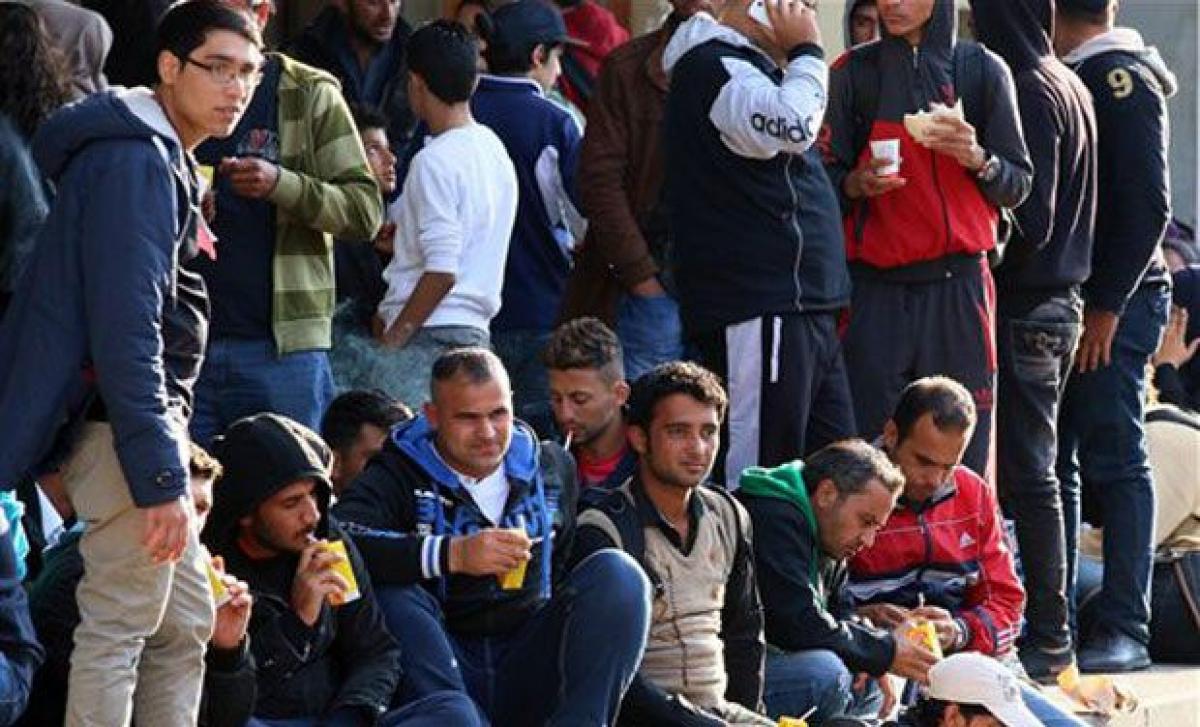
MUSLIM 'REFUGEES' AND TERRORISM IN AMERICA

How many Americans will Obama’s Muslim migrants kill?


September 14, 2015


Before 9/11, the trial run for the attack was the World Trade Center bombing. The key figures in that attack, from Ramzi Yousef, the nephew of 9/11 planner Khalid Sheikh Mohammed, to the Blind Sheikh, whose ambitious plans involved bombing New York bridges and tunnels, asked for political asylum.
Ramzi Yousef showed up with a fake passport and claimed to be an Iraqi refugee seeking political asylum. He was released on his own recognizance and told to show up for a hearing. He never did.
His co-conspirator, Ahmed Ajaj, went on filing for political asylum even while under arrest for his role in the World Trade Center bombing. Their pals, Mahmud Abouhalima, who routinely told passengers that “In Islam, the people are the weapons”, and Mohammed Salameh, were illegal aliens who had applied for amnesty as agricultural workers. But they didn’t go on to pick lettuce or blueberries.
Instead they went on to bomb the buildings, Americans wouldn’t bomb.
The Blind Sheikh, who headed a Muslim Brotherhood terrorist group, applied for political asylum even after the bombings. He really did need political asylum because the Egyptian government wanted him. Unfortunately the State Department, even back then, took the side of the Muslim Brotherhood over that of the Egyptian government and obstructed the request because the charges were “political”.
The Sheikh would have faced persecution in his home country, but it was a deserved persecution. His case is a reminder that Middle Eastern countries may persecute dissidents, but they also persecute terrorists. Some of those they persecute, like the Muslim Brotherhood, deserve persecuting.
Accepting terrorists as refugees leads to terrorist attacks on America.
While the World Trade Center bombing and the Boston Marathon bombing cases are the most famous terrorist attacks by Muslim refugees, there are numerous other cases of Muslim refugee terror.
America has been resettling huge numbers of Somali Muslim refugees. One of them, Nuradin Abdi, was an illegal alien who wanted to bomb a shopping mall in Columbus, Ohio after using his refugee travel document to fly back to Africa for terrorism training while claiming that he wanted to visit Mecca.
Mohamed Osman Mohamud, a Somali refugee, plotted to bomb a Christmas tree lighting ceremony in Portland in 2010. "I want whoever is attending that event to leave, to leave dead or injured," he said.
The family had been settled in Oregon by the Ecumenical Ministries of Oregon. The Ecumenical Ministries had nearly caused an ecumenical Somali Muslim massacre of Christians.
Numerous other Somali refugees have also left the United States to become terrorists abroad, joining Boko Haram and pledging to the Jihadist campaign of Islam against the non-Muslim free world.
And they aren’t the only ones.
Mir Qazi, a Pakistani using a fake passport, applied for political asylum and then got amnesty. A year later he murdered two CIA employees and fled to Pakistan.  Hesham Mohamed Hadayet walked into Los Angeles International Airport and opened fire. Like the Blind Sheikh, Hadayet was a “refugee” from Egypt because of his Islamic religious beliefs. This refugee killed two people before he was stopped.
Devout Muslims who claim asylum because of religious persecution in a Muslim country should be considered highly suspect. It most likely means that their Islamic practices are more violent than usual.
But that wasn’t the only Muslim refugee terrorist plot targeting Los Angeles International Airport.
Abdel Hakim Tizegha, a member of the Millennium plot to bomb the airport, had applied for political asylum in the United States. Ahmed Ressam, another of the bombers, had applied for political asylum in Canada claiming that he was fleeing persecution in Algeria. He was caught entering the United States and the plot was averted.
But Ressam’s case shows us that when Canada accepts Muslim refugees, they are a threat to America.
Gazi Ibrahim Abu Mezer was another Muslim refugee who applied for political asylum in Canada in order to carry out terrorist attacks in America. He made repeated efforts to cross the border. He told a Border Patrol agent that he wanted political asylum because Israel had suspected him of terrorist involvement. Instead of getting rid him as fast as possible once he had admitted that he was suspected of terrorism in another country, he applied for political asylum in the United States. Then he was set free and was only arrested once he was caught plotting to bomb subways in New York.
Other Muslim terror refugees who took the Canadian route included Abderraouf Jdey, an aspiring 9/11 hijacker who filed for political asylum in Canada, and was repeatedly suspected of plotting terrorist attacks against Americans.
The Fort Dix plotters intended to kill as many Americans as possible. Three of them, the Duka brothers, were illegal aliens who invaded the country through Mexico and applied for asylum.
Yassin M. Aref, the Imam of Masjid As-Salam, who was arrested for his part in a plot to buy a surface-to-air missile to supply to a terrorist group, came to the country as a refugee through a UN asylum program. Aref had been accepted into this country despite working for the Islamic Movement of Kurdistan, a Muslim Brotherhood affiliate.
Shahawar Matin Siraj, who had plotted to bomb the Herald Square subway station, had come here with his family who had demanded asylum claiming that they faced religious persecution in Pakistan. Instead, like other religious refugees on this list, their son subjected Americans to Islamic religious persecution.
Even a brief review of these cases shows that we have a serious Muslim refugee terrorist problem. Some of the deadliest and most ambitious terror plots in America came from Muslim refugees.
But instead of improving our refugee screening, Obama tore it down. Last year, he loosened the restrictions on refugees who were guilty of providing material support to terrorist groups by exempting those who had provided “limited material support” so that these limited terrorist supporters could come to America. Because what harm can limited material support to Islamic terrorists do?
The rule change had been intended to benefit Syrian refugees, many of whom were members of the Sunni sect whose militias were Islamic terrorists often linked to Al Qaeda. Senator Dick Durbin had complained that the laws could keep supporters of the Free Syrian Army, a coalition that included numerous Islamic terrorists some of whom had worked with Al Qaeda and ISIS, out of the country.
The thousands of Syrian Muslim migrants that Obama is bringing to this country will have an easier time of explaining away any terrorist connections. ISIS terrorists playing refugee have already been spotted in Germany and France. But because of Obama and Durbin, we may be blind to the threat until it’s too late.
Congressman Peter King, Chairman of the Sub-Committee on Counterterrorism and Intelligence, warned that Obama's decision to admit 10,000 Syrian migrants "will put American lives at risk."
"The decision is in direct contrast to the opinions of leading law enforcement and intelligence officials in this administration. We do not have the capability to vet these individuals nor will we be able to develop it in the next twelve months," he warned.
"We do not want another Boston Marathon Bombing."
But Obama clearly doesn’t care if more Americans are murdered and mutilated by Muslim refugees. Their lives matter more than our lives.
It’s more important for him to bring aspiring terrorists to this country than it is to save American lives.
More Muslim refugees mean more terrorist attacks. It is an inescapable fact of history. We would not have Muslim terrorism without Muslim immigration. And the Muslim refugee terror wave of the past is even more likely to be repeated by groups of Muslim migrants coming from a war zone.
The question is not will these Obama migrants kill Americans. The question is how many will they kill.
 Tags: MuslimsObamarefugees

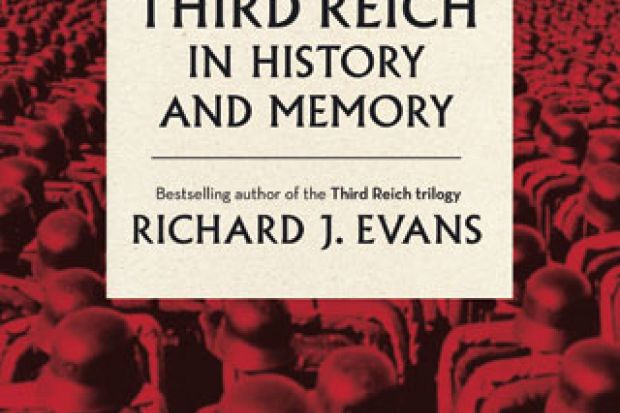
The Third Reich in History and Memory by Richard J Evans, review: 'dazzlingly varied'

By 


The stains of history can never be washed away. Greek politicians have recently invoked, with bitterness, the Nazi occupation; Putin’s Russia has a pathological neurosis over Ukraine that stretches back to 1941. We might think by now that the horrors and the crimes of the Second World War had been fully absorbed and understood. But this collection of essays from the noted scholar Richard J Evans underscores the necessity for continuing to explore the darkness.
Many of the essays featured in this history of the Third Reich have been previously published in journals such as the London Review of Books – but the advantage of bringing them together in a collection, rather than reading them in fragments, is that the broad sweep of Evans’s arguments comes through. From the personal – was Hitler simply insane? – to the broader international context – did America’s growing power inadvertently help the rise of Nazism? – Evans focuses on new discoveries and recent theories, while providing vignettes that give insights into crucial moments.
“Tell me, papa, that you are happy,” said the daughter of French premier Georges Clemenceau on the signing of the Armistice at the end of the First World War. “I cannot say it,” he replied, “because I am not. It will all be useless.” For years it was held that reparations demanded by the Allies led to a boiling German resentment that aided the rise of Hitler; but by the late Twenties, as shown by historians such as Adam Tooze, Weimar Germany was pulling clear of the debt and the anger; then came the Wall Street crash, and the banking aftershocks that rippled around the world. Evans considers that the Nazis were lucky in their timing, coming to power just as Germany was pulling out of the deepest slough of depression.
These essays are dazzlingly varied in focus. We are given close-ups of Hitler’s medicine cupboard – “sedatives, analgesics, stimulants, laxatives, painkillers”, an array of pills to be swallowed daily. There is a fascinating chapter outlining the life of Hitler’s partner Eva Braun; her rise from photographic lab assistant to the Führer’s wife, via a couple of suicide attempts.

But this book is really about the enduring and almost unanswerable questions. How did so many ordinary Germans come to collude in the Holocaust and the pitiless murder of so many millions? What was the terrifying and psychotic trigger that provoked German soldiers into not just slaughtering Jews, but also sadistically humiliating them? The general populace knew what was happening; what was Hitler’s hold over them? Each successive age has produced different theories: Evans digs beneath assertions that for most Germans, life under the Nazis was, before the war, comfortable and affluent. In fact, Nazi apparatchiks were planted in every corner of society, down to the people who ran apartment block associations; just because most people weren’t being actively terrorised didn’t mean that the terror wasn’t there. The state was underpinned with the threat of violence and death, and everyone knew it.
Threaded throughout is the sense that there is still so much more to be unearthed. As Evans points out, the post-war aftermath for thousands upon thousands of Germans, deported from Hungary, Romania and Poland, and sometimes in the same cattle trucks that had been used to transport Jews, is a story that lay in the shadows for decades. After all, what were their sufferings compared with the nightmares that had been inflicted on the conquered and persecuted?
There are some frustrations. Evans is crushing about Timothy Snyder’s acclaimed history Bloodlands, which focused on benighted eastern Europe from the Thirties Stalinist terror onwards. In the aftermath of this LRB article, notable historians, including Norman Davies, came galloping to Snyder’s defence. But there is no right of reply here. Also, inevitably, as the author points out, there is a certain amount of repetition, as different essays cover overlapping territory. These are small gripes, though, for the book sweeps together a military, cultural, social and economic overview of Hitler’s Germany in a way that engages and startles.
496pp, Little Brown, Telegraph offer price: £20 (RRP £25, ebook £8.96). Call 0844 871 1515 or see books.telegraph.co.uk

Sunday, September 13, 2015

Women in Combat Endanger Their Fellow Soldiers’ Lives


By David French — September 11, 2015

US Marines in Afghanistan Real Combat SEMPER FI

Imagine, if you will, reading a story that begins, “The NFL announced the results of a year-long study in mixed-gender football teams today, concluding that women not only suffered more injuries than men, but also performed worse in every football-related physical task.”

You would likely have two immediate reactions. First, you’d wonder why the NFL actually had to commission a study to discover a reality obvious to every sentient, rational person in the universe — women aren’t as physically strong as men. Then, you’d demand to know what kind of barbarian actually approved a testing process in which real women were injured at wildly disproportionate rates to prove what we all already knew.

The Marine Corps is playing out just such a scenario today. In response to relentless political pressure from social-justice warriors who mistake military service for one long exercise in diversity training, the Marines conducted a nine-month study comparing the performance of all-male infantry units with mixed units in simulated combat environments. The results?
Women in a new Marine Corps unit created to assess how female service members perform in combat were injured twice as often as men, less accurate with infantry weapons, and not as good at removing wounded troops from the battlefield.
In fact, this summary doesn’t do justice to the dramatic disparity the study documented. The women weren’t slightly less capable than the men; they were profoundly less capable. All-male units performed better in 93 of 134 categories evaluated, and there were “notable” differences in accuracy in “every individual weapons system.” Physically, the top 25th percentile of women overlapped with the bottom 25th percentile of men, and they possessed less anaerobic power, anaerobic capacity, and aerobic capacity than their male colleagues. Women undergoing entry-level infantry training were injured at “more than six times the rate of their male counterparts.”

What does all this mean? It’s quite simple: If you integrate infantry units by gender, more Americans will die, and our enemy will have a better chance to prevail on the battlefield. If you’re less accurate with your weapons, the enemy has a better chance of survival. If you can’t evacuate your wounded as effectively, your wounded are more likely to die. Even in non-combat environments, the training hurts women at a remarkable rate, and units that suffer high training attrition lose combat effectiveness.

It turns out there is a reason — aside from sexism — that American women have not engaged in direct ground combat. Social-justice warriors point to the Soviet army in World War II and to the IDF as counter-examples, but those exceptions prove the rule. As detailed in a comprehensive 1994 paper for the School of Advanced Military Studies at Fort Leavenworth, women were pressed into service in the Red Army following the catastrophic loss of life early in Operation Barbarossa. The vast majority of them served in non-combat roles. And while there were individual heroines — most notably sniper Lyudmila Pavlichenko — other women proved unable to perform many of the most basic physical tasks and often had to “throw away equipment, leave equipment behind, or get some of the men in their units to help carry it.”

Similarly, while women fought alongside men in pre-IDF Jewish militias such as the Haganah, the instant the IDF began to transition from fighting a “war of survival” to optimizing for combat against modern, well-equipped armies, it transitioned to all-male units. Prior to the transition, “mixed direct combat units had consistently higher casualty rates.” And Haganah commanders had “stopped allowing women to serve in assault forces because ‘physically[they] could not run as well — and if they couldn’t run fast enough, they would endanger the whole unit, so they were put in other units.”
Russia and Israel show us that desperate times call for desperate measures, and desperation is not the proper basis for formulating optimal military policy. If the choice were between women in combat and national extinction, any country would accept the former without fail. But that’s not the choice we face.

As our nation grows increasingly divorced from actual military experience, it forgets how intensely physical infantry service is. When I went out on foot patrols in Iraq, I routinely carried 75 extra pounds of gear — including body armor, a rifle, a sidearm, a knife, a basic combat load of ammunition, and a camelback for water. And that was a light load. As a JAG officer, I didn’t even have to tote grenades, communications gear, or any weapon heavier than an M4. When I finished a patrol, I was able to roll back into base, take off my gear, and rest my aching muscles. The guys on the line, by contrast, stayed outside the wire day after day, week after week, and they found themselves carrying full-size, wounded men in the middle of firefights. I’m not sure any of those wounded would want to bleed out for social justice.

But as we all know, political correctness is immune to facts. Here’s Navy Secretary Ray Mabus: “That’s still my call, and I’ve been very public. . . . I do not see a reason for an exemption.” And here’s Army Reserve colonel Ellen Haring, a “vocal advocate” for women in infantry units: “They’re always coming up with these averages. . . . The average woman can’t do what the average man does. I don’t think that’s a surprise to any of us. But they weren’t told to do this based on averages. It has to be based on individual capabilities.”

But how do we discover the truly exceptional women who can, for example, not just make it through various training courses but also physically hang with a ground combat unit through the long term? It takes a process of extraordinarily high attrition that hurts unit effectiveness and physically injures large numbers of young women. And for what? For a unit that doesn’t perform as well as an all-male unit?

Our enemies don’t care one bit for political correctness. They won’t treat mixed-gender units with kid gloves. They’ll exploit those units’ perceived weakness mercilessly, concentrating their fire on the slow and vulnerable. There is no nothing more brutal or ruthless than ground combat. And there is no enemy more vicious than ISIS, al-Qaeda, and the Taliban. Will we have to endure the broken bodies of men and women who could have been saved, of breaches in lines that never should have opened, before we acknowledge reality? Men are stronger than women, and in ground combat, that strength is the difference between life and death, victory and defeat.

— David French is an attorney, a staff writer at National Review, and a veteran of Operation Iraqi Freedom.


SLIDESHOW: Defending America

Saturday, September 12, 2015

How an Expatriate American Family in Paris Battled the Nazis

In a thrilling history by Alex Kershaw, an American family in German-occupied Paris smuggled Jews and spied for the Resistance right under the noses of the Gestapo.
Ben Cosgrove
September 7, 2015


Over the past decade, British-born Alex Kershaw has emerged as one of the most reliably engaging writers on key battles and, even more notably, on long-unsung heroes of World War II.
In The Bedford BoysThe LiberatorThe Longest Winter, and other titles, Kershaw’s capacity for synthesizing immense amounts of research has been matched—and often surpassed—by his strengths as a storyteller. World War II, after all, might well be the most thoroughly documented conflict in human history. For an author to find new stories to tell from such a thoroughly picked-over era—and to make those stories feel at once dramatic and, somehow, new—is no mean feat.
Kershaw’s latest, Avenue of Spies, is as strong as any of his other books, with the added benefit that it follows a cast of characters so complex and so varied—from the almost impossibly brave and selfless to the most bestial, sadistic, and psychotic—that any self-respecting novelist would sell his or her soul for the chance to tell their tale.
That said, the book’s subtitle, “A True Story of Terror, Espionage, and One American Family’s Heroic Resistance in Nazi-Occupied Paris,” reminds us that the protagonists and antagonists here were not creatures of a fevered artistic imagination, but men, women, and even children caught in the jaws of history. How they behaved—the side they chose, the fight they embraced, the actions they took—forever defined them. In an elemental way, a central theme of Kershaw’s book is how acts of courage and acts of depravity echo through time, and it’s impossible to read Avenue of Spies and not have a nagging, unsettling question always at the back of one’s mind.
What would I have done?
At the heart of Avenue of Spies is an American doctor in Paris, Sumner Jackson; his wife, Toquette; and their young son, Phillip. In the ’30s, the Jacksons lived on Paris’s upscale, tree-lined Avenue Foch—named, of course, for the French World War I hero Marshal Foch, who famously and prophetically excoriated the postwar Treaty of Versailles (which he felt was too lenient on Germany) as not a peace “but an armistice for 20 years.” Sumner Jackson had served in that same “war to end all wars,” operating on traumatized, mutilated young men not far from the Somme battlefield for the last two years of the conflict.
After the war, Jackson stayed on in France, eventually rising to chief surgeon at the American Hospital of Paris. Born in Maine, and possessed of a bone-deep New England modesty and stoicism, Jackson was nevertheless comfortable in the cosmopolitan City of Light, and remained there largely because his Swiss-born wife could not imagine living anywhere else. They witnessed the increasingly violent rise of Fascism in Europe throughout the ’30s; they lived through the shock and despair attending the swift fall of Paris in the spring of 1940; and they, along with countless other Parisians who had not fled at the Nazi advance, saw the conquering Germans occupy their beloved city.
Incredibly, many members of the German brass, including some of the Gestapo’s most notorious and deranged thugs, eventually set up house literally a few doors down from the Jacksons, on Avenue Foch. Over the course of the war, Jackson, Toquette, and even Phillip assumed more and more active—and increasingly perilous—roles in combating the Germans. At first, Jackson played an astonishingly gutsy shell game at the hospital, finding ways to treat and transport wounded Allied troops and French Resistance fighters right under the Germans’ noses. Later, after Toquette was recruited by the Resistance, the Jacksons’ home—a stone’s throw from where Gestapo thugs interrogated and tortured men and women of the Resistance—was employed as a drop-off spot for photographs, documents, and other critical espionage collateral, much of which made its way to Allied leaders and strategists in England and beyond.
While Kershaw deftly interweaves the stories of Resistance heroes and heroines, SS and Gestapo degenerates, Vichy weasels, and the movements and machinations of major players like Churchill, Hitler, and Roosevelt, it’s hardly a spoiler to mention here that the tale does not end especially happy for Sumner, Toquette, or Phillip. Arrest, imprisonment, starvation, disease—the Jacksons and countless Resistance compatriots endured the degradations and much of the violence visited upon millions at the hands of often well-spoken, well-dressed, “civilized” Nazi goons. Many died from torture, from typhus, by firing squad, or by a bullet to the back of the head. As Kershaw reminds us, with a quote from Jacques Delarue’s history of the Gestapo that leads off the book: “The Nazi world was an empire of total force, with no restraints.”
Another theme that runs throughout the book is that Hitler’s Germany was also a twisted, bureaucracy-mad empire in which laws were duly enacted not to protect the weak and the innocent but to brutalize and enslave them. The casual, codified violence directed against the lives and livelihoods of millions of citizens of various countries under Nazi rule in the ’30s and ’40s is, in its own way, as chillingly characteristic of the Reich’s methodology as the Blitzkrieg.
On October 18 [1940], Jews were banned from owning or directing any business, much to the delight of many envious French. So began the process of Aryanization, in other words state-sanctioned theft, by which Jewish concerns were taken over by gentiles … Jewish businessman Pierre Wertheimer, had long since fled, moving to the United States, but he had arranged for an associate to take over his stake in Chanel Perfumes to keep it out of Nazi hands. The designer Coco Chanel wrote to the German authorities demanding that she, not the associate, receive Wert­heimer’s share. “Parfums Chanel is still the property of Jews,” she complained. “Your mission is to make these Jews cede their property to Aryans.”
With hard reporting, deep compassion, and an attention to plot, personality, and (critically) pacing that any writer of fictional thrillers might envy, Kershaw again deftly illuminates an epoch that we thought we already knew. And at the end, to the author’s credit, that stark, nagging question not only remains, but somehow feels more pressing than ever. What would I have done?