Tuesday, July 01, 2014

The War on Women Comes to the Supreme Court

The Hobby Lobby decision is “sexist,” the Left cries. 

Pro-choice protesters outside the Supreme Court, June 30, 2014. (Chip Somodevilla/Getty Images)

It has long been suspected that the Supreme Court hates women, although it took the court’s 5–4 decision in the Hobby Lobby case to fully reveal its blatant misogyny.

The Court held that the Religious Freedom Restoration Act forbids the administration from forcing Hobby Lobby — an arts-and-crafts chain owned by evangelical Christians — to cover contraceptives that its owners object to on religious grounds (specifically, four drugs that it believes act as abortifacients).

If you don’t see the anti-women agenda at work in this decision, you aren’t as discerning as the hysterics on the left who point out, accusingly, that the five justices in the majority are all men. QED.

Senator Harry Reid, displaying his unfailing instinct for the inane, tweeted, “It’s time that five men on the Supreme Court stop deciding what happens to women.” The majority leader seems to believe that the court was deliberating in the case of Hobby Lobby Stores, Inc., et al. v. The Fate of Women’s Freedom in the United States.

The ruling was quite limited. It didn’t strike down the contraception mandate, and as such is only a small carve-out from the sweeping extension of government power represented by the mandate. The decision only says that the mandate can’t apply to Hobby Lobby and other closely held corporations (defined by the IRS as firms where five or fewer individuals hold 50 percent or more of the value of the corporation) that oppose it on religious grounds.

The Religious Freedom Restoration Act, passed by Congress in the 1990s with large bipartisan majorities, created a broad protection for religious liberty. It says that government can’t create a substantial burden on someone’s exercise of religion unless it is using the least restrictive means of furthering a compelling government interest. The court held that there are less restrictive means for the government to get women the drugs in question, including paying for them directly rather than forcing Hobby Lobby to cover them.

The cry from the Left is that this constitutes the end of women’s “health” as we know it. Press Secretary Josh Earnest said President Barack Obama “believes that women should make personal health-care decisions for themselves, rather than their bosses deciding for them.” Taking this non sequitur and running with it, Senator Patty Murray, a Democrat from Washington, opined that the decision “takes us closer to a time in history when women had no choice and no voice.”

Of course, Hobby Lobby doesn’t have the power to deny its employees the drugs it finds objectionable, nor does it claim such a power. Women who work for the company can buy them on their own. For that matter, Hobby Lobby doesn’t claim the right to stop them from having abortions. The women who work for Hobby Lobby have exactly as much “choice” now as they did prior to the decision.

The Left can’t get its head around the idea that the law or the Constitution sometimes limits the means whereby it seeks to achieve its ends. The Left doesn’t really do law. It often doesn’t even do reasoning. It does bullying and demagoguery. In the argument over Hobby Lobby, it has brought the logic of the “war on women” — its shameless smear job — to the Supreme Court.

There are numerous lawful ways around the Hobby Lobby decision. If it wants to get at the root of the matter, Congress can carve out an exception from the Religious Freedom Restoration Act for the contraception mandate, or repeal the act in its entirety. Surely, if liberal lions like Ted Kennedy and Bill Clinton had foreseen how the act would eventually get in the way of the Left’s coercive cultural agenda, they never would have supported it in the first place.

But finding a way to eviscerate or kill the act is for another day. For now, inveighing against the sexist Supreme Court is the priority.

— Rich Lowry is the editor of National Review. He can be reached via e-mail: comments.lowry@nationalreview.com. © 2014 King Features Syndicate

It’s Not the ‘Occupation’ —- It’s Islam

Posted By Daniel Greenfield On July 1, 2014 @ 12:55 am In Daily Mailer,FrontPage | 23 Comments

Candles placed next to a picture of three Israeli teenagers who were abducted and killed, in Tel Aviv's Rabin Square, June 30, 2014.(Reuters)


The bodies of three murdered Israeli teenagers, 16-year-old Naftali who liked to play basketball, 16-year-old Gilad who had just finished a scuba diving course and 19-year-old Eyal with his guitar, will be met by the same ghastly parade of pallbearers who accompany every victim of terrorism.

The reporters will scribble down something about “settlements” and the “Cycle of Violence.” The diplomats will urge restraint and remind everyone that the only solution can be found through negotiations with the terrorists. And the pundits will put it all into perspective burying them under layers of words and weighting their coffins down with stones of forgetfulness.

But all the empty words about the “Occupation” and the “Cycle of Violence,” the invocation of a peaceful solution that is always about to arrive, but never does, and the maps that cede more territory to terrorists are addressing a problem that doesn’t exist.

It’s not about physical territory. It’s about spiritual territory. It’s not about nationalism. It’s about Islamism.

It’s not about the “Occupation.” It’s about Islam.

“I raised my children on the knees of the [Islamic] religion, they are religious guys, honest and clean-handed, and their goal is to bring the victory of Islam,” the mother of one of the Hamas killers said.

Not a Palestinian nation. Not a Two State Solution. Not forty percent of this and sixty percent of that.

The victory of Islam.

Naftali, Gilad and Eyal were murdered for the same reason that countless people have been killed in Syria, Iraq, Egypt, Afghanistan, Nigeria and Pakistan.

Not to mention the United Kingdom and the United States.

They were murdered in the name of a religious war that has been going on for over a thousand years. Muslims did not suddenly begin killing Jews in 1948 or 1929. They did not begin killing Christians over American foreign policy or the oil business.

Muslims did not begin killing Jews and Christians over foreign policy. They began persecuting and killing their Christian and Jewish neighbors because their religion told them to.

Hamas, the terror group that murdered the three teens, is not a Palestinian nationalist organization, though it occasionally plays the part. Its charter begins with Allah and ends with Allah. Article Five of its charter states that the group extends to “wherever on earth there are Muslims, who adopt Islam as their way of life.”

Its goal is to create an Islamic state. Everything else is secondary.

The Hamas charter describes it as part of the worldwide “Muslim Brotherhood Movement.” Brotherhood terrorists kill Jews in Israel for the same reason that they kill Shiites in Syria or Christian Copts in Egypt.

Article Seven of the Hamas charter concludes with the infamous Islamic Hadith which proclaims that the Muslim end times will come only when “Muslims will fight the Jews (and kill them); until the Jews hide behind rocks and trees, which will cry: O Muslim! There is a Jew hiding behind me, come on and kill him!”

Aside from the obvious genocidal bigotry, this is a quote from a text that is over a thousand years old. Its author was not preaching the mass murder of Jews because of settlements in the West Bank. At the time Muslims had subjugated and ruled over the Jewish population of the Middle East. The Jews were no threat to them. The idea of a Jewish army was as ridiculous as traveling to the moon.

The hatred that leaks out of that text has nothing to do with Israel and everything to do with Islam.
The insistence on a foreign policy explanation for Muslim anti-Semitism is as ahistorical as claiming that Hitler only hated Jews because of the Yom Kippur War. Except that at least both of these events took place in the twentieth century. Islam has been hating and persecuting Jews for over 1300 years before the rebirth of the modern State of Israel.

There are two ways of looking at the worldwide plague of Muslim terrorism. One is to treat every Islamic conflict with Christians, Jews, Buddhists, Hindus and a dozen other religions as being due to some local political grievance of recent vintage. The other is to understand them as local expressions of a historical religious war and the continuation of the wave of conquests that made Islam into a worldwide religion.

We can be like the six blind men feeling around the Islamic elephant and assuming that its trunk and tusks are entirely separate phenomena. Or we can open our eyes and see the elephant in the room.

Hamas’ charter begins with the Koran’s praise for Muslims “as the best people” and damns Christians and Jews to be “smitten with abasement” for having “incurred the wrath of Allah.”

This is not a statement of Palestinian nationalism. It’s Islamic supremacism.

There is nothing negotiable about supremacism. Supremacism cannot be appeased. Supremacism does not want a piece of the pie. It wants the whole pie. The allies learned that the hard way with Hitler. So did the countless kingdoms that attempted to live in peace with the armies of the Mohammedan conquerors.

If Israel had never existed, Hamas would still exist, just as the other branches of the Muslim Brotherhood exist elsewhere throughout the Middle East. Even if Zionism did not exist, the Muslim Brotherhood would persecute the Jews under its control, just like the Christians in Egypt and Syria.

If Netanyahu, Sharon, Begin and a thousand other Israeli villains of the apologists of Islam had never been born, the followers of Mohammed would have gone on killing Jews just as they had for over a thousand years.

If the blue and white had never waved over Jerusalem, if Jews had remained as downtrodden and persecuted in the lands of Islam as the Copts and the Zoroastrians, Naftali, Gilad and Eyal would still have been murdered by two killers who were raised by their mothers to usher in “the victory of Islam.”

There is no political solution to a supremacist conflict. There is no amount of withdrawals that can make bigotry go away. If a thousand years of Jewish humiliation and persecution did not satisfy the ancestors of the murderers of those three teenagers, how will handing over part of Jerusalem do the job?

Solutions begin with truth. The truth is that Islamic violence against Jews is not recent or exceptional. The murder of Jews by Muslims, whether in Israel or Belgium, is not any different than the Muslim butchery of Christians. Hindus, Buddhists and even minority Muslim splinter faiths. These conflicts cannot be resolved through appeasement. They can only be addressed through resistance.

It is not the victims of a thousand year old supremacist campaign who need to appease their conquerors. It is the conquerors who must come to terms with the horrors that they have inflicted through a campaign of colonialism and ethnic cleansing and seek the forgiveness of their victims.

There can be no peace until Muslims understand that the Mohammedan conquests were a genocidal atrocity that destroyed entire peoples and cultures. Only then can they honestly condemn ISIS for trying to repeat those atrocities. And only then will they be able to live in peace with the rest of the world.

Freedom Center pamphlets now available on Kindle: Click here.

Subscribe to Frontpage’s TV show, The Glazov Gang, and LIKE it on Facebook.

Article printed from FrontPage Magazine: http://www.frontpagemag.com

Monday, June 30, 2014

Borgias, Anyone? Ed Klein’s 'Blood Feud'

By Roger L. Simon
http://pjmedia.com/
June 29, 2014


Blood Feud, Ed Klein’s new book on the Clintons and the Obamas currently rocketing to the top of the Amazon best seller list even before its official publication day, is a lurid, irresponsible work of yellow journalism filled with suppositions, inaccuracies, myriad anonymous sources, made-up dialogue and (often extreme) bias.

In other words, it is essentially like your average front page story in the New York Times.
But unlike the Times, Klein gets it essentially right about his subject — the Clintons and the Obamas despise each other.
And unlike the Times, Blood Feud is a compulsive read.  I dare you to put it down. The book reminds you of nothing so much as an episode of Shonda Rhimes’ television series Scandal — and a particularly excessive episode at that. Even at its most seemingly illogical, Klein’s work has the ring of truth.  He’s on to something, even if he hasn’t hit the bull’s eye.
The main characters here — Hillary, Michelle, Barack, Bill and, to an extraordinary extent,  real “power behind the throne” Valerie Jarrett — read like a group of Borgias set free on today’s Washington, loathing each other and plotting revenge while living a lifestyle even the one percent could barely dream of.
The idea that these people could even utter the words “income inequality” is farcical.  At some point they may have had political ideas of some sort — who knows — but that was in a galaxy far, far away and has been lost forever in the latest round of golf, $200,000 speeches to Arab potentates or spur-of-the-moment trips  to Maui to woo Oprah at her mansion.
A lot of the book too reads like a companion piece to Hillary’s latest — well, not exactly, since no one appears to be interested in that door stopper –because most of the leaks appear to be from people anxious to differentiate Hillary from Obama. POTUS, as we know, is not exactly popular these days and anyone seeking the presidency would be well advised to separate herself from him as far as possible. This accounts for much of the amusing dish in the book, Hillary even dropping the F-bomb in front of some of her amazed old classmates from Wellesley when referring to Obama’s undeniable executive incompetence.
On a more serious matter, someone has given Klein an account of Benghazi that places the blame squarely  on Obama for inventing the shameful video narrative.  According to the book,  the president directed his then-secretary of State to use the video as an excuse for what they both already knew was terrorism during the famous missing phone call between the two at 10 p.m. the night of the September 11, 2012 attack.  If so, that was among the most reprehensible acts ever by a sitting American president (straight out of Scandal, actually) and to be honest, I generally believe it.
Unfortunately, that doesn’t much exonerate Hillary who, after a troubled phone call to an irate Bill, quickly gave up demurring and went along with the execrable coverup, going so far as, only two days later at Tyrone Woods’ funeral, whispering in the ear of the dead hero’s father that they were going to get that guy who made the video.
Borgias, anyone?
Lurid as they may be, Klein’s insider profiles of those who lead us often make you think of serious matters more than many “serious” and dry political books. What we have here is a portrait of narcissism gone berserk.  And maybe that’s what most politics is.  Who would want to go through the ordeal of running for national office but someone with a serious narcissistic personality disorder?  Perhaps the job of us voters (and pundits) is to separate the good narcissists from the bad narcissists.
That’s not an easy task. Barack Obama’s brand of narcissism seemed quite attractive to many early on with all its soaring talk of hope and change. Voters had no idea this man had only scant interest in the nitty-gritty task of governing. And the person they were really electing, as Blood Feud makes abundantly clear, was someone almost none of them had then heard of and most still haven’t — President Jarrett.
POSTSCRIPT:  According to the Weekly Standard, I wasn’t being facetious.  America may now have found its Eva Peron.

Politics Pays

No society can long thrive by making its innovators subservient to its bureaucrats. 

Chelsea Clinton and her mother, former US Secretary of State Hillary Clinton, stand onstage before a No Ceilings conversation at Lower Eastside Girls Club in New York in April.


Chelsea Clinton, from her $10.5 million perch on Gramercy Park, declares that she finds it impossible to care about money. Bill and Hillary Clinton, shuttling between their multimillion-dollar homes — Chappaqua, Washington, the $200,000-a-month rental in the Hamptons — denounce the wicked rich and protest that they are not “truly well off.” A professor of poverty and left-wing activist at the University of North Carolina School of Law is paid $200,000 per annum to teach a single class; anti-inequality crusader Elizabeth Warren was paid $350,000 per annum to teach a single class and thinks deeply about the plight of the little guy in her $1.7 million Cambridge mansion. The city of Bell, Calif., was nearly bankrupted by the very generous salaries its political class secured for themselves: nearly $800,000 per annum for the chief executive of the modest Los Angeles suburb, on his way to collecting a $1 million annual pension. (Several Bell leaders were later charged with misappropriating millions of dollars’ worth of public money for their own benefit.) Philadelphia was paying the feckless chief executive of its violent and defective government schools some $350,000 a year before the mayor got around to firing her, but not before the city wrote her a check for nearly $1 million to make her go away — and then she filed for unemployment benefits. A Philadelphia police lieutenant on an $87,000 annual salary takes home nearly $200,000 after nearly a hundred grand in “overtime” kicks in. The head of the Tennessee Valley Authority, a federal enterprise, was paid nearly $6 million in 2013; the agency’s chief financial officer and chief lawyer were paid $2.1 and $1.9 million, respectively, that same year. The school superintendent in Lubbock, Texas, is paid nearly a quarter-million dollars a year.

Politics pays.

Consider a separate but not entirely unrelated economic development under way at the same time: A number of innovative technology firms, including Uber, Lyft, and AirBNB, are under attack from entrenched, politically connected economic interests. Uber and Lyft threaten the privileges of politically protected taxi cartels and the unions attached to them, while AirBNB subverts the traditional hotel arrangement. Each of those services takes something that it is perfectly legal to do for free — allowing a traveler to use your home temporarily, giving somebody a lift to the airport — and allows people to do them for money. (Here one is reminded of George Carlin’s argument for the legalization of prostitution: “Selling is legal. F****** is legal. Why isn’t selling f****** legal?” There are a great many reasons for that, none of which apply to charging a fee for car service.) Which is to say, these services allow ordinary people to generate revenue by making the most out of otherwise underutilized assets, a possibility that is of non-trivial concern as participation in the work force plunges.

Uber, AirBNB, et al. are very popular with consumers and producers alike. In fact, that is the reason that politicians and the entrenched economic interests in whose service they operate are dedicated to destroying them: Nobody would worry about Uber if so many consumers did not judge it preferable to traditional cartel-run taxi services. The very fact that Uber is in the judgment of many consumers a better product is what provides the motive for destroying it. That is economic, intellectual, and moral perversion, but that is how politics operates. Its mandate is to stand between consumers and producers until it gets its cut.

On the one hand, we have Category A, comprising products and services that people willingly — eagerly — embrace, which provide better goods at better prices. (It doesn’t matter if you think that’s true; economic values are subjective, and consumers like what they like.) On the other hand, we have Category B, comprising products and services that cannot earn revenue on their own, and that pay their employees and executives inflated salaries out of money collected at gunpoint through the tax system. What is most perverse about this arrangement is that the firms in Category A are obliged to ask the parasites in Category B for permission to engage in commerce. In any rational society, something close to the reverse would be the case, and those entrusted with the management of our common affairs would look to the most productive and innovative firms and thinkers for guidance in how to go about managing the public business. In a rational society, the powers that be in New York City, San Francisco, and Seattle would be bringing notebooks to their meetings with technology entrepreneurs instead of whips and palms eager to be crossed with payoffs.

Our political bureaucracies are grasping and vicious, and some of the larger of them are dominated by people who are, if we’re being frank, not especially bright. No society can long thrive by making its creators and innovators subservient to its pimps and thieves. But agencies with the power to tax or the power to pay themselves out of taxes have the power to command, and, human nature being what it is, it is not surprising that their executives use that power to extort for themselves extraordinary levels of compensation (occasionally through criminal means, as in the Bell case), even as they bore us all to death talking about the sacrifices they have endured on behalf of their careers in “public service.” Political power outlasts political office: Hillary Clinton is no longer secretary of state or a senator or in any of the other positions she has held as a form of tribute paid to her husband; but she very well may be a future president. She has been paid an enormous advance on a book that almost certainly will not justify that expenditure, and collects speech honoraria that are, if not quite up at her husband’s stratospheric levels, nonetheless substantial. What is she being paid for? It is hard to see how economic value, strictly understood, explains that. No doubt part of the value is celebrity: When the American Bankruptcy Institute advertises the speakers at its annual conference as your obedient correspondent and Jay Leno, one of those names is putting many more butts in chairs than the other. But celebrity probably does not explain it all, either. Political power is worth investing in, and worth renting when it is needed.

It is baffling that my progressive friends lament the influence of so-called big money on government while at the same time proposing to expand the very scope and scale of that government that makes influencing it such a good investment. Where government means constables, soldiers, judges, and precious little else, it is not much worth capturing. Where government means somebody whose permission must be sought before you can even begin to earn a living, when it determines the prices of products, the terms of competition, and the interest rates on your competitors’ financing, then it is worth capturing. That much is obvious. 
Progressives refuse to see the inherent corruption in the new ruling class — and, make no mistake, we now have a ruling class — because it is largely made up of them, their colleagues, and people who are socially and culturally like them and their colleagues. Getting a couple hundred grand a year to teach one class doesn’t look so crazy if you think you might be the guy who gets the check next time around. You can be an anti-elite crusader on behalf of the poor and disenfranchised from your million-dollar mansion, even if you never find yourself so much as downwind from a poor person, without fearing charges of hypocrisy: Ask Senator Warren. Of course Chelsea Clinton does not have the sense or the good taste to be embarrassed when talking about her blasé attitude toward money: Money is invisible to her for the same reason that water is invisible to a fish — she’d notice it if it weren’t there, and flap like a desperate landed mackerel until she’d secured her next big payday.

Major General Smedley Butler famously declared that “war is a racket,” and there is some compelling evidence for that proposition. But when you need an army, you need an army. Nobody needs a Tennessee Valley Authority or a taxi cartel — not at any price, really, but certainly not at this price. It is time to start calling this what it is and treating it as what it is: corruption.

— Kevin D. Williamson is roving correspondent for National Review.

Sunday, June 29, 2014

The government decided that ‘Redskins’ bothers you

By George F. Will
June 27, 2014
Amanda Blackhorse, a Navajo who successfully moved a federal agency towithdraw trademark protections from the Washington Redskins because it considers the team’s name derogatory, lives on a reservation where Navajos root for the Red Mesa High School Redskins. She opposes this name; the Native Americans who picked and retain it evidently do not.
The U.S. Patent and Trademark Office acted on a 1946 law banning trademarks that “may disparage” persons. “May” gives the agency latitude to disregard evidence regarding how many people actually feel disparaged or feel that others should feel disparaged. Blackhorse speaks of “the majority of Native American people who have spoken out on this.” This would seem implausible even if a 2004 poll had not found that 90 percent of Native Americans were not offended by the Redskins’ name. A 2013 AP-GfK poll showed that 79 percent of Americans of all ethnicities opposed changing it, and just 18 percent of “nonwhite football fans” favored changing it.
The federal agency acted in the absence of general or Native American revulsion about “Redskins,” and probably because of this absence. Are the Americans who are paying attention to this controversy comfortable with government saying, in effect, that if people are not offended, they should be, so government must decide what uses of language should be punished?
In today’s regulatory state, agencies often do pretty much as they please, exercising discretion unconstrained by law.
George Washington University law professor Jonathan Turley notes that in 2004 the Federal Election Commission held that the anti-George W. Bush movie “Fahrenheit 9/11” did not need to be regulated as an “electioneering communication” but in 2008 held that the hostile “Hillary: The Movie” was such a communication. In the regulatory state, the rule of law is the rule that law barely limits regulators’ discretion.
Although the death penalty clearly was not considered a “cruel and unusual” punishment when the Eighth Amendment proscription of such punishments was adopted, perhaps society’s “evolving standards of decency” have brought this punishment under the proscription. Standards of decency do evolve: No sports team launched today would select the name “Redskins.” Although Thomas Sowell is correct that “some people are in the business of being offended, just as Campbell is in the business of making soup,” the fact that some people are professionally indignant does not mean offense may be given promiscuously to others.
The name “Redskins” is more problematic than, say, that of the Chicago Blackhawks or Cleveland Indians presumably because “Redskins” refers to skin pigmentation. People offended by this might be similarly distressed if they knew that “Oklahoma” is a compound of two Choctaw words meaning “red” and “people.” Blackhorse, however, has two larger objections.
She says “someone” once told her that teams’ mascots “are meant to be ridiculed,” “to be toyed with,” “to be pushed around and disrespected” and “have stuff thrown at them.” She should supplement the opinion of that someone with information from persons more knowledgeable. But she considers “any team name that references Native Americans” an injurious “appropriation of our culture.” Has an “appropriation” been committed by the University of Utah and Florida State University even though they have the approval of the respective tribes for their teams’ nicknames, the Utes and Seminoles?
William Voegeli, a senior editor of the Claremont Review of Books, writes that the kerfuffle over an NFL team’s name involves serious matters. They include comity in a diverse nation, civil discourse, and “not only how we make decisions, but how we decide what needs to be decided, and who will do the deciding.”
Time was, Voegeli writes, a tolerant society was one with “a mutual non-aggression pact”: If your beliefs and practices offend but do not otherwise affect me, I will not interfere with them if you will reciprocate regarding my beliefs and practices. Now, however, tolerance supposedly requires compulsory acknowledgment that certain people’s beliefs and practices deserve, Voegeli says, “to be honored, respected, affirmed and validated” lest they suffer irreparable injury to their sense of worth. And it requires compelling conformity for the good of the compelled.
When two Oregon bakers chose, for religious reasons, not to provide a cake for a same-sex wedding, an Oregon government official explained why tolerance meant coercing the bakers: “The goal is to rehabilitate.” Tolerance required declaring the bakers’ beliefs and practices intolerable. We are going to discover whether a society can be congenial while its government is being coercive regarding wedding cakes and team names.
Read more from George F. Will’s archive or follow him on Facebook.

Today's Tune: James - Laid (live)

Opinion Flashback: Klosterman's 2004 Takedown of Soccer

The following is from an essay in Chuck Klosterman's excellent 2004 book Sex, Drugs and Cocoa Puffs: 

Brazil v Croatia: Group A - 2014 FIFA World Cup Brazil
Fred of Brazil was accused of diving in a controversial moment that earned his side a penalty in the 2014 World Cup opener against Croatia. Source: Getty Images


I've spent the last fifteen years of my life railing against the game of soccer, an exercise that has been lauded as "the sport of the future" since 1977. Thankfully, that dystopia has never come. But people continue to tell me that soccer will soon become part of the fabric of this country, and that soccer will eventually be as popular as football, basketball, karate, pinball, smoking, glue sniffing, menstruation, animal cruelty, photocopying, and everything else that fuels the eroticized, hyperkinetic zeitgeist of Americana. After the U.S. placed eighth in the 2002 World Cup tournament, team forward Clint Mathis said, "If we can turn one more person who wasn't a soccer fan into a soccer fan, we've accomplished something." Apparently, that's all that matters to these idiots. They won't be satisfied until we're all systematically brainwashed into thinking soccer is cool and that placing eighth (and losing to Poland!) is somehow noble. However, I know this will never happen. Not really. Dumb bunnies like Clint Mathis will be wrong forever, and that might be the only thing saving us from ourselves...

Soccer unconsciously rewards the outcast, which is why so many adults are fooled into thinking their kids love it. The truth is that most children don't love soccer; they simply hate the alternatives more. For 60 percent of the adolescents in any fourth-grade classroom, sports are a humiliation waiting to happen. These are the kids who play baseball and strike out four times a game. These are the kids afraid to get fouled in basketball, because it only means they're now required to shoot two free throws, which equates to two air balls. Basketball games actually stop toannihilate them. 

That is why soccer seems like such a respite from all that mortification; it's the one aerobic activity where nothingness is expected. Even at the highest levels, every soccer match seems to end 1-0 or 2-1. A normal eleven-year-old can play an entire season without placing toe to sphere and nobody would even notice, assuming he or she does a proper job of running about and avoiding major collisions.

Soccer fanatics love to tell you that soccer is the most popular game on earth and that it's played by 500 million people every day, as if that somehow proves its value. Actually, the opposite is true. Why should I care that every single citizen of Chile and Iran and Gibraltar thoughtlessly adores "football"? Do the people making this argument also assume Coca-Cola is ambrosia? Real sports aren't for everyone. And don't accuse me of being the Ugly American for degrading soccer. That has nothing to do with it. It's not xenophobic to hate soccer; it's socially reprehensible to support it. To say you love soccer is to say you believe in enforced equality more than you believe in the value of competition and the capacity of the human spirit. It should surprise no one that Benito Mussolini loved being photographed with Italian soccer stars during the 1930s; they were undoubtedly kindred spirits. I would sooner have my kid deal crystal meth than play soccer. Every time I pull up behind a Ford Aerostar with a "#1 Soccer Mom" bumper sticker, I feel like I'm marching in the wake of the Khmer Rouge. 

That said, I don't feel my thoughts on soccer are radical. If push came to shove, I would be more than willing to compromise: It's not necessary to wholly outlaw soccer as a living entity. I concede that it has a right to exist. All I ask is that I never have to see it on television, that it's never played in public (or supported with public funding), and that nobody -- and I mean nobody -- ever utters the phrase "Soccer is the sport of the future" for the next forty thousand years.

Saturday, June 28, 2014

The Springsteen Song Hall of Fame

By Joe Posnanski
June 23, 2014
Well, you might remember — and “might” is the key word since I did this a long time ago — I put up a survey asking people to vote for their favorite Bruce Springsteen songs so that we could start the Bruce Song Hall of Fame. This was a two step process. In the first step, I asked people to nominate songs which led to all sorts of mayhem where songs like “I Hate Bruce Springsteen” and “Jack Morris” were nominated. But about a thousand people participated and I put together a list of the 30 most mentioned Springsteen songs.
The second part involved people voting for their 10 favorite songs on the list, in order. More than 2,000 people voted. I have calculated the results using the accounting firm of PricewaterhouseCoopers or, anyway, my own meager math skills — 10 points for every first place vote, nine points for every second-place vote, eight points for every third place vote and so on.
And so… without further delay … here in the first class of songs to be inducted into the Bruce Springsteen Hall of Fame. Induction day date and ceremonies will be announced in the future.
Badlands
Released: August 1978
Album: Darkness on the Edge of Town
Inspiration: The Animals “Don’t Let Me Be Misunderstood.”
If you listen to the opening of “Don’t Let Me Be Misunderstood,” you will note that the song more than inspired “Badlands” — it practically gave birth to Badlands. Springsteen himself has called “Badlands” grand theft.
I’ve often thought that “Badlands” is Springsteen’s best concert song, which might make it his best song. Darkness is such an enthralling album because so many conflicting emotions were running through Springsteen when he recorded it. It came out three years after Born to Run — three turbulent years that entirely changed Springsteen’s life. Before recording the Born to Run album, Springsteen wanted. What did he want? Everything. Success. Love. Passion. Fun. Escape. Born to Run is all about yearning, about getting out, about that meeting across the river, about loving Wendy with all the madness in his soul.
Darkness, though, is about the disappointments that come after, the petty fights of adulthood, the anticlimax of achieving fame and, well, yeah, the darkness on the edge of town.
The power of “Badlands,” I think, is in the lyrics. Man, Springsteen could really write songs then. Every word of “Badlands” is frustration, impotence, anger, every word shouts out this strong but rapidly fading prayer for love and hope to overcome the dreariness and pain. If you listen to the words you find that the narrator is not really hopeful. He’s almost at the end of hope.
“Badlands” has one of Springsteen’s most famous verses:
For the ones who had a notion
A notion deep inside
That it ain’t no sin to be glad you’re alive
But what many miss is that’s not where the verse ends. The narrator is saying to those who HAD a notion that it ain’t no sin to be alive, well, he has a message for them:
I wanna find one face that ain’t looking through me
I wanna find one place
I wanna spit in the face of these badlands.
That doesn’t sound like the narrator is approving the message of hope. It sounds like he’s still looking for that notion, and he’s losing faith that he will ever find that notion that it’s no sin to be a alive, become more and more convinced that the notion might be false.
I think, like all great songs, Badlands has grown over the years. If you listen to album version of it, I think it’s pretty clear that Springsteen was saying that life’s a losing fight, that in the end you can keep pushing the but badlands will never treat anyone good. But if you listen to Springsteen perform the song now — and the way the crowd sings along — you get the sense that he has found the faces not looking through him, the places that can raise all of us above the badlands.
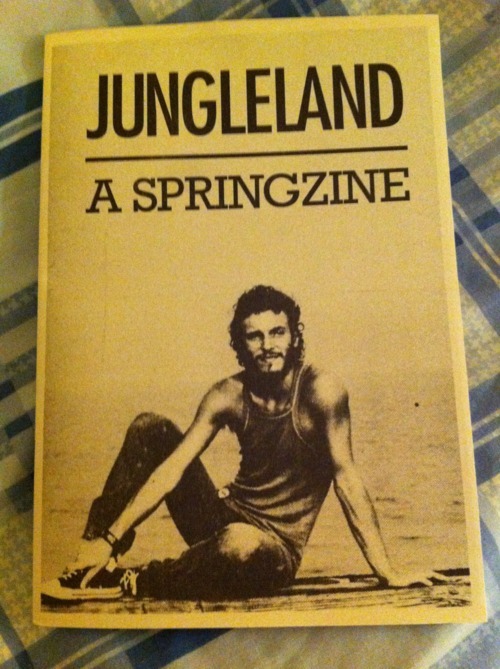
Jungleland
Released: August 1975
Album: Born to Run
Inspiration: Perhaps Bob Dylan’s “Desolation Row”
I would say the biggest surprise of this Springsteen Hall of Fame first class is that Jungleland beat out many songs that I think are significantly more famous. But I’m thrilled about it. Jungleland, probably more than any other single song, is why I became a Springsteen fan.
I came to Springsteen late — Born in the USA came out when I was in high school, and I bought the album because everyone bought the album. I liked it well enough, but at that point I saw Springsteen as a pop singer/songwriter, not unlike Elton John or Billy Joel or, Lord help me, Phil Collins. I was almost entirely unaware of his history. He was the guy who pulled the super cute Courtney Cox on stage for Dancing in the Dark. And the guy who looked kind of goofy pitching in “Glory Days.”
I probably can’t recount the exact order of my Springsteen awakening, but I fear it had something to do with the movie “Eddie and the Cruisers.” That movie was on cable more or less 24 hours a day just when we got cable. That really was a pretty terrible movie, but it had something magnetic about it, and I probably saw it 20 times. I remember a friend telling me that it was really kind of a Springsteen ripoff. I’m pretty sure that inspired me to go back and buy “Born to Run,” which I loved immediately.
And the most extraordinary part of Born to Run for me was listening to “Jungleland” while reading along the lyrics that were included. I don’t think I’d ever done that before — listen to music and follow the lyrics. Everything about Jungleland felt like a new experience, even though the song was already 10 years old. The imagery was absurdly alive right from the first word (“The rangers had a homecoming/in Harlem late last night”). I still feel all of it. The city lit up by the giant Exxon sign. Kids flashing guitars like switchblades. The local cops as Cherry Tops.
Then you throw in Clarence’s gorgeous solo. You throw in Suki Lahav’s piercing violin. You throw in the way the song’s pace picks up and slows down, comes to a stop, begins again …
Beneath
The city
Two hearts beat.
Soul engines running through a night so tender
I think I listened to Jungleland a hundred times those first few weeks in trying to unlock how it made me feel. I guess, based on the voting, a lot of people had that reaction.
Rosalita (Come Out Tonight)
Released: September 1973
Album: The Wild, the Innocent & the E Street Shuffle
Inspiration: Springsteen’s Life
I’m not sure what anyone can write about Rosalita that captures the song’s joy, its hunger, its optimism and its mischief. I sometimes think of the quirky fun of opening up Russian nesting dolls. You keep opening them thinking, “OK, this is the last one, there’s no way they could fit a doll inside this one. And when there is one inside, there’s this sweet feeling of surprise and happiness. That’s Rosalita. Every time you think the song can’t soar any higher, can’t be any happier, can’t push to 11 … it blasts off again.
Lately, my kids have been forcing me to watch the X-Men movies; I shouldn’t say “forced” because I actually like them a bit. The thing I like most, I think, is seeing these people with super-powers they can’t really control. They’re indiscriminately shooting lasers all over the place, and they’re mistakenly sending people into comas and they’re turning stuff into ice by mistake (or is that “Frozen?”). There’s some of this in the early Harry Potter too. I’m fascinated by efforts to harness great power.
This is how I’ve come to think of Springsteen’s younger years. I imagine him having imagery and rhymes and thoughts and dreams and music rushing at him nonstop in bold and blue lightning bolts. And he’s so young he has absolutely no way to control it or organize it or modify it. “Blinded by the Light” is one of my favorite songs off Bruce’s first album for just this reason: It’s a mad attack of rhymes and weirdness and desperate ambition and tiny bits of genius.
Rosalita is like that too — only with more genius. What can you make of this:
My tires were slashed
And I almost crashed
But the Lord had mercy
My machine she’s a dud
And I’m stuck in the mud
Somewhere in the swamps of Jersey
Hold on tight
Stay up all night
Cause Rosie I’m coming on strong
By the time we meet
The morning light
I will hold you in my arms

This is just Bruce full of energy, full of lust, full of life, full of himself, full of love, full of fun, full of ambition just unloading everything inside into a song. It’s a messy, sweet, funny, powerful song that just crashes over you like a giant wave. You know listen to Rosalita; you are knocked down by it. Bruce has called it the greatest love song he ever wrote. I don’t actually agree. He wrote some other amazing love songs — including the amazing stuff on Tunnel of Love and a couple of songs that will be inducted into the Hall with Rosalita — but I do think this: He never got closer in a song to what it feels like to be YOUNG and in LOVE. Few have. The Beatles with “I Want to Hold Your Hand.” REM’s “Nightswimming.” I actually put John Cougar Mellencamp’s “Jack and Diane” on the list, along with Little Richard’s “Tutti Frutti,” Ray Charles’ “Mess Around,” maybe Journey’s “Don’t Stop Believin’,” Prince’s “Little Red Corvette,” Nirvana’s “Smells Like Teen Spirit,” and Icicle Works “Birds Fly (Whisper to a Scream”). A lot more but those are a few that come to mind.
Just glad the the record company gave Bruce that big advance.
Thunder Road
Released: August 1975
Album: Born to Run
Inspiration: Roy Orbison’s “Only the Lonely.”
Everything about Thunder Road is perfect. Absolutely everything. The beginning — “The screen door slams/Mary’s dress waves.” The ending — “I’m pulling out of here to win.” The piano. The slow opening. The way the pace picks up. And those beautiful lines.
Roy Orbison singing for the lonely.
Hey that’s me and I want you only.
You can hide ‘neath your covers and study your pain
Make crosses from your lovers, throw roses in the rain.
Waste your summer praying in vain for a savior to rise from these streets.
There were ghosts in the eyes of all the boys you sent away.
They haunt this dusty beach road in the skeleton frames of burned out Chevrolets.
Ghosts in the eyes. Perfect. This is Springsteen’s most perfect song, I think. Badlands is the best concert song. Rosalita is the most fun song. The Promise is my favorite. And Thunder Road is the most perfect song.
Born to Run
Released: August 1975
Album: Born to Run
Inspiration: Rock ’n roll
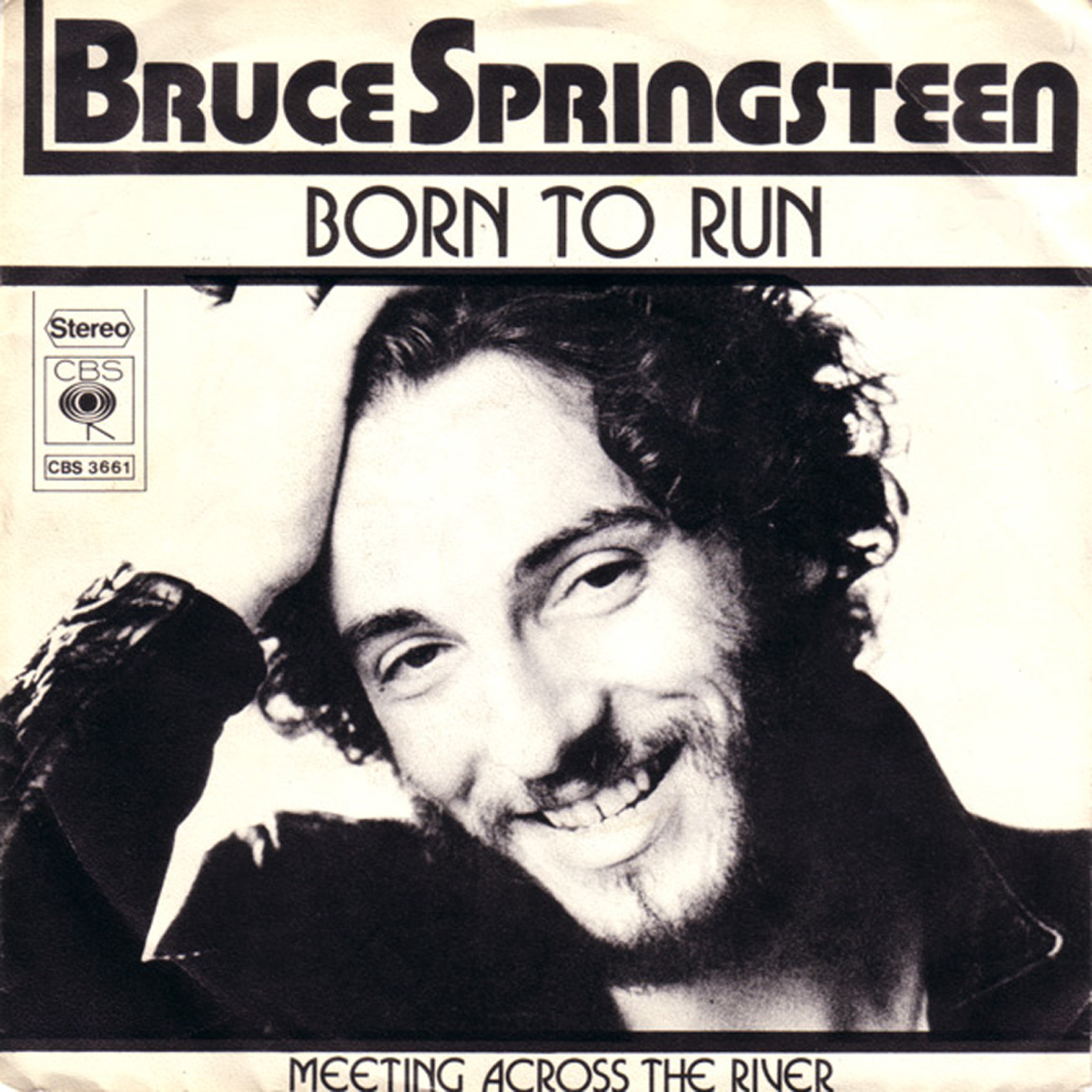
Born to Run edged out Thunder Road with the most points in our poll, which is no surprise. It is Springsteen’s most famous song, his most popular song and, frankly, his anthem.
I’ve written about Born to Run countless ties and can only think of one more thing to add here. Among the countless things I love about BTR, perhaps the biggest is that Springsteen was unabashedly trying to write the greatest rock song ever. No false modesty. No hidden agendas. He wanted to write the best rock song ever.
I love that. Once when I was in Augusta, Ga., I wrote a column about an inner-city quarterback who had the most fantastic arm you ever saw. He wasn’t a great prospect, I guess, and I’m not sure what his grade situation was, and as far I know he never went on to college football. Maybe he did — I lost track of him. But his coach called me up one day and said, ‘Listen, you have to come out here and see this kid throw.”
So I went out to the practice and … it really was staggering. It looked almost like an optical illusion. Every time he threw, it looked like the ball was pulled out his hand by some invisible rope attached to a rocket. I mean: it was stunning. I watched him throw blistering 30- and 40-yard outs with flicks of the wrist, He threw so hard nobody on the team could catch the ball. I saw him throw passes with the ball 70 or 80 yards in air like he was playing catch in the backyard.
He was a nice kid, from what I remember, and I talked to him for a while. I asked how far he could throw the ball. He shrugged and said he didn’t know, he never tried to throw it as far as he could. I asked him why not, and he shrugged. “Maybe I’ll try sometime,” he said. It was strange, and it was something I’ve thought about a lot since then. I keep thinking that there is something that holds a lot of us back, something that keeps us from ever giving that last ounce of effort, the ounce that we would rather keep for ourselves. I’ve seen that a lot, I’ve felt that a lot too — it’s almost like we would rather not know where our limits reach, would rather live with the possibility of missed success than the certainty of intensive failure.
Maybe that doesn’t make much sense. The great Richard Ben Cramer, on Ted Williams, wrote: “Few men try for best ever.” I think that’s right. Springsteen wanted to try. He unleashed every single thing he had inside an effort to write the best rock ’n roll song ever. The result was Born to Run. Rolling Stone, in their Top 500 songs, ranked it the 21st best song ever recorded. Others have it higher. Others have it lower. Whatever the ranking, it was one hell of an effort.