Friday, June 07, 2013

A Lung for Sarah Murnaghan

It’s exactly what we feared—the politicization of health care. 


June 7, 2013


If I were the parent of a child who might be kept alive — if only for a few more years — by a lung transplant, I too would move heaven and earth to get it done. That the parents of ten-year-old Sarah Murnaghan have made her an Internet and cable-news celebrity in a desperate effort to get her on the adult list for a lung transplant is completely understandable. No one with a particle of human sympathy can fail to be moved by the family’s situation.

The story, however, has loosed a torrent of demagoguery — some of it coming from the very people who should be most alarmed about the politicization of cases like Sarah’s and of health care generally.

Talk radio and TV have been ringing with strident and even hysterical accusations that HHS Secretary Kathleen Sebelius is “letting this little girl die,” or “choosing who will live and who will die.” Some are linking Sebelius’s supposed callousness to the terrible, politicized rationing of health care that Obamacare will inaugurate.

This is all backwards. The people calling upon Sebelius to intervene and grant a waiver from the usual rules regarding children and transplants are the ones urging the politicization of medical care — at least in this case. They would be the ones responsible for setting a terrible precedent. The lesson would be this: If you can muster public pressure through social media, the press, and politicians, your loved one can get an advantage over others waiting for a lung or kidney or liver. Photogenic patients or those with media-savvy or even politically well-connected relatives would go to the head of the line. That is exactly what conservatives ought to fear.

It may well be that the rules about eligibility for lung transplants need an overhaul. But the laws of economics dictate that when a commodity is scarce, there are two ways of allocating it — by price or by rationing. Organs are scarce. As Sebelius noted in response to a congressman demanding that she change the rules, 222 people are waiting for lung transplants in Sarah’s region alone, including six children aged ten and younger. Nationally, about 1,700 people are waiting for lung transplants, including 31 children ten and younger. Lung transplants are very high risk — only 50 percent of recipients survive longer than five years.

Deciding who among the desperately sick should get a lung or other organ when they become available is managed by a nonprofit called the United Network for Organ Sharing. UNOS has developed a complicated scoring procedure for those seeking a lung transplant that takes many factors into account, including how sick the patient is and how long he or she would be expected to survive post-transplant.

Sarah has cystic fibrosis, and the statistics for people with cystic fibrosis are grim. A lung transplant is not a cure. Cystic fibrosis ravages other organs as well. A 2007 review of the data from the U.S. Cystic Fibrosis Foundation found that the benefits of lung transplants for children with cystic fibrosis were hardly clear. Of the 248 children who got donor lungs between 1992 and 2002, only five were found to have benefited significantly.

Any system of allocating organs must be as fair as possible to all concerned. That means employing neutral criteria about who gets organs when they become available. Sebelius has agreed to order a review of the policy that separates pediatric and adult cases, but those pressing her to help one particular patient are corrupting the system.

This kind of politicization of medical care is one of the chief objections to Obamacare. Its enormous bureaucracy, its byzantine rules, the IPAB, and the discretion handed to (yes) the secretary of HHS, threaten to make politicization of treatment the order of the day. It’s exactly the reverse of what we need.

There is an alternative that would help patients like Sarah and the rest of us — reducing the scarcity. Decades of pleas for donations have not worked. If we permitted a system of payments (carefully regulated) for those donating organs, we’d take a huge step toward making more available for those who desperately need them.

The same principle applies more generally. Rather than permit the government to ration care, reform should focus on creating more supply. The cries of some talk-show hosts notwithstanding, Kathleen Sebelius isn’t in control of whether Sarah Murnaghan lives or dies. But if Obamacare is fully implemented, she and her successors will have such power over all of us.

— Mona Charen is a nationally syndicated columnist. © 2013 Creators Syndicate, Inc.

Thursday, June 06, 2013

O’s cynical picks

Politics first, foreign policy last


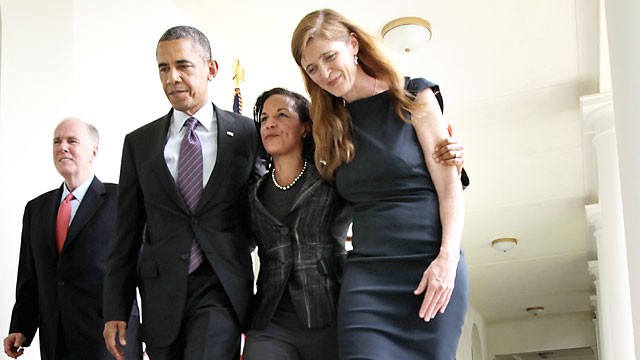
PHOTO: President Barack Obama, second from left, former aide Samantha Power, right, U.S. Ambassador to the United Nations Susan Rice, second from right, and incumbent National Security Adviser Tom Donilon, left, return to the Oval Office after a personnel
President Barack Obama, second from left, former aide Samantha Power, right, U.S. Ambassador to the United Nations Susan Rice, second from right, and incumbent National Security Adviser Tom Donilon, left, return to the Oval Office after a personnel announcement at the Rose Garden of the White House June 5, 2013 in Washington. (Alex Wong/Getty Images)
There are three big losers from President Obama’s cynical appointment of Susan Rice as his new national security adviser: Secretary of State John Kerry, Congress and the American people.
As for the nomination of left-wing activist Samantha Power to replace Rice as UN ambassador, the losers are our foreign policy, our allies and the lefties bellowing for the closure of Gitmo. (It ain’t shutting down soon; this nomination’s a consolation prize to O’s base.)
These personnel choices are brilliant hardball politics — but, once again, the Obama White House has elevated politics above serious strategy.
Media pundits promptly opined that Rice’s appointment will alienate Republicans. But our president’s written off Republicans as dead meat. Bringing Rice into the Executive Branch’s innermost circle rewards her for being a good soldier in taking the fall on Benghazi, and it makes it virtually impossible for Congress to subpoena her for a grilling, thanks to our government’s separation of powers. Sharp move, Mr. President.
Pity poor John Kerry, though: He really, really wanted to be a noteworthy secretary of state. Already held at arms-length, now he’ll be relegated to visiting countries that never make the headlines and handing out retirement awards (plus working on the Middle East “peace process,” the ultimate diplomatic booby prize).
Rice has the weakest credentials of any national security adviser in the history of the office, but she has the president’s ear as his old pal. And she’ll work in the White House: Proximity to POTUS is trumps in DC. Kerry’s desk in Foggy Bottom might as well be a hundred miles from the Oval Office.
However incompetent, Rice may become the most influential national security adviser since Henry Kissinger eclipsed the entire State Department. Which means that Obama’s foreign policy, already disastrous, is now going to get worse.
As for the earnest Ms. Power, she has zero qualifications to serve as our UN ambassador. She’s a left–wing militant who has yet to show the least interest in defending America, rather than merely using our might as her tool. Her cause is human rights abroad, and that’s her only cause. And while respect for human rights should be a major factor in our foreign policy, it can’t be the only factor.
Both Power and Rice consistently advocate using our military to protect the human rights of often-hostile foreign populations. Of course there are, indeed, times when measured intervention is strategically wise and morally imperative — but our military’s fundamental purpose is national defense, not mercy missions to those who spit in our faces.
(By the way, I know of no instance when Power has vigorously defended Jews or Christians murdered or driven from their homes by the Arabs she wants to “save”; guess human rights aren’t universal, after all.)
As leftists cheer both choices, one can’t help recalling the cries of “Chicken hawk!” directed at the neocons in the Bush years. Much was made of the neocons’ enthusiasm for sending in our troops, although none of the movement’s leaders had served in our military. Now we have leftist kill-for-peace activists who never served in uniform. That’s different, of course.
On a purely practical level, Power is a terrible choice to be our UN rep. It’s a job for a veteran, polished ambassador who understands the arcane ways of diplomacy and the UN’s exasperating rules and procedures — which the Russian and Chinese ambassadors employed to humiliate Rice. It’s not a job for a zealot on a hobby horse.
Obama knows that, of course. But the Power nomination’s a win for him, even if she’s not confirmed. He just covered his left flank on the cheap. It’s not about Power, just about power.
Ralph Peters’ new book is “Hell or Richmond,” a Civil War novel.

Today's Tune: Howlin' Wolf - Meet Me In The Bottom

TIPS FOR RIGHT-WINGERS ON THE IRS SCANDAL

By Ann Coulter
June 5, 2013

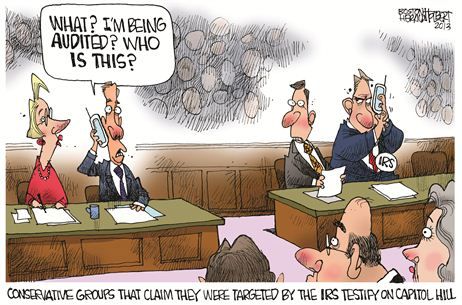
Political Cartoons by Jerry Holbert

Instead of showing endless loops of IRS employees wasting taxpayer dollars line-dancing -- Breaking news: Government employees waste millions of your dollars every single day! -- I think it would be more useful for the public to hear a few crucial facts about the exploding scandal at the Internal Revenue Service.

At Tuesday's congressional hearings on the IRS, witnesses provided shocking details about the agency's abuse of conservative groups.

The IRS leaked the donor list of The National Organization for Marriage to their political opponents, the pro-gay-marriage Human Rights Campaign. This is not idle speculation: The documents had an internal IRS stamp on them. The list of names was then published on a number of liberal websites and NOM's donors were harassed.

The IRS demanded that all members of the Coalition for Life of Iowa swear under penalty of perjury that they wouldn't pray, picket or protest outside of Planned Parenthood. They were also asked to provide details of their prayer meetings.

Rep. Jim McDermott, D-Wash. -- who was ordered by the D.C. Circuit Court to pay more than $1 million to John Boehner in 2008 for the sleazy maneuver of publishing an illegally taped private conversation -- blamed the conservative groups themselves. "Each of your groups was highly political," he lectured them, noting that they wouldn't have been asked any questions if they hadn't requested tax-exempt status.

Even a fair-minded person -- not to be confused with Jim McDermott -- might hear about the IRS' harassment of groups with "tea party," "patriot" or "liberty" in their names and think: "How do we know the IRS wasn't equally hard on left-wing groups?"

What might be more helpful than clips of IRS staff line-dancing would be for reporters, say at Fox News, to mention a few examples of the wildly partisan left-wing groups that the IRS has certified as tax-exempt.

Among the many left-wing groups with tax-exempt status are:

-- ACORN (now renamed as other organizations, but all still tax-exempt), "community organizers" who engage in profanity-laced protests at private homes, dump garbage in front of public buildings and disrupt bankers' dinners in order to get more people on welfare in order to destroy the capitalist system and incite revolution;

-- Occupy Wall Street, which -- in its first month alone -- was responsible for more than a dozen sexual assaults; at least half a dozen deaths by overdose, suicide or murder; and millions of dollars in property damage;

-- Media Matters for America, a media "watchdog" group that has never noticed one iota of pro-Obama bias in the media;

-- Moveon.org, which ran ads comparing Bush to Hitler under its 501(c)(4) arm;

-- The Center for American Progress, an auxiliary of the Democratic National Committee funded by George Soros and staffed by former Clinton and Obama aides to promote the Democratic agenda;

-- The Tides Foundation, which funnels money to communist and terrorist-supporting organizations;

-- The Ford Foundation, which has never found a criminal law that isn't "racist."

These groups are regarded by the IRS as nonpartisan community groups, merely educational, while dozens of patriotic, constitutional, Christian or tea party groups are still waiting for their tax exemptions.

That's to say nothing of Planned Parenthood, PBS and innumerable other Democratic front-groups that not only have tax exemptions, but get direct funding from the government.

By contrast, the conservative groups being raked over the coals by the IRS actually were nonpartisan. The tea party forced sitting Republican senators off the ticket in Alaska and Indiana, and toppled "establishment" Republicans in Utah, Delaware, Nevada, Florida and Texas. Far from being a secretly pro-Republican group, the tea party has been a nightmare for Republicans.

Show me one instance where the Center for American Progress was more of a problem for Democrats than Republicans.

It is obviously in the interest of the left to show us liberal groups also harassed by the IRS, so it's striking that they haven't been able to produce one yet.

Instead, they hearken back to the Bush years to claim that the IRS once audited the NAACP, which is treated as ipso facto political harassment.

First of all, the NAACP doesn't exactly have a sterling record of rectitude when it comes to organization funds. In the 1990s, the NAACP used tax-exempt contributions to pay hundreds of thousands of dollars of hush money to the mistress of then-executive director Benjamin F. Chavis Jr. -- as detailed in enraged columns by Carl Rowan at the time.

Find a tea party organization that's done that, and we'll understand the IRS conducting a three-year proctology exam on the group.

Second, the Bush-era audit of the NAACP was prompted by a blindingly partisan speech given by NAACP chairman Julian Bond at an organization meeting in Philadelphia in July 2004. Bond attacked a slew of elected Republicans by name, denouncing the entire party as one whose "idea of equal rights is the American flag and Confederate swastika flying side by side."

That's what we call "black-letter law" on improper activity for a tax-exempt organization. As a 501(c)(3) group, the NAACP is prohibited from supporting or opposing any candidate for elective office.

The NAACP responded to the IRS' letter by screaming from the rooftops that it was political payback. Consequently, Bush's IRS commissioner requested that Treasury's inspector general investigate the IRS' tax-exempt unit for political bias. The IG's report found no politics in the NAACP audit and -- to the contrary -- that more "pro-Republican" groups (18) than "pro-Democratic" groups (12) had been audited.

Nonetheless, the NAACP simply refused to cooperate with the IRS. There was nothing the Bush administration could do. No Republican was going to allow the NAACP's tax-exempt status to be revoked on its watch. Two years later, the IRS simply issued a letter clearing the group.

Today, the NAACP openly engages in partisan activity, such as a current weeks-long protest of Republican legislators in North Carolina.

Finally, a tip to the Democrats trying to defend the IRS: As a devoted true-crime TV viewer, I can tell you that when you're caught red-handed, it's never a good defense to say, "Why would I be so stupid to kill my wife right after taking out a huge life insurance policy on her?"

You were that stupid and you got caught.

COPYRIGHT 2013 ANN COULTER 

Agents of Influence

Diana West’s new book unravels the lies Americans have been told about Cold War history.


By  on 6.6.13
http://spectator.org/


American Betrayal: The Secret Assault on Our Nation’s Character
By Diana West
(St. Martin’s Press, 416 pages, $26.99)


There is no statue of Elizabeth Bentley at her alma mater, Vassar College, nor is there any memorial to her at Columbia University, where she received her master’s degree. Bentley’s career as a Communist spy could be the stuff of a Hollywood thriller, complete with a romantic interest in the form of her lover, Soviet intelligence agent Jacob Golos.
Yet Bentley is nearly forgotten today for the very reason that she became famous: She quit the Communist Party in 1945 and went to the FBI with the names of nearly 150 Soviet agents — including such prominent officials as Victor Perlo, chief of the aviation section of the War Production Board — and subsequently testified before Congress about the Communist espionage network she supervised.
Hollywood and academia don’t celebrate anti-Communists, but as Diana West points out, there is a professorship at Bard College named for arch-traitor Alger Hiss. This perversion of history, in which the heroes and villains are reversed in accordance with liberal myth, has important consequences, as West explains in her new book, American Betrayal: The Secret Assault on Our Nation’s Character.
The book examine the lost history that, as West told me Tuesday,  “is not taught to Americans and is not known to Americans,” because “the people who do know it would never be permitted to teach it on our campuses,” which West describes as “occupied territory.” This misunderstanding of Communism is the result of a dishonesty that entered American discourse after 1933, when President Franklin D. Roosevelt extended diplomatic recognition to Josef Stalin’s totalitarian Russian regime and, as West says, “we as a society learned to tell lies.”
American lies about Soviet reality — including Stalin’s terror-famine in the Ukraine and the bloody purges of the infamous Moscow “show trials” — flourished in the Popular Front era of the 1930s, even as Soviet agents burrowed into the U.S. government in FDR’s New Deal programs. The lies continued through World War II, when the West’s alliance with Russia against Hitler’s Germany was promoted through U.S. government propaganda that portrayed Stalin as a benevolent figure (“Uncle Joe”) and suppressed information about Soviet atrocities, including the 1940 slaughter of Polish army officers in the Katyn Forest. Not only was it during the war that Communist spies obtained top secret information about the atomic bomb, enabling the Russians to develop their own nuclear weapons within four years of the Hiroshima bombing, but the influence of Soviet agents on U.S. wartime policy helped Stalin conquer Eastern Europe and also helped spread Communist revolution to China.
Even while we were allies with the USSR, the Stalinist regime and its American agents were “engaged in a secret war against us,” West says, and when witnesses like Bentley and Chambers came forward to tell the truth, they were vilified and maligned in much of the press. Not only were these ex-Communists smeared, but officials who sought to investigate Russian espionage and subversion (including both Richard Nixon and Joseph McCarthy) were also smeared and, in many cases, these smears originated as Soviet propaganda funneled through Communist-controlled organizations and disseminated by sympathetic liberals. So powerful was the counter-attack that, nearly six decades after Joe McCarthy’s death and more than two decades after the collapse of the Soviet Union, popular understanding of Cold War history is still hopelessly confused. Many Americans have been taught to think of anti-Communism — mocked as a hysterical “Red Scare,” and condemned as “McCarthyism” — as more dangerous than Communism itself.
The record should have been clarified during the 1990s, when information from Soviet defectors — including Vassily Mitrokhin, who smuggled thousands of pages of KGB archives out of Russia — and the declassification of the so-called “Venona” intercepts of Soviet intelligence cables confirmed the truths told by Bentley and Whittaker Chambers. Indeed, as these ex-Communists testified, and as McCarthy and other anti-Communist investigators had tried to prove, the U.S. government during the Roosevelt presidency was penetrated by scores of officials who took their paychecks from Uncle Sam but were secretly working for Uncle Joe.
Alger Hiss, Harry Dexter White, Lauchlin Currie — guilty! guilty! guilty! — were prominent among the Stalinist agents in FDR’s administrations whose identities were confirmed by Venona decryptions. These post-Cold War revelations and others contradicted the “Red Scare hysteria” narrative that had treated as preposterous the suspicions aimed at well-credentialed liberals like Hiss (a Harvard Law alumnus) and Currie, a graduate of the London School of Economics who was a key financial policy adviser to Roosevelt.
“With so much confirmation of Soviet infiltration and subversion now in hand,” West says, “not only is a major rewrite of history in order, there are some major wrongs that need to be righted.”
Among the Cold War wrongs in need of correction are not only restoring the smear-damaged reputations of McCarthy and other anti-Communists, but also rescuing from obscurity some other truth-tellers who were demonized for the truths they told. Consider, for example, Army Maj. George R. Jordan, who during WWII worked at an air base in Montana where military supplies were sent to Russia under the Lend-Lease program. In 1949, Jordan told a congressional committee that these supplies included materials like uranium necessary to the development of nuclear weapons, and also testified that the Soviets used Lend-Lease shipments to smuggle secret U.S. documents back to Moscow.
As West details in her new book, Jordan was mocked and denounced by liberals at that time, and he is nearly forgotten now, but nearly all of his testimony has since been confirmed. And one of Jordan’s most controversial claims points to just how high up in the Roosevelt administration the hidden hand of Soviet influence reached. Jordan testified under oath that he got a phone call in April 1943 from top FDR aide Harry Hopkins who gave him direct orders in regard to a shipment of “special” chemicals that were about to arrive at the air base in Montana. Jordan said Hopkins instructed him to make no record of this shipment, which proved to be uranium from Canada. Officials at the top-secret Manhattan Project had ordered an embargo of U.S. uranium shipments to Russia, but according to Jordan, Hopkins had intervened to help the Soviets bypass that obstacle to their own atomic ambitions by arranging the Canadian shipment via Lend-Lease through Montana. Jordan’s account of the phone call from Hopkins was one element of his testimony that congressional investigators were unable to confirm, but there is other evidence — including testimony of a KGB defector and documents from KGB archives — that points toward the conclusion that Hopkins was a willing agent of Soviet influence.
“If Harry Hopkins, the top aide to President Roosevelt, was indeed a conscious agent … what does this say about Roosevelt?” asks West, posing a question fraught with implications for what we know, and still don’t know, about the direction of American policy and the meaning of American history.
Unfortunately, academic historians seem little interested in those question, and the liberals in charge at Vassar College and Columbia University would probably rather erect a statue of Stalin than to pay tribute to their ex-Communist alumna who told the truth about Soviet espionage, Elizabeth Bentley.

Washington booms – thanks to other people’s money

When the economy is pinched, D.C. feels no pain

June 5, 2013
GIVE STEPHEN FULLER credit for this much: He’s willing to admit he was wrong.
During the debate leading up to the federal budget sequester, Fuller was a voice of doom. An economist at George Mason University and the director of its Center for Regional Analysis, he predicted that sequestration would be especially calamitous for Washington, D.C., and its surroundings. If Congress didn’t stop the automatic spending cuts from going into effect, Fuller warned last year, the Washington area was headed for a “devastating recession.” Some 450,000 jobs, many of them in the private sector, would be wiped out in Virginia, Maryland, and the District of Columbia.
“It’s something you don’t even want to draw a picture of because it’s too scary,” he said in a radio interview last summer. In January he described the sequester’s impact on the national capital region as an “end-of-the-world kind of hit.”
But the world hasn’t ended. Not even in Washington.
In the months since President Obama signed the order to cut federal outlays by $85 billion, the Washington Post reported last week, the region has added 40,000 jobs. “Income-tax receipts have surged in Virginia, beating expectations. Few government contractors have laid off workers.” There is no sign of the economic hellfire and brimstone foretold by Fuller, who says it’s a “surprise” to him that Washington’s economy is still booming. “We’ve done better than I expected,” he confessed.
The real surprise is that anyone is still surprised by the affluence of the Washington area.
According to the most recent census data, seven of the nation’s 10 wealthiest counties surround Washington — including the only three counties in the United States with median incomes above $100,000: Loudoun, Fairfax, and Arlington, all in Northern Virginia. In 2010, there were six Washington-area counties in the Top 10; in 2007, there were five. The Great Recession may have left great swaths of America reeling, but it didn’t stop Washington from surging even higher in the income rankings.
If the worst recession in decades couldn’t tarnish Washington’s opulence, sequestration — a political budget maneuver designed to achieve merely a tiny reduction in the growth of federal spending over the next decade — isn’t likely to either.
Coverage of the D.C. area’s high-flying economy sometimes sounds like an episode of “Lifestyles of the Rich and Famous.” In a front-page article last weekend — “What Sequester? Washington Booms as a New Gilded Age Takes Root” — The Wall Street Journal described the extraordinary wealth of Washington’s “moneyed brain trust,” beneficiaries of a generation’s worth of soaring government budgets and immense political aggrandizement. Examples of extravagance are everywhere, from the flourishing Aston Martin dealership selling sports cars at $120,000 and up to the Georgetown hotel that charges $22 for a martini.
Washington hasn’t grown so rich because it is home to industries that produce wealth through commerce or manufacturing or invention. Unlike Silicon Valley or Manhattan or Houston or Hollywood, Washington’s primary activity isn’t the creation of goods and services that have intrinsic value in themselves, and that raise the national standard of living. Government doesn’t generate new income — it redistributes income that others have already generated. Through taxes, spending, and regulation, the federal establishment now dominates more of the private economy than ever, directly confiscating trillions of dollars earned in the private economy, and indirectly controlling the fate of tens of trillions more.
“Power is the great aphrodisiac,” Henry Kissinger famously claimed. It is also a great conduit to other people’s money. When a single tweak in the tax code can make or break a business, when fortunes are being doled out through federal bailouts and contracts, when regulations can decide the future of industries and interest groups, it stands to reason that so many will spend so much to get a piece of what government controls.
“Most federal activity involves taking money from some people, giving it to others, and keeping a big chunk as a transaction fee,” says the Cato Institute’s David Boaz. At its broadest, that “transaction fee” is reflected in everything from overpaid federal employees to Washington’s gargantuan lobbying industry to the clustering of America’s wealthiest counties in suburban Washington.
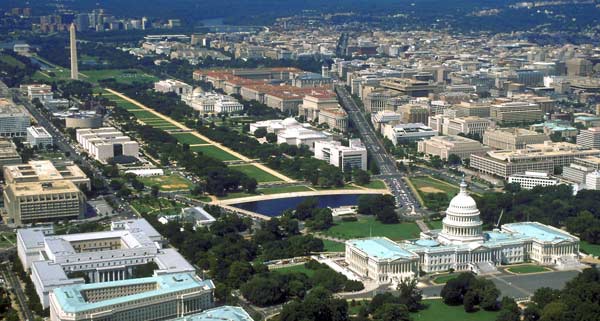
If sequestration really meant a sharp decline in government spending and influence, Versailles-on-the-Potomac might have reason to fear those doomsday scenarios. That’s why you can be sure that Congress and the president will never voluntarily enact anything of the kind. The federal boom will continue at America’s expense, as ever more of America’s wealth goes to Washington to be consumed.
Jeff Jacoby can be reached at jacoby@globe.com. Follow him on Twitter @jeff_jacoby.

Wednesday, June 05, 2013

Today's Tune: Edward Sharpe & The Magnetic Zeros - Home (live @ kcrw)

Obama’s Years of Collaboration with Terror Supporters

Posted By Arnold Ahlert On June 5, 2013 @ 12:55 am In Daily Mailer,FrontPage | 3 Comments

As the Obama administration seeks to move beyond a welter of scandals, a new report by investigative journalist Patrick Poole reveals that the frenzy isn’t quite over yet. On top of the IRS’s targeting of conservatives, the DOJ’s seizure of reporters’ phone records and the coverup surrounding the murder of four Americans in Benghazi, the White House’s years-long collaboration with supporters of terrorism is finally getting the scrutiny it deserves. Poole’s comprehensive GLORIA Center article, “Blind to Terror: The U.S. Government’s Disastrous Muslim Outreach Efforts and the Impact on U.S. Policy,” details the Obama administration’s extensive relationship with accomplices to terrorism and how these associations have shaped administration policy — and endangered the American public in the process. As Middle East expert Barry Rubin commented on the report, “[Y]ou may think that you know this story — but it is far more extensive than has ever before been revealed.”

The primary question at the heart of Poole’s report is simple:
Why has the U.S. government called certain Islamic groups supporters of terror in federal court, and then turned around and called these same organizations ‘moderates’ and embraced them as outreach partners?
Many of the individuals under active federal investigation for terrorist activities were simultaneously meeting with government officials to help formulate U.S. policy during the last three administrations. Under the Obama administration, these same Islamist organizations and their leaders have influenced vital policy measures, including a purge of counter-terrorism training that makes it virtually impossible for law enforcement officials “to connect the dots.”

For example, Poole cites the failure of the FBI to carry out an investigation of Tamerlan Tsarnaev prior to the Boston Marathon bombings, despite Russian warnings. He attributes a portion of that failure to
a full scale campaign of political correctness waged inside the bureau and throughout the U.S. government under the Obama administration against any attempt to link jihadi terrorism with anything remotely connected to Islam of any variety.
This regime of “political correctness” (to put it charitably) is no doubt a function of the Obama administration’s choice of Muslim “outreach partners,” which is rife with individuals like Shaykh Kifah Mustapha. The National Counterterrorism Center (NCTC) extended an invitation to Mustapha to tour its top-secret facility in September 2010, as part of the FBI’s civilian training program, despite the fact that he was named as an unindicted co-conspirator in the Holy Land Foundation trial. That trial represents the largest terrorist financing case in history. During the trial, an FBI agent testified that Mustapha undertook fundraising efforts for Hamas, glorified the terrorist group, and encouraged the slaughter of Jews. Furthermore, the visit also followed Mustapha’s previous removal as a chaplain for the Illinois State Police, due to media reports of his terrorist activities.

The same reckless discounting of radicalism and terror ties can be found at the Department of Homeland Security (DHS), where Janet Napolitano appointed Mohamed Elibiary to her Homeland Security Advisory Council in October 2010, despite his honoring Iranian Ayatollah Khomeini at a 2004 conference, and his open support for Islamist godfather Sayyid Qutb. In 2010, Mohamed Majid, president of the Islamic Society of North America (ISNA), was sitting a few feet from Obama at the annual White House Iftar dinner in August, commemorating the Muslim celebration of Ramadan. ISNA was also cited as an unindicted co-conspirator in the Holy Land Foundation case, along with the Council on American-Islamic Relations (CAIR) and the North American Islamic Trust (NAIT).

The terrorist connections of Muslim aid programs and their financiers have also been scrupulously ignored. The Obama administration continues to fund the Sunni Ittehad Council to combat Pakistani extremism, despite rallies it held celebrating the assassination of a Pakistani governor opposed to the nation’s use of blasphemy laws to punish religious minorities.

Poole also cites the disturbing number of “leaders of American Islamic organizations that partner with the U.S. government” who transition into officials for Muslim Brotherhood fronts. Louay Safi is one such individual. Safi, a former top advisor at the Pentagon, appeared at a 2011 press conference in Istanbul as one the leaders of the Syrian National Council, which seeks to topple Syrian President Bashar Assad and is associated with the Brotherhood. That appearance occurred only weeks after Safi met with top White House officials. Safi was yet another unindicted co-conspirator in the Holy Land case. According to Poole, Safi’s status at the Pentagon became an issue following the Fort Hood atrocity, “when 13 members of Congress sent a letter to Defense Secretary Gates complaining that not only was Safi endorsing Muslim chaplains for the Defense Department on behalf of ISNA [a Muslim Brotherhood front], but also teaching classes on the ‘Theology of Islam’ to troops departing for Afghanistan at Fort Hood and Fort Bliss under a subcontract with the Naval Postgraduate School.”

Five other men made a similar transformation. Ghassan Hitto, a Dallas businessman, former director of CAIR’s Texas branch, and a recent board member of the Muslim American Society that the FBI has identified as a North American “arm” of the Muslim Brotherhood, has become “the provision premier of the Syrian resistance.”

Muthanna al-Hanooti is a former CAIR director and a former federal prisoner convicted for doing business with Iraq as part of a plea deal that stemmed from a far more serious indictment accusing him of attempting to influence Congress on behalf of Hussein’s Iraqi Intelligence Service (ISI). He is now regional director for the Detroit chapter of the Muslim Legal Fund of America.

Mahmoud Hussein is the current secretary general of the Egyptian Muslim Brotherhood, recruited while studying at the University of Iowa. He was once president of a now defunct subsidiary of ISNA know as the Muslim Arab Youth Association (MAYA), which sponsored several conferences featuring terrorists affiliated with the Muslim Brotherhood.

Ishaq Farhan, a longtime board member of the Washington-based International Institute for Islamic Thought (IIIT) now heads the the Islamic Action Front, the Muslim Brotherhood’s political arm in Jordan.

Ahmed Yousef was the director of the United Association for Studies and Research (UASR), identified as early as 1993 as Hamas’s “political command” in America. According to the terror group’s charter, they consider themselves a “wing” of the Muslim Brotherhood in Palestine. Yousef, who fled the U.S. in 2005 on terror-realted charges, is currently a spokesman for Hamas in Gaza, and a senior political adviser to their terrorist leader, Ismail Haniyeh.

Poole notes that, because so many of the Islamic outreach partners affiliated with the government turned out to be fronts for the Muslim Brotherhood, the government is making “extraordinary efforts” to ignore that reality. This self-orchestrated denial has led to an incredible policy implemented by the Obama administration, one that was formulated as a result of the FBI’s continued relationship with CAIR, despite its aforementioned status as an unindicted co-conspirator in the Holy Land case.

It began with the purge of hundreds of documents and presentations from counterterrorism manuals, leading to the creation of the FBI’s “Touchstone Document.” That document finally codified the Obama administration’s increasingly despicable approach to terror. It articulates a new policy that ought to enrage every American, even as it will undoubtedly endanger us all (emphasis added):
Training must clearly distinguish between constitutionally protected statements and activities designed to achieve political, social, or other objectives, and violent extremism, which is characterized by the use, threatened use, or advocacy of use of force or violence (when directed at and likely to incite imminent lawless activity) in violation of federal law to further a movement’s social or political ideologies. This distinction includes recognition of the corresponding principle that mere association with organizations that demonstrate both legitimate (advocacy) and illicit (violent extremism) objectives should not automatically result in a determination that the associated individual is acting in furtherance of the organization’s illicit objective(s).
In other words, if a terrorist group performs any “advocacy” function, such as building a school or a day care center, the FBI cannot “jump to conclusions” about individuals associated with the group, even if it is also perpetrating mass murder. Thus, as Poole notes, the terror support of this administration’s Muslim outreach partners “is absolved with a rhetorical sleight-of-hand.”

The result? “This is why Mohamed Majid, who just a few years before was treated as a pariah by the Attorney General of the United States after federal prosecutors named his organization as a front for the Muslim Brotherhood and a supporter of terrorism in the largest terrorism financing trial in American history, can just a few short years later not only be rehabilitated, but can regularly be found–much as al-Qa’ida fundraiser Abdul Rahman al-Amoudi who preceded him–a frequent visitor to the White House,” writes Poole.

Poole then goes on to reveal a parade of “rehabilitated” terrorists and their organizations that have been, and will continue to be, welcomed into the country by the Obama administration. These include people like Hani Nour Eldin, a known member of the U.S.-designated terrorist group Egyptian al-Gama’a al-Islamiyya, who visited the White House in 2012 to demand the release of “Blind Sheikh” Omar Abdel Rahman. Rahman was convicted for his role in the 1993 bombing of the World Trade Center. Sudanese war criminal Nafie Ali Nafie, the architect of two genocides in that nation, also got the red carpet treatment, receiving an invitation to the State Department as part of a Sudanese delegation.

Poole further reveals that such monstrous accommodation begets an even more insidious downside. “No sooner had the White House’s new outreach policy been announced, when it became clear that one of the policy outcomes of this relationship was the administration’s enforcement of a blacklist of subject matter experts deemed ‘enemies’ by their Muslim partners,” he writes. Coupled with the “Islamophobic” purge of law enforcement training manuals, the Obama administration began fully embracing this Alice in Wonderland approach to terror, best described as one that allows enemies of the United States to help us decide who our enemies are — and who they aren’t.

Poole uses a quote by Andrew McCarthy, who prosecuted the Blind Sheikh, to encapsulate the insidiousness of this policy. “I marched into the courtroom every day for nine months and proved that there was an undeniable nexus between Islamic doctrine and terrorism committed by Muslims…And when I demonstrated the straight-line, undeniable logic of the evidence–that scripture informed the Blind Sheikh’s directives; that those directives informed his terrorist subordinates; and that those subordinates then committed atrocities–the government gave me the Justice Department’s highest award,” McCarthy writes. “Today, I’d be ostracized. No longer is the government content to be willfully blind. Today, it is defiantly, coercively, extortionately blind.”

It is far worse than that. When five members of Congress led by the retiring Rep. Michele Bachmann (R-MN) attempted to ascertain the level of Islamic infiltration into the government of the United States, members of both political parties, along with the media, excoriated their efforts to protect the American public. Their ire was further stoked by the group’s inquiry into Hillary Clinton aide Huma Abedin’s family, despite the reality that her mother, brother and deceased father are/were members of the Muslim Brotherhood and its affiliate organization, the Muslim Sisterhood. Ironically, given the parameters of the Touchstone Document, it would now likely be irrelevant if Huma Abedin herself belonged to either branch of the organization.

Yet as this extensive investigation by Poole reveals, Bachmann, et al., have not only been vindicated, they may have underestimated the problem. It remains to be seen if Congress, already up to its necks in administration scandals, will be willing to take this one on as well. As the atrocity in Boston indicates, American lives literally depend on it.

Freedom Center pamphlets now available on Kindle: Click here.

Article printed from FrontPage Magazine: http://frontpagemag.com
URL to article: http://frontpagemag.com/2013/arnold-ahlert/exposed-obamas-years-of-collaboration-with-terror-supporters/

Deacon Jones: The Man Who Brought Sacks to Life

Imagine if Mariano Rivera was not only the greatest closer in baseball history but had also invented the concept of the save. Or if Bob Cousy had come up with the word “assist.” See, Deacon Jones was more than a legendary defensive end, more than a pioneer. He helped invent professional football. He was an American original.
When it comes down to it, these games we play are constantly evolving, right? Football bears only a passing resemblance to the violent and raw game the kids at Rutgers and Princeton were playing after the Civil War. It is almost nothing like the game Walter Camp taught or Red Grange played. Why? Rules have changed over 150 years, but that’s not the big reason. It’s not about legislation.
No, the big reason is that the game, like society, has progressed, regressed, expanded, changed course thanks to thousands and thousands of small adjustments and innovations: The forward pass; the draw play; the trap play; the T formation; the flex defense; the West Coast offense; the yellow first down line on television; the helmet; instant replay; the three-point stance; the screen pass, on and on and on. The game has grown rich in detail and style because of the many fertile minds that have considered it and, even more, because of the many brilliant and original athletes who played it. Deacon Jones just happened to be both of those.
It seems absurd to us - at least it always did to me as a kid - that the NFL did not count the sack when Deacon Jones was playing defensive end for the Los Angeles Rams. Why would you not count the sack? In sports, we just naturally count things - goals, rebounds, home runs, touchdowns - and what could possibly be easier to count than the sack? You just count the times the guy gets the quarterback … what’s hard about that? I felt the same way about blocked shots in basketball. How could they not count Bill Russell’s blocked shots?
Then, it’s a hard concept for a kid to understand that everything, even seemingly the most ubiquitous things, had to be invented. They didn’t just happen. Someone had to be the first to put a camera in the blimp (this was the great sports producer Frank Chirkinian). Someone had to be the first to create the drive-thru window (often credited to Ray Kroc, who made McDonald’s the world-wide phenomenon, but it seems likely that it was in existence in various places around America years before). Someone had to discover that a baseball, thrown certain ways, curves (credit for this goes to Hall of Famer Candy Cummings, though there are several others who have a claim on the discovery).
And someone had to invent the sack. Well, that’s not exactly right. No one person could invent the sack. For one thing, it already existed – players had been tackling quarterbacks since the dawn of the game. But it did not exist as an individual concept. It did not have a name. It was not counted. The quarterback tackle blended into the game unnoticed … until Deacon Jones.* He may or may not have come up with the word, there is debate about that. But he definitely invented the concept with the way he played.
Deacon Jones was bigger than life from the start. Well, for one thing, he really WAS bigger -- 6-foot-5, 270 pounds. He grew up in Florida -- the seventh of eight children -- at a time when it was a deeply segregated place. This is not so long ago. He did drink from the colored drinking fountain. He did use the colored bathroom. It did not sit right with him. He was smart and outspoken and unwilling to simply go along. He sometimes talked about seeing Jackie Robinson play, and the impact that had on his life, the responsibility he felt because of that.
After various adventures, he found his way to South Carolina State and the football team. He often led the team in prayer - that’s why they called him Deacon. He was also a force of nature - even 40 years later, people remembered the crazy things he would do. There was always debate about why he left S.C. State - some said it was because he was deeply involved in civil rights politics, but his old teammate, Willie Jeffries, told the school magazine many years later that he simply flunked out. Either way he ended up at Mississippi Vocational College, which became Mississippi Valley State. Like so many other wonderful sports stories, the Rams scout was actually looking at another player when he noticed Jones. The Rams took him in the 14th round.
His first year, he made $7,500. He didn’t think that was especially fair. He never liked being overlooked - would not tolerate it. And so he started talking about sacking the quarterback. Until then, in the papers, defensive players - when they were named at all - tackled quarterbacks. But “tackle” well, that’s a fishing word, a perhaps adequate word when you bring down a running back or a receiver or someone like that. But quarterbacks are different. Quarterbacks are kings on the chess board. Quarterbacks are like capitols of nations. You don’t TACKLE quarterbacks. You sack them, the way the Visigoths sacked Rome. Nobody can say for sure if Deacon Jones actually coined the phrase. But he was the first to use the word who mattered.
Jones did not only use sack as a verb, though. He used it as a noun too. He began to talk of his quarterback tackles as sacks. He began to explain that he had more sacks than anyone.
It isn’t like the term caught on right away. Few used it in print. Nobody counted sacks, not until 1982, long after Deacon had retired. But it was Deacon Jones’ colorful name - and his vivid play - that brought the sack to life. Jones was better at sacking the quarterback than anyone had ever been. He formed this move - blandly and accurately called the head slap - where he would whack an offensive lineman in the head and then run around him and sack the quarterback. It was not necessarily the most sporting of moves - it is illegal now, of course - but it was effective. Offensive linemen, one after another, would say that getting hit in the head by Deacon Jones felt like getting hit with a sledgehammer. Deacon was big, and he was ridiculously strong, and he was shockingly fast. Once offensive linemen were immobilized, he swallowed quarterbacks whole.
One of the great historical football question of the last 50 years is this: How many sacks did Deacon Jones’ have? He estimated about 180 for his career. Pro Football Weekly did a detailed study and came up with 194 1/2 including what would still be a record 26 in 1967 - and remember that was only in 14 games. But the numbers remain distressingly unofficial, and so far there has been no real effort by the NFL to complete the historical record. It’s a shame. I maintain that if the sack was an official NFL statistic when Deacon Jones was playing, he would be prominent in the discussion as the greatest defensive player who ever lived.
He still SHOULD be in that discussion, of course - after all, count them or not, he did sack all those quarterbacks - and in certain circles, he is talked about that way. But most of the time the argument revolves around Lawrence Taylor or Reggie White or Dick Butkus, who was colorful in his own way. Deacon Jones saw, the way visionaries see, that if people don’t count sacks, then sacks won’t count. It is the old tree falling in the empty forest bit.
Deacon Jones died on Tuesday, and it reminded me that when I was a kid, absurdly, I tended to confuse Deacon Jones and Bubba Smith. Hey, I was young, and they were both before my time, both huge former football stars who showed up in movies and on television. Also no one counted sacks. I remember once admitting my Bubba Smith-Deacon Jones comparison to my friend Roman Gabriel, a star quarterback on Deacon Jones’ Rams. He shook his head sadly.
“Bubba Smith was a good football player,” he said. “Deacon Jones was a legend. There’s a big difference.”

Our Francis, Too

Why we can enthusiastically join arms with the Catholic leader.

June 4, 2013
Francis I: The pope of the 99 percent?
Papa Francesco! In the damp darkness of St. Peter's Square, the crowds chanted his name when Jorge Mario Bergoglio, the archbishop of Buenos Aires, was named the new pope. Seldom has a religious leader been embraced so warmly across the Christian world, including by many evangelicals. Seldom has hope risen so high so quickly. And the hope has arisen for good reason.
Since the Reformation, many of the names chosen by popes—Pius, Clement, Leo, Urban, even Benedict—sound quaint to non-Catholic ears. But the humble Francis of Assisi is a saint for everyone. Francis challenged the church of his day—not by conforming to the standards of the world but by returning to the pattern of Jesus, the one who did not seek status but humbled himself and became obedient unto death, even death on the cross (Phil. 2:5–11).
Early on, in a radical act of dispossession, Francis broke decisively with his former life as a soldier and playboy. He stripped off his clothes and ran out of the bishop's palace stark naked, saying, "I will no longer be called the son of Pietro Bernardone. From now on I shall say simply, 'Our Father, who art in heaven.' "
We see already an intimation of Saint Francis in Pope Francis. There is his simple apparel: black street shoes instead of the calfskin red of his predecessors, simple white cassock minus gold-embroidered accessories. In addition, a pope who lives in a modest guest house (versus the spacious papal apartments), worships on Maundy Thursday with young prisoners, and who embraces hiv/aids patients in a hospice follows in the steps of il poverello, "the poor one," as Saint Francis was called.
Since the Roe v. Wade Supreme Court decision of 1973, Catholics and evangelicals in the United States have worked side by side to advocate for the sanctity of life. The pro-life community will have a strong ally in the new pope. He has referred to abortion as the "death penalty" for the unborn. In 2005, he admonished his fellow believers in Argentina to "defend the unborn against abortion even if they persecute you, calumniate you, set traps for you, take you to court, or kill you. No child should be deprived of the right to be born, the right to be fed, the right to go to school." Likewise, Francis of Assisi was known for his passion for spreading the Good News, once making a trip deep into North Africa to declare Christ to a sultan. One of the great challenges of Pope Francis will be to energize Catholic leaders for the New Evangelization—to study the Scriptures, renew the disciplines of the faith, and boldly proclaim the love of Christ. As important as interfaith dialogue may be, real evangelization requires something more: unambiguous witness for Jesus Christ as the Way, the Truth, and the Life, the one and only Savior.
The sex abuse scandals, by no means limited to the Catholic church, have besmirched Christian witness in the 21st century. Both outside and inside the church's walls, there is much that makes us wince and turn away. But reform and renewal can come only as we face squarely the evil within us and around us and seek the repentance that comes only as a gift. I believe that Pope Francis, a Jesuit, would agree with the first of Martin Luther's 95 Theses: "When our Lord and Master Jesus Christ said, 'Repent,' he willed for the entire life of believers to be one of repentance."
Francis succeeds two men of genius in his papal role. John Paul II was the liberator who stared down communism by the force of his courage and prayers. Benedict XVI was the eminent teacherof the Catholic Church in recent history. Francis appears now as the pastor, a shepherd who knows and loves his sheep and wants to lead them in love and humility. The new Franciscan moment is the season of the shepherd. Catholics and evangelicals are the two largest faith communities in the body of Christ. Without forgetting the deep differences that divide us, now as never before we are called to stand and work together for the cause of Christ in a broken world. We can make a start by praying with Saint Francis:
Most High, Glorious God, bring light to the darkness of my heart. Give me right faith, certain hope, and perfect charity, insight and wisdom, so I can always observe your holy and true command. Amen.
Timothy George is dean of Beeson Divinity School.
Photo: (Credit: AP/Natacha Pisarenko)

Press shield has holes

Such a law would give government the right to define who is a journalist, and who is not.


By Jonah Goldberg
June 3, 3013
goldberg journos
A proposed federal shield law says a “covered person” is someone who “for financial gain or livelihood, is engaged in journalism.”(Photo: Matt Kartozian, USA TODAY

In response to the acknowledged abuses of his own Justice Department, President Obama has urged Sen. Chuck Schumer, D-N.Y., to reintroduce legislation for a "journalist shield law." And in typical Washington fashion, the proposed act would do nothing to prevent the abuses that supposedly make the law so necessary.
We saw a similar response to the horrible Connecticut school shootings last December — a raft of laws that wouldn't have prevented the tragedy in the first place. It seems that whenever government fails to do what it is supposed to do with the laws already on the books, the answer is to give the government even more power.
Ah, but proponents of journalist shield laws argue that such regulations actually limit the power of government by protecting the First Amendment rights of the press. But that begs the question. A journalist shield law must define who is a journalist and who isn't.
On May 26, Sen. Dick Durbin, D-Ill., said on Fox News Sunday that the proposed shield law "still leaves an unanswered question. ... What is a journalist today, 2013? We know it's someone who works for Fox or AP, but does it include a blogger? Does it include someone who's tweeting? Are these people journalists and entitled to constitutional protection?"
Part of the problem stems from Durbin's apparent suggestion that the First Amendment protects only a free press. It also protects free speech, free assembly, freedom of worship and the right to petition the government for the redress of grievances. We all have these rights. The Washington Post's Bob Woodward has no more rights than my dentist.
Who is 'covered person'?
And this is what is wrong with the idea of a federal shield law. One proposed version of the law says a "covered person" is someone who "for financial gain or livelihood, is engaged in journalism." In other words, a journalist is a professional. So, the government gets to decide who's a "real" journalist. That's a horrifying expansion in government authority.
Worse, many judges won't even go that far. For instance, an Illinois judge ruled last year that the popular website TechnoBuffalo didn't qualify for the same protections the state confers to "real" journalists. Cook County (Ill.) Circuit Judge Michael Pantersaid, "The content on TechnoBuffalo's website may inform viewers how to use certain devices or offer sneak peeks of upcoming technology, but that does not qualify the website as a 'news medium' or its bloggers as 'reporters'."
So when this newspaper informs its readers about new gadgets or gives sneak peaks at upcoming technologies, that is journalism. But when a moneymaking website does the same thing, not so much.
In 2009, when the Free Flow of Information Act was last under consideration, Durbin and Sen. Diane Feinstein, D-Calif., pushed to have bloggers and other second-class journalists stripped of protections, eliciting outrage from the left and right. Their stated concern was that bad actors — terrorists, fraudsters, publicists — would claim status as journalists in order to cause mischief and harm. Some critics, though, sniffed a haughty bigotry against "citizen journalists."
No to 'citizen journalists'
Columnist Leonard Pitts captured this attitude well when he proclaimed in 2010 "I do not believe in 'citizen journalism.' Yes, I know that's heresy. ... Yet I remain convinced that, with exceptions, citizen journalism is to journalism as pornography is to a Martin Scorsese film; while they may employ similar tools — i.e., camera, lighting — they aspire to different results."
Pitts' ire was aimed at figures such as James O'Keefe, who has embarrassed a lot of liberal institutions — Planned Parenthood, National Public Radio and others — with his hidden camera operations. With remarkable brevity, Pitts managed to include nearly everything that is mule-headed in this debate. 60 Minutes became a journalistic icon by using hidden cameras in stings. But when citizen journalists use the same methods, it's akin to pornography. Why? Because the results aren't to Pitts' liking.
When James Madison wrote the First Amendment, he undoubtedly had in mind not just journalists but also the countless private, often anonymous, pamphleteers who often went after those in power with hammers and tongs. And that points to the heart of the matter. Journalism isn't a priestly caste or professional guild with special rights. It is an activity we all have a right to partake in. Whether it's a blogger with a virtual tip jar exposing malfeasance or 60 Minutes making fraudulent charges about George W. Bush, there will always be good journalism and bad journalism.
It will undoubtedly be necessary from time to time for the government to distinguish between the two. But those instances should be exceedingly rare, and they should never hinge on who the government thinks is qualified to be a journalist in the first place.
Jonah Goldberg, fellow at the American Enterprise Institute and National Reviewcontributing editor, is author of The Tyranny of Clichés, now out in paperback. He is also a member of USA TODAY's Board of Contributors.
In addition to its own editorials, USA TODAY publishes diverse opinions from outside writers, including our Board of Contributors.