Wednesday, April 29, 2015

The Lawbreakers of Baltimore—and Ferguson

The racial diversity of local government doesn’t matter when people want to seize on an excuse to commit crimes.


By Jason L. Riley
April 28, 2015

Baltimore Mayor Stephanie Rawlings-Blake tours the city after rioting broke out Monday. (Matt Rourke, AP)


The racial makeup of city leaders, the police department and other municipal workers in Ferguson, Mo., played a central role in the media coverage and analysis of Michael Brown’s death, which is worth remembering as history repeats itself in Baltimore.
The Justice Department’s Ferguson report noted that although the city’s population was 67% black, just four of its 54 police officers fit that description. Moreover, “the Municipal Judge, Court Clerk, Prosecuting Attorney, and all assistant court clerks are white,” said the report. “While a diverse police department does not guarantee a constitutional one, it is nonetheless critically important for law enforcement agencies, and the Ferguson Police Department in particular, to strive for broad diversity among officers and civilian staff.”
Broad diversity is not a problem in Baltimore, where 63% of residents and 40% of police officers are black. The current police commissioner is also black, and he isn’t the first one. The mayor is black, as was her predecessor and as is a majority of the city council. Yet none of this “critically important” diversity seems to have mattered after 25-year-old Freddie Gray died earlier this month in police custody under circumstances that are still being investigated.
Some black Baltimoreans have responded by hitting the streets, robbing drugstores, minimarts and check-cashing establishments and setting fires. If you don’t see the connection, it’s because there isn’t one. Like Brown’s death, Gray’s is being used as a convenient excuse for lawbreaking. If the Ferguson protesters were responding to a majority-black town being oppressively run by a white minority—which is the implicit argument of the Justice Department and the explicit argument of the liberal commentariat—what explains Baltimore?
Tensions between the police and low-income black communities stem from high crime rates in those areas. The sharp rise in violent crime in our inner cities, which dates to the 1970s and 1980s, happened to coincide with an increase in the number of black leaders in many of those very same cities. What can be said of Baltimore is also true of Cleveland, Detroit, Philadelphia and Washington, D.C., where black mayors and police chiefs and aldermen and school superintendents have held sway for decades.
Chicago’s population is 32% black, along with 26% of its police force, but it remains one of the most violent big cities in the country. There were more than 400 homicides in the Second City last year and some 300 of the victims were black, the Chicago Tribune reports. That’s more than double the number of black deaths at the hands of police in the entire country in a given year, according to FBI data.
Might the bigger problem be racial disparities in antisocial behavior, not the composition of law-enforcement agencies?
It was encouraging to hear a few Baltimore officials say as much Monday night as they watched their city burn. “I’m a lifelong resident of Baltimore, and too many people have spent generations building up this city for it to be destroyed by thugs who, in a very senseless way, are trying to tear down what so many have fought for,” said Mayor Stephanie Rawlings-Blake.
City Council President Jack Young pointedly recalled the Baltimore riots after the assassination of Martin Luther King Jr. “We cannot go back to 1968 where we burned down our own infrastructure and our own neighborhoods,” he said. “We still have scars from 1968 where we had some burnt out buildings and businesses did not want to come back to the city of Baltimore. We have to stop the burning down and the breaking in of these stores because in the end it hurts us as a people.”
Sadly, Mr. Young could have been describing any number of cities that experienced black rioting in the mid-1960s and took decades to recover, if they ever did. The riot that began in the Watts section of Los Angeles in 1965 resulted in 34 deaths, 4,000 arrests and 1,000 looted or destroyed businesses. The Detroit riots two years later caused 43 deaths and destroyed 2,500 businesses. Before the riots, both cities had sizable and growing black middle-class populations, where homeownership and employment exceeded the black national average. After the riots, those populations fled, and economic deprivation set in. Some 50 years later, Watts is still showing “scars” and Detroit remains in the hospital.
The violent-crime rate in Baltimore is more than triple the national average, and the murder rate is more than six times higher. As of April, city murders are 20% ahead of the number killed through the first three months of last year. But neither Mayor Rawlings-Blake nor Mr. Young needs any lectures from the media on Baltimore crime. The mayor lost a 20-year-old cousin to gun violence two years ago. And earlier this month Mr. Young’s 37-year-old nephew died from a gunshot wound to his head. Even the families of black elites in a city run by black elites can’t escape this pathology.
Mr. Riley, a Manhattan Institute senior fellow and Journal contributor, is the author of “Please Stop Helping Us: How Liberals Make It Harder for Blacks to Succeed” (Encounter Books, 2014).

Tuesday, April 28, 2015

Memoirs of the Murdered


By 1934, with all of the Nazis’ enemies defeated or intimidated, concentration had lost its original purpose. But Himmler was ready with a new rationale: The camps could serve as a tool to improve the German race.


By Timothy Snyder
April 24, 2015
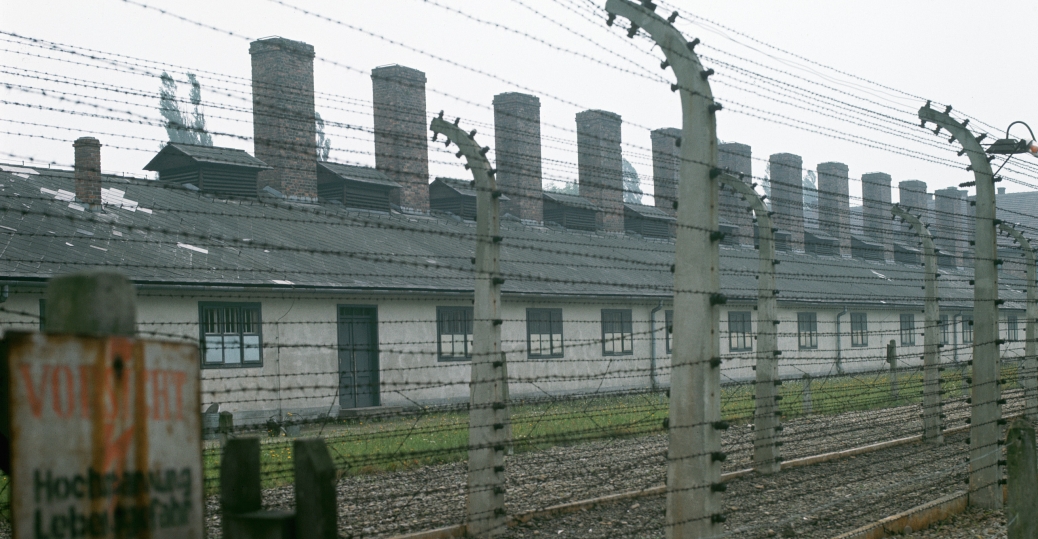
Fences surround the concentration camp at Auschwitz. An estimated 1,000,000 to 2,500,000 people were exterminated at the camp. A row of chimneys tops the crematorium, were bodies were burned. (History.com)

‘In popular memory,’ writes Nikolaus Wachsmann, “the concentration camps, Auschwitz, and the Holocaust have merged into one.” In our confusion, we have narrowed the horror of Nazi practice. Auschwitz was both a concentration camp and a killing site for Jews, which was unusual. If we recall Auschwitz and forget the other camps, we neglect the people who were concentrated in them, most of whom were not Jews. When we identify Auschwitz with the Holocaust, we neglect the other death factories dedicated to the extermination of Jews, places where more Jews were gassed than at Auschwitz, and omit the shooting pits, where more Jews were murdered than at Auschwitz. Auschwitz is simply the place where in 1942 the history of the concentration camps met the generally distinct history of the mass murder of Jews.
“KL” is a definitive history of the German concentration-camp system. (The title is the German abbreviation of the word for concentration camp, Konzentrationslager.) Mr. Wachsmann, a German historian who teaches at Birkbeck College, London, gently disassembles popular memory and draws a complete and convincing picture. He begins with the numerous improvised camps that the two paramilitary wings of the Nazi Party, the SA (Sturmabteilung, or “storm battalion”) and the SS (Schutzstaffel, or “protection squad”) established in the weeks after Hitler rose to power in early 1933. These were often tiny holding cells, sometimes in basements or warehouses. Heinrich Himmler, the head of the SS, established a larger facility at Dachau; this would be the only camp that existed from the beginning of Nazi power to the end. The camps were about the consolidation of power and then about its allocation. The first victims were communists and socialists, people who might have challenged Hitler. In 1934, after the SS decapitated the rival SA in the “Night of the Long Knives,” it sealed its victory by taking complete control of the camps.
At this point, it might have appeared that concentration had lost its original purpose: All enemies, within and without the Nazi Party, had been defeated or intimidated. But Himmler was ready with a new rationale: The camps could serve as a tool to improve the German race. He found support from Hitler, which meant that the camps would have an indefinite and endless mission. In the late 1930s, they were holding Germans seen as unfit members of society. These were the so-called asocials—alcoholics, drug addicts, homosexuals, members of minority religions like Jehovah’s Witnesses and people deemed “work-shy,” like prostitutes or vagrants. Dachau became the model for a true system of six concentration camps in prewar Germany, along with Sachsenhausen, Buchenwald, Flossenbürg, Mauthausen and Ravensbrück. Although in principle the “asocials” were to be reformed, by the end of the 1930s the SS began to see their labor as the basis of a special economy.

KL: A HISTORY OF THE NAZI CONCENTRATION CAMPS

By Nikolaus Wachsmann 
Farrar, Straus & Giroux, 865 pages, $40
Between Hitler’s rise to power and the beginning of World War II, Nazi power drastically altered the lives of German Jews. They were, however, less than 1% of the German population, and the basic Nazi policy in the years before World War II was to create conditions that would force them to emigrate. Jews entered the camp equation only when Germany began to destroy its neighboring states. After the Anschluss of Austria in 1938, some 1,521 Austrian Jews were sent to Dachau. That summer more than 2,000 German Jews were also sent to camps. After Kristallnacht, the nationwide pogrom organized by Nazi authorities that November, 26,000 German Jews were sent to camps, generally for short periods. The purpose was to intimidate heads of households so that Jewish families would leave Germany.
With the German invasion of Poland in September 1939, the character of the camps changed. Now the main victims were Poles, who were murdered and worked to death in appalling conditions. Right after the invasion, 110 Poles were placed in a cage in Buchenwald; 108 of them were dead by Christmas. At the new camp built for Poles at Gusen, the mortality rate was 5% per month. Between March and December 1940, more than 13,000 Poles were sent to Dachau. In the years 1940 and 1941, Poles were the largest group of inmates in the concentration-camp system as a whole. The new camp at Auschwitz, built on the site of a Polish military base, was constructed in 1940 to intimidate the Polish population. As Mr. Wachsmann writes: “Today Auschwitz is synonymous with the Holocaust, but it was built to impose German rule in Poland.” There is still much to be learned from Polish sources about Polish prisoners of the camp, for example about the resistance leader Witold Pilecki and his extraordinary choice to volunteer to enter the camp to gather intelligence and organize resistance.
The German invasion of Poland did not just mean camps for some Poles but also ghettos for almost all of the country’s Jews. The Holocaust, however, began not when Germany invaded Poland in 1939 but when Germany invaded the Soviet Union in July 1941. Although this is not his main subject, Mr. Wachsmann ably relates how the pogroms and the shooting of some Jews in the summer of 1941 became a policy of total killing of Jews on Soviet territories by the end of the year—a policy extended in 1942 to occupied Poland and to all of occupied Europe. Auschwitz became the major site of the Holocaust only in 1943, as the Red Army advanced westward and first the death pits and then the other death facilities could no longer be maintained.
This meant one more adaptation for Auschwitz. It had been created to punish Poles and became a death factory in 1942 in order to murder Soviet prisoners of war. As Germany conquered the western Soviet Union in the second half of 1941, it starved millions of prisoners of war in enclosures that can hardly even be called camps, and it selected tens of thousands for “special treatment”—murder—at the camps. Some 9,000 were murdered in Sachsenhausen alone in September and October 1941; more would be killed at Auschwitz. Mr. Wachsmann treats these Soviet victims with the same individual attention he accords to Germans, Jews and Poles, noting where he can something about their lives and their places of origin, often in Ukraine or Belarus.
The special technique used to murder these Soviet prisoners at Auschwitz, gassing, was based on the earlier German “euthanasia” program that murdered people deemed handicapped with carbon monoxide. The use of Zyklon-B at Auschwitz was an adaptation of a program with which camp commandants and guards would have been familiar. As Mr. Wachsmann demonstrates, the evolution of Auschwitz into a gassing facility for Jews only makes sense against four separate backdrops: the development of the technique of gassing for the “euthanasia” program; the German advance into and retreat from eastern Europe; the associated decision to kill all Jews while the war was going on; and the development of the camp itself.
Mr. Wachsmann calculates that 80% of the Jews who reached the entry gates to Auschwitz were selected for immediate murder. They were not, in other words, concentration-camp inmates at any point: Like the Jews who stood over the death pits of the East or those gassed at Chełmno, Treblinka, Sobibor and Bełżec, they were simply murdered. Jews who arrived at Auschwitz actually had a better chance of survival than Jews who were deported to those other death facilities, because at such places there was no selection for labor.
Our understanding of Auschwitz is unavoidably influenced by the experiences of Jews who were selected for labor, since some of them survived to write accounts. The memoirs by the likes of Primo Levi or Elie Wiesel bear the weight of the Holocaust. Their power is such that they create a kind of narrative arc from concentration to extermination. In “KL,” Mr. Wachsmann’s vast erudition allows us to see Auschwitz against the larger backdrop of the Holocaust and forces us to different conclusions. The memoirs are accounts of a special moment, of an intersection between concentration and extermination when victims of the former could observe the horror of the latter. Sadly, they are only an introduction to the horror.
The history of the Third Reich is young, and until recently tended to privilege events inside Germany. Following outstanding German historians such as Sara Berger,Tanja Penter,Dieter Pohl and Christoph Dieckmann, Mr. Wachsmann presents the history of Nazi Germany, and especially of its victims, as multinational. Within Germany in the 1930s, he writes, the camps served “as a great transformer of values.” They prepared some Nazis, and the SS in particular, for still more radical tasks to be pursued once war began. Mr. Wachsmann shows the camps as a series of improvisations, political calculations and then adjustments to imperial concerns and the Holocaust. There was no master plan for a camp system. There was instead an interaction of Himmler’s rise to a position of leadership in police and racial matters, the special human behaviors unleashed when some people are placed in charge of others in a realm without law, and then a war of extermination.
Mr. Wachsmann’s most impressive achievement in this synthetic work is his portraits of individual human beings. It takes hard effort to assemble enough sources on inmates or SS men to sustain them as characters in a book of this length. The prisoners had a range of references to describe their ordeals, from the Book of Exodus through Dante’s “Inferno.” In the generations since, their experience has become one of our points of reference in moral discussions, and it is all the more gratifying to see the camp inmates portrayed here with unvarnished humanity. Mr. Wachsmann has in effect united the best of the German and the British schools of grand World War II history: hugely but humbly exhaustive research with attention to character and to detailed narrative. His arguments will be described as “revisionist,” which is true only in the sense that all good history revises and corrects the errors of collective memory, which follows its own muses.
—Mr. Snyder is the Housum professor of history at Yale University. His “Black Earth: The Holocaust as History and Warning” will be published in September.

The Proof of the Clintons' Wrongdoing


Political Cartoons by Gary Varvel
April 27, 2015 Let's remember what this story is about. Hillary and Bill Clinton want it to be about a "conservative author" who catalogued their conflicts of interest. They want it to be about The New York Times, The Washington Post, and any other media outlets who dare to question the couple's integrity. They want it to be about "Republican overreach."
The media mostly wants it to be about Election Day 2016. We commission polls and hire pundits to parse the winners and losers of each news cycle. We shrug:"Real voters don't care about this story." As if it's not our job to help them understand why these scandals matter.
Hillary Clinton seized all emails pertaining to her job as secretary of State and deleted an unknown number of messages from her private server. Her family charity accepted foreign and corporate donations from people doing business with the State Department—people who hoped to curry favor.
She violated government rules designed to protect against corruption and perceptions of corruption that erode the public's trust in government. She has not apologized. She has not made amends: She withholds the email server and continues to accept foreign donations.
That's what this is about.
Clinton's crisis-management team makes a big deal of the fact that Clinton Cash author Peter Schweizer hasn't proved a "quid pro quo." Really? It takes a pretty desperate and cynical campaign to set the bar of acceptable behavior at anything short of bribery.
The Clinton team also points to errors made by news organizations investigating the email and foundation scandals, particularly the work around Schweizer's book. That is their right, but they're nibbling around the edges: The core ingredients of the Clintons' wrongdoing has not been misreported.
Like so many past scandals, these twin issues show the Clintons to be entitled, ethically challenged rule-breakers who believe the ends justify the means. "The best-case scenario is bad enough," writes liberal columnist Jonathan Chait. "The Clintons have been disorganized and greedy."
The media should not conflate the ethical issues with the campaign "horse race" and election results. A Clinton victory wouldn't necessarily mean voters found her behavior acceptable. They may just find it to be, sadly, standard operating procedure in Washington. They would be right.
Having lost faith in every American institution, some voters also may think modern journalists care more about clicks than conflicts of interest and potential corruption. Are they right about that?
Finally, voters may find the GOP alternatives to Clinton to be just as sleazy or unattractive. Schweizer says he's digging into questionable business practices of potential Clinton rival Jeb Bush.
In this era of zero-sum-gain politics and "negative partisanship," Hillary Clinton can always hope to be the least-lousy alternative. But that's no way to win the presidency, much less a mandate to lead and transform a nation.
Which reminds me of a nagging question: If, as the White House wants us to believe, President Obama is upset at Clinton for violating his ethics rules, why hasn't he publicly rebuked her? Perhaps he's more concerned about the 2016 elections than good government.
You don't have to be a conspiracy theorist to know that foreign companies and countries expected something in return for donating to the Clinton foundation rather than the countless other charities not connected to the U.S. presidency.
You don't have to be a lawyer to know the Clintons violated ethics rules.
You don't have to be a historian to know their ethical blind spot has decades-old roots.
You don't have to be a political scientist to know this behavior contributes to the public'sdeclining trust in its leaders.
But to believe this is just about the actions of a book author, the mainstream media, and the Republicans, it helps to be a Clinton.

Monday, April 27, 2015

Judicial Watch Pinch-Hitting for the FBI

http://www.americanthinker.com/
April 27, 2015

U.S. authorities have charged six men from Minnesota with planning to join Islamic State and fight for the militant group in Syria, the U.S. attorney for Minnesota said last week. (Screengrab/CNN)

Despite the growing menace and media savvy of the terrorist Islamic group ISIS, the FBI appears to be, once again, failing in its investigative and enforcement responsibilities. The agency that let us down with 9/11 and, afterward, reacted mainly in a flurry of political correctness and appeasement toward Muslims is now trying to reassure the American public that we have nothing to fear from ISIS on the North American continent.

This despite warnings from the nonprofit Judicial Watch of ISIS activism in Mexico, and recent ISIS-related arrests in Minnesota.  More is needed from the nation's top domestic intelligence and security agency than this whistling in the dark if we are to be safe in our own country.

Official government estimates of ISIS recruits vary widely from 20,000 to 50,000.  Nicholas Rasmussen, director of the federal National Counterterrorism Center, who places the number at more than 20,000, reports that fighters hail from 90 countries, with an estimated 3,400 from Western countries, including over 150 from the United States.  Rasmussen admits that there is "likely more information out there that we have not yet been able to collect," and that there could also be "greater numbers of foreign fighters, and potentially even greater numbers of individuals from western countries and the United States who've traveled to the conflict zones."

Meanwhile, FBI assistant director for counterterrorism Michael Steinbach has reinforced the level of risk by admitting, "Certainly I would not be truthful if I told you we know about all the returnees."

This equivocation and uncertainty by government sources contrasts dramatically with the recent findings of Judicial Watch, a government watchdog with more than 20 years of investigations and litigation in pursuit of open and honest government.  Last week, Judicial Watch revealed in anonymous accounts from a Mexican army officer and police inspector that two ISIS camps exist perilously close to the U.S. border west of Ciudad Juarez, Mexico – one only eight miles from El Paso, Texas, and the other very close to Columbus and Deming, New Mexico. 

According to Judicial Watch, Mexican army and law-enforcement personnel discovered Arabic and Urdu documents, layouts of a nearby U.S. military installation, and prayer rugs in an area  controlled by a powerful Mexican cartel engaged in drug trafficking and human smuggling across the understaffed and poorly controlled U.S. border.  Mexican intelligence sources reported to Judicial Watch that ISIS maintains a network of "spotters" in New Mexico's East Potrillo Mountains for terrorist border crossings and to monitor activities at nearby universities, government facilities, and power plants. 

In September last year, Judicial Watch reported that ISIS operatives across the border were planning car bomb attacks in the United States and that U.S. agents were on alert to deal with "this imminent terrorist threat."  Despite assurances by the FBI and the Department of Homeland Security that no credible threats had been identified, Arizona Congressman Trent Franks (R-Glendale) said, "It is true that we know that ISIS is present in Ciudad Juarez, or they were in the last few weeks."

Franks has long been accustomed to government inaction in the face of Islamic threats, having been one of five congressional signatories of the much derided and ignored 2012 report identifying Muslim Brotherhood operatives who had infiltrated the U.S. government at the highest levels of national security.  But his 2014 border concerns were similar to those voiced independently by Texas governor Rick Perry, Congressman Lou Barletta (R-Penn.), Senator Marco Rubio (R-Fla.), and Congressman Ted Poe (R-Texas).

All these claims have been derided by Democrats as Republican hysteria related to Obama's executive amnesty program for illegal immigrants, even though, in August 2014, the Texas Department of Public Safety issued a bulletin to law enforcement entitled "ISIS Interest on the U.S. Southwest Border."  The bulletin referred to ISIS social media messaging about how to cross the U.S.-Mexico border to carry out "unspecified border operations."
Immediately following the recent Judicial Watch disclosure, FBI supervisors called a meeting with the U.S. Consulate in Ciudad Juarez.  Based on information supplied to Judicial Watch by an anonymous "high level intelligence source," the goal of the meeting was to "devise a press strategy on the JW report as well as to uncover the identity of the informants."

According to a Facebook posting, Congressman Beto O'Rourke (D-El Paso) asked the FBI director, the director of the National Counterterrorism Center, and the secretary of homeland security if currently any terrorist threat exits on the U.S. southern border.  O'Rourke posted that "[t]hey answered that there was not nor has there ever been any terrorist, terrorist plot or terrorist organization that was able to exploit our border with Mexico."

Yet, just this week, federal authorities arrested yet another group of individuals seeking to travel to Syria and fight alongside ISIS.  Six Minnesota men were charged as part of an ISIS terror probe exposing a "peer-to-peer" network model of recruitment organized through social media and local contacts.  This is becoming an increasingly common occurrence in the United States and Western societies as more young Muslims and new converts glorify the Islamic State and aspire to join its quest for a caliphate. 

In light of JW disclosures, the question must be asked: how credible are FBI reports on the domestic ISIS threat, as well as Islamic terrorist threats in general?

The bureau has been embroiled in controversy for more than a decade for its obvious appeasement activities and policies toward Muslims.  After missing the 9/11 plot, the FBI hired Arab-American Muslim translators recruited through Muslim Brotherhood sources.  Those sources included the American Muslim Council, an organization founded in 1990 by Abduraman Alamoudi, a self-admitted supporter of Hamas and Hezb'allah who is currently serving a prison term for a 2003 assassination attempt on the late Saudi prince Abdullah. The FBI also turned to the Islamic Society of North America, a Muslim Brotherhood front and unindicted co-conspirator in the Holy Land Foundation (HLF) Hamas funding trial.  As recounted in investigative journalist Paul Sperry's 2005 book, Infiltration: How Muslim Spies and Subversives Have Penetrated Washington, the FBI employed several translators of questionable loyalties before completing background checks and approving required security clearances.  Sperry revealed that former FBI translator and whistleblower Sibel Edmunds claimed that some Muslim translators celebrated the attacks in house, purposely mistranslated documents, and even notified targets of investigations.

Following the 9/11 attacks, then-FBI chief Robert Mueller required FBI agents and new recruits to attend Muslim sensitivity workshops led by the Council on American Islamic Relations (CAIR), another Muslim Brotherhood affiliate and unindicted co-conspirator in the HLF Hamas funding trial.  Taking a cue from the Muslim Brotherhood's "Strategic Plan for America," widely referred to as the "Explanatory Memorandum," the words "jihad," "Islam," and "Muslim Brotherhood" were purged from the FBI lexicon in 2007.  In 2009, responding to the demands of CAIR and the Islamic Society of North America, the FBI purged all counterterrorism training materials deemed critical of Islam and "re-educated" FBI agents exposed to so-called "Islamophobic" training. 

All of these measures are in line with the objectives presented in the Muslim Brotherhood's Explanatory Memorandum "to prevent the infidel from learning about Islam."  Even FBI agents who taught directly from Muslim Brotherhood strategic documents and Islamic doctrinal tracts were disciplined and sidelined, even though their material had been previously approved by upper management. 

Recently, the FBI assured Chicago police that no links exist between the North American Islam Trust (NAIT) and the Muslim Brotherhood, even though a federal judge ruled that "ample evidence" associated NAIT with the Muslim Brotherhood affiliate Hamas.  Further, documents in the HLF financing case name NAIT as being part of the Muslim Brotherhood.  But Chicago police chief James Kruger conveyed the FBI message, saying, "I can reassure the community that there is no threat to our community and that NAIT is a legitimate non-profit religious organization as filed with the IRS and the Illinois Department of Revenue."

It is indeed alarming that FBI actions and statements continue to be on the order of "nothing to see here, move along," even as the threat from radical Islamists grows worldwide and advances in America. Tragically, government inaction has reached the point where the work of an independent government watchdog organization has greater legitimacy than the federal agency charged with investigative and prosecutorial responsibilities necessary to keep Americans safe.  Have we reached a point where the FBI is so politicized and compromised by outside influences that it can no longer do its job effectively?


Read more: http://www.americanthinker.com/articles/2015/04/judicial_watch_pinchhitting_for_the_fbi.html#ixzz3YVT7NKmU
Follow us: @AmericanThinker on Twitter | AmericanThinker on Facebook

Sunday, April 26, 2015

How the world's greatest Catholic poet healed this ex-Catholic's heart

By Rod Dreher
April 23, 2015
Photo by Photographer Carmine Calò
(CNN)As a young man, I converted with great enthusiasm to Catholicism, and for 13 years was an ardent Catholic, eager to argue for the faith with all comers. The idea of not being a Catholic was utterly alien to me.
But spending four long years writing as a journalist about the sex abuse scandal destroyed my ability to believe in the Catholic Church's claims. I didn't lose my faith suddenly; it was torn from me bit by bit, like a torturer ripping out his victim's fingernails.
I had never believed that the Catholic Church (or any church) was perfect, and had full confidence that the arguments for Catholicism would enable me to withstand any challenge.
But nothing prepared me for the things I learned in writing about the scandal -- the cruelty, the mendacity, the cynicism of the clergy. I eventually lost the ability to believe that my salvation depended on being Catholic.
Humiliated and spiritually broken, I became Orthodox, but a very different kind of Orthodox Christian than I was a Catholic. Gone was my triumphalism, my intellectual arrogance and my effortless ability to trust ecclesial authority.
Losing my Catholic faith was without question the most painful, shattering thing that I've ever lived through.
    In time, the pain of the break healed, mostly, but I continued to agonize over why so many of my devout Catholic friends had been as offended as I by the scandal, but had managed to hold on. Why had I been broken?
    In the summer of 2013, enduring a spiritual and medical crisis brought on by intense family stress, I stumbled into Dante's "Divine Comedy," the 14th century epic about the great Catholic poet's imaginative journey through hell, purgatory and heaven.
    I am not much of a fiction reader, but Dante's "Commedia" set its hook hard. I read it like a drowning man seizes a log to keep his head above the maelstrom.
    By the time I emerged from the 14,000-line text, I had been renewed and healed, delivered from the dark wood of my despair, and given new life. And I finally understood why I had gone wrong in my life as a Catholic and how I unfairly judge the church.
    It's not because Dante was a defender of the Catholic institution. In fact, his verses fall like lash-strokes on the backs of corrupt priests and monks. "Ravenous wolves in shepherds' clothing," he calls them. The archvillain of the "Commedia" is none other than Pope Boniface VIII, the politically ruthless pontiff who was in part responsible for the poet's bitter exile from his native Florence.
    Again and again, Dante's prophetic denunciations make the point: If those ordained by God as shepherds lose their way so badly, the flock may lose faith that there is a right way at all.
    Dante Alighieri suffered more harm from the church's leaders than I ever had. Yet not only did he hold on to his Catholic faith, he also created, amid the ruins of his life, arguably the greatest work of Catholic art of all time, an epic poem to which Pope Benedict XV, a 20th century successor of evil Pope Boniface, even devoted a papal encyclical.
    How had Dante done it? I could not return to Catholicism, not because I was still mad at Rome (I wasn't), but because I no longer believed in Roman Catholic Christianity.
    But I needed to know what Dante knew to protect myself from making the same mistake with the Orthodox Church, and to conquer my fear and mistrust of religious authority.
    Dante believed that Jesus established the Catholic Church, and he accepted papal authority as divinely ordained. But he did not mistake the men who run the church for God. He saw the church as an icon of Christ -- that is, a flawed human structure through which God's light shines. In Dante's metaphysical vision, all creation is an icon of the divine -- some parts more than others.
    I never consciously thought of the Catholic Church as perfect either, though. There must have been something more at work.
    "I had made a mistake that the devout Dante did not," Dreher writes. "I expected more from [the fathers of the Catholic Church] than they could deliver, and came undone by the shock of their failures."
    Over the course of his fictional journey through the afterlife, the pilgrim Dante (that is, the character in Dante Alighieri's poem) learns that his basic error -- the thing that caused him to lose his way -- was making idols of things that were not God.
    He sought salvation, so to speak, in romantic love, in literary fame, in intellectual life, and in the pursuit of politics. God can be in those things, but those things are not God. The goodness one might find in them is ephemeral, and cannot permanently satisfy our restless hearts.
    Dante's particular temptations were not my temptations, but I had done the same thing as he. I discovered that I had grounded my self-worth in the approval of my father, which I could not hope to earn. I had grown up in the household of a strong, loving father, a traditional Southern patriarch whom I hero-worshiped. He was gentle and kind, though also proud and willful.
    We were very different. He was an outdoorsman who loved team sports; I was bookish and unathletic. By his own admission, he had no idea how to relate to a son who was so unlike himself. Despite his open affection, I always knew that I, who share his name, was a disappointment to him. This hurt. A lot.
    When I entered my teenage years, we argued often, and I finally left for boarding school, in part to get out from under his roof. After I became a Catholic in my 20s, I transferred worship of my dad to worshiping the church -- this, without knowing what I was doing. I expected of the church's bishops, as I had expected of my father, something they were not capable of giving consistently: unconditional love, affirmation, and patriarchal care in which I could trust.
    Why? Because I wanted nothing more than to feel at home and cared for unambiguously by a father. I could never be truly at home in my father's house, because I could not shake the crippling sense of not measuring up to his standards. As a loyal son of the Catholic Church, I grounded myself in a substitute household, and felt strong filial respect and affection for the ecclesial patriarchs, especially Pope John Paul II.
    When we all learned how so many priests used their roles as fathers to rape the children in their spiritual care, and that even the saintly pontiff had failed in his duty to protect the most vulnerable Catholics in his care, the revelations affected me with an intensity I did not fully understand, not even years after I left the Catholic Church, spiritually broken.
    Reading Dante revealed something shocking to me. The collapse of my Catholic faith had been about fear, injustice, hypocrisy and the obliteration of trust. That I knew. But more than that, it had been about fatherhood and sonship.
    I was not wrong to condemn the fathers of the Catholic Church for their wickedness in the scandal, but I had made a mistake that the devout Dante did not: I expected more from them than they could deliver, and came undone by the shock of their failures.
    This realization did not cause me to return to Rome. As I said, I don't believe in Christ as a Catholic any longer; I am firmly Orthodox.
    But it did occasion understanding, and call forth mercy (this happened, too, with my father); the bishops, the priests and my own dad were not monuments to unerring authority, but rather my companions in shipwreck.
    And it taught me the importance of never mistaking icons through which the divine light shines imperfectly -- for example, the church, the clergy and the family -- for God.
    Last fall, after making a pilgrimage to Dante's grave in Ravenna, I visited the Benedictine monastery in Norcia, built over the birthplace of St. Benedict, my patron.
    I, an ex-Catholic, found welcome and peace with the monks there, and though I was not able to receive Holy Communion, I stood at the back of the church during Mass and thanked God for his gifts to me in the Catholic Church, especially the blessing of its greatest poet, Dante Alighieri, through the artistry of which he delivered to me the wisdom that heals.