Tuesday, July 07, 2015

“The Cartel” author Don Winslow on the war on drugs: “There is an exit strategy — legalize drugs, and treat them as the social problem that they are”


http://www.salon.com/
June 23, 2015


New York Times bestselling author and Raymond Chandler award recipient Don Winslow has written 17 novels, including “The Kings of Cool,” “Savages,” “The Winter of Frankie Machine” and the highly acclaimed epic “The Power of the Dog.” His sequel to “The Power of the Dog” is out today. “The Cartel,” hailed by James Ellroy as “‘The War and Peace’ of dopewar books,” will join “The Power of the Dog” in whatDeadline reports is a deal for a two-film series on the futility of the drug war that spans 45 years and focuses on two mortal enemies: DEA agent Art Keller, working in Mexico at the dawn of Nixon’s war on drugs, and Adan Barrera, the head of a powerful drug cartel.
Pulitzer Prize-winning playwright Stephen Adly Guirgis (“Between Riverside and Crazy,” “The Motherf*cker With the Hat,” “The Last Days of Judas Iscariot”) sat down with Winslow to discuss “Cartel,” writing crime novels and the ongoing war on drugs.
Your novel “Power of the Dog” must have been a Herculean undertaking and the critical raves were no doubt well-earned and much deserved.  And now you give us “The Cartel.”  Why tempt fate and write a sequel?  And why should we, as readers, invest in another massive opus on the drug trade?
First, I was reluctant to write “The Cartel.”  It wasn’t so much about tempting fate, it was more that “Dog” represented over five years of my working life and, frankly, wrung me out.  It was tough stuff to research and write.  So when the idea was first brought to me to write a follow-up volume that brought the story to today, I couldn’t get off the phone fast enough.  But as I watched things gets worse and worse in Mexico – far worse than I wrote about in “Dog” — I knew I had to write about it.  I had unfinished business.  Not to be overly dramatic about it, but I almost felt like a deserter from a war.  Immodestly, I thought that I had the background, from “Dog,” to tell this story — to explain to readers what had happened in Mexico, and that I should do it.  It wasn’t an easy decision – it’s a five-year commitment, and it wouldn’t affect just me, but my family and my friends, because I knew if I started, I’d become obsessed.  And that spending many of my days looking at atrocity vid-clips and photos would take a toll on me, and therefore, the people closest to me.  You try to protect them from it, but in the very act of protecting them, you isolate yourself from them.
Why should you read it?  Well, if you read “Dog,” you’ll want to continue the story, which picks up just months after its original leaves off, and features the same main characters.  Together, the two volumes – something like a combined 1,300 pages — make up one fictional history of over 40 years of the War on Drugs.  It’s a huge story – filled with larger-than-life characters, dramatic situations, conflict, treachery, courage, honor – all rich material for a novelist.  It would be incredible if you didn’t know it was drawn from real events.  As Americans, we see the headlines coming out of Mexico, but we rarely get deeper.  I think – I hope – “The Cartel” shows what goes on behind those headlines.  It shows the people, the emotions, the real-life impact of the War on Drugs.  Journalists can give facts, but novelists can tell truth, and that’s what I’ve tried to do with these two novels.
In your new book, “The Cartel,” your DEA agent Art Keller embarks on a 10-year odyssey to take down drug kingpin Adan Barrera — again!  Are there parallels to Keller’s obsessiveness in your own life?  And if so, can you share some of the pluses and minuses of that kind of internal DNA?
Both Keller and I thought we were finished with the War on Drugs after “The Power of the Dog.” We were both wrong.  As I’m sure you know, most writers are obsessed.  I think you have to be to do what we do – to spend years researching a topic and then writing it, always trying to find the answers to the question “Why?”  I guess the pluses of that character trait are obvious – you stick with a project until you finish it, until you have the answers.  The minuses?  Well, tunnel vision, for one.  It’s hard to turn your mind off the project, you think about it every waking hour and dream about it when you’re asleep.  I don’t know about you, but I also have to make an effort to keep that obsessiveness out of other areas of my life.  I’m not always so successful at it.
In “The Cartel,” Keller is tested unendingly and in every manner physically, emotionally, psychologically and spiritually.  To me, that’s a big part of what makes your novel so compelling and exciting.  That said, do you believe it’s actually possible to  “Face down the devil and not lose one’s soul”?  And what’s the closest you’ve come to winning or losing that fight?  
I’ve often said that “Dog” was more about religion than drugs.  To me, the spine of the story was about a group of people who lose their faith and then try to find a way to live decently in what is basically an indecent world.  Some do, most don’t.  Without that moral compass, they are lost wanderers in a morally bleak and hostile terrain.
I’m not sure about myself in that regard.  When you write a story like this, you sure as hell (pun intended) stare at the devil, on a near daily basis.  You look at so much suffering, violence, sadism and treachery that it’s easy to start seeing only the evil side of humanity.  I was no rookie to violence – in my prior career as an investigator I’d worked murder cases, abuse cases – I saw more of that side of humanity than I ever wanted to.  Not all knowledge is good – you learn things that you’d probably be better off not knowing, see things that would have been better unseen.  It has a hardening effect on you.  I can remember when I was still doing trial work, I was flipping through autopsy photos of a murdered woman with one hand and eating a ham sandwich with the other and I suddenly stopped and wondered what I’d become.  Was I that jaded, hardened, inured to violence?  In that case, you feel pretty close to losing the battle.  You have to make a conscious effort to remember the good things in life – family, friends, people who are out there doing good things.  In all candor, you wrestle with despair when you write books like “Dog” or “The Cartel” because you spend so much of your time dealing with the worst aspects of the human condition.  You start to lose your faith in people, as well. But then you encounter the inspirational – and true – stories of amazing courage, honor and sacrifice in the midst of this horrifically messed up world, and that allows you to face down the devil.
A compelling protagonist is only as badass as the antagonist he or she must go through to get to the other side.  So tell us: Who would you rather have in a foxhole with you — Keller or Barrera?  And why?
You’re absolutely right – Ahab is nothing if the white whale isn’t “great.”  You need the irresistible force and the immoveable object. Each makes the other stronger, more determined.
As for the foxhole: Keller, definitely.  He’d stay in the foxhole with you when things got tough.  While the two characters are equal in power, in no way is there a moral equivalency.  At the end of the day, most gangsters are narcissists – they can see nothing more important than themselves.  They’re often sociopaths, incapable of feeling anyone’s pain but their own.  They believe in nothing bigger than themselves.  Over the course of these two books, Adan has come to believe that his own survival is paramount – that he is the cartel.  Keller – for good or ill – is exactly the opposite.  He believes himself to be insignificant on the scale of things and is almost too devoted to a larger cause, which is the destruction of Adan and his beloved cartel.  Keller is old school – he believes in loyalty, sacrifice, honor.
Given the subject matter of both “The Cartel” and “Power of the Dog,” in your opinion, is there a credible exit strategy for our failed War on Drugs, and if so, what would that process look like — and do you think it will ever happen?
There is an exit strategy: legalize drugs, and treat them as the social problem that they are.  The billions of dollars we would save every year would let us address the root problems behind drug use.  Why don’t we spend more money on treatment instead of imprisonment?  Why don’t we build factories and businesses in the inner cities and give people decent paying jobs?  Why don’t we improve our schools?  We’ll never completely cure addiction (the rates of addiction are remarkably consistent) but we would definitely reduce it.  What is clear is that what we’re doing now isn’t working.  It’s time to try something else.  Will it ever happen?  For the first time, I’m optimistic.  We see marijuana laws changing rapidly, and we see a coalition of right and left talking about judicial reform as it relates to sentencing.  The left is demanding it from a human rights standpoint, the conservatives want to see it for fiscal reasons.  Both are correct, and it’s something they can actually get together on.
I’m a big fan of your surf noir novels.  Your Boone Daniels character and the world he inhabits is such a no-brainer for a great television series.  Any plans to do so?
In some ways, surfing is a perfect metaphor for noir – you see one thing on the surface – the top of the wave – but there’s always something going on beneath that surface, and it’s often dark and murky.  If you’re going to ride the wave, you’d better know what’s going on underneath, or it’s going to take you down with it.  It might anyway.
Regarding a television series, there are serious discussions going on now with some remarkable talent, which are exciting.  But it has to be the right situation with the right people.  What I don’t want to see is “Baywatch” with crimes.  I want something that captures the very real beauty of that world, but also captures the gritty reality beneath it.
I’ve got a confession:  I’m mainly a playwright, but I’ve always harbored the secret desire to write a mystery or crime thriller.  What’s your best advice on my first three steps in the process toward writing something credible that hopefully doesn’t suck?
Well, as long as we’re confessing here – I started my writing life as a playwright.  The theater can celebrate that I switched to crime fiction. Advice for you?  I know your stuff – you couldn’t suck if you worked at it.  But since you asked:
1.  Start with character.  Everything springs from that.  No character, no story.  And the character has to want something.
2.  Remember that “bad guys” don’t think they’re bad.  They always have a point of view.  We can’t stand on the outside and judge it.
3.  Read the genre’s greats – Chandler, Hammett, Macdonald, Leonard, Block, Willeford, Thompson, Ellroy.  They teach us everything we need to know.
You’ve enjoyed tremendous success with your novels both nationally and internationally.  What drives you?  Are you still hungry?  What do you do to keep the fire burning?  
I’m ravenous.  There are just so many great stories I want to tell and not enough time to tell them.  I’m one of those guys who, when he sees a great story, thinks that the entire world needs to hear it.  And to be really honest, I’m ambitious.  I don’t think I’ve written my best book yet, and the thought of writing that book absolutely drives me.  And I know that to do that, I have to keep getting better and better. I’m still learning.
And then there are just those moments, you know.  I remember editing “Dog” with Sonny Mehta, the legendary publisher.  We sat all night at his kitchen table in New York, debating, arguing, sometimes agreeing.  I remember so distinctly walking back to my hotel at dawn through the quiet NYC streets, with only the music of the garbage trucks and the street cleaners, knowing that I had just had one of those once-in-a-lifetime literary experiences – the sort of thing I had dreamed about as a kid – and being so grateful for it.  That kind of thing keeps you going.
I love Oliver Stone stories.  Would you be willing to share one with us that lives up to the hype?
My friend and co-writer Shane Salerno and I took Oliver on a location scout for the film of a book of mine called “Savages.”  It was an uncharacteristically cold and rainy Southern California day, not the setting in which I really wanted to show off Laguna.  We take Oliver to real locations, and at every one, he’s saying stuff like “This doesn’t look like a dope dealer’s house,” “This isn’t what a money launderer’s office would look like.”  And I don’t know what to say because, well, they were.  Shane’s driving, and all day, Oliver is alternately telling him, “Shane, speed up, we have a lot to see,” “Shane, slow down, I can’t see anything.”  Finally, on the Pacific Coast Highway in downtown Laguna Beach, Shane turns 180 in his seat, looks at Oliver and says, “I can speed up.  I can slow down.  I can’t do both at the same time.  Which do you want?!”  I grab the wheel.  Oliver cracks up.  This kind of thing goes on for about eight hours, in the rain, and I’m wondering if a jury would really convict if I shot Oliver.  Later, we’re at a restaurant (a real location), Oliver starts talking about the day he came home from Vietnam, and Shane I realize we’re hearing the origin story of “Platoon.”
Last question:  What keeps you up at night?  And does it find its way into your work?  
It does, because it’s my work that keeps me up at night.  It’s just hard to turn it off.  I lie there and think about characters, about scenes, especially about dialogue – these guys keep yapping and yapping, refining what they say, until it’s a real line.  Or I’ll think about a situation – an event in the book.  Am I writing it from the right character’s point of view, or would it be better seen through another character?  Or I might think of a line I wrote that day and realize that it actually stinks, and then I remind myself to take it out first thing in the morning.

The Author of 'The Cartel' on America's Role in Mexico's Brutal and Bloody Drug War

by Kristen Gwynne
http://www.vice.com/
July 6, 2015


Don Winslow's recently released novel The Cartel, a sequel to his 2005 book The Power of the Dog, chronicles the rivalry between a United States DEA agent and the cartel kingpin he is dead-set on taking down. In 600 pages, Winslow examines how the massive profits of drug trafficking allow for high-level corruption, explores the United States's role in the brutal violence plaguing Mexico, and questions the efficacy of a war against cartels determined to defend their power and prosperity by any means necessary.
The book is as gruesome a read as it is insightful, chock-full of research into the organization and tactics of cartels and their (at times) strikingly similar governmental opponents. It is disturbing, and it is based in large part on actual events. VICE spoke with Winslow about what inspired his work on the topic, and why he hopes it will bring attention to what he calls the "American problem" plaguing Mexico.
VICE: What inspired you to start writing about drug war violence in Mexico? Don Winslow: I was six published books into my writing career and there was amassacre—there's no other word for it—of 19 innocent people, men, women, and children, in Baja, California, near where I live. I didn't really start to write a book, I started to try to find out how we got to the point where people were willing to do that.
Now that was 1998, and we think that was a horrible incident, but it pales in comparison to what went on ten years later. The worst things I wrote about in Power of the Dog wouldn't have made the papers in 2011.
You hadn't planned on writing a sequel to Power of the Dog, but this increase in violence changed your mind? That's right. When I finished with Power of the Dog, I thought I'd written about the worst of the worst. It absolutely ground me down and I had no intention of returning to that subject, ever. But as I sat here near the border and watched these events spiral out of control, I asked myself again, why? And I started to do research to try to get answers to those questions, and write out what I learned. The two books together encompass 15 years of the War on Drugs, as seen mostly through the prism of two characters—a DEA agent and a drug lord—locked in this vendetta against each other that began in the 1970s and just keeps going on.
It sounds like drug trafficking in Mexico has undergone some significant changes since your last book. It has changed drastically. First of all, the sheer level of violence is so much bigger, and frankly, the level of sadism is so much greater. We couldn't have imagined it in our worst nightmares, and it is nightmarish, except that it's real—the decapitations, the mass murders—they're real.
Another way things have changed is with the militarization of the war on drugs. Cartels went out and hired their own private armies, a lot of times made-up by ex-special forces, some of whom were trained in the US as anti-drug soldiers. They went over to cartels and the level of lethality, if you will, became so much higher. It started as sort of an arms race—one cartel did it, then another and another, and pretty soon you have thousands of people fighting. And then, when the Mexican government in 2006 decided that they needed to intervene, they could no longer do it with police, a lot of whom had been coopted by cartels, so they sent in the military. Now you had a real war, and it was multi-fronted: cartel against cartel, cartel against military, certain police forces against other police forces.
The cartels also got very sophisticated about communication. They figured out it wasn't enough to win a war on the ground, that they also needed to control the narrative. Their use of propaganda, particularly through social media, was something we had never seen before. It used to be criminals tried to hide what they did, but in this era of Mexico they proclaimed it as a means of intimidation and terrorism, but also recruitment.
Plus, they terrorized and often killed journalists to control the stories in newspapers. After a murder came across a reporter's call radio, cartels would call their cell phones to instruct them on what they could or could not cover—and that's something absolutely new in crime. It's very different than the book that I had written before.
How did you conduct research into the real-life and yet "nightmarish" events on which you based the book? I read a lot of journalism. I talked to people again and again. In this surreal sense, I followed it on the net. You can pull these videos up in five seconds. But what I really tried to do was to put names to the victims. I just felt that I owed them that, so I would cross-reference materials to try to show that these people had lives and families and hopes and fears and dreams like everybody else, and not just to have them be pornography of violence.
In The Cartel, you describe how the military's war on cartels has led to even more bloodshed. Yes. 2006 was the year that Mexico launched its military program against the cartels, and the height of the violence really came around 2012 and 2013. Since the mid-2000s, an estimated 100,000 people [ ed. note: depending on who you ask] were killed. When you go to war with cartels, they fight back, and they are as well-armed in many cases as the Mexican soldiers fighting them.
A major theme in your book is that while Mexican and US governments often celebrate the capture or killing of a cartel kingpin as a victory, the take-down does not necessarily increase peace, but creates a power vacuum. Exactly. All it does is create a multi-billion-dollar job opportunity, and there are always people wiling to take chances to step into that position because the wealth is fantastic. Look at Sinaloa cartel head Joaquin Guzman Loera (aka El Chapo), who was on Forbesmagazine's World's Most Powerful People list in 2012. Chapo was captured last year. Great. But what difference does it make in drugs coming up to the border? None. While it might disrupt things for a few weeks, it will probably cause more violence as people scramble to fill those positions. The bottom line is we've captured drug lord after drug lord—captured or killed—and it makes no difference at all.
Why?The real problem is not Mexico, it's in the US. It's in the market. It's our simultaneous prohibition of drugs and appetite for them that create such high profit margins, and that makes these territories worth fighting over and worth killing for.
And it's a tragedy: 100,000 people killed; 22,000 missing. That makes it one of the bloodiest conflicts in the Western Hemisphere since the American Civil War, and we're largely unaware of it. I think a lot of it has to do with the fact that this stage of Mexico's drug conflict coincides exactly with the post 9/11 era, so we've been very focused on terrorists abroad, and for good reason. On the other hand, we need to be more aware of the consequences our actions have on our neighbors, and in Mexico, those consequences have been severe.
You've compared Mexico's cartels to al-Qaeda and the Islamic State, and wrote that the United States's anti-terrorism initiatives, which focused on taking down top jihadists, spilled over into drug war tactics. So clearly, you see parallels between the War on Drugs and the War on Terror. Absolutely. While terrorists like al Qaeda and ISIS are ideologically driven, cartels are driven by profit motive, sure. But if you look at what the cartels do—mass murder, torture of the vilest kind, kidnapping, mass rape, enslaving people to work on farms and plantations, sending out threatening videos—if that's not terrorism, I don't know what is.
Plus, we've evolved in our anti-terrorist doctrine form what's called counter-insurgency doctrine to anti-terrorist doctrine. The former involves building relationships with local communities, protecting or defending them from guerrillas. The latter is more simple: to go out and kill and capture terrorists, particularly leaders. And that philosophy in Washington leaked into the way we now approach anti-drug trafficking, so our focus in conjunction with the Mexican government has been to capture and kill drug leaders. The philosophies are similar.
You also say Mexico's military is making the same mistakes US soldiers did in Vietnam. How so? From the beginning, when Nixon first declared the War on Drugs some 44 years ago, we dropped a substance very similar to Agent Orange onto the poppy and marijuana fields in Sinaloa and Durango, and we completely alienated the local community. We forced them into the cartels' hands, and we keep making the same mistake over and over again. The Mexican military has long been waterboarding people with gasoline and soda, which almost sounds amusing unless you're half-drowning with carbonation fizzing in your nose and throat. They've burnt buildings. They've taken young men suspected of being with a cartel back to army bases and tortured them.
That is, of course, just like Vietnam and elsewhere, going to alienate people in these villages. Now the cartels do things that are similar to and even worse than US soldiers did in Vietnam, but the cartels also build hospitals, churches, chapels, and clinics. They hold Mothers' Day and Day of the Children celebrations, giving out gifts. So they gain these heroic sorts of images in a lot of these communities, particularly in the rural areas where they're looked upon like Robin Hoods or heroes. Of course, they're not.
Your book compares the army to cartels, and describes police as "not protecting" but "guarding" cartels. I didn't draw the comparison—the facts are there on the ground. The army has been, in some places, very corrupt. It has seized land from people. It has cooperated with drug traffickers and probably trafficked itself, so the army has formed its own power unit that's really not answerable to anybody, and that's what a cartel does.
Now, it may sound paradoxical, but the drug lords aren't really in the drug business, they're in the territory business, so a lot of top drug lords might never touch drugs their entire career. What they're doing is charging other, lower-level people to run drugs through their territory, and the most valuable territories are border towns near highways that run to major US cities. With that being the case, they have to secure the protection of the local police or army, and that means bribes go very high into the federal government. The federal police in Mexico have reorganized several times to try to route out corruption, but it tends to stick because the money is so extraordinary. They may also be threatened with violence, given no choice but, "Take it, or we'll kill you and your family."
In addition to the United States's drug consumption habits and policy of prohibition, you also talk about immigration policy as a source of profit for cartels. Again, what cartels control is territory, and the most valuable territory is across the border. For the most part, anything that has to cross the border illegally must go through the cartels, whether it's drugs or people. Cartels are increasingly involved in human trafficking because they control smuggling routes. So now undocumented immigrants, unless they're very lucky, have got to hire coyotes organized by cartels and pay them a fee to be smuggled across [the] border. Sometimes these coyotes take their money and just dump them down in the deserts or mountains where they die of exposure. Other times cartels will kidnap family members and demand they mule drugs across the border or have their relatives killed. Sometimes, they do run the drugs, and they kill the family anyway, or force the women into prostitution.
How has marijuana legalization affected cartels' business model? Well, a lot. Two states have [fully] implemented legalized marijuana, while others decriminalize or allow medical marijuana, and the latest reports we get is that the marijuana coming up from Mexico has dropped by more than 30 percent, which takes a huge chunk out of the cartel payroll. With legalization in just two states, we're getting reports that marijuana plantations in Durango and Sinaloa states have stopped planting the crop because there's no money in it. They can't compete with the quality and price of the domestic American market.
That's the good news. The bad news is that, to make up for loss of income, the Sinaloa cartel—which pretty much runs the game at the moment—has lowered the price andincreased the production of black tar heroin now flooding cities in America. Some people look at this and say, "Oh my god, we've legalized marijuana in two states and now we have a heroin epidemic." But what we should be looking at is the fact that we legalized marijuana in a couple states, and the implication is that imports from Mexico are down and dropping. What if we legalized heroin?
So do you think full-on legalization of all drugs is the best solution to stopping this violence? Look, for some problems, there are no great answers. There are only less bad answers. We've been doing the same thing for coming on 45 years and it hasn't worked, and it's time to try something different, and that something must do more than make adjustments to our current policy. I think it has to be a whole new way of thinking, a whole new outlook.
Since writing this book, you've written op-eds about the drug war and even took out an ad in the Washington Post imploring Congress to end the War on Drugs. Do your aspirations with The Cartel go beyond entertainment?Well, I'm a novelist, and my first goal is to write a good, entertaining and interesting book for the reader. That's always my primary responsibility. The ad was something I felt I needed to do—that if it could spark an honest conversation on the Hill, if we're out there challenging these guys in [the] hometown paper to take an honest look, to really try to rethink this, maybe we would get somewhere. I've been researching and writing about this damn thing for 15 years or more and I'd like to see it end. I don't think every writer has a social responsibility, and I just felt that, you know what, you should have some skin in the game, and then go ahead and speak out in ways other than a novel.


Monday, July 06, 2015

MEDIA HIDE FACTS, CALL EVERYONE ELSE A LIAR


By Ann Coulter
http://www.anncoulter.com/
July 1, 2015

Media Hide Facts, Call Everyone Else a Liar

When Donald Trump said something not exuberantly enthusiastic about Mexican immigrants, the media's response was to boycott him. One thing they didn't do was produce any facts showing he was wrong.

Trump said: "When Mexico sends its people, they're not sending their best. They're not sending you. They're not sending you. They're sending people that have lots of problems, and they're bringing those problems to us. They're bringing drugs. They're bringing crime. They're rapists. And some, I assume, are good people."

The first thing a fact-checker would have noticed is: THE GOVERNMENT WON'T TELL US HOW MANY IMMIGRANTS ARE COMMITTING CRIMES IN AMERICA.

Wouldn't that make any person of average intelligence suspicious? Not our media. They're in on the cover-up.

A curious media might also wonder why any immigrants are committing crimes in America. A nation's immigration policy, like any other government policy, ought to be used to help the people already here -- including the immigrants, incidentally.

It's bad enough that immigrants, both legal and illegal, are accessing government benefits at far above the native rate, but why would any country be taking another country's criminals? We have our own criminals! No one asked for more.

Instead of counting the immigrant stock filling up our prisons, the government issues a series of comical reports claiming to tally immigrant crime. The Department of Justice relies on immigrants' self-reports of their citizenship. The U.S. census simply guesses the immigration status of inmates. The Government Accounting Office conducts its own analysis of Bureau of Prisons data.

In other words, the government hasn't the first idea how many prisoners are legal immigrants, illegal immigrants or anchor babies.

But there are clues! Only about a quarter of California inmates are white, according to a major investigative piece in The Atlantic last year-- and that includes criminals convicted in the 1960s, 1970s and 1980s, when the vast majority of California's population was either black or white.

Do immigration enthusiasts imagine that more than 75 percent of the recent convicts are African-American? Blacks have high crime rates, but they make up only about 6 percent of California's entire population.

A casual perusal of the "Most Wanted" lists also suggests that the government may not have our best interests in mind when deciding who gets to live in America.

Here is the Los Angeles Police Department's list of "Most Wanted" criminal suspects:

-- Jesse Enrique Monarrez (murder),

-- Cesar Augusto Nistal (child molestation),

-- Jose A. Padilla (murder),

-- Demecio Carlos Perez (murder),

-- Ramon Reyes, (robbery and murder),

-- Victor Vargas (murder),

-- Ruben Villa (murder)

The full "Most Wanted" list doesn't get any better.

There aren't a lot of Mexicans in New York state -- half of all Mexican immigrants in the U.S. live in either Texas or California -- and yet there are more Mexican prisoners in New York than there are inmates from all of Western Europe.

As for the crime of rape specifically, different groups have different criminal proclivities, but no one takes a backseat to Hispanics in terms of sex crimes.

The rate of rape in Mexico is even higher than in India, according to Professor Carlos Javier Echarri Canovas of El Colegio de Mexico. A report from the Inter-American Children's Institute explains that in Latin America, women and children are "seen as objects instead of human beings with rights and freedoms."

All peasant cultures have non-progressive views on women, but Latin America happens to have the peasant culture that's closest to the United States.

The only reason our newspapers aren't chockablock with reports of Latino sexual predators is that they are too busy broadcasting hoax news stories about non-existent gang-rapes by white men: the Duke lacrosse team (Crystal Gail Mangum), University of Virginia fraternity members (Jackie Coakley) and military contractors in Iraq (Jamie Leigh Jones).

In fact, the main way we find out about Hispanic rapists is when the media report on dead or missing girls -- hoping against hope that the case will never be solved or the perp will look like the rapists on "Law and Order." When it turns out to be another Latino rapist, that fact is aggressively suppressed by the media.

New Yorkers were horrified by the case of "Baby Hope," a 4-year-old girl whose raped and murdered body turned up in an Igloo cooler off of the Henry Hudson Parkway in 1991. After a 20-year investigation, the police finally captured her rapist/murderer in 2013. It was her cousin, Conrado Juarez, an illegal alien from Mexico, who disposed of the girl's body with the help of his illegal alien sister.

New York City is the nation's media capital. But only The New York Post reported that the child rapist was a Mexican.

In 2001, the media were fixated on the case of Chandra Levy, a congressional intern who had gone missing. All eyes were on her boss and romantic partner, Democratic congressman Gary Condit. Then it turned out she was assaulted and murdered while jogging in Rock Creek Park by Ingmar Guandique -- an illegal alien from El Salvador.

There was a lot of press when three Cleveland women went missing a decade ago. By the time they escaped in 2013 from the sick sexual pervert who'd been holding them captive, it was too late for the media to ignore the story. The girls hadn't been kidnapped by the Duke lacrosse team, but by Ariel Castro.

Now, get this: While investigating Castro, the police discovered that he wasn't the only Hispanic raping young girls on his block. (All in all, it wasn't a great street for trick-or-treating.)

Castro's erstwhile neighbor, Elias Acevedo, had spent years raping, among many others, his own daughters when they were little girls. The New York Times' entire coverage of that case consisted of a tiny item on page A-18: "Ohio: Life Sentence in Murders and Rapes."

The media knew from the beginning that the monstrous gang-rape and murder of Jennifer Ertman, 14, and Elizabeth Pena, 16, in Houston in 1993 was instigated by Jose Ernesto Medellin, an illegal immigrant from Mexico. But over the next decade, with more than a thousand news stories on that case, the fact that the lead rapist was a Mexican was not mentioned once, according to the Nexis archives.

Only when Medellin's Mexicanness was used to try to overturn his death sentence did American news consumers finally find out he was an illegal alien from Mexico. (After years of wasted judicial resources and taxpayer money being spent on Medellin's appeals, he will now be spending eternity way, way south of the border.)

Who is this media cover-up helping? Not the American girls getting raped. But also not the Latina immigrants who came to the U.S., thinking they were escaping the Latin American rape culture. So as not to hurt the feelings of immigrant rapists, the media are willing to put all girls living here at risk.

No wonder the media is sputtering at Trump. He broke the embargo on unpleasant facts about what our immigration policies are doing to the country.


COPYRIGHT 2015 ANN COULTER 

Sunday, July 05, 2015

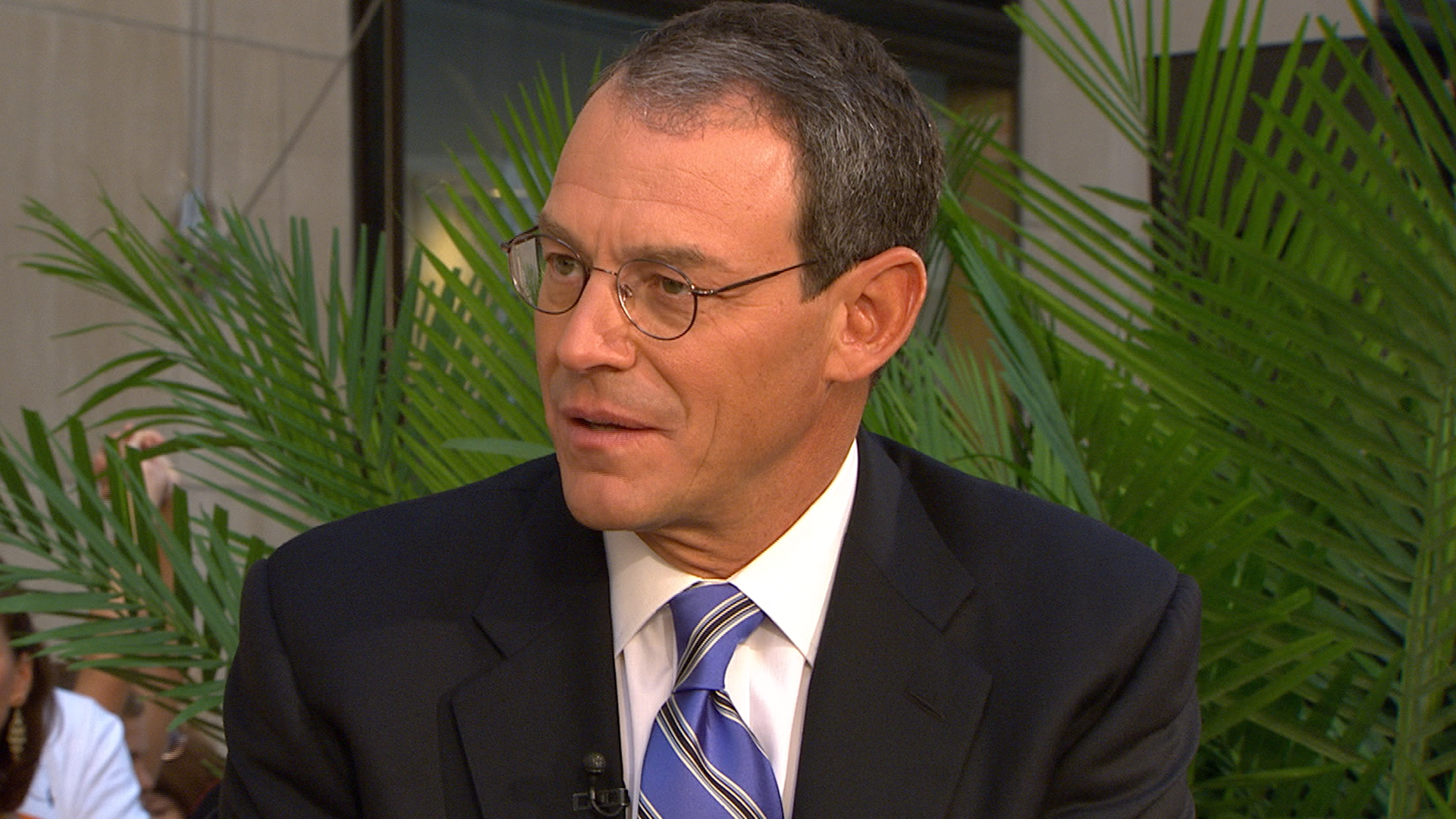
Interview: Daniel Silva, author of ‘The English Spy’


Photo: Today
Daniel Silva has spent time in the Middle East. He writes an espionage series about an Israeli intelligence officer, after all, and before that he worked as United Press International’s Middle Eastern correspondent in Cairo. In his 18 novels, he delves into the region’s dark side, writing of terrorist threats and the dangers of Iranian nuclear capabilities.
But he will tell you that the scariest place he has ever been is Northern Ireland.
“I was there in 1998, the year of the Omagh bombing,” says Silva, who appears June 10 at the Freedom Tower at Miami Dade College. “I actually saw the scene of a bombing a few hours after it happened in Portadown. They destroyed the high street with one of these 500-pound car bombs. ... Belfast was just so sad and tense and horrible during the war. The communities were at each other’s throats. If you walked down the wrong street, you could get killed. It was rough.”
Fallout from the bombing in Omagh — which killed 29 people and injured 220, the highest death toll during Ireland’s “Troubles” — plays a pivotal role in Silva’s riveting new novel. In The English Spy, legendary spy, assassin and sometime art-restorer Gabriel Allon takes on a former Irish Republican Army bombmaker-turned-mercenary, with the help of former British commando Christopher Keller, who has his own bloody past with the violent militia.
Silva’s reading is the first in the Freedom Tower since The Center for Writing and Literature moved its offices there, and program director Lissette Mendez says the choice was deliberate.
“This is particularly appropriate,” she says. “It’s a museum, an historic building, with a beautiful ballroom that has had the beautiful murals restored. We thought it fit with the kind of books that Daniel Silva writes, with his main character being in the art world.”
Gabriel Allon truly loves art; in Silva’s last book, The Heist, he searched for a missing Caravaggio. But he doesn’t get much chance to spend time with his beloved masterpieces in the fast-paced The English Spy.
“I wanted to write a good old-fashioned bang-bang book,” Silva says. “When I start to think about a book, it’s helpful to try and say exactly what kind of book I’m writing. They do fall into categories. Sometimes Gabriel acts as a private detective. Sometimes he’s an operational agent. In this case, the story was just about a straight-up manhunt.”
In The English Spy, the Irish terrorist on the lam turns out to be linked to some of Israel’s worst enemies (he also once tried and failed to kill Keller, who has emerged as one of Silva’s most intriguing characters). As usual, Silva took a page from history for inspiration.
“The link between Northern Ireland and the modern world is very real,” Silva says. “After the war, members of the I.R.A. did go out into the world, and they worked for some really bad people. They sold bombmaking techniques to the Iranians. A delegation went to Tehran and helped them develop anti-tank weapons to give to Hamas and Hezbollah. ... Remember that the ability to make high-quality bombs is what separates hotheads from a really effective terrorist army.”
Silva is comfortable discussing international intrigue and the future of world relations (he had Allon tangling with the Russians long before Vladimir Putin’s recent antics). Hard, then, to believe that after he wrote the first Gabriel Allon novel he had to be persuaded to write the second.
“I didn’t think it was a good idea to have an Israeli continuing character because I thought there was too much anti-Semitism and anti-Israeli sentiment in the world,” he says.
He admits he has been proven wrong but adds that now, “There is a growing anti-Israeli sentiment rising in Europe in particular and even in America. ... Some people are so angry at Israel they might not pick up a book about an Israeli character. The flip side is that gives me an atmosphere for the novel of this besieged country, and an edge like that I like. It’s easier to write. There aren’t many great books written about happy relationships. You need drama and conflict. ... for better or worse, there’s no shortage of conflict in the Middle East.”
Working on such a series means spending a lot of time researching dark material (Silva confesses that he relaxes by watching cooking shows at night: “I love Diners, Drive-Ins and Dives — that’s my guilty pleasure”). But he’s not ready to give up on Allon and The Office — Israel’s intelligence agency — just yet.
“I will never see 50 again, but I don’t see myself as nearing the end of my career,” he says, adding that he does not rule out writing a novel about Christopher Keller, who at the end ofThe English Spy embarks on an intriguing new career. “I hope that at a certain point I will write about something other than Gabriel Allon. ... He’s still fun for me to write.
“I remind my family when they accuse me of being absent-minded or not paying attention that I spend more time in his world than I do in the real one,” says Silva, who’s married to journalist Jamie Gangel; they have two children. “I don’t mean to sound like a crazy person! I set scenes in places where friends of mine live. I borrow traits from people I know. When I talk about them with my wife, when I’m working through something, I refer to them as though they’re friends. I talk about their lives as though they’re real.”
MEET THE AUTHOR
Who: Daniel Silva
When: 6:30 p.m. July 10
Where: Freedom Tower, Miami Dade College, 600 Biscayne Blvd., Miami
Parking: Free parking available at Building 7, 500 NE Second Ave.
Cost: Voucher required; purchase one copy of ‘The English Spy’ at Books & Books locations and get a voucher for two.
Info: www.booksandbooks.com; 305-442-4408

Read more here: http://www.miamiherald.com/entertainment/books/article26216077.html#storylink=cpy


Read more here: http://www.miamiherald.com/entertainment/books/article26216077.html#storylink=cpy

WHAT HILLARY IS HIDING

The slow drip-drip of scandal begins to take its toll.


July 2, 2015


The left-wing media establishment is turning against Hillary Clinton. 
It’s happening long after the rest of us understood that Mrs. Clinton bore a unique responsibility for the tragic and avoidable disaster in Benghazi that cost the lives of four brave Americans, so please: there is no need for applause. After all, the New York Times, the Washington Post, CBS Sixty Minutes, and NBC News are just doing their jobs. Finally. 
Well, almost doing their jobs. For most of these, the Clinton “story” is all about process. As more emails turn up that Hillary “overlooked” when she scoured her personal server, the New York Times wonders if any serious discrepancy will emerge, and gives Hillary’s spokesperson’s effort to bury the story far more credit than he deserves.
Here is Hillary’s problem: not only did she conduct official business on a private server, apparently with the blessing of a key lackey, Undersecretary for Management, Patrick Kennedy; but as copies of those emails surface, key elements of the story she has tried to suppress from Day One are emerging.
First, there is the matter of who “lost” Libya. The email traffic released nearly two years after House Democrats claimed the State Department had provided everything there was to know about Benghazi to Congress, shows that Hillary was desperate to hide her responsibility for U.S. policy toward Qaddafi and the jihadi-dominated rebel alliance that overthrew his regime.
We now have multiple emails, none of which was produced until recently, showing that when Libya was going well, Hillary wanted to be seen as the architect of the “lead from behind” and “zero footprint” strategy that allowed the Obama administration to claim a foreign policy victory without engaging U.S. troops.
Jake Sullivan, her top political advisor, drafted a glowing “talking points” memo on the Libya success story on August 21, 2011, which the Clinton team later realized had become an embarrassment and needed to be suppressed. It was only just recently produced.
Now we learn that an important player behind Hillary’s grandstanding was none other than long-time Clinton consigliore, Sid Blumenthal. 
Until just two months ago, the State Department pretended that Blumenthal’s emails to Secretary Clinton didn’t exist, even though Mrs. Clinton forwarded them to her inner circle, often at their official state.gov addresses.
Then, faced with a subpoena from Rep. Trey Gowdy, chairman of the Benghazi Select Committee, State finally produced 300 emails previously withheld by Clinton, including “intelligence” memos sent by Blumenthal to Hillary’s private email account.
Gowdy could see the smoke, and issued another subpoena, this time to compel Blumenthal to testify under oath. At that closed-door hearing two weeks ago, Blumenthal produced an additional fifteen memos to Secretary Clinton that the State Department claims it can’t find. Like so much else.
Among the latest missives were Blumenthal’s comments on the Jake Sullivan Libya success statement. “First, brava!” he wrote Mrs. Clinton the next day. “This is a historic moment and you should be credited for realizing it. When Qaddafi himself is finally removed, you should of course make a public statement before the cameras wherever you are, even in the driveway of your vacation house. You must go on camera. You must establish yourself in the historical record at this moment. The important phrase is, ‘successful strategy.’”
But seeing Blumenthal revert to his role as Clinton spin-meister is just eye candy. Far more important was his role in urging Mrs Clinton to support jihadi rebels against Qaddafi. Because he was not a member of her official inner circle, he could deliver advice Mrs. Clinton felt she could keep from public scrutiny – even now.
In his testimony before the House Benghazi Committee on June 19, Blumenthal revealed that he hadn’t even written the so-called “intelligence” memos. Instead, he merely copied and pasted memos written by former CIA clandestine operative Tyler Drumheller, who got called out by his former boss for fabricating and misrepresenting intelligence.
Blumenthal acknowledged he had partnered with Drumheller and retired Major General David Grange in an effort to win lucrative business contracts in post-Qaddafi Libya.
Their main project was a “humanitarian-assistance idea for medical care in which I had little involvement, [that] [n]ever got off the ground, in which no money was ever exchanged, no favor sought and which had nothing to do with my sending these emails,” Blumenthal told reporters later.
General Grange’s company, Osprey Global Solutions, advertises a lot more than “humanitarian assistance” projects.According to their website, they “deliver global, full-spectrum medical, construction, security, training, armament services, and products.” Just the type of things a poorly trained, poorly equipped jihadi rebel force would need. General Grange told the New York Times that his job was to put “boots on the ground to see if there was an opportunity to do business,” once Blumenthal and his associates opened the doors in Libya.
Which brings us to the next dirty secret Hillary Clinton is intent on keeping from public scrutiny: her role in arming the rebels in Libya and Syria. The ongoing trial in Arizona of licensed arms broker, Mark Turi, promises to reveal new details of the former Secretary of State’s initiatives in helping select U.S. contractors deliver U.S. weapons to foreign governments such as Qatar, who then distributed them to their favorite jihadi groups. All without a word to Congress, let alone the public.
These policies were horribly misguided. As I wrote in Dark Forces: the Truth Behind What Happened in Benghazi, in a chapter titled “John Brennan’s Iron Claw,” they included allowing jihadi operatives transport 800 SA-7 missiles looted from Qaddafi’s arsenal to Agadiz, Niger, where they were upgraded with Egyptian gripstocks and CIA-designed batteries, then transferred to jihadi groups throughout the Middle East.
A separate set of emails, obtained by Judicial Watch through the Freedom of Information Act, reveals another scandal Clinton has been desperately trying to avoid: her responsibility for peddling the vicious smear that the Benghazi attacks were “caused” by a “hateful video,” not a failure of policy.
The first official statement by the Obama administration about Benghazi was issued by Mrs. Clinton at 10:08 pm Washington time on the night of the attacks.
This was after the State Department had confirmed the deaths of Ambassador Chris Stevens and his communications officer, Sean Smith, but before the final mortar attack on the CIA Annex that took the lives of former Navy Seals Glen Doherty and Ty Woods.
The Judicial Watch emails include a message from State Department spokesperson Victory Nuland to Clinton’s inner circle that referred to the draft statement they were circulating. “We are holding for [Ben] Rhodes clearance.” 
Ben Rhodes, of course, was President Obama’s top political operative, the same who quarterbacked the neutering of the CIA talking points prepared for Susan Rice later that week.
Rhodes signed off on the draft, which has not yet been released, three minutes later, and sent a follow-on message at 9:48 pm to senior White House and State Department officials. “We should let the State Department statement be our comment for the night,” he wrote.
There continue to be huge gaps in the record, which is why Rep. Gowdy correctly is refusing to hear Mrs. Clinton’s testimony until the record is complete.
One significant gap is the huge hole in Sid Blumenthal’s correspondence with Clinton. In the documents he produced to the Benghazi Select Committee, he sent a steady stream of Libya-related emails to Clinton up through Aug. 27, 2012. The next we hear from him in September 12, 2012 – just after the attacks, which he mistakenly wrote had occurred the afternoon before.
What else were the two discussing before the attacks? Was the State Department aware of the “hateful video” before it became a cause célèbre? Was Sid Blumenthal aware of it?
Significantly, his September 12, 2012 email to Mrs. Clinton focused on the video, and informed her that he had moved the story into the U.S. media, thanks to a outrageous, lie-packed article penned by his own son, left-wing hack Max Blumenthal.
Democrat Elijah Cummings, Gowdy’s counterpart on the Benghazi Select Committee, likes to claim that all the important questions about Benghazi have been “asked and answered.”
The only question that really fits that bill is this: Did Hillary Clinton lie about Benghazi?  The answer, of course, is a resounding, yes.


Saturday, July 04, 2015

The worst agreement in U.S. diplomatic history


By Charles Krauthammer
http://www.washingtonpost.com/
July 2, 2015


Secretary of State John F. Kerry at the Iran nuclear talks on Thursday. (Carlos Barria/Associated Press)
The devil is not in the details. It’s in the entire conception of the Iran deal, animated by President Obama’s fantastical belief that he, uniquely, could achieve detente with a fanatical Islamist regime whose foundational purpose is to cleanse the Middle East of the poisonous corruption of American power and influence.
In pursuit of his desire to make the Islamic Republic into an accepted, normalized “successful regional power,” Obama decided to take over the nuclear negotiations. At the time, Tehran was reeling — the rial plunging, inflation skyrocketing, the economy contracting — under a regime of international sanctions painstakingly constructed over a decade.
Then, instead of welcoming Congress’ attempt to tighten sanctions to increase the pressure on the mullahs, Obama began the negotiations by loosening sanctions, injecting billions into the Iranian economy (which began growing again in 2014) and conceding in advance an Iranian right to enrich uranium.
It’s been downhill ever since. Desperate for a legacy deal, Obama has played the supplicant, abandoning every red line his administration had declared essential to any acceptable deal.
Inspections. They were to be anywhere, anytime, unimpeded. Now? Total cave. Unfettered access has become “managed access.” Nuclear inspectors will have to negotiate and receive Iranian approval for inspections. Which allows them denial and/or crucial delay for concealing any clandestine activities.
To give a flavor of the degree of our capitulation, the administration played Iran’s lawyer on this one, explaining that, after all, “the United States of America wouldn’t allow anybody to get into every military site, so that’s not appropriate.” Apart from the absurdity of morally equating America with the world’s foremost state sponsor of terrorism, if we were going to parrot the Iranian position, why wait 19 months to do so — after repeatedly insisting on free access as essential to any inspection regime?
Coming clean on past nuclear activity. The current interim agreementthat governed the past 19 months of negotiation required Iran to do exactly that. Tehran has offered nothing. The administration had insisted that this accounting was essential because how can you verify future illegal advances in Iran’s nuclear program if you have no baseline?
After continually demanding access to their scientists, plans and weaponization facilities, Secretary of State John Kerry two weeks ago airily dismissed the need, saying he is focused on the future, “not fixated” on the past. And that we have “absolute knowledge” of the Iranian program anyway — a whopper that his staffers had to spend days walking back.
Not to worry, we are told. The accounting will be done after the final deal is signed. Which is ridiculous. If the Iranians haven’t budged on disclosing previous work under the current sanctions regime, by what logic will they comply after sanctions are lifted?
Sanctions relief. These were to be gradual and staged as the International Atomic Energy Agency certified Iranian compliance over time. Now we’re going to be releasing up to $150 billion as an upfront signing bonus. That’s 25 times the annual budget of the Iranian Revolutionary Guard. Enough to fuel a generation of intensified Iranian aggression from Yemen to Lebanon to Bahrain.
Yet three months ago, Obama expressed nonchalance about immediate sanctions relief. It’s not the issue, he said. The real issue is “snap-back” sanctions to be reimposed if Iran is found in violation.
Good grief. Iran won’t be found in violation. The inspection regime is laughable and the bureaucratic procedures endless. Moreover, does anyone imagine that Russia and China will reimpose sanctions? Or that the myriad European businesses preparing to join the Iranian gold rush the day the deal is signed will simply turn around and go home?
Nonnuclear-related sanctions. The administration insisted that the nuclear talks would not affect separate sanctions imposed because of Iranian aggression and terrorism. That was then. The administration is now leaking that everything will be lifted.
Taken together, the catalog of capitulations is breathtaking: spot inspections, disclosure of previous nuclear activity, gradual sanctions relief, retention of nonnuclear sanctions.
What’s left? A surrender document of the kind offered by defeated nations suing for peace. Consider: The strongest military and economic power on earth, backed by the five other major powers, armed with what had been a crushing sanctions regime, is about to sign the worst international agreement in U.S. diplomatic history.
How did it come to this? With every concession, Obama and Kerry made clear they were desperate for a deal.
And they will get it. Obama will get his “legacy.” Kerry will get his Nobel. And Iran will get the bomb.

Today's Tune: Dave Alvin - Fourth of July (Live)