Wednesday, June 17, 2015

Book Review: 'Medieval Christianity" by Kevin Madigan

Faith in ferment


June 12, 2015


Although the term medieval often has negative connotations, it is an era that we neglect to our peril. After all, the lengthy period that we also call the Middle Ages represents about half of the Christian story to date. In Medieval Christianity, Harvard professor Kevin Madigan has produced a richly informative book that provides readers an excellent sense of the state of the scholarship on these long centuries. He is a scholar of the first class himself, and reading his lucid text gives a powerful idea of what a splendid teacher he must be. On the other hand, I do have reservations about the scope of his presentation.
After a necessarily brief sketch of the “Early Church,” Madigan sensibly de­fines his period as roughly 600–1500. This era teems with the ghosts of historical myths and the products of generations of anticlerical propaganda, which together constitute a multifaceted Black Legend. In the popular mind, medieval Chris­tianity conjures a series of grim events and circumstances, including the Inquisi­tion, heresy hunts, and vicious anti-Semitism. More generally, we might regret the suppression of the authentic zeal of the early church, crushed under the weight of papalism and priestcraft, bureaucracy, and oppressive hierarchy. There are even those who still apply the belittling term Dark Ages to the whole medieval millennium.
Madigan’s book provides a wonderful corrective to such myths. Naturally, he gives full and fair treatment to the dark side of medieval faith, with abundant coverage of anti-Semitic propaganda and outrages. Throughout his story, though, we see a faith in ferment, with constant debates about the proper limits of hierarchical control over spontaneous popular piety. And although this point might seem obvious to experts, he does a fine job of distinguishing between the very different eras that constituted the Middle Ages, and their radically different concerns and expressions of faith. Western Christianity in 1050, say, was a fundamentally different creature from that in 1450.
In his coverage of each era, Madigan is at his best describing the lived realities of faith as experienced by ordinary people. He leaves no doubt about the thorough permeation of Christian ideas and images through every aspect of daily life. Time, for example, was organized by the church’s calendar and feast days. Popular Christian culture was expressed through ubiquitous vernacular art, the effervescent tradition of dramatic performances, and such acts of public faith as miracle plays and processions. His main chapter on these behaviors bears the title “To ‘Deepen Understanding’: Means of Christianization, 1050–1250,” suggesting the deeply pedagogical nature of these largely preliterate acts. No less rewarding is his discussion of the culture of saints, shrines, and pilgrimages, which constituted a large share of Christian behavior through these centuries.
Perhaps the greatest single issue separating medieval and modern Christians is literacy and reading. Obviously, as an institution the medieval church was founded on books, and the literary and academic culture it created was awe-inspiring. For ordinary believers, though, the lack of access to texts assuredly did not mean that their faith was impaired or deficient. However, the historical gulf between readers and nonreaders poses enormous problems for modern historians, who naturally favor the written record. It is one of Madigan’s immense strengths that he pays full and respectful attention to the nonliterate, the physical, and the performative.
One of the most inaccurate stereotypes of the Middle Ages is that it was a sternly patriarchal millennium during which women’s spirituality was ignored or condemned. In the past century historians have shown how far from the truth that stereotype is. They have stressed the centrality of the figure of the Virgin in Christian culture and art. Far from being treated as a retiring exemplar of maternal domesticity, Mary was presented as an extremely powerful wonder-worker who fell just short of full divinity. Such older histories also pay due attention to the role of countless women church leaders: monastic leaders and abbesses, prophets, and mystics. Women’s centrality to medieval faith has been emphasized still more in research and scholarship of the past 30 years or so. Madigan, then, is not breaking new ground here, but his constant and systematic emphasis on women’s participation and agency is admirable.
Madigan’s book deals with a vast array of topics and arguments, and of course not every reader will agree with every position he takes. In all these controversial areas, though, Madigan’s positions are eminently responsible. An excellent bibliographical section gives readers the option to explore the issues under debate for themselves.
But having offered all this praise, I must criticize the author’s scope and his definition of the topic. Although Madi­gan is very good on the areas he chooses to cover, his book gives us a surprisingly partial and limited picture. Medieval Christianity focuses entirely on the Catholic West, with scarcely an acknowledgment that a wider world ever existed. For an author looking at Christendom around 1500 such a constrained view might be justified. But for the period before the 12th century this is perverse. Madigan says basically nothing about the Eastern Church, about the crises over iconoclasm or hesychasm, about Russian artistic or spiritual traditions, about Coptic or Syriac monasticism, about Eastern mysticism, or about the Christian kingdom in Ethiopia—and the list goes on. Throughout the book, Eastern conditions are featured only as the backdrop to Western-dominated movements and events, such as the Crusades.
Obviously, a book that spans the whole Christian world would offer very different judgments and perspectives on the issues Madigan addresses—the role of monasticism, for instance, or church landholdings, or the status of the clergy, or church-state relations, or Christians’ relations with Jews and Mus­lims. But somewhere east of Prague, in Madigan’s book, the Christian world ends abruptly, if it ever existed in the first place. The result is an oddly retrograde example of writing about Chris­tian history. Were the book titled Medieval Chris­tianity in the Latin West, I would praise it unstintingly.

Tags: 

Medieval Christianity

A New History
Yale University Press

Tuesday, June 16, 2015

Book Review: ‘Adios, America’ by Ann Coulter

Posted By Daniel Greenfield On June 16, 2015 @ 12:09 am In Daily Mailer,FrontPage | 23 Comments
aa[1]Daniel Greenfield, a Shillman Journalism Fellow at the Freedom Center, is a New York writer focusing on radical Islam.

Most bad policies are bipartisan. Democrats come up with them and Republicans sheepishly implement them. Amnesty is one of the few bad policies that Republicans desperately try to claim as their own.

Amnesty is a sinkhole of corrupt interests, from businesses looking for cheap labor to Democrats looking for cheap votes, and panic by fossilized political entities like the NAACP, unions and the Republican Party; eager to surrender out of fear that they will be be left behind by the demographic future.

Those who oppose amnesty tend not to be heard. They are the homeowners watching dangerous men who have crossed the border glower through their windows. They are the black teenagers who can’t even get a fast food entry level job because the illegals are cheaper and more compliant. They are the legal immigrants who left places like El Salvador behind only to find its gang members in their back yard.

And then there are courageous voices like Victor Davis Hanson, Mark Krikorian and, of course, Ann Coulter, who speak for them.

Coulter’s latest book, “Adios, America” is an uncompromising attack on the policies, justifications and rhetoric of amnesty. It’s full of the punchy quotes she’s known for, such as “Americans ought to be suspicious about being told incessantly fences don’t work. It’s like being told wheels don’t work”, accompanied by a broad survey of the entire immigration and illegal immigration debate.

The biggest targets are the latest efforts at amnesty, from the disastrous Republican amnesty effort to Obama’s unilateral legalizations, which have been disguised by Orwellian word games. 
After years of amnestiers claiming that their amnesty isn’t really amnesty, she lays out the simple fact that “Any law that forgives an illegal act, in whole or part, is an amnesty.”

The refusal to use the A-word is a sign of nervousness about public support for amnesty and Coulter targets the assorted polls that claim that the public supports it for being dishonest and misleading.

Going back in time, “Adios, America” takes a look at Ted Kennedy’s Third World immigration push and the Clinton voter mill. It argues that traditionally American voters have been displaced by tribal cultures that are uninterested and unwilling to adapt to life in this country with the inevitable accompanying costs for social services and the criminal justice system created by their ongoing presence.

Coulter covers everything from the dubious legal basis for anchor babies to the demographic voting argument that has panicked so many Republicans and the economic growth argument that has so often been used dishonestly by the proponents of the former.

As she points out, the vast majority of illegal aliens once legalized will begin collecting between $14,642 and $36,992 from the taxpayer.

“We’re always told that we need to amnesty illegals to shore up Social Security. How, exactly, are people who make so little money that they don’t pay income taxes going to save Social Security?” she asks.

Obviously a hole can’t be filled with another hole. Democrats and Republicans who champion amnesty are promising to plug a demographic hole with an economic hole while vowing that the two holes will somehow balance out; that a generation of elderly taxpayers will be bailed out by a generation of legalized aliens without a diploma working for minimum wage in states going bankrupt funding them.

Coulter challenges the hypocrisy of wealthy amnesty supporters who want to lock in the luxury of cheap labor for their domestic lifestyle and their businesses at the expense of the country and everyone else.

As she notes, “The rich get all the benefits of cheap servants– and they get to look enlightened at the same time.”

She also attacks the civil rights language being hijacked by amnesty supporters, accusing illegal immigrants of displacing black people and hijacking their struggle. Diversity, she notes, mostly ends up meaning Mexican immigrants taking advantage of a non-reciprocal open border and welfare state.

The absurd situation in which the descendants of European colonists become an oppressed minority by virtue of speaking another language is one of the more convoluted pieces of left-wing identity politics. Diversity is selective in its application, holding that Asians at elite colleges and tech companies don’t represent diversity, but that members of a majority group from across the border are truly diverse.

But while “Adios, America” at times appears to act as if this mass migration and transformation is a uniquely American problem; it’s really, with some exceptions like Japan, a First World problem. Europe is being saturated by migrants from Africa and the Middle East with more generous welfare and fewer legal defenses for the natives. Australia is fighting for its life against a tide of migrants. In the UK and Canada, terrorist settlers have more rights than the natives they are killing.

Likewise Coulter’s assessment of Israel’s immigration situation is excessively optimistic based on reports from an alarmist left-wing media. Those same reports applied to the United States would have us believe that Obama is the “Deporter-in-Chief”. Israelis, particularly in South Tel Aviv, live in a state of siege surrounded by migrants and armed gangs who are protected by non-profits and activist lawyers.

And anyone who complains about the situation is denounced as racist.

As May Golan [2], the Ann Coulter of Israel, pointed out the illegals get [3] everything for free while the local residents “look through their peepholes and think twice about going down to buy milk after 5:30.”

Unfortunately, Israel has the same network of left-wing activists whose vocabulary begins and ends with “racism”, business interests who want to hire cheap foreign labor instead of Israelis and politicians who veer between talking tough on illegal inflitrators and rolling out the welfare wagon for them.

As May Golan has said of Israel, “They want this country not to be Jewish anymore.” Illegal migrant advocates in Europe want to eliminate the European character of the UK, France and Sweden.

Amnesty advocates don’t want America to be American. As Coulter notes, that is what diversity really means.

The transnational assumption behind the advocacy for illegal immigration is that the Americans, the French or the Israelis are not entitled to have their country the way they want it, but must bow to a higher international agenda.

And if the locals don’t like it, they can always be displaced and replaced by a new herd of voters who may be a financial burden, but who will always vote the correct way.

That is what is really at stake here.

Taking apart the 11 million figure often bandied about, Coulter contends that it’s more like 30 million and warns that amnesty is the final and ultimate political issue of the Republic.
“If we lose immigration, we lose everything.”

Republicans haven’t been losing the political argument, as she points out; they’ve been losing the demographic one. Even if Republicans could get a 40/60 split of the votes of new immigrants, that would just be a slower death. Politicians who pander on amnesty are just debating the terms on which their party and their country commit suicide.

While conservative European parties have stepped up and argued that in a time of economic turmoil immigration needs to be cut, not increased, the Republican Party has been allergic to such sentiments. When Scott Walker and Rick Santorum boldly called for an immigration policy that favors American workers, they were immediately smeared and attacked by the Republican amnesty lobby.

“Adios, America” is an antidote to the amnesty lobby. It is everything they hate packed into one book and it focuses attention on the issue whose struggle will define the decade and whose outcome will define the next century.

Freedom Center pamphlets now available on Kindle: Click here [4].

LIKE [5] Frontpagemag.com on Facebook and Subscribe [6] to Jamie Glazov Productions [6].

Article printed from FrontPage Magazine: http://www.frontpagemag.com


URLs in this post:


[6] Subscribe: http://jamieglazov.com/

Drug war drama plays out in new novel


By 
http://www.utsandiego.com/
June 14, 2015


Don Winslow — Hayne Palmour IV / U-T
Ten years ago, crime novelist Don Winslow wrote a searing, violent book about the Mexican-American drug wars called “The Power of the Dog” that brought him critical acclaim and a question he avoided for as long as he could:
When are you doing a sequel?
Never. That was his answer. “Dog” was an emotionally wrenching five-year project, 30 years of bloody history steeped in 560 pages of furious energy. He immersed himself in the details of brutal killings and horrific torture, got inside the heads and hearts of DEA agents and drug lords, hit men and hookers.
Writing from the comfort of his home near Julian, he was far from the actual mayhem, but through his research he saw things he didn’t want to see, learned things he didn’t want to know. And when he’d told the story he wanted to tell, he was done.
Done with the vicious cartels, done with the jaded cops trying to stop them, done with America’s appetite for drugs and the harm its insatiability causes in other places.
“Done with the whole subject,” he said.
The sequel comes out June 23.
In the 10 years since Winslow wrote “Dog,” the drug wars have only gotten worse. More guns, more death, more horror, and more numbed indifference on the U.S. side of the border, a shrugging of the shoulders about “Mexico’s drug problem.”
Which, Winslow will tell you, is really America’s drug problem.
So he felt he had some unfinished business, and “The Cartel” is it. At 640 pages, it’s another monster of a novel – big in story, big in ambition. Based on real events, it’s unavoidably violent but not voyeuristic. There is a deep understanding of the bonds and betrayals inherent to the drug trade, considerable musing about the difference between vengeance and justice, and a recognition that even in the face of soul-sapping depravity, there can be nobility and courage.
The book has drawn a lot of early attention, with major newspapers (New York Times, Los Angeles Times, Miami Herald) and magazines (Esquire, Entertainment Weekly) putting it on their “must read” lists for the summer.
And while it’s common to see an A-list writer offer a favorable blurb for a colleague, “The Cartel” has a Murderer’s Row of crime-novelists weighing in: James Ellroy, Harlan Coben, Lee Child, Michael Connelly.
“This,” according to Ellroy, “is the ‘War and Peace’ of dope war books. Tense, brutal, wildly atmospheric, stunningly plotted, deeply etched. It’s got the jazz dog feel of a shot of pure meth.”

Changing directions

Winslow, 61, is the author of 18 previous books and the owner of a resume interesting for its diversity of life experiences.
Born in New York, the son of a sailor and a librarian, he grew up in Rhode Island and did some child acting. He got a college degree in African studies in Nebraska (he also has a master’s in military history) and worked as a safari guide in Kenya. He’s herded cattle, managed a movie theater, taught Shakespeare at Oxford and been a private detective on both coasts.
His first novel, “A Cool Breeze on the Underground,” was published in 1991, and he settled into a familiar pattern for authors of his genre: Writing a series featuring the same detective. Five books into it, he grew bored, felt as if he was repeating himself.
“The Death and Life of Bobby Z” (1997) was his breakthrough book, smart and funny and fast-paced. Winslow penned its short chapters while riding the train back and forth between Dana Point, his home at the time, and L.A., where he was working on a PI case.
That novel was so well-received Winslow got a long-term book contract and a movie deal. He and his wife of 30 years, Jean, bought a place near Julian and moved there with their son, Thomas.
When “Power of the Dog” came out in 2005, it raised his profile here and abroad, with several critics likening it to “The Godfather” and calling it a masterpiece. Five years later, Winslow made an even bigger splash with “Savages.”
Feeling ornery about the way crime fiction was being compartmentalized – police procedural, thriller, mystery – he decided to flout the rules, starting with the opening chapter, which was just two words: “(Blank) you.”
Winslow said he knew readers would either toss the book aside or be drawn immediately into his story about two pot-growing friends in Laguna Beach, told in a skittering prose that was a combination of languages and inflections, fragments of thought, and explosive urgency.
The New York Times lauded what it called the Winslow Effect, the author’s ability to “fuse the grave and the playful, the body blow and the joke, the nightmare and the dream.” Oliver Stone turned the book into a movie.
Always at work on new projects – not just books but screenplays, short stories, commentaries, TV scripts – Winslow found himself getting pulled back into following the drug wars. He kept a chronology, based on media accounts and law-enforcement sources, of killings, narcotics arrests and turf battles between drug lords.
The chronology eventually grew to more than 150 single-spaced typewritten pages. In those entries, Winslow said, he began to see patterns, and in those patterns a story he could no longer put off telling.

How much is too much?

Decapitations with chain saws. Mass rapes followed by mass murders followed by mass burials. Bodies put in metal drums and set on fire, bodies hung from bridges, bodies dismembered and then rearranged for public display. And much of it recorded and distributed via the Internet for intimidation and recruiting purposes.
“When I was doing ‘Power of the Dog,’ I thought I had seen the ultimate in violence,” Winslow said. “Tragically, I was wrong.”
The historian in him wanted to bear witness to as many of the killings as possible – his editor sometimes teased him that he was writing a “docu-novel” – but how much horror is too much?
“You either sanitize it or you do it as realistically as you can,” Winslow said. “I chose the latter because I wanted the reader to understand the real human consequences of what we do up here.”
By “what we do up here” he means the billions of dollars Americans spend every year to buy drugs that are transported through Mexico. He means the billions that government agencies spend trying to halt that flow. He means the guns that are bought in the U.S. and wind up south of the border.
“People in America don’t understand what goes on down there,” he said. “And what Americans don’t understand in particular is our role in it. It’s not the Mexican drug problem; it’s the American drug problem. We’re the buyers, we’re the market, so for all the violent headlines that we read about across the border, what we need to understand is we fund it.”
“The Cartel” continues the deadly dance of DEA agent Art Keller and his nemesis, the powerful drug baron Adán Barrera, but it’s filled with at least a dozen key characters. The tale, which spans a decade, gets told through these shifting narrators.
The short chapters that have become a Winslow trademark are gone this time, inappropriate, he said, for a book this big and this serious. (There is some of his familiar snark, though, most of it from a character called Crazy Eddie.)
Winslow dedicated the book to journalists who were murdered or “disappeared” during the period covered in the novel. “These are people who were trying to tell the truth of what was happening,” he said, “and they were killed for it.”
He said he found their dedication and sacrifice inspiring, a bright light during the dark days of writing a novel that was “hard and depressing and infuriating.”
The dedication lists the names one by one, more than 130 of them, filling one page and almost half of another, and ending with this, a chilling reminder of why Winslow decided finally to write the book:
“There were others.”
© Copyright 2015 The San Diego Union-Tribune. All rights reserved.

Monday, June 15, 2015

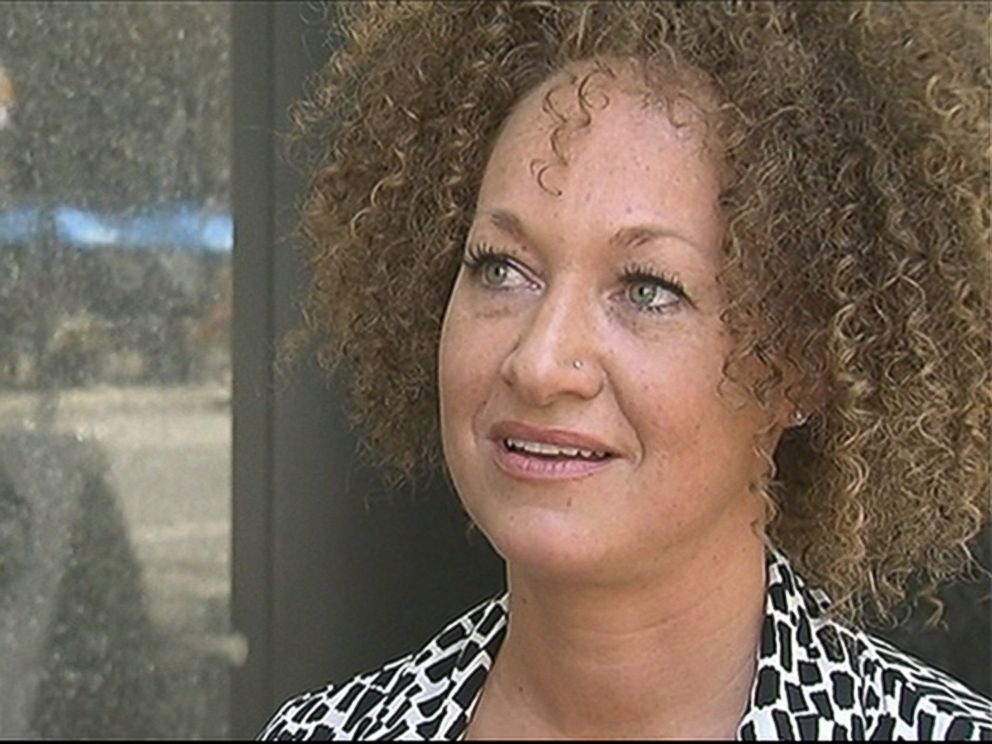
A Woman Who Insists She’s African American but Isn’t

By Charles C. W. Cooke — June 12, 2015
The critics of self-identification as objective truth finally have their test case. Sky News reports:

Fangs, Light Sabers and a Supernumary Papilla


By Mark Steyn
June 13, 2015


Christopher Lee died last weekend at the grand old age of 93, and remarkably his widow managed to keep it out of the public prints until Thursday, in order that she and their family might be able to grieve in peace. He had a long career going back seven decades and comprising many memorable roles: A Transylvanian count and a Jedi count, a Dark Lord of the Sith who became a Knight Bachelor in the 2009 Queen's Birthday Honours. Last year, aged 92, he made a heavy metal record of "My Way", and, in an unflashy and understated way, he did do it his way. The record shows he took the blows - from Professor van Helsing, from 007, from Anakin Skywalker, and from a multitude of hobbits.

Before he was an actor, he was an intelligence officer, and had, as they used to say, a good war, attached to the Special Operations Executive, or the "Ministry of Ungentlemanly Warfare", responsible for espionage and sabotage in occupied Europe. Afterwards, Lee stayed on to hunt down Nazi war criminals. Back in London in 1946, he lunched with a Continental cousin, now the Italian Ambassador to the Court of St James's, and confessed he had no idea what to do next, except that he had no desire to return to his pre-war job as a switchboard operator at the pharmaceutical company Beecham's. "Why don't you become an actor?" suggested the Ambassador. So he did. Two years later he was a spear carrier in Laurence Olivier's Hamlet, in which he met another up-and-comer playing Osric, Peter Cushing.

It took Hammer horror films to make both men stars,albeit B-movie stars. Lee was a very suave and seductive Dracula trying to stay one step ahead of Cushing's van Helsing while leaving a trail of blood-drained totty behind. As a teenager, I loved the Hammer movies, although I had a mild preference for the lesbian-vampire ones with Ingrid Pitt, Pippa Steel, Yutte Stensgaard et al. The bottom seems to have dropped out of the whole lesbian-vampire genre. No doubt, in these touchy times, it would be a fraught business reviving it. But Sir Christopher's count holds up pretty well. Aside from bloodshot eyes and stick-on fangs, there weren't a lot of special effects: Today you'd do it all with CGI, but back then there was nothing to make the horror but lighting and acting. You can see, in middle age, all the techniques that would give Lee an enduring cool well into the Nineties: the mellifluous voice; the flicker of an eyebrow - and then suddenly the flash of red in the eyes and the bared fangs, the ravenous feasting on some dolly bird's neck, and all the scarier for emerging from Lee's urbane underplaying.

He was upgraded to Bond nemesis Francisco Scaramanga, The Man With The Golden Gun - and a supernumary papilla, which is to say a third nipple. Lee was a cousin of Ian Fleming, who'd offered him the chance to be the very first Bond villain inDoctor No twelve years earlier. It would have been fun to see Lee and Sean Connery together, but, role-wise, he was right to wait. He'd known Roger Moore almost as long as cousin Ian: They'd first met in 1948. Golden Gun is a mixed bag for Bond fans, what with the somewhat improbable presence in Thailand of redneck sheriff J W Pepper and the other Roger Moorier elements. But Britt Ekland runs around in a bikini, and Lee's Scaramanga is a rare opponent who is (almost) the equal of 007. Landing at Los Angeles to promote the film on Johnny Carson's Tonight Show, Sir Christopher had his golden gun seized by US Customs and never returned - a reminder that these guys were pulling this nonsense long before the TSA came along.

His own favorite film was Jinnah, in which he played the title role of Pakistan's ascetic founder. It's very credible, but it's not why audiences loved him. Lee redeemed almost anything he was in, but had his work cut out when George Lucas signed him for the Star Wars prequels. By then Lucas was a director without peer when it comes to getting bad performances out of great actors. Once upon a time Ewan McGregor was one of the sexiest actors on the planet. Then George Lucas cast him as Obi-Wan Kenobi, and turned him into a souvenir action-figure with no private parts and a flat monotone voice. As Princess Amidala, Natalie Portman couldn't be Aniduller. The kid who plays Anakin seems like he should be the shy fellow in the back in some passing boy band but instead his agent stuck him with some lousy movie gig in a language not his own. He and Miss Portman roll in the grass like it's a contractual obligation. The most fully realized characters are the computer-generated ones, like Yoda, the wrinkly midget with the inverted word order that nevertheless sounds less unnatural than the rest of the inert, stilted dialogue.

But, when it comes to such acting honors as there are in the series, the Empire strikes back! Lee as Count Dooku and Ian McDiarmid as Chancellor Palpatine have the measure of Star Wars: go with the hokum, have some fun doing the standard creepy-snooty Brit bad-guy shtick, and cash the check.

The same year as his final Dooku turn - 2005 - I took my kids to see Charlie And The Chocolate Factory, in which halfway through Lee turns up as Willie Wonka's dad. "Hey, look it's Count Dooku," I said to my youngest, who was a big fan of Sir Christopher's splendid turn as a Dark Lord. The lad turned to me very annoyed and said: "Would Count Dooku be a dentist? I don't think so." It put him in a sulky mood for the rest of the day.

The difference between Tim Burton's 2005 remake and the original three decades earlier is telling. Willy Wonka And The Chocolate Factory just gets on with it, unpretentiously; Charlie And The Chocolate Factory is more artful and detached, as if its principal aim is not to enchant but to be admired. As usual with Burton, it looks great, with beautiful details — to single out just one, the retro delivery bikes with which Wonka's couriers fan out across the town. Burton creates a sorta-English industrial city with Wonka's gargantuan chocolate factory looming over streets of terraced houses, in the midst of which is Charlie's home, a dilapidated Dickensian ruin, its splayed gables and walls pointing in all directions simultaneously. 
But, estranged from Dahl's sense of humor, Tim Burton substitutes his own plot baggage — specifically the notion that Wonka is the way he is because (stop me if you've heard this one before, not least from Star Wars) he has "issues" with his dad unresolved from childhood. Oh, dear.

As he did so often in recent years, Lee gave it his best - to the point where the sincerity of Pa Wonka's scenes with Depp seems weirdly out of place in a film whose heart is icy cold and never shakes the feeling that everyone's only doing it because someone told them it would be an easy way to make a pile of money. By now, Lee, in his mid-eighties, had more work than ever. On the Lord Of The Rings trilogy, he was the only member of the cast who'd actually known Tolkien. Yet my favorite moment in the series isn't even on camera, but in the DVD commentary. It's the scene on top of the tower where Lee's Saruman gets stabbed in the back by Grima Wormtongue, for which the director, Peter Jackson, wanted Lee to let out a scream.

The actor felt obliged to explain to Sir Peter why that would be all wrong. He proposed to let out a small groan, a quiet gasp, as the air is pushed out of his punctured lungs. The director was resistant, so Lee said: "Peter, have you ever heard the sound a man makes when he's stabbed in the back?"

"Um, no," replied Jackson.

"Well, I have," said Lee, "and I know what to do.'" And from somewhere deep in the recesses of his memory an old SOE agent conjured the sound a Nazi makes when you plunge the knife in.

A full life, on-screen and off.

© 2015 Mark Steyn Enterprises (US) Inc. All rights reserved.